Publication – Emanuele Arioli, « Les Chevaliers de la Table Ronde »

Lancelot, Perceval, Yvain, ces noms de chevaliers de la Table Ronde ont passé les siècles. Mais tant d’autres, imaginés au Moyen Âge, ont été oubliés. Qui se souvient en effet que l’on a pu en compter plus de 150 ?

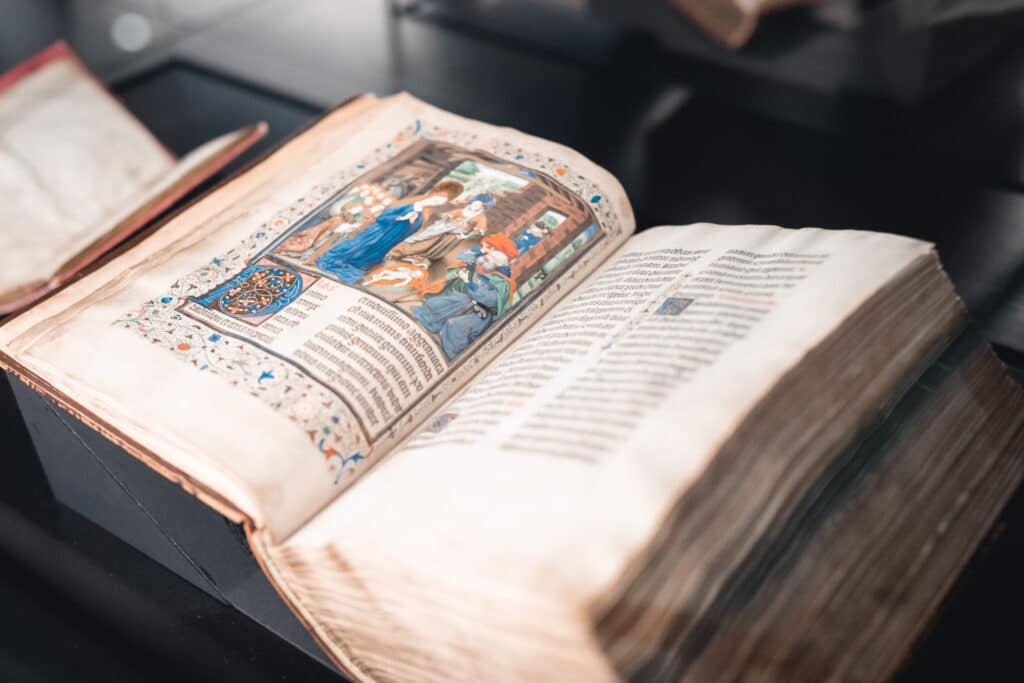
Un manuscrit du xve siècle, unique en son genre, a entrepris de les rassembler et de fixer pour la postérité leurs destins, leurs portraits, ainsi que leurs blasons. Magnifiquement illustré, il condense tout l’univers du roi Arthur et du Graal, en présentant ses valeurs et ses lois. On y lit également les serments qui commandaient l’action des chevaliers aussi bien que les règles des tournois arthuriens. Car les aventures de ces figures romanesques n’ont pas seulement nourri les imaginaires : elles inspiraient la noblesse médiévale qui arborait fièrement les écus de l’angélique Galaad ou du beau Tristan.

Cette « encyclopédie arthurienne », inédite jusqu’à ce jour, retrouve enfin la lumière grâce au travail du chercheur Emanuele Arioli, artisan de la résurrection du chevalier Ségurant. Il s’agit là d’une formidable porte d’entrée pour découvrir la légende du roi Arthur et le monde des chevaliers de la Table Ronde. Le Brun sans Joie, Radouin le Perse, Solinan du Bois, Lupin des Croix et tous les autres retrouvent ici une identité et surtout un nom.

Informations pratiques :

Emanuele Arioli, Les Chevaliers de la Table Ronde, Paris, Seuil, 2024 ; 1 vol., 208 p. ISBN : 978-2-02156-909-4. Prix : € 33,00.

Source : Seuil

Publié dans Publications | Laisser un commentaire

Appel à contribution – Signatures et estampilles au Proche-Orient médiéval

Du lundi 20 octobre 2025 au mardi 21 octobre 2025 (heure du Caire), IFAO

SignEt : signatures et estampilles
Marques d’identification et de validation dans le Proche-Orient Médiéval

Jean-Charles Ducène (EPHE-PSL) & Julie Marchand (ULB & Musées Royaux d’Art et d’Histoire, Bruxelles)

Partenaire(s) de l’Ifao : EPHE-PSL, ULB & KMKG-MRAH, IISMM, IFI

Comité scientifique – Scientific Committee

Jean-Charles Ducène (EPHE-PSL), Anna Laragon (Ifao), Julie Marchand (ULB & KMKG-MRAH), Jean-Michel Mouton (EPHE-PSL), Ahmed Al-Shoki (Université Ayn Shams), Naïm Vanthieghem (IRHT-CNRS)

Lieu – Conference Venue

Ifao, Le Caire (Cairo)

Le colloque

(English herebelow- click here)

La thématique de la signature et de l’estampille au Proche-Orient médiéval nécessite une révision pluridisciplinaire à la lumière des données récentes (sources documentaires, littéraires et archéologiques). Dans cette perspective, un colloque international sur le sujet se tiendra au Caire à l’Ifao, les 20-21 octobre 2025, avec pour objectif de recenser et donner à réfléchir aux emplois des différentes marques de validation, de possession, d’identification et d’authentification.

En effet, les études sur la signature ont souvent été menées à la marge d’autres recherches (sur le nom et l’identité notamment, voir J. Sublet, Le voile du nom. Essai sur le nom propre arabe, Paris, 1991 ; A Schimmel, Noms de personnes en Islam, Paris, 1998 ; N. Michel, I. Grangaud (éd.), L’identification. Des origines de l’islam au XIXe siècle, REMMM 124, Paris, 2010), et force est de constater qu’aucune étude spécifique n’existe. Il en est de même pour les sceaux qui sont souvent publiés par corpus et collections (L. Kalus, Catalogue des cachets, bulles et talismans islamiques, Paris, 1983 ; V. Porter, Arabic and Persian Seals and Amulets in the British Museum, Londres, 2011) et qui n’intègrent pas assez leurs fonctions et valeurs (symbolique, administrative, de propriété). Pourtant, le processus de l’apposition du nom ou du signe relève d’une pratique fortement culturelle dont la signification varie dans le temps : les supports diffèrent aussi, indiquant que la fonction change, pour identifier, valider ou protéger un bien ou un document notamment.

La problématique liée à la marque du nom resterait encore à approfondir : un même individu peut-il signer de plusieurs manières ? Quelle est la valeur de l’apposition du nom ? Qu’en est-il lorsqu’une autre main l’appose (copiste, détenteur du sceau…) ? La notion de signature autographe semble assez récente : à quoi est-elle liée ? La signature a-t-elle valeur pour le groupe (atelier d’artisans, étude notariale) ou pour l’individu à sa tête ? Existe-t-il un lien entre signature et timbre : les sceaux apposés sont-ils indépendants des signatures ? Ont-ils les mêmes fonctions, les dédoublent-ils ou les remplacent-ils selon les cas et les domaines ? Leur utilisation est-elle contemporaine ? Quel est le lien entre signature, ‘alāma et khātim ? La formule de la ‘alāma se retrouve-t-elle sur le sceau ? Les noms sur sceaux sont-ils les mêmes que ceux des signatures (association ism, kunya, nasab et nisba) ; leur formulation a-t-elle évolué dans le temps ?

Les organisateurs souhaitent réunir un colloque international sur le thème de la signature et de l’estampille, qui aura pour but de faire le bilan sur leurs pratiques, leurs usages et leurs portées sociales.

Des communications sont attendues sur les estampilles et les sceaux quels que soient leurs matériaux et supports, et les différents types de « signatures » que les documents médiévaux du Proche-Orient peuvent fournir. Des interventions à propos de ces marques dans les diverses langues pratiquées de cette aire culturelle sont les bienvenues, et les différentes disciplines des sciences humaines peuvent être convoquées (archéologie, diplomatique, sociologie…). Transport et logement sont à charge des intervenants.

Calendrier

  • Les résumés (300 mots max) sont à adresser par email à jean-charles.ducene@ephe.psl.eu et julie.marchand@ulb.be pour le 24 décembre 2024.
  • Les interventions seront sélectionnées pour le 22 février 2025.
  • Les langues de communication sont l’anglais et le français.

About the conference:

The subject of signatures and stamps in the medieval Near East requires a multidisciplinary review in the light of the most recent data (documentary, literary and archaeological sources). With this in mind, an international conference on the subject will be held in Cairo on 20-21 October 2025 at the Institut Français d’Archéologie Orientale (Ifao), to assess the use of the various signs of validation, ownership, identification and authentication.

Indeed, studies on signatures have often been carried out alongside other research (on names and identity in particular, see J. Sublet, Le voile du nom. Essai sur le nom propre arabe, Paris, 1991; A. Schimmel, Noms de personnes en Islam, Paris, 1998; N. Michel, I. Grangaud (eds.), L’identification. Des origines de l’islam au XIXe siècle, REMMM 124, Paris, 2010), and it must to be said that no specific analyses on the subject exist. The same applies to seals, which are often published by corpus and collections (L. Kalus, Catalogue des cachets, bulles et talismans islamiques, Paris, 1983; V. Porter, Arabic and Persian Seals and Amulets in the British Museum, London, 2011) and do not sufficiently consider their function and use (symbolic, administrative, ownership). However, the process of adding a name or sign is a highly cultural practice, the meaning of which varies over time: the carriers also differ, indicating that the function changes, in particular to identify, validate or protect an object or document.

            The issue of the name mark still needs to be explored in greater depth: can the same individual sign be used in more than one way? What is the value of applying the name? What happens if another hand inserts it (copyist, seal-bearer, etc.)? The concept of an autograph signature seems to be quite recent: what is it linked to? Does the signature have value for the group (craftsmen’s workshop, notary’s office) or for the individual at its head? Is there a link between signatures and seals: are the seals applied independently of signatures? Do they have the same functions, do they duplicate them, or do they replace them depending on the case and the context? Were they used at the same time? What is the relationship between signature, ‘alāma and khātim? Is the formula of the ‘alāma found on the seal? Are the names on the seals the same as those on the signatures (association ism, kunya, nasab and nisba); has their wording changed over time?

The organisers aim to bring together an international symposium on the theme of signatures and stamps, to assess their practice, use and social significance. 

The Scientific Committee invites scholars to submit papers on stamps and seals –  regardless of their material or carrier – and on the various types of signatures on medieval documents from the Near East. Papers on the many languages spoken in this cultural area are welcome, and the various disciplines of the humanities can be addressed (archaeology, diplomacy, sociology, etc.). Transport and accommodation will be provided by the speakers.

Deadline

Source : IFAO

Publié dans Appel à contributions | Laisser un commentaire

Offre d’emploi – Universiteit Leiden: Conservator Midden-Oosterse handschriften en oude drukken

De Universiteit Leiden in Leiden zoekt een Conservator Midden-Oosterse handschriften en oude drukken voor 0,6 fte | Vacature voor een Betaalde functie, Parttime | Sluitingsdatum: 11-11-2024

De Universiteit Leiden kent sinds het eind van de 16e eeuw een langdurige en continue traditie van oriëntalistiek. Dat vertaalt zich in de collectie handschriften in de islamtalen (Arabisch, Perzisch, Turks) en het Hebreeuws. Ook de collectie oude drukken op dezelfde taalgebieden is van internationaal belang, met name als het gaat om de oosterse drukkunst in Nederland.

Ben jij een expert op het gebied van Midden-Oosterse handschriften en oude drukken en wil je werken met een collectie van internationaal topniveau?

Wij zoeken per medio april een nieuwe conservator die intermediair is tussen de collecties en de gebruikers van de collecties.

Conservator Midden-Oosterse handschriften en oude drukken

0,6 fte

Dit ga je doen
Als conservator ben je verantwoordelijk voor Midden-Oosten collecties binnen de afdeling Bijzondere Collecties van de Universitaire Bibliotheken Leiden. Je richt je als intermediair zowel op het ondersteunen en stimuleren van onderwijs en onderzoek als op de publieke profilering van de collecties in fysieke en digitale exposities, publicaties, presentaties en optredens in diverse media. Je hebt een relevant netwerk, ook internationaal. Door het onderhouden van goede relaties in dit netwerk, met onder andere verzamelaars en fondsen, ben je in staat strategische aankopen voor de collectie te realiseren die het collectieprofiel versterken.

  • Collectievorming: door middel van acquisitie en deselectie versterk je het profiel van deze collectie.
  • Gebruik van de collectie stimuleren in onze dienstverlening aan onderwijs en onderzoek.
  • De collectie bekend en zichtbaar maken door het geven van presentaties, ontvangst van groepen en verzorgen van communicatie en publiciteit over de collectie.
  • Identificeren en terugdringen van risico’s in beheer en gebruik van de collectie;
    Zorgdragen voor een goede ontsluiting van de collectie door middel van digitaliserings- en catalogiseringsprojecten.

Hier ga je werken
De Bijzondere Collecties in Leiden onderscheiden zich in toenemende mate met hun sterke internationale oriëntatie. De bibliotheek voert een actief samenwerkingsbeleid met erfgoedinstellingen in de gelieerde regio’s. Bijzondere Collecties zijn een belangrijke bron voor toonaangevend onderzoek en onderwijs en met een actief en attractief publieksprogramma dragen we in hoge mate bij aan de externe profilering van de universiteit in het algemeen en de Universitaire Bibliotheken Leiden in het bijzonder.

Je komt te werken in een team van elf conservatoren die allemaal hun eigen expertise hebben op de verschillende kennisdomeinen die de Bijzondere Collecties bestrijken. De restauratoren dragen zorg voor de conservering en restauratie van de collecties. De ontsluiting, digitalisering, informatie en dienstverlening rond de collecties is vooral belegd bij het team Dienstverlening & Collectie-informatie, maar er zijn ook specialistische taken hiervan belegd bij de conservatoren.

Je komt te werken binnen een toonaangevende wetenschappelijke bibliotheek met collecties van wereldformaat. Centraal staat het bieden van betrouwbare, duurzame en innovatieve diensten. We doen dit samen met andere partijen in binnen- en buitenland. Onze werkterreinen zijn breed en divers, zo ook onze klantgroepen, in het bijzonder studenten, docenten en onderzoekers. Voor hen verzorgen we de wetenschappelijke informatievoorziening als partner in kennis. UBL staat wereldwijd bekend om de bijzondere collecties, die naast hun rol voor onderwijs en onderzoek ook een belangrijke maatschappelijke en culturele functie hebben. Op onze bibliotheeklocaties bieden wij iedereen een prettige studie- en onderzoeksomgeving. Online staan wij in contact met gebruikers van over de hele wereld. Onze medewerkers dragen hier samen, ieder vanuit hun eigen achtergrond, ervaring en talent aan bij. Kijk voor meer informatie over ons op de website van de UBL.

Dit breng je mee
In dit team zoeken we iemand die zelfstandig aan de slag kan. Elke functie is anders dus er is in het begin aandacht voor inwerken. Mochten bepaalde werkzaamheden nieuw zijn voor je, dan kijken we samen wat je nodig hebt en stellen hiervoor een ontwikkelplan op. Deze functie past bij jou als je je herkent in de volgende punten:

  • Je hebt academisch werk- en denkniveau in een relevante discipline zoals Arabische taal en cultuur of vergelijkbaar.
  • Je bent vertrouwd met het lezen van Arabische handschriften. Daarnaast heb je kennis van het Turks en Hebreeuws.
  • Je hebt aantoonbare ervaring met het werken met erfgoedcollecties en hebt kennis van ontsluiting, digitalisering en conservering.
  • Je hebt kennis van actuele ontwikkelingen op het gebied van onderzoek en onderwijs met bijzondere collecties.
  • Je hebt uitstekende sociale en communicatieve vaardigheden, weet mensen te inspireren en kunt goed omgaan met de media en pers.
  • Je hebt een goed relevant netwerk en kijkt er naar uit om dit verder uit te breiden.
  • Je hebt een uitstekende uitdrukkingsvaardigheid in zowel de Nederlandse als de Engele taal.
  • Je geeft je werk zelfstandig vorm en neemt verantwoordelijkheid over je werk.
  • Je beschikt over de competenties analytisch vermogen, resultaatgerichtheid, presenteren, klantbetrokkenheid en je bent initiatiefrijk en ondernemend.

Herken je jezelf volledig in dit profiel óf voldoe jij niet aan alle eisen maar denk je wel dat dit de functie voor jou is? Dan nodigen wij je graag uit om te solliciteren!

Dit bieden we je
We streven ernaar om met elkaar een transparante, inclusieve werkomgeving te creëren, waarin iedereen zich welkom en gewaardeerd voelt. Onze organisatie is volop in beweging en met jouw ideeën voor verbetering en vernieuwing komen we verder. We besteden graag met jou aandacht aan je persoonlijke ontwikkeling.

Je kunt rekenen op een leuke en maatschappelijk relevante baan binnen de wereld van onderwijs en onderzoek. De uitdagende en internationale werkomgeving van de universiteit bevindt zich op steenworp afstand van de levendige Leidse binnenstad. Ook hebben we – samen met jou – aandacht voor gezondheid en vitaliteit. Vanuit Healthy University organiseren we leuke activiteiten die hieraan bijdragen.

Daarnaast bieden we je:

  • Een arbeidsovereenkomst voor de duur van één jaar voor 0,6 fte met uitzicht op een vast dienstverband. De overeenkomst valt onder de cao Nederlandse Universiteiten.
  • Een salaris van maximaal € 6.148,- bruto per maand bij een fulltime (38 uur) aanstelling (schaal 11).
  • Vakantietoeslag (8%), een eindejaarsuitkering (8,3%) en een aantrekkelijke pensioenregeling bij het ABP.
  • Flexibele werkduur: standaard heb je minimaal 29 vakantiedagen bij een fulltime werkweek van 38 uur; je kunt daarnaast extra verlof opbouwen door bijvoorbeeld fulltime 40 uur per week te werken en zo 96 extra verlofuren op te bouwen óf door 96 verlofuren in te leveren een werkweek van 36 uur te werken.
  • Ruime keuze in secundaire arbeidsvoorwaarden; zo is het bespreekbaar om voor een sabbatical of betaald ouderschapsverlof te kiezen. Binnen ons keuzemodel arbeidsvoorwaarden kunnen vrije dagen en/of salaris ingezet worden voor bijvoorbeeld een voordelig sportabonnement, fietsregeling en zijn er mogelijkheden voor kinderopvang.
  • Als de werkzaamheden het toelaten is hybride werken binnen Nederland mogelijk.
  • Reis- en thuiswerkvergoeding (dag- en internetvergoeding) en aandacht voor goede werkplekken, daarnaast krijg je een laptop van de universiteit tot je beschikking.

Meer informatie over arbeidsvoorwaarden lees je hier.

Dit vinden wij belangrijk
Het bevorderen van een inclusieve gemeenschap staat centraal in de waarden en visie van de Universiteit Leiden. De Universiteit Leiden streeft ernaar om een inclusieve gemeenschap te zijn waar alle studenten en medewerkers zich gewaardeerd en gerespecteerd voelen en zich volop kunnen ontplooien. Diversiteit in ervaringen en perspectieven verrijkt ons onderwijs en versterkt ons onderzoek. Onderwijs en onderzoek van hoge kwaliteit is inclusief.

Solliciteren of meer weten?
Direct solliciteren? Klik dan op de sollicitatiebutton.

Wil je eerst nog meer informatie over de inhoud van deze functie? Neem contact op met Marieke van Meer, Hoofd Bijzondere Collecties, via m.van.meer@library.leidenuniv.nl. Solliciteren kan tot 12 november 2024, sollicitaties nemen wij direct in behandeling. Sollicitatiegesprekken vinden plaats in week 48 en week 49, we willen je vragen hiermee rekening te houden.

Om elkaar goed te leren kennen, volgen we een aantal stappen in de sollicitatieprocedure. Meer informatie lees je hier.

Wij vinden mobiliteit erg belangrijk. Daarom wordt deze vacature ook intern uitgezet. Bij gelijke geschiktheid, heeft de interne kandidaat de voorkeur. Een pre-employment screening (referenties, diploma’s) zal onderdeel uitmaken van de selectieprocedure.

Voor deze functie vragen wij bij indiensttreding om een Verklaring Omtrent Gedrag (VOG). Deze verklaring is verkrijgbaar bij de afdeling Burgerzaken van de gemeente waar je staat ingeschreven. De aanvraag verloopt via ons en de kosten hiervoor worden vergoed.

Source : Universiteit Leiden

Publié dans Offre d'emploi | Laisser un commentaire

Séminaire – Séminaire « Atelier Operandi » (2024-2025) :  Dynamiques Méditerranéennes 

Coordination : Sandrine Victor

Pour toutes informations complémentaires : sandrine.victor@univ-jfc.fr

Le séminaire est en mode hybride : demandez votre lien à : sandrine.victor@univ-jfc.fr

Les séances ont lieu à la Maison de la Recherche.

17 janvier, salle D30
Diane Daussy
Elevatio. Ostensio. Inventio : la couverture monumentale en plomb du Moyen Âge au XXIe siècle.

7 février, salle E411 : Séance en partenariat avec le séminaire d’histoire sociale de l’économie-histoire sociale de l’art (HSE-HSA) de l’Université Via Domitia (Perpignan)
Nicoletta Rolla
Circulations des travailleurs du bâtiment dans l’Europe moderne : le cas des stucateurs luganais (XVII-XVIII siècles)

14 mars, salle E411
Camille Cilona
Édifier, parfaire ou rétouper ? Planification et stratégies de la maîtrise d’ouvrage dans les chantiers de fortification urbaine à Rouen (XIVe – XVIe siècles)
Hortense Rolland-Fabre
Présentation des travaux de thèse, Décors et pratiques sociales dans les couvents dominicains et franciscains du sud-ouest de la France (XIIIe-XVe siècle)

16 mai, salle E309
Pauline Ducret
L’entrepreneur romain : un professionnel du bâtiment ou de la finance ? 

Publié dans Séminaire | Laisser un commentaire

Publication – Abderrazak Halloumi, « Le Livre de l’Eschiele Mahomet », un manuel d’islamologie au XIIIe siècle

Le Livre de l’Eschiele Mahomet, transféré à la cour d’Alphonse X le Sage de sources arabes vers le latin et vers le français, est à considérer comme l’un des premiers manuels d’islamologie. Dans cette œuvre la connaissance de l’autre l’emporte sur la dimension polémique et apologétique.

Table des matières : ici

Informations pratiques :

Abderrazak Halloumi, Le Livre de l’Eschiele Mahomet, un manuel d’islamologie au XIIIe siècle, Paris, Classiques Garnier, 2024 ; 1 vol., 551 p. (Histoire culturelle, 26). ISBN : 978-2-406-17187-4. prix : € 49,00.

Source : Classiques Garnier

Publié dans Publications | Laisser un commentaire

Publication – Jamess Ross, « Robert de Vere, Earl of Oxford and Duke of Ireland (1362-1392). The Rise and Fall of a Royal Favourite »

Robert de Vere was a close friend of the young King Richard II. He was accused of a wide range of political crimes and private vices by his opponents, the Lords Appellant. Defeated by them at the battle of Radcot Bridge in 1387, he died abroad in exile aged only 30. He was, in the eyes of many contemporaries – most notably the hostile chroniclers Walsingham and Froissart – and modern historians, a typical royal favourite: unmartial, immoral, self-seeking, and promoted and enriched far beyond what he deserved.

But what was a royal favourite, and what were the accusations made against them? This book investigates these questions across late medieval England, and assesses de Vere against contemporary criteria. Based on extensive archival research, this book shows there was more to de Vere than a grasping courtier. He had been Earl of Oxford since the age of nine, heir to a large landed estate, and had twice served in foreign wars. He also made a serious attempt to govern the English lordship in Ireland given to him by Richard. The findings here show him to be a far more rounded and complex figure than previously assumed.

JAMES ROSS is Reader in Late Medieval History at the University of Winchester, UK. He has published extensively on the late medieval nobility, kingship and political society.

List of Illustrations
Acknowledgements
List of Abbreviations

Introduction
1. Royal Favourites and their Opponents in the Later Middle Ages
2. Family Background and Early Career
– Minority
– Landed Inheritance
– Aubrey de Vere
3. Politics, Court and Patronage, 1381-5
– Robert and Richard
– Patronage
– Politics
– Royal Court and Household
4. Ireland, 1385-7
– The Grant of Ireland
– Resources
– The Duchy of Ireland: Military Forces and Administration
5. Downfall, Exile and Death, 1386-92
– The ‘Wonderful’ Parliament of 1386 to Summer 1387
– The Divorce
– Chester and the autumn of 1387
– The Battle of Radcot Bridge
– Exile
– Death and Funeral
6. Affinity, Regional Influence and Lifestyle
– Local Influence in East Anglia, Officials and Associates
– Lifestyle
Conclusion

Appendix: Known locations of Robert de Vere, 1385-7
Bibliography

Informations pratiques :

Source : Boydell and Brewer

Publié dans Publications | Laisser un commentaire

Publication – « La glose ordinaire. L’Évangile de saint Luc. Texte latin et traduction française », trad. Paul Tombeur

La Glose ordinaire est le grand commentaire biblique médiéval, de la Genèse à l’Apocalypse. L’œuvre présentement retenue est l’Évangile selon saint Luc. Le présent ouvrage concerne cet évangile qui a marqué d’une manière incroyable le vécu de nos traditions occidentales, et ce jusqu’à nos jours. Ce trésor d’interprétations et de commentaires est le manuel de base pour tout l’Occident, du XIIe siècle jusqu’à bien au-delà de la Renaissance.

Dès l’apparition de l’imprimerie on a repris ce très vaste ensemble et ce fut l’œuvre d’Adolf Rusch de Strasbourg en 1480-1481, lequel reproduisait scrupuleusement son manuscrit de base. Le texte s’y présente comme les allées d’un parc à la française : le texte biblique même de Luc est au centre, avec des grands caractères, les variantes lexicales et remarques grammaticales figurant entre les lignes, les commentaires marginaux se trouvant tout autour, et on y circule d’allée en allée.

Toutes ces caractéristiques fondamentales sont respectées dans la présente édition, le latin dans la page de gauche, le français dans la page de droite qui fait face. La présentation retenue est ainsi une nouveauté qui rend lisible et connaissable, tant en latin courant qu’en français, toute la documentation biblique : le Luc et les commentaires. Tout cela provoque incontestablement bien des étonnements…

L’auteur de cette édition remarquable est Paul Tombeur, professeur émérite de l’Université Catholique de Louvain. Il est philologue et fondateur à Louvain au siècle dernier du Cetedoc qui a entrepris dès la fin des années soixante, l’informatisation de l’ensemble des textes antiques, patristiques et médiévaux latins, allant même jusqu’aux textes du XXe siècle. Il est le fondateur du CTLO à Turnhout qui poursuit tout ce travail d’automatisation dans le cadre des éditions Brepols. On connait ainsi la ‘Library of Latin Texts’ et la ‘Database of Latin Dictionaries’.

Table des matières :

Préface de Gilbert Dahan
Introduction
Texte latin et traduction

Informations pratiques :

La glose ordinaire. L’Évangile de saint Luc. Texte latin et traduction française, trad. Paul Tombeur, Turnhout, Brepols, 2024 ; 1 vol., 420 p. ISBN : 978-2-503-61003-0. Prix : € 71,09.

Source : Brepols

Publié dans Publications | Laisser un commentaire

Bourse – Donald Bullough Fellowship 2025-2026

The Department of Medieval History at the University of St Andrews invites applications for the Donald Bullough Fellowship to be taken up during either semester of the academic year 2025-2026.

The Bullough Fellowship is open to any academic in a permanent post in a university or a research institute/centre to come to St Andrews and conduct research in any medieval history topic. Applicants are normally enjoying research leave from their own institution.

The Fellowship provides a subsidy (up to £4,000) towards the cost of travel to St Andrews and accommodation during the stay. It carries with it no teaching duties, although the Fellow is expected to take part in the normal seminar life of the medieval historians during their stay in St Andrews. Weekly seminars, held on a Monday evening, run from September to December and from January to April. The Fellow will also be invited to lead a workshop on a research theme of their choice during their stay.

The Fellow will be provided with computing facilities and an office alongside the medieval historians. The Department of Medieval History is a vibrant, welcoming community with colleagues working on an impressive variety of topics, regions and periods. The university library has an excellent collection for medieval historians.

Interested candidates should send a letter of application by the advertised closing date, together with a scheme of research for the project on which they will be engaged during their time in St Andrews. They should also enclose a CV, together with the names of two academic referees, who should be asked to write by the closing date. All correspondence should be addressed to medhist@st-andrews.ac.uk.

The closing date for applications is Monday 2nd December 2024. Previous applicants should not be deterred from applying.

Further enquiries may be directed to the Chair of the Department of Medieval History, Dr Ana del Campo (adcg@st-andrews.ac.uk).

Previous Fellows have included Dr Christina Pössel, Professor Cynthia Neville, Dr Ross Balzaretti, Dr Marlene Hennessy, Professor Warren Brown, Dr Edward Coleman, Professor Richard Kaeuper, Dr Natasha Hodgson, Professor Jacqueline Murray, Professor Ruth Mazo Karras, Professor Cullen Chandler, Professor Dan Smail, Professor Sarah Hamilton, Dr Charles Insley. The current Fellow is Professor Alison More.

Source : St Andrews Institute for Medieval Studies

Publié dans Bourse | Laisser un commentaire

Séminaire – Pouvoirs, culture et pratiques politiques à la fin du Moyen Âge (2024-2025)

Mardi, 15 h 00-17 h 00, centre Sorbonne, salle Perroy, 1 rue Victor Cousin

Première séance le mardi 19 novembre 2024
Dernière séance le mardi 13 mai 2025

Argumentaire. Le séminaire de cette présente année continue de réfléchir aux enjeux et aux pratiques du pouvoir à la fin du Moyen Âge. Y alterneront deux types de présentation. Il y aura d’abord les travaux propres de l’animateur du séminaire autour d’articles et de communications en préparation, dont les thématiques s’articulent autour des images, du pouvoir et de la sacralité. Il y aura ensuite la présentation par leurs auteurs de travaux récents qui ouvrent sur des relectures de règnes, de parcours princiers ou d’œuvres, ou alors par des présentations qui renouvellent l’appréhension des constructions princières tardo-médiévales, toujours au cœur de la réflexion du séminaire depuis plusieurs années.

1. Images, pouvoir et sacralité dans la maison de Bourbon

Mardi 19 novembre 2024. Olivier MATTEONI. Dire le pouvoir du prince par l’image. Les ducs de Bourbon et les peintres (XIVe-XVIe siècle)

Mardi 3 décembre 2024. Olivier MATTEONI. Charles III de Bourbon et sainte Anne : L’Officium misse ad honorem sacratissime generationis beatissime Anne, matris virginis Marie (1517)

Mardi 17 décembre 2024. Olivier MATTEONI. Histoire et politique. Les ducs et duchesses de Bourbon et l’histoire (XIVe-XVIe siècle)

2. Relectures et regards renouvelés en histoire politique

Mardi 28 janvier 2025. Relire le règne de Saint Louis à partir de ses actes. Avec JEAN-FRANÇOIS MOUFFLET, docteur en histoire, conservateur aux Archives nationales, auteur de : Le gouvernement de Saint Louis au quotidien. Le pouvoir au miroir des actes (thèse université Paris 1 Panthéon-Sorbonne, 2024), en présence de Gaël CHENARD, conservateur du patrimoine, directeur des archives départementales de la Creuse

Mardi 11 février 2025. Relire les Grandes Chroniques de France, avec ANTOINE BRIX, docteur en histoire, post-doctorant à l’université de Namur, auteur de : Devenir l’histoire de France. La fortune des Grandes Chroniques de France au Moyen Âge (Paris, Éditions du CTHS, 2024)

Mardi 4 mars 2025. Regards renouvelés sur les constructions princières tardo-médiévales, avec Anne LEMONDE, maîtresse de conférences habilitée à l’université de Grenoble-Alpes, auteure de : De la plainte à la doléance. Naissance d’une opinion publique en Dauphiné (1313-1349) (Mémoire d’habilitation à diriger des recherches université Paris 1 Panthéon-Sorbonne, 2024)

Mardi 18 mars 2025. Regards renouvelés sur les constructions princières tardo-médiévales. Léonard DAUPHANT, maître de conférences habilité à l’université de Lorraine, auteur de : René d’Anjou, prince en Lorraine. Espace, pouvoir et coutume entre France et Empire au XVe siècle (Paris, Classiques Garnier, 2024)

Mardi 1er avril 2025. Relire le retable de l’Annonciation d’Aix. Avec Christian HECK, professeur émérite d’histoire de l’art à l’université de Lille, auteur de : Le retable de l’Annonciation d’Aix. Récit, prophétie et accomplissement dans l’art de la fin du Moyen Âge (Dijon, Faton, 2024). Titre de l’intervention : L’iconographie du Retable de l’Annonciation d’Aix : narration et symbole dans l’art de la fin du Moyen Âge, en présence de Philippe PLAGNIEUX, professeur d’histoire de l’art à l’École d’histoire de l’art de la Sorbonne, université Paris 1 Panthéon-Sorbonne

Mardi 8 avril 2025. Regards renouvelés sur les constructions princières tardo-médiévales. Vanina MARCHI VAN CAUWELAERT, professeure d’histoire du Moyen Âge à l’université de Corse Pascal-Paoli, auteure de : Un royaume dans la mer. L’archipel corso-sarde du XIIIe au XVe siècle (Paris, Classiques Garnier, 2024)

Mardi 22 avril 2025. Relire le principat de Charles le Téméraire. Avec Jean-Baptiste SANTAMARIA, maître de conférences habilité à l’université de Lille, auteur de : La mort de Charles le Téméraire (Paris, Gallimard, 2023)

Mardi 6 mai 2025. Regards renouvelés sur les constructions princières tardo-médiévales. Bernard ANDENMATTEN, professeur honoraire à l’université de Lausanne, auteur de : Écrire, prier et dominer (Lausanne, Cahiers lausannois d’histoire médiévale, 2024). Titre de l’intervention : Féodalité et pouvoir princier. Le cas de la principauté savoyarde, XIIIe-XVe siècle

Mardi 13 mai 2025. Relire l’exposition sur les Primitifs français de 1904. Olivier MATTEONI. Les enjeux artistiques et idéologiques d’une controverse : l’exposition des Primitifs français de 1904

Source : LAMOP

Publié dans Séminaire | Laisser un commentaire

Appel à contribution –  Aftermaths of Conflict and Violence, from the Ancient to the Contemporary Period

The Histories and Cultures of Conflict (HaCC) research group at Manchester Metropolitan University, UK, invites proposals for a conference on aftermaths of conflict and violence, from the ancient to the contemporary period.  2025 will see the 80th anniversary of the end of the Second World War.  This occasion invites reflection on how individuals and societies have navigated the end of conflicts, and the aftermath of violence, across history, from international wars and genocide to individual acts of terror and assassination.  When hostilities cease, combatants confront the challenge of returning home and demobilising for peacetime, while civilian survivors and victims endure the effects of violence inflicted upon them. States, whether victorious or defeated, must begin the processes of reconstruction and recovery.  When terrorists strike, societies must navigate the shock of the attack while governments consider their response and communities rebuild.  Examination of the aftermaths of conflict thus sheds light on how people, nations, and states survive and address the consequences of violence.  

We invite proposals for 20-minute papers on: 

  • Combatants’ experiences of coming home after conflict;
  • Political, social, and cultural responses to returning combatants, in the contexts of both victory and defeat;
  • The impact of physical and mental injuries suffered during conflict;
  • Depictions and representations of post-conflict homecoming in popular culture;
  • Aftermaths of international and civil wars;
  • New crises arsing from aftermath of war and violence;
  • The consequences of political violence and terrorism;
  • Family experiences and memories of homecoming;
  • Children and young people in the aftermath of conflict, as perpetrators and/or victims of violence;
  • Emotional approaches to the post-conflict situations and environments;
  • Gender perspectives on aftermaths of violence;
  • Aftermaths of conflict and law;
  • Reconstruction and recovery;
  • Planning for, and imagining, the end of hostilities;
  • Memories and the memorialisation of post-conflict societies;
  • Aftermaths of conflict in democratic, authoritarian, and colonial societies;
  • Navigating the return of refugees, civilian victims, and survivors of genocide after violence.
  • Responses to, and the consequences of, political assassinations

Proposals for papers on other topics will also be considered.  Complete panel submissions consisting of three thematically linked papers are especially welcome.  Proposals for 20-minute papers should include a title, a 300-word abstract, and a one-page CV with current contact details.  Proposals for panels should include the same information plus a title for the panel, compiled into one document.  

The deadline for proposals is 1 March 2025.  Please send proposals to Dr Chris Millington, c.millington@mmu.ac.uk

Publié dans Appel à contributions | Laisser un commentaire