Appel à contribution – Network Data. HNR Conference 2025 in Rio de Janeiro, Brazil

The Historical Network Research community is very pleased to announce the call for papers for the Historical Networks Research conference 2025 which will take place in Rio de Janeiro, Brazil, from Wednesday 21 May until Friday 23 May 2025 (Venue to be announced). Deadline for submissions is 1 December 2024 via the conference management platform (https://hnr2025.sciencesconf.org/).
Historical networks

The phenomena studied by the historical sciences are, by their very nature, complex situations: they involve, for example, interwoven personal relationships, collective dynamics that structure social and cultural space, or political and economic systems that operate at local and global levels. The network metaphor is frequently used to describe this entanglement. In recent decades, however, historians have begun to think about ways of formalizing this approach, appropriating the concepts and tools of graph theory to provide a new perspective on archives. The application of formal network analysis to history is now a highly fertile field of experimentation and research. It can be used to analyze the geographical logics of major circulation networks, to highlight brokers in affiliation networks, to compile family trees to reveal their points of contact, to study the occurrences and co-occurrences of concepts in serial texts, to show the evolution of personal social networks, etc. And through a great deal of empirical work, the specific features that historical disciplines bring to network science become apparent: particular attention to the modeling of data that is often incomplete and uncertain, the need to take account of temporality in all its finesse, the necessity to find a language that allows mathematical results to be interpreted in a qualitative narrative.
In 2009, following a workshop dedicated to the application of social network analysis to history, a small community of practice, the Historical Network Research community, was created. It evolved into a series of workshops and then an international conference, of which the present edition is the 10th to date, after conferences in Hamburg, Ghent, Lisbon, Turku, Brno, Luxembourg, Mainz, and Lausanne. 2013 saw the creation of the HNR Collective Bibliography, a central tool for sharing the community’s scientific output. In 2017, the first issue of JHNR, the Journal of Historical Network Research, was published, allowing everyone to share their research in Open Access. Other resources include a YouTube channel with recorded lectures and a newsletter.

2025 Conference focus: Network Data

One topic that is mentioned over and over in the HNR meetings relates to data. In fact, issues related to difficulty of gathering data, data quantity, quality, or missing instances, etc. arise in many talks and papers. With the aim of tackling these issues, HNR 2025 proposes to focus on the various questions centered on data and methods related to their use. Thus, HNR 2025 encourages researchers to share their experiences, problems faced in their research, as well as to discuss proposed solutions. We plan one plenary session dedicated to a reflection, by the community as a whole, about a possible data repository or other kinds of collaborative platforms or tools. We also plan a special track and a workshop on using large language models (LLMs) to extract, transform, and analyze network data.
Obviously, the HNR conference continues to be open to all subjects involving network analysis in historical disciplines.

Topics of study

HNR 2025 welcomes contributions discussing any historical period and geographical area. Authors may be historians, linguists, librarians, archaeologists, art historians, computer scientists, mathematicians, physicists, social scientists, as well as scholars from other disciplines working with historical data. Topics may include, but are not limited to:

  • Applications of network analysis to history, art history, ancient history, intellectual history, economic history, social history, media history, political history, history of religions, biography, public history, micro-history, postcolonial history, global history, archaeology, literary history, cultural history.
  • Analysis of specific network types, such as geospatial networks, temporal and dynamic networks, two-mode (bipartite) networks, multi-layer networks, multiplex networks.
  • Methodological contributions concerning the applicability of network analysis to history, including, for example, modeling, ontologies, linked data, the use of graph metrics, visual network analysis.
  • Pedagogical contributions, presenting teaching scenarios, literacy questions, software or feature presentations, interfaces.

Important dates

01.12.2024 deadline for submissions
01.02.2025 notification of acceptance/rejection
01.03.2025 registration opening
21 – 23.05.2025 conference

For further information see https://historicalnetworkresearch.github.io/riodejaneiro/cfp/.

Source : Historical Network Research

Publié dans Appel à contributions | Laisser un commentaire

Publication – Julia Roumier, « Le faste et les fêtes. Ostentation et distinction dans deux chroniques du XVe siècle castillan »

À la fin du Moyen Âge, dans les royaumes de Castille et Léon, la dynastie des Trastamare a particulièrement contribué à la cérémonialisation de la rhétorique du pouvoir. Face aux instabilités, les consommations ostentatoires et les célébrations festives ont été une ressource efficace pour asseoir l’autorité des puissants dans la recherche d’une réjouissance commune, de sa mise en scène et des plaisirs des sens. Cette nécessité symbolique paraît d’autant plus importante dans une société de frontière marquée par les conflits entre royauté et noblesse. Le présent ouvrage expose les mécanismes de cette rhétorique du pouvoir s’affirmant par la fête et le faste en centrant l’analyse sur deux figures à la légitimité contestée : le roi Jean II de Castille, dans la chronique que rédige son grand Fauconnier, et le Connétable et favori du roi Henri IV, don Miguel Lucas. Leurs chroniques riches en détails sur la vie matérielle et les émotions suscitées par le faste sont le durable témoignage de leur volonté de magnificence.

Julia Roumier est maîtresse de conférences en études hispaniques médiévales à l’Université Bordeaux Montaigne et membre de l’Institut Universitaire de France.

Informations pratiques :

Julia Roumier, Le faste et les fêtes. Ostentation et distinction dans deux chroniques du XVe siècle castillan, Paris, Honoré Champion, 2024 ; 1 vol., 338 p. (Bibliothèque du XVe siècle, 92). ISBN : 978-2-74536-138-7. Prix : € 48,00.

Source : Honoré Champion

Publié dans Publications | Laisser un commentaire

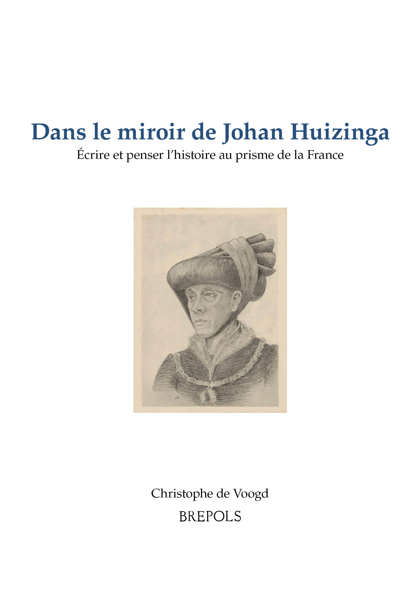
Publication – Christophe de Voogd, « Dans le miroir de Johan Huizinga. Ecrire et penser l’histoire au prisme de la France »

Écrire et penser l’histoire au prisme de la France L’automne du Moyen Âge (1919) est assurément l’un des grands classiques de l’historiographie, et le livre comme son auteur, Johan Huizinga (1872-1945), connaissent une attention internationale renouvelée. Mais force est de constater que l’historien néerlandais demeure en France une référence marginale en dehors du milieu des médiévistes, à la différence de son autre chef d’œuvre, Homo ludens (1938). Or, la prise en compte de l’ensemble de ses écrits permet de mesurer combien son approche peut éclairer les débats épistémologiques de notre temps. Pionnier de l’histoire culturelle, Huizinga met la force des représentations au premier plan du processus historique ; il pratique et préconise une démarche herméneutique et non causale ou structurelle. Car – et c’est là une divergence majeure avec notamment Lucien Febvre et Marc Bloch – il s’agit moins pour lui d’expliquer le passé à travers ses traces que de comprendre ses acteurs à travers leurs signes. D’où le privilège des sources narratives et iconographiques dans une écriture qui, elle-même, prend la forme du récit : un récit nourri d’abondantes références françaises. C’est pourquoi le présent livre s’efforce de retracer, à travers les relations de Huizinga avec la France, sa conception et son écriture de l’histoire, notamment dans L’automne du Moyen Âge dont on propose ici une relecture. Mais aussi de regarder la France, son histoire et ses historiens dans le miroir de Johan Huizinga, convaincu que l’on est des vertus d’un regard étranger pour éclairer le débat national.

Christophe de Voogd, ancien élève de l’École normale supérieure, agrégé et docteur en histoire, auteur de Histoire des Pays-Bas des origines à nos jours (Fayard), est professeur affilié et chercheur associé à Sciences Po (CHSP).

Préface d’Élodie Lecuppre-Desjardin
Introduction. Le miroir de Huizinga 
Chapitre 1. Johan Huizinga: portrait d’un « exemple sans école »
Chapitre 2. « Homo academicus »: être historien aux Pays-Bas au temps de Huizinga
Chapitre 3. Le champion de la « querelle des Pays-Bas »: les engagements patriotiques de Johan Huizinga
Chapitre 4. Johan Huizinga et la France: rencontres, réception, traduction (1897-1945)  
Chapitre 5. Le miroir de la France (1): Huizinga et l’histoire de France
Chapitre 6. Le miroir de la France (2): Huizinga et les débats français sur la nation
Chapitre 7. Analyse d’un écrit patriotique: Nederland’s beschaving in de zeventiende eeuw (1941)
Chapitre 8. Huizinga et les fondateurs des Annales: essai d’épistémologie comparée
Chapitre 9. Un classique pour la post-modernité
Conclusion. Dix thèses sur L’automne du Moyen Âge
Bibliographie
Annexes
Index des noms de personne

Christophe de Voogd, Dans le miroir de Johan Huizinga. Ecrire et penser l’histoire au prisme de la France, Trunhout, Brepols, 2024 ; 1 vol., 420 p. (Bibliothèque d’histoire culturelle du Moyen Âge, 24). ISBN : 978-2-503-60902-7. Prix : € 115,00.

Source : Brepols

Publié dans Publications | Laisser un commentaire

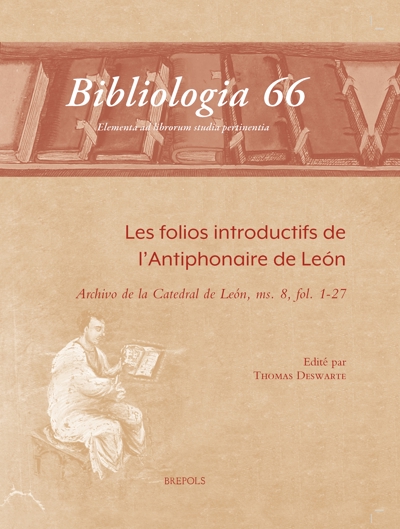
Publication – « Les folios introductifs de l’Antiphonaire de León (Archivo de la Catedral de León, ms. 8, fol. 1-27). Étude et édition », éd. Thomas Deswarte

L’Antiphonaire de León, « joyau des antiphonaires latins » (dom Louis Brou), est le seul complet de l’ancienne liturgie hispanique. Conservé à la cathédrale de León et daté du dixième siècle, il est introduit par vingt-sept folios qui appartiennent très certainement au manuscrit originel. Encore largement méconnus malgré leur grande richesse, ces folios contiennent des textes littéraires et liturgiques, un calendrier, des miniatures, des tableaux et des roues de comput, ainsi qu’un traité de comput. L’édition de ces pièces – à l’exception du traité – et leur analyse pluridisciplinaire (codicologique, paléographique, iconographique, littéraire, musicologique, liturgique et computistique) permettent d’étudier en profondeur la vie religieuse et la culture de cette époque, l’importance de l’héritage wisigothique, les influences venues du monde ultra-pyrénéen, ainsi que les origines et les remaniements de ce codex. Ces folios introductifs constituent tout à la fois la porte d’entrée et la clef de lecture d’un manuscrit dont l’histoire se trouve au cœur des grands enjeux de son temps : réalisé pour le monastère San Cipriano del Condado, il fut vite transféré au monastère Santiago de León puis au chapitre de la cathédrale. Bien que proche des centres de pouvoir – il comporte les seings du roi Ferdinand Ier et de ses fils –, il sombra dans l’oubli lorsque son fils Alphonse VI accepta en 1080 de renoncer à la liturgie hispanique et d’adopter, à la demande du pape Grégoire VII, le rit romain. Cette étude participe à sa redécouverte.

Thomas Deswarte, Introduction

Études
Thomas Deswarte, Origine et vicissitudes de l’Antiphonaire de León: de la codicologie à l’histoire
Eva Castro Caridad, Textos proemiales antiguos y nuevos en el Antifonario de León (L8)
Ainoa Castro Correa, Los folios introductorios del Antifonario de León (León, Archivo Capitular, MS 8): análisis paleográfico
Emma Hornby and Rebecca Maloy, Notated chant in the opening folios of the León antiphoner
Miguel C. Vivancos, El calendario y otros contenidos litúrgicos en los folios introductorios del antifonario de León
Immo Warntjes, The computistica of the Antiphonary of León in context
Soledad de Silva y Verástegui, La iconografia en los prólogos del Antifonario de la catedral de León

Édition des folios 1-28
Thomas Deswarte, Immo Warntjes et Alfred Lohr

Glossaire

Sources & bibliographie

Planches

Les folios introductifs de l’Antiphonaire de León (Archivo de la Catedral de León, ms. 8, fol. 1-27). Étude et édition, éd. Thomas Deswarte, Turnhut, Brepols, 2024 ; 1 vol., 500 p. (Bibliologia, 66). ISBN : 978-2-503-59391-3. Prix : € 125,00.

Source : Brepols

Publié dans Publications | Laisser un commentaire

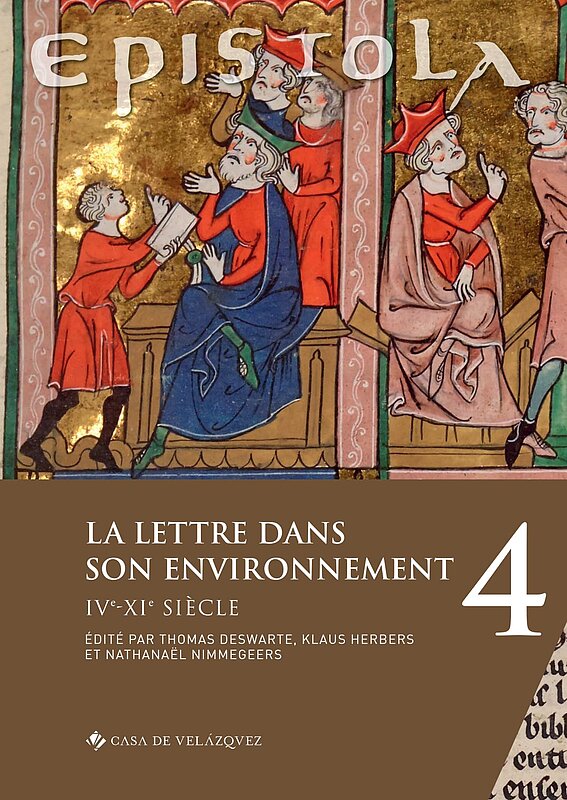
Publication – « Epistola 4. La lettre dans son environnement IVe-XIe siècle », éd. Thomas Deswarte, Klaus Herbers, Nathanaël Nimmegeers

Ce quatrième volume clôt la série Epistola qui réunit les contributions d’éminents spécialistes européens du genre épistolaire, art qui interagit le plus avec son environnement culturel, social et documentaire. La lettre, en situation d’interface à toutes les étapes de sa vie, reflète les mutations de l’Antiquité tardive et du haut Moyen Âge provoquées notamment par l’éclatement politique, la christianisation et la diversification du latin. Influencée par son contexte d’élaboration, elle s’adapte par anticipation à son destinataire ; transmise, elle possède une dimension pragmatique puisqu’elle a pour but d’informer, de convaincre et d’ordonner ; reçue, elle peut susciter une réponse et participer au tissage d’un réseau épistolaire ; conservée, son texte est parfois recopié, manipulé et inséré dans un contexte non épistolaire.

Benoît Grévin
La lettre dans son environnement sociolinguistique. Gaule-Italie, VIe-début VIIIe siècle

I. — LA LETTRE ET SON ENVIRONNEMENT DIALOGIQUE

Christiane Veyrard-Cosme
Les facettes du discours épistolaire dans les Lettres d’Éginhard

Eugenio Riversi
Épîtres et dialogues. Réforme et culture de la confrontation à Rome avant la querelle des Investitures

Ludwig Vones
Brief und Ideologie. Betrachtungen zum Schriftverkehr Papst Gregors VII. mit den Herrschern der Hispania

Isabel Velázquez
Epístolas epigráficas en la Antigüedad Tardía y Alta Edad Media. Ejemplos de Hispania

II. — CONTEXTES ET COTEXTES : ÉCRITURE ET RÉÉCRITURE DE LA LETTRE

Bruno Dumézil
La lettre et ses lecteurs. L’usage du matériau épistolaire chez Grégoire de Tours

Amancio Isla Frez
La epístola De laude Pampilone y el epitalamio de Leodegundia. La disolución del género y el proyecto del Códice de Roda

Nathanaël Nimmegeers
Revendiquer, reconstruire et convaincre. La correspondance d’Adon de Vienne (860-875)

Bruno Judic
La lettre perdue du pape Honorius

Camille Bonnan-Garçon
Munus flatteur, présent ou sportule ? Le billet accompagnant un cadeau dans l’Antiquité tardive

III. — LA FONCTION SOCIALISANTE DE LA LETTRE

Dominique Barbe
Sacramenta epistolaria. Rituel épistolaire et communion chrétienne à la fin de l’Antiquité

Ruth Miguel Franco
Las epístolas consolatorias de Braulio de Zaragoza

Julian Führer
Les réseaux épistolaires des Anglo-Saxons et des Irlandais sur le continent au haut Moyen Âge

Sébastien Fray
Les enjeux de la correspondance de Gerbert d’Aurillac avec les moines de Saint-Géraud

Klaus Herbers
Conclusions

Informations pratiques :

Epistola 4. La lettre dans son environnement IVe-XIe siècle, éd. Thomas Deswarte, Klaus Herbers, Nathanaël Nimmegeers, Madrid, Casa de Velázquez, 2024 ; 1 vol., XII–329 p. (Collection de la Casa de Velázquez, 197). ISBN : 978-8-49096-440-8. Prix : € 35,00.

Source : Casa de Velázquez

Publié dans Publications | Laisser un commentaire

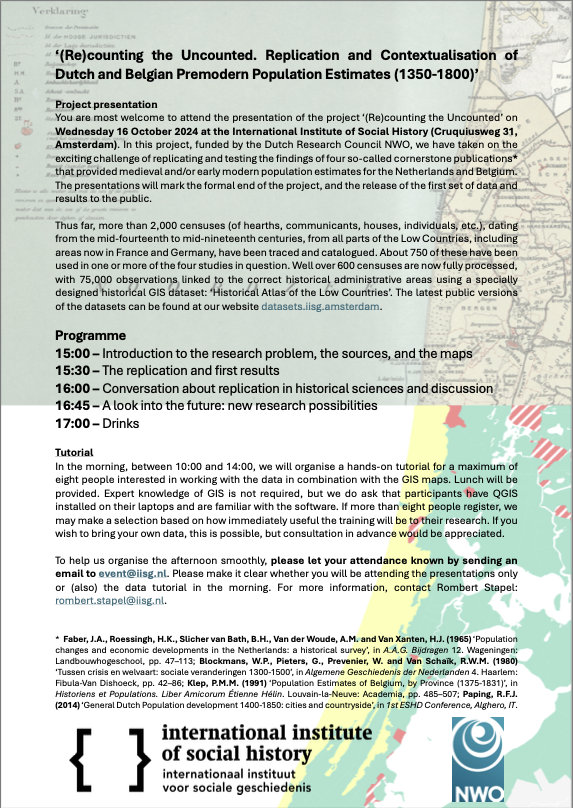
Journée d’étude – (Re)counting the Uncounted. Replication and Contextualisation of Dutch and Belgian Premodern Population Estimates (1350-1800)

Project presentation

You are most welcome to attend the presentation of the project ‘(Re)counting the Uncounted’ on Wednesday 16 October 2024 at the International Institute of Social History (Cruquiusweg 31, Amsterdam). In this project, funded by the Dutch Research Council NWO, we have taken on the exciting challenge of replicating and testing the findings of four so-called cornerstone publications* that provided medieval and/or early modern population estimates for the Netherlands and Belgium. The presentations will mark the formal end of the project, and the release of the first set of data and results to the public.

Thus far, more than 2,000 censuses (of hearths, communicants, houses, individuals, etc.), dating from the mid-fourteenth to mid-nineteenth centuries, from all parts of the Low Countries, including areas now in France and Germany, have been traced and catalogued. About 750 of these have been used in one or more of the four studies in question. Well over 600 censuses are now fully processed, with 75,000 observations linked to the correct historical administrative areas using a specially designed historical GIS dataset: ‘Historical Atlas of the Low Countries’. The latest public versions of the datasets can be found at our website datasets.iisg.amsterdam.

Programme :

15:00 – Introduction to the research problem, the sources, and the maps
15:30 – The replication and first results
16:00 – Conversation about replication in historical sciences and discussion
16:45 – A look into the future: new research possibilities
17:00 – Drinks

Tutorial

In the morning, between 10:00 and 14:00, we will organise a hands-on tutorial for a maximum of eight people interested in working with the data in combination with the GIS maps. Lunch will be provided. Expert knowledge of GIS is not required, but we do ask that participants have QGIS installed on their laptops and are familiar with the software. If more than eight people register, we may make a selection based on how immediately useful the training will be to their research. If you wish to bring your own data, this is possible, but consultation in advance would be appreciated.

To help us organise the afternoon smoothly, please let your attendance known by sending an email to event@iisg.nl. Please make it clear whether you will be attending the presentations only or (also) the data tutorial in the morning. For more information, contact Rombert Stapel: rombert.stapel@iisg.nl.

Publié dans Colloque | Laisser un commentaire

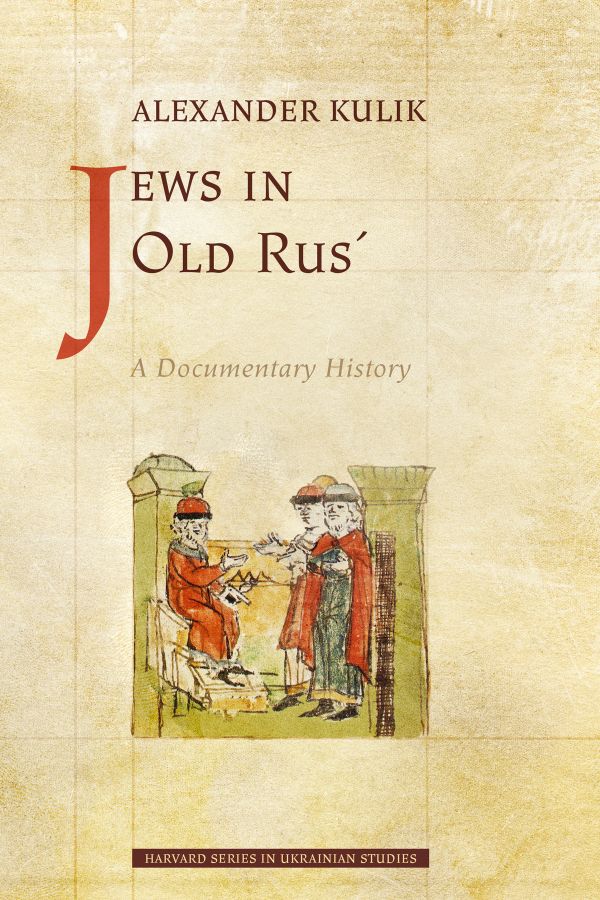
Publication – Alexander Kulik, « Jews in Old Rus’ . A Documentary History »

For the first time, this collection makes available a selection of documents on the history of Jews in old Rus’ that provide unique insight into Slavic–Jewish relations, offering both the original texts in Latin, Hebrew, Church Slavonic, and Arabic, and their English translations.

Adding nuance to our understanding of the difficult relations Rus’ had with Khazaria, Jews in Old Rus’ also realigns the position of East European Jews within the larger diaspora of European Jews. This collection meticulously presents legal rulings, religious and liturgical customs, practices regarding food and garments, linguistic acculturation, and the political loyalties of Jews in old Rus’.

Alexander Kulik is Associate Professor in the Department of Russian and East European Studies at the Hebrew University of Jerusalem.

Informations pratiques :

Alexander Kulik, Jews in Old Rus’ . A Documentary History, Cambridge (MA), Harvard University Press, 2024 ; 1 vol., 500 p. ISBN : 9780674258297. Prix : USD 94,00.

Source : Harvard University Press

Publié dans Publications | Laisser un commentaire

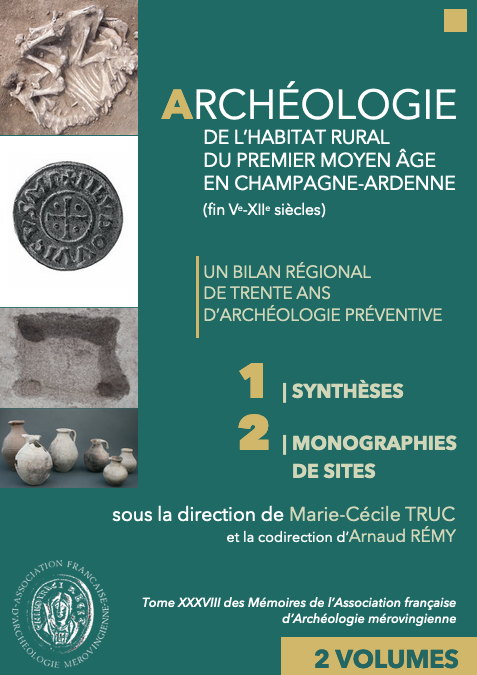
Publication – « Archéologie de l’habitat rural du premier Moyen Âge en Champagne-Ardenne (fin Ve-XIIe siècles). Un bilan régional de trente ans d’archéologie préventive », éd. Marie-Cécile Truc, Arnaud Rémy

Fruit d’une collaboration regroupant environ 40 chercheurs, ce projet de longue haleine a nécessité près de 10 ans de recherche. Au début des années 2010, la forte activité archéologique préventive dont bénéficie la Champagne-Ardenne a imposé la nécessité de faire le point sur les connaissances et d’exploiter la masse des données collectées. Cet ouvrage en présente les résultats : un premier volume regroupe des synthèses sur les principales composantes des habitats ruraux, leurs mobiliers et les données carpologiques et archéozoologiques, retraçant ainsi l’évolution de ces habitats au cours du premier Moyen Âge. Un second volume présente les notices monographiques d’une sélection de sites.

Archéologie de l’habitat rural du premier Moyen Âge en Champagne-Ardenne (fin Ve-XIIe siècles). Un bilan régional de trente ans d’archéologie préventive, éd. Marie-Cécile Truc, Arnaud Rémy, Caen, Association française d’archéologie mérovingienne, 2024 ; 2 vol., 480 p + 476 p. (Mémoires de l’Association française d’archéologie mérovingienne, 38). ISBN : 979-10-90282-0. Prix : € 50,00.

Publié dans Publications | Laisser un commentaire

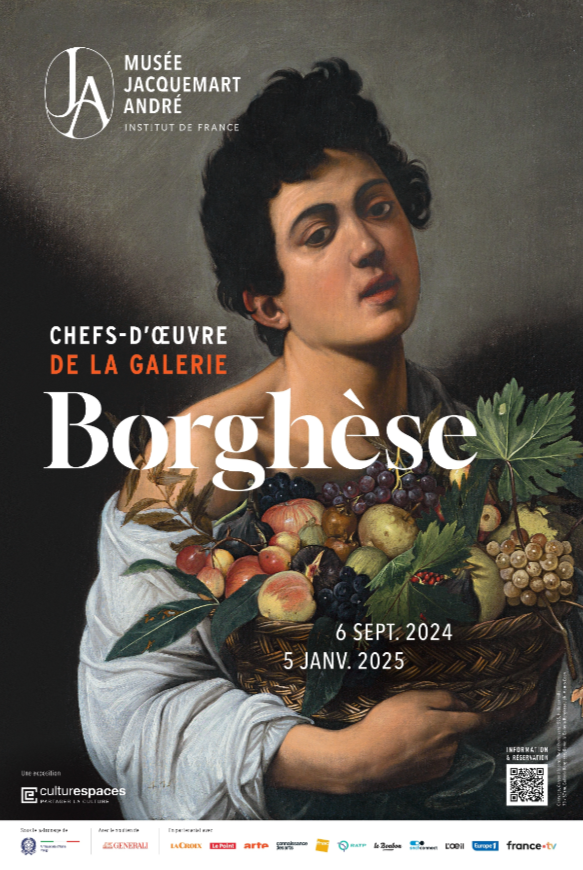
Exposition – Chefs-d’œuvre de la Galerie Borghèse

Pour son exposition de réouverture après plus d’un an de travaux, le Musée Jacquemart- André présentera une quarantaine de chefs-d’œuvre de la célèbre Galerie Borghèse à Rome. Ce partenariat exceptionnel entre les deux institutions vous offrira une occasion unique d’admirer à Paris un ensemble d’œuvres majeures d’artistes célèbres de la Renaissance et de la période baroque rarement prêtées à l’étranger, du Caravage à Rubens, en passant par Botticelli, Raphaël, Titien, ou encore Véronèse, Antonello da Messina et Bernin.

La Villa Borghese Pinciana, qui abrite aujourd’hui la Galerie Borghèse, fut construite entre 1607 et 1616 sur ordre du puissant cardinal Scipion Borghèse (1577-1633), neveu du pape Paul V (1550-1621). S’inspirant des luxueuses villas romaines, Scipion souhaitait consacrer ce palais entouré de jardins à l’exposition de ses collections d’œuvres antiques et de peintures et sculptures modernes, évoquant un nouvel âge d’or. Doté d’un goût sûr, d’une insatiable curiosité et d’une extraordinaire capacité à déceler les chefs-d’œuvre parmi les productions de son temps, Scipion Borghèse complétait sa collection par tous les moyens, légaux ou non. Il s’est ainsi imposé comme l’un des premiers et des plus importants collectionneurs et mécènes de l’histoire de l’art moderne, faisant de la Villa Borghese un véritable musée avant la lettre. Selon ses dernières volontés, l’ensemble de ses collections et de ses propriétés fut transmis génération après génération sans être dispersé pendant près de deux cents ans, et les héritiers Borghèse poursuivirent l’enrichissement du patrimoine familial. Au début du XIXe siècle, plusieurs centaines de sculptures antiques furent néanmoins cédées à Napoléon Bonaparte par son beau-frère, le prince Camille Borghèse (1775-1832) ; leur absence a été progressivement comblée par de nouvelles acquisitions. La famille Borghèse finit par vendre la villa et son musée à l’État italien en 1902. La Galerie Borghèse demeure aujourd’hui un symbole de la prospérité économique, culturelle et artistique de Rome à l’époque moderne, et à ce titre une destination incontournable pour les visiteurs de la Ville éternelle.

Grâce au partenariat entre le Musée Jacquemart-André et la Galerie Borghèse – dans le contexte d’une campagne de travaux de rénovation du musée romain à l’automne 2024 – cette exposition présentera une sélection d’œuvres exceptionnelles issue de cet ensemble artistique unique au monde. Vous pourrez notamment y (re)découvrir les productions de grands noms de l’art italien des XVIe et XVIIe siècle (Raphaël, Antonello da Messina, Parmesan, Lorenzo Lotto, Titien, Véronèse, Caravage, Bernin…) et de peintres nordiques ayant séjourné en Italie (Rubens, Gerrit von Honthorst…). L’exposition rendra aussi hommage à des peintres moins connus du grand public, tels qu’Annibal Carrache, Guido Reni, Le Cavalier d’Arpin et Jacopo Bassano. La présentation des œuvres dans l’exposition éclairera à la fois l’histoire de la collection et le sens des grandes thématiques explorées par les artistes. L’exposition sera accompagnée d’un catalogue, ouvrage de référence en langue française sur la collection de peintures modernes de la Galerie Borghèse.

Le Musée Jacquemart-André a le souci de mettre en avant des figures de collectionneurs qui ont marqué l’histoire de l’art, à l’image du couple formé par Édouard André et Nélie Jacquemart. Ceux-ci ont constitué une riche collection de peintures, de sculptures et de mobilier italiens du Moyen-Âge au XVIIIe siècle, faisant du Musée Jacquemart-André l’une des institutions françaises de référence pour l’art de ce pays. Les chefs-d’œuvre réunis par les Borghèse seront ainsi particulièrement bien entourés au sein de ce musée italien au cœur de Paris.

Source : Musée Jacquemart-André

Publié dans Exposition | Laisser un commentaire

Appel à contribution – Egodocuments from Medieval Codex to Modern Media: Narratives, Presentations, Identities

1st Egodocumental Network Conference Egodocuments from Medieval Codex to Modern Media: Narratives, Presentations, Identities Vilnius, 24-26 April 2025

Vilnius University, Faculty of Communication
Nicolaus Copernicus University in Toruń, Faculty of History
University of Lodz, Filip Friedman Centre for Jewish Studies
Egodocumental Research Group

Egodocuments from Medieval Codex to Modern Media:
Narratives, Presentations, Identities

Vilnius, 24-26 April 2025

Vilnius University, Nicolaus Copernicus University in Toruń,  the University of Lodz, and the Egodocumental Research Group (https://egodocuments.umk.pl) organise an international conference focusing on research, development, and changing perceptions of egodocuments in the twenty-first century. The conference aims to bring together scholars from different disciplines to share their insights and to encourage interdisciplinary studies of egodocuments.

 The conference will also be the first meeting of the International Egodocumental Network established in December 2023 by the Egodocumental Research Group (Nicolaus Copernicus University in Toruń and the University of Lodz) to unite scholars from different disciplines working on egodocuments. It provides a platform for discussion, collaboration, and exchange of information between the participants, as well as online research seminars organized twice a year. In this dimension, our conference continues two editions of the Scientific Symposium « Egodocuments, Life-Writing and Autobiographical Texts… » organized at Nicolaus Copernicus University in Toruń in 2022 and 2024.

The conference aims at two primary goals:

1. Discussion of the concept, typology, genres, and narratives of egodocuments in the context of the following research aspects in any historical period: development of the manuscript, the print and the digital media, publishing and circulation of the written word in society, egodocumentary heritage and its expression, migration of narratives in the media, creative writing and digital storytelling, inclusive publishing, artificial (generative) intelligence, information and communication of cultural heritage, etcetera.

2. Addressing the questions of human inner and outer reality by using the egodocumentary approach. Among the topics for discussion:

  • cultural identity,
  • otherness and strangeness,
  • social and geographical mobility,
  • sexuality
  • privacy
  • religious experience

The organizers also welcome papers related to different historical periods, geographical regions, in the long term and various dimensions of human identity and reality expressed in egodocuments – travel writing, epistolary, diaries and memoirs, album amicorum, silva rerum, egodocumentary marginalia and other self-testimonies (Selbstzeugnisse, samoświadectwa, écrits du for privé etc), as well as their expression and potential use in fiction and documentary literature, art, film, and the creative industries in general.

Two collective volumes are envisaged based on a selection of papers presented at the conference. One will be submitted to the journal Book Studies – Knygotyra https://www.journals.vu.lt/knygotyra, referenced in SCOPUS and Web of Science, and the other will be submitted to Brill’s series Egodocuments and History.

Please send your topics and abstracts (150-200 words) by 31 October 2024 to Veronika Girininkaitė veronika.girininkaite@mb.vu.lt. To ensure Your e-mail would not get lost, name it Vilnius 2025.

Address for communication on general matters egodocuments@umk.pl, organisational questions in Vilnius – agne.zumbrickaite@kf.vu.lt.

The conference will be held in English.

 Conference venue: Vilnius University Campus.

 Registration cost: 80 EUR (covers participation, coffee breaks and lunches).

Organizing committee: Prof. Arvydas Pacevičius (Vilnius University – Chairman), Prof. Aušra Navickienė (Vilnius University -Vice-Chairwoman), Dr. Hab. Hadrian Ciechanowski (Nicolaus Copernicus University in Toruń), Dr. Veronika Girininkaitė (Vilnius University), Dr. Hab. Prof. Michaël Green (University of Lodz).

Scientific committee: Prof. Dr. Hab. Waldemar Chorążyczewski (Nicolaus Copernicus University in Toruń), Prof. Aušra Martišiūtė-Linartienė (The Institute of Lithuanian Literature and Folklore), Dr. Joanna Orzeł (University of Lodz), Prof. Dr. Hab. Stanisław Roszak (Nicolaus Copernicus University in Toruń), Dr. Jolita Sarcevičienė (The Lithuanian Institute of History), Dr. Kšištof Tolkačevski (Vilnius University)

Keynote speakers:
Dr. Nataliia Voloshkova, Kazimierz Wielki University and Oxford Brookes University;
Prof. Leona Toker, Hebrew University of Jerusalem;
Prof. François-Joseph Ruggiu, Sorbonne Université, CNRS and Oxford University

Source : Egodocumental Research Group

Publié dans Appel à contributions | Laisser un commentaire