Offre d’emploi – Mystik vermitteln. Formen des Umgangs mit mystischen Büchern in der Kartause Erfurt (Postdoc, Universität Freiburg)

Das DFG-Projekt “Mystik vermitteln. Formen des Umgangs mit mystischen Büchern in der Kartause Erfurt” sucht eine/nakademischen Mitarbeiterin (75%, Postdoc) Hauptanliegen des am Deutschen Seminar der Universität Freiburg angesiedelten Projektes ist, mit Blick auf die Erfurter Kartause, ihre Bibliotheksordnung und ihre Schriftpraxen der Frage nachzugehen, wie mit einem aus historischer Sicht als ‚mystisch‘ geltenden Buchbestand umgegangen und wie der Zugang zu diesem vermittelt wurde. Den Untersuchungsgegenstand liefert nicht nur der 1475 angelegte Standortkatalog der Kartause, dessen digitale Teiledition im Rahmen des Vorgängerprojektes realisiert wurde (siehe https://making-mysticism.org/edition/1.0/html/), sondern auch die Schriftkultur, genauer: die Sammel-, Lektüre-
und Schreibpraxis der Erfurter Kartäuser, allen voran des Bibliothekars und eines seiner Mitarbeiter (Bruder N.). Dabei stellt aus methodologischer Sicht die Erforschung textarchäologischer Kontexte die vordringliche philologische Aufgabe dar, um einen historisch vermittelten Zugang zu den untersuchten Autoren/Werken als Zeugen des Umgangs mit mystischen Büchern in der Erfurter Kartause zu eröffnen.


Die Hauptaufgabe der/des Wissenschaftlichen Mitarbeiter*in wird die Arbeit an einem der Forschungsvorhaben des Projektes sein, konkret: Konstitution und Gebrauch eines Corpus von Johannes Tauler zugeschriebenen Predigten in der auf theologia mystica ausgerichteten Sammel- und Schreibpraxis der Erfurter Kartäuser. Die Forschungsergebnisse sollen in Form von Aufsätzen
publiziert werden. Erwartet wird darüber hinaus die Mitarbeit an der Vorbereitung/Durchführung eines Colloquiums und jener Kabinettausstellung, in die das Projekt mündet.

Voraussetzungen für die Einstellung sind durch Promotion und/oder durch Publikationen nachweisbare Expertise im Bereich der deutschsprachigen geistlichen Literatur des Mittelalters und sicherer Umgang mit Handschriften und Inkunabeln.

Wünschenswert: solide Kenntnisse der lateinischen Sprache und Englischkenntnisse B2 (oder höher) des Gemeinsamen Europäischen Referenzrahmens, Offenheit für einen projektinternen interdisziplinären Austausch und Bereitschaft, sich in die im Forschungsvorhaben verwendeten
digitalen Ressourcen einzuarbeiten.

Bewerbungsunterlagen:

Anschreiben/Motivationsschreiben (eine Seite)
Lebenslauf mit relevanten
Publikationen Hochschulzeugnisse
Arbeitsprobe aus einer publizierten Arbeit (max. 25 Seiten)

Die Stelle (75%) ist auf 3 Jahre befristet. Die Vergütung erfolgt nach E13 Für die hier ausgeschriebene Position freuen wir uns besonders über Bewerbungen von Frauen. Bitte bewerben Sie sich mit o. g. Unterlagen unter Angabe der Kennziffer 00003922 bis spätestens 04.09.2024. Ihre Bewerbung richten Sie bitte in schriftlicher oder elektronischer

Form an: AOR Dr. Balázs J. Nemes Universität Freiburg / Deutsches Seminar Platz der Universität 3 79098 Freiburg

Für nähere Informationen steht Ihnen Herr Dr. Balázs József Nemes unter Tel. +49 761 203-3235 oder E-Mail balazs.jozsef.nemes@germanistik.uni-freiburg.de zur Verfügung.

Publié dans Offre d'emploi | Laisser un commentaire

Podcast – Emmanuelle Vagnon-Chureau, « Cartes marines et œuvres d’art. Les atlas portulans de la Bibliothèque municipale de Lyon (XIVe-XVIIe siècle) »

Accès : ici

La Bibliothèque municipale de Lyon conserve une collection de quatre atlas portulans de très belle qualité et peu connus, du 14e au 17e siècles.


L’histoire de ces cartes nautiques dessinées sur parchemin, dont l’origine demeure mystérieuse, commence à l’époque des croisades et se poursuit au temps de l’élargissement des savoirs géographiques au-delà des océans. Elles sont révélatrices du regard européen sur les espaces lointains. Tous ces documents sont richement décorés, selon les cas, de délicates figures de saints, de roses des vents, de blasons armoriés et de bateaux et navires, animaux et paysages. Ces éléments décoratifs associés au grand raffinement de la calligraphie rappellent que ces cartes et atlas portulans avaient une fonction ornementale et artistique et avaient leur place dans le marché de l’art de leur époque.

Intervenants : Emmanuelle Vagnon-Chureau, CNRS (UMR 8589-Université Paris 1).

Source : Bibliothèque municipale de Lyon

Publié dans Podcast | Laisser un commentaire

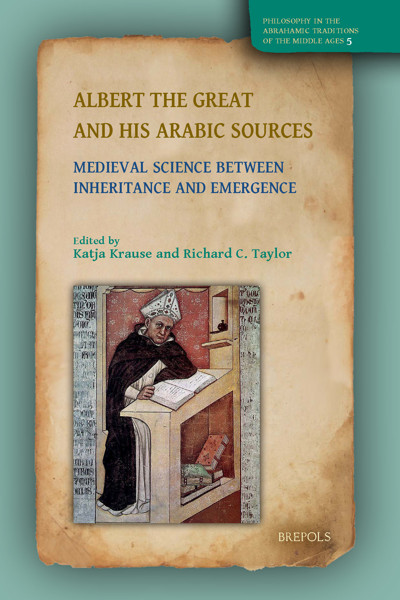
Publication – « Albert the Great and his Arabic Sources. Medieval Science between Inheritance and Emergence », éd. Katja Krause, Richard C. Taylor

Albert the Great created a new programme of science in the thirteenth-century Latin world by extensively commenting upon Aristotle’s philosophical corpus and supplementing that corpus with works of his own wherever he saw gaps. What were the preconditions for the emergence of such a comprehensively new scientific agenda and its centuries of success at the University of Paris and Dominican study houses across Europe? One answer is found in the rich Arabic sources that Albert had at his disposal in Latin translation, including Alfarabi, Avicenna, and Averroes, as well as Isaac Israeli, Maimonides, and more.

Never before in the history of Albert scholarship has there been a collected volume that examines this inheritance from the Arabic-speaking lands in its role as a major condition for the emergence of Albert’s scientific programme. In the present volume, twelve leading scholars in the field offer studies that range from Albert’s early theological works to his late philosophical writings. The volume focuses on the teachings that Albert actively inherited from the Arabic sources, the ways in which he creatively implemented those teachings into his scientific corpus, and the effects that these implementations had on his own programmatic take on scientia.

Katja Krause is Professor of the History of Science at the Technical University Berlin and leads a research group at the Max Planck Institute for the History of Science.

Richard C. Taylor is professor of philosophy at Marquette University, annual visiting professor at the KU Leuven, and director of the ‘Aquinas and « the Arabs » International Working Group’.

Chapter 1. Introduction: Albert’s Philosophical scientia: Origins, Geneses, Emergences
KATJA KRAUSE AND RICHARD C. TAYLOR

Chapter 2. Albert the Great’s Definition of the Good: Its Arabic Origins and Its Latin Transformations
JORGE USCATESCU BARRÓN

Chapter 3. Albert the Great and Two Momentous Early Misconstruals in the Interpretation of Averroes
RICHARD C. TAYLOR

Chapter 4. Albert’s Invocations of Averroes in His Account in Super Ethica of the Relation between Philosophical and Theological Ethics
MARTIN J. TRACEY

Chapter 5. Albert and ‘the Arabs’: On the Eternity of Movement
JOSEP PUIG MONTADA

Chapter 6. Albert the Great’s Treatment of Avicenna and Averroes on a Universal Flood and the Regeneration of Species
IRVEN M. RESNICK

Chapter 7. Against Averroes’s Naturalism: The Generation of Material Substances in Albert the Great’s De generatione et corruptione and Meteorologica IV
ADAM TAKAHASHI

Chapter 8. Albert the Great’s Use of Averroes in His Digressions on Human Intellectual Knowledge (De anima III.3.8–11)
LUIS XAVIER LÓPEZ-FARJEAT

Chapter 9. Is There an Intellectual Memory in the Individual Human Soul? Albert the Great between Avicenna and Aquinas
JÖRN MÜLLER

Chapter 10. What Makes a Genius? Albert the Great on the Roots of Scientific Aptitude
HENRYK ANZULEWICZ

Chapter 11. Source Mining: Arabic Natural Philosophy and experientia in Albert the Great’s Scientific Practices
KATJA KRAUSE

Chapter 12. Inheritance and Emergence of Transcendentals: Albert the Great between Avicenna and Averroes on First Universals
AMOS BERTOLACCI

Chapter 13. The Emanation Scheme of Albert the Great and the Questions of Divine Free Will and Mediated Creation
DAVID TWETTEN

Index of Subjects and Names
Index of Books, Ancient and Premodern

Albert the Great and his Arabic Sources. Medieval Science between Inheritance and Emergence, éd. Katja Krause, Richard C. Taylor, Tunrhout, Brepols, 2024 ; 1 vol., 473 p. (Philosophy in the Abrahamic Traditions of the Middle Ages, 5). ISBN : 978-2-503-60937-9. Prix : € 130,00.

Source : Brepols

Publié dans Publications | Laisser un commentaire

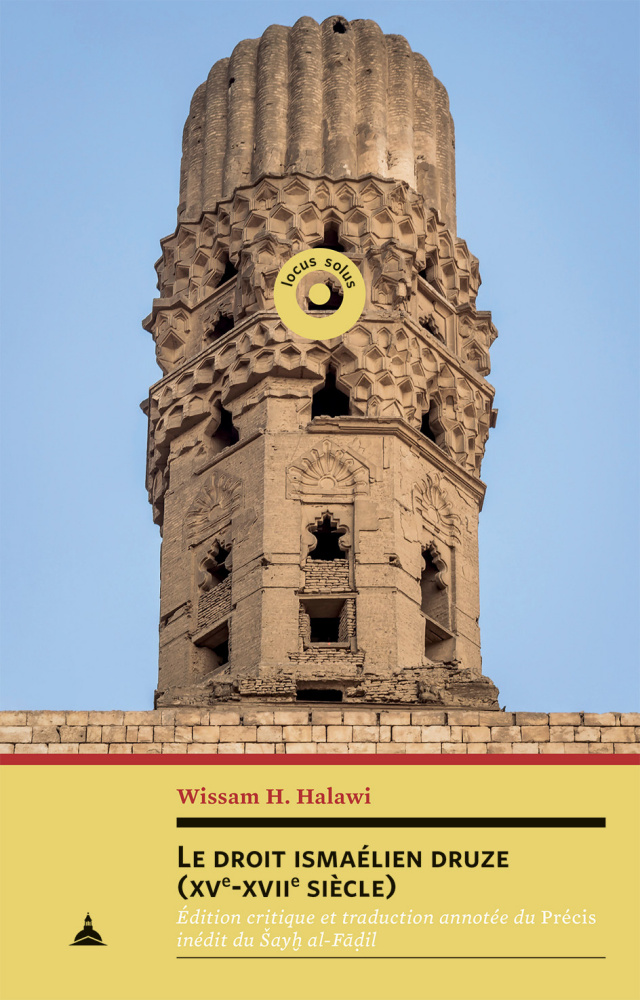
Publication – Wissam H. Halawi, « Le droit ismaélien druze (XVe-XVIIe siècle). Édition critique et traduction annotée du Précis inédit du Shaykh al-Fāḍil »

Les Druzes forment une communauté musulmane ésotérique dont la doctrine spirituelle a pris racine dans l’ismaélisme du Caire fatimide du Ve/XIe siècle. Leur pensée, en harmonie avec le shi’isme primitif, porte un regard nouveau sur la notion de divin, ainsi que sur le statut du Coran et du prophète Muhammad ; elle fut ainsi reléguée au rang d’hérésie étrangère à l’islam. La doctrine juridique des Druzes a ensuite été élaborée dans le contexte rural et clanique de la Syrie mamelouke du IXe/XVe siècle, lors de la formation d’une école doctrinale de droit (madhab) druze. Leurs traités juridiques, rédigés entre le IXe/XVe siècle et le XIe/XVIIe siècle, jettent les fondements de ce nouveau madhab en Islam.

Quelles relations les principes de la religion druze, au cœur de la doctrine juridique, entretiennent-ils avec l’ismaélisme ? Le Coran est-il une source de droit druze ? Et qu’en est-il de la Hikma (Sagesse), le livre saint des Druzes ? L’influence du fonctionnement des grandes familles rurales sur l’élaboration d’un droit religieux druze permet enfin d’interroger la place du droit coutumier dans l’organisation de la communauté. Les femmes druzes avaient-elles un statut particulier différent du droit sunnite et shi’ite ? Le droit matrimonial druze et l’interdiction des mariages mixtes présentaient-ils une particularité religieuse ou sociale ? Wissam Halawi étudie ces thèmes d’après un traité juridique inédit du XIe/XVIIe siècle, qu’il confronte au corpus juridique druze du IXe/XVe siècle.

Remerciements

Avis aux lecteurs et lectrices

Système de translittération

Abréviations

Introduction. La formation de la communauté druze en Syrie

Chapitre 1. Le Šayḫ al-Fāḍil (m. 1050/1640)
Vie et sainteté
Œuvre juridique et muḫtaṣar
Popularisation posthume

Chapitre 2. Le Précis de droit d’al-Fāḍil
Le manuscrit GAR. 371B : un recueil à usage personnel
Caractéristiques linguistiques
Des versions tardives du Précis

Chapitre 3. L’ismaélisme et l’herméneutique juridique druze
L’imamat et la walāya
L’Intellect, les Degrés cosmiques et la Loi spirituelle
Les préceptes légaux ou furūʿ al-dīn

Chapitre 4. Les sources du droit druze
Le Canon druze : la Ḥikma, une Parole divine
Les Commentaires de l’émir al-Sayyid : les Šarḥayn
Le Coran et les doctrines juridiques islamiques
Le raʾy : l’opinion personnelle du juriste

Chapitre 5. Le droit druze, la justice et la communauté
Taqlīd et innovation juridique
Le chef du maḏhab : statut, autorité et rôle social
La femme au cœur de la communauté

Épilogue. Formation du maḏhab druze et élaboration d’un système juridique entre doctrine ismaélienne et droit coutumier

Traduction annotée

Édition critique

Édition diplomatique

Sources et bibliographie

Index

Table des illustrations

Informations pratiques :

Wissam H. Halawi, Le droit ismaélien druze (XVe-XVIIe siècle). Édition critique et traduction annotée du Précis inédit du Shaykh al-Fāḍil, Paris, Éditions de la Sorbonne, 2024 ; 1 vol., 176 p. (Locus Solus). ISBN : 979-10-351-0901-1. Prix : € 25,00.

Source : Éditions de la Sorbonne

Publié dans Publications | Laisser un commentaire

Appel à contribution – Episcopus at (ICMS) Kalamazoo 2025

Episcopus is excited to be organizing and co-organizing a strong variety of sessions for ICMS 2025. All those making contributions to sessions of papers or roundtables at the Congress need to make proposals in the Confex system (the conference portal) by the deadline of Sunday, Sept. 15, 2024. The general call for papers is available here, but the specific links for individual sessions are also given below.

Bishops and Secular Clergy of Medieval Italy (in-person)

Submit proposals here
Questions? Contact Neslihan Senocak at ns2495@columbia.edu and CC William Campbell at whc7@pitt.edu.

Bishops and Secular Clergy of Medieval Italy (virtual)

Email your paper title and extract in a single email to the co-organizers, using the following addresses: episcopussociety@gmail.com; whc7@pitt.edu; and ns2495@columbia.edu, and please do so as early as possible. To secure a virtual or hybrid session, we first need to demonstrate to the conference committee that there is demand in the form of sound proposals. Once we have secured the virtual or hybrid session, we will let you know, and you will then need to submit through the conference portal by the deadline of September 15.

Bishops, Clerics, and Digital Medievalists (A Roundtable) (hybrid)

Co-sponsored with Digital Medievalist.
Submit proposals here
Questions? Contact Kalani Craig at craigkl@indiana.edu.

The Church in the Fourteenth Century (in person)

Co-sponsored with The 14th-Century Society
Submit proposals here
Questions? Contact organizer Sarah Ifft Decker at ifftdeckers@rhodes.edu.

The Institutional Church in Medieval Iberia (in person)

Co-sponsored with the American Academy of Research Historians of Medieval Spain (AARHMS)
Submit proposals here
Questions? Contact Kyle Lincoln at kyle.c.lincoln@gmail.com.

The Investiture Controversy: A Reacting to the Past Game in Development (in person workshop)

Co-sponsored with The Reacting Consortium
Those contributing to a workshop do not submit through the conference portal; rather, they should email the organizer at whc7@pitt.edu, cc’ing episcopussociety@gmail.com.

Source : Episcopus

Publié dans Appel à contributions | Laisser un commentaire

Publication – « Aymeri de Narbonne », trad. Bernard Guidot

Au début de la chanson d’Aymeri de Narbonne, la chrétienté est terriblement affaiblie, après le désastre de Roncevaux. Elle est minée par le retour de l’individualisme et les doutes sur l’avenir : c’est la fin d’un certain ordre du monde. Néanmoins, la chanson est un exemplum en matière d’héroïsme et de morale, grâce au pouvoir de séduction des héros narbonnais qui sont à la base d’une expansion radieuse : chant à la gloire de la vie qui succède au désastre mortel de la Chanson de Roland. Aymeri instaure de nouvelles valeurs, en affirmant la supériorité de l’univers chevaleresque sur le monde des marchands. La chanson se distingue par ses qualités littéraires : respect de la gloire, place réservée à l’aventure et à l’amour, légèreté et finesse parodiques, irruption inattendue d’écarts souriants ; certaines scènes, par le raffinement et la délicatesse, sont teintées d’une atmosphère courtoise. Le poète a tissé un ensemble cohérent à partir de plusieurs pièces épiques, réunies en une sobre composition. L’univers des mythes et des symboles est une composante essentielle de diverses scènes emblématiques dont le piquant tranche par rapport au sérieux des habitudes épiques. En définitive, Aymeri et Hermenjart constituent l’âme généreuse de cette épopée créatrice, fondée sur un élan d’une ambitieuse nouveauté, au style séduisant et d’une pétillante vivacité.

Bernard Guidot est Professeur émérite à l’Université de Lorraine. Spécialiste des épopées médiévales françaises du Cycle de Guillaume d’Orange, du Cycle de la Croisade et du Cycle des Lorrains, mais aussi de la matière arthurienne et des romans de Tristan. Il est l’auteur des traductions de Garin le Lorrain, de Gerbert, du Siège de Barbastre et de Girart de Vienne, des éditions du Siège de Barbastre, d’Elie de Saint-Gilles et de Garin de Monglane, ainsi que de l’édition-traduction de la Chanson d’Antioche. Il est Président d’Honneur de la Société internationale Rencesvals pour l’étude des épopées romanes.

Table des matières : ici

Aymeri de Narbonne, trad. Bernard Guidot, Paris, Honoré Champion, 2024 ; 1 vol., 354 p. (Classiques français du Moyen Âge, Traductions, 111). ISBN : 978-2-74536-124-0. Prix : € 38,00.

Source : Honoré Champion

Publié dans Publications | Laisser un commentaire

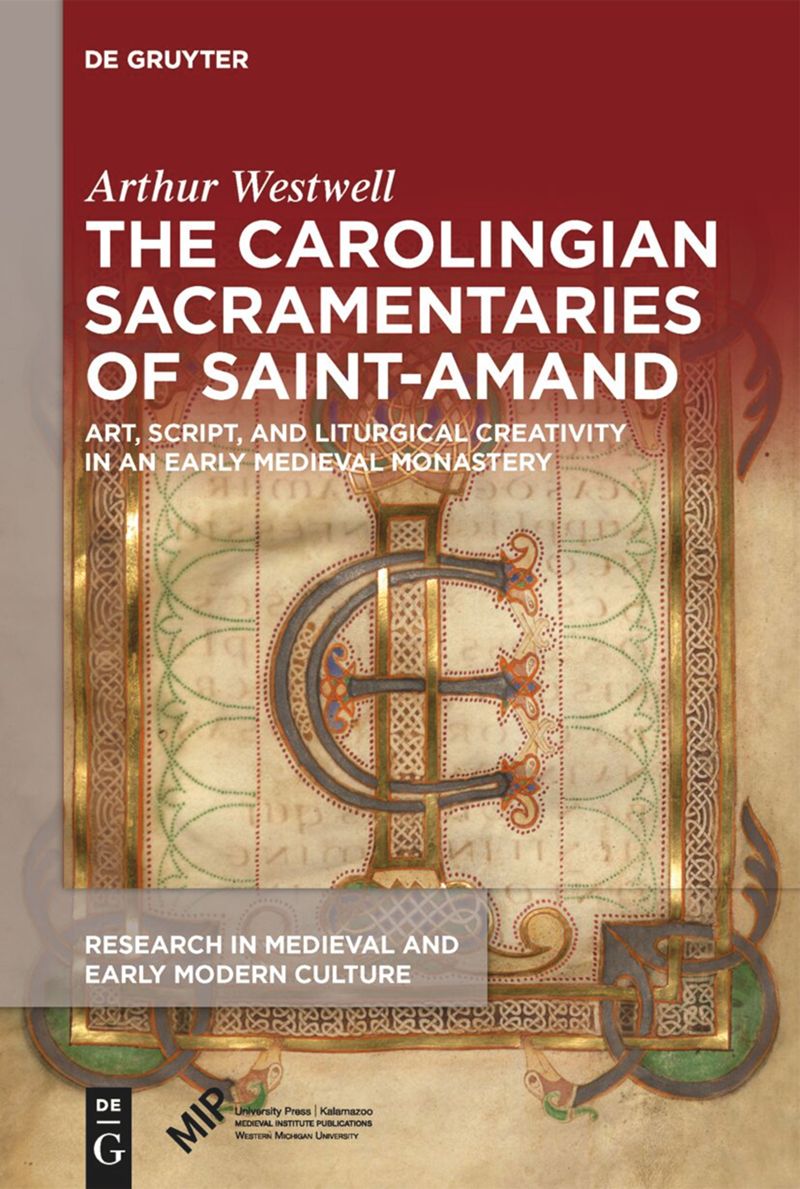
Publication – Arthur Westwell, « The Carolingian Sacramentaries of Saint-Amand. Art, Script, and Liturgical Creativity in an Early Medieval Monastery »

The series of beautiful sacramentaries made at Saint-Amand in the later ninth century offer us unique insight into an early medieval scriptorium at work. These manuscripts contain principally the prayer texts for the celebration of the Mass, a ceremony which stood at the centre of monastic life in this period. They display how this largely neglected genre discloses creativity and initiative on the part of the monks of Saint-Amand, who re-organised and re-composed this especially versatile literature. They made their books uniquely comprehensive and full of insight into how the mass liturgy was re-made at a critical period in its development. This innovative study makes these sources accessible for the first time.

In-depth study of script, decoration, and content enables a new appreciation of the context in which the deluxe Saint-Amand manuscripts were produced. It foregrounds ecclesiastical patronage, the political and intellectual dynamics at the waning of Carolingian power, and the intensive collaboration of scribes, artists, and liturgical composers, as well as the unique ways liturgical manuscripts can inform our understanding of medieval life and thought. 

Table des matières : ici

Informations pratiques :

Source : De Gruyter

Publié dans Publications | Laisser un commentaire

Publication – Christopher Lynch, « Machiavelli on War »

Machiavelli on War offers a comprehensive interpretation of the philosopher-historian’s treatment of war throughout his writings, from poems and memoranda drafted while he was Florence’s top official for military matters to his posthumous works, The Prince and Discourses on Livy.

Christopher Lynch argues that the issue of war permeates the form and content of each of Machiavelli’s works, the substance of his thoughts, and his own activity as a writer, concluding that he was the first great modern philosopher because he was the first modern philosopher of war.

Lynch details Machiavelli’s understanding of warfare in terms of both actual armed conflict and at the intellectual level of thinkers competing on the field of knowledge and belief. Throughout Machiavelli’s works, he focuses on how military commanders’ knowledge of human necessities, beginning with their own, enables and requires them to mold soldiers, organizationally and politically, to best deploy them in operations attuned to political context and changing circumstances. Intellectually, leaders must shape minds, their own and others’, to reject beliefs that would weaken their purpose; for Machiavelli, this meant overcoming the classical and Christian traditions in favor of a new teaching of human freedom and excellence.

As Machiavelli on War makes clear, prevailing both on the battlefield and in the war of ideas demands a single-minded engagement in « reasoning about everything, » beginning with oneself. For Machiavelli, Lynch shows, the successful military commander is not just an excellent leader but also an excellent human being in constant pursuit of the truth about themselves and the world.

Christopher Lynch is Professor of Political Science at Missouri State University and head of the Department of Political Science. He has served as a senior adviser at the US State Department. He is the editor and translator of Art of War by Niccolò Machiavelli and the coeditor of Principle and Prudence in Western Political Thought.

Informations pratiques :

Christopher Lynch, Machiavelli on War, Ithaca (NY), Cornell University Press, 2024 ; 1 vol., 384 p. ISBN : 978-1-50177-302-0. Prix : USD 49,95.

Source : Cornell University Press

Publié dans Publications | Laisser un commentaire

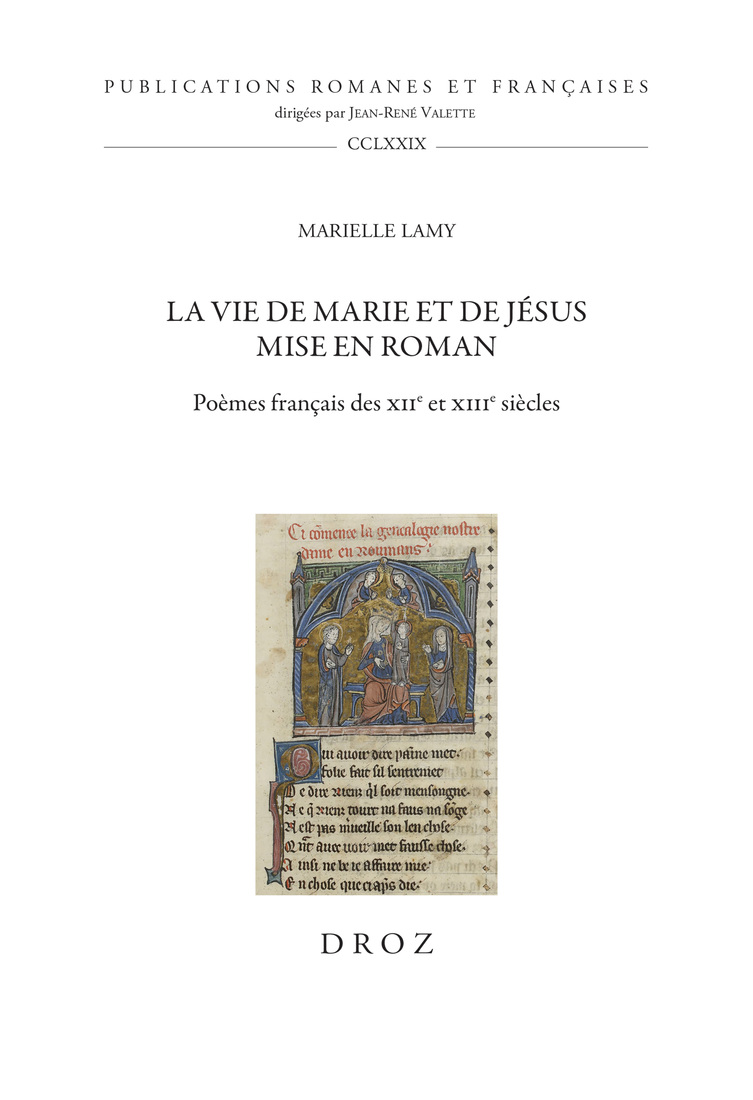
Publication – Marielle Lamy, « La vie de Marie et de Jésus mise en roman. Poèmes français des XIIe et XIIIe siècles »

Comme en témoigne le nombre de manuscrits conservés, la Conception Nostre Dame de Wace, le Romanz de Dieu et de sa mere d’Herman de Valenciennes, le Roman de saint Fanuel et d’autres récits en vers français ont rencontré à partir des XIIe-XIIIe siècles un succès significatif. C’est que leur sujet n’est autre que la vie du Christ et de sa mère, racontée à partir des Évangiles, mais également de traditions apocryphes et légendaires, avec des épisodes inédits et de nouveaux personnages. Les emprunts à des sources non canoniques, comme à des motifs relevant du genre épique ou romanesque, posent la question du rapport entre l’Histoire sainte et la fiction, entre la lettre de l’escrit et la voix du narrateur, entre la parole d’autorité et l’art de « trouver » et rimer. Car ces poèmes visaient en principe à édifier plus qu’à charmer ou divertir, la théologie narrative contribuant de façon essentielle à la diffusion et à l’appropriation de connaissances religieuses. Le récit permettait en outre une expérience spirituelle par l’identification aux personnages mis en scène : il offrait par leur entremise un accès précieux à l’intimité du Sauveur et de sa mère, ainsi que des exemples de service ou de conversion. Ces exemples sont parfois appuyés par des « moralités », tandis que récit et discours explicite se complètent mutuellement pour soutenir une fervente dévotion mariale.

TABLE DES MATIÈRES

Introduction

PREMIÈRE PARTIE. UNE CONSTELLATION D’ŒUVRES

Chapitre premier. Les poèmes du XIIe siècle: exploration de deux voies différentes Une œuvre au titre ambigu: la Conception de Nostre Dame de Wace Un Romanz de Dieu et de sa mere: la « Bible » d’Herman de Valenciennes

Chapitre II. Les poèmes du XIIIe siècle: une persistante diversité Les poèmes du Pseudo (?) Gautier de Coincy Le Romanz de saint Fanuel Un « Nouveau Testament » particulier: l’Histoire de Jésus

Chapitre III. La vie manuscrite des poèmes Réécritures des Vies de Marie et du Christ: fragmentation et recomposition Documenter la vie de Marie et du Christ: des recueils organisés D’autres collections aux profils variés Quel public pour ces histoires ?

DEUXIÈME PARTIE. ENTRE HISTOIRE ET SAINTE ET FICTION: DES VIES ENROMANCÉES

Chapitre IV. Si com lisant trovoms: les limites d’un discours de vérité appuyé sur l’écrit L’omniprésente référence à l’écrit Un argument à relativiser ? Le sens et la fonction d’une formule Quand « l’escrit » est apocryphe

Chapitre V. L’art et la manière de conter l’histoire Faire œuvre d’historien Savoir conter

Chapitre VI. La fabrique des histoires Quand les anonymes de l’Évangile reçoivent une identité Nouveaux personnages

TROISIÈME PARTIE. POUR AMENDER LA GENT…LA VISÉE D’ÉDIFICATION

Chapitre VII. Du récit au sermon La Conception Nostre Dame La « Bible » d’Herman de Valenciennes Les poèmes du Pseudo Gautier de Coincy Le Romanz de saint Fanuel L’Histoire de Jésus

Chapitre VIII. Des pratiques salutaires Les sacrements La question de l’avoir

Chapitre IX. Doctrine et dévotion mariales L’évidence de la maternité virginale Influence des développements de la mariologie Invoquer Marie Vers une dévotion mariale plus affective

Conclusion

Liste des sigles et abréviations

Bibliographie

Index

Table des figures

Informations pratiques :

Marielle Lamy, La vie de Marie et de Jésus mise en roman. Poèmes français des XIIe et XIIIe siècles, Genève, Droz, 2024 ; 1 vol., 688 p. (Publications romanes et françaises, 279). ISBN : 978-2-600-06501-6. Prix : CHF 45,00.

Source : Droz

Publié dans Publications | Laisser un commentaire

Colloque – (Re)Create. Towards a Theory of Heteronomous Texts

You are kindly invited to an interdisciplinary and international conference hosted by the DFG Research Training Group 2792. The conference will focus on the strategies and intentions in heteronomous texts in Antiquity and the Middle Ages. Heteronomy is defined as intentional dependence of one text on others. The new text, whether it is a commentary or an excerpt, acknowledges the norm set by another text. Examining how this acknowledgement is expressed in the text provides new insights into its autonomous role and significance.

Thursday, 5 September 2024

1:00 PM Conference Office Opens

2:00 PM Welcome by the Organising Committee

2:30 PM Keynote. Rachel L. Love (Harvard University, USA): Historical Notes: Ancient History in the Commentarial Tradition

3:45 PM Coffee Break

4:15 PM Gregor Diez (University of Graz, Austria): The Compilation of the Polybian Parts in the Excerpta de Legationibus

5:00 PM TBA

6:00 PM Reception

7:00 PM Joint Dinner

Friday, 6 September 2024

9:00 AM Michael Berger (University of Vienna, Austria): Autonomy and Heteronomy of the Manuscript Copy. Some Considerations on Scribal Practices and the Relationship of Cod. Pal. germ. 341 and Cod. Bodm. 72

9:45 AM Mafalda Gomes (University of Porto, Portugal): von mannes minne: (Re)Creating Love-Shaped Autonomy in Medieval German literature

10:30 AM Coffee Break

11:00 AM Andreas Henn (University of Freiburg, Germany): Barlaam and Josaphat: From the Buddha Legend to Existential Christian Platonism

11:45 AM Olena Peleshenko (National University of Kyiv-Mohyla Academy, Ukraine): The Tale of Macarius of Rome and its Translations in the Late Medieval and Early Modern Ukrainian Manuscript Collections: Towards an Understanding of Christian Censorship in the Byzantine Empire and Rus’

12:30 PM Lunch Break

2:30 PM Caterina Carpinato (Ca’ Foscari University of Venice, Italy): Writing, Reading and Speaking Greek in 16th Century Venice: Confronting the Ancient World and the Ancestors?

3:15 PM Angelos Zaloumis (University of Patras, Greece): Gathering Flowers: How Two Overlooked 14th c. Byzantine florilegia Confirm the Authorship of the Dubious Adversus Cantacuzenum and Reveal the Direct Sources of the Patristic Quotations Found in Manuel Kalekas’ De essentia et operatione

4:00 PM Nina Vanhoutte (Ghent University, Belgium): To Cite or not to Cite: Heteronomy in Niketas of Herakleia’s Grammatical Poems

4:45 PM Coffee Break

5:15 PM Keynote. Stefano Valente (Universität Hamburg, Germany): nullam rem (lexicographicam) e nihilo: Greek-Byzantine Lexica Between Heteronomy and Autonomy

7:00 PM Joint Dinner

Saturday, 7 September 2024

10:00 AM Venue opens

10:15 AM Immanuel Musäus (University of Greifswald, Germany): Is Myth a Text? – Ancient Scholars’ Ways of Dealing with Myth

11:00 AM Reinhard G. Kratz (University of Göttingen, Germany): The Productive Transmission of the Hebrew Bible

11:45 AM Alicia Hein (University of Tübingen, Germany): A Single Figure out of Many Texts: Elijah as Malachi’s Messenger-Prophet-Priest

12:30 PM Lunch Break

2:30 PM Markus Kersten (University of Mainz, Germany): Sublime Smallness? Ausonius on Being Dependent

3:15 PM Jennifer Weintritt (Northwestern University, USA): Translating, Epitomizing, Networking: The Doloneia in Baebius Italicus’ Ilias Latina

4:00 PM Scott Di Giulio (Mississippi State University, USA): Recompilation and Practices of Ancient Literary Production: The Roman Miscellany as a Case Study in Heteronomy

4:45 PM Coffee Break

5:15 PM Keynote. Therese Fuhrer (University of München, Germany): Seneca’s Tragedies as a Staging of ‘Conscious Dependency’

6:30 PM Formal Closing

Thüringische Universitäts- und Landesbibliothek

05.09.2024 – 07.09.2024

If you would like to attend, either in person or via Zoom, please send us an email at recreate-texts@uni-jena.de.

Source : H-Soz-Kult

Publié dans Colloque | Laisser un commentaire