Publication – Viva Sacco, « Dalla ceramica alla storia economica. Il caso di Palermo islamica »

Negli ultimi anni lo studio della Sicilia islamica, per lungo tempo affidato esclusivamente all’analisi delle fonti scritte, ha beneficiato di numerosi nuovi risultati archeologici, i quali hanno permesso di accedere a nuovi tipi di informazioni utili a gettare luce su alcuni aspetti della storia sociale ed economica dell’isola. Allo stesso tempo si è reso necessario distinguere la cultura materiale tipica dell’età islamica da quella della successiva epoca normanna, a lungo considerate un tutt’uno. Questo nuovo approccio allo studio della Sicilia islamica ha fatto emergere in maniera più evidente il ruolo chiave che Palermo ebbe nelle dinamiche politiche, economiche e sociali del Mediterraneo centrale.

Il presente lavoro si inserisce in questa nuova fase degli studi concentrandosi sulla capitale siciliana, osservata attraverso il filtro delle sue produzioni fittili destinate sia al mercato locale sia al più ampio mercato mediterraneo, oltre che delle importazioni ceramiche. Per la prima volta vengono messi a sistema oltre 40.000 frammenti provenienti da contesti archeologici di diversi siti palermitani ed extra-urbani al fine di proporre un utile strumento di lavoro per lo studio dei depositi stratigrafici. Inoltre, questo lavoro classificatorio permette anche e soprattutto di mostrare il contributo che la fonte archeologica, ed in particolare la ceramica, può offrire nella ricostruzione della storia economica di un periodo e di un’area geografica a lungo considerati avvolti nell’oscurità.

Dottore in archeologia e storia dell’arte islamica presso l’Université Paris-Sorbonne e l’Università di Messina, ancienne membre de l’École française de Rome, Viva Sacco è una archeologa e ceramologa specialista nello studio delle produzioni ceramiche circolanti in Sicilia e Ifrīqiya tra IX e XII secolo.

Informations pratiques :

Viva Sacco, Dalla ceramica alla storia economica. Il caso di Palermo islamica, Rome, École française de Rome, 2024 ; 1 vol., 560 p. (Bibliothèque des Écoles françaises d’Athènes et de Rome, 415). ISBN : 978-2-7283-1802-5. Prix : € 68,00.

Source : École française de Rome

Publié dans Publications | Laisser un commentaire

Web – C@nivez. Les Statuta de l’ordre de Cîteaux numérisés

Statuta Capitulorum Generalium Ordinis Cisterciensis ab anno 1116 ad annum 1786, Louvain, Bureaux de la Revue, 1933‑1941 notice de la BnF

Ce projet conduit par l’équipe du CBMA entre 2021 et 2024, et financé par le LaMOP (UMR 8589), propose la publication numérique, en vue de la consultation et de l’interrogation experte sous différents formats électroniques, de l’édition monumentale des statuta annualia de l’ordre de Cîteaux, les Statuta Capitulorum Generalium Ordinis Cisterciensis ab anno 1116 ad annum 1786.

Préparée par le père trappiste Robert Trilhe, après sa mort, l’édition a été complétée et publiée en huit volumes par le père Joseph‑Marie Canivez (1878‑1952), entre 1933 et 1941, à Louvain, par les Bureaux de la Revue d’histoire ecclésiastique. C@nivez prend en compte les textes des statuta et les renvois aux éditions précédentes, sans l’apparat critique complet de l’éditeur et contient 416 unités documentaires. Chaque unité documentaire est identifiée par un n° de document (ajouté par l’équipe
du projet). Les champs/métadonnées de la version XML sont : DATE, ANNOTATION, TITRE I, TITRE II, etc, SOUS TITRE, NUMERO DE PAGE, TEXTE, CANON NUMERO, CANON TITRE. Les balises de la version XML‑TEI sont : ITEM, DATE, NAME, P, QUOTE, REG, NUM.

Versions électroniques : XML/TEI PDF TXT
La saisie des textes par le prestataire WordPro a été possible grâce à la version en image numérique des volumes générée par l’IRHT (Institut de recherche et d’histoire des textes ‑ CNRS) que nous remercions.

Editeurs : Ekaterina Novokhatko (Université Paris 1 Panthéon‑Sorbonne ‑ LaMOP), Pierre Brochard (CNRS ‑LaMOP), Eliana Magnani (CNRS ‑ LaMOP)

Contributeurs :
Gabriel Castanho (UFRJ ‑ Lathimm), Marlène Helias‑Baron (CNRS ‑ IRHT), Elisabeth Lusset (CNRS ‑ LaMOP), Willy Morice (CNRS ‑ LaMOP), Nicolas Perreaux (CNRS ‑ LaMOP), Coraline Rey (Archives Départementales du Var)

Lien de Téléchargement sur Nakala

Lien de Téléchargement sur le site du projet CMBA

Interroger le corpus avec le logiciel Philologic

Source : LAMOP

Publié dans Web | Laisser un commentaire

Appel à contribution – Craftspeople and Ways of Learning

This call for papers invites contributions for an in-person session on craftspeople and different ways of learning to be held at the IMC in Leeds, taking place from 7th to 10th July 2025.

Craftspeople and Ways of Learning

Medieval Craftspeople knew how to make things – ranging from everyday objects to luxury products, from serial articles to single pieces, from well-known devices to innovative tools and machines. Moreover, medieval artisans did not only possess skills specific to craft production. Many also knew how to calculate and how to write account books, recipes, or purchasing lists. During the later Middle Ages, some committed to paper whole tracts and how-to manuals pertaining to their craft, others wrote family and/or city chronicles.

The proposed in-person session seeks to focus on how craftspeople obtained their knowledge and skills regarding materials, specific techniques, calculating, and/or writing. We therefore invite new arguments and insights into the different ways, forms, and sites of artisanal learning. This may include discussions of skills that were learned by experimenting while making objects; a form of practical, embodied knowledge notoriously difficult to reconstruct. Submissions may also consider different locales of learning – such as urban workshops, schools and homes as well as cloisters and royal courts – or the formalisation and regulation of knowledge transmission, for example via apprenticeships and periods as a journeyman in the context of guilds. Further possible topics in relation to craftspeople and learning may include, but are by no means limited to:

– Artisans as agents of knowledge and methods of artisanal teaching as performed in practice, put into writing, and/or visualized in images
– Standardisation of working processes and products
– The role of migration, cross-cultural, and/or inter-religious collaboration
– Forms of solidarity, collaboration, mutual dependency, bondage, or coercion in relationships of learning and teaching
– Dis/ability and learning
– Gender and learning
– Ways of testing and certifying skills and knowledge
– Representations of artisanal learning in literature and art
– Methods of reconstructing learning processes, techniques, and knowledge in different source types

Please submit abstracts of approximately 300 words for 20-minute papers to Eva-Maria Cersovsky (cersovse@uni-koeln.de) by 31st August 2024. The proposal should also include your contact information, academic affiliation, and a short biography. If you have any questions, please do not hesitate to get in touch!

Kontakt : Eva Cersovsky: cersovse@uni-koeln.de

Publié dans Appel à contributions | Laisser un commentaire

Appel à contribution – Reconstruire, réformer, refonder. Congrès national des sociétés historiques et scientifiques 2025

Le prochain Congrès national des sociétés historiques et scientifiques se déroulera du lundi 14 au vendredi 18 avril 2025 à Orléans.
Vous pouvez dès à présent nous faire parvenir vos propositions de communications en vous inscrivant directement sur le site internet du CTHS ou en écrivant à l’adresse congres@cths.fr
Les candidatures doivent nous être envoyées avant le vendredi 18 octobre 2024.

Les dossiers reçus après cette date ne pourront être pris en compte.

Retrouvez l’ensemble des informations et consignes relatives au Congrès 2025 sur notre site internet.
L’appel à communications
Soumettre un projet

LE CONGRÈS

Chaque année le Congrès national des sociétés historiques et scientifiques (CNSHS) rassemble environ cinq cents participants parmi lesquels des universitaires issus de très nombreuses disciplines : histoire, géographie, sciences, ethnologie, anthropologie, préhistoire et protohistoire, archéologie, philologie, histoire de l’art, environnement, etc. Lieu de rencontre et d’échange unique dans le paysage de la recherche française, il accueille également des jeunes chercheurs (dont c’est parfois la première intervention publique) et des érudits locaux membres de sociétés savantes. La confrontation des regards, des expériences et des approches méthodologiques explique la singularité du CNSHS.

Source : Blog de l’ApAhAu

Publié dans Appel à contributions | Laisser un commentaire

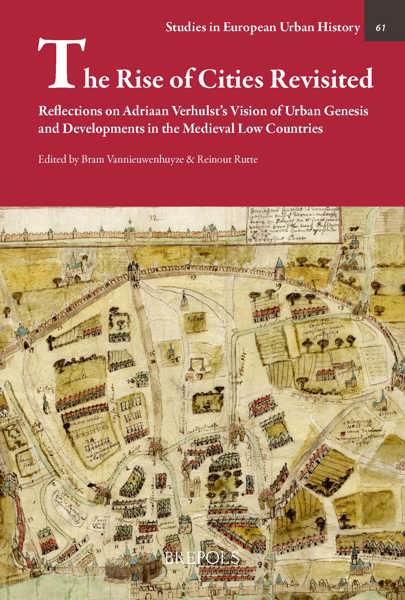
Publication – « The Rise of Cities. Revisited Reflections on Adriaan Verhulst’s Vision of Urban Genesis and Developments in the Medieval Low Countries », éd. Bram Vannieuwenhuyze, Reinout Rutte

Adriaan Verhulst’s The Rise of Cities in North-West Europe (1999) is the last comprehensive work written by a single author on the urban genesis and spatial developments of cities in the medieval Low Countries. Since then, monographs, specialised studies and articles have been published on various cities and towns, while urban archaeologists have carried out numerous excavations. Much new knowledge has been gained, yet many gaps and the need for comparative overviews remain.

Twenty-five years after Verhulst’s synthesis, The Rise of Cities Revisited takes a fresh look at the origins and developments of cities and towns in the Low Countries between the tenth and the sixteenth centuries, critically assesses progress made in scholarship and outlines future directions for research. The chapters of the book are written by senior and junior specialists from various fields, including medieval history, historical geography, economic history, archaeology and building history. The Rise of Cities Revisited presents a state of the art and provides scholars with tools to study this complex subject in future.

Bram Vannieuwenhuyze is Professor by special appointment of Historical Cartography at the University of Amsterdam.

Reinout Rutte is Assistant Professor in the Chair History of Architecture and Urban Planning at Delft University of Technology.

Chapter 1 : Introduction– Reinout Rutte (Delft University of Technology) and Bram Vannieuwenhuyze (University of Amsterdam)
Chapter 2 : Adriaan Verhulst (1929-2002). Urban historian and his Rise of Cities contextualized – Marc Boone (Ghent University)
Chapter 3 : Markets and ports. Models for the origin and growth of medieval towns and cities in North-West Europe– Marcel IJsselstijn (Leiden University and RAAP)
Chapter 4 : A geographer’s view on The Rise of Cities – Hans Renes (Utrecht University and Vrije Universiteit Amsterdam) and Reinout Rutte (Delft University of Technology)
Chapter 5 : Orality, written record and political contract in the earliest borough charters for Flemish local communities (eleventh to twelfth centuries) – Els De Paermentier and Jan Dumolyn (Ghent University)
Chapter 6 : The rise of markets and centres of industry. Revisiting Adriaan Verhulst’s views on the economic development of cities in the Southern Low Countries – Bart Lambert and Adam Hall (Vrije Universiteit Brussel)
Chapter 7 : New insights through archaeology. The thirteenth-century ‘city-making model’ – Roos van Oosten (Leiden University), Arnold Carmiggelt (Boor), Ronald van Genabeek (Archeologische Dienst Den Bosch) en Ranjith Jayasena (BMA Amsterdam)
Chapter 8 : Urban space and urban community. Some remarks on social topography and the socio-spatial structuring of medieval cities in the Low Countries – Ward Leloup (Vrije Universiteit Brussel) and Mathijs Speecke (Ghent University)
Chapter 9 : The material rise of cities. Stone and brick houses in the Low Countries before c. 1350. A first step towards a building-archaeological overview – Gabri van Tussenbroek (University of Amsterdam)
Chapter 10 : Discussion – Keith Lilley (Queen’s University of Belfast)

Informations pratiques :

The Rise of Cities. Revisited Reflections on Adriaan Verhulst’s Vision of Urban Genesis and Developments in the Medieval Low Countries, éd. Bram Vannieuwenhuyze, Reinout Rutte, Turnhout, Brepols, 2024 ; 1 vol., 275 p. (Studies in European Urban History (1100-1800), 61). ISBN : 978-2-503-60056-7. Prix : € 96,00.

Source : Brepols

Publié dans Publications | Laisser un commentaire

Séminaire – Édition collective de documents diplomatiques « clunisiens » de la fin du Moyen Âge et du début de l’époque moderne

La documentation issue des archives anciennes de l’abbaye de Cluny reste encore assez mal connue pour la fin du Moyen Âge et l’époque moderne, malgré l’exploitation qu’en ont fait un certain nombre d’historiennes et d’historiens, surtout si l’on compare aux illustres cartulaires qui l’on précédée.

Le séminaire se donne pour but l’édition collective d’une part de cette documentation, partant de l’inventaire de la situation pour déterminer la stratégie d’édition et les normes de cette dernière, qui prendra une forme électronique. Les participantes et participants doivent en conséquence prévoir de travailler sur des documents en moyen français et en latin, de nature souvent gestionnaire et sur des écritures des XIVe-XVIe siècles, et être prêts à intégrer la dimension numérique du travail, même si celle-ci ne demandera pas obligatoirement à chacun d’en maîtriser les aspects techniques.

  • Le séminaire se tient un jeudi sur deux à partir du 12 septembre 2024 de 10h à 12h au campus Condorcet. Les séances se tiendront en mode hybride, et il sera donc possible d’y assister à distance.

Type d’événement: Séminaire

Conditions d’accès

Libre

Date des séances

12/09/2024 – 10:00
26/09/2024 – 10:00
10/10/2024 – 10:00
24/10/2024 – 10:00
07/11/2024 – 10:00
21/11/2024 – 10:00

Lieu : Campus Condorcet

Source : IRHT

Publié dans Séminaire | Laisser un commentaire

Appel à contribution – Musicology at Kalamazoo

The program committee for Musicology at Kalamazoo invites submissions for the 60th International Congress on Medieval Studies, which will be held on May 8-10, 2025 in Kalamazoo, Michigan. The session topics approved by the Congress can be viewed at https://wmich.edu/medievalcongress/call and include:

IN PERSON:

Chant and Liturgy: In Celebration of Joseph Dyer (ID 6365)
Medieval Dance and Processions: In Honor of the Centenary of Ingrid Brainard’s Birth (ID 6387)
Medieval Music and the Modern Imagination (ID 6328)
Musical Theory (ID 6335)
Music and Politics (ID 6367)
Soundscapes (ID 6336)
Text, Image, and Musical Practice (ID 6338)

VIRTUAL:
Digital Humanities and Medieval Music (ID 6385)

We invite both specialists in musical disciplines and specialists in fields other than music to submit proposals, as we hope to foster interdisciplinary dialogue. Musicology at Kalamazoo strives to foster an environment that is supportive of medievalists of color and other marginalized groups. Papers tackling themes of diversity, inclusion, pedagogy, class, race, disability, gender, and sexual orientation will also be particularly welcome at our sessions.

Please keep in mind that we intend these session titles mostly as “hooks,” on which a multitude of proposals can be placed, rather than as limitations, so send us your best work. Proposals for papers (usually 20 mins) should include an abstract of no more than 300 words. All proposals must be submitted by 15 September 2024 via the Confex call for papers system on the ICMS website: https://icms.confex.com/icms/2025/cfp.cgi. This is required by the Medieval Institute.

The committee is also looking for volunteers to chair sessions. Self-nominations may be sent with a brief CV to the program committee at musicology.kzoo@gmail.com.

If you have any questions, please contact the committee at musicology.kzoo@gmail.com. We look forward to seeing you at Kalamazoo next May.

Sincerely,

The Musicology at Kalamazoo Program Committee
Alison Altstatt
Henry T. Drummond
Melanie Batoff
Alessandra Ignesti
Suzanna Feldkamp

Source : The Medieval Academy of America

Publié dans Appel à contributions | Laisser un commentaire

Publication – « Agir en commun dans les sociétés du haut Moyen Âge », éd. Vito Loré, Geneviève Bührer-Thierry, Régine Le Jan

Au-delà des communautés stables et durables qu’on peut saisir autour des lieux ou dans un cadre institutionnel, les petites communautés locales du haut Moyen Âge n’avaient habituellement pas de statut formalisé : en l’absence de cadres institutionnels, nous ne pouvons souvent saisir leurs caractères qu’à travers les récits de leurs actions, ou à travers d’autres traces, laissées par leurs actes dans la documentation, écrite ou archéologique. Mais encore faut-il se poser la question de savoir comment agissaient les communautés au haut Moyen Âge, dans quels contextes et dans quels buts ? L’action commune, surtout si elle est récurrente, fortifie-t-telle ou forme-t-elle la communauté ? Le présent ouvrage vise à décrypter les différentes manières « d’agir en commun » dans les sociétés du haut Moyen Âge, en posant les questions de l’initiative de l’action, des différents modes d’action et de leur influence sur la structure de la communauté, des types et des formes d’action communautaire.

Vito Loré est professeur à l’Université Roma3, Geneviève Bührer-Thierry et Régine Le Jan sont professeure et professeure émérite à l’Université Paris1-Panthéon-Sorbonne et membres du LaMOP UMR8589. Tous trois sont des spécialistes reconnus de l’histoire des sociétés du Haut Moyen Âge.

Introduction (Geneviève Bührer-Thierry et Régine Le Jan)

Part I : Modalités d’action communautaire

Philippe Depreux, Se rendre ensemble à la cour royale ou impériale pour obtenir un privilège – la présentation concomitante de requêtes par des fidèles originaires d’une même région (VIIIe – Xe s.)
Cristina La Rocca et Gianmarco De Angelis, Spectating communities? Agents, spaces and rituals of taking possessions in Carolingian Lombardy
Luigi Provero, I limiti dell’azione contadina nell’Italia carolingia
Wendy Davies, Was there collective action in or by the plebes of ninth-century Brittany ?
Catarina Tente, The early medieval communities of Beira Alta (Central-Nortern Portugal): settlement, economy and social organization
Adrien Bayard, Communautés de travail, communautés au travail. Moines et sauniers de l’Atlantique (Xe-XIe siècle)
Paolo Tomei,  « Alla casa del signore. » Forme e spazi di azione dell’aristocrazia alto- medievale lucchese : una « comunità domestica. »

Part II : Communautés en interaction, communautés en tension

Hans-Werner Goetz, Les conjurationes du haut Moyen Âge sont elles des communautés ?
Alban Gautier, Guerriers solitaires, guerriers solidaires. Le combat entre acte singulier et expérience de la communauté dans la littérature héroïque du haut Moyen Âge
Johanna Jebe, Quelle communauté monastique ? Réflexions stratégiques et réflexions rétrospectives sur les actions des moines de Fulda au IXe siècle
Laurent Jégou, « Conciliés, déconciliés, réconciliés ». Unanimité et discorde dans le cadre conciliaire au haut Moyen Âge
Inaki Martin Viso, Orta fuit intentio. Communities and placita in Northern Iberia (9th-11th centuries)
Marco Stoffella, Spazi e forme di azione del clero delle cattedrali in Toscana e in Veneto tra VIII e IX secolo: una comparazione
Giacomo Vignodelli, I canonici delle cattedrali del regno italico tra élites locali e potere regio (secoli X-XI) : comunità in azione ?
Igor Santos Salazar, Un espacio desigual: concilia y comunidades rurales en Castilla y La Rioja (940-1109)

Conclusion (Vito Loré)

Informations pratiques :

Agir en commun dans les sociétés du haut Moyen Âge, éd. Vito Loré, Geneviève Bührer-Thierry, Régine Le Jan, Turnhout, Brepols, 2024 ; 1 vol., 332 p. (Haut Moyen Âge, 49). ISBN : 978-2-503-60689-7. Prix : € 95,00.

Source : Brepols

Publié dans Publications | Laisser un commentaire

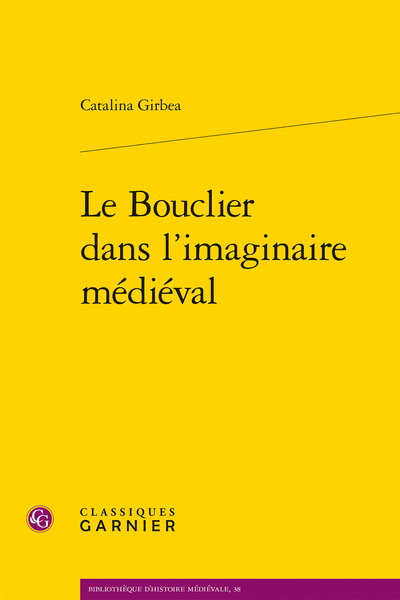
Publication – Catalina Girbea, « Le Bouclier dans l’imaginaire médiéval »

Accompagnant le devenir de l’homme aussi bien en temps de guerre qu’en temps de paix, pendant sa vie mais aussi dans la mort, le bouclier fait partie des pièces de l’équipement militaire qui a le plus inspiré l’imaginaire des hommes médiévaux et leurs rites, leur symbolique ou leur système armorial.

Table des matières : ici

Catalina Girbea, Le bouclier dans l’imaginaire médiéval, Paris, Classiques Garnier, 2024 ; 1 vol., 244 p. (Bibliothèque d’histoire médiévale, 38). ISBN : 978-2-406-17060-0. Prix : € 96,00.

Source : Classiques Garnier

Publié dans Publications | Laisser un commentaire

Publication – Marcel Elias, « English Literature and the Crusades. Anxieties of Holy War, 1291–1453 »

The period from the Mamlūk reconquest of Acre (1291) to the Ottoman siege of Constantinople (1453) witnessed the production of a substantial corpus of Middle English crusade romances. Marcel Elias places these romances in dialogue with multifarious European writings to offer a novel account of late medieval crusade culture: as ambivalent and self-critical, animated by tensions and debates, and fraught with anxiety. These romances uphold ideals of holy war while expressing anxieties about issues as diverse as God’s endorsement of the crusading enterprise, the conversion of Christians to Islam, the sinfulness of crusaders, and the morality of violence. Reinvigorating debates in medieval postcolonialism, drawing on emotion studies, and excavating a rich multilingual archive, this book is a major contribution to the cultural history of the crusades. This title is part of the Flip it Open programme and may also be available open access. Check our website Cambridge Core for details.

Marcel Elias is Assistant Professor of English at Yale University. His essays on crusade literature, European representations of Muslims and Islam, and the history of emotions have appeared or are forthcoming in The Review of English Studies, Speculum, New Medieval Literatures, Studies in Philology, and elsewhere.

Introduction

  1. Royal emotions, blasphemy, and (dis)unity in The Siege of Milan and The Sultan of Babylon
  2. Hopes and anxieties of conversion in the Otuel romances
  3. Women, God, and other crusading motives in Guy of Warwick
  4. Therapeutic crusading and excessive violence in The Siege of Jerusalem and Richard Coeur de Lion
    Conclusion.

Marcel Elias, English Literature and the Crusades. Anxieties of Holy War, 1291–1453, Cambridge, Cambridge University Press, 2024 ; 1 vol., 280 p. (Cambridge Studies in Medieval Literature). ISBN : 978-1-10883-221-2. Prix : GBP 85,00.

Source : Cambridge University Press

Publié dans Publications | Laisser un commentaire