1. Publication – Vincent Launay, « Le roi en son duché. L’aristocratie de Bretagne et la construction de l’État royal (1270-1328) » Accès : ici
2. Journée d’étude du RMBLF – De beaux restes ! Pratiques dévotionnelles autour des reliques et reliquaires du Moyen Âge. 50e journée d’étude du RMBLF Accès : ici
3. Conférence – Florian Mazel, « Périodiser le Moyen Âge : enjeux et débats » Accès : ici
4. Séminaire – Une expérience de sociologie des médiévistes : l’enjeu de la réforme grégorienne Accès : ici
5. Appel à contribution – Du potager à l’Hortus Conclusus. Le jardin médiéval dans tous ses états Accès : ici
6. Formation – Comprendre le latin médiéval. Approche pratique et outils récents Accès : ici
7. Offres d’emplois – Offres d’emplois histoire des pratiques de l’écrit, diplomatique et humanités numériques – plateforme TELMA et base de données CartulR Accès : ici
8. Offre d’emploi – 1 historien médiéviste/moderniste (h/f/x) pour des recherches archivistiques en lien avec l’archéologie (Archives de l’État) Accès : ici
9. Offre d’emploi – Deux attachés au Service Édition de l’Académie royale de Belgique Accès : ici
10. Colloque – Des copies aux cartulaires. La table ronde « Cartulaires » trente (-trois) ans après Accès : ici
Chrétien de Troyes, figure centrale de la littérature française médiévale, a joué un rôle crucial dans la naissance du roman, mais sa vie reste peu connue et la délimitation exacte de ses œuvres sujette à de nombreux débats : attributions incertaines ou contestées, trace d’écriture à plusieurs mains, œuvres perdues puis retrouvées…
Cette conférence propose une exploration approfondie de l’œuvre de Chrétien de Troyes et de ses contemporains, par le prisme de la stylométrie, une méthode d’analyse qui combine statistiques et philologie pour identifier les empreintes stylistiques des auteurs. En se concentrant sur les textes fondateurs du roman arthurien, une équipe de chercheurs et d’étudiants de l’École des chartes a tenté de clarifier les débats entourant l’attribution de certaines œuvres controversées, comme Philomena et Guillaume d’Angleterre. Nous discuterons des résultats obtenus, qui remettent en question certaines hypothèses traditionnelles et offrent de nouvelles perspectives sur la question de la collaboration et des continuations dans les écrits médiévaux.
Traditionnellement organisée tous les quatre ans, la prochaine école d’été du CENTRE EUROPÉEN DE RECHERCHE SUR LES COMMUNAUTÉS, CONGRÉGATIONS ET ORDRES RELIGIEUX (LEM-CERCOR UMR 8584) se tiendra autour du thème « Femmes et vie religieuse, du Moyen Âge à nos jours – Sources, enjeux, méthodes ». Conçue comme un chantier de réflexion articulant état des lieux de la recherche et prospectives, elle s’adresse en priorité à un public de jeunes chercheuses et chercheurs en école doctorale ou en post-doctorat, mais aussi aux étudiant(e)s de niveau Master travaillant sur un sujet en lien avec la thématique retenue.
Pour cette prochaine édition, l’objectif scientifique est d’éclairer les modalités de croisement de l’histoire religieuse avec celle des femmes et du genre. Si un colloque du CERCOR s’était déjà interrogé sur « Les religieuses dans le cloître et dans le monde » en 1988, les approches méthodologiques et épistémologiques ont profondément évolué depuis. Il y a trente ans, on en était seulement aux prémices, alors que paraissait la première thèse d’histoire des femmes, justement consacrée aux religieuses : Claude LANGLOIS, Le Catholicisme au féminin. Les Congrégations françaises à supérieure générale au XIXe siècle, Paris, Le Cerf, 1984. Depuis cet ouvrage pionnier, nombre de travaux sont venus confirmer combien l’histoire religieuse était essentielle à l’histoire des femmes, et réciproquement. Plus récemment, l’outil du genre intégré à la discipline historique a aussi permis d’interroger à nouveaux frais l’histoire du catholicisme. Trente ans après, l’école d’été 2025 se propose de repenser la question des religieuses dans une perspective épistémologique et méthodologique qui prenne en compte le renouvellement considérable de l’historiographie ces dernières décennies. La diversification des formes de vie religieuse féminine à partir du XVIe siècle, l’apport des études de genre comme des humanités numériques et l’évolution du traitement des archives conventuelles seront au cœur de la réflexion. Le choix a été fait d’interroger ces perspectives sur le temps long et d’envisager les multiples thématiques liées à cet objet d’étude à la fois ancien et nouveau que constituent finalement les religieuses : le travail, le corps, la mission, l’image, le gouvernement, l’activité intellectuelle, les modèles de sainteté…
L’école d’été se déroulera sur trois jours, du mardi 26 août au jeudi 28 août 2025 à l’Université Jean Monnet (Saint-Étienne) et fera alterner conférences, ateliers et exposés de recherches par les participant(e)s. Elle permettra de faire dialoguer des historiennes et historiens médiévistes, modernistes et contemporanéistes et amènera les jeunes chercheuses et chercheurs à s’associer aux travaux de façon active, à travers les ateliers aussi bien qu’à travers des temps d’échanges autour d’exposés relatifs à leurs activités.
Dans ce cadre, chaque participant(e) sera invité(e) à proposer une communication orale de 20 minutes sur ses recherches, en lien avec le sujet abordé.
Programme :
Mardi 26 août 2025 Matin
10 h 30 : accueil des participant(e)s, présentation générale. 11 h : conférence inaugurale de Bruno DUMONS (CNRS), Femmes et vie religieuse : faire dialoguer des histoires plurielles. Après-midi 14 h : Anne-Marie HELVÉTIUS (Paris VIII), La diversité des monastères féminins à l’époque mérovingienne. 15 h : ATELIER – Justine AUDEBRAND (Poitiers), L’apport des études de genre à la compréhension des communautés féminines du haut Moyen Âge. 17 h : pause. 17 h 30 : présentation de leurs travaux par les participant(e)s (premier volet).
Mercredi 27 août 2025 Matin
9 h : Philippe CASTAGNETTI (Saint-Étienne), Canoniser des religieuses du Moyen Âge à l’époque moderne : modélisation hagiographique et pastorale post-tridentine. 10 h : Marie-Élisabeth HENNEAU (Liège), Études de genre et monachisme féminin : une autre manière d’interroger l’histoire des communautés religieuses à l’époque moderne. 11 h : pause. 11 h 30 : présentation de leurs travaux par les participant(e)s (deuxième volet). Après-midi 14 h : Antoine ROULLET (CNRS), Corps collectif, corps individuel : le rapport au corps dans les communautés féminines (XVIe-XVIIe siècles). 15 h : ATELIER – Lydie BRUNETTI (docteure en histoire), Explorer la vie monastique féminine à l’époque moderne à partir de la base iconographique RENI. 17 h : pause. 17 h 30 : présentation de leurs travaux par les participant(e)s (troisième volet).
Jeudi 28 août 2025 Matin
9 h : Anne JUSSEAUME (Univ. d’Artois), Étudier la vie religieuse féminine à l’époque contemporaine : archives, histoire sociale et histoire du genre. 10 h : Marie de RUGY (IEP Strasbourg), Soin des lépreux et congrégations féminines missionnaires en Asie du Sud-Est au XXe siècle. 11 h : pause. 11 h 30 : présentation de leurs travaux par les participant(e)s (dernier volet). Après-midi 14 h : Sarah BARTHÉLEMY (Durham), Les modèles de vie religieuse féminine contestés aux XVIIIe et XIXe siècles. De la vie dans le monde aux femmes jésuites. – Présentation de l’ISHWRA (The International Scholars of the History of Women Religious Association). 15 h : ATELIER – Clarisse TESSON (Saint-Étienne), La formation intellectuelle des religieuses en question au XXe siècle. 17 h : Conclusion.
Informations pratiques :
Pour les participants, l’hébergement et les déjeuners sur place seront pris en charge par le CERCOR.
Modalités de candidature
Le dossier de candidature, sous forme de fichier pdf, doit comporter : -Un curriculum vitae détaillé. -Une présentation du sujet de thèse/de recherche, ainsi que du thème de commu- nication orale envisagé (2 à 3 pages).
Il doit être adressé par voie électronique avant le 1er avril 2025 à : Philippe Castagnetti (philippe.castagnetti [at] univ-st-etienne.fr) et Clarisse Tesson (clarisse.tesson [at] univ-st-etienne.fr).
We launch the following call for papers for an edited peer-reviewed volume to be submitted to Amsterdam University Press:
The Renaissance appears as a pivotal period in the history of gold in Europe. Conversely, the uses of gold have been seen as pivotal in the definition of the Renaissance. Indeed, art historians have made gold an emblematic material of medieval painting, abandoned precisely from the fifteenth century onwards. In 1942, Max J. Friedländer (On Art and Connoisseurship) described gold as a substance unsuited to the new paradigm of illusionism, and for this very reason abhorred by the most innovative painters. According to Friedländer, gold had moved from the pictorial surface to its margins — the frame. Thirty years later, Michael Baxandall (Painting and Experience in Fifteenth-Century Italy) approached the question from the perspective of social history, arguing that the Renaissance was a time when patrons’ interest in the sheer opulence of the materials gradually shifted towards a more pressing concern for technical skills. Furthermore, Baxandall associated this crucial moment to broader issues in the history of the uses of gold in Europe. Linking these dynamics with a wider phenomenon, rooted in a complex interplay of social, economic and cultural changes, he referred to the decline of certain practices of social display (for example, clothes enriched with precious metals), and also pointed out that gold, which until then had been traded from Africa, circulated less abundantly in fifteenth-century Europe.
Recent research has shown that the historical landscape of the knowledge, symbolism and uses of gold in the Renaissance period deserves to be appreciated in a more nuanced way. For instance, some renewals appear in the uses of gold in painting and sculpture, or continuities with medieval practices. As demonstrated by a series of masterpieces executed by inventive artists ranging from Donatello, Verrocchio and Raphael to Rembrandt and Vermeer, gold was not completely abandoned in the artworks during the early modern era. Gold as a prestigious material still mattered, as illustrated by the well-known summit of the Field of the Cloth of gold (1520), where King Francis I of France and King Henry VIII of England symbolically competed through the display of wealth, or by the nascent myth of the El Dorado. It must also be remembered that, with the arrival of American gold in the mid-sixteenth century, and the new dominance of the Spanish peso as a currency of exchange in Europe (largely replacing the florin and ducat in international trade relations), this period also witnessed changes in the circulation of precious metals and the relationship between currencies.
In adopting a multidisciplinary perspective (e.g. history, art history, heritage science, literature, philosophy), this volume aims to understand the uses and meanings of gold as it pervades all areas of European societies, on a methodologically restricted time-frame (1450-1550). It intends to move beyond traditional research, so as to map out the social and cultural dynamics of this precious and versatile material in Renaissance Europe.
We will welcome innovative proposals, that may address (but should not be limited to) some of the following topics:
-Practical and theoretical knowledge on gold: metallurgy, alchemical practices, humanist thought. -Continuity and renewal of myths and sacred themes associated with gold and radiance (e.g. the myth of Danaë ; Pentecost etc.). -New approaches on the economic history of gold (related to e.g. provenance, trade, monetary history). -Gold craftsmen (e.g. goldsmiths, goldbeaters, gilders), their regulations and mutual relations. -The artistic uses of gold (goldsmithing, sculpture, illumination, engraving, tapestry, painting, etc.) through, for instance, case studies on the versatility of this malleable material. -The techniques used to apply this material as they can be reconstructed today by heritage science, as well as the techniques used to preserve the gilding of works of art from the Renaissance. -The taste for gold in treasures, domestic interiors, sacred spaces, etc. What role did gold play in civic and ecclesiastical decorum? How was gold referred to in sumptuary legislation?
Applications:
Proposals of 350-500 words should be written in British English, accompanied with a short biography, and submitted before 31 January 2025 to Valentina Hristova, valentina.hristova@u-picardie.fr, and Romain Thomas, romain.thomas@inha.fr.
This volume is part of the AORUM project (aorum.hypotheses.org). It will be submitted for publication to Amsterdam University Press, Series Visual and Material Culture 1300-1700. Full versions of the chapters will be double blind peer-reviewed.
Provisional calendar:
-31 January 2025. Deadline for the submission of proposals. -February 2025. Selection of proposals. -31 August 2025. Deadline for the submission of full chapters (50.000 characters, including spaces and footnotes, in British English; 5-10 illustrations for which authors will need to pay to source high res digital art files and cover any permissions fees). -Fall 2025. Final decision after double-blind peer-review. -December 2025. Final versions of the chapters. -Winter-Spring 2026. Publication.
Volume editors:
Valentina Hristova (Université de Picardie), Romain Thomas (Institut national d’histoire de l’art / Université Paris Nanterre).
Scientific committee :
Erma Hermens (University of Cambridge), Valentina Hristova (Université de Picardie), Romain Thomas (Institut national d’histoire de l’art / Université Paris Nanterre), Alison Wright (University College London), Rebecca Zorach (Northwestern University).
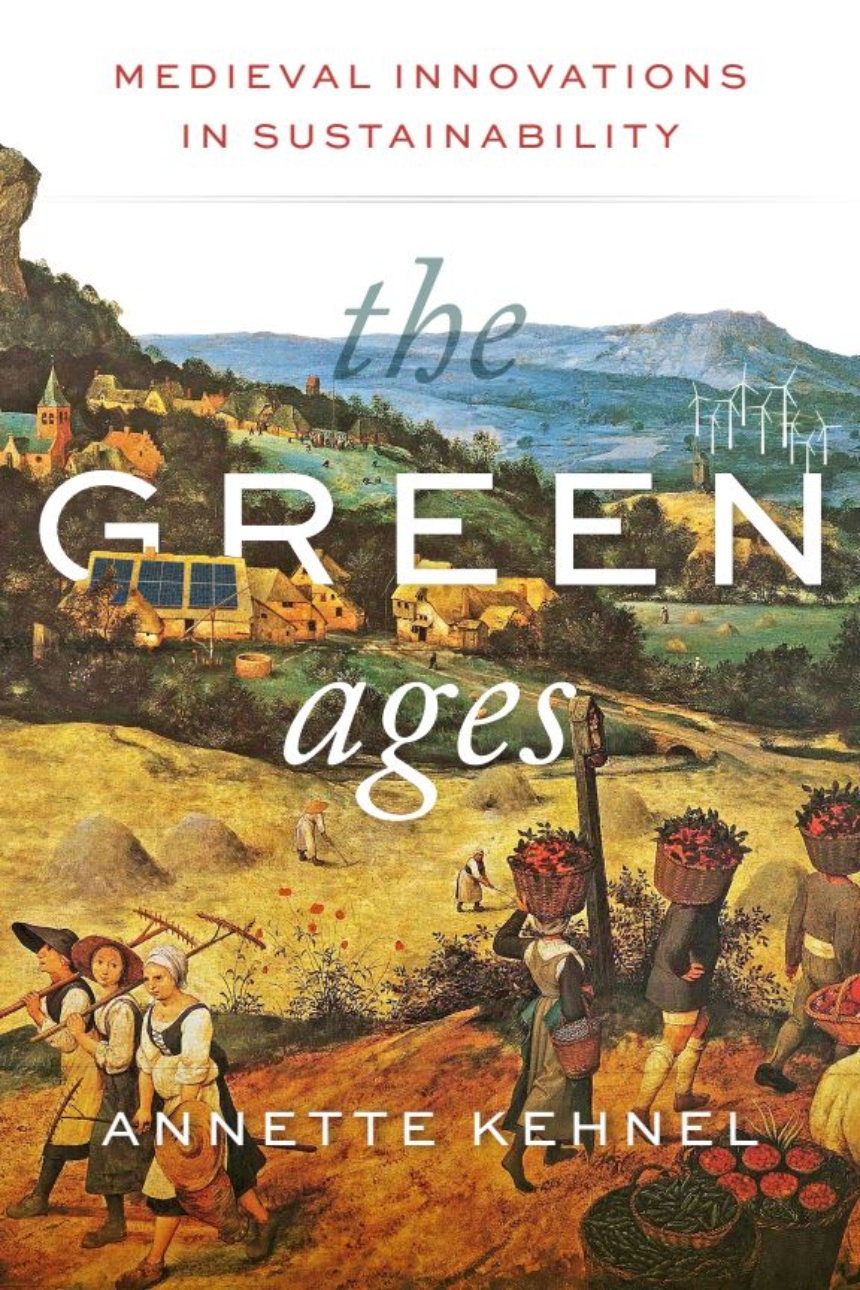
A fascinating blend of history and ecological economics that uncovers the medieval precedents for modern concepts of sustainable living.
In The Green Ages, historian Annette Kehnel explores sustainability initiatives from the Middle Ages, highlighting communities that operated a barter trade system on the Monte Subiaco in Italy, sustainable fishing at Lake Constance, common lands in the United Kingdom, transient grazing among Alpine shepherds in the south of France, and bridges built by crowdfunding in Avignon. Kehnel takes these medieval examples and applies their practical lessons to the modern world to prove that we can live sustainably—we’ve done it before!
From the garden economy in the mythical-sounding City of Ladies to early microcredit banks, Kehnel uncovers a world at odds with our understanding of the typical medieval existence. Premodern history is full of inspiring examples and concepts ripe for rediscovery, and we urgently need them as today’s challenges—finite resources, the twilight of consumerism, and growing inequality—threaten what we have come to think of as a modern way of living sustainably. This is a stimulating and revelatory look at a past that has the power to change our future.
Table des matières :
Introduction 1. Was Everyone Poor Before We Invented Capitalism? 1.1. The History of Progress: Modern Grand Narratives and their Pitfalls 1.2. Did Our Forebears Toil from Dawn till Dusk? 1.3. Europe in the High to Late Middle Ages: Some Dates and Figures 2. Sharing 2.1. Sharing Brings Riches: Convent Economy 2.2. Commons, and the Art of Internalising the External 2.3. Beguinages: Female Communities and Urban Gardening 3. Recycling 3.1. Maintenance Jobs and Second-Hand Markets 3.2. Paper: A Recycled Product Writes World History 3.3. Bricolage and Assemblage: Antiquity Repurposed for the Middle Ages 4. Microfinance 4.1. Microfinance Institutions in Italian Cities: The Monti di Pietà 4.2. Peer-to-Peer Lending in Medieval Towns 4.3. Agriculture on the Edge of Town: Medieval Rent-a-Cows 5. Philanthropy 5.1. Funding for Community Projects: Pont Saint-Bénézet in Avignon 5.2. Cultural and Social Sustainability: No Indulgences, No Michelangelo 5.3. Social Housing in Augsburg: The Fuggerei 6. Minimalism 6.1. Wealth is the Vomit of Fortune: Diogenes of Sinope 6.2. Money is Dung: St Francis of Assisi 6.3. Minimalism and Economic Theory: Pierre de Jean Olivi 7. What the Past Can Teach Us About the Future 7.1. What Would Our Ancestors Advise? 7.2. How to Escape the Prison of Inevitability 7.3. History: A Cure for Chronophobia
Informations pratiques :
Annette Kehnel, The Green Ages Medieval Innovations in Sustainability, Chicago, The University of Chicago Press, 2024 ; 1 vol., 352 p. ISBN : 978-1-68458-243-3. Prix : USD 35,00.
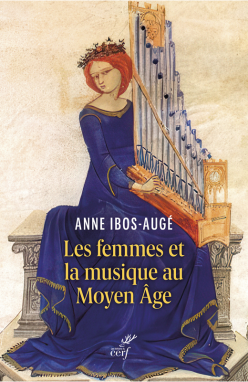
Qui sont les musiciennes du Moyen Âge ? Que chantent-elles ? De quels instruments jouent-elles ? Sont-elles de simples interprètes ? Des compositrices ? On connaît la mystique Hildegarde de Bingen ou la reine Aliénor d’Aquitaine. Elles sont pourtant bien plus nombreuses qu’on ne le pense : chanteuses, compositrices, instrumentistes, religieuses, copistes, ménestrelles, trobairitz et trouveresses, mécènes… Issues de toutes les strates de la société, familières des cours, des couvents ou arpentant les rues, elles sont ici étudiées sous un angle inédit, dans l’intimité de leur vie quotidienne.
Du XIIe siècle jusqu’au début du XVe, voici racontées ces musiciennes oubliées, consacrées ou profanes, protectrices et dédicataires, ainsi que les grandes figures de la fiction : héroïnes de poèmes et de chansons, en France et en Europe.
Une plongée inédite et passionnante au cœur de ce Moyen Âge musical au féminin.
Docteure en musicologie, chercheuse associée à l’IReMus (Sorbonne Université), Anne Ibos-Augé enseigne l’histoire de la musique et l’analyse musicale. Elle est l’autrice de plusieurs ouvrages sur la musique médiévale. Collaborant régulièrement au magazine Diapason, elle intervient également dans la « Tribune des Critiques » sur France Musique.
Informations pratiques :
Anne Ibos-Augé, Les femmes et la musique au Moyen Âge, Paris, Éditions du Cerf, 2024 ; 1 vol., 288 p. ISBN : 978-2-20416-006-3. Prix : € 22,00.
10:30-10:45 –Alexandra Sapoznik (King’s College London) – Introduction to ECOMEDS
FIRST PANEL – PASTORALISM
10:45-11:00-Eleni Sakellariou (University of Crete) – Transhumant pastoralism in late medieval Southern Italy. Natural resources, markets and products 11:00-11:15-Maria Antonia Carmona (Universidad de Sevilla) – The production and consumption of cheese and milk in Southern Iberia during the Late Middle Ages 11:15-11:30-Davide Cristofori (Universite Libre de Bruxelles) – Cheese production and transhumance in late medieval Tuscany. Evidence and issues
11 :30-12:00-Discussion 12:00-12:15 -Break
SECOND PANEL – ARCHAEOLOGY
12:15-12:30-Annelise Binois-Roman (Sorbonne Universite) – Bones of contention. The (mis)use of mortality profiles and other issues in the zooarchaeological identification of milk production 12:30-12:45-Daniel Bradley (Trinity College Dublin) – Ancient genomes of cattle and sheep. The making of European diversity 12:45-13:00-Andrew Margetts (University College London) – TBD
13:00-13:30-Discussion 13:30-15:00-Lunch
THIRD PANEL – TRADE & CONSUMPTION
15:00-15:15-Enrico Basso (Universita degli Studi di Torino) – Men of the mountains, economy of the sea. Cheese, sheep, and other 9oods from inland to the Mediterranean 15:15-15:30-Fabrizio Ansani (King’s College London) – The cheesemongers, the merchant, and their account-books and let ters. For a quantitative analysis of the urban market in late medieval Prato 15:30-15:45-Frederic Aparisi (Universitat de Valencia) – Cheese production and trade in medieval Valencia 15:45-16:00-Llufs Sales i Fava (King’s College London) – Patterns of cheese consumption in an urban convent in the Late Middle Ages (Barcelona, 1356-1500) 16:00-16:30-Discussion
Voici, en coffret collector et édition limitée, l’intégrale de la Somme théologique dans sa traduction française, pour le 800e anniversaire du grand théologien et philosophe. Une édition soignée, à prix abordable.
Cette œuvre, la plus importante de Thomas d’Aquin, constitue une référence majeure de la théologie catholique et de la philosophie chrétienne. Écrite entre 1265 et 1273, elle dépasse largement le but qu’elle se fixait : présenter la doctrine sacrée aux débutants en théologie.
Divisée en trois parties, elle traite de la façon dont les créatures procèdent de Dieu, du mouvement de l’homme vers Dieu et du Christ comme chemin vers la vie éternelle.
Un ouvrage précieux pour les étudiants en philosophie et théologie.
Informations pratiques :
Thomas d’Aquin, Somme théologique, Paris, Éditions du Cerf, 2024 ; 1 vol., 3702 p. ISBN : 978-2-20416-737-6. Prix : € 199,00.
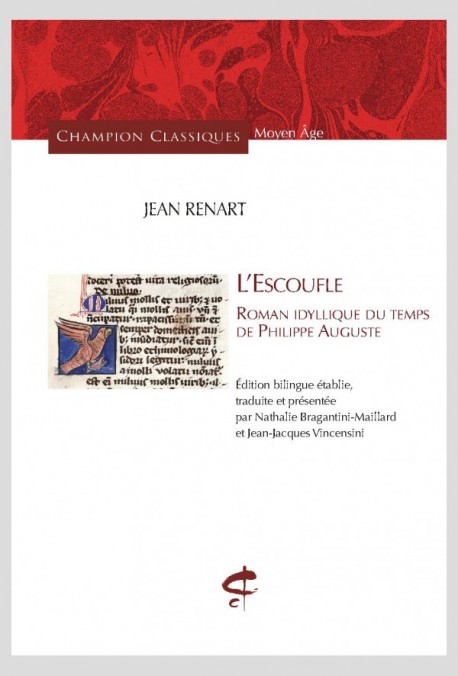
Le présent volume réunit pour la première fois l’édition des deux seuls témoins du roman de L’Escoufle de Jean Renart : le manuscrit 6565 de la Bibliothèque de l’Arsenal et le fragment conservé à la Bibliothèque royale de Belgique. Cette édition assortie d’une nouvelle traduction, fondée sur des principes explicitement définis, est accompagnée d’un riche apparat critique qui éclaire la lecture du texte original et en dégage les singularités littéraires et linguistiques. Récit du temps de Philippe Auguste, L’Escoufle est l’un des premiers romans idylliques écrits en langue française. Sa lecture suscite une « volupté intellectuelle » qui en fait l’une des œuvres les plus émouvantes et les plus profondes que nous ait laissées le Moyen Âge.
Jean Renart, L’Escoufle. Roman idyllique du temps de Philippe Auguste, éd. Nathalie Bragantini-Maillard et Jean-Jacques Vincensini, Paris, Honoré Champion, 2024 ; 1 vol., 808 p. (Champion Classiques, Moyen Âge, 64). ISBN : 978-2-38096-099-0. Prix : € 29,00.
Call for papers for a conference on urban poverty and marginalization in the Middle Ages to be held at RWTH Aachen, 4-5 September 2025, organised by the Junior Research Group “The Laboring Poor and their Networks in the Middle Ages”. Submission deadline: 15th of March 2025
The Other Part of the Town. Poor and Marginal Population Groups in Medieval Cities
With the urbanization in the 11th and 12th centuries, a new, highly differentiated urban society emerged. For a long time, urban history focused on the upper and middle social classes, such as merchants and craftsmen. Due to the challenging source material, the poorer inhabitants of medieval towns received little attention in medieval studies for a long time. When they did, it was mostly in the context of social policies. Socio-historical studies centered on the organization of urban welfare, charity or disciplining mechanisms concerning foreign and deviant people. This is due to the fact that until the early modern period, normative, administrative and private sources were predominantly produced from the socio-economically leading, literate population groups in the cities. This also means that the male perspective on socially and economically disadvantaged people was predominantly analysed. In recent years, however, German and international research has shown that on the grounds of diverse source material, the perspective of poor and marginalised people as well as their reality of life and possibilities for action can be examined. To further explore the complexity of the living and working conditions of the lower social groups, more studies are necessary. The workshop aims to deepen the research on these groups, which were marginalized by their contemporaries and partially by modern historical scholarship, and to discuss the possibilities and limitations of investigating medieval poverty and marginalization. Thus, the focus will be on the living and working conditions of unskilled labourers such as male and female servants, members of dishonourable professions, travelling people, as well as those reliant on external support, such as beggars, widows, and orphans. The further stratification and differentiation of this medieval population group, which is often perceived as a unit but was effectively heterogeneous, will be analysed. This raises a range of questions and thematic complexes, which, although not exclusively, could address the following topics:
– Lived realities and scope of action for the lower social groups – Negotiation processes within social groups and in interaction with local authorities – Development and access to own networks, and possibilities of network analysis – Conflict potential and hierarchies within and outside the social group – Gender-specific studies – Opportunities for social mobility and decline, as well as poverty at different life stages – Foreigners in the city, as well as regional and supra-regional mobility
In dealing with these questions, the workshop intends to specify our understanding of the socially and legally disadvantaged population groups of medieval towns, their composition and organisation in all its heterogeneity. Sessions are planned around specific questions, each featuring three 10- to 15-minute presentations, followed by group discussions. Applications, including an abstract (max. 500 words) and a short CV, should be submitted to Matthias Wesseling (wesseling@histinst.rwth-aachen.de) by the 15th of March 2025. We also plan on publishing an edited collection. Upon consultation, speakers will have their travel costs to Aachen reimbursed and will be provided with accommodation. Attendance online is also possible including speakers and non-speakers (hybrid format).
Avec le soutien du FNRS, du CRHiDI (UCLouvain – Saint-Louis, Bruxelles), d'INCAL (UCLouvain), de PraME (UNamur), de sociAMM (ULB) et de Transitions (ULiège)









Vous devez être connecté pour poster un commentaire.