Appel à contribution – Narrating Gender and Temporality in Late Antique and Merovingian Gaul, 300-750 AD

Call for Papers, International Medieval Congress (Leeds) 2025, 7-10 July 2025
In recent years, scholars have begun to revisit sources from Late Antique and Merovingian Gaul from a perspective of intellectual history. Scholars including Danuta Shanzer, Helmut Reimitz, Philip Wynn, Guy Halsall, and Yaniv Fox have drawn attention to the ways in which Late Antique and Medieval authors such as Gregory of Tours, the anonymous author of the Liber Historiae Francorum, and Venantius Fortunatus constructed history. This post-structuralist approach argues that the consumption and production of history is malleable, as it is highly dependent on the subjective worldviews of the author and audience. Thus, analysing how authors interpreted and narrated events of the distant and recent past, and the ways in which they spoke about the future and its potentialities, can unlock the individual worldviews of those who constructed these foundational texts ﹘ some of which contain the only accounts we have of their era.

We intend to submit a three to four-strand session to the IMC 2025 entitled ‘Narrating Gender and Temporality in Late Antique and Merovingian Gaul: 300-750 AD’. In this series of panels, we will extend this existing work by focusing specifically on the relationship between gender and temporality. The ways in which authors conceptualised time, either as something that is malleable or fixed, linear or layered, shaped the way they narrated gendered histories. In like manner, each individual’s theories on gender were inherently linked to time, whether past texts or people that informed these opinions, contemporary models, or beliefs about the afterlife of individuals and the eventual apocalypse of mankind.

We encourage participants to consider how a narratological approach to Late Antique and Merovingian texts, whether literary or non-literary, anonymous or clearly authored, can offer a new angle on the significance and mutability of gender performance, expectations and potentials in the past, present, and future of Gallic thinkers and their various imagined and intended audiences. To do so, we encourage participants to think about the specific techniques used, and how these shape the relationship between gender and temporality or construct gendered temporalities. These techniques can include the manipulation of chronology, authorial intrusion, and naming and namelessness, and reveal the unspoken theories and frameworks which underpin an author’s thinking. 

We are particularly interested in pagan, Christian, and Jewish narratives and stories that relate to life cycles, the afterlife, intercession, and the ways in which the spiritual and secular collide in fatal moments or moments of trial. However, we are also interested in other suggestions and ideas that speak to the theme of gendered temporality and what that could entail. Some suggested questions are: How does the lens of gender change the way we (and other audiences) read such narratives? How do narrative techniques (such as omission or digression) comment on or emphasise gendered temporalities? What is the relation of fate, gender, agency and predestination in these narratives? We invite all interested scholars of Late Antique and Merovingian Gaul to submit their proposals for consideration by 8 September 2024. Replies will be returned within approximately one week. 

Our intention is to turn these conference proceedings into a special edition in subsequent years. More detail will be given on this closer to the time.

What we are looking for:

  • 250-word proposal abstract
  • Please include how your proposal relates to the narration of both gender and temporality.
  • Proposals must demonstrate a topic primarily related to Late Antique or Merovingian history in the time period from 300-750 AD. While we will consider topics that offer a comparative approach to other periods, preference will be given to topics that primarily focus on the period outlined.
  • Your university affiliation, position (i.e. PhD, Postdoc, Lecturer, Professor), and preferred email address (ideally one that will remain active for the next year).
  • Whether you wish to attend the IMC virtually or in person, and any accessibility needs

N.B. Presenters will need to secure their own funding to attend the Leeds IMC. We advise all applicants with insecure funding backgrounds to consider applying for the IMC bursary scheme.

Please submit your proposal to Associate Professor Lisa Kaaren Bailey (lk.bailey@auckland.ac.nz), Dr Becca Grose (rcg20@st-andrews.ac.uk), and Michaela Selway, M.A. (michaela.selway@uni-tuebingen.de) no later than 5pm (17:00) on 08 September 2024 British Summer Time (UTC+1).

Publié dans Appel à contributions | Laisser un commentaire

Publication – Marie Ulrike Jaros, « Aristokratie auf Abruf. Die Grafen und Gräfinnen Manfreds von Sizilien »

Nördlich der Alpen ist König Manfred eher ein Unbekannter. Ein sizilischer König mit so einem Namen? Ja, der Urenkel Friedrich Barbarossas. Ach so, aha. Südlich von Rom hingegen ist die Erinnerung an Re Manfredi lebendig. Straßen und Plätze sind ebenso nach ihm benannt wie Bars, Hotels und Pizzerien, es gibt Wein, der seinen Namen trägt, und die herzhafte Torta di Re Manfredi. Ein Sympathieträger, der tragisch ums Leben kam. Ganz in der Nähe ist ein Kastell von Manfred, hier in der Kirche soll er auch gewesen sein … Wer auf den Spuren Manfreds im ehemaligen Königreich Sizilien unterwegs ist, wird gern ein wenig ausgefragt, erntet erfreutes Erstaunen, kann Anekdoten lauschen. Ach, es soll um die Grafen an Manfreds Seite gehen? Auch da sind einige Namen bekannt: Corrado d’Antiochia, Galvano Lancia, Manfredi Maletta. Sie wirken wie strahlende Ritter: mutig, edel, treu, musikalisch. Doch welche Aufgaben übernahmen diese Adeligen im Königreich Sizilien, in diesem durchorganisierten „Modellstaat“, in dem es für die Verwaltung doch eigens eingesetzte Funktionsträger gab? Was unterschied die Grafen von anderen Adelsgruppen, was verband sie untereinander? Wozu benötigte der Herrscher sie, wenn er sie doch ebensogut ein- wie absetzen konnte? Und wer gehörte überhaupt zu diesem prekär-illustren Kreis?

Um eine Studie über einen Teilbereich der Organisation des Regni Siciliae am Ende des Hochmittelalters – in Person der Grafen – anfertigen zu können, müssen verschiedene Spezifika dieses Königreiches beachtet werden: 1) das noch vergleichsweise junge Königtum und die vielfältigen kulturellen Einflüsse in der Region; 2) die gut organisierte Verwaltungsstruktur; 3) die – von den Königen nicht zwingend anerkannte – Lehnshoheit des Papstes. Alle diese Aspekte hängen mit der Thematik der Grafen und Grafschaften zusammen: sie wirkten auf die Lehensstruktur und die Verankerung der Adligen in ihrer Region; sie konnten Anreize für die Ausgestaltung von Ämtern und Würden geben; sie gaben das organisatorische Gefüge vor, in welches die Grafen als eine von verschiedenen Gruppen eingegliedert waren; sie boten den Großen des Königreiches eine Alternative, indem neben der königlichen auch die päpstliche Autorität ins Feld geführt werden konnte.

So spielen also sowohl im Reich als auch in (Ober-)Italien wieder die bekannten Faktoren Amt, Erblichkeit, militärische Zuständigkeit, Gerichtsbarkeit und Veränderlichkeit eine Rolle. Die Grafen waren im Reich anderen Adelsgruppen nachgeordnet, jedoch machten die Grafen im Untersuchungszeitraum die ranghöchste Adelsgruppierung im Regno Siciliae aus. Es gab im Mezzogiorno weder Herzöge noch Markgrafen und der einzige Fürst war Manfred selbst, bis dieser Titel unter Konradin bzw. den Anjou wieder anzutreffen ist. Die Inhaber der sizilischen Lehen waren die comites, im Rang gefolgt von den barones und den milites.
Diese drei Gruppen von sizilischen Lehensträgern unterstanden aufgrund der Art ihres Lehens direkt dem Herrscher. An der Spitze dieser Rangfolge standen die Grafen. Jenseits der Titulatur sind die Grenzen in der Rangordnung allerdings nur schwer zu ziehen. In der Forschung finden sich zwar einige Kriterien für die weitere Hierarchisierung der Lehensinhaber, doch sind diese eher weicher Natur.

Welche Rolle übernahmen also die Grafen, um die seit dem Tod des Kaisers so gerungen wurde, deren Position dabei jedoch stets vom Wohlwollen des Regenten abzuhängen schien und die dennoch an der Spitze der Adelshierarchie standen, im Königreich Sizilien? Handelte es sich vor allem um eine Auszeichnung oder waren mit der Grafenwürde auch konkrete Rechte und Pflichten verbunden? Zunächst wird zu fragen sein, um wen sich die um den Vorrang im Regno streitenden Kräfte bemühten. Und andersherum: auf welche Seite schlugen sich die Grafen, zu welchen Zeitpunkten wechselten sie die Fronten? Wer – und dies gilt es, sowohl auf der Herrscher- als auch auf der Adelsebene zu betrachten – profitierte von den Erhebungen? Was zeichnete diese Adligen aus, waren sie besonders einflussreich, besonders fähig, hegten sie eine besonders enge Beziehung zum Herrscher, worauf gründeten sich also die Ansprüche auf einen Grafentitel? Mit welchen Aufgaben wurden sie betraut und wo hielten sie sich auf? Auch nach dem Verschwinden der Staufer im Regno stellte sich für die Grafen erneut die Frage der Anerkennung und der Parteinahme. Waren sie in der Lage, ihre gesellschaftliche Position zu verteidigen? Welche Möglichkeiten standen ihnen als Anhänger Manfreds überhaupt noch offen?

Neben strukturellen Fragen soll auch dem gräflichen Urkundenwesen Aufmerksamkeit zuteil werden. Über die gräflichen Aktivitäten und das Itinerar hinaus stellen sich hier Fragen nach der formalen Gestaltung. Traten die Grafen hier durch die Anwendung bestimmter Symbole, Formate, eines einheitlichen formalen Aufbaus u. ä. als geschlossene Gruppe auf? Wer schrieb die Urkunden eines Grafen? Was lässt sich anhand der verwendeten Formeln über die politische Parteinahme der Grafen ableiten? Am Ende steht der Versuch, die Gruppe der sizilischen Grafen zu charakterisieren, ihren Platz und ihre Funktion im Gefüge des Königreiches zu bestimmen.

Informations pratiques :

Marie Ulrike Jaros, Aristokratie auf Abruf. Die Grafen und Gräfinnen Manfreds von Sizilien, t. 1, Text, t. 2, Katalog und Verzeichnisse, Leipzig, Eudora Verlag, 2023 ; 2 vol., 276 p. + 276 p. (Italia Regia, 7). ISBN : 978-3-938533-71-0. Prix : € 139,00.

Source : Eudora Verlag

Publié dans Publications | Laisser un commentaire

Exposition – Journées du Patrimoine 2024. Le Patrimoine pour tous

Partout en Wallonie !
7-8 septembre 2024

Pour leur 36e édition, les Journées européennes du Patrimoine en Wallonie se veulent plus inclusives que jamais. Nous avons choisi de mettre en lumière un public cible qui mérite toute notre attention : les personnes à besoins spécifiques. Que vous soyez une personne à mobilité réduite, sourde ou malentendante, aveugle ou malvoyante, ou encore que vous présentiez des difficultés de compréhension, cette édition est pensée pour vous. Cette démarche vise à rendre le patrimoine accessible à tous. Les sites participants, qu’ils se déclarent adaptés ou qu’ils renforcent leur accessibilité pour l’occasion, seront marqués du pictogramme « public cible 2024 ». Ce dernier est plus qu’un simple indicateur : il témoigne de notre engagement à faciliter l’accès aux richesses patrimoniales de notre région pour tous les publics, sans exception. Les Journées du Patrimoine sont une occasion unique de célébrer la diversité de notre patrimoine, qui reflète l’histoire et la culture de la Wallonie. En ouvrant ces trésors à un public plus large, nous reconnaissons et valorisons les richesses liées à la diversité humaine. Notre patrimoine est un témoin des échanges, des influences et des connexions qui ont façonné notre société. En le rendant accessible à tous, nous soulignons l’importance de l’inclusion et de la diversité dans notre héritage culturel. L’importance de cette initiative s’étend au-delà de nos frontières. À travers le monde, des efforts similaires montrent l’impact positif de l’inclusion dans les domaines culturels. Par exemple, le Louvre à Paris a mis en place des visites tactiles pour les personnes aveugles et malvoyantes, permettant à ces visiteurs de toucher des reproductions de sculptures célèbres. En Australie, la National Gallery à Victoria a développé des programmes pour les enfants autistes, en créant des espaces sensoriels et des visites adaptées pour répondre à leurs besoins spécifiques. Ces efforts internationaux nous rappellent que l’accessibilité est un droit fondamental et une valeur universelle. En Wallonie, nous sommes déterminés à suivre cette voie, en collaboration avec des experts et des organisations locales, pour offrir des expériences enrichissantes et inclusives à tous nos visiteurs. Notre engagement se traduit également par une collaboration renforcée avec Access-i, une association spécialisée dans l’évaluation de l’accessibilité des sites et des événements. Cette coopération garantit que les informations fournies sur l’accessibilité sont précises et fiables. Cette année encore, la brochure des Journées du Patrimoine propose plus de 280 activités, y compris 14 en Ostbelgien. Chaque page regorge de découvertes. En outre, une publication en Facile à Lire et à Comprendre (FALC) accompagne cette brochure, rendant le patrimoine wallon accessible au public présentant des difficultés de compréhension. Nous espérons que cette édition des Journées du Patrimoine vous permettra de découvrir ou redécouvrir notre patrimoine avec une approche plus inclusive. Que ces journées soient pour chacun d’entre vous une belle occasion de partage, de découverte et de rencontre. Ensemble, célébrons la richesse et la diversité de notre patrimoine wallon.

Source : Journées du Patrimoine

Publié dans Exposition | Laisser un commentaire

Publication – Na Chang, « The East and West in Late Medieval Travel Writings »

This book traces the history of encounter between Eastern and Western cultures by closely examining a body of medieval travel writings penned or related by Europeans and by inhabitants of East Asia. Whilst these texts are usually considered in the context of kindred European or Chinese literature, this study will make a case for considering them as a common literature of medieval encounters with foreign people. For the modern historian writing in a world that so consciously thinks of itself as ‘global’, these accounts offer a precious lens through which to enter into the world before globalization. In particular, the book shows that these narratives show the similarity in how Eastern and Western travellers thought and behaved in the face of difference, and will show that individuals often held somewhat different views, shaped by their particular experience or agendas, than those of their government or of local cultural convention.

Dr Na Chang was educated at Gonville and Caius College, University of Cambridge, UK. She worked on encounters between the East and the West, relations between the Mongols and Christian Europeans, and maritime history during her PhD studies. She is a research fellow at the School of International Studies and the Collaborative Innovation Center of South China Sea Studies, both at the Nanjing University of China. Na’s current research interests include encounters between the East and the West and maritime relations between great powers.

Na Chang, The East and West in Late Medieval Travel Writings, Cambridge, Cambridge Scholars Publishing, 2024 ; 1 vol., 222 p. ISBN : 978-1-5275-7686-5. Prix : GBP 64,99.

Source : Cambridge Scholars Publishing

Publié dans Publications | Laisser un commentaire

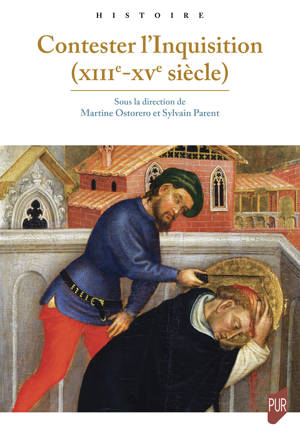
Publication – « Contester l’Inquisition (XIIIe-XVe siècle) », éd. Martine Ostorero, Sylvain Parent

Dès les premiers temps de son existence, dans les années 1230, l’Inquisition suscita des réactions parfois très hostiles et violentes. Les inquisiteurs furent régulièrement les cibles du déchaînement populaire, jusqu’à en perdre la vie. S’il s’agit de l’une des manifestations les plus visibles et spectaculaires de cette hostilité, les formes que prirent les contestations et résistances furent en réalité d’une grande diversité.

Traquer la pluralité de ces modes d’opposition à l’Inquisition nécessite de s’intéresser aux contextes locaux, à l’équilibre des pouvoirs, aux enjeux de la défense des droits et prérogatives, ainsi qu’aux acteurs de cette résistance. Cela conduit à mieux saisir la délicate insertion de ce tribunal au sein de la société, mais aussi à prendre en compte les moyens de défense de l’office par les acteurs eux-mêmes et à mesurer ses capacités de réaction.

L’ambition de ce livre est de poser les bases d’une étude comparative afin d’offrir un premier état des lieux assez large de la diversité des formes que prennent ces contestations dans l’espace de l’Europe. Elle s’inscrit dans le temps long de l’histoire de l’office d’Inquisition, depuis son émergence, jusqu’à la reconfiguration de la sorcellerie comme hérésie à la toute fin du Moyen Âge.

Avec le soutien de l’université de Lausanne, de la Fondation pour la protection du patrimoine culturel, historique et artisanal (Lausanne, Suisse), du CIHAM-UMR 5648 et de l’École normale supérieure de Lyon.

Table des matières : ici

Contester l’Inquisition (XIIIe-XVe siècle), éd. Martine Ostorero, Sylvain Parent, Rennes, Presses universitaires de Rennes, 2024 ; 1 vol., 296 p. (Histoire). ISBN : 978-2-75359-707-5. Prix : € 25,00.

Source : Presses universitaires de Rennes

Publié dans Publications | Laisser un commentaire

Publication – « The Routledge Handbook of Gender and Sexuality in Byzantium », éd. Mati Meyer, Charis Messis

This Handbook is the first to consider the interrelated subjects of gender and sexuality in the Eastern Roman Empire from an interdisciplinary perspective. Drawing on both modern theories and Byzantine perceptions, and considering multiple periods and religions (Eastern Orthodox, Islamic, and Jewish), it provides evidentiary textual and visual material support for an analysis of the two linked themes.

Broadly, the essays demonstrate that gender and sexual constructs in Byzantium were porous. As a result, they expand our knowledge of not only how sex and gender were conceived and performed but also how ideas and practices shaped Byzantine life.

The Routledge Handbook of Gender and Sexuality in Byzantium will be an indispensable guide for students and scholars of late antique and Byzantine religion, history, culture, and art, who will find it a useful critical survey of current scholarship and one that shines new light in their areas of research. The focus on issues of gender and sexuality may also be of interest to individuals concerned with Eastern Mediterranean culture, as well as to the broader public.

Table des matières : ici

Mati Meyer received her PhD from the Hebrew University in Jerusalem and is a faculty member at the Open University of Israel. She has published extensively in articles and a monograph and co‑edited books on women, realia, emotions, corporeality, gender and sexuality, and biblical reception in Byzantine art, including Emotions and Gender in Byzantine Culture, edited by Mati Meyer and Stavroula Constantinou (2018) and Between Judaism and Christianity: Art‑Historical Essays in Honor of Elisheva (Elisabeth) Revel Neher, edited by Katrin Kogman‑Appel and Mati Meyer (2009).

Charis Messis holds a PhD in Byzantine Studies from Écoles des Hautes Études en Sciences Sociales in Paris and a habilitation from the Sorbonne University. He is now teaching Byzantine Literature at the National and Kapodistrian University of Athens, Greece. His research interests concern Byzantine history and literature, especially the history of gender, along with other social and anthropological aspects of the Byzantine world. He is author and co-editor of several books and articles, including Storytelling in Byzantium: Narratological Approaches to Byzantine Texts and Images, edited by C. Messis, M. Mullett, and I. Nilsson (2018).

Informations pratiques :

The Routledge Handbook of Gender and Sexuality in Byzantium, éd. Mati Meyer, Charis Messis, Londres, Routledge, 2024 ; 1 vol., 548 p. (Routledge Handbooks). ISBN : 978-0-36749-093-5. Prix : GBP 205,00.

Source : Routledge

Publié dans Le réseau | Laisser un commentaire

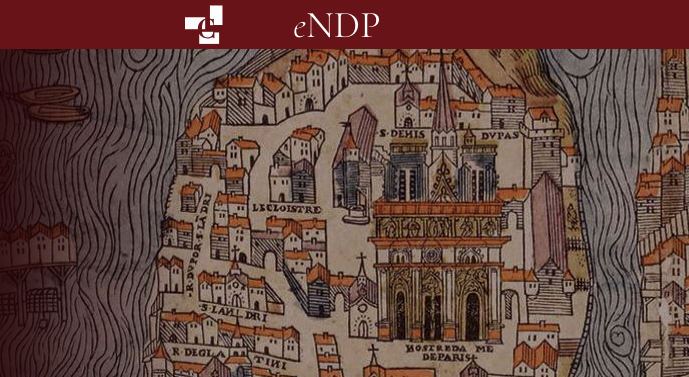
Web – e-NDP. Notre-Dame de Paris et son cloître. Les lieux, les gens, la vie, 1326-1504

Accès : ici

Le projet e-NDP propose de renouveler la connaissance de Notre-Dame de Paris par l’édition collaborative numérique des registres du chapitre cathédral. 26 registres, établis entre 1326 et 1504, donnent accès à toutes les décisions prises par les chanoines sur l’administration de la cathédrale, sur la gestion de leurs droits et de leur patrimoine, et sur la société du cloître.

Ces registres sont désormais accessibles grâce à la numérisation de leurs 14605 pages et à l’utilisation de la reconnaissance automatique de l’écriture manuscrite (HTR), qui permet d’en fournir une transcription. Celle-ci permet d’exhumer une source majeure pour l’histoire et la vie des hommes, des femmes et des enfants qui ont composé la société active à l’ombre de la cathédrale Notre-Dame et ont fait de cette dernière un modèle pour l’architecture, la liturgie, les arts et la vie intellectuelle et scientifique.

Accès aux registres

Les 26 registres médiévaux (1326-1504) du chapitre de Notre-Dame représentent une masse documentaire d’environ 15 000 pages manuscrites. Les variations graphiques et linguistiques, ainsi que la singularité de ces documents de la pratique sont autant de défis pour l’édition d’un corpus largement inédit.

Le projet e-NDP a mobilisé les méthodes et outils de l’apprentissage automatique (machine learning) pour relever ces défis : lecture automatique des écritures manuscrites (HTR) pour la transcription, recours aux modèles de langue pour les annotations linguistiques (lemmatisation et liage des entités nommées).

À chaque étape de la chaîne de traitements (HTR, annotation, indexation), des données sont produites et réutilisées. Nous avons veillé à documenter non seulement chacun de ces jeux de données, mais également les traitements conçus pour leur production. Dans une perspective FAIR, chaque dépôt est fait sur un entrepôt ouvert et pérenne. Ce sont les données ainsi exposées qui sont directement valorisées sur l’application eNDP en s’appuyant sur les API (Application Programming Interface) disponibles.

L’ouverture de ce corpus inédit, disponible pour les analyses computationnelles, participe au renouvellement de la connaissance sur l’administration de la cathédrale par les chanoines.

Accès aux personnes

Source : e-NDP

Publié dans Web | Laisser un commentaire

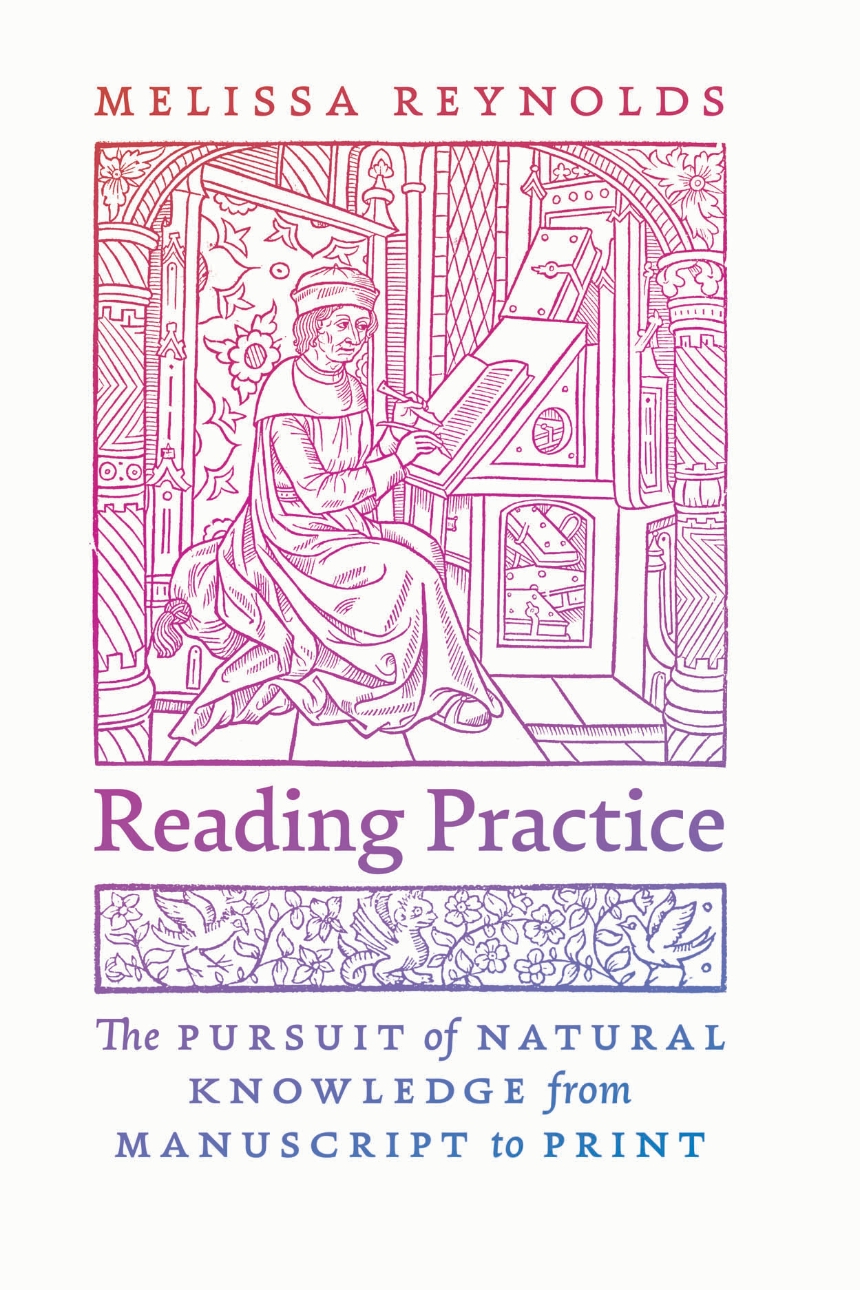
Publication – Melissa Reynolds, « Reading Practice. The Pursuit of Natural Knowledge from Manuscript to Print »

Through portraits of readers and their responses to texts, Reading Practice reconstructs the contours of the knowledge economy that shaped medicine and science in early modern England.
 
Reading Practice tells the story of how ordinary people grew comfortable learning from commonplace manuscripts and printed books, such as almanacs, medical recipe collections, and herbals. From the turn of the fifteenth century to the close of the sixteenth century, these were the books English people read when they wanted to attend to their health or understand their place in the universe. Before then, these works had largely been the purview of those who could read Latin. Around 1400, however, medical and scientific texts became available in Middle English while manuscripts became less expensive. These vernacular manuscripts invited their readers into a very old and learned conversation: Hippocrates and Galen weren’t distant authorities whose word was law, they were trusted guides, whose advice could be excerpted, rearranged, recombined, and even altered to suit a manuscript compiler’s needs. This conversation continued even after the printing press arrived in England in 1476. Printers mined manuscripts for medical and scientific texts that they would publish throughout the sixteenth century, though the pressures of a commercial printing market encouraged printers to package these old texts in new ways. Without the weight of authority conditioning their reactions and responses to very old knowledge, and with so many editions of practical books to choose from, English readers grew into confident critics and purveyors of natural knowledge in their own right.
 
Melissa Reynolds reconstructs shifting attitudes toward medicine and science over two centuries of seismic change within English culture, attending especially to the effects of the Reformation on attitudes toward nature and the human body. Her study shows how readers learned to be discerning and selective consumers of knowledge gradually, through everyday interactions with utilitarian books.

Table des matières :

List of Figures and Tables
Abbreviations
A Note on Transcriptions and Titles

Introduction

  1. The Making of a Practical Manuscript
  2. Picturing the Natural World
  3. Writing Recipes, Wrangling the Power of Nature
  4. Marketing Natural Knowledge
  5. Prognostications Past and Future
  6. Printing Women’s Knowledge, Censoring Secrets
  7. Englishing Medicine and Science
    Conclusion

Acknowledgments
Notes
Bibliography
Index

Informations pratiques :

Melissa Reynolds, Reading Practice. The Pursuit of Natural Knowledge from Manuscript to Print, Chicago, The University of Chicago Press, 2024 ; 1 vol., 318 p. ISBN : 978-0-22683-489-4. Prix : USD 35,00.

Source : The University of Chicago Press

Publié dans Publications | Laisser un commentaire

Appel à contribution – Worlds of Learning

The IMC provides an interdisciplinary forum for the discussion of all aspects of Medieval Studies. Proposals on any topic related to the Middle Ages are welcome, while every year the IMC also chooses a special thematic focus. In 2025 this is ‘Worlds of Learning’.

Histories of learning have transformed fundamentally over the last generation: older research mainly investigated educational institutions or specific intellectual traditions, typically privileging forms of learning which could be connected to modern Western institutions and disciplines. More recent scholarship takes a broader approach, historicising the production and circulation of different forms of knowledge, including many non-Western cultural traditions, as well as practical knowledge, oral traditions, and types of technical or artisanal expertise not represented in the modern canon. As a result, new interdisciplinary research fields have broadened the thematic and geographical scopes of investigation and developed new comparative frameworks.

Perhaps most importantly, different cultural traditions and historiographies of learning across the globe are increasingly discussed in relation to each other or on the basis of interdisciplinary exchange on methodologies. The increasingly global scope of academic exchange enables us to think more productively towards connected histories of learning, whether global or regional in scope, and including non-elite and non-traditional forms of learning.

Processes of learning and resulting written traditions have also been re-situated in their social and material contexts, deepening our understanding of the cultural embeddedness of knowledge. Various recent approaches question the meaning of institutional descriptors like ‘schools’ and challenge the dividing lines between ‘scholarly’/’expert’ or ‘elite’ and ‘popular’ cultures. Frameworks discussing ‘communities of learning’, ‘communities of interpretation’, or ‘communities of practice’ highlight the role of exchange and conflict between different communities and social strata in the production of knowledge. They also allow for a much broader integration of different forms of practice, performance, and oral communication into the study of intellectual production.

On a methodological plane, our understanding of the use, distribution, and long-term differentiation of specific bodies of knowledge profits greatly from a greater appreciation of their mediality and materiality, with new approaches to genre, communicative uses, and the circulation of manuscripts and printed books, but also to a variety of images, objects, and (architectural) landscapes. A growing toolkit of digital approaches has proved to be both a boon and a challenge, as the gathering, analysis, and visualisation of relevant data promises innovative new insights, but also raises questions about standardisation and access to costly infrastructures.

Against this background, IMC 2025 invites a plurality of viewpoints investigating the manifold social, intellectual, and geographical ‘worlds of learning’ shaping pre-modern societies. Seeking to stabilise the trend of the previous years, the strand particularly encourages sessions focusing on non-European worlds of learning. It also invites sessions which address the challenges inherent in the highly diverse disciplinary landscape and the asymmetries shaping extant historiographies of learning, which come from both different global regions and separate disciplines with different emphases.

Themes to be addressed may include, but are not limited to:

  • Ideals, practices, and rituals of teaching and learning
  • Gendered ideals of learning and gender in learning
  • Pedagogical techniques for different age groups
  • Technical and artisanal knowledge
  • Oral transmission, practice, and performance in learning processes
  • Medieval epistemologies and systematisations of knowledge
  • Religious conceptualisations and interpretations of learning
  • Forms of learning and/about the self
  • Languages and their role in the acquisition of learning
  • Representations of learning in literature and art
  • Learning materials, including instructional objects, texts, images, and diagrams
  • Schools and universities and their local and regional networks
  • Financial and political networks supporting communities of learning
  • Lieux de savoir and locales of learning, including (permanent or situational) material and spatial arrangements
  • Printing and publishing learned materials
  • Distribution and circulation of knowledge traditions
  • (Digitally) Mapping intellectual networks
  • Cross-cultural and inter-religious learning
  • Cultural transfer and cultural appropriation
  • Different national and confessional/religious historiographies of learning, their continuing impact, and their problems

The IMC welcomes session and paper proposals submitted in all major languages.

The Special Thematic Strand ‘Worlds of Learning’ will be co-ordinated by Sita Steckel (Historisches Seminar, Goethe-Universität Frankfurt).

Source : IMC Leeds

Publié dans Appel à contributions | Laisser un commentaire

Publication – « Église(s) et grands hommes, entre Renaissance et réformes », dir. Cécile Caby

Loin de se cantonner aux portraits des princes et des rois, des hommes de guerre ou des lettrés et artistes laïcs, la représentation en série des hommes illustres aux XIVe-XVIIe siècles pénètre aussi au cœur de l’institution ecclésiale : d’une part, les catalogues d’hommes illustres englobent des papes, évêques, frères et autres clercs ; d’autre part, l’Église romaine ou certains groupes en son sein – comme les ordres religieux – puis les différentes Églises réformées captent à leur profit les potentialités de cette nouvelle forme d’écriture biographique et historique, déployée dans toutes les déclinaisons de la rhétorique eulogique. En s’interrogeant sur les renouvellements de la biographie religieuse entre Renaissance et réformes, ce livre entend ouvrir deux pistes d’analyse, trop souvent oubliées dans l’historiographie : l’une relative à l’évolution des formes de représentation des mondes ecclésiaux et de leur histoire ; l’autre attentive à la promotion des nouvelles pratiques culturelles humanistes au service de la construction et de la promotion des identités religieuses, notamment sur fond de conflits entre l’Église romaine et les nouvelles Églises issues des réformes protestantes.

Table des matières :

Cécile Caby – Ecclesia Illustrata. Jalons pour une histoire ecclésiale des Grands Hommes

Saints ou Hommes illustres ?

Alessandra Malquori – Un genere figurativo inatteso: i cicli di “Asceti illustri” nella pittura toscana fra Tre e Quattrocento

Daniele Solvi – Senarum civis inclitus. Lo schema dei viri illustres nelle vite di Bernardino da Siena

Papes et prélates en hommes illustres

Concetta Bianca – Iacopo Zeno e le Vitae pontificum

Luca Boschetto – Le biografie dei pontefici nelle Vite di Vespasiano da Bisticci

Amedeo De Vincentiis – Niccolò V nella politica dell’«età» illustre: Tommaso Parentucelli e Vespasiano da Bisticci (1455-1480 ca)

Susanna Allés-Torrent – Tratados aparte, Collective Biographies in Fifteenth-Century Spain. The Case of Prelates in Fernán Pérez de Guzmán and Fernando del Pulgar

Luca Boschetto – Le biografie dei pontefici nelle Vite di Vespasiano da Bisticci

Les hommes illustres à l’épreuve des rivalité entre Églises

Marion Deschamp – Des protestants chez les Illustres : adoption et adaptation d’un genre renaissant

Thierry Amalou – Théologiens, écrivains ou saints ? Histoire et mémoire des illustres maîtres de Sorbonne (XVIe-XVIIe siècles)

Philipp Zitzlsperger – Les bustes des « uomini illustri » au XVIIe siècle et l’iconographie vestimentaire des papes et des cardinaux

Olivier Millet – En guise de conclusion, quelques commentaires

Informations pratiques :

Église(s) et grands hommes, entre Renaissance et réformes, dir. Cécile Caby, Rome, École française de Rome, 2024 ; 1 vol., 337 p. (Collection de l’École française de Rome, 520). ISBN : 978-2-7283-1661-8. Prix : € 32,00.

Source : École française de Rome


Publié dans Publications | Laisser un commentaire