Appel à contribution – Gender, Identity, and Authority in Late Antiquity

March 20-23, 2025

The Society for Late Antiquity is pleased to announce the sixteenth biennial meeting of Shifting Frontiers in Late Antiquity, which will be held at The University of Tulsa, in Tulsa, Oklahoma. We encourage papers that investigate issues and aspects of gender, identity, and/or authority within the broader late antique world, either in relation to one another or on their own. This thematic scope is intentionally broad, allowing for many different approaches and from a host of disciplines and methodologies. Gender, for example, might include the impact of religion or other factors on ideas of the family, sex, and sexuality, understandings of the nature of gender differences, or conceptions of identity and authority in relationship to the gendered or genderless self or other. Likewise, identity might focus on its self-perception or ascription by others, its potential to be malleable, situational, or contested, or its various components, like ethnicity, political allegiance, religious affiliation, or class. Finally, authority might interrogate its attribution to or expectation for a particular person (e.g., an empress or saint), place (e.g., Rome), or thing (e.g., a text or creed), the mechanisms for its attainment or rejection, such as tradition, merit, or force, or its realization of lack thereof, either as an actual fact or ideal.

Abstracts (no more than 500 words) for papers presenting original scholarship should be submitted for consideration no later than October 1, 2024.

Conference website: https://sites.utulsa.edu/shiftingfrontiersxvi/

Conference email: shiftingfrontiersxvi@gmail.com

Source : The Medieval Academy Blog

Publié dans Appel à contributions | Laisser un commentaire

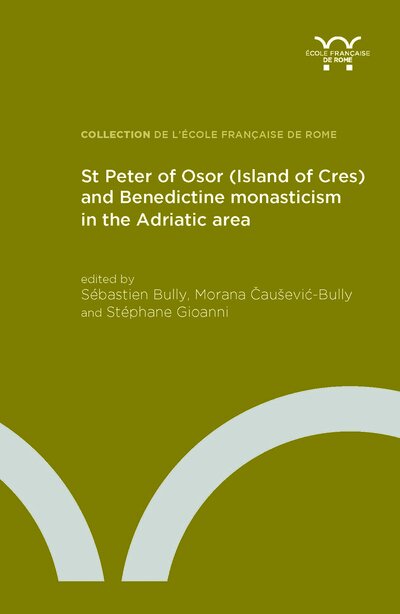
Publication – « St Peter of Osor (Island of Cres) and Benedictine monasticism in the Adriatic area », éd. Sébastien Bully, Morana Čaušević-Bully, Stéphane Gioanni

Ce livre réunit les actes du colloque international Saint-Pierre d’Osor et le monachisme bénédictin dans l’espace adriatique organisé en 2018 à Osor sur l’île de Cres (Croatie), qui marquait l’aboutissement de douze campagnes archéologiques (2006-2017). Cette rencontre avait pour objectif de présenter et contextualiser sur une large échelle géographique et chronologique les connaissances sur le monastère Saint-Pierre et le monachisme bénédictin dans l’Adriatique, dont les Annales Camaldules au XVIIIe s. avaient magnifié l’importance dans la réforme de l’Église au XIe s.
L’étude pluridisciplinaire de Saint-Pierre d’Osor et de ses représentations permet de confronter les sources disponibles (archéologiques, littéraires et archivistiques) et de renouveler la compréhension du monastère insulaire, de sa fondation présumée par Gaudentius, évêque d’Osor puis moine au monastère Porto Novo d’Ancône, et de son rôle dans la mise en œuvre de la réforme. Elle éclaire aussi d’une nouvelle lumière l’expansion bénédictine, la diffusion de la culture monastique, les transferts artistiques, la circulation des personnes et les réseaux de sociabilité entre les rives de l’Adriatique. Elle interroge enfin le dialogue entre l’archéologie et l’histoire.

This book gathers the proceedings of the international round-table Saint-Pierre d’Osor et le monachisme bénédictin dans l’espace adriatique held in 2018 at Osor on the island of Cres (Croatia), which marked the culmination of twelve archaeological campaigns (2006-2017). The aim of this meeting was to present and contextualise, on a broad geographical and chronological scale, our knowledge of the monastery of St Peter and Benedictine monasticism in the Adriatic, whose importance in the reform of the Church in the 11th century was magnified by the Camaldolese Annals in the 18th century. This multi-disciplinary study of St Peter of Osor and its representations allows us to compare the available sources (archaeological, literary and archival) and to renew our understanding of the island monastery, its presumed foundation by Gaudentius, bishop of Osor and then monk at the Porto Novo monastery in Ancona, and its role in the implementation of the reform. It also sheds new light on Benedictine expansion, the spread of monastic culture, artistic transfers, the movement of people and networks of sociability between the shores of the Adriatic. Finally, it examines the dialogue between archaeology and history.

Table des matières : ici

Informations pratiques :

St Peter of Osor (Island of Cres) and Benedictine monasticism in the Adriatic area, éd. Sébastien Bully, Morana Čaušević-Bully, Stéphane Gioanni, Rome, École française de Rome, 2024 ; 1 vol., 272 p. (Collection de l’École française de Rome, 615). ISBN : 978-2-7283-1804-9. Prix : € 35,00.

Source : École française de Rome

Publié dans Publications | Laisser un commentaire

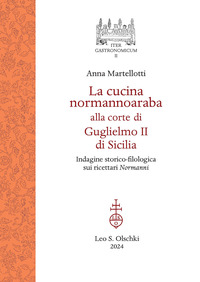
Publication – Anna Martellotti, « La cucina normannoaraba alla corte di Guglielmo II di Sicilia. Indagine storico-filologica sui ricettari Normanni »

Il raffronto dei ricettari Normanni con la manualistica araba evidenzia la derivazione diretta delle preparazioni dalla gastronomia arabopersiana, adeguata ai gusti occidentali in un’isola che conserva ancora le tracce del passato musulmano: e questo permette di collocarne la redazione alla corte di Guglielmo II di Sicilia intorno al 1177. Il successo dei ricettari è dimostrato dalla diffusione delle pietanze normannoarabe nell’Europa tardo-medievale: le sontuose vivande da essi proposte raggiunsero immediatamente l’Inghilterra, mentre nel meridione d’Italia anche la trattatistica sveva aggiungeva ulteriori piatti arabi; è dunque possibile affermare che nel corso del Trecento la nuova cucina speziata e zuccherata unificava l’intero continente.

Anna Martellotti, filologa, già professore associato presso l’Università di Bari, si interessa da tempo di gastronomia medievale (Libro di buone vivande, Fasano, Schena, 1991), con particolare attenzione ai contatti con il mondo arabo (Il Liber de ferculis di Giambonino da Cremona, Fasano, Schena, 2001) e alla prima cucina italiana (I ricettari di Federico II, Olschki, 2005).

Con Elio Durante si dedica da svariati lustri alla indagine su fatti, persone e cose pertinenti al mirifico mondo poetico-musicale della Ferrara di Alfonso II, pubblicando numerose monografie di argomento musicale e letterario (Firenze, S.P.E.S.), oltre a ristampe anastatiche ed edizioni moderne di opere musicali a cui si è recentemente aggiunto «Giovinetta peregrina». La vera storia di Laura Peperara e Torquato Tasso, Olschki, 2010. – (gennaio 2015) –

Informations pratiques :

Anna Martellotti, La cucina normannoaraba alla corte di Guglielmo II di Sicilia. Indagine storico-filologica sui ricettari Normanni, Florence, Olschki, 2024 ; 1 vol., VI–384 p. (Iter gastronomicum, 2). ISBN : 978-8-82226-895-2. Prix : € 39,00.

Source : Olschki

Publié dans Publications | Laisser un commentaire

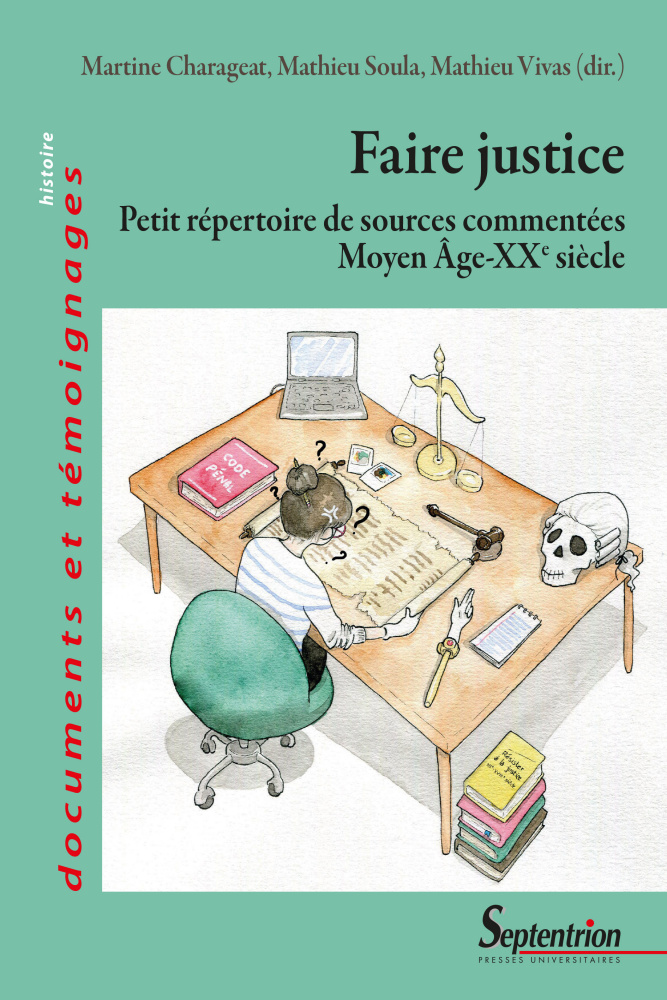
Publication – « Faire justice. Petit répertoire de sources commentées (Moyen Âge-XXe siècle) », éd. Martine Charageat, Mathieu Soula, Mathieu Vivas

Conçu pour des étudiants et des enseignants, cet ouvrage favorise l’approche de l’histoire de la justice à n’importe quel niveau d’apprentissage, que ce soit celui d’une initiation ou bien d’une spécialisation. L’historiographie qui bénéficie à ce jour d’une longue tradition, pour les périodes allant du Moyen Âge au XXe siècle, n’est pas celle qui a le plus édité de sources de manière accessible et pédagogique (transcription, traduction, etc.). Partager ses sources et expliquer comment les manipuler est un pan de l’histoire judiciaire que les chercheurs n’ont pas encore pleinement investi. Il n’est sans doute pas simple d’éditer des lettres de rémission ou des procès, par exemple, et la raison en est facile à comprendre : ils sont trop longs à publier en termes de volume. La mise en ligne de certains dossiers, comme sur le site de Criminocorpus, atténue en partie ce manque, que le présent ouvrage aimerait également venir modestement pallier.

Informations pratiques :

Faire justice. Petit répertoire de sources commentées (Moyen Âge-XXe siècle), éd. Martine Charageat, Mathieu Soula, Mathieu Vivas, Villeneuve d’Ascq, Presses universitaires du Septentrion, 2024 ; 1 vol., 372 p. (Documents et témoignages). ISBN : 978-2-7574-4134-3. Prix : € 26,00.

Source : Presses universitaires du Septentrion

Publié dans Publications | Laisser un commentaire

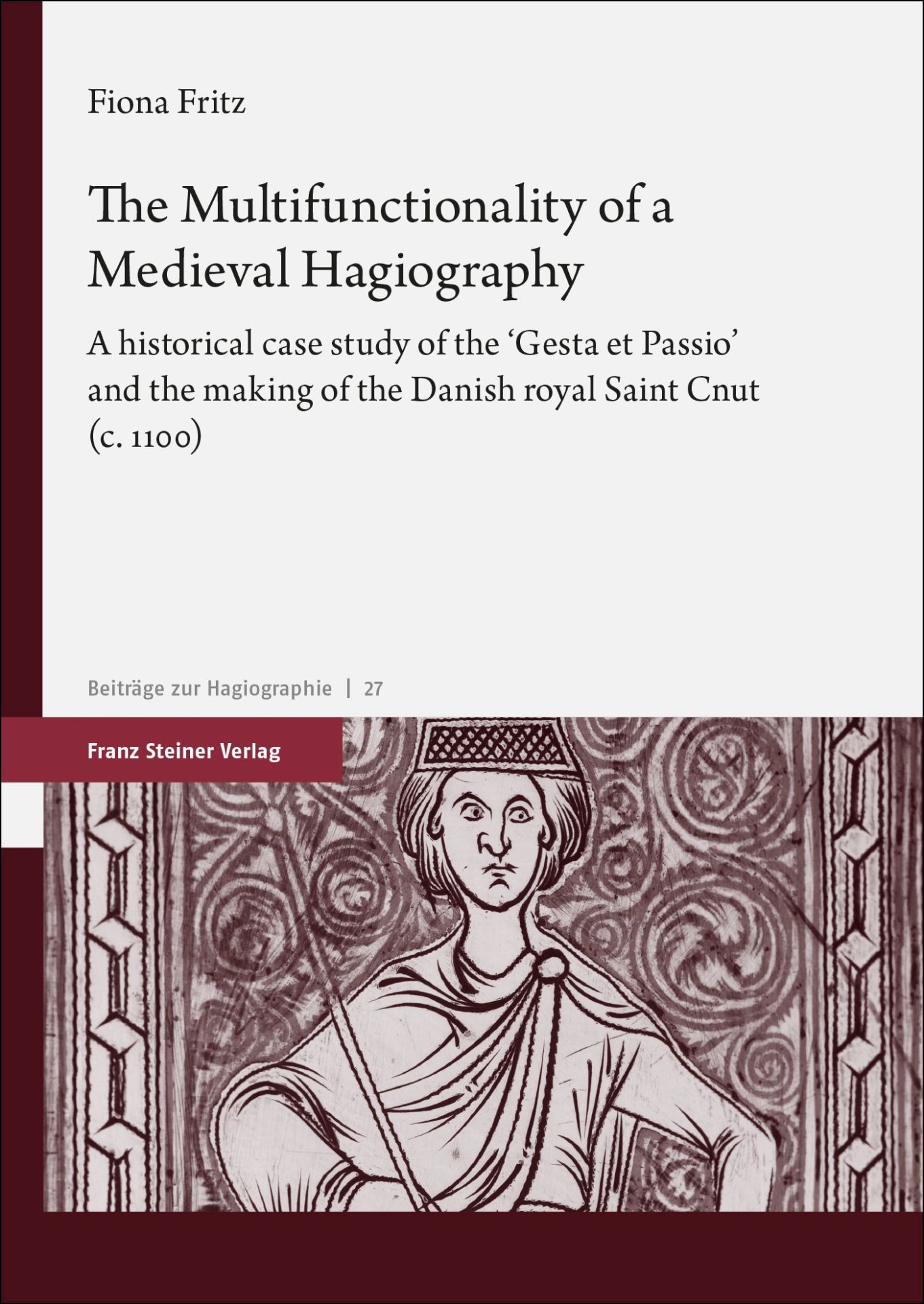
Publication – Fiona Fritz, « The Multifunctionality of a Medieval Hagiography. A historical case study of the « Gesta et Passio » and the making of the Danish royal Saint Cnut (c. 1100) »

The ‘Gesta et Passio’ is a Latin hagiographic text written around 1112 by Ælnoth of Canterbury about the Danish king Cnut who was killed in 1086 and later venerated as St Cnut.

Due to its textual complexity Ælnoth’s work has been considered heterogeneous and strangely structured. With her study Fiona Fritz aims to show that this complexity reflects the systematic multifunctionality of the text and that the text’s construction afforded Ælnoth the opportunity to express his perception of contemporaneous ecclesiastical and secular political matters. Relevant textual functions include the construction of Cnut as a royal saint, propagating the cult of St Cnut, furthering ecclesiastical interests, presenting an ideology of kingship, and enhancing the legitimacy of the ruling dynasty.

The analysis of the text considers both the historical context of its production and various textual moves and strategies employed by the author. Over and above the results attained in relation to the ‘Gesta et Passio’ as an individual text, the present study can be taken as a general exploration of methods for the analysis of the potential of hagiographical texts for various functions and for multifunctionality.

Informations pratiques :

Fiona Fritz, The Multifunctionality of a Medieval Hagiography. A historical case study of the « Gesta et Passio » and the making of the Danish royal Saint Cnut (c. 1100), Stuttgart, Franz Steiner Verlag, 2024 ; 1 vol., 250 p. (Beiträge zur Hagiographie, 27). ISBN : 978-3-515-13597-9. Prix : € 50,00.

Source : Franz Steiner Verlag

Publié dans Publications | Laisser un commentaire

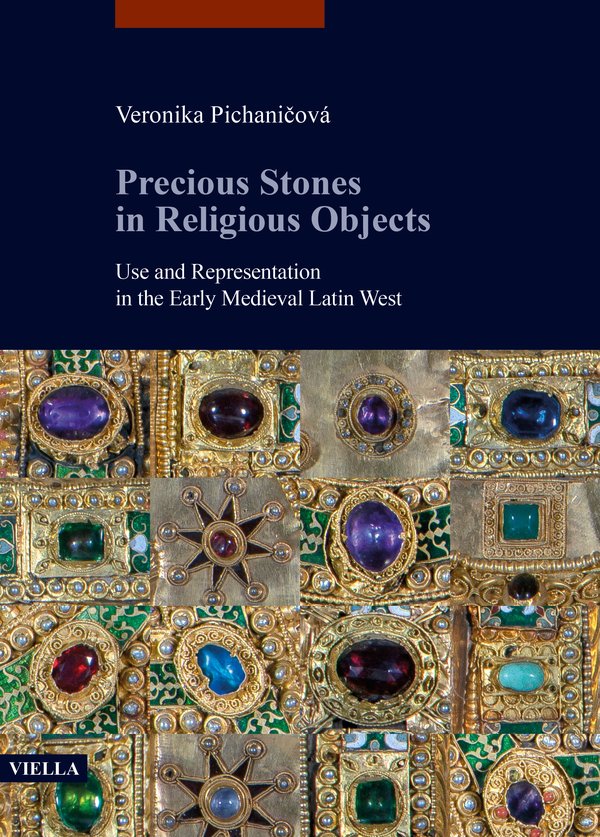
Publication – Veronika Pichaničová, « Precious Stones in Religious Objects. Use and Representation in the Early Medieval Latin West »

Precious stones have fascinated mankind for millennia. These glistening and colourful pieces of nature were centres of various legends and superstitions, used for healing and protection as well as signs of status and wealth. Since the dawn of Christianity, precious stones embarked on a journey where they were gradually cleansed from their Pagan past of being used as magical amulets and introduced into the world of Christian symbolism and allegory. They became ubiquitous on the most important sacred objects – from reliquaries and crosses to altars and ornate covers for the Holy Scriptures, they broadcasted the inner, spiritual value of these items through means that were easily understandable by everyone. Similarly, the visual prowess of precious stones was also utilized through mosaics or sparkling stained-glass windows, transforming entire sacred spaces into magnificent jewel-like visions of Heavenly Jerusalem. Whether real or represented in glass, precious stones were far more than mere decoration or a sign of profane wealth. As this book shows, at least for a moment they enabled medieval eyes to experience the vision of otherworldly beauty and preciousness, a true vision of the sacred.

Veronika Pichaničová is an assistant professor at the Department of Art History, Comenius University, Bratislava. Her research focuses on the usage of precious materials in medieval art in connection to medieval visuality and materiality.

Table des matières : ici

Informations pratiques :

Veronika Pichaničová, Precious Stones in Religious Objects. Use and Representation in the Early Medieval Latin West, Rome, Viella, 2024 ; 1 vol., 184 p. (I libri di Viella. Arte / Studia Artium Mediaevalium Brunensia, 14). ISBN : 979-1-25469-211-0. Prix : € 30,00.

Source : Viella

Publié dans Publications | Laisser un commentaire

Journée d’étude – Paris et les bonnes villes. Urbanité et consensus religieux

Une journée d’étude, organisée conjointement par l’IRHT et le Lamop (Université Paris 1, UMR 8589) en partenariat avec les Archives nationales le vendredi 7 juin 2024 de 9h à 17h, conclut le cycle du séminaire Paris au Moyen Âge (2022-2024) Paris et les bonnes villes. Urbanité et consensus religieux, XIIIe-XVIe siècles, espaces septentrional et méridional «français».

Après un cycle tenu en 2016-2018 sur les pratiques religieuses des Parisiens entre le XIIe et le XVe siècle, et une année vouée à réinterroger la notion plastique de «bonne ville», l’identité urbaine via le modèle que peut être Paris, et les relations qui lient la bonne ville au roi, cette journée d’étude se veut un moment singulier voué à réexaminer les pratiques religieuses mises en oeuvre par les «bonnes gens» des bonnes villes en actualisant le modèle défini il y a quarante ans par Bernard Chevalier.

Nous proposons de le réinterroger au prisme du concept d’urbanité, ce nouveau modèle culturel des bonnes villes dans lequel la religion occupe une place essentielle : comment les pratiques religieuses des bonnes gens servent-elles à élaborer un consensus qui permettrait à leur communauté de faire corps sous le regard du prince ? Pour répondre à cette question, le champ d’investigation s’inscrit tant dans l’espace septentrional que méridional, dans un temps long, du xiiie siècle, prélude des bonnes villes «en devenir», à son âge d’or au XVIe siècle, en considérant les pratiques des bonnes gens dans l’interaction de leurs sphères laïque et cléricale au service d’une même affirmation sociale.

Caran – Centre d’accueil et de recherche des Archives nationales
Salle d’Albâtre
11 rue des Quatre-Fils – 75003 Paris

9h – Accueil

  • 9h30 – Introduction – Adrien Ferré
  • 10h – Michelle Fournié, Les élites urbaines et la gestion des reliques : le cas de Toulouse aux XIVe et XVe s.
  • 11h45 – Julie Pilorget, Œuvrer au salut de la communauté urbaine : Diversité des expériences religieuses féminines à la fin du Moyen Âge (Amiens, XIIIe-XVe s.)

11h30 – Pause

  • 11h45 – Vincent Challet, «Et pour le faire bayser aux bonnes gens qui ont dévotion au benoît saint corps» : rituels consulaires et dévotions ordinaires (Montpellier, XIIIe-XVe s.)

12h30 – Déjeuner

  • 14h – Daniel Le Blévec L’assistance, ciment du corps social dans les bonnes villes et castra du midi
  • 14h45 – Lucie Laumonier La charité de Montpellier : du consulat aux métiers (XIIIe-XVIe s.) (communication à distance)

15h30 – Pause

  • 15h45 – Lise Levieux Les ordres mendiants à Rouen au Moyen Âge : un insediamento facilité par les élites urbaines ?
  • 16h30 – Conclusion par Anne Massoni

Organisation

La journée d’étude est coorganisée par l’IRHT (UPR 841), le Lamop (UMR 8589), le CRIHAM (UR 15507 – Université de Limoges) et le GRHis (UR3831).

Contact

  • Adrien Ferré : adrien.ferre@univ-rouen.fr

* Il est possible de suivre la journée à distance par Zoom
 

Source : IRHT

Publié dans Colloque | Laisser un commentaire

Publication – Christof Rolker, « Canon Law in the Age of Reforms (c. 1000 to c. 1150) »

This monograph addresses the history of canon law in Western Europe between ca. 1000 and ca. 1150, specifically the collections compiled and the councils held in that time. The main part consists of an analysis of all major collections, taking into account their formal and material sources, the social and political context of their origin, the manuscript transmission, and their reception more generally. As most collections are not available in reliable editions, a considerable part of the discussion involves the analysis of medieval manuscripts. Specialized research is available for many but not all these works, but tends to be scattered across miscellaneous publications in English, German, French, Italian, and Spanish; one purpose of the book is thus to provide relatively uniform, up-to-date accounts of all major collections of the period. At the same time, the book argues that the collections are much more directly influenced by the social milieux from which they emerged, and that more groups were involved in the development of high medieval canon law than it has previously been thought. In particular, the book seeks to replace the still widely held belief that the development of canon law in the century before Gratian’s Decretum (ca. 1140) was largely driven by the Reform papacy. Instead, it is crucial to take into account the contribution of bishops, monks, and other groups with often conflicting interests. Put briefly, local needs and conflicts played a considerably more important role than central (papal) ‘reform’, on which older scholarship has largely focused.

Christof Rolker is a professor of medieval history at the University of Bamberg.

Informations pratiques :

Christof Rolker, Canon Law in the Age of Reforms (c. 1000 to c. 1150), Washington, The Catholic University of America, 2023 ; 1 vol. (History of Medieval Canon Law). ISBN : 978-0-81323-757-2. Prix : USD 75,00.

Source : The Catholic University of America

Publié dans Publications | Laisser un commentaire

Offre d’emploi – Senior Scientist für mittelalterliche Geschichte (Universität Wien)

An der Universität Wien arbeiten über 10.000 Persönlichkeiten gemeinsam an den großen Fragen der Zukunft. Davon rund 7.500 sind in der Wissenschaft und Lehre beschäftigt, weitere 2.900 in der Administration und Organisation. Wir suchen einen*eine 

 Senior Scientist

40 Historisch-Kulturwissenschaftliche Fakultät

Besetzung ab: 01.09.2024 | Stundenausmaß: 40,00 | Einstufung KV: §48 VwGr. B1 lit. b (postdoc)

Befristung bis:

Stellen ID: 2318

Ausführliche Beschreibung

An der historisch-kulturwissenschaftlichen Fakultät der Universität Wien ist eine Senior Scientist-Stelle (m/w/d) für mittelalterliche Geschichte und Historische Hilfswissenschaften zu besetzen.

Es gibt viele gute Gründe, an der Universität Wien forschen und lehren zu wollen. Und einen, warum sich rund 7.500 wissenschaftliche Mitarbeiter*innen vor Ihnen für diese Universität entschieden haben. Sie verstehen sich als Persönlichkeiten, die Spielraum für kontinuierlichen Anspruch, internationale Spitzenforschung und wissenschaftliche Exzellenz brauchen. Und dabei Freiheiten und Services genießen, wie sie an anderen Institutionen nicht selbstverständlich sind. Das möchten Sie auch? Herzlich willkommen in unserem Team!

Ausführliche Beschreibung

Ihr persönlicher Spielraum:

Die Stelle erfordert fortgeschrittene akademische Qualifikationen (Doktorat im Bereich der mittelalterlichen Geschichte sowie nach Möglichkeit mehrjährige post-doktorale Forschungserfahrung), exzellente lateinisch-philologische Expertise und einschlägige Erfahrung mit mediävistischen Editionsprojekten. Die Senior-Scientist-Stelle ist am Institut für Österreichische Geschichtsforschung angesiedelt und umfasst zunächst die eigenverantwortliche Arbeit an dem Langzeitprojekt „Edition der Register Honorius’ III.“ Das Projekt wird in Kooperation mit dem Österreichischen Historischen Institut in Rom durchgeführt werden. Dem/der Senior Scientist obliegt es weiters, das Editionsprojekt von Wien aus zu koordinieren und innerhalb der internationalen Fachöffentlichkeit zu positionieren. Die Stelle soll ab dem 01.09.2024 besetzt werden und ist bis 31.08.2027 befristet mit Option auf Entfristung.

Ausführliche Beschreibung

Das machen Sie konkret:

Darüber hinaus bestehen die Aufgaben in der Mitarbeit in Forschung und Lehre im Arbeitsbereich Mittelalterliche Geschichte und Historische Hilfswissenschaften; selbständige Lehrveranstaltungen im Ausmaß der kollektivvertraglichen Bestimmungen im Rahmen der BA-, LA- und MA-Studien Geschichte an der Universität Wien, namentlich des MA „Historische Hilfswissenschaften und Archivwissenschaft“. Mitarbeit in der universitären Selbstverwaltung. Erwartet wird die Beteiligung am FSP der Fakultät „Text und Edition – Editorik“ und die Bereitschaft zur Mitwirkung an der Redaktion der „Mitteilungen des Instituts für Österreichische Geschichtsforschung“ bzw. den begleitenden Publikationsreihen.

Ausführliche Beschreibung

Das gehört zu Ihrer Persönlichkeit:

Forschungsschwerpunkte im Bereich der hochmittelalterlichen Geschichte und der Historischen Hilfswissenschaften. Vorausgesetzt wird einschlägige mehrjährige Erfahrung in der Lehre. Erwartet wird außerdem die Auseinandersetzung (möglichst bereits Erfahrung) mit digitalen Editionsverfahren sowie die selbständige Konzipierung und Durchführung von Drittmittelprojekten, die flankierend zur Finanzierung des Langzeitprojekts und zur Weiterentwicklung digitaler Verfahren beitragen können.

Ausführliche Beschreibung

Was wir bieten:

Work-Life-Balance: Flexible Arbeitszeiten und Home-Office gem. den gültigen Regelungen der Universität Wien möglich.

Inspirierendes Arbeitsklima: Sie sind Teil eines internationalen Teams mit hervorragender Forschungsinfrastruktur in einer lockeren Arbeitsumgebung.

Gute öffentliche Anbindung: Ihr neuer Arbeitsplatz ist mit öffentlichen Verkehrsmitteln bequem erreichbar.

Interne Weiterbildung und Coaching: Wir bieten Ihnen laufend die Möglichkeit, Ihre Kompetenzen zu vertiefen.

Befristeter Vertrag und faires Gehalt: Das Grundgehalt von EUR 4.351,90 (14 x jährlich für Senior Scientists Postdoc) erhöht sich, wenn wir Berufserfahrungen anrechnen können.

Gleiche Chancen für alle: Wir freuen uns über jede zusätzliche Persönlichkeit im Team!

So einfach bewerben Sie sich:

–    Motivationsschreiben
–    Wissenschaftlicher Lebenslauf inkl. Publikationsliste, Nachweis Lehrerfahrung, Auflistung gehaltener Vorträge…
–    Beschreibung der Forschungsinteressen und Forschungspläne
–    Kontaktadressen möglicher Referenzpersonen

Über unser Jobportal / Jetzt Bewerben – Button

Bei inhaltlichen Fragen kontaktieren Sie bitte:

Christian Lackner

christian.lackner@univie.ac.at

Wir freuen uns über neue Persönlichkeiten in unserem Team! 
Die Universität Wien betreibt eine antidiskriminatorische Anstellungspolitik und legt Wert auf Chancengleichheit, Frauenförderung und Diversität. Wir streben eine Erhöhung des Frauenanteils beim wissenschaftlichen und allgemeinen Universitätspersonal insbesondere in Leitungsfunktionen an und fordern daher qualifizierte Frauen ausdrücklich zur Bewerbung auf. Bei gleicher Qualifikation werden Frauen vorrangig aufgenommen.

Universität Wien. Raum für Persönlichkeiten. Seit 1365.

Datenschutzerklärung

Bewerbungsfrist: 20.05.2024

(Senior) Lecturer & Researcher

Source : Akademische Stellen

Publié dans Offre d'emploi | Laisser un commentaire

Colloque – Un tournant grégorien? Réforme ecclésiastique, société et politique entre 1050 et 1150 (III)

Trilaterale ForschungskonferenzenEine gregorianische Wende? Kirchenreform, Gesellschaft und Politik zwischen 1050 und 1150 (III)
Conferenze di ricerca trilaterali  Una svolta gregoriana? Riforma ecclesiastica, società e politica tra 1050 e 1150 (III)  
Conférences de recherche trilatérales  Un tournant grégorien? Réforme ecclésiastique, société et politique entre 1050 et 1150 (III)  

Villa Vigoni

16-19/06/2024 16/06/2024

19:00 Brindisi di Benvenuto / Willkommensaperitif / Apéritif de bienvenue
19:30 Cena / Abendessen / Dîner

17/06/2024

08:00 – 09:00 Colazione / Frühstück / Petit-déjeuner

09:30 – 10:00 Introduction: Alessio Fiore

1. Communautés ecclésiastiques et intellectuelles

10:00 – 10:50 Charles West, Dark Matter or Don’t Matter? Non-elites in the Register of Gregory VII
10:50 – 11:40 Florian Hartmann, Wissensgeschichtliche Betrachtungen des Investiturstreits
11:40 – 11:50 Coffee Break / Kaffeepause / Pause
11:50 – 12:40 Isabelle Rosé, Le concile de Rome (1059), une communauté partisane et réformatrice? 13.00 Pranzo / Mittagessen / Déjeuner

14:30 – 15:20 Emilie Kurdziel, Communautés locales et couples cléricaux : un tournant grégorien ?

2. Communautés urbaines

15:20 – 16:10 Alessio Fiore, Folle urbane, radicalismo riformatore e poteri vescovili in Italia centro-settentrionale (1050-1150)
16:10 – 16:30 Coffee Break / Pause
16:30 – 17:20 Étienne Doublier, Aufstand? Erhebung? Bürgerkrieg? Städtische Konflikte am Rhein um 1100
17:20 – 18:10 Nina Gallion, Libertas Moguntina. Mainz zwischen städtischer Entwicklung und herrschaftlichem Einfluss im frühen 12. Jahrhundert
19:30 Cena / Abendessen / Dîner

18/06/2024

08:00 – 09:00 Colazione / Frühstück / Petit-déjeuner

09:15 – 13.10 Gita in battello a Varenna

13:15 Pranzo / Mittagessen / Déjeuner

3. Communautés rurales

14:30 – 15:20 Hannes Engl, Der Konflikt zwischen regnum und sacerdotium als Katalysator lokaler Machtentfaltung: Stadt- und Dorfgemeinden in Lothringen um 1100
15:20 – 16:10 Emmanuel Grélois, Genèse des communautés ecclésiastiques (séculières, régulières) et des communautés d’habitants (villes, villages) et d’usages (pâturages, forêts, zones humides): un effet du « tournant grégorien » ? Quelques exemples auvergnats pour une réflexion plus large
16:10 – 16:30 Coffee Break / Pause

16:30 – 17:20 Enrico Faini, Spazializzare e storicizzare. Il XII secolo come età dei confini a partire da un caso toscano
17:20 – 18:10 Paolo Tomei, Manentes in mutamento. Genesi, lessico e forme del nuovo servaggio

18:10 – 19.00 Table ronde finale

19:30 Cena / Abendessen / Dîner

19/06/2024

09:00 Partenza

Publié dans Le réseau | Laisser un commentaire