Appel à contribution – Making for an uncertain future: material ecocritical approaches around the year 1000

Deadline 10 June 2024

This issue of Medieval Ecocriticisms looks at the abundant superfluity (or excess) of the long millennial moment, positioning it in dialogue with the anticipated end of the world in 1000, both anticipatory and hereditary, with all of its forecast systemic, ecological and eschatological collapse. In suggesting this, and in looking at this material through the lens of crisis, time and environment, we find ideas of what it might mean to live in the long end times of a/the ecological long durée of an uncertain future. We invite thoughts around how medieval millennial material, its art and literature might foreshadow the Anthropocene, particularly given how it might, in some way, be responding to the climactic non-apocalypse of 1000 that was forecast, but not realised.
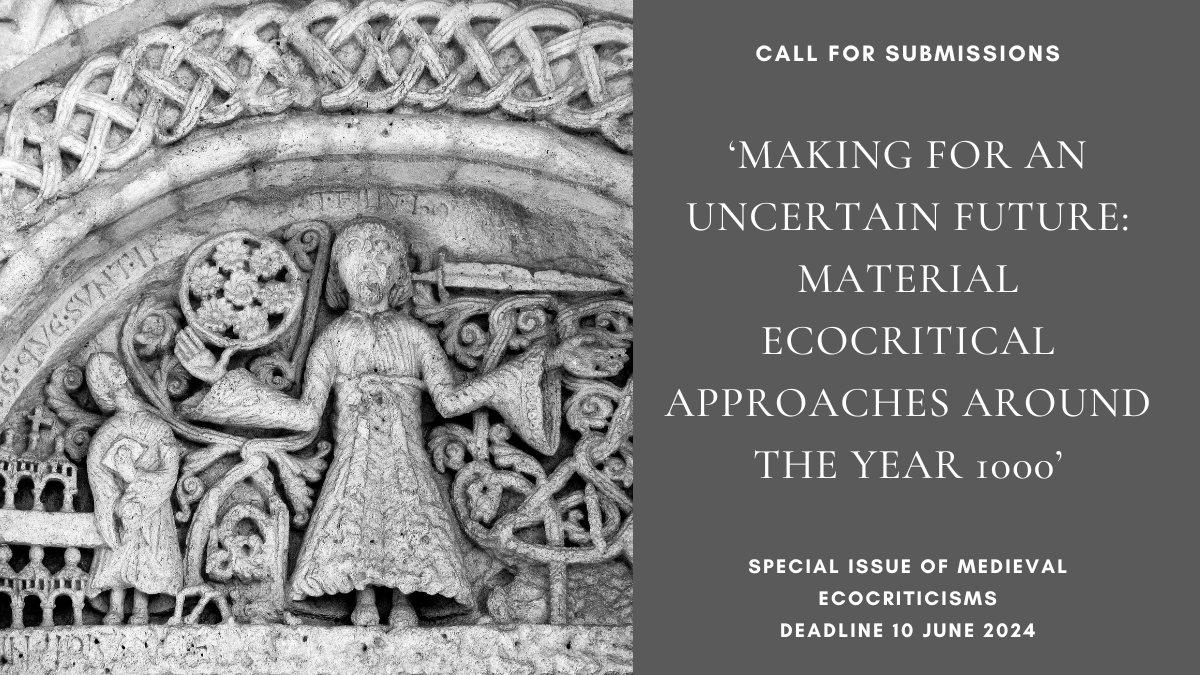
Although there has been some scholarly discomfort around using the past as a tool for discussing later times and paradigms, this issue suggests that the past can be employed as a resource for other ways of thinking about the present and perhaps also the future. Thus, the eschatologically charged period that immediately anticipated the millennium, and the uncertain apotropaism and socio-temporal ‘renaissance’ of the Romanesque, together with their sculpted objects that perform as nodes responding to a network of anticipated crisis, might provide us, as eco-critically thoughtful and materially engaged medievalists, and as a society more broadly, with a critical parallel for thinking about current ecological events.

We ask contributors to think about the ways in which medieval millennial material may:

  • Connect or disrupt the medieval and the ‘modern’
  • Respond to the here and now, there and then, elsewhere and other-when
  • Consist of both deep time and deep history
  • React to or disrupt momentary or epochal thinking
  • Respond to crisis or an anticipated event that failed to happen or is still unfolding
  • Ask where and how we live
  • Think about place, environment, and ecology
  • Frame relationships between the human and non-human

Papers around 6000 words are sought. Please submit an abstract (300 word maximum) and cv to Meg Boulton (meg.boulton@york.ac.uk) and Meg Bernstein (bernsteinm@alfred.edu).

Source : Medieval Art Research
Publié dans Appel à contributions | Laisser un commentaire

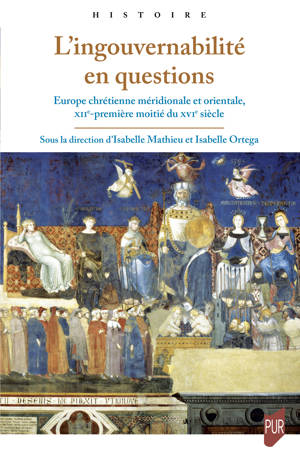
Publication – « L’ingouvernabilité en questions. Europe chrétienne méridionale et orientale, XIIe-première moitié du XVIe siècle », éd. Isabelle Mathieu, Isabelle Ortega

Qu’advient-il quand « gouverner devient difficile » ? Si le gouvernement et l’acte de gouverner ont déjà bien été étudiés, il n’en va pas de même de l’ingouvernabilité. Le but de cet ouvrage est dès lors de se pencher sur les limites, les oppositions et les dysfonctionnements en matière de gouvernement entendu dans un sens large. Il est de comprendre les acteurs qui en sont responsables, les causes qui les expliquent, les aspects sous lesquels ces anomalies se manifestent. Il permet d’entrevoir de quelle façon les appareils de gouvernement tentent de répondre à leurs difficultés avec plus ou moins de succès. La zone géographique retenue est composée certes de territoires variés, tant du point de vue de la géographie que des populations qui y vivent, pour autant cette diversité garantit le comparatisme dans un espace où la question institutionnelle et gouvernementale est centrale et les freins, les limites ou les difficultés sont légitimement des pistes de réflexion qu’il fallait explorer. À la lumière de dossiers documentaires riches et variés, ce livre a pour ambition de questionner très largement le sens de l’acte de gouverner avec l’objectif de proposer des clés de lecture qui pourraient être transposées à d’autres périodes.

Avec le soutien de l’université d’Angers.

Table des matières : ici

Informations pratiques :

L’ingouvernabilité en questions. Europe chrétienne méridionale et orientale, XIIe-première moitié du XVIe siècle, éd. Isabelle Mathieu, Isabelle Ortega, Rennes, Presses universitaires de Rennes, 2024 ; 1 vol., 298 p. (Histoire). ISBN : 978-2-75359-440-1. Prix : € 25,00.

Source : Presses universitaires de Rennes

Publié dans Publications | Laisser un commentaire

Publication – Clément de Vasselot de Régné, « Pouvoir et solidarités d’une famille seigneuriale. Le « Parentat » Lusignan entre France, Îles Britanniques et Orient latin (Xe-XIVe siècles) »

La famille châtelaine de Lusignan est un excellent exemple du phénomène de diffusion dynastique de l’aristocratie française. Elle connaît à la fin du XIIe siècle et surtout au début du XIIIe siècle, une ascension fulgurante, étendant son emprise sur le Haut puis le Bas-Poitou, s’emparant du comté de la Marche puis de celui d’Angoulême, imposant sa domination sur le nord du duché d’Aquitaine. Une série de mariages ajoute au patrimoine de ses membres le comté d’Eu, en Normandie, celui de Penthièvre et les seigneuries de Fougères et de Porhoët, en Bretagne, ainsi que, dans les îles Britanniques, les honneurs de Hastings et de Tickhill, l’évêché de Winchester, les comtés de Pembroke et de Wexford. La couronne de Jérusalem et son substitut, le trône chypriote, reste leur plus marquante acquisition, d’autant qu’elle est directement liée à la perte de la ville sainte.

Cet ouvrage est né d’une interrogation sur le potentiel politique que pouvait constituer un tel ensemble familial, pourvu que les liens du sang perdurent. De fait, la famille de Lusignan forme un groupe cohérent, structuré par les liens de la parenté, dont les membres partagent une identité entretenue par un certain nombre de repères communs ainsi qu’un réseau de coopération et de soutien mutuel. Leur union constitue une véritable puissance politique et territoriale, qui transcende les limites des royaumes et des principautés. Le concept de « parentat » a été forgé à partir d’un vocable latin emprunté à une chronique médiévale pour saisir de manière holistique ce pouvoir politique réticulaire fondé sur la solidarité des membres d’une même famille, ayant rassemblé, au fil des générations, une grande diversité de principautés et de seigneuries parfois voisines, parfois très dispersées.

Cette étude du parentat Lusignan s’intéresse à sa propagation transrégionale, au pouvoir exercé, à l’échelle de l’individu, comme à celle du groupe familial, sur les hommes et les biens, aux pratiques de gouvernementalité, aux procédés de matérialisation du pouvoir comme aux modes de sa contestation, ainsi qu’aux dynamiques familiales qui concourent à structurer le parentat politiquement et socialement, qui entretiennent sa cohésion, forgent sa mémoire, construisent son identité et affermissent son unité.

Ancien élève de l’École normale supérieure de Lyon, agrégé d’histoire et titulaire d’un doctorat en histoire médiévale obtenu à l’Université de Nantes, Clément de Vasselot de Régné enseigne actuellement en tant qu’ATER à l’Université de Lille.

Introduction

Partie I : Pouvoir et gestion d’un groupe familial

Chapitre I. La propagation arborescente d’un lignage
Chapitre II. Maîtriser les hommes et l’espace
Chapitre III. Pouvoirs concurrents et conflictualités

Partie II : De la parenté vécue au parentat

Chapitre IV. Structures d’une cohésion familiale
Chapitre V. Les mécanismes de la perpétuation lignagère
Chapitre VI. Les pratiques religieuses : affirmation spirituelle et temporelle

Conclusion

Informations pratiques :

Clément de Vasselot de Régné, Pouvoir et solidarités d’une famille seigneuriale. Le « Parentat » Lusignan entre France, Îles Britanniques et Orient latin (Xe-XIVe siècles), Turnhout, Brepols, 2024 ; 1 vol., 795 p. (Histoires de famille. La parenté au Moyen Age, 24). ISBN : 978-2-503-59615€ 125,00. Prix :

Source : Brepols


Publié dans Publications | Laisser un commentaire

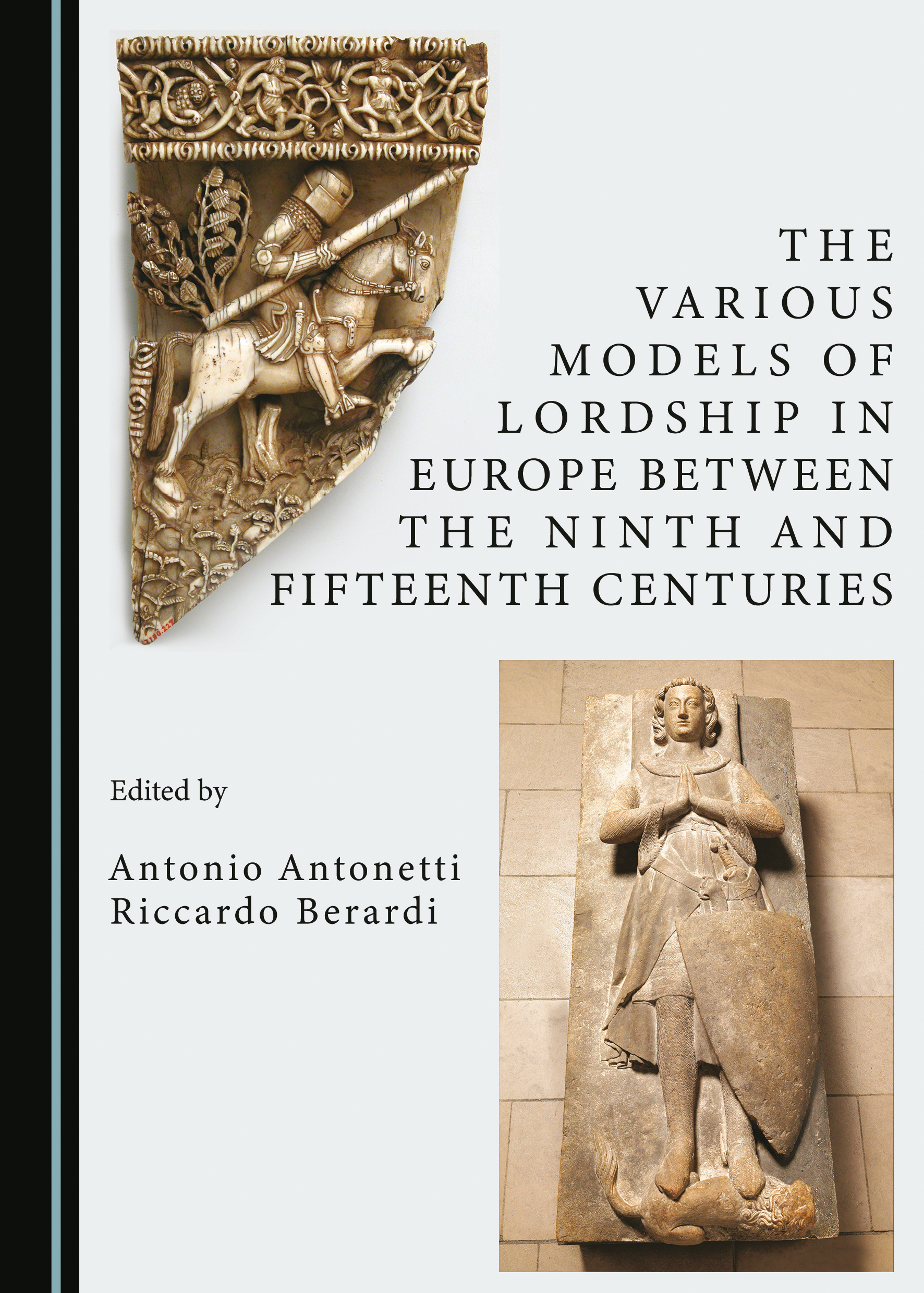
Publication – « The Various Models of Lordship in Europe between the Ninth and Fifteenth Centuries », éd. Antonio Antonetti, Riccardo Berardi

The status of lord represented one of the most original solutions to the political and social transitions of the Medieval period. Questions still remain unanswered and require further investigation, thus many scholars have collaborated to produce this collection which offers a synthesis of the most recent scholarship. This book relates the workings of seigneurial systems in different areas of Europe, from the Baltic to the Mediterranean, from Castile to Pontus. In this way, the perspective remains the same, institutional and material. This book emphasises both the institutional and informal forms of lordship identified and crystallised by social and political actors (for example, communities, sovereigns, nobles, bishops, and abbots). It offers a general framework for those approaching the subject for the first time and a useful in-depth tool with numerous regional cases for long-term scholars.

Antonio Antonetti (1989) is a post-PhD fellow at the University of San Marino. His main research interest is the Church in late-medieval southern Italy, particularly the evolution of the ecclesiastical institutions (dioceses) and the role of the bishops in the Italian society.

Riccardo Berardi (1988) is a post-PhD fellow at the University of Calabria, Italy, and a research fellow at the École française de Rome and the Deutsche Historische Institut in Rom. His research interests concern the history of the lordships of southern Italy, with particular attention to Calabria during the 11th-16th centuries.

Informations pratiques :

The Various Models of Lordship in Europe between the Ninth and Fifteenth Centuries, éd. Antonio Antonetti, Riccardo Berardi, Cambridge, Cambridge Scholars Publishing, 2023 ; 1 vol., 370 p. ISBN : 978-1-5275-2908-3. Prix : GBP 75,99.

Source : Cambridge Scholars Publishing

Publié dans Publications | Laisser un commentaire

Colloque – La lumière à l’époque romane. Journées romanes de Cuxà 2024

L’architecture romane a, pour nous, une de ses qualités essentielles dans la lumière qui l’habite. Contrastes et oppositions, orientation, ouvertures, tout un langage lumineux se déploie dans les édifices romans selon les saisons et nous touche encore aujourd’hui. Les Journées romanes 2024 aborderont cette question d’une façon plus archéologique, en analysant l’architecture de ce point de vue, en relation avec la pensée médiévale de la lumière : Deum de Deo, lumen de lumine, dit la prière des croyants. De l’architecture romane méridionale aux basiliques romaines et aux édifices de l’ordre de Grandmont, plusieurs exemples d’architecture seront convoqués, avec aussi des simulations, réalisées en 3D, de l’éclairage réel de ces églises au XIe ou au XIIe siècle.

Mais les effets de lumière sont aussi présents dans l’art roman et seront abordés de plusieurs façons : le vitrail qui filtre, colore et fait parler la lumière, la mosaïque et l’or qui la soutient, le cristal qui scintille et la reflète. Avec quels moyens « illumine »-t-on les manuscrits, les peintures ? Et comment représente-t-on la lumière ? Les artistes romans ont aussi représenté les lampes, les candélabres, comme ceux dont parle l’Apocalypse et ont cherché aussi à représenter le rayon lumineux lui-même, le tout premier : Fiat lux !

Lundi 8 juillet

13 h : Accueil des participants
15 h : Conférence d’ouverture : Deum de deo, lumen de lumine. Lumière et espace ecclésial à l’époque romane, Philippe Plagnieux, Université de Paris Panthéon-Sorbonne
16 h 15 : La lumière dans la crypte de Cuxa, une idée heureuse de l’abbé Oliba ? P. Daniel Codina, OSB, ancien prieur de Saint-Michel de Cuxa
16 h 30 : Visite de l’abbaye : Quitterie Cazes, Emmanuel Garland, Olivier Poisson
18 h : Apéritif amical dans le cloître

Mardi 9 juillet

9 h : L’intégration de la lumière dans l’architecture romane méridionale, Andréas Hartmann-Virnich, Aix-Marseille Université
10 h 30 : Lumière et obscurité dans les basiliques romaines du XIIème siècle, Daniela Mondini, Università delle Svizzera italiana (Suisse)
14 h : Lumière grandmontaine : la lumière naturelle dans les églises de l’ordre de Grandmont, André Larigauderie, Centre d’archéologie et d’histoire médiévales des établissements religieux
15 h 30 : Simulation de l’éclairage par des modèles numériques : le cas de Sant Quirze de Pedret, Immaculada Lorés, Xavier Pueyo, Milagros Guardia, ViRVIG – Ars Picta, Universitat de Lleida, Universitat de Girona, Universitat de Barcelona (Catalogne, Espagne)
17 h : L’église romane de Lavernose-Lacasse (Haute-Garonne), Lola Sabardine, Université de Toulouse Jean-Jaurès (étudiante)
La sculpture ornementale et la mise en valeur de la baie axiale : quelques exemples angoumoisins, Estelle Chargé, Université de Toulouse Jean-Jaurès, Université de Bordeaux-Montaigne

Mercredi 10 juillet

Excursion et visites : En Catalogne, visite de Santa Maria de Lledó et de Santa Maria de Vilabertran, Michel Desmier-Oliveres

Jeudi 11 juillet

9 h : Fiat Lux (Gn 1,3-4). La création de la Lumière dans la peinture préromane et romane. Variations sur un même thème, Jacqueline Leclercq-Marx, Université libre de Bruxelles (Belgique)
10 h 30 : « Illuminare », la matérialité de la lumière dans l’enluminure romane, Charlotte Denoël, Centre Jean Mabillon, Bibliothèque nationale de France
14 h : Quand la lumière vient du fond d’or, à propos d’une expérience à Germigny-des-Prés, Christian Sapin, CNRS et Line Van Wersch, Université de Liège (Belgique)
15 h 15 : Le vitrail roman : lumière, couleur, espace. État de la question, Alberto Virdis, Centre d’études du haut Moyen Âge, Mazarykova Univerzita, Brno (République Tchèque)
17 h 15 : Assemblée générale de l’Association culturelle de Cuxa
20 h 30 : Moment musical – concert (participation aux frais)

Vendredi 12 juillet

Matinée, excursion et visites : Abbaye Saint-Martin du Canigou, Olivier Poisson

14 h : « Puis l’ange me montra l’eau de la vie : un fleuve resplendissant comme du cristal, qui jaillit du trône de Dieu et de l’Agneau » : lumière cristalline dans les trésors d’églisesIsabelle Bardiès-Fronty, Musée national du Moyen Âge
15 h 30 : Étude iconographique des lampes et candélabres dans les manuscrits de l’Apocalypse, Juan Antonio Olañeta, Universitat de Barcelona (Catalogne, Espagne)
17 h : Conclusions des Journées : Philippe Plagneux

Samedi 13 juillet :

Excursion, visites : En Conflent : visite de l’église et de la ville de Villefranche-de-Conflent, de l’église de Rià et de l’église Saint-Jean-Baptiste de Conat, Olivier Poisson

Source : Cuxa

Publié dans Colloque | Laisser un commentaire

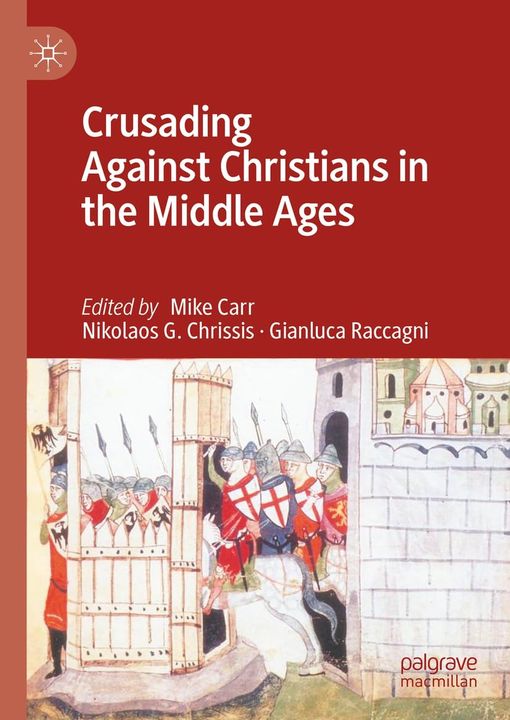
Publication – « Crusading Against Christians in the Middle Ages », éd. Mike Carr, Nikolaos G. Chrissis, Gianluca Raccagni

This is the first book-length study into crusading against Christians, examining this complex phenomenon from the twelfth to fifteenth centuries and across numerous regions, from France to Russia and from southern Italy to the Baltic. Whilst the crusades are an immensely popular topic, those launched against Christian rulers and communities have been comparatively overlooked in the past, with existing studies typically focusing on a particular area, period, or campaign. This volume brings together the expertise of thirteen scholars on a variety of primary and secondary sources not often accessible to Anglophone readership, as well as their knowledge of national discourses which have often shaped historiography. It aims to serve as the first port of call for anyone who wishes to approach crusades against Christians within and without the specialism of crusader studies, and to provide the basis for a thorough comparative analysis of this phenomenon, covering its variety as comprehensively as possible.

Mike Carr is Senior Lecturer in Late Medieval History at the University of Edinburgh, Edinburgh, UK. His work focuses on the interactions between Latins, Byzantines and Muslims in the Mediterranean, especially the role of merchants and religious institutions in cross-cultural trade and religious conflict. He is the author of Merchant Crusaders in the Aegean, 1291-1352 (2015), and co-editor of Contact and Conflict in Frankish Greece and the Aegean, 1204-1453 (2014), The Military Orders Volume 6.1-6.2: Culture and Contact (2016), and Military Diasporas: Building of Empire in the Middle East and Europe (550 BCE-1500 CE) (2022).

Nikolaos G. Chrissis is Assistant Professor of Medieval European History at the National and Kapodistrian University of Athens, Greece. His research interests and publications revolve around the crusades, Latin presence in Greek lands, Byzantine-Western relations, papal policy in the Levant, and generally intercultural contacts in the medieval Mediterranean. He is the author of Crusading in Frankish Greece: A Study of Byzantine-Western Relations and Attitudes, 1204-1282 (2012), and co-editor of Contact and Conflict in Frankish Greece and the Aegean, 1204-1453 (2014) and Byzantium and the West: Perception and Reality, 11th-15th c. (2019).

Gianluca Raccagni is Senior Lecturer in Medieval History at the University of Edinburgh, UK. His research interests focus on political culture in the central Middle Ages, especially within Communal Italy but also its relations with the rest of Europe, the Mediterranean, and the crusades. Most recently he has been exploring contacts between the Mediterranean and the Nordic World in the eleventh century. He is author of The Lombard League (1167-1225) (2010) and of several journal articles.

Table des matières :

Introduction – Mike Carr, Nikolaos G. Chrissis

Crusades in Southern Europe and the Balkans

Crusades Against Cathars, c.1207–1229 – Rebecca Rist

Holy War and Crusade in Southern Italy: Twelfth to Fourteenth Centuries – Francesco Migliazzo

Crusades in Northern Italy in the Thirteenth Century – Gianluca Raccagni

Crusades in Northern Italy in the Fourteenth Century – Leardo Mascanzoni

Crusades Against the Byzantines – Nikolaos G. Chrissis

The Crusade Against “Schismatic” Bulgaria (1238) and Its Antecedents – Francesco Dall’Aglio

Crusading Against Bosnian Christians, c.1234–1241 – Kirsty Day

Crusades Against the Catalans of Athens, c.1311–1334 – Mike Carr

Crusades in Northern and Central Europe

Crusades in the Holy Roman Empire (Late 1220s to the Early 1250s) – Giuseppe Cusa

Rus’ as a Target of the Crusades: History and Historical Memory – Anti Selart

Crusade Against Christian Neighbours in the Baltic. Boniface IX’s Crusading Bull of 1401 to Queen Margaret I of the Kalmar Union – Kurt Villads Jensen

The Crusade of Henry Despenser (1383) – Mark Whelan

The Crusades Against the Hussites in Bohemia (1419–1436) – Alexandra Kaar

Conclusion – Mike Carr, Nikolaos G. Chrissis, Gianluca Raccagni

Informations pratiques :

Crusading Against Christians in the Middle Ages, éd. Mike Carr, Nikolaos G. Chrissis, Gianluca Raccagni, Londres, Palgrave MacMillan, 2024 ; 1 vol., XIV–384 p. ISBN : 978-3-031-47338-8. Prix : € 137,79.

Source : Springer

Publié dans Publications | Laisser un commentaire

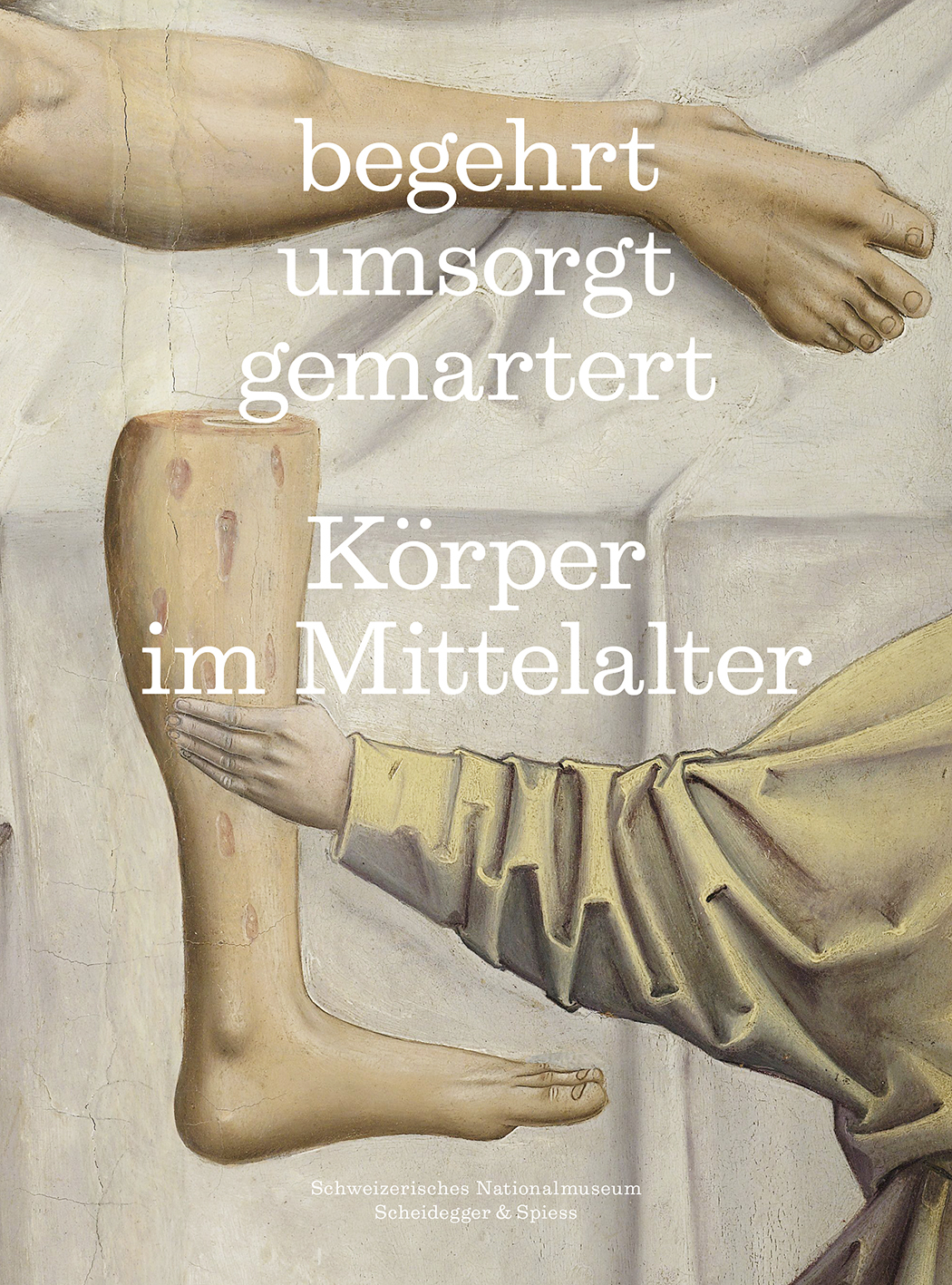
Publication – « begehrt. umsorgt. gemartert. Körper im Mittelalter »

Fragen rund um den Körper, zu Normen und Idealen werden in jeder Epoche unterschiedlich gestellt und beantwortet. Die Menschen des Mittelalters haben sich erstaunlich vielseitig und umfassend mit dem Körper und seinem Stellenwert befasst. Dieses Buch, das anlässlich einer grossen Ausstellung im Landesmuseum Zürich erscheint, wirft einen kultur- und kunsthistorischen Blick auf verschiedene körperrelevante Themen von der Geburt bis zum Tod.

Die Texte unterschiedlicher Autorinnen und Autoren bringen Unbekanntes und viel Überraschendes zur Sprache: vom androgynen Superkörper Jesu Christi über Auffassungen von Sexualität bis zur frühen Heilkunde oder zur Bedeutung des Sports. Kurztexte zu ausgewählten Exponaten ergänzen die Einblicke, wie menschliche Körper im Mittelalter verstanden und dargestellt wurden. Das breite Spektrum an Objekten und Werken aus dem frühen bis späten Mittelalter umfasst Gemälde und Skulpturen mit Ideal- und Gewaltdarstellungen, erotische Druckgrafiken und Bildteppiche, aber auch kosmetische Artikel oder figürliche Reliquiare.

begehrt. umsorgt. gemartert. Körper im Mittelalter, Zurich, Schweizerisches Nationalmuseum–Scheidegger und Spiess, 2024 ; 1 vol., 160 p. ISBN : 978-3-03942-187-9. Prix : CHF 39,00.

Source : Scheidegger und Spiess

Publié dans Publications | Laisser un commentaire

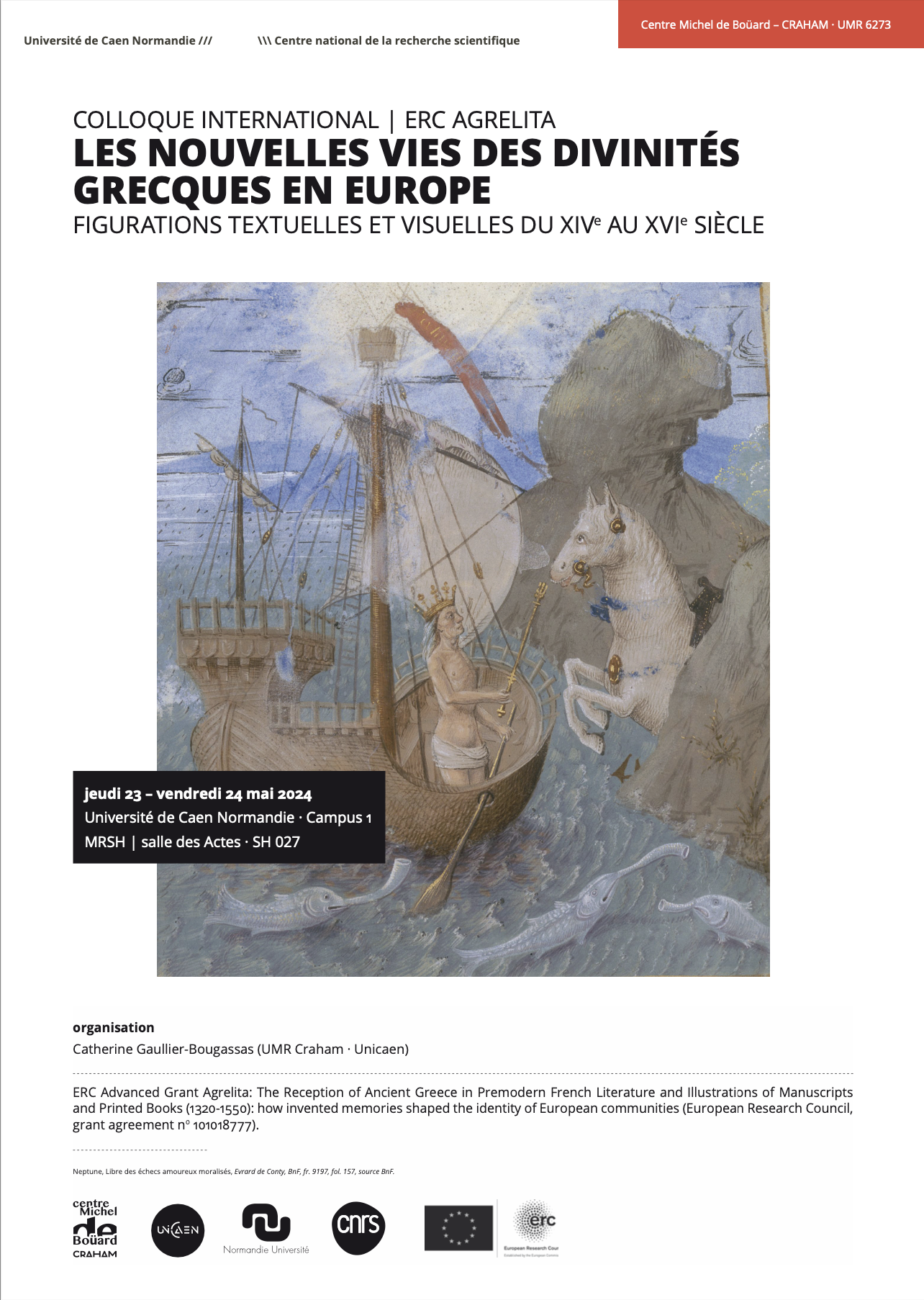
Colloque – Les nouvelles vies des divinités grecques en Europe. Figurations textuelles et visuelles du XIVe au XVIe s.

ERC AGRELITA: colloque des 23-24 mai 2024

Les nouvelles vies des divinités grecques en Europe : Figurations textuelles et visuelles du XIVe au XVIe siècle 

Université de Caen Normandie
MRSH
Salle des Actes 

Organisation : Catherine Gaullier-Bougassas

Jeudi 23 mai

-8h45 Accueil

-9h00-9h15-Ouverture, Laurence Jean-Marie, directrice du Craham- UMR 6273 (Université de Caen Normandie) 

-9h15-9h25 Introduction, Catherine Gaullier-Bougassas (Université de Caen Normandie, Craham- UMR 6273, ERC AGRELITA)

 Session 1 : 

-9h25-9h50 : Anne D. Hedeman (University of Kansas, chercheuse invitée en résidence AGRELITA), « Visualizing the pagan gods in early manuscripts supervised by Laurent de Premierfait’s »

-9h50-10h15 : Sara Cusset (Université de Lyon 2, Ciham-UMR 5648 et UCLouvain), « Apothéoses moralisées. Étude comparée des récits d’apothéose et de leurs allégories dans l’Ovide moralisé »

-10h15-10h40 : Charlotte Guionneau (Université de la Sorbonne nouvelle, Ceram), « Présence et statut des dieux antiques dans la cinquième mise en prose du Roman de Troie »

-10h40-11h Discussion

-11h-11h15 Pause café

Session 2 :

-11h15-11h40 : Clément Château (Université de Montpellier 3, Cemm), « Les divinités antiques dans l’œuvre de Guillaume de Machaut »

-11h40-12h05 : Giulia Parma (Université de la Sorbonne nouvelle, Lecemo), « L’interprétation des mythes anciens au service de l’usage littéraire des nymphes : le cas des Genealogie deorum gentilium de Boccace »

12h05-12h15 Discussion

-Déjeuner pour les conférenciers

Session 3 :

-14h30-14h55 : Claudio Castelletti (Università degli Studi di Roma Tor Vergata), « Plantandi leges per me novere coloni. Thalia as muse of agriculture and goddess of nature in Italian Renaissance iconography »

-14h55-15h20 : Nicolas Mazel (Université de Lyon 2, Ciham-UMR 5648), « Des dieux dans une nouvelle ? Enjeux poétiques et génériques de la présence de divinités grecques dans l’Historia de duobus amantibus d’Enea Silvio Piccolomini (1444) »

-15h20-15h45: Dimitrios Roussos (The Warburg Institute), « Behold a God to Seize: The Rediscovery of Kairos in Western Art and Letters »

 -15h45-16h  Discussion

-16h-16h15 Pause café

-16h15-16h40 : Alessio Marziali Peretti (Université de Montréal, chercheur invité en résidence AGRELITA), « Les Genealogie deorum gentilium de Boccace : un livre à faire tourner »

-16h40-17h05: Stéphanie Dubarry (Paris, EPHE), « L’Apollon de Giraldi : un retour au polythéisme. De Deis gentium historia, VII, 1548 »

-17h05-17h30 Discussion

-Dîner pour les conférenciers

Vendredi 24 mai

Session 4 : 

-9h-9h25 : Michail Chatzidakis (Humboldt Universität zu Berlin), «  “Apollo delius“ and “Mercurius Anconitanus”. Cyriacus’ of Ancona transformations of Greek deities between mythografic tradition, antiquarian knowledge and imaginative invention »

-9h25-9h50 : Anne Raffarin (Université de Paris Est Créteil, Lis), « Tamquam mortalibus non tamquam diis : les dieux grecs, des inventeurs comme les autres dans le De inuentoribus rerum de Polydore Virgile ? »

-9h50-10h15 : Sara Petrella (Université de Fribourg), « L’Olympe transformé en pandemonium. Mythologies comparées et survivance des dieux » 

-10h15-10h35 Discussion

-10h35-10h50 Pause café

Session 5 : 

-10h50-11h15 : Sandra Provini (Université de Rouen, CÉRÉdI), « Reconfiguration ludique du couple de Jupiter et Junon des Métamorphoses aux Contrepistres d’Ovide de Michel d’Amboise (1541) »

-11h15-11h40 : Dariusz Krawczyk (Université de Lille, Alithila, MSCA), « Les nouvelles déesses de François Habert : La Nouvelle Pallas, La Nouvelle Juno (1545) et La Nouvelle Vénus (1546) »

 -11h40-12h Discussion 

 -Déjeuner pour les conférenciers

Session 6 :

-14h30-14h55 : Anne Morvan (Université de Nantes, Lamo), « Dionysos, concurrent malheureux d’Apollon ? Examen des sphères d’influence de ces dieux à partir de la réception des Troyennes d’Euripide au xvie siècle »

-14h55-15h20 : Mattia De Poli (Università di Bologna), « Le dieu “Tu’ Arge Cyllenien”: un cas de contaminatio dans la Médée de J. de La Péruse »

-15h20-16h Discussion et clôture

Source : Agrelita

Publié dans Colloque | Laisser un commentaire

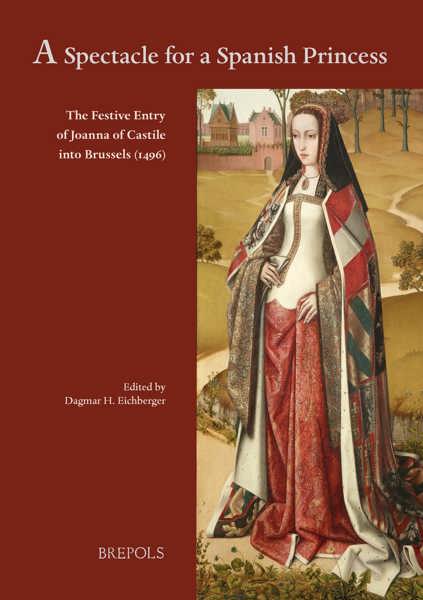
Publication – « A Spectacle for a Spanish Princess. The Festive Entry of Joanna of Castile into Brussels (1496) », éd. Dagmar H. Eichberger

On the evening of 9 December 1496, Princess Joanna, Infanta of Castile, reaches the outskirts of Brussels where a procession of secular and ecclesiastical dignitaries welcomes her. After having been married to Philip the Fair in Lier, Joanna travelled to Brussels by herself. Equipped with torches and processional crosses, the citizens accompany her all the way to the heart of the city, the large market square with its magnificent town hall. The Berlin manuscript 78 D5 is the first illustrated report of an entry concentrating on one single lady. The manuscript is a treasure to all those interested in urban culture of the Early Modern period. The author of the festival booklet compares the well-lit city with the splendours of Troy and Carthage. Twenty-eight stage sets, or Tableaux Vivants, and an elaborate procession mirror the costly intellectual program presented to the sixteen-year-old princess. The carefully planned theatrical productions underscore themes of marriage, female virtues and the politics of war and peace. The program includes entertainments, soundscapes, and pyrotechnic amusements. The Latin texts are made available in English translation. The entire manuscript, with its sixty-three folios, is reproduced in colour. Eleven leading scholars present their new findings on this spectacular entry from an interdisciplinary approach.

Dagmar H. Eichberger taught at the Universities of Canberra, Melbourne, Heidelberg, Jena, Konstanz, Paris, Giessen and Vienna. She is the leading expert on Margaret of Austria, Joanna of Castile’s sister-in-law. She has published on Renaissance culture in the Netherlands and Germany and co-edited several volumes on Jan van Eyck, Albrecht Dürer, Religion and Visual Culture, Burgundian Women and Visual Typology. Further research on art objects as material culture and the history of early collections is in progress.

List of Illustrations

List of Contributors

Acknowledgements

1.     Introduction. A Spectacle for a Spanish Princess (Dagmar Eichberger)

2.     Joanna of Castile’s first Residence in the Low Countries (1496-1501): the Transformation of a Trastámara Princess (Raymond Fagel)

3.     Joanna, Infanta of Castile and Habsburg Archduchess. Recreating a Lost Wardrobe and Trousseau in 1496 (Annemarie Jordan Gschwend)

4.     The Self-representation of Brussels in Times of Uncertainty (Claire Billen & Chloé Deligne)

5.     ‘In unam pacis accordantiam’. The Role of City Poet Jan Smeken and other Rhetoricians in Organizing the Brussels Entry (Remco Sleiderink and Amber Souleymane)

6.     Role Models for a Queen’s Daughter (Wim Blockmans)

7.     Arguing with the Old Testament. Moral and Political Lessons for Princess Joanna of Castile (Dagmar Eichberger)

8.     ‘Pour esmouvoir les cuers et coraiges des hommes a Joye et Recreation:’ the Entry of Joanna of Castile as Entertainment (Laura Weigert)

9.     The Brussels Town Hall. A Worthy Emblem for a Capital City (Sascha Köhl)

10.    Illustrating Contemporary Events in Watercolour on Paper. The Entry of Joanna of Castile as an Example for a new Genre of Memorial Books (Anne-Marie Legaré)

11.   Ms 78 D5. A Codicological Description (Dagmar Eichberger)

12.   Ms 78 D5. Short Descriptions of the Miniatures (Helga Kaiser-Minn)

13.   Ms 78 D5. The Latin Text: Transcription and Translation (Verena Demoed)

14.   Ms 78 D5 (fols 1r – 63v). Reproduction of Text and Images

15.   Bibliography

16.   Keywords

A Spectacle for a Spanish Princess. The Festive Entry of Joanna of Castile into Brussels (1496), éd. Dagmar H. Eichberger, Turnhout, Brepols, 2024 ; 1 vol., 440 p. (Burgundica, 35). ISBN : 978-2-503-59443-9. Prix : € 110,00.

Source : Brepols

Publié dans Le réseau | Laisser un commentaire

Appel à contribution – Reassessing Canon Formation in Medieval Literature

Organized by: University Pompeu Fabra Barcelona, in collaboration with the University of Geneva, Université Libre de Bruxelles, and University of Barcelona
Conference Dates: February 20-22, 2025
Location: UPF Barcelona
Submission Details: Participants are required to submit a title and a 150-word abstract. Submission Deadline: July 15, 2024

Please submit your proposals via email to c7s.conference2025@gmail.com Framework, expectations & questions

Set for 2025 at Universitat Pompeu Fabra (UPF) in Barcelona, Reassessing Canon Formation in Medieval Literature emerges from a collaborative research project involving the University of Geneva and Université Libre de Bruxelles. It centrally features the Cycle des Sept Sages (C7S), a pivotal but underrecognized work of medieval French prose, based on the Roman des Sept Sages de Rome and its six prose continuations. These texts provide a unique window into the literary landscape of the late 13th century and serve as a focal point for our discussions on canon formation.

Our conference seeks to push beyond traditional literary analyses by adopting an interdisciplinary approach to reassess medieval literary canons. We aim to dissect the concept of ‘canon’ through comprehensive single-tradition studies and comparative analyses across different traditions. This exploration will critically evaluate the role of historical narratives and 19th-century scholarship in defining literary ‘greatness’.

We invite attendees to contribute to our cross-disciplinary thematic axes, designed to provide an exploration of medieval literature’s canon formation. Contributions that delve into intercultural exchanges between European medieval literatures and those from regions like the Islamic world, Byzantine Empire, and the Jewish diaspora are welcome. Such discussions will enhance our understanding of how cross-cultural interactions have historically shaped literary canons and influenced narrative structures and themes across and beyond Europe. Additionally, we seek to highlight the roles and representations of women and minority groups in medieval literature. By examining their contributions and visibility, we aim to foster a deeper understanding of their impact on canonical recognition and the broader narrative and cultural values of the period.

C7S Call for papers.docx

1. Defining the Canon: What factors and processes determine a work’s canonical status in medieval literature? How do an author’s cultural impact and adherence to cultural codes influence this status?

2. The Cycle des Sept Sages and Canon Formation: Explore the historical reception, thematic depth, and reasons behind the current (non-)canonical status of the C7S.

3. Construction and Structure of the Canon: Investigate how cultural, historical, and technological factors, including traditional and digital editing methods, have shaped the Medieval literary canon. Discussions should focus on the impact of these approaches on our understanding of the canon’s structure and its evolution.

4. Language and its Role in Canon Formation: Examine how literary trends and linguistic standards intersect to influence the inclusion of works in the canon, particularly in diverse linguistic contexts.

5. Educational Impact and Cultural Contexts in Canon Formation: Discuss the implications of including specific medieval works in educational curricula and how these choices affect canon construction and cultural perceptions in various countries.

6. Comparative Analysis: Utilize comparative methods to deepen our understanding of the varied and dynamic processes of canon formation across medieval traditions.

7. Theoretical Approaches to Canon: Apply contemporary theoretical frameworks to analyse the canonical status of medieval works, especially those from so-called cultural epicenters.

Publié dans Appel à contributions | Laisser un commentaire