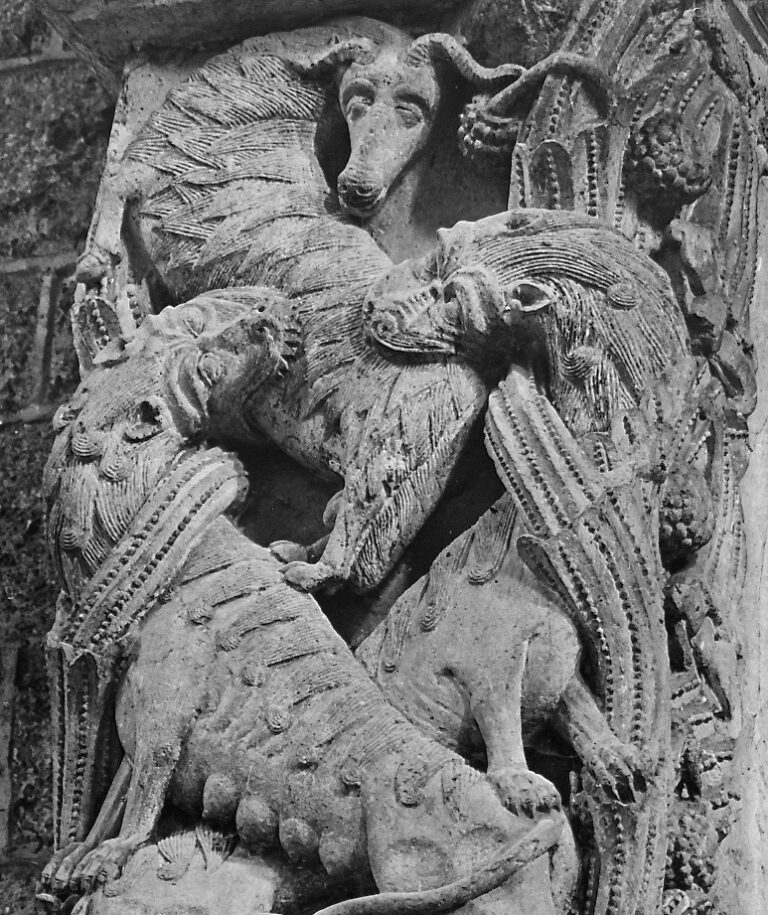
Appel à contribution – Defend sacred spaces: Fortified churches and monasteries in the medieval Mediterranean (9th-14th centuries)

Starting from the end of the 9th century, important events including the disintegration of the Carolingian empire and the advance of populations from northern and eastern Europe and the Arab world triggered a phase of insecurity and political instability. The Mediterranean, a place of meetings and exchanges between culturally and geographically distant populations, was particularly affected by these events. In a climate full of tension, threatened by internal conflicts and the advance of non-Christian populations, it became essential to defend the “home of God”. This concept translated architecturally into the adoption of design solutions inherited from military architecture. Throughout the eastern and western Mediterranean, numerous monasteries, abbeys, and churches acquired the appearance of fortresses, marked by high defensive towers and wall-walks, often integrated with the walls and defensive structures of the cities. Architectural innovations, useful for the defense of a single monument or entire villages and cities, spread quickly across the Mediterranean and its areas of influence, acquiring territorial specificities.

Considering the historical context between the 9th and 14th centuries, the II International “Mm3a” Conference in Lipari proposes the development of a framework on fortified religious architecture through: the analysis of the relationships between the regional architectural solutions and the socio-economic contexts, the studies of exchange methodologies and models dissemination and their adjustments according to local building traditions.

To this end, the study topics on fortified religious complexes are:

  • the formation of the architectural phenomenon in relation to the respective regional, cultural, and religious contexts;
  • the main players: commissioner, creators, users;
  • the diffusion of architectural models and construction techniques;
  • the contributions of the ecclesiastical and knightly religious orders in the architectural field;
  • restoration as a tool for knowledge;
  • historical sources, ecclesiological doctrines, and monastic culture.
  • art, iconography, and forms of representation

The Conference will include papers and a poster session. Proposals for participation relating to reports or posters must include:

  • the title;
  • adhesion to one of the thematic areas;
  • an abstract of a maximum of 2000 characters;
  • five key words;
  • a curriculum vitae of the proposer (not exceeding 500 characters); and must be sent by June 16th to the address: mediterraneomedievale@gmail.com

Papers of a maximum of 20 minutes are expected. The Scientific Committee will evaluate the proposals sent by June 30th and will communicate their possible acceptance, as a report or as a poster, inserting them in the Conference session deemed most suitable. The Conference includes the publication of the contributions in a monographic volume within the “Architettura Medievale” series (directed by Silvia Beltramo and Carlo Tosco), published by “All’insegna del Giglio”. Adequate space in the publication will also be reserved for posters admitted to the specific session.

Source : Medieval Art Research
Publié dans Appel à contributions | Laisser un commentaire

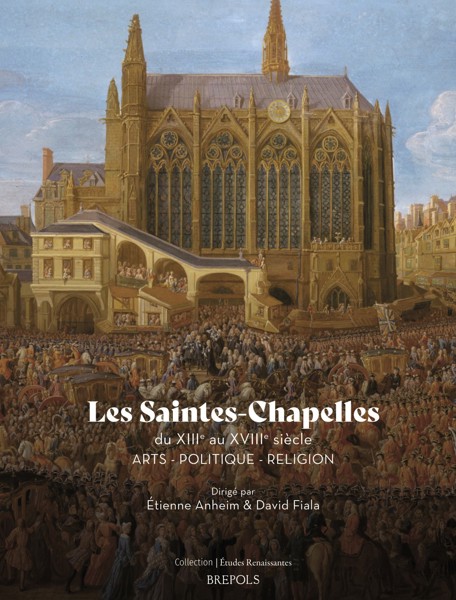
Publication – « Les Saintes-Chapelles du XIIIe au XVIIIe siècle », éd. Étienne Anheim, David Fiala

Si la fondation de la Sainte-Chapelle de Paris par Louis IX pour accueillir la couronne d’épines au milieu du XIIIe siècle est bien connue et si l’on sait qu’à l’imitation du saint roi, plusieurs princes de France fondèrent des chapelles dites « saintes » entre la fin du Moyen Âge et le début de la Renaissance, l’histoire longue et complexe de ces chapelles est encore mal connue et mal comprise. Il ne s’agit pas de nier la possibilité de construire un idéal-type de « la » Sainte-Chapelle, mais plutôt de s’interroger sur l’écart entre ce que les documents du passé appellent « Sainte-Chapelle », sans préjuger d’un sens stable et univoque à travers le temps, et ce que les périodes postérieures et la recherche actuelle peuvent désigner sous ce nom. Une Sainte-Chapelle, des Saintes-Chapelles ? Ces contributions cherchent à répondre à cette question en s’interrogeant sur la définition de la notion, sa circulation, ses transformations dans le temps et dans l’espace. En comparant les différentes « Saintes-Chapelles », ce volume veut défendre l’idée que les Saintes-Chapelles sont des objets historiques particulièrement révélateurs parce qu’elles ont été des rouages discrets mais fondamentaux : leur statut hybride, entre cour et Église, de même que leur histoire longue, de la couronne d’épines à la Révolution, en font un observatoire idéal pour mieux comprendre et expliquer les évolutions à l’œuvre dans l’exercice du pouvoir et la célébration de Dieu par la monarchie capétienne entre le Moyen Âge et les Lumières.

Étienne Anheim est historien. Il est directeur des Éditions et directeur d’études à l’École des Hautes Études en Sciences Sociales (Paris), où il enseigne la sociologie historique de la culture en Europe du XIIe au XVIe siècle.

David Fiala est maître de conférences en musicologie au Centre d’études supérieures de la Renaissance (Université de Tours/CNRS). Ses travaux portent sur la musique, les musiciens et les institutions musicales de la fin du Moyen Âge et de la Renaissance, ainsi que les humanités numériques.

Étienne Anheim et David Fiala,“Introduction” : “A la recherche des Saintes-Chapelles”.

Elizabeth A.R. Brown, “La Sainte-Chapelle de Paris, ses appelations et son renom aux XIIIe et XIVe siècles”.
Anne Massoni, “Les Saintes-Chapelles, des chapitres collégiaux comme les autres ?”.
Murielle Gaude-Ferragu, “Les cérémonies extraordinaires à la Sainte-Chapelle de Paris (XIVe-XVe s.)”.
Christophe Boucheron, “Jean Mortis et le ‘Cartulaire de la Sainte-Chapelle de Paris’ de 1457”.
Meredith Cohen, “What Saint Louis Saw. The Sainte-Chapelle and the Palais de la Cité in the Thirteenth-Century”.
Étienne Hamon, “La montée de la Sainte-Chapelle de Paris : fonctions, symboles et formes”.
Étienne Anheim, “La maîtrise d’enfants de la Sainte-Chapelle de Paris (XIIIe-XVIIIe s.). Institution et discipline entre la cour et l’Eglise”.
Xavier Bisaro, “Le vitrail et l’image : la Sainte-Chapelle de Paris dans les sources cérémonielles du XVIIe siècle”.
Dany Sandron, “Notre-Dame et la Sainte-Chapelle au XIIIe siècle”.
Paul Binski, “Perspectives anglaises sur la Sainte-Chapelle”.
Jean-Bernard de Vaivre et Laurent Vissière, “Dévotions aristocratiques à la Sainte-Chapelle de Dijon”.
Olivier Mattéoni, “Géographie sacrale et Saintes-Chapelles dans les territoires des Bourbons à la fin du Moyen Âge”.
Jean-Vincent Jourd’heuil, “La fondation de la Sainte-Chapelle de Bourges (1392-1405) : une fondation princière durant le Grand Schisme”.
Yves Pauwels, “Le porche de la Sainte-Chapelle de Champigny-sur-Veude : un manifeste de modernité architecturale”.
Julien Noblet, “La Sainte-Chapelle de Chambéry et le projet d’Amédée VIII : nouvelles observations archéologiques”.
Laura Gaffuri et Paolo Cozzo, “De Chambéry à Turin. La Sainte-Chapelle et la Chapelle Royale de la Cour de Savoie (XVe-XVIIIe s.).
Bernard Dompnier, “Les calendriers festifs des Saintes-Chapelles aux XVIIe et XVIIIe siècles”.

Étienne Anheim et David Fiala,“Conclusion” : “Les Saintes-Chapelles, des institutions imaginaires”.

Les Saintes-Chapelles du XIIIe au XVIIIe siècle, éd. Étienne Anheim, David Fiala, Turnhout, Brepols, 2024 ; 1 vol., 294 p. (Études Renaissantes, 39). ISBN : 978-2-503-60536-4. Prix : € 95,00.

Source : Brepols

Publié dans Publications | Laisser un commentaire

Publication – « Marxism and Medieval Studies. Marxist Historiography in East Central Europe », éd. Martin Nodl , Piotr Węcowski, Dušan Zupka

This volume is a unique publication as it examines the Marxist attitudes in East Central European historiography and archaeology for the first time, with an emphasis on the co-existence of Marxist and other methodologies between the 1950s and 1970s in the local historiographies in question. Its approach is to distinguish between pseudo-Marxism as an ideological tool on the one hand, and Marxism in the form of historical materialism as a way to interpret the medieval world on the other.

Contributors are: Florin Curta, Piotr Guzowski, Adam Hudek, Tereza Johanidesová, Jitka Komendová, Jiří Macháček, Andrzej Marzec, Martin Nodl, Attila Pók, David Radek, Tadeusz Paweł Rutkowski, Iurie Stamati, Rafał Stobiecki, Gábor Thoroczkay, Przemysław Wiszewski, Piotr Węcowski, Martin Wihoda, and Dušan Zupka.

Martin Nodl, Ph.D. (2011), is a research associate professor at the Centre for Medieval Studies Academy of Sciences CR, Prague. He is the author of six monographs, including Das Kuttenberger Dekret von 1409 (2017), Średniowiecze w nas (2020), and Praha 15. století. Konfliktní společenství (2023).

Piotr Węcowski, Ph.D. (2004), is a professor at the University of Warsaw. He has published three monographs and many articles on medieval history and history of historiography, including The Origins of Poland in the Historical Memory of the Late Middle Ages (Cracow 2014).

Dušan Zupka, Ph.D. (2009), is an associate professor at Comenius University in Bratislava. He has published monographs, journal articles and edited volumes on power, ritual and war in medieval East Central Europe, including Rulership in Medieval East Central Europe (Brill, 2021).

Table des matières : ici

Informations pratiques :

Marxism and Medieval Studies. Marxist Historiography in East Central Europe, éd. Martin Nodl , Piotr Węcowski, Dušan Zupka, Leyde–Boston, Brill, 2024 ; 1 vol., XIV–392 p. (East Central and Eastern Europe in the Middle Ages, 450-1450, 93). ISBN : 978-90-04-68918-3. Prix : € 147,00.

Source : Brill

Publié dans Publications | Laisser un commentaire

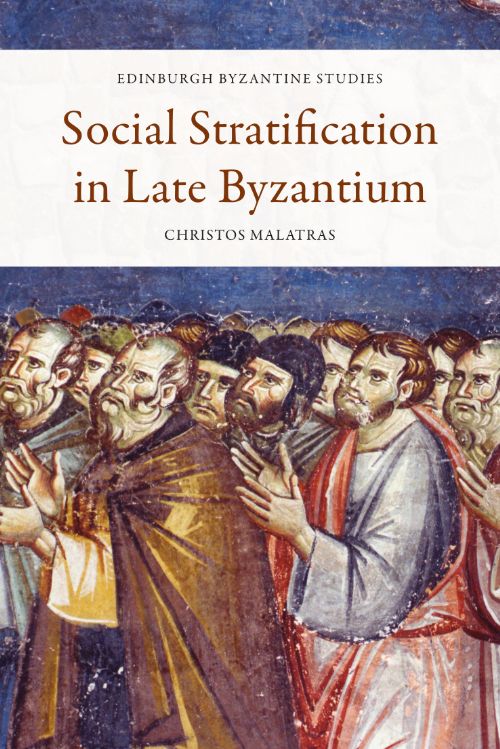
Publication – Christos Malatras, « Social Stratification in Late Byzantium »

Introduces the basic patterns, ideas and gestures that governed the system of social relations and the construction of social profiles and roles of Byzantine society

  • Identifies the main traits of Late Byzantine society and the ideas of the Byzantines about their social system, the social values and the organisation of their society.
  • Explores the use of modern sociological and anthropological theories in order to better understand Byzantine society.
  • Provides thorough and up-to-date analysis of the different social groups in the Late Byzantine society (character, composition, relation to the economic, political and ideological resources).
  • Emphasises the networks of patron-client relations and their effect on the structures of Byzantine society.
  • Offers a new explanation of the collapse of Byzantine society and the state in the face of external threats.

This book provides an in-depth analysis of the social structure of Late Byzantine society (mid 13th – mid 15th c.), including the norms and ideas that governed social relations, and the Byzantine perceptions of their society. It includes an analysis of all social groups, the social networks and the patron-client relations proliferating in this period, and the distribution of social and political power between the different social groups and the state. The deficiencies inherent in Byzantine society are recognised as one of the main factors behind the fragmentation and the collapse of the Byzantine empire.

Christos Malatras, Social Stratification in Late Byzantium, Édimbourg, Edinburgh University Press, 2024 ; 1 vol., 608 p. (Edinburgh Byzantine Studies). ISBN : 978-1-47446-088-0. Prix : USD 165,00.

Source : Edinburgh University Press

Publié dans Publications | Laisser un commentaire

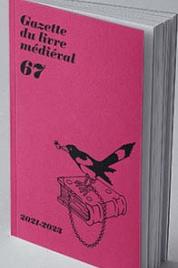
Publication – Gazette du livre médiéval, 67 (2024)

Gazette du livre médiéval, t. 67 (2024). ISSN : 0753-5015. Prix : € 30,00.

Table des matières :

  • Mesurer la production livresque, un enjeu majeur de la cultumétrie (E. Ornato)
  • I codici della pantegni tra tradizione e innovazione (A Gili)
  • L’antica biblioteca di San Paolo in Monte a Bologna: ricerche preliminari sul fondo manoscritto (M Tursi)
  • Quelques remarques sur la constitution des bibliothèques au Maroc et leurs traditions manuscrites (I Benyahia)

Notes et discussions

Conserver, restaurer et documenter les fragments médiévaux : le cas des Archives nationales [L. Moruzzis et I. Scappazzoni]

Chronique

Travaux en cours. — Vient de paraître. — In memoriam. — Abstracts – résumés.

Nota bene — Prix Denis Muzerelle

Source : IRHT

Publié dans Publications | Laisser un commentaire

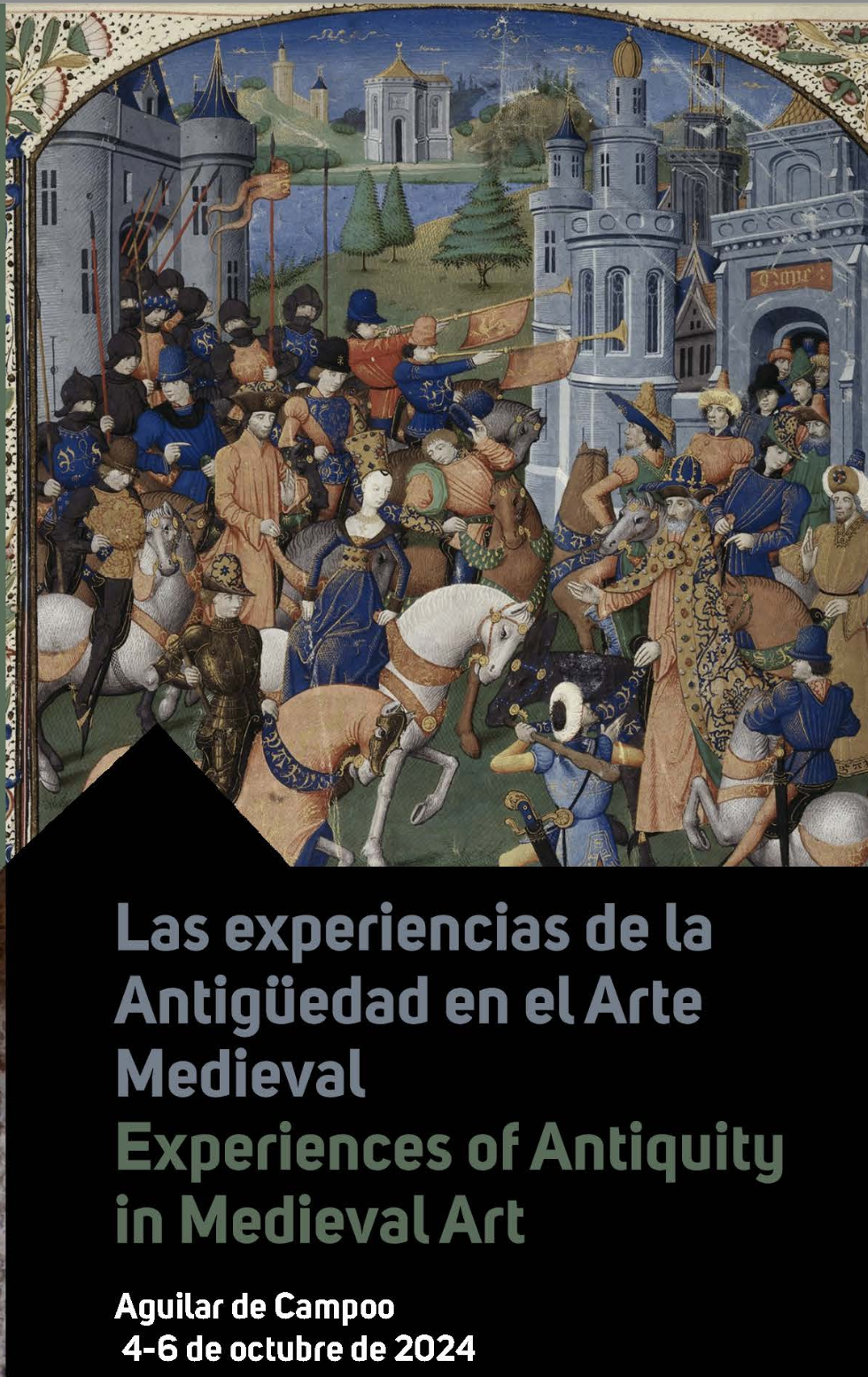
Colloque – Experiences of Antiquity in Medieval Art

Aguilar de Campoo, 4-6 Oct. 2024

Programme : ici

The revival of classical antiquity defines the “Middle Ages” and has been studied ever since Ghiberti wrote his Commentarii and before. Ars mediaevalis 2024 will provide a new perspective on the matter by attending to the medieval experiences of ancient artistic traditions, that is, to the ways artisans and other observers perceived the past and incorporated their interpretations into the production of new works. Convened on October 4/5/6, meeting aims to consider, among other questions, how changing scale and media transformed imitations of ancient motives and techniques, how additions to spolia and recontextualizations put allusions to the past to work in new conceits, how political ambitions deployed classical references for contemporary agendas, how artistry itself and writings about the antiquity incorporating fantasies about the past. 

Since 2011, the international colloquium Ars Mediaevalis, hosted by the Fundación Santa María la Real and held annually in Aguilar de Campoo (Palencia), has served as a venue for the most avant-garde, far-reaching research in the field of medieval art history. Each year, some fifteen scholars (seniors and juniors) introduce their most recent research in Aguilar de Campoo, focusing on the analysis of works produced during the Middle Ages, applying such productive, current historiographical approaches as semiotics, cultural anthropology, criticism, and the history of representation. The colloquium has thus raised relevant and timely arguments that advance the analysis and understanding of key aspects of medieval art.

TEMPLA. Equipo internacional de investigación / International Research Team

Publié dans Colloque | Laisser un commentaire

Partenariat – Secrétaire Général Alma-Recherche

Poste : Secrétaire Général Alma-Recherche

Mission : 

Membre du bureau de l’association, chargé de prendre les décisions importantes relatives à l’organisation des activités de recherche (journées d’études, travaux de publication), notamment pour le volet « philosophie » de l’association. Participation à l’organisation du Prix Alma des Jeunes Chercheur.euses. 

Activité : 

1) Le ou la secrétaire générale de l’association est chargé/ée, en collaboration avec le président de l’Association, de prendre contact avec les membres du jury du Prix Alma des Jeunes Chercheur.euses et de s’assurer de bon déroulement du Prix Alma des Jeunes Chercheur.euses. Il ou elle doit également prendre contact avec les candidats admissibles, et s’assurer de l’envoi de tous les mémoires retenus.

2) Sa mission consiste également à lire et sélectionner les dossiers recevables pour le prix Alma des Jeunes Chercheur.euses (avec la vice présidente et le président de l’association). 

3) Spécialiste de Philosophie médiévale, le ou la secrétaire général.e est également chargé de fixer, avec les autres membres du bureau, les objectifs de l’année en terme de recherche (notamment pour l’organisation de colloques pluridisciplinaires.)

4) Doctorant.e ou docteur.e, le ou la secrétaire général.e de l’association doit également aider l’équipe dans le soutien qu’elle offre aux lauréats du prix (notamment dans le cadre de la publication consécutive au prix).

modalités de candidature : 

Profil recherché : Docteur ou doctorant en philosophie médiévale. 

Niveau de français requis : natif ou bilingue

date limite de candidature : 15/06/2024

Envoyer son CV et une lettre de motivation à l’adresse : contact@alma-recherche.fr 

modalités de travail : 

  • Calendrier : libre (hormis rdv fixés à l’avance par les membres du bureau). 
  • Charge de travail : ajustable
  • Salaire : bénévolat. 

Expérience: 

Ce travail permet aux jeunes doctorants ou doctorantes de poursuivre leurs activités de recherche après leur thèse, en équipe. Elle permet d’acquérir plus d’expérience et de consolider des compétences requises dans la plupart des métiers de la recherche ouverts aux docteurs (organisation d’évènements scientifiques…).

NB : l’association est composée de doctorants et de docteurs : elle ne dispense pas de cours.

Publié dans Le réseau | Laisser un commentaire

Journée d’étude – Animal, animalité, bestialité dans les images médiévales. 15e rencontres GRIM-IMAGO

Date : 13 juin 2024

Lieu : INHA, 2 rue Vivienne, 75002. M° Bourse ou Palais Royal – Salle Demargne (dans la Galerie Colbert)

Métro : Ligne 3 : Bourse Lignes 1 et 7 : Palais Royal – Musée du Louvre Lignes 7 et 14 : Pyramides

Accueil INHA : 01 47 03 89 00 –  www.inha.fr

Programme :

10h / Introduction

10h15 / Pierre-Olivier Dittmar, L’animal comme image dans l’occident médiéval 

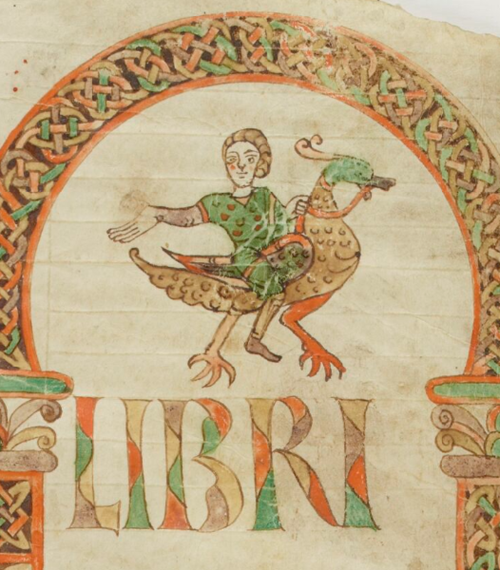
11h / Raphaël Demès, Phénix ou harpie ? Le cas d’un oiseau à tête humaine sur le linceul du comte de Castille, Sancho García (965-1017)

11h30 / pause

11h45 / Kshanti Gamage, La crosse serpentiforme en émail de l’Œuvre de Limoges (1190-1230) : représentation et performance

12h15 / Angélique Ferrand, Voir autrement le Cancer de Sant Pere de Sorpe (XIIe siècle) : d’une vermine anthropocéphale aux souffrances de Job

12h45 / Déjeuner

 14h15 / Rémy Cordonnier, In medio bove atque leonis. Indices iconographiques d’un probable usage judiciaire du porche méridional de Notre-Dame de Saint-Omer au Moyen Âge central

15h / Alexis Minault, Conchiée ou conchylliologique ? La chevalerie selon l’herméneutique des duels dérisoires : les affrontements (d’)hybrides dans les marginalia gothiques

15h30 / Pause

15h45 / Chloé Gourgues, Animaux, hybrides et humains tenants héraldiques dans les sceaux bretons de la fin du Moyen Âge

16h15 / Marie Piccoli-Wentzo, Les animaux font ils le paysage ? Parcourabilité, scénographie et rapport au spectateur dans les images érémitiques en Italie XIVe XVe siècles

Comité scientifique : Mathieu Beaud (MCF, Université de Lille / IRHIS), Bertrand Cosnet (MCF, Université de Lille / IRHIS), Charlotte Denoël (Conservateur en chef, service des manuscrits médiévaux, BnF), Anne-Orange Poilpré (PR, Université Paris 1/HiCSA), Ambre Vilain (MCF, Université de Nantes / CReAAH), Cécile Voyer (PR Université de Poitiers/CESCM).

Le GRIM organise des conférences ponctuelles (Les rencontres Imago, au CESCM de Poitiers), les Rendez-vous du GRIM (en visioconférence) et des journées d’études (à l’Institut national d’histoire de l’art, à Paris). Les journées d’études sont ouvertes à tous, tout en donnant une place privilégiée aux doctorants et aux jeunes chercheurs (dès le Master 2).

Source : CESCM

Publié dans Le réseau | Laisser un commentaire

Appel à contribution – Empty Boxes? Modeling the Lost and Ephemeral in Premodern Sacred Spaces

Bibliotheca Hertziana – Max Planck Institute for Art History
Rome, 29–30 May 2025

Organizers
Chiara Capulli, Vera Grund, Klaus Pietschmann, Kris Racaniello, Elisabetta Scirocco, Tobias C. Weißmann

Promoting Institutions
Bibliotheca Hertziana – Max Planck Institute for Art History
Deutsches Historisches Institut in Rom
Research Project CANTORIA – Music and Sacred Architecture
Johannes Gutenberg University Mainz

Premodern sacred space was never in stasis. It was moving, active, and filled with materials, objects, sounds, and people that combined to create an atmosphere of the sacred and, sometimes, the miraculous. As space in flux by definition, the sedimented temporality of devotion – ie. the fundamental composition of the space over time – poses many difficulties for historical modeling, conservation, and restoration practices, against the backdrop of the dramatic changes that spaces, installations, and practices have undergone over the centuries. 
More durable evidence has won out in the history and historiography of spatial reconstruction. But what of perishable materials, objects, and architectural installations, as well as musical and sonic manifestations? How do we responsibly approach recreating such ephemeral features that once graced these interiors, enlivening the volumes of often-vacant digital models?
Models constitute a frozen image, necessarily in conflict with such activated sacred space. Despite this seemingly contradictory polarization, modeling “snapshots” of activated spaces enriches our understanding and documentation of the past and advances previously stagnant historiographic queries. In particular, immaterial elements such as sound and movement can be made communicable through digital reconstructions. The combination of 3D reconstructions, virtual acoustics (auralizations) and historical performance practice enables immersive simulations of the multi-sensory experience of premodern sacred spaces.

Responding in part to the sensory turn, this workshop seeks papers that address the lost or ephemeral aspects of premodern sacred spaces in two senses: 
– material, installation, or object-oriented holistic approaches to reconstruction, 
– innovative approaches to modeling or reconstructing embodied experience, visually and aurally induced imaginaries, and sensorial interactions with sacred space through, for example, agent-based modeling. 


We foresee three possible thematic sessions:

Session 1: Spatial Voids: Modeling the Gray Zones
Advancements in 3D modeling have significantly improved the understanding of complex architectures. However, ensuring academic accuracy in these visualizations remains a subject of debate. This session invites papers addressing the challenges of digitally reconstructing lost or significantly altered buildings, proposing methods to compensate for limited historical data, and transparently conveying interpretative decisions to viewers.

Session 2: Digitally Reconstructing the Ephemeral: Music, Sound and Textile Architectures
In light of recent interdisciplinary progress in the emergent field of sound studies, this session seeks papers addressing the incorporation of acoustic data into spatial models. A special focus on textiles is desired but not required for this session, as such virtual soundscape modeling is uniquely impacted by ephemeral materials, like veils, curtains, or other architectural installations.

Session 3: Simulating Sensoriums: Virtual Experiences and the Problem of Sensory Archiving
Sensory studies open new questions for spatial modeling even beyond auralization processes. This session seeks papers taking new approaches to the integration of sensation into virtual models, for example, through agent-based modeling which might simulate historical performance practices. 

The decidedly interdisciplinary workshop addresses art and architecture historians, musicologists and musicians, digital engineers, 3D environmental artists, (archeo)acousticians and sound engineers. 
We are particularly interested in receiving proposals for 20-minute papers presenting results from collaborative endeavors and incorporating problems, methodological challenges, open questions, and potential next steps in the field. We welcome submissions and papers in German, Italian, and English. 
Interested speakers are invited to submit an abstract of their proposed paper (max. 500 words) and a short CV (max. 300 words) through the Bibliotheca Hertziana’s recruitment platform by June 15th.

The organization will provide accommodation for speakers and will offer reimbursement –within reasonable bounds– for travel expenses.  

Source : Bibliotheca Herziana

Publié dans Appel à contributions | Laisser un commentaire

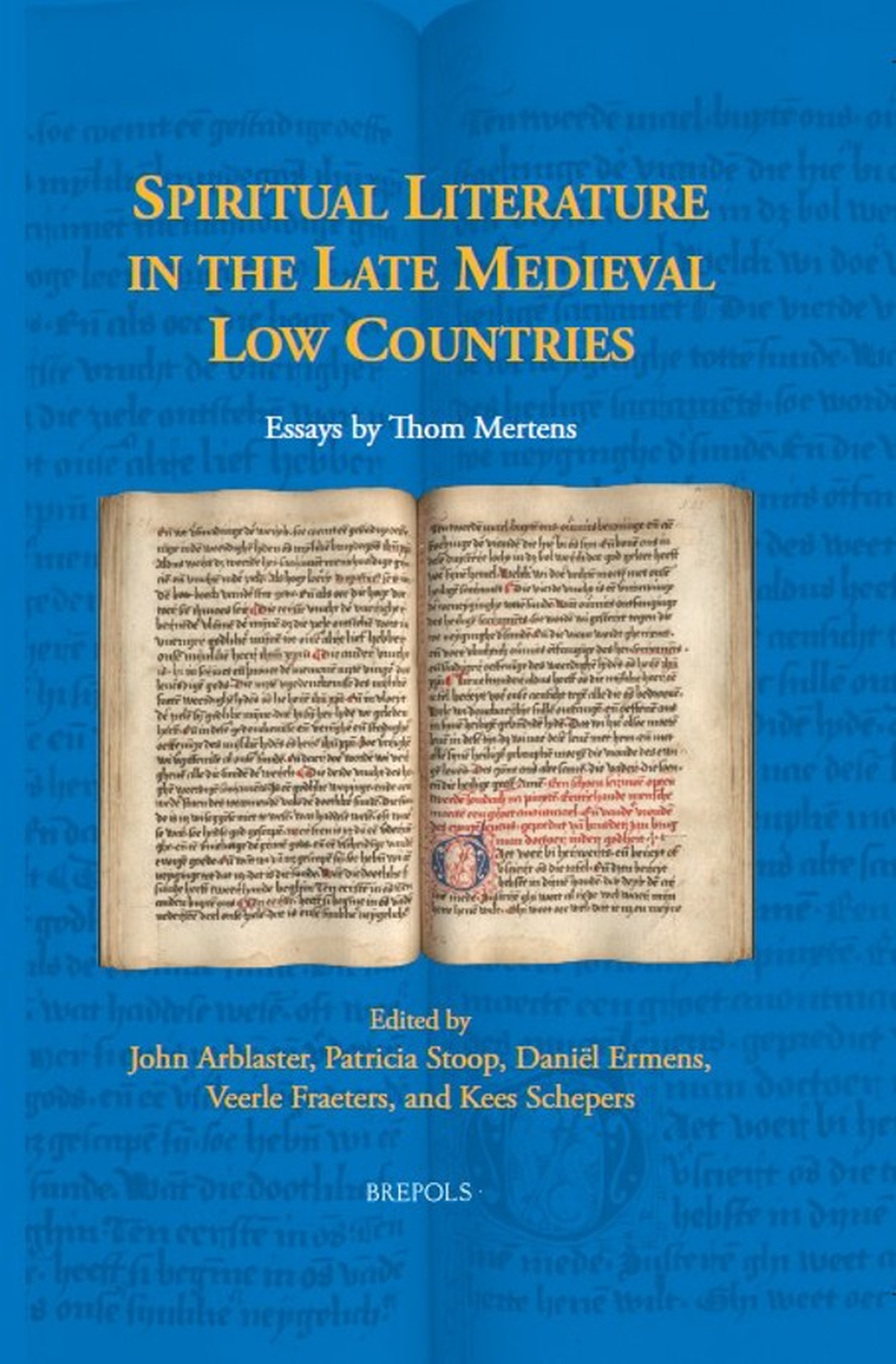
Publication – « Spiritual Literature in the Late Medieval Low Countries. Essays by Thom Mertens », éd. John Arblaster, Daniël Ermens, Veerle Fraeters, Kees Schepers, Patricia Stoop

This volume brings together fifteen seminal essays by Thom Mertens, a professor at the Ruusbroec Institute (Ruusbroecgenootschap) at Antwerp University since 1985, and a pioneer in the study of the late medieval spiritual literature of the Low Countries, a field that had previously been neglected in favour of the study of belle lettres. This volume is therefore also a celebration of the paradigm shift that Mertens led, as he demonstrated that most of the late medieval texts produced in the Low Countries actually qualify as spiritual literature, and that these understudied literary works are of prime importance within late medieval textual culture.

Of the essays gathered here, nine have been translated into English for the first time, while six have been re-edited, forming a collection that bears witness to the importance of Dutch literature as a broader part of the vernacular literatures of Western Europe, and of the societies that gave rise to these works. It is in large part thanks to Mertens’ efforts that serious scholarly engagement with these spiritual texts, their characteristics, and their function has become a field of research in its own right that continues to flourish.

Thom Mertens has been a professor at the Ruusbroec Institute since 1985. He has published extensively on late-medieval spiritual literature of the Low Countries, with a specific focus on literary genres in the vernacular. He has produced numerous editions of Middle Dutch texts, among which the monumental edition of John of Ruusbroec’s Vanden gheesteliken tabernakel, as well as the equally monumental two-volume compact edition (Eng/Dutch) of the entire oeuvre of Ruusbroec (both with Brepols).

Table des matières :

Preface: Pioneering Middle Dutch Spiritual Literature

Publications by Thom Mertens

Thom Mertens: A Tribute by John van Engen

I. Spiritual Literature in the Late Medieval Low Countries – An Overview

Chapter 1: Books for Eternity

Chapter 2: Mystical Culture and Literature in the Late Middle Ages

Chapter 3: The Monastery as a Literary Institution in the Low Countries (13th–16th Century) 111

II. Middle Dutch Sermons

Chapter 4: The Middle Dutch Sermon. A Premature Synthesis

Chapter 5: Collatio and Codex in the Context of the Devotio Moderna

Chapter 6: Ghostwriting Sisters. The Preservation of Dutch Sermons of Father Confessors in the Fifteenth and the Early Sixteenth Century

Chapter 7: The Sermons of Johannes Brugman OFM († 1473). Preservation and Form

Chapter 8: Private Revelation and Public Relevance in the Middle Dutch Sermon Cycle Jhesus collacien

III. Aspects of Genre in Middle Dutch Spiritual Literature

Chapter 9: Reading with a Pen. Developments in Late Medieval Spiritual Prose

Chapter 10: Consolation in Late Medieval Dutch Literature

Chapter 11: Spiritual Testaments in the Late Medieval Low Countries. An Exploration of the Genre

Chapter 12: Die gheestelicke melody. A Program for the Spiritual Life in a Middle Dutch Song Cycle

Chapter 13: Voices without Words. Hendrik Mande’s Spiritual ‘Love Complaint’ as a Mystical Dialogue

Chapter 14: Hendrik Mande’s Apocalypse

Bibliography

Index

Informations pratiques :

Spiritual Literature in the Late Medieval Low Countries. Essays by Thom Mertens, éd. John Arblaster, Daniël Ermens, Veerle Fraeters, Kees Schepers, Patricia Stoop, Turnhout, Brepols, 2024 ; 1 vol., 472 p. (Brepols Collected Essays in European Culture, 7). ISBN : 978-2-503-58100-2. Prix : € 120,00.

Source : Brepols

Publié dans Publications | Laisser un commentaire