Colloque – Lungo la via Tiburtina Valeria nel Medioevo

Convegno di studi « Lungo la via Tiburtina Valeria nel Medioevo »
A cura di Gaetano Curzi, Claudia D’Alberto, Manuela Gianandrea ed Eleonora Tosti
Chieti nelle giornate del 14 e del 15 Novembre e a Roma il 16 e 17 Novembre.

Programme : ici

ENTI ORGANIZZATORI
Dipartimento di Lettere, Arti e Scienze Sociali,

Università degli Studi “G. d’Annunzio”
di Chieti-Pescara, ERC Graff-IT
Dipartimento Storia Antropologia Religioni Arte Spettacolo, Sapienza Università di Roma Società romana di storia patria – ETS

COMITATO SCIENTIFICO-ORGANIZZATIVO Gaetano Curzi, Claudia D’Alberto,
Manuela Gianandrea, Eleonora Tosti

Publié dans Colloque | Laisser un commentaire

Journée d’étude – Ruusbroecdag 2023: Contemplatie en Actie

Ieder jaar herdenkt het Ruusbroecgenootschap de sterfdag van Jan van Ruusbroec, 2 december 1381, met de organisatie van de Ruusbroecdag. Op een vrijdagnamiddag rond 2 december wordt dan in samenwerking met UCSIA een klein colloquium georganiseerd.

Datum: vrijdag 1 december 2023 (14.00-18.00)

Locatie: De Tassiszaal, Hof van Liere – Prinsstraat 13 – 2000 Antwerpen

Tijdens de Ruusbroecdag zullen vier sprekers het thema elk vanuit een andere invalshoek belichten. Tussen de lezingen is er een artistiek intermezzo.

Programma :

  • 14.00u     John Arblaster (Universiteit Antwerpen): Inleiding op het thema en eerbetoon aan Prof. em. dr. Rob Faesen
  • 14.30u     Rob Faesen (Universiteit Antwerpen/KU Leuven/Universiteit Tilburg): Actie en contemplatie bij Hadewijch en Jan van Ruusbroec
  • 15.00u     Poëtische voordracht door Kristof Smeyers (KU Leuven/KADOC/Ruusbroecgenootschap)
  • 15.05u     Koffiepauze
  • 15.40u     Poëtische voordracht door Kristof Smeyers (KU Leuven/KADOC/Ruusbroecgenootschap)
  • 15.45u     Lieke Wijnia (Museum Catharijneconvent): De iconografische voorstelling van Maria Magdalena
  • 16.15u     Dries Bosschaert (KU Leuven): De geschiedenis van de priester-arbeiderbeweging, met speciale aandacht voor Egied Van Broeckhoven
  • 16.45u     Panelgesprek met de sprekers
  • 17.15u     Receptie

Inschrijven

Deelname is gratis, maar inschrijven is verplicht.

Klik hier om in te schrijven

Source : Universiteit Antwerpen

Publié dans Colloque | Laisser un commentaire

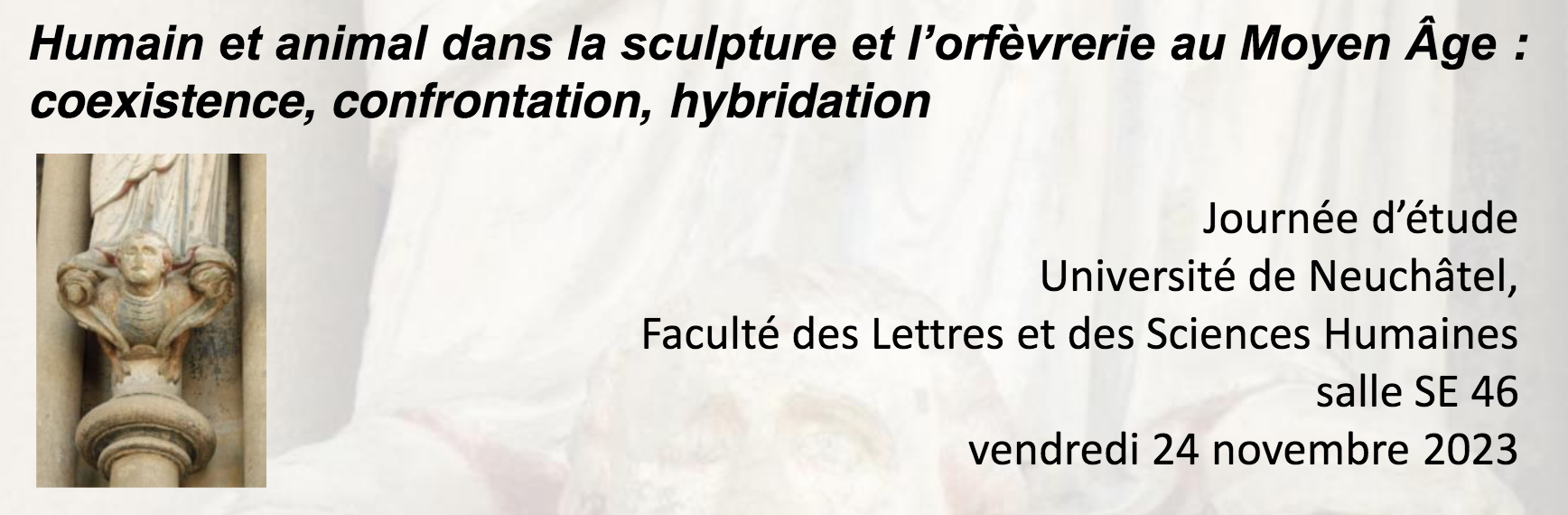
Journée d’étude – Humain et animal dans la sculpture et l’orfèvrerie au Moyen Âge: coexistence, confrontation, hybridation

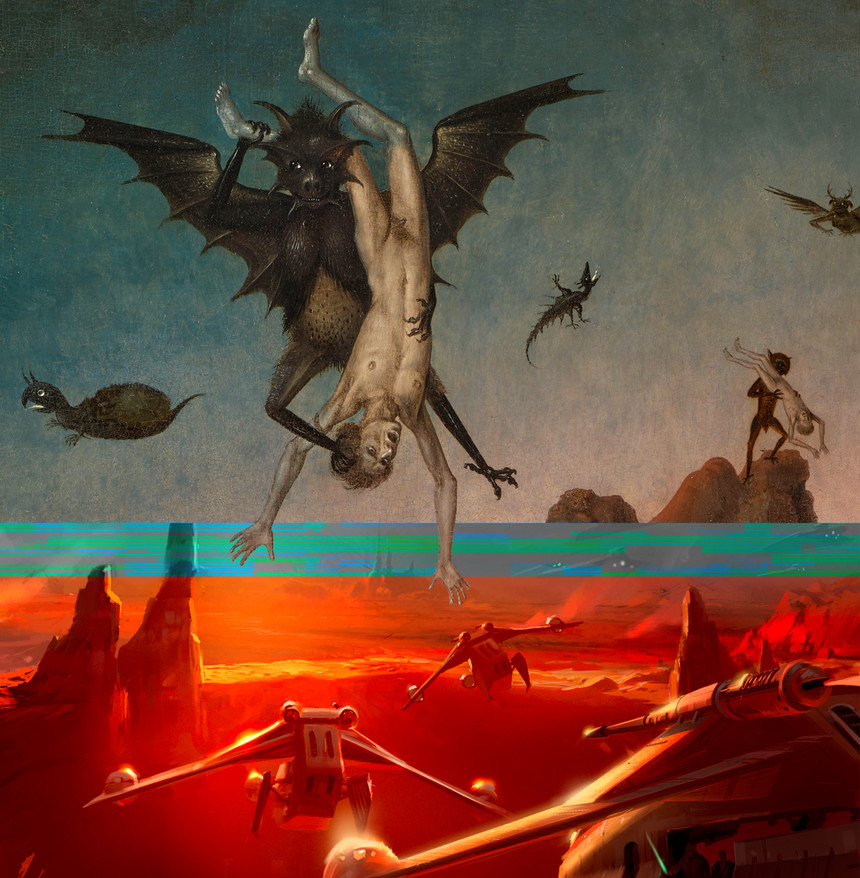
Le rapport entre l’humain et l’animal durant la période médiévale est complexe. Il est établi sur un lien de proximité, de crainte et d’apprivoisement. Durant cette journée d’étude, nous tenterons de faire le point des connaissances actuelles sur la représentation des créatures animales, hybrides et monstrueuses. Nous interrogerons plus précisément la fonction communicative de ces images ainsi que la perception de la société médiévale à l’égard de la bestialité. Il s’agira en particulier d’évaluer l’hybridité comme processus de métamorphose et comme rhétorique de dualité.

Programme :

9h00 Accueil et mots de bienvenue : Laurence Terrier Aliferis
9h15 Introduction : Bruno Boerner

9h45 Les hybrides de la Grande Châsse de Saint-Maurice d’Agaune
Pierre Alain Mariaux, Université de Neuchâtel

10h30 Morsure et hybridation : les hybrides sculptés du palais épiscopal d’Angers
Nathalie Le Luel, Université catholique de l’Ouest (Angers)

11h15 La dualité nu – dévêtu comme signe de l’hybridation
Laurence Terrier, Université de Neuchâtel

14h00 Le Tentateur de Strasbourg : l’animal derrière les apparences humaines
Denise Borlée, Université de Strasbourg

14h45 Monstres et chimères dans l’anthropologie de l’image
Sara Petrella, Université de Fribourg

15h30 Table ronde et conclusion

Informations pratiques :

Journée d’étude
Université de Neuchâtel, Faculté des Lettres et des Sciences Humaines
salle SE 46
vendredi 24 novembre 2023

Organisation: Bruno Boerner, Université de Rennes (UR Histoire et critique des arts), Laurence Terrier Aliferis, Université de Neuchâtel (IHAM)

Publié dans Colloque | Laisser un commentaire

Appel à contribution – Ecologies of Visual Culture in the Global Middle Ages

Association for Art History 2024
Annual Conference, University of Bristol
Deadline 10 November 2023

2024 marks the fiftieth anniversary of the Association for Art History. We are delighted to announce that next year’s conference will be held in collaboration with the History of Art department at the University of Bristol.

Proposals are invited for the conference session ‘Ecologies of Visual Culture in the Global Middle Ages’.

The study of medieval art and visual culture has recently seen a flourishing of ecocritical and environmental approaches that invite us to explore new ways of thinking about objects, buildings and landscapes. Drawing on the material, spatial, and post-human turns in humanities research, these have highlighted the complex ways in which human creativity and acts of making are entangled with non-human processes and agency. One aspect emphasises the landscape as integral to sacred space, placing built structures within their topographical and ecological contexts, and attending to other kinds of material intervention. Another focuses on materiality, the ‘stuff’ of the natural world from which both buildings and objects were crafted, to better understand their making and meaning. Across the globe, such interactions were inflected by different environments and cultural frameworks. This panel thus aims to bring together new research on visual cultures of the natural world, as these relate to any medium and geographic region, c.500-1500.

Proposals for papers are invited on topics including, but not limited to: visual representations and perceptions of the natural world; the materiality of objects and buildings, whether animal, vegetable or mineral in origin; the impact of cultivating and extracting such materials on landscapes and ecosystems; lasting interventions in the natural world, from free-standing buildings and monuments to rock-cut structures and gardens; ephemeral engagement with natural environments, through ritual and performance, mobile objects and temporary creations; the relationship between the non-human world and the human body, including sensory experience; intersections between environmental science and visual culture. We welcome submissions that together represent a variety of methodologies and perspectives, and a range of cultural contexts.

Advertisements

about:blank

Report this adPrivacy

To offer a paper:

  • Please email your paper proposals direct to the session convenor(s).
  • You will need to provide a title and abstract (250 words maximum) for a 20-minute paper, your name and institutional affiliation (if any).
  • Deadline for submissions: 10 November 2023

Session convenors:

Source : Medieval Art Research

Publié dans Appel à contributions | Laisser un commentaire

Podcast – Louis Genton, « L’institution et l’écrit. Une histoire documentaire de l’abbaye de Saint-Germain-des-Prés (XIe-XVe siècle) »

Cette conférence présente les résultats issus de la thèse de doctorat de Louis Genton, rédigée avec l’appui de la Fondation des Sciences du Patrimoine et récemment soutenue à l’université de Paris-Saclay.

L’abbaye de Saint-Germain- des-Prés fait partie des grands monastères bénédictins parisiens qui disposent d’un vaste corpus de documents médiévaux produits entre les IXe et XVe siècles, aujourd’hui conservés aux Archives nationales et à la Bibliothèque nationale de France.

Cette enquête sur ce riche ensemble d’archives montre comment les moines sangermaniens, confrontés à une multiplicité de concurrences, sont amenés au cours de deux épisodes de réforme, à la fin du XIIe siècle et à partir du milieu du XIIIe siècle, à faire de l’écrit un élément incontournable de la stabilité institutionnelle de l’abbaye. En retour, ce travail insiste sur la capacité des pratiques d’écriture à faire évoluer les fondements du pouvoir monastique.

Publié dans Podcast | Laisser un commentaire

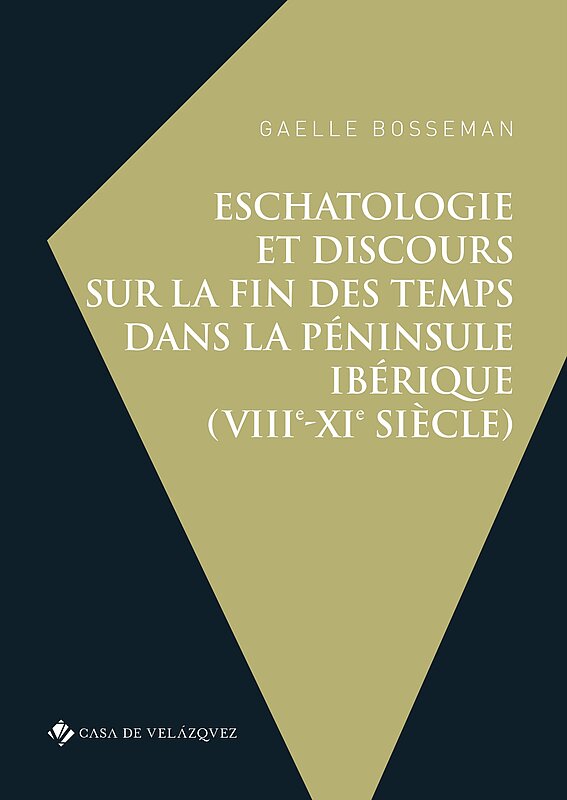
Publication – Gaelle Bosseman, « Eschatologie et discours sur la fin des temps dans la péninsule Ibérique (VIIIe-XIe siècle) »

L’intérêt pour l’eschatologie dans les sources altomédiévales est encore souvent interprété comme significatif d’une croyance plus ou moins largement partagée en l’imminence de la fin des temps. Cette hypothèse ne semble pas parfaitement rendre compte de la diversité du contenu des sources, tant textuelles qu’iconographiques : de nombreux textes ou images abordent la fin des temps dans une optique sinon érudite ou contemplative, du moins dénuée de toute urgence apocalyptique. Ils émanent, d’autre part, de milieux lettrés, généralement monastiques. Dans le débat sur la réalité des peurs millénaristes à l’approche de l’an 800 et de l’an 1000, et à partir du cas d’étude central de la péninsule Ibérique, ce livre propose une relecture des sources à la recherche du sens, mais aussi des fonctions de l’eschatologie pour les chrétiens de cette époque.

Table des matières : ici

Informations pratiques :

Gaelle Bosseman, Eschatologie et discours sur la fin des temps dans la péninsule Ibérique (VIIIe-XIe siècle), Madrid, Casa de Velázquez, 2023 ; 1 vol., 445 p. (Bibliothèque de la Casa de Velázquez, 89). ISBN : 9788490964071. PRix : € 46,00.

Source : Casa de Velázquez

Publié dans Publications | Laisser un commentaire

Offre d’emploi – Postdoctoral Research Associate (University of York)

Closes : 12th November 2023

Role Description

Department

History of Art at York is one of the largest and most dynamic communities of art historians in the UK, with eighteen colleagues who cover all periods from late antiquity to the present. The department ranked first in the UK for Environment and Impact in the recent Research Excellence Framework (2021), and in the top 10 overall.

Role

This 18-month post-doctoral research position will contribute to an ongoing research project focused on the craft traditions of the Islamic world. The successful applicant will be based in the History of Art department, under the supervision of Professor Marcus Milwright. The post-doctoral researcher will engage in research on museum objects, archaeological data, inscriptions, primary sources, and secondary scholarship with an emphasis on Persian-speaking regions of the Islamic world. This work will lead to the creation of print publications, online resources, and conference presentations. The successful candidate will assist in the identification and development of potential areas of research and the development of proposals for independent or collaborative research projects. The role also involves the development and maintenance of contacts with international research collaborators. This position is funded by the British Academy as part of the British Academy Global Professorship initiative.

Alongside the advertised salary, there will be an allowance for travel, conference participation, and other eligible research expenses incurred in the course of undertaking the role.

Skills, Experience & Qualification needed

The successful candidate will need to have a PhD in Islamic Art History, Islamic Archaeology or Islamic History, experience working on pre-Modern Iranian cultural heritage, and have excellent command of English. Knowledge of Farsi is a requirement. Experience in designing websites and databases would be an advantage.

Interview date: To be confirmed

For informal enquiries: please contact Marcus Milwright on marcus.milwright@york.ac.uk

The University strives to be diverse and inclusive – a place where we can ALL be ourselves.

We particularly encourage applications from people who identify as Black, Asian or from a Minority Ethnic background, who are underrepresented at the University.

We offer family friendly, flexible working arrangements, with forums and inclusive facilities to support our staff. #EqualityatYork

Source : Jobs.ac.uk

Publié dans Offre d'emploi | Laisser un commentaire

Appel à contribution – Absence and Presence – The Black Death and Subsequent Plague Waves in 14th/15th c. Eastern Central Europe

Deadline: 15 November 2023
Contact: martin.bauch@leibniz-gwzo.de / vadas.andras@btk.elte.hu

There’s a long-standing discussion if and to what extent the first wave of the Second Plague Pandemic, the Black Death (1347-52), had an impact on Eastern Central Europe. Its virtual absence from large parts of the Polish and the Bohemian Kingdoms has long been explained with a lack of written sources, especially in comparison with the much denser documentation for England, France, and Italy. Especially since aDNA research has clarified that the Black Death was indeed caused by the plague bacterium Yersinia pestis, an overwhelming majority of plague historians argue for a scheme of “same pathogen, same outcome” all across Europe, with the Central European cases as less important exceptions to the rule. New research with scientific proxy data seems to confirm that the absent impact of the Black Death is more than just a lack of sources, confirming the overall impression of demographic continuity and even economic, political, and cultural affluence so typical for the monarchies ruled by the Luxembourgs, Piasts, and the Angevins in the second half of 14th century.

Moreover, the focus of historical plague research in recent years has shifted away from the dominant event of the Black Death to the subsequent plague waves such as pestis secunda, tertia, etc. It has long been clear to researchers that these were actually the more important plague events for Eastern Central Europe. Detailed reconstructions of their spread route are important for a deeper understanding of how plague became endemic in Europe and into which animal reservoirs the pathogen retreated between outbreak waves – and yet they are not available. Likewise, all conceivable sources of indirect demographic information on the impact of subsequent waves, such as wills or similar written sources, have not yet been adequately addressed for the plague waves of the 14th-15th centuries in East Central Europe. Furthermore, cultural phenomena connected to the recurring plague waves, like flagellants and institutionalized memory of plague victims would also merit a more detailed examination in future research.

We are looking for contributions assessing the reconstruction, the impact, and the memory of the Black Death and subsequent plague waves in Central and Eastern Europe between 1347 and ca. 1500. After peer review we plan to publish them as a thematic issue of “Historical Studies on Central Europe” https://ojs.elte.hu/hsce  and hence the 6.000-10.000 word articles will undergo a double-blind peer-review process; English proof-reading will be provided by the journal.

Deadline for abstracts (300 words) in English with a short CV (1 page): 15 November 2023;
the Deadline for the finalized contributions will be in spring 2024-

Please send your abstracts to Dr. Martin Bauch (GWZO Leipzig) martin.bauch@leibniz-gwzo.de  and Dr. András Vadas: vadas.andras@btk.elte.hu

Download this as a PDF: CfA HSCE Absence and Presence

Publié dans Appel à contributions | Laisser un commentaire

Appel à contribution – Les Animaux, héros de la littérature médiévale

Université de Trento, 25 – 28 Septembre 2024

Le XXVe Colloque international de la Société Internationale Renardienne aura lieu en Italie, dans le cadre montagneux du Trentino-Alto Adige, avec les Dolomites et leurs pics acérés à l’arrière-plan ; organisé à l’Université de Trento, Département des Etudes Humanistes, il sera focalisé sur le rôle que les animaux, sauvages ou domestiques, jouent dans la littérature médiévale.

Presque tous les genres littéraires médiévaux attribuent un rôle important aux animaux, réels ou imaginés ; ces créatures sont le plus souvent stéréotypées et polarisées, positivement ou négativement : adjuvants de Dieu ou du Diable, elles incarnent des caractéristiques de l’homme.

Les communica ons pourront explorer la nature mul forme des personnages animaliers et la manière dont ils s’insèrent dans le système narra f pour sensibiliser le public médiéval. Voici quelques thèmes et pistes, nullement exhaus fs, qui pourraient être développés :

 Animaux narrateurs, comme dans les fables, où ils dialoguent avec les êtres humains pour signifier la nature ambivalente de la rela on entre animalité et humanité ;

 Animaux incarnant une pensée symbolique, comme dans les bes aires, où l’imaginaire textuel et la textualité visuelle se combinent pour représenter une mentalité fondée sur la foi ;

 Animaux matérialisant des contextes sociaux et des valeurs propres à des contextes spécifiques, comme dans les fabliaux, où ils sont inextricablement liés aux acctvités et comportements humains, tant nobles que populaires.

Il en va de soi que les présenta ons sur tout autre sujet tradi onnel de la Société Reynardienne sont les bienvenues.

La Société à l’Université de Trente invite les proposi ons de communica on et d’atelier dans toutes les principales langues européennes.

Veuillez nous envoyer votre tre et votre résumé (environ 100 mots pour les communica ons et 300 mots pour les ateliers) avant le 31 décembre: renard25.le @unitn.it

Pour de plus amples informa ons, vous pouvez nous contacter à tout moment en écrivant à l’adresse électronique indiquée ci-dessus.

Caterina Mordeglia, Roberta Capelli, Paola Cifarelli

Publié dans Appel à contributions | Laisser un commentaire

Exposition – Dieric Bouts. Creator of images

Exhibition: 20 October 2023 – 14 January 2024

M Leuven
Leopold Vanderkelenstraat 28
3000 Leuven
Belgium

In the fall of 2023, M will present an extensive overview exhibition on Dieric Bouts in the context of the  the ‘New Horizons | Dieric Bouts Festival’. Never before have so many works by the Flemish master been brought together in his hometown. Moreover, you get a totally new perspective on work from more than five centuries old – through a radical confrontation with today’s visual culture.

Dieric Bouts (ca. 1410-1475), who might be mentioned in the same breath as Jan Van Eyck or Rogier Van der Weyden, is one of the most important Flemish Masters. The painter spent most of his life in Leuven which is also where he painted his best panels of rich scenes, powerful portraits and otherworldly landscapes. Bouts was even given the honorary title of painter of the city in 1472. At that time, Leuven was undergoing enormous urban renewal and was experiencing glory days with its new university – the ideal context for Bouts to develop as a Renaissance artist.

The concept of this exhibition is definitely radical: we are not allowed to look at Bouts as an artist. The image we have today of the artiste peintre did not exist in the 15th century. Dieric Bouts was not a romantic genius or brilliant inventor, he was an image-maker. He painted what was expected of him and excelled at it, just think about master pieces such as ‘The Last Supper’ and ‘The Martyrdom of Saint Erasmus’. That is why it makes sense to confront him with today’s image-makers of sports photographers, filmmakers and game developers. M places them side-by-side with the old master.

Source : M – Leuven

Publié dans Le réseau | Laisser un commentaire