Publication – « Dokumente zur Geschichte des Deutschen Reiches und seiner Verfassung. (1344–1347) », t. 3, éd. Michael Menzel

Band 7,3 der Reihe Constitutiones et acta publica imperatorum et regum enthält die letzten Urkundenjahrgänge (1344–1347) Ludwigs IV., genannt der Bayer, und schließt die Herrschaftsjahre dieses Königs und Kaisers (1314–1347) ab. Mit 505 Nummern dokumentiert er unter anderem den Beginn zweier wichtiger Phasen der Reichsgeschichte. Die Hausmachterweiterung in Hennegau, Holland, Seeland und Friesland nach dem Aussterben der männlichen Grafenlinie im September 1345 und die Nachfolge der Kaiserin Margarete und ihrer Kinder ließen das wittelsbachische Haus für fast ein Jahrhundert dort herrschen. Die Krise der Reichsspitze seit der Gegenwahl Karls IV. im Juli 1346 zum König führte zur weitgehend ununterbrochenen luxemburgischen Macht für fast ein Jahrhundert.
Den Abschluss der Urkunden Ludwigs IV. bildet die zwei Tage vor Ludwigs Tod im Oktober 1347 ausgestellte letzte überlieferte Urkunde. Ein Register der Personen- und Ortsnamen erschließt den Band. Das seit 1909 laufende Editionsvorhaben der Ludwigsurkunden innerhalb der Leges-Abteilung der Monumenta Germania Historica (MGH) wird mit diesem Band erfolgreich abgeschlossen.

Table des matières : ici

Informations pratiques :

Dokumente zur Geschichte des deutschen Reiches und seiner Verfassung 1344–1347, Wiesbaden, Harrassowitz Verlag, 2025 ; 1 vol., XL–398 p. (Monumenta Germaniae Historica – Leges » Constitutiones et acta publica imperatorum et regum, 7,3). ISBN : 978-3-447-10073-1. Prix : € 140,00.

Source : Harrassowitz Verlag

Publié dans Publications | Commentaires fermés sur Publication – « Dokumente zur Geschichte des Deutschen Reiches und seiner Verfassung. (1344–1347) », t. 3, éd. Michael Menzel

Conférence – Pierre-Hugues Tilmant, Marie Verbeek et Sarah Cremer »Ex silentio : archéologie à l’abbaye Notre-Dame du Vivier »

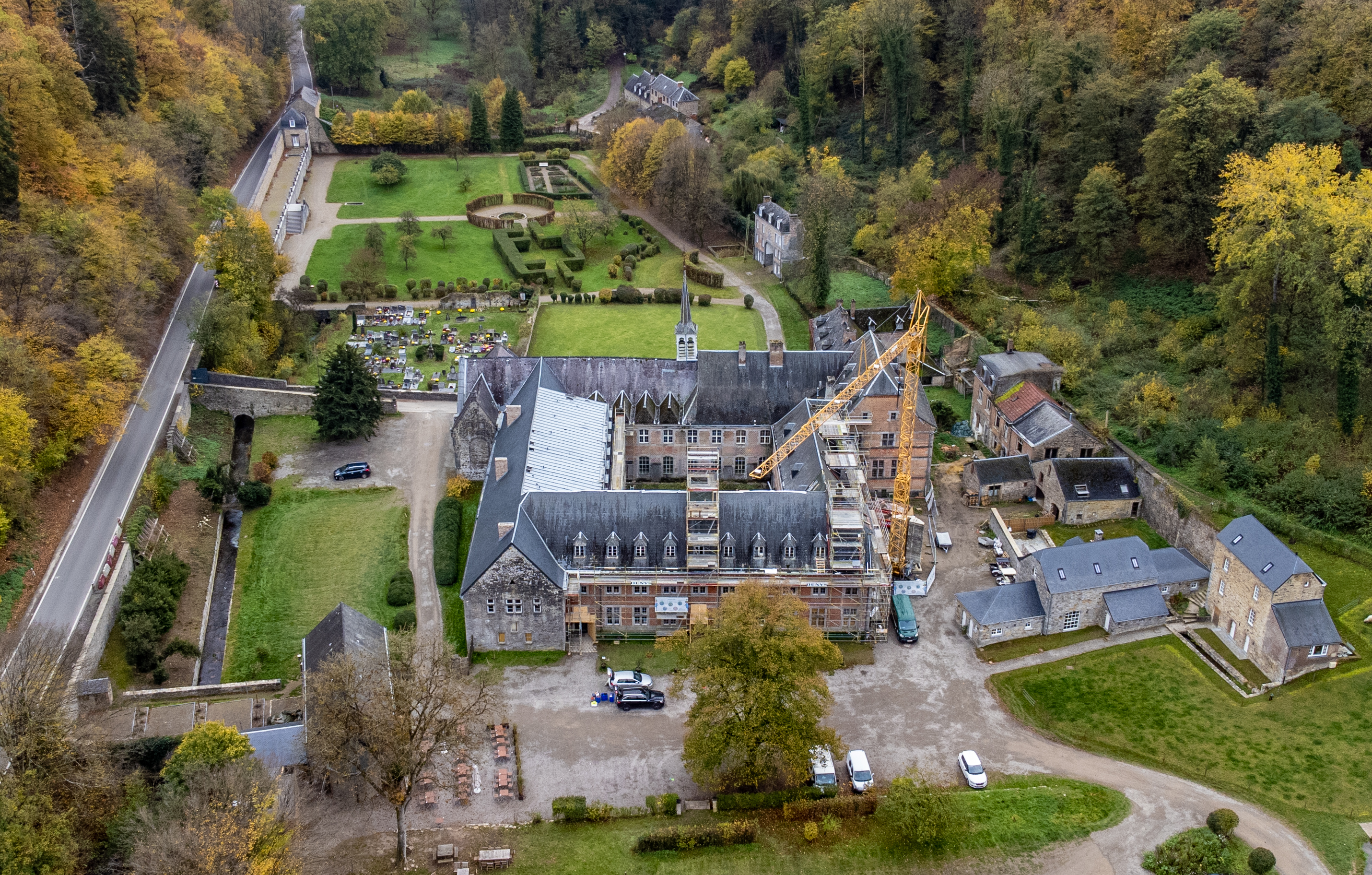
L’enquête archéologique se poursuit au fil des travaux de restauration à l’abbaye Notre-Dame du Vivier à Marche-les-Dames.  Elle permet de remettre sur le métier, sur base des sources matérielles, toute l’histoire de cette petite communauté de moniales cisterciennes.  De fond en comble, l’étude des structures exceptionnellement bien conservées de l’abbaye nous mène au plus près de Mère Yvette et de ses sœurs : une pièce de bois aussi petite qu’une cheville servant à assembler une charpente contribue à éclairer le dossier touffu de la fondation de l’abbaye ; Un pan-de-bois « fantôme » vient montrer combien les travaux qui suivent la réforme de Marie de Berwier furent conséquents ; une fenêtre du 18e siècle illustre la volonté de mise en scène de ce siècle et une collection impressionnante d’encriers retrouvés dans un dépotoir nous rapproche de l’accueil fait aux jeunes pensionnaires du 19e siècle.  

Bien que cloitrées dans le silence, nous verrons que les religieuses sont bien ancrées dans le siècle, suivant les pratiques de leur temps et  exploitant au mieux les ressources matérielles à leur disposition pour maintenir leur installation à l’équilibre vaille que vaille, tout en souscrivant aux indications de la Règle de Saint-Benoît, de l’Ordre, de leurs protecteurs et de leur évêque. 

Informations pratiques :

Conférence : Ex silentio : archéologie à l’abbaye Notre-Dame du vivier
Date : le 25 janvier 2026, à 14h
Abbaye Notre-Dame du Vivier
Rue Notre-Dame du Vivier, 153
5024 Namur

Source : Nordoc’Archéo

Publié dans Colloque | Commentaires fermés sur Conférence – Pierre-Hugues Tilmant, Marie Verbeek et Sarah Cremer »Ex silentio : archéologie à l’abbaye Notre-Dame du Vivier »

Publication – « Markets, Mints, and Merchants. Royal Economic Policy and Towns in Medieval Hungary », éd. Boglárka Weisz, István Kádas, Judit Gál

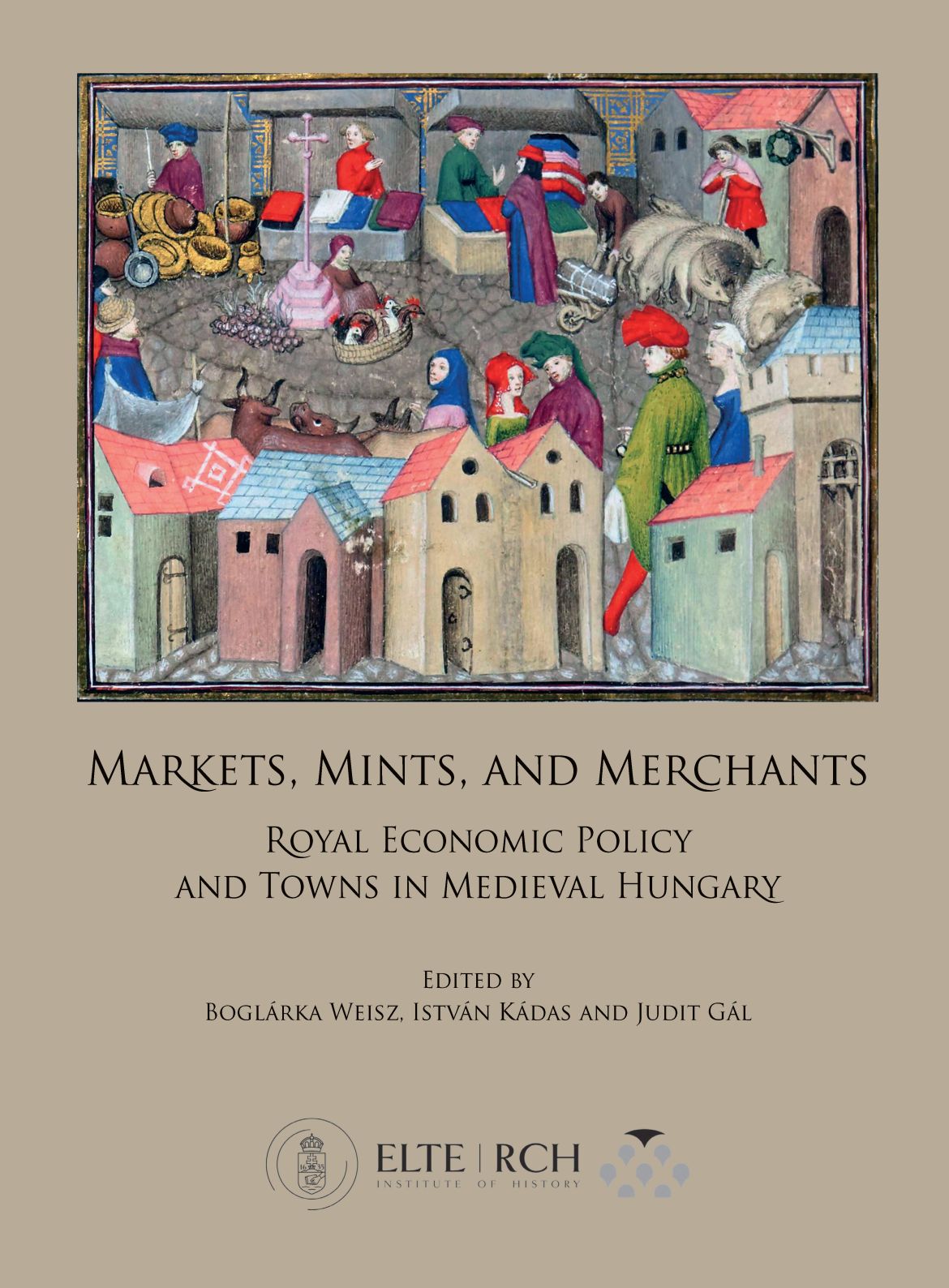
The objective of the present volume is to provide a representative overview of the research undertaken by the Medieval Hungarian Economic History Research Group since its establishment in 2015.

The studies included in this volume, organised into four chapters, illuminate four distinct aspects of medieval economic history (coinage, royal revenues, urban development, trade), reflecting the multifaceted research interests of the members of our Research Group.

One of the primary objectives of the research group is to conduct a comprehensive investigation into the royal coinage. This volume encompasses an exploration of various facets of numismatics, including the coin circula­tion, renewal, exchange, technological reforms, and the iconography of coins. The subject of royal revenues is closely connected to the coinage. Our research group’s examination of royal revenues includes, alongside income deriving from the royal monopolies, the customs duty, the thirtieth, direct and indirect taxes, and other sources of revenues. The volume in question is not solely concerned with the revenues themselves; it also focuses on their administration.

The economic role, privileges, and possibilities of medieval Hungarian towns are also addressed in this volume. In addition to the identification and systematisation of privileges underlying the economic development of certain towns, the research group devotes significant attention to the role of towns and their citizens in both domestic and international trade, as well as the operation of foreign merchants in the Kingdom of Hungary.

We hope this volume gives an insight into the activities of the Medieval Hungarian Economic History Research Group, and our research will contribute to a better under­standing of markets, mints, merchants, and the economic foundations of medieval Hungary.

Table des matières : ici

Informations pratiques :

Markets, Mints, and Merchants. Royal Economic Policy and Towns in Medieval Hungary, éd. Boglárka Weisz, István Kádas, Judit Gál, Budapest, ELTE RCH Institute of History, 2025. ISBN : 978-963- 416-513-2.

Source : ELTE Institute of History

Publié dans Publications | Commentaires fermés sur Publication – « Markets, Mints, and Merchants. Royal Economic Policy and Towns in Medieval Hungary », éd. Boglárka Weisz, István Kádas, Judit Gál

Offre d’emploi – PhD Position in Medieval Manuscript Studies (Radboud University)

Employment 1.0 FTE
Gross monthly salary € 3,059 – € 3,881
Required background Research University Degree
Organizational unit Faculty of Arts
Application deadline 15 January 2026

As a PhD candidate, you will be part of an international research project, applying innovative computational methods to the study of the transmission history of the Latin Physiologus and the Bestiary, one of the richest textual traditions of the Middle Ages.

As PhD candidate, you will be responsible for one of the three subprojects within the NWO-funded project ‘Unlocking the transmission history of the Physiologus and the multimodal nature of medieval manuscripts with AI-driven digital methods’. This project studies the vast and multilingual manuscript tradition of the Physiologus, a late-antique collection of animal stories that later morphed into the medieval Bestiary. The project employs various computational methods in intelligent imaging, text processing and metadata federation to understand how the manuscript as a medium influenced the evolution of texts.

Your subproject deals with the textual evolution of the Latin Physiologus. In no other language has the Physiologus inspired more creative adaptations than in Latin. From the rewriting of selected chapters in Phys. Lat. B, to versification in the Phys. Theobaldi, to 12th-century Bestiaries which quadruple the number of chapters of the Greek original, this overabundant and complex tradition offers a unique window into the medieval mindset. The aim of the PhD project is to map and interpret the development of the Latin Physiologus with specific attention to the impact of its reception and transmission context on the evolution of the text.

The main output of your work will be your doctoral dissertation, but you will also be expected to present work in progress through conference papers and contribute to outreach activities. There will be opportunities to gain experience in the organisation of scientific meetings and working in an interdisciplinary team. You will be expected to undertake a small amount of teaching, either in the Medieval History programme or in another programme depending on your background and interests.

Would you like to learn more about what it’s like to pursue a PhD at Radboud University? Visit the page about working as a PhD candidate

Does this sound like you?

  • You have an MA degree in a relevant field (or can provide the assurance that you will have obtained your degree by the time of appointment).
  • You have demonstrable experience in the field of medieval manuscript studies.
  • You have demonstrable experience with computational methods applied to the study of medieval manuscripts.
  • You have good/excellent knowledge of Latin (your language proficiency should be in line with the direction you propose for the research)
  • You are keen to collaborate as part of a research team.
  • You are willing to travel for archival research and to attend international scientific meetings. 

What we offer you

  • We will give you a temporary employment contract (1.0 FTE) of 1.5 years, after which your performance will be evaluated. If the evaluation is positive, your contract will be extended by 2.5 years (4-year contract).     
  • You will receive a starting salary of €3,059 gross per month based on a 38-hour working week, which will increase to €3,881 in the fourth year (salary scale P).
  • You will receive an 8% holiday allowance and an 8,3% end-of-year bonus. 
  • There may be an opportunity for Dual Career Coaching. The Dual Career Coaching assists your partner via support, tools, and resources to improve their chances of independently finding employment in the Netherlands. 
  • You will receive extra days off. With full-time employment, you can choose between 30 or 41 days of annual leave instead of the statutory 20. 

Additional employment conditions

Work and science require good employment practices. Radboud University’s primary and secondary employment conditions reflect this. You can make arrangements for the best possible work-life balance with flexible working hours, various leave arrangements and working from home. You are also able to compose part of your employment conditions yourself. For example, exchange income for extra leave days and receive a reimbursement for your sports membership. In addition, you receive a 34% discount on the sports and cultural activities at Radboud University as an employee. And, of course, we offer a good pension plan. We also give you plenty of room and responsibility to develop your talents and realise your ambitions. Therefore, we provide various training and development schemes.

Where you will be working

The Radboud Institute for Culture & History (RICH) is a research institute dedicated to exploring the present and past through the lenses of culture, history, literature and art. Our researchers collaborate with academic and societal partners to deepen our understanding of the dynamics of an interconnected world and provide context for pressing societal challenges such as inequality and climate change.

Faculty of Arts
The Faculty of Arts is committed to the development of knowledge with a strong scientific and social impact. With over 500 academic and support staff, we teach and conduct research in the fields of art, history, language, culture and communication, using innovative methodologies and collaborating closely across disciplines. Our research is embedded in two research institutes: the Centre for Language Studies (CLS) and the Radboud Institute for Culture & History (RICH). Approximately 2,500 students are currently enrolled with us across our three departments: the Department of History, Art History and Classics, the Department of Modern Languages and Cultures and the Department of Language and Communication. The faculty is characterised by a pleasant and open culture with various opportunities for the professional development of our staff.

Radboud University
At Radboud University, we aim to make an impact through our work. We achieve this by conducting groundbreaking research, providing high-quality education, offering excellent support, and fostering collaborations within and outside the university. In doing so, we contribute indispensably to a healthy, free world with equal opportunities for all. To accomplish this, we need even more colleagues who, based on their expertise, are willing to search for answers. We advocate for an inclusive community and welcome employees with diverse backgrounds, cultures, and perspectives. Will you also contribute to making the world a little better? You have a part to play.

If you want to learn more about working at Radboud University, follow our Instagram account

and read stories from our colleagues.

https://www.ru.nl/en/media/oembed?url=https%3A//www.youtube.com/watch%3Fv%3D2lWBv_WWiBI%26ab_channel%3DRadboudUniversity&max_width=0&max_height=0&hash=Fp_ZQ3RzzrN_pgHik7-4I6u4ArCOLs7x2ef3fRUSDFs

Is this the job for you?

You can apply only via the button below. Address your letter of application to Shari Boodts. In the application form, you will find which documents you need to include with your application. We look forward to receiving your application.

The first interviews will take place on 12 February. You will preferably start your employment on 15 April 2026 or as soon as possible thereafter.

We can imagine you’re curious about our application procedure. It describes what you can expect during the application procedure and how we handle your personal data and internal and external candidates. 

Source : Radboud University

Publié dans Offre d'emploi | Commentaires fermés sur Offre d’emploi – PhD Position in Medieval Manuscript Studies (Radboud University)

Journée d’étude – Quand les objets comptent. Cultures matérielles et quantification


Why did Italy produce so much art during the Renaissance ? We are so conditioned to regard these products as art that a question about mere quantity seems irrelevant if not irreverent. » Richard Goldthwaite

Cet extrait de « Wealth and the demand for art in Italy, 1300-1600 » de Richard Goldthwaite (1993) met en évidence la rupture manifeste entre la représentation de l’art et la quantification de ses objets, pouvant être perçue comme non pertinente (irrelevant), si ce n’est irrévérencieuse (irreverent), en particulier pour les partisans d’un idéal d’unicité de l’art pour qui l’individualité du chef d’œuvre est diluée dans sa mise en série. Depuis Goldthwaite, la sérialité des objets a été mise en lumière et liée à l’organisation des ateliers, par exemple dans les travaux de Michele Tomasi. Par ailleurs, les usages historiens des méthodes quantitatives se sont développés de façon inégale, selon les outils et les approches, depuis l’apogée de celles-ci dans les années 1960-1970, et leur critique (C. Ginzburg). Elles dépassent aujourd’hui largement l’histoire économique et s’adossent à d’autres approches, notamment par l’analyse de réseaux (C. Lemercier, C. Zalc) ou l’introduction d’outils quantitatifs en histoire de l’art (M. O’Malley, A.-S. Radermecker, L. Saint-Raymond…). L’usage de ces méthodes pose d’abord la question de la construction des données depuis des documentations variées, mais aussi celle des conditions de leur mise à disposition, sous la forme de bases de données, qui a profondément renouvelé notre relation aux corpus disponibles et constitués. L’approche quantitative invite à un recul critique sur notre rapport aux « sources », sur les questions d’échantillonnage – subi ou choisi – et de représentativité, sur les échelles d’analyse et sur les formes d’articulation possible entre le quantitatif et le qualitatif, entre la série et l’individu. Il s’agit aussi de s’interroger sur la combinaison des données hétérogènes, sur les choix opérés quant aux critères d’agrégabilité et sur la valeur donnée à l’incertitude dans la construction de nos corpus. Aussi, par ces méthodes, que quantifie-t-on exactement et comment ? L’objectif de cet atelier est de réfléchir collectivement à ces questions, en présentant des études de cas relevant principalement de l’art des périodes médiévales et modernes et intégrant notamment l’évolution des questions de recherche, le développement d’outils computationnels et de grands entrepôts de données.

Vendredi 23 janvier

9h30-10h : Accueil des participants (Salon Gustave Berger)

10h-10h15 : Introduction

  • Diane Baustert (Cergy Université/EHESS)
  • Quentin Bernet (EHESS/ISP ENS Paris-Saclay)

10h15-11h15 : Compter sans se laisser conter : les méthodes quantitatives en sciences humaines et la maîtrise du processus de recherche

  • Sébastien de Valeriola (ULB)

11h15-11h30 : Pause café

11h30-12h10 : Qualifier des séries d’objets médiévaux, des tombes allemandes aux manuscrits provinois (XIIIe-XVIe siècles). Pour une micro-histoire quantitative

  • Marie Fontaine-Gastan (Institut historique allemand, Université Gustave Eiffel)

12h10-12h50 : En quête d’objectivité : les bases de données sémantiques en histoire de l’art médiéval

  • Quentin Bernet (EHESS/ISP ENS Paris-Saclay)

12h50-14h20 : Déjeuner (Salon Gustave Berger)

14h20-15h :Faire l’histoire d’un objet sans chiffres : le cas des búcaros

  • Sofia Navarro-Hernandez (EHESS)

15h-15h40 : Réseaux d’objets, faisceaux d’usages : le cas de l’émail parisien au XIVe siècle

  • Diane Baustert (Cergy Université/EHESS)

15h40-16h : Pause café

16h-16h40 : Le marché de la peinture de genre en Italie (1600-1725) : méthodes quantitatives et perspectives d’analyse

  • Flavie Tordeur (ULB)

16h40-17h20 : Knowledge Gaps and Methodological Asymmetries in the Study of Low-End Antiques

  • Roberta Raccomandato (ULB)

17h20-18h : Conclusions et discussion générale

Publié dans Colloque | Commentaires fermés sur Journée d’étude – Quand les objets comptent. Cultures matérielles et quantification

Appel à contribution – Circulation of Knowledge in the Ottoman World: c. 1500-1900

Madrid
17.09.2026 – 18.09.2026

We are pleased to invite applications for the upcoming International Conference on Early Modern and Modern Ottoman History, to be held in Madrid, organized jointly by the Department of Contemporary History of the Autonomous University of Madrid and the Institute of History at Spanish National Research Council (CSIC). The primary goal of the conference is to bring international scholars working on different aspects of the circulation of knowledge in the Ottoman Empire together to foster interdisciplinary approaches and to provide a platform for dialogue across geographical, disciplinary, and chronological boundaries. Firstly, this conference will serve as a platform to reflect on the circulation of knowledge, particularly focusing on places, actors, and practices of such a circulation. Secondly, it examines how the modes of circulation changed, evolved, or transformed from the 15th century until the demise of the Ottoman Empire in the early 20th century.

Theme and Scope
The conference prioritizes the idea of circulation of knowledge in the Ottoman Empire, without concrete time and geographical focus. For that, we welcome proposals that fit, or are closely related to, one of the themes of the conference:
1. Circulation of scientific knowledge (Science, technology, and military knowledge)
2. Circulation of political knowledge (Diplomacy, politics, and public opinion)
3. Circulation of cultural knowledge (Religion and religious communities, missionary activities, music and arts, social behavior)

Confirmed Participants:
1. Prof. Giancarlo Casale (European University Institute)
2. Prof. Kent F. Schull (Binghamton University)
3. Prof. Joshua M. White (University of Virginia)
4. Prof. Isa Blumi (Stockholm University)

Eligibility
The conference is open to all scholars at all stages, from advanced doctoral candidates to senior scholars. The working language of the conference will be English and Spanish. The conference does not require a participation fee; however, the participants will need to make necessary arrangements for travel and accommodation.

Submission Guidelines:
Please submit the following materials, in a single PDF document to ottoman.circulation@gmail.com, by February 15, 2026:
– Title and abstract of your presentation (max. 300 words)
– A short bio (max. 350 words)
– Institutional affiliation and department

Kontakt

ottoman.circulation@gmail.com

Publié dans Appel à contributions | Commentaires fermés sur Appel à contribution – Circulation of Knowledge in the Ottoman World: c. 1500-1900

Publication – Herman Braet, « Nouvelle bibliographie du ‘Roman de la Rose’. Supplément et Index général »

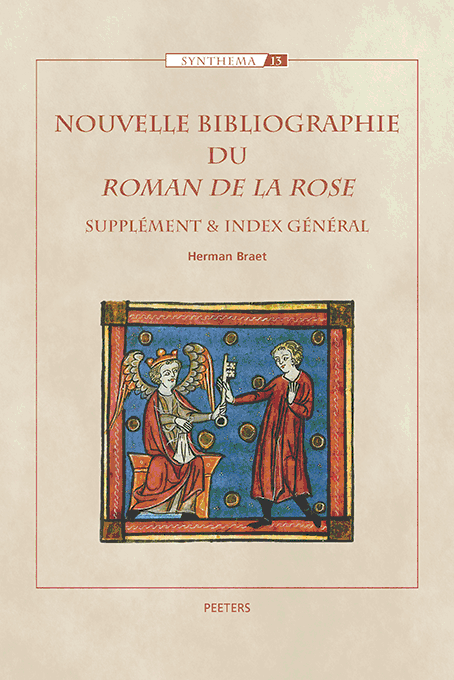
Le Roman de la Rose est devenu pour la critique le texte paradigmatique de l’allégorie profane. Au cours des trente dernières années, cette œuvre multiple a fait l’objet d’une pléthore de publications.
Une nouvelle bibliographie était requise; elle a vu le jour en 2017. Depuis, de nombreux travaux importants ont pu être enregistrés: un nouvel instantané de la recherche s’imposait, enrichi de mises à jour et de corrections. Un index cumulatif couvre non seulement l’ensemble, mais signale encore l’occurrence de lemmes correspondants dans la compilation anglophone de 1993, dont les notices ont été dépouillées à nouveaux frais.

Table des matières : ici

Informations pratiques :

Herman Braet, Nouvelle bibliographie du ‘Roman de la Rose’. Supplément et Index général, Louvain, Peeters, 2025 ; 1 vol., X–122 p. (Snthema, 13). ISBN : 978-9-04295-329-1. Prix : € 57,00.

Source : Peeters

Publié dans Publications | Commentaires fermés sur Publication – Herman Braet, « Nouvelle bibliographie du ‘Roman de la Rose’. Supplément et Index général »

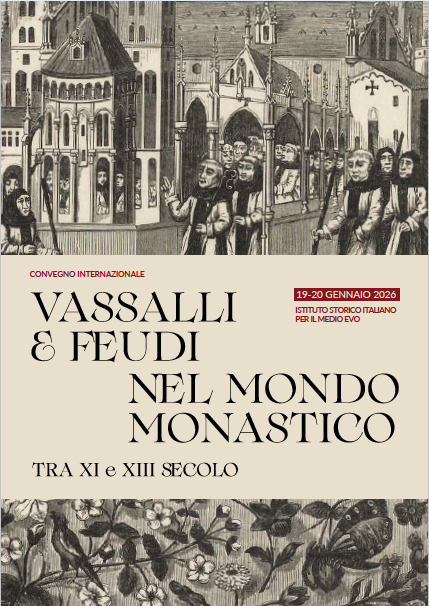
Colloque – Vassalli e feudi nel mondo monastico tra XI e XIII secolo

19-20 GENNAIO 2026
ISTITUTO STORICO ITALIANO PER IL MEDIO EVO
Piazza dell’Orologio, 4 – Roma

LUNEDÌ 19 GENNAIO, ORE 14.30

Introduzione: Nicolangelo D’Acunto

I SESSIONE – Chair: Tiziana Lazzari

Paolo Tomei – La parte dei benefici. Milites, monasteri e servitium regis in Italia fra X e XI secolo, a partire dal caso di Bobbio
Attilio Stella – Vassi, vasalli, fideles. Clientele monastiche nella Marca Veronese tra prassi feudale e realtà sociali (secoli X–XII)
Alessio Fiore – L’abate come leader militare della vassallità monastica (Italia centro-settentrionale, XI-XII secolo)
Antonio Berardozzi – I milites di Farfa e Subiaco. La provenienza sociale e la natura e la trasmissibilità delle concessioni in beneficio

MARTEDÌ 20 GENNAIO, ORE 9.00
II SESSIONE – Chair: Simone Collavini

Francesco D’Angelo – Hominium, fidelitas, feudum. Caratteristiche ed evoluzione dei rapporti vassallatico-beneficiari a Farfa tra XI e XII secolo
Enrico Veneziani – Montecassino e i suoi vassalli. Alcune riflessioni
Giacomo Campagna – Vassalli del monastero di Sant’Ambrogio di Milano. Primi appunti
Hélène Débax – Fiefs et vassaux dans les sources monastiques du Languedoc (XIe-XIIe siècle)
Glauco M. Cantarella – Cluny e i suoi vassalli. Le fonti documentarie

III SESSIONE, ORE 14.30 – Chair: Sandro Carocci

Elisabetta Filippini – Vassallità a confronto. Acquisizioni e nuove prospettive dal contesto monastico lombardo
Guido Cariboni – Feudi e vassalli nella normativa cistercense
Anna Rapetti – Vassalli cistercensi: giuramenti di fedeltà e amministrazione della terra a Chiaravalle di Fiastra
Luca Fois – Fidelitas e feudum, procedura e memoria. Osservazioni su un vademecum notarile
vassallatico-feudale del monastero di S. Ambrogio di Milano (tardo sec. XIII)

Conclusioni: Umberto Longo

Publié dans Colloque | Commentaires fermés sur Colloque – Vassalli e feudi nel mondo monastico tra XI e XIII secolo

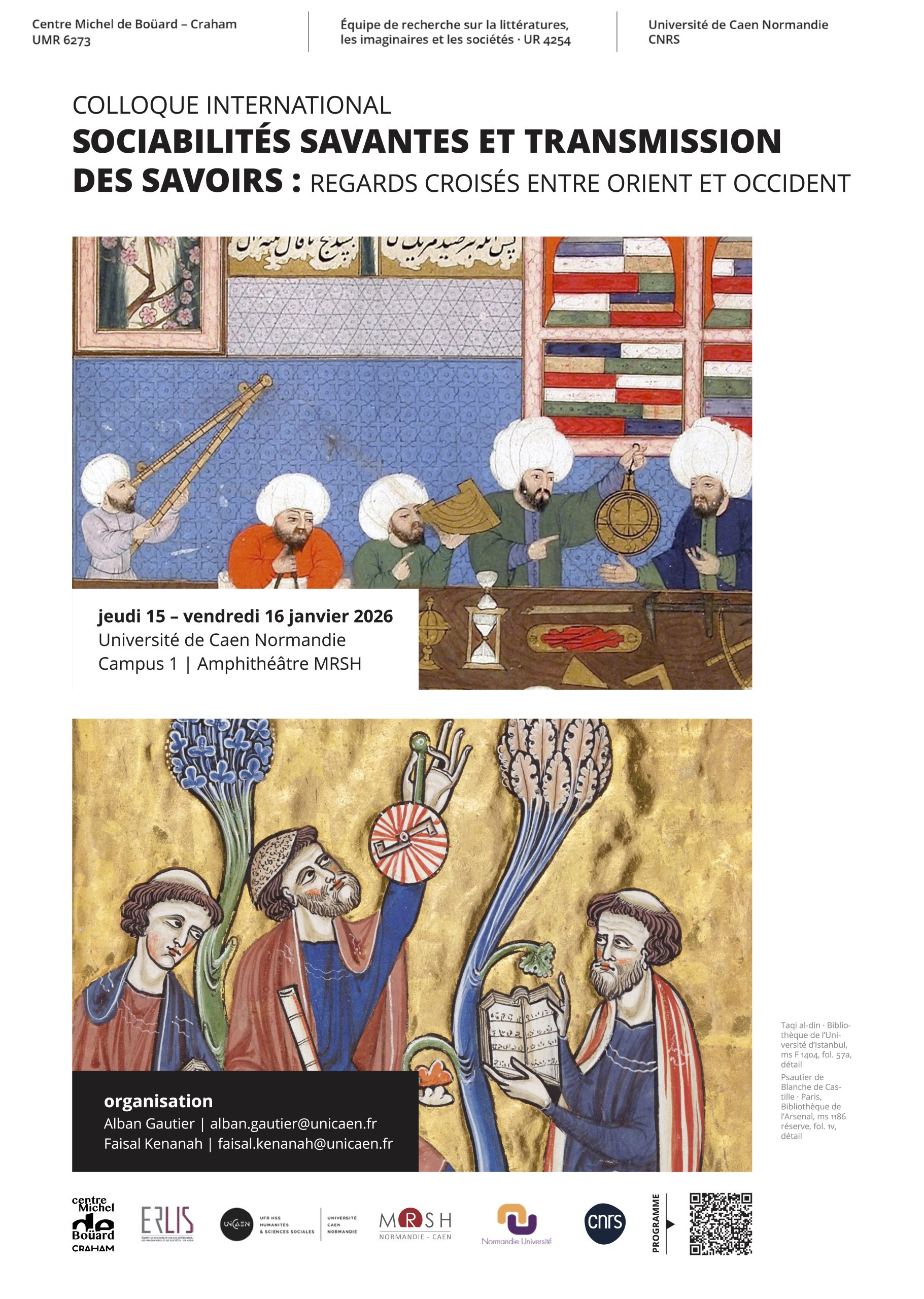
Colloque – Sociabilités savantes et transmission des savoirs : regards croisés entre Orient et Occident

15 janvier 2026 · 9h00 – 16 janvier 2026 · 18h00

Centre de recherches archéologiques et historiques anciennes et médiévales (Craham) – UMR 6273
ERLIS UR Université de Caen

Caen – campus 1 – amphithéâtre MRSH

Université de Caen campus 1 MRSH Esplanade de la Paix
Caen, 14000 France

Jeudi 15 janvier

8h45 Accueil des participants

9h20 Mot de bienvenue | Ouverture officielle | Introduction

Séance 1 | Président : Alban Gautier

9h40 Sylvain Destephen (UMR Craham · Unicaen), L’univers en réduction des rhéteurs et des philosophes au Bas-Empire

10h10 Fouad Mlih (Université de Lorraine | American University of Paris), L’état du débat dialectique dans le Kitāb al-Ğadal d’Avicenne : un nouvel horizon épistémique

10h40Discussion et pause

Séance 2 | Président : Faisal kenanah

11h00 Mona Mouawad (Creemo · Université Saint-Joseph de Beyrouth), Du mağlis aux pratiques d’aujourd’hui : transmettre le patrimoine autrement

11h30 Sümeyye Ulu (Cespra · EHESS), Du mağlis au sohbet : transmission informelle des savoirs islamiques dans les cercles féminins turcs contemporains

Discussion et pause déjeuner

Séance 3 | Présidente : Monica Balda-Tillier

14h30 Jean-Charles Ducène (PSL · EPHE), Le mağlis dans la formation de Yāqūt al-Ḥamawī (m. 626/1229) : esclave, libraire et lettré

15h00 Kaouthar Lamouchi Chebbi (UMR Sphere · Université Paris-Cité | Université de la Manouba · Tunisie), Sociabilités savantes dans Uyūn al-Anbā fī Ṭabaqāt al-A ṭibbā҆d’Ibn Abī Uṣaybi҅a

15h30 Discussion et pause

Séance 4 | Président : Jean-Charles Ducène

16h05 Monica Balda-Tillier (UR Luhcie · Université Grenoble-Alpes), L’échange épistolaire entre ‘Imād al-Dīn al-Kātib (m. 1201) et al-Qāḍī al-Fāḍil (m. 1199) : entre sociabilité élitiste et revendication d’appartenance

16h35 Guilhem Panaye (UR Chad · Université de Paris Nanterre), Dictamen et droit romain dans les lettres anglo-normandes du XIIe siècle

17h05 Discussion

Vendredi 16 janvier

9h00 Accueil des participants

Séance 5 | Président : Giulio Merlani

9h25 Alban Gautier (UMR Craham · Unicaen), Le « brain trust » du roi Alfred : le roi et ses savants à la cour de Wessex à la fin du IXe siècle

9h55 Éléonore Venturelli (Université de Poitiers | Université Catholique de Louvain), Des savants au concours de la commémoration des défunts dans les rouleaux mortuaires (Occident latin, XIIe siècle)

10h25 Discussion et pause

Séance 6 | Présidente : Kaouthar Lamouchi Chebbi

11h10 Faisal Kenanah (UR Erlis · Unicaen), Espaces de savoir, formes de sociabilité : le rôle des mağālis dans la transmission intellectuelle

11h40 Basma Lotfi (UR Crulh · Université de Lorraine), Le rôle des Nestoriens dans le développement des savoirs abbassides

12h00 Discussion et pause déjeuner

Séance 7 | Président : Sylvain Destephen

14h30 Francesca Samorì (Universiteit Gent), Entre philologie et patristique. Les intellectuels byzantins face à la polémique religieuse vis-à-vis des Latins (fin du XIIIe siècle)

15h00 Giulio Merlani (Sapienza Università di Roma), Exilés grecs, cardinaux et Papauté. Entre érudition, patronage et stratégies politico-religieuses dans l’Europe de la Renaissance

15h30 Discussion et clôture du colloque

Source : CRAHAM

Publié dans Colloque | Commentaires fermés sur Colloque – Sociabilités savantes et transmission des savoirs : regards croisés entre Orient et Occident

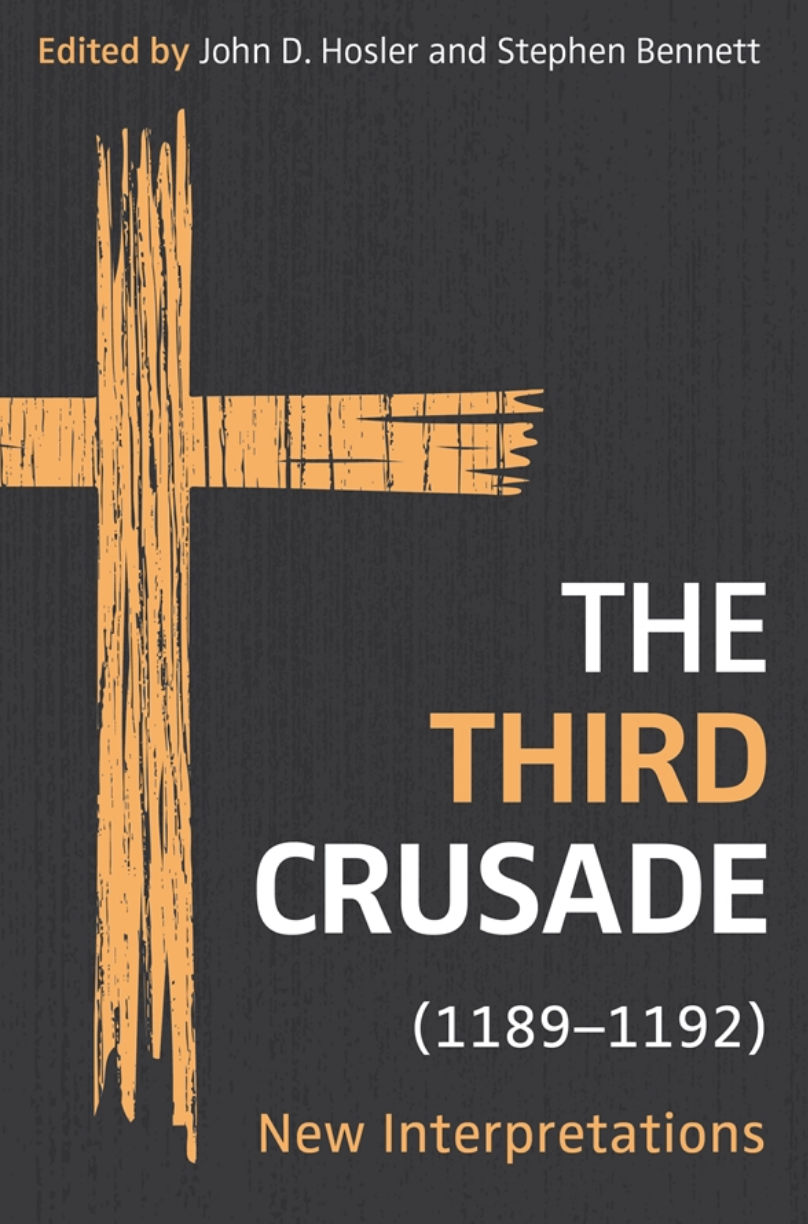
Publication – « The Third Crusade (1189-1192). New Interpretations », éd. John D. Hosler, Stephen Bennett

Fresh perspectives on one of the largest and most complex crusades ever launched, covering all aspects of the expeditions – from preparation and commencement to results and consequences.

Saladin’s victory at the Battle of Hattin in 1187 produced three profound results: a shattered Jerusalem army, a pope falling dead from the news, and the launching of the Third Crusade in response. Under the banners of renowned rulers like Richard the Lionheart, Philip Augustus, and Frederick Barbarossa, men and women from across Latin Christendom took the Cross and joined in the largest western military expedition since Urban II’s call to arms in 1095 for the First Crusade.

Long dormant in the renewal of crusade studies in the twenty-first century, the Third Crusade has in recent years begun to attract increased scholarly attention. Adopting a cross-cultural focus that examines both western and eastern societies, this book offers a substantial and timely reappraisal. Chapters shed light on the crusade’s causes, context, organization, participants, preparations, commencement, military progress, and short and long-term consequences, and scrutinise well-known sources through new lenses. They also engage with communication theory, the history of emotions, textual criticism and textuality, historiography, archaeology, and topography. Together, they provide both a fresh view of this complex and multifaceted war and a useful survey of its major contours.

JOHN D. HOSLER is a Professor of Military History at the Command and General Staff College at Fort Leavenworth, Kansas, and the author of Jerusalem Falls: Seven Centuries of War and Peace.

STEPHEN BENNETT is a historian of medieval warfare with a special interest in the history of the crusades and the crusader states, the military orders, and military practice in North West Europe.

Table des matières :

List of Illustrations
Contributors
Acknowledgements
List of Abbreviations
The Third Crusade: Major Events

Introduction

Part I: Writing the Third Crusade
Katrine Funding Højgaard, ‘Past in the Present: Temporal Discontinuity and the Loss of Jerusalem in Western Historical Writing’
Helen J. Nicholson, ‘An Embarrassment of Riches? The Sources for the Third Crusade’
Thomas W. Smith and Stephen J. Spencer, ‘The Imprint of the Third Crusade in the Manuscript Traditions of Western Europe’
Part II: Preparing for the Third Crusade
Ane Bysted, ‘A Call to Defend the Inheritance of Christ: Developments in Crusade Rhetoric at the Third Crusade’
Jonathan P. Phillips, ‘Saladin’s Preparations for the Third Crusade’
James Naus, ‘Philip Augustus and the Decision to Join the Third Crusade’
Part III: Fighting the Third Crusade
Daniel P. Franke, ‘The Last March to Jerusalem: Manuscripts and Eyewitness Testimony in the Crusade of Frederick Barbarossa’
Stephen Bennett, ‘On the Ramparts: a Commoners’ View of the Siege of Acre, 1189-91′
John D. Hosler, ‘Saladin’s Loss of Initiative at Montgisard, Acre, and Arsuf: an Applied History Approach’
Part IV: The Third Crusade in Context
Jonathan Rubin, ‘Outremer in the Time of Richard and Philip’s Landing in Acre: a Socio-Cultural Survey’
Jessalyn Bird, ‘Aftermath in the East (and West) of the Third Crusade’
John France, ‘The Place of the Third Crusade in the History of the Crusades’
Bibliography
Index

Informations pratiques :

The Third Crusade (1189-1192). New Interpretations, éd. John D. Hosler, Stephen Bennett, Woodbridge, The Boydell Press, 2025; 1 vol., 288 p. (Crusading in Context, 9). ISBN : 978-1-83765-332-4. Prix : GBP 120,00.

Source : Boydell and Brewer

Publié dans Publications | Commentaires fermés sur Publication – « The Third Crusade (1189-1192). New Interpretations », éd. John D. Hosler, Stephen Bennett