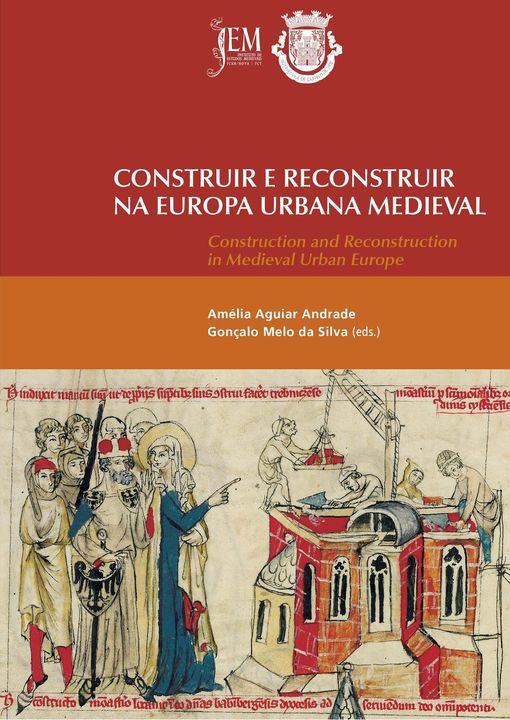
Construction and Reconstruction in Medieval Urban Europe is the most recent study published by IEM. Coordinated by Amélia Aguiar Andrade (NOVA FCSH and IEM) and Gonçalo Melo da Silva (IEM), this book is available on RUN – Repository of NOVA University Lisbon (http://hdl.handle.net/10362/161936).
Composed of more than two dozen articles by researchers from countries such as France, Spain, Italy, Germany, Portugal and Turkey, this book features contributions from diverse areas as History, Art History and Archaeology. This multidisciplinary perspective is evident in the plurality of topics covered, such as the labours employed, the strategies for sourcing raw materials and financing the works and the importance of religious and military buildings within medieval towns.
Table des matières :
Nota de Abertura — António Pita
Construir, destruir e reconstruir na cidade da Europa medieval: um tema em continua renovação — Amélia Aguiar Andrade, Gonçalo Melo da Silva
PARTE I – Os rostos da construção: assalariados, mesteres e outros
Construction et reconstruction au Moyen Âge: métier ou activité? — Philippe Bernardi
Duarte Darmas: desenhador do rei e construtor da imagem do Portugal raiano — Santiago Macías
Contrôle et confiance: la figure du peintre sur les chantiers avignonnais à la fin du Moyen Âge — Camille Larraz
La figure du maître dans le milieu de la construction toulousaine au cours de la seconde moitié du XIVe siècle: l’apport de l’analyse terminologique — Clément Juarez
Os mesteirais na construção no início de Quinhentos: especialização e dependências no trabalho em estaleiros régios manuelinos — Arnaldo Sousa Melo, João Pontes
PARTE II – Abastecimento de matérias-primas de construção
La construcción en el reino medieval de Valencia: Formas de gestión, técnicas y sistemas de abastecimiento de un sector económico puntero — Juan Vicente García Marsilla
Las balsas del Isar y su importancia para el desarrollo de la ciudad de Múnich bajomedieval — Lisa Walleit
Processos construtivos e seleção de matérias-primas, na Torres Novas Medieval: séculos XII a XV — Marco Liberato, Helena Santos, Nuno Santos
PARTE III – O financiamento das obras
Financing and administering the construction of English cathedrals: a case study of Exeter and Norwich, c. 1300-1350 —
Marie Jäcker
Financiar la catedral de Murcia: las disidencias por la gestión de las fábricas entre Orihuela y la Diócesis de Cartagena (ss. XIV-XV) — María José Cañizares Gómez
Uma «carga de trabalhos»: recursos e estratégias de financiamento das obras públicas na Lisboa medieval (séculos XIV-XV) — Catarina Rosa
«Traerá dello mucho prouecho a la dicha çibdad»: la reparación y financiación del puente de Suazo de Cádiz a finales de la Edad Media — Daniel Ríos Toledano
PARTE IV – A construção e reconstrução no espaço urbano
Tuscany’s minor centers: a complex history through the archaeology of architecture — Giovanna Bianchi
Las huellas materiales del poder de los linajes en la configuración del espacio urbano bajomedieval: los indicadores arqueológicos de las villas vascas — Belén Bengoetxea Rementeria
A casa urbana comum no Sul de Portugal, entre o Islam e a Cristandade — Manuel Sílvio Alves Conde
PARTE V — Edifícios militares
Un chantier sous contraintes: gestion et économie de la construction de la forteresse de Salses à la veille du sac français (1503) — Sandrine Victor
Informations pratiques :
Construir e reconstruir na Europa urbana medieval, éd. Amélia Aguiar Andrade and Gonçalo Melo Silva, Lisbonne, IEM, Câmara Municipal de Castelo de Vide, 2023 ; 1 vol., 514 p. ISBN : 978-989-53942-8-9. Accès en ligne. URL : https://run.unl.pt/handle/10362/161936
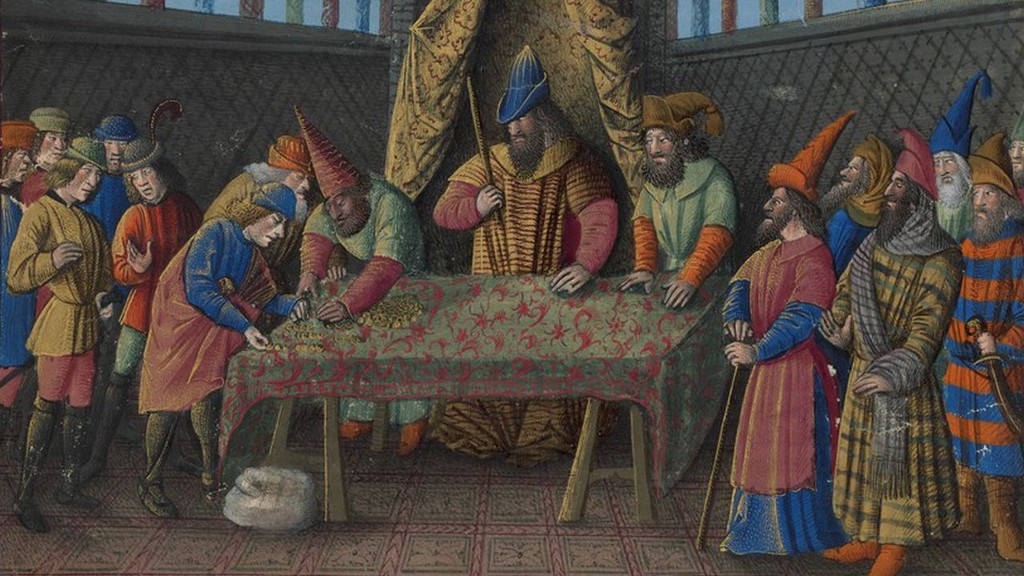
Cette intervention aborde les événements qui, à partir de la fin de l’année 1396, amenèrent à envoyer des émissaires de la cour de France, chargés de cadeaux diplomatiques, à la cour du sultan ottoman Bayezid Ier, afin de favoriser la libération du fils du duc de Bourgogne, Jean de Nevers, et des autres prisonniers capturés lors de la défaite de Nicopolis. Si les sources d’archives sont lacunaires, plusieurs témoins contemporains ont raconté la mission et décrit les cadeaux apprêtés pour le sultan. L’analyse comparée de leurs récits permet d’éclairer à la fois l’usage diplomatique des arts autour de 1400, les réseaux activés dans ce contexte de crise, la perception que les élites de cour avaient des œuvres que nous dirions artistiques, et la représentation qu’on se faisait à Paris et à Dijon du souverain ottoman et de son entourage.
Une conférence de Michele Tomasi (Université de Lausanne) dans le cadre du cycle de conférences annuel de Transitions.
Informations pratiques :
20 février 224, 18h00-20h00
ULiège – Salle Grand Physique Place du Vingt Août, 7 (Bât. A1) 4000 Liège
The Leiden University Centre for the Arts in Society (LUCAS) invites applications for a
Postdoctoral Researcher (0.8 fte for 3 years) in the ERC Starting Grant project ‘Pages of Prayer: The Ecosystem of Vernacular Prayer Books in the Late Medieval Low Countries, c. 1380-1550’ (PRAYER)
The Postdoctoral Researcher will be working on a subproject within the ERC Starting Grant research project PRAYER, funded by the European Research Council (ERC) for 2023-2028, and directed by dr. A. (Anna) Dlabačová (Senior University Lecturer in Book History at Leiden University).
The PRAYER-project Vernacular prayer books were by far the most commonly read books in the late medieval Low Countries. The mainstay of this vast corpus is the Book of Hours in the translation by Geert Grote, founder of one of the period’s most powerful religious reform movements. PRAYER sets out to conduct the first large-scale investigation of this unique corpus by introducing a new approach – network philology – that studies all aspects of vernacular prayer books in their mutual interdependence. The project aims to chart the entire ecosystem of Dutch-language prayer books over a long period of time by combining quantitative network analysis with advanced qualitative analysis.
The nature of the material requires this research to be tackled within a multidisciplinary project. All members contribute to the digital network analysis. Sections of the ecosystem are further analyzed in work-packages that focus on the production and reception of manuscripts, the poetics of prayer, the function of images, and changes and continuities in relation to religious movements and the advent of print.
PRAYER will yield an integrative understanding of the role of prayer books in the late medieval Low Countries on the threshold of the medieval and early modern era.
Subproject: ‘Imagining Prayer: Pictorial Images as Spiritual Instruments in Prayer Books’ After an initial phase of contributing to the acquisition of data on Middle Dutch prayer books in the project’s database (set up in Heurist), the Postdoctoral Researcher will focus primarily on the function of the images within prayer books as a whole, and as spiritual instruments that aid in prayer and meditation in interaction with the texts that they accompany within these books. The design of prayer books, by interweaving textual and visual sequences, afforded a multifaceted devotional activity. The importance of images within devotional practice cannot be overestimated: images can engage readers and evoke emotions in a more immediate way than texts. Similar to texts, images in prayer books functioned in interaction with the texts and/or other images surrounding them. Images can refer, comment and expand on the meaning of a text, thereby offering the reader further suggestions for meditation, evoke additional layers of meaning or a bodily response. Their iconography and positioning within the book was defined through a mix of tradition and personal preferences. The analysis of the function of images will be approached from the perspectives of text, image, and book, and the successful candidate will publish three peer-reviewed articles on each of these approaches. The successful candidate will also contribute to the organization of the project’s activities, such as an international conference and the ensuing edited volume.
Key Responsibilities
You will contribute research on the role of images in manuscript prayer books written in Middle Dutch
You will individually author and publish at least three articles in peer-reviewed journals
You will contribute to the acquisition of data on prayer books in Middle Dutch in the PRAYER database (the database has been set up in Heurist; https://heuristnetwork.org/)
You will participate in meetings of the project research group
You will present papers at conferences, both in the Netherlands and internationally
You will contribute to the organization of the events and activities within the project, including the project’s sessions at an international conference at the start of year 3 and an international conference at the end of year 4
You have a PhD in Art History, Medieval Studies, (Book) History, Middle Dutch Literature or similar, awarded by the time of appointment, on a topic related to late medieval spirituality, manuscript studies and/or text and image relationships
You have well-developed research skills, including the ability to formulate creative research questions, descriptive and analytical skills, and a clear and persuasive style of writing
You are willing to travel to libraries in the Netherlands and abroad
You have an excellent competence in English, as well as reading competence in Middle Dutch and Dutch
You have experience with manuscript research
You have a strong interest in the role of images in late medieval spirituality and affinity with text and image relations
You are a team player and independent thinker
International candidates are encouraged to apply but must be willing to relocate to the Netherlands for the duration of the project.
The organization The Faculty of Humanities at Leiden University is a unique international centre for the advanced study of languages, cultures, arts, and societies worldwide, in their historical contexts from prehistory to the present. Our faculty is home to more than 6,000 students and 800 staff members. For more information see: https://www.universiteitleiden.nl/en/humanities.
The Leiden University Centre for the Arts in Society (LUCAS) is one of the seven Academic Institutes of the Faculty of Humanities. The institute hosts a range of academic disciplines, clustered around a key research theme: the relationships between the arts and society. Our members study cultural production over the course of two millennia, from classical antiquity to our contemporary world, and teach in programmes ranging from Classics and Book History to Modern Literature, International Studies and Art History. Strengthened by our diversity, LUCAS members are uniquely placed to study the broad concept of the arts, with its rapidly changing ideas, aesthetics, and theories of cultural production. Through research, teaching and outreach, the Institute aims to deepen our understanding, both inside and outside academia, of the cognitive, historical, cultural, creative, and social aspects of human life. As an academic community, we strive to create an open and welcoming atmosphere, stimulating everyone to get involved and contribute, and connecting scholars from different fields and backgrounds.
Terms and conditions We offer a 0.8 FTE position (38 hours/week) as postdoctoral researcher for 3 years. The appointment will start 1 June 2024. The salary is in accordance with the collective salary agreement of the Association of Dutch Universities (CAO) and depending on qualifications and experience. The gross monthly salary is € 4.332,- (scale 11.0) to € 4.786,- (scale 11.3) for a full working week. Depending on qualifications, the appointee may start at the appropriate step in scale 10 until they fully meet the requirements for scale 11 as specified by the Faculty of Humanities, particularly regarding the number of years of relevant work experience. Leiden University offers an attractive benefits package with additional holiday (8%) and end-of-year bonuses (8.3 %), training and career development and sabbatical leave. Our individual choices model gives you some freedom to assemble your own set of terms and conditions. Candidates from outside the Netherlands may be eligible for a substantial tax break. https://www.workingat.leiden.edu/.
Diversity Fostering an inclusive community is a central element of the values and vision of Leiden University. Leiden University is committed to becoming an inclusive community which enables all students and staff to feel valued and respected and to develop their full potential. Diversity in experiences and perspectives enriches our teaching and strengthens our research. High quality teaching and research is inclusive.
Applications Please ensure that you upload the following additional documents in a single PDF, quoting the vacancy number
Please submit your application online (in English) via the blue button in our application system, no later than 29 February 2024, 23:59 CEST.
Letter of application with a motivation statement (750 words max.)
A short proposal in which you formulate your initial ideas and approach for the subproject (1000 words max.)
Your CV, listing education, employment history, organizational experience, publications, and any other academic achievements (conference presentations, organization of events, etc.)
Names, positions and contact information for two referees (no reference letters). Please only list these in the PDF and not in the dedicated fields in the online application system
Die SCRIPTO Summer School Nürnberg (SSSN) bietet eine Einführung in die mittelalterliche Buchmalerei. Auf eine Erörterung historischer, inhaltlicher, funktionaler und technischer Fragestellungen zur Ausstattung des mittelalterlichen Buches sowie eine Diskussion kunsthistorischer Methoden folgen ausführliche praktische Beschreibungs- und Einordnungsübungen anhand von Handschriften der Sammlung der Nürnberger Stadtbibliothek zur Hinführung auf deren wissenschaftliche Erschließung.
Mittelalterliche Buchmalerei. Geschichte, Ikonographie, Technik, Stil
Der Kurs wendet sich an alle Graduierte mediävistischer Fächer und findet in der Regel im zweijährigen Turnus statt. Er wird vom Lehrstuhl für Lateinische Philologie des Mittelalters und der Neuzeit an der Friedrich-Alexander-Universität Erlangen-Nürnberg (Prof. Dr. Michele C. Ferrari) im Rahmen des SCRIPTO-Graduiertenprogrammes und von der Stadtbibliothek Nürnberg gemeinsam veranstaltet. Die Teilnahmezahl ist begrenzt, die Unterrichtssprache ist Deutsch. Dozentinnen sind Dr. Christine Jakobi-Mirwald und Dr. Christine Sauer.
Die Teilnehmerinnen und Teilnehmer erhalten nach Abschluss des Kurses ein Teilnahme-Zertifikat der FAU Erlangen-Nürnberg, das einen Workload bescheinigt, der max. 8 ECTS entspricht.
Die Teilnahmegebühr beträgt 400 € (Bitte beachten Sie, dass in der Gebühr keine Unterkunft enthalten ist). Bewerbungsschluss ist der 1. Februar 2024.
Bewerbungen mit Bewerbungsformular und vollständigem Lebenslauf senden Sie bitte postalisch (Kennwort SCRIPTO) an:
Prof. Dr. Michele C. Ferrari Friedrich-Alexander-Universität Mittellatein und Neulatein Kochstr. 4/3 91054 Erlangen
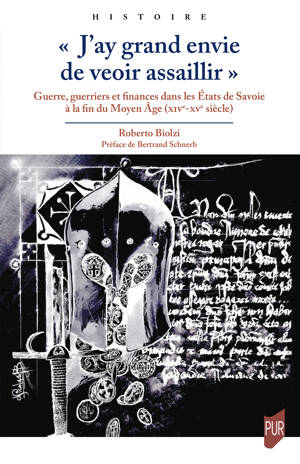
À la fin du Moyen Âge, la guerre est au centre des préoccupations de la plupart des principautés européennes. Sans faire exception, les États de Savoie sont impliqués dans maintes opérations militaires, que cela soit dans le but d’acquérir un espace territorial homogène ou en vue d’augmenter leur prestige international. Si le XIVe siècle est caractérisé par d’importantes victoires face aux rivaux régionaux traditionnels, les premiers ducs de Savoie doivent par la suite s’incliner devant les puissances du nord de l’Italie. Le mercenariat tout comme l’avènement des armes à feu mettent à rude épreuve les ressources de cette petite principauté alpine qui, à l’aube des Temps modernes, doit affronter l’une des crises financières et dynastiques les plus marquantes de son histoire.
Ouvert à des perspectives comparatistes, ce livre étudie l’évolution de la pratique de la guerre depuis les origines de la Maison de Savoie jusqu’au principat de Louis Ier (1440-1465), se focalisant en particulier sur les structures de commandement et l’organisation administrative, financière et socio-militaire des armées savoyardes. Pour ce faire, il s’appuie sur un corpus de sources extraordinaire : les comptes des trésoriers des guerres conservés aux Archives d’État de Turin, soit, pour ce type de documents, une des séries les plus riches et complètes du Moyen Âge occidental.
Avec le soutien de la Fondation pour la protection du patrimoine culturel, historique et artisanal (FPPCHA).
Roberto Biolzi est maître d’enseignement et de recherche à l’université de Lausanne. Ses publications portent essentiellement sur l’histoire militaire des Etats de Savoie et des Confédérés entre la fin du Moyen Age et la première modernité.
Table des matières :
Les guerres des savoie : de la chevauchée à l’occupation
L’assise du pouvoir des « Portiers des Alpes » (XIe-XIIIe siècle)
De la guerre de Septante Ans à la guerre de Cent Ans (fin XIIIe-milieu XIVe siècle)
Des conquêtes pour régner (1352-1355)
Les entreprises d’Amédée VI, entre aventures étrangères et guerres intestines (1355-1383)
Le Comte Rouge, dernier prince guerrier (1383-1391)
Le principat d’Amédée VIII (1393-1439), un îlot de paix ?
Les échecs militaires de Louis Ier (1440-1465)
Les armées savoyardes : aspects institutionnels, financiers et sociaux
Payer les troupes, l’émergence d’une administration spécialisée
La chaîne de commandement
L’argent, la guerre et l’État
Les guerriers des princes
Informations pratiques :
Roberto Biolzi, « J’ay grand envie de veoir assaillir. » Guerre, guerriers et finances dans les États de Savoie à la fin du Moyen Age (XIVe-XVe s.), Rennes, Presses universitaires de Rennes, 2023 ; 1 vol., 362 p. (Histoire). ISBN : 978-2-75359-360-2. Prix: € 26,00.
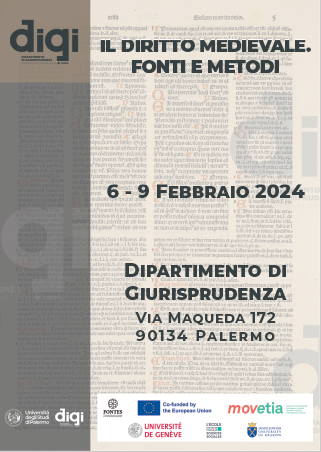
The intensive study course is organised in the context of Erasmus + KA2 FONTES, FOstering iNnovative Training in the use of European legal Sources (2021-1-IT02-KA220-HED-000032190).
Das Mittelalter machte das Zusammenwirken der geistlichen und weltlichen Sphäre aus. Welche Akteure wie weit in die je andere Sphäre hineingreifen konnten, war Aushandlungssache. Am Beispiel Graf Adolfs II. von Berg (†1160) und seiner Nachfolger gelang es aufzuzeigen, dass die Eigengründung der Adelsfamilie, die Zisterze Altenberg, über die sie bis zum Ende des Mittelalters wie Altarvögte bestimmten, eigentümlich viele Personen im Nekrolog verzeichnete, die auch am Hof der Grafen agierten.
Handelt es sich bei der gelenkten Memoriastiftung um ein Instrument, mittels dessen die Kirche den Hof des Grafen konstituierte? Insbesondere Adolfs II. von Berg Enkel, Adolf III. von Berg, erreichte es, die als Truchsess und Mundschenk an seinem Hof nachweisbaren Ministerialen zu Stiftungen an Altenberg zu bewegen. Und was war mit den in die Ministerialität übergetretenen Edelfreien im Bergischen? Es scheint, als ob der Graf von Berg einen Ort positiver Sichtbarkeit seiner Herrscheraktivitäten benötigte, die sonst an vielen Beispielen eher seine Fähigkeit offenbarte, Edelfreie zu unterdrücken. In der Grabstätte seines Großvaters hatte er anscheinend den idealen Kultort gefunden.
Die Diskussion ausgewählter Fallbeispiele soll die Frage nach Ursachen, Ziel und Zweck sowie dem möglichen Wert eines solchen Herrschaftskonzepts beantworten.
Programme :
Donnerstag (15. Februar 2024)
9:00h: Einleitende Worte (Vera Eiteneuer)
Sektion I: Rheinland & Lothringen Sektionsleitung: Harald Müller (Aachen)
9:15h: Jochen Johrendt (Wuppertal): Steinfelder Mönche am Hof der Grafen von Are
10:00h: Robin Moens (Aachen): Religiöse Einrichtungen als Artikulation der territorialen Herrschaft – das Haus Oudenaarde im 12. und 13. Jahrhundert
10:45h: Kaffeepause
11:00h: Vera Eiteneuer (Wuppertal): Wozu noch eine Kirche? Graf Adolf II. von Berg und die Zisterze Altenberg
11:45h: Mittagspause
Sektion II: Sachsen Sektionsleitung: Gerhard Lubich (Bochum)
13:30h: Rona Ettlin (Hildesheim): Der Dom zu Hildesheim und seine Bedeutung für die Herrscher des Früh- und Hochmittelalters
14:15h: Nathalie Kruppa (Göttingen): Die Grafen von Dassel und ihr Hof – Spuren in der Memorialüberlieferung?
15:30h: Cynthia Stöckle (München): « Für euer Wohlergehen ». Das Kloster Fürstenfeld als Knotenpunkt bayerischer Adelsfamilien
16:15h: Philipp T. Wollmann (München): Bischöfliche Klosterprivilegierungen zwischen hochstiftischer und adeliger Territorialpolitik in Augsburg (12./13. Jahrhundert)
18:00h: Jürgen Dendorfer (Freiburg i. Br.): Adelige und ihre Kirchen im hohen Mittelalter. Beobachtungen an südwestdeutschen Beispielen (Abendvortrag)
9:00h: Sebastian Kalla (Freiburg i. Br.): Frommer Wahn oder rationales Kalkül? Lenkung und Kontrolle von Stiftungen im Hochstift Bamberg (12./13. Jahrhundert)
9:45h: Matthias Weber (Bochum): Speyer als salische « Hofkirche »? Überlegungen zur Regierungszeit Heinrichs V.
10:30h: Kaffeepause
Sektion V: Ein Ausblick nach Italien Sektionsleitung: Carla Meyer-Schlenkrich (Münster i. W.)
10:45h: Étienne Doublier (Köln): Mathildische Hofkirchen? Zur Stiftungstätigkeit im Canossaner Herrschafts- und Einflussbereich um 1100
11:30h: Abschlussdiskussion
Informations pratiques :
15.02.2024 – 16.02.2024
Bergische Universität Wuppertal, K.12.16 (K4)
Veranstalter Paul Maria Baumgarten-Institut für Papsttumsforschung, Wuppertal (Vera Eiteneuer)
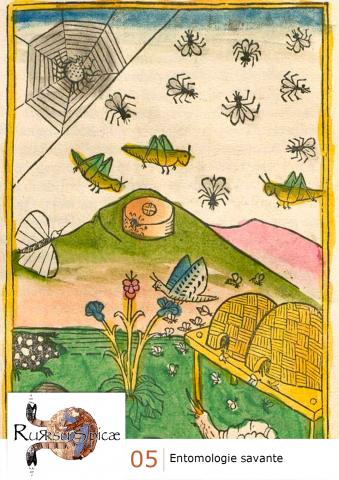
La diversité des espèces d’insectes est estimée aujourd’hui à près d’un million, à une époque dramatique où nous voyons en certains endroits du globe disparaître près de 80 % de cette faune minuscule. Dans le passé, au contraire, les innombrables bestiolae, insecta, minuta animalia ou vermes, desservis par leur taille et leur apparente inutilité ou nocivité, semblaient former un microcosme grouillant, réduit dans la littérature à quelques genres vedettes. Ces animaux des confins du visible ne font pas l’objet d’une attention équitable et aussi exhaustive, en intention, que les plus grands animaux dont les morphologies et les comportements sont plus accessibles à l’œil, et le dossier naturaliste plus riche dans la tradition littéraire et savante. La symbolique, que le discours chrétien entretient comme l’angle majeur où se révèlent les créatures, « épinglait » surtout l’abeille1 et la fourmi, parfois l’araignée, depuis les épopées bibliques et homériques jusqu’aux commentaires patristiques, et de la tradition du Physiologus aux bestiaires médiévaux. Comme l’homme reçoit, dans l’anthropologie chrétienne, une place unique et supérieure à toutes les créatures, car il est l’interlocuteur de Dieu et sa création ultime et préférée, il est bon de lui rappeler le danger majeur que constituerait la conclusion orgueilleuse de ce statut singulier. La valorisation des animaux infimes et vils offre un moyen idéal de rappeler à l’homme son humilitas : la véritable grandeur est morale. Dans un renversement des valeurs assidument pratiqué par l’exégèse, le roi David ou le Christ-même étaient sublimement comparés au « ver » fragile et déconsidéré (Ps. 21.7), mais les œuvres antiques et médiévales ont longtemps réduit le reste de la faune minuscule – « vermine » méprisable née des matières putrides – au statut d’intenses fléaux ou subtils bourreaux créés pour rappeler à l’homme sa faiblesse. Les insectes, dépourvus de sang et de poumon2, ne sont, de l’avis de nombre de théologiens, pas montés sur l’arche de Noé avec les « animaux de chair » et les « créatures volantes », et ceux qui parmi les insectes sont nés de la pourriture ont été créés, comme l’explique Pierre Comestor au XIIe siècle, après le péché originel.
2Les bestiolae font cependant partie du monde sauvage des bestiae qui s’oppose au pecus domestique. Le regard porté sur eux est avant tout anthropocentrique, c’est pourquoi les domaines littéraires dans lesquels ils apparaissent incidemment sont surtout l’agriculture (prophylaxie de l’infestation), la médecine (venins et anti-poisons, pansements, excipients), et la fable ou le récit moral. Pourtant, même avant l’invention, décisive à leur égard, du microscope, les insectes et autres arthropodes (immensae subtilitatis animalia : Pline, NH 11.1), ont fait l’objet d’une attention parfois remarquable dans la littérature philosophico-scientifique. Médecins et pharmaciens antiques et byzantins sont fascinés par le poison actif des animaux à morsure, piqûre ou peau venimeuse ; Aristote se penche sur les modes de génération et les métamorphoses des « animaux à entailles » (entoma), observe le régime et le comportement social de certains d’entre eux et tente de concevoir leur cohérence anatomique et de limiter leur disparate ; quinze siècles plus tard, le médecin persan Avicenne (Ibn Sinâ, m. 1037) pousse plus loin la réflexion de son lointain maître grec et l’adapte à l’environnement du Moyen-Orient. Dans le monde arabe, le zoographe Al-Djâhiz (776-868) s’intéresse, pour sa part, à tout le règne animal, sans oublier les insectes. En Europe, au premier siècle, sur la base des travaux grecs, le Romain Pline avait fait des insectes (insecta) l’agent ou l’ingrédient principal de nombre d’applications médicales (en particulier au livre XXVIII) et leur consacrait un livre entier (XI) de son Histoire naturelle. Comme le reste de l’œuvre plinienne, cette matière connaîtra une éclipse de plusieurs siècles avant d’être intensément réexploitée, comme d’autres textes savants grecs et arabes, au milieu du XIIIe siècle, par certains encyclopédistes latins qui renouent avec un intérêt pour tous les règnes naturels, alors que l’oubli a frappé jusqu’au mot insecta. Le corpus zoologique d’Aristote reprend un grand ascendant sur les développements naturalistes, en particulier dans les commentaires de philosophie naturelle d’Albert le Grand, mais les « animaux à segments » (gr. entoma, lat. insecta) sont devenus dans l’Occident latin des « annelés » ou des « plissés » par le truchement d’une traduction arabo-latine de l’Histoire des animaux. Désireux d’ordonner tout le réel, de la terre jusqu’au ciel, les philosophes de la nature s’attachent à nommer et cataloguer les « annelés » au sein les « vers », parmi les rampants ou les reptiles, ou parfois les volatiles, et en scrutent les « propriétés » avec une attention nouvelle. Pour autant, les regroupements effectués peuvent surprendre. Le critère de la division par les quatre éléments qui forment le monde sublunaire rattache la plupart des insectes aux reptiles et aux rampants proches de la terre, mais entraîne le papillon parmi les petits oiseaux de l’élément air (déjà chez Isidore de Séville vers 620). Ainsi la grenouille ou la tortue, la musaraigne aussi, sont-ils qualifiés de « vers » comme le lombric, la limace, l’araignée, la guêpe ou le pou.
3Le regard des candidats à l’entomologie s’aiguise peu à peu, mais il faudra attendre l’invention du microscope par Jan Swammerdan (m. 1680, Amsterdam) pour découvrir sous une lentille artificielle les attributs du microcosme agrandi et pouvoir les reproduire par l’image ou le texte. Entretemps, la matière rassemblée sous les plumes encyclopédiques passe, presque telle quelle, des copies manuscrites à des exemplaires imprimés, sans que l’invention de l’imprimerie marque de rupture, si ce n’est dans la multiplication d’images peu réalistes et dans l’élargissement à un public laïc et moins savant. En parallèle, les marges des luxueux livres d’heures manuscrits se peuplent peu à peu d’insectes colorés admirablement tracés d’après nature, qui préfigurent les espèces reproduites dans les « albums de science » des XVIe et XVIIe siècles, motivés désormais par un regard naturaliste qui s’intéresse au spécimen lui-même.
4Ce tableau schématiquement brossé des siècles qui précèdent les Buffon, les Cuvier ou les Fabre, parangons de l’expérience naturaliste, montre la variété de l’approche entomologique antique et médiévale, généralement passée inaperçue, à en juger par la paucité de la bibliographie. Ce numéro de RursuSpicae entend donc mettre l’accent sur les humbles et les sans-grade de la faune antique et médiévale. Leur exploitation culturelle constitue en effet un thème particulièrement adapté à la revue, centrée sur les phénomènes de transmission, de reprise et de réécriture.
5Les articles rassemblés ici ne prétendent pas couvrir l’ensemble des problématiques ou des aspects caractéristiques des recherches et savoirs anciens sur le monde minuscule que les documentaires contemporains ont passé à la loupe et nous ont rendu plus familiers. La littérature latine médiévale s’y taille la part du lion (ou du fourmi-lion, pourrait-on dire) et la tradition orientale y est trop peu représentée (littérature byzantine), voire totalement absente (littérature arabe). Un guide bibliographique (centré sur le Moyen Âge latin), qui constitue un des apports de ce volume, pourra aider les études ultérieures à s’orienter dans ces territoires encore peu explorés.
6Les articles s’attachent, à travers des corpus particuliers, à quelques questions cruciales qui hantent l’entomologie ancienne, et qui pour certaines continuent de défier notre entendement. Le premier problème, à la fois cognitif et scientifique, est l’organisation naturelle et la présentation discursive de cet ensemble d’animaux d’une extrême variété et dont les contours sont particulièrement flous. Parmi les catégories « populaires », aucune, en effet, n’est aussi hétérogène que celle que nous visons ici et pour laquelle aucun terme n’est assez compréhensif ou assez précis. Il s’agit principalement de toutes les petites bêtes, principalement « terrestres » qui ne se laissent ranger dans aucune des grandes classes (oiseaux, quadrupèdes, poissons, serpents), que les ethnozoologues anglais ont baptisé ‘wugs’, mi-ver (worm) et mi-bestiole (bug). Cette catégorie résiduelle, dont les membres se ressemblent moins qu’ils ne dissemblent, peut-être en partie parce qu’ils ont plusieurs vies et plusieurs formes – et un fort penchant à la métamorphose -, est aujourd’hui encore impraticable et seulement artificiellement recouverte par des découpages savants qui échappent à la plupart des locuteurs contemporains : qui sait où commence et où finit l’insecte ? quand on est ver ou larve, est-ce pour la vie ? L’imago de l’insecte achevé est-elle la même créature ?Comment ranger et présenter ce vaste bazar des miniatures animales – qui n’a, d’ailleurs, pas plus de cohérence symbolique que naturaliste ? Dans les encyclopédies médiévales, on voit, par les articles d’Ombeline Fichant et Isabelle Draelants, que ces animaux ne sont pas des laissés pour compte, et que si cet ensemble manque d’ordre, l’attention des auteurs, suspendue depuis les textes anciens et dans la tradition chrétienne, reprend des forces à la fin du XIIe siècle. Ces œuvres de synthèse tentent de porter à notre vue et notre connaissance en savoir majuscule les particularités minuscules de ces créatures dont Dieu a voulu l’existence et qu’il a créées pour qu’elles s’adressent à nous.
7Un autre enjeu majeur de l’histoire de l’entomologie savante est l’identification des petits animaux visés par les textes. L’onomastique, profuse et diverse, peut être un guide aussi bien qu’un piège. Les atlas linguistiques qui recensent les dénominations locales modernes pour les bestioles montrent l’extrême richesse onomastique à laquelle elles donnent lieu aujourd’hui encore. C’est l’intérêt d’entreprises comme celles que présente Elisabetta Carpitelli dans son introduction à l’atlas roman (AliR). L’attention que manifestent les auteurs depuis l’Antiquité pour cette microfaune prouve qu’elle n’est pas si mal aimée, même si l’identification demeure complexe et souvent brouillée par la tradition. En conséquence, les critiques modernes peinent à démêler l’écheveau des savoirs et des traditions sur ces êtres aux natures parfois aussi insaisissables que leurs noms ou leurs évocations littéraires : c’est l’exercice délicat que tentent par diverses méthodes certains savants, comme l’illustre l’aperçu proposé par Arnaud Zucker. Pour le monde byzantin, Przemek Marciniak propose une réflexion sur la terminologie générale relative aux insectes et l’équivoque de certains zoonymes, à la rencontre entre tradition savante et expérience populaire. Le voyage linguistique des données zoologiques, et leur traduction iconographique constituent des occasions majeures du dérèglement des signes animaux. Les articles d’Emmanuelle Kuhry sur le myrmicoléon et de Mara Calloni sur le grillon montrent les amalgames, malentendus et dérives auxquels peuvent donner lieu l’interprétation et la diffusion par méandres d’un savoir qui n’est jamais strictement naturaliste.
8Un troisième point sensible du dossier des insectes semble être marqué par les propriétés mystérieuses de leur génération et de leur action. Pietro Li Causi propose de reconsidérer la question de la génération spontanée à partir d’animaux à la naissance paradoxale ; en effet l’enquête aristotélicienne se heurte, avec ces animaux qui n’héritent d’aucune forme, à une énigme qui peine à donner naissance à une véritable théorie. C’est sur une autre sorte de problème entomologique, ou de diablerie, que se penche méticuleusement Anaelle Broseta à travers le cas des insectes et autres bestioles venimeux, en montrant que la réflexion se fraie un passage dans le presque invisible pour rendre compte de pouvoirs à la fois physiques et occultes. Pour conclure, l’essai de Bernd Roling sur les débats savants liés à l’action de la tarentule et à l’efficacité tout aussi mystérieuse de remèdes atypiques comme la musique pour s’y opposer permet de voir combien se prolonge et se modifie, dans la période moderne, à la fois une attention et une réflexion continue pour ces animaux, et la dialectique tenace et parfois conflictuelle entre une lourde tradition livresque et une observation jamais totalement naïve.
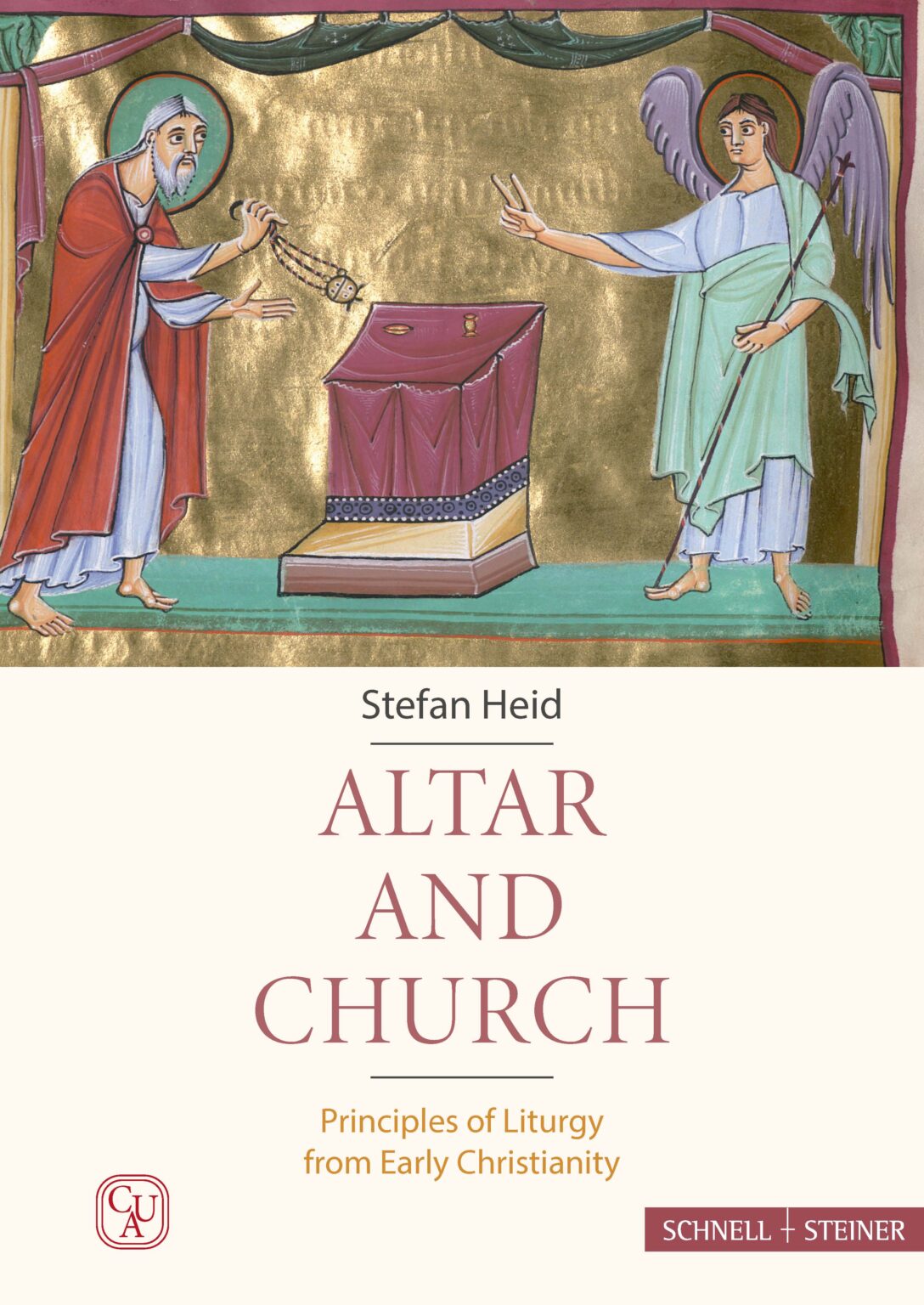
An altar is a table or flat-topped block used as the focus for a religious ritual, especially for making sacrifices or offerings to a deity (Oxford Languages). Whether or not what Christians use during service today is allowed to be an altar is a point of contention between the denominations. However, since the liturgical reform of the Second Vatican Council, the altar has been at the centre of many redesigns of Catholic church spaces. For this they like to take the early Church as an example. In fact, the Council points to the “norm of the Fathers”. But how can this be reconciled with the widespread opinion that Christianity initially knew no cult and no sacrifices, but only loved feasts and meals of sinners, held in house churches? It was not until later, since the time of Emperor Constantine, that a real state cult with sacrifices, altars and magnificent sacred […]
Informations pratiques :
Stefan Heid, Altar and Church. Principles of Liturgy from Early Christianity, Ratisbonne, Schnell und Steiner, 2023 ; 1 vol., 512 p. ISBN : 978-3-7954-3845-6. Prix : € 50,00.
EinrichtungFakultät für Geisteswissenschaften, Fachbereich Geschichte WertigkeitEGR. 13 TV-L
Arbeitsbeginnschnellstmöglich, befristet für die Dauer von 3 Jahren (auf der Grundlage von § 2 Wissenschaftszeitvertragsgesetz)
Bewerbungsschluss 31.01.2024
ArbeitsumfangTeilzeit
Wochenstunden65 % der regelmäßigen wöchentlichen Arbeitszeit
Ihre Aufgaben
Die Aufgaben umfassen wissenschaftliche Dienstleistungen im o. g. Projekt. Außerhalb der Dienstaufgaben besteht Gelegenheit zur wissenschaftlichen Weiterbildung.
Mitarbeit an der Erforschung frühmittelalterlicher Formulae, an der Bearbeitung der Quellen für die Textdatenbank und an der Organisation von wissenschaftlichen Veranstaltungen im Rahmen des Projekts.
Ihr Profil
Abschluss eines den Aufgaben entsprechenden Hochschulstudiums.
Sehr gute Kenntnisse in Latein bzw. Mittellatein und in Geschichtlichen Hilfswissenschaften; Spezialisierung in einem der folgenden Fachgebiete: Mittelalterliche Geschichte, lateinische Philologie, Rechtsgeschichte; sehr gutes Leseverständnis im Deutschen, Englischen und Französischen. Des Weiteren sind Kompetenzen im Bereich der Digital Humanities und die Vorbereitung einer Dissertation zu einem dem Projekt naheliegendem Thema erwünscht (ein Cotutelle-Verfahren mit einer ausländischen Universität ist möglich.)
Die Exzellenzuniversität Hamburg gehört zu den forschungsstärksten Wissenschafts- und Bildungseinrichtungen Deutschlands. Durch Forschung und Lehre, Bildung und Wissenstransfer auf höchstem Niveau fördern wir die Entwicklung einer neuen Generation verantwortungsbewusster Weltbürger:innen, die den globalen Herausforderungen unserer Zeit gewachsen ist. Mit unserem Leitmotiv „Innovating and Cooperating for a Sustainable Future“ gestalten wir die Zusammenarbeit mit wissenschaftlichen und außerwissenschaftlichen Partnerinstitutionen in der Metropolregion Hamburg und weltweit. Wir laden Sie ein, Teil unserer Gemeinschaft zu werden, um gemeinsam mit uns einen nachhaltigen und digitalen Wandel für eine dynamische und pluralistische Gesellschaft zu gestalten.
Schwerbehinderte und ihnen gleichgestellte behinderte Menschen haben Vorrang vor gesetzlich nicht bevorrechtigten bewerbenden Personen gleicher Eignung, Befähigung und fachlicher Leistung.
Avec le soutien du FNRS, du CRHiDI (UCLouvain – Saint-Louis, Bruxelles), d'INCAL (UCLouvain), de PraME (UNamur), de sociAMM (ULB) et de Transitions (ULiège)










Vous devez être connecté pour poster un commentaire.