Publication – « Interacting with Saints in the Late Antique and Medieval Worlds », éd. Robert Wiśniewski, Raymond Van Dam, Bryan Ward-Perkins

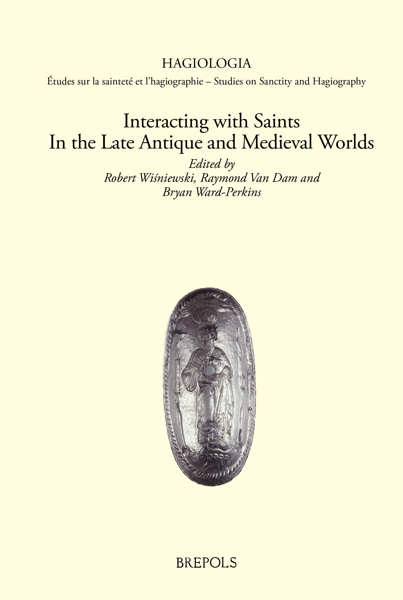
The cult of saints is one of the most fascinating religious developments of Late Antiquity and the early Middle Ages. Christians admired martyrs already in the second century, but for a long time they perceived them only as examples to follow and believed they could pray directly to God, whom they addressed as ‘Our Father’. A new attitude toward saints, now considered above all as powerful friends of God and efficient intercessors, started to emerge in the third century. Once this process gained momentum in the Constantinian era, the cult of saints constantly changed and rapidly adapted to new conditions and demands. This evolution highlighted many factors: the popularity of specific saints and the different types of sanctity, the spread of cults and customs, and the ways in which the saints were described, visualised, and represented.

This volume seeks to capture the dynamic of these adaptations, showing both those aspects of cult which evolved quickly and those which remained stable for a long time. It studies the evolution of the cults in a broad period from the third to the seventh centuries and in various regions from Gaul to Georgia, with a particular interest in the two greatest centres of the cult of saints: Rome and Constantinople.  In response to changing needs and different circumstances, new generations of believers repeatedly modified the cults of established saints, even as they introduced new saints.

The editors of this volume share a strong interest in the cult of saints. For Robert Wiśniewski (Warsaw) this interest started with the saints’ physical remains (The Beginnings of the Cult of Relics, 2019), for Raymond Van Dam (University of Michigan) with the healing shrines (Saints and their Miracles in Late Antique Gaul, 1993), and for Bryan Ward-Perkins (Oxford) with an online database collecting the ancient and early medieval evidence (Cult of Saints in Late Antiquity).

Table des matières :

Robert Wiśniewski: Introduction

I. Seeing and Hearing the Saints

Robin M. Jensen: Icons as Relics: Relics as Icons
Maria Lidova: Placing Martyrs in the Apse: Visual Strategies for the Promotion of Saints in Late Antiquity
Julia Doroszewska: Saintly In-betweeners: The Liminal Identity of Thekla and Artemios in their Late Antique Miracle Collections
Arkadiy Avdokhin: Resounding Martyrs: Hymns and the Veneration of Saints in Late Antique Miracle Collections
Xavier Lequeux: Les saints myroblytes en Orient et en Occident jusqu’à l’an mil: Prolégomènes à l’histoire d’un phénomène miraculeux

II. Local and Cosmopolitan Cults

András Handl: Reinvented by Julius, Ignored by Damasus: Dynamics of the Cult of Callixtus in Late Antique Rome
Stephanos Efthymiadis: The Cult of Saints in Constantinople (Sixth-Twelfth Century): Some Observations
Anna Lampadaridi: The Origins and Later Development of the First Italo-Greek Hagiographies: The Dossiers of the Sicilian Martyrs Agatha, Lucia, and Euplus

III. Constructing Paradigms

Ian Wood: The Lives of Episcopal Saints in Gaul: Models for a Time of Crisis, c. 470–550
Michał Pietranik: Saints and Sacred Objects in Eastern Roman Imperial Warfare: The Case of Maurice (582–602)
Nikoloz Aleksidze: Martyrs, Hunters and Kings: The ‘Political Theology’ of Saints’ Relics in Late Antique Caucasia

Informations pratiques :

Interacting with Saints in the Late Antique and Medieval Worlds, éd. Robert Wiśniewski, Raymond Van Dam, Bryan Ward-Perkins, Turnhout, Brepols, 2023 ; 1 vol., 282 p. (Hagiologia, 20). ISBN : 978-2-503-60558-6. Prix : € 95,00.

Source : Brepols

Publié dans Publications | Laisser un commentaire

Publication – « Klangräume des Mittelalters », éd. Nikolas Jaspert, Harald Müller

Die Sinne rücken in das Blickfeld der Mittelalterforschung und werfen kaum erforschte, hoch anregende Fragen auf. Im Fokus der dreizehn Aufsätze dieses Sammelbands steht die mittelalterliche Akustik. Die Autorinnen und Autoren erforschen zeitgenössische Haltungen zu Lärm und Schweigen; sie untersuchen den Einsatz von Geräuschen als Mittel der Repräsentation und der gesellschaftlichen Ordnung; und sie analysieren, wie im Mittelalter die Erzeugung und Wahrnehmung von Klängen besprochen, beschrieben, gemalt oder gedeutet wurden. Die Beiträge liefern Einblicke in entfernte Räume – von Byzanz bis zur Iberischen Halbinsel, von Mitteleuropa bis in den Nahen Osten ‒ aus der Perspektive unterschiedlicher historischer Teildisziplinen: der Geschichtswissenschaft und der Rechtsgeschichte, der Literaturwissenschaft, der Kunst- und der Musikgeschichte.

Within medieval studies, the senses are turning into a booming field of research, raising highly stimulating and hardly researched questions. The thirteen essays in this anthology focus on the broad field of medieval acoustics. The authors explore contemporary attitudes to noise and silence; they examine the use of sound as an instrument of representation and social order; and they analyse how the production and perception of sounds were discussed, described, depicted and interpreted in the Middle Ages. The contributions provide insights into distant spaces – from Byzantium in the East to the Iberian Peninsula in the West, from Central Europe to the Middle East ‒ from the perspective of different historical sub-disciplines: historiography and legal history, literary studies, art history and music history.

Prof. Dr. Nikolas Jaspert, geb. 1962 in Melbourne, Australien. Studium der Geschichte, Hispanistik, Kunstgeschichte und Anglistik in Berlin und Madrid. Promotion 1995 an der Freien Universität Berlin, dort von 1995 bis 1998 Wissenschaftlicher Mitarbeiter und Wissenschaftlicher Assistent. Von 1998 bis 2005 Akademischer Rat/Oberrat an der Universität Erlangen-Nürnberg, von 2005 bis 2013 Professor für die Geschichte des Mittelalters an der Ruhr-Universität Bochum. Seit Oktober 2013 Professor für Mittelalterliche Geschichte an der Universität Heidelberg. Vorstandsmitglied des Konstanzer Arbeitskreises für mittelalterliche Geschichte seit 2014. Seit 2013 Präsident der »Société Internationale des Historiens de la Méditerranée«. Mitherausgeber der »Zeitschrift für Historische Forschung«. Arbeitsschwerpunkte sind die mediterrane, insbesondere iberische Geschichte des Mittelalters, die Kreuzzüge, Ordensgeschichte, Ritterorden, sowie deutsch-iberische Beziehungen.

Harald Müller lehrt als Professor für Mittlere Geschichte an der RWTH Aachen. Zu seinen Forschungsschwerpunkten gehören die Geschichte des mittelalterlichen Papsttums und dessen Interaktion mit den regionalen Kirchen in Europa  sowie der Renaissance-Humanismus. 2014/15 war er Senior Fellow des Historischen Kollegs in München.

Table des matières : ici

Informations pratiques :

Klangräume des Mittelalters, éd. Nikolas Jaspert, Harald Müller, Sigmaringen, Jan Thorbecke Verlag, 2023 ; 1 vol., 412 p. (Vorträge und Forschungen, 94). ISBN : 978-3-7995-6895-1. Prix : € 55,00.

Source : Patmos

Publié dans Publications | Laisser un commentaire

Colloque – Freiheit und Unfreiheit in Mitteleuropa (vom Frühmittelalter bis 1989)

Das Recht eines jeden Menschen auf persönliche Freiheit ist ein zentrales Thema der „Allgemeinen Erklärung der Menschenrechte”, die 1948 von der Generalversammlung der Vereinten Nationen verabschiedet wurde. Im ersten Artikel wird betont, dass der Mensch frei, mit individueller Würde und ausgestattet mit unveräußerlichen Rechten, geboren wird: „Alle Menschen sind frei und gleich an Würde und Rechten geboren” („All human beings are born free and equal in dignity and rights”). In den nächsten Punkten wurden die Rechte garantiert, die die Freiheit des Menschen im weitesten Sinne ausmachen, unter anderem: persönliche Freiheit, das Recht auf Freizügigkeit, das Recht auf Arbeit und Beruf, auf Eigentum und das Recht zu heiraten. Im vierten Artikel der „Erklärung” – der zum Motto unserer Tagung wurde – wurde die Unveräußerlichkeit des Rechts auf Freiheit und Pönalisierung aller Formen von Versklavung erklärt: „Niemand darf in Sklaverei oder Leibeigenschaft gehalten werden; Sklaverei und Sklavenhandel sind in allen ihren Formen verboten” („No one shall be held in slavery or servitude; slavery and the slave trade shall be prohibited in all their forms”).

Ziel der Tagung ist es, die lange Entwicklung der Idee des Rechts eines Jeden auf volle Freiheit und die Definition dieses Rechts als unveräußerlich aufzuzeigen: in der philosophischen wie rechtlichen, aber auch in der religiösen (alle Christen, unabhängig von ihrer sozialen Position, sind gegenüber Gott gleich und frei) Theorie und Praxis Mitteleuropas. Es stellt sich unter anderem die Frage, ob der in der „Allgemeinen Erklärung der Menschenrechte” verwendete Begriff der „Sklaverei” – der auch in der Rechtsetzung der mitteleuropäischen Staaten im 19. und 20. Jahrhundert auftaucht – zu den rechtlichen und gesellschaftlichen Verhältnissen in diesen Gebieten in den vergangenen Epochen (beginnend im Frühmittelalter) richtig passt. Dabei wird es ebenso interessant sein zu sehen, auf welche Weise verschiedene Formen der Beschränkung der Freiheit der Menschen definiert und inwieweit sie rechtlich und gesellschaftlich in Bezug auf verschiedene Individuen und Gruppen akzeptiert wurden. Diesbezügliche Beispiele für Rechtfertigung der Freiheitsbeschränkung sind etwa die Untergrabung des Menschseins, der intellektuellen Möglichkeit der Selbstbestimmung oder das Zulassen einer Versklavung von Nicht-Christen. In diesem Zusammenhang scheint es außerdem ebenso wichtig, die Entwicklungen in Philosophie und Theologie zu betrachten, die die Einschränkung der Freiheit einzelner Personen sowie ethnischer, sozialer oder religiöser Gruppen rechtfertigten oder ablehnten. Beispielsweise wurde in der spanischen Neuscholastik der „Schule von Salamanca” gerade diese Ablehnung intensiv durchdacht, was zur Idee des „ius gentium” im modernen Sinne führte – nicht im Sinne eines Völkerrechts, sondern eher gedacht als ein individuelles Recht der Menschen. Letzteres führt zu weiteren Fragen: Welchen Einfluss übten die in verschiedenen Regionen der Welt stattgefundene philosophische Diskurse auf die Situation in Mitteleuropa aus? Oder welche Bedeutung hatte die Reformation mit ihren verschiedenen Auslegerungen? Die Tagung zielt darauf ab, an ausgewählten Beispielen verschiedene Gründe, Ausmaß, Umstände, Formen und Folgen der Beschränkung der Freiheit der Menschen (bis auf ihre Versklavung) aufzuzeigen. Die Referate der Tagung sollen anhand konkreter Beispiele den Prozess der Umwandlung der Idee der Sklaverei im antiken Sinne in andere Formen der individuellen und kollektiven Versklavung und deren letztendliche Negierung und Pönalisierung aufzeigen und dabei auch die aktuell geführten und sehr vielfältigen wissenschaftlichen Debatten miteinbeziehen.

Der geographische Rahmen der Tagung umfasst Mitteleuropa, wobei der Schwerpunkt auf zwei Räumen liegt: den historischen polnischen und deutschen Kultur- und Geschichtsraum. Die politischen Grenzen dieser Gebiete decken sich weitgehend mit den Territorien des Heiligen Römischen Reiches, Preußens, des Deutschen Bundes bzw. des Deutschen Reichs bis hin zur DDR und BRD sowie mit Polen (Königreich Polen, Polen-Litauen, Rzeczpospolita, Herzogtum Warschau, Kongress-Polen, Zweite Polnische Republik, Volksrepublik Polen). Der Untersuchungszeitraum erstreckt sich über verschiedene Epochen, vom frühen Mittelalter bis etwa 1989.

Die Tagung wird unter der Schirmherrschaft von Herrn Generalkonsul Jan M. Malkiewicz (Generalkonsulat der Republik Polen in München) veranstaltet.

Programme :

Donnerstag, 28. September 2023

9:00–9:30 Grußworte

  • Thomas Wehner M.A., stellvertretender Leiter von Archiv und Bibliothek des Bistums Würzburg
  • Veranstalter: Dr. Renata Skowrońska, Prof. Dr. Helmut Flachenecker, Dr. Lina Schröder, Prof. Dr. Andrzej Radzimiński, Prof. Dr. Andreas Otto Weber, Prof. Dr. Caspar Ehlers, Lisa Haberkern M.A.

9:30–10:00 Einführungsvortrag: Im Zeitalter des Übergangs (Moderation: Prof. Dr. Caspar Ehlers)

  • Prof. Dr. Szymon Olszaniec (Uniwersytet Mikołaja Kopernika w Toruniu): Slavery in the late Roman Empire – An overwiew

10:00–10:30 Kaffeepause

10:30–12:15 Einführungsvorträge: Ideen und rechtliche Grundlagen von Freiheit und Unfreiheit (Moderation: Prof. Dr. Caspar Ehlers)

  • Prof. Dr. Thomas Wetzstein (Katholische Universität Eichstätt-Ingolstadt): Freiheit und Unfreiheit im mittelalterlichen Kirchenrecht
  • Dr. Kaveh Yazdani (University of Connecticut): Political economy, capitalism and discourses on free and unfree labor, ca. 17th to 19th centuries
  • Prof. Dr. Volodymyr Abaschnik (Nationale Medizinische Universität Charkiw, Ukraine): Beitrag polnischer und deutscher Gelehrter zu Freiheitsdiskussionen an der Universität Charkiw in der ersten Hälfte des 19. Jahrhunderts

Diskussion (zu den vier ersten Vorträgen)

12:15–14:30 Mittagspause

14:30–16:00 Das Freiheitsverständnis im Mittelalter und in der Frühen Neuzeit (Moderation: )

  • Prof. Dr. Wojciech Mrozowicz (Uniwersytet Wrocławski): Freiheit als Wert in der schlesischen Historiografie und Hagiografie des Mittelalters
  • Vera H. Eiteneuer M.A. (Bergische Universität Wuppertal) : Gehorsam und Ungehorsam von Unfreien im Hochmittelalter
  • Prof. Dr. Michał Kuran (Uniwersytet Łódzki): Freedom and enslavement of nations and individuals in the European Sarmatian Chronicle (1611) by Alexander Gwagnin

Diskussion

16:00–16:30 Kaffeepause

16:00–17:30 Freiheit im Krieg? (Moderation:)

  • Prof. Dr. Krzysztof Kwiatkowski (Uniwersytet Mikołaja Kopernika w Toruniu): Unfreie in spätmittelalterlichen Preußen. Zwischen Krieg und Kolonisation
  • Jakub Sytniewski M.A. (Uniwersytet Opolski): About mutual experience of captivity. The situation of prisoners of war from the Polish-Lithuanian state in the Crimea and Tatars captives in Polish-Lithuanian Commonwealth in 17th century
  • Dr. Alexandra Pulvermacher (Universität Klagenfurt): Die Anwendung der „Schutzhaft“ im besetzten Polen am Beispiel der „Intelligenzaktion Zichenau“

Diskussion

17:30 Stadtbesichtigung

Freitag, 29. September 2023

9:00–10:30 Freiheit und Unfreiheit im Mittelalter ‚in der Praxis‘ (Moderation: Prof. Dr. Helmut Flachenecker)

  • Dr. habil. Jacek Bojarski (Uniwersytet Mikołaja Kopernika w Toruniu) und Dr. Małgorzata Derecka (Uniwersytet Warmińsko-Mazurski): Auch nach dem Tod zusammen. Freier Wille oder Religions- und Gesellschaftdiktat?
  • Eduard Visintini M.A. (Johannes Gutenberg-Universität Mainz): Rightful and Unrightful Unfreedom in the Early Middle Ages: The Case of Merovingian Francia
  • Sebastian Kalla M.A. (Albert-Ludwigs-Universität Freiburg): Die ancillae im Hochmittelalter. Ein Fortbestehen der Sklaverei?

Diskussion

10:30–11:00 Kaffeepause

11:00–12:00 Freiheit und Unfreiheit in der Frühen Neuzeit ‚in der Praxis‘ (Moderation: Dr. Lina Schröder)

  • Prof. Dr. Wolfgang Wüst (Friedrich-Alexander-Universität Erlangen-Nürnberg): Konfessionszwang und Kirchenzucht nach dem Religionsfrieden von 1555. Religiöse Unfreiheit im Heiligen Römischen Reichs Deutscher Nation im Spiegel von Kirchen-, Policey- und Strafordnungen
  • Jan Ocker M.A. (Christian-Albrechts-Universität zu Kiel): „das unsere undersaten […] unsere liebeigen seindt“. Gedanken zur Geschichte, Struktur und Wahrnehmung der Gutswirtschaft in Holstein, Mecklenburg und Pommern (16. bis 19. Jahrhundert)

Diskussion

12:00–14:00 Mittagspause

14:00–15:00 Zur (Abschaffung der) Leibeigenschaft (Moderation: Prof. Dr. Wojciech Mrozowicz)

  • Dr. Jacek Kordel (Uniwersytet Warszawski): „Les paysans sont esclaves de la noblesse“. Die Lage der polnischen Bauern im Spiegel der Autoren der europäischen Aufklärung
  • Dr. Andrzej Michalczyk (Ruhr-Universität Bochum): Der Wandel soziokultureller Haltungen und Erwartungen in einer Post-Leibeigenschaft-Gesellschaft. Oberschlesien im langen 19. Jahrhundert

Diskussion

15:00–15:30 Kaffeepause

15:30–16:30 Diskussionen über Freiheit und Unfreiheit im 19. und 20. Jahrhundert (Moderation: Prof. Dr. Wolfgang Wüst)

  • Prof. Dr. Marta Baranowska (Uniwersytet Mikołaja Kopernika w Toruniu) und Dr. Paweł Fiktus (Wyższa Szkoła Prawa we Wrocławiu): Analysis and criticism of the Slavery Convention of September 25, 1926 in Polish political and legal thought of the interwar period
  • Dr. habil. Bartosz Kaliski (Instytut Historii im. Tadeusza Manteuffla Polskiej Akademii Nauk): Das tschechische Schicksal? Journalist Jiří Lederer (1922–1983) – Opfer zweier totalitären Systeme

Diskussion

16:30–17:00 Schlussdiskussion

Die Tagung wird unter der Schirmherrschaft von Herrn Generalkonsul Jan M. Malkiewicz (Generalkonsulat der Republik Polen in München) veranstaltet.

Veranstalter

  • Polnische Historische Mission an der Julius-Maximilians-Universität Würzburg (Nikolaus-Kopernikus-Universität Toruń) – Dr. Renata Skowrońska
  • Julius-Maximilians-Universität Würzburg, Philosophische Fakultät, Lehrstuhl für Fränkische Landesgeschichte – Prof. Dr. Helmut Flachenecker, Dr. Lina Schröder
  • Nikolaus-Kopernikus-Universität Toruń, Institut für Geschichte und Archivkunde, Lehrstuhl für Geschichte der skandinavischen Länder sowie Mittel- und Osteuropas – Prof. Dr. Andrzej Radzimiński
  • Max-Planck-Institut für Rechtsgeschichte und Rechtstheorie – Prof. Dr. Caspar Ehlers
  • Stiftung Kulturwerk Schlesien – Lisa Haberkern M.A.

Die Tagung wird in Verbindung mit dem Archiv und Bibliothek des Bistums Würzburg und dem Kolleg „Mittelalter und Frühe Neuzeit“ veranstaltet.

Gefördert durch:

  • Bayerisches Staatsministerium für Familie, Arbeit und Soziales
  • Stiftung für deutsch-polnische Zusammenarbeit

Informations pratiques :

Termin: 28. und 29. September 2023 (Donnerstag und Freitag)
Tagungsort: Archiv und Bibliothek des Bistums Würzburg (Domerschulstraße 17, Würzburg)

Veranstalter:

  • Polnische Historische Mission an der Julius-Maximilians-Universität Würzburg (Nikolaus-Kopernikus-Universität Toruń) – Dr. Renata Skowrońska
  • Julius-Maximilians-Universität Würzburg, Philosophische Fakultät, Lehrstuhl für Fränkische Landesgeschichte – Prof. Dr. Helmut Flachenecker, Dr. Lina Schröder
  • Nikolaus-Kopernikus-Universität Toruń, Institut für Geschichte und Archivkunde, Lehrstuhl für Geschichte der skandinavischen Länder sowie Mittel- und Osteuropas – Prof. Dr. Andrzej Radzimiński
  • Max-Planck-Institut für Rechtsgeschichte und Rechtstheorie – Prof. Dr. Caspar Ehlers
  • Stiftung Kulturwerk Schlesien – Lisa Haberkern M.A.

Die Tagung wird in Verbindung mit dem Archiv und Bibliothek des Bistums Würzburg und dem Kolleg „Mittelalter und Frühe Neuzeit” veranstaltet.

Gefördert durch:

  • Bayerisches Staatsministerium für Familie, Arbeit und Soziales
  • Stiftung für deutsch-polnische Zusammenarbeit

Source : Polnische Historische Mission

Publié dans Colloque | Laisser un commentaire

Publication (en ligne) – BUCEMA. Bulletin du Centre d’études médiévales d’Auxerre, t. 27/1 (2023)

Accès : ici

Le Bucema, Bulletin du Centre d’études médiévales d’Auxerre, est une revue scientifique à comité de lecture consacrée aux études sur le Moyen Âge.

Fidèle au principe de diffusion de la recherche en train de se faire et librement accessible, le Bucema met l’accent sur l’interdisciplinarité -sciences humaines et sociales, sciences de la nature et mathématiques. Il cherche à publier des contributions proposant des nouvelles méthodes, faisant état d’expériences dans le domaine des humanités numériques et des nouvelles technologies, s’interrogeant sur les implications épistémologiques et conceptuelles des recherches sur le Moyen Âge. Il accueille aussi des études et des synthèses de fond dans les domaines de l’archéologie, de l’histoire et de l’histoire de l’art, tout en se faisant l’écho de l’actualité de la recherche la plus récente.

En plus d’articles inédits, il publie des entretiens, des essais bibliographiques, des points de vue, des notices sur des découvertes importantes, des communications sur des chantiers en cours (archéologiques, historiques, archivistiques, iconographiques…), des synthèses des dernières rencontres scientifiques, des résumés de thèses et de dissertations, ainsi que l’annonce de nouveaux programmes de recherche et de rencontres à venir.

Le Bucema fait paraître également des numéros hors série et deux collections relatives à des programmes de recherche :  « CBMA  – Chartae Burgundiae Medii Aevi » et « Histoire de l’art et Anthropologie ».

Tourné vers la communauté scientifique internationale, le Bucema accepte des contributions dans différentes langues : allemand, anglais, espagnol, français, italien, portugais.

Table des matières :

Recherche active

Source : BUCEMA

Publié dans Publications | Laisser un commentaire

Appel à contribution – Chronicles of popes and emperors: Contexts – Contents – Traditions

Organizer : Dr. Giuseppe Cusa, University of Siegen – giuseppe.cusa(at)uni-siegen.de
7–8 June 2024, Siegen and online 30 September 2023

The so-called Chronicles of popes and emperors were widespread in the High and Late Middle Ages. The innumerable manuscripts that carry such historical works still bear witness to this. These historiographical writings offer historical knowledge in a compact format, but are by no means merely sober, compiled compendia, but hold a considerable variety in form, design, and content. Although they are well known, they have not yet been duly examined by research. In addition to editorial efforts, interest has so far focused primarily on the widely copied and used works such as the Chronicon of the Dominican Martin of Troppau (d. 1278) or the Flores tem- porum of a Franciscan from the South-West of the Empire (see, e.g., the studies of Anna Dor- othee von den Brincken and Heike Johanna Mierau). The older Chronica pontificum et impe- ratorum, however, still await a detailed appraisal, as Martin’s chronicle has overshadowed them.

The conference, therefore, aims to focus on the contexts of origin, contents and transmission of these chronicles in order to work out the commonalities and differences and thus open up the genre more comprehensively than hitherto. Contributions on a single or a bundle of chron- icles of popes and emperors, evaluating the manuscript tradition, are therefore welcome. How productive such a recourse to the material legacies can be (within the framework of interdisci- plinary undertakings) has recently been demonstrated for universal chronicles.

Regarding the contexts of production and the contents of the works, the authors, their motivations, and intentions, but also their sources come into view. For example, the “Martinschronik” and the Flores temporum originate from a Mendicant milieu, but other chronicles of this genre were not only written by mendicants. Thus, they were already written even before St. Dominic and St. Francis walked the earth. Moreover, subsequently, works can be attributed to other environments. So, who put such a chronicon on parchment or on paper? Were clerics the only or primary authors of this historiographical genre, or did laymen also compose such writings? Is it possible to determine—for example, based on text-immanent indications, the choice of language or the tradition—what motivated them and for which audience they wrote? The historical knowledge transported is also of interest: What is reported beyond the framework of popes and emperors? Is it possible to identify concrete models despite similarities in content, which often make clear identification difficult? Usually, older works of this genre were used for new adaptations.

Another focus should be on the manuscript tradition, i.e. the layout of the chronicles, their embedding in the codices and their transmission. The appearance of the Chronica pontificum et imperatorum varies. Frequent use was made of the synchronistic tabular form. While early tabular testimonies placed the parallel series of popes and emperors next to each other on one page, Martin of Troppau used a double-page layout. Numerous codices also hand down mixed strands that only loosely follow or lift the chronology. Not infrequently, various graphic ele- ments were used for quicker orientation. What does the respective mise en page and mise en texte look like? What does this in turn reveal about the intentions and skills of the producers? It also needs to be clarified whether the chronicles were conceived as stand-alone texts or as part of miscellanies and what purpose they served in the overall structure of a miscellany co- dex. Are they handed down as autographs or copies, in one or more codices? What can be said about reception and circulation of such a chronicle?

The conference is organised by the Department of Medieval and Early Modern History at University of Siegen. It will take place on 7-8 June 2024 as a hybrid conference (on site in Siegen and via Webex). Interested researchers from the historical sciences and other disciplines such as literary studies or art history are encouraged to submit an abstract of max. 250 words for a presentation of approx. 25-minute on a single or a bundle of chronicles of popes and emperors (or works with only one of the two strands) in German, English, Italian, French or Spanish to giuseppe.cusa(at)uni-siegen.de by 30 September 2023. The papers will be selected by mid-October 2023. The costs for travel and accommodation most probably can be covered only in part. A publication of the conference papers is planned—subject to the positive evaluation of the conference.

Publié dans Appel à contributions | Laisser un commentaire

Appel à contribution – « O beata Perpetua / Duc nos ad vitae pascua »: Writing about Female Saints in the Latin Middle Ages

59th International Congress on Medieval Studies (May 9-11) in Kalamazoo, MI (USA)

Sponsor: Medieval Institute, University of Notre Dame. In person.

Lives of female saints were recorded since the early centuries of Christianity, as in the Passio Sanctarum Perpetuae et Felicitatis, and were re-written and re-interpreted throughout the Middle Ages, appearing, for example, in poetic versions and liturgical hymns. This panel invites papers studying the stories of female saints written in Latin, from Late Antiquity to the Reformation. We welcome research on vitae and other hagiographical texts, including feast day musical compositions, that emphasize aspects of textuality, transmission, and manuscripts. We prioritize work on understudied saints and encourage varied approaches and methodologies, including source and literary criticism, musicology, and manuscript studies.

Descriptions of encouraged methodology or discourse: The panel welcomes studies that use a variety of methodologies and approaches to hagiographical texts and hagiographical sources. In particular, we welcome studies in the fields of codicology, paleography, literary criticism, source criticism, and musicology. Ultimately, this panel encourages papers that reflect on the following question: Why was the story of a saint written or rewritten at some point in history, in a specific form and in a specific manuscript? Thus, the panel invites papers that reflect on the broader significance of the historical role of female saints and hagiographical texts within the medieval world.

For information, please contact ecelora@nd.edu or hvansyck@nd.edu. 


All those interested in presenting a paper are encouraged to submit abstracts directly to the Confex system (https://wmich.edu/medievalcongress/submissions#papers) before September 15th.

Publié dans Appel à contributions | Laisser un commentaire

Publication – « La Ville dans la littérature médiévale de l’Europe occidentale », dir. Maire-Françoise Alamichel

La ville littéraire se différencie-t-elle de la ville historique ? L’ouvrage considère la ville en tant qu’objet d’étude tel qu’il est évoqué dans les textes médiévaux occidentaux puis se concentre sur les villes de Troie, Rome, Jérusalem et Constantinople qui vinrent nourrir l’imaginaire médiéval.

Table des matières : ici

Informations pratiques :

La Ville dans la littérature médiévale de l’Europe occidentale, dir. Maire-Françoise Alamichel, Paris, Classiques Garnier, 2023 ; 1 vol., 628 p. (Rencontres, 590 ; Civilisation médiévale, 55). ISBN : 978-2-406-14998-9. Prix : € 49,00.

Source : Classiques Garnier

Publié dans Publications | Laisser un commentaire

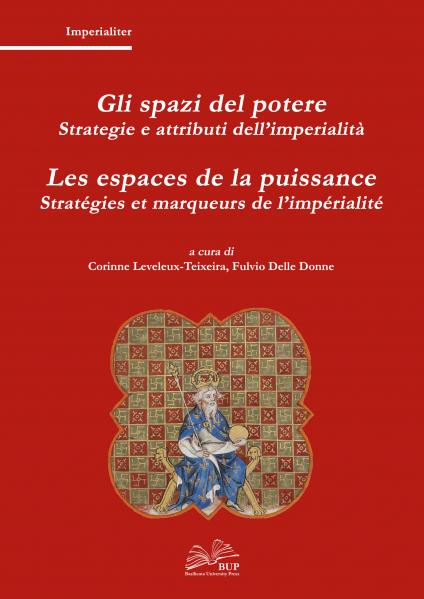
Publication – « Gli spazi del potere: strategie e attributi dell’imperialità – Les espaces de la puissance: stratégies et marqueurs de l’impérialité », dir. Corinne Leveleux-Teixeira, Fulvio Delle Donne

La vastità del territorio è attributo necessario di imperialità? Un impero è solo un regno più grande? Rielaborando gli interventi al convegno scientifico tenutosi alla Maison Française di Oxford nel giugno del 2018, questo libro mette in discussione i legami sviluppati a partire dal Medioevo tra l’idea di impero e la sua espressione geografica. Più precisamente, riflette sul rapporto tra razionalità politica imperiale e configurazione territoriale attraverso alcuni casi di studio tratti dai regni di Sicilia, Francia, Ungheria, Spagna e Inghilterra.

Table des matières :

Corinne Leveleux-Teixeira, De l’espace à l’espèce : de quoi l’im­pé­ria­lité est-elle le nom ? Quelques réflexions introductives

Annick Peters-Custot, Le royaume normand de Sicile, cas d’école de l’im­périalité royale ?

Jean-Paul Boyer, Humilier l’Empire. Le paradoxe des romanistes du ro­yaume de Sicile-Naples (fin XIIIe-mi-XIVe siècle)

Benoît Grévin, Rex est imperator extra regnum ? Stratégies im­pé­riales françaises, des Capétiens aux premiers Valois (1212-1380)

Attila Bárány, The Medieval Kingdom of Hungary : a Power Factor in Central Europe

Hélène Sirantoine, When Being King Was Not Enough : Im­pe­ra­to­res in Medieval Iberia (Ninth to Twelfth Century)

John Watts, Imperial England, 1150-1550

Informations pratiques :

Gli spazi del potere: strategie e attributi dell’imperialità – Les espaces de la puissance: stratégies et marqueurs de l’impérialité, dir. Corinne Leveleux-Teixeira, Fulvio Delle Donne, Potenza, 2023 ; 1 vol., 192 p. (Imperialiter, 3). ISBN : 978-88-31309-23-3. Accès en ligne : ici

Source : Basilicata University Press

Publié dans Publications | Laisser un commentaire

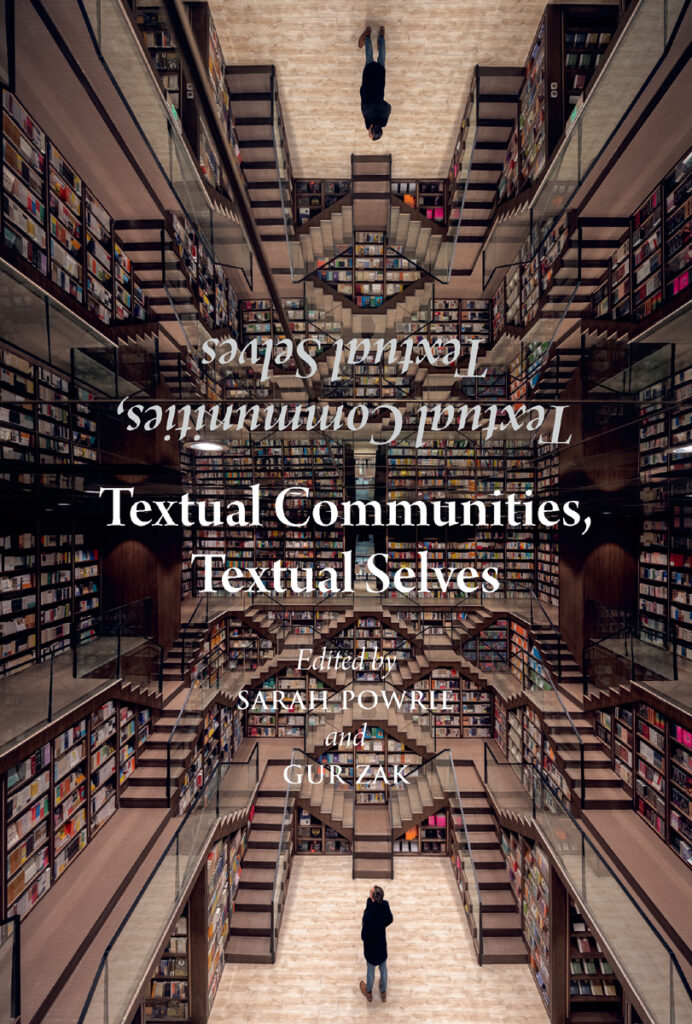
Publication – « Textual Communities, Textual Selves: Essays in Dialogue with Brian Stock », Sarah Powrie, Gur Zak

This volume assembles a collection of studies investigating ways that textual practices in the classical and medieval periods generated collective and individual expressions of identity. Engaging in dialogue with Brian Stock’s contributions to the history of literacy, the essays initiate new conversations about models of interpretation, habits of reading, textual communities, and forms of self-writing.

The first group of essays, featuring Seth Lerer, Paul Saenger, and Sarah Spence, not only reflects upon the influence of Stock’s Augustine the Reader, but also examines Augustine’s innovative handling of texts within the literary culture of Late Antiquity. The following group, authored by John Magee, Constant J. Mews, and Marcia L. Colish, responds to The Implications of Literacy by examining ways that the reinterpretation of inherited texts can generate philosophical schools, social reformists, and textual communities. Subsequent contributions by Willemien Otten and Sarah Powrie investigate textual expressions of created nature and thereby build upon the work of Myth and Science in the Twelfth Century.

The last three essays by Gur Zak, Jane Tylus, and Catherine Conybeare explore Augustine’s enduring influence beyond the medieval period, as evidenced in the writings of Giovanni Conversini, Catherine of Sienna, and Ludwig Wittgenstein. In so doing, these authors advance the frameworks of After Augustine and Listening for the Text. Personal tributes by Aviad Kleinberg and Natalie Zemon Davis bookend the volume, with each author recollecting fragments of conversations that have shaped a decades-long friendship with the honoree.

Sarah Powrie is Associate Professor of English at St. Thomas More College, University of Saskatchewan, Canada. Interested in questions of literary reception, she has published articles on Boethius, Chaucer, Spenser, and Donne.

Gur Zak is Associate Professor of Comparative Literature and Romance Studies at the Hebrew University of Jerusalem, and Head of the Institute of Literatures. He is the author of Petrarch’s Humanism and the Care of the Self (2010) and Boccaccio and the Consolation of Literature (2022). His current project deals with the implications of compassion in Italian Renaissance literature.

Table des matières :

List of Plates • vii
Abbreviations • ix
Acknowledgements • xi

Sarah Powrie and Gur Zak • Introduction • 1

Aviad Kleinberg • A Life of Brian • 18
Seth Lerer • The Textualized Augustine and Late Antique Communities • 27
Paul Saenger • Augustine as Reader: Prospects for Collaboration between Palaeography and the Neurosciences • 43
Sarah Spence • Augustine, Virgil, and the Landscape of Memory • 74
John Magee • Boethius and the Legacy of Alexander of Aphrodisias: The Elementary Commentary on De interpretatione 10, 19b22–24, and Related Texts • 94
Constant J. Mews • Rereading The Twelve Abuses of the Age: From Seventh-Century Ireland to Twelfth-Century France • 117
Marcia L. Colish • Self-Baptism in the Middle Ages? • 136
Willemien Otten • Nature’s Mediation: William of Conches and Hildegard of Bingen on Creation and the Cosmos • 149
Sarah Powrie • Allegories of the Formless Self in Augustine’s Confessions and Bernardus Silvestris’s Cosmographia • 172
Gur Zak • After Petrarch: Writing and Self-Care in Giovanni Conversini’s Rationarium vite • 195
Jane Tylus • Listening for the Ending • 215
Catherine Conybeare • Augustine and Wittgenstein: The Inner Dialogue Continued • 235
Natalie Zemon Davis • A Scholarly Friendship: In Tribute to Brian Stock • 250

Informations pratiques :

Textual Communities, Textual Selves: Essays in Dialogue with Brian Stock, Sarah Powrie, Gur Zak, Toronto, Pontifical Institute of Medieval Studies, 2023 ; 1 vol., XII–272 p. (Papers in Mediaeval Studies, 37). ISBN : 978-0-88844-837-8. Prix : USD 95,00.

Source : Pontifical Institute of Medieval Studies

Publié dans Publications | Laisser un commentaire

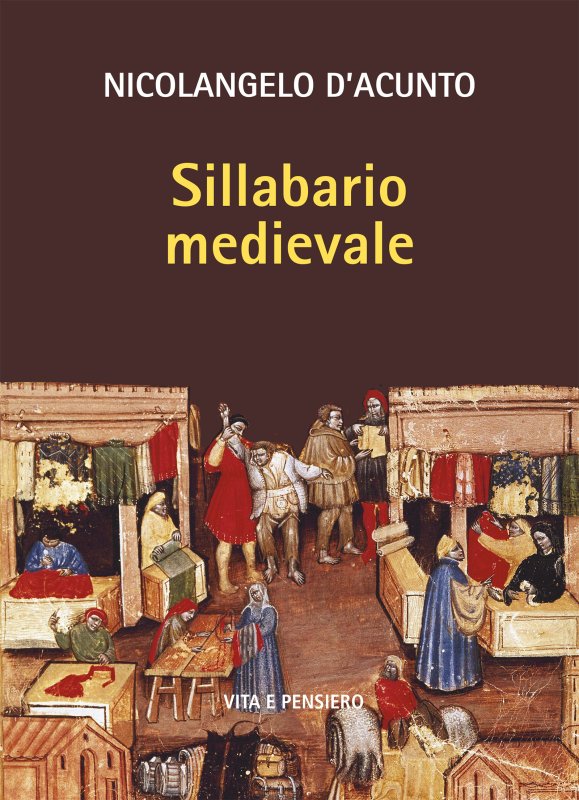
Publication – Nicolangelo D’Acunto, « Sillabario medievale »

Il Sillabario medievale affronta, attraverso l’analisi di undici parole chiave, alcune problematiche fra le più interessanti e innovative dell’odierno panorama medievistico italiano ed europeo, muovendosi con disinvoltura tra le fonti e il dibattito storiografico. L’autore tratta di alcuni importanti nodi storiografici che hanno animato e tutt’oggi animano il dibattito interno alla disciplina: il determinismo ambientale, la spazialità, il dissenso, il rapporto fra gerarchia e libertà, fra sacro e profano, il desiderio, il nesso fra responsabilità e individualità, la nozione di carisma, la teoria degli «ordines», i concetti di Riforma (con particolare riguardo all’XI secolo), Rinascimento e Rivoluzione. Ogni parola di questo Sillabario viene illustrata e discussa facendo riferimento al dibattito storiografico e all’applicazione nell’ambito della ricerca medievistica. Un libro utile per comprendere alcune nozioni fondamentali inerenti la cultura e la mentalità medievale; al contempo, viva espressione di una peculiare visione storiografica, che in dialogo con le scienze sociali approfondisce il quadro sociale e culturale del tempo, senza mai dimenticare l’aderenza al contesto storico.

Nicolangelo D’Acunto (Albenga, 1966) ha studiato alla Scuola Normale di Pisa. Ordinario di Storia medievale all’Università Cattolica del Sacro Cuore di Milano e Brescia, è direttore del Dipartimento di Studi medievali, umanistici e rinascimentali e del Centro per la Storia degli Insediamenti Monastici Europei (CESIME). Tra le sue pubblicazioni: Cum anulo et baculo. Vescovi dell’Italia medievale dal protagonismo politico alla complementarietà istituzionale (Spoleto 2019) e La lotta per le investiture. Una rivoluzione medievale (998-1122), (Roma 2020).

Informations pratiques :

Nicolangelo D’Acunto, Sillabario medievale, Milan, Vita e Pensiero, 2023 ; 1 vol., 192 p. (Cultura e storia, 41). ISBN : 978-8-83435-460-5. Prix : € 20,00.

Source : Vita e Pensiero

Publié dans Publications | Laisser un commentaire