Publication – « Medieval Translations and their Readers », éd. Pavlína Rychterová, Jan Odstrcilik

The papers gathered in this volume focus on ‘Medieval Translations and their Readership’, the special strand of the 11th Cardiff Conference on the Theory and Practice of Translation in the Middle Ages. The volume discusses the role of the reader in the process of translation, communities of readers and their active participation in translators’ choices, and the translation as a result of a dialogue between author, text and its reader.

Translations of works of theology and religious education, the focus of most of the contributions to this volume, constitute excellent material for research into medieval lay audiences. Vernacular religious educational texts from the thirteenth to the sixteenth century show a great deal of conformity. Individual authors resorted to similar strategies and techniques to meet any translation challenges, to fulfil educational aims, or to relate to their readers and to accommodate their expectations. Simultaneously, the readers played a crucial role as they shaped the production of texts in many ways.

Research into Middle English pastoral and devotional literature and the conditions of its production still dominates scholarly work in the field. Religious texts in vernaculars other than Middle English have so far received little attention. This volume tries to tackle this lacuna by offering a careful comparative analysis of relevant vernacular texts across Europe, including Slavonic works, using historiographical, philological, and linguistic methods as well as literary scholarly approaches.

The sixteen chapters are organized in three sections. The first one, ‘Authors and Readers’, brings together articles examining the idea of a model reader as expressed in translations of biblical texts and texts of religious instruction. The contributions in the second section, on the ‘Dissimination of Knowledge’, focus on how translators addressed readers, how people read, and how they used the manuscripts and printed books made for them. The target audience or model reader of the first section is here put into perspective with the help of discussions of reading practices. The last section, ‘Religious Education in Transition’, comprises contributions which focus on textual material from the period when printed books gradually changed, the relationship between languages, texts, authors, and readers.

Dr. Pavlína Rychterová is Vice-head of the department Historical Identity Research at the Institute for Medieval Research, Austrian Academy of Sciences. She specializes in late medieval vernacular religious literatures. Dr. Jan Odstrčilík is a Post-doc researcher att the Institute for Medieval Research, Austrian Academy of Sciences, he specializes in late medieval latin multilingual texts.
Table des matières :

Introduction

Authors and Readers

Alessandro Zironi: Gothic Texts: Translations, Audiences, Readers.

Maria Teresa Ramandi: Translating Latin in the Medieval North: Agnesar Saga and its Readership.

Jonatan Pettersson: Saving the Reader from the Bible: The Old Swedish Pentateuch Translation and its Reflective Model Reader.

Andrea Svobodová, Kateřina Voleková, and Pavlína Rychterová: Old Czech Biblical Prologues: A Medieval Reader’s Gateway to the Study of the Bible.

Marco Robecchi: Reader and Public in a Fourteenth-Century French Translation: Jean le Long and his Readership.

Jaroslav Svátek: From Devotion to Censure: Hans Tucher’s and Bernard of Breydenbach’s Pilgrim Accounts and their Two Medieval Czech Translations.

Katrin Janz-Wenig: Educating Laymen and Nuns in the Late Middle Ages in German-Speaking and Dutch Environments.

Dissemination of Knowledge

Elisabeth Salter: Miscellaneity in Practice: A Further Look at the English Text Known As the Lay Folk’s Catechism.

Jörg Sonntag: Old Material and New Perspectives: Master Ingold’s ‘Golden Game’.

Pavlína Rychterová: Jan Hus, The Daughter: Religious Education between Translation and Adaptation.

Jan Odstrčilík: Unbearable Lightness of Multilingual Sermons? The So-Called Wilhering Adaptation of Three Czech Sermons of Jan Hus.

Religious Education in Transition

Andrea Radošević: The Fifteenth- and Sixteenth-Century Croatian Translations of the Latin Liber de modo bene vivendi ad sororem.

Tamás Karáth: Early Readers’ Responses to the English Translations of Richard Rolle’s Emendatio vite.

Takami Matsuda: Predestination and Free Will in the Old French and Middle English Versions of the Elucidarium and in the Middle English Chastising of God’s Children.

Naoë Kukita Yoshikawa: The Boke of Gostely Grace and the Orcherd of Syon: Revelations of approuyd wymmen and their Readership in Fifteenth-Century England.

Omar Khalaf: The Social Function of a Translation: Earl Rivers, William Caxton, and the Dicts and Sayings of the Philosophers.

Informations pratiques :

Medieval Translations and their Readers, éd. Pavlína Rychterová, Jan Odstrcilik, Turnhout, Brepols, 2023, Turnhout, Brepols, 2023 ; 1 vol., 364 p. (The Medieval Translator, 20). ISBN : 978-2-503-59190-2. Prix : € 85,00.

Source : Brepols
Publié dans Publications | Laisser un commentaire

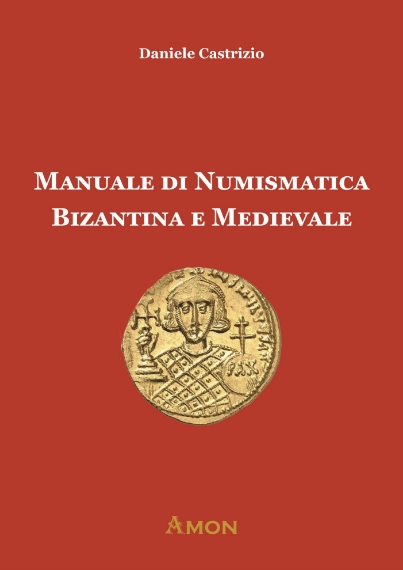
Publication – Daniele Castrizio, « Manuale di Numismatica Bizantina e Medievale »

Una grave carenza del panorama degli studi storici dell’epoca medievale è rappresentata dalla mancanza di conoscenza della moneta del periodo, troppo spesso lasciata agli interessi dei collezionisti e degli appassionati. In questo agile testo si cerca di fornire una storia ragionata della monetazione dall’introduzione del solido aureo di Costantino il Grande fino alle monete grosse e alle emissioni auree del XIII e XIV secolo. La narrazione terrà conto dell’evoluzione della moneta romea, chiamata a torto bizantina, fino alla caduta di Costantinopoli, delle serie monetali dei Vandali e dei Regni romano-barbarici, oltre che dei Longobardi, delle riforme volute dagli Arabi e da quelli dei Franchi, passando per le monete dei Comuni italiani, dei Normanni e degli Svevi del Regno delle Due Sicilie, delle Repubbliche Marinare, fino alle emissioni quasi speculari degli Angioini di Napoli e degli Aragonesi di Palermo. Si tratta, in estrema sintesi, di una storia della moneta, considerata sotto gli aspetti economici, metrologici e iconografici, indispensabile strumento per affrontare lo studio degli avvenimenti e delle tematiche storiografiche del Medio Evo.

Table des matières : ici

Informations pratiques :

Daniele Castrizio, Manuale di Numismatica Bizantina e Medievale, Amon Edizioni, 2023 ; 1 vol., 180 p. (Arte-Archeologia-Musei). ISBN : 978-8-86603-190-1. Prix : € 26,00.

Source : Amon Edizioni

Publié dans Publications | Laisser un commentaire

Colloque – Les archives au château en Bourgogne et Franche-Comté (Moyen Âge – Époque moderne)

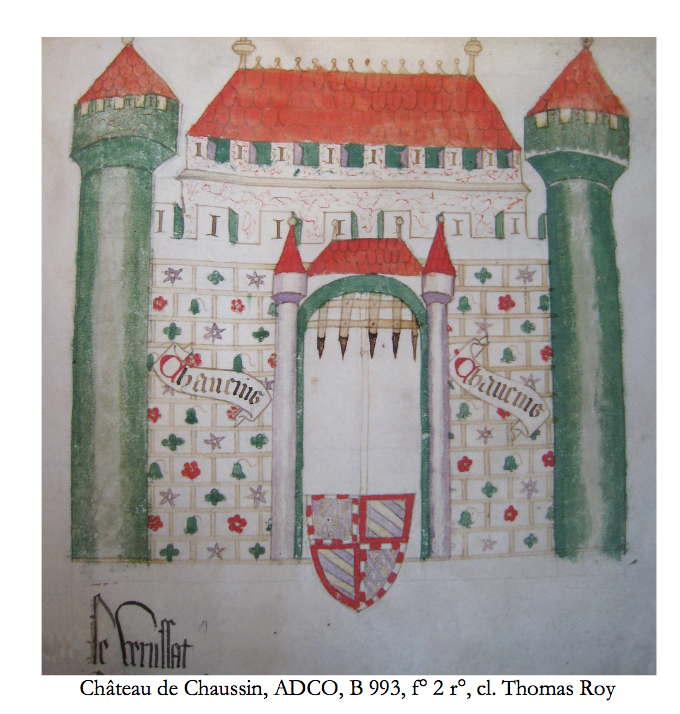
Les fonds d’archives privés, tels que nous les connaissons aujourd’hui, sont souvent décontextualisés. La réunion de Dijon s’attache, dans le cadre particulièrement riche des deux Bourgogne, à rétablir le lien entre ces archives et les conditions matérielles de leur conservation, de leur préservation, de leur organisation et souvent de leurs réorganisations successives, aux époques médiévale et moderne. Elle ambitionne ainsi de croiser l’histoire des fonds constitués par la noblesse, dont l’intérêt pour l’écrit, inséparable des usages juridiques, fonciers, comptables et généalogiques qui peuvent en être faits, s’affirme dès la seconde moitié du xiiie siècle, et l’histoire florissante de la résidence aristocratique, à la ville (hôtel) comme à la campagne (château, maison forte). Certains châteaux eurent-ils une vocation de dépôt d’archives ? Des caves inondables aux greniers inflammables, où et comment l’espace castral veillait-il (ou non) à assurer la protection de ces documents, permettait leur consultation et leur copie ? Entre sanctuarisation, soin attentif et négligence, la longue vie matérielle des archives traduit aussi la valeur patrimoniale, historique et symbolique qui leur a été reconnue au fil des siècles.

Programme :

Jeudi 14 septembre

12h  Déjeuner

13h30 Accueil et présentation

14h Les ducs de Bourgogne et leurs archives

  • Édouard Bouyé (directeur des Archives départementales de la Côte-d’Or), L’archiviste et le châtelain : des papiers et des hommes
  • Hervé Mouillebouche (maître de conférences, Université de Bourgogne), La conservation des chartes et des lettres dans l’hôtel ducal de Dijon

Pause

  • David Bardey (doctorant, Université de Bourgogne), Des archives en mouvement ? Les châteaux des ducs de Bourgogne et la circulation des archives (fin xiiie-début xive siècle)
  • Patrice Beck (professeur émérite, Université de Lille 3), Un château — et ses archives — confisqué : Germolles

15h50 Discussion

16h30 Les usages des archives

  • Jérôme Loiseau (professeur, Université de Bourgogne), Les archives comme preuve de noblesse (Bourgogne, xviie siècle)
  • Alexis Grillon (Patrimoine Archive Histoire), La famille Berbis en ses archives au château de Dracy-lès-Couches

17h20  Discussion

Vendredi 15 septembre

9h Accueil

9h30 Les archives des Chalon

  • Patricia Guyard (directrice des Archives départementales du Jura), Le chartrier d’Arlay
  • Laurence Delobette (maître de conférences, Université de Bourgogne-Franche-Comté), Les « enquêtes » des Chalon

Pause

  • Alexis Donetzkoff (conservateur, Archives départementales du Nord), Les archives des Chalon aux Archives départementales du Nord
  • Hans Cools (maître de conférences, Université catholique de Louvain), Les archives des Chalon aux Pays-Bas

11h30 Discussion

12h Déjeuner

14h Comparaisons

  • Sarah Fourcade (maître de conférences, Université Paris-Est Créteil), La transmission des archives familiales en Tournaisis : le cas des Mortagne-du Chastel (xve-xvie siècle)
  • Céline Berry (Orléans), « Escriptz, memoires, cronicques et nobles epitaphes ». Archives et pratiques de l’écrit dans la famille de Luxembourg à la fin du Moyen Âge
  • Florentin Briffaz (Lyon II), Pour une histoire des archives familiales des nobles savoyards au château (xiiie-xve siècle). Production et conservation

15h15 Discussion

15h45 Conclusions

Informations pratiques :

Colloque international organisé par Sarah Fourcade (UPEC), Jérôme Loiseau (Université de Bourgogne) et Jacques Paviot (UPEC)

Le colloque se tiendra dans la salle de l’Académie, 5 rue de l’École de droit, Dijon.

Source : Calenda

Publié dans Colloque | Laisser un commentaire

Publication – « Le Stricker. Amis le prêtre (Der Pfaffe Amis). Roman du XIIIe siècle », éd. et trad. Alain Corbellari et Marianne Derron Corbellari

Le Stricker est l’un des plus grands et des plus prolifiques auteurs allemands du XIIIe siècle. Outre une adaptation de la légende de Roland et un roman arthurien (Daniel du Val Fleuri), il a écrit de nombreux textes brefs, tantôt édifiants tantôt satiriques, et un roman comique qui est à la littérature allemande ce que le long fabliau de Trubert est à la littérature française de la même époque, en même temps qu’il annonce les aventures de Till l’espiègle. Amis le Prêtre nous raconte les aventures d’un escroc de haut vol en une progression finement graduée qui nous mène de l’Angleterre à Constantinople sans épargner aucun des états de la société. Ce texte riche et savoureux est traduit ici en français pour la première fois. Une introduction substantielle tente de situer le contexte de sa création, son auteur, son idéologie et sa fortune littéraire.

Table des matières :

Introduction L’Auteur La Thématique et le public des œuvres du Stricker Résumé d’Amis le Prêtre Les Sources d’Amis le Prêtre Essai d’interprétation Bibliographie

Le Stricker, Amis le Prêtre

  1. Prologue (v. 1-38)
  2. Les Questions de l’évêque (v. 39-180)
  3. L’Âne qui lit (v. 181-318)
  4. La Relique merveilleuse (v. 319-495)
  5. Les Peintures invisibles (v. 496-798)
  6. La Guérison des malades (v. 799-924)
  7. Le Coq ressuscité (v. 925-1020)
  8. Amis prophète (v. 1021-1068)
  9. La Fontaine aux poissons (v. 1069-1146)
  10. Le Drap du chevalier (v. 1147-1284)
  11. Les Miraculés (v. 1285-1314)
  12. Le Drapier et le faux évêque (v. 1315-1818)
  13. Le Joaillier (v. 1819-2244)
  14. Épilogue (v. 2245-2288) Appendice : 15. La Messe

Informations pratiques :

Le Stricker. Amis le prêtre (Der Pfaffe Amis). Roman du XIIIe siècle, éd. et trad. Alain Corbellari, Marianne Derron Corbellari, Genève, Droz, 2023 ; 1 vol., 102 p. (Varia, 128). ISBN : 978-2-600-06490-3. Prix : CHF 18,00.

Source : Droz

Publié dans Publications | Laisser un commentaire

Publication – « Netzwerke der Nonnen. Kritische Edition der Briefsammlung der Lüner Benediktinerinnen (Hs. 15, ca. 1460–1555) », éd. Eva Schlotheuber, Henrike Lähnemann, Philipp Trettin, Lena Vosding, Philipp Stenzig, Simone Schultz-Balluff, Edmund Wareham

Die Briefbücher des Benediktinerinnenklosters Lüne stellen eine reiche Quelle für spätmittelalterliche Frömmigkeit, Gelehrsamkeit und Kommunikationsnetzwerke dar. Die Frauen erzählen lebendig vom Alltag und Festtag im Kloster, vom Verhältnis zum Propst, den Familien oder den Lüner Ratsherren bis zu geistlichen Freundschaften mit Frauen aus den Nachbarkonventen. Als eine Besonderheit sind nicht nur Briefe der Ämterinhaberinnen sondern aller Konventsmitglieder bis zu den Klosterschülerinnen überliefert. Nicht zuletzt kann erstmals das Ringen mit den aufkommenden reformatorischen Gedanken aus der Binnenperspektive einer Benediktinerinnengemeinschaft erfasst werden.Die Edition umfasst über 450 Briefe, die auf Lateinisch, Niederdeutsch und in einer charakteristischen Mischsprache verfasst wurden. Sie erschließt den sozialen, sprachlichen, historischen und rhetorischen Kontext der gelehrten Nonnen und ihre Kommunikationsnetzwerke. Die Lüner Briefbücher erweitern das Korpus der im Spätmittelalter von Frauen selbständig verfassten Texte erheblich. Dabei formten die Nonnen eine auf ihre Bedürfnisse angepasste Sprache, die ihren Klosteralltag und ihre religiösen Ziele angemessen zum Ausdruck bringen konnte.

Table des matières :

1) Historischer Kontext
Eva Schlotheuber: Der Lüner Konvent und die Klosterlandschaft bis 1500 – Edmund Wareham: Die Einführung der Reformation – Lena Vosding: Überlieferungskontext – Lüner Quellen des 15. und 16. Jahrhunderts

2) Sozialer Kontext und Netzwerke
Edmund Wareham: Einführung – Philipp Trettin: Lüneburger Familien und Ämterkarrieren im Kloster Lüne – Philipp Stenzig: Netzwerke der Pröpste

3) Bildung und sprachlicher Kontext
Eva Schlotheuber: Die Ausbildung der Nonnen – Henrike Lähnemann: Zweisprachigkeit und literarische Verarbeitung – Simone Schultz-Balluff/Timo Bülters: Schriftsprachliche Besonderheiten der niederdeutsch abgefassten Lüner Briefe – Lena Vosding: Brieflehren und Rhetorik der Nonnen

4) Edition
Lena Vosding: Handschriftenbeschreibung – Wolfgang Seifert: Technische Umsetzung und Webpräsentation

Informations pratiques :

Netzwerke der Nonnen. Kritische Edition der Briefsammlung der Lüner Benediktinerinnen (Hs. 15, ca. 1460–1555), éd. Eva Schlotheuber, Henrike Lähnemann, Philipp Trettin, Lena Vosding, Philipp Stenzig, Simone Schultz-Balluff, Edmund Wareham, Timo Bülters, Konstantin Winters, Mohr Siebeck, Tübingen, 2023 ; 1 vol., 1000 p. ISBN : 978-3-16-160899-5. Prix : € 160,00.

Source : Mohr Siebeck

Publié dans Publications | Laisser un commentaire

Appel à contribution – New Perspectives on Personifications in Roman, Late Antique and Early Byzantine Art (200–800 AD)

International workshop
Munich 26–27.01.2024.

International workshop, Munich 26–27.01.2024.

The aim of this workshop is to explore the formal patterns, roles and meanings, continuities and innovations in the depictions of personifications of this period to better understand their functions, their relationship to one another and to other iconographic tools, as well as the changes that occur between the second and ninth centuries in the Mediterranean world.

Please submit an abstract of 300 words and a bio of 100 words by 15 September 2023.

New Perspectives on Personifications in Roman, Late Antique and Early Byzantine Art (200–800 AD)

Keynote lecture by Professor Emma Stafford, University of Leeds, School of Languages, Cultures and Societies

Personifications are some of the most geographically and chronologically widespread phenomena in Art History. From monumental sculpture or floor mosaics to textiles, coins or everyday objects, personifications were represented in all visual media to express and communicate a variety of different ideas, such as natural phenomena, months, seasons or geographical regions, personal qualities or intangible abstractions. While some are easily identifiable via specific attributes, others can only be recognized through name labels; some occur as isolated figures, others as active participants in complex scenes; some exist in countless examples, others survive in a singular image. They may have counterparts in contemporary written sources, or may be purely visual inventions. In addition, a single personification can carry multivalent meanings, which may allow for several layers of interpretation. Over time their ontological status, functions and meanings have undergone various changes. A significant period of transformation is the transition from the ancient to the mediaeval world. While personifications were seen as numinous figures in ancient Mediterranean societies, they may have been rather symbolic or allegorical in mediaeval visual cultures.

The aim of this workshop is to explore the formal patterns, roles and meanings, continuities and innovations in the depictions of personifications of this period to better understand their functions, their relationship to one another and to other iconographic tools, as well as the changes that occur between the second and ninth centuries in the Mediterranean world.

We invite proposals for individual papers from the fields of classics, archaeology, art history, visual studies, numismatics, sigillography and related fields addressing especially, but not exclusively, the following topics:

– New research on individual personifications in all Roman, Late Antique and Byzantine visual media (sculpture, painting, mosaic, coins, seals, textiles, book illumination, jewellery, everyday and/or luxury objects, etc.)
– Methodological and theoretical approaches towards personifications (ontology, polysemy, etc.)
– Reflections on the relationship between text and image in the analysis of personifications
– Functional comparisons between different formats (stand-alone personifications, personifications in groups and/or narrative scenes)
– Chronological and geographical comparisons and iconographical developments in the depictions of personifications
– Relationship between the pictorial representation of personifications and their spatial and/or cultural context
– Relationship between personifications and the patrons, recipients and viewers of objects and works of art that include them

Please submit an abstract of 300 words and a bio of 100 words by 15 September 2023. All proposals should include your name, email address and academic affiliation (if applicable). Please also include a main subject field plus secondary subject field in the application. The participants are expected to deliver a 20-minute talk, followed by a Q&A session. The workshop will take place in-person at Ludwig-Maximilians-Universität München and the Museum für Abgüsse Klassischer Bildwerke in Munich on Friday and Saturday, 26–27 January 2024 and will be held in English. For the planned publication German, French and Italian will also be accepted.

The workshop is organized by Institut für Byzantinistik, Byzantinische Kunstgeschichte und Neogräzistik, Ludwig-Maximilians-Universität München with the kind support of Spätantike Archäologie und Byzantinische Kunstgeschichte e.V.

Please do not hesitate to contact us with any questions you may have and send your abstracts and bios to both:

Charles Wastiau
Cwastiau@uliege.be
Université de Liège
Rheinische Friedrich-Wilhelms-Universität Bonn

Prolet Decheva
prolet.decheva@ucdconnect.ie
University College Dublin
Ludwig-Maximilians-Universität München

Kontakt

Charles Wastiau
E-Mail: Cwastiau@uliege.be
Université de Liège
Rheinische Friedrich-Wilhelms-Universität Bonn

Prolet Decheva
E-Mail: prolet.decheva@ucdconnect.ie
University College Dublin
Ludwig-Maximilians-Universität München

Source : H-Soz-Kult

Publié dans Appel à contributions | Laisser un commentaire

Podcast – Pierre Gonneau, « Les plus anciennes chartes russes »

La collection des « Monumenta Palaeographica Medii Aevi » vient de s’enrichir d’une « Series Rossica » qui ouvre l’accès à des documents en alphabet cyrillique (après le latin, le grec et l’hébreu). Le volume 1 de cette série publie les 27 plus anciennes chartes conservées dans le fonds du conseil municipal de Riga (Lettonie) concernant les relations de la ville hanséatique avec le monde russe, les principautés de Smolensk et Polotsk, les cités de Novgorod et de Pskov. Ces chartes sont les plus anciens documents originaux et les copies contemporaines témoignant de la pratique diplomatique russe entre 1191/1192 et 1338-1341. Le but de cette conférence est d’introduire le public aux pratiques paléographiques et diplomatiques des principautés et villes commerçantes russes, tout en retraçant l’histoire unique du fonds de la municipalité de Riga.

Source : YouTube

Publié dans Podcast | Laisser un commentaire

Publication – Joanna Story, « Charlemagne and Rome. Alcuin and the Epitaph of Pope Hadrian I »

Charlemagne and Rome is a wide-ranging exploration of cultural politics in the age of Charlemagne. It focuses on a remarkable inscription commemorating Pope Hadrian I who died in Rome at Christmas 795. Commissioned by Charlemagne, composed by Alcuin of York, and cut from black stone quarried close to the king’s new capital at Aachen in the heart of the Frankish kingdom, it was carried to Rome and set over the tomb of the pope in the south transept of St Peter’s basilica not long before Charlemagne’s imperial coronation in the basilica on Christmas Day 800. A masterpiece of Carolingian art, Hadrian’s epitaph was also a manifesto of empire demanding perpetual commemoration for the king amid St Peter’s cult. In script, stone, and verse, it proclaimed Frankish mastery of the art and power of the written word, and claimed the cultural inheritance of imperial and papal Rome, recast for a contemporary, early medieval audience. Pope Hadrian’s epitaph was treasured through time and was one of only a few decorative objects translated from the late antique basilica of St Peter’s into the new structure, the construction of which dominated and defined the early modern Renaissance. Understood then as precious evidence of the antiquity of imperial affection for the papacy, Charlemagne’s epitaph for Pope Hadrian I was preserved as the old basilica was destroyed and carefully redisplayed in the portico of the new church, where it can be seen today.

Using a very wide range of sources and methods, from art history, epigraphy, palaeography, geology, archaeology, and architectural history, as well as close reading of contemporary texts in prose and verse, this book presents a detailed ‘object biography’, contextualising Hadrian’s epitaph in its historical and physical setting at St Peter’s over eight hundred years, from its creation in the late eighth century during the Carolingian Renaissance through to the early modern Renaissance of Bramante, Michelangelo, and Maderno.

Joanna Story studied History and Archaeology at Durham University and is a professor of Early Medieval History at the University of Leicester where she has worked since 1996. She specialises in the period c. AD 600-900, and in the material culture of the written word in manuscript and epigraphic form. Her research and publications are characterised by a highly interdisciplinary approach to evidence, combining data derived from text, images, and physical remains surviving from the early medieval European past and deploying traditional historical techniques alongside methods used in archaeology and physical sciences.

Table des matières :

Edition and translation: Alcuin’s epitaph for Pope Hadrian I (by David R. Howlett)
Introduction: Charlemagne and Italy
1:Renaissance Rome: Hadrian’s epitaph in new St Peter’s
2:The ‘Life’ and death of Pope Hadrian
3:Alcuin and the epitaph
4:Recalling Rome: epigraphic syllogae and itineraries
5:Writing on the walls: epigraphy in Italy and Francia
6:Black stone: materials, methods, and motives
7:Aachen, art, and the court
8:Charlemagne, St Peter’s, and the imperial coronation

Informations pratiques :

Joanna Story, Charlemagne and Rome. Alcuin and the Epitaph of Pope Hadrian I, Oxford, Oxford University Press, 2023 ; 1 vol., 432 p. ISBN : 978-0-19920-634-6. Prix : GBP 100,00.

Source : Oxford University Press

Publié dans Publications | Laisser un commentaire

Publication – The Medieval Low Countries – 9 (2022)

The Medieval Low Countries. History, Archaeology, Art and Literature is a peer-reviewed journal featuring articles on the Low Countries (viewed in its broadest sense as the estuaries of Scheldt, Meuse, Rhine and IJssel with their corresponding hinterlands), from the start of the fifth to the second half of the sixteenth century. During these centuries this was one of the major centers of economic, cultural, religious and social development in Europe. By publishing the best of new scholarship concerning the region over the course of the Middle Ages, The Medieval Low Countries makes these achievements more fully visible and helps display the connections between changes in each domain. At the same time, the journal provides a forum for exchange and cooperation between established and upcoming scholars in several disciplines, whether in Europe, the United States, or beyond.

MLC is a continuation of the journals Millennium, Jaarboek voor Middeleeuwse Geschiedenis, and Medieval and Modern Matters: Archaeology and Material Culture in the Low Countries.

Table des matières :

Mathijs SPEECKE, The Spatial Politics of Craft Guilds in Fourteenth-Century Flanders

Jan VERHEYEN, The Residences of the Lucchese Merchants in Bruges (1390–1430). Their Social Network, the Locations of Their Real Estate, and the Financial Drivers for Their Properties

Lauran TOORIANS, Jan Moffet and Scottish Merchants in Bergen op Zoom in the Early Sixteenth Century

David DITCHBURN, Scotland, the Low Countries, and the Conduct of Diplomacy in the Later Middle Ages

Book Reviews

Informations pratiques :

The Medieval Low Countries, t. 9 (2022). ISBN : 978-2-503-59875-8. Prix : € 83,00.

Source : Brepols

Publié dans Publications | Laisser un commentaire

Publication – Luca Zenobi, « Borders and the Politics of Space in Late Medieval Italy. Milan, Venice, and their Territories »

Space matters. It situates our history, structures our daily lives, and often determines what we can and cannot do. Borders are central to this reality. Tools and symbols of separation, power, and identity, they bring people together as much as they set them apart. This book explores how borders were understood, made, and encountered at the end of the Middle Ages, and what they can tell us about the spatial fabric of society at the threshold of modernity. It shows that pre-modern borders were nothing like the fuzzy lines they are typically made out to be, that border-making was rarely a top-down process and should instead be studied as an interactive endeavour, and that space was shaped by communities far more than states in this period.

At its core, Borders and the Politics of Space in Late Medieval Italy is the account of a frontier which would mark the Italian peninsula for centuries, that between the territories of the Duchy of Milan and those of the Republic of Venice. But it is also a study of how rulers and subjects alike defined spaces they could call their own. Luca Zenobi combines methods from several disciplines and applies them to a range of evidence from twenty different libraries and archives, including theoretical treatises and pragmatic records, written chronicles and cartographic visualisations, private documents and official correspondence. The cast of characters is equally eclectic, featuring influential thinkers and pragmatic statesmen, zealous factions and clumsy bureaucrats, hopeless beggars and ambitious princes. On the border, their stories intersect and reveal their part in a shared history.

Luca Zenobi is a historian of Italy, Europe, and the Mediterranean world between 1300 and 1600. Having read history and trained as an archivist in Milan, he moved to Oxford for his PhD and then to Cambridge, where he was a research fellow at Trinity College and an affiliated lecturer in the Faculty of History. He is now a postdoctoral fellow at the University of Edinburgh, funded by the British Academy. His work has appeared in publications such as Quaderni Storici, the Journal of Early Modern History, and Past & Present.

Table des matières :

List of Figures
List of Abbreviations
Note on Usage
Introduction
1:Iurisdictio in Practice: Cultures of Space, Borders, and Power
2:War and Peace: The Establishment of a New Political Geography
3:Confinium Compositio: Territorial Disputes and the Making of Borders
4:From Macro to Micro and Back Again: Constructing Borders in the Localities
5:Borders as Sites of Mobility: Crossing External Frontiers and Internal Boundaries
6:Committing Borders to Paper: Written Memory and Record-Keeping
7:Drawing the Line? The Visual Representation of Territorial B/orders
Conclusion
Bibliography
General Index
Index of Names

Informations pratiques :

Luca Zenobi, Borders and the Politics of Space in Late Medieval Italy. Milan, Venice, and their Territories, Oxford, Oxford University Press, 2023 ; 1 vol., 288 p. ISBN : 978-0-19887-686-1. Prix : GBP 83,00.

Source : Oxford University Press

Publié dans Publications | Laisser un commentaire