Appel à contribution – Architectures of the Soul 4. Religious Heritage: understanding the past, shaping the future

19th – 21st October 2023 | Monastery of Batalha – Portugal

For centuries, religious built heritage has played an essential role in shaping social, economic, environmental and cultural values. Across major or minor religious traditions, this expressed a particular way of understanding the life, the human condition, the world, opening it to the mistery, in search of the ultimate meaning of the life. Caves, eremitical settlements, chapels, monasteries, convents, churches and cathedrals have dialogued with their surroundings, be them mountainous or solitary places, fertile valleys, peripheral or urban centres. The search for the Sacred, for the absolute otherness, which is present or can be experienced in specific places, led also to the development of pilgrimages, and their associated itineraries. Nowadays, the memory of these places tends to be erased. The secularisation of many convents, churches or monasteries, as well as the abandonment or low usage of others, led to the loss of material values. On the other hand, a significant part of this heritage and its understanding as a unity (for example, in the case of monasteries, the relationship between the spaces of prayer, the daily life and the enclosure), or its connection to a particular natural and social landscape, is gone. These specific buildings and landscapes need to be rethought at the light of the contemporary challenges.

The conference is structured around two main topics, in order to understand the historical and current values of these places and how they can shape the future, through a renewed knowledge and new ways of turning them culturally meaningful:  

1. History of religious experience; 2. Future of Religious Heritage. 

The conference aims to establish the platform for a multidisciplinary approach on the subject, gathering and crossing history, architecture, landscape architecture, cultural heritage, art history, computing science, among others. 

The three-day conference will be hosted by the Monastery of Santa Maria da Vitória, in the municipality of Batalha. This is a former dominican monastery,  on the initiative of the Avis dinasty at the end of the 14th century. The complex is recognised as UNESCO World Heritage Site in 1983, exactly 40 years ago. The conference will be an opportunity to experience this impressive place, sharing knowledge, thinking and debating around our common historical heritage.  

The organisers of the conference would like to invite authors to submit an abstract of recent and unpublished works. Selected authors have 15 min paper presentations. The conference will be structured around two main topics: 

1. History of religious experience 

1a. History of eremitical/monastic life

1b. Materiality of eremitical/monastic experiences

1c. Landscapes of the soul

2. Future for Religious Heritage

2a. Managment of UNESCO religious sites 

2b. Community engagement and empowerment 

2c. Sustainable reuse of secularised buildings 

2d. Conservation and rehabilitation 

2e. 3D survey with non-intrusive technologies 

2f. GIS Systems applied to religious landscapes 

2g. Information and communications technology 

2h. Heritage communication 

2i. Cultural and creative industries and tourism

Abstracts must have no more than 300 words, written in English and submitted before 31st March 2023, along with a short bio with no more than 200 words. Each abstract must include: context, aim, methodology, results, conclusions and 5 keywords. Otherwise the abstract will not be considered.

​After the conference, we will open a call for papers. Selected papers, through a double-blind peer-review process, will be published in an international book with ISBN and/or special issue(s) in indexed scientific journals.

More information will be shared over the coming months.

Submit your abstract here

Source : Dinamiacet

Publié dans Appel à contributions | Laisser un commentaire

Colloque – Usi e riusi del manoscritto nel Medioevo meridionale

Programme : ici

I manoscritti non hanno una sola vita: vengono letti e riletti, annotati, integrati, smembrati, risarciti e, inoltre, possono essere spostati, anche più di una volta, dal loro luogo di conservazione. Il riempimento dei margini con le note dei lettori, le correzioni successive del testo, le aggiunte decorative, sono solo alcune delle operazioni che testimoniano il vero uso, e quindi riuso, del manoscritto. Attraverso le tracce lasciate dai lettori si può ricostruire l’influenza dei libri nell’attività intellettuale, personale e collettiva, di un determinato luogo o periodo.

Gli aspetti “marginali” della storia del libro come le note, i segni, l’apparato paratestuale e in generale le tracce di utilizzo, per molto tempo non hanno goduto dell’attenzione che è stata invece loro riservata negli ultimi anni. Numerosi progetti ed eventi scientifici recenti, spesso accomunati dall’uso di nuove tecnologie per la ricerca, hanno messo in luce le potenzialità di ricerca di questo ambito. Questo interesse è anche, o soprattutto, il frutto di un’ampia politica di digitalizzazione dei codici medievali, promossa dalle istituzioni di conservazione. Il convegno internazionale Usi e riusi del libro manoscritto nel Medioevo meridionale intende inserirsi in questa dimensione di rinnovamento degli studi. Presenterà un focus sulla circolazione libraria nel Meridione italiano, in particolare latina. Attraverso un approccio interdisciplinare, abbracciando quindi codicologia, paleografia, filologia, storia dell’arte e storia delle biblioteche, gli interventi indagheranno gli aspetti paratestuali della vita dei libri medievali, con l’obiettivo di decifrare anche la storia di coloro che li hanno maneggiati. L’ambito geografico meridionale offre un terreno fertile per lo studio dei contatti che nel corso del Medioevo avvennero tra centri importanti come Roma, Montecassino, Napoli e oltre.

Il convegno intende ripercorrere, anche simbolicamente, le strade di questa circolazione libraria latina, avendo sede per la sua prima giornata all’École française de Rome e all’Università di Cassino e del Lazio meridionale per la seconda giornata.

Informations pratiques :

23-24 marzo 2023, Rome e Cassino

École française de Rome (piazza Navona 62) e Università degli studi di Cassino e del Lazio Meridionale

Convegno internazionale Usi e riusi del manoscritto nel Medioevo meridionale

Org. Angela Cossu (Università degli studi di Cassino e del Lazio Meridionale)

Partner: Università di Cassino, SSM, IRHT

Source : École française de Rome

Publié dans Colloque | Laisser un commentaire

Conférence – Expérience : théologie et image entre Moyen Âge et Époque Moderne : « Mit bildgebender wise. Images et experience mystique dans l’Exemplar d’Henri Suso » et « Le Christ-Scopus dans le Triptyque de Jean de Trompes (ca. 1505-1508) de Gerard David »

23 MARS 2023
Institut National d’Histoire de l’Art
2, rue Vivienne 75002 Paris Salle Giorgio Vasari 18 h 00 – 20 h 00

Ingrid FALQUE, chercheuse qualifiée FNRS et Professeure d’histoire de l’art médiéval à l’UCLouvain

Mit bildgebender wise. Images et experience mystique dans l’Exemplar d’Henri Suso

Michel WEEMANS, Professeur d’histoire de l’art moderne à l’Université Paris 1 Panthéon-Sorbonne

Le Christ-Scopus dans le Triptyque de Jean de Trompes (ca. 1505-1508) de Gerard David

Cette séance se tiendra en personne et en ligne : https://pantheonsorbonne.zoom.us/j/98776093500?pwd=bncxVytFMjAxdDJzTkRtV3Zyd3hjQT09

Organisé par Julie Glodt (Université Paris 1 Panthéon-Sorbonne) & Alysée Le Druillenec (Université Paris 1 Panthéon-Sorbonne – Université Catholique de Louvain).

Microsoft Word – Expérience_3-JD-ALD.docx

Afin de tisser des liens entre Histoire de l’art, Théologie et Histoire religieuse, chaque séance de ce cycle de conférences accueillera deux intervenants d’horizons disciplinaires et méthodologiques différents, qui s’exprimeront chacun pendant quarante minutes avant une discussion finale avec l’assemblée. Cette collaboration résulte d’un hiatus méthodologique constaté entre Histoire de l’art médiéval et Histoire de l’art moderne dans l’appréhension des rapports entre l’art et la théorie religieuse.

De fait, en 2005, Jean-Michel Leniaud faisait le constat de « l’absence de dialogue, voire d’autisme savant » entre l’histoire religieuse et l’histoire de l’art religieux. Pourtant, en Histoire de l’art médiéval, malgré des relations parfois conflictuelles entre l’analyse des textes et celle des images, l’invitation de Jeffrey Hamburger à recréditer académiquement la théologie en tant que « mitress of arts » semble avoir été prise ces dernières années avec beaucoup de sérieux. Le dialogue entre Histoire de l’art, Théologie et Histoire religieuse se trouve aujourd’hui bien souvent revendiqué comme le fondement de nombreuses études récentes (Bauer, Hamburger, Bynum, Kessler, Baschet, Palazzo…).

Toutefois, une telle tridisciplinarité semble encore rare chez les historiens de l’art moderne, parmi lesquels certains chercheurs comme Giovanni Careri ou Ralph Dekoninck font figure de pionniers. En 2020, Jean-Pascal Gay observait encore par exemple que « l’histoire de l’activité théologique à l’époque moderne […] demeure un champ marginal tant dans le champ historique dans son ensemble qu’au sein de celui de l’histoire religieuse ». Ce constat vaut particulièrement pour l’historiographie française qu’il compare avec celle de l’Italie et de l’Allemagne, où la « Kircherngeschichte n’a jamais désinvesti l’étude des théologiens modernes. Lorsqu’il plaidait pour une « histoire visuelle du sentiment religieux », Ralph Dekoninck saluait les travaux d’Olivier Boulnois, de Frédéric Cousinié et de Walter Melion, pour leur aptitude à ouvrir «la voie aux historiens de l’art des temps modernes sur de nouvelles manières d’appréhender l’image religieuse conçue et vécue comme expérience ».

Le dernier mot de cette citation sera utilisé comme pivot autour duquel seront axées les conférences et les discussions de ce cycle. Nous considérerons toutefois l’expérience dans son sens le plus large comme la mise en contact de soi avec le réel, confrontation de laquelle résulte le savoir et l’action.

Publié dans Colloque | Laisser un commentaire

Publication (en ligne) – « La peinture murale en Alsace au cœur du Rhin supérieur du Moyen Âge à nos jours », éd. Ilona Hans-Collas, Anne Vuillemard-Jenn, Dörthe Jakobs, Christine Leduc-Gueye

La peinture murale alsacienne demeure méconnue. Du Moyen Âge à nos jours, de nombreux décors, figurés ou ornementaux, témoignent cependant de la richesse de ce patrimoine, ce que confirment plusieurs découvertes récentes. La position transfrontalière de l’Alsace est également un axe fort autour duquel s’articulent différentes problématiques telles que les transferts iconographiques et stylistiques ou encore la mobilité des artistes au sein du Rhin supérieur. L’étude d’exemples suisses et allemands permet de mettre ces questions en relief tant au niveau régional qu’international.

Table des matières :

Introduction : la peinture murale en Alsace au cœur du Rhin supérieur du Moyen Âge à nos jours
Einführung
Ilona HANS-COLLAS, Dörthe JAKOBS, Christine LEDUC-GUEYE, Anne VUILLEMARD-JENN

Guebwiller : la peinture murale à travers les siècles
Guebwiller: die Wandmalerei durch die Jahrhunderte hinweg

Richard DUPLAT, Architecte en chef des Monuments historiques.
Présentation d’opérations de restauration en matière de décors peints : contextes, difficultés, enjeux…

Jean-Luc EICHENLAUB, Ancien directeur des Archives départementales du Haut-Rhin.
Des travaux réalisés sur les peintures murales en Alsace, spécialement aux Dominicains de Guebwiller, pendant la Deuxième Guerre mondiale.

Cécile MODANESE, Animatrice de l’architecture et du patrimoine, Communauté de Communes de la Région de Guebwiller.
Quels outils pour sensibiliser aux peintures murales dans un Pays d’art et d’histoire ?

Ottmarsheim et Oltingue : histoire des restaurations
Ottmarsheim und Oltingue: Geschichte der Restaurierungen

Rollins GUILD, Archéologue.
Ancienne abbatiale d’Ottmarsheim, le décor peint du XIe siècle.

Jean-Luc ISNER, Architecte du Patrimoine.
Une peinture murale inconnue à Saint-Martin d’Oltingue.

Strasbourg et Colmar
Straßburg und Colmar

Philippe LORENTZ, Professeur d’histoire de l’art, Sorbonne Université.
La peinture murale à l’aune d’un foyer artistique : Strasbourg à la fin du Moyen Âge (XIVe et XVe siècles).

Lauriane MEYER, Historienne de l’art.
La Danse macabre de 1474 au couvent des Dominicains de Strasbourg : création et usages.

Camille JOUEN, Restauratrice de peinture.
Étude et conservation-restauration de la Dormition de la Vierge, fragment de peinture murale provenant de l’église Sainte-Madeleine de Strasbourg (vers 1480 ; musée de l’Œuvre Notre-Dame, Strasbourg).

Gábor ENDRÖDI, Wissenschaftlicher Mitarbeiter, Institut für Kunstgeschichte, Eötvös- Loránd-Universität, Budapest.
Die Tugenddarstellungen im Chor der Stiftskirche Jung St. Peter in Straßburg.

Juliette ROLLIER-HANSELMANN, restauratrice et docteur en histoire de l’art.
Les peintures murales de l’ancien couvent des Dominicains de Colmar et de l’ancienne pharmacie du Cerf à Strasbourg

Didier JUGAN, Chercheur indépendant, membre du GRPM.
L’iconographie symbolique allemande des XVe-XVIe siècles et ses déploiements dans la peinture murale en Alsace : les thèmes eucharistiques.

Peintures figurées et polychromie architecturale : découvertes récentes et regard renouvelé sur l’architecture
Figürliche Malereien und Architekturpolychromie: jüngste Funde und neuer Blick auf die Architektur

Pierre-Yves CAILLAULT, Architecte en Chef des Monuments Historiques.
Polychromies extérieures de la cathédrale de Strasbourg. Découvertes récentes

Martin LABOURÉ, bureau d’études en patrimoine Mescla ; Christine GRENOUILLEAU, restauratrice de sculptures ; Émilie CHECROUN, RCPM restauration de peinture murale ; Fabrice SURMA, laboratoire Epitopos ; Richard DUPLAT, Architecte en Chef des Monuments Historiques
Apport du laser pour l’analyse et le nettoyage des polychromies du portail Nord de la Collégiale de Thann.

Le patrimoine protestant
Das protestantische Kulturerbe

André BOUVARD, Historien, Société d’émulation de Montbéliard ; Matthieu FANTONI Conservateur du patrimoine, DRAC Bourgogne Franche-Comté ; Gabriela GUZMAN, Architecte du Patrimoine.
La redécouverte des décors intérieurs du temple Saint-Martin de Montbéliard : apport à la connaissance de l’œuvre d’Heinrich Schickhardt (1558-1635).

Mireille-Bénédicte BOUVET, Conservateur en chef du patrimoine, chef de service. Service Inventaire et Patrimoine, Grand-Est.
Temples en noir et blanc, temples en couleurs : l’usage de la couleur dans l’architecture protestante du Grand-Est.

Le décor peint aux XIXe et XXe siècles
Dekorationen und Raumgestaltungen im 19. und 20. Jahrhundert

Nicolas LEFORT, Docteur en histoire de l’Université de Strasbourg, UR 3400 ARCHE.
Le service français des monuments historiques face aux peintures murales des églises d’Alsace restaurées à l’époque du Reichsland.

Anne VUILLEMARD-JENN, Docteur en histoire de l’art, membre du GRPM.
La polychromie néogothique en Alsace : un simple pastiche du décor médiéval ?

Olivier HAEGEL, Chercheur, Service Inventaire et Patrimoine, Grand-Est.
Entre invention, protection et création, la peinture monumentale en Alsace aux XIXe et XXe siècles.

Peinture murale en Allemagne et en Suisse
Die Wandmalerei in Deutschland und in der Schweiz

Eberhard GRETHER, Restaurator.
Die Innenraumgestaltungen des Breisacher und Freiburger Münsters.

Maria GRÜNBAUM, Diplom-Restauratorin.
Die Pfarrkirche St. Michael in Vogtsburg-Niederrotweil und ihre Wandmalereien.

Susanne KELLER, Diplom-Restauratorin.
Die Wandmalereien der alten Stadtkirche St. Michael in Schopfheim – Überblick zum Bestand und Zustand.

Bernhard WINK, Restaurator, Historischer Verein für Mittelbaden e.V. Fachgruppe Wandmalerei.
Wie ursprünglich sind Wandmalereien – typische Veränderungen im Laufe der Zeit am Beispiel der Chorausmalungen der Leutkirche in Oberschopfheim.

Luise SCHREIBER-KNAUS, Diplom-Restauratorin.
Figürliche Malereien auf Goldgrund – Neue Forschungsergebnisse zu den außergewöhnlichen Schlussteinbemalungen im Sommerrefektorium des Klosters Bebenhausen.

Cornelia MARINOWITZ, Diplom-Restauratorin.
Das Chorgewölbe im Berner Münster und seine Maureskenmalerei – Ein Zeugnis für Dekorationsmalereien der Frührenaissance.

Commentaires des visites
Kommentare zu den Besichtigungen

Philippe EBER, Accueil à Saint-Pierre-le-Jeune de Strasbourg

Anne VUILLEMARD-JENN, Peintures murales et polychromies de l’église Saint-Pierre-le-Jeune de Strasbourg

Anne VUILLEMARD-JENN, Les polychromies de l’église protestante de Baldenheim et la restauration des décors peints

Anne VUILLEMARD-JENN, Les peintures de l’église Saint-Michel de Wihr-en-Plaine (Horbourg-Wihr), de leur redécouverte à leur restauration

Annexe
Anhang

Informations pratiques :

La peinture murale en Alsace au cœur du Rhin supérieur du Moyen Âge à nos jours, éd. Ilona Hans-Collas, Anne Vuillemard-Jenn, Dörthe Jakobs, Christine Leduc-Gueye, Actes du colloque de Guebwiller (2-5 octobre 2019), Caen, Groupe de Recherches sur la Peinture Murale (GRPM), 2023, mis en ligne en février 2023. URL : https://grpm.asso.fr/activites/publications/colloque-guebwiller/

Publié dans Publications | Laisser un commentaire

Publication (souscription) – Prendre les armes, prier le Ciel et tenir la plume à la fin du Moyen Âge. Mélanges en l’honneur du professeur Bertrand Schnerb

Si le siècle de Bourgogne est bien celui des études menées par Bertrand Schnerb, les thèmes qu’il a développés ont une portée qui ont conduit bien des chercheurs spécialistes d’autres périodes à nourrir avec lui de fructueux échanges. Ce volume de la Revue du Nord s’en fait ici l’écho et propose une première moisson de témoignages d’amitié qui n’en sont pas moins de solides enquêtes autour des hommes de guerre, des enjeux de pouvoir et des élans de la foi dans une large Europe occidentale dont la culture mise en mots et en images reflète le large éventail des centres d’intérêt de l’historien mis à l’honneur dans ce recueil de textes. Des forteresses de la guerre de Cent Ans, à la lecture médiévalisante de la Bourgogne des Valois, en passant par les violences londoniennes, ou bien encore la charité des Sœurs Noires lilloises… la variété de la brassée de fleurs rassemblées n’entame en rien l’harmonie du bouquet composé.

Table des matières et bulletin de souscription : ici

Informations pratiques :

Prendre les armes, prier le Ciel et tenir la plume à la fin du Moyen Âge. Mélanges en l’honneur du professeur Bertrand Schnerb, éd. Élodie Lecuppre-Desjardin et Valérie Toureille, Revue du Nord, t. 105, n° 446, 2023.

Publié dans Publications | Laisser un commentaire

Appel à contribution – Emerging Historical Perspectives on Christian-Muslim Interactions in and around the Mediterranean (c. 630–1614)

Konstanz, 21–23 March 2024 (hybrid format)

Conference organisers: Hossameldin Ali, Eric Böhme, Alejandro Peláez Martín, James Wilson (University of Konstanz)

From the beginning of the Arab-Islamic expansion in the early seventh century, Muslim and Christian communities interacted daily for sustained periods in several different geographical areas, from Iberia to Sicily, southern Italy and the Near East. In the last three decades, a new wave of revisionist and interdisciplinary methodologies, ranging from gender and global history to medievalism and the history of emotions, have broadened our epistemological horizons, creating innovative avenues of enquiry that provide new ways of thinking about the historical roots of Christian-Muslim relations. However, despite recent methodological advances and the various ways in which they enhance our understanding of the pre-modern Mediterranean (c. 630–1614), few conferences have attempted to apply these new approaches in a trans-Mediterranean context. By exploring the complex and much-studied topic of Christian-Muslim relations through the changing lens of methodologies, this conference aims to foster an interdisciplinary debate that, through comparison and collaboration between scholars from different fields, bridges rigid geographical and temporal frameworks. Early career scholars and all others interested in participating are thus invited to help demonstrate the historical value of new or nuanced methodologies by applying them to specific case studies (to be presented in c. 20–25 min papers). The conference has three main themes:

– Innovative approaches to the source material
– Revised, new, experimental methodologies
– Macro-historical perspectives

1. Select list of possible methodologies

i) Sources
– Material culture
– Legal traditions
– Vernacular literature, poetry, liturgy, songs & music
– Bilingual manuscripts and codicology (Judeo-Arabic, Aljamiado, Coptic, Syriac etc.)
– The study of space, place and cartography
– Climate change and environmental history
– Human body/medical history

ii) Methodologies
– Gender history
– Medievalism, post-colonial studies, translation studies
– Questioning the value of ‘eye-witness’ testimonies
– Digital humanities (large scale analysis of text)
– Ceremonial interactions and rituals
– Manuscript studies, codicology
– Legal frameworks (charters, laws, treaties, court cases etc.)
– Historiographical approaches and the role of authorial ‘agency’
– Emotions
– Trade and economic history
– Prosopography

iii) Macro-historical perspectives
– Comparative approaches – across regions or temporalities
– Network analysis
– Transregional / Mediterranean / Global history
– Legal sources & theories
– Micro-historical Quellenkritik
– Frontier theory
– Diplomacy and international relations

2. Potential topics for discussion

Please apply one or more of the above approaches to one or more of the topics outlined below. Any other combinations of approaches and topics are highly welcomed as well.

Q1 – Christian-Muslim relations during periods of transition or crisis
– To what extent are periods of transition or crisis discernible in the source materials and how might they have influenced Christian-Muslim ties?
– Did some crises / transitions increase or reduce tensions more than others? Were they a cause for renewed attention to historical episodes of conflict or oppression?
– Were there standardised practices or mechanisms for negotiating periods of crisis/transition, or did these alterations produce new modes of communication or collaboration?
– What were the linguistic, cultural and ceremonial practicalities of cross-cultural contact following periods of rupture? Did written material need to be translated, or provided in multiple languages, who translated it and how?

Q2 – Christian-Muslim relations during periods of stability
– Did periods of sustained contact facilitate new forms of communication, trade, settlement or political and military cooperation?
– Did behaviour around sites of devotional significance and shared sacred spaces change as a result to sustained periods of Christian-Muslim cohabitation? How did this compare to sites of strategic importance?
– Did periods of stability necessitate multi-cultural courts and shared mechanisms of legitimisation or diplomacy?
– Why was emphasis placed on translating scientific, medical and philosophical knowledge at the expense of historical writings? What does this suggest about the nature of Muslim-Christian contact in the Mediterranean? Was there any regional variation in this seemingly trans Mediterranean trend?

Q3 – The variation or preservation of political, legal, ceremonial or cultural norms in different geographical, topographical or temporal contexts
– Were there variations in attitudes towards Christian-Muslim interactions in rural and urban communities?
– What were the similarities and differences between Christians living under Muslim rule and Muslims living under Christian rule for sustained periods? Were any differences linked to local factors?
– How aware were communities of the customs of Christian-Muslim interactions in other geographical regions in the Mediterranean? How was this knowledge acquired?

3. Further details about the conference

The conference will take place at the University of Konstanz from 21–23 March 2024. The organisers plan to cover the full accommodation and travel costs (EU and UK) of all active participants. However, this is dependent upon securing sufficient funding. A publication of the conference proceedings is envisaged as well. Scholars interested in participating actively as speakers are invited to submit an abstract (about 250–500 words) as well as a short bio (about 150–250 words) to emerging-historical-perspectives@uni-konstanz.de by 31 March, 2023. Any inquiries about the conference and the modalities of participation can also be directed to this address.

Kontakt

emerging-historical-perspectives@uni-konstanz.de

Source : H-Soz-Kult

Publié dans Appel à contributions | Laisser un commentaire

Appel à contribution – The Medieval Book Through the Lens of the Librarian. Format and Content versus Reputation and Aura

The 7th European Congress of Medieval Studies of the Fédération Internationale des Instituts d’Études Médiévales (FIDEM) will be organized by the Department of Arts, Media, and Philosophy of the University of Basel, Switzerland.

Call for Papers

There is a number of slots for papers (20 minutes) and special sessions (90 minutes). Proposals should be submitted to Prof. Maarten J.F.M. Hoenen at <fidem@unibas.ch> by 30 April, 2023.

Stipends

To facilitate attendance at the Congress, FIDEM stipends (500 €) are available for researchers under the age of 35, who will present a paper. Applications (including a letter of application, a CV and a letter of recommendation) should be submitted to Marta Pavón Ramírez, FIDEM Secretary General, at <secretary.general@fidem- web.org> by 30 April, 2023.

General Assembly

On Friday, 8 September, the General Assembly of the FIDEM will take place in the Kollegienhaus of the University of Basel. At the General Assem- bly, the new board of the FIDEM will be elected. Further items of the agenda will be announced in advance.

Registration and Information

Registration is free. To register, please send an email to <fidem@unibas.ch> by 15 July, 2023. In the next circular details on stipends, hotel accommodation and travel information will be provided. For further information, please visit <fidemweb.org> or contact Prof. Maarten J.F.M. Hoenen at <fidem@unibas.ch>.

Subject

A book is first of all a book, with a physical appearance, a title, and a content. The content is perhaps the part that most of all determines the book’s impact. But also the title and the physical appearance have their share, and perhaps also other aspects, such as the reputation of the author, the period in which the book was written, and the reception it received. The impact of these latter aspects is more di cult to trace, but they may produce a recognized quality, an aura that materializes itself when books come together in a physical or imaginary room, when they have to compete for identification and di erentiation. One such room is the medieval library with its ordered system of bookshelves and bookcases. Here, both content and aura guide the librarian when giving a call number to the book, when putting it together with other works in a convolute, or when naming it in the catalogue.

The Congress intends to focus on the interplay of content and aura of books in the Middle Ages and the way they are balanced and shaped through the work of medieval librarians. For example, when a medieval librarian in his

catalogue calls all the volumes devoted to mysticism ‘opuscula’, not because of their small physical size, since some of them are huge, but because of their subject matter, which should make the reader humble. In this case, it is the common reputation of a devotional work that explains the decision of the librarian. More di cult to grasp, however, is what happens when the same librarian lists a devotional convolute not as usual under the title of the first work included, Thomas a Kempis’ Imitatio Christi, but of the third one contained, pseudo-Bonaventure’s Stimulus amoris. Or when he names Thomas a Kempis’ Imitatio Christi in that same volume the Liber Qui sequitur me, although the print bears the title De imitatione Christi. Clearly for him, there is something special about these titles which makes them more distinctive. But what is it?

The above examples are all taken from the catalogue of the Carthusian Library St. Margare- thental in Basel, compiled about 1520 by George Carpentarius, who through his work as a librarian wanted to guide the monks, to illuminate their minds and to inflame their hearts. But many other cases from other medieval libraries and other fields of interest, such as medicine, law, history, philosophy, theology, and works of literature can help us understand how the di erent medieval librarians responded to the di erent auras of their books, how they enforced, changed or added to them. Besides the contents, how common and persistent are these reputations, how are they produced, what are the distinctive aspects, and is there a change from the early to the late Middle Ages?

These auras not only guided the medieval libra- rians when cataloguing and ordering content. They are still active today, when modern librari- ans or their algorithmic famuli produce networks that link medieval works through metadata, with the intention to serve the medievalists. Again an example from Basel: when searching for a specific manuscript, the digital catalogue of the University Library – which contains many books of the Carthusian Library St. Margarethental – produces a virtual bookshelf on which it puts the manuscript together with a number of volumes not searched for, some of which medieval, but others also modern. Obviously, here it is not the librarian, but an algorithm that does the work. What auras are e ective here? How do they a ect the minds and the research strategies of modern medievalists? Does this modern phenomenon help us understand the mecha- nisms of its medieval equivalent, or is there no such equivalent?

By way of plenary talks and discussion sessions, specialists from di erent fields of medieval studies will share with the audience their views about the special character of medieval books that transcends the immediate content and becomes visible most prominently in the special environment of the library with its catalogues, bookshelves and bookcases, and above all the active and reactive mind of the librarian.

Publié dans Appel à contributions | Laisser un commentaire

Colloque – (D)écrire les frères mendiants en français. Critique et stéréotypie du XIIIe au XVIe siècle

org. Thibaut Radomme thibaut.radomme@univ-st-etienne.fr

30-31 mars 2023, Université Jean Monnet Saint-Étienne, France

Dès le milieu du XIIIe siècle, les frères mendiants sont confrontés, au sein de l’Université de Paris, à l’hostilité des maîtres séculiers. Or, cet antifraternalisme d’origine savante se répand très tôt dans la littérature vernaculaire, où il se transforme en une critique généraliste et essentialisante : accusés d’aimer l’argent tout en prétendant aspirer à la pauvreté évangélique, les frères mendiants sont dépeints comme l’incarnation du vice d’hypocrisie. Le présent colloque vise donc à interroger les conditions dans lesquelles le discours anti-Mendiants a dépassé le cercle restreint de la polémique universitaire pour gagner la littérature en langue française et y forger le stéréotype, extrêmement puissant et durable, du frère mendiant hypocrite.

Jeudi 30 mars

13h30 – Accueil des participant-e-s et café de bienvenue
14h00 – Introduction au colloque (Thibaut Radomme UJM Saint-Étienne)

Session 1 – Origines ?
Présidence : Pierre Manen (UJM Saint-Étienne)

14h30 – Sung-Wook Moon (Université nationale de Chonnam, Corée du Sud), « Rutebeuf et les Mendiants. Deux paroles nouvelles » [en visioconférence]
15h00 – Valérie Fasseur (Université Paul-Valéry Montpellier 3), « Jean de Meun et les Mendiants »
15h30 – Discussion
15h45 – Pause café

Session 2 – Récits brefs
Présidence : Mattia Cavagna (Université catholique de Louvain)

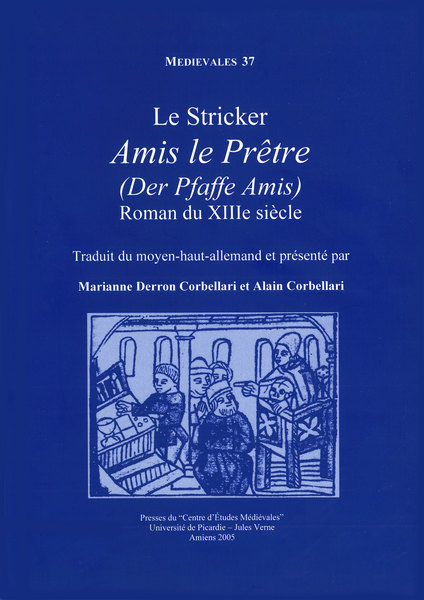
16h30 – Alain Corbellari (Université de Lausanne / Université de Neuchâtel), « Les frères mendiants dans les fabliaux »
17h00 – Nora Viet (Université Clermont Auvergne), « La critique des ordres de mendiants, du Decameron à ses premières traductions françaises »
17h30 – Nicolas Le Cadet (Université Paris-Est Créteil), « La représentation des cordeliers dans L’Heptaméron de Marguerite de Navarre »
18h00 – Discussion

20h00 – Dîner

Vendredi 31 mars

08h45 – Accueil

Session 3 – Prolongements
Présidence : Marylène Possamaï-Pérez (Université Lumière Lyon 2)

09h00 – Silvère Menegaldo (Université de Tours), « Rutebeuf et Jean de Condé : satire des Mendiants et défense des ménestrels »
09h30 – Jean-Marie Fritz (Université de Bourgogne), « Cordeliers et Jacobins dans les deux rédactions de Renart le Contrefait »
10h00 – Discussion
10h15 – Pause café

Session 4 – Exemplarités
Présidence : Élise Rajchenbach (UJM Saint-Étienne)

10h45 – Marie-Anne Polo de Beaulieu (École des Hautes Études en Sciences Sociales), « Les frères mendiants dans Les Contes moralisés de Nicole Bozon et le Ci nous dit »
11h15 – Denis Hüe (Université Rennes 2), « Franciscains et Dominicains à Rouen »
11h45 – Discussion
12h00 – Déjeuner

Session 5 – Sociétés
Présidence : Mattia Cavagna (Université catholique de Louvain)

14h00 – Florent Coste (Université de Lorraine), « La réponse du berger à la bergère ? Critique des ordres mendiants et polémique antipastorale »
14h30 – Fabienne Henryot (École nationale supérieure des sciences de l’information et des bibliothèques), « L’arrivée des capucins en France au XVIe siècle : critiques et soupçons, de la Réforme à la Ligue »
15h00 – Discussion
15h15 – Clôture des travaux

Informations pratiques
Saint-Étienne
Université Jean Monnet
Campus Manufacture
Centre des Savoirs pour l’Innovation (CSI)
Bâtiment des Forges
11 rue Dr Rémy Annino
Salle du Conseil (L121)

Colloque organisé avec le soutien de l’Université Jean Monnet Saint-Étienne, de l’IHRIM et du LabEx COMOD.

Programme au format PDF : ici

Publié dans Colloque | Laisser un commentaire

Offre d’emploi – Directeur/directrice du Musée de l’Hôpital Notre-Dame à la Rose (Lessines)

L’ASBL Office de Tourisme de Lessines a pour objet le développement et la promotion du tourisme de la Ville de Lessines en ce compris la gestion et l’exploitation du musée de l’Hôpital Notre-Dame à la Rose.

L’Hôpital Notre-Dame à la Rose est un musée hospitalier qui a pour mission la conservation, l’acquisition, l’étude et la mise en valeur de pièces et d’objets liés à l’histoire sociale, médicale, chirurgicale et pharmaceutique, ainsi qu’à l’histoire religieuse et conventuelle, de nos régions, du Moyen Age à nos jours.

Le musée de l’Hôpital Notre-Dame à la Rose tend à être un pôle touristique et culturel d’excellence au cœur du pays, ouvert aux publics les plus diversifiés. Le musée se veut également un centre de référence et d’expertise en histoire hospitalière et conventuelle.

Missions génériques :

En tant que directeur(rice) de l’institution, vous

• êtes le visage et le contact privilégié de l’ASBL pour les différentes parties prenantes, tant internes qu’externes et favorisez les partenariats avec les acteurs locaux (ADL, Centre Culturel René Magritte, associatif, etc.) ;

• propagez la mission et la vision de l’institution ;

• dirigez et coordonnez la direction dans la réalisation des objectifs suivants les objectifs prédéfinis et la mise en œuvre de la politique stratégique ;

• avez une vision claire de la manière dont vous pouvez apporter une valeur ajoutée à l’institution en tant qu’organisation muséale et patrimoniale dans le contexte de la Wallonie picarde, de l’Eurométropole, de la Belgique et de l’Europe ;

• suivez les évolutions sociales, administratives et technologiques, en accordant une attention particulière aux innovations et à la diversité ;

• traitez des questions complexes de manière créative et flexible, en ce qui concerne les règles et les procédures qui s’appliquent dans les secteurs et gouvernements dont vous dépendez ;

• assurez une cohérence globale de gestion de l’ASBL dans tous ses aspects : gestion budgétaire, management/ressources humaines, sécurité, enjeux artistiques et culturels, conservation, intégration dans le territoire en prenant appui sur les différents services (médiation, communication, gestion des collections, logistique/horeca et administratif).

• avez des affinités avec la Ville de Lessines, son histoire, ses habitants.

Missions liées à la fonction :

Votre rôle consiste à :

• veiller à la pérennité et au développement des produits ou des potentialités touristiques de l’entité ;

• mettre en œuvre et par la suite redéfinir le projet scientifique et culturel de l’Hôpital Notre-Dame à la Rose en partenariat avec la FWB et la ville de Lessines ;

• développer l’attractivité touristique du vecteur principal de la Ville, l’Hôpital Notre-Dame à la Rose, grâce à la poursuite d’initiatives telles portées notamment par le Commissariat Général au Tourisme ;

• faire participer l’ASBL à une dynamique collective avec les autres partenaires culturels et scientifiques de divers horizons, et travail transversal dans des réseaux locaux, régionaux, nationaux et internationaux ;

• proposer, faire approuver, rendre compte d’un programme d’activités global de l’ASBL et de son budget prévisionnel assorti, au Conseil d’administration, en collaboration avec les différents services ;

• préparer les réunions du Conseil d’Administration et maintenir le lien entre ce dernier et l’équipe professionnelle pour la bonne réalisation des décisions du C.A ;

• être garant de l’exécution budgétaire de l’ASBL et de sa bonne santé financière et de la bonne gestion des différentes aides à l’emploi ;

• être proactif pour la recherche de financements, d’aide à l’emploi et/ou de mécénat en vue du développement des activités de l’ASBL ;

• négocier des contrats et conventions commerciales avec des partenaires locaux ;

• respecter le suivi des obligations et des souhaits émis par les organismes publics subsidiants, en concertation avec le trésorier pour les aspects comptables.

Profil attendu :

• Poste de responsable / gestionnaire ;

• Titulaire d’un Master. Les orientations en histoire, histoire de l’art et gestion culturelle sont un plus ;

• Au minimum 3 ans d’expérience dans un poste de direction dans le domaine muséal ou culturel ;

• Permis de conduire et véhicule personnel obligatoire

Savoirs et savoir-faire (non exhaustive) :

• Connaissance en histoire du domaine hospitalier médiéval et du domaine religieux, capacité à mettre en œuvre des projets d’expositions pertinents, de définir les lignes d’acquisition, d’effectuer une veille professionnelle, de s’inscrire dans des réseaux, d’inscrire les collections du musée dans des réflexions réactualisées ; capacités rédactionnelles, relationnelles et prises de paroles publiques…

• Capacité à l’encadrement de l’équipe du musée et tous les aspects organisationnels du service public muséal conjuguée à une compétence avérée pour la gestion des ressources humaines ;

• Connaissance du cadre légal en matière de gestion touristique, de reconnaissance muséale et de reconnaissance à l’Unesco ;

• Maîtrise des outils et logiciels informatiques ;

• Très bonne maîtrise de l’anglais et du néerlandais : lu, écrit, parlé ;

• Connaissance des législations en vigueur notamment en matière de marchés publics ;

• Connaissance des atouts touristiques et culturels et de l’histoire de la Ville de Lessines.

Savoir être :

• Disponibilité ;

• Créativité ;

• Rigueur ;

• Sens de l’organisation et du service public ;

• Flexibilité et adaptabilité ;

• Bonne aisance relationnelle.

Particularités du poste :

• Ponctuellement, nécessité d’assister aux évènements culturels en soirée et week-ends ;

• Spécificité : déplacements en Belgique et à l’étranger pour les besoins du service ;

Offre :

• Régime de travail: 38 heures temps plein, avec disponibilité́ en soirée et le weekend (occasionnellement) ;

• Contrat : CDI – Commission paritaire 329.02, E6

• Frais de déplacements en transports en commun couverts.

Procédure de recrutement :

Comment postuler ?

Le.a candidat.e remettra sa candidature à Monsieur Dimitri Wittenberg, Président du Conseil d’Administration de l’ASBL OFFICE DE TOURISME DE LESSINES, via l’adresse wittenbergdimitri@hotmail.com au plus tard pour le 1er mai 2023.

La candidature sera accompagnée:

• d’une lettre de motivation ;

• du Curriculum Vitae ;

• d’un extrait d’acte judiciaire ;

• d’une note d’intention de maximum quatre pages contenant la vision du/de la candidat.e quant à son projet pour l’institution sur les 10 prochaines années.

Sélection :

Le jury convoquera les candidat.e.s retenu.e.s à une entrevue qui se tiendra durant la semaine du 22 mai 2023. Les candidat.e.s sont prié.e.s de se tenir disponibles à cette période. Lors de cette entrevue le.a candidat.e présentera son projet.

Critères de la sélection finale: classification au regard de la correspondance avec le profil attendu, eu égard aux titres et mérites, expériences et qualité du projet exposé.

Désignation par le Conseil d’Administration courant du mois de juin 2023.

Prise de fonction au plus tard le 1er septembre 2023.

Infos

ASBL OFFICE DE TOURISME DE LESSINES – Grand’Rue 47 à 7860 LESSINES – email : info@notredamealarose.be – Tél 068/33.24.03

Publié dans Offre d'emploi | Laisser un commentaire

Appel à contribution – De coloribus. Material, Symbolic and Social Crossroads of Medieval and Renaissance Painting

Coordinators:
Nadia Mariana Consiglieri (Universidad de Buenos Aires – Universidad Nacional de las Artes- CONICET, Argentina)
María Cristina Correia Leandro Pereira (Universidade de São Paulo, Brasil)

Colour, both in its material and light dimensions, played a leading role in Medieval and Renaissance visual culture. Taking part in altarpieces, sculptures, architecture, tapestries, wall paintings and illuminated manuscripts, colour embraced multiple variants. Likewise, the translucent, ethereal but also brilliant and changing tones of enameled pieces and goldsmiths, gems, mosaics and stained glasses acquired an equally vital importance. Far from the imaginaries built during the nineteenth century about a Middle Ages plunged into dark and monochromatic grey buildings, the language of colour and light was a constant factor in the visual cultures of this period.

Since the last decades of the past twentieth century, the investigations of Michel Pastoureau reconsidered colour as an object of historical study plausible itself to be approached as a visual code from its multiple symbolic, social, cultural and religious dimensions. Moreover, Herbert L. Kessler stressed the dynamic and material performance of colours and Jean- Claude Bonne emphasized their diverse roles within ornamentation. In addition, specific investigations began to be carried out on typologies, modes of application and commercial routes of pigments used for the production of illuminated manuscripts, as well as collective studies on the diversity of techniques and the relationships between makers and patrons.

This dossier aims to open a new field of debate on the ways in which colour appears and acts on pictorial surfaces of different images, objects, devices and spaces produced between the eleventh and fifteenth centuries. Within this broad temporal spectrum, it is not intended to focus only on the Medieval and Renaissance West, but also on chromatic objectualities from the East and from groups considered the « otherness » from Western Christianity perspective, in order to rethink the diversity of processes, exchanges, assimilations and overlaps. How did colours circulate in their different versions? ; how were material and symbolic exchange networks woven?; what were the roles of the itinerant and permanent painters, circles and workshops of artisans?; how did the technical and material knowledge of colour spread among them?; how did patrons and receivers interact?; what iconographic and ornamental relationships can engage colours with images?

We invite to submit papers related at least to one of the following topics:

  1. Qualities of pictorial matter: diversity of supports, pigments, materials and techniques. Plurality of materials as interaction devices with the pictorial surface: pastiglia reliefs, use of gold leaf, etc.
  2. Painting and praxis: recipe books, treatises and model compilation notebooks.
  3. Medieval theories on colour, light, materiality and their symbolic dimensions.
  4. The roles of artisans and patrons: miniaturists, painters and enamellers’ ways of making. From monastic environments to secular workshops. Regulations, the action of guilds, contracts.
  5. Reception and agency of the pictorial matter: changes, interventions, damages, outrages.
  6. Iconographic, constructive, syntactic, symbolic, aesthetic and rhythmic roles of ornamentation.
  7. The pictorial materiality in objects and Islamic environments: their interactions with the Christian sphere.
  8. Details and features in Medieval and Renaissance pictorial works (paintings, illuminated manuscripts) belonging to the Latin American artistic heritage. Collecting, museographical links and historiographical perspectives.

REFERENCES:
Bonne, J. C.
(1983). Rituel de la couleur: fonctionnement et usage des images dans le Sacramentaire de Saint-Etienne de Limoges. In: Ponnau, D. (Ed.). Image et signification. Paris: La Documentation française, p. 129-139.
Bonne, J. C. (2002). Penser en couleurs: à propos d’une image apocalyptique du Xe siècle. In: Schmitt, J. C; Hülsen-Esch, A. (Eds.). Die Methodik der Bildinterpretation. Göttingen: Wallstein, v. 2, p. 355-379.
Castelnuovo, E. & Sergi, G. (Eds.) (2013). Arte e Historia en la Edad Media. Volumen II. Del construir: técnicas, artistas, artesanos, comitentes. Madrid: Akal.
Kessler, H. (2011). Seeing Medieval Art. Toronto: University of Toronto Press.
Miranda, M.A. & Miguélez Cavero, A. (Eds.) (2014). Portuguese studies on medieval illuminated manuscripts. Barcelona-Madrid: Fédération Internationale des Instituts d’Études Médiévales.
Pastoureau, M. (2006). Una historia simbólica de la Edad Media Occidental. Buenos Aires: Katz.
Pastoureau, M. (2008). Black. The History of a Color. Princeton and Oxford: Princeton University Press.

Pastoureau, M. (2010). Azul. Historia de un color. Madrid: Paidós. Pastoureau, M. (2016). Rouge. Histoire d’une couleur. Paris: Éditions du Seuil. Pastoureau, M. (2017). Vert. Histoire d’une couleur. Paris: Éditions du Seuil.

ABOUT THE SUBMISSIONS

Articles must be original and not be simultaneously evaluated by other publications. To be submitted to peer review modality, the articles must be sent to the email: revistacaiana@gmail.com, indicating in the subject: “LAST NAME_Dossier caiana #23”

Deadline for papers submission: May 29, 2023.

Issue publication date: November – December, 2023.

CAIANA is indexed in the catalog of the Latindex information system, the European Reference Index for Humanities (ERIH PLUS) and DOAJ (Directory of Open Access Journal).

Papers must comply with the publishing standards of the journal:

Normas para la publicación – Caiana

Publié dans Appel à contributions | Laisser un commentaire