Publication – « Netzwerke der Nonnen. Kritische Edition der Briefsammlung der Lüner Benediktinerinnen (Hs. 15, ca. 1460–1555) », éd. Eva Schlotheuber, Henrike Lähnemann, Philipp Trettin, Lena Vosding, Philipp Stenzig, Simone Schultz-Balluff, Edmund Wareham

Die Briefbücher des Benediktinerinnenklosters Lüne stellen eine reiche Quelle für spätmittelalterliche Frömmigkeit, Gelehrsamkeit und Kommunikationsnetzwerke dar. Die Frauen erzählen lebendig vom Alltag und Festtag im Kloster, vom Verhältnis zum Propst, den Familien oder den Lüner Ratsherren bis zu geistlichen Freundschaften mit Frauen aus den Nachbarkonventen. Als eine Besonderheit sind nicht nur Briefe der Ämterinhaberinnen sondern aller Konventsmitglieder bis zu den Klosterschülerinnen überliefert. Nicht zuletzt kann erstmals das Ringen mit den aufkommenden reformatorischen Gedanken aus der Binnenperspektive einer Benediktinerinnengemeinschaft erfasst werden.Die Edition umfasst über 450 Briefe, die auf Lateinisch, Niederdeutsch und in einer charakteristischen Mischsprache verfasst wurden. Sie erschließt den sozialen, sprachlichen, historischen und rhetorischen Kontext der gelehrten Nonnen und ihre Kommunikationsnetzwerke. Die Lüner Briefbücher erweitern das Korpus der im Spätmittelalter von Frauen selbständig verfassten Texte erheblich. Dabei formten die Nonnen eine auf ihre Bedürfnisse angepasste Sprache, die ihren Klosteralltag und ihre religiösen Ziele angemessen zum Ausdruck bringen konnte.
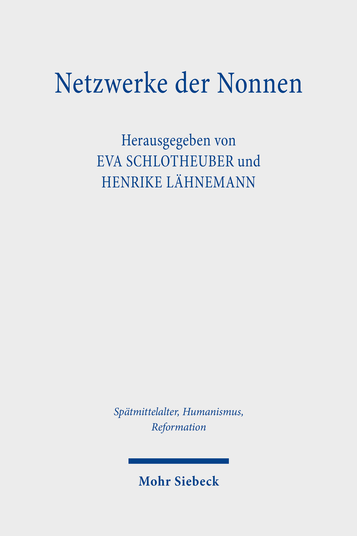
Table des matières :

1) Historischer Kontext
Eva Schlotheuber: Der Lüner Konvent und die Klosterlandschaft bis 1500 – Edmund Wareham: Die Einführung der Reformation – Lena Vosding: Überlieferungskontext – Lüner Quellen des 15. und 16. Jahrhunderts

2) Sozialer Kontext und Netzwerke
Edmund Wareham: Einführung – Philipp Trettin: Lüneburger Familien und Ämterkarrieren im Kloster Lüne – Philipp Stenzig: Netzwerke der Pröpste

3) Bildung und sprachlicher Kontext
Eva Schlotheuber: Die Ausbildung der Nonnen – Henrike Lähnemann: Zweisprachigkeit und literarische Verarbeitung – Simone Schultz-Balluff/Timo Bülters: Schriftsprachliche Besonderheiten der niederdeutsch abgefassten Lüner Briefe – Lena Vosding: Brieflehren und Rhetorik der Nonnen

4) Edition
Lena Vosding: Handschriftenbeschreibung – Wolfgang Seifert: Technische Umsetzung und Webpräsentation

Informations pratiques :

Netzwerke der Nonnen. Kritische Edition der Briefsammlung der Lüner Benediktinerinnen (Hs. 15, ca. 1460–1555), éd. Eva Schlotheuber, Henrike Lähnemann, Philipp Trettin, Lena Vosding, Philipp Stenzig, Simone Schultz-Balluff, Edmund Wareham, Timo Bülters, Konstantin Winters, Mohr Siebeck, Tübingen, 2023 ; 1 vol., 1000 p. ISBN : 978-3-16-160899-5. Prix : € 160,00.

Source : Mohr Siebeck
Publié dans Publications | Laisser un commentaire

Appel à contribution – New Perspectives on Personifications in Roman, Late Antique and Early Byzantine Art (200–800 AD)

International workshop
Munich 26–27.01.2024.

International workshop, Munich 26–27.01.2024.

The aim of this workshop is to explore the formal patterns, roles and meanings, continuities and innovations in the depictions of personifications of this period to better understand their functions, their relationship to one another and to other iconographic tools, as well as the changes that occur between the second and ninth centuries in the Mediterranean world.

Please submit an abstract of 300 words and a bio of 100 words by 15 September 2023.

New Perspectives on Personifications in Roman, Late Antique and Early Byzantine Art (200–800 AD)

Keynote lecture by Professor Emma Stafford, University of Leeds, School of Languages, Cultures and Societies

Personifications are some of the most geographically and chronologically widespread phenomena in Art History. From monumental sculpture or floor mosaics to textiles, coins or everyday objects, personifications were represented in all visual media to express and communicate a variety of different ideas, such as natural phenomena, months, seasons or geographical regions, personal qualities or intangible abstractions. While some are easily identifiable via specific attributes, others can only be recognized through name labels; some occur as isolated figures, others as active participants in complex scenes; some exist in countless examples, others survive in a singular image. They may have counterparts in contemporary written sources, or may be purely visual inventions. In addition, a single personification can carry multivalent meanings, which may allow for several layers of interpretation. Over time their ontological status, functions and meanings have undergone various changes. A significant period of transformation is the transition from the ancient to the mediaeval world. While personifications were seen as numinous figures in ancient Mediterranean societies, they may have been rather symbolic or allegorical in mediaeval visual cultures.

The aim of this workshop is to explore the formal patterns, roles and meanings, continuities and innovations in the depictions of personifications of this period to better understand their functions, their relationship to one another and to other iconographic tools, as well as the changes that occur between the second and ninth centuries in the Mediterranean world.

We invite proposals for individual papers from the fields of classics, archaeology, art history, visual studies, numismatics, sigillography and related fields addressing especially, but not exclusively, the following topics:

– New research on individual personifications in all Roman, Late Antique and Byzantine visual media (sculpture, painting, mosaic, coins, seals, textiles, book illumination, jewellery, everyday and/or luxury objects, etc.)
– Methodological and theoretical approaches towards personifications (ontology, polysemy, etc.)
– Reflections on the relationship between text and image in the analysis of personifications
– Functional comparisons between different formats (stand-alone personifications, personifications in groups and/or narrative scenes)
– Chronological and geographical comparisons and iconographical developments in the depictions of personifications
– Relationship between the pictorial representation of personifications and their spatial and/or cultural context
– Relationship between personifications and the patrons, recipients and viewers of objects and works of art that include them

Please submit an abstract of 300 words and a bio of 100 words by 15 September 2023. All proposals should include your name, email address and academic affiliation (if applicable). Please also include a main subject field plus secondary subject field in the application. The participants are expected to deliver a 20-minute talk, followed by a Q&A session. The workshop will take place in-person at Ludwig-Maximilians-Universität München and the Museum für Abgüsse Klassischer Bildwerke in Munich on Friday and Saturday, 26–27 January 2024 and will be held in English. For the planned publication German, French and Italian will also be accepted.

The workshop is organized by Institut für Byzantinistik, Byzantinische Kunstgeschichte und Neogräzistik, Ludwig-Maximilians-Universität München with the kind support of Spätantike Archäologie und Byzantinische Kunstgeschichte e.V.

Please do not hesitate to contact us with any questions you may have and send your abstracts and bios to both:

Charles Wastiau
Cwastiau@uliege.be
Université de Liège
Rheinische Friedrich-Wilhelms-Universität Bonn

Prolet Decheva
prolet.decheva@ucdconnect.ie
University College Dublin
Ludwig-Maximilians-Universität München

Kontakt

Charles Wastiau
E-Mail: Cwastiau@uliege.be
Université de Liège
Rheinische Friedrich-Wilhelms-Universität Bonn

Prolet Decheva
E-Mail: prolet.decheva@ucdconnect.ie
University College Dublin
Ludwig-Maximilians-Universität München

Source : H-Soz-Kult

Publié dans Appel à contributions | Laisser un commentaire

Podcast – Pierre Gonneau, « Les plus anciennes chartes russes »

La collection des « Monumenta Palaeographica Medii Aevi » vient de s’enrichir d’une « Series Rossica » qui ouvre l’accès à des documents en alphabet cyrillique (après le latin, le grec et l’hébreu). Le volume 1 de cette série publie les 27 plus anciennes chartes conservées dans le fonds du conseil municipal de Riga (Lettonie) concernant les relations de la ville hanséatique avec le monde russe, les principautés de Smolensk et Polotsk, les cités de Novgorod et de Pskov. Ces chartes sont les plus anciens documents originaux et les copies contemporaines témoignant de la pratique diplomatique russe entre 1191/1192 et 1338-1341. Le but de cette conférence est d’introduire le public aux pratiques paléographiques et diplomatiques des principautés et villes commerçantes russes, tout en retraçant l’histoire unique du fonds de la municipalité de Riga.

Source : YouTube

Publié dans Podcast | Laisser un commentaire

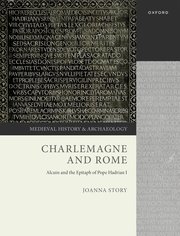
Publication – Joanna Story, « Charlemagne and Rome. Alcuin and the Epitaph of Pope Hadrian I »

Charlemagne and Rome is a wide-ranging exploration of cultural politics in the age of Charlemagne. It focuses on a remarkable inscription commemorating Pope Hadrian I who died in Rome at Christmas 795. Commissioned by Charlemagne, composed by Alcuin of York, and cut from black stone quarried close to the king’s new capital at Aachen in the heart of the Frankish kingdom, it was carried to Rome and set over the tomb of the pope in the south transept of St Peter’s basilica not long before Charlemagne’s imperial coronation in the basilica on Christmas Day 800. A masterpiece of Carolingian art, Hadrian’s epitaph was also a manifesto of empire demanding perpetual commemoration for the king amid St Peter’s cult. In script, stone, and verse, it proclaimed Frankish mastery of the art and power of the written word, and claimed the cultural inheritance of imperial and papal Rome, recast for a contemporary, early medieval audience. Pope Hadrian’s epitaph was treasured through time and was one of only a few decorative objects translated from the late antique basilica of St Peter’s into the new structure, the construction of which dominated and defined the early modern Renaissance. Understood then as precious evidence of the antiquity of imperial affection for the papacy, Charlemagne’s epitaph for Pope Hadrian I was preserved as the old basilica was destroyed and carefully redisplayed in the portico of the new church, where it can be seen today.

Using a very wide range of sources and methods, from art history, epigraphy, palaeography, geology, archaeology, and architectural history, as well as close reading of contemporary texts in prose and verse, this book presents a detailed ‘object biography’, contextualising Hadrian’s epitaph in its historical and physical setting at St Peter’s over eight hundred years, from its creation in the late eighth century during the Carolingian Renaissance through to the early modern Renaissance of Bramante, Michelangelo, and Maderno.

Joanna Story studied History and Archaeology at Durham University and is a professor of Early Medieval History at the University of Leicester where she has worked since 1996. She specialises in the period c. AD 600-900, and in the material culture of the written word in manuscript and epigraphic form. Her research and publications are characterised by a highly interdisciplinary approach to evidence, combining data derived from text, images, and physical remains surviving from the early medieval European past and deploying traditional historical techniques alongside methods used in archaeology and physical sciences.

Table des matières :

Edition and translation: Alcuin’s epitaph for Pope Hadrian I (by David R. Howlett)
Introduction: Charlemagne and Italy
1:Renaissance Rome: Hadrian’s epitaph in new St Peter’s
2:The ‘Life’ and death of Pope Hadrian
3:Alcuin and the epitaph
4:Recalling Rome: epigraphic syllogae and itineraries
5:Writing on the walls: epigraphy in Italy and Francia
6:Black stone: materials, methods, and motives
7:Aachen, art, and the court
8:Charlemagne, St Peter’s, and the imperial coronation

Informations pratiques :

Joanna Story, Charlemagne and Rome. Alcuin and the Epitaph of Pope Hadrian I, Oxford, Oxford University Press, 2023 ; 1 vol., 432 p. ISBN : 978-0-19920-634-6. Prix : GBP 100,00.

Source : Oxford University Press

Publié dans Publications | Laisser un commentaire

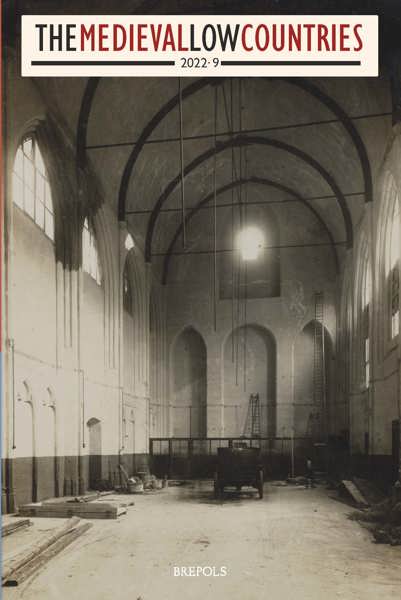
Publication – The Medieval Low Countries – 9 (2022)

The Medieval Low Countries. History, Archaeology, Art and Literature is a peer-reviewed journal featuring articles on the Low Countries (viewed in its broadest sense as the estuaries of Scheldt, Meuse, Rhine and IJssel with their corresponding hinterlands), from the start of the fifth to the second half of the sixteenth century. During these centuries this was one of the major centers of economic, cultural, religious and social development in Europe. By publishing the best of new scholarship concerning the region over the course of the Middle Ages, The Medieval Low Countries makes these achievements more fully visible and helps display the connections between changes in each domain. At the same time, the journal provides a forum for exchange and cooperation between established and upcoming scholars in several disciplines, whether in Europe, the United States, or beyond.

MLC is a continuation of the journals Millennium, Jaarboek voor Middeleeuwse Geschiedenis, and Medieval and Modern Matters: Archaeology and Material Culture in the Low Countries.

Table des matières :

Mathijs SPEECKE, The Spatial Politics of Craft Guilds in Fourteenth-Century Flanders

Jan VERHEYEN, The Residences of the Lucchese Merchants in Bruges (1390–1430). Their Social Network, the Locations of Their Real Estate, and the Financial Drivers for Their Properties

Lauran TOORIANS, Jan Moffet and Scottish Merchants in Bergen op Zoom in the Early Sixteenth Century

David DITCHBURN, Scotland, the Low Countries, and the Conduct of Diplomacy in the Later Middle Ages

Book Reviews

Informations pratiques :

The Medieval Low Countries, t. 9 (2022). ISBN : 978-2-503-59875-8. Prix : € 83,00.

Source : Brepols

Publié dans Publications | Laisser un commentaire

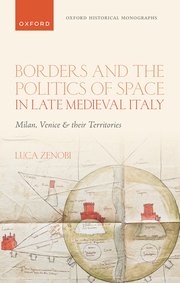
Publication – Luca Zenobi, « Borders and the Politics of Space in Late Medieval Italy. Milan, Venice, and their Territories »

Space matters. It situates our history, structures our daily lives, and often determines what we can and cannot do. Borders are central to this reality. Tools and symbols of separation, power, and identity, they bring people together as much as they set them apart. This book explores how borders were understood, made, and encountered at the end of the Middle Ages, and what they can tell us about the spatial fabric of society at the threshold of modernity. It shows that pre-modern borders were nothing like the fuzzy lines they are typically made out to be, that border-making was rarely a top-down process and should instead be studied as an interactive endeavour, and that space was shaped by communities far more than states in this period.

At its core, Borders and the Politics of Space in Late Medieval Italy is the account of a frontier which would mark the Italian peninsula for centuries, that between the territories of the Duchy of Milan and those of the Republic of Venice. But it is also a study of how rulers and subjects alike defined spaces they could call their own. Luca Zenobi combines methods from several disciplines and applies them to a range of evidence from twenty different libraries and archives, including theoretical treatises and pragmatic records, written chronicles and cartographic visualisations, private documents and official correspondence. The cast of characters is equally eclectic, featuring influential thinkers and pragmatic statesmen, zealous factions and clumsy bureaucrats, hopeless beggars and ambitious princes. On the border, their stories intersect and reveal their part in a shared history.

Luca Zenobi is a historian of Italy, Europe, and the Mediterranean world between 1300 and 1600. Having read history and trained as an archivist in Milan, he moved to Oxford for his PhD and then to Cambridge, where he was a research fellow at Trinity College and an affiliated lecturer in the Faculty of History. He is now a postdoctoral fellow at the University of Edinburgh, funded by the British Academy. His work has appeared in publications such as Quaderni Storici, the Journal of Early Modern History, and Past & Present.

Table des matières :

List of Figures
List of Abbreviations
Note on Usage
Introduction
1:Iurisdictio in Practice: Cultures of Space, Borders, and Power
2:War and Peace: The Establishment of a New Political Geography
3:Confinium Compositio: Territorial Disputes and the Making of Borders
4:From Macro to Micro and Back Again: Constructing Borders in the Localities
5:Borders as Sites of Mobility: Crossing External Frontiers and Internal Boundaries
6:Committing Borders to Paper: Written Memory and Record-Keeping
7:Drawing the Line? The Visual Representation of Territorial B/orders
Conclusion
Bibliography
General Index
Index of Names

Informations pratiques :

Luca Zenobi, Borders and the Politics of Space in Late Medieval Italy. Milan, Venice, and their Territories, Oxford, Oxford University Press, 2023 ; 1 vol., 288 p. ISBN : 978-0-19887-686-1. Prix : GBP 83,00.

Source : Oxford University Press

Publié dans Publications | Laisser un commentaire

Publication – « Poésie et Musique au temps de Louis XII », dir. Adeline Desbois-Ientile, Alice Tacaille

Et si l’on pouvait retrouver des pièces chantées dans les corpus poétiques ? Réinterpréter la place de la poésie et relire le théâtre en analysant autrement leur articulation à la musique ? Littéraires et musicologues étudient dans ce volume les liens entre poésie et musique autour de 1500.

Table des matières : ici

Informations pratiques :

Poésie et Musique au temps de Louis XII, dir. Adeline Desbois-Ientile, Alice Tacaille, Paris, Classiques Garnier, 2023 ; 1 vol., 334 p. (Rencontres, 580 ; Colloques, congrès et conférences sur la Renaissance européenne, 121). ISBN : 978-2-406-14674-2. Prix : € 34,00.

Source : Classiques Garnier

Publié dans Publications | Laisser un commentaire

Appel à contribution – Les frontières du travail

Sous la direction de Louise Fauchier, Éléonore Favier, Marie-Adeline Le Guennec et Marine Lépée

La définition des éléments constitutifs du travail dans les sociétés anciennes revêt un enjeu historiographique qui se heurte aux conceptions contemporaines du monde professionnel, souvent inadaptées à la richesse sémantique et à la fluidité des catégories en usage dans les mondes antiques et médiévaux. On remarque toutefois que la notion de « frontière » est régulièrement mobilisée lorsque l’on tente de dessiner les contours des pratiques professionnelles et de leurs acteurs. Travail licite/illicite, travail pour l’autoconsommation/ouvert aux marchés, travail urbain/rural, travail contraint/libre, rétribution/gratuité sont autant d’oppositions à questionner, tant leur délimitationmouvante et poreuse encourage à penser la complexité des aspects du travail et leurs variations dans le temps et l’espace.

Pour ce dixième numéro de Frontière·s, les auteur·rice·s sont encouragé·e·s à identifier et interroger les frontières du travail dans les sociétés protohistoriques, antiques et médiévales. Les contributions pourront se fonder sur des approches et des sources variées (vestiges matériels, sources textuelles, épigraphie, iconographie…) et les réflexions historiographiques seront particulièrement bienvenues. Les thématiques suivantes pourront être explorées, sans s’y limiter :

  • les frontières spatiales, à différentes échelles (territoire, ville, quartiers, édifices, organisation interne du lieu de métier…) : division du travail, réseaux de travailleurs et d’approvisionnement ou encore place du travail en contexte domestique ;
  • les frontières sociales, avec un éclairage plus particulier sur les individus et les groupes au travail, au prisme des critères de statut, de genre ou d’âge, les phénomènes d’intégration ou de marginalisation des travailleur·euse·s dans la société, ou encore les questions de l’apprentissage et du travail familial ;
  • les frontières juridiques et institutionnelles, en évaluant le degré d’encadrement juridique (droits écrits, coutumes, institutions) de pratiques qui semblent se situer aux confins du travail : le travail gratuit, le travail familial, le travail contraint, etc. ;
  • les frontières des représentations, en abordant la gamme des perceptions du travail, de la valorisation au mépris. La manière dont l’identité d’un individu ou d’un groupe s’affirme, en mots et en images, à partir du travail, constituera également une thématique à interroger.

Les auteur·ice·s sont invité·e·s à proposer aussi bien des études de cas chronologiquement circonscrites que des enquêtes rendant compte des évolutions des frontières du travail sur le temps long.

Calendrier

  • Décembre 2023 : date limite de remise des résumés (facultatif)
  • 31 mai 2024 : date limite de soumission des articles complets
  • Décembre 2024 : parution du numéro

Modalités de soumission

Les auteur·rice·s adresseront leur contribution par e-mail à frontiere-s@msh-lse.fr en précisant leur statut et leur organisme de rattachement. Les contributions prendront la forme d’un texte en français ou en anglais de 25 000 caractères maximum (espaces non comprises), accompagné de résumés en français et en anglais (entre 800 et 1 200 caractères, espaces non comprises) et de mots-clés en français et en anglais. Les auteur·rice·s qui le souhaitent peuvent soumettre un résumé accompagné de références bibliographiques 5 mois avant la date limite de soumission des articles complets afin de recevoir un avis indicatif des coordinateurs du numéro (réponse sous un mois).

Source : Frontière.s

Publié dans Appel à contributions | Laisser un commentaire

Publication – Klaus Oschema, “Europe” in the Middle Ages

From the nineteenth century onwards, historians described the Middle Ages as the « cradle » of the nation state—then, after World War II, they increasingly identified the period as the « cradle » of Europe. A close look at the sources demonstrates that both interpretations are misleading: while « Europe » was not a rare word, its use simply does not follow modern expectations. This volume contrasts modern historians’ constructions of « Europe in the Middle Ages » with a fresh analysis of the medieval sources and discourses. The results force us to recognize that medieval ideas of ordering the world differ from modern expectations, thereby inviting us to reflect upon the use and limits of history in contemporary political discourse.

Klaus Oschema is Professor in Late Medieval History at the Ruhr-University Bochum. He researches medieval concepts of social, geographic, and political order. Recent publications include Order into Action (ed., with C. Mauntel, 2022).

Table des matières :

Preface and Acknowledgements

Chapter 1: Why Europe? A Concept Crossing History and Politics

Chapter 2: Foundations in Antiquity

Chapter 3: Moments of Transformation—Europe in the Early Middle Ages

Chapter 4: Europe, Christianity, or Something Completely Different? Impressions from the Central Middle Ages

Chapter 5: Our Last Hope? Entangling Europe and Christianity in the Late Middle Ages

Chapter 6: Perspectives from Outside? Byzantium and the Arabic World

Conclusion: No Roadmap for Europe—History, Politics, and the Way to Global History

Further Reading

Informations pratiques :

Klaus Oschema, “Europe” in the Middle Ages, Leeds, ARC Humanities Press, 2023 ; 1 vol., 136 p. (Past Imperfect). ISBN : 978-1-64189-159-2. Prix : GBP 16,95.

Source : ARC Humanities Press

Publié dans Publications | Laisser un commentaire

Publication – Jean Ramière de Fortanier, « Deux baronnies du Haut-Languedoc. Les derniers neveux de Jean XXII (Histoire des barons de La Pomarède) & Un domaine des Bernuy en Lauragais (Villeneuve-la-Comptal) »

En réunissant sous ce titre l’histoire de deux seigneuries de notre région, nous avons espéré montrer les ressources que contiennent encore les archives particulières, dont le dépouillement méthodique donnerait certainement des renseignements précieux pour l’histoire de la féodalité, l’histoire des mœurs et de la vie rurale, l’histoire économique.

L’histoire des institutions seigneuriales en France, de la fin du Moyen Âge à la Révolution, reste à faire. Des travaux d’ensemble sur ce sujet ne peuvent s’appuyer que sur un très grand nombre d’études de détail sur les documents que le ravage du temps a épargnés. Nous avons essayé d’y apporter notre modeste contribution.

Jean Ramière de Fortanier 1932.

Ce travail, demeuré jusqu’alors inédit, a été récompensé en 1932 par le prix Ourgaud de la Société Archéologique du Midi de la France.

Informations pratiques :

Jean Ramière de Fortanier, Deux baronnies du Haut-Languedoc. Les derniers neveux de Jean XXII (Histoire des barons de La Pomarède) & Un domaine des Bernuy en Lauragais (Villeneuve-la-Comptal), Castelnaudary, Centre Lauragais d’Études Scientifiques, 2023 ; 1 vol., 60 p. Prix de souscription : € 4,00.

Centre Lauragais d’Études Scientifiques
Maison des Associations
1 av du Mal de Lattre de Tassigny
11400 Castelnaudary
clescastel@gmail.com

Publié dans Publications | Laisser un commentaire