Appel à contribution – The Many Faces of Paul. Pauline Exegesis in Pre-modern Times

Call for Papers for theopening conference of the project “Exegesis of Paul in the 16th century”

Geneva, March 21-23, 2024

In the history of Western exegesis, the Pauline Epistles have always played an important role. It is true that the Protestant reformations claimed to be particularly inspired by the Apostle’s authority, but the Corpus Paulinum shaped Latin theologians ever since the teachings of the Church Fathers and throughout the medieval period, and that in many different ways. For example, almost one third of the ca. 700 biblical allusions in Peter Lombard’s Sentences refer to the Corpus Paulinum, underlining its authoritative status, and in the prologue to his Commentary on Romans Thomas Aquinas famously stated that «just as the Church uses most frequently the Psalms among the writings of the Old Testament, so it most frequently uses in the New Testament the Epistles of Paul, since in both writings almost the whole doctrine of theology is contained.» At the dawn of the Reformation era, humanists such as Jacques Lefèvre d’Étaples and Erasmus gave their ethical projects an explicitly Pauline shape, but they differed from both the scholastics’ and the protestants’ approaches. Similarly, the theological controversies of the 16th century provoked an impressive number of doctrinal commentaries to the Pauline epistles not only among the proponents of Reformation theologies, but also among the defenders of traditional beliefs. In other domains, historians in the 12th century explored no less than those of the 16th century the Corpus Paulinum in order to recount the events of the 1st century BC, and teachers of rhetoric as well as predicants of both the mendicant orders and of more heterodox movements used the example of Paul as a model to imitate. These various, and often opposing uses and interpretations of Paul make apparent that, in the Western exegetical tradition, the Apostle had many different faces. To put it with Karlfried Froehlich: «There was never just one Paul».

This diversity, however, is far from having been sufficiently taken into account in modern research. While in contemporary New Testament studies the «new perspectives» on Paul that have emerged in recent decades have simply resumed more traditional readings as the «Western» (or, even more reductively, the «Lutheran») perspective on Paul, historians of theology have tended to identify rather quickly «typically» Pauline elements in their sources without asking what «type» of Paul they are referring to, and how their sources’ perspective on Paul was shaped. Our conference on the Many Faces of Paul aims at exploring this diversity and at promoting a contextualized understanding of the reception of the Corpus Paulinum in the vast Latin tradition from Late Antiquity to Early Modernity. When citing, using, and interpreting Paul, what image did his readers draw of the Apostle, and how did they get to that image? What goals did they pursue, and what resources did they have at hand?

The conference on the Many Faces of Paul is the opening workshop of the research project “Exegesis of Paul in the 16th Century”, funded by the Swiss National Science Foundation. Other than the project itself which will mainly focus on Reformation theology, our interest for this conference is to focus on other intellectual traditions, be they late antique, medieval, or early modern, that will help us later to contextualize Protestant perspectives. We are therefore deliberately interested in presentations on a broad spectrum of possible figures and sources, and we welcome contributions on the whole corpus that was historically associated with the Apostle, including the Epistle to the Hebrews and apocryphal material such as the Acta Pauli. In particular, we invite papers which, from Late Antiquity roughly up to 1600, focus on

  • a particular theologian, historian, philosopher and his use of (parts of) the Corpus Paulinum,
  • a particular commentary or treatise dealing with one of the Pauline Epistles or with the figure of Paul,
  • a particular Epistle and its reception in a specific milieu,
  • the uses of Paul in moral treatises or sermons,
  • biographical, historical, or historiographical knowledge of Paul as communicated in prologues, vitae, historical works, or images,
  • the reuse of earlier works on Paul in later treatises, sermons, or commentaries.

Since this is an interdisciplinary project, we also invite contributors to include modern exegetical perspectives when reading the historical sources. This is not meant to check whether the historical readers “were right” with their interpretations, but the modern perspective has proved a helpful contrast to recognize the specificities of individual historical approaches.

Submission and participation guidelines

The conference will be held in Geneva, from March 21-23, 2024. We will cover travel and accommodation fees for accepted speakers, but please be aware that, for ecological reasons, we are not allowed to cover flight tickets. For those who want to participate from far abroad, there is the possibility to join us on Zoom.

We invite you to submit proposals with a provisional title and a short summary (200 words) to be sent to matteo.colombo@unige.ch.

before September 30, 2023, 

Besides conventional papers, there is the possibility to submit contributions for a poster session. If you wish to do so, please specify it in your proposal. Papers can be given in English, French, or German.

Scientific Committee in charge of selecting the proposals

  • Ueli Zahnd (Université de Genève – Institut d’histoire de la Réformation)
  • Stefan Krauter (Université de Zurich – Faculté de Théologie)
  • Floriane Goy (Université de Genève – Institut d’histoire de la Réformation)
  • Noemi Schürmann (Université de Zurich – Faculté de Théologie)
  • Matteo Colombo (Université de Genève – Institut d’histoire de la Réformation)
  • Benjamin Manig (Université de Zurich – Faculté de Théologie)

Source : Calenda
Publié dans Appel à contributions | Laisser un commentaire

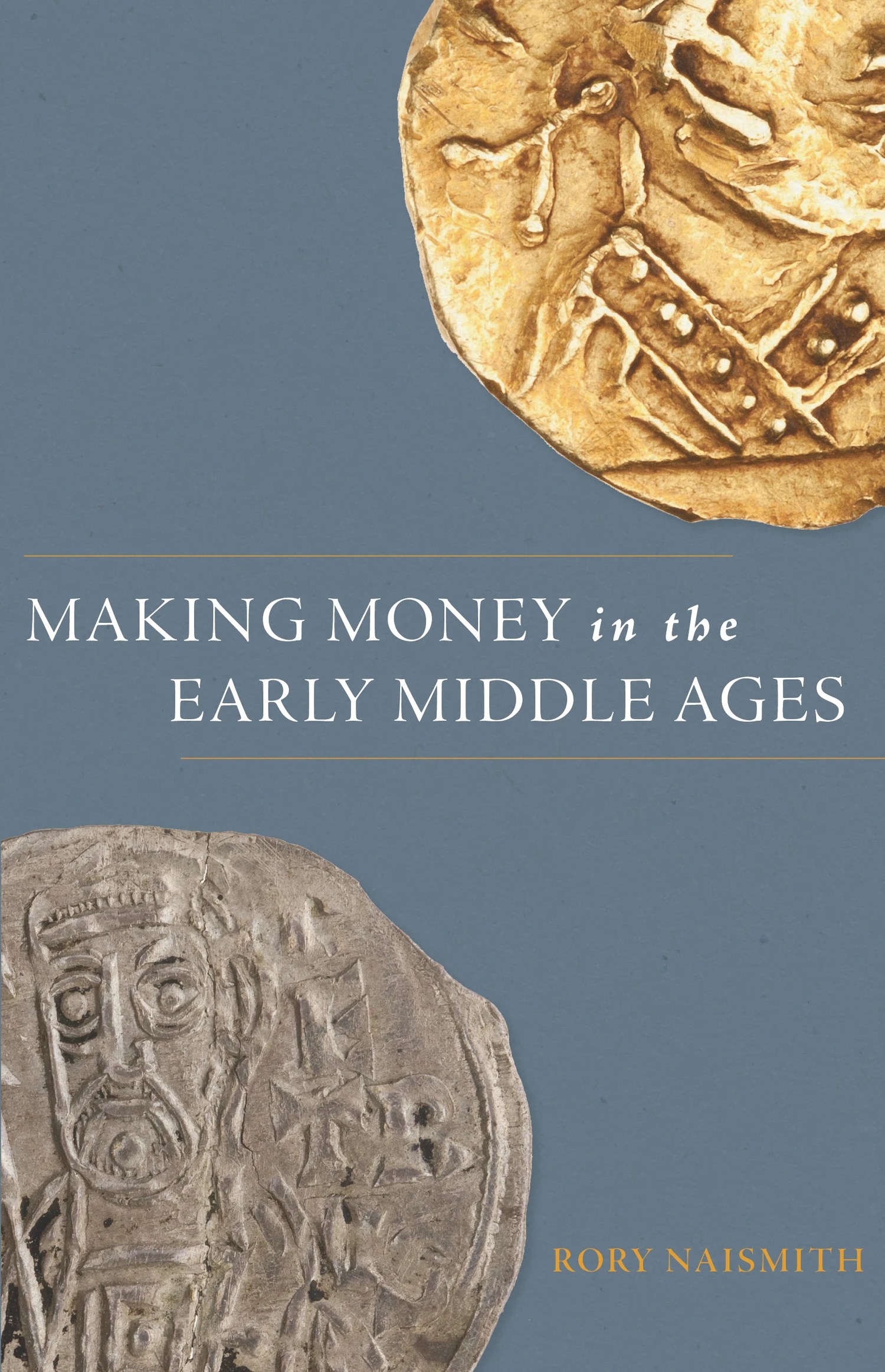
Publication – Rory Naismith, « Making Money in the Early Middle Ages »

Between the end of the Roman Empire in the fifth century and the economic transformations of the twelfth, coined money in western Europe was scarce and high in value, difficult for the majority of the population to make use of. And yet, as Rory Naismith shows in this illuminating study, coined money was made and used throughout early medieval Europe. It was, he argues, a powerful tool for articulating people’s place in economic and social structures and an important gauge for levels of economic complexity. Working from the premise that using coined money carried special significance when there was less of it around, Naismith uses detailed case studies from the Mediterranean and northern Europe to propose a new reading of early medieval money as a point of contact between economic, social, and institutional history.

Naismith examines structural issues, including the mining and circulation of metal and the use of bullion and other commodities as money, and then offers a chronological account of monetary development, discussing the post-Roman period of gold coinage, the rise of the silver penny in the seventh century and the reconfiguration of elite power in relation to coinage in the tenth and eleventh centuries. In the process, he counters the conventional view of early medieval currency as the domain only of elite gift-givers and intrepid long-distance traders. Even when there were few coins in circulation, Naismith argues, the ways they were used—to give gifts, to pay rents, to spend at markets—have much to tell us.

Rory Naismith is professor of early medieval English history at the University of Cambridge and a fellow of Corpus Christi College. He is the author of Early Medieval Britain, c. 500–1000, Citadel of the Saxons: The Rise of Early London, and Money and Power in Anglo-Saxon England: The Southern English Kingdoms, 757–865.

Informations pratiques :

Rory Naismith, Making Money in the Early Middle Ages, Princeton, Princeton University Press, 2023 ; 1 vol., 540 p. ISBN : 978-0-69117-740-3. Prix : USD 45,00.

Source : Princeton University Press

Publié dans Publications | Laisser un commentaire

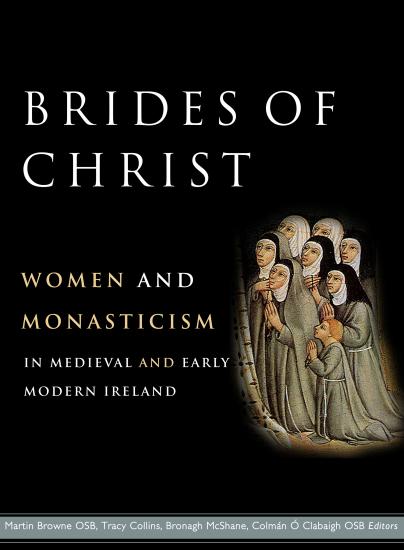
Publication – « Brides of Christ Women and monasticism in medieval and early modern Ireland », éd. Martin Browne OSB, Tracy Collins, Bronagh Ann McShane & Colmán Ó Clabaigh OSB

Throughout the long history of Irish monasticism, the experience of women monastics has, until recently, been relatively sidelined. A desire to redress this inspired the decision in 2021 to dedicate the fifth Glenstal History Conference to exploring the various ways in which women responded to the monastic and ascetic vocation in medieval and early modern Ireland. Whether as practitioners or as patrons, women found creative and dynamic ways to pursue their calling as ‘Brides of Christ’ between the fifth and the seventeenth centuries, often in the face of tremendous difficulties and challenges. Their lives of prayer and service are sometimes hard to glimpse but the combined interdisciplinary perspectives of these essays brings them into sharper focus. The collection also demonstrates the current vitality of research on this topic and includes contributions by both established and emerging scholars.

The volume is dedicated to Dr Dagmar Ó Riain Raedel in recognition of her outstanding contribution to Irish and European medieval history and, in particular, to the study of medieval Irish-German monastic relations.

Contributors: Tracy Collins (National Monuments Service); Bishop Anne Dyer (diocese of Aberdeen and Orkney); Abbess Máire Hickey OSB (Kylemore Abbey); Elva Johnston (UCD); Colm Lennon (MU); Marian Lyons (MU); Bronagh McShane (NUIG); Colmán Ó Clabaigh OSB (Glenstal Abbey); Dagmar Ó Riain Raedel (ind.); Cathy Swift (Mary Immaculate College, UL); Yvonne Seale (SUNY, Geneseo).

Tracy Collins is an archaeologist with the National Monuments Service and a founding director of Aegis Archaeology Limited, a heritage consultancy. Bronagh Ann McShane is a historian of women, religion and confessionalization. Her book, Irish women in religious orders, 1530–1700, was published in 2022. Martin Browne and Colmán Ó Clabaigh are monks of Glenstal Abbey, Co. Limerick.

Table des matières :

Foreword
Abbess Máire Hickey OSB

Introduction
Tracy Collins & Bronagh Ann McShane

‘On the brink of the wave’: Towards an archaeology of female religious in early medieval Ireland
Tracy Collins

Locating female saints and their foundations in the early medieval Irish martyrologies
Elva Johnston

Soul sisters: Two Irish holy women in their late antique context
Catherine Swift

The other peregrinatio: Pilgrim nuns in medieval Regensburg and their Irish connections
Dagmar Ó Riain-Raedel

Putting women in order: A comparison of the medieval women religious of Ballymore-Loughsewdy and Prémontré
Yvonne Seale

Keeping it in the family: Familial connections of abbesses and prioresses of convents in medieval Ireland
Mary Ann Lyons

Marginal figures? Quasi-religious women in medieval Ireland
Colmán Ó Clabaigh OSB

Sisters of the priory confraternity of Christ Church, Dublin, in the late middle ages
Colm Lennon

Who were the nuns in early modern Ireland?
Bronagh Ann McShane

Epilogue
Brides of Christ: Ladies of fame and women worthy of praise
Bishop Anne Dyer

Informations pratiques :

Brides of Christ Women and monasticism in medieval and early modern Ireland, éd. Martin Browne OSB, Tracy Collins, Bronagh Ann McShane & Colmán Ó Clabaigh OSB, Dublin, Four Court Press, 2023 ; 1 vol., 248 p. ISBN : 978-1-80151-022-6. Prix : € 45,00.

Source : Four Court Press

Publié dans Publications | Laisser un commentaire

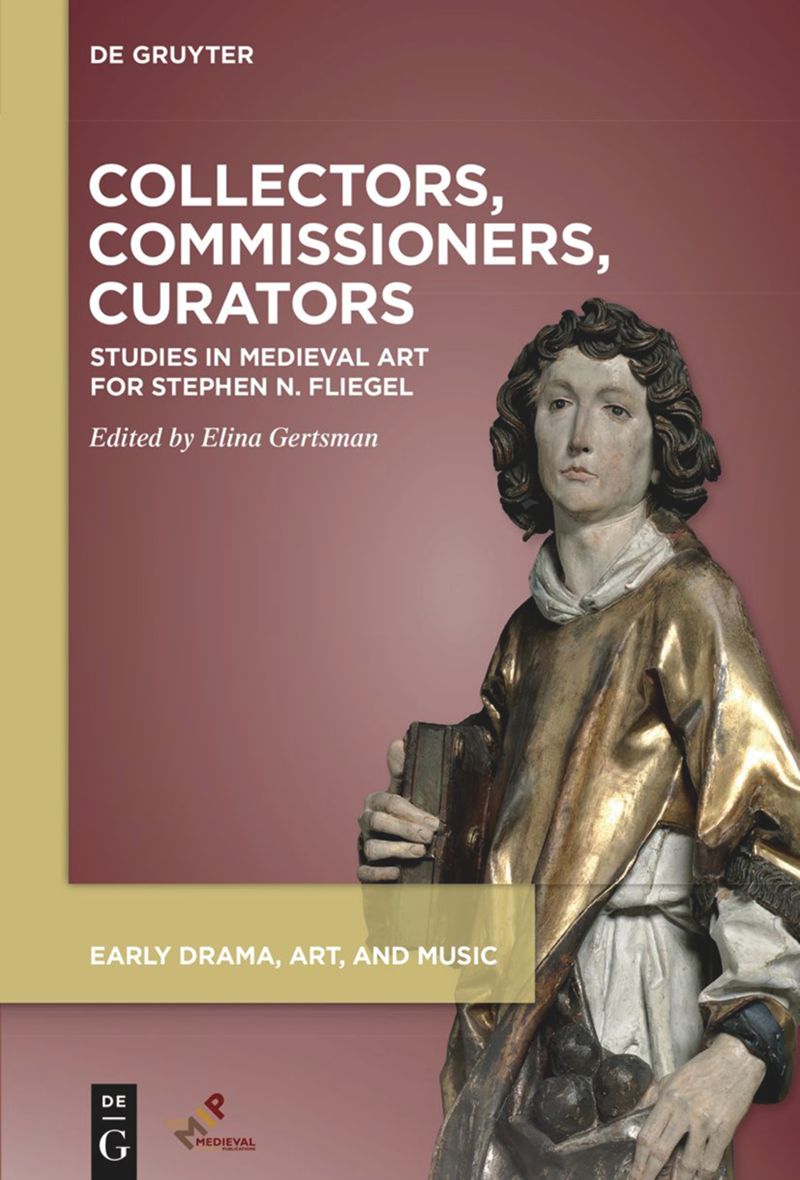
Publication – « Collectors, Commissioners, Curators Studies in Medieval Art for Stephen N. Fliegel », éd. Elina Gertsman

This volume celebrates the storied career of Stephen N. Fliegel, the former Robert Bergman Curator of Medieval Art at the Cleveland Museum of Art (CMA). Authors of these essays, all leading curators in their fields, offer insights into curatorial practices by highlighting key objects in some of the most important medieval collections in North America and Europe: Metropolitan Museum of Art, The Louvre, the British Museum, Victoria & Albert Museum, the Getty, the Groeningemuseum, The Morgan Library, Vienna’s Kunsthistorisches Museum, and, of course, the CMA, offering perspectives on the histories of collecting and display, artistic identity, and patronage, with special foci on Burgundian art, acquisition histories, and objects in the CMA.

Elina Gertsman is Professor of Art History and Archbishop Paul J. Hallinan Professor in Catholic Studies II at Case Western Reserve University. She is the author and editor of numerous books and articles, including a catalogue, produced in collaboration with Stephen N. Fliegel, for an exhibition featuring the CMA’s Gothic table fountain.

Table des matières : ici

Informations pratiques :

Collectors, Commissioners, Curators Studies in Medieval Art for Stephen N. Fliegel, éd. Elina Gertsman, Berlin–Boston, De Gruyter, 2023 ; 1 vol., XVII–267 p. (Early Drama, Art, and Music). ISBN : 978-1-50152-110-2. Prix : € 112,95.

Source : De Gruyter

Publié dans Publications | Laisser un commentaire

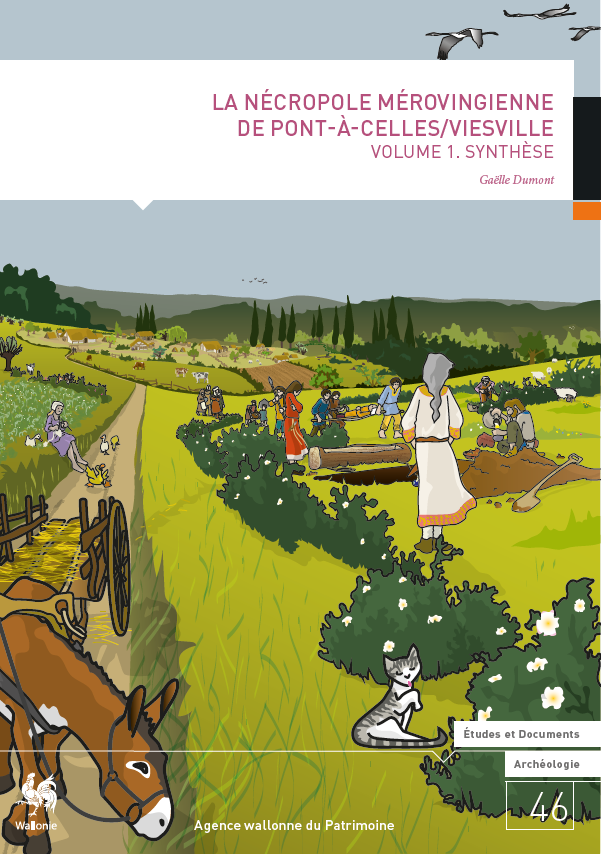
Publication – Gaëlle Dumont, « La Nécropole mérovingienne de Pont-à-Celles/Viesville »

Découverte sur le territoire de la commune de Pont-à-Celles en province de Hainaut (Belgique), la nécropole mérovingienne de Viesville a bénéficié en 2005 et 2006 d’une fouille intégrale menée par l’Agence wallonne du Patrimoine, avec le concours du CReA-Patrimoine de l’Université libre de Bruxelles et de l’asbl Recherches et Prospections archéologiques. L’opération archéologique préventive conduite sur ce site a révélé cent quarante-cinq sépultures datées entre le dernier quart du ve et les premières années du VIIe siècle. Implantée non loin de la voie Bavay-Cologne et de l’ancienne agglomération romaine de Liberchies, elle succède de toute évidence à une nécropole romaine dont subsistent deux tombes à incinération datées du IIIe siècle. 


Les défunts, inhumés dans un cercueil en bois, sont accompagnés d’un mobilier abondant et varié : accessoires vestimentaires, bijoux, armes, ustensiles et outils du quotidien, récipients en verre ou en céramique. Toutes ces découvertes ont bénéficié d’une recherche approfondie menée avec le concours de pas moins de treize chercheurs spécialisés dans la période concernée. Cette approche pluridisciplinaire offre un nouveau regard sur la richesse des échanges, plus particulièrement au vie siècle, entre la communauté installée à Viesville et son environnement proche d’une part, mais également avec des régions plus éloignées comme le pourtour de la mer Baltique, le Proche-Orient, la Mésopotamie et l’Inde. 

Mise en perspective dans son contexte historique et archéologique régional, la nécropole de Viesville constitue un nouveau jalon dans la connaissance de l’occupation alto-médiévale en Wallonie.

Table des matières : ici

Informations pratiques :

Gaëlle Dumont, La Nécropole mérovingienne de Pont-à-Celles/Viesville, Namur, Agence Wallonne du Patrimoine, 2023 ; 2 vol., 243 p. (Études et documents. Archéologie, 46). ISBN : 978-2-39038-182-2. Prix € 40,00.

Source : AWaP

Publié dans Publications | Laisser un commentaire

Publication – « Les Enfances Guillaume. Rédactions A et B », éd. et trad. Annette Brasseur

Les Enfances Guillaume ouvrent le Cycle de Guillaume d’Orange, tout en ayant été composées – nous l’avons démontré – après les autres chansons de ce cycle. Leur édition synoptique, à partir des rédactions A et B, avec une introduction codicologique, linguistique et littéraire, des notes explicatives, un glossaire et plusieurs index, se devait de compléter celle des versions C et D réalisée jadis par Patrice Henry, et procurée par Annette Brasseur. Cette biographie poétique favorise la connaissance de Guillaume, dont la personnalité se révèle dès ses premières prouesses entrecoupées d’échappées romanesques. Elle nous permet d’aborder le domaine périlleux d’une psychologie plus élaborée qu’on ne le croirait d’emblée. Nous percevons encore, vers la fin du XIIIe siècle, l’écho du personnage historique qui lui aurait donné naissance et qui aurait nourri l’imaginaire des trouvères. Les Enfances Guillaume font « sentir » une vie hors du commun quand l’engouement pour l’époque médiévale ne cesse de croître. Une mise en français moderne aide le lecteur à franchir la barrière d’une langue qui a beaucoup évolué au fil du temps.

Table des matières :

Avant-propos

Introduction Les manuscrits Choix des manuscrits de base et établissement des textes Interprétation de ces textes Notes explicatives et index Analyse des rédactions éditées A2 et B1 Graphies et langue de ces r©dactions Graphies des voyelles Graphies des consonnes Morphologie Formes non verbales Formes verbales Lexique Hapax Mots ayant un sens particulier non relevé dans les dictionnaires et attesté uniquement ici Mots et expressions pittoresques ou rars Syntaxe Emplois particuliers Versification de ces rédactions Les vers Les laisses Les assonances et les rimes Apport linguistique des assonances Datation du texte conservé, à partir de critères extralinguistiques Guillaume, meilleur fils du preu comte Aymeri Guillaume dans son existence poétique CLXXXV Guillaume dans son existence historique

Bibliographie

ÉDITION ET MISE EN FRANÇAIS MODERNE DES ENFANCES GUILLAUME

Notes explicatives

Table des noms propres

Glossaire

Index thématique des notes explicatives

Index des énoncés sentencieux

Annexes

Informations pratiques :

Les Enfances Guillaume. Rédactions A et B, éd. et trad. Annette Brasseur, Genève, Droz, 2023 ; 1 vol., 984 p. (Texte courant). ISBN : 978-2-600-06385-2 CHF : 25,00.

Source : Droz

Publié dans Publications | Laisser un commentaire

Appel à contribution – What Means Late Antiquity in the Balkans? New Concepts, Historiographies and Case Studies for the Period Between the 3rd and the 8th Centuries

This first edition of the YSCH online seminar aims to stimulate a discussion that, relying on the most recent studies, can contribute to specifying the definition of the concept of “Late Antiquity” for the Balkan Peninsula.

Taking into account the distinctive features of this historical period, as defined in the major epistemological works on the question, and recognising the elements of rupture and continuity from the past, the debate that will arise from this activity will try to answer such questions (among others):

  1. What means Late Antiquity in the Balkans? (Viz. how Late Antiquity is generally perceived in studies produced in the Balkans and on the peninsula.)
  2. Is it a simple synonym for the Late Roman or the Early Byzantine/Mediaeval periods, or is it a period in its own right?
  3. What are its ante and post quem termini, when applied to the Balkans?
  4. With regard to the Late Antique period, what makes the Balkans specific and what makes it an integral part of the Empire?

This seminar will be multidisciplinary, relying on any kind of testimonies available in the fields of history, archaeology and art history. Among the themes for which discussion are encouraged, we can mention (but not exclusively):

  • Historiography
  • Epigraphy
  • Numismatics
  • Topography
  • Iconography
  • Administration
  • Urban development
  • Military organisation
  • Religion
  • Migrations

How to apply

Presentations from PhD students or Postdocs who have defended their PhD dissertation during the last 5 years are accepted from this call for papers.

The title of the paper, an abstract (200-400 words) and 5 keywords can be sent to haemusyoungscholars@gmail.com 

by September 8, 2023.

Presentations may be in English and in French.

The seminar will take place online on the 23 October 2023.

Each presentation (c. 20 minutes) will be followed by a small discussion (c. 10 minutes).

Coordinators

Ivan Gargano, Postdoctoral Fellow (trainee) at the Archaeological Institute, Belgrade

Maria Noussis, Postdoctoral Fellow of the FNRS at the Université Libre de Bruxelles

Priscilla Ralli, Postdoctoral Fellow (scientific member) at the École française d’Athènes

Social media managers:

Aleksandar Ivanov, PhD Student at Sofia University “Sv. Kliment Ohridski », and archaeologist/young scholar at the National Archaeological Institute with Museum of the Bulgarian Academy of Sciences

Marion Jobczyk, PhD Student at the Paris 8 University Vincennes-Saint-Denis / ArScAn-UMR 7041 research centre (CNRS, Paris 1 Panthéon-Sorbonne, Paris Nanterre, Paris 8, Inrap)

More information

Website https://haemus-network.univ-lille.fr/young-scholars-circle/

E-mail haemusyoungscholars@gmail.com

Source : Calenda

Publié dans Appel à contributions | Laisser un commentaire

Offre d’emploi – Archéologue spécialisé dans les époques médiévales (Institut national de recherches archéologiques)

  • Statut Employé de l’État
  • Groupe d’indemnité A1
  • Date limite de candidature17/08/2023
  • MinistèreMinistère de la Culture
  • Administration/OrganismeInstitut national de recherches archéologiques
  • LieuBertrange
  • TâcheTâche complète
  • Nombre de postes vacants1
  • Type de contratCDD jusqu’au 20 juillet 2024
  • NationalitéÊtre ressortissant UE
  • Catégorie de métiersArts, Culture et Patrimoine
  • Réf.E00026452

Qui recrute ?

Institut national de recherches archéologiques

Missions

  • Instruire et gérer les dossiers, suivi technique et scientifique d’opérations archéologiques alto-médiévales, spécifiquement des époques mérovingienne et carolingienne, coordination des recherches et documentations de terrain, exploitation et traitement scientifiques post-fouilles.

Profil

Compétences techniques

  • Excellentes capacités d’évaluation de fonds d’archives;
  • Bonne maîtrise des outils informatiques bureautiques standards et AutoCad;
  • Bonne maîtrise du traitement des archives courantes et intermédiaires;
  • Avoir participé et/dirigé des fouilles archéologiques sur le terrain et/ou en laboratoire (traitement post-fouilles).

Compétences comportementales

  • Capacité d’analyse et de synthèse;
  • Excellente compétence rédactionnelle;
  • Esprit rigoureux et sens de l’organisation;
  • Aisance relationnelle, adaptabilité et réactivité;
  • Capacité de travailler en équipe aussi bien avec des chercheurs scientifiques qu’avec des aménageurs et maîtres d’ouvrage (privés et publics).

Atouts

  • Spécialisation ou bonne connaissance des époques mérovingienne et carolingienne.

Conditions d’admission

Poste d’employé de l’État

Obtenez plus de détails sur les conditions d’admission des employés de l’État.

Diplômes

Vous êtes titulaire d’un grade ou diplôme délivré par un établissement d’enseignement supérieur reconnu par l’Etat du siège de l’établissement et sanctionnant l’accomplissement avec succès d’un master en archéologie médiévale ou de son équivalent.

Expérience

Vous avez une expérience d’au moins 3 ans dans le domaine.

Langues

Vous répondez aux exigences des connaissances de 3 langues administratives pour le groupe d’indemnité A1. Une dispense de deux des trois langues administratives peut être accordée sous certaines conditions.

Nationalité

Vous êtes ressortissant d’un État membre de l’Union européenne.

Documents à fournir

Lettre de motivation, copie du diplôme et CV renseignant les informations suivantes:

  • Nom(s) et prénom(s)
  • Numéro d’identification (càd. le numéro de matricule nationale ou, à défaut, la date de naissance)
  • Nationalité
  • Adresse électronique
  • Liste des établissements d’enseignement fréquentés et leur pays d’implantation (veuillez indiquer le nom complet des établissements, les abréviations n’étant pas permises)
  • Diplômes (veuillez indiquer l’intitulé des diplômes)
  • Expérience professionnelle
  • Connaissances en langues parlées et écrites

Pour ce poste, vous devez obligatoirement postuler en ligne via MyGuichet, les candidatures via courriel ou via courrier postal n’étant pas acceptées. Les documents sont à introduire via MyGuichet en format pdf (taille maximale 20 Mo).

Source : GovJobs

Publié dans Offre d'emploi | Laisser un commentaire

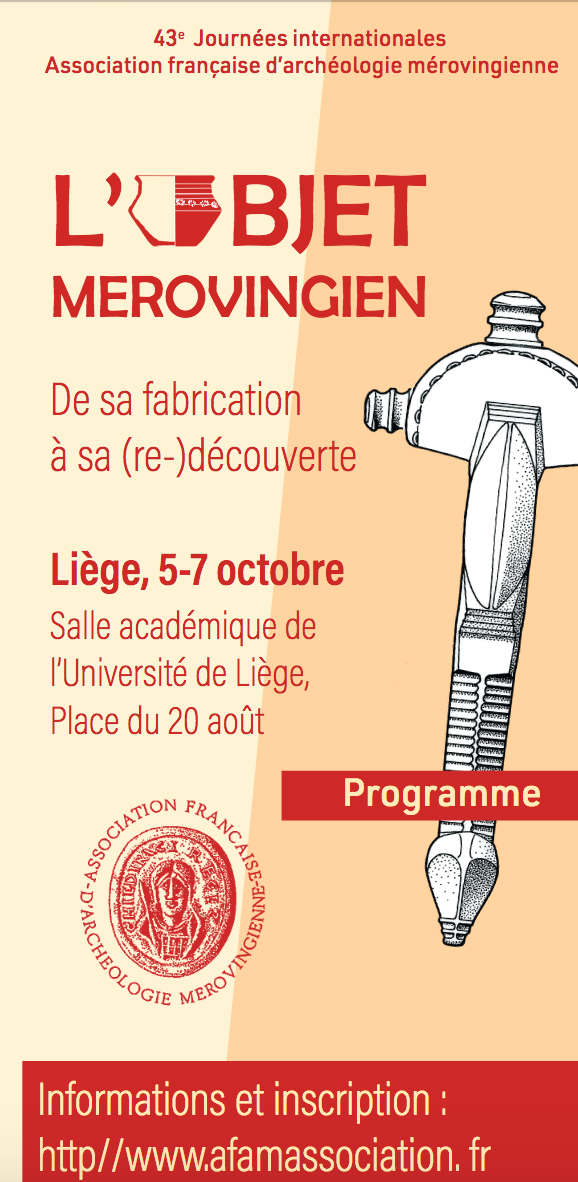
Colloque – L’objet mérovingien : de sa fabrication à sa (re-)découverte. 43èmes Journées internationales de l’AFAM

43èmes Journées internationales de l’AFAM, Liège (Belgique), du jeudi 5 au samedi 7 octobre 2023

organisées par l’AFAM, l’Agence wallonne du Patrimoine (AWaP) et l’Université de Liège (ULiège), avec la collaboration de l’UCLouvain

L’objet mérovingien : de sa fabrication à sa (re-)découverte

Parmi les très nombreuses thématiques étudiées au cours des 42 journées internationales d’archéologie mérovingienne, le mobilier n’a étonnamment jamais été abordé pour lui-même. Ces objets constituent pourtant une part essentielle des données archéologiques qui alimentent nos recherches. Ils sont souvent indispensables pour dater un contexte. Ils sont parfois déterminants pour identifier la nature d’un site ou d’une structure. Ils documentent tantôt le genre tantôt le rang ou le rôle de leurs utilisateurs, tantôt le savoir-faire de leurs producteurs.

Les marges septentrionales des royaumes mérovingiens sont des régions privilégiées pour l’étude de ce mobilier. Les tombes y contiennent en effet une quantité d’objets souvent plus importante que dans celles des sites du cœur et du sud du royaume. Le mobilier y est aussi plus varié : ces régions constituent des lieux d’échanges importants avec d’autres peuples et des zones de passage obligé pour la circulation de certains biens.

Les communications des 43e Journées seront regroupées en plusieurs sections : l’objet fabriqué, l’objet usé et réparé, l’objet associé, l’objet conservé. Une session d’actualités régionales clôturera la rencontre.

Le colloque se déroulera en salle académique de l’Université de Liège, place du XX-août (centre-ville).

Inscriptions via ce formulaire

Programme disponible ici

Hôtels à proximité : Plus d’informations

Source : AWaP

Publié dans Colloque | Laisser un commentaire

Publication – Dominique Barthélemy, « Miracles de l’an mil »

Les récits de miracles représentent pour nous une des meilleures sources sur la société de l’an mil et du XIe siècle dans le royaume capétien. Nombreux à cette époque, ils consistent d’abord en des guérisons, parmi lesquelles de spectaculaires exorcismes de possédés des deux sexes. Mais il s’agit aussi d’aides à des captifs pour leur évasion et, dispensées sous forme de « jeux », à des chevaliers et à leurs épouses qui se trouvent dans l’embarras pour de « petites choses », comme la perte de la monture ou du faucon d’un chevalier, ou d’un bijou d’une dame. Enfin, l’an mil et ses abords sont caractérisés par la fréquence de miracles de châtiments surnaturels, véritables vengeances des saints contre des ennemis de leurs moines et de leurs serfs, qui exigent leur intervention en des termes d’une surprenante vigueur, allant jusqu’à friser le mauvais goût.

Ce livre donne une idée de la saveur de ces textes habiles, piquants ou dramatiques, souvent surprenants, et aussi du type de commentaires, allant jusqu’au décryptage, que l’historien d’aujourd’hui peut en proposer. La société féodale était-elle aussi violente et superstitieuse qu’on le croit souvent ? À l’aide des suggestions de l’anthropologie, nous pouvons nous départir des préjugés qui fausseraient nos lectures de ces beaux récits, et partir en quête de ce qu’ils nous révèlent vraiment, en particulier à travers les nombreux incidents qui les émaillent.

Dominique Barthélemy, membre de l’Institut (Académie des inscriptions et belles-lettres), est professeur d’histoire du moyen âge à Sorbonne Université

Table des matières :

Points de vue sur l’an mil – La Règle et les miracles – Les démons dans le sanctuaire – Le châtiment des chevaliers – L’appui du saint à des combattants – Duels et ordalies dans les Miracles de saint Benoît – Saint Benoît et ses serfs – La voix des serfs et des serves – L’éloignement des démoniaques – Le succès de sainte Foy – La majesté de sainte Foy – Les jeux de sainte Foy – Les évasions miraculeuses – Les chevaliers et les autres dans les Miracles de sainte Foy – Les épreuves de saint Vivien – Miracles et incidents dans les conciles de paix (989-1124) – Les médiations de saint Ursmer – Itinéraire de saint Arnoul – Les miracles des temps nouveaux.

Informations pratiques :

Dominique Barthélemy, Miracles de l’an mil, Paris, Armand Collin, 2023 ; 1 vol., 320 p. (Mnémosya). ISBN : 978-2-20063-371-4.

Source : Dunod

Publié dans Publications | Laisser un commentaire