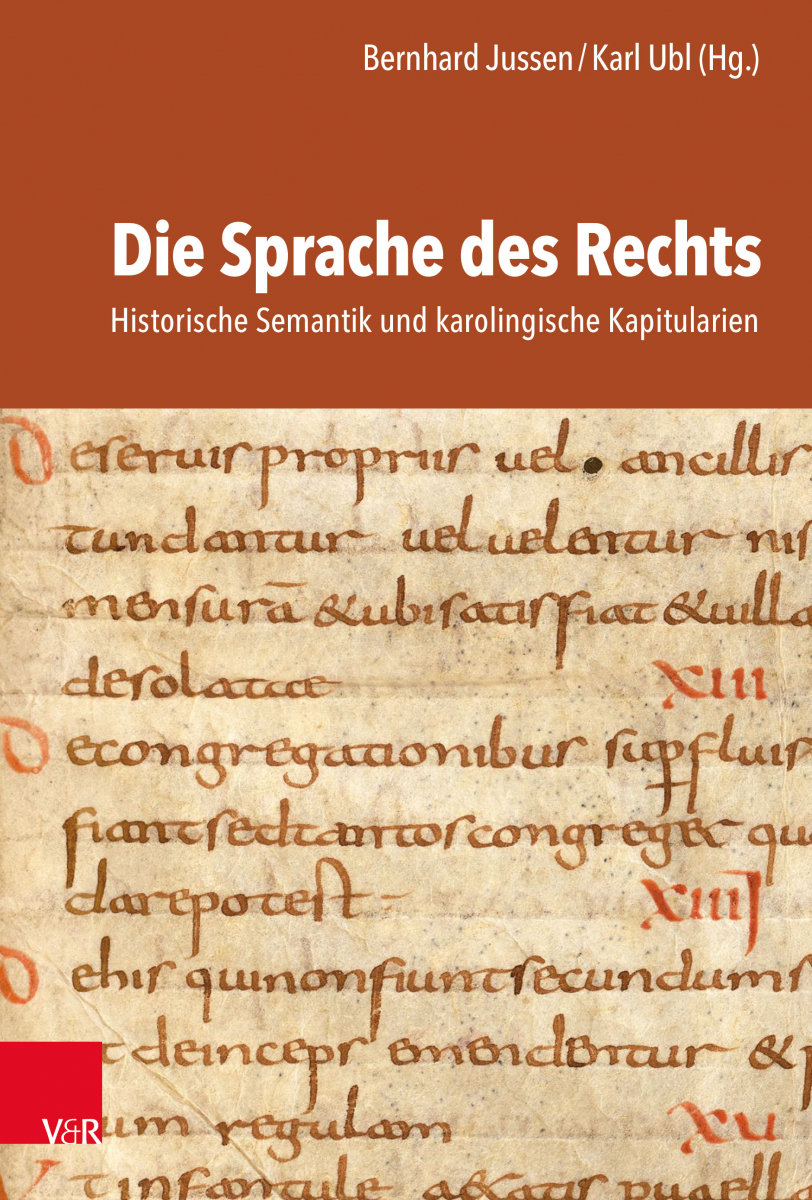
Publication – « Die Sprache des Rechts Historische Semantik und karolingische Kapitularien », dir. Bernhard Jussen et Karl Ubl

In den Erlassen der karolingischen Herrscher (»Kapitularien«) bewegt sich die Sprache in einer Indifferenzzone zwischen Recht, Moral, Religion und Administration. Dadurch schufen die Karolinger ein flexibles Instrument zur Kommunikation mit ihren Amtsträgern, das sich gerade aufgrund seiner Regellosigkeit besonders für ein pragmatisches Regierungshandeln eignete. Der Sammelband nimmt erstmals den Wortgebrauch, die semantischen Felder und die Beziehungen zu anderen Textsorten des 9. Jahrhunderts in den Blick und wirft dadurch neues Licht auf die Bedingungen des Erfolges der karolingischen Herrschaft.

Dr. Bernhard Jussen ist Professor für Mittelalterliche Geschichte an der Universität Frankfurt am Main.

Dr. Karl Ubl ist Professor für Mittelalterliche Geschichte (Schwerpunkt frühes und hohes Mittelalter) an der Universität zu Köln.

Informations pratiques :

Die Sprache des Rechts Historische Semantik und karolingische Kapitularien, dir. Bernhard Jussen et Karl Ubl, Göttingen, Vandenhoeck und Ruprecht, 2022 ; 1 vol., 377 p. (Historische Semantik, 33). ISBN : 978-3-525-31141-7. Prix : € 85,00.

Source : Vandenhoeck und Ruprecht

Publié dans Publications | Laisser un commentaire

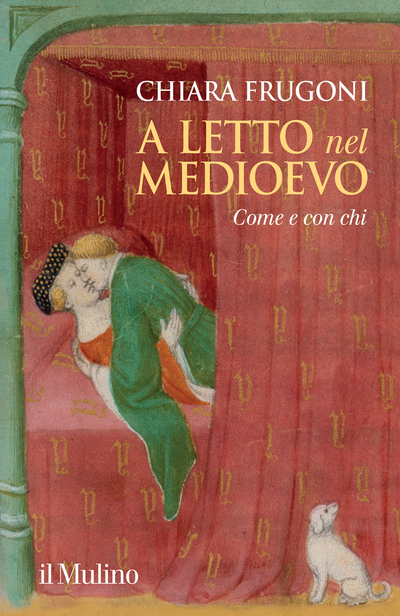
Publication – Chiara Frugoni, « A letto nel Medioevo. Come e con chi »

Gelo, pioggia e vento: nel Medioevo sembra esserci solo un’unica stagione, l’inverno. Ma i disagi del clima sono compensati dal tepore del camino, sempre presente nella stanza da letto. Dove non ci si coricava soltanto; anche di giorno la camera era vivacemente utilizzata: per pranzare, studiare, ricevere visite. Sontuoso e imbottito, abbellito da nappe e cuscini, oppure umile pagliericcio, comprato al mercato o fatto su misura, il letto tutto racconta: la morte e la nascita, amori legittimi e amori proibiti, giochi festosi, atti di violenza e tripudio dei sensi, malattie, segreti e trame di ogni genere. Un luogo per due? Non necessariamente. A volte molto affollato e ad accoglienza variabile, come avviene nelle gustose novelle di Boccaccio, sul letto tenta di appuntarsi, senza molto successo, il controllo della chiesa che lo addita come luogo di ogni seduzione diabolica.

Chiara Frugoni (1940-2022) ha insegnato Storia medievale nelle Università di Pisa, Roma e Parigi. Tra i suoi numerosi libri segnaliamo, per il Mulino, «Vivere nel Medioevo. Donne, uomini e soprattutto bambini» (2017), «Uomini e animali nel Medioevo. Storie fantastiche e feroci» (2018), «Paradiso vista Inferno. Buon governo e tirannide nel Medioevo di Ambrogio Lorenzetti» (2019), «Paure medievali. Epidemie, prodigi, fine del tempo» (2020), «Donne medievali. Sole, indomite, avventurose» (2021). I suoi saggi sono tradotti nelle principali lingue europee, oltre che in giapponese e in coreano.

Informations pratiques :

Chiara Frugoni, A letto nel Medioevo. Come e con chi, Bologne, Il Mulino, 2022 ; 1 vol., 168 p. (Grandi illustrati). ISBN : 978-88-15-29985-7. Prix : € 22,00.

Source : Il Mulino

Publié dans Publications | Laisser un commentaire

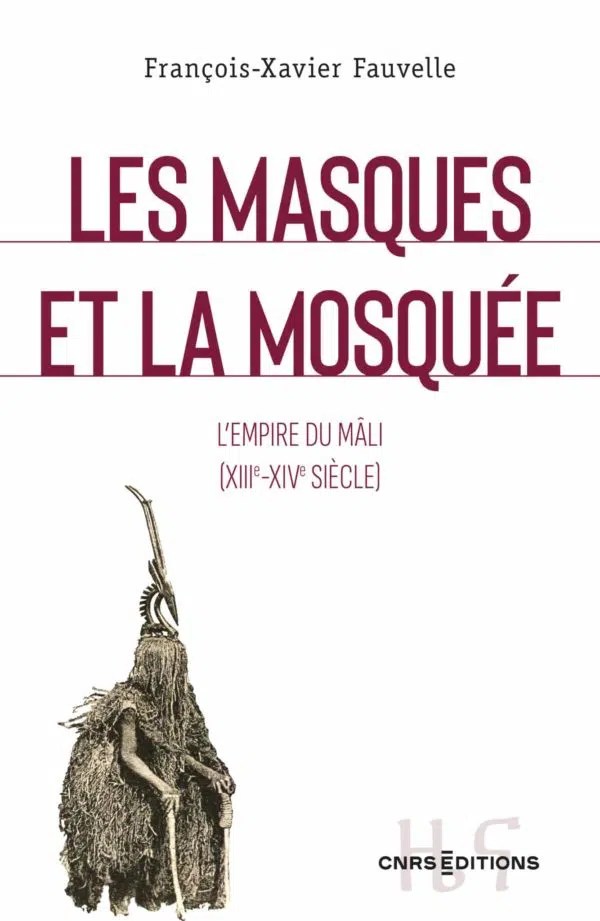
Publication – François-Xavier Fauvelle, « Les masques et la mosquée. L’empire du Mâli (XIIIe-XIVe siècle) »

Que sait-on de l’empire du Mâli ? Partant d’une analyse de la notice Wikipédia consacrée à cette formation politique majeure du Moyen Âge, François-Xavier Fauvelle s’interroge sur les raisons de l’obscurité qui continue de l’entourer. Puis, patiemment, il reconstitue des savoirs modestes et solides, avant d’assembler avec virtuosité les multiples pièces, issues des textes arabes, de la tradition orale et des fouilles archéologiques, du vaste « puzzle » documentaire qu’est l’histoire du Mâli.

Qu’ont Soundjata et Charlemagne en commun ? Quel rôle le fameux pèlerinage de Mûsâ à La Mecque joue-t-il dans la légitimation du pouvoir ? Attentif aux échos de la geste des mansa, les empereurs mâliens, jusque dans Le Roi Lion de Walt Disney, cette enquête éclaire l’histoire dynastique du Mâli impérial des XIIIe et XIVe siècles, avant de nous faire observer de très près les rituels d’une cour où, les jours de fêtes, les masques dansent devant la mosquée. La compréhension des logiques économiques, religieuses et politiques du Mâli médiéval permet, en point d’orgue, de proposer une nouvelle hypothèse de localisation de la capitale de l’empire, dont la recherche a agité historiens et archéologues depuis le milieu du XIXe siècle.

Par-delà cette ville depuis longtemps disparue, c’est bien l’intelligence de l’Afrique médiévale que met en jeu cette histoire renouvelée.

Professeur au Collège de France, titulaire de la chaire « Histoire et archéologie des mondes africains », François -Xavier Fauvelle a notamment publié Le Rhinocéros d’or. Histoires du Moyen Âge africain (2013).

Informations pratiques :

François-Xavier Fauvelle, Les masques et la mosquée. L’empire du Mâli (XIIIe-XIVe siècle), Paris, CNRS Éditions, 2022 ; 1 vol., 296 p. (Zéna). ISBN : 978-2-27114-370-9. Prix : € 25,00.

Source : CNRS Éditions

Publié dans Publications | Laisser un commentaire

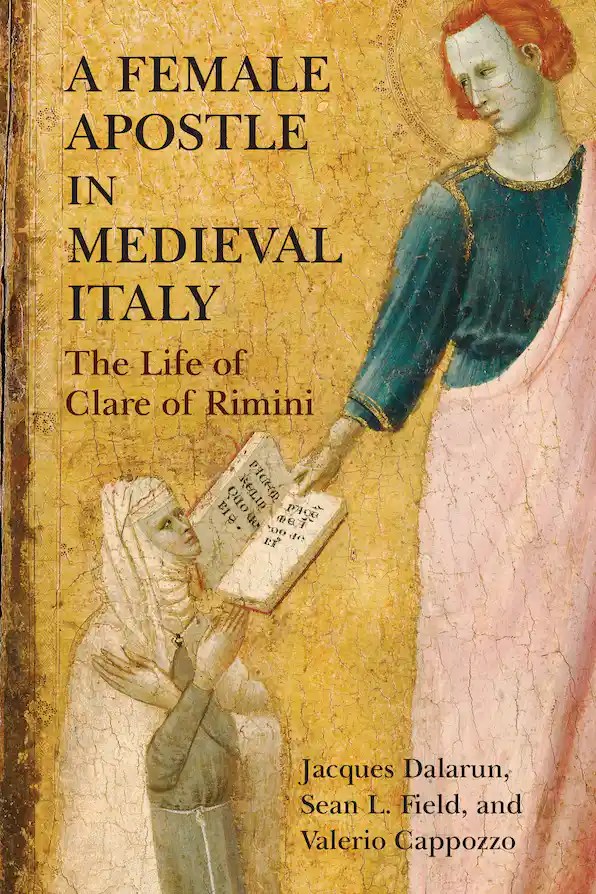
Publication – « A Female Apostle in Medieval Italy. The Life of Clare of Rimini », éd. Jacques Dalarun, Sean L. Field et Valerio Cappozzo

This book centers on a fascinating woman, Clare of Rimini (c. 1260 to c. 1324–29), whose story is preserved in a fascinating text. Composed by an anonymous Franciscan, the Life of the Blessed Clare of Rimini is the earliest known saint’s life originally written in Italian, and one of the few such lives to be written while its subject was still living. It tells the story of a controversial woman, set against the background of her roiling city, her star-crossed family, and the tumultuous political and religious landscape of her age.

Twice married, twice widowed, and twice exiled, Clare established herself as a penitent living in a roofless cell in the ruins of the Roman walls of Rimini. She sought a life of solitary self-denial, but was denounced as a demonic danger by local churchmen. Yet she also gained important and influential supporters, allowing her to establish a fledgling community of like-minded sisters. She traveled to Assisi, Urbino, and Venice, spoke out as a teacher and preacher, but also suffered a revolt by her spiritual daughters.

A Female Apostle in Medieval Italy presents the text of the Life in English translation for the first time, bringing modern readers into Clare’s world in all its excitement and complexity. Each chapter opens a different window into medieval society, exploring topics from political power to marriage and sexuality, gender roles to religious change, pilgrimage to urban structures, sanctity to heresy. Through the expert guidance of scholars and translators Jacques Dalarun, Sean L. Field, and Valerio Cappozzo, Clare’s life and context become a springboard for readers to discover what life was like in a medieval Italian city.

Jacques Dalarun is a member of the Académie des Inscriptions et Belles-Lettres and the former director of the Institut de Recherche et d’Histoire des Textes (CNRS).

Sean L. Field is Professor of History at the University of Vermont.

Valerio Cappozzo is Associate Professor of Modern Languages at the University of Mississippi.

Informations pratiques :

A Female Apostle in Medieval Italy. The Life of Clare of Rimini, éd. Jacques Dalarun, Sean L. Field, Valerio Cappozzo, Philadelphie, University of Pennsylvania Press, 2022 ; 1 vol., 196 p. (The Middle Ages Series). ISBN : 978-1-51282-303-5. Prix : USD 99,95.

Source : University of Pennsylvania Press

Publié dans Publications | Laisser un commentaire

Appel à contribution – The Thirteenth Century Conference

The 2023 Thirteenth Century Conference is to be hosted from 14th to 15th September 2023 by the University of Heidelberg. After a previous and highly successful visit to Paris, our hope for this session is that we can address a variety of Anglo-German themes, looking in particular at ‘England and Germany. Economic, Social and Personal Connections’. From the Emperors Otto IV and Frederick II, via Richard of Cornwall, to the foreign alliances of Edward I, the political and diplomatic relations between England and Germany have been explored, at least in outline. Far less has been written of the comparisons to be drawn between these two parts of Europe, in terms of monetisation, law, or the legal status of women, Jews, and peasants. The trading connections that helped establish the merchants of Cologne or Lübeck as significant players in the politics of thirteenth-century London have to some extent been revealed. But what of the wider personal connections between England and the Rhineland, or between such confederations as the Cinque Ports and the Baltic Hanse? What of literary, artistic or architectural connections? As the home to the Count Palatine, who during the early years of King John of England’s reign was the closest male heir to the English throne, Heidelberg provides an ideal setting in which such connections and comparisons can be identified and explored.

As with previous Thirteenth Century conferences, our hope is to bring together established key-note speakers with those still in early career, including postgraduate researchers. We invite proposals on any topic falling within our wider theme, to be sent in approximately 500 words via email to a.jobson@uea.ac.uk. Priority will be given to proposals that directly address the theme of the conference. If your proposal is accepted, the Conference will pay your travel to and from the venue, with subsistence and accommodation in Heidelberg, for three nights, ie 13-16 September. Others who wish to attend may do so, without paying any conference fee, but finding their own travel and accommodation costs. The deadline for proposals is the 20th of October 2022.

Publié dans Appel à contributions | Laisser un commentaire

Appel à communication – Emplois et remplois du livre manuscrit au Moyen Âge méridional

Rome-Cassino, 23-24 mars 2023
École française de Rome
Scuola Superiore Meridionale
Università di Cassino e del Lazio Meridionale

L’histoire d’un codex commence à la fin de sa fabrication, après la copie du texte. Mais les livres manuscrits n’ont pas qu’une seule vie : ils peuvent être lus et relus, annotés, intégrés, divisés, ou encore déplacés, à plusieurs reprises, de leur lieu de conservation. Bien que non prévues dans le projet initial, les annotations marginales des lecteurs, les corrections du texte, les ajouts au décor sont des opérations qui témoignent de la réutilisation du manuscrit, et donc de son véritable usage au fil du temps. Ces traces laissées par les lecteurs permettent de reconstituer l’influence des livres dans l’activité intellectuelle, personnelle et collective dans un lieu ou une période donnée. Se concentrer sur cette activité d’annotation signifie donc remettre le texte en contexte, en se demandant quel a été l’objectif des ajouts, quelle a été la méthode, quel a été, éventuellement, le public de destination.

Les aspects « marginaux » de l’histoire du livre, comme les notes, les signes, l’apparat paratextuel et, en général, les traces d’utilisation, n’ont pas bénéficié pendant longtemps de l’attention qui leur a été plus récemment accordée. De nombreux projets et évènements scientifiques ont en effet mis en évidence les grandes potentialités de recherche de ce domaine. Cet intérêt est aussi, et surtout, le fruit de la politique de numérisation des manuscrits médiévaux mise en place par les institutions de conservation. L’accessibilité et la possibilité de comparer plusieurs objets permettent non seulement de renouveler l’approche à l’objet-livre, de l’observer dans sa matérialité, y compris dans l’écriture et dans la décoration, mais aussi de changer de perspective, en passant du texte aux lecteurs et utilisateurs de ce texte.

Le colloque international Emplois et remplois du livre manuscrit au Moyen Âge méridional s’insère dans cette dimension de renouvellement des études, avec un focus sur la circulation du livre en Italie méridionale, en particulier dans le domaine latin. Par le biais d’une approche interdisciplinaire, qui allie la codicologie, la paléographie, la philologie, l’histoire de l’art et des bibliothèques, les communications porteront sur les paratextes des livres médiévaux, cherchant ainsi à déchiffrer l’histoire des annotateurs. L’espace méridional, à considérer comme lieu de production, passage et circulation ultérieure des livres manuscrits, est un laboratoire prometteur pour étudier les contacts qui touchèrent des centres intellectuels importants, au cours du Moyen Âge.

Le colloque voyagera symboliquement sur les routes de la circulation des livres latins, à partir de l’École française de Rome et l’Università di Cassino e del Lazio Meridionale. Les communications pourront porter, de façon non exclusive, sur les sujets suivants, en mobilisant des méthodes variées, exploratoires et numériques :

  • Pratiques de lecture et écriture : annotations, gloses, signes de lecture et travail intellectuel
  • Rapport entre texte et paratexte (dans la synchronie ou dans la diachronie)
  • Réutilisations du texte : copies, extraits, florilèges, citations
  • Notation musicale, tables de matières, diagrammes, calendriers
  • Relectures et formes de réception des textes transmis
  • Réutilisation des livres dans domaines différents (liturgie, école, vie privée etc.)
  • Histoire du manuscrit et déplacements dans lieux et bibliothèques différentes
  • Transformations matérielles, volontaires ou accidentelles : ajouts, soustractions, permutations

L’appel à communications est ouvert aux doctorants, docteurs, jeunes chercheurs et chercheurs confirmés. Les propositions de communications, comprenant titre, argumentaire (max 500 mots) et un bref curriculum vitae, sont à envoyer avant le 21 novembre 2022 à l’adresse suivante : usieriusidelmanoscritto@gmail.com. L’acceptation sera communiquée avant le 10 décembre 2022 et comprendra la prise en charge des frais de transport et d’hébergement. Les textes des contributions (en italien, français ou anglais) seront à envoyer avant le 10 mars 2023, accompagnés d’un résumé substantiel en langue anglaise, afin d’être distribués à l’avance parmi les participants et favoriser d’amples discussions. Les contributions qui auront été retenues seront publiés dans un volume, en format papier et en accès ouvert.

Comité d’organisation : Angela Cossu (EPHE-SAPRAT), Elvira Zambardi (SSM/EPHE)

Publié dans Appel à contributions | Laisser un commentaire

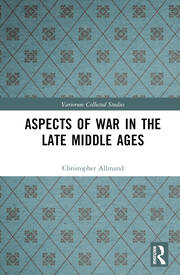
Publication – Christopher Allmand, « Aspects of War in the Late Middle Ages »

This Variorum collection of articles is intended to illustrate that conflict in the late Middle Ages was not only about soldiers and fighting (about the makers and the making of war), important as these were. Just as it remains in our own day, war was a subject which attracted writers (commentators, moralists and social critics among them), some of whom glorified war, while others did not. For the historian the written word is important evidence of how war, and those taking part in it, might be regarded by the wider society. One question was supremely important: what was the standing among their contemporaries of those who fought society’s wars? How was war seen on the moral scale of the time? The last two sections deal with a particular war, the ‘occupation’ of northern France by the English between 1420 and 1450. The men who conquered the duchy, and then served to keep it under English control for those years, had to be rewarded with lands, titles, administrative and military responsibilities, even (for the clergy) ecclesiastical benefices. For these, war spelt ‘opportunity’, whose advantages they would be reluctant to surrender. The final irony lies in the fact that Frenchmen, returning to claim their ancestral rights once the English had been driven out, frequently found it difficult to unravel both the legal and the practical consequences of a war which had caused a considerable upheaval in Norman society over a period of a single generation.

Christopher Allmand is Emeritus Professor of Medieval History, University of Liverpool, UK. His previous publications include Henry V (1968), Lancastrian Normandy 1415-1450, The History of a Medieval Occupation (1983), The Hundred Years War: England and France at War, c.1300-c.1450 (2001), War, Government and Power in Late Medieval France (2000), and The De Re Militari of Vegetius: The Reception, Transmission and Legacy of a Roman Text in the Middle Ages (2011).

Table des matières :

Part I

Chapter 1: A Roman text on War. The Strategemata of Frontinus in the Middle Ages.

Originally published as ‘A Roman Text on War. The Strategemata of Frontinus in the Middle Ages’, Soldiers, Nobles and Gentlemen, Essays in Honour of Maurice Keen, ed. P. Coss and C. Tyerman (Boydell Press, 2009), 153-68.

Chapter 2: The De Re Militari of Vegetius: How did the Middle Ages treat a Late Roman Text on War?

Originally published as ‘The De Re Militari of Vegetius. How did the Middle Ages treat a late Roman text on war?’ Revista de Historia des Ideias, vol. 30 (University of Coimbra Press, 2009), 101-17.

Chapter 3: The Fifteenth – Century English Prose Version of Vegetius’ De Re Militari.

Originally published as ‘Fifteenth-Century Versions of Vegetius’ De Re Militari, Armies, Chivalry and Warfare in Medieval France and Britain, Harlaxton Mediaeval Studies, Volume VII, ed. M. Strickland (Shaun Tyas publishing, 1998), 30-45.

Chapter 4: Did the De Re Militari of Vegetius influence the Military Ordinances of Charles the Bold?

Originally published in Publication du Centre Européen d’Etudes Bourguignonnes (XIVe-XVIe s.), xli (2001), 135-43.

Part II

Chapter 5: Changing Perceptions of the Soldier in Late Medieval France.

Taken from ‘Guerre et Société en France, en Angleterre et en Bourgogne XIVe-XVe siecle’, éd. P.Contamine, C. Giry-Deloison and M. Keen, published by Le Centre d’Histoire de la Région du Nord et de l’Europe du Nord-Ouest (1991), 171-88.

Chapter 6: Some Intellectual Influences on the Origins of the Royal Army in Medieval France.

Originally published as ‘Des origines intellectuelles de l’armée française au Moyen Âge’, in Un Moyen Âge pour aujourd’hui. Mélanges offerts à Claude Gauvard, ed. J. Claustre, O.Mattéoni et N. Offenstadt (Paris, PUF, 2010), 47-56.

Chapter 7: ‘Personal Honour or Common Good? The Witness of Le Jouvencel in the Fifteenth Century.’

Originally published as ‘Entre honneur et bien commun: le témoignage du Jouvencel au XVe siecle’, Revue Historique, 301/3 (Paris, PUF,1992), 463-81.

Chapter 8: The Problem of Desertion in France, England and Burgundy in the Late Middle Ages.

Originally published as ‘Le problème de la désertion en France, en Angleterre et en Bourgogne à la fin du Moyen Âge’, Guerre, pouvoir et noblesse au Moyen Age. Mélanges en l’honneur de Philippe Contamin. Ed. J. Paviot and J. Verger (Paris, Presses de l’ Université de Paris-Sorbonne, 2000), 31-41.

Part III

Chapter 9: Normandy in English Opinion at the End of the Hundred Years War.

Originally published as ‘La Normandie devant l’opinion anglaise à la fin de la guerre de Cent Ans’, Bibliothèque de l’École des Chartes, vol. 128 (1970), 345-68.

Chapter 10: Diplomacy: The Anglo- French Negotiations, 1439.

Originally published as ‘The Anglo-French Negotiations, 1439’, Bulletin of the Institute of Historical Research, 40 (1967), 1-33.

Chapter 11: Local Reaction to the French Reconquest of Normandy (1449-50): The Example of Rouen.

Originally published as ‘Local Reaction to the French Reconquest of Normandy: The Case of Rouen’, The Crown and Local Communities in England and France in the Fifteenth Century, ed. J. R. L. Highfield & R. Jeffs, (Alan Sutton Publishing, 1981), 146-61.

Chapter 12: National Reconcilliation in France at the End of the Hundred Years War.

Originally published as ‘National Reconciliation in France at the End of the Hundred Years War’, vol.vi, Journal of Medieval Military History, ed. C.J.Rogers, (Boydell Press, 2008), 149-64.

Part IV

Chapter 13: Spies and Spying in the Fourteenth Century.

Originally published as ‘Spies and Spying in the Fourteenth Century’, War, Literature and Politics in the Late Middle Ages, written by J.R. Alban and C.T. Allmand

(Liverpool: University Press, 1976), 73 – 101.

Chapter 14: War and the Non-Combatant during the Hundred Years War.

Originally published as ‘War and the Non-combatant’, The Hundred Years War, ed. K.A. Fowler, (London, Macmillan: St Martin’s Press, 1971}.

Informations pratiques :

Christopher Allmand, Aspects of War in the Late Middle Ages, Londres, Routledge, 2022 ; 1 vol., 246 p. (Variorum Collected Studies). ISBN : 978-0-36733-067-5. Prix : GBP 120,00.

Source : Routledge

Publié dans Publications | Laisser un commentaire

Appel à contribution – Medieval accountability: normativity, numeracy, and rhetoric from the institutional to the domestic sphere

University of Bucharest, 2-3 June 2023

The last two decades of research into medieval ideas and practices of accountability emphasised the multifaceted nature of this subject, from financial accountancy to norms of conduct in office to broader notions of social responsibility. As individual studies tended to focus on one or a couple of specific aspects, it becomes important at the present historiographical juncture to direct our attention to the points of articulation between the different practices of accountability, circa 1200–1500. This two-day conference invites contributions that examine accountability from multiple angles and test new approaches. We particularly encourage comparisons between the institutional and the private sphere, for instance as regards the mutual influences and shared culture of accountability/responsibility. Equally, we welcome contributions that discuss the relation between, on the one hand, numeracy and accounting, and on the other hand, memoranda and instructions about conduct in office or more broadly in society. As a way of expanding the traditional emphasis on accounting records, papers can also explore other sources that evince relevant aspects of social and institutional conduct and one’s responsibility for it, such as administrative reports and inquests.

The conference papers will be collected in an edited volume published with an international academic press and should reflect original, unpublished research. The organisers will provide three nights hotel accommodation and help defray travel expenses. For inquiries, contact Ionuț Epurescu-Pascovici at ionut.epurescu-pascovici@icub.unibuc.ro

Proposals of circa 300 words outlining the source material, methodology, and anticipated findings should be emailed to ionut.epurescu-pascovici@icub.unibuc.ro by 15 December 2022.  

Publié dans Appel à contributions | Laisser un commentaire

Publication – « Histoire des institutions diachroniques », dir. Geoffrey Grandjean, Martin Lempereur et Julien Maquet

Nombreuses sont les institutions qui ont exercé un pouvoir politique sur le territoire de l’actuelle Wallonie. Dans cet ouvrage, les institutions sont entendues au sens large comme des institutions matérielles, symboliques ou encore fonctionnelles qui ont évolué au fil du temps. C’est le cas notamment du palais de justice de Liège, des assemblées représentatives, de certaines fortifications, des communautés villageoises, du symbole du coq wallon, de la frontière linguistique, de la création de la Région wallonne, de l’organisation de la justice, des procédures juridictionnelles et de la police, de la paix de Fexhe, de l’organisation de l’enseignement supérieur ou encore de la mise en place de musées. Ces multiples institutions ont laissé des traces dans le paysage wallon. L’institutionnalisation de l’exercice du pouvoir politique en Wallonie est spécifiquement analysée dans cet ouvrage afin d’en cerner les portées diachroniques.

Geoffrey GRANDJEAN est Professeur de science politique à la Faculté de Droit, de Science politique et de Criminologie de l’Université de Liège. Martin LEMPEREUR est Attaché à l’Agence wallonne du Patrimoine et Collaborateur scientifique à la Faculté de Droit, de Science politique et de Criminologie de l’Université de Liège. Julien MAQUET est Conservateur du Trésor de la cathédrale de Liège et Maître de conférences à l’Université de Liège.

Informations pratiques :

Histoire des institutions diachroniques, dir. Geoffrey Grandjean, Martin Lempereur, Julien Maquet, Liège, Presses universitaires de Liège, 2022 ; 1 vol., 456 p. ISBN : 978-2-87562-314-0. Prix : € 35,00.

Source : Presses universitaires de Liège

Publié dans Publications | Laisser un commentaire

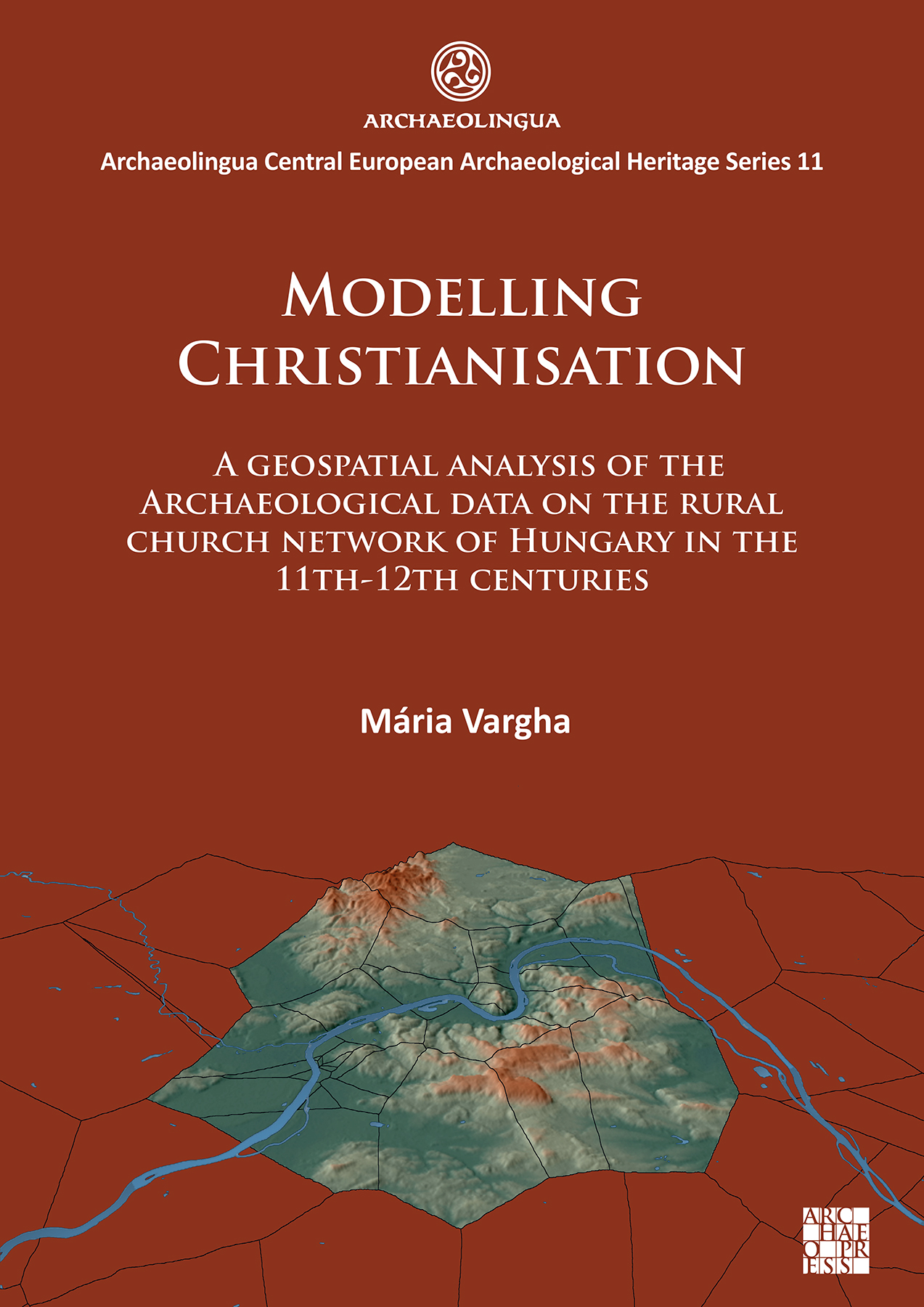
Publication – Mária Vargha, « Modelling Christianisation: A Geospatial Analysis of the Archaeological Data on the Rural Church Network of Hungary in the 11th-12th Centuries »

Modelling Christianisation breaks new ground by studying the underutilised archaeological material for the Christianisation of the medieval Kingdom of Hungary. Around the first Millennium, in present-day Central Europe, the political and religious landscape changed dramatically. With the Christianisation of the pagan societies on its borders, the Ottonian/Holy Roman Empire significantly expanded according to the principles of the Imperium Christianum. This process – Christianisation – frequently tied to ‘the making of Europe’, has long generated broad interest in scholarship. Although recent attempts have shown archaeology’s potential to shed light on the subject, interpretations of Christianisation and state formation are still primarily dominated by historical narratives.

Instead of concentrating on the upper echelons of society, the volume draws on the archaeological record relating to the Christianisation of the commoners – rural churches and field cemeteries – and more precisely (digital) archaeological archival data. This was subjected to geospatial analysis to uncover potential networks and clusters and to provide a different narrative about the course of Christianisation. Written evidence deals typically only with the topmost layer of institutions, such as the foundation of bishoprics, archbishoprics and some monasteries. Local churches, the smallest but most numerous elements of the church system, seldom appear in written sources; thus, theories about the development of the Church as an institution have often lacked direct evidence about the local church network. The approach taken here integrates this abundant data which provides information about the largest part of the population, otherwise absent in the written sources. It allows the reconstruction of a cultural landscape and lets us see the process of (institutionalised) Christianisation as a process of adaptation. Thus, it also offers a new interpretation for modelling Christianisation in newly emergent kingdoms.

Table des matières :

Contents

I. INTRODUCTION ;
Problems to be Considered in the Discourse ;
Contextualisation of the Historical Events in the Christianisation of Hungary ;
Contextualisation of the Notion of Christianisation, and Issues with Baptism ;

II. RESEARCH TRENDS IN THE HISTORICAL AND ARCHAEOLOGICAL STUDIES ON THE CHRISTIANISATION OF HUNGARY ;
Archaeology in the Interpretation of the Christianisation of Medieval Hungary ;
Results and Problems in the Archaeological Research of Christianisation ;
Elements of Secular and Ecclesiastical Power – The Castle System and Church Organisation ;

III. SOURCES, METHODS AND APPROACHES ;
Spatial Approaches to Christianisation and State Formation ;
Written Evidence Connected to Christianisation ;
Types of Archaeological Data Considered and their Issues ;

IV. SPATIAL ANALYSIS OF THE ARCHAEOLOGICAL MATERIAL – MODELLING CHRISTIANISATION ;
Primary Questions and Methods ;
The Eleventh Century ;
Central Power and Christianisation in the Eleventh Century ;
Ecclesiastical Centres as Places of Central Power in the Eleventh Century ;
Rural Sites and Christianisation in the Eleventh Century ;
The Twelfth Century ;

V. HISTORICAL THEORIES AND THE ARCHAEOLOGICAL MATERIAL OF CHRISTIANISATION COMPARED TO THE DEVELOPMENT OF THE PAROCHIAL NETWORK ;
Precedents and Influences on the Ecclesiastical System ;
The Role of Royal Churches ;

VI. CONCLUSIONS ;

APPENDIX ;
Field Cemeteries (Fig. 33.) ;
Churches of the 11th Century (Fig. 34.) ;
Transitional Cemeteries of the 11th Century (Fig. 35) ;
Monasteries of the 11th Century (Fig. 36.) ;
Bishoprics of the 11th Century (Fig. 37.) ;
Castles of the 11th Century (Fig. 38.) ;
Churches of the 12th Century (Fig. 39.) ;
Transitional Cemeteries of the 12th Century (Fig. 40.) ;
Monasteries of the 12th Century457 (Fig. 41.) ;
Bishoprics in the 12th Century458 (Fig. 42.) ;
Castles in the 12th Century459 (Fig. 43.) ;

BIBLIOGRAPHY

Informations pratiques :

Mária Vargha, Modelling Christianisation: A Geospatial Analysis of the Archaeological Data on the Rural Church Network of Hungary in the 11th-12th Centuries, Oxford, Archaeopress Publishing, 2022 ; 1 vol., 160 p. (Archaeolingua Central European Archaeological Heritage Series, 11). ISBN : 978-1-80327-279-5. Prix : GBP 35,00.

. Prix : GBP Source : Archaeopress

Publié dans Publications | Laisser un commentaire