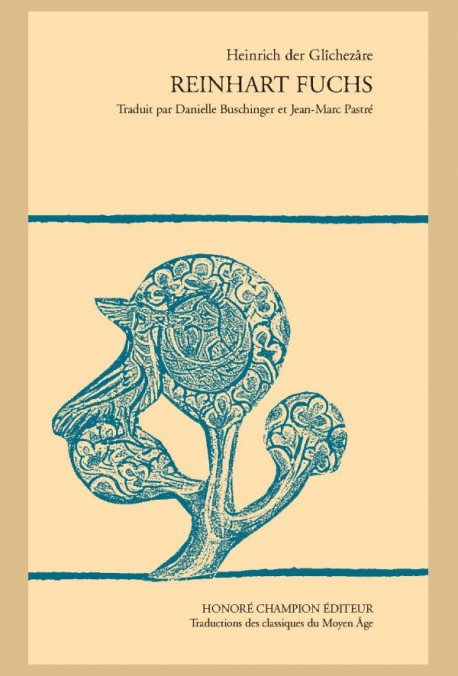
Publication – Heinrich der Glichezâre, « Reinhart Fuchs », traduit par Danielle Buschinger et Jean-Marc Pastré

Œuvre allemande de la fin du XIIe siècle, le Reinhart Fuchs de Heinrich der Glîchezâre est un récit animalier singulier à plus d’un titre. Rédigée dans un style sobre proche de celui de la fable, l’œuvre est la première à faire des épisodes du Roman de Renart français un ensemble cohérent et très structuré, notamment pourvu d’un dénouement aux allures d’apocalypse, l’assassinat du lion par le renard. La critique a progressivement mis en lumière les allusions nombreuses faites par l’auteur aux personnages et événements marquants de l’empire germanique d’alors. La fable animalière devient ainsi, au sens propre du terme, un véritable petit roman, celui du renard Reinhart, que l’arrière-plan historique place au tout premier rang parmi les œuvres européennes dédiées aux aventures du renard. La traduction de ce texte majeur permettra à un large public d’accéder à la connaissance de cette œuvre originale et d’en percevoir toute l’importance littéraire.
Spécialiste de langue et littérature allemandes du Moyen Âge, Danielle Buschinger est professeur émérite à l’Université de Picardie-Jules Verne (Amiens). Elle étudie dans une perspective comparatiste les textes médiévaux allemands et français. Elle est l’auteur d’un grand nombre d’ouvrages critiques et de traductions françaises d’œuvres médiévales allemandes.

Professeur à l’université de Rouen, Jean-Marc Pastré a enseigné la langue et la littérature allemandes du Moyen Âge. Ses recherches et publications ont concerné les grands textes de cette littérature et le comparatisme médiéval, notamment avec le Tristan de Gottfried de Strasbourg, le Parzival de Wolfram d’Eschenbach, la Chanson des Nibelungen, le Reinhart Fuchs, les fabliaux et les Jeux de Carnaval.

Table des matières : ici

Informations pratiques :

Heinrich der Glichezâre, Reinhart Fuchs, traduit par Danielle Buschinger et Jean-Marc Pastré, Paris, Honoré Champion, 2022 (Classiques français du Moyen Âge. Traductions, 107). 156 p. ISBN : 9782745356468. Prix : 35 euros.

Source : Honoré Champion

Publié dans Publications | Laisser un commentaire

Publication – « Les comptes et les choses. Discours et pratiques comptables du XIIIe au XVe siècle en Occident (principautés, monarchies et mondes urbains) », dir. Anne Lemonde

À la différence des comptabilités contemporaines, quelles qu’elles soient, secs alignements de chiffres que l’on a pu aisément informatiser, les documents comptables de la fin du Moyen Âge se limitent rarement à de simples « écritures » d’opérations mathématiques : si celles-ci sont bien présentes, elles se trouvent en fait insérées dans un cadre narratif aux vastes implications techniques, juridiques et politiques. L’objet de ce livre est d’analyser ce discours en posant les premiers jalons d’une typologie des formes comptables sur la longue durée.

De nombreuses études de cas sont ici présentées, entre péninsules Ibérique et Italienne, Flandres, Royaume de France, Provence, Dauphiné et terres germaniques, qui mettent à l’épreuve le postulat énoncé en introduction par lequel on propose de considérer les profonds bouleversements de la pratique comptable observables au tournant du XIIIe et du XIVe siècle comme l’une des premières manifestations de la « rupture de l’épistémè occidentale » chère à Michel Foucault.

Anne Lemonde est maître de conférences en histoire médiévale à l’université de Grenoble-Alpes. Ce volume s’inscrit dans le cadre du programme GEMMA (GEnèse Médiévale d’une Méthode Administrative) financé par l’Agence nationale de la recherche (ANR).

Table des matières : ici

Informations pratiques :

Les comptes et les choses. Discours et pratiques comptables du XIIIe au XVe siècle en Occident (principautés, monarchies et mondes urbains), dir. Anne Lemonde, Rennes, Presses universitaires de Rennes, 2022 (Histoire). 348 p. ISBN : 9782753586284. Prix : 28,00 euros.

Source : Presses universitaires de Rennes

Publié dans Publications | Laisser un commentaire

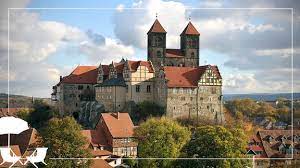
Colloque – 1100 Jahre Quedlinburg. Einblicke in das Leben auf der Königspfalz

Die 1100. Wiederkehr der Ersterwähnung Quedlinburgs in einer Urkunde Heinrichs I. (DH I 3) nimmt der Pfalzenarbeitskreis Sachsen-Anhalt zum Anlass, sich nach zweijähriger, coronabedingter Unterbrechung zu seinem 9. Workshop in der heutigen Welterbestadt zu treffen.

1100 Jahre Quedlinburg. Einblicke in das Leben auf der Königspfalz

Die Workshops der Jahre von 2012 bis 2019 thematisierten historische Räume oder rückten einzelne Pfalzen bzw. herausragende Persönlichkeiten ins Zentrum. Im Mittelpunkt des
diesjährigen Treffens soll ein inhaltlicher Aspekt stehen – Das Leben in der Pfalz.
Historiker und Archäologen gehen im interdisziplinären Zugriff der Frage nach, was über das Leben an einem königlichen Aufenthaltsort bekannt ist: Quedlinburgs Anfänge und weitere Entwicklung werden dabei aus unterschiedlichen Perspektiven ebenso in den Blick genommen, wie die dort ausgestellten Urkunden, dort ausgetragenen Konflikte sowie die dort begangenen glanzvollen Feiern. Die Versorgung der Pfalz(en) sowie die Logistik ihrer Erbauung werden analysiert. Darüber hinaus wird der Blick geweitet auf die neuen Erkenntnisse, die sich im Zusammenhang mit der kürzlich archäologisch neu untersuchten Pfalz Helfta ergeben.

Eine Tagungsgebühr wird nicht erhoben. Aus organisatorischen Gründen wird jedoch um Anmeldung gebeten: pfak.sachsen-anhalt@ovgu.de

Programme :

Freitag, 7. Oktober

14.00 Uhr
Begrüßung und Einführung

14.15 Uhr
Stephan Freund (Magdeburg): Quedlinburg, 22. April 922 und die Folgen

15.00 Uhr
Tobias Gärtner (Halle): Die Entwicklung Quedlinburgs vom 10.-14. Jahrhundert – die archäologischen Quellen

15.45 Uhr
Thomas Wozniak (Tübingen): Zur topographischen Entwicklung Quedlinburgs anhand der historischen Quellen (10.-14. Jahrhundert)

16.30 Uhr
Kaffeepause

17.00 Uhr
Christian Warnke (Magdeburg/Cobbel): Die Quedlinburger Urkunden des 10. Jahrhunderts

17.45 Uhr
Katharina Mersch (Bochum): Konflikte in der Pfalz (10.-12. Jahrhundert)

19.00 Uhr Öffentlicher Abendvortrag
Christoph Mielzarek (Magdeburg): Feiern in Quedlinburg

Samstag, 8. Oktober

9.15 Uhr
Felix Biermann (Halle/Stettin): Die Radegundiskirche Kaiser Ottos des Großen in Helfta und ihre Bestattungen – Ergebnisse der Ausgrabungen 2021

10.00 Uhr
Gerrit Deutschländer (Halle): In der Nachfolge der Pfalz. Helfta in der urkundlichen Überlieferung des Spätmittelalters

10.45 Uhr
Kaffeepause

11.30 Uhr
Matthias Hardt (Leipzig): « ex omni conlaboratu eiusdem curtis » (DO I 1): Hinterland und Versorgung mittelalterlicher Pfalzen und Königshöfe

12.15 Uhr
Markus C. Blaich (Hildesheim): Vom Bauen einer Pfalz – Schlussfolgerungen aus der Werla

13.00 Uhr
Zusammenfassung

14.15 Uhr
Fakultative Exkursion auf den Münzenberg (nach Anmeldung)

Informations pratiques :

Veranstalter : Pfalzenarbeitskreis Sachsen-Anhalt
Veranstaltungsort : Rathaus Quedlinburg PLZ 06484
Ort : Quedlinburg
Land : Deutschland
Vom – Bis : 07.10.2022 – 08.10.2022

Source : H-Soz-Kult

Publié dans Publications | Laisser un commentaire

Appel à contribution – Colonial Entanglements and the Medieval Nordic World: Tensions, Nordic Colonialism and Indigeneity

The conference (2-3rd February 2023) focuses on the present, recent, and past structures of colonialism in the medieval Nordic world. It asks how these structures affect historiography and how to acknowledge and not perpetuate them in our historical narrations.

Colonial Entanglements and the Medieval Nordic World: Tensions, Nordic Colonialism and Indigeneity

We are delighted to announce the call for papers for a two-day conference held at the Universität Greifswald, Germany, on 2-3rd of February 2023, in collaboration with the DFG-funded project Mission Before Colonisation: A Reassessment of Religious Contact in Greenland and Sápmi, 1000-1500 (https://geschichte.uni-greifswald.de/ng11-1/standard-titel-1-1/).

Despite the on-going colonialism exercised in the Nordic nation-states, the region as a whole is rarely acknowledged as colonialist and when it is, the colonialism enacted by these states is often regarded as “benevolent” or “charitable”. Recent research within and without Nordic and Medieval Studies has increasingly confronted this aspect, and fuelled by the so-called Indigenous Turn of Medieval Studies (Andrews 2020), we wish to take advantage of this confrontation and further explore the entangled pasts and presents of the Nordic medieval period and colonialism.

We invite submissions that contribute to the untangling of questions concerning how present, recent, and past structures of colonialism affect historiography; how we as scholars of the Nordic medieval past productively can acknowledge and deconstruct these structures in our work; how to avoid perpetuating colonial dichotomies constructed in and for the West in our narration of this past; as well as the actual historical processes of colonialism in these regions. We are interested in submissions that thematically explore and/or include regions such as Sápmi, Kalaallit Nunaat, Nunavut, Newfoundland and Labrador, Finland, Iceland and the Faroe Islands, and their inhabitants, as well as groups such as Forest-Finns, Kvens, and the Slavic and Baltic groups targeted by Danish and Swedish Crusading enterprises. Possible topics may cover:

– Scandinavian and Russian expansion before 1550
– Swedish, Danish, Norwegian and Baltic Crusades
– Religious contact and mission
– Cultural influences
– Taxation, trade and economic networks
– Language and language history
– Theoretical approaches such as critical race theory, queer theory, Indigenous research methodologies, postcolonialism, decolonising tools
– Medieval Othering and essentialism
– land back, Indigenous rights
– the role of historical narratives in contemporary indigenous movements

Papers should not exceed 20 minutes and will be followed by a 10-minute discussion. Please send abstracts of maximum 250 words, alongside a brief biography containing your name, institution, and programme of study or research, as well as your preferred pronouns, to wangs@uni-greifswald.de by September 1st 2022. Successful submissions will be determined by September 8th. Travel and accommodation bursaries will be available and we ask you to please indicate in your application if you wish to apply for these. Following the event, we aim to publish the conference proceedings. Please do not hesitate to get in touch with the organisational committee at wangs@uni-greifswald.de for any queries or concerns.

We look forward to hearing from you and to welcome you in Greifswald in 2023!

Source : H-Soz-Kult

Publié dans Appel à contributions | Laisser un commentaire

Publication – Sébastien Douchet, « Une réception du Moyen Âge au XVIIe siècle. Lectures et usages des textes médiévaux par les Gallaup de Chasteuil (1575-1719) »

Des « siècles grossiers », un « art confus » : le dénigrement du Moyen Âge par le Grand Siècle et Boileau est depuis vingt ans nuancé par la critique. Cet ouvrage franchit une nouvelle étape et démontre l’existence au XVIIe siècle d’une lecture positive et d’un usage valorisé des livres médiévaux. Les Gallaup de Chasteuil, parlementaires aixois, – en particulier Hubert et Pierre – lurent, annotèrent, reconfigurèrent les « vieux » manuscrits et imprimés de la riche bibliothèque familiale constituée dès la fin du XVIe siècle par leur grand-père, Louis, poète ami de Malherbe, puis par Jean, leur père, qui prônait en 1624 une renaissance de la poésie des troubadours provençaux. Injustement disgraciés par Louis XIV en 1659, en fuite puis en exil 14 années durant, les deux frères usèrent de la littérature du Moyen Âge comme d’un outil de consolation, mais aussi de contestation contre la Justice royale, lui opposant le modèle fantasmé des Parlements d’amour de la Provence du XIIIe siècle. À la justice de droit divin, le Moyen Âge offrait un contre-modèle érotico-politique où la poésie fondait le droit et la justice. Collectionnant et lisant sans relâche textes d’oc et d’oïl, ils ont défendu et fait la promotion de cette littérature qu’ils voulurent éditer et diffusèrent dans les années 1670 à 1710. En louant les « grâces » de Beuves de Hantone ou les « beautés » du tombeau de Béatrix de Provence, ils s’opposaient aux Anciens, de concert avec le mouvement galant qui intégra le Moyen Âge à sa pensée de la modernité et produisit les premières œuvres médiévalistes. Cette reviviscence de la littérature du « vieux temps » comportait donc des enjeux personnels, collectifs, esthétiques, socio-politiques, et s’offrait comme une alternative idéologique à l’idéal classique imposé par Louis XIV.

Ancien élève de l’École Normale Supérieure de Fontenay/Saint- Cloud, agrégé de lettres modernes, Sébastien Douchet est maître de conférences habilité à diriger des recherches à Aix-Marseille Université. Spécialiste du roman et de l’iconographie au Moyen Âge, ses recherches actuelles portent sur la réception des textes médiévaux à l’époque moderne (XVIe-XVIIIe siècles).

Table des matières : ici

Informations pratiques :

Sébastien Douchet, Une réception du Moyen Âge au XVIIe siècle. Lectures et usages des textes médiévaux par les Gallaup de Chasteuil (1575-1719), Paris, Honoré Champion, 2022 (Mémoire du Moyen Âge, 4). 762 p. ISBN : 9782745356918. Prix : 98 euros.

Source : Honoré Champion
Publié dans Publications | Laisser un commentaire

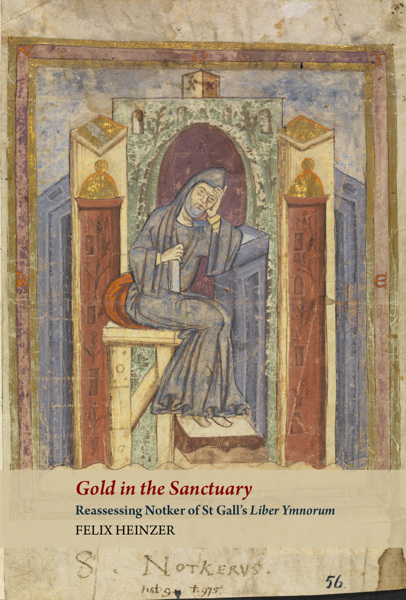
Publication – Felix Heinzer, « Gold in the Sanctuary. Reassessing Notker of St Gall’s Liber Ymnorum »

The ninth-century monk and poet Notker of St Gall played a seminal role in the history of the sequence, a distinctly medieval poetic genre of liturgical chant, through his Liber Ymnorum. Notker harkens back beyond the classical Latin and Greek tradition, drawing on Hebrew models; his texts combine theological complexity with poetic invention of extraordinary reach. Despite the opposition his innovations provoked in traditionalist circles, Notker’s sequences were widely adopted. Promotion by the monastery of St Gall and posthumous idealization of the poet ensured the Liber Ymnorum would become a prototypical model for a wide array of imitations in the genre until the late sixteenth century.

Informations pratiques :

Felix Heinzer, Gold in the Sanctuary. Reassessing Notker of St Gall’s Liber Ymnorum, Turnhout, Brepols, 2022 (Studies and Texts, 228). 328 p. ISBN : 978-0-88844-228-4. Prix : 95,00 euros.

Source : Brepols

Publié dans Publications | Laisser un commentaire

Publication – Marie-Christine Gomez-Géraud,  » Le Crépuscule du Grand Voyage. Les Récits des pèlerins à Jérusalem (1458-1612) »

Alors que le pèlerinage à Jérusalem semble connaître un déclin définitif au XVIe siècle en Occident, la littérature du « Grand Voyage » refleurit avec la Contre-Réforme. Dans cette riche synthèse, sont déchiffrés les signes d’une transformation des mentalités, à l’aube des Temps modernes.

Table des matières : ici

Informations pratiques :

Marie-Christine Gomez-Géraud, Le Crépuscule du Grand Voyage. Les Récits des pèlerins à Jérusalem (1458-1612), nouv. éd. Paris, Classiques Garnier, 2022 (Géographies du monde, n° 2) [1re éd., 1999]. 1034 p. ISBN : 978-2-406-13263-9. Prix : 39 euros.

Source: Classiques Garnier

Publié dans Publications | Laisser un commentaire

Offre d’emploi – Lecturer in European History 1300-1500 CE (Fixed Term) (Durham University)

This post is full-time and fixed term for the period 12 September 2022 to 11 September 2024.

The Department of History at Durham University seeks to appoint a talented individual to the fixed term role of Lecturer in European History (including Britain/Ireland) 1300-1500.

It is widely recognized as a leading centre of historical research and teaching, consistently ranked amongst the top UK History departments in league tables.


Applicants must demonstrate research excellence in the field of European History 1300-1500 CE, with the ability to teach our students to an exceptional standard and to fully engage in the services, citizenship and values of the University. The University provides a working and teaching environment which is inclusive and welcoming and where everyone is treated fairly with dignity and respect. Candidates will be expected to demonstrate these key principles as part of the assessment process.

In the first year, the post-holder will be expected to offer a Level 2 module in late medieval European history and to contribute to the team-taught Level 1 module ‘Decline and Crisis? Europe, 1300-1500’. They will undertake some undergraduate and MA dissertation supervision and, where appropriate, carry out other teaching duties specified by the Head of Department. In the second year, they will be expected to offer additional teaching on new or existing Level 2/3/4 modules.

Source : Jobs Chronicle

Publié dans Offre d'emploi | Laisser un commentaire

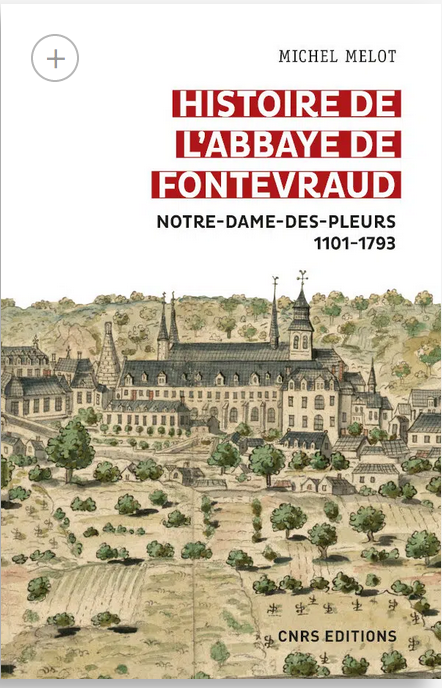
Publication – Michel Melot, « Histoire de l’abbaye de Fontevraud. Notre-Dame-des-pleurs 1101-1793 »

L’abbaye de Fontevraud est exceptionnelle à plusieurs titres. Fondée par un homme, elle a accueilli essentiellement des femmes. Réunissant au départ moines et moniales de toutes conditions, aristocrates et misérables, elle a mis en péril l’ordre social. Plus grande cité monastique d’Europe au XVIIIe, elle a été transformée en prison après la Révolution. Comment expliquer le destin si singulier de ce lieu, inscrit aujourd’hui au Patrimoine mondial de l’Unesco ?

En 1101, quand Robert d’Arbrissel, seul roturier parmi les fondateurs d’Ordres au XIIe siècle, décide de créer Fontevraud, il y organise une vie de pauvreté, de pénitence et de prière, et demande aux femmes de le gouverner. C’est donc à une abbesse, et non à un abbé, que l’on doit la règle du monastère et le contrôle du recrutement des frères. Fontevraud devient une abbaye puissante, en raison de son rapport avec Aliénor d’Aquitaine, reine de France puis d’Angleterre, son mari Henri II Plantagenêt et son fils Richard Cœur de Lion. Tous trois y reposent, dans leurs majestueux gisants. Gardant la cicatrice de la guerre de Cent Ans, elle suivit ensuite l’ascension des Bourbons.

Ce livre raconte, sur près de huit siècles, l’histoire de ce monde sans extérieur dont l’organisation figure le temps qui s’y écoule heure après heure, jour après jour, mais aussi de ces hommes et ces femmes qui l’occupent et le font vivre.

Informations pratiques :

Michel Melot, Histoire de l’abbaye de Fontevraud. Notre-Dame-des-pleurs 1101-1793, Paris, CNRS Éditions, 2022. 626 p. ISBN : 9782271141750 Prix: 32 euros.

Source : CNRS Éditions

Publié dans Publications | Laisser un commentaire

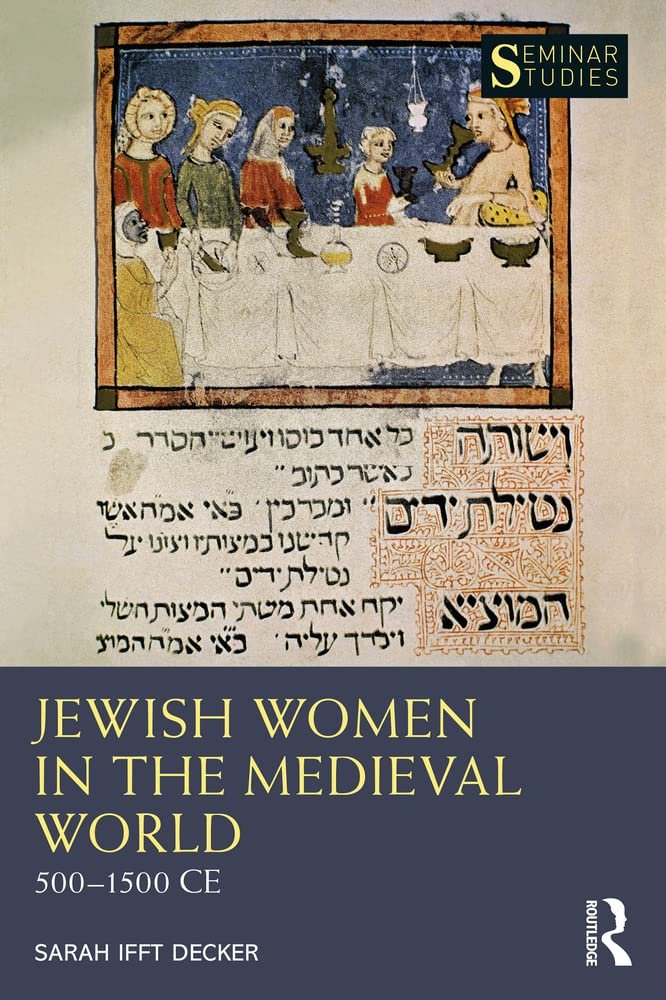
Publication – Sarah Ifft Decker, « Jewish Women in the Medieval World, 500–1500 CE »

Jewish Women in the Medieval World offers a thematic overview of the lived experiences of Jewish women in both Europe and the Middle East from 500 to 1500 CE, a group often ignored in general surveys on both medieval Jewish life and medieval women.

The volume blends current scholarship with evidence drawn from primary sources, originally written in languages including Hebrew, Latin, Aramaic, and Judeo-Arabic, to introduce both the state of scholarship on women and gender in medieval Jewish communities, and the ways in which Jewish women experienced family, love, sex, work, faith, and crisis in the medieval past. From the well-known Dolce of Worms to the less famed Bonadona, widow of Astrug Caravida of Girona, to the many nameless women referred to in medieval texts, Jewish Women tells the stories of individual women alongside discussions of wider trends in different parts of the medieval world. Even through texts written about women by men, the intelligence, courage, and perseverance of medieval Jewish women become clear to modern readers.

With the inclusion of a Chronology, Who’s Who, Documents section, and Glossary, this study is an essential resource for students and other readers interested in both Jewish history and women’s history.

Sarah Ifft Decker is Assistant Professor of History at Rhodes College, USA. Her work explores intersections between gender and religious identity in the medieval Mediterranean. She is the author of The Fruit of Her Hands: Jewish and Christian Women’s Work in Medieval Catalan Cities (forthcoming 2022).

Table des matières :

Part 1: Introduction  1. Introduction  Part 2: Analysis  2. Jewish Life in the Medieval World  3. Gender Roles in Medieval Jewish Cultures  4. Marriage, Divorce, and Widowhood  5. Sex and Sexuality  6. Family, Childbirth, and Child-rearing  7. Jewish Women’s Work  8. Gender, Faith, and Worship  9. Jewish Women between Communities  Part 3: Assessment  10. Conclusion

Informations pratiques :

Sarah Ifft Decker, Jewish Women in the Medieval World, 500–1500 CE, Routledge, 2022. 184 p. ISBN 9780367612726. Prix : GBP 32,99.

Source : Routledge

Publié dans Publications | Laisser un commentaire