Publication – « Glas als Fernhandelsprodukt im frühen Mittelalter – Köln und der europäische Norden », éd. Michael Dodt, Andreas Kronz, Bente S. Majchczack, Sebastian Messal

Das durch die Deutsche Forschungsgemeinschaft geförderte, auf sechs Jahre (2012-2018) ausgelegte Schwerpunktprogramm (SPP) 1630 »Häfen von der Römischen Kaiserzeit bis zum Mittelalter« führte mit den Forschungen zu frühmittelalterlichen Glasfunden an Häfen zu einer interdisziplinären und vernetzten Zusammenarbeit zwischen mehreren Projektgruppen – Rhein, Nordsee, Ostsee und Binnenhäfen. In den innerhalb des Schwerpunktprogramms stattfindenden Austausch wurden zudem externe Institutionen und Personen, die sich der Forschung zu Herstellung und Distribution der Gläser im frühen Mittelalter widmen, ergänzend einbezogen. Bei der Zusammenarbeit wurden unterschiedliche Regionen miteinander verbunden: das fränkische Reich sowie die Gebiete der Friesen, Sachsen, Wikinger und Slawen. Ohne das SPP wären derartig vernetzte und weitreichende Forschungen nicht möglich gewesen. Das Teilprojekt »Der frühmittelalterliche Hafen Kölns – Produktionsstätte und Exporthafen für Gläser« mit den dort erfassten Glaswerkstätten der Merowinger- und Karolingerzeit, die archäologisch und naturwissenschaftlich ausgewertet wurden, bildet in diesem Band den Ausgangspunkt für die Forschung zur frühmittelalterlichen Wirtschaftsgeschichte zum Thema Glas. Die zwölf Beiträge gehen auf Vorträge zweier Tagungen zurück, die durch das Römisch-Germanische Museum der Stadt Köln (9.-10. November 2016) und das Sydvestjyske Museer in Ribe / Dänemark (20.-22. März 2018) ausgerichtet wurden.

ISBN 978-3-88467-251-8

The Six-Year Priority Programme (SPP) 1630 „Ports from the Roman Imperial Period to the Middle Ages“, funded by the German Research Foundation (DFG), led to an interdisciplinary and networked cooperation between several project groups – Rhine, North Sea, Baltic Sea and inland ports – with research on early medieval glass finds at ports. External institutions and persons dedicated to research on the production and distribution of glass in the early Middle Ages were also included in the exchange taking place within the priority programme. The cooperation linked different regions: the Frankish Empire and the territories of the Frisians, Saxons, Vikings and Slavs. Without the SPP, such networked and far-reaching research would not have been possible. The sub-project „The Early Medieval Port of Cologne – Production Site and Export Port for Glass“ with the glass workshops of the Merovingian and Carolingian periods recorded there, which were archaeologically and scientifically evaluated, forms the starting point for research on the early medieval economic history of glass in this volume. The twelve contributions are based on lectures given at two conferences organised by the Römisch-Germanisches Museum of the City of Cologne (9-10 November 2016) and the Sydvestjyske Museum in Ribe, Denmark (20-22 March 2018).

Informations pratiques :

Glas als Fernhandelsprodukt im frühen Mittelalter – Köln und der europäische Norden, éd. Michael Dodt, Andreas Kronz, Bente S. Majchczack, Sebastian Messal, Ratisbonne, Schnell und Steiner, 2022 ; 1 vol., 288 p. (Römisch-Germanisches Zentralmuseum – Tagungen, Römisch Germanisches Zentralmuseum, 46). ISBN : 978-3-88467-357-7. Prix : € 49,00.

Source : Schnell und Steiner

Publié dans Publications | Laisser un commentaire

Publication – Pierre Bureau, » Les Matrices de sceau en ivoire de morse. Histoire symbolique d’un objet d’exception (Xe-XVe siècle) »

Pierre Bureau, Les Matrices de sceau en ivoire de morse. Histoire symbolique d’un objet d’exception (Xe-XVe siècle), préface de Michel Pastoureau, Paris, Éditions du Léopard d’Or, 2022, ; 1 vol., 240 p., 64 pl. ISBN : 978-2-86377-281-2. Prix : € 40,00.

Adresse de l’éditeur : Le Léopard d’Or, 8, rue Du Couëdic, 75 14 PARIS – https://www.leopardor.fr/

Source : Société française d’héraldique et de sigillographie

Publié dans Publications | Laisser un commentaire

Appel à contribution – Histories of Disability & Emotion

An International Online Conference
Hosted by KU Leuven and the University of Liège, Belgium, 13-15 June 2023

The history of disability and the history of emotions are now well-established elds of research. They have experienced relatively similar debates and methodological developments, and they have strong, if complicated, ties to the history of medicine. But despite their similarities, these two elds have only recently started to intersect. In his 2016 article “Disability History and the History of Emotions: Re ections on Eighteenth-Century Britain”, David M. Turner explored “ways in which history’s ‘emotional turn’ can shed light on disability in the past,” and suggested that we steer away from focusing on “sympathy” and “pity.” Yet, to date there is still relatively little historical research on the connections between disability and emotions.

We welcome proposals for 20-minutes presentations that analyze the emotions experienced by disabled people and/or communal emotions evoked by disabilities in di erent societies and cultures worldwide throughout history. We expect that the concepts of “disability” and “emotions” themselves may have di erent meanings than today. Proposals may address, but need not be limited to, the following broad topics:

1) Emotional lives of disabled people, including expressions of joy, pride, satisfaction, pain, shame, fear, sadness, etc.; the interaction of disability with emotional norms; the use of empathy as a social weapon;

2) Emotional reactions to disability by others (love, trust, compassion, fear, disgust, derision, etc.)

3) Analyses of the educational trajectories (formal as well as informal) leading to the constitution of particular emotions/emotional subjectivities;

4) disability and emotions in art history.

Abstracts of no more than 300 words should be submitted to the conference organizers, Ninon Dubourg (ninon.dubourg@gmail.com), Sara Scalenghe (sscalenghe@loyola.edu), and Pieter Verstraete (pieter.verstraete@kuleuven.be) by February 1, 2023
Accepted contributors will be noti ed by February 15. Drafts of papers will be due on May 15. The conference will take place entirely online. After the conference, contributors will be invited to apply to participate in a smaller hybrid workshop in Leuven and Liège in the fall of 2023 that will result in a peer-reviewed edited volume and/or special journal issue.

Publié dans Appel à contributions | Laisser un commentaire

Conférence – Richard Gameson, « Les plus anciennes collections de recettes de pigments d’origine britannique »

Les plus anciennes collections de recettes de pigments conservées dans des manuscrits d’origine britannique remontent au XIIe siècle. Nous présenterons ces témoins, au nombre de trois, ainsi que la nature de leurs contenus textuels et leurs interdépendances. Nous mettrons ensuite en regard les descriptions de pigments avec les pigments identifiés dans les manuscrits enluminés contemporains à l’aide des techniques de spectroscopie (Raman, réflectance par fibre optique, rayons X) et d’imagerie multispectrale.

Intervenant
Richard Gameson (université de Durham)

À propos de ce séminaire

Cette deuxième saison s’intéresse aux sources et aux écrits relatifs à la couleur et à la description des matériaux de la couleur. Dès l’Antiquité, on les trouve sous la forme d’ouvrages à caractère théorique ou encyclopédique (telle l’œuvre de Pline l’Ancien) ou de quelques témoignages anciens. C’est principalement à partir du Moyen Âge que la littérature dite des recettes artistiques connaît un développement sans précédent. En parallèle de certaines œuvres désormais bien connues, telles que le Traité de Théophile ou le Libro dell’arte de Cennini, des centaines de réceptaires, principalement anonymes, ont été mis au jour. L’étude de ce vaste corpus permet de documenter un large horizon de pratiques artistiques, depuis le bas Moyen Âge, jusqu’à la fin des Temps modernes au moins. S’ajoutent les livres de secrets, les traités artistiques – plus largement diffusés par le biais de l’imprimerie – et les carnets d’artistes.

Au cours du séminaire, il sera permis de mieux envisager la diversité de ces sources, dans leurs formes et leurs propos. En présentant l’usage actuel qu’il peut en être fait dans le cadre de l’étude de la couleur et de ses matériaux, nous aborderons également les limites de ces textes, de même que les prérequis nécessaires à leur exploitation pertinente, et les informations qu’ils sont susceptibles de nous fournir. Ce séminaire de recherche accompagne la réalisation de deux programmes, l’un mené par l’INHA « Fabrique matérielle du visuel : panneaux peints en Méditerranée, XIIIe – XVIe siècles » et l’autre par la BnF « La couleur : artefacts, matière et cognition ».

Comité scientifique
Claire Bosc-Tiessé (INHA), Charlotte Denoël (BnF), Anne-Solenn Le Hô (Centre de recherche et de restauration des musées de France), Sigrid Mirabaud (INHA), Delphine Morana-Burlot (université Paris 1 Panthéon Sorbonne), Sylvie Neven (chercheuse indépendante) et Laurianne Robinet (Centre de recherche sur la conservation)

Informations pratiques :

Institut national d’histoire de l’art – Galerie Colbert, salle Walter Benjamin
2, rue Vivienne ou 6 rue des Petits Champs – 75002 Paris

Mardi 10 janvier 2023, 14h-16h.

Source : INHA

Publié dans Colloque | Laisser un commentaire

Publication (en ligne) – Leighton D. Reynolds et Nigel G. Wilson, « D’Homère à Érasme. La transmission des classiques grecs et latins »

Accès : ici

Comment les textes grecs et latins ont-ils réussi à traverser le temps ? Si beaucoup ont disparu, c’est souvent par miracle que les grandes œuvres des Anciens ont échappé à la destruction, aux menaces des invasions, aux incendies des bibliothèques, en Orient comme en Occident.

L’ouvrage explique les conditions de la survie des textes classiques et la façon dont, dans l’Antiquité, au Moyen Âge et à la Renaissance, les érudits les ont lus, sélectionnés, commentés et copiés. Reflets des grandes étapes de la civilisation européenne, cette transmission engage une histoire de l’éducation ainsi qu’une histoire des pratiques savantes.

Au xve siècle, une invention capitale change la donne : l’imprimerie facilite la diffusion des textes et a bientôt un effet profond sur le progrès et les usages de la philologie. Apparaît alors dans les pays occidentaux une res publica litterarum qui s’attache à élaborer des méthodes pour éditer ces œuvres, fondées sur la connaissance de la tradition : ces techniques font l’objet du dernier chapitre de l’ouvrage.

Paru pour la première fois en 1968, Scribes and Scholars est vite devenu un classique, traduit en sept langues. Sa quatrième édition anglo-saxonne, parue en 2013, est proposée ici au public francophone dans une version revue, mise à jour et augmentée par Luigi-Alberto Sanchi et Aude Cohen-Skalli.

Informations pratiques :

Leighton D. Reynolds, Nigel G. Wilson, D’Homère à Érasme. La transmission des classiques grecs et latins, trad. Luigi-Alberto Sanchi, Aude Cohen-Skalli, Paris, OpenEdition Books, 2022 ; 1 vol., 304 p. (Bibliothèque d’Histoire des Textes, 1). ISBN : 978-2-49320-901-6. En ligne.

Source : Open Editions

Publié dans Publications | Laisser un commentaire

Publication – Julian Gardner, « Fracta Doces. Thirteenth-Century Insular Visitors to Rome »

During the period between circa 1190 and circa 1230, Rome was visited by four remarkable men from the British Isles, all of whom left lively written accounts of what they saw and experienced. Gerald of Wales, Gervase of Tilbury and Thomas of Marlborough are all readily identifiable, and the purposes of their visits reasonably clear. For these men the papal Curia was their main focus and the brilliant personality of its central figure, Pope Innocent III, is vividly portrayed from differing viewpoints. The fourth visitor, identified only as Master Gregory, is the most enigmatic of the group, and it is he who writes the most penetrating descriptions of the ancient monuments which he observed. We know virtually nothing about him, the purpose of his visit is unknown, and its date is less easily established. Ancient monuments fascinated Gregory, whilst the great Roman churches are, in contrast, summarily treated.

The contemporary city these men encountered is described and the success or failure of their visits assessed. Early thirteenth-century Rome is brought vibrantly to life and the astonishing enthusiasm for Egyptian antiquities which marked both Roman sculpture and architecture of this period is reconsidered in the light of our visitors’ comments.

Julian Gardner is Emeritus Professor of the History of Art at Warwick University. He has also taught at the Universities of Berkeley and Harvard. He was a visiting professor at Villa I Tatti, the Harvard University Centre for Renaissance Studies in Settignano, and Samuel H. Kress Professor at the National Gallery of Art in Washington. He has published widely on mediaeval Italian art and architecture.

Table des matières :

Preface

1. Dramatis personae
2. Texts and Authors
3. Why Did They Go?
4. The Visitors’ Rome
5. Ancient Rome in the Insular Experience
6. In the Shadow of the Pantheon: Isis in Rome
7. Aftermaths: Beyond Rome
Bibliography
Index of Names

Informations pratiques :

Julian Gardner, Fracta Doces. Thirteenth-Century Insular Visitors to Rome, Rome, Viella, 2022 ; 1 vol., 140 p. (Viella History, Art and Humanities Collection, 13). ISBN : 979-1-25469-018-5. Prix : € 29,00.

Source : Viella

Publié dans Publications | Laisser un commentaire

Publication – David Fiasson, « Crécy 1346 »

Ce samedi 24 août 1346, la nuit est tombée depuis longtemps. Il est près de minuit. Une petite troupe d’hommes à cheval arrive devant le château de Labroye, à 5 km au nord-est de Crécy-en-Ponthieu. La porte est fermée, le pont-levis relevé – des fuyards de l’armée française ont déjà prévenu la garnison que la bataille était perdue et les Anglais vainqueurs. Les cavaliers appellent le châtelain qui monte aux créneaux et demande qui donc veut entrer à une heure si tardive. La voix de Philippe de Valois lui répond, pathétique : « Ouvrez, ouvrez, châtelain : c’est l’infortuné roi de France ! » Cette scène composée par Jean Froissart n’a jamais eu lieu. Le célèbre chroniqueur a plaqué sur les événements réels une scène qu’il avait lui-même composée pour un roman de chevalerie de son cru. Reste que son génie littéraire réussit en quelques mots à suggérer l’invraisemblable issue de la sanglante bataille de Crécy : la transformation du plus puissant prince d’Occident en un misérable fuyard.

Avec une France si peuplée, si riche et si forte, et une Angleterre si pauvre et si faible, Crécy aurait dû en toute logique marquer la fin précoce de la guerre de Cent Ans, tant la victoire semblait promise au Valois. Et pourtant, au soir d’un affrontement particulièrement meurtrier pour les Français, c’est bien Philippe VI qui fut contraint à la fuite pour éviter la capture.

Écrire l’histoire de cette bataille mythique, c’est donc tenter d’expliquer une défaite incompréhensible aux yeux de nombre de ses contemporains. Bien des historiens se sont attelés à cette tâche, mais les travaux en français sont bien rares et bien succincts en regard des contributions anglo-saxonnes qui se sont succédé depuis les années 1950. L’objet du présent livre est d’offrir non seulement au public français un état de la recherche étrangère, mais aussi d’arbitrer un nombre important de désaccords par un réexamen minutieux des sources. Fort d’un corpus si large qu’un historien ne peut prétendre en épuiser les richesses, et grâce à une écriture fluide et passionnée, servie par des cartes en couleurs de très grande qualité – conformément aux canons de cette nouvelle collection « Champs de bataille » –, David Fiasson rend lumineuse la première grande défaite terrestre des Français dans la guerre de Cent Ans.

Agrégé d’histoire et ancien élève de l’ENS de Lyon, David Fiasson est enseignant-chercheur contractuel en histoire médiévale à Cergy Paris Université. Après avoir consacré sa thèse à la « frontière des ennemis » durant la seconde partie de la guerre de Cent Ans, il consacre actuellement ses recherches aux liens entre la guerre médiévale et le patrimoine matériel et immatériel.

Informations pratiques :

David Fiasson, Crécy 1346, Paris, Perrin, 2022 ; 1 vol., 320 p. (Champs de bataille). ISBN : 978-2-26209-413-3. Prix : € 25,00.

Source : Perrin

Publié dans Publications | Laisser un commentaire

Colloque – The Education of a Christian Woman (1523) in the Construction of the Image of Female Power of Queen Mary I of England

24-25 January 2023
London & Zoom

Sponsored by Arte, Poder y Género Research Group, BritishSpanish Society, Instituto Cervantes and University College London, this international seminar takes place 24-25 January 2023, and celebrates the 500-year anniversary of the first publication of The Education of a Christian Woman. It will focus on its patron, author, and dedicatee as well as address its impact on the construction of the image of female power in Tudor England.

In 1523, De institutione feminae Christianae, the book’s first title, was published. The author was Spanish Humanist Juan Luis Vives (1493-1540) who at the time was also a Lecturer at Corpus Christi Col- lege in Oxford. The book was commissioned by his ‘only patron’, the Queen of England, Catherine of Spain, commonly known as Catherine of Aragon (1485-1536). It was written in Latin, the language of the New Learning movement it belongs to, and it focused on the three stages in which Vives divided a woman’s life: as a maiden, as a married woman and a matron, and as a widow. It was dedicated to Princess Mary Tudor future Queen Mary I (1516-1558). It was part of a wider curriculum that Queen Catherine designed for her daughter’s formal training as first ‘heiress apparent’ to receive a formal Renaissance education in England.

The book was an instant success throughout Europe with many reprints, and it became the most influential work of its kind in the Modern Age. The Education of a Christian Woman had an impact in the way that Mary I constructed her image of power as the first Queen Regnant in English history. Despite this, Queen Catherine’s role as intellectual and financial patron is often overlooked and the connections between the manual and Mary I’s trailblazing propaganda as the first woman to be educated to rule have yet to be explored.

This international seminar will focus both on visual arts and documentary evidence that deals with this important void in queenship historiography. Leading specialists in several fields will address topics like the Christian education of the daughters of Queen Isabella of Castile and the ties between the Spanish alliance and the construction of the image of female power in Tudor portraiture. Other important subjects will speak to Queen Mary I’s use of female recourses present in Vives’ work in the representations of the monarch as Queen Regnant, as ‘Mother of England’, and as married woman and queen consort of King Philip of Habsburg (1527-1598). Other experts will talk about Mary I’s role as first woman to exercise power and how this was translated after her reign. Another crucial topic that will be discussed is the growing historiographical trend that is bringing into the light Queen Mary I’s outstanding contributions in female rulership in Renaissance Europe.

To register for this free in-person / Zoom seminar, please send an email to artepoderygenero@um.es

Programme :

24 January.

Location: Instituto Cervantes. 15-19 Devereux Ct, Temple, London.

5.00 pm – 5.45 pm (GMT)

Las mujeres cristianas en los intercambios de retratos entre la Monarquía Hispánica y la dinastía Tudor. Emma Luisa Cahill Marrón. BritishSpanish Society Scholar.

(Presentada por Noelia García Pérez).

5.45 pm – 6.30 pm (GMT)

Mary I & the Art of Queenship.

Peter Stiffell. Doctoral Candidate at the University of Kent.

(Presented by Alexander Samson).

6.30 pm – 7.30 pm (GMT) ROUNDTABLE.

Educating the Eye: Gender, Power, and Representation in the Visual Arts in the Reign of Mary I.

The Pregnant Female Body in Early Modern English Royal and Elite Portraiture.
Karen Hearn. 
Honorary Professor at Department of English Language and Literature in the University College London / Previously Curator of 16th & 17th Century British Art at the Tate Galleries.

Happily (N)Ever After: The Posthumous Role of Mary I and Philip II’s Marriage in Visual Remembrances of Mary’s Reign.
Johanna Strong. University of Winchester / Royal Studies Network. Like Mother, Like Daughter? Continuity and Innovation in the Crafting of Image of Mary I.

Aoife Stables. Master of Arts in Art History. Courtauld Institute of Art. 

Participants
Patricia Manzano Rodríguez. Doctoral Candidate at the University of Durham / The Maius Workshop.

Irini Picolou. Doctoral Candidate at the University of Durham / Zurbaran Centre for Spanish and Latin American Art.

25 January.

Location: Common Ground, South Wing, University College London.

9.30 am – 10.15 am (GMT)

Before Vives. The Christian Education of the Daughters of Queen Isabella of Castile.
Melania Soler Moratón.
Margarita Salas Postdoctoral Researcher at the University of Valladolid / University of Murcia / Arte, Poder y Género Research Group / MEFER Project.

10.15 am – 11.00 pm (GMT)

Juan Luis Vives’ ‘Patronae Unicae’: Queen Catherine of Aragon and the Construction of the Image of Female Power in Tudor England.
Emma Luisa Cahill Marrón. BritishSpanish Society Scholar / Arte, Poder y Género Research Group / MEFER Project.

11.00 am – 11.45 am (GMT)

Early Modern Women and the Archive.
Alexander Samson.
Professor of Early Modern Studies at the University College London.

11.45 pm – 1.45 pm (GMT) LUNCH

1.45 pm – 2.30 pm (GMT)

The Continued Instruction of Christian Women: Reprints of Vives.
Valerie Schutte.
Independent scholar.

2.30pm – 3.15 pm (GMT)

The Power of Networks and The Networks of Power: The Development and Cultivation of Female Friendship by Mary I, for both Personal Solace, and Political Capital.
Melita Thomas.
Doctoral Candidate at the University College London.

3.15 pm – 3.30 pm (GMT) COFFEE BREAK

3.30 pm – 4.30 pm (GMT) ROUNDTABLE

‘The Education of a Christian Woman’ in the Context of Queenly Education.
Elena (Ellie) Woodacre.
Reader in Renaissance History at the University of Winchester / Royal Studies Network.

Source : Medieval Art Research

Publié dans Colloque | Laisser un commentaire

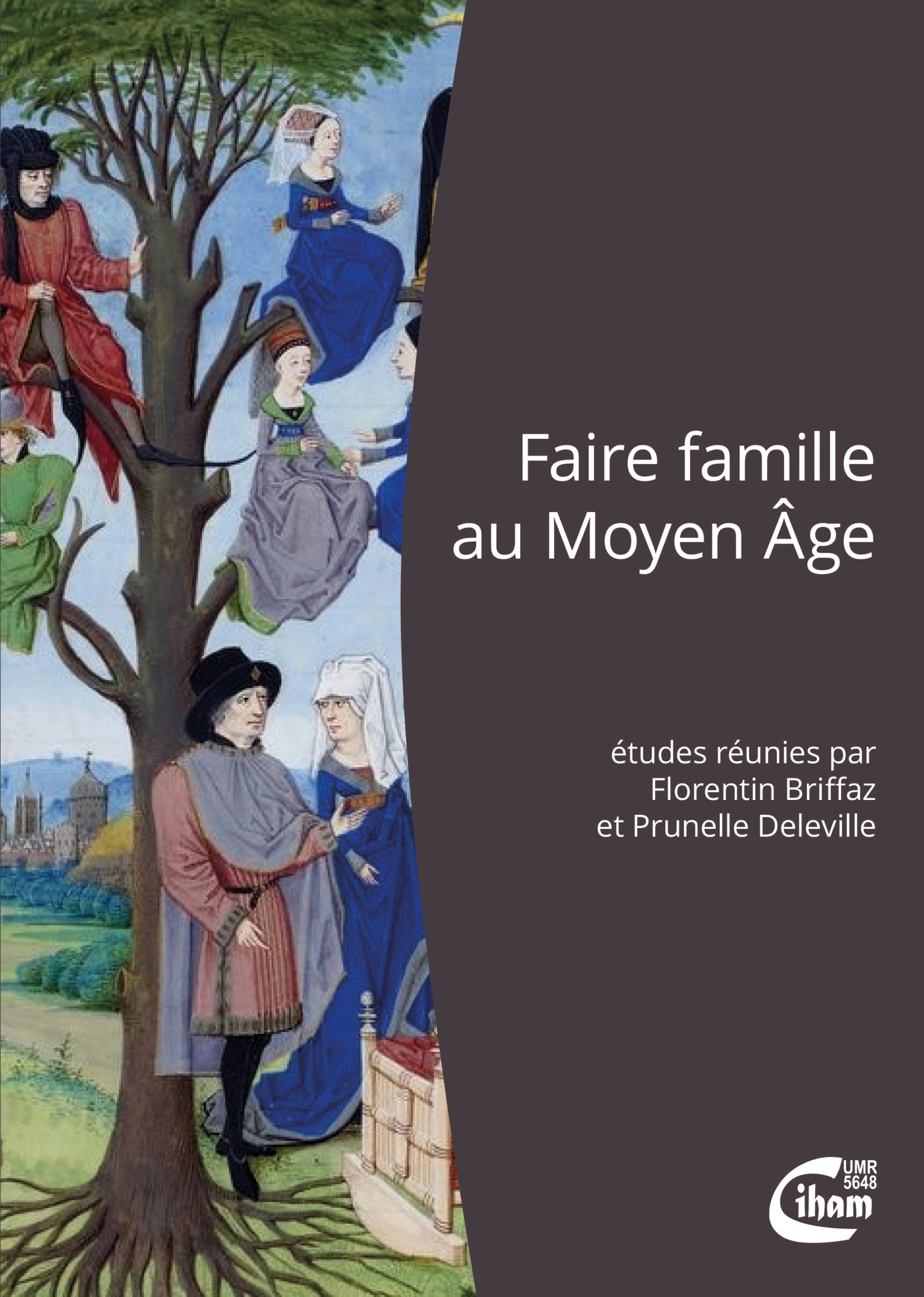
Publication – « Faire famille au Moyen Âge », éd. Florentin Briffaz et Prunelle Deleville

En 1222, Mariam de Sebastia, princesse arménienne est en peine : le deuil de ses filles, mortes en bas âge, lui est impossible. Deux cents ans plus tard, bien loin de là, un petit noble savoyard, Antoine d’Arloz, décide, dans son testament, de se faire enterrer dans le chœur de l’église de Leyment, « du côté du vent, au lieu où est situé le banc de son épouse ». Ces témoignages d’affection pour l’autre moitié ou pour les enfants sont saisissants et renvoient à différentes conceptions sensibles de la famille au Moyen Âge. La famille est un corps vivant qui se définit et se remodèle sans cesse, à la faveur de l’irruption de nouveaux membres mais surtout en fonction de normes qu’elle suit ou, en l’occurrence, qu’elle participe à façonner par ses transgressions et/ou ses interprétations. De la péninsule ibérique au Caucase, le volume confronte des aires géographiques, des acteurs sociaux variés et des sources diverses couvrant un long Moyen Âge du VIe au XVe siècle.

Informations pratiques :

Faire famille au Moyen Âge, éd. Florentin Briffaz et Prunelle Deleville, Lyon, Ciham-Éditions, 2022 ; 1 vol., 190 p. (Mondes médiévaux). ISBN : 978-2-95684-266-8. Prix : € 25,00.

Publication : Association Française des Presses d’Universités

Publié dans Publications | Laisser un commentaire

Publication – Constance Brittain Bouchard, « Negotiation and Resistance. Peasant Agency in High Medieval France »

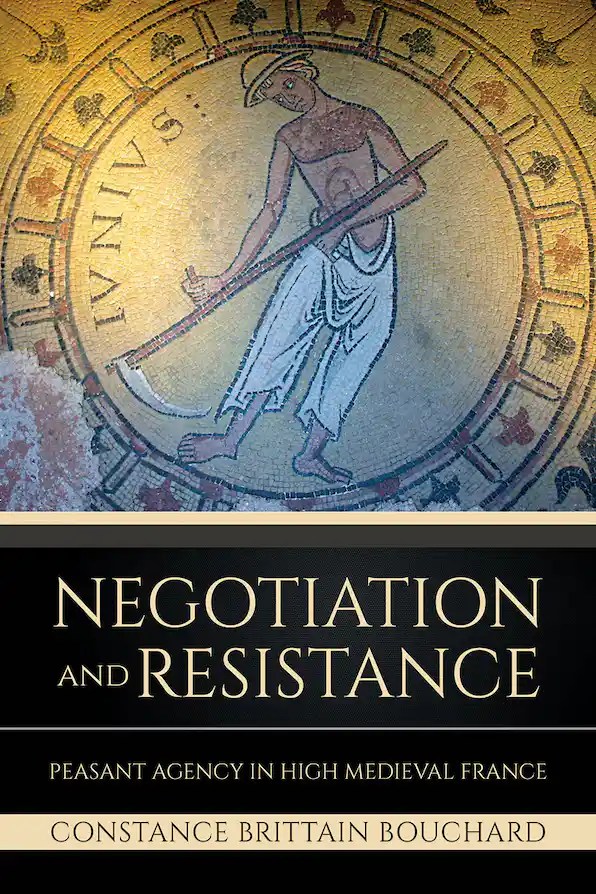
In Negotiation and Resistance, Constance Brittain Bouchard challenges familiar depictions of the peasantry as an undifferentiated mass of impoverished and powerless workers. Peasants in eleventh- and twelfth-century France had far more scope for action, self-determination, and resistance to oppressive treatment—that is, for agency—than they are usually credited with having. Through innovative readings of documents collected in medieval cartularies, Bouchard finds that while peasants lived hard, impoverished lives, they were able to negotiate, individually or collectively, to better their position, present cases in court, and make their own decisions about such fundamental issues as inheritance or choice of marriage partner. Negotiation and Resistance upends the received view of this period in French history as one in which lords dealt harshly and without opposition toward subservient peasants, offering numerous examples of peasants standing up for themselves.

Constance Brittain Bouchard is Distinguished Professor Emerita of History at the University of Akron and the author or editor of numerous books including Sword, Miter, and Cloister, Holy Entrepreneurs, and Strong of Body, Brave and Noble.

Informations pratiques :

Constance Brittain Bouchard, Negotiation and Resistance. Peasant Agency in High Medieval France, Ithaca (NY), Cornell Unievrsity Press, 2022 ; 1 vol., 186 p. ISBN : 978-1-50176-658-9. Prix : USD 125,00.

Source : Cornell University Press

Publié dans Publications | Laisser un commentaire