Appel à contribution – Quo Vadis. La fabrique des savoirs à l’ère numérique

De nombreux projets de thèse sur l’histoire de l’Europe du Ve au XVIe siècle témoignent de l’actualité des nouvelles approches issues de l’histoire du savoir (Wissensgeschichte) et des humanités numériques. Quo vadis ouvre un espace de discussion franco-allemand pour les doctorants et les étudiants de master dont les projets utilisent les méthodes et les théories de ces domaines de recherche comme approches analytiques. L’objectif est de mettre en contact les jeunes chercheurs et chercheuses: en sept séances, les chercheurs présentent leurs projets ainsi qu’un article scientifique de la littérature, essentiel à leur recherche. Ces textes sont envoyés aux participants au préalable. Le séminaire ne se limite pas aux seules études historiques médiévales, mais profite d’approches interdisciplinaires, notamment de l’histoire numérique, des études romanes, des études germaniques ou encore de la sociologie.

Nous recherchons de jeunes chercheurs travaillant sur l’histoire de l’Europe du Ve au XVIe siècle, qui ont utilisé une approche de l’histoire du savoir ou des méthodes des humanités numériques, pour interroger leurs sources dans leurs contextes d’émission. De nombreux projets témoignent de l’intérêt actuel pour les conditions contemporaines de production et de transmission du savoir, ce qui leur permet de repérer des lieux et des espaces inconnus, car ils déterminent la portée du savoir. Ainsi, l’aula d’un évêque devient une salle de cours, les monastères, des laboratoires d’innovation ou la chancellerie royale, un lieu de mise en ordre, autant d’espaces de savoir, créés qu’il convient d’explorer. Sur la base d’une publication scientifique sélectionnée, la méthode utilisée ou la théorie suivie dans le projet doit être présentée afin de discuter ensemble des problèmes qui découlent de son utilisation dans le cadre d’un travail scientifique, dans l’objectif de trouver des solutions à ceux-ci.

Les langues de travail sont l’allemand, le français et l’anglais. Les organisatrices sont en charge de la modération, chaque personne intervenant dans la langue de son choix. Les séances du prochain séminaire se dérouleront du mois d’avril à la fin du mois de juillet 2023.

La candidature doit être constituée d’un résumé du projet de recherches (3 000 signes, espaces compris),

d’une proposition d’article scientifique à discuter. Un court CV académique est souhaité.

Les candidatures sont à envoyer en un seul PDF avant le 31 janvier 2023 à l’adresse suivante: quovadis@dhi-paris.fr. Les réponses seront connues au plus tard le 28 février 2023.

»Quo vadis. La fabrique des savoirs à l’ère numérique« est organisé par Maria-Elena Kammerlander (Fribourg-en-Brisgau) et Pauline Spychala (IHA). Le séminaire se tient déjà depuis un an et nous invitons toutes les personnes intéressées à assister aux séances de cet hiver !

Quo vadis se déroule en coopération avec la Gesellschaft für Universitäts- und Wissenschaftsgeschichte, le Trier Center for Digital Humanities, le Centre de recherche en histoire européenne comparée de l’Université Paris-Est Créteil (EA 4392) ainsi qu’avec le Centre Lucien Febvre de l’Université de Franche- Comté (EA 2273).
Publié dans Appel à contributions | Laisser un commentaire

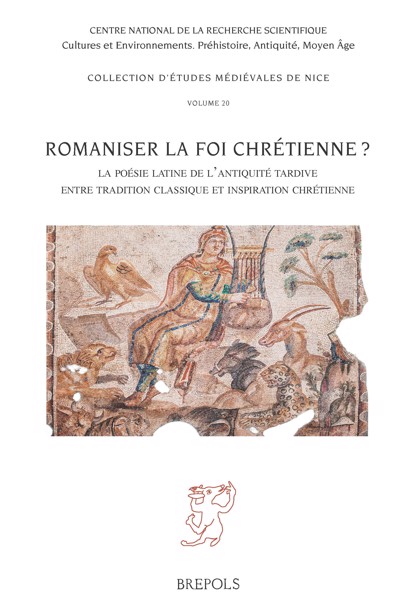
Publication – « Romaniser la foi chrétienne ? La poésie latine de l’Antiquité tardive entre tradition classique et inspiration chrétienne », éd. Giampiero Scafoglio, Fabrice Wendling

Le présent ouvrage participe aux recherches sur la poésie latine tardo-antique qui s’efforcent de situer et de décrire l’émergence, puis le développement de cette poésie dans le cadre de la christianisation de l’Empire. Tout en situant les auteurs et les œuvres par rapport aux grands changements et aux convulsions idéologiques qui ont traversé la société romaine du IIIe au VIe siècle, les dix contributions de ce volume, réunies par Giampiero Scafoglio et Fabrice Wendling, tentent d’appréhender par le biais de la littérature un phénomène désormais bien étudié par les historiens, celui de la transformation du christianisme dans le contexte constantinien et théodosien d’une religion devenue romaine. Si l’on observe dans la sacralisation des bâtiments et des lieux un processus qui opère une rupture avec la religion spirituelle des premiers siècles, ne peut-on trouver trace d’une telle mutation dans la poésie des IVe et Ve siècles ? Une expression désignant le Christ comme Saluator generis Romulei (Prudence), l’effacement des thématiques chrétiennes dans certains poèmes d’Ausone, l’apparition dans les hymnes de Prudence d’une topographie sacrée, l’éloge hyperbolique de l’art oratoire chez un Ennode de Pavie ou, encore, la stigmatisation de la virginité dans tel Épithalame du même Ennode ne témoignent-ils pas d’une forme de « romanisation » ou – plus exactement peut-être – d’interpretatio romana de la foi chrétienne, d’origine hébraïque ? Autrement dit, symétriquement à la « conversion » de la culture classique dont témoigne la littérature chrétienne, ne peut-on mettre au jour dans les textes poétiques un processus sans doute déconcertant, mais réel, de transformation de la foi, de transmutation de ses contenus originels, sous l’effet d’une poésie chrétienne qui garde des attaches profondes, non seulement avec la poésie classique, mais encore avec tout le « passé » de la civilisation romaine antique, jusque dans ses aspects religieux ?

L’ouvrage a été dirigé, conçu et réalisé par G. Scafoglio et F. Wendling, enseignants-chercheurs au sein d’Université Côte d’Azur et membres du CEPAM (UMR 7264), à partir de séminaires de recherche échelonnés de 2016 à 2018. Outre les responsables du présent volume, huit chercheurs, spécialistes reconnus de littérature latine tardo-antique, ont contribué à l’ouvrage : J.-L. Charlet, B. Goldlust, C. Guittard, G. Herbert de la Portbarré-Viard, J. Soler, C. Urlacher-Brecht, E. Wolff et V. Zarini

Table des matières :

G. Scafoglio & F. Wendling
Introduction

Vincent Zarini
Rome et son passé dans la poésie latine de l’Antiquité tardive

Charles Guittard
Au confluent des traditions : regards sur la poésie dans l’œuvre de Macrobe et dans le cercle de Symmaque.

Giampiero Scafoglio
Le christianisme et le paganisme dans la poésie de l’Antiquité tardive : le cas d’Ausone

Etienne Wolff
Les poèmes de l’Anthologie latine entre tradition classique et émergence chrétienne

Fabrice Wendling
Poésie et théologie dans le « Contre Symmaque » de Prudence

Jean-Louis Charlet
Contribution de trois « Carmina minora » rendus à Claudien, à la connaissance de sa religion

Céline Urlacher-Becht
« Omnibus in rebus sermonum purpura regnat » (Carm. II, 44, 7) : Place et enjeux de l’idéal aristocratique de l’orator dans les poèmes religieux d’Ennode de Pavie

Benjamin Goldlust
Une critique de la virginité chez un poète chrétien ? Retour sur l’Épithalame pour Maximus d’Ennode de Pavie (1, 4 = 388 V) et mise en perspective littéraire d’un problème doctrinal

Joëlle Soler
Les « lieux saints » dans le « Peristephanon » de Prudence : une interpretatio Romana du culte des martyrs ?

Gaëlle Viard
Epigraphie et poésie spirituelle dans l’œuvre de Paulin de Nole

Informations pratiques :

Romaniser la foi chrétienne ? La poésie latine de l’Antiquité tardive entre tradition classique et inspiration chrétienne, éd. Giampiero Scafoglio, Fabrice Wendling, Turnhout, Brepols, 2022 ; 1 vol., 255 p. (Collection d’études médiévales de Nice, 20). ISBN : 978-2-503-60087-1. Prix : € 60,00.

Source : Brepols

Publié dans Publications | Laisser un commentaire

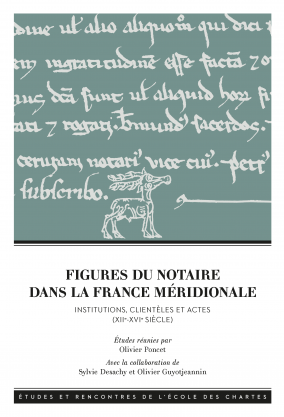
Publication – « Figures du notaire dans la France méridionale. Institutions, clientèles et actes (XIIe-XVIe siècle) », dir. Olivier Poncet, Sylvie Desachy, Olivier Guyotjeannin

Pour les historiens qui fréquentent les archives des départements du Sud de la France, l’étude des actes notariés est une démarche usuelle, quel que soit leur champ d’investigation, tant le notaire au Moyen Âge et jusqu’au xvie siècle a pris une place essentielle et parfois centrale dans la société et les institutions du Midi. Les travaux n’ont d’ailleurs pas manqué depuis des décennies autour de ce phénomène, aussi bien du côté juridique qu’historique. Toutefois, une approche globale de ce notariat méridional, dans sa genèse comme dans sa diffusion, de l’évolution de cette institution, de ses actes et de leur archivage restait à faire. C’est l’ambition que se donne le présent ouvrage : offrir une vue kaléidoscopique des pratiques du notariat méridional du xiie au xvie siècle à travers des approches variées (diplomatique, archivistique, histoire du droit, histoire sociale et économique), qui visent à restituer son caractère protéiforme – en fonction notamment des espaces géographiques – et à replacer son rôle dans l’histoire institutionnelle et sociale de la France du Sud en regard de pratiques plus septentrionales.

Table des matières :

Avant-propos par Sylvie Desachy, Olivier Guyotjeannin et Olivier Poncet 

Origines et diffusion du notariat méridional. Propos liminaires par Jean-Louis Biget 

D’une Renaissance à l’autre, l’avènement d’un homme et de son métier dans le Midi de la France : le notaire du XIIe au XVIe siècle par Olivier Guyotjeannin et Olivier Poncet 

Première partie : Émergence et développement du notariat

Gênes et Giovanni Scriba, aux sources du notariat méridional par Alfonso Assini et Paola Caroli 

De la Ligurie au Languedoc : l’émergence du notariat en Languedoc à travers les actes de la pratique (XIIe siècle) par Sylvie Desachy 

Les notaires et les arbitres ou amiables compositeurs en Languedoc (milieu du XIIe-début du XIIIe siècle) par Maïté Ferret-Lesné 

Origines et spécificités du notariat pyrénéen. L’exemple du Béarn (XIIIe-XVe siècle) par Dominique Bidot-Germa 

Deuxième partie : Plus au nord : des marges notariales ?

Une approche de la population des notaires du bailliage de Grésivaudan autour de 1450 par Hélène Maurin-Larcher et Hélène Viallet 

Où s’arrête le notariat méridional ? L’exemple du notariat poitevin, forme de notariat méridional en pays de droit coutumier (XIIIe-XVIe siècle) par Romain Le Gendre

Notaires, tabellions, clercs. Une approche comparée des processus de professionnalisation (XIIIe-XVe siècle) par Isabelle Bretthauer 

Troisième partie : Des outils efficaces et innovants

Le nouveau support de l’écrit, le papier des notaires par Françoise Chauzat, Janine Mathieu, Jean-Manuel Picasso et Martine Sainte-Marie 

Typologie des actes notariés : l’exemple du Tarn (XIIIe-XVIe siècle) par Sophie Imbert 

Répertoires chronologiques et tables alphabétiques. Typologie et évolution par Bruno Poinas 

Quatrième partie : Le notaire à l’étude

Les notaires du Gévaudan (XIIIe-XVIe siècle) par Philippe Maurice 

Un notaire au travail : Pere Candell, Perpignan, 1414-1452 par Élodie Capet 

Les notaires rouergats et la pratique de l’occitan du XIIIe au XVIIe siècle par Jean Delmas 

Conclusions. Notaires méridionaux : retour au droit par Patrick Arabeyre

Résumés 

Index des noms géographiques et de personne 

Informations pratiques :

Figures du notaire dans la France méridionale. Institutions, clientèles et actes (XIIe-XVIe siècle), éd. Olivier Poncet, Sylvie Desachy, Olivier Guyotjeannin, Paris, École nationale des chartes, 2022 (Études et rencontres de l’École des chartes) ; 1 vol., 336 p. ISBN : 978-2-35723-167-2. Prix : € 34,00.

Source : École nationale des chartes

Publié dans Publications | Laisser un commentaire

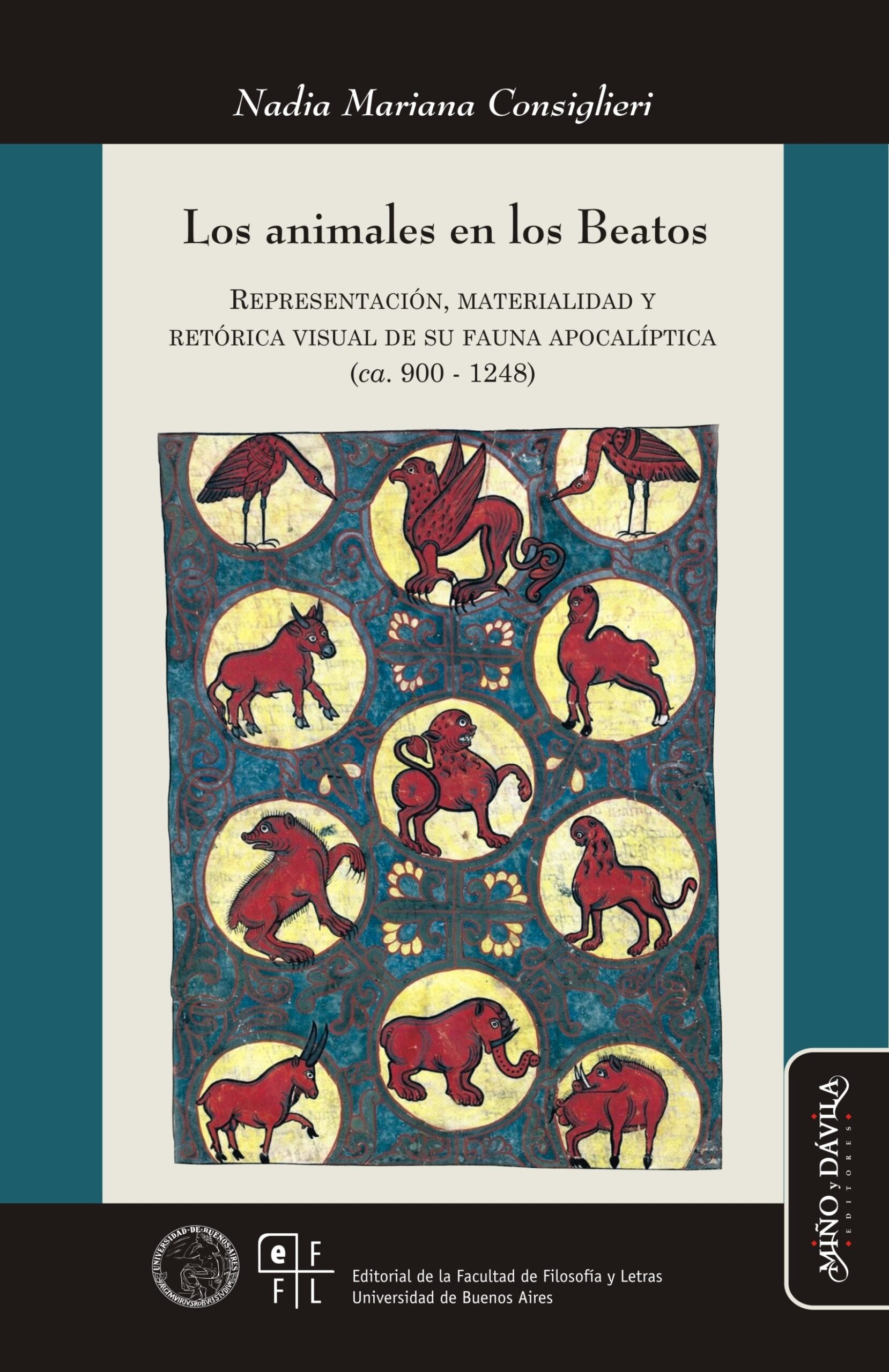
Publication – Nadia Mariana Consiglieri, « Los animales en los Beatos. Representación, materialidad y retórica visual de su fauna apocalíptica (ca. 900-1248) »

Beatus illuminated manuscripts were mainly produced in the Iberian region but also in French and Italian territories between the 10th and 13th centuries when Beatus of Liébana’s Commentary on the Apocalypse was copied in monastic scriptoria. Depending on their origin and time, the versions of their animals were modified. In this regard, the different animal figures were structured in these manuscripts from the sacred and devil poles in continuity with the Isidorian classification based on the opposite concepts domestication- bestiality, featured in his Etymologiae. These zoomorphic representations in Beatus codex acquired ideological and rhetorical functions by acting as effective support structures for the eschatological contents of the Commentary in the activity of monastic lectio.

Informations pratiques :

Nadia Mariana Consiglieri, Los animales en los Beatos. Representación, materialidad y retórica visual de su fauna apocalíptica (ca. 900-1248), Buenos Aires–Barcelona, Miño y Dávila editores – Ciudad Autónoma de Buenos Aires, Editorial de la Facultad de Filosofía y Letras Universidad de Buenos Aires, 2022 ; 1 vol., 552 p. ISBN: 978-84-18095-92-4. Prix : USD 8,40.

Source : Miño y Dávila editores

Publié dans Publications | Laisser un commentaire

Appel à contribution – Interreligious Communication. Transmediterranean Perspectives (7th–16th Cent.)

Recent years have seen a plethora of publications on Jewish-Christian-Muslim relations. A lot of this research, however, has come short in concretely analysing and conceptualising how members of different religious groups have actually communicated with each. Against this backdrop, the conference aims to fundamentally engage with theories and frameworks of communication, as well as with the extant documentation and concrete communication.

Interreligious Communication. Transmediterranean Perspectives (7th–16th Cent.)

Recent years have seen a plethora of publications on Jewish-Christian-Muslim relations, many of which fall into the framework of “Mediterranean Studies”. A lot of this research, however, has come short in concretely analysing and conceptualising how members of different religious groups (including those that stand or are perceived to stand in-between these groups, keyword “hybridity”) have communicated with each other directly and

– in different situations or concrete settings, such as when trading or dealing with diplomatic matters
– under different socio-political and socio-economic circumstances
– on a variety of topics, such as law, religion, science, or civic matters
– within and across different categories of belonging, such as gender, identity, religion or race
– orally, symbolically, in writing, as well as by means of material exchange
– in different languages and linguistic variations, including sociolinguistic registers
– and with different assumptions and, indeed, different outcomes

Against this backdrop, the conference aims to fundamentally engage with theories and frameworks of communication, as well as with the extant documentation and concrete instances of communication between Jews, Christians, and Muslims in and around the Mediterranean between the seventh to sixteenth centuries. In so doing, we hope to move the discussion away from a focus on “relations” to more concrete cases of direct communication.

The conference will feature invited papers from established experts in the field as well as discussion sessions in which we aim to approach the topic of ‘communication’ on an overarching, more abstract level. With this Call for Papers, we hope to address scholars who are either PhD candidates or postdoctoral researchers working on topics that fall into our areas of interest. We are keen to hear from you!

We particularly welcome papers that fit into our four main themes:

– Legal frameworks and interaction
– Science, philosophy and materiality
– Violence, war and diplomacy
– Trading networks and commerce

This conference is organised by the research group RELCOM (“Religious Communication in and between the Arabic-Islamic and Latin-Christian Sphere”) and it is generously funded by the AHRC and the DFG. We will be able to invite candidates travelling from within the UK and Europe. Applicants from other locations are also welcome to apply but funding can then only be partial.

Please send an abstract of a maximum of 500 words together with a provisional title and a short CV to: kate.f.tinson@durham.ac.uk and alejandro.pelaez-martin@uni-konstanz.de by 30th of November.

Organisers, the RELCOM team: Theresa Jäckh, Daniel G. König, Alejandro Peláez Martín and Kate Tinson

Venue: St Chad’s College, Durham University, 18 North Bailey, Durham DH1 3RH, United Kingdom

Source : H-Soz-Kult

Publié dans Appel à contributions | Laisser un commentaire

Séminaire – Séminaire « Parler de foutre ». Dire le sexe au Moyen Âge.

Campus de Villejean (Rennes)
Type d’événement

13 octobre 2022 – 6 avril 2023

Le centre d’études des textes médiévaux (CETM) du laboratoire CELLAM de l’Université Rennes 2 propose, du 13 octobre 2022 au 6 avril 2023,  une première session de 8 séances dans le cadre du séminaire « Parler de foutre ». Dire le sexe dans les textes médiévaux.

Le Séminaire du CETM s’intéressera entre 2022 et 2026 à la manière dont les textes médiévaux disent la relation sexuelle comme acte engageant le corps. « Parler de foutre » (titre tronqué du fabliau La demoiselle qui ne pooit oïr parler de foutre) met l’accent sur la question du mot et de la chose. La première session aura lieu entre 2022 et 2023. 

Comment dire ou ne pas dire ? Entre tabou, ellipse, métaphore, euphémisme ou litote, comment les divers genres littéraires médiévaux construisent-ils une poétique associée au corps, à l’acte sexuel ou la pratique sexuelle ?  Quelle articulation entre dire, faire, voir et imaginer ? Il s’agira d’étudier le vocabulaire, les dispositifs métaphoriques ou narratifs, et leur place dans la senefiance des œuvres et leur caractérisation générique.

Voir le programme détaillé

Dans une actualité où la question de ce qui peut se dire, s’entendre, s’enseigner se pose à partir de réactions provoquées par la présence de mots ou d’images, les manières de dire le sexe au Moyen Age et la réception postérieure des œuvres qui en proposent une représentation suscitent des interrogations pouvant éclairer le présent.

Source : Université Rennes-2

Publié dans Séminaire | Laisser un commentaire

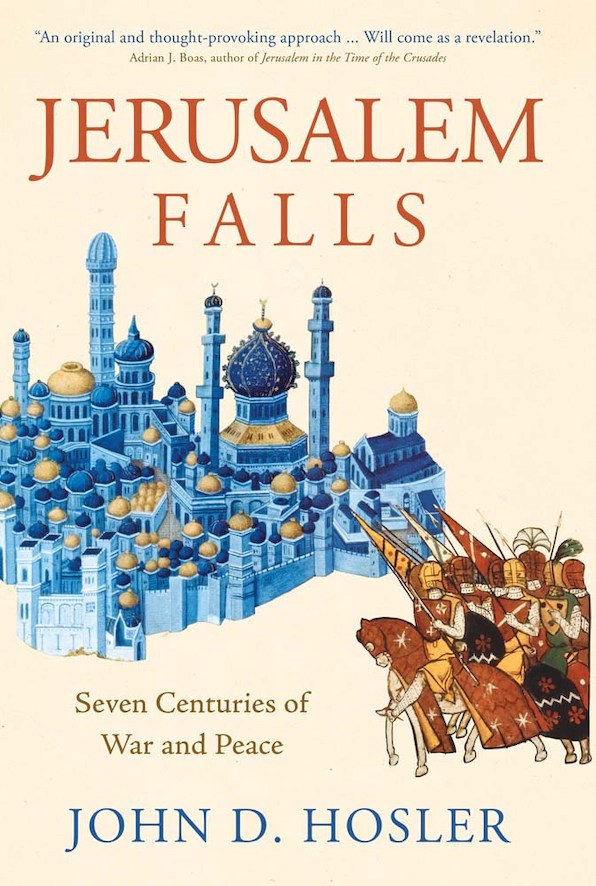
Publication – John D. Hosler, « Jerusalem Falls. Seven Centuries of War and Peace »

The history of Jerusalem is one of conflict, faith, and empire. Few cities have been attacked as often and as savagely. This was no less true in the Middle Ages. From the Persian sack in 614 through the bloody First Crusade and beyond, Jerusalem changed hands countless times. But despite these horrific acts of violence, its story during this period is also one of interfaith tolerance and accord.

In this gripping history, John D. Hosler explores the great clashes and delicate settlements of medieval Jerusalem. He examines the city’s many sieges and considers the experiences of its inhabitants of all faiths. The city’s conquerors consistently acknowledged and reinforced the rights of those religious minorities over which they ruled. Deeply researched, this account reveals the way in which Jerusalem’s past has been constructed on partial histories—and urges us to reckon with the city’s broader historical contours.

John D. Hosler is professor of military history at the Command and General Staff College. His previous books include John of Salisbury and The Siege of Acre, which was a Financial Times Book of the Year.

Informations pratiques :

John D. Hosler, Jerusalem Falls. Seven Centuries of War and Peace, New Haven, Yale University Press, 2022 ; 1 vol., 384 p. ISBN : 978-0-30025-514-0. Prix : USD 35,00.

Source : Yale University Press

Publié dans Publications | Laisser un commentaire

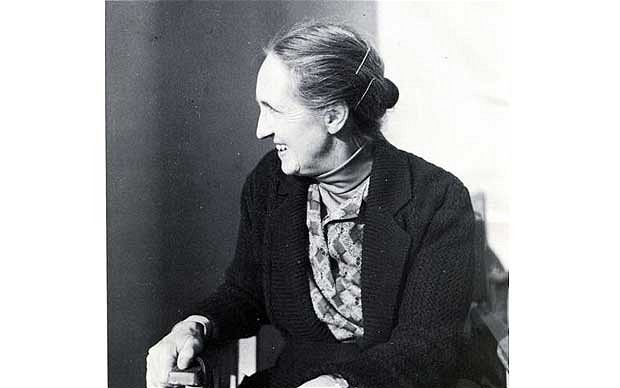
Prix – The Marjorie Chibnall Essay Prize 2023

Submissions are now being sought for the 2023 Marjorie Chibnall Essay Prize, offered in memory of the former director of the Battle Conference on Anglo-Norman Studies and co-founder of the Allen Brown Memorial Trust. It is awarded for an unpublished scholarly paper based upon original research and relating to the study of the Anglo-Norman world, broadly defined, between c. 850 and c. 1250.

Candidates for the Prize are normally expected to be doctoral students in a recognised institution of Higher Learning, or within two years of having completed a doctorate (from the date the degree was awarded).

The winning paper will be awarded a place at the 2023 Battle Conference on Anglo-Norman Studies, to take place in London, at Senate House, from 19 to 22 July; the conference registration fee and expenses to a certain level will be covered. It is a condition of the Prize that the paper should be delivered at the conference following its award, and be submitted for exclusive publication in Anglo-Norman Studies.

The paper should be written in English, up to 8000 words in length (including footnotes), and be prepared to a consistent form of citation.

Candidates should send a covering letter, an abstract (between 200 and 250 words) of their paper, and their entry itself, to The Hon. Secretary of the Allen Brown Memorial Trust, Ms Caroline Palmer, via an email attachment to Cpalmer@boydell.co.uk with the three documents combined into one file. The letter should make a statement as to the originality of the work; an indication of how the candidate qualifies for entry to the competition; agreement to the terms of the Prize competition; and name, postal address, email address, and institutional details.

Entries must be submitted by 15 March 2023. Previously unsuccessful candidates may reapply, but must address a new topic.

The winner will be announced in early April, the work having been judged by a selection committee made up of representatives of the Trust; their decision will be final and no correspondence will be entered into. The Trustees reserve the right not to make an award should no essay of sufficient quality be entered.

It is planned to include a poster session for ECRs during the conference. For further details please contact Dr Leonie Hicks: leonie.hicks@canterbury.ac.uk,

Publié dans Prix | Laisser un commentaire

Séminaire – Séminaire Terrae. Atelier Operandi 2022-2023

Coord. : Sandrine Victor

Salle : bâtiment Olympe de Gouges, GH108

Les vendredis de 14h à 16h

Les séminaires sont en mode hybride : demandez le lien de connexion à sandrine.victor@univ-jfc.fr

Retrouvez le séminaire sur le carnet Hypothèses : https://operandi.hypotheses.org/

Programme :

9 décembre 2022 :
Didier Boisseuil : « Les comptes d’une alunière du début du XVIe siècle » 
Sandrine Victor : « Le pic et la plume : le chantier administratif en œuvre. Exemple de Salses et Gérone au XVe siècle »

27 janvier 2023 :
Sidonie Bochaton : « Pour les réparations du funeste dégât d’incendie. Les réfections de l’abbaye d’Abondance (Haute-Savoie, XVe-XVIIIe siècle).»
Michèle Boccard : « Les archives paroissiales et la reconstruction d’un monument à la fin du Moyen Âge »

24 février 2023 :
Table ronde « La brique : perspectives diachroniques », avec Emmanuel Baudouin, Sophie Fradier, Nicolas Meynen et Valérie Nègre

31 mars 2023 :
Etienne Hamon : « Faire feu de tout bois : le chantier de Notre-Dame de Paris d’après les sources documentaires (XIIe-XVIe siècle) »

21 avril 2024 :
 Laura Foulquier : « Du même sang que les Latins. Remplois et romanité dans l’Auvergne du Moyen Âge ».
Cédric Moulis : « Le Moyen Âge consommateur puis initiateur de remploi. Des exemples lorrains »

12 mai 2023 :
Pere Freixas : « Le chantier éphémère dans les cérémonies médiévales »*
Lucie Gaugain : « Des chantiers éphémères : les décors de fêtes du château et de la ville d’Amboise à la fin du Moyen Âge et au début de la Renaissance (1460-1520) »

Affiche au format PDF : ici

Publié dans Séminaire | Laisser un commentaire

Offre d’emploi – Assistant Curator of Manuscripts

Getty believes diversity, equity, accessibility and inclusion are essential to our excellence and to the execution of our mission. The Getty community values differences in the pursuit of inquiry and knowledge, mutual understanding, respect, trust, transparency, and cooperation. We are committed to creating a diverse and welcoming workplace that reflects the diversity of the communities we serve and includes individuals with diverse backgrounds and experiences. Individuals of color, women, LGBTQIA+, veterans and persons with disabilities are encouraged to apply.

Job Summary

Our Mission

The J. Paul Getty Museum seeks to inspire curiosity about, and enjoyment and understanding of, the visual arts by collecting, conserving, exhibiting, and interpreting works of art of outstanding quality and historical importance and is one of four programs of the J. Paul Getty Trust.  The Museum operates two sites, the Getty Villa in Malibu, which exhibits its collection of Greek and Roman antiquities, and the Getty Center in Brentwood, which displays its collections of European art: Medieval and Renaissance illuminated manuscripts, paintings, sculpture, decorative arts, drawings to 1900, and photography to the present day (including non-European works).  The Museum mounts approximately 25 temporary exhibitions a year across its two sites; maintains an annual permanent gallery improvement program and offers wide-ranging and ambitious programming for its visitors.

The Opportunity

The J. Paul Getty Museum seeks an Assistant Curator of Manuscripts to become a vital member of a team working with one of the foremost collections of medieval and Renaissance (ca. 800-1550) illuminated manuscripts in the United States. The Assistant Curator will play an instrumental role in supporting the collection and its many publics through acquisitions, exhibitions, original research, and innovative interpretation. The department is currently engaged in developing programming that is engaging and meaningful to diverse, contemporary audiences. The successful candidate will bring creative ideas and fresh perspectives, key attributes for our ongoing work to increase diversity, equity, inclusion, and access, both through our internal work and our public-facing programs. Many of the duties of the Assistant Curator will revolve around the Manuscripts Department’s schedule of 3-4 exhibitions per year, the primary means by which the collection is presented to the public. The Assistant Curator will have the opportunity to conceive and develop these exhibitions and to work with other curators on larger exhibition projects that seek to advance the field through new research, engaging interpretation, and international collaboration.

The Assistant Curator will contribute to the ongoing work of cataloguing the collection for the museum website, including updating information and writing descriptions of individual objects. The Assistant Curator will support the department’s administrative functions, including processing loans, overseeing the study room, and supervising photography of the collection. The ideal candidate will be a highly motivated individual with exceptional organizational skills and experience managing projects in an iterative, fast-paced environment. A natural consensus-builder, the candidate understands how to collaborate successfully in a team with other curators in the department, as well as with colleagues across the campus, including Conservation, Design, Exhibition, Education, Interpretive Content, Imaging Services, Preparators, and Registrars.

Major Job Responsibilities

  • Applies advanced knowledge of art history and art education to curatorial assignments of moderate complexity
  • Performs scholarly research
  • Conceives and executes smaller exhibitions
  • Verifies value and authenticity of potential acquisitions and participates in the preparation of acquisition proposals
  • Travels and networks domestically and internationally to develop/maintain relationships with other colleagues and institutions
  • Publishes and lectures in area of specialization
  • Administers incoming and outgoing loans
  • Updates information in collection management system and writes collection entries for the website
  • Participates in photography of the collection
  • Monitors the reading room
  • Contributes to the on-line presence of the manuscripts collection
  • Supports scholarly visits and requests

Qualifications

  • Master’s degree in art history, art or art education OR 2-4 yrs of curatorial experience OR Ph.D.
  • Fluency in at least one foreign language (modern or ancient) required
  • Competent to work in most curatorial functions

Requirement

All employees must be fully-vaccinated against the COVID-19 virus as a condition of employment. Exemptions from this requirement as a reasonable accommodation due to medical contraindication, disability or sincerely held religious belief or practice will be considered.

Knowledge, Skills and Abilities

  • Excellent communication and interpersonal skills
  • Demonstrated ability to build relationships and collaborate with teams across disciplines
  • Excellent writing and proofing skills
  • Excellent organizational skills with attention to detail
  • Working knowledge of collection management databases, preferably The Museum System(TMS)
  • Demonstrated experience with art historical research and writing
  • Proven experience dealing with confidential information
  • Specialty in Italian art (ca. 1300-1500) preferred

Equal Opportunity Employer

We are proud to be an equal opportunity employer. All qualified applicants will receive consideration for employment without regard to age, ancestry, citizenship or immigration status, color, disability, ethnicity, familial status, gender identity and/or expression, genetic information, marital status, national origin, race, religion, sex, sexual orientation, veteran status, or any other protected status

Source : The J. Paul Getty Museum

Publié dans Offre d'emploi | Laisser un commentaire