Publication — Hanneke van Asperen, « Silver Saints: Prayers and Badges in Late Medieval Books »

Late medieval books served as treasure chests for all kinds of religious keepsakes, notably small metal badges. Devotees sewed these religious badges and pilgrimage souvenirs to the parchment of their treasured devotional books and manuscript illuminators depicted silver en gilt badges in the margins as if they are sewn to the pages. Medieval manuscripts are often admired for their esthetic qualities, but many of them also served a practical use as instruments for the physical and mental wellbeing of the owners and their families. Manuscripts and incunabula containing metal badges illustrate how the owners used their books, which texts they favored, but also who collected badges and why. The depicted badges that only appear in richly illuminated and expensive manuscripts expand the knowledge of these metal objects that have been passed down in small numbers only. The painted motifs that have a more decorative and structuring role in the book fulfilled different functions than the original badges. ‘Silver Saints’ discusses the religious life of lay people in the late Middle Ages and the meaning of badges in books, both the painted motifs in beautifully decorated manuscripts and many traces of original badges.

Hanneke van Asperen is affiliated with the department of Art History at Radboud University Nijmegen. Her fields of interests are metal badges, manuscripts, devotional practices and images of charity. She is co-author of the book series ‘Heilig en Profaan’ on badge finds in the Dutch-speaking regions of medieval Europe and works on Kunera, an online searchable database  of medieval badges and ampullae.

Informations pratiques :

Hanneke van Asperen, Silver Saints: Prayers and Badges in Late Medieval Books, Turnhout, Brepols, 2021. VI+432 p., 50 b/w ill. + 87 colour ill., 220 x 280 mm. ISBN: 978-2-503-58020-3. Prix : 165 euros.

Source : Brepols

Publié dans Publications | Laisser un commentaire

Publication — Stefano Zamponi, « Le ragioni della scrittura. Piccoli scritti di paleografia »

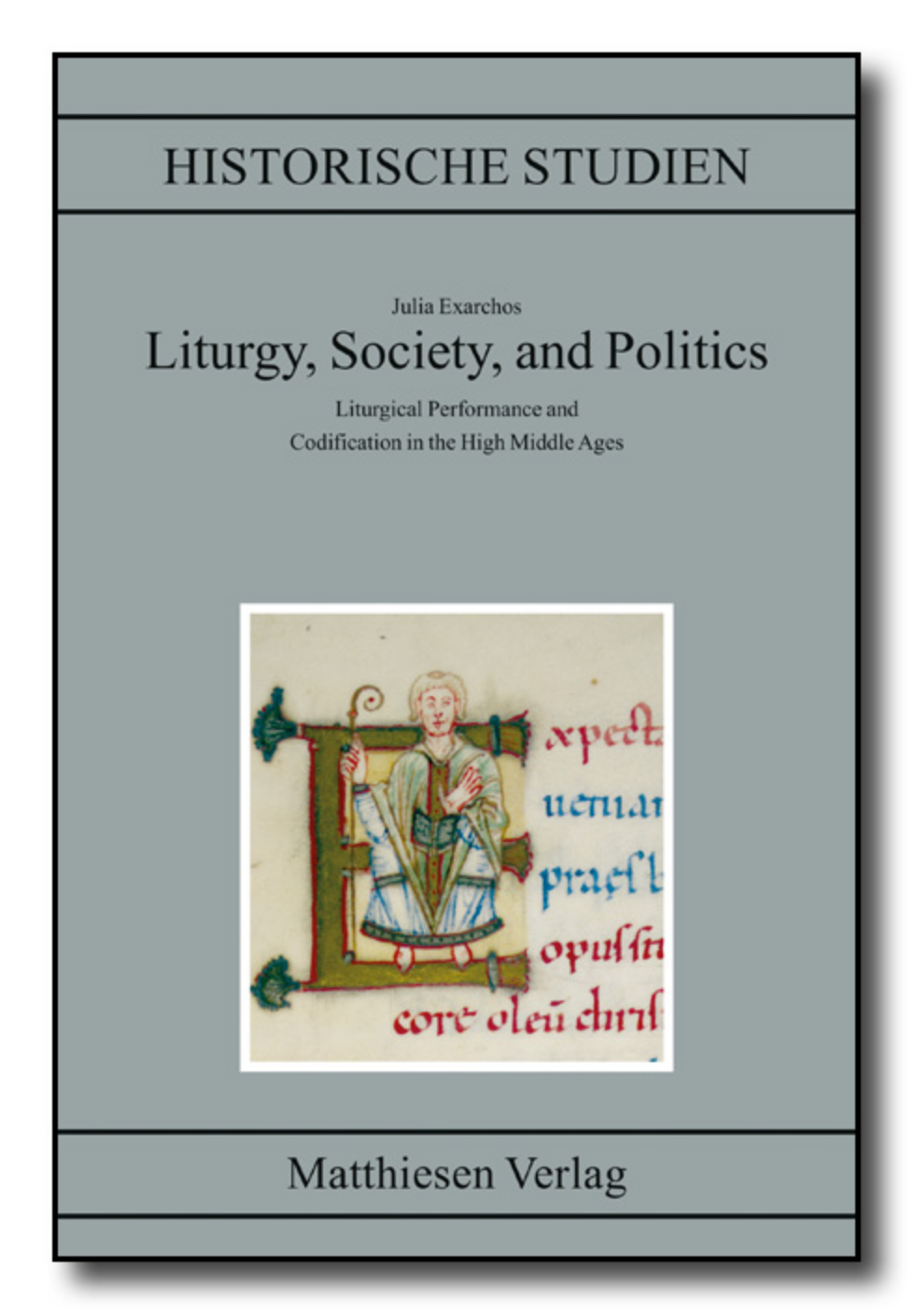
I saggi pubblicati in questo volume affrontano due momenti fondamentali della storia della scrittura latina in Italia: definizione e diffusione della nuova scrittura libraria che ha dominato l’Occidente fra XIII e XVI secolo, cioè la littera textualis; caratteri e varietà della scrittura e del libro ‘all’antica’, invenzioni che l’Umanesimo italiano ha consegnato alla cultura europea.

A questi temi si affiancano riflessioni di ordine metodologico su strumenti concettuali e finalità della ricerca paleografica.

Stefano Zamponi (Pistoia 1949) ha insegnato Paleografia latina presso le Università di Trieste, Padova e Firenze. Si è occupato di storia della scrittura latina intesa come storia del funzionamento e della trasformazione dei sistemi grafici, con particolare attenzione per il periodo gotico e umanistico, toccando snodi cruciali per il riconoscimento dei fatti graficamente e storicamente significativi. Ha studiato importanti personalità di copisti e intellettuali (Petrarca, Boccaccio, Iacopo Angeli, Fonzio). Ha contribuito a rilanciare in Italia la catalogazione dei manoscritti curando più volumi delle collane Manoscritti datati d’Italia, Manoscritti medievali del Veneto e Manoscritti medievali della Toscana. Presidente del Comité International de Paléographie Latine dal 2005 al 2015, dal 2010 è presidente dell’Ente nazionale Giovanni Boccaccio.

Table des matières :

Premessa, di Teresa De Robertis e Nicoletta Giovè Marchioli

Scritti di Stefano Zamponi

Introduzione

1. Elisione e sovrapposizione nella littera textualis

2. La scrittura del libro nel Duecento

3. Quattro secoli di littera textualis in Italia

4. La scrittura umanistica

5. Iacopo Angeli copista per Salutati

6. Aspetti della tradizione gotica nella littera antiqua

7. Le metamorfosi dell’antico: la tradizione antiquaria veneta

8. Il paradigma e la fine della scrittura: l’Ercole Senofontio del Feliciano

9. Epigrafi di tradizione antiquaria nel Castello del Buonconsiglio di Trento

10. Virgulariter e inferius. Giovan Francesco Cresci e la disputa sulla corsiva

11. Struttura, esecuzione, stile: ripensando il protocollo Mallon

12. Il mestiere di paleografo

Sigle delle biblioteche e bibliografia

Tavole

Indice dei manoscritti

Tabula gratulatoria

Informations pratiques :

Stefano Zamponi, Le ragioni della scrittura. Piccoli scritti di paleografia, Roma, Viella, 2021 (Scritture e libri del medioevo, 19). pp. 352, 17×24 cm, bross. ISBN: 9788833137360. Prix : 50 euros.

Source : Viella

Publié dans Publications | Laisser un commentaire

Publication — Thierry Kouamé, « De l’office à la dignité. L’écolâtre cathédral en France septentrionale du IXe au XIIIe siècle »

This book traces the history of one of the central actors in the transformation of the Western educational system between the 9th and 13th centuries: the cathedral schoolmaster. Originally responsible for running the episcopal school, this ecclesiastical official eventually became a true school administrator with a territorial monopoly and coercive powers, including in particular issuing ‘licentia docendi’ to masters under his jurisdiction. Using a wide range of sources and taking in thirty-nine dioceses in northern France, the study analyses the construction of the office from the Carolingian period, the place of the schoolmaster within the canonical community and in feudal society, and the institutionalisation of his function with the Gregorian Reform and the birth of universities.

Thierry Kouamé, Ph.D. in History (2002), is Associate Professor of Medieval History at Paris 1 Panthéon-Sorbonne University. He has published several books and articles on medieval schools and universities, including Lumières de la sagesse: Écoles médiévales d’Orient et d’Occident (2013).

Table des matières :

Remerciements
Table des illustrations
Abréviations

Introduction

1 La naissance de l’écolâtre
 1 Les conditions d’émergence de la fonction
 2 L’affirmation de l’office dans l’espace ecclésial
 3 La constitution du bénéfice ecclésiastique
 4 Conclusion du chapitre

2 L’écolâtre dans le chapitre
 1 L’appartenance au chapitre
 2 Le rang au sein du chapitre
 3 Les missions confiées à l’écolâtre
 4 Conclusion du chapitre

3 Les prérogatives de l’écolâtre
 1 La fonction enseignante
 2 L’administration des écoles
 3 La nature du jus scolarum
 4 Conclusion du chapitre

4 L’écolâtre à l’épreuve de la réforme
 1 Le discours réformateur sur l’école
 2 La mise en œuvre de la réforme
 3 Conclusion du chapitre

Conclusion
Sources et bibliographie
 Index

Informations pratiques :

Thierry Kouamé, De l’office à la dignité. L’écolâtre cathédral en France septentrionale du IXe au XIIIe siècle, Boston-Leiden, 2021 (Education and Society in the Middle Ages and Renaissance, 57). ISBN : 978-90-04-44780-6. Prix : 138 euros.

Source : Brill

Publié dans Publications | Laisser un commentaire

Publication – Francesca Tinti, « Europe and the Anglo-Saxons »

This publication explores the interactions between the inhabitants of early medieval England and their contemporaries in continental Europe. Starting with a brief excursus on previous treatments of the topic, the discussion then focuses on Anglo-Saxon geographical perceptions and representations of Europe and of Britain’s place in it, before moving on to explore relations with Rome, dynasties and diplomacy, religious missions and monasticism, travel, trade and warfare. This Element demonstrates that the Anglo-Saxons’ relations with the continent had a major impact on the shaping of their political, economic, religious and cultural life.

Francesca Tinti, Universidad del País Vasco UPV/EHU and IKERBASQUE, Basque Foundation for Science

Table des matières :

  1. Introduction
  2. Precedents
  3. Geographical Perceptions and Representations
  4. Rome and the Papacy
  5. Courts, Diplomacy and Dynasties
  6. Missions and Monasticism
  7. Travel and Trade
  8. Warfare and Conquests
  9. Conclusion
    Appendix: Timeline.

Informations pratiques :

Francesca Tinti, Europe and the Anglo-Saxons, Cambridge, Cambridge University Press, 2021 (Elements in England in the Early Medieval World). ISBN : 9781108931953. GBP 15.

Source : Cambridge University Press

Publié dans Publications | Laisser un commentaire

Colloque – Rencontres Prémontrées 2021 : Prémontré fête ses 900 ans, 1121-2021

Grâce à la participation de toutes et tous, et malgré les nombreuses difficultés ambiantes, le Centre d’études et de recherches prémontrées (CERP) vous a préparé un beau programme pour les « Rencontres prémontrées » des 1er-2 et 3 octobre 2021, qui fêteront le 900° anniversaire de la fondation de Prémontré.

En raison des circonstances, le CERP a laissé le choix à chacun de prendre son hébergement en prenant contact avec l’Office de Tourisme de Laon ou directement avec les hôtels locaux ou les gîtes sur Laon.

Le CERP, après avoir mis sur pied une exposition de vingt panneaux accompagné de son catalogue, a entrepris d’autres actions : la fabrication d’une carte touristique des abbayes du Nord de la France et de la Belgique (sortie prévue le 20 juin), la fabrication d’une médaille avec une société artisanale lyonnaise, des conférences ici et là pour présenter de nouveaux ouvrages sur l’Ordre, des formations, des panneaux supplémentaires pour l’une ou l’autre exposition, etc.

Sans oublier l’émission de ce soir sur KTO (chaîne 179) à 20h30 : Le vendredi 11 juin, la chaîne de télévision KTO consacre son émission « Hors les murs » au jubilé de l’ordre de Prémontré. Un événement à ne pas manquer !

Le CERP est heureux de vous retrouver à Prémontré, Laon, Valsery et Braine. Ils vous attendent nombreuses et nombreux, mais n’oubliez pas de vous inscrire. Cette inscription – gratuite ou non – est obligatoire pour toutes et tous !

Programme : ici

Bulletin d’inscription : ici

Source : Soissons Catholique

Publié dans Colloque | Laisser un commentaire

Appel à contribution — Reusing Medieval Sculpture: Ideology, Meaning, and Aesthetics of a Process over Time

ICMS Kalamazoo
9-14 May 2022
Deadline : 15 September 2021

Historical sites, as palimpsests of material and symbolic elements, are characterized by the re-functioning of spaces and buildings and also by the re-use of artistic materials. The session aims to analyse cases of reuse of medieval sculpture in modern contexts (roughly 15th-18th centuries) inspired not by practical and material purposes but by the need to communicate messages of high symbolic value. Papers will focus on episodes that allow to recover the “long life” of medieval sculptures over the centuries, in contexts similar or, on the contrary, completely different to the original ones and related phenomena of re-working and re-functionalization. The session is part of the activities of the two-years MemId (Memory and Identity. Reuse, rework and rearrangement of the Medieval sculpture in the Modern Age, between historical research and new technologies) project funded by the Italian Ministry for University and Research, led by Clario Di Fabio, Laura Cavazzini and Paola Vitolo, which is conducting in various regions of Italy a systematic and in-depth study of the topic, with a team of young researchers. The session will be an opportunity to discuss the topic with a wide range of international scholars of different geographical and cultural areas.

Please submit abstracts no later than 15 September through the ICMS Confex site at https://icms.confex.com/icms/2022am/cfp.cgi. Please direct all questions or concerns to paola.vitolo@unina.it

Source : Medieval Art Research

Publié dans Appel à contributions | Laisser un commentaire

Publication – Mario Iadanza, « Principi, vescovi e reliquie a Benevento tra i secoli VIII-IX. La traslazione di San Gennaro da Napoli (anno 831) »

La Translatio SS. Januarii, Festi et Desiderii (BHL n. 4140), composizione agiografica di area beneventana redatta intorno alla metà del secolo IX, narra il trasferimento dei resti mortali di san Gennaro dalle catacombe di Capodimonte in Napoli a Benevento (anno 831). Una nuova edizione viene qui riproposta con la collazione del testo pubblicato degli Acta Sanctorum e quello tràdito dagli sino ad ora inediti codici Benev. 1 e Benev. 61 della Biblioteca Capitolare di Benevento, con il corredo della versione in lingua italiana a fronte e di un apparato di note filologiche e letterarie, richiami biblici, osservazioni storiche e geografiche. La sezione è preceduta da un ampio studio nel quale si traccia il profilo della Chiesa di Benevento tra i secoli VIII e IX, si esaminano le fonti della traslazione di san Gennaro e si analizza la narrazione agiografica.

Informations pratiques :

Mario Iadanza, Principi, vescovi e reliquie a Benevento tra i secoli VIII-IX. La traslazione di San Gennaro da Napoli (anno 831), Florence, SISMEL, 2021 (Quaderni di Hagiographica, 20). Bros. pp. XII-194; 15 tavv. f. t., ISBN : 978-88-9290-074-5. € 40,00.

Source : SISMEL

Publié dans Publications | Laisser un commentaire

Podcast – Xavier Hermand, « L’index manuscriptorum de l’abbaye de Floreffe publié par Hugo d’Étival en 1734 : un catalogue de manuscrits du 13e siècle ? »

Source : PraME.be

Publié dans Podcast | Laisser un commentaire

Publication – Syrianus, « Sur les états de cause », éd. et trad. Michel Patillon

Les deux textes mis à la disposition du public dans cette édition critique, accompagnée d’une traduction et de notes, nous ont été transmis sous le nom de Syrianus. Ils sont contemporains du philosophe et commentateur néoplatonicien Syrianus d’Alexandrie († 437), et très probablement de lui. Ce Syrianus, maître notamment de Proclus, pratiquait dans son enseignement le commentaire de textes anciens. On connaît de lui des commentaires sur Aristote, Platon, Homère, et donc, peut-on croire, d’Hermogène (sur les état de cause et le style), ce qui met ce rhéteur en très bonne compagnie, et ce qui constitue un témoignage de plus de l’intérêt porté à la rhétorique par les philosophes de ce temps. Sur la question des états de cause, on a de lui les deux ouvrages édités ici, un commentaire et un traité, dans cet ordre. Le commentaire est fait de scolies, qui reprennent et expliquent pas à pas le texte d’Hermogène. Ces scolies continuent et enrichissent la doctrine de nombreux commentateurs devanciers. Plus tard, sur la base de ce travail, Syrianus a choisi d’exposer ce sujet sous la forme d’un traité à part entière, remarquable notamment par ses définitions rigoureuses des quatorze, et non plus treize, états de cause. C’est une synthèse des progrès de la doctrine à cette époque.

Agrégé des lettres classiques, docteur es lettres, Michel Patillon, ancien directeur de recherches au CNRS, est notamment l’auteur de travaux sur la théorie du discours dans l’Antiquité, qui s’efforcent à la fois de reconstituer la pensée des anciens et de l’éclairer par les acquis de la théorie moderne.

Informations pratiques :

Syrianus, Sur les états de cause, éd. et trad. Michel Patillon, Paris, Les Belles Lettres (Collection des universités de France Série grecque – Collection Budé, 555). XXVIII + 580 pages. ISBN : 9782251006413. Prix : 75 euros.

Source : Les Belles Lettres

Publié dans Publications | Laisser un commentaire

Podcast – Génial, grave et grivois : l’art gothique

Accès : ici

L’art gothique européen de la toute fin du Moyen Âge compte nombre de chefs-d’œuvre. À une époque où l’image reste rare – l’imprimerie n’en est qu’à ses balbutiements –, les artistes développent une iconographie novatrice qui témoigne d’un sens aigu de l’observation et d’un riche imaginaire visuel flirtant parfois avec la grivoiserie. La réalisatrice Grit Lederer convoque des spécialistes du gothique tardif pour décrypter le travail de quelques grands noms de l’art germanique du XVe siècle, injustement oubliés du grand public, comme le peintre Stefan Lochner, auteur d’un remarquable Jugement dernier, ou le graveur et sculpteur Martin Schongauer, dont la Tentation de saint Antoine présente un étrange bestiaire hypnotique. Près de six siècles après leur création, ces œuvres, pieuses ou profanes, superbement conservées, suscitent un émerveillement intact.

Documentaire de Grit Lederer (2020, 53mn)

Disponible jusqu’au 02/05/2022

Source : YouTube – Arte

Publié dans Podcast | Laisser un commentaire