Appuyés en principe sur le Περἱ ἐνυπνίων de l’évêque du IVe siècle, ces Quatre Livres des Songes de Synesios, œuvre du médecin polymathe Gerolamo Cardano (‘’Cardan’’), représentent en fait la synthèse des savoirs renaissants en matière d’interprétation des songes. L’auteur y montre ainsi sa parfaite connaissance de la tradition, fondée sur l’Onirocritique d’Artémidore de Dalde et relayée par les clés des songes médiévales, depuis le traité prêté à « Ahmet fils de Sirim médecin arabe », jusqu’aux songes Daniel. Critique, ce livre démontre systématiquement les limites de ces ouvrages et propose une méthode efficace de décryptage du langage onirique, répartissant les rêves en idola, rares, clairs et d’origine mystérieuse, et les innombrables visiones, où le rêve parle selon des codes symboliques complexes que Cardan s’emploie ici à démonter.
Partant de songes anciens, enrichis d’exemples tirés de sa propre – et riche – expérience, il établit entre le rêve et son eventus (accomplissement, concrétisation) un rapport que ce rationaliste (expert en particulier dans le domaine des équations du troisième degré) s’ingénie à trouver, voire à construire, dans l’imbroglio de notre production onirique, méthode dont se souviendra, pour son plus grand profit, le docteur Sigmund Freud.
Table des matières :
Introduction
TRAITÉ DES SONGES Epistola Tabula Librorum Liber primus Liber secundus Liber tertius Liber quartus
Notes de la traduction Table des ouvrages cités Index nominum Index des mots et des choses contenus dans les livres des Songes de Synésios
Informations pratiques :
Jérôme Cardan, Traité des Songes / De Somniis, texte établi et traduit par Jean-Yves Boriaud, Paris, Les Belles Lettres, 2021 (Classiques de l’humanisme, 57). XXXVI + 960 pages, 14.5 x 22.4 cm. ISBN : 9782251450629. Prix : 65 euros.
Consacré à la réception de l’œuvre ovidienne, ce recueil est une importante contribution à la connaissance des formes qu’elle prit en France au cours des siècles : on y lit des études sur les traductions et leur vocabulaire, sur les commentaires, sur les traces d’Ovide dans des œuvres très variées.
Ovide en France du Moyen Âge à nos jours. Études pour célébrer le bimillénaire de sa mort, dir. Stefania Cerrito et Marylène Possamaï-Pérez, Paris, Classiques Garnier, 2021 (Rencontre, 512 ; Ovidiana, 3). 359 p. ISBN : 978-2-406-11515-1. Prix : 39 euros.
Yvonne Seale, assistant professor of history at SUNY Geneseo, explores the social, economic and political contexts of the women of Prémontré between the 12th and 16th centuries in light of new archival research which tells a much more complicated story than has long been assumed.
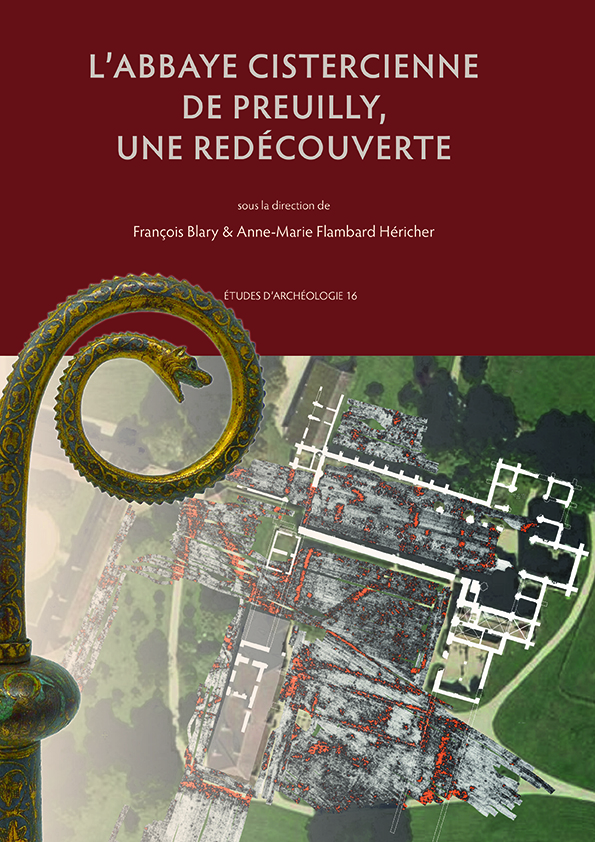
L’abbaye cistercienne de Preuilly, en Champagne, aux portes du domaine royal, désormais reconnue quatrième fille de Cîteaux, n’avait jamais fait l’objet d’une véritable étude scientifique. L’idée d’une large enquête pluridisciplinaire est née il y a dix ans. Débutée modestement, en 2011, avec la mise en place de stages d’étudiants en histoire et histoire de l’art, elle a peu à peu gagné en ampleur et touché de nombreux domaines : l’histoire de l’abbaye à travers les archives, l’organisation spatiale mise en évidence par la microtopographie, l’analyse attentive des bâtis, l’expertise dendrochronologique des charpentes, les prospections géophysiques, la fonction des différents espaces éclairée par les fouilles archéologiques qui ont permis un réexamen du carré claustral et du domaine économique attenant, sans omettre les dépendances rurales ou urbaines. En 2018, à l’occasion du 900e anniversaire de la fondation de l’abbaye (selon la tradition) et pour marquer un point d’étape de la recherche, une journée d’études a été organisée au collège des Bernardins. Cet ouvrage constitue les actes de cette journée. Il réunit 21 contributions souvent collectives rédigées par 25 auteurs et organisées en quatre parties qui éclairent d’abord la constitution et le développement du monastère et de son domaine, puis l’évolution de ce domaine à l’époque moderne et contemporaine. Un réexamen des données anciennes permet ensuite de faire le point sur les fouilles du XIXe siècle et sur les objets de collection recueillis dont la qualité et l’importance sont ainsi totalement réévaluées. Enfin, les résultats des recherches archéologiques, tant extensives qu’intensives, sont présentés. Véritable laboratoire d’expérimentation des techniques géophysiques de dernière génération comme de l’étude lithographique poussée dans le plus infime détail, cet important monastère devient une nouvelle référence scientifique révélant l’organisation d’un domaine économique notamment par la présence d’un atelier métallurgique médiéval, ce qu’aucune autre abbaye cistercienne n’avait permis à ce jour.
François Blary et Anne-Marie Flambard Héricher, L’abbaye cistercienne de Preuilly, une redécouverte. Actes de la journée d’étude du 26 septembre 2018 au Collège des Bernardins de Paris, Bruxelles, Éditions de l’Université Libre de Bruxelles, 2021. Prix : 40 euros.
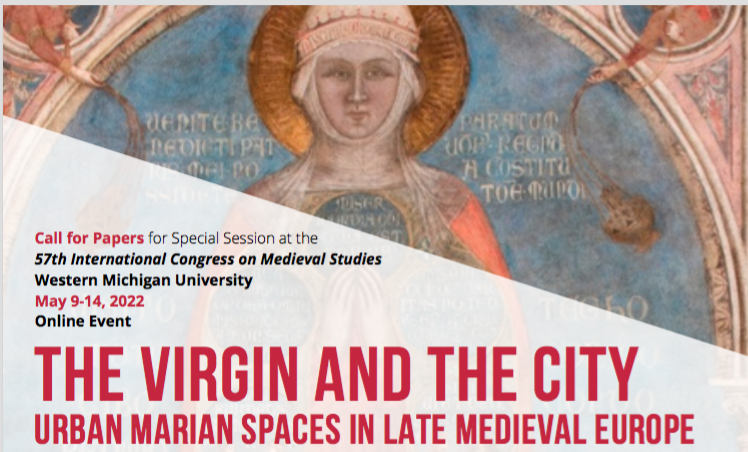
Call for Papers for Special Session at the 57th International Congress on Medieval Studies, Western Michigan University May 9-14, 2022 Online Event
The session wishes to analyze the Marian presence in Late Medieval European cities. The scholarly importance of the session lies in understanding how the Virgin became a part of urban landscapes and how the political and civic powers enhanced religious place‐making practices. How was the Mother of God accommodated and exhibited in civic space? What does Marian images’ location reveal about the relationship between devotion and public places? Why did the Virgin become the guarantor of civic unity? And finally, how did Mary personify the “urban ideology”?
On a methodological level, the session will encourage an interdisciplinary socio-spatial approach. Topography, urbanism, and art will be examined in relation with Marian devotion to understand the semantization of the civic space. The analysis of case studies will aim not only to highlight specific aspects and general phenomena in Late Medieval Europe, but also to define key concepts, identities, and devotional practices in urban development processes.
Scholars are invited to submit a 300-word abstract, excluding references. Proposals should also include name, affiliation, email address, the title of the presentation, 6 keywords, a selective bibliography, and a short CV. Please send the documents to maryandthecity.imc2022@gmail.com by September 1, 2021.
Comment comprendre les relations entre France et Orient au Moyen Âge ? La méthode des transferts culturels permet de réfléchir aux circulations et interactions des langages, idées, biens et modes de vie, dans le va-et-vient incessant entre mondes latin, byzantin et arabo-musulman aux XIIe-XIIIe siècles.
Transferts culturels entre France et Orient latin (XIIe-XIIIe siècles), dir. Martin Aurell, Marisa Galvez, Estelle Ingrand-Varenne, Paris, Classiques Garnier, 2021 (Rencontres, n° 509 ; Histoire, n° 10). 461 pages. ISBN : 978-2-406-11405-5. Prix : 36 euros.
The Department of History and Art History seeks to appoint an Assistant Professor in Medieval History. The position involves 0.7 FTE teaching and 0.3 FTE research activities.
Profiel
The successful candidate will have:
a PhD degree in Medieval History;
a proven track record of research in late Medieval History relative to the Low Countries, with attention to urban history, as shown in the candidate’s publication record;
substantial experience in teaching European Medieval History and global Medieval History, as shown by a list of courses taught, supervised, and organized, at BA, MA, and PhD level;
organizational experience and willingness, in time, to act as Secretary for a section of Medieval History.
Utrecht University has a teaching qualification system for University Lecturers, and candidates are required to obtain the Basic Teaching Qualification (BKO) within two years if they are not already in possession of one. Candidates are expected to be proficient in both Dutch and English; non-Dutch candidates will need to master the Dutch language on an academic level within two years.
Aanbod
We offer a temporary position (1.0 FTE) as of 1 February 2022 at the latest, for a period of one year. In case of good performance, the employment will become permanent. The gross salary – depending on previous qualifications and experience – ranges between €3,746 and €5,862 (scale 11-12 according to the Collective Labour Agreement Dutch Universities) per month for a full-time employment. Salaries are supplemented with a holiday bonus of 8% and a year-end bonus of 8.3% per year. In addition, Utrecht University offers excellent secondary conditions, including an attractive retirement scheme, (partly paid) parental leave and flexible employment conditions externe link (multiple choice model). More information about working at Utrecht University externe link can be found here.
Over de organisatie
A better future for everyone. This ambition motivates our scientists in executing their leading research and inspiring teaching. At Utrecht University externe link, the various disciplines collaborate intensively towards major societal themes. Our focus is on Dynamics of Youth, Institutions for Open Societies, Life Sciences and Sustainability.
The Faculty of Humanities externe linkhas around 6,000 students and 900 staff members. It comprises four knowledge domains: Philosophy and Religious Studies, History and Art History, Media and Culture Studies, and Languages, Literature and Communication. With its research and education in these fields, the faculty aims to contribute to a better understanding of the Netherlands and Europe in a rapidly changing social and cultural context. The enthusiastic and committed colleagues and the excellent amenities in the historical city center of Utrecht, where the faculty is housed, contribute to an inspiring working environment.
Everyone deserves to feel at home at our university. We welcome employees with a wide variety of backgrounds and perspectives. To apply, please send your curriculum vitae, including a letter of motivation via the ‘apply’ button below. The letter of motivation (max. 2 A4) should at least contain a concise reflection on the candidate’s general teaching objectives and methods, as well as a short outline of the candidate’s research plans for the coming years.
Candidates who will be selected for an interview will be requested to provide two letters of recommendation and evaluations of their teaching.
Initial interviews may be conducted via Teams. Interviews are scheduled to take place on 3 November (first round) and 8 November (second round).
Acquisition in response to this vacancy is not appreciated.
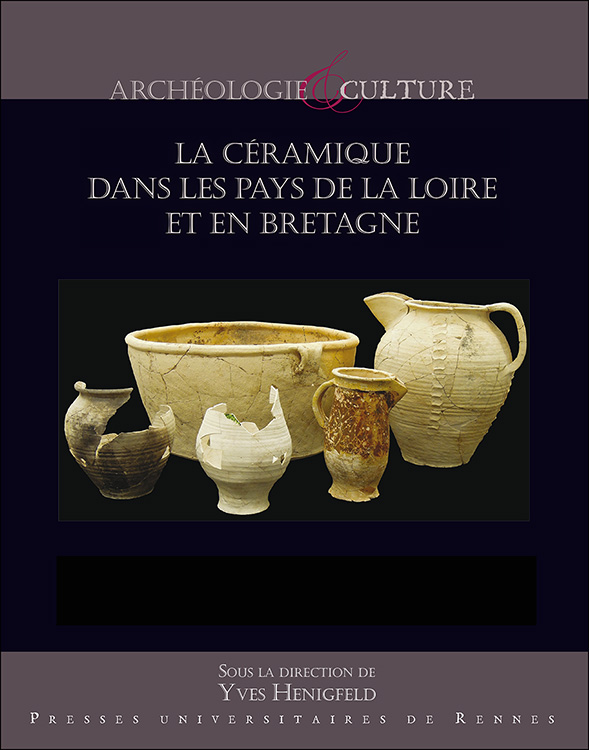
Cet ouvrage présente les résultats d’un projet collectif de recherche ayant mobilisé, de 2012 à 2017, une trentaine de chercheurs de l’université, du CNRS, de l’Inrap, des collectivités territoriales et du secteur associatif ou privé. Le corpus est constitué de plusieurs centaines de milliers de tessons correspondant à environ 55 000 objets provenant de 51 sites de production et de consommation, répartis sur 32 communes.
En deux volumes, sous coffret.
Avec le soutien du ministère de la Culture, de l’Inrap et de l’université de Nantes.
La céramique dans les Pays de la Loire et en Bretagne. La céramique dans les Pays de la Loire et en Bretagne, dir. Yves Henigfeld, Rennes, Presses universitaires de Rennes, 2021 (Archéologie et Culture). 864 pages, 21,8 x 28 cm. ISBN : 978-2-7535-8172-2. Prix : 69 euros.
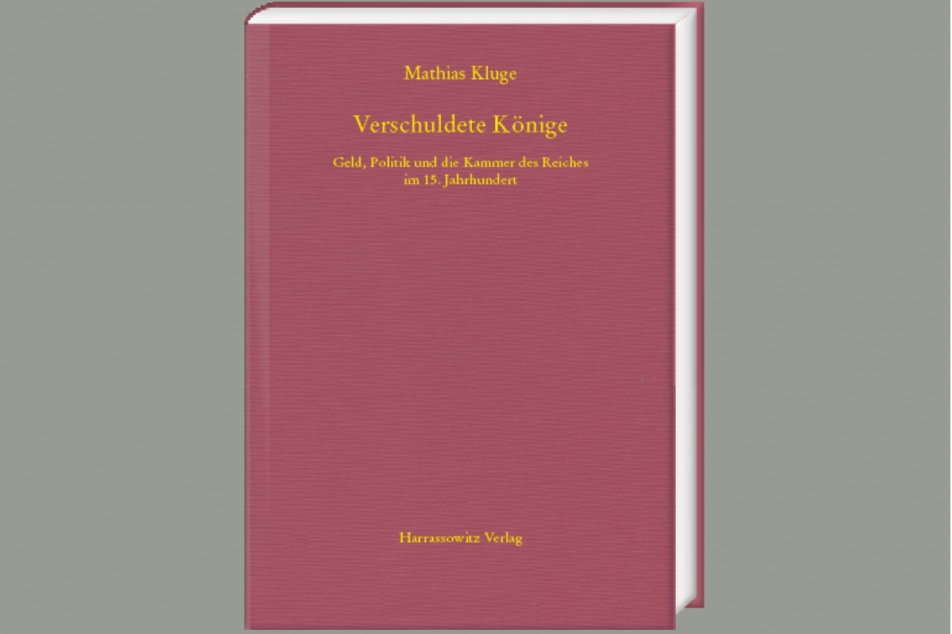
Die vorliegende Studie analysiert die Funktionalität und Wirkung des Agierens mit Krediten im Kontext der politischen Ordnung des 15. Jh. Ausgangspunkt ist die Entstehung neuer Mechanismen der Politik, die den Finanzbedarf weit über die verfügbare Geldmenge wachsen ließen. Sie machten das 15. Jh. zum Jahrhundert der verschuldeten Könige. Europas Kronen wurden mit Krediten erworben und zur Sicherung von Krediten verpfändet. Die Stadt mit ihren Kaufleuten und Juden wurde zum Schauplatz und Überlieferungsträger einer Reichspolitik, deren Funktionalität nun wesentlich auf Kreditverhältnissen gründete. Gegenüber der älteren Forschung, in der die Geschichte der Kammer und des königlichen Agierens mit Schuld und Kredit erfolgsorientiert aus ökonomischer und verwaltungshistorischer Perspektive betrachtet wurde, bietet die Studie eine funktions- und wirkungsorientierte Analyse. Sie erhellt eine dunkle Seite finanzhungriger Reichspolitik, indem der königliche Umgang mit Geld nicht nach wirtschaftsökonomischen Prinzipien, sondern im Kontext politischer und repräsentativer Zwecksetzung untersucht wird. Dabei tritt die Geschichte derjenigen in den Vordergrund, die Geld brauchten oder es unter politischem Druck verloren. Der wachsende Finanzierungsdruck führte zur Entstehung neuer Formen der Reichspolitik, die der Kredit überhaupt erst ermöglichte. Sie prägten die folgenden Jahrhunderte.
Mathias Kluge, Verschuldete Könige. Geld, Politik und die Kammer des Reichesim 15. Jahrhundert, Wiesbaden, Harrassowitz Verlag, 2021 (Monumenta Germaniae Historica, Schriften 77). LIV, und 562 S. 8°. 2021. ISBN 978-3-447-11569-8 Ln. EUR 90, —
The volume discusses narratives of identification in late Medieval eastern central Europe written in Latin as well as in various vernaculars emerging as the new political languages in the time.
The volume discusses Central European and Eastern Central European historiographies of the High and Late Middle Ages. It deals with histories written in a time which brought about a profound differentiation of medieval societies in these regions. As new social classes achieved economic and political power, the demand for reassuring identifications grew more pressing. Narratives of the past were tailored specifically for distinct social groups, often using vernacular languages instead of the universal language of elite education, Latin.
The volume pays attention to the interplay between languages and focuses on the strategies that individual works developed in order to balance the many alternative modes of identification. Filling a significant scholarly gap, the volume offers important insights into narratives of identification written in Latin and in the various vernaculars emerging as the new political languages of the period.
Table des matières :
Introduction — PAVLINA RYCHTEROVÁ AND DAVID KALHOUS
A Past that never was: Creating collective identities
The Terms ‘Polans’, ‘Poles’, ‘Poland’, and their Historiographical Context in Medieval Poland and Rus’ — PAWEŁ ŻMUDZKI
People, Realm, and Dynasty in the Fourteenth Century – Chronica de gestis Hungarorum — JÁNOS M. BAK
Master Vincent and his Making of the Oldest History of the Lechites-Poles — JACEK BANASZKIEWICZ
Narrating for Specific Communities? The Case of the Österreichische Chronik von den 95 Herrschaften — MATTHIAS MEYER
How to Create a Hussite Identity? The Hussite Chronicle by Lawrence of Březová — PAVLÍNA CERMANOVÁ
The Realm and its People: Re-writing Political Identities
The Hungarian-Polish Chronicle as the Polish-Hungarian Perspective on the Earliest Hungarian and Polish History — RYSZARD GRZESIK
The Chronicle of the so-called Dalimil and its Concept of Czech Identity — PAVLÍNA RYCHTEROVÁ
Literary Reminiscences in the Characterization of the Bohemian King Wenceslas II (1283–1305) and his Contemporaries in Ottokar from the Geul’s Styrian Rhymed Chronicle — VÁCLAV BOK
Slavonic and Czech Identity in the Chronicon Bohemiae by Přibík Pulkava of Radenín — VÁCLAV ŽŮREK AND PAVLÍNA RYCHTEROVÁ
The Rhymed German Translation of the Chronicle of the So-Called Dalimil and its Strategies of Identification — VLASTIMIL BROM
From Dynasty to Noble Identity: The Development of the Historical Tradition in the Chronicles of the Grand Duchy of Lithuania in the Fifteenth and Sixteenth Centuries — RIMVYDAS PETRAUSKAS
Local and Regional Identities in a Dialogue
Versus Lubenses: Ethnic Differences, Political Identification, and the Cohesion of Social Groups in Thirteenth- and Fourteenth-Century Silesia — PRZEMYSŁAW WISZEWSKI
Affective Strategies for Narrating Community: Jans (the) ‘Enikel’’s Fürstenbuch — CHRISTINA LUTTER
Historical Memory and Local Identity: Jan Długosz and the Church in Cracow — PIOTR WĘCOWSKI
The Chronicles of the Teutonic Order in Prussia in the Fourteenth and Fifteenth Centuries — MARCUS WÜST
Annals, Chronicles, and Saints: Monastic Narratives in Early Austrian Historiography and their Perception by Local Elites — MARTIN HALTRICH
Adam a German? The Ethnic Element in Swabian Chronicles of the Fifteenth Century — JÖRG SONNTAG
Index
Informations pratiques :
Historiography and Identity VI: Competing Narratives of the Past in Central and Eastern Europe, c. 1200 —c. 1600, dir. Pavlina Rychterová, Turnhout, Brepols, 2021 (Cultural Encounters in Late Antiquity and the Middle Ages, 32). XII+468 p., 156 x 234 mm, 2021 ISBN: 978-2-503-58545-1. Prix : 120 euros.
Avec le soutien du FNRS, du CRHiDI (UCLouvain – Saint-Louis, Bruxelles), d'INCAL (UCLouvain), de PraME (UNamur), de sociAMM (ULB) et de Transitions (ULiège)









Vous devez être connecté pour poster un commentaire.