Publication (en ligne) – Sander Govaerts, « Armies and Ecosystems in Premodern Europe: The Meuse Region, 1250-1850 »

Using the ecosystem concept as his starting point, the author examines the complex relationship between premodern armed forces and their environment at three levels: landscapes, living beings, and diseases. The study focuses on Europe’s Meuse Region, well-known among historians of war as a battleground between France and Germany. By analyzing soldiers’ long-term interactions with nature, this book engages with current debates about the ecological impact of the military, and provides new impetus for contemporary armed forces to make greater effort to reduce their environmental footprint.

Table des matières : ici

Informations pratiques :

Sander Govaerts, Armies and Ecosystems in Premodern Europe: The Meuse Region, 1250-1850, ARC Humanities Press, 2021. 326 p. ISBN : 9781641893992.

Source : Project Muse

Publié dans Publications | Laisser un commentaire

Publication – Frances Gies, « Le Chevalier dans l’Histoire », trad. Christian Jaquet

Né du chaos européen du début du Moyen Âge, le chevalier monté et en armure a révolutionné la guerre et est très vite devenu une figure mythique dans l’histoire.
Des conquérants normands de l’Angleterre aux croisés de la Terre sainte, du héros de la chanson de geste au preux du roman arthurien, des amateurs de tournoi aux chevaliers-troubadours, Le Chevalier dans l’Histoire, de la grande médiéviste Frances Gies, brosse un tableau remarquablement vivant et complet de la chevalerie, de sa naissance à son déclin.
Le chevalier apparaît d’abord en Europe comme un mercenaire sans foi ni loi avant de devenir l’étendard de la chrétienté puis un soldat de métier au service des rois. Frances Gies nous fait partager sa vie quotidienne, faite de joutes et de batailles, de pillages et de rançons, mais aussi de dévotion et de pèlerinage, et souvent sanctionnée par l’errance et une mort précoce.

Elle nous fait revivre l’aventure des héros du Moyen Âge qui ont joué un rôle historique, comme Bertrand du Guesclin, Bayard et Sir John Fastolf, qui inspira le Falstaff de Shakespeare, ou les grands maîtres des Ordres militaires qu’étaient les Templiers, les Hospitaliers et les chevaliers teutoniques.

Écrivaine et historienne, Frances Gies (1915-2013) a écrit, en grande partie avec son mari Joseph Gies (1916-2006) plus de vingt ouvrages sur le Moyen Âge, dont beaucoup ont été des best-sellers.

Table des matières :

1. Qu’est-ce qu’un chevalier ?
2. Les premiers chevaliers
3. Les chevaliers de la première croisade
4. Les troubadours et la littérature de chevalerie
5. Guillaume le Maréchal : la chevalerie à son zénith
6. Les chevaliers templiers : soldats, diplomates, banquiers
7. Bertrand du Guesclin : un chevalier du quatorzième siècle
8. Les chevaliers anglais du quinzième siècle : Sir John Fastolf et les Paston
9. Le long crépuscule de la chevalerie

Notes
Bibliographie
Index
Table des illustrations
Cartes
Remerciements

Informations pratiques :

Frances Gies, Le Chevalier dans l’Histoire, trad. Christian Jaquet, Paris, Les Belles Lettres, 2021. 328 p., 20,5 x 13,5 cm. ISBN : 9782251451930. Prix : 16,90 euros.

Source : Les Belles Lettres

Publié dans Publications | Laisser un commentaire

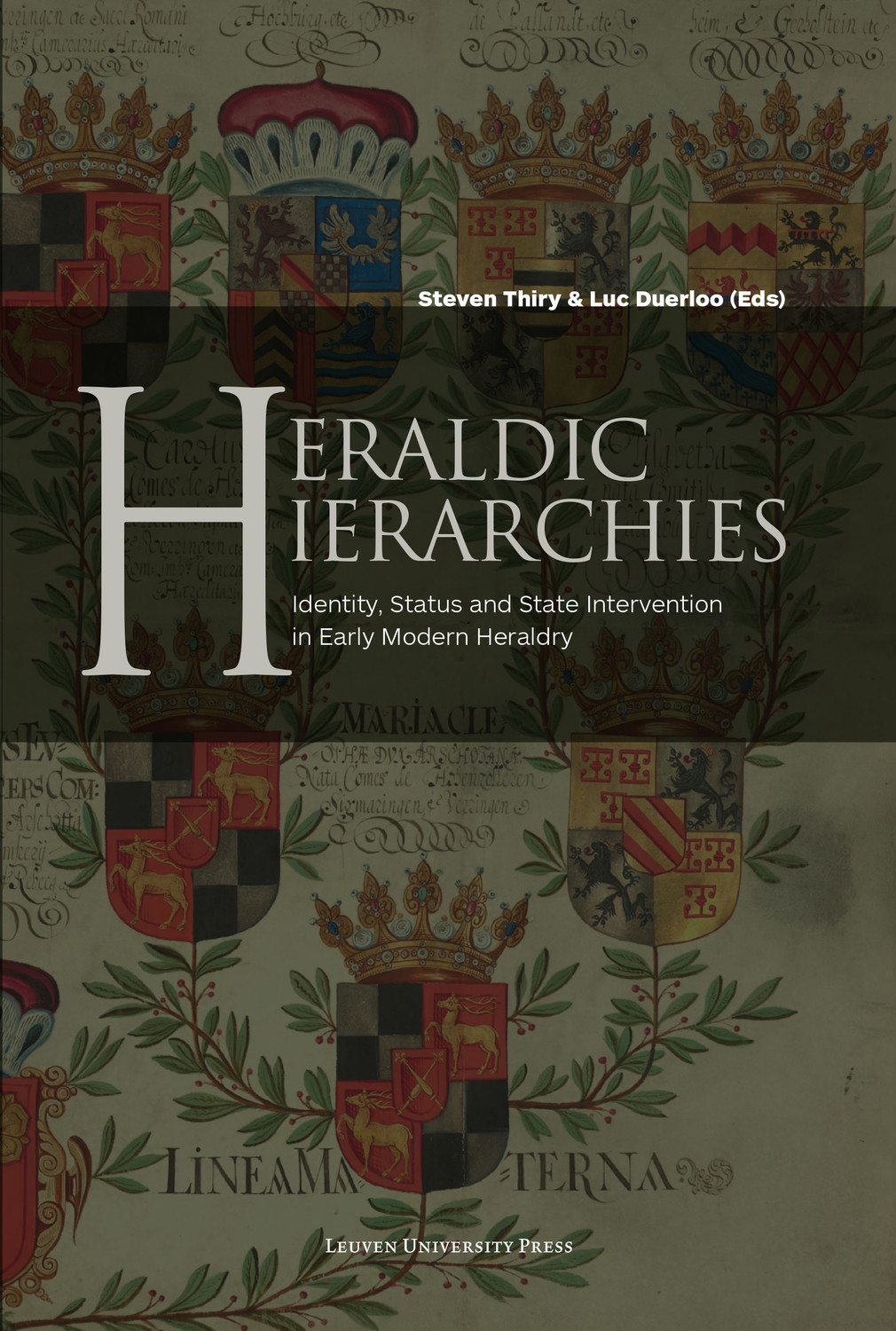
Publication – « Heraldic Hierarchies. Identity, Status and State Intervention in Early Modern Heraldry », ed. Steven Thiry et Luc Duerloo

The social use and changing character of armorial display in the early modern period
Early modern heraldry was far from a nostalgic remnant from a feudal past. From the Reformation to the French Revolution, aspiring men seized on these signs to position themselves in a changing society, imbuing heraldic tradition with fresh meaning. Whereas post-medieval developments are all too often described in terms of decadence and stifling formality, recent studies rightly stress the dynamic capacity of bearing arms.

Heraldic Hierarchies aims to correct former misconceptions. Contributing authors rethink the influence of shifting notions of nobility on armorial display and expand this topic to heraldry’s share in shaping and contesting status. Moreover, addressing a common thread, the volume explores how emerging states turned the heraldic experience into an instrument of power and policy. Contributing to debates on social and noble identity, Heraldic Hierarchies uncovers a vital and surprising aspect of the pre-modern hierarchical world.

Contributors: Richard Cust (University of Birmingham), Dominique Delgrange (Lille), Luc Duerloo (University of Antwerp), Joseph McMillan (Alexandria VA), Camille Pollet (Université de Nantes), Antoine Robin (École Pratique des Hautes Études), Simon Rousselot (École Pratique des Hautes Études), Clément Savary (École Pratique des Hautes Études), Hamish Scott (Jesus College, Oxford), Steven Thiry (University of Antwerp), José Manuel Valle Porras (Universidad de Córdoba), Nicolas Vernot (Université de Cergy-Pontoise)

This publication is GPRC-labeled (Guaranteed Peer-Reviewed Content).

Luc Duerloo is professor at the Department of History of the University of Antwerp, where he teaches early modern political and institutional history.

Steven Thiry, PhD, is a voluntary member of ‘Power in History: Centre for Political History’ of the University of Antwerp.

Table des matières : ici

Informations pratiques :

Heraldic Hierarchies. Identity, Status and State Intervention in Early Modern Heraldry, ed. Steven Thiry et Luc Duerloo, louvain, Leuven University Press, 2021. 274 p., 15 x 23,5 cm. ISBN : 9789462702431

Source : Leuven University Press

Publié dans Le réseau | Laisser un commentaire

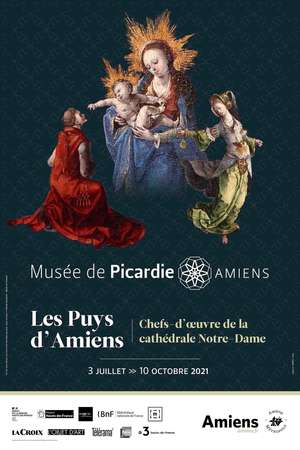
Exposition – Les Puys d’Amiens, chefs-d’œuvre de la cathédrale Notre-Dame

Amiens, Musée de Picardie, du 03 juillet au 10 octobre 2021

Pour célébrer le huitième centenaire de l’édification de la cathédrale d’Amiens, le Musée de Picardie consacre une exposition à la confrérie Notre-Dame du Puy, attestée à Amiens entre 1388 et la fin du XVIIIe siècle.

Chaque année, un grand tableau était commandé par la confrérie à un peintre pour être accroché dans la cathédrale. Des dizaines d’œuvres suspendues aux piliers de l’église au début du XVIIIe siècle, seule une vingtaine a subsisté jusqu’à nos jours. Autours de ces vestiges de la gloire de la confrérie, de nombreux prêts permettront de retracer l’histoire de cette société pieuse qui fut au centre de la vie culturelle, religieuse et artistique de la capitale picarde sous l’Ancien Régime.

Les Puys d’Amiens, chefs-d’œuvre de la collection de peinture amiénoise, sont les vestiges de l’extraordinaire production artistique de la confrérie Notre-Dame du Puy à la fin du Moyen Âge et à l’époque moderne. Cette institution pieuse rassemblait des notables amiénois clercs ou laïcs pour glorifier la Vierge par des jeux poétiques. Elle offrait à chacune des fêtes mariales des repas au cours desquels étaient organisés des concours de poésie.

Le terme de Puy vient du fait que ces chants étaient récités sur une estrade – ou podium – appelée puy en français médiéval ; la confrérie a pris ce nom par métonymie, de même que les œuvres commandées par elle.

À l’occasion de la principale fête de la confrérie, le 2 février, jour de la Purification de la Vierge, le maître élu pour l’année faisait connaître sa devise qui inspirait le peintre à qui était commandé un tableau. L’artiste devait traduire en image les allégories complexes imaginées pour honorer la Mère de Dieu. L’oeuvre était exposée à la cathédrale le jour de Noël et y restait tout au long de l’année, avant d’être remplacée par celle de l’année suivante.

À partir de la fin du XVe siècle, les tableaux des années précédentes furent simplement déplacés et accrochés un peu plus loin dans l’église si bien qu’au début du XVIIIe siècle, plusieurs dizaines de ces œuvres de dévotion mariale ornaient les piliers de Notre-Dame d’Amiens. C’est précisément leur grand nombre ainsi que les évolutions du goût qui firent prendre la décision aux chanoines de vider la cathédrale de ses Puys en 1723. Détruits ou dispersés à travers le diocèse pour la plupart d’entre eux, seules les oeuvres jugées d’une qualité suffisante furent conservées dans une chapelle à l’écart.

Du fait de cette dispersion, les manques sont très nombreux et les Puys parvenus jusqu’à nous ne représentent qu’une petite part de toutes les oeuvres commandées par la confrérie. Pour autant, ils permettent d’illustrer l’histoire artistique, politique, culturelle et religieuse d’Amiens. Ils sont le reflet des liens artistiques avec des villes comme Anvers, Bruges, Bruxelles ou Paris. Les Puys sont aussi des œuvres transcrivant l’actualité la plus immédiate car destinés à être exposés dans l’année de leur création.
Les guerres de religion, la Ligue, le siège d’Amiens et la reconquête de la ville par Henri IV sont autant d’événements que l’on peut lire au travers des choix iconographiques opérés pas les maîtres de la confrérie et leurs peintres. Ces œuvres brossent le portrait de la société amiénoise sur une période de près de trois siècles.

« Exposition réalisée avec le concours exceptionnel de la Bibliothèque nationale de France »

Source : Amiens.fr

Publié dans Exposition | Laisser un commentaire

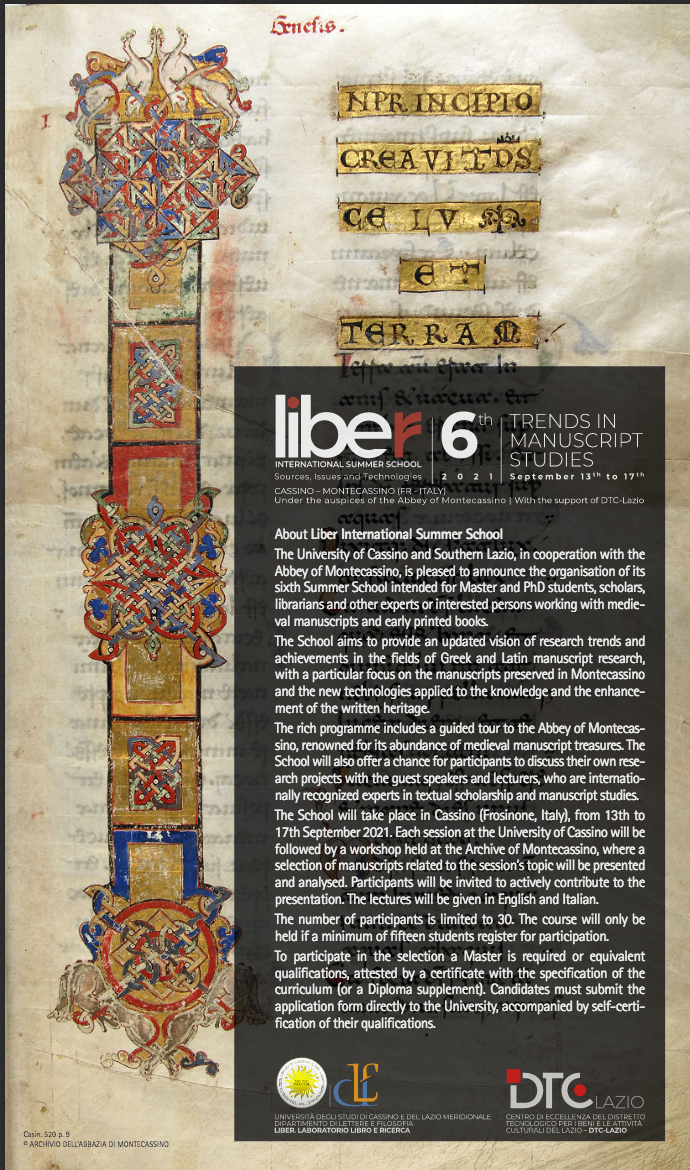
École d’été – Trends in Manuscript Studies. Sixth Summer School

Sixth Summer School.
September 13th to 17th, 2021
Montecasino (Italy)

The Laboratorio LIBeR. Libro e ricerca of the University of Cassino, in cooperation with the Abbey of Montecassino and the DTC-Lazio, is pleased to announce the organisation of its Sixth Summer School on Trends in Manuscript Studies, for the benefit of master and PhD students, scholars, librarians and other experts or interested persons working with medieval manuscripts and early printed books.

Programme : ici

Publié dans École d'été | Laisser un commentaire

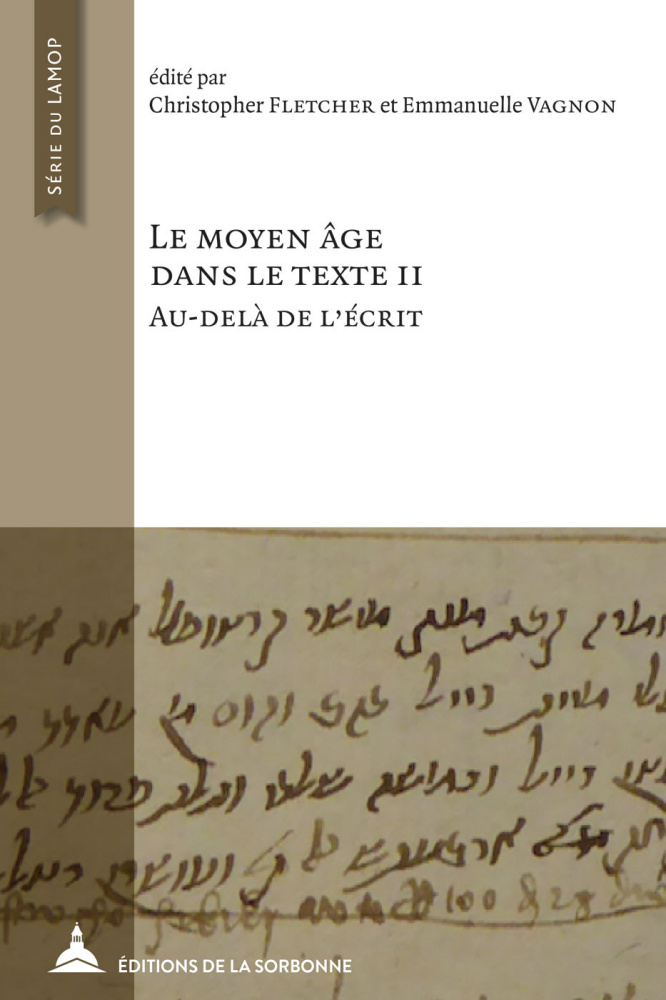
Publication – « Le Moyen Âge dans le texte II. Au-delà de l’écrit », éd. Christopher Fletcher et Emmanuelle Vagnon

Ce deuxième volume du « Moyen Âge dans le texte », issu de journées d’études tenues au Laboratoire de médiévistique occidentale de Paris entre 2013 et 2018, poursuit un travail de réflexion et d’exploration des champs ouverts par la « nouvelle histoire textuelle », développée depuis une trentaine d’années. L’écrit comme une évidente source de l’enquête historique devient lui-même matière pour les historiens qui interrogent sa forme autant que son contenu et étudient les milieux et les contextes de son élaboration et de ses usages. Les discussions croisées avec des chercheurs de France et de l’étranger, spécialistes d’histoire médiévale et de littérature, ont permis de confronter les méthodes et les angles d’approche. Or ce volume entend désormais mener l’enquête « au-delà de l’écrit », dans des domaines de recherche relativement récents, où la grande variété des textes du Moyen Âge n’a encore pas été suffisamment exploitée. Quatre thèmes sont ainsi présentés : la poésie, l’espace, le genre et le commerce.

Table des matières :

Introduction – Christopher Fletcher et Emmanuelle Vagnon

Première section. POÉSIE

Histoire et poésie : la Femme de Bath de Geoffrey Chaucer et la comédie de l’allégorie eschatologique – Isabel Davis

L’historien au pays des Muses. Quelques aperçus d’une source négligée, les carmina du premier humanisme (v. 1380-1430) – Clémence Revest

Le roman Amoryus et Cleopes de John Metham et les Stapleton d’Ingham. « For my poyntel so rude ys, […] Yt can noght grave » : « Car mon stylet est si rude […] qu’il ne peut graver » – Chloe Morgan

Deuxième section. ESPACE

Carte marine et culture visuelle chez Giovanni Villani et Fazio degli Uberti – Nathalie Bouloux

L’espace adverse. Descriptions de l’Orient au début du XIIIe siècle – Christine Gadrat-Ouerfelli

Décrire et illustrer les ports de la Méditerranée et de l’Atlantique au début du XVIe siècle – Emmanuelle Vagnon

Lieux urbains et lieux communs. Évaluer les descriptions de ville dans les mémoires urbains, l’exemple de Troyes (XVe siècle) – Cléo Rager

Troisième section. GENRE

Servantes, femmes et veuves. Lire le genre dans les suppliques féminines à la cour de la Chancellerie anglaise à la fin du Moyen Âge – Cordelia Beattie

Le genre en théorie et en pratique. Le statut des femmes, la question des espaces genrés, publics et privés dans le village anglais médiéval – Miriam Müller

Hoccleve et Lydgate étaient-ils « antiféministes » ? – Aude Mairey

Masculinité et religion chrétienne dans le Livre de Seyntz Medicines d’Henri de Grosmont, duc de Lancastre – Christopher Fletcher

La ville comme Sainte Vierge. Un aspect de l’idéologie urbaine en Flandre médiévale (fin du XIVe siècle-début du XVIe siècle) – Lisa Demets et Jan Dumolyn

Quatrième section. COMMERCE

La difficile émergence des écrits marchands parmi les sources des médiévistes – Jérôme Hayez

Perceptions spatiales et éléments de culture des marchands catalans à travers le prisme des contrats notariés – Damien Coulon

Échanges marchands et pratiques langagières. La communication entre chrétiens, juifs et convertis à Majorque vers 1400 – Ingrid Houssaye Michienzi et Judith Olszowy-Schlanger

Entre raison pratique et raison mémorielle. Note sur les écritures du commerce – Laurent Feller

Index des œuvres et des noms propres antiques et médiévaux

Index des noms propres contemporains

Table des illustrations, tableaux et graphiques

Informations pratiques :

Le Moyen Âge dans le texte II. Au-delà de l’écrit, éd. Christopher Fletcher et Emmanuelle Vagnon, Paris, Éditions de la Sorbonne, 2021 (Histoire ancienne et médiévale). 376 p? 16 x 24 cm. ISBN : 979-10-351-0637-9. Prix : 30 euros.

Source : Éditions de la Sorbonne

Publié dans Publications | Laisser un commentaire

Offre d’emploi – SenSArt: The Sensuous Appeal of the Holy Sensory Agency of Sacred Art and Somatised Spiritual Experiences in Medieval Europe (12th-15th century)

The ERC Starting Grant project SenSArt “The Sensuous Appeal of the Holy Sensory Agency of Sacred Art and Somatised Spiritual Experiences in Medieval Europe (12th-15th century)”, led by Prof. Zuleika Murat (Principal Investigator) is accepting applications by highly motivated candidates to cover four post-doctoral positions, starting on 1st September 2021. The project is based at the University of Padua and is funded for five years by the ERC.

The deadline to apply is 8th July 2021. Details on the project, candidates’ profiles and skills, and application procedure are given below.

The Project
Art moves the eyes. However, is sight the only sense we use to appreciate it? This is a crucial question for Western culture, dominated today by the hegemony of vision and the suppression of the other senses. By challenging the current ocularcentric paradigm and assimilating notions on the cultural values of sensation, SenSArt provides an examination of medieval sacred art from the unconventional lens of its sensory agency.

Between the 12th and the 15th century, Europe underwent an extraordinary artistic evolution and an impressive cultural revitalization, which sparked a reassessment of the role of sensory perception in systems of knowledge and spiritual enlightenment. SenSArt explores and compares different social environments in six selected regions, pursuing three groundbreaking objectives: A) it will analyse quantitatively and qualitatively the perceptual schemes that oriented the reception of sacred art, scrutinizing how art solicited its beholders through multiple sensory inputs; B) it will investigate the notion of ‘sensory agency’ of art, establishing sacred art as a primary actor capable of exerting, through sensorial stimulation or deprivation, a social agency on its audience; C) it will provide an overall phenomenology of experiences on a European scale, by comparing the diverse patterns that different social groups lived on a local, regional and supranational scale.
SenSArt will achieve its goals by developing a new combined approach at the crossroads of Art History, Philosophy and Text Studies; it will establish a multidisciplinary team of scholars to delve into a comparative set of materials, including normative texts on the senses and works of art.

Tasks
We are looking for four highly motivated and creative post-doctoral fellows, three with an art-historical profile and one with a background in History of Medieval Philosophy. They will work in team with the Principal Investigator, two doctoral fellows, and associate researchers.

In line with the objectives and methodologies of the ERC project SenSArt, the three post-doctoral fellows with an art-historical profile will focus on France, Germany, and Spain respectively. They will examine the types of artworks adopted in the Socio-Sensory Environments of the region surveyed, considering both the survived works of art and those cited in the archival documents and now lost, together with immaterial practices. The study of objects will contemplate different aspects and will focus on two features in particular: 1) the mechanisms through which the artworks stimulated the senses of the beholder; 2) the procedures by which the beholder activated the multisensory potential of the objects, through dynamic devotional practices. In addition to works of art, and in relation to the specific materials of investigation, the post-doctoral fellows will also examine texts about the senses in practice, including records of people’s daily lives and archival materials.

The post-doctoral fellow with a background in History of Medieval Philosophy will work on theoretical and normative texts on the senses and sensory perception, i.e. texts that contain norms meant for shaping the sensoria and establish the interpretive schemes that were intended to orientate the responses of the devotees, including in particular: 1) philosophical and theological texts connected to the Aristotelian tradition, including works produced by a number of scholastic authors; 2) treatises meant at educating the senses. The candidate will focus in particular on two features related to sensory perception: how perception and the senses were to be used, and the kinds of spiritual reactions that the sensory experience was expected to induce in the devotees.

In addition to the above-mentioned research activities, the four post-doctoral fellows will take part in seminars and conferences, and in all the scheduled internal workshops and team meetings. They will present papers and produce on a regular base journal articles and book chapters as envisaged by the project outline. Moreover, they will provide raw data, entries and reports for the envisaged digital archive and website.

Qualifications and Required Skills
– Post-doctoral fellows with an art-historical profile: PhD in Art History, with a focus on the Middle Ages. Good knowledge of French, German, and Spanish respectively, and of Latin, to be able to examine primary and secondary sources. They should also be proficient in English. Candidates are expected to be familiar with the major historical, artistic, spiritual, and socio-cultural phenomena of the region under examination in the selected period. Furthermore, they should have previous research experience in areas related (in terms of objectives, approaches, and methodologies) to those considered by the project, with particular regard to the concepts of art agency, theories of reception, and the multisensory experience of art.
– Post-doctoral fellow with a background in History of Medieval Philosophy: PhD in History of Medieval Philosophy. The ideal candidate needs to have a good command of Latin and should also be proficient in English. She/he should have a background in research topics and methodologies which are in line with the objectives and approaches of the ERC project SenSArt, with specific respect to concepts related to perception and to the senses in medieval philosophy and culture in general.

In addition, applicants should have a taste for interdisciplinary studies, excellent analytical skills, and willingness to work in a team.

Working Conditions and Modalities
– Location: University of Padua, Department of Cultural Heritage. Some travels abroad are required to conduct research.
– Employer: University of Padua
– Type of contract: fixed-term contract
– Duration of contract: 3 years, with a possible renewal of 2 years
– Working time: 100%
– Starting date of the contract: 1st September 2021
– Remuneration: 26.868,59 € per year

How to Apply:
Applications may only be submitted by completing the online procedure at https://pica.cineca.it/unipd.
Instructions on how to complete the application are given at https://www.beniculturali.unipd.it/www/lavorare/bacheca-di-dipartimento/
The application should include:
– A Curriculum Vitae
– Three samples of written works in pdf (PhD thesis and/or published materials)
– A Letter of Motivation, detailing the candidate’s professional skills and reasons for applying
– Names and contact details of two referees

In addition, an interview will be held online (via Zoom) in July (20th – 23rd July 2021).

For any queries please write to: dipartimento.beniculturali@unipd.it and zuleika.murat@unipd.it

More information can be found here:https://www.beniculturali.unipd.it/www/lavorare/bacheca-di-dipartimento/

Source : Medieval Art Research

Publié dans Offre d'emploi | Laisser un commentaire

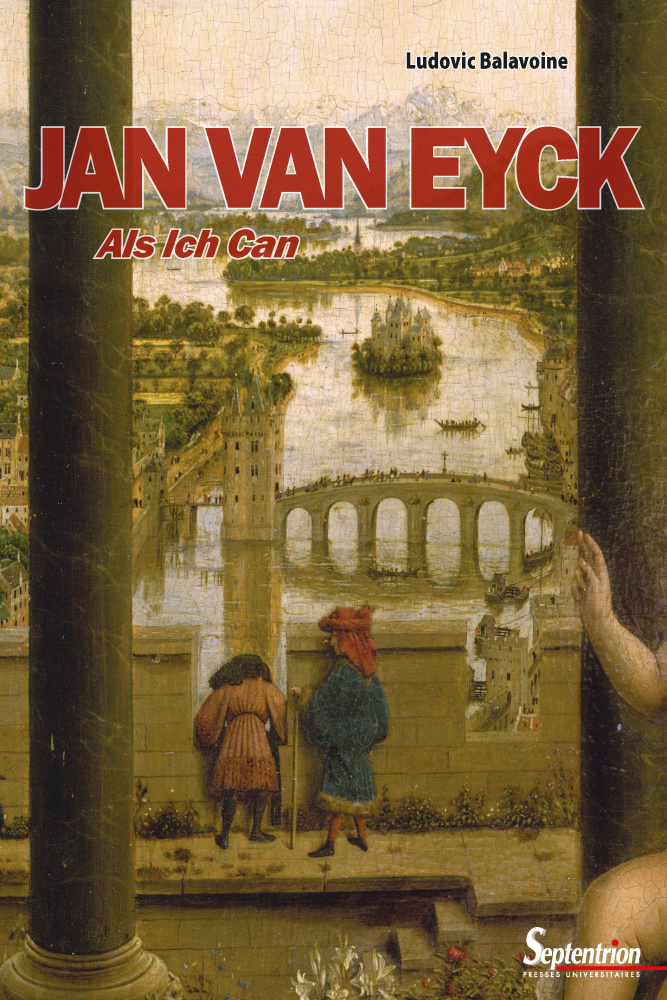
Publication – Ludovic Balavoine, « Jan van Eyck. Als Ich Can »

Qui est Jan van Eyck ? Si le peintre mosan a laissé des œuvres fortes et innovantes qui ont fait sa renommée dans l’Europe du XVe­ siècle, et jusqu’à nos jours, les sources écrites très lacunaires ne laissent entrevoir que certains aspects du maître flamand et de sa personnalité. Entreprendre d’écrire la vie de Van Eyck constitue donc un défi que propose de relever cette biographie, en resituant le peintre dans les différents environnements qu’il a fréquentés, qui l’ont inspiré, et dans les réseaux auxquels il a appartenu, des bords de la Meuse à la flamboyante Bruges, en passant par la Hollande. Il s’agit de partir à la rencontre de Jan le peintre, mais aussi de Jan l’ambassadeur du duc de Bourgogne Philippe le Bon ou de Jan l’intermédiaire entre ses mécènes et des milieux artistiques foisonnants, de suivre le maître dans son parcours de vie, original par bien des aspects, et, en fin de compte, de donner corps à un nom demeuré célèbre, celui de Jan van Eyck.

Table des matières : ici

Informations pratiques :

Ludovic Balavoine, Jan van Eyck. Als Ich Can, Villeneuve d’Ascq, Presses universitaires du Septentrion, 2021 (Histoire et civilisations). 290 p., 16 x 24 cm. ISBN : 978-2-7574-3330-0. Prix : 27 euros.

Source : Presses universitaires du Septentrion

Publié dans Publications | Laisser un commentaire

Publication – « Compilatio singularis exemplorum », éd. Alexander Loose

Die Compilatio singularis exemplorum ist eine Exempelsammlung, die gegen Ende des 13. Jahrhundert von einem anonymen französischen Dominikaner zusammengestellt wurde. Sie enthält neben vielen auch anderweitig breit und variantenreich überlieferten Stoffen einiges sonst nur selten erhaltene oder gänzlich unbekannte Erzählgut. Zudem hebt sie sich von den meisten anderen Exempelsammlungen durch das ihr zugrundeliegende Gliederungsprinzip ab, welches sich an der Dreiteilung der mittelalterlichen Christenheit in Säkularklerus, Regularklerus und Laienstand orientiert: Streng hierarchisch geordnet, werden der Reihe nach Geschichten über die Mitglieder dieser drei Stände erzählt. Von den Päpsten bis hinab zu den Theologiestudenten, von den Äbten und Abtissinnen bis hinab zu den Laienbrüdern und Beginen, von den Kaisern und Königen bis hinab zu den gesellschaftlichen Randexistenzen wird vor uns das ganze Panoptikum der spätmittelalterlichen Gesellschaft entfaltet. Dem so entworfenen Abbild der Menschenwelt werden in den ersten Teilen der Sammlung eine Marienvita, zahlreiche Marienmirakel, Hostienwunder, Kreuzzugsgeschichte und einige Geschichten über die Engel vorangestellt. Lediglich der letzte, vermutlich sekundär hinzugefügte Teil der Sammlung weicht von der Gesamtkonzeption des Werkes ab. Er vereint in sich eine Liste altfranzösischer Sprichwörter nebst deren lateinischen Nachdichtungen, Proben der Vagantenpoesie des Hugo Primas und weitere Verse erbaulichen und unterhaltsamen Inhalts.

Der lateinische Text der Sammlung ist stellenweise von altfranzösischen Einsprengseln durchsetzt, die in einigen Fällen das Ausmaß kleinerer Gedichte erreichen. Er wird hier zum ersten Mal vollständig nach allen drei bekannten Überlieferungsträgern, Handschriften des 14. und 15. Jahrhunderts, kritisch herausgegeben.

Alexander Loose ist Latinist und hat im Fach Mittel- und Neulatein an der Martin-Luther-Universität Halle-Wittenberg promoviert.

Informations pratiques :

Compilatio singularis exemplorum, éd. Alexander Loose, Turnhout, Brepols, 2021 (Corpus Christianorum, Continuatio Mediaevalis, 308). CXL+853 p., 155 x 245 mm. ISBN: 978-2-503-59308-1. Prix : 495 euros.

Source : Brepols

Publié dans Publications | Laisser un commentaire

Publication – L’infanzia nell’Alto Medioevo (Atti delle Settimane di Studio, 68)

La Sessantottesima Settimana di studio dedicata all’Infanzia nell’alto medioevo, prevista tra il 16 e il 21 aprile del 2020, non ha potuto svolgersi. Non era mai successo, nella quasi settantennale storia di quello che, dal 1953, si è imposto come uno tra i più longevi, continuativi e animati luoghi di confronto storiografico per la comunità internazionale degli studiosi dell’alto medioevo. Lo ha formalmente impedito un Decreto della Presidenza del Consiglio dei Ministri, il quarto e più drastico tra quelli che dal 23 febbraio 2020 il governo italiano ha assunto, in un contesto di crescente consapevolezza dell’emergenza, per contrastare la diffusione della pandemia da COVID-19. Con esso, infatti, tra le altre radicali misure di contenimento del contagio vigenti dall’11 marzo, è stato esplicitamente vietato lo svolgimento di eventi pubblici, quali, appunto, convegni, congressi e fiere. Il Consiglio scientifico della Fondazione CISAM, sotto l’incalzare degli eventi e degli aggiornamenti del quadro normativo sollecitato dall’emergenza sanitaria, non ha potuto che prendere atto dell’impossibilità di svolgere regolarmente quella Settimana di studio ormai alle porte. È parso, al tempo stesso, difficile sia individuare un momento utile per una sicura ri-programmazione dell’incontro di studi (a posteriori è facile verificare come ogni tentativo di rinvio sarebbe stato vanificato dalle successive ‘ondate’ pandemiche), sia pensare, in tempi tanto brevi, a un trasferimento delle sessioni del convegno su piattaforma informatica, secondo una pratica oggi invalsa, ma solo un anno fa tutt’altro che diffusa. Per tutte queste ragioni e presumendo che i relatori invitati avessero ormai svolto le proprie ricerche e disponessero quindi di testi sostanzialmente pronti, il Consiglio ha adottato la scelta, dolorosa ma necessaria, di rinunciare al fecondo scambio del convegno per farlo giungere direttamente alla sua più duratura veste libraria. L’entusiastica adesione e il qualificato e puntuale lavoro degli studiosi coinvolti, ai quali va l’incondizionata gratitudine del Consiglio scientifico, si sono infine materializzati nel presente volume. Costituendone il sessantottesimo numero, esso lascia apparentemente imperturbata la serie degli Atti delle Settimane di studio. Per quanti ne hanno conosciuto e seguito la genesi, tuttavia, questi Atti di una Settimana-non-svolta rimarranno la silenziosa e (si spera) solitaria dichiarazione che la ricerca e lo studio sono capaci di resistere alle avversità più funeste e imponderabili. Una dichiarazione che è anche un auspicio, secondo la retorica dominante in questi tempi sventurati: che alla resistenza segua davvero la tanto attesa rinascita.

Table des matières :

M. Bassetti – E. Menestò, Avvertenza – C. Frugoni, La rappresentazione dei bambini nell’alto medioevo in Occidente, pp. 1-32 – P. Cammarosano, Il lavoro dei fanciulli nell’alto medioevo, 33-66 – E. Possenti, La morte infantile nell’alto medioevo: il contributo dell’archeologia in Occidente, 67-130 – M. Bottazzi, L’infanzia nella documentazione epigrafica tra tarda antichità e alto medioevo, 131-158 – L. Capezzone, Lo spazio dell’infanzia nel medioevo islamico (X-XII secolo): la visione sanitaria dei medici, la pedagogia dei giuristi e la paideia dei filosofi, 159-180 – P. Schreiner, Das andere Kind. Kinderschicksale und kindergestalten in der Literatur der makedonischen und komnenischen epoche (9.-12. Jh.), 181-198 – I. Grimm-Stadelmann, Das Kind als Patient: Quellensituation und Forschungsfragen zur Kinderheilkunde im byzantinischen Zeitalter, 199-258 – J. Kuuliala, Childhood disability, lived religion, and social integration: evidence from medieval miracle narratives, 259-278 – A. Classen, Childhood in the Early Middle Ages? The Hidden World of Parental Emotions how to evaluate the available sources from a time of existential struggle?, 279-304 – A. Giallongo, Le bimbe di Eva nell’ars educandi a Roma e a Firenze. Tracce dal IV e dal XIV secolo , 305-350 – S Puliatti, Lo statuto legale dell’infanzia nel diritto tardoantico e bizantino, 351-378 – L. Loschiavo, Bambini e fanciulli nella legislazione longobarda, 379-420 – J.-P. Poly – S. Kerneis, Enfances barbares. Les communautés pérégrines de gaule entre lois et coutume, 421-454 – O. Condorelli, Immagini dell’infanzia nel diritto canonico altomedievale, 455-574 – G. Cremascoli, Diventare pargoli per il regno di Dio, 575-600 – L. F. Pizzolato, La prima aetas (infantia e pueritia) nella letteratura cristiana antica latina, 601-628 – R. Alciati, Bambini e monasteri fra tarda antichità e alto medioevo, 629-660 – R. Gamberini, Infanzia e puerizia nella letteratura latina dell’alto medioevo. Un percorso di lettura, 661-688 – M.-C. Isaïa, L’enfance dans l’hagiographie latine (IIIe-Xe s.), 689-736 – B. Caseau, Enfance et sainteté. (Antiquité tardive et monde byzantin), 737-762 – M. Buzzoni, L’infanzia e il gioco nelle fonti inglesi medievali, 763-790 – S. Joye, Enfance heureuse, enfance périlleuse dans la Gaule mérovingienne, 791-818 – D. Oltean, Enfants étrangers dans les monastères byzantins (IXe-XIIe s.), 819-848 – A. Markopoulos, L’éducation de l’enfant dans la société byzantine, 849-874.

Informations pratiques :

L’infanzia nell’Alto Medioevo, Spolète, CISAM, 2021 (Atti delle Settimane di Studio, 68). ISBN 978-88-6809-315-0. Prix : 130 euros.

Source : CISAM

Publié dans Publications | Laisser un commentaire