Publication – Xabier Irujon, « Charlemagne’s Defeat in the Pyrenees. The Battle of Rencesvals »

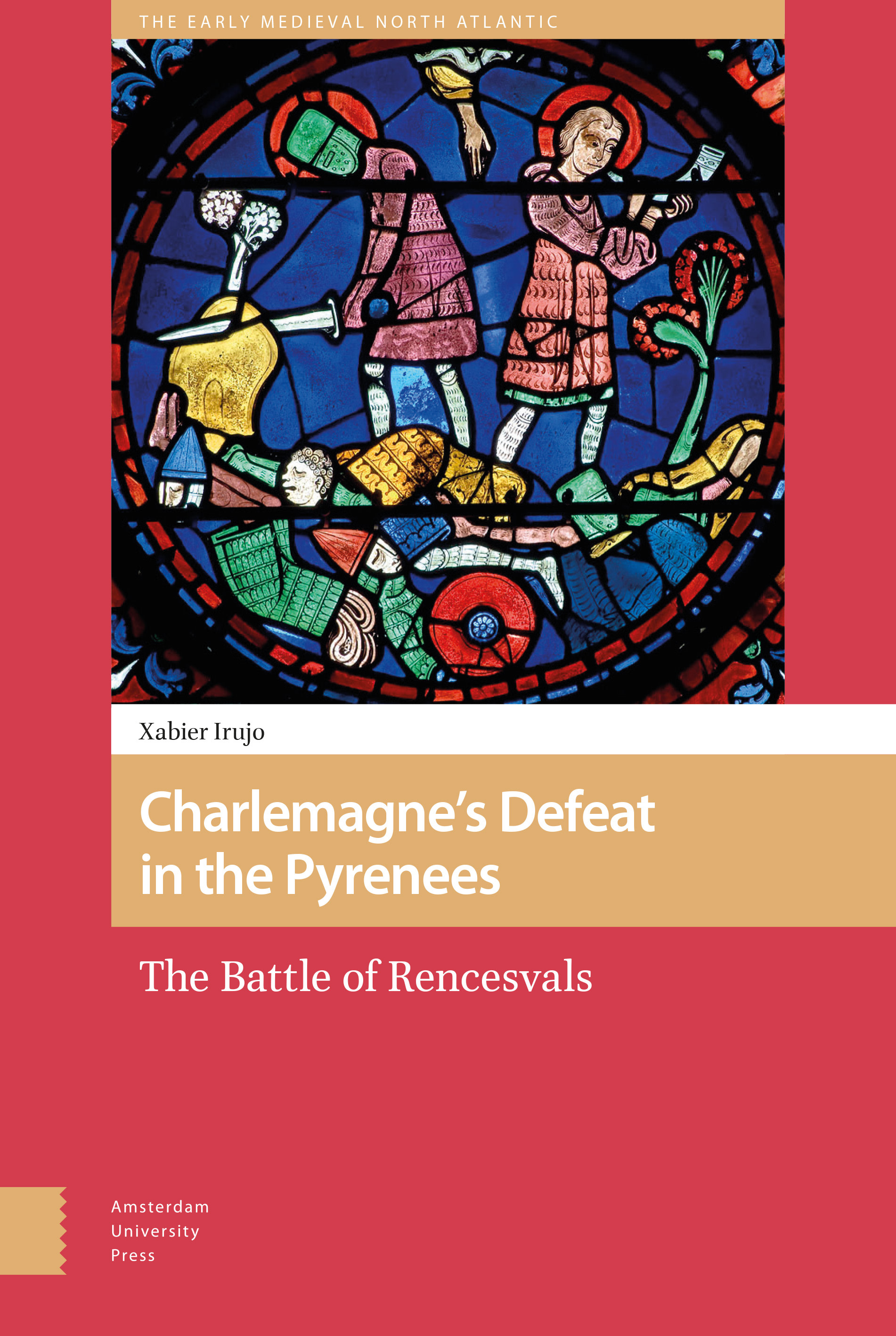
The Battle of Rencesvals is the one of the most dramatic historical event of the entire eighth century, not only in Vasconia but in Western Europe. This monograph examines the battle as more than a single military encounter, but instead as part of a complex military and political conquest that began after the conquest of the Iberian Peninsula in 711 and culminated with the creation of the Kingdom of Pamplona in 824. The battle had major (and largely underappreciated) consequences for the internal structure of the Carolingian Empire. It also enjoyed a remarkable legacy as the topic of one of the oldest European epic poems, La Chanson de Roland. The events that took place in the Pyrenean pass of Rencesvals (Errozabal) on 15 August 778 defined the development of the Carolingian world, and lie at the heart of the early medieval contribution to the later medieval period.
Xabier Irujo (Chair of the Center for Basque Studies, University of Nevada – Reno) holds three MAs in linguistics, history and philosophy and two PhDs in history and philosophy. He has lectured and published on topics related to Basque history.

Informations pratiques :

Xabier Irujon, Charlemagne’s Defeat in the Pyrenees. The Battle of Rencesvals, Amsterdam, Amsterdam University Press, 2021. 254 p, 15.6 x 23.4 cm. ISBN : 9789048553297. Prix : 104,99 euros.

Source : Amsterdam University Press
Publié dans Publications | Laisser un commentaire

Appel à contribution – Euroseal. Réflexions sur les bases de données sigillographiques en Europe – Reflections on sigillographic databases in Europe –

Colloque international
International Conference
Bruxelles/Brussels – 8-9/12/2021

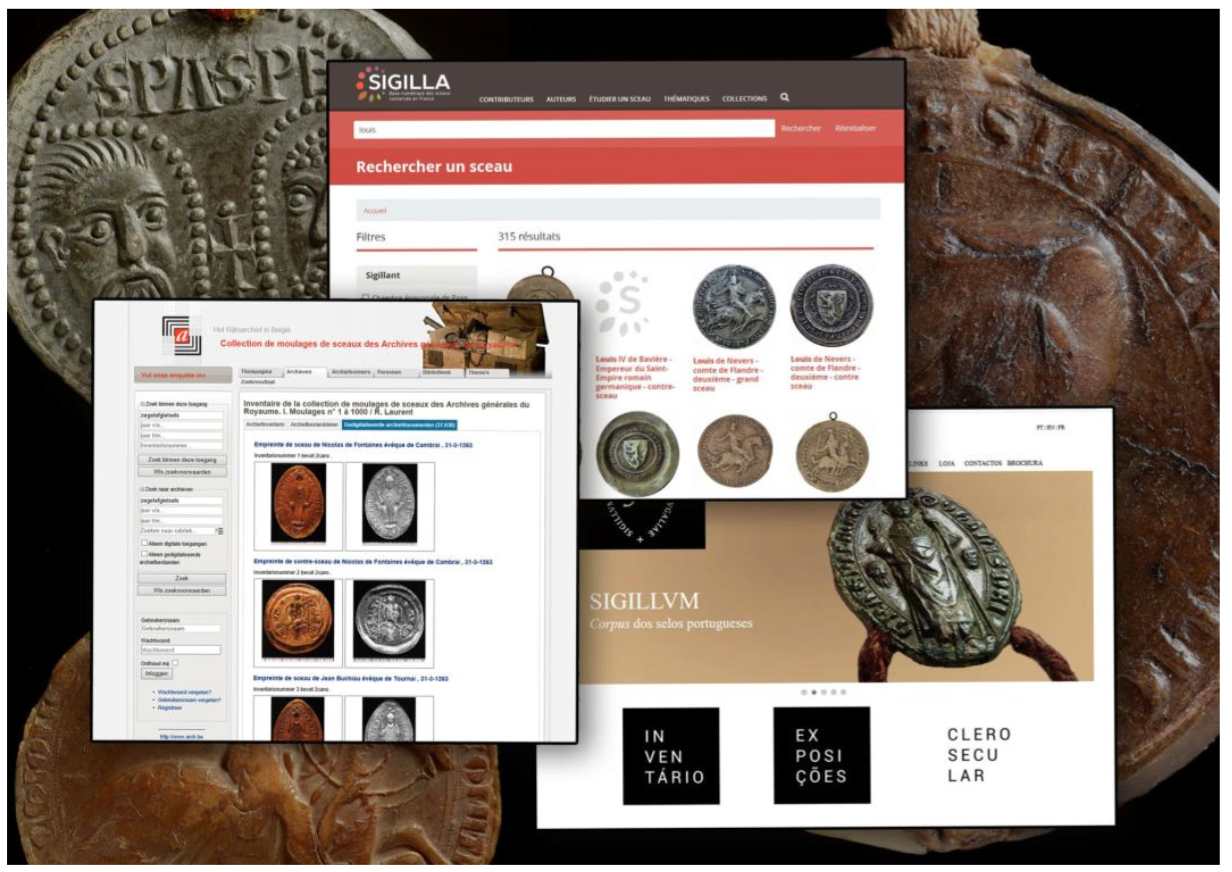
En 2018, la Politique scientifique belge a accepté le financement d’un projet de networking international de sigillographie. Ce projet baptisé « Euroseal » est porté par trois partenaires : Rosário Morujão (Université de Coimbra, Portugal), Laurent Hablot (EPHE, France) et Marc Libert (Archives générales du Royaume/Algemeen Rijksarchief, Belgique). Euroseal poursuit une double ambition : établir et renforcer la mise en place d’un réseau de chercheurs en sigillographie et, surtout, le matérialiser par une plateforme internet donnant accès aux bases de données sigillographiques élaborées dans différents pays. Cette deuxième ambition s’imbrique pleinement dans le paysage sigillographique existant et permet opportunément de le renforcer.

La pandémie de Covid-19 est venue bouleverser le programme d’Euroseal qui devait se terminer en décembre 2020 par l’organisation d’un colloque international consacré à une réflexion centrée sur le partage de connaissance, la gestion et l’élaboration des bases de données sigillographiques. Le webinaire organisé en décembre 2020 par John McEwan qui portait sur les mêmes idées a démontré la pertinence d’une telle réflexion mais également combien elle constitue pleinement le cœur des réflexions actuelles des sigillographes. Euroseal souhaiterait clôturer son programme en organisant le colloque prévu initialement le jeudi 8 et le vendredi 9 décembre 2021 à Bruxelles. Ce colloque, Euroseal. Réflexions sur les bases de données sigillographiques en Europe, sera consacré à une réflexion centrée sur le partage de connaissance, la gestion et l’élaboration des bases de données sigillographiques. Il aura l’avantage de prolonger les communications proposées à la fin de l’année dernière mais aussi de les enrichir, notamment par la présentation de la plateforme Euroseal déjà évoquée.

C’est dans ce cadre, que nous avons l’honneur de vous inviter à déposer une proposition de communication pour le 31 mai 2021 au plus tard. Chaque communication aura une durée de 30 minutes et bénéficiera de toutes les commodités informatiques nécessaires. Les langues de communication seront le français et l’anglais. Les frais de transport et d’hébergement des orateurs seront pris en charge et une publication des actes est prévue.

In 2018, the Politique Scientifique Belge funded a project that aimed to establish an international network of sigillographers. The project, entitled ‘Euroseal’, is directed by Rosário Morujão (Universidade de Coimbra, Portugal), Laurent Hablot (École Pratique des Hautes Études, France) et Marc Libert (Archives générales du Royaume/Algemeen Rijksarchief, Belgique). Euroseal has two main aims: to establish a community of sigillographic researchers, and to create a digital platform that will provide scholars with access to sigillographic datasets in multiple countries. This second ambition is timely as there is a pressing need for coordination among sigillographers in the domain of digital resources.

The project was originally envisaged as culminating in a colloquium in Brussels in December 2020, but this proved impossible due to the Covid-19 pandemic. In the colloquium’s absence, a webinar, organized by John McEwan (Saint Louis University, USA), gave scholars the opportunity to carry forwards the discussion, and by attracting a large international audience, it demonstrated the subject’s importance to sigillographers. In anticipation of the end of the pandemic, planning has now begun on the delayed colloquium. Provisionally scheduled for 8-9 December 2021, ‘Euroseal: Reflections on sigillographic Databases in Europe’ will provide scholars with an opportunity to reflect on recent work on sigillographic databases and on the development of the Euroseal platform.

We have the honour of inviting you to submit a proposal for a paper for this colloquium. Papers should be 30 minutes in length and presenters will have the opportunity to support their presentations with audio-visual technology. The languages of the conference will be French and English. Travel and accommodation expenses will be covered for presenters and the proceedings of the conference will be published.

Toute proposition est à adresser à/ Please send proposals to marc.libert@arch.be

Date limite des propositions / Deadline for the proposals : 30/06/2021.

Comité scientifique/Scientific comitee : Marc Libert (Archives générales du Royaume, Belgique) ; Rosário Morujão (Universidade de Coimbra, Portugal) ; Laurent Hablot (École Pratique des Hautes Études, France) ; John McEwan (Saint Louis University, USA).

Publié dans Appel à contributions | Laisser un commentaire

Appel à contribution – Bibles, Gospels, Breviaries and Books of Hours

In the context of the public seminar entitled Bibles, Gospels, Breviaries and Books of Hours, organised by the Research Centre for European Philological Tradition (Zurich, Lugano, Florence, Rome), which will take place via Zoom every Thursday from the 11th of November 2021 to the 26th of May 2022 and aiming to gather as many experts on the subject as possible, we are launching a call for proposals. Interested parties are invited to send their proposals (max 100 words) by the 15th of July in Italian, English, French or Spanish to info@receptio.eu, indicating their academic role and university. Independent researchers who are conducting research on the topic are also welcome.

Nell’ambito del seminario pubblico dal titolo Bibbie, Vangeli, Breviari e Libri d’Ore, organizzato dal Research Centre for European Philological Tradition (Zurigo, Lugano, Firenze, Roma), che si svolgerà via Zoom ogni giovedì dall’11 novembre 2021 al 26 maggio 2022 e che mira a raccogliere il maggior numero di esperti dell’argomento, lanciamo una call for proposals.

Gli interessati sono invitati a inviare le proposte (max 100 parole) entro il 15 luglio in Italiano, Inglese, Francese, Spagnolo all’indirizzo: info@receptio.eu, indicando il proprio ruolo accademico e l’Università di appartenenza. I ricercatori indipendenti che stanno svolgendo ricerche sul tema saranno altresì i benvenuti.

Source : Medieval Art Research

Publié dans Appel à contributions | Laisser un commentaire

Publication — « Le marché des matières premières dans l’Antiquité et au Moyen Âge », dir. Didier Boisseuil, Christian Rico et Sauro Gelichi

Le marché des matières premières n’a jusqu’alors pas fait l’objet d’une réflexion approfondie de la part des historiens et des archéologues, alors que ces produits jouaient un rôle important dans l’économie des sociétés anciennes. Surtout, l’étude comparative des conditions de circulation et des modalités d’échange, nécessaire pour mieux cerner les modes sociaux d’organisation des marchés, n’a jamais été entreprise à l’échelle du bassin méditerranéen et pour une ample séquence chronologique, de l’Antiquité romaine au Moyen Âge tardif. C’est une telle étude qu’ambitionne de réaliser le volume. Il considère les lieux d’échange et de stockage, la circulation des matières premières (produits naturels bruts : pierres et roches décoratives, terres, laine, bois, argile, etc., ou produits issus d’une première phase de traitement : alun, métaux, terres cuites architecturales, etc.) et les acteurs des échanges.

Didier Boisseuil est maître de conférences en histoire médiévale à l’université François Rabelais de Tours. Il a publié notamment : Le thermalisme en Toscane à la fin du Moyen Âge, Rome, 2002.

Christian Rico est maître de conférences en histoire romaine à l’université de Toulouse-Jean Jaurès. Il est un spécialiste de l’archéologie du métal.

Sauro Gelichi est professeur d’archéologie médiévale à l’université Ca’Foscari à Venise.

Informations pratiques :

Le marché des matières premières dans l’Antiquité et au Moyen Âge, dir. Didier Boisseuil, Christian Rico et Sauro Gelichi, Rome, École française de Rome, 2021 (Collection de l’École française de Rome, 563). 16 x 24 cm – 450 p. ISBN: 9782728314065. Prix: € 40.

Source : École française de Rome

Publié dans Publications | Laisser un commentaire

Publication – « The Routledge Handbook of Medieval Rural Life », ed. Miriam Müller

The Routledge Handbook of Medieval Rural Life brings together the latest research on peasantry in medieval Europe.

The aim is to place peasants – as small-scale agricultural producers – firmly at the centre of this volume, as people with agency, immense skill, and resilience to shape their environments, cultures and societies. The volume examines the changes and evolutions within village societies across the medieval period, over a broad chronology and across a wide geography. Rural structures, families, and hierarchies are examined alongside tool use and trade, as well as the impact of external factors such as famine and the Black Death. The contributions offer insights into multidisciplinary research, incorporating archaeological as well as landscape studies alongside traditional historical documentary approaches across widely differing local and regional contexts across medieval Europe.

This book will be an essential reference for scholars and students of medieval history, as well those interested in rural, cultural and social history.

Miriam Müller has worked as a lecturer in medieval history at the University of Birmingham, UK. She has published on a wide range of topics about medieval rural life, including peasant revolts and gender in the English village. Her current research interests include medieval coastal communities, peasant revolts in northern Germany, and the representation of medieval peasants in modern and contemporary far-right movements.

Table des matières : ici

Informations pratiques :

The Routledge Handbook of Medieval Rural Life, ed. Miriam Müller, Routledge, 2021. 448 Pages 3 B/W Illustrations. ISBN : 9781138849228. Prix : GBP 190.

Source : Routledge

Publié dans Publications | Laisser un commentaire

Publication — Martine Clouzot, « La musicalité des images au Moyen Âge. Instruments, voix et corps sonores dans les manuscrits enluminés (XIIIe-XIVe siècles) »

Par les images, la musique est figurée de façon inventive et étonnante dans les manuscrits enluminés entre le XIIIe et le XIVe siècle, principalement en France et en Angleterre. C’est cette capacité d’invention des enlumineurs à rendre visible ce qui est invisible, à savoir les sons des instruments et les voix des chanteurs, qui retient l’attention. La démarche consiste à se fonder sur les cadres généraux de formation et de pensée des lettrés de l’époque : les arts libéraux et la théologie. À partir de cette culture savante commune, ce livre cherche à comprendre les différents procédés visuels élaborés par les « concepteurs d’images » pour faire voir et entendre « la musique » sur le support matériel et culturel particulier du manuscrit.

Dans la société médiévale, le verbe et l’image sont aux fondements théologiques et anthropologiques du corps et de l’âme. Cette étude postule alors que les images du roi David, des jongleurs, des fous, des bêtes, des hybrides, participent d’une double représentation culturelle et morale : celle du statut social des « gens de savoir », initiés à la musica, concepteurs des livres et des images à l’usage des clercs, laïcs et/ou nobles cultivés ; celle du but ultime des savoirs des lettrés, et donc des livres enluminés : la conversion des mœurs par la discipline des corps en vue du salut des âmes.

Table des matières :

Préface — Jean-Claude Schmitt

Introduction

1ère partie. Les livres dévotionnels : savoirs et pratiques sociales entre clercs et nobles

1. Statuts sociaux et circulation des livres : clercs et nobles laïcs

2. Savoirs : arts libéraux et images de la musique

3. Figures rhétoriques et motifs musiciens pour les sens et la mémoire

2e partie. David, modèle de la musique dans les images

1. Les instruments et les gestes de David : harpe, orgue et cloches

2. Jouer d’un instrument : gestes, mouvements et corps sonores

3. Le son et l’oreille : objectivation, zoomorphisme et anatomies

3e partie. Prédication, images et musicalités : les passions des corps

1. Corps, gestes et voix des « maîtres de la parole »

2. Chants, paroles et voix : chantres et animaux

3. Édifier et convertir : des passions à la Rédemption

Conclusion

Liste des manuscrits enluminés

Bibliographie

Index

Informations pratiques :

Martine Clouzot, La musicalité des images au Moyen Âge. Instruments, voix et corps sonores dans les manuscrits enluminés (XIIIe-XIVe siècles), Turnhout, Brepols, 2021 (Epitome musical). 434 p., 142 colour ill., 190 x 290 mm, 2021. ISBN: 978-2-503-58855-1. Prix : 75 euros.

Source : Brepols

Publié dans Publications | Laisser un commentaire

Publication — « Frisians of the Early Middle Ages », dir. John Hines et Nelleke IJssennagger-van der Pluijm

Frisian is a name that came to be identified with one of the territorially expansive, Germanic-speaking peoples of the Early Middle Ages, occupying coastal lands south and south-east of the North Sea. Highly varied manifestations of Frisian-ness can be traced in and around the north-western corner of the European continent in cultural, linguistic, ethnic and political forms across two thousand years to the present day.

The thematic studies in this volume foreground how diverse « Frisians » in different places and contexts could be. They draw on a range of multi-disciplinary sources and methodologies to explore a comprehensive range of social, economic and ideological aspects of early Frisian culture, from the Dutch province of Zeeland in the south-west to the North Frisian region in the north-east. Chronologically, there is an emphasis on the crucial developments of the seventh and eighth centuries AD, alongside demonstrations of how later evidence can retrospectively clarify long-term processes of group formation.The essays here thus add substantial new evidence to our understanding of a crucial stage in the evolution of an identity which had to develop and adapt to changing influences and pressures.

Table des matières :

List of Figures
List of Tables
Acknowledgements
Abbreviations

1. Frisians of the Early Middle Ages: An Archaeoethnological Perspective — Nelleke IJssennagger-van der Pluijm, John Hines and Ian Wood
2. For Daily Use and Special Moments: Material Culture in Frisia, AD 400-1000 — Egge Knol
3. The Frisians and their Pottery: Social Relations before and after the Fourth Century AD — Annet Nieuwhof
4. Landscape, Trade and Power in Early-medieval Frisia — Gilles de Langen and J. A. Mol
5. Law and Political Organisation of the Early Medieval Frisians (c. AD 600-800) — Han Nijdam
6. Recent Developments in Early-medieval Settlement Archaeology: The North Frisian Point of View — Bente Sven Majchczack
7. Franks and Frisians — Ian Wood
8. Mirror Histories: Frisians and Saxons from the First to the Ninth Century AD — Robert Flierman
9. Structured by the Sea: Rethinking Maritime Connectivity of the Early-medieval Frisians — Nelleke IJssennagger-van der Pluijm
10. Art, Symbolism and the Expression of Group Identities in Early-medieval Frisia — J. A. W. Nicolay
11. Religion and Conversion amongst the Frisians — John Hines
12. Traces of a North Sea Germanic Idiom in the Fifth-Seventh Centuries AD — Arjen P. Versloot
13. Runic Literacy in North-West Europe, with a Focus on Frisia — Tineke Looijenga

Final Discussion
List of Contributors

Informations pratiques :

Frisians of the Early Middle Ages, dir. John Hines et Nelleke IJssennagger-van der Pluijm, Woodbridge, Boydell and Brewer, 2021 (Studies in Historical Archaeoethnology). 438 Pages 24 x 17 cm 64 colour. 7 b/w. 15 line. Illustrations. ISBN : 9781783275618. Prix : £75.00 / $120.00.

Source : Boydell and Brewer

Publié dans Publications | Laisser un commentaire

Journée d’étude – Journée d’étude Jean de Montmirail

Mardi 22 juin 2021, 14h-18h
En ligne

La Vie de Jean de Montmirail (BHL 4415) décrit l’existence et les miracles d’un grand aristocrate du nord de la France qui, à l’issue d’un intéressant itinéraire de conversion, devint cistercien à l’abbaye de Longpont où il mourut en 1217 et où il fut enseveli.

Le texte de sa Vita (AA. SS. Sept. VIII, Anvers, 1762, 218-235) fut écrit par un moine de Longpont, dans les années 1230- 1240 – peut-être Gauthier d’Ochies, abbé de Longpont (v. 1198-1219) puis de Cîteaux (1219-1236) –, sans doute en lien avec un projet de canonisation pontificale. Attesté par une lettre de Grégoire IX (1236), ce projet n’aboutit pas, mais il suscita une enquête dont nous conservons quelques traces dans un manuscrit, provenant de Cîteaux, qui n’avait, jusqu’ici jamais été identifié comme tel, ni mis en relation avec la tradition de la Vie de Longpont. L’un des éléments clefs de la Vita, mais également des suppléments issus de l’enquête, réside dans la construction d’un modèle de conversion aristocratique qui eut d’ailleurs une certaine réception dans les milieux proches de la cour capétienne et des ordres mendiants.

Outre cette Vie, on conserve sur ce grand aristocrate – qui cumule les honneurs au nord du royaume de France et aux marges occidentales de l’Empire – des sources nombreuses : des documents diplomatiques, quelques objets et un monument funéraire qui permettent de mieux suivre l’itinéraire de ce personnage, ainsi que les ressorts de la promotion du culte de Jean comme résultat des actions conjointes des moines de Longpont et de la famille de Montmirail

Pour l’historien, le parcours biographique de Jean de Montmirail ainsi que sa Vie constituent donc un laboratoire de choix pour explorer conjointement le très vif contexte de la vie religieuse du nord de la France, les stratégies de communication des Cisterciens (et notamment de la communauté de Longpont) envers les Grands et les pratiques religieuses de la chevalerie.

Depuis désormais deux ans, le dossier hagiographique fait l’objet d’un atelier, ouvert aux étudiants du master Mondes Médiévaux de Lyon, qui entend d’une part proposer une nouvelle édition et une traduction française de la Vita et d’autre part susciter et mettre en relation des travaux – dont certains déjà en cours – sur les multiples enjeux de ce dossier.

L’objectif de cette première rencontre est de rassembler autour de ce dossier exceptionnel des spécialistes de la chevalerie du nord du royaume de France et de l’hagiographie et des bibliothèques cisterciennes.

Cécile Caby (CIHAM, Lyon 2), Le dossier hagiographique de Jean de Montmirail entre contrôle pontifical de la sainteté, stratégies cisterciennes et renouveau pastoral à la fin du XIIIe siècle

Jérémy Delmulle (CNRS, IRHT), La bibliothèque de Longpont et les recherches sur Jean de Montmirail au XVIIe siècle

Nicolas Ruffini-Ronzani (UCLouvain / Université de Namur), Entre Champagne et Cambrésis, Jean de Montmirail dans les réseaux aristocratiques de son temps

Discussions avec Xavier Hélary, Marie Isaïa, Alexis Grélois, F. Peloux et alii. Pour obtenir le lien de connexion : cecile.caby@univ-lyon2.fr

Publié dans Colloque | Laisser un commentaire

Offre d’emploi — Postdoctoral researcher Art, social, or cultural history (University of Antwerp)

Let’s shape the future – University of Antwerp

The University of Antwerp is a dynamic, forward-thinking, European university. We offer an innovative academic education to more than 20 000 students, conduct pioneering scientific research and play an important service-providing role in society. We are one of the largest, most international and most innovative employers in the region. With more than 6000 employees from 100 different countries, we are helping to build tomorrow’s world every day. Through top scientific research, we push back boundaries and set a course for the future – a future that you can help to shape.

The Antwerp Research Institute for the Arts in the Faculty of Arts is looking for a full-time (100%) postdoctoral researcher in the field of art, social, or cultural history.

The candidate will collaborate in an interdisciplinary ERC project called “Science at the Fair: Performing Knowledge and Technology in Western Europe, 1850-1914”, coordinated by Prof. Nele Wynants. The EU-funded SciFair project will perform pioneering research on the role itinerant show people played in the dissemination of information about scientific and technological advances at fairs in North-Western Europe between 1850 and 1914. The project is based on the hypothesis that fairs during this period were not only local folk events but also centres of international exchange. SciFair will engage a multilingual and multidisciplinary team to analyse practices of science performance across national frontiers and map transnational networks of scientific entertainment. For more information and other available vacancies, see: www.scifair.eu.

The successful candidate will work on the subproject Itinerant Show Business Networks.

This subproject will study the social and professional community of itinerant show people by analysing the networks and legal conditions of their nomadic existence in relation to the establishment of several national and international guilds and leagues. How were itinerant show people related through family and professional networks and popular culture venues where science was popularised (museums, theatres, World Expos,) and how did these networks influence the content of the show? The project will also focus on how itinerant show people responded to changing regional legislations on migration, social security, and employment (child labour laws, boarding schools for children of show people, etc.).

Position

  • You will perform research on itinerant showbusiness networks in North-Western Europe (1850-1914).
  • Your research will be conducted within the framework of the EU-funded SciFair project.
  • You will publish minimally 4 scientific articles related to the research project. These publications can be co-authored with other project members and external researchers.
  • You are involved in the valorisation program of the SciFair project, communicating the results to different target audiences (including the media and the public), share the findings of your research at international academic conferences and co-organising an international workshop (in year 2).
  • You participate in the research activities of the SciFair project, as well as related projects such as B-magic (www.B-magic.eu) and relevant activities of ARIA.
  • You will assist in the supervision of PhD students and other team members.
  • You will help initiate project proposals in the field of art and science and cultural heritage and contribute to attracting external funding.
  • You will fulfil a limited number of teaching activities.

Profile

  • You hold a PhD in art, cultural, or social history or related field of the humanities (or you will have obtained it by the time you start work) and have a clear interest in popular cultural and the history of science.
  • You have an international academic portfolio and you conduct high-qualityacademic research.
  • You have an affinity for working with historical sources and applying textual and/or visual analysis to large corpora of historical data.
  • Demonstrable experience with digital methods used to transcribe historical sources and analyse textual and visual source materials is a strong plus.
  • You are willing and able to work and communicate within a broader team of international researchers.
  • You are willing to occasionally conduct research in archives abroad.
  • You can speak and write fluently in English.
  • You have a good command of at least two of the following languages: French, Dutch, and/or German.
  • You demonstrate organisational skills.
  • You act with attention to quality, integrity, creativity and cooperation.
  • Your research qualities are in line with the faculty and university research policies

What we offer

  • We offer a full-time appointment as a postdoctoral scholarship holder for a period of 2 years.
  • The planned starting date is 1 October 2021 or as soon as possible after that date.
  • Your monthly scholarship amount is calculated according to the scholarship amounts for postdoctoral scholarship holders on the pay scales for Contract Research Staff (Dutch: Bijzonder Academisch Personeel, BAP).
  • You will do most of your work at UAntwerp City Campus in a dynamic and stimulating working environment.
  • Find out more about working at the University of Antwerp here.

Want to apply?

  • You can apply for this vacancy through the University of Antwerp’s online job application platform up to and including 15 July 2021 (by midnight Brussels time). Click on the ‘Apply’ button, complete the online application form and be sure to include the following attachments: (1) a motivation letter, including a statement explaining your motivation for the relevant vacancy, (2) your academic CV, including a biosketch, (3) your five most important publications or achievements in the area of scientific research (maximum one page), and (4) two letters of recommendation.
  • The selection committee will review all of the applications as soon as possible after the application deadline.
  • Shortlisted candidates, selected to take part in interviews, will be notified by 10 August 2021. The interviews will take place on 30 August 2021. Candidates will be expected to propose a research plan based on the proposed subproject at the interview.
  • If you have any questions about the online application form, please check the frequently asked questions or send an email to jobs@uantwerpen.be. If you have any questions about the job itself, please contact Prof. Nele Wynants: nele.wynants@uantwerpen.be.

The University of Antwerp received the European Commission’s HR Excellence in Research Award for its HR policy. We are a sustainable, family-friendly organisation which invests in its employees’ growth. We encourage diversity and attach great importance to an inclusive working environment and equal opportunities, regardless of gender identity, disability, race, ethnicity, religion or belief, sexual orientation or age. We encourage people from diverse backgrounds and with diverse characteristics to apply.

Source : Academic Positions

Publié dans Offre d'emploi | Laisser un commentaire

Publication – Katrin Rösler, « Einheit ohne Gleichheit. Aspekte der Konstruktion prämonstratensischer Identität im 12. und 13. Jahrhundert »

Die vorliegende Arbeit untersucht den Prozess der Identitätsbildung des Prämonstratenserordens im hohen Mittelalter. Ziel der Studie ist es zu zeigen, wie es den Nachfolgern des Norbert von Xanten gelungen ist, eine tragfähige kollektive Identität auszubilden, die den von Beginn an bestehenden Spaltungstendenzen des entstehenden Ordens erfolgreich entgegenwirken konnte.

In den Blick genommen werden neben normativen, formativen und administrativen Texten des 12. und 13. Jahrhunderts auch Quellen, welche die Selbst- und die Außenwahrnehmung insbesondere der sächsischen Ordensstifte zeigen. Wurde in der bisherigen Forschung der Fokus oftmals eher auf das innerhalb des Prämonstratenserordens vorhandene Konflikt- und Spaltungspotential gelegt, so arbeitet die Studie die Ausprägung von Vorstellungen heraus, welche erfolgreich Bilder von Dauer und von Einheit unter den Nachfolgern Norberts erzeugen konnten.

Informations pratiques :

Katrin Rösler, Einheit ohne Gleichheit. Aspekte der Konstruktion prämonstratensischer Identität im 12. und 13. Jahrhundert, Münster, LIT Verlag, 2021 (Vita regularis – Ordnungen und Deutungen religiosen Lebens im Mittelalter. Abhandlungen, 66). 336 p., ISBN : 978-3-643-13211-6. Prix : 44,90 €.

Source : LIT Verlag

Publié dans Publications | Laisser un commentaire


