Appel à contribution – ‘Instrumenta altaris’. Ritual Artefacts and Their Images for Medieval Liturgy

In the Middle Ages, Christian liturgy was far more than a sequence of prayers and ceremonies: it structured religious practice, shaped sacred space, and gave material form to the expression of faith. Objects, vestments, and books played a central role in this framework, endowed with a visual, tactile, and symbolic language that embodied the theology of the sacred. The International Conference Instrumenta altaris: Ritual Artefacts and Their Images for Medieval Liturgy seeks to refocus attention on the material dimension that, throughout the medieval centuries, rendered the invisible visible and preserved —often in fragmentary form— a tangible legacy of devotion.

For several decades, medieval art historiography has moved towards a reassessment of what was once pejoratively labelled as “minor arts”, no longer regarded as decorative appendices to the dominant monumental tradition, but as essential components for understanding the spaces, gestures, and imagery that shaped Christian liturgy. This shift owes much to the work of scholars such as Colum Hourihane, Eric Palazzo, Cécile Voyer, Klaus Gereon Beuckers, and Elisabeth Crouzet-Pavan, who have drawn attention to the luxurious, performative, and sensory dimensions of medieval liturgical art.

Organised by the research project Thesauri Rituum at Rey Juan Carlos University (Madrid), this conference focuses on three main categories of liturgical artefacts: ritual objects —sacred vessels, reliquaries, crosses, censers— whose craftsmanship reveals a theology of materials; sacred vestments, textiles that not only clothed liturgical ministers but transformed them into figures of transcendence endowed with graces bestowed through ordination; and liturgical books, often illuminated manuscripts, which contained not merely the order of prayer but a spiritual choreography of Christian time. These elements were not autonomous but interdependent, belonging to a practice in which art was not simply contemplated, but activated and handled within liturgical performance —something difficult to reconstruct solely from written sources.
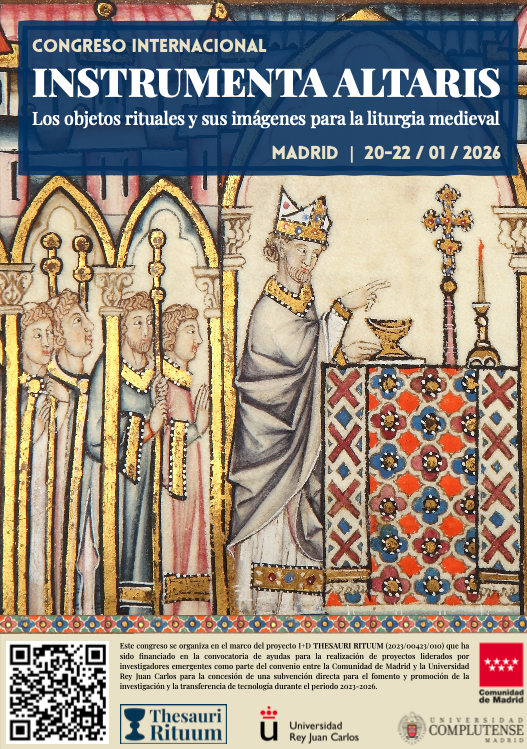
The International Conference Instrumenta altaris: Ritual Artefacts and Their Images for Medieval Liturgy is therefore also an invitation to reconsider the status of medieval art through the vitality of liturgical practice. It calls for a dialogue between form and function, between aesthetics and rituality, between the history of images and the presence of objects. This approach reflects a historiographical sensibility that no longer accepts the nineteenth-century hierarchy between the “major arts” and objects of worship, but instead pays renewed attention to those voices excluded from traditional academic classifications. For in the Middle Ages, the sacred was not confined to grandeur; it was equally revealed in the refinement of the minute and in the quiet eloquence of material signs that accompanied each rite, gesture, and ceremony.

Preferred Thematic Lines

The International Congress ‘Instrumenta altaris’: Ritual Objects and Their Images for Medieval Liturgy accepts proposals for on-site presentations in Spanish, English, Italian, or French that may be framed within the following lines:

1. Historiography and Theory of Medieval Sumptuary and Liturgical Arts

Proposals consisting of historiographical approaches to the study of sumptuary arts, with special attention to their revaluation within medieval art history. Also included will be studies addressing Christian liturgy as an aesthetic, performative, and spatial category, from interdisciplinary methodological perspectives (art history, theology, anthropology, musicology, philology, or cultural history, among others).

2. Materiality and Agency of Liturgical Objects

Presentations addressing questions centered on the matter, technique, use, and circulation of ritual objects: sacred vessels, ritual artifacts, vestments, and liturgical manuscripts. Both case studies and comparative approaches to ecclesiastical treasuries, relics, or sacred textiles will be considered, paying attention to their symbolic construction, cultic functionality, and artistic value.

3. Image of Objects and Objects in Images

Studies addressing the visual representation of liturgical objects in manuscripts, wall paintings, sculpture, or any figurative medium, as well as research on how these artifacts were visualized, interpreted, and re-signified in artistic productions from later periods, from the Early Modern era to the present.

4. Anthropology of Sacred ObjectsAnalyses focused on the social, symbolic, and ritual contexts of creation, use, and transformation of liturgical objects. Special consideration will be given to studies addressing processes such as copying, dismemberment, transfer, donation, inheritance, reuse, or re-signification of these pieces in scenarios different from those for which they were originally conceived.

5. Current Presence and Musealization of Medieval Liturgical Art

Presentations addressing the place and treatment of medieval liturgical objects in current museums, collections, and heritage institutions. Included are both innovative curatorial proposals and the ethical, hermeneutic, and pedagogical dilemmas posed by exhibiting decontextualized ritual artifacts, now detached from their original cultic function.

Abstract Submission for Evaluation

Researchers interested in participating with an on-site oral presentation (Madrid) at the International Congress ‘Instrumenta altaris’: Ritual Objects and Their Images for Medieval Liturgy should submit their presentation abstract through this digital application before October 1, 2025. Any queries will be addressed at the email proyecto.thesaurirituum@urjc.es.

Travel Grants for Master’s and Doctoral Students

To encourage young researchers’ participation, the congress organizing committee will award four grants to cover national or European travel expenses to the best presentation proposals submitted by master’s or doctoral students. These grants will only cover travel expenses to the congress city (Madrid), excluding accommodation, meals, or local transportation. They will be awarded based on criteria of academic quality, originality, and relevance among applicants.

Requirements to apply for the grant:

• Being enrolled in a master’s or doctoral program at the time of proposal submission.

• Explicitly indicate in the submission form the intention to apply for the travel grant.

• Traveling from within Spain or Europe.

Key Dates Summary

• Deadline for presentation proposal submissions: October 1, 2025

• Notification of acceptance: November 1, 2025

• Early registration deadline: November 15, 2025 *

• Congress dates: January 20-22, 2026

* At least one author per presentation must register for the congress under the appropriate category.

Only properly registered participants will receive congress certifications and documentation.
Publié dans Appel à contributions | Commentaires fermés sur Appel à contribution – ‘Instrumenta altaris’. Ritual Artefacts and Their Images for Medieval Liturgy

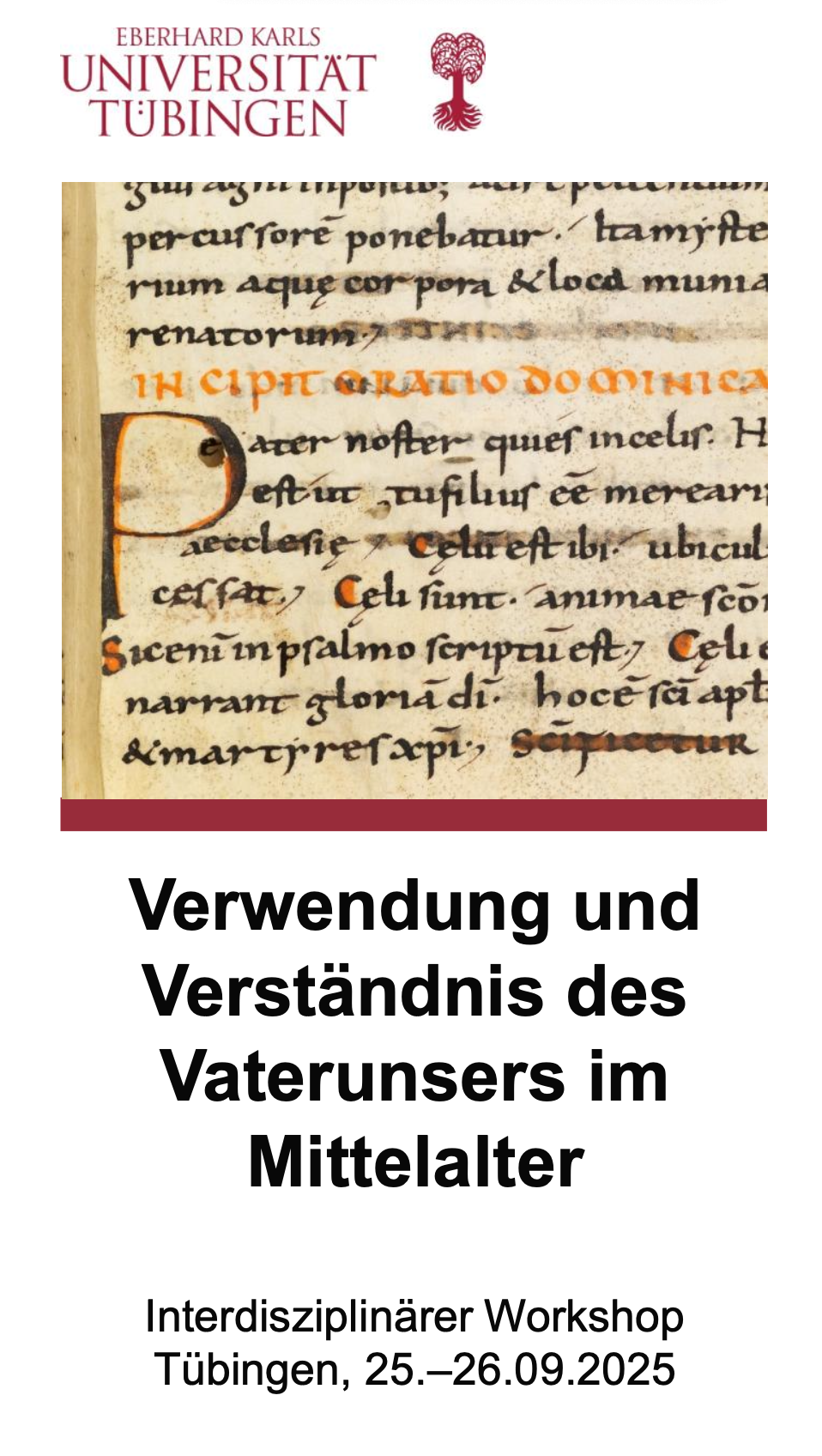
Colloque – Verwendung und Verständnis des Vaterunsers im Mittelalter

Das Vaterunser ist von überzeitlicher und überkonfessioneller Relevanz: In der christlichen Tradition ist es dasjenige Gebet, das auf Jesus Christus selbst zurückgeführt wird und in seinem konkreten Wortlaut bereits im Matthäus- und Lukasevangelium vorgegeben ist. Dadurch konnte es seit den frühesten christlichen Bezeugungen den Status jenes zentralen Gebets erlangen, den es bis heute in der gesamten Christenheit innehat. Seit jeher galt es als Idealgebet (Lk 11,1–4) und Norm des Betens (Mt 6,9) und weist auf Grund dessen große historische Kontinuität auf: Kirchliche Autoritäten des Mittelalters nahmen es daher epochenübergreifend als Maßstab für christliches Grundwissen in Anspruch. Zugleich erfährt es immer wieder Interpretationen und Aktualisierungen, um angesichts wandelnder kultureller Kontexte und Anforderungen handlungsleitend bleiben zu können. Dementsprechend ermöglicht das Vaterunser Einblicke in zeitspezifische religiöse Vorstellungen und Erfahrungen des Mittelalters sowie in den Wandel von Überzeugungen und Praktiken im diachronen Vergleich.

Aufgrund seiner großen kulturellen Prägekraft führt die Erforschung dieses Gebets, seiner Verwendung und Auslegung an interessante Schnittstellen zwischen gelebter Praxis, katechetischer Unterweisung und theologischer Reflexion. Folglich stellt das Herrengebet einen genuin interdisziplinären Untersuchungsgegenstand dar und bietet Anknüpfungspunkte für diverse Forschungsbereiche, die dieser Workshop erstmals zusammenführen wird. Die unterschiedlichen kultur- sowie sozialgeschichtlichen Perspektiven sollen anhand von fünf Sektionen diskutiert werden: Unterrichten – Kommentieren – Darstellen – Übersetzen – Beten.

Den Workshop richtet eine (Post-)Doc-Forschungsgruppe aus, die sich 2022 in Tübingen konstituiert hat und Verwendung und Verständnis des Vaterunsers interdisziplinär untersucht (https://thiger.libripendis.eu/). Er wird in Kooperation mit der Theologischen Hochschule Reutlingen, dem „Zentrum Vormodernes Europa“ (Prof. Dr. Andrea Worm), dem „Center for Religion, Culture and Society“ (CRCS) sowie der Forschungsstelle Spätantike/Frühmittelalter veranstaltet, außerdem vom Universitätsbund Tübingen e.V. gefördert.

Gäste sind herzlich willkommen, auch eine Online-Teilnahme ist möglich. Bei Interesse melden Sie sich bitte bis zum 01.09. unter Angabe der Teilnahmeform (vor Ort/online) bei: johanna.jebe@uni-tuebingen.de.

Donnerstag, 25.09.2025

Hinführung: Gesellschaftliche Verortungen des Vaterunsers in Spätantike und Mittelalter

09:00 – 09:30
Dr. Johanna Jebe (Tübingen):
Begrüßung und Einleitung

09:30 – 10:15
Dr. Martin Berger (Wien):
Das Vaterunser im Kontext der Liturgie

10:15 – 11:00
Prof. Dr. Mirko Breitenstein (Dresden):
Beten in Klöstern und Orden. Ein vergleichender Blick

11:00 – 11:30
Kaffeepause

1. Unterrichten: Lehren und Lernen mit dem Vaterunser

11:30 – 12:15
Prof. Dr. Philippe Depreux (Hamburg):
Eine Erklärung des Paternoster unter den Sermones des Ivo von Chartres

12:15 – 13:00
Prof. Dr. Ulrike Treusch (Gießen):
Das Vaterunser in der katechetischen Literatur der Wiener Schule des 15. Jahrhunderts

13:00 – 15:00
Mittagessen

2. Kommentieren: Verstehen und Vermitteln durch Auslegung

15:00 – 15:45
Dr. Bastiaan Waagmeester (Berlin):
Konzentration auf das Entscheidende. Kurz-Kommentierungen des Vaterunsers am Übergang von der Spätantike zum Mittelalter

15:45 – 16:30
Prof. Dr. Marianne Schlosser (Wien):
„Forma orandi“. Das Vaterunser in der Auslegung bei Albertus, Thomas und Bonaventura

16:30 – 17:00
Kaffeepause

3. Darstellen: Interpretieren durch Ordnung in Bild und Zahl

17:00 – 17:45
Dr. Michael Lebzelter (Stuttgart):
Ordnung und Imagination. Septenarien in den St. Galler Handschriften

17:45 – 18:30
Dr. Eleanor Goerss (Tübingen):
Von Tugenden, Lastern, Gaben und Bitten. Zur Ordnung in Paternoster-Rotae

19:30 Uhr
Abendessen

Freitag, 26.09.2025

4. Übersetzen: Aneignen und Verbreiten

09:00 – 09:45
Prof. Dr. Simone Schultz-Balluff (Halle):
Die deutschsprachigen Vaterunser-Versionen des Mittelalters als sprachhistorische Quelle. Mit einer Skizze für den Einsatz im akademischen Unterricht

09:45 – 10:30
Dr. Stefan Matter (Bern):
Froschauer und die Täufer. Zum Wortlaut des Vaterunsers in mennonitischen Drucken des Neuen Testaments

10:30 – 11:15
Prof. Dr. Andrea Worm (Tübingen):
Erklären und Bebildern. Visualisierungen des Pater noster im Zeitalter des Buchdrucks

11:15 – 11:45
Kaffepause

5. Beten: Schriftliche Überlieferung und persönliche Praxis

11:45 – 12:30
Dr. Carolin Gluchowski (Hamburg):
Ein niederdeutsches Vaterunser im Göttinger ABC-Buch 8° Cod. Ms. Theol. 243. Ein Beitrag zur Bildungs- und Andachtskultur in den Lüneburger Frauenklöstern im Spätmittelalter

12:30 – 13:15
Prof. Dr. Jonathan Reinert und Dr. Isabell Väth (Reutlingen, Tübingen):
Lebendige Andacht und seliges Sterben. Zum Gebrauch des Vaterunsers in persönlichen Gebetbüchern des St. Galler Bestandes

13:15–13:30
Schlussworte

Alte Burse (R. XI)
Kunsthistorisches Institut
Universität Tübingen
Bursagasse 1, 72070 Tübingen
Für eine Online-Teilnahme über Zoom
kontaktieren Sie bitte Johanna Jebe.

Kontakt

Prof. Dr. Jonathan Reinert
jonathan.reinert@th-reutlingen.de
+49 176 84076326
Dr. Johanna Jebe
johanna.jebe@uni-tuebi

Source : H-Soz-Kult

Publié dans Colloque | Commentaires fermés sur Colloque – Verwendung und Verständnis des Vaterunsers im Mittelalter

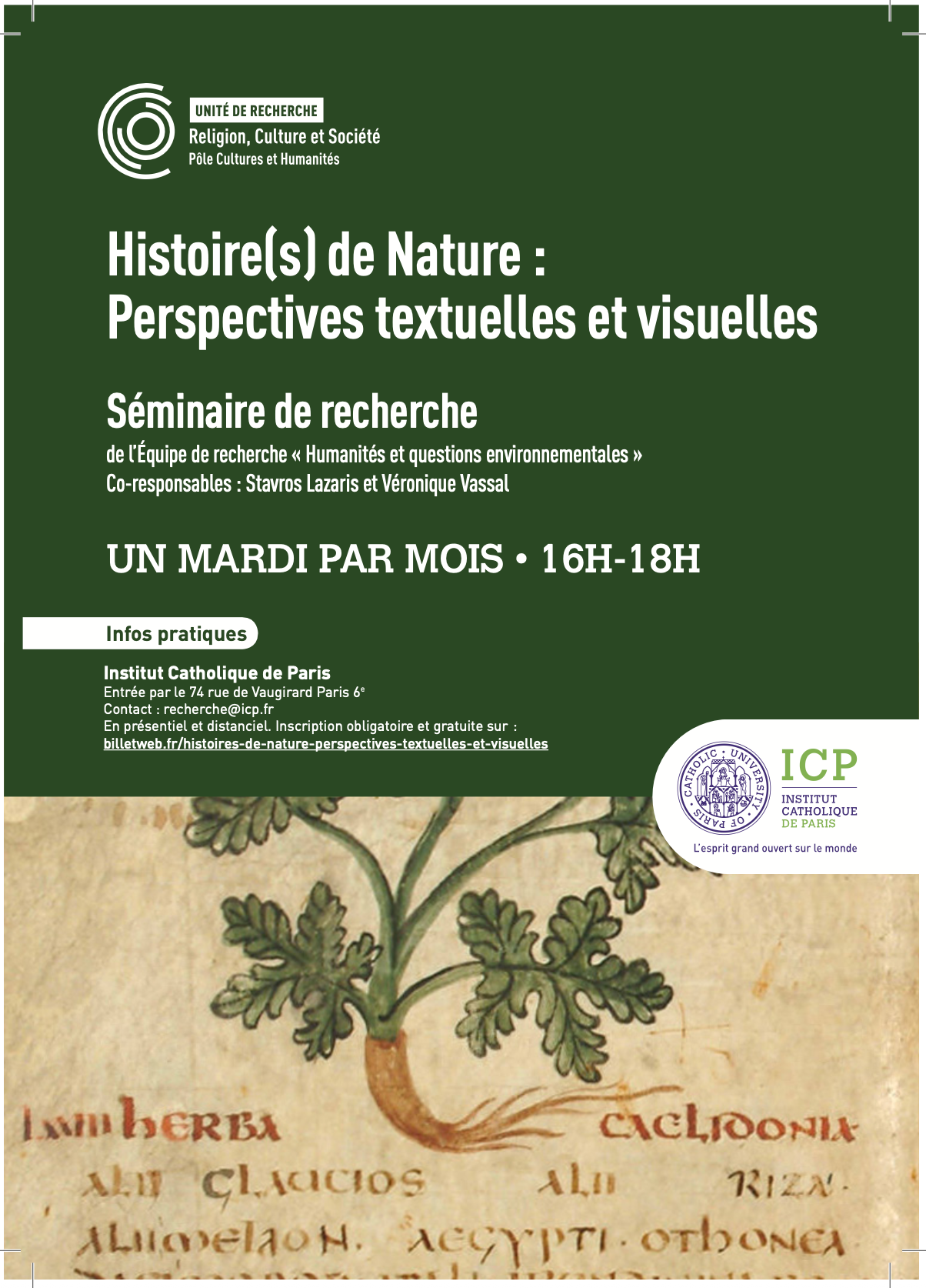
Séminaire – Histoire(s) de Nature. Perspectives textuelles et visuelles

Organisé par l’équipe de recherche « Humanités et questions environnementales » de l‘Unité de Recherche de l’ICP, le séminaire Histoire(s) de Nature : Perspectives textuelles et visuelles propose une exploration interdisciplinaire des représentations, savoirs et sensibilités liés à la nature, de l’Antiquité au XVIIe siècle.

À travers l’étude de sources variées – textes littéraires, traités scientifiques, documents iconographiques –, les intervenants interrogent la manière dont les sociétés du passé ont perçu, décrit et symbolisé le monde naturel. Du parfum sacré de l’Antiquité à la viticulture médiévale, des paysages peints de la Renaissance italienne aux jardins exotiques des Pays-Bas méridionaux, la nature apparaît, tour à tour, comme cadre, matière, savoir ou miroir émotionnel.

Les contributions croisent des approches issues de l’histoire de l’art, de la littérature, de l’histoire des sciences et des sensibilités, pour éclairer les formes multiples que peut prendre la nature dans les périodes anciennes. Ce séminaire entend ainsi renouveler notre regard sur l’histoire environnementale à travers les humanités.

  • Mardi 23 septembre 2025 : Rémy Cordonnier, La Nature dans les sources textuelles et iconographique du Moyen Âge : un idéal ou/et une réalité ?
  • Mardi 21 octobre 2025 : Chloé Pluchon Riera, Foisonnant, sériel, rural. La représentation du monde naturel au Cinquecento selon l’atelier des Bassano
  • Mardi 18 novembre 2025 : Sofia Tabari, De la Nature au Paysage
  • Mardi 16 décembre 2025 : Aude Volpilhac, Questions environnementales dans la littérature française du XVIIe siècle
  • Mardi 13 janvier 2026 : Dominique Frère, Odeurs naturelles, odeurs culturelles, odeurs sacrées : les parfums antiques
  • Mardi 10 février 2026 : Anne Godard, Fleurs et fruits « exotiques » dans les jardins des Pays-Bas méridionaux entre 1500 et 1650 : modes d’exposition et de représentation
  • Mardi 24 mars 2026 : Sterenn Le Maguer-Gillon, Du bon usage des plantes : transmission des savoirs, représentations et usages des végétaux dans les traités de pharmacologie arabes au Moyen Âge
  • Mardi 28 avril 2026 : Aurélien Nouvion, Vineam meo labore constitui, la viticulture comme miroir des sociétés médiévales
  • Mardi 26 mai 2026 : Anna Caiozzo, La nature, espace des émotions dans la culture visuelle turco-mongole du 14e au 16e siècle
  • Mardi 16 juin 2026 : Pedro Duarte, Qu’est-ce qui est naturel dans l’Histoire naturelle de Pline l’Ancien ?

Institut Catholique de Paris
Entrée par le 74 rue de Vaugirard Paris 6e

Contact : recherche@icp.fr

En présentiel et distanciel. Inscription obligatoire et gratuite sur : billetweb.fr/histoires-de-nature-perspectives-textuelles-et-visuelles

Source : Institut catholique de Paris

Publié dans Séminaire | Commentaires fermés sur Séminaire – Histoire(s) de Nature. Perspectives textuelles et visuelles

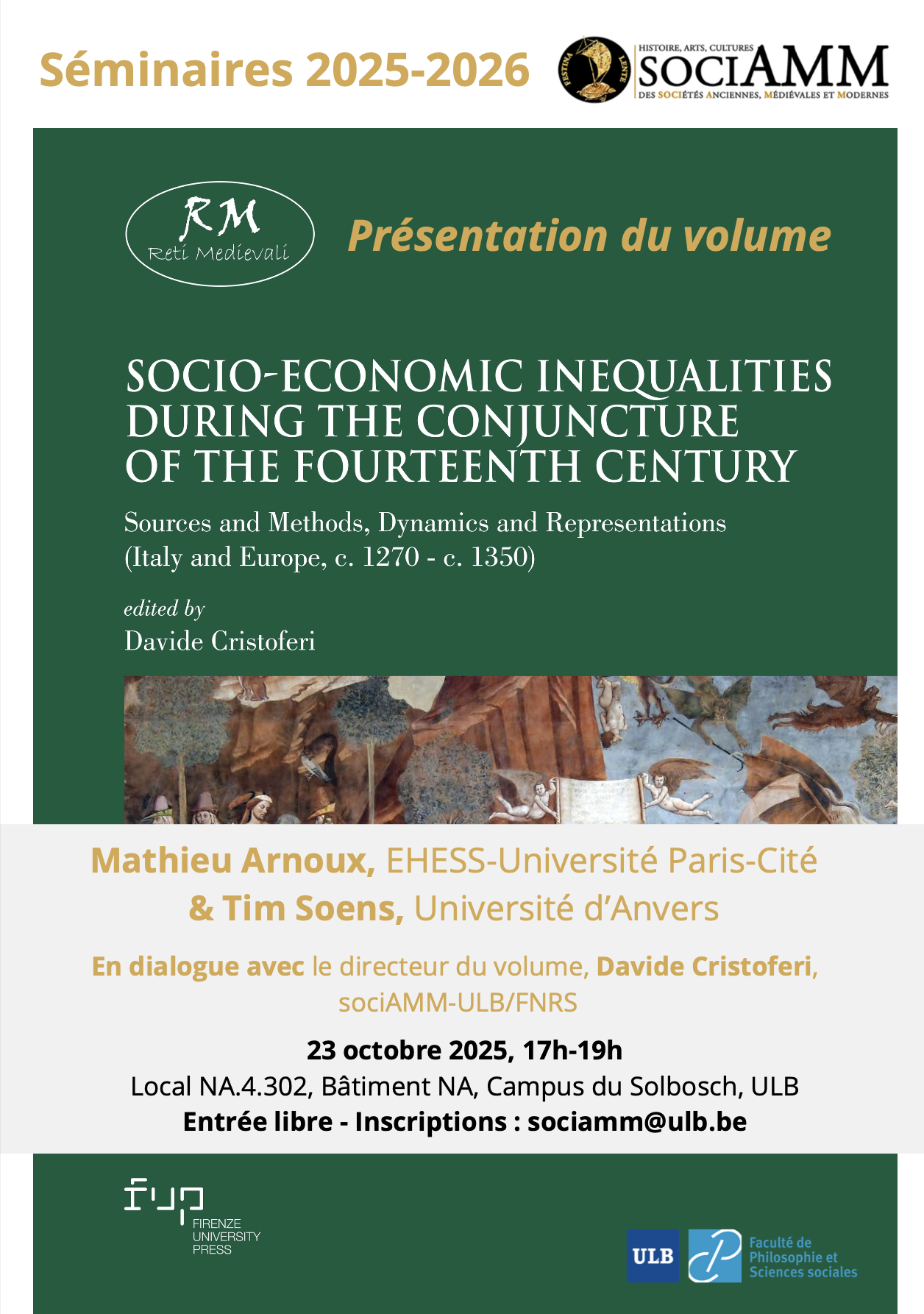
Table ronde – Présentation du livre « Socio-Economic Inequalities during the Conjuncture of the Fourteenth Century », avec Mathieux Arnoux, Tim Soens et Davide Cristoferi

Davide Cristoferi (éd.), Socio-Economic Inequalities during the Conjuncture of the Fourteenth Century: Sources and Methods, Dynamics and Representations (Italy and Europe, c. 1270-c. 1350). Reti Medievali E-Book, 52. Florence : Firenze University Press, 2025. DOI : 10.36253/979-12-215-0705-8.

Résumé :

Cet ouvrage vise à rassembler, discuter et approfondir les conclusions et les perspectives de deux débats importants de l’histoire médiévale et économique — la conjoncture du XIVe siècle et les inégalités préindustrielles — à travers dix-neuf contributions originales et de pointe, en anglais et en italien, rédigées par des chercheurs confirmés et de jeunes chercheurs prometteurs. Se concentrant sur le centre et le nord de l’Italie ainsi que sur l’Europe occidentale entre 1270 et 1350 environ, il vise à comprendre pourquoi, comment et dans quelle mesure la société médiévale était inégalitaire au cours des soixante-dix années précédant la Grande Peste de 1347-1352. Pour ce faire, il présente un large éventail de sources et de méthodes, explore et discute les mécanismes causaux des inégalités socio-économiques et examine la manière dont ces différences étaient perçues, représentées et traitées à la fin du Moyen Âge. Dans certains cas, l’enquête est étendue à la période postérieure à la peste noire.

Mots-clés : 

Moyen Âge, XIIIe-XIVe siècles, Europe occidentale, Italie centrale et septentrionale, inégalités socio-économiques.

Accès libre en ligne :

Le volume peut être téléchargé dans son intégralité ou par contribution individuelle sur le site officiel de la Firenze University Press – Reti Medievali. E-Book :

https://books.fupress.com/catalogue/socio-economic-inequalities-during-the-conjuncture-of-the-fourteenth-century/15946

Présentation publique :

La première présentation publique de ce livre aura lieu à l’Université libre de Bruxelles le jeudi 23 octobre à 17 heures, avec Mathieu Arnoux (Université Paris Cité-EHESS) et Tim Soens (Université d’Anvers).

Local NA.4.302, Bâtiment NA, Campus du Solbosch, ULB

Entrée libre – Inscriptions : sociamm@ulb.be

Publié dans Séminaire | Commentaires fermés sur Table ronde – Présentation du livre « Socio-Economic Inequalities during the Conjuncture of the Fourteenth Century », avec Mathieux Arnoux, Tim Soens et Davide Cristoferi

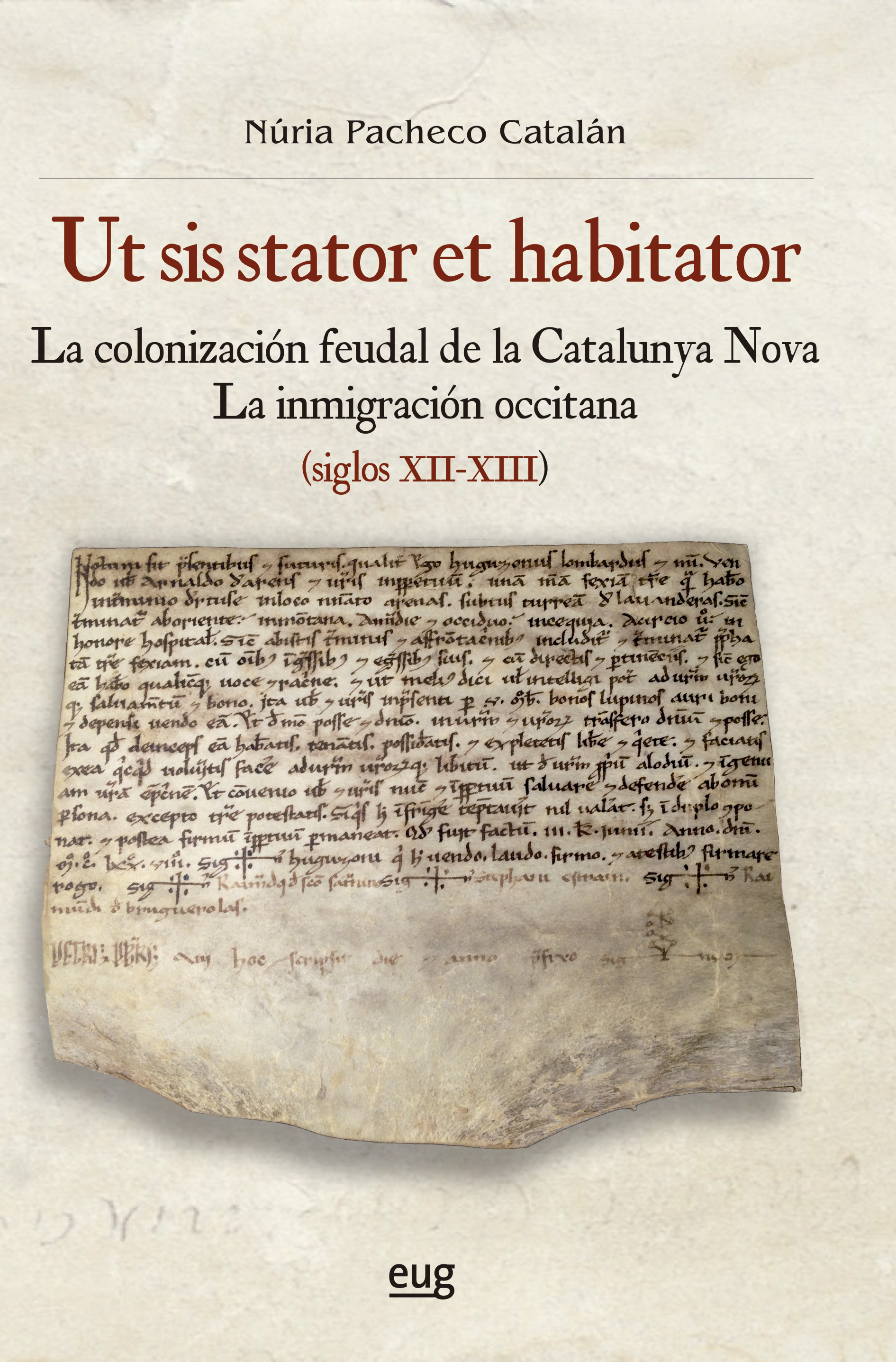
Publication – Núria Pacheco Catalán, « Ut sis stator et habitator. La colonización feudal de la Catalunya Nova. La inmigración occitana (siglos XII-XIII) »

Tortosa y Lleida, las principales plazas de la Catalunya Nova, fueron conquistadas en 1148 y 1149. Estos hitos forman parte del proceso de expansión de la cristiandad latina que venía desarrollándose a escala europea desde el siglo XI. En el caso de la Catalunya Nova, tras los episodios militares tuvo lugar una substitución de población mediante la cual los indígenas fueron remplazados por colonos cristianos procedentes de las regiones de origen de los conquistadores. Estos colonos se ocuparon de implementar el orden feudal en el territorio.

El objetivo de este libro es estudiar el proceso de construcción de una nueva sociedad feudal en la Catalunya Nova a través de los agentes del cambio, los colonos. El análisis de la documentación generada por los procesos de conquista y colonización, unido a una aproximación prosopográfica centrada en el colectivo occitano han permitido reconstruir la gestión y transformación del entorno urbano y rural, los lazos familiares e interpersonales entre colonos y la organización social de una comunidad emergente. En última instancia, esta obra contribuye al estudio de los movimientos de migración y colonización medievales.

Informations pratiques :

Núria Pacheco Catalán, Ut sis stator et habitator. La colonización feudal de la Catalunya Nova. La inmigración occitana (siglos XII-XIII), Grenad, Editorial Universidad de Granada, 2025 ; 1 vol., 368 p. ISBN : 978-84-338-7506-8. Prix : € 28,00.

Publié dans Publications | Commentaires fermés sur Publication – Núria Pacheco Catalán, « Ut sis stator et habitator. La colonización feudal de la Catalunya Nova. La inmigración occitana (siglos XII-XIII) »

Appel à contribution – Historians among the White Monks: Cistercians and their Records of the Past

Leeds International Medieval Congress, 6-9 July 2026

Medieval Cistercians appear to have had a strong interest in history. Their libraries housed Classical and Medieval historical texts, and members of the Order authored annals and chronicles about their abbeys, universal chronicles, hagiographies of Cistercian saints, collections of Cistercian stories, and more. But what does it mean to write “Cistercian history”? What are the structural and thematic features that reveal how authors gave expression to the Order’s concerns and priorities? And are these features always present?

Our aim is to gather case studies from a variety of Cistercian contexts across Europe in order to explore the multiple strategies by which authors of historical texts reimagined the Order’s past, engaged with its historical tradition, and responded to the political, social, and religious challenges it faced – both locally and more broadly. We are particularly interested in works that, although written by authors belonging to the Order, may not appear, at first glance, to convey a distinctly Cistercian perspective: texts that omit references to the history of the author’s abbey, refrain from offering a specifically Cistercian interpretation of major events, or seem more invested in national self-definition or in compiling all available sources regardless of their non-Cistercian origin.

Possible themes may include, but are not limited to:

• Cistercian continuations and adaptations of existing chronicles
• Accounts of the founding of Cistercian abbeys in Cistercian chronicles
• Representations of other monastic communities in Cistercian historical writing
• Cistercian historians’ perspectives on secular affairs and political events
• Cistercian worldview and ideas in universal chronicles
• Cistercian historiography in “non-historical” texts (hagiography, exempla, etc.)

Please submit an abstract (max. 100 words), with your name, email address and academic affiliation, to Antoni Grabowski (agrabowski@ihpan.edu.pl) and Elisa Lonati (elisa.lonati@chartes.psl.eu) by 15 September 2025.

Publié dans Appel à contributions | Commentaires fermés sur Appel à contribution – Historians among the White Monks: Cistercians and their Records of the Past

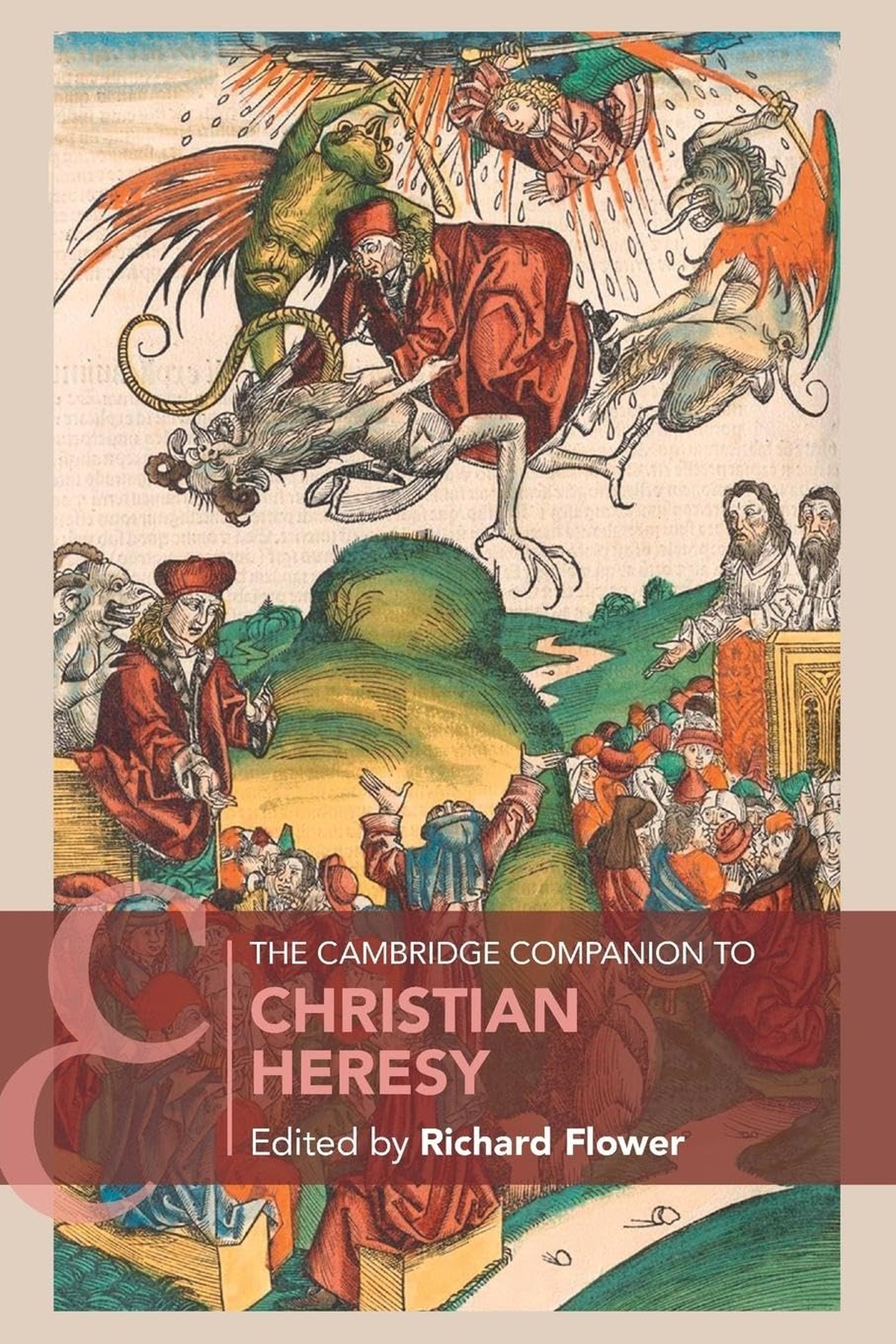
Publication – « The Cambridge Companion to Christian Heresy », éd. Richard Flower

The concept of heresy has played a major role across Christian history. Traditionally, heretical sects have been regarded as distinct, real-life groups of people who had departed from the stable orthodox traditions of Christianity and who posed a threat that needed to be addressed, sometimes through violent repression. More recently, scholarship has focused on the notion of heresy as discourse, placing particular emphasis on its literary construction and the social and cultural contexts in which it was deployed. This literature has generated significant debates about the nature and historicity of many heresies. The Cambridge Companion to Christian Heresy provides a systematic and up-to-date guide to the study of this topic and its methodological challenges. The opening chapters explore different forms of written material that have played vital roles in historical disputes and in modern scholarly accounts. These are followed by case studies of thirteen notable heresies, ranging from the Gnostics through to the Hussites at the dawn of the Reformation.

  • Focuses on the label and discourse of ‘heresy’ over time, rather than merely narrating the details of particular theological disagreements
  • Includes separate chapters on methodologies and types of source, as well as case studies of individual heresies
  • Covers a broad chronological span of around 1,500 years

Richard Flower is Professor of Classics and Late Antiquity at the University of Exeter. A scholar of religious conflict, he is the author of Emperors and Bishops in Late Roman Invective (2013) and co-editor (with Morwenna Ludlow) of Rhetoric and Religious Identity in Late Antiquity (2020).

Table des matières :

Introduction Richard Flower

Part I. Approaches and Evidence:

1. Theories and definitions of heresy John H. Arnold
2. Dialogue literature Richard Lim
3. Heresiological catalogues Richard Flower
4. Councils, popes and canon law Rebecca Rist
5. Inquisition and trial records Christine Caldwell Ames

Part II. Case Studies:

6. Gnosticism Michael A. Williams
7. Manichaeism Jason BeDuhn
8. Arianism and other Christological disputes Robin Whelan

Informations pratiques :

The Cambridge Companion to Christian Heresy, éd. Richard Flower, Cambridge, Cambridge University Press, 2025 ; 1 vol., 472 p. (Cambridge Companions to Religion). ISBN : 978-1-10845-485-8. Prix : GBP 30,99.

Source : Cambridge University Press

Publié dans Le réseau | Commentaires fermés sur Publication – « The Cambridge Companion to Christian Heresy », éd. Richard Flower

Publication – « Les obituaires des collégiales du diocèse de Limoges et de Saint-Martin de Tulle », éd. Jean-Loup Lemaître

Les obituaires des collégiales du diocèse de Limoges et de Saint-Martin de Tulle, éd. Jean-Loup Lemaître, Paris, Académie des Inscriptions et Belles Lettres, 2025 ; 1 vol., X–266 p. (Recueil des Historiens de la France: Obituaires. Nouvelle Série, 32). ISBN : 978-2-87754-721-5. Prix : € 40,00.

Table des matières : ici

Source : Peeters

Publié dans Publications | Commentaires fermés sur Publication – « Les obituaires des collégiales du diocèse de Limoges et de Saint-Martin de Tulle », éd. Jean-Loup Lemaître

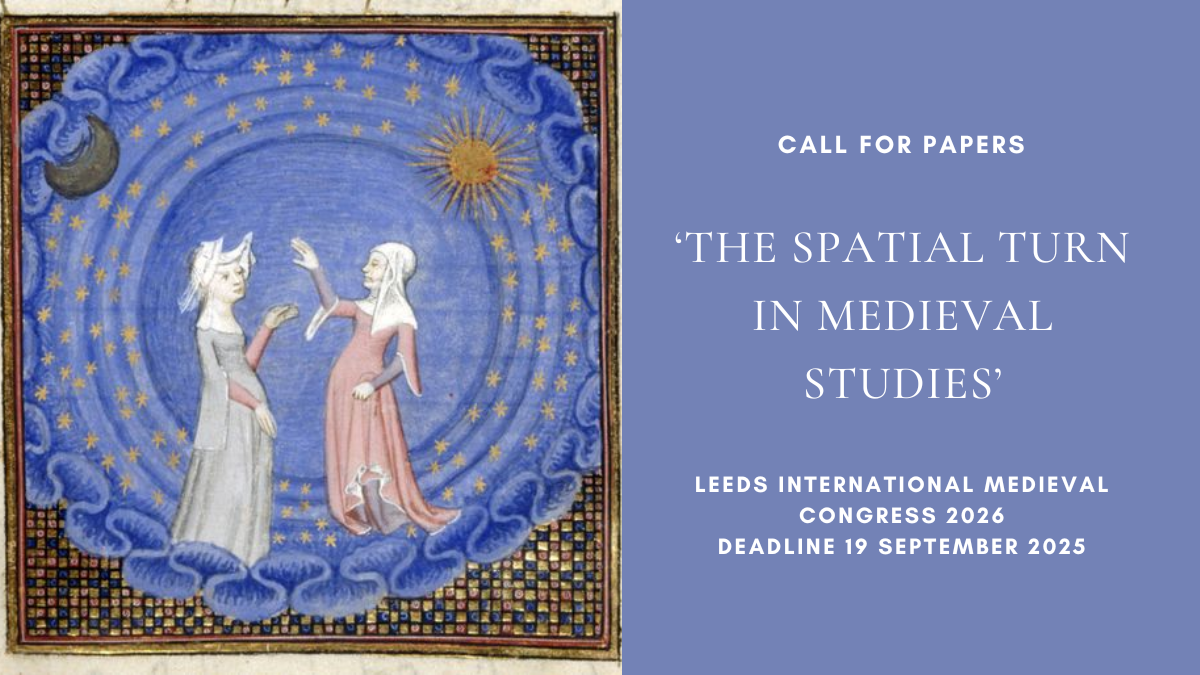
Appel à contribution – The Spatial Turn in Medieval Studies

Leeds International Medieval Congress 2026
Deadline : 19 September 2025

Space offers a valuable lens through which to rethink the practices in which religious rituals, material objects and written narratives, such as hagiography and historiography, were embedded. Scholars working within the spatial turn have emphasized that the location and physical spatial contexts of events are inseparable from the way in which they unfolded and the outcomes they produced. Space, both physically and socially constructed, plays a critical role in shaping human experiences, alongside other historical and social factors. This session explores how spatial configurations impacted medieval ways of knowing, by examining how space was conceptualized, structured, and transformed. In doing so, it aims to shed light on the ways in which spatial experience shaped the perceptions and actions of those who occupied it.

Potential topics include, but are not limited to, the following:

  • Digital reconstruction of medieval objects in their historical space
  • Performative actions within the context of their space in which they were performed
  • Medieval liturgy and its spatial dimensions and signs for meaning-making
  • Space and locations and its influence on medieval audiences
  • Descriptions of the use of space in medieval written narrative sources
  • Spatial dimensions in medieval manuscripts and its effect on its reader
  • Depictions of space in medieval visual images and artworks
  • The influence of space and location on the practices surrounding material (ritual) objects

If you are interested in joining these sessions, please send an abstract of max. 250 words, a short bio with affiliation details (institution, department, email address) and an indication if you are joining online or in-person, to Anne Sieberichs (Utrecht University) a.p.sieberichs@uu.nl and Imke Vet (Yale University) imke.vet@yale.edu. Deadline: 19 September 2025

Please note that the organisers are unable to contribute to participants’ travel or registration costs. Participants without sources of conference funding are encouraged to apply for the IMC bursary scheme.

Source : Medieval Art Research

Publié dans Appel à contributions | Commentaires fermés sur Appel à contribution – The Spatial Turn in Medieval Studies

Appel à contribution – IA et innovations numériques : usages et enjeux en archéologie

9e séminaire scientifique et technique de l’Inrap organisé en collaboration avec la direction de l’archéologie de la Ville de Chartres / Chartres Métropole, les jeudi 6 et vendredi 7 novembre 2025. Il portera sur les apports et les enjeux de l’usage de l’intelligence artificielle (IA) et des nouveaux outils numériques en archéologie.

Ces dernières années, ces innovations numériques impactent fortement l’archéologie à toutes les étapes de la chaîne opératoire : de la détection des sites à la restitution scientifique des résultats, en passant par l’analyse des données. Ces transformations touchent autant les outils que les pratiques.

Parmi les technologies particulièrement mobilisées, la vision par ordinateur est exploitée pour la reconnaissance automatique de motifs décoratifs, la détection de sites ou de structures (LiDAR, images satellitaires), l’appariement et le classement automatique (par ex. en numismatique, en bioarchéologie), la reconstitution virtuelle de bâtiments ou d’objets, la segmentation automatisée, ou encore le déchiffrement assisté de textes anciens.

Le traitement automatique des langues (TAL) est quant à lui fréquemment utilisé à des fins d’extraction d’information, notamment pour pratiquer de la fouille de texte ou de la reconnaissance des entités nommées, facilitant ainsi l’indexation et l’exploitation de larges corpus textuels. Il ouvre la voie à de nouveaux outils de recherche, de structurations de données, d’analyse et d’aide à la rédaction.

L’intelligence artificielle offre également de nouvelles perspectives pour la modélisation en archéologie. Qu’il s’agisse de restituer des structures, de simuler des dynamiques d’occupation ou de modéliser des réseaux, les approches basées sur l’apprentissage automatique permettent d’exploiter de grands volumes de données de manière inédite. Ces modèles suscitent toutefois des questions cruciales sur la validité des hypothèses, la transparence des processus et l’interprétation des résultats, invitant à un dialogue étroit entre spécialistes des données et archéologues.

Au quotidien, les usages de l’intelligence artificielle générative se démocratisent : traduction de textes, génération de résumés, mise en forme de bibliographie… Ces usages soulèvent des enjeux épistémologiques, méthodologiques, juridiques et éthiques : transparence des données d’entraînement, reproductibilité des résultats, fiabilité/qualité des résultats générées, place de l’IA dans la chaîne de production scientifique.

Ce séminaire propose de réfléchir à l’évolution des méthodes et à son impact sur la discipline, à travers toutes les étapes de la chaîne opératoire de l’archéologie, du terrain à la publication. Différents cas pratiques et retours d’expérience, en France comme à l’international, seront présentés. Les débats porteront également sur la qualité, l’accessibilité et la nature des jeux de données disponibles, les questions de droits d’auteur et d’usage, les actions de sensibilisation et de formation, ainsi que la diffusion des bonnes pratiques. Les échanges permettront enfin d’évaluer les forces et limites des outils existants et d’envisager les cadres à mettre en place dans les institutions pour encadrer et optimiser leur usage.

Appel à communication et à poster

Les exemples présentés pourront concerner les domaines suivants :

  1. Détection et cartographie des sites
  2. Acquisition, traitement et analyse des données
  3. Rédaction des rapports et valorisation scientifique
  4. Déontologie, normalisation, enjeux de formation et d’accompagnement

Cet appel s’adresse largement aux personnes impliquées dans les domaines de l’archéologie (Inrap, collectivités territoriales, ministère de la Culture, établissements de recherche ou d’enseignement supérieur), mais aussi à celles et ceux d’autres disciplines (par ex. sciences informatiques) susceptibles d’apporter un éclairage pertinent sur les thématiques abordées. Les contributions pourront porter sur des études de cas, des retours d’expérience, des développements méthodologiques, des analyses critiques ou des réflexions théoriques. Les approches interdisciplinaires seront particulièrement bienvenues.

Comité d’organisation

  • Carpentier Carine (Direction scientifique et technique, Inrap)
  • Dupuis Mathias (Direction de l’archéologie, Ville de Chartres, Chartres Métropole)
  • Féret Sophie (Direction scientifique et technique, Inrap, UMR 7041 ArScAn)
  • Lamy Pierre-Antoine (Direction de l’archéologie, Ville de Chartres, Chartres Métropole)
  • Sindonino Stéphane (Inrap Grand Est)

Comité scientifique

  • Bouiron Marc (Direction scientifique et technique, Inrap – UMR 7264 CEPAM)
  • Bryas Emmanuelle (Direction scientifique et technique, Inrap)
  • Charpier Marion (École nationale des chartes)
  • Corneli Marco (Université Nice Côte d’Azur, UMR 7264 CEPAM)
  • Lorho Thierry (Service régional de l’archéologie, Drac Centre-Val de Loire)
  • Menu Ariane (Direction scientifique et technique, Inrap)
  • Nicolas Théophane (Inrap Grand Ouest, UMR 8215 Trajectoires)
  • Pinhède Anaïs (Direction de l’archéologie, Ville de Chartres, Chartres Métropole)
  • Sagory Thomas (Musée d’Archéologie nationale)
  • Szabados Anne-Violaine (CNRS, UMR 7041 ArScAn, Équipe ESPRI&LIMC)

Source : INRAP

Publié dans Appel à contributions | Commentaires fermés sur Appel à contribution – IA et innovations numériques : usages et enjeux en archéologie