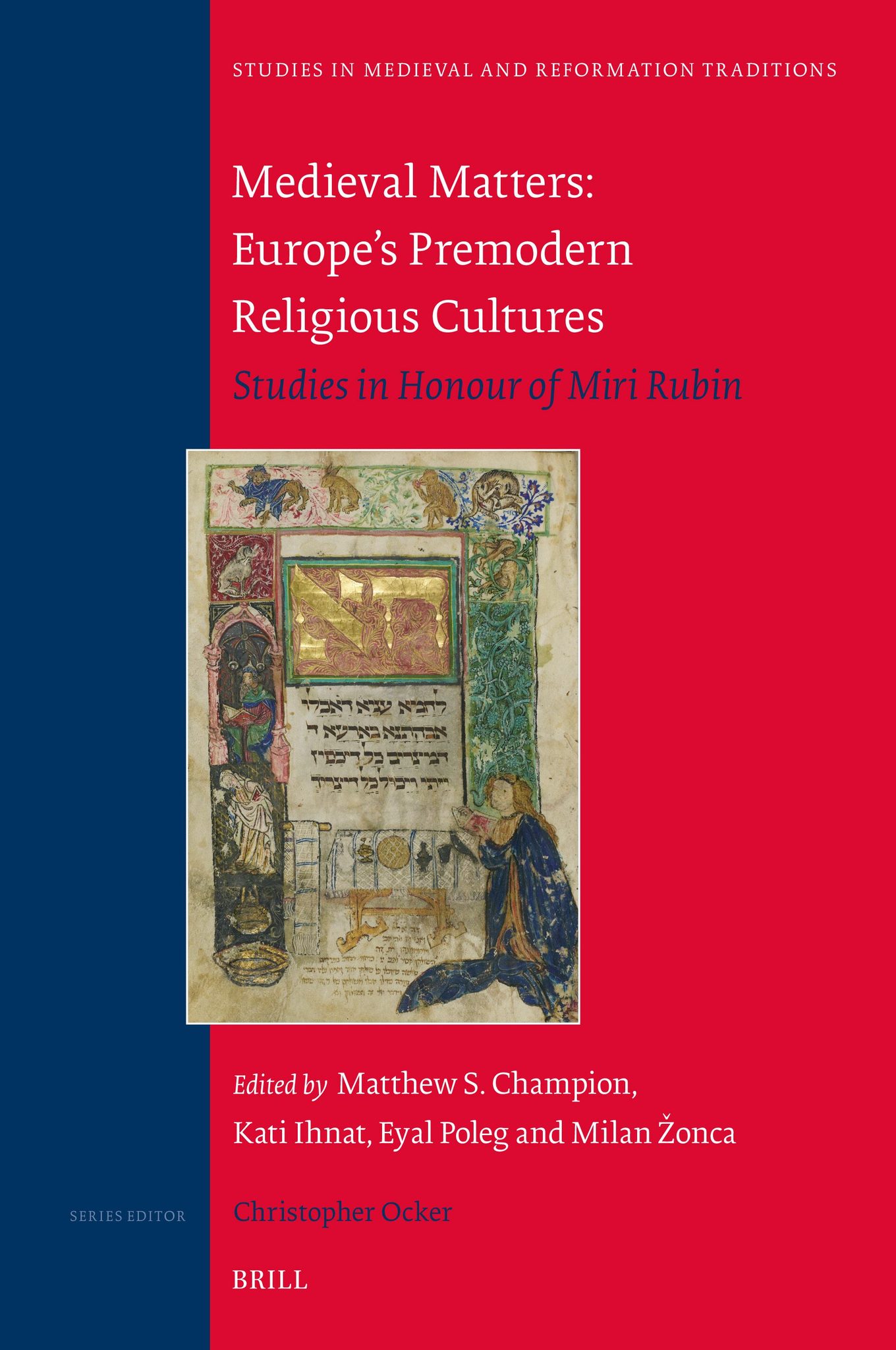
Medieval Matters: Europe’s Premodern Religious Cultures offers innovative perspectives on Europe’s medieval religious landscapes through diverse case studies spanning Livonia to Iberia. This interdisciplinary collection examines the complex interplay of ritual, community, memory, and identity across medieval religious practices, with particular attention to Jewish–Christian relations, gender dynamics, and devotional materiality. Honouring Miri Rubin’s transformative scholarship, the volume brings together emerging scholarly voices who engage with her insights on ritual, narrative, emotion, gender, and devotion. The collection concludes with a roundtable of eminent medievalists reflecting on Rubin’s influence and future directions for studying the premodern past.
Matthew S. Champion is Associate Professor of History in the School of Historical and Philosophical Studies, University of Melbourne. His first book The Fullness of Time: Temporalities of the Fifteen-Century Low Countries (Chicago, 2017) was awarded the 2018 Gladstone Prize by the Royal Historical Society.
Kati Ihnat is Associate Professor of Medieval History at the Radboud University in Nijmegen. Her first book, Mother of Mercy, Bane of the Jews: Devotion to the Virgin Mary in Anglo-Norman England, appeared with Princeton University Press in 2016.
Eyal Poleg is a Professor of Material History in the School of History, Queen Mary University of London. His most recent book, A Material History of the Bible, England 1200–1553, was published by Oxford University Press for the British Academy in 2020.
Milan Žonca is Assistant Professor of Hebrew and Jewish Studies at the Faculty of Arts, Charles University in Prague. He has published articles on the cultural and intellectual history of Jews in the late Middle Ages, especially in Central Europe, and medieval Jewish–Christian polemics.
Medieval Matters. Europe’s Premodern Religious Cultures. Studies in Honour of Miri Rubin, éd. Matthew Champion, Kati Ihnat, Eyal Poleg, Milan Zonca, Boston–Leyde, Brill, 2026 ; 1 vol., X–280 p. (Studies in Medieval and Reformation Traditions). ISBN : 978-90-04-52761-4. Prix : € 125,00.
Publié dansPublications|Commentaires fermés sur Publication – « Medieval Matters: Europe’s Premodern Religious Cultures. Studies in Honour of Miri Rubin », éd. Matthew Champion, Kati Ihnat, Eyal Poleg, Milan Zonca
Inscriptions souhaitées avant le lundi 9 mars 12h00
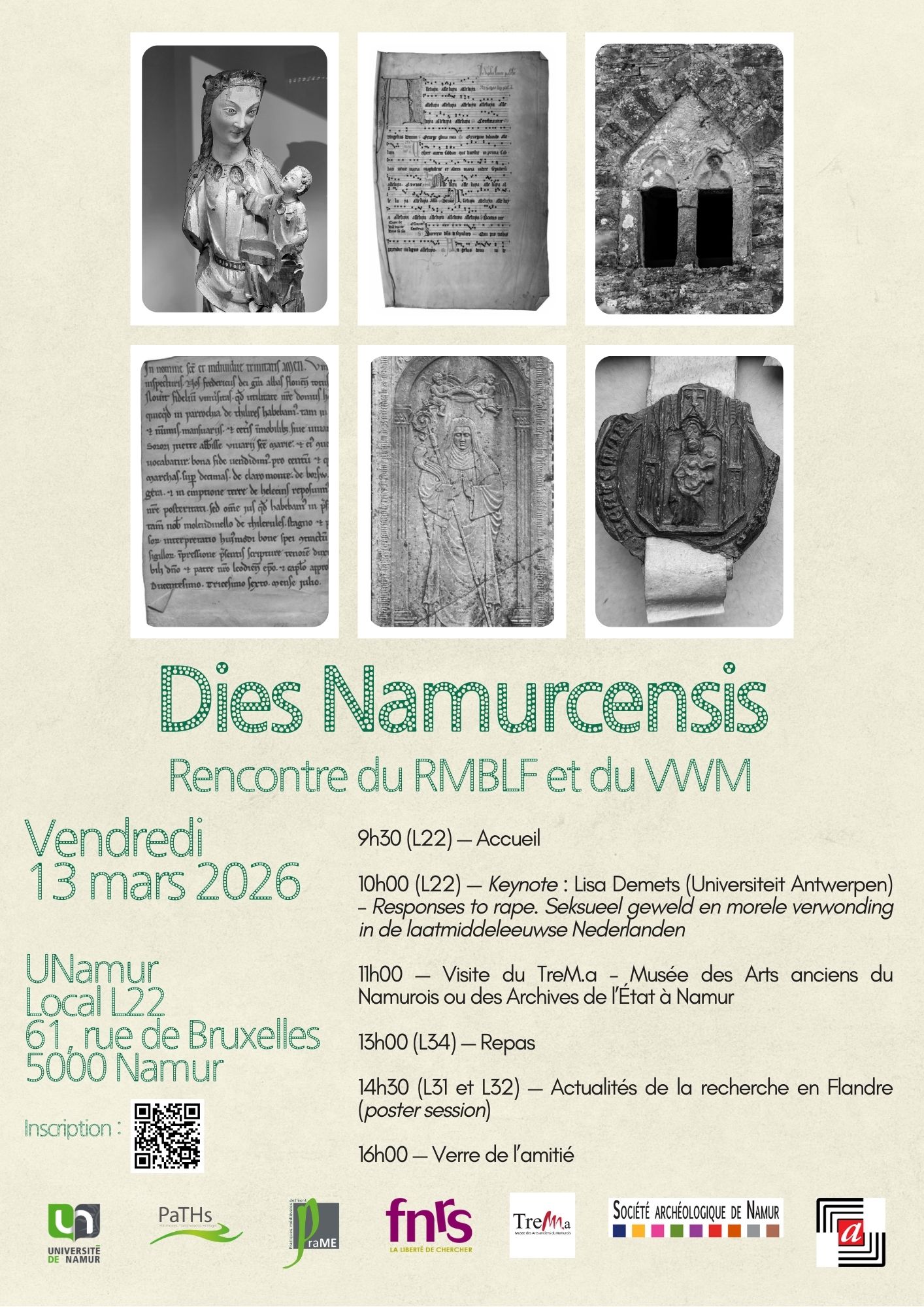
Namur Vendredi 13 mars 2026
À travers cette journée de visite organisée à Namur, le RMBLF souhaite renforcer les liens qui l’unissent à son homologue flamand, le Vlaamse Werkgroep Mediëvistiek.
Trop souvent, les médiévistes francophones connaissent mal les travaux menés de l’autre côté de la frontière linguistique, alors que les recherches conduites en France, par exemple, n’ont plus aucun secret pour eux. L’inverse est tout aussi vrai, avec une relative méconnaissance de la recherche francophone par les collègues flamands. Avec la disparition de certains programmes de recherche fédéraux, comme les PAI qui faisaient collaborer les universités francophones et flamandes, le fossé entre les deux traditions historiographiques s’est encore quelque peu accentué ces dernières années.
Le 13 mars, il s’agira d’apprendre à mieux nous connaître, à l’occasion d’une journée de rencontre organisée à Namur.
Programme :
9h30 (L22) — Accueil
10h00 (L22) — Keynote : Lisa Demets (Universiteit Antwerpen) – Responses to rape. Seksueel geweld en morele verwonding in de laatmiddeleeuwse Nederlanden
11h00 — Visite du TreM.a – Musée des Arts anciens du Namurois ou des Archives de l’État à Namur
13h00 (L34) — Repas
14h30 (L31 et L32) — Actualités de la recherche en Flandre (poster session)
16h00 — Verre de l’amitié
Présentation de posters :
Les présentations de posters seront réalisées par :
Sara Huts (KULeuven)
Noah Gaens (KULeuven)
Lisa Fenucci (KULeuven)
Vincent Vanhamme (KULeuven)
Robin Waeytens (UGent)
Febe Thonissen (UAntwerpen)
William Torbeyns (VUB-KULeuven)
Rhea Mertes (VUB-UGent)
Informations pratiques :
Vendredi 13 mars 2026
Accueil : Université de Namur, Local L22 61, rue de Bruxelles 5000 Namur
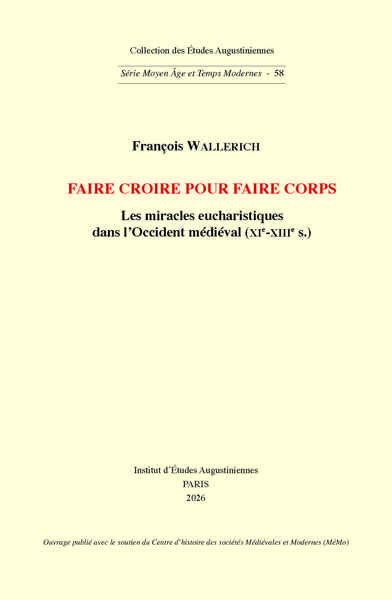
Une hostie saigne entre les mains du prêtre qui l’élève. Le vin prend l’apparence de la poix dans le calice. Un ange soustrait les saintes espèces des mains du célébrant. Comment expliquer la présence en nombre de tels prodiges dans les sources que produit l’Occident médiéval à partir du XIe siècle ? Les miracles eucharistiques, assez rares durant le haut Moyen Âge, connaissent alors un essor indéniable que le présent ouvrage s’efforce de comprendre. Pour ce faire, le livre cherche à articuler les notions de faire croire et de faire corps. Les récits miraculaires sont certes destinés à faire croire : alors que le dogme de la transsubstantiation est peu à peu défini avec précision, et que l’institution ecclésiale doit combattre les hérésies et dissidences qui se multiplient au sujet du sacrement de l’autel, le miracle vient à l’appui d’une pastorale qui vise à normer les croyances et les pratiques des fidèles. Mais il s’agit aussi, et peut-être surtout – telle est ici la thèse défendue –, de faire corps : assurer l’unité de l’Église ; défendre le monopole clérical du sacré ; garantir un ordre social qui entérine la distinction et la supériorité des clercs sur les laïcs.
Table des matières :
Chapitre premier. Les miracles eucharistiques avant le XIe siècle
Première partie. Réalisme eucharistique et exaltation du sacerdoce : affirmation et remises en cause d’un ordre « grégorien » (années 1050-1170) Chapitre II. La dialectique des profanations. La corporalité de l’eucharistie. Mise à l’épreuve Chapitre III. Miracles eucharistiques et idéaux « grégoriens ». Le prêtre, garant de l’ordonnancement du monde Chapitre IV. « Nouvelle théologie » et radicalisme réformateur. Premier essor des démarches mystiques et des préoccupations pastorales au XIIe siècle
Deuxième partie. Les miracles eucharistiques, des cloîtres au monde. Dynamisme cistercien, « tournant pastoral » et défi laïque (années 1170-1230) Chapitre V. Des miracles pour l’unité. La circulation des miracles eucharistiques dans l’ordre cistercien Chapitre VI. Défi hérétique, « tournant pastoral » et miracles eucharistiques. Défendre, enseigner et mettre en scène le dogme Chapitre VII. Les défis laïques. Miracles eucharistiques et pratiques de contournement de la médiation sacerdotale
Troisième partie. Prédication au laïcs, identité chrétienne et encadrement institutionnel (années 1230-1310) Chapitre VIII. Les miracles eucharistiques dans la prédication aux laïcs. Héritage monastique et nouvelles modalités du « faire croire » Chapitre IX. Le corpus Christi dans l’espace public. Miracles eucharistiques et identité chrétienne Chapitre X. Propager et encadrer les miracles. Une progressive prise en main conceptuelle et institutionnelle
Conclusion générale
Annexes Annexe 1. Deux miracles eucharistiques copiés à Salem Annexe 2. Les miracles eucharistiques dans la prédication
Indices Bibliographie Index des manuscrits Index des textes anciens et médiévaux
Informations pratiques :
François Wallerich, Faire croire pour faire corps. Les miracles eucharistiques dans l’Occident médiéval (XIe-XIIIe s.), Turnhout, Brepols, 2026 ; 1 vol., 636 p. (Collection des Études Augustiniennes, Série Moyen Âge et Temps modernes, 58). ISBN : 978-2-85121-345-7. Prix : € 88,15.
Publié dansPublications|Commentaires fermés sur Publication – François Wallerich, « Faire croire pour faire corps. Les miracles eucharistiques dans l’Occident médiéval (XIe-XIIIe s.) »
Magdalen College in association with the Faculty of History
Magdalen College and the Faculty of History invite applications from suitably qualified candidates for a Tutorial Fellowship in History and Associate Professorship (or Professorship) of Medieval History, to be appointed with effect from 1 September 2026 or as soon as possible thereafter.
The successful candidate will be both an Official (Tutorial) Fellow in History at Magdalen, and a member of the Faculty of History. They will be part of a lively and intellectually stimulating research community which publishes at the highest international levels, and will have access to the excellent research facilities which Oxford offers.
Applications for this post are invited from well-qualified candidates whose research specialism lies in European History during the period 400-1000. The person appointed will be required to enthuse and inspire students at both undergraduate and graduate level through tutorials, classes, lectures, and supervision. The papers which the candidate will be required to teach are specified in the further particulars.
Applicants should have received a doctoral degree in Medieval European History or a closely related subject; have an outstanding record of original, important, and rigorous published research; and have the ability to provide excellent undergraduate teaching and excellent postgraduate teaching and supervision in the required areas, along with the personal qualities needed to encourage a high level of achievement in undergraduate and graduate students. The full selection criteria in the further particulars should be consulted before applying.
The Faculty of History is an Athena Swan Bronze Award holder. Applications are particularly welcome from women and from black and minority ethnic candidates, who are under-represented in senior academic positions in Oxford.
The closing date for applications is 12:00 noon GMT on Friday 27 March 2026. It is anticipated that interviews will be held on Thursday 14 May 2026.
If you would like to discuss this post and find out more about joining the academic community at Oxford, please contact the Chair of the Faculty Board, Professor Martin Conway (martin.conway@history.ox.ac.uk), or the Senior Tutor at Magdalen College, Dr Mark Pobjoy (senior.tutor@magd.ox.ac.uk).
Salary (£): Combined University and College salary within the range £58,265 – £77,645 p.a., plus a College Housing Allowance of £18,073 p.a., Tutorial Allowance of £9,386 p.a., and other benefits.
Publié dansOffre d'emploi|Commentaires fermés sur Offre d’emploi – Tutorial Fellowship in History, and Associate Professorship (or Professorship) of Medieval British and European History
25-26/03/2026 Musée Art & Histoire Parc du Cinquantenaire 10, 1000 Bruxelles
La 49ème édition d’Archaeologia Mediaevalis se tiendra le mercredi 25 et le jeudi 26 mars 2026 au Musée Art & Histoire (Parc du Cinquantenaire 10, 1000 Bruxelles). La journée thématique de cette année est consacrée aux données archéologiques numériques, leur préservation et leur accessibilité.
À partir du XIe siècle, le château, émanation et symbole du pouvoir seigneurial, illustre, entre autres, la domination sociale et économique de l’aristocratie sur la paysannerie (MAZEL F., Féodalités, Paris, Belin, 2010, p. 447-490). Les études castellologiques, archéologiques comme historiques, ont surtout insisté sur les caractères résidentiels et militaires des châteaux en lien avec le développement de la seigneurie médiévale. Dans l’introduction de son ouvrage intitulé Le château dans la France médiévale (FOURNIER G., Le château dans la France médiévale, essai de sociologie monumentale, Paris, Aubier, 1979), Gabriel Fournier soulignait déjà dans les années 1970, que le château devait être mis en relation avec l’espace et la population autour de lui mais aussi avec les faits politiques, économiques et sociaux dont il est la manifestation. Il déclarait également que le château forme un tout présentant des aspects militaires, politiques, économiques, sociaux et religieux qui s’imbriquent étroitement. Il montrait ainsi le rôle territorial du château, vecteur d’agglomération des habitants, carrefour et pôle économique local. Son étude trouve écho dans les travaux récents portant sur l’économie médiévale, notamment ceux de Laurent Feller pour qui, « la seigneurie est un organisme économique dont la fonction est d’assurer un revenu au seigneur mais c’est aussi un territoire à gouverner » (FELLER L., Paysans et seigneurs au Moyen Âge, Paris, Armand Colin, 2017, p. 137-165).
Le maillage castral s’accompagne ainsi d’une territorialisation croissante de la domination seigneuriale. Elle passe, comme le montre Florian Mazel, par la justice, mais aussi par des procédés socio-économiques (MAZEL F., Féodalités, Paris, Belin, 2010, p. 447-490). Ce pouvoir s’illustre dans la fiscalité relative aux châtellenies (FELLER L., Paysans et seigneurs au Moyen Âge, Paris, Armand Colin, 2017, p. 137-165). Les redevances en nature, même si leurs valeurs économiques se confondent souvent avec un aspect symbolique (CORRIOL V., « Redevances symboliques et résistance paysanne au Moyen Âge », dans Histoire & Sociétés rurales, vol. 37, 2012, p. 15-42), apparaissent chaque année dans les comptabilités médiévales et sont parfois revendues selon diverses logiques (CARRIER N., « Le rachat des redevances en nature en Dauphiné et en Savoie à la fin du Moyen Âge, d’après les venditiones des comptes de châtellenie (XIIIe-XVe siècle) », dans Calculs et rationalités dans la seigneurie médiévale, FELLER L. (dir.), Paris, Editions de la Sorbonne, 2009, p. 145-166). Le château est donc un centre de perception local. Les prélèvements permettent aussi d’« esquisser » les systèmes productifs agricoles et céréaliers des campagnes médiévales (MANEUVRIER C., « Les rentes en nature : un indicateur des systèmes céréaliers médiévaux ? À travers les campagnes normandes (IXe-XIVe siècle), dans Histoire & Sociétés rurales, vol. 13, 2000, p. 9-38). Si la fonction économique et symbolique de ses redevances ont fait l’objet d’études historiques, la gestion concrète de ces bénéfices semble être resté un impensé de la recherche. Puisque les seigneurs perçoivent une partie des revenus de la châtellenie en nature, ils devaient donc être capables de les collecter et de les conserver, à plus ou moins long terme selon le type de marchandises, au sein même de l’enceinte castrale. Il s’agit donc ici de questionner la dimension matérielle du château fonctionnant comme centre économique d’un territoire en dehors des aspects résidentiels ou militaires habituellement choisis et envisager à travers la mise en évidence des espaces de stockages, les ressources exploitéesdans le territoire de la seigneurie.
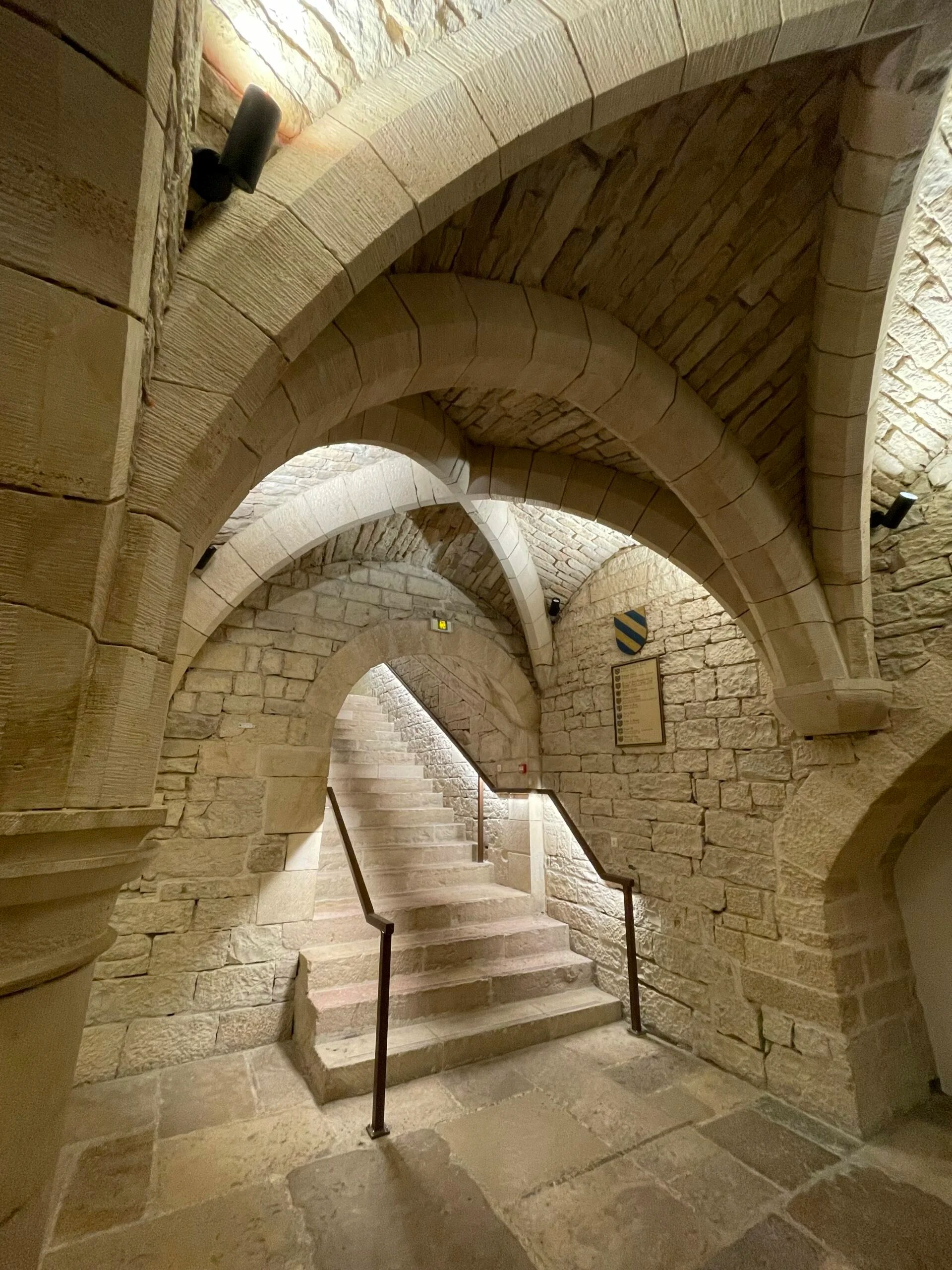
Les fouilles archéologiques ont révélé de nombreuses structures de stockages dans les contextes castraux, avec ou non la reconnaissance de leur contenu. On citera en particulier l’importante aire d’ensilage mis au jour sur le promontoire castral blésois à la fin des années 1990 (AUBOURG V. et JOSSET D., « Le site du promontoire du château de Blois du VIIIe au XIe s. (Loir-et-Cher). (Première partie : niveaux et structures) », in Revue Archéologique du Centre de la France, 39, p. 161-197 ; dont les silos sont présentés dans CRÉPIN-LEBLOND, M.-C. FOREST (dir.), Blois, un château de l’an mil, T. Paris, 2000, p. 69 et suiv.) ou les mobiliers en bois (coffres) servant pour le stockage et la vie économique du site de Charavines Colletières (COLARDELLE M., MOYNE J.-P. et VERDEL E. L’habitat fortifié de Colletière à Charavines et le pays du lac de Paladru au XIe siècle, Caen, France, Presses universitaires de Caen, 2023) dont souvent seules les clefs nous parviennent, comme par exemple à Andone (BOURGEOIS L., Une résidence des comtes d’Angoulême autour de l’an Mil : le castrum d’Andone (Villejoubert, Charente) : publication des fouilles d’André Debord, 1971-1995, Publications du CRAHAM, Caen, 2009). La spatialisation du stockage dans l’espace castral, sa place vis-à-vis de l’occupation élitaire, n’est pas une question annexe et, il semble cependant que cette dimension concourt pour une large part à la morphologie de sites castraux. Contrairement aux espaces urbains toutefois, cette thématique n’a pas fait l’objet d’une attention aussi forte pour caractériser les morphologies des espaces castraux (CONTE P. et LABORIE Y. abordent en 2006 cette question pour le site castral de Châlucet, dans un article intitulé « Stocker et conserver dans l’habitat urbain médiéval du sud-ouest de la France (XIIe-XVe siècles) », dans La maison au Moyen Âge dans le Midi de la France, Actes du colloque de Cahors 6, 7 et 8 juillet 2006, Mémoires de la Société Archéologique du Midi de la France – Hors-série 2008, p. 255 à 283). Par exemple, une publication récente portant sur les caves et celliers met en exergue les villes ou la maison urbaine, et, seulement un article et deux encadrés abordent cette question pour des espaces castraux (ANTAKI-MASSON P. « Pour veiller au grain : les lieux de stockage dans les fortifications croisées de Terre sainte », dans Caves et celliers dans l’Europe médiévale et moderne, Tours, Presses universitaires François Rabelais, 2019, p. 373‑385 ; MOREAU Q. 2019, « Le Haut-Clairvaux : structures souterraines en contexte castral », dans Caves et celliers dans l’Europe médiévale et moderne, Tours, Presses universitaires François Rabelais, p. 385-386. Un autre encadré aborde les caves dans un usage militaire : De CROUY-CHANEL E. « Les Caves du château de la Guerche », dans Caves et celliers dans l’Europe médiévale et moderne, Tours, Presses universitaires François Rabelais, 2019, p. 403-404).
Les questionnements relatifs à ces espaces touchent différentes branches de la recherche autour des châteaux. L’organisation de journées d’études, inscrites dans deux axes de la recherche au sein de l’UMR ARTEHIS (Fabrique du Paysage et Élaboration du passé et constructions communautaires) est l’occasion de mettre le focus sur ce sujet en mobilisant et interrogeant à la fois les sources archéologiques, mais aussi les sources historiques, car ces espaces apparaissent dans les comptabilités et les descriptions de travaux. L’intérêt d’une démarche transdisciplinaire serait de proposer des études d’ensemble (à l’échelle d’un site, d’un espace ou d’un empan chronologique) ou des cas qui entrent en résonance avec la thématique selon les interrogations présentées ci-après.
Nous essaierons ainsi d’identifier et distinguer les ressources stockées dans le château (ou complexe castral), et servant à la vie quotidienne ou au prestige des personnes présentes au sein de cet espace. Ainsi, nous nous concentrerons pour le moment sur les ressources vivrières.
les sources d’archives : que nous apportent les textes dans la localisation de ces espaces et/ou sur la nature des redevances perçues ? Il s’agit ici de documenter le paysage exploité (de quelle économie paysanne proviennent-elles ?) voire de jauger les quantités perçues des productions et leur type via les comptabilités mais aussi de s’interroger sur le vocabulaire employé pour désigner les lieux et les structures de stockage ou de conservation temporaire ou pérenne (greniers, « galetas », caves, fenil, glacière, citerne…) ; comment sont-elles utilisées et sur quelle durée ? (par exemple la temporalité des mises à l’abri lors d’épisode d’insécurité). Les sources iconographiques médiévales et modernes pourront venir en appui de la description de ces espaces ou comme apport dans le repérage de ces espaces au sein de l’espace castral.
les sources archéologiques : quels types de structures archéologiques ont été identifiés comme structures de stockage (structures en creux, construites, mobiliers, bâtiments, étages, pièces dédiées)? Où sont-elles situées dans les espaces castraux au regard des autres fonctions des bâtiments (résidence, militaire) ? Quelle est leur relation avec le reste de l’ensemble castral : intégrées ou indépendantes, accessibles, défendues ou dissimulées ?
Aussi, si ces structures peuvent être identifiées comme espaces de stockage, que contiennent-elles et pour quelle durée (périodicité dues aux saisons, conservation courte ou longue, gestion de l’eau) ?
Les écofacts (carpologie, phytorestes) peuvent venir documenter et éclairer la compréhension de l’environnement et des ressources gérés ou générés autour du castrum.
Les communications que nous souhaitons accueillir lors de ces journées qui se tiendront à la MSH de Dijon les 24 et 25 septembre 2026, porteront sur des travaux inédits (recherches historiques, rapports archéologiques, études spécialisées…) permettant d’éclairer une ou plusieurs des questions soulevées. En effet, la publication de ces journées est projetée.
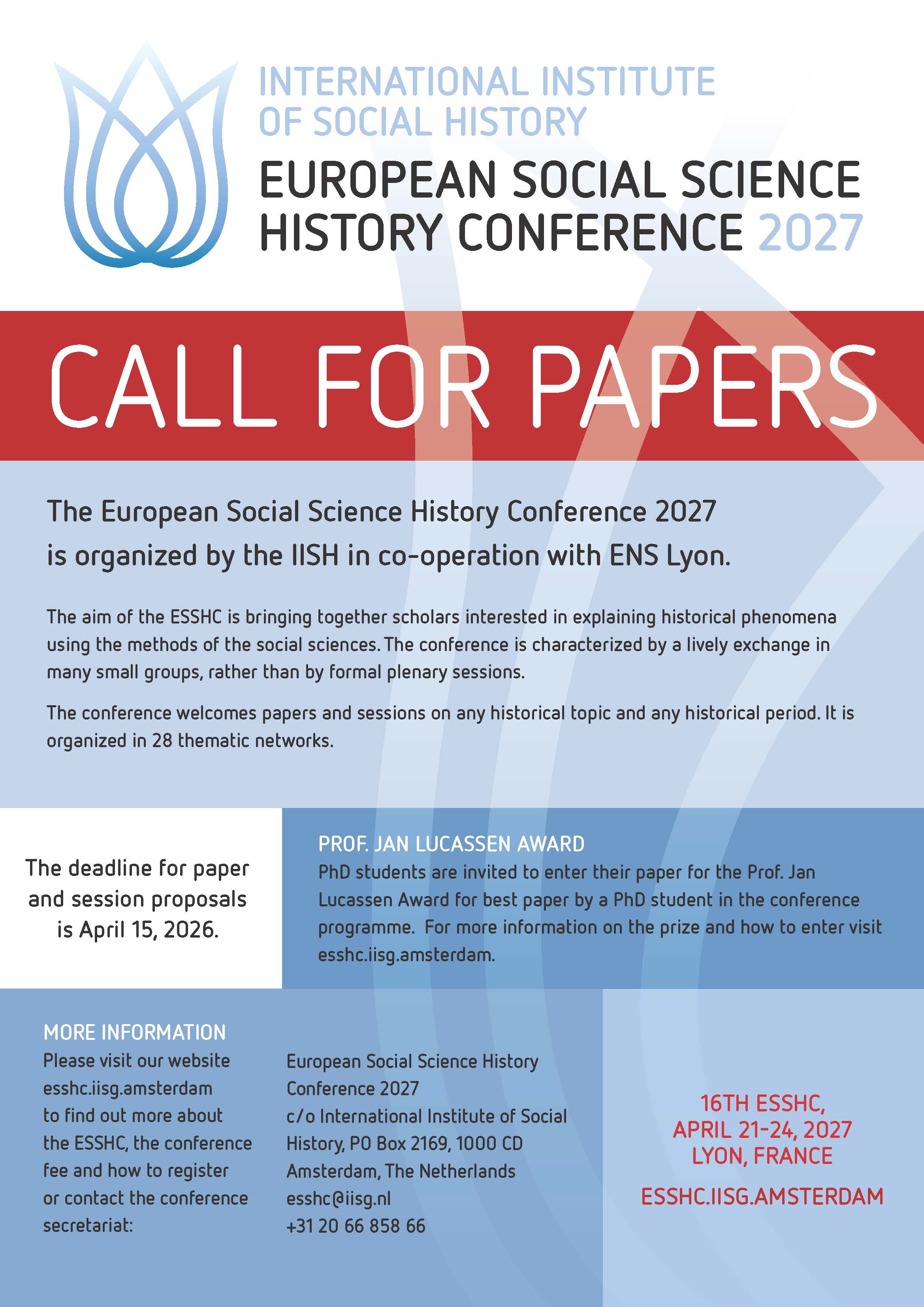
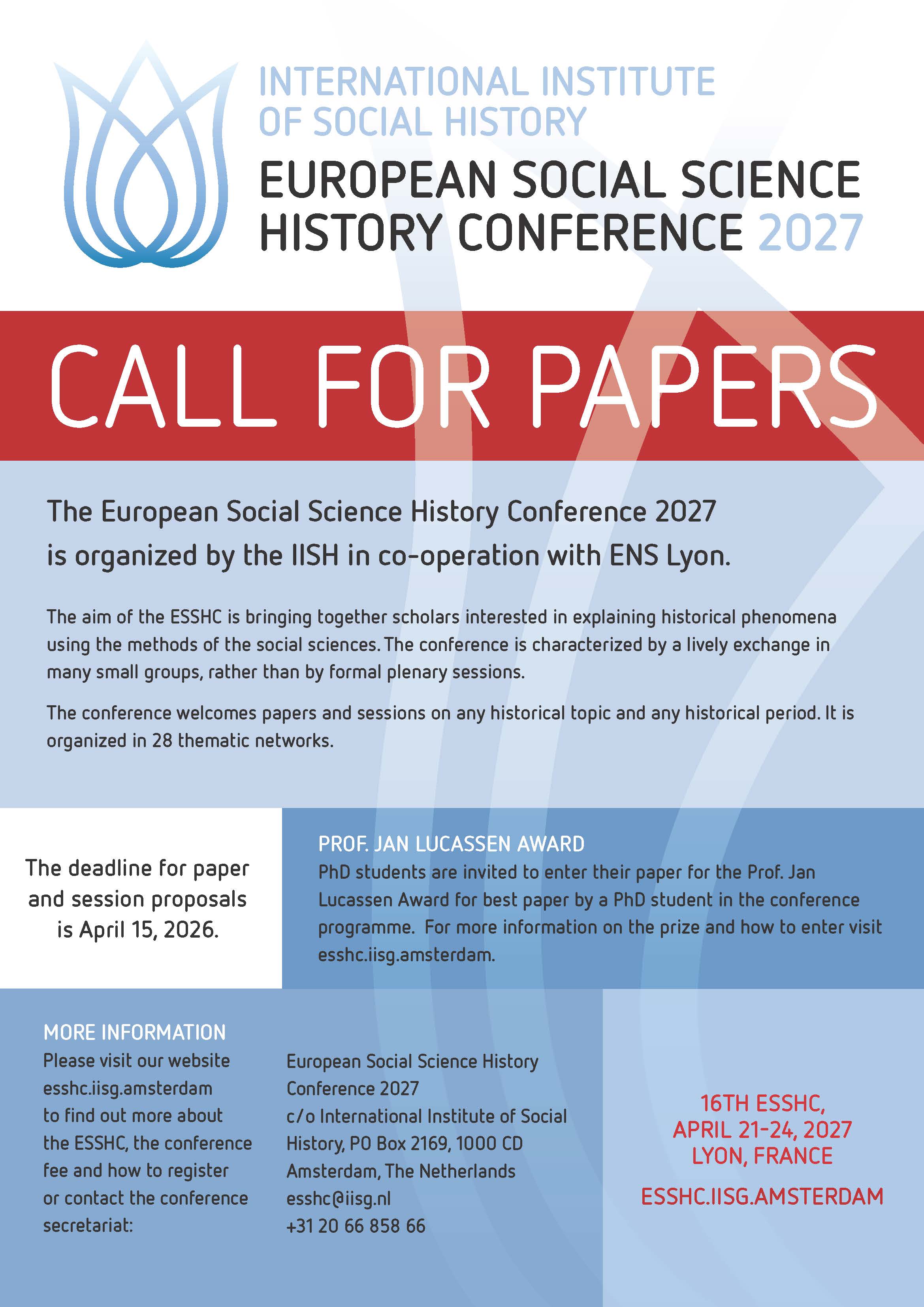
The call for panels and papers for the 16th ESSHC Conference – which will take place in Lyon on 21-24 April 2027 – is now open. The deadline for application is April 15, 2026.
Since 1996, the aim of the ESSHC is to bring together scholars interested in explaining historical phenomena using the methods of the social sciences. The conference, organized in English in 28 thematic networks, will host specific sessions on rural, agrarian and environmental history, from Antiquity to Contemporary age.
In particular, the Rural Network embraces economic, social, ecological, geographical, demographical, cultural and political approaches to the rural. Global food needs, rural heritage, management of natural resources are all relevant topics of rural history, as are topics such as productivity change in agriculture, transfer of property, and rural organization.
We believe that the use of comparisons between periods and regions can strengthen our discipline. Finally, we want to be a forum where new sources and methods for the many branches of rural history can be tested and discussed.
Everyone interested in applying for one or more panels through the Rural History Network can contact one of us as co-chairs, according to his or her research area and/or interest.
– Lev Centrih: lev.centrih@fhs.upr.si (Eastern and Southern Europe, Modern and Contemporary age)
– Davide Cristoferi: davide.cristoferi@ulb.be (Western and Southern Europe, Antiquity, Medieval and Early Modern times)
– Harm Zwarts: h.zwarts@rug.nl (Western and Northern Europe, Modern and Contemporary age)
Here the guidelines of how to submit a paper or session proposal.
Here the guidelines for a paper and/or panel/session proposal on the Oxford Abstracts Platform.
Publié dansAppel à contributions|Commentaires fermés sur Appel à contribution – Rural Network. 16th European Social Science History Conference
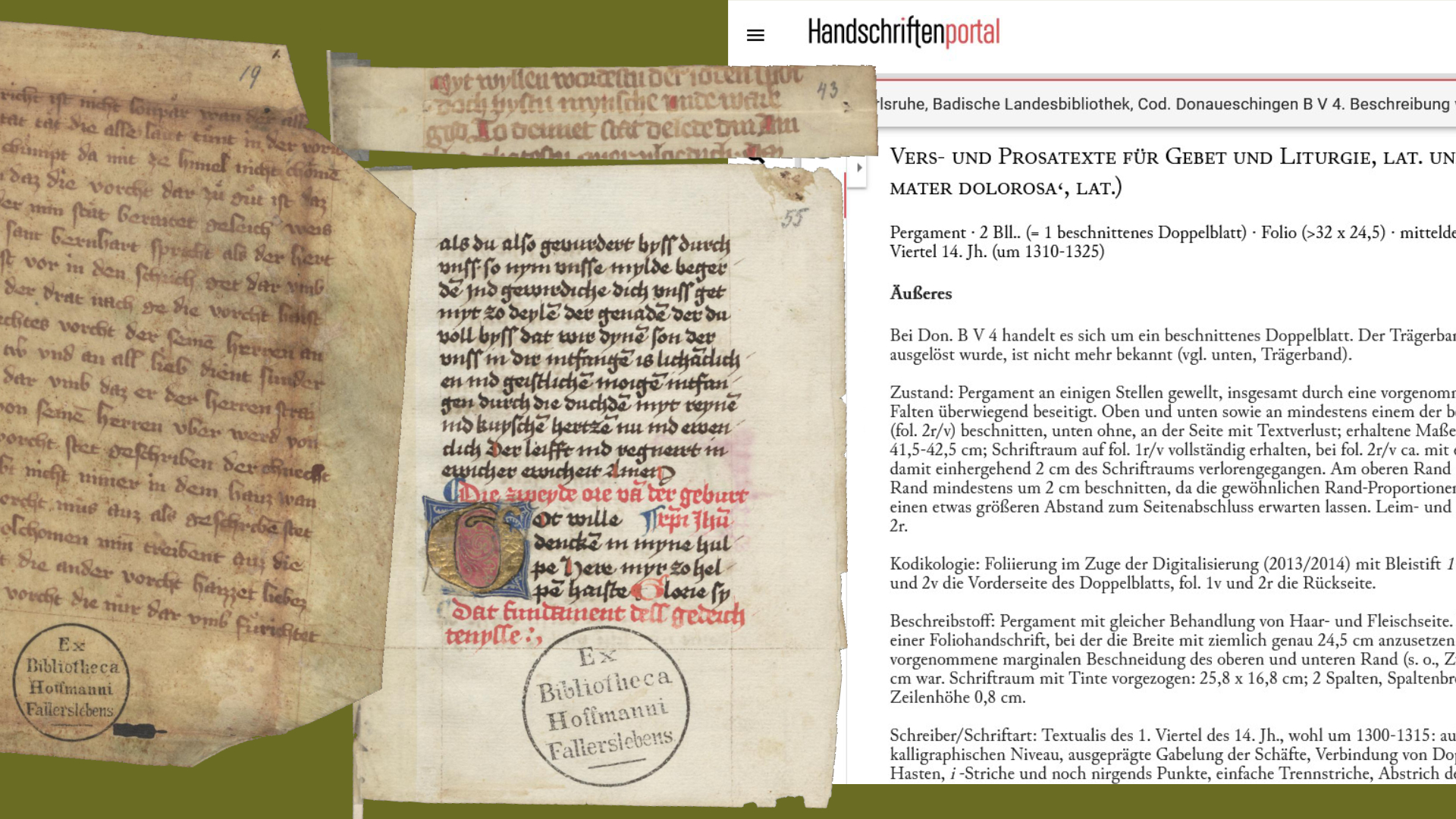
Vom 29. September bis 2. Oktober 2026 führen wir in Berlin eine Handschriftenportal-Summer School durch. Die Veranstaltung richtet sich an fortgeschrittene Master-Studierende sowie Promovierende mediävistischer Fächer, die vertiefende Kenntnisse in den Bereichen Kodikologie und Paläographie sowie Digital Humanities und Forschungsdaten erwerben möchten. Sie bietet den Teilnehmenden die Gelegenheit, in der Praxis den gesamten Prozess von der Erschließung einer Handschrift bis hin zur Dateneingabe und Verknüpfung mit Linked Open Data im Handschriftenportal anhand von Originalfragmenten aus dem Bestand der Staatsbibliothek zu Berlin zu erproben und einzuüben.
Ausschreibung
Ab sofort können Sie sich für die Summer School bewerben!
Teilnahmevoraussetzungen
Studium eines geisteswissenschaftlichen Fachs mit mediävistischem Schwerpunkt; M.A. oder kurz vor Masterabschluss stehend
Erwünscht: Grundkenntnisse des Mittelhochdeutschen und des Lateinischen
Bewerbungsunterlagen
ein kurzes Motivationsschreiben (max. eine halbe Seite) mit Ihren Kontaktdaten
einen aktuellen tabellarischen Lebenslauf
Abiturzeugnis und akademische Abschlusszeugnisse oder Leistungsnachweise
Es werden keine spezifischen technischen bzw. IT-Kenntnisse vorausgesetzt.
Die Teilnehmenden erhalten einen Unterbringungs- und Reisekostenzuschuss.
Bitte senden Sie Ihre Bewerbung als pdf bis einschließlich 3.5.2026 an nicole.eichenberger@sbb.spk-berlin.de. Die Auswahl erfolgt nach Qualifikation. Eine Nachricht über die Auswahlentscheidung erhalten Sie bis 8.6.2026.
Zum zeitlichen Rahmen und zum Format des Kurses
Dienstag, 29.9., 9.30 bis ca. 18 Uhr Mittwoch, 30.9., 9 bis ca. 19.30 Uhr Donnerstag, 1.10., 9 bis ca. 19.30 Uhr Freitag, 2.10., 9 bis 13 Uhr
Der Kurs beinhaltet Impulsreferate zu Handschriftenkatalogisierung, Kodikologie, Paläographie und Schreibsprachenbestimmung, zum Handschriftenportal und seiner technischen Grundlage sowie zu TEI-XML-Codierung und Linked Open Data. Dazwischen liegen Phasen praktischer Arbeit mit den Originalfragmenten und mit dem Katalogisierungsmodul des Handschriftenportals. Vorträge von Fachexpert:innen aus den Bereichen Handschriftenforschung und Digital Humanities runden das Programm ab.
Zum Hintergrund
Die Erforschung von Handschriften als physische Objekte hat in den letzten Jahrzehnten – ausgehend von Ansätzen wie New Philology und Material turn – einen großen Aufschwung erlebt. So wird die handschriftliche Überlieferung in mediävistischen Disziplinen heute nicht mehr nur für textgenetische Fragen herangezogen, sondern auch als zentraler Faktor für das Verständnis der Texte selbst, ihrer Verbreitung und ihrer zeitgenössischen Rezeptionskontexte wahrgenommen. Zudem ist der Zugang zu Handschriften, zumindest in Form von Reproduktionen, durch die digitale Transformation sehr viel leichter und in größerem Umfang möglich geworden. In diesem Umstand liegen zugleich immense Chancen als auch neue Herausforderungen für die Mittelalterforschung. Denn die Arbeit mit Handschriften – in analoger wie digitaler Dimension – erfordert zunächst vertiefte kodikologische Kenntnisse, die in akademischen Curricula oft nur marginal vertreten sind. Darüber hinaus ist die Handschriftenforschung inzwischen von digitalen Methoden (TEI-Codierung, automatische Texterkennung) und Infrastrukturen (Handschriftendatenbanken, Linked Open Data) geprägt, sodass ein Grundverständnis von Digital Humanities-Aspekten für eine wissenschaftliche Tätigkeit in diesem Bereich ebenfalls unabdingbar ist – ein weiterer Baustein, der in der mediävistischen Ausbildung oft fehlt. Diese beiden Desiderate werden in der Handschriftenportal-Summer School adressiert. Organisiert wird die Veranstaltung von drei am Handschriftenportal-Projekt beteiligten Institutionen, der Staatsbibliothek zu Berlin, der Bayerischen Staatsbibliothek München und der Universitätsbibliothek Leipzig, sowie dem Konsortium 4Memory der Nationalen Forschungsdateninfrastruktur (NFDI).
Als Ergänzung zur Handschriftenportal-Summer School empfehlen wir den Besuch des 10. Sommerkurses für Handschriftenkultur an der Universitätsbibliothek Leipzig „Mittelalterliche Handschriften verstehen lernen“, der vom 23. bis 29. August 2026 in Leipzig stattfindet und stärker grundwissenschaftlich ausgerichtet ist. Informationen dazu unter: https://www.ub.uni-leipzig.de/forschungsbibliothek/sommerkurs-handschriftenkultur
Publié dansÉcole d'été|Commentaires fermés sur École d’été – Handschriftenforschung und ihr Weg ins Digitale. Kulturelles Erbe erschließen und als Forschungsdaten bereitstellen
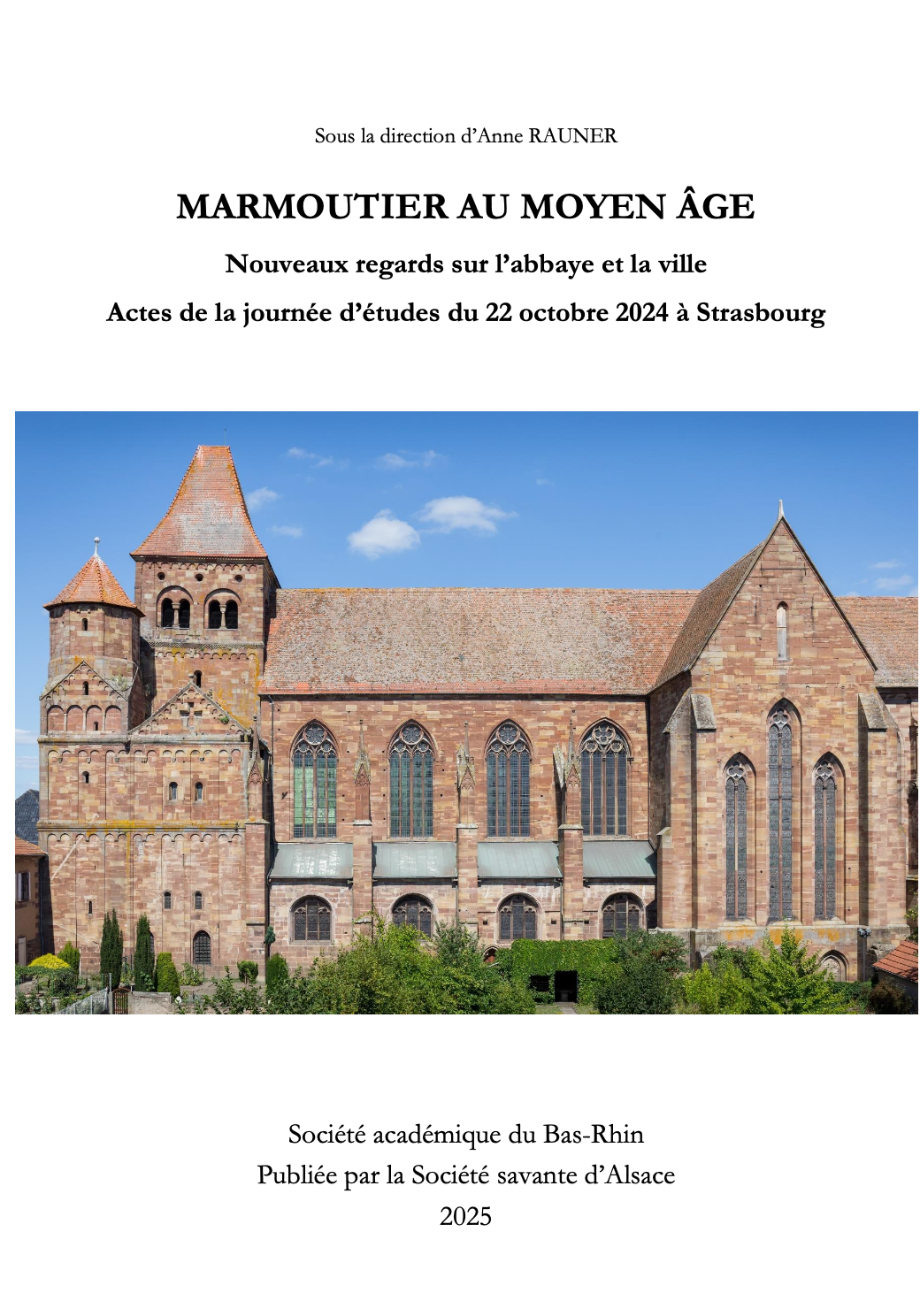
La petite ville alsacienne de Marmoutier est d’abord connue pour son abbatiale et son massif occidental roman, symbole de la puissance de l’abbaye bénédictine aux XIe-XIIe siècles. Par sa richesse et son influence, par sa situation dans une région frontière entre diocèse de Strasbourg et diocèse de Metz, l’abbaye de Marmoutier a marqué l’histoire médiévale de la vallée du Rhin supérieur et de la Lorraine. Elle entretenait en effet des liens étroits avec les évêques de Metz à l’autorité temporelle desquels elle était soumise. Au cours du Moyen Âge, elle appartint également à divers réseaux bénédictins : les réseaux de confraternité, en particulier de l’abbaye de la Reichenau, au haut Moyen Âge, puis au réseau de l’abbaye de Gorze au XIIe siècle, enfin, au début du XVIe siècle, à la congrégation de Bursfeld. Mais elle fut aussi une ville et une seigneurie qui devinrent un foyer d’insurrection de la guerre des Paysans en 1525.
La journée d’études intitulée « Marmoutier au Moyen Âge. Nouveaux regards sur l’abbaye et le bourg », organisée le 22 octobre 2024 à l’Université de Strasbourg à l’occasion du 1300e anniversaire de l’accession de l’abbé Maur à la tête de la communauté et de la refondation du monastère (d’après la tradition), proposait de renouveler une historiographie maurimonastérienne encore trop souvent marquée par les récits forgés à l’époque moderne. L’ouvrage réunit l’ensemble des contributions de cette rencontre scientifique. Grâce à la découverte de nouvelles sources écrites et archéologiques au réexamen d’autres documents, les auteurs apportent un éclairage nouveau sur l’évolution topographique de l’abbaye et du bourg au Moyen Âge, le récit de fondation de l’abbaye, la vie liturgique, les relations de Marmoutier avec la papauté et la famille noble de Geroldseck, l’importance de la ville dans la guerre des Paysans. Ils mettent également l’accent sur des acteurs de l’histoire maurimonastérienne peu étudiés jusqu’à présent, en particulier la ville de Marmoutier et les institutions charitables.
Docteure en histoire médiévale et professeure agrégée d’histoire, Anne Rauner est membre associée de l’ARCHE | UMR 3400 : Arts, civilisation et histoire de l’Europe (Université de Strasbourg) et du CRESAT (Université de Haute-Alsace). Elle consacre ses recherches aux documents nécrologiques (nécrologes et obituaires entre autres), aux pratiques scripturaires médiévales, à l’histoire religieuse et culturelle de l’Alsace et de la vallée du Rhin supérieur.
Table des matières :
Liste des abréviations
Anne Rauner, Marmoutier au Moyen Âge : une introduction
Première partie. Les sources de l’histoire de Marmoutier
Boris Dottori, Un bourg abbatial à la période médiévale : archéologie et topographie historique de Marmoutier
Anne Rauner, Écrire le récit des origines de l’abbaye de Marmoutier du Moyen Âge à la Révolution
Thomas Brunner, Les sceaux des abbés et de l’abbaye de Marmoutier (mi-XIIe-mi-XVIIe siècles)
Thomas Brunner, Typologie des sceaux de la civitas de Marmoutier (XIVe siècle, 1682, 1713)
Benoît Jordan, La vie liturgique de l’abbaye de Marmoutier : à la recherche des sources
Deuxième partie. Institutions maurimonastériennes
Élisabeth Clementz, À la recherche des institutions charitables de Marmoutier
Bernhard Metz, Les sires de Geroldseck, avoués de l’abbaye et seigneurs de la ville de Marmoutier
Troisième partie. De la réforme « grégorienne » à la Réformation
Paul Abel, L’abbaye et la Marche de Marmoutier durant la Guerre des Paysans (1525)
Informations pratiques :
Marmoutier au Moyen Âge. Nouveaux regards sur l’abbaye et la ville. Actes de la journée d’études du 22 octobre 2024 à Strasbourg, dir. Anne Rauner, Strasbourg, Société académique du Bas-Rhin (publié par la Société savante d’Alsace), 2025 ; 1 vol., 181 p. ISBN : 978-2-9534733-8-4. Prix : 20 €.
Publié dansLe réseau|Commentaires fermés sur Publication – « Marmoutier au Moyen Âge. Nouveaux regards sur l’abbaye et la ville. Actes de la journée d’études du 22 octobre 2024 à Strasbourg », éd. Anne Rauner
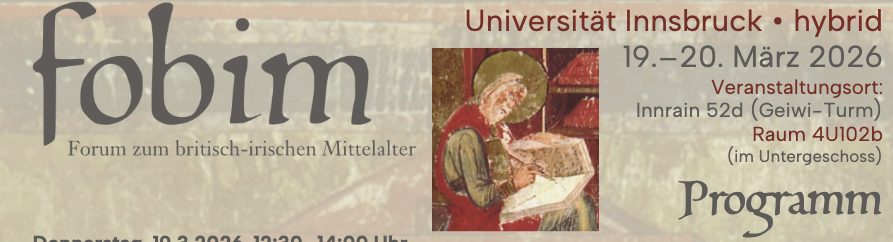
Im März 2026 findet an der Universität Innsbruck das fobim – Forum zum britisch-irischen Mittelalter – statt.
19.03.2026 – 20.03.2026
Gäste sind herzlich willkommen. Falls Sie digital teilnehmen möchten,melden Sie sich bitte bis zum 17.3.2026 unter mail@fobim.de an.
Programme :
Donnerstag, 19.3.2026
12:30–14:00 Uhr
Stephan Bruhn (Tübingen): Armenfürsorge im frühmittelalterlichen England – Konturen eines Forschungsdesiderats
Aurora Clark (Calgary): Hamwic and the Politics of Liminality: Royal Expansion and Emporia in the Seventh- and Eighth-Century Solent
Jule Meyer (Heidelberg): Insulare Spuren in der Mainzer Schriftkultur
14:30–15:45 Uhr
Rike Szill (Tübingen): Enigmater. Natur und Geschlecht bei Aldhelm von Sherborne
Leah Tanha (Köln): Spottende Dämonen, unzuverlässige Engel und himmlische Freuden. Unterhaltungselemente in Jenseitsreisen des britisch-irischen Raums im Frühmittelalter
16:15–17:30 Uhr
Johannes Kratz (Oslo): Once a viking, always a viking? The Perception of Scandinavians in the North Sea area 800–1100. A Study of Imagines and Knowledge of Scandinavia in Early Medieval Irish, Anglo-Saxon, and Frankish Sources
Aliyah Parsons (LMU München): Femizidale Gewalt in erzählenden Quellen des wikingerzeitlichen England
Freitag, 20.3.2026
9:00–10:15 Uhr
Lea Wittig (Köln): Die „Katharer“ in England? Verbreitung einer konstruierten Häresie im Hochmittelalter
Patrick Nehr-Baseler (Kiel): Zisterziensische Um-Welten? Überlegungen zu einer Um-Welt(en)-Geschichte des hoch- und spätmittelalterlichen Schottlands am Beispiel der Vita S. Kentgerni und der Vita S. Waldevi des Jocelin von Furness (fl. 1175–1214)
10:45–12:00 Uhr
Thomas H. Kaal (DHI London): Dum blanda vox queritur, perfecta vita deseritur – Musik, Moral und die Lollarden-Kontroverse
Robin Wheeler (FU Berlin): Waren für den Widersacher? Englische Wirtschaftspolitik im späten Hundertjährigen Krieg zwischen Verflechtung und Konflikt
13:00–14:15 Uhr
Sarah Schnödewind (Münster): Æthelred the Ill King? Zum Spiel mit Leseerwartungen und narrativen Ebenen in Richards Vita Elphegi metrica (Cambridge Corpus Christi Ms 375)
Jennifer C. Bleibel (Tübingen): How to Get Rid of a King. Oder: Sexualität als Körper-markierung und ihre Rolle in der (De-)Konstruktion von Herrschaftsfähigkeit im England des 14. Jahrhunderts
Avec le soutien du FNRS, du CRHiDI (UCLouvain – Saint-Louis, Bruxelles), d'INCAL (UCLouvain), de PraME (UNamur), de sociAMM (ULB) et de Transitions (ULiège)









Vous devez être connecté pour poster un commentaire.