Publication – Lindy Grant, « Eleanor of Aquitaine. Woman, Queen and Legend »

Eleanor of Aquitaine (1124–1204), the legendary queen of France and later England, has captivated historians for centuries. Heiress to the duchy of Aquitaine, wife to King Henry II and mother to Richard the Lionheart and King John, her life was marked by power, influence and myth. This concise, accessible history sheds new light on Eleanor, cutting through the hearsay and slander with a close reading of primary sources. It highlights the family bonds that shaped her power and identity, tracing her roots to the Loire rather than the Occitan south. Lindy Grant demonstrates that Eleanor’s story is one of resilience: like Churchill, she saved England during a national crisis, though her political judgement could be equally erratic.

Lindy Grant, Eleanor of Aquitaine. Woman, Queen and Legend, Londres, Reaktion Books, 2025 ; 1 vol., 224 p. ISBN : 978-1-83639-086-2. Prix : GBP 16,95.

Source : Reaktion Books

Publié dans Publications | Commentaires fermés sur Publication – Lindy Grant, « Eleanor of Aquitaine. Woman, Queen and Legend »

Publication – « Logiques de l’inventaire. Moyen Âge-XIXe siècle », éd. Françoise Briegel, Maria Pia Donato, Valérie Theis

Terres, meubles, reliques, livres, archives, bijoux et robes, plantes, etc. Comment, sur autant d’objets, penser l’inventaire comme cette technologie de la maîtrise du monde par l’écrit? Comment saisir les contextes institutionnels et les circonstances (temps ordinaire du fonctionnement d’une administration ou contexte de crise politique) de la réalisation des inventaires ?

Dans une longue période allant du XIIIe siècle au XIXe siècle, et au sein de l’espace européen, l’ouvrage éclaire ainsi les objectifs de la production d’un inventaire, les opérations matérielles et intellectuelles sous-jacentes à sa mise en œuvre. Il explore par là même les logiques qui organisent l’accès aux données.

Table des matières : ici

Avec le soutien du Fonds national suisse pour la recherche scientifique.

Françoise Briegel est spécialiste d’histoire de la justice et de l’histoire matérielle.

Maria Pia Donato est directrice de recherche CNRS à l’Institut d’histoire moderne et contemporaine (CNRS/ENS-PSL/Paris 1). Elle est spécialiste de l’histoire culturelle et de l’histoire des sciences et de la médecine. 

Valérie Theis est professeure d’histoire du Moyen Âge à l’École normale supérieure (ENS-PSL, IHMC/UMR 8066). Elle mène ses recherches sur les pratiques de l’écrit et leurs liens avec les transformations des techniques de gouvernement.

Informations pratiques :

Logiques de l’inventaire. Moyen Âge-XIXe siècle, éd. Françoise Briegel, Maria Pia Donato, Valérie Theis, Rennes, Presses universitaires de Rennes, 2025 ; 1 vol., 366 p. (Art et Société). ISBN : 978-2-75359-543-9. Prix : € 28,00.

Source : Presses universitaires de Rennes

Publié dans Publications | Commentaires fermés sur Publication – « Logiques de l’inventaire. Moyen Âge-XIXe siècle », éd. Françoise Briegel, Maria Pia Donato, Valérie Theis

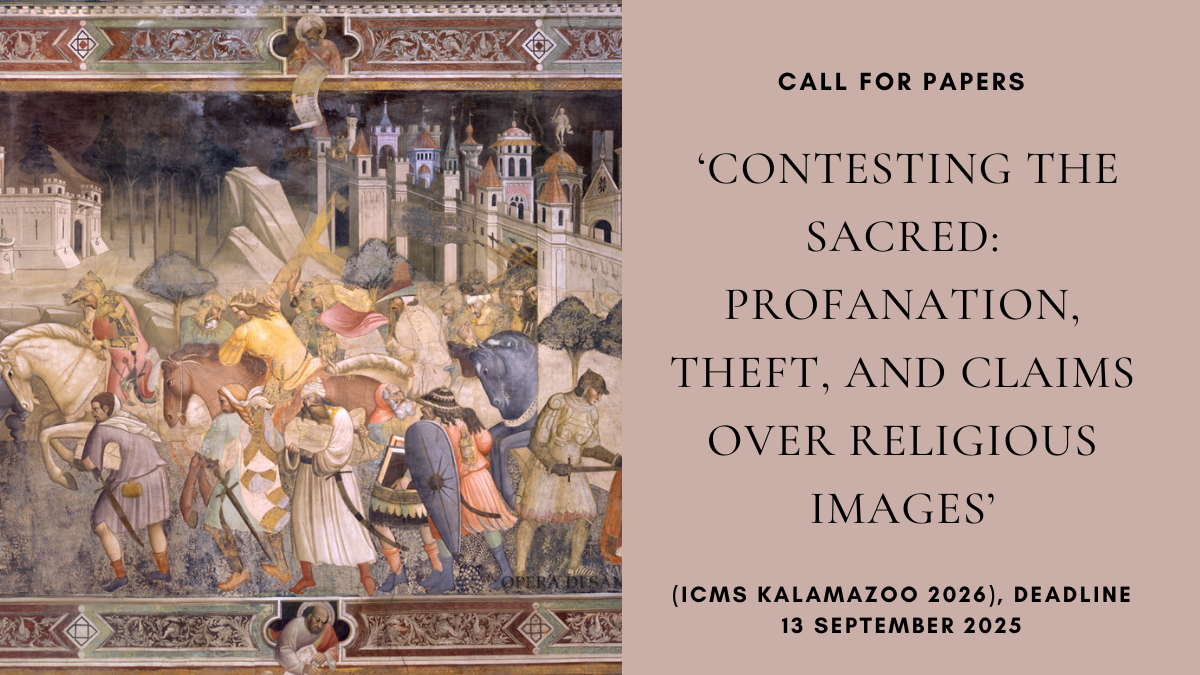
Appel à contribution – Contesting the Sacred: Profanation, Theft, and Claims over Religious Images

ICMS Kalamazoo 2026), deadline 13 September 2025

This session investigates the complex dynamics involving sacred images and relics in the medieval period, focusing on profanation, theft, and disputes over ownership that reshaped their spiritual, social, and cultural significance. It examines acts of contestation that challenged established hierarchies and redefined sacrality. The panel will explore how medieval communities negotiated power, devotion, and identity through their relationships with sacred objects, with particular emphasis on the intertwined role of images and relics in religious life and social contexts.

Interdisciplinary contributions are encouraged, particularly in art history and anthropology. Through in-depth case studies covering various media, geographic areas, and historical periods, participants will analyze both symbolic meanings and practical implications of possession and contestation. The session will explore the social, legal, and theological frameworks that shaped late medieval perceptions of ownership, sacrality, and profanation, highlighting their role in conflicts and negotiations surrounding sacred objects.

This session aims to provide a nuanced understanding of how medieval societies engaged with sacred images and relics beyond veneration. It will highlight the cultural, devotional, and political tensions underpinning these interactions, offering new perspectives on authority, piety, and subversion within the medieval religious landscape.

Scholars are invited to submit a 300-word abstract, excluding references. Proposals should also include name, affiliation, email address, the title of the presentation, 6 keywords, a selective bibliography, and a short CV. Please send the documents to kalamazoocallforpapers@gmail.com by September 13, 2025.

Source : Medieval Art Research

Publié dans Appel à contributions | Commentaires fermés sur Appel à contribution – Contesting the Sacred: Profanation, Theft, and Claims over Religious Images

Publication – La « malebouche ». Les paroles blessantes, du Moyen Âge à l’Âge des Lumières, éd. Fosca Mariani Zini, Nathalie Vienne-Guerrin

Pourquoi les paroles font-elles mal ? Quel mal spécifique les paroles méchantes infligent-elles ?

« Male bouche », le personnage du Roman de la Rose, est la figure tutélaire de cet ouvrage qui tente d’apporter des éléments de réponse à ces questions en analysant les raisons culturelles pour lesquelles, dans tel ou tel contexte historique, les meurtrissures infligées par la langue revêtent une signification particulière et en convoquant plusieurs objets d’étude, parmi lesquels le droit, la littérature, le théâtre, les pamphlets, les traités de civilité. Au-delà d’un noyau anthropologique constant, les passions tristes s’exprimant dans les paroles blessantes déterminent à chaque fois la façon dont l’oreille accueille ce qui est dit, tant ce que l’on doit dire dépend de ce que l’on peut entendre.

Le volume aborde la question en se concentrant sur trois moments saillants, en essayant d’en saisir les préoccupations les plus marquantes : la peur du mensonge au Moyen Âge ; le risque de la loquacité creuse à la Renaissance ; le détournement de la raison par les paroles malintentionnées à l’époque des Lumières.

Table des matières : ici

Fosca Mariani Zini est Professeure d’université HDR à l’Université de Tours, rattachée au laboratoire de recherche du Centre d’études supérieures de la Renaissance. Ses domaines de recherche portent sur la philosophie latine à Rome, la philosophie médiévale et humaniste, le platonisme et le néoplatonisme.

Nathalie Vienne-Guerrin est Professeure en études shakespeariennes à l’université Paul-Valéry Montpellier 3 et membre de l’IRCL, Institut de recherche sur la Renaissance, l’âge Classique et les Lumières (UMR5186 CNRS). Nombre de ses travaux portent sur l’injure et la mauvaise langue dans le monde de Shakespeare.

Ont contribué à ce volume : Joël Biard, Maïté Billore, Emily Butterworth, Giovanni Catapano, Jean-Pierre Cavaillé, Marie-Luce Demonet, Linda Gil, Agnès Lafont, Alice Lamy, Justine Le Floc’h, Corinne Leveleux-Teixeira, Fosca Mariani Zini, Fabrizio Meroi, Bernard Seve, Denis Thouard, Nathalie Vienne-Guerrin, Gary Watt.

Informations pratiques :

La « malebouche ». Les paroles blessantes, du Moyen Âge à l’Âge des Lumières, éd. Fosca Mariani Zini, Nathalie Vienne-Guerrin, Paris, Honoré Champion, 2025 ; 1 vol., 394 p. (Le savoir de Mantice, 35). ISBN : 978-2-74536-407-4. Prix : € 72,00.

Source : Honoré Champion

Publié dans Publications | Commentaires fermés sur Publication – La « malebouche ». Les paroles blessantes, du Moyen Âge à l’Âge des Lumières, éd. Fosca Mariani Zini, Nathalie Vienne-Guerrin

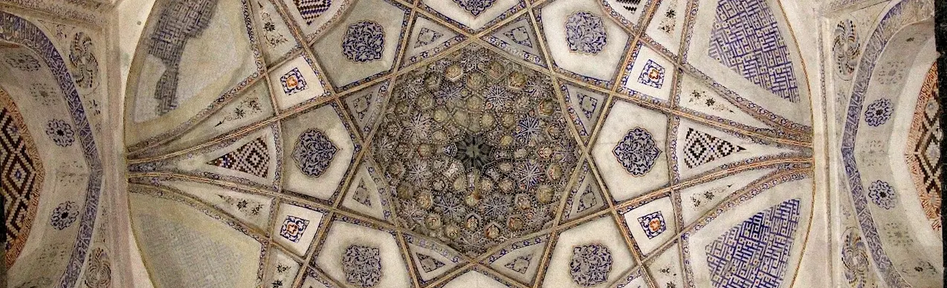
Colloque (en ligne) – Islamic Medieval Wall Paintings. Towards an Interdisciplinary Approach

This conference is related to the Iranian Medieval Wall Paintings project funded by the German Research Foundation – the DFG, at University of Bamberg’s Centre for Heritage Conservation Studies and Technologies – the KDWT (Applicant: Dr. Ana Marija Grbanovic).

Conference Organisers:

  • Dr. Ana Marija Grbanovic, Centre for Heritage Conservation Studies and Technologies (KDWT), University of Bamberg
  • Dr. Agnieszka Lic, Institute of Mediterranean and Oriental Cultures, Polish Academy of Sciences

09.00-9.30: Opening of the Conference

Welcome and Greetings, Housekeeping Information

9.30-10.30: Keynote Prof. Dr. Markus Ritter, ‘Space Painting in Medieval Islamic Art and Abbasid Raqqa’
10.30-11.00: Break

11.00-12.30: Podium Discussion 1: Research and Conservation of wall paintings for a sustainable future

Moderator: Franziska Prell, M.A. and Leander Pallas, M. A.

Dr. Habil. Dobrochna Zielińska, ‘Technology of medieval Nubian wall paintings. An insight into a culture through the materiality of an image’
Franziska Kabelitz, M. A., ‘Aspects of Sustainability in Exhibition Management (tbc)’
Dr. Melina Perdikopoulou, ‘Layers of Memory: Preserving Ottoman Wall Paintings in Greece’
Speaker tbc, ‘Title tbc’

12.30-13.00: Break

13.00-15.00: Panel 1: Setting the Ground: Conservation, Preservation and Production Technologies of Wall Paintings

Chair: Dr. Ana Marija Grbanovic

Prof. Dr.-Ing. May al-Ibrashy and Amina Karam, M.A., ‘The painted wood interior of al-Imam al-Shafi’i Dome in Historic Cairo: Discoveries and Observations from the Conservation Project’
Dr. Yury Karev, ‘Self-image of the ruler: Qarakhanids and their contemporary Turcic dynastic rivals (Wall paintings of Samarkand/Afrasiab)’
Dr. Melina Perdikopoulou, ‘The Wall Paintings of Alaca Imaret in Thessaloniki: A Comparative Approach to 15th-Century Ottoman Painting’
Dr. Giovanna De Palma, ‘The conservation of Qusayr ‘Amra wall paintings: methodologies and discoveries’

15.00-15.30: Break

15.30 – 17.00: Panel 2: Cutting Edge Research of Wall Paintings in the Islamic West

Chair: Dr. Peter Tamas Nagy Assoc.

Prof. Dr. Victor Garcia Rabasco, ‘Abbadid Seville and the development of the Caliphate’s artistic language’ Assoc.
Prof. Dr. Umberto Bongianino, ‘Wall painting in the Islamic West and the aesthetic of naqsh’
Walid Akef, M.A., ‘Islamic Mural Paintings: Propaganda and Power in the Age of Chivalry and Crusades’

17.00-17.30: Break

17.30-18.30: Special Session: Innovative Approaches to Research of Wall Paintings in Christian Nubia

Chair: Dr. Agnieszka Lic

Prof. Dr. Karel Christian Innemée, ‘Costumes of Authority, Images of Authority. Christian wall paintings of Medieval Nubia’
Dr. Agnieszka Jacobson-Cielecka, ‘From mural to costume: The reconstruction process of medieval robes’

Day 2 – September 5, 2025

9.00-11.00: Panel 3: Archaeology of Islamic Wall Paintings in the Middle East

Chair: Dr. Agnieszka Lic

Dr. Thomas Leisten, ‘An Umayyad Painters’ Studio at Work: Design and Execution of Frescos at Balis, Syria’
Dr. Julie Bonnéric and Solène Mathieu, ‘The Wall Paintings of the House of Hearts: Interpreting Archaeological Fragments from a Byzantine and Umayyad Urban Residence in Jerash, Northern Jordan’
Dr. Ignacio Arce, ‘Umayyad Mural Paintings: from architectural decoration to narratives of power: some case studies from Qasr Hallabat/ Hammam as Sarrah, Qusayr Amra and Khirbat al Mafjar’ Ass.
Prof. Dr. Tawfiq Da’adli, ‘Khirbat al-Mafjar frescoes reconstruction – which pieces found their way in and why others were left out?’

11.00-11.30: Break

11.30-13.00: Podium Discussion 2: DEIA and gender-sensitive research of wall paintings: perspectives for societal cohesion

Moderator: Dr. Mareike Spychala

Cornelia Thielmann, M. A., ‘Gender-sensitive studies for architectural cultural heritage preservation’
Dr. Ana Marija Grbanovic, ‘Intersectionality analysis for preservation of endangered monuments with wall paintings in Ottoman Baroque South-eastern Europe’
Prof. Dr. Konstantinos Giakoumis, ‘Visual Artworks and Blind or Visually Impaired Persons: New Concepts for Independent Accessibility of Orthodox Icons’
Dr. Jeanine Linz, ‘Gender sensitive research and gender dimension in proposals’

13.00-14.00: Break

14.00-16.00: Panel 4: Research and Preservation of Persianate Islamic Medieval Wall Paintings

Chair: tbc

Dr. Hamed Sayyadshahri, Ass. Prof. Dr. Mohammad Mortazavi and Dr. Mozhgan Mousazadeh, ‘A review on the Conservation of Historical Wall Paintings in Khurasan, Iran: An Ethical Discussion’ Ass.
Prof. Dr. Amir Hossein Karimy and Ass. Prof. Dr. Parviz Holakooei, ‘Gilding and glittering in wall decorations from the 12th to the 17th century Iran’
Dr. Ana Marija Grbanovic, ‘Medieval wall paintings in Iran: a trans-regional phenomenon?’
Mohammad Mahdi Amini Qomi and Mohammad Mahdi Mohammadi Iraqi, ‘Art historical research of damaged wall paintings at the Gunbad-i Azadan mosque near Isfahan’

16.00-16.30: Break

16.30-18.00: Podium Discussion 3: Role of digitization in research of wall paintings: challenges and perspectives

Moderator: Dr. John Hindmarch

Dr. Ines Konczak-Nagel, ‘Buddhist Murals of Kucha on the Northern Silk Road’
Dr. Erik Radisch, ‘Buddhist Murals of Kucha on the Northern Silk Road’
Dr. Ivana Lemcool, ‘Digitizing Fresco Paintings in the Balkan Area- Issues and Perspectives in Digital Preservation of Monumental Heritage in Multi-faith Environments’

18.00-18.30: Break

18.30-20.00: Special Session: AI, ML new technologies and ethical aspects for research of wall paintings

Moderator: Dr. Julian Hauser

Prof. Dr. Markus Rickert, ‘AI application in different domains: from production to agriculture to … cultural heritage?’
Dr. Tomasz Michalik, ‘Eye-tracking as a tool to support informed presentations of wall paintings’

20.00-21.00: Conference Closing Discussion

International on-line Conference, September 4-5, 2025 

Conference Programme Times are provided in Central European Summer Time (UTC/GMT +2 hours)

Conference language: English

Conference Organizers:

Dr. Ana Marija Grbanovic, Centre for Heritage Conservation Studies and Technologies (KDWT), University of Bamberg

Dr. Agnieszka Lic, Institute of Mediterranean and Oriental Cultures, Polish Academy of Sciences

This conference is related to the Iranian Medieval Wall Paintings project funded by the German Research Foundation – the DFG, at University of Bamberg’s Centre for Heritage Conservation Studies and Technologies – the KDWT (Applicant: Dr. Ana Marija Grbanovic).

Source : Universität Bamberg

Publié dans Colloque | Commentaires fermés sur Colloque (en ligne) – Islamic Medieval Wall Paintings. Towards an Interdisciplinary Approach

Appel à contribution – When Materials Meet. Intermateriality in the Middle Ages and Early Modern Period

Call for Papers, International Conference of the Institute for Medieval and Early Modern Material Culture, University of Salzburg, based in Krems an der Donau

Date: 02-04 March 2026

Place: Krems an der Donau (Austria)

In recent years, IMAREAL has developed a research focus on materials and substances as culture-forming factors. The focus has been on the question of how materials contribute to the creation of meaning and cultural dynamics. A key finding was that material properties and material-indexed meanings are not perceived as given, but rather emerge or fade into the background through observation, interaction with things and materials, their interaction among another, as well as through their discursivization in concrete settings – so-called constellations. The process of this attribution of meaning can be well summarized with the concept of aspectivisation: Static properties are replaced by aspects, each of which can be described relationally and analyzed in terms of their specific cultural meaning. 

Building on this, the new research focus “Intermateriality” focuses on the interaction and cooperation of two or many different materials. Materials rarely appear as individual entities, they are combined with others both as natural and synthetic materials; artifacts are often made of several materials or brought into relationship with each other in social evaluations and semioses. The term “intermateriality” is understood as a framework concept for these diverse material relationships. It is precisely these relationships and their qualifications that interest us. The aim of the conference is to gain input for the work on this framework concept from different disciplinary perspectives and to set an initial impulse for a corresponding international and interdisciplinary research network.  Based on these considerations, the focus is on the following questions: 

  • Intermateriality as a constellation: At which points can which types of intermateriality be observed in the pre-modern era? 
  • Which intermaterial constellations are manifested textually or visually, and for what reasons? 
  • Intermateriality as a mode: What is the relationship between observation, ‘Making’ and discourse for the perception and sensory classification of material relationships?  
  • What role does the material knowledge generated in this process play in relation to natural and synthetic materials?  
  • How do shaping practices and discourses generate knowledge about material relationships? 
  • How and why do these perspectives and their representations change?  
  • Body and inter-materiality: What role does the human body play in its own materiality when interacting with other materials? How does material perception behave as a sensual quantity and how is this articulated in text and/or image in pre-modern times?  
  • What is the relationship between intermateriality and intermediality or inter-textuality? Is  ‘inter-’ even the appropriate prefix for the conceptual framing of these phenomena? Is there a corresponding theoretical equivalent to transmediality (transmateriality)? 

The questions are intended as general suggestions for all disciplines in history and cultural studies; approaches that are not covered by these questions are also welcome. What is important to us, however, is the reference to concrete materials, also in the representation/discursivization of material or, for example, in the artistic reflection of the creative process.  

We look forward to receiving abstracts in German or English with a maximum length of 1-2 pages by September 5, 2025 to sekretariat.imareal@plus.ac.at.   

Participation in the conference is free of charge.    

Source : Imareal

Publié dans Appel à contributions | Commentaires fermés sur Appel à contribution – When Materials Meet. Intermateriality in the Middle Ages and Early Modern Period

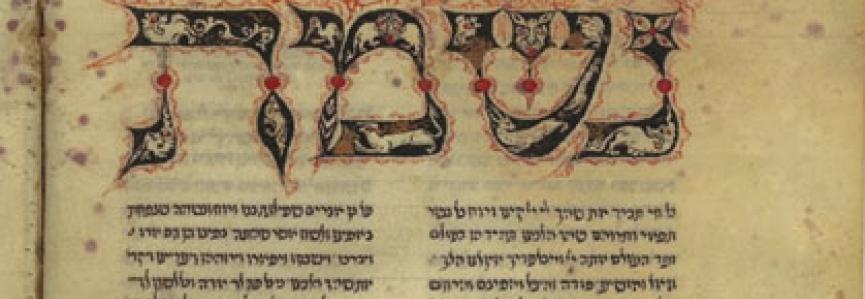
Journée d’étude – Les manuscrits hébreux de la BnF : histoires, itinéraires, images

Les membres du projet ANR BiNaH (Bibliothèque nationale « Hebraica ») — chargé de l’étude et du catalogage scientifique du fonds hébraïque —, organisent un colloque jeudi 9 octobre 2025 (9h-17h30) au Musée d’art et d’histoire du Judaïsme (Paris).

La collection de manuscrits hébreux conservée à la Bibliothèque nationale de France constitue un ensemble d’une richesse exceptionnelle, tant par la diversité de ses contenus que par la variété de ses provenances et de ses périodes de production. Formée progressivement au fil des siècles, cette collection résulte de multiples modalités d’acquisition — legs, achats, saisies ou dons — et reflète une pluralité d’itinéraires, depuis les ateliers de scribes jusqu’aux rayonnages de l’institution.

Ce colloque se propose d’examiner ces trajectoires complexes à l’intersection de l’histoire des textes et de celle des collections. Porté par les membres du projet ANR BiNaH (Bibliothèque nationale « Hebraica ») — chargé de l’étude et du catalogage scientifique du fonds hébraïque —, il présentera un panorama des dynamiques ayant présidé à l’entrée de ces manuscrits dans les collections nationales.

Parmi les pièces abordées figureront des fragments issus de la Geniza du Caire, des bibles ibériques ayant transité par l’Italie, ainsi que des manuscrits provenant de Constantinople ou intégrés aux collections royales et érudites par des figures telles que Catherine de Médicis, Richelieu ou Carmoly. Ces objets racontent des histoires imbriquées, au croisement des univers juifs, des contextes chrétiens et des entreprises savantes.

L’événement offrira ainsi un éclairage sur les conditions de production, de transmission et de mise en valeur de ce patrimoine manuscrit, en soulignant son inscription dans des circulations culturelles et historiques à large échelle.

9h – Accueil et ouverture

  • 9h20 – Judith OLSZOWY-SCHLANGER – Les fragments de la Geniza du Caire à la BnF
  • 9h40 – Roberta TONNARELLI – Manuscrits italiens des XIIIe-XIVe siècles à la BnF : Quelques notes paléographiques et codicologiques

Questions

  • 10h15 – Javier DEL BARCO – De l’Espagne à la BnF en passant par l’Italie : le parcours italien des Bibles hébraïques ibériques
  • 10h35 – Elodie ATTIA – Les manuscrits ashkénazes : entre migration(s) et transmission(s)

Questions

11h10 – Pause-café (10 min)

  • 11h20 – Sonia FELLOUS – Images, héritages et singularités : les manuscrits hébreux enluminés de la BnF entre tradition et adaptation
  • 11h40 – Margherita MANTOVANI – L’exégèse biblique dans les manuscrits en caractères hébraïques de la Bibliothèque nationale de France
  • 12h – Davide MANO – Le Pahad Yitshaq de Isaac Lampronti (BnF, Hébreu 458-577) : première encyclopédie en hébreu au cœur du XVIIIe siècle

Questions

12h50 – Déjeuner

  • 14h – Emma ABATE – La formation de la Bibliothèque de Caterina de’ Medici 
  • 14h20 – François BOUGARD – Les manuscrits hébreux du cardinal de Richelieu : de la formation de la collection à son entrée à la Bibliothèque royale/nationale
  • 14h40 – Evelien CHAYES – La collection de Guillaume Postel : une affaire de disjecta membra ?

Questions

15h20 – Pause

  • 15h30 – Giacomo CORAZZOL – Les manuscrits hébreux de provenance stambouliote
  • 15h50 – Saverio CAMPANINI – Eliakim Carmoly entre histoire et aventure

Questions

  • 16h25 – Laurent HERICHER, La mission de Munk interprète en Égypte en 1840 et les acquisitions de manuscrits hébreux et arabes
  • 16h45 – Jean-Pierre ROTHSCHILD – Curiosités textuelles dans les dernières cotes des ‘manuscrits théologiques’ du catalogue de 1866

17h05 – Questions

17h20 – Clôture

09/10/2025

Musée d’art et d’histoire du Judaïsme
Hôtel de Saint-Aignan
71 Rue du Temple, 75003 Paris

Source : IRHT

Publié dans Colloque | Commentaires fermés sur Journée d’étude – Les manuscrits hébreux de la BnF : histoires, itinéraires, images

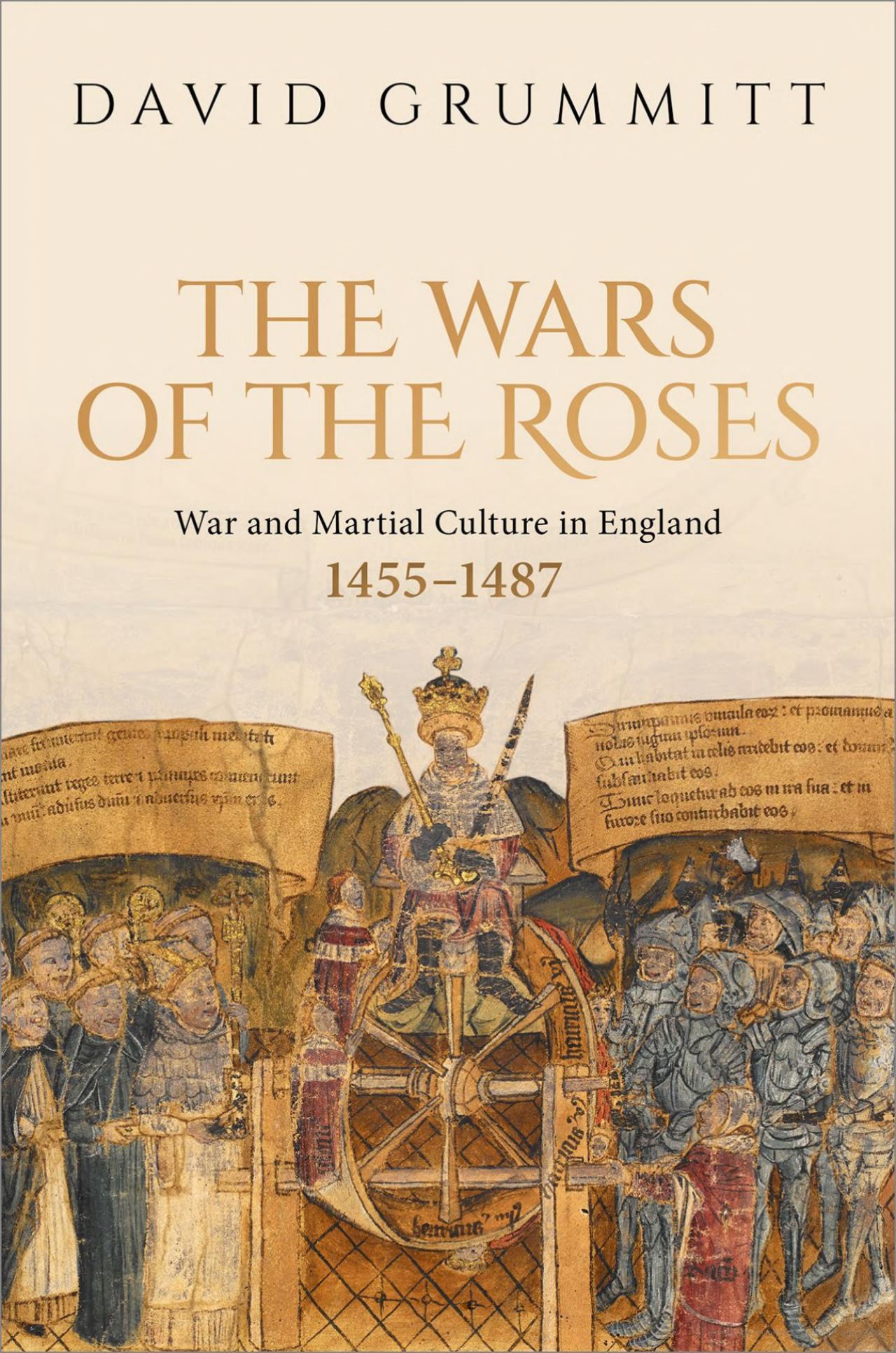
Publication – David Grummitt, « The Wars of the Roses. War and Martial Culture in England, 1455–1487 »

The series of rebellions against royal authority and the violent clashes between aristocratic families that occurred in England between 1455 and 1487 have long been characterized as the ‘Wars of the Roses’. Yet, far from being a continuous period of civil war, the Wars of the Roses were in fact an intermittent series of minor clashes, pitched battles, and sieges. These occurred against the backdrop of a demilitarization of the English aristocracy in the final years of the Hundred Years War.

Drawing on extensive archival research and a wide-ranging synthesis of the secondary literature, David Grummitt here reconsiders the nature of war and the martial culture of the English in the second half of the fifteenth century. He places these experiences within the peculiar legal, constitutional, and political culture of late Lancastrian and Yorkist England, to reexamine in depth the motivation for fighting, the raising and equipping of armies, the experience of battle and its aftermath, and the ways in which civil conflict was rationalized and memorialized. These experiences are compared and contrasted to that in its continental neighbours in an age of expanding royal authority, gunpowder weapons, and emergence of standing, professional armies. The book’s conclusions offer a new interpretation of the evidence for the size of armies and scale of conflict during these years, the weaponry and tactics employed, and the wider importance of war, chivalry, and martial culture in late medieval England.

In so doing, and by drawing on a range of new conceptual approaches in the fields of the history of emotions, material culture, and conflict archaeology, alongside other more traditional disciplinary approaches to military history, the book offers a thorough and fulsome history of the Wars of the Roses, one that properly integrates war and marital culture into our understanding of the political and cultural history of fifteenth-century England, and late medieval European military history more generally.

1:Fifteenth-Century England: A Society Structured for War
2:The Wars of the Roses: Treason, Rebellion and Civil War
3:The Logistics of War: Armies and Weapons
4:The Practicalities of War: Training, Strategy and Preparation for Battle
5:The Experience of War: Tactics and Battle
6:The Aftermath of War: Death, Profit and Loss
7:The Legacy of War: Memorialization and History
Conclusion. An English Way of War?

Informations pratiques :

David Grummitt, The Wars of the Roses. War and Martial Culture in England, 1455–1487, Oxford, Oxford University Press, 2025 ; 1 vol., 288 p. ISBN : 978-0-19895-891-8. Prix : GBP 84,00.

Source : Oxford University Press

Publié dans Publications | Commentaires fermés sur Publication – David Grummitt, « The Wars of the Roses. War and Martial Culture in England, 1455–1487 »

Publication – Marco Cristini, « The Years of the Infidels. African Latin Christianity from the Vandals to the Almohads »

This book examines African Latin Christianity from the fifth to the thirteenth century, exploring the complex interactions between local Christian communities and Vandals, Byzantines, and Arabs.

Focusing on the resilience of successive generations of African Christians and their capacity to adapt to challenging political circumstances, Marco Cristini delves into their relationships with local rulers, popes, and European sovereigns such as Charlemagne. He argues that the history of Augustine’s heirs represents a crucial phase in the transformation of the Mediterranean’s religious landscape during Late Antiquity and the Early Middle Ages. This book offers readers fresh insights into much-debated topics, including the role of religious otherness under the Vandals, Justinian’s religious policies, Christian-Muslim relations, and the impact of Western medieval missionaries on indigenous Christian communities. It also sheds light on the remarkable longevity of African Latin Christianity, demonstrating its ability to not only survive but also thrive under ‘heretical’ or ‘infidel’ rulers for nearly eight centuries.

With its accessible, in-depth, and comprehensive analysis, this book is an essential resource for scholars, postgraduates, and undergraduates interested in Late Antiquity, the Early Middle Ages, the history of North Africa, pre-modern Christianity, early Islam, and the Crusades.

Marco Cristini obtained his PhD at Scuola Normale Superiore (Pisa, Italy). He subsequently held a fellowship at the University of Tübingen and at the Istituto Italiano di Storia Antica (Rome). He is currently Lecturer in Medieval History at the University of Florence. He published a monograph on the second-last Ostrogothic king (Baduila: Politics and Warfare at the End of Ostrogothic Italy), as well as several papers on sixth-century Italy, Cassiodorus, Procopius of Caesarea, and early medieval diplomacy.

Introduction

Chapter 1: The Vandal Kingdom: Confrontation and Coexistence

Chapter 2: Conquering Africa: Justinian’s Wars and the Three Chapters Controversy

Chapter 3: Gregory the Great and the African Church

Chapter 4: Monotheletism and the African Church

Chapter 5: The Islamic Conquest and its Impact upon African Latin Christianity

Chapter 6: Three Centuries of Silence? African Christians under Islamic Rule during the Early Middle Ages

Chapter 7: Leo IX, Gregory VII, and the Church of Africa

Chapter 8: The Almohads and the End of African Latin Christianity

Conclusion

Bibliography

Informations pratiques :

Marco Cristini, The Years of the Infidels. African Latin Christianity from the Vandals to the Almohads, Londres, Routledge, 2025 ; 1 vol., 270 p. ISBN : 978-1-03254-063-4. Prix GBP 108,00.

Source : Routledge

Publié dans Publications | Commentaires fermés sur Publication – Marco Cristini, « The Years of the Infidels. African Latin Christianity from the Vandals to the Almohads »

Web – La Librairie des ducs de Bourgogne : un trésor séculaire désormais accessible en ligne

Accès : ici

KBR conserve 279 manuscrits issus de la prestigieuse Librairie des ducs de Bourgogne. Grâce à un ambitieux projet de numérisation, cette collection exceptionnelle est désormais entièrement consultable en ligne. Zoomez sur les moindres détails des plus belles miniatures et admirez un art d’un niveau inégalé.

La Librairie des ducs de Bourgogne est l’une des collections de manuscrits les plus impressionnantes du Moyen Âge. Les ducs de Bourgogne régnaient sur les Pays-Bas aux XIVe et XVe siècles. C’est Philippe le Hardi, premier duc de Bourgogne, qui posa les bases de ce qui allait devenir une bibliothèque d’exception.

À la mort de Philippe le Bon, la bibliothèque comptait environ 900 manuscrits d’une qualité remarquable. Elle était non seulement l’une des plus vastes, mais aussi l’une des plus belles bibliothèques de son temps, au même titre que celles des rois de France, des Médicis ou encore la bibliothèque pontificale.

Une bibliothèque mondialement célèbre ayant survécu aux incendies et aux pillages

En 1559, Philippe II fit transférer la bibliothèque au palais du Coudenberg. Le 3 février 1731, le destin s’acharne : un incendie ravageur réduit le palais en cendres. Alors que les flammes s’élèvent, de nombreux manuscrits sont jetés par les fenêtres dans la neige afin de sauver la collection. Certains portent encore les traces de cette opération de sauvetage.

Lors de l’occupation de Bruxelles par les troupes françaises en 1746, une partie des manuscrits est emportée à Paris. Une partie de ces œuvres est restituée en 1770. En 1794, de précieux manuscrits prennent à nouveau la route de Paris. Certains d’entre eux seront restitués à la Belgique par le Congrès de Vienne.

Près de cent ans après l’incendie du palais du Coudenberg, en 1827, le destin frappe à nouveau. Un incendie se déclare aux étages supérieurs du Palais de Charles de Lorraine à Bruxelles, où la Bibliothèque royale est alors installée. Les flammes n’atteignent pas les manuscrits, mais l’eau utilisée pour éteindre le feu leur cause des dommages irréparables. Des dizaines de reliures en cuir et en parchemin ne survivent pas aux dégâts causés par l’eau.

279 manuscrits conservés à KBR

Par miracle, environ 400 de ces somptueux manuscrits enluminés ont été préservés. Parmi eux, 279 sont aujourd’hui conservés dans les collections de KBR. Les autres sont dispersés dans 35 bibliothèques à travers le monde.

Parmi les chefs-d’œuvre conservés à KBR figurent notamment les Chroniques de Hainaut avec la célèbre miniature de Rogier van der Weyden, le Roman de Girart de Nevers, le Psautier de Peterborough, ainsi que de nombreux autres manuscrits parmi les plus prestigieux au monde. Aujourd’hui, vous pouvez consulter l’ensemble de la collection en ligne et explorer chaque miniature dans ses moindres détails.

Source : KBR

Publié dans Web | Commentaires fermés sur Web – La Librairie des ducs de Bourgogne : un trésor séculaire désormais accessible en ligne