Séminaire – Les Journées du LaMOP (XII) – Flocel Sabaté

Les Journées du LaMOP, organisées depuis 2012, sont l’occasion de donner la parole à un éminent collègue étranger, qui évoque son parcours académique et scientifique, ses liens avec la recherche française, ses méthodes de travail et ses chantiers en cours.

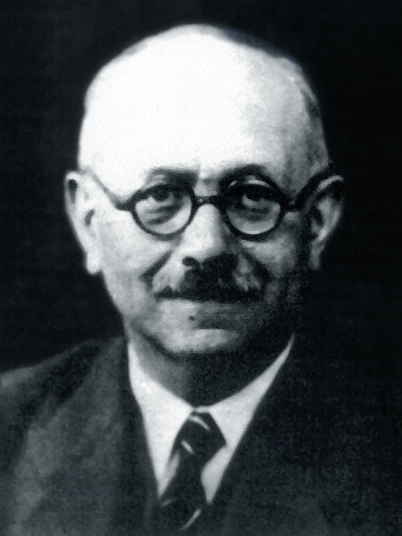
Pour la 12e journée de cet évènement, le LaMOP a invité́ Flocel Sabaté, Professeur à l’Université de Lleida, dont les relations avec le laboratoire remontent au début des années 2000. Ses travaux abordent la société médiévale entre les IXe et XVe siècle, à partir d’un terrain d’observation principalement constitué par la Catalogne et la Couronne d’Aragon. Ses thématiques de recherche, développées de manière monographique ou au travers d’ouvrages collectifs, sont dès lors très diverses : féodalité, territoire, fiscalité et administration de la justice, relations de pouvoir, modélisation des constructions politiques, violence et comportements sociaux, identités collectives et mémoire… Quelques-unes de ses publications récentes, autour de l’identité, sur la peine de mort et le phénomène des routiers, feront l’objet d’une lecture par des membres du Lamop et d’une discussion.

Programme :

Matinée (10h-12h)

— Présentation de l’œuvre de Flocel Sabaté par François Foronda

— Conférence de Flocel Sabaté : Catalogne et Couronne d’Aragon, un modèle politique ?

Après-midi (14h-18h)

— Identités, lectures de Florian Mazel et de Pierre Vey, autour des ouvrages : Historical Analysis of the Catalan Identity, dir. Flocel Sabaté, Berne, Peter Lang, 2015 et Identity in the Middle Ages. Approaches from Southwestern Europe, dir. Flocel Sabaté, Leeds, Arc Hunamity Press, 2021.

– Peine de mort, lectures de Victor Ducros et d’Elisabeth Schmit, autour de l’ouvrage The Death Penalty in Late-Medieval Catalonia. Evidence and significations, New York, Routledge, 2020.

– Routiers, lectures de Gaëtan Bonnot et Louise Gentil, autour de l’ouvrage D’étrangers envahissents. La Catalogne face aux compagnies de routiers au XIVe siècle, Berne, Peter Lang, 2025 (à paraître).

Informations pratiques :

Les Journées du LaMOP (XII) – Flocel Sabaté
Mercredi 14 mai 2025 – 10h-18h

Salle 3.02 du centre de colloques, campus Condorcet

Source : LAMOP

Publié dans Séminaire | Commentaires fermés sur Séminaire – Les Journées du LaMOP (XII) – Flocel Sabaté

Publication – Laura L. Gathagan, « The Queenship of Mathilda of Flanders, c. 1031-1083. Embodying Conquest »

In Norman England, Mathilda’s unique practice of queenship was robustly public. It was characterized by an unapologetic embrace of both new and traditional institutions: military lordship, royal justice, monastic foundation and ecclesiastical reform, documentary initiatives and cultural networks. Although she may appear only glancingly in the chronicle « story sources » of her day, she is everywhere else: governing in documents and charters, articulating her identity in architecture, expressing her authority through innovative custom-made liturgies, handing down juridical sentences and participating in the most fundamental theological issues of her day. However, unlike her husband William « the Conqueror », her impact and influence have not ensured her a place of centrality in modern memory. This book redresses that imbalance. Moving away from the traditional chronological approach to a woman’s life, its thematic chapters use the metaphor of Mathilda’s body to center her actions, creations and speech, showing how Mathilda embodied power in a world often construed as primarily masculine. It thus brings back into focus the policies she championed, the strategies she pursued and the shape of her authority.

Table des matières :

List of Illustrations
Acknowledgements
Chronology
List of Abbreviations

Introduction

  1. Blood
  2. Hands
  3. Fingers
  4. Head
  5. Womb
  6. Flesh
  7. Mouth
  8. Corpse

Select Bibliography
Index of Persons and Places

LAURA L. GATHAGAN is an Associate Professor of History at the State University of New York, College at Cortland. She has published widely on medieval women’s power. She is a Fellow of Antiquaries of London and a member of the Royal Society of Arts.

Informations pratiques :

Laura L. Gathagan, The Queenship of Mathilda of Flanders, c. 1031-1083. Embodying Conquest, Woodbridge, The Boydell Press, 2025 ; 1 vol., 280 p. (Gender in the Middle Ages, 24). ISBN : 978-1-83765-068-2. Prix : GBP : 85,00.

Source : Boydell and Brewer

Publié dans Publications | Commentaires fermés sur Publication – Laura L. Gathagan, « The Queenship of Mathilda of Flanders, c. 1031-1083. Embodying Conquest »

Publication – Michael Brauer, « Königliche Präsenz in der Verwaltung. Eine Kulturgeschichte der Governance unter Karl V. von Frankreich (1364–1380) »

Warum trat Karl V. von Frankreich regelmäßig persönlich in Erscheinung, wenn er neue Verfahren zur Herrschaftssicherung oder Ressourcengewinnung im Hundertjährigen Krieg etablieren wollte? Er tat dies etwa, indem er eigenhändig Verwaltungsbriefe unterschrieb oder Wahlverfahren auf dem Thron sitzend beiwohnte. Das Buch zeigt auf, dass die königliche Präsenz in der Verwaltung im spätmittelalterlichen Frankreich ein zentrales Mittel war, um die Akzeptanz von Verfahren herzustellen und Entscheidungen durchzusetzen. Denn dadurch wussten die Zeitgenossen, dass diese die Autorität des Königs genossen und dass den Anweisungen Folge zu leisten war. Durch Detailstudien zu Eiden, Wahlverfahren und königlichem Handeln auf verschiedenen Governance-Feldern werden gleichzeitig neue Perspektiven hinsichtlich der Intensivierung von Staatlichkeit durch Verwaltung eröffnet.

Why did Charles V of France regularly appear in person when he wanted to establish new procedures to secure his rule or acquire resources during the Hundred Years’ War? For example, he signed administrative letters in person or attended electoral processes on the throne. The book demonstrates that the royal presence in the administration of late medieval France was a central means of establishing the acceptance of procedures and enforcing decisions. It made contemporaries aware that these practices were authorised by the king and that instructions had to be obeyed. At the same time, detailed studies of oaths, electoral procedures and royal action in various areas of governance open up new perspectives on the intensification of statehood through administration.

Michael Brauer ist Assoziierter Professor für Mittelalterliche Geschichte und leitet den Bereich Gastrosophie / Food Studies am Fachbereich Geschichte der Universität Salzburg. Er studierte Mittelalterliche Geschichte und Philosophie an der Humboldt-Universität zu Berlin sowie Medieval Studies an der Central European University, Budapest, und war danach in mehreren Positionen an der HU Berlin und an der Universität Salzburg tätig. Zu seinen Forschungsschwerpunkten gehören die Kulturgeschichte der Politik und Administration, Religionsgeschichte und Kulturkontakt sowie Ernährungsgeschichte.

Table des matières : ici

Informations pratiques :

Michael Brauer, Königliche Präsenz in der Verwaltung. Eine Kulturgeschichte der Governance unter Karl V. von Frankreich (1364–1380), Sigmaringen, Jan Thorbeck Verlag, 2025 ; 1 vol., 372 p. (Mittelalter-Forschungen, 71). ISBN : 978-3-7995-4392-7. Prix : € 49,00.

Source : Jan Thorbecke Verlag

Publié dans Publications | Commentaires fermés sur Publication – Michael Brauer, « Königliche Präsenz in der Verwaltung. Eine Kulturgeschichte der Governance unter Karl V. von Frankreich (1364–1380) »

Publication – « Lire le droit du Moyen Âge. Comprendre et utiliser les sources juridiques (XIIe-XVe siècles) », éd. Emanuele Conte, Louis Genton

L’histoire du droit présente le défi intellectuel de ne pas considérer les normes juridiques actuelles comme les seules solutions possibles pour organiser une société. D’autres systèmes juridique sont existé et d’autres surgiront à l’avenir. Pour comprendre pleinement nos théories et pratiques contemporaines du droit, il est crucial de se tourner non seulement vers ce qui existe, mais aussi vers ce qui a disparu. La recherche en droit prend ainsi un sens nouveau : il ne s’agit pas seulement de retracer l’évolution des idées juridiques, mais aussi de redécouvrir ce qui n’existe plus et de lui donner une place dans notre réflexion actuelle. Pour cela, il est indispensable de revenir aux sources.

Codirigé par Emanuele Conte, historien du droit médiéval, et Louis Genton, historien du Moyen Âge, cet ouvrage propose une exploration des sources médiévales, offrant une lecture essentielle des textes qui éclairent les théories et pratiques juridiques de l’époque. Il se situe à l’intersection d’une histoire du droit, sensible à la matérialité des sources et aux pratiques sociales, et du champ des pratiques de l’écrit qui envisage les sources juridiques comme un élément-clé de la gouvernementalité médiévale.

À la fois guide méthodologique et outil réflexif, ce livre propose aux étudiants, chercheurs et passionnés d’histoire et de droit, des clés d’analyse et d’interprétation des archives juridiques médiévales. Accompagné d’une version numérique en libre accès, il permet d’approfondir l’étude des textes et de découvrir des ressources documentaires interactives, offrant ainsi de nouvelles perspectives sur l’influence durable du droit médiéval.

Table des matières : ici

Informations pratiques :

Lire le droit du Moyen Âge. Comprendre et utiliser les sources juridiques (XIIe-XVe siècles), éd. Emanuele Conte, Louis Genton, Palerme, Palumbo Editore, 2025 ; 1 vol. ISBN : 978-8-86889-949-3. Prix : € 25,00.

Source : Palumbo Editore

Publié dans Publications | Commentaires fermés sur Publication – « Lire le droit du Moyen Âge. Comprendre et utiliser les sources juridiques (XIIe-XVe siècles) », éd. Emanuele Conte, Louis Genton

Exposition – Réouverture du KBR museum le 23 mai 2025

Le KBR museum, où brille la collection de manuscrits des ducs de Bourgogne, rouvrira ses portes le 23 mai 2025 avec une expérience musicale unique. Au programme ? Un voyage à travers la polyphonie des XVe et XVIe siècles ! 

La Belgique cache un trésor depuis 600 ans

Il y a six siècles, Bruxelles appartenait aux souverains les plus riches et les plus puissants d’Europe : les ducs de Bourgogne. Fins politiques et mécènes cultivés, ils se sont constitué un émouvant trésor : la Librairie, une collection précieuse et unique de manuscrits.

Ces chefs-d’oeuvre, rescapés des outrages du temps et de l’Histoire, KBR les conserve pour vous. Ils sont dorénavant exposés au KBR museum. Découvrez-y des manuscrits magnifiquement enluminés, des peintures, des sculptures et des bijoux médiévaux.

Un voyage musical

Le 23 mai 2025, le KBR museum rouvrira ses portes avec une couche musicale supplémentaire. Outre l’histoire des miniaturistes médiévaux, nous racontons maintenant aussi celle des polyphonistes franco-flamands.

Tout comme les Primitifs flamands l’ont fait dans la peinture et les miniaturistes dans les manuscrits, les compositeurs, chanteurs et musiciens des Pays-Bas méridioniaux ont donné le ton sur la scène musicale des XVe et XVIe siècles.

Aujourd’hui, nous vous proposons de découvrir ce trésor de mots, d’images et de sons… (re)visitez le KBR museum et laissez-vous immerger dans la musique du temps des ducs de Bourgogne.  À côté du musée, découvrez notre programme de conférences, concerts et ateliers qui donneront vie à l’époque bourguignonne et vous plongeront davantage dans le monde de la polyphonie.

Une visite sur mesure

KBR s’adapte à vos envies. A l’aide d’un bracelet interactif, choisissez le parcours qui vous convient :

  • Visite approfondie : pour chaque pièce exposée, les connaisseurs apprécieront les explications détaillées de nos experts.
  • Visite découverte : tout ce que vous devez savoir sur le contenu du musée, résumé de manière succincte mais tout aussi conforme.
  • Visite ludique : parcours adapté aux enfants sous forme de questions, observation de détails et audios amusants. Adultes admis bien sûr !

Vous souhaitez visiter le KBR museum en famille ? Consultez notre page consacrée aux différentes possibilités de visites, en fonction de l’âge de vos enfants.

Tous les six mois, le KBR museum tourne la page

Saviez-vous que les manuscrits sont trop fragiles pour être exposés en permanence ? Afin de les préserver, ils sont remplacés deux fois par an.

Un musée qui sollicite vos sens 

Le KBR museum vous propose bien plus que la contemplation de manuscrits. Plusieurs expériences visuelles, sonores ou tactiles vous sont proposées. Des personnages s’échappent des manuscrits pour danser au-dessus de vos têtes ou vous chuchoter une histoire à l’oreille.

Vous préférez mettre la main à la pâte ? Il vous est également possible de créer une miniature, tester vos aptitudes en tant que moine copiste ou dater un manuscrit. Vous pouvez aussi toucher certains objets comme, par exemple, les matériaux utilisés pour la fabrication d’un manuscrit.

Source : KBR

Publié dans Exposition | Commentaires fermés sur Exposition – Réouverture du KBR museum le 23 mai 2025

Publication – « From Digital to Distant Diplomatics. Digital Diplomatics 2022 », éd. Daniel Luger, Georg Vogeler

The Digital Diplomatics 2022 conference took place from the 28th to 30th of September 2023. It was the fourth instance of an international conference series (Munich 2007, Naples 2011, Paris 2013), which originally started as a workshop in Munich in 2004. In the long gap between the last conference and this one, the digitization of research on medieval charters, instruments, and deeds has advanced significantly, although some problems of digital diplomatics remain unsolved.

One common thread in many talks of the conference was the importance of well-processed and sustainable data which gains its value from being accessible and useful to not only singular projects but also further research.

The application of machine learning methods to corpora of single sheet legal documents is rather modern and results in new and exciting research questions for our discipline. They allow us to climb on the shoulders of the data giants that have emerged in the last 15 years, with new ideas and unwavering enthusiasm.

Daniel Luger ist Historiker mit Schwerpunkt „Historische Hilfswisssenschaften“an der Universität Graz sowie Mitglied des Instituts für Österreichische Geschichtsforschung bzw. der Arbeitsgruppe Regesta Imperii der Österreichischen Akademie der Wissenschaften.

Georg Vogeler ist Historiker und Professor für Digital Humanities am Zentrum für Informationsmodellierung der Universität Graz und Projektleiter des ERC-Advanced Grant Projekts “From Digital to Distant Diplomatics”.

Table des matières : ici

Informations pratiques :

From Digital to Distant Diplomatics. Digital Diplomatics 2022, éd. Daniel Luger, Georg Vogeler, Göttingen, Vandenhoeck und Ruprecht, 2025 ; 1 vol., 400 p. (Beihefte zum Archiv für Diplomatik, Schriftgeschichte, Siegel- und Wappenkunde, 22). ISBN : 978-3-412-53090-7. Open-access.

Source : Vandenhoeck und Ruprecht

Publié dans Publications | Commentaires fermés sur Publication – « From Digital to Distant Diplomatics. Digital Diplomatics 2022 », éd. Daniel Luger, Georg Vogeler

École d’été – Schriftkulturen des Mittelalters in digitaler Perspektive

Vom 22.–23. August 2025 findet in Berlin der Cross-NFDI-Graduiertenworkshop „Schriftkulturen des Mittelalters in digitaler Perspektive“ statt, der von der Staatsbibliothek zu Berlin gemeinsam mit dem Münzkabinett der Staatlichen Museen zu Berlin und den Konsortien 4Objects (Community Cluster Objekte als Inschriftenträger) sowie 4Memory der Nationalen Forschungsdateninfrastruktur (NFDI) organisiert wird.

In dem zweitägigen Workshop werden verschiedene Aspekte der digitalen Arbeit mit historischen schrifttragenden Objekten in Impulsvorträgen ausgewiesener Fachexpert:innen theoretisch beleuchtet und in Hands-on-Übungen durch die Teilnehmenden praktisch erprobt. Fragen nach methodischer Relevanz und möglichen Anwendungsszenarien digitaler Verfahren in der geisteswissenschaftlich-mediävistischen Forschung werden dabei um Überlegungen zur digitalen Publikation und nachnutzbaren Dokumentation der im Arbeitsprozess erzeugten Forschungsdaten ergänzt.

Der Workshop ist eine Kooperationsveranstaltung mit dem Sommerkurs „Inschrift – Handschrift – Buchdruck. Medien der Schriftkultur im späten Mittelalter“ am Alfried Krupp Wissenschaftskolleg Greifswald (25.-29.8.2025) und stellt inhaltlich eine Erweiterung der Greifswalder Kurswoche um ein Modul zu Digital Humanities und Forschungsdatenmanagement dar. Bewerbungen für den Berliner und Greifswalder Kursteil sind auch unabhängig vom jeweiligen anderen Kursteil möglich. Wenn Sie sich für beide Kurse interessieren, informieren Sie sich bitte auch auf der verlinkten Seite über die Bewerbungsmodalitäten für den Greifswalder Kursteil.

Bewerbung

Teilnahmevoraussetzungen für den Berliner Kursteil

  • Studium eines historisch orientierten geisteswissenschaftlichen Fachs, idealerweise mit mediävistischem Schwerpunkt; mind. Bachelor-Abschluss oder kurz bevorstehender BA-Abschluss

Bewerbungsunterlagen für den Berliner Kursteil

  • ein Motivationsschreiben (ca. eine halbe Seite) mit Ihren Kontaktdaten
  • einen aktuellen tabellarischen Lebenslauf
  • erworbene akademische Abschlusszeugnisse oder Nachweise

Die Kurssprache ist Deutsch. Es werden keine spezifischen technischen bzw. IT-Kenntnisse vorausgesetzt.

Die Teilnehmenden erhalten einen Unterbringungs- und Reisekostenzuschuss.

Bitte senden Sie Ihre Bewerbung bis einschließlich 23. April 2025 an Nicole Eichenberger und Andreas Janke (nicole.eichenberger@sbb.spk-berlin.de; andreas.janke@sbb.spk-berlin.de).

Eine Nachricht über die Auswahlentscheidung erhalten Sie bis 12. Mai 2025.

Programm des Berliner Kurses

Freitag, 22.8.2025 (13-19.30 Uhr):

  • Themenblock I „Codierung und maschinelle Verarbeitung von Texten“
  • Themenblock II „Digitale Plattformen für die Arbeit mit schriftlichem Kulturerbe“
  • Öffentliche Podiumsdiskussion mit Vertreter:innen aus Forschung, Kulturerbeeinrichtungen und NFDI

Samstag, 23.8.2025 (9-18 Uhr):

  • Themenblock III „KI und historische Dokumente“
  • Themenblock IV „Materialanalyse und bildgebende Verfahren“
  • Themenblock V „Forschungsdatenmanagement“

Informations pratiques :

22./23. August 2025

Staatsbibliothek zu Berlin
Unter den Linden 8
10117 Berlin

Kontakt : Dr. Nicole Eichenberger (nicole.eichenberger@sbb.spk-berlin.de), Dr. Andreas Janke (andreas.janke@sbb.spk-berlin.de), Dr. Christoph Klose (C.Klose@smb.spk-berlin.de).

Source : Staatsbibliothek zu Berlin

Publié dans École d'été | Commentaires fermés sur École d’été – Schriftkulturen des Mittelalters in digitaler Perspektive

Publication – « Metz à la fin du Moyen Âge fin XIVe-milieu XVIe siècle », éd. Julien Trapp

Cité prospère, Metz profite de sa situation entre royaume de France et Saint-Empire, dont elle dépend en théorie, pour bénéficier d’une quasi-indépendance à la fin du Moyen Âge. La cité contrôle un vaste territoire (le Pays messin) – une particularité notable alors qu’elle est entourée de grandes principautés – et connaît de profondes mutations politiques, économiques et sociales entre la fin du XIVe et le milieu du XVIe siècle. Cependant, le déclin progressif de son élite urbaine, les familles des paraiges, entraîne en 1552 la fin de son système de gouvernement oligarchique, mettant un terme à une période remarquable de l’histoire messine.

À la lumière des recherches de ces trente dernières années, un collectif d’une vingtaine de chercheurs – historiens, historiens de l’art et archéologues – propose à travers cet ouvrage un état de la connaissance sur la ville et son territoire. Une soixantaine de thématiques y sont abordées. Elles sont notamment consacrées à l’urbanisme et aux domaines militaire, politique, diplomatique, économique, culturel ou encore religieux. Divisé en cinq chapitres, l’ouvrage est rythmé par des encarts faisant le point sur des innovations de l’époque médiévale à Metz.

Table des matières : ici

Metz à la fin du Moyen Âge fin XIVe-milieu XVIe siècle, éd. Julien Trapp, Metz, Silvana Editoriale, 2025 ; 1 vol., 448 p. ISBN : 978-8-83665-708-7. Prix : € 25,00.

Source : Silvana Editoriale

Publié dans Publications | Commentaires fermés sur Publication – « Metz à la fin du Moyen Âge fin XIVe-milieu XVIe siècle », éd. Julien Trapp

Cycle de conférences – Forerunners of Modernity? The Conversos

Histories of the conversos influenced Spanish and Portuguese politics, societies, and cultures well into modern times. Collective anxieties vis-à-vis the conversos contributed to the establishment of the Spanish and Portuguese Inquisitions, the distinction between “New Christians” and “Old Christians”, as well as the emergence of “purity of blood” (limpieza de sangre) statutes, which some scholars identify as the beginning of modern antisemitism.

In his controversial 2009 “The Other Within,” Yirmiyahu Yovel designated the conversos as “forerunners of modernity,” and highlighted their importance, among others, for the modern transformation of religion, the rise of the individual, religious hybridity, and plural identities. The book has triggered heavy criticism but it also provoked major discussions that continue until today.

This lecture series touches upon some of these discussions and the background needed to understand fully the conversos’ impact and importance. Internationally renowned researchers feature prominently in this series, as they share their respective insights, questions, and scholarly critiques with students, fellow scholars, and the wider public.

Programme :

17. April – Susanne Zepp-Zwirner (Duisburg-Essen): Writing Difference in an Age of Essentialism: Converso Literature and Belonging in Early Modern Europe

24. April – Moisés Orfali (Ramat Gan): The Spanish Jewish Converso: The Theme of the Other

8. Mai – Harm den Boer (Basel): Vision deleitable: From 15th Century Converso Thought to Seventeenth-Century Re-Translation in Amsterdam

15. Mai – Carsten Wilke (Vienna) Between Romanticism and Marxism: The Conversos in Twentieth-Century Controversies

22. Mai – Tirtsah Levie Bernfeld (Amsterdam): Women of Sephardi Heritage in Early Modern Times: The Iberian Peninsula and Beyond

5. Juni – Ronnie Perelis (New York): Converso Self-Fashioning

19. Juni – Bernhard Holl (Berlin): Being Anti-Converso in Fifteenth Century Spain: a Modern Position?

26. Juni – Miriam Bodian (Jerusalem): Crypto-Jewish Martyrdom: Creating a Practice

3. Juli – David Graizbord (Tucson): Ways of Belonging among Conversos: 15th–17th Centuries

10. Juli – Tanja Zakrzewski (Potsdam): The Same but Different? Conversos and Moriscos in Early Modern Spain

17. Juli – Claude Stuczynski (Ramat Gan): Converso Crypto-Judaism: A Mere Matter of Identity and Memory?

17.04.2025 – 17.07.2025

Potsdam

henning.krakow@uni-potsdam.de

Source : H-Soz-Kult

Publié dans Colloque | Commentaires fermés sur Cycle de conférences – Forerunners of Modernity? The Conversos

Offre d’emploi – 2 PhD positions, University of Basel, Eikones: Center for the Theory and History of the Image

Call for Applications for 2 PhD Students for 4 years

Start date September 1, 2025

In the fields of History, Art History, Ancient History, Egyptology, English, German Literature, Latin Studies, Media Studies, Musicology, Philosophy.

Application Due Date: April 27, 2025

Find out more on the University website.

The eikones Graduate School at the Center for the Theory and History of the Image at the University of Basel invites applications for two positions for doctoral study on the theory and history of the image for four years beginning September 1, 2025.

Since 2005, eikones has served as a center for research on images from systematic and historical perspectives. The international and interdisciplinary center investigates the meanings, functions and effects of images in cultures since Antiquity and in our contemporary society. It aims at foundational image theory and at a historical investigation of images as instruments of human knowledge and cultural practices. We welcome PhD applications in all fields represented by members of the eikones Trägerschaft. Members of the eikones Trägerschaft are listed here: https://eikones.philhist.unibas.ch/de/graduate-school/leitung/#c1003

Your position

The purpose of the grant is to support the completion of an original dissertation and the degree within the duration of the position. Students must fulfill all curricular requirements of the eikones Graduate School and participate in the events of the Center for the History and Theory of the Image.

Your profile

  • Excellent academic qualifications and promise in your field of study.
  • An innovative dissertation project relating to the theory and history of the image.
  • Masters or equivalent qualification in a relevant field of study, in particular History, Art History, Ancient History, Egyptology, English, German Literature, Latin Studies, Media Studies, Musicology, Philosophy.
  • Applicants must possess a MA degree or equivalent by September 1, 2025. The MA degree must have been completed in the previous two years. Exceptions may be possible in extraordinary circumstances.
  • Doctoral students must be advised by a faculty member of the eikones graduate school.
  • Doctoral students must also be enrolled in the University of Basel for the duration of the program.

We offer you

The eikones graduate school offers excellent students of the humanities who would like to pursue a doctorate in the history and theory of the image a structured program of graduate study distinguished by dedicated advising, internationality, interdisciplinary, regular dialogue with guest scholars, and professional opportunities. The goal of the doctoral program is the successful completion of the degree within the four-year duration. Salaries follow the standards of the University of Basel for doctorate positions.

Application / Contact

Please submit your application in German or English as a single pdf by April 27, 2025 using the online portal provided by the University of Basel. The application should include:

  • Cover Letter
  • CV
  • Copies of Degree Certificates
  • Contact details for two references
  • Project description (at most 10 pages) and bibliography
  • Writing sample (at most 20 pages)

Please upload two files only: all materials listed above (1.-6.) in A SINGLE PDF FILE via the field “resume” as well as an extra cover letter (1.) via the field “cover letter”. Applications that do not conform to this format or received after this date will not receive consideration. Inquiries should be sent to eikones@unibas.ch. Short-listed candidates will be contacted for interviews.

Source : Medieval Art Research

Publié dans Offre d'emploi | Commentaires fermés sur Offre d’emploi – 2 PhD positions, University of Basel, Eikones: Center for the Theory and History of the Image