
Convinced that crusade expeditions were failing ‘because of our sins’, Paris-trained reformers targeted ‘corrupt’ clergy and ‘loose women’ (meretrices) in campaigns against prostitution, clerical marriage and concubinage, and lay fornication. Moral theologians tied new forms of participation in crusading to existing and novel forms of lay devotion and promoted crusaders as a new form of ideal penitent to emulate. Rather than cynically employing indulgences to convert devotion into cash for the crusade, many reformers insisted on allowing anyone who wished to ‘take the cross’, and that the effectiveness of any indulgence granted rested on the contrition and true confession of the recipient.
However, reformers became involved in collecting crusade taxes and donations, which potentially damaged their reputations. Reformers also urged secular and religious rulers to clamp down on excessive interest-taking by moneylenders and that any funds derived from this were tainted and must be restored to the moneylenders’ ‘victims’. However, rulers proved reluctant to give up a lucrative tax base traditionally tapped to underwrite crusade participation. Reformers who accompanied crusade armies also had to balance the practical demands of crusade armies with exhortations to maintain the spiritual purity deemed necessary for the success of any crusade campaign. The combination of crusade and reform pioneered by Paris theologians and their allies would result in the mendicant orders’ involvement in both projects and in pastoral care and education. Their conviction that the success of crusading or ‘holy war’ rested on social reform had a profound influence that remains today with ‘crusades’ against drugs, alcohol, gun ownership, ‘crusades’ for civil rights and social justice, and a host of other contemporary reform projects.
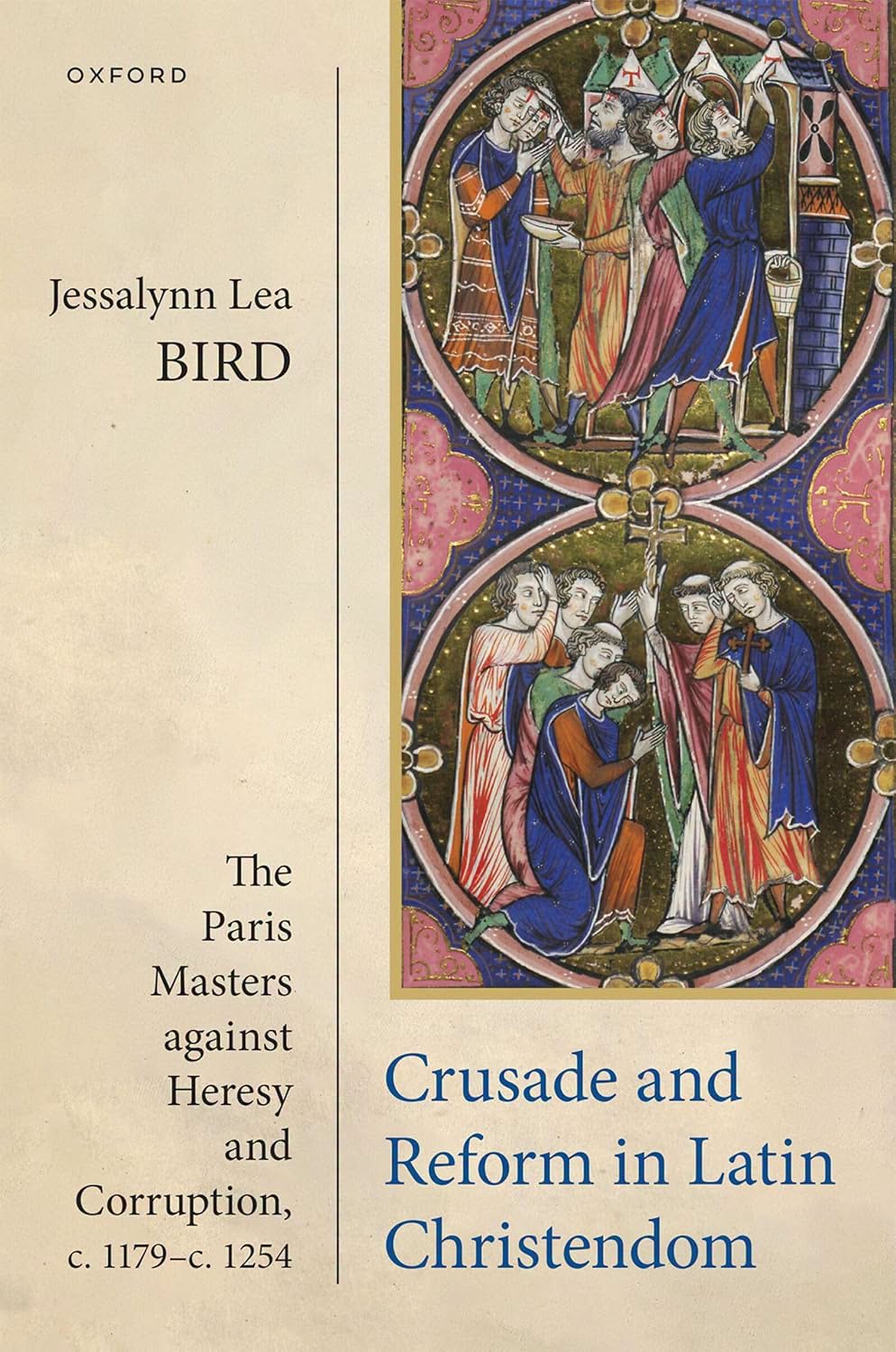
Table des matières :
1:Introduction
2:Reforming Networks: Paris Masters and Their Collaborators
3:From Venus’ Daughter to the Virgin Mary’s Son: Crusading and the Reform of Clergy and Women
4:Complications, Compromise, and Criticism: The Dialogic Refashioning of Clerical Reform and Crusade
5:Framing Crusading Devotion
6:Fishers in a Sea of Sinners: Preaching Crusading as Reform
7:Individualizing and Crowdsourcing Salvation: Indulgences and Martyrdom
8:Crowdfunding Crusading: Alms, Taxes, and Vow Redemptions
9:Base Profit or Profiting Souls? Usury (Interest-Taking) and Crusading
10:A Hundredfold Return: Crusading and the Rehabilitation of Usurers
11:Legacies of the Paris Masters: Reformers and the Mendicant Orders
Informations pratiques :
Jessalynn Lea Bird, Crusade and Reform in Latin Christendom. The Paris Masters against Heresy and Corruption, c.1179–c.1254, Oxford, Oxford University Press, 2026 ; 1 vol., 464 p. ISBN : 978-0-19879-472-1. Prix : GBP 104,00.
Source : Oxford University Press





Vous devez être connecté pour poster un commentaire.