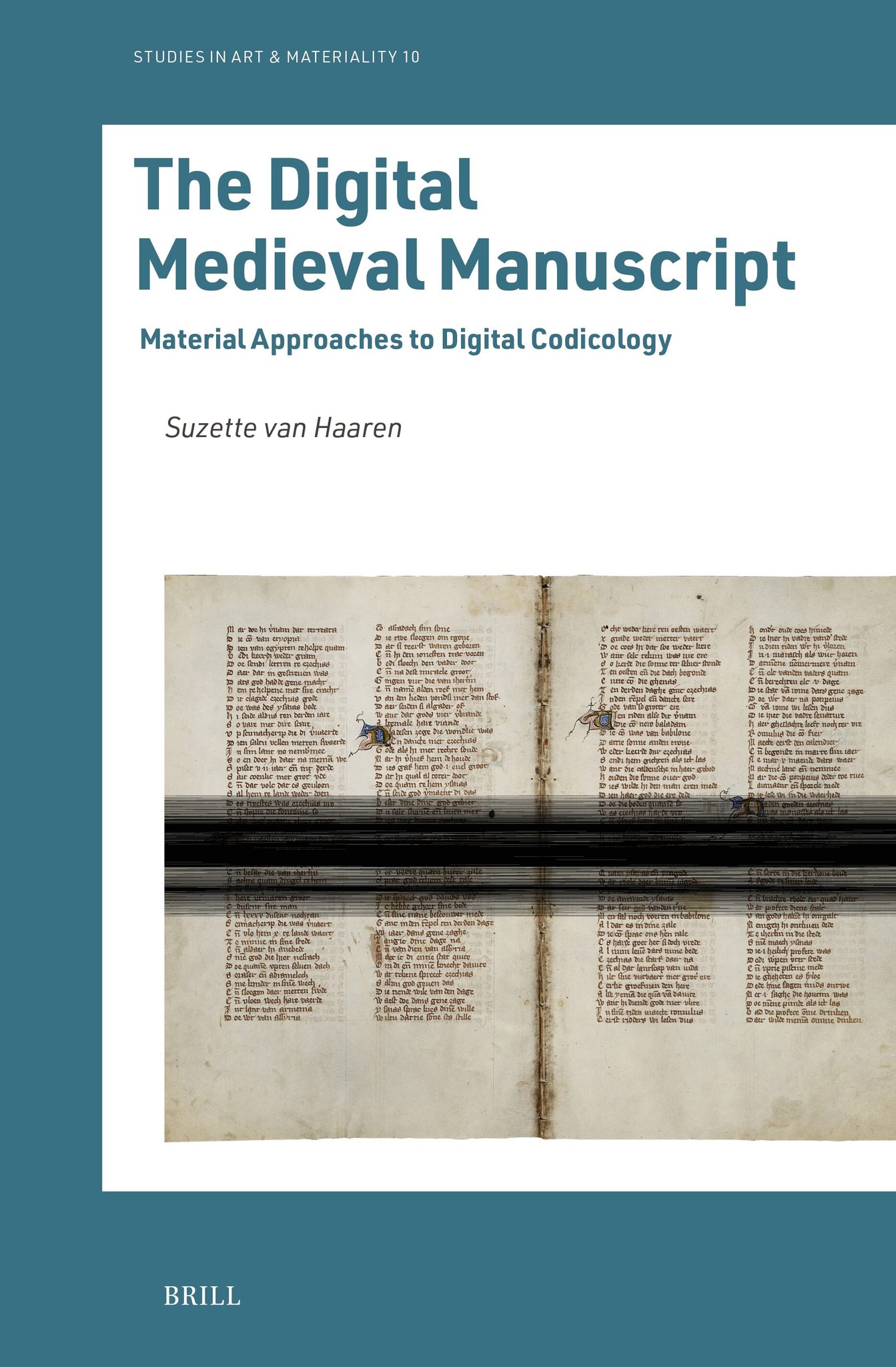
Publication – « From Digital to Distant Diplomatics. Digital Diplomatics 2022 », éd. Daniel Luger, Georg Vogeler

The Digital Diplomatics 2022 conference took place from the 28th to 30th of September 2023. It was the fourth instance of an international conference series (Munich 2007, Naples 2011, Paris 2013), which originally started as a workshop in Munich in 2004. In the long gap between the last conference and this one, the digitization of research on medieval charters, instruments, and deeds has advanced significantly, although some problems of digital diplomatics remain unsolved.

One common thread in many talks of the conference was the importance of well-processed and sustainable data which gains its value from being accessible and useful to not only singular projects but also further research.

The application of machine learning methods to corpora of single sheet legal documents is rather modern and results in new and exciting research questions for our discipline. They allow us to climb on the shoulders of the data giants that have emerged in the last 15 years, with new ideas and unwavering enthusiasm.

Daniel Luger ist Historiker mit Schwerpunkt „Historische Hilfswisssenschaften“an der Universität Graz sowie Mitglied des Instituts für Österreichische Geschichtsforschung bzw. der Arbeitsgruppe Regesta Imperii der Österreichischen Akademie der Wissenschaften.

Georg Vogeler ist Historiker und Professor für Digital Humanities am Zentrum für Informationsmodellierung der Universität Graz und Projektleiter des ERC-Advanced Grant Projekts “From Digital to Distant Diplomatics”.

Table des matières : ici

Informations pratiques :

From Digital to Distant Diplomatics. Digital Diplomatics 2022, éd. Daniel Luger, Georg Vogeler, Göttingen, Vandenhoeck und Ruprecht, 2025 ; 1 vol., 400 p. (Beihefte zum Archiv für Diplomatik, Schriftgeschichte, Siegel- und Wappenkunde, 22). ISBN : 978-3-412-53090-7. Open-access.

Source : Vandenhoeck und Ruprecht

Publié dans Publications | Commentaires fermés sur Publication – « From Digital to Distant Diplomatics. Digital Diplomatics 2022 », éd. Daniel Luger, Georg Vogeler

École d’été – Schriftkulturen des Mittelalters in digitaler Perspektive

Vom 22.–23. August 2025 findet in Berlin der Cross-NFDI-Graduiertenworkshop „Schriftkulturen des Mittelalters in digitaler Perspektive“ statt, der von der Staatsbibliothek zu Berlin gemeinsam mit dem Münzkabinett der Staatlichen Museen zu Berlin und den Konsortien 4Objects (Community Cluster Objekte als Inschriftenträger) sowie 4Memory der Nationalen Forschungsdateninfrastruktur (NFDI) organisiert wird.

In dem zweitägigen Workshop werden verschiedene Aspekte der digitalen Arbeit mit historischen schrifttragenden Objekten in Impulsvorträgen ausgewiesener Fachexpert:innen theoretisch beleuchtet und in Hands-on-Übungen durch die Teilnehmenden praktisch erprobt. Fragen nach methodischer Relevanz und möglichen Anwendungsszenarien digitaler Verfahren in der geisteswissenschaftlich-mediävistischen Forschung werden dabei um Überlegungen zur digitalen Publikation und nachnutzbaren Dokumentation der im Arbeitsprozess erzeugten Forschungsdaten ergänzt.

Der Workshop ist eine Kooperationsveranstaltung mit dem Sommerkurs „Inschrift – Handschrift – Buchdruck. Medien der Schriftkultur im späten Mittelalter“ am Alfried Krupp Wissenschaftskolleg Greifswald (25.-29.8.2025) und stellt inhaltlich eine Erweiterung der Greifswalder Kurswoche um ein Modul zu Digital Humanities und Forschungsdatenmanagement dar. Bewerbungen für den Berliner und Greifswalder Kursteil sind auch unabhängig vom jeweiligen anderen Kursteil möglich. Wenn Sie sich für beide Kurse interessieren, informieren Sie sich bitte auch auf der verlinkten Seite über die Bewerbungsmodalitäten für den Greifswalder Kursteil.

Bewerbung

Teilnahmevoraussetzungen für den Berliner Kursteil

  • Studium eines historisch orientierten geisteswissenschaftlichen Fachs, idealerweise mit mediävistischem Schwerpunkt; mind. Bachelor-Abschluss oder kurz bevorstehender BA-Abschluss

Bewerbungsunterlagen für den Berliner Kursteil

  • ein Motivationsschreiben (ca. eine halbe Seite) mit Ihren Kontaktdaten
  • einen aktuellen tabellarischen Lebenslauf
  • erworbene akademische Abschlusszeugnisse oder Nachweise

Die Kurssprache ist Deutsch. Es werden keine spezifischen technischen bzw. IT-Kenntnisse vorausgesetzt.

Die Teilnehmenden erhalten einen Unterbringungs- und Reisekostenzuschuss.

Bitte senden Sie Ihre Bewerbung bis einschließlich 23. April 2025 an Nicole Eichenberger und Andreas Janke (nicole.eichenberger@sbb.spk-berlin.de; andreas.janke@sbb.spk-berlin.de).

Eine Nachricht über die Auswahlentscheidung erhalten Sie bis 12. Mai 2025.

Programm des Berliner Kurses

Freitag, 22.8.2025 (13-19.30 Uhr):

  • Themenblock I „Codierung und maschinelle Verarbeitung von Texten“
  • Themenblock II „Digitale Plattformen für die Arbeit mit schriftlichem Kulturerbe“
  • Öffentliche Podiumsdiskussion mit Vertreter:innen aus Forschung, Kulturerbeeinrichtungen und NFDI

Samstag, 23.8.2025 (9-18 Uhr):

  • Themenblock III „KI und historische Dokumente“
  • Themenblock IV „Materialanalyse und bildgebende Verfahren“
  • Themenblock V „Forschungsdatenmanagement“

Informations pratiques :

22./23. August 2025

Staatsbibliothek zu Berlin
Unter den Linden 8
10117 Berlin

Kontakt : Dr. Nicole Eichenberger (nicole.eichenberger@sbb.spk-berlin.de), Dr. Andreas Janke (andreas.janke@sbb.spk-berlin.de), Dr. Christoph Klose (C.Klose@smb.spk-berlin.de).

Source : Staatsbibliothek zu Berlin

Publié dans École d'été | Commentaires fermés sur École d’été – Schriftkulturen des Mittelalters in digitaler Perspektive

Publication – « Metz à la fin du Moyen Âge fin XIVe-milieu XVIe siècle », éd. Julien Trapp

Cité prospère, Metz profite de sa situation entre royaume de France et Saint-Empire, dont elle dépend en théorie, pour bénéficier d’une quasi-indépendance à la fin du Moyen Âge. La cité contrôle un vaste territoire (le Pays messin) – une particularité notable alors qu’elle est entourée de grandes principautés – et connaît de profondes mutations politiques, économiques et sociales entre la fin du XIVe et le milieu du XVIe siècle. Cependant, le déclin progressif de son élite urbaine, les familles des paraiges, entraîne en 1552 la fin de son système de gouvernement oligarchique, mettant un terme à une période remarquable de l’histoire messine.

À la lumière des recherches de ces trente dernières années, un collectif d’une vingtaine de chercheurs – historiens, historiens de l’art et archéologues – propose à travers cet ouvrage un état de la connaissance sur la ville et son territoire. Une soixantaine de thématiques y sont abordées. Elles sont notamment consacrées à l’urbanisme et aux domaines militaire, politique, diplomatique, économique, culturel ou encore religieux. Divisé en cinq chapitres, l’ouvrage est rythmé par des encarts faisant le point sur des innovations de l’époque médiévale à Metz.

Table des matières : ici

Metz à la fin du Moyen Âge fin XIVe-milieu XVIe siècle, éd. Julien Trapp, Metz, Silvana Editoriale, 2025 ; 1 vol., 448 p. ISBN : 978-8-83665-708-7. Prix : € 25,00.

Source : Silvana Editoriale

Publié dans Publications | Commentaires fermés sur Publication – « Metz à la fin du Moyen Âge fin XIVe-milieu XVIe siècle », éd. Julien Trapp

Cycle de conférences – Forerunners of Modernity? The Conversos

Histories of the conversos influenced Spanish and Portuguese politics, societies, and cultures well into modern times. Collective anxieties vis-à-vis the conversos contributed to the establishment of the Spanish and Portuguese Inquisitions, the distinction between “New Christians” and “Old Christians”, as well as the emergence of “purity of blood” (limpieza de sangre) statutes, which some scholars identify as the beginning of modern antisemitism.

In his controversial 2009 “The Other Within,” Yirmiyahu Yovel designated the conversos as “forerunners of modernity,” and highlighted their importance, among others, for the modern transformation of religion, the rise of the individual, religious hybridity, and plural identities. The book has triggered heavy criticism but it also provoked major discussions that continue until today.

This lecture series touches upon some of these discussions and the background needed to understand fully the conversos’ impact and importance. Internationally renowned researchers feature prominently in this series, as they share their respective insights, questions, and scholarly critiques with students, fellow scholars, and the wider public.

Programme :

17. April – Susanne Zepp-Zwirner (Duisburg-Essen): Writing Difference in an Age of Essentialism: Converso Literature and Belonging in Early Modern Europe

24. April – Moisés Orfali (Ramat Gan): The Spanish Jewish Converso: The Theme of the Other

8. Mai – Harm den Boer (Basel): Vision deleitable: From 15th Century Converso Thought to Seventeenth-Century Re-Translation in Amsterdam

15. Mai – Carsten Wilke (Vienna) Between Romanticism and Marxism: The Conversos in Twentieth-Century Controversies

22. Mai – Tirtsah Levie Bernfeld (Amsterdam): Women of Sephardi Heritage in Early Modern Times: The Iberian Peninsula and Beyond

5. Juni – Ronnie Perelis (New York): Converso Self-Fashioning

19. Juni – Bernhard Holl (Berlin): Being Anti-Converso in Fifteenth Century Spain: a Modern Position?

26. Juni – Miriam Bodian (Jerusalem): Crypto-Jewish Martyrdom: Creating a Practice

3. Juli – David Graizbord (Tucson): Ways of Belonging among Conversos: 15th–17th Centuries

10. Juli – Tanja Zakrzewski (Potsdam): The Same but Different? Conversos and Moriscos in Early Modern Spain

17. Juli – Claude Stuczynski (Ramat Gan): Converso Crypto-Judaism: A Mere Matter of Identity and Memory?

17.04.2025 – 17.07.2025

Potsdam

henning.krakow@uni-potsdam.de

Source : H-Soz-Kult

Publié dans Colloque | Commentaires fermés sur Cycle de conférences – Forerunners of Modernity? The Conversos

Offre d’emploi – 2 PhD positions, University of Basel, Eikones: Center for the Theory and History of the Image

Call for Applications for 2 PhD Students for 4 years

Start date September 1, 2025

In the fields of History, Art History, Ancient History, Egyptology, English, German Literature, Latin Studies, Media Studies, Musicology, Philosophy.

Application Due Date: April 27, 2025

Find out more on the University website.

The eikones Graduate School at the Center for the Theory and History of the Image at the University of Basel invites applications for two positions for doctoral study on the theory and history of the image for four years beginning September 1, 2025.

Since 2005, eikones has served as a center for research on images from systematic and historical perspectives. The international and interdisciplinary center investigates the meanings, functions and effects of images in cultures since Antiquity and in our contemporary society. It aims at foundational image theory and at a historical investigation of images as instruments of human knowledge and cultural practices. We welcome PhD applications in all fields represented by members of the eikones Trägerschaft. Members of the eikones Trägerschaft are listed here: https://eikones.philhist.unibas.ch/de/graduate-school/leitung/#c1003

Your position

The purpose of the grant is to support the completion of an original dissertation and the degree within the duration of the position. Students must fulfill all curricular requirements of the eikones Graduate School and participate in the events of the Center for the History and Theory of the Image.

Your profile

  • Excellent academic qualifications and promise in your field of study.
  • An innovative dissertation project relating to the theory and history of the image.
  • Masters or equivalent qualification in a relevant field of study, in particular History, Art History, Ancient History, Egyptology, English, German Literature, Latin Studies, Media Studies, Musicology, Philosophy.
  • Applicants must possess a MA degree or equivalent by September 1, 2025. The MA degree must have been completed in the previous two years. Exceptions may be possible in extraordinary circumstances.
  • Doctoral students must be advised by a faculty member of the eikones graduate school.
  • Doctoral students must also be enrolled in the University of Basel for the duration of the program.

We offer you

The eikones graduate school offers excellent students of the humanities who would like to pursue a doctorate in the history and theory of the image a structured program of graduate study distinguished by dedicated advising, internationality, interdisciplinary, regular dialogue with guest scholars, and professional opportunities. The goal of the doctoral program is the successful completion of the degree within the four-year duration. Salaries follow the standards of the University of Basel for doctorate positions.

Application / Contact

Please submit your application in German or English as a single pdf by April 27, 2025 using the online portal provided by the University of Basel. The application should include:

  • Cover Letter
  • CV
  • Copies of Degree Certificates
  • Contact details for two references
  • Project description (at most 10 pages) and bibliography
  • Writing sample (at most 20 pages)

Please upload two files only: all materials listed above (1.-6.) in A SINGLE PDF FILE via the field “resume” as well as an extra cover letter (1.) via the field “cover letter”. Applications that do not conform to this format or received after this date will not receive consideration. Inquiries should be sent to eikones@unibas.ch. Short-listed candidates will be contacted for interviews.

Source : Medieval Art Research

Publié dans Offre d'emploi | Commentaires fermés sur Offre d’emploi – 2 PhD positions, University of Basel, Eikones: Center for the Theory and History of the Image

Appel à contribution – Economy and Material Culture in the Middle Ages. 12th annual conference of the Research Group for Late Medieval Economic History

Since the groundbreaking publications by Igor Kopytoff and Arjun Appadurai on the biographies of objects and the social life of things in the mid-1980s, the idea of writing history through things has become firmly established in the historical sciences. The final breakthrough came with the BBC radio series and publication ‘History of the World in 100 Things’ in 2009/10. This initiative by the director of the British Museum, Neil MacGregor, focused on objects as sources and made them accessible to a large audience.

This year’s conference aims to discuss the potential and limitations of the material cultural studies approach for current economic history of the Middle Ages. Methods and research results from various fields such as archaeology, art history and anthropology shall be taken into account. Therefore, insights into the complexity of the medieval economy will be provided, which can be divided into five areas of interest: 1) economic thinking, 2) production, 3) distribution and consumption, 4) finance and 5) everyday life.

Questions that could be discussed include, for example:
1. How did the use of objects in economic contexts affect medieval people in general? What ‘affordance’ (Schmitz-Esser, Keupp 2015) did /do objects have in economic contexts?
2. How did objects structure work and production processes or lead to their transformation?
3. How can we interpret specific consumer preferences visible in objects, for example in connection with the development of trade and the market?
4. Which objects (pictures, maps, etc.) reflect certain ideas and knowledge about economic processes?
5. How do objects (such as textbooks, illustrations, tally sticks) function as stores and media of economic knowledge?
6. What role did objects play in the context of economically relevant communication processes (quality control or advertising)?
7. What do objects reveal about power relations regarding economic processes (measurement and control in the sale of goods, human trafficking)?

We warmly invite researchers at all career levels to present and constructively discuss their projects on the above-mentioned aspects and questions. Please send a short abstract (max. 500 words) and a cv by 1 May 2025 to: tanja.skambraks@uni-graz.at

The conference will be held from September 24 -26 2025 at the University of Graz. Conference languages are English and German. All travel and accommodation expenses will be covered.

Source : H-Soz-Kult

Publié dans Appel à contributions | Commentaires fermés sur Appel à contribution – Economy and Material Culture in the Middle Ages. 12th annual conference of the Research Group for Late Medieval Economic History

Publication – Mélanges de l’École française de Rome. Moyen Âge, tome 136-2 (2024)

Mélanges de l’École française de Rome. Moyen Âge, t. 136-2, 2024 ; 1 vol., 280 p. ISBN : 978-2-7283-1836-0. Prix : € 50,00.

Table des matières : ici

L’Adriatique orientale dans le contexte méditerranéen (IVe-XIIe siècle) :
réforme et hagiographie

sous la direction de Stéphane Gioanni et Marie-Céline Isaïa

Ce dossier contient les actes du colloque « L’Adriatique orientale dans le contexte méditerranéen (IVe-XIIe s.) : réforme et hagiographie (Lyon, 2022) ». Cette rencontre avait trois objectifs : 1. examiner les particularités de l’hagiographie latine de l’Adriatique orientale en la confrontant aux productions italiennes ; 2. comprendre leurs fonctions dans les réformes ecclésiastiques et la construction des réseaux aristocratiques et monastiques ; 3. montrer l’intérêt du « laboratoire » adriatique pour l’histoire de l’Italie et de la papauté au moment de la rupture avec l’Orient byzantin au XIe s.

Le Vite di Vespasiano da Bisticci: nuove prospettive di ricerca
a cura di Cécile Caby e Clémence Revest

Le celebri Vite dei contemporanei illustri composte dal libraio fiorentino Vespasiano da Bisticci, a lungo considerate fonti di primaria importanza, sono state oggetto di recenti ricerche filologiche e storiche che hanno profondamente rinnovato la comprensione da parte degli specialisti di questa raccolta di biografie generalmente utilizzata come mero serbatoio di informazioni: tali ricerche fanno luce sulle complesse logiche che sottendono alla costituzione e alla composizione di queste serie, nel contesto sociale e politico dell’Italia tra il 1450 e il 1480.


Ont contribué à ce numéro : Stéphane Gioanni, Marianna Cerno, Ana Marinković, Maureen Boyard, Sophie Sanzey, Léa Zeringer, Dubravka Preradović, Cécile Caby, Danijel Ciković, Francesco Veronese, Thomas Granier, Corrazo Zedda, Cécile Caby, Clémence Revest, Elisabetta Guerrieri, Wi Seon Kim, Claudia Bassani, Erminia Irace, Lorenzo Tanzini, Brian J. Maxson, Susanna Allés-Torrent, Sophie Bouffier, Vittorio Rizzone, Henri Bresc, Cristina Rognoni.

Informations pratiques : École française de Rome

Publié dans Publications | Commentaires fermés sur Publication – Mélanges de l’École française de Rome. Moyen Âge, tome 136-2 (2024)

Offre d’emploi – Assistant Professor in the History of the Medieval Mediterranean World (Trinity College Dublin)

Closes : 9th May 2025

The School of Histories and Humanities at Trinity College Dublin seeks to appoint a talented individual to a specific purpose Assistant Professorship in the History of the Medieval Mediterranean World. This post will be based in the Department of History, and its primary purpose will be to engage in teaching and research on any aspect of the history of the Mediterranean world in the medieval period.  We would particularly welcome candidates whose research will complement and extend the Department of History’s existing strengths in medieval history with, for example a research specialisation in any aspect of the political, religious, cultural, intellectual, gender, or socio-economic history of the medieval Mediterranean world in the period from approximately the 11th to the 14th centuries. 

The successful applicant will have a PhD in History and must demonstrate a proven ability or evidence of potential to establish a strong record of research and publication in the history of the medieval Mediterranean world.

Qualifications

  • A PhD in History, completed by the start date, is essential.

Post Title: Assistant Professor in the History of the Medieval Mediterranean World

Post status: Specific Purpose Contract

The specific purpose of this post is to deliver a modules at undergraduate and postgraduate level in the history of the Medieval Mediterranean world in the  School of Histories and Humanities, and to establish the long term feasibility, viability, sustainability and development of the programme to meet the needs of identified stakeholders in the target learner cohort.

Hours of Post: Hours of work for academic staff are those as prescribed under Public Service Agreements. For further information please following link below: www.tcd.ie/hr/assets/pdf/academic-hours-public-service-agreement.pdf

Salary: This appointment will be made on the Lecturer Full Salary Scale (€42,500 – €101-541 per annum) at a point in line with current Government pay policy. monthly/weekly payscales.

Closing date: 12 Noon, 9th May 2025 (Irish Standard Time)

Applications will only be accepted via jobs.tcd.ie

Applications will only be accepted through e-Recruitment and should include: 

  • Covering Letter (1 x A4 page)
  • Full Curriculum Vitae to include your list of publications and the names and contact details of three referees (including their email addresses).
  • Research plan (summarising research to be carried out in the near future – maximum of 2 x A4 pages). 
  • Teaching statement (summarising teaching experience and approach – maximum of 2 x A4 pages).
  • Outline of a semester-long research-based module suitable for students at either final year undergraduate or M.Phil level (maximum of 2 x A4 pages).

Please Note:

  • Candidates who do not address the application requirements above will not be considered at the short list stage.
  • Candidates should note that the interview process for this appointment will include the delivery of a presentation.

Informal enquiries about this post may be made to the Head of the Department of History, Dr. Joseph Clarke, at joseph.clarke@tcd.ie.

Application queries about this post, please email the Recruitment Partner, Clodagh Burke at E: dalyc28@tcd.ie and include the Competition ID number in the subject heading.

Trinity is an equal opportunities employer, and we encourage applications from talented people of all backgrounds to join our staff community.

Source : Jobs.ac.uk

Publié dans Offre d'emploi | Commentaires fermés sur Offre d’emploi – Assistant Professor in the History of the Medieval Mediterranean World (Trinity College Dublin)

Publication – « Per una filologia integrata dei testi e delle immagini. Prospettive genealogiche ed ermeneutiche », éd. Corrado Bologna, Alessandra Forte

Questa copertina è abitata dal monaco Rufillus, che trasforma una “R” maiuscola nel proprio atelier di illuminator, dove dispone i colori, i coltellini, i pennelli; in un altro codice lo stesso Rufillus si rappresenta come scriba, con la cannula della penna e un rasoio fra le mani. L’identità di forme grafiche e di soggetti iconografici permette di ricondurre la duplice fatica a un Individuo che ebbe un nome, un corpo, un’anima.

Sotto l’egida allegorica di Rufillus, scrivano e miniaturista, si raccolgono qui gli Atti del primo Convegno organizzato nel settembre 2022, presso la Scuola Normale Superiore, dal centro di Ricerca Interuniversitario «Scritture e Civiltà. Libri e testi nell’Italia medioevale». La questione di fondo a cui hanno risposto gli specialisti di numerose discipline è se sia possibile e opportuno applicare a una tradizione iconografica gli strumenti concettuali e operativi che l’ecdotica ha elaborato per le tradizioni testuali. Filologi, paleografi, storici della miniatura e dell’arte comparano illustrazioni affini, discutono la ricostruibilità di antigrafi miniati perduti, illustrano come realizzare un’edizione critica di disegni, e più in generale riflettono sulla categoria di copia in campo visivo, codicologico e paleografico.

Table des matières :

  • Corrado Bologna, Alessandra Forte , Introduzione
  • Claudio Ciociola, Critica del testo e “filologia delle immagini”
  • I. Libri e corredi figurati “d’autore”
    • Giuseppina Brunetti, La filologia delle immagini, le immagini per la filologia: esempi da testi romanzi
    • Lucia Battaglia Ricci, Ancora sul Dante Chantilly
    • Anna Pegoretti, Lettori “forti”, progettazione e trasmissione di paratesti: ancora sul Dante Egerton
  • II. Botteghe di lavoro e trasmissione delle immagini
    • Francesca Manzari, Modelli, copie, trasmissione delle immagini: metodi di lavoro nei codici miniati devozionali del Trecento
    • Silvia De Santis, I Roman de Troie illustrati trecenteschi: “botteghe” e tecniche di allestimento
    • Lola Massolo, Ancora sui disegni di fra’ Paolino Veneto: scelte compositive e trasmissione di modelli nei manoscritti illustrati durante l’episcopato puteolano (1324-1344)
    • Serena Picarelli, Il Libri quattuor sententiarum Vaticano (Vat. lat. 681): un “laboratorio di verifica” dei metodi di lavoro della bottega di Cristoforo Orimina
    • Fara Autiero, Un’incursione nelle botteghe del “Cento”: tipologie grafiche, modelli librari, iconografici e testuali
  • III. Figurae, diagrammi, edizioni critiche di disegni
    • Ilaria Morresi, «Linealis descriptio». I diagrammi nelle Institutiones humanae di Cassiodoro
    • Marco Rainini, Per l’edizione del Liber Figurarum di Gioacchino da Fiore
    • Alessandro Palazzo, La geomanzia medievale latina: sapere operativo per immagini
    • Marco Cursi, Scritture e immagini tra Francesco di Giorgio Martini e Leonardo: il Laur. Ashb. 361
    • Francesco Paolo Di Teodoro, L’edizione critica del disegno geometrico storico: i trattati di Piero della Francesca (con una digressione sulla Descriptio urbis Romae di Leon Battista Alberti)
  • IV. Relazioni iconografiche: casi di studio
    • Matteo Ferretti, Il Roman de la Rose: appunti sul rapporto fra testo e immagini nella più antica tradizione manoscritta
    • Ilaria Molteni, Tradizioni iconografiche nei romanzi arturiani
    • Alessandra Forte, Genealogie iconografiche dantesche
    • Valentina Rovere, Exempla illuminanti: dal De casibus di Boccaccio alle miniature del Des cas des nobles hommes et femmes di Premierfait
    • Alessia Tommasi, Boccaccio illustrato: “errori” nella tradizione iconografica del De mulieribus claris
  • V. Esegesi e copia figurativa fra medioevo e modernità
    • Andrea Torre, Esegesi accademica e commento verbovisivo: i Rerum Vulgarium Fragmenta e le Imprese di Crusca
    • Silvia Maddalo, La tradizione in figura del Canzoniere: omaggi e tradimenti
    • Carla Mazzarelli, Tradire e tradurre i Grandi Maestri. Qualche nota sull’autografia della copia e la firma del copista
  • Bibliografia
  • Indice dei manoscritti e dei documenti d’archivio
  • Indice dei nomi

Informations pratiques :

Per una filologia integrata dei testi e delle immagini. Prospettive genealogiche ed ermeneutiche, éd. Corrado Bologna, Alessandra Forte, Rome, Viella, 2024 ; 1 vol., 500 p. (Scritture e libri del medioevo, 27). ISBN: 979-1-25469-736-8. Prix : € 60,00.

Source : Viella

Publié dans Publications | Commentaires fermés sur Publication – « Per una filologia integrata dei testi e delle immagini. Prospettive genealogiche ed ermeneutiche », éd. Corrado Bologna, Alessandra Forte

Publication – Aldo Giuseppe di Bari, « Lavoratori forestieri a Bologna nel basso medioevo. Competenze, ruoli, spazi »

Il lavoro è tra i fattori che più hanno inciso sulla direzione degli spostamenti di donne e uomini nel corso del basso medioevo. Alcune delle più evidenti manifestazioni della mobilità professionale dei secoli XIV e XV ebbero luogo a Bologna, dove migliaia di persone giunsero a trasferirsi attratte dal riconoscimento di particolari benefici (soprattutto fiscali) garantiti dalle autorità felsinee. Fu così che la città costruì un articolato sistema di accoglienza dei forestieri, colmando i vuoti demografici dovuti alla peste e potenziando le manifatture locali con l’apporto delle competenze di chi veniva da fuori.

Il volume si propone di delineare un quadro completo sul ruolo delle presenze non autoctone in questo contesto, osservando le composizioni dei flussi migratori e le modalità del loro controllo, il mestiere svolto e le scelte abitative, le dinamiche di integrazione nel nuovo ambiente e quelle di più netta chiusura.

Aldo Giuseppe di Bari ha conseguito un dottorato di ricerca presso l’Università degli Studi di Trieste ed è titolare di un assegno di ricerca presso l’Istituto Storico Germanico di Roma. I suoi studi si collocano nell’ambito della storia economica e sociale del basso medioevo italiano, con particolare riferimento alle manifestazioni della mobilità professionale, della trasmissione delle conoscenze tecniche e della regolamentazione del mondo del lavoro.

Table des matières :

  • Introduzione. Una città porosa
  • 1. Arrivo, accoglienza e controllo dei forestieri: le Denunce di quelli che vennero a domiciliare in Bologna (1408-1499)
    • 1. I provvedimenti sull’immigrazione dal primo al secondo Comune (1228-1376)
    • 2. La gestione dell’immigrazione alla fine del Trecento
    • 3. La normativa dietro le Denunce
    • 4. Descrizione della fonte
    • 5. Ricostruzione della procedura di trasferimento
    • 6. Il fenomeno migratorio in cifre
    • 7. Le provenienze
    • 8. I mestieri
    • 9. L’articolazione del lavoro urbano
    • 10. Emigrazione e indebitamento
    • 11. I testimoni: network di solidarietà e rapporti professionali
  • 2. Le relazioni tra i forestieri e le Arti bolognesi
    • 1. Il sistema corporativo bolognese
    • 2. Apertura o strategia di controllo? I forestieri e le Arti nel Duecento
    • 3. Dinamiche di esclusione
    • 4. Gli obbedienti
    • 5. Apprendisti e garzoni
    • 6. Saperi “in transito”. Tra immigrazione specializzata e conoscenze in fuga
    • 7. I forestieri e le norme produttive
    • 8. Dentro e fuori le Arti: ruolo politico e collocazione dei lavoratori forestieri
  • 3. La presenza dei forestieri tra vita professionale e vita materiale
    • 1. I forestieri nell’estimo del 1385
    • 2. La casa. Soluzioni abitative a confronto
    • 3. La bottega. Produzione, organizzazione, strumenti
    • 4. Forestieri, corporazioni e gestione dello spazio
    • 5. Una cellula multifunzionale: la struttura ricettiva
    • 6. Il tempo del lavoro: ingaggi e rapporti professionali
    • 7. Un caso specifico: servitori domestici e famuli
    • 8. Il lavoro associato: i forestieri nelle società artigianali e commerciali
    • 9. «Sença alcun colore de ingano». Dispute e lodi arbitrali riguardanti forestieri
    • 4. Le forme di aggregazione: tra socializzazione e strategie di inclusione
    • 1. I legami parentali e il matrimonio: network relazionali dentro e fuori Bologna
    • 2. Forme di associazione dei lavoratori forestieri a Bologna
    • 3. Le concessioni di cittadinanza
    • Conclusioni
    • Appendice
    • Bibliografia
    • Indice dei nomi

Informations pratiques :

Aldo Giuseppe di Bari, Lavoratori forestieri a Bologna nel basso medioevo. Competenze, ruoli, spazi, Rome Villea, 2025 ; 1 vol., 272 p. (I libri di Viella, 520). ISBN : 979-1-25469-913-3. Prix : € 29,00.

Source : Viella

Publié dans Publications | Commentaires fermés sur Publication – Aldo Giuseppe di Bari, « Lavoratori forestieri a Bologna nel basso medioevo. Competenze, ruoli, spazi »