Bourse – The Bonnie Wheeler Fellowship Fund

The Bonnie Wheeler Fellowship Fund of The Dallas Foundation announces its Summer Research Fellowship for 2015, designed to support the research of women medievalists below the rank of full professor. The $10,000 award is to be used during the period of June 1–December 31, 2015. Deadline for applications is January 31st, 2015.

Go to http://bonniewheelerfund.org/ for full details and how to apply.

Source de l’information : The Medieval Academy blog

Publié dans Bourse | Laisser un commentaire

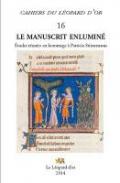
Publication – Le manuscrit enluminé : Études réunies en hommage à Patricia Stirnemann

Au cours des trois dernières décennies, les études sur le manuscrit enluminé se sont multipliées, surtout à partir des années 2000, à l’heure de la révolution numérique. Les miniatures médiévales sont sorties des bibliothèques où elles se trouvaient enfermées, accessibles seulement à quelques privilégiés. Elles ont circulé à grande échelle, favorisant des enquêtes et des réflexions de plus en plus nombreuses : thèses, mémoires, catalogues, corpus, expositions, publications individuelles et collectives. Les progrès ont été considérables.

Ceux-ci, cependant, ne furent pas seulement le fruit de ces nouvelles technologies. Ils furent dus aussi aux recherches, à l’enseignement et à la générosité de quelques spécialistes remarquables, qui ont su renouveler les méthodes, ouvrir de nouvelles pistes, former des disciples, encourager les plus jeunes, guider leurs travaux et montrer comment le manuscrit enluminé était un document en tous points exceptionnel. Parmi ces spécialistes, Patricia Stirnemann a occupé – et continue d’occuper – une place de premier plan.

Le présent volume lui est entièrement dédié : à l’occasion de sa retraite (statutaire mais non pas savante), ses élèves et ses disciples ont voulu lui dire leur gratitude et leur amitié sous la forme de contributions originales ayant valeur d’hommages.

le-munuscrit-enlumine_vTable des matières :

Présentation, par Michel Pastoureau
Une Américaine à Paris, par Claudia Rabel
Bibliographie de Patricia Stirnemann, 1976-2014

Jean-Baptiste Lebigue, Institut de recherche et d’histoire des textes (CNRS), Orléans, Rits et couleurs. Acronymie et chromonomie des calendriers liturgiques au Moyen Âge
Mara Hofmann, Sotheby’s, Londres, La décoration secondaire dans les manuscrits français : Paris entre 1380 et 1420-1430
Marie Jacob, Université de Rennes II, Le recueil du Lyon d’or de Châtellerault, un livre d’ingénieur inédit de la fin du xve siècle (Solesmes, Abbaye Saint-Pierre, ms. 163)
Catherine Yvard, Courtauld Institute of Art, Londres, Un Napolitain à Tours : un incunable enluminé par le Maître de Jean Charpentier
Isabelle Delaunay, Consultante en manuscrits enluminés, Paris, Quelques dates importantes dans la carrière du Maître des Très Petites Heures d’Anne de Bretagne
Dominique Vanwijnsberghe, Institut royal du patrimoine artistique, Bruxelles, Une représentation inédite de saint Donatien et sa place au sein de l’enluminure dite « pré-eyckienne »
Pascal Schandel, Docteur en histoire de l’art, Paris, Qui est qui ? Qui fait quoi ? Qui donne et qui reçoit ? Iconographie des ordonnances militaires de Charles le Téméraire
Ilona Hans-Collas, Institut royal du patrimoine artistique, Bruxelles, De la terre à la mer pour parer à sa mauvaise étoile ? Les pèlerinages d’enfants vers le Mont-Saint-Michel
Francesca Manzari, Università di Roma « Sapienza », Animals and Funny Faces in the Pen-work Decoration from the Avignon Workshop of Bernard de Toulouse (1360-1390)
Pier Luigi Mulas, Università degli Studi di Pavia, Bianchi girari mantouans dans un incunable de Cristoforo (et Baldassarre) Castiglione
Anne Ritz-Guilbert, École du Louvre, Paris, Les Statuts de l’ordre du Saint-Esprit au droit désir (Naples, 1353) et sa copie au XVIIe siècle. Une entreprise méconnue de François-Roger de Gaignières
Claudia Rabel, Institut de recherche et d’histoire des textes (CNRS), Paris, La véronique. De la Sainte Face à la botanique, naissance médiévale d’une fleur
Pierre Petitmengin, École normale supérieure et François Bougard, Université de Paris Ouest et Institut de recherche et d’histoire des textes (CNRS), Paris, « Le supplément d’âme ». Témoignage

Index des œuvres
Index des noms

Informations pratiques :
Le manuscrit enluminé : Études réunies en hommage à Patricia Stirnemann, Paris, Le Léopard d’Or, 2014. Pagination: 376 pages avec photographies couleur. Broché. Format: 16 x 24 cm. ISBN: 978-2-86377-244-7. Disponibilité : En stock. Prix : 50,00 €.

Source de l’information : IRHT

Publié dans Publications | Laisser un commentaire

Web – Podcasts de l’Institute of Historical Research

Since 2009 the IHR has produced over 500 podcasts, encompassing not only its acclaimed and unique seminar series, but also one-off talks and conferences. All of these recordings are freely available here to stream or download, and can be searched, or browsed by date, event, or subject. In many cases abstracts and other material accompanying the talks can also be found.

These recordings, particularly those taken from seminars where historians are showcasing their current research, provide a great opportunity to listen to experts in all fields of history discuss their work in progress.

Podcasts : Medieval History

17 Jun 2014
Mapping the medieval countryside
Dr Matthew Holford (University of Winchester)

3 Mar 2014
Late-medieval methods of poor relief
Christopher Dyer (University of Leicester)

8 Nov 2013
The use of cash and credit in local market transactions
James Davis (The Queen’s University, Belfast)

8 Nov 2013
The economic impact of clothmaking on rural society, 1200 to 1550
John Oldland (Quebec)

8 Nov 2013
The Crown and capitals in the Wars of the Roses: London and Bristol, 1460-1471
Peter Fleming (University of the West of England)

8 Nov 2013
Rural credit in late medieval England: puzzles and problems
Chris Briggs (Cambridge)

8 Nov 2013
Merchants and their use of the action of account in thirteenth- and early fourteenth-century England
Paul Brand (Oxford)

8 Nov 2013
London moneyers in the thirteenth century
Derek Keene (IHR)

8 Nov 2013
‘According to the law of merchants and the custom of the city of London’: Burton vs Davy (1437) and the negotiability of credit instruments in medieval England
Tony Moore (Reading)

7 Nov 2013
Was it really worth the effort? The administration of the alien subsidies, 1440-87
Jonathan Mackman (York)

7 Nov 2013
Silences in other languages: reaching and stretching the limits of extant sources on late medieval England’s alien population
Erik Spindler (Humboldt)

7 Nov 2013
London and its merchants in the Italian Archives, 1380-1530
Francesco Guidi Bruscoli (Queen Mary)

7 Nov 2013
Fighting merchants: what the poll tax and the medieval soldier database can tell us about the military service of merchants
Adrian Bell and Sam Gibbs (Reading)

7 Nov 2013
Conflict and cooperation: preserving merchant identities in the Stockfishmongers’ Company of London c.1450-1550
Justin Colson (Exeter)

7 Nov 2013
Clerks, guilds and identity in late medieval London
Matthew Davies (Centre for Metropolitan History)

7 Nov 2013
A safe adventure? London merchants and the Antwerp trade
Vanessa Harding (Birkbeck)

11 Jul 2013
You Are What You Eat: Historical Changes in Ideas about Food and Identity
Steven Shapin (Harvard)

11 Jul 2013
Toward a historical dialectic of culinary styles
Ken Albala (University of the Pacific)

14 May 2013
The People of Medieval Scotland database: A prosopographical survey
Matthew Hammond

1 May 2013
The public history of Magna Carta
Justin Champion and Graham Smith

20 Nov 2012
Using GIS to explore Historical Texts
Ian Gregory (Lancaster)

7 Dec 2011
Applying new spatial techniques in the study of late medieval London
Justin Colson (CMH)

6 Dec 2011
The Invisible Library; Books, Book Rooms and Inventories at a Northamptonshire Manor House
Mark Pucell (National Trust)

6 Dec 2011
Digital Landscapes and Archaeology
Peter Rauxloh (Musuem of London Archaeology)

6 Jul 2011
Shadow spaces and settlements in the pre-modern city: antecedents or a universal phenomenon
Derek Keene (IHR)

16 May 2011
The Soldier in Later Medieval England Project – did it do what we wanted it to do?
Professor Adrian Bell (Reading) and Dr Andy King (Southampton)

3 Mar 2011
Equity, Law and the Economy of Obligation: A Comparative Analysis of Early Modern England and Italy
James Shaw (University of Sheffield)

13 Jan 2011
New Research in the English medieval aristocracy
David Crouch (University of Hull)

30 Mar 2010
Music and Culture – a Global History
D. R. M. Irving (Christ´s Coll., Cambridge)

10 Mar 2010
Racism – a Global History
Francisco Bethancourt (King’s College London)

Source de l’information : Institute of Historical Research

Publié dans Web | Laisser un commentaire

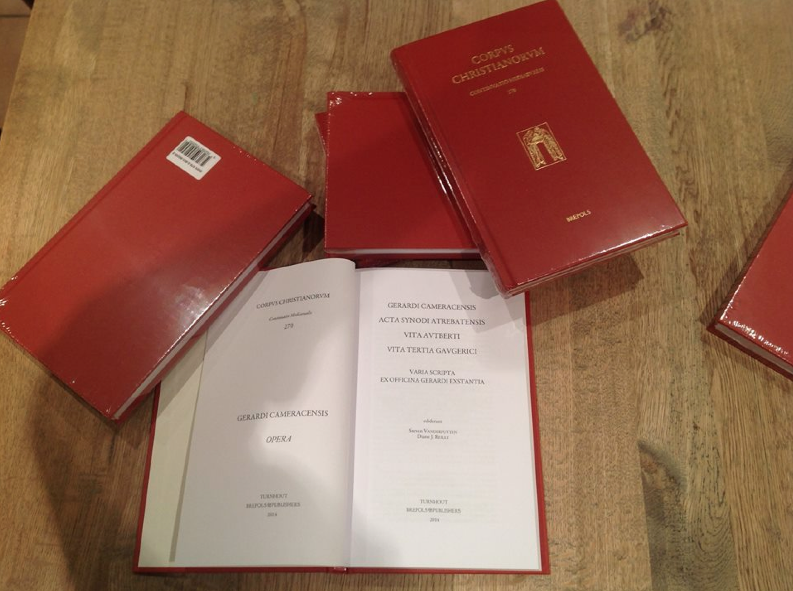
Publication – Gerardus Cameracensis, « Acta Synodi Atrebatensis, Vita Autberti, Vita Gaugerici; Varia scripta ex officina Gerardi exstantia », éd. S. Vanderputten, D. J. Reilly

The miscellaneous corpus of texts commissioned by Bishop Gerard I of Cambrai (1012-1051) constitutes one of the primary means of accessing substantial parts of the Low Countries’ political, cultural, and religious history in the early eleventh century. Encompassing historiography, hagiography, dogmatic treatises, correspondence, and other texts, it also constitutes a defense of episcopal prerogatives, and reflects Gerard’s concerns and ambitions as bishop of Cambrai, an imperial bishopric wedged between Western Frankish territories, and lord of the Cambrésis. The programmatic nature of this discourse is revealed particularly in a group of seemingly unrelated narratives and documents, presented here in versions thought to best approximate those edited during Gerard’s lifetime. In the Acts of the Synod of Arras, a lengthy treatise presented as the report of the inquisition of heretics in 1025, Gerard provided, via an anonymous author, a detailed insight into his views on Christian dogma, religious practice, and bishops’ roles in society. Although they belong to a different textual genre, the Lives of St Aubert and St Géry, both predecessors of Gerard at Cambrai, reveal the coherence and persistence of Gerard’s views on the aforementioned subjects. Twelve miscellaneous documents (letters, treaties, and one Peace decree), each of which touches upon issues addressed in the three previous texts, complete the corpus.

Vanderputten-Reilly - Acta SynodiSteven Vanderputten is Professor of Medieval History at the University of Ghent. He is the author of ‘Monastic Reform as Process: Realities and Representations in Medieval Flanders, 900-1100’ (Ithaca, 2013).

Diane J. Reilly is Associate Professor of History of Art at Indiana University, Bloomington. She is the author of ‘The Art of Reform in Eleventh-Century Flanders: Gerard of Cambrai, Richard of Saint-Vanne and the Saint-Vaast Bible (Leiden, 2006).

Informations pratiques :
Gerardus Cameracensis, Acta Synodi Atrebatensis, Vita Autberti, Vita Gaugerici; Varia scripta ex officina Gerardi exstantia, éd. S. Vanderputten et D. J. Reilly, Turnhout, Brepols, 2014 (Corpus Christianorum, Continuation Mediaevalis, 270). CCLXII+39 p., 155 x 245 mm. ISBN: 978-2-503-55255-2. Prix : 175,00 euros.

Source de l’information : Brepols

Publié dans Publications | Laisser un commentaire

Appel à contribution – Ninth International Conference of Iconographic Studies: Icons and iconology

Deadline for paper proposals: February 15, 2015

University of Rijeka, Center for Iconographic Studies (Croatia) Museum of Russian Icons, Clinton, MA (USA) The American University of Rome (Italy) The Institute for the Study of Culture and Christianity, Belgrade (Serbia) in cooperation with Harvard University (USA)  Katholieke Universiteit Leuven (Belgium) University of Ljubljana (Slovenia) Gregorian Pontifical University Rome (Italy)  are pleased to announce a  CALL FOR PAPERS  for the Ninth International Conference of Iconographic Studies  ICONS & ICONOLOGY 

It is a two-part trans-continental conference that will be held in Rijeka (Croatia), June 01 – 04, 2015 and in Clinton (Massachusetts),  June 11 – 13, 2015.

Icons, iconography and iconology represent some of the most prominent concepts and research topics of art history. They refer both to a particular artistic practice, to liturgical objects, and to methods of art historical interpretations. Given this multitude of meanings and functions that the concepts of icon, iconic, iconography and iconology imply, it is not surprising that all of them have been interpreted as objects of theological reflection, didactic instruments, media of transmitting visual, aesthetic and metaphysical content, and, finally, as artworks in the modern sense of the word.  The conference seeks to explore and discuss recent development in the dialogue between theology, art history, philosophy and cultural theory concerning the ways we can perceive and interpret icons, iconography and iconology. It is also our objective to offer an insight into the development of iconographic studies and related disciplines, and to reflect upon their future development in the broader context of the humanities. We welcome academic papers that will approach icons, iconography and iconology in an interdisciplinary and methodologically diverse way. The themes and subjects can include the following:
• Icons, iconography and iconology: “Western” and “Eastern” perspectives
• Sacred and profane icons
• Reverse perspective: formal and metaphysical dimensions
• Icons as a medium and metaphor
• Icons of power, icons as power
• Icon and modern culture
• Icons and film and digital media
• Icons and the “canon” of modern art • Modern and contemporary icon painting
• Theological and philosophical reception of icons
• Iconoclasm(s)

Paper proposals should be submitted for both parts of the conference electronically to cis@ffri.hr

Contact person: Petra Predoević Center for Iconographic Studies
Faculty of Humanities and Social Sciences
University of Rijeka Sveucilisna avenija 4 51 000 Rijeka Croatia E-mail: cis@ffri.hr
A paper proposal should contain:  1. full name, institution, affiliation, address, phone number(s), e-mail address 2. title  3. abstract (maximum 2 pages – 500 words)

Deadline: February 15,  2015

Fees for conference:
RIJEKA – there will be NO registration fee  CLINTON – there will be a 100 USD fee  Administration and organizational costs, working materials, lunch and coffee breaks during conference as well as all organized visits are covered by the organizers. All presented papers will be published in the thematic issue of the IKON journal in May 2016.
Please contact us for any additional information.

Source de l’information : Medieval Art Research

Publié dans Appel à contributions | Laisser un commentaire

Offre d’emploi – Lecturer in Medieval History, c.1000-1500 (University of Chester)

Ref : HR14127
Type : Academic
Department History : Archaeology
Salary : £32,277 – £35,256 PER ANNUM
Closing date : 13 January 2015

The successful candidate will have a proven track record as a teacher and researcher in Medieval History, c. 1000-1500 (including Continental Europe and/ or Britain and Ireland). Preference may be shown to candidates who are able to teach modules on both Continental and British medieval history.

You will have a good Honours Degree (normally 2.1 or First or equivalent) in History and a Ph.D. in Medieval History, c. 1000-1500. You will have considerable HE teaching experience and a proven capacity to deliver a range of undergraduate and postgraduate modules in Medieval History, c. 1000-1500. You may have experience of supervising undergraduate history dissertations on Medieval History topics as well as an ability to enhance the MA and MRes postgraduate provision. You will have evidence of either publications on Medieval History, c. 1000-1500, or demonstrable evidence of work-in-progress towards such publications.

Candidates can apply through our website at www.chester.ac.uk/jobs/ and applications should be made via our online recruitment website quoting HR14127.

Applying for a job at the University of Chester – June 2014
Job Description HR14127

Source de l’information : University of Chester

Publié dans Le réseau | Laisser un commentaire

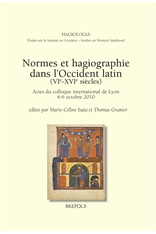
Publication – Marie-Céline Isaïa et Thomas Granier (éd.), « Normes et hagiographie dans l’Occident latin (Ve-XVIe siècles). Actes du colloque international de Lyon, 4-6 octobre 2010 »

Le Colloque Normes et Hagiographie, tenu à l’Université Lyon-III en octobre 2010, porte bien son nom: il ne s’est pas donné pour objet d’étude l’hagiographie latine comme source d’exemples de comportement, mais bien les relations complexes que les sources hagiographiques entretiennent avec les normes qui régulent les sociétés médiévales occidentales. Puisque, de fait, les textes hagiographiques forment un corpus commun de références et de modèles pour les sociétés christianisées, le projet des organisateurs a été de « partir des normes médiévales » pour évaluer dans quelle mesure l’hagiographie avait contribué à les élaborer, à les faire évoluer voire à les contredire. C’est une question d’histoire des textes, bien loin d’une approche morale des attitudes morales et religieuses.

IsaiaMarie-Céline Isaïa, maître de conférences en histoire du Moyen Âge à l’Université Jean-Moulin Lyon-III, est membre du CIHAM (UMR 5648). Depuis la parution de Remi de Reims. Histoire d’un saint, mémoire d’une Église (Paris, 2010), elle poursuit ses travaux sur les relations entre hagiographie et écriture de l’histoire, du Ve au XIe siècle.

Thomas Granier est maître de conférences en histoire du Moyen Âge à l’Université Montpellier-III, membre du CEMM (EA 4583) et membre de l’École Française de Rome. Il a publié plusieurs articles sur l’’histoire de l’Italie du sud du haut Moyen Âge.

Informations pratiques :
Marie-Céline Isaïa et Thomas Granier (éd.), Normes et hagiographie dans l’Occident latin (Ve-XVIe siècles). Actes du colloque international de Lyon, 4-6 octobre 2010, Turnhout, Brepols, 2014 (Hagiologia, 9). 552 p., 22 colour ill., 156 x 234 mm. ISBN : 978-2-503-54835-7. Prix : 95,00 euros.

Source de l’information : Brepols

Publié dans Publications | Laisser un commentaire

Appel à contribution – Travel and Conflict in the Medieval and Early Modern World

Institute for Medieval and Early Modern Studies (IMEMS) Aberystwyth-Bangor
Biennial conference, 3rd-5th September 2015, Bangor University

Keynote Speakers:
Michal Biran (Hebrew University, Jerusalem)
Daniel Carey (National University of Ireland, Galway)
Judith Jesch (University of Nottingham)

The meeting points between travel, mobility, and conflict are numerous. Travel can be a conflictual experience; in medieval Europe, movement may be perceived as being restricted to travel motivated by the exigencies of piety, pillage, or trade. It would however be too easy to suggest a clear binary between a medieval state of stasis and the more leisurely travel and exploration in the early modern period. Until relatively recently, domestic travel and voyages to the wider world remained dangerous undertakings. Utopian fiction and travel writing are two genres that have been closely aligned by scholars who recognise how these genres reshape medieval discourses on the ideal state for an early modern audience. Weary travellers arrive at geographically unspecified places comprising ideal societies, but these ideal societies occupy a liminal space between fiction and reality: these spaces are ultimately unattainable due to the imprecision and prevarication present in the narrative. This draws to focus tensions within documenting imaginary travel and the material world. Far from being a site of concord, they become spaces of conflict. Travel – whether it is real or imagined, or if it has been implemented for public or private purposes – can be obstructed by conflicts; it remains often restricted and always bitterly debated.

This interdisciplinary conference brings together scholars working in the fields of medieval and early modern studies to interrogate the relationship between travel and conflict. Topics might include (but are not limited to) the following:

  • Travel in times of war and conflict
  • Restricted travel
  • Forbidden travel
  • Exile and travel
  • Colonial encounters
  • Piracy
  • Travel, subterfuge and deceit
  • Conflict of body and mind in travel
  • Travel, religion and conversion
  • Conflicting readings of travelogues
  • Debates on travel
  • Liminal spaces
  • Utopian/Dystopian travel
  • Travel and synaesthesia
  • Vagrancy
  • Matter, materiality and the unreal
  • Travel as a violent act
  • Remembering and forgetting travel
  • Conflict between topography and spatial movement
  • Conflict between mapped space and inhabited space
  • Language communication and miscommunication
  • Pilgrimage or Crusade
  • Migration and persecution

We invite abstracts of 200-250 words for individual papers of twenty minutes, or of up to 850 words for panels comprising no more than three papers, to be sent to travelandconflict@gmail.com by 25th January 2015. Please send your abstract in the text of your message, and not in an attached file.

The conference organisers are Rhun Emlyn, Gabor Gelléri, Andrew Hiscock, and Rachel Willie.

Source de l’information : Fabula.org

Publié dans Appel à contributions | Laisser un commentaire

L’héraldique dans la ville au Moyen Age : une exception italienne ?

English version below

Ecole française de Rome, Villa Medicis, Rome
5-7 Mai 2015

Le visiteur qui traverse l’Italie est aujourd’hui encore surpris par la profusion d’armoiries qui couvrent toujours les murs des palais et des monuments publics. Relativement préservé par les grandes campagnes de destruction d’armoiries qui ont marqué l’histoire de l’art héraldique européen, ce patrimoine est une des caractéristiques de la ville italienne. L’histoire de cette mise en signe de la ville, qui retient depuis longtemps l’attention des historiens et historiens de l’art, sans avoir pourtant suscité des travaux à la hauteur du corpus, a fait récemment l’objet de recherches spécifiques qui ont en partie renouvelé les approches et les connaissances, surtout pour l’Italie.

Ces journées ont pour ambition de dresser l’état présent de la recherche et de tenter de faire avancer le sujet, en liant encore plus étroitement l’histoire de la communication héraldique à l’histoire des villes. Ce faisant, elles souhaitent en même temps replacer l’exemple italien dans son contexte européen.

Les armoiries sont un mode d’expression et de communication étonnamment souple et performant. Dans les villes, elles peuvent tout à la fois représenter des individus, des groupes, la communauté urbaine dans son ensemble ou encore le seigneur qui la domine. Ces signes y expriment aussi bien l’unité des habitants – autour des armoiries de la commune et de ses différentes expressions politiques, populi, corps militaire, partis – que leurs divisions sociales ou politiques – en identifiant les différent partis, les groupes sociaux concurrents ou les stratégies de représentation individuelle.

Les processus de mise en signe de la ville, sa chronologie, ses acteurs, ses pratiques et ses enjeux soulèvent de nombreuses questions.

A partir de quand les signes héraldiques occupent-ils l’espace urbain ? Dans quels lieux – publics, privés, sacrés – se retrouvent les armoiries, lesquelles et sous quelles formes ? Est-il possible d’établir une “topographie héraldique” de la ville médiévale ?

Existe-t-il des restrictions pour l’exposition des armoiries dans l’espace urbain, des règlements de leur usage ? Connait-on l’existence des débats sur leurs mises en scène ? Comment les armoiries étaient-elles conçues par les citadins ? Quelles fonctions, quel pouvoir et quelle signification leurs était attribué?

Enfin, certaines régions d’Europe sont-elles plus que d’autres concernées par cette mise en signe de la ville ? Le patrimoine contemporain, qui donne la part belle aux villes d’Italie, est-il le produit d’un effet de source ou le reflet d’un développement particulier de ce système de signe dans un univers politique précis ?

Il s’agira, pour tenter de répondre à ces multiples questions, d’avoir recours non seulement aux témoignages monumentaux préservés ou connus de l’héraldique médiévale mais aussi de s’appuyer sur les différents discours produits sur ces signes dans les sources écrites telles que les registres de villes/Stadtbücher, les lois somptuaires, les sources comptables, les registres juridiques, les chroniques des villes, etc. Si le regard des spécialistes de l’héraldique est indispensable, cette enquête doit également s’enrichir des connaissances et des questionnements des historiens de la ville médiévale.

En traitant le cas italien dans son contexte européen et en confrontant les analyses et les dossiers des différentes approches des héraldistes, historiens de l’art, spécialistes de l’histoire de la culture visuelle et de l’histoire de la ville, nous souhaiterions ouvrir des nouvelles perspectives au sujet des armories dans la ville et proposer de nouvelles pistes pour la recherche à venir.

Les communications pourront être présentées en anglais, français ou italien.

Réponses souhaitées avant le 25 janvier 2015 avec un court résumé du propos (200 mots) en anglais ou français à l’adresse suivante: journees.heraldiques@gmail.com.

Journées co-organisées par le programme Héraldique, emblématique et signes d’identité au Moyen Age (Laurent Hablot, CESCM, Université de Poitiers, École française de Rome) et le projet de recherche La performance des armoiries – Die Performanz der Wappen. Zur Entwicklung von Funktion und Bedeutung heraldischer Kommunikation in der spätmittelalterlichen Kultur, Dilthey-Fellowship de la Fondation Volkswagen (Torsten Hiltmann, Historisches Seminar, Université de Münster).

Soutiens : CESCM-Université de Poitiers ; Projet de recherche « La Performance des armoiries » (FondationVolkswagen), Université de Münster; Ecole française de Rome ; Institut Allemand d’histoire de Rome (DHI Rom) ; Académie de France à Rome.

Heraldry in the Medieval City: The Case of Italy in the European Context
Rome, 5th-7th May 2015

A visitor passing through Italy is surprised by the abundance of coats of arms that still decorate the palaces and public monuments of its cities. Relatively undisturbed by the tides of history that destroyed a lot of Europe’s heraldic heritage, in the Italian cities this heritage is still alive and well. While the development of heraldic signs occasionally caught the eye of historians and art historians, they have never done justice to the multitude and diversity of the existing sources. Recently, however, research has taken an interest in the subject with renewed vigour and approaches, especially in the case of Italy.

The aim of this conference is to establish the current state of research and to advance the subject by linking more closely the history of heraldic communication and the history of cities. To do so, the Italian example shall be put into a European perspective.

Coats of arms are surprisingly flexible and efficient means of communication. In cities, they may represent individuals as well as groups, the urban community as a whole as well as the ruler of the city. Heraldic signs are able to express the unity of the people – through the arms of the town and of its political institutions – as well as their social and political divisions – by identifying different parties, competing social groups and individuals.

The staging of these signs in the city, its chronology, actors, practices and challenges pose many questions:

On the one hand, there are questions concerning the factual representation of coats of arms in the city itself. When did these signs start to appear in urban space? In which places – public, private, sacred – are whose arms to be found? How are they presented? Is it possible to establish a « heraldic topography » of the medieval city?

On the other hand, concerning the way the contemporary citizens thought about the coats of arms and heraldic representation as such. Are there restrictions or regulations for displaying coats of arms in the urban space? Are there debates on the ways to stage coats of arms in the urban theatre? How did the citizens perceive their coats of arms? What functions, what effects, and what significance did they attribute to them?

Finally, are there parts of Europe that were more prone to using heraldic signs in urban contexts than others? Is the rich heraldic heritage of Italian cities the mere result of sources surviving by chance, or does it reflect a particular Italian development?

The conference will attempt to propose answers to these questions, not only by looking at the monumental evidence of medieval heraldry, but also by studying the discourses on these signs in written sources such as city records (Stadtbücher), sumptuary statutes, account books, legal records, city chronicles etc. While the expertise of specialists in heraldry is important, such a survey requires and welcomes especially the knowledge of historians of the medieval city, too.

By situating the Italian example in its European context and comparing the different analyses and approaches of heraldists, art historians, historians of visual culture and historians of the city, this conference intends to propose new perspectives on coats of arms in the city and tread new paths for future research.

Source de l’information : Heraldica

Publié dans Appel à contributions | Laisser un commentaire

Offre d’emploi – Teaching Fellow in Medieval History (University of Leeds)

Location: Leeds – Main Campus
Faculty/Service: Faculty of Arts
School/Institute: School of History
Category: Teaching
Grade: Grade 7
Salary: £31,342 to £37,394
Contract Type: Fixed Term (10 months)
Closing Date: Sunday 11 January 2015
Reference: ARTHI1006

Fixed term from September 2015 until 30 June 2016

The School of History seeks to appoint a temporary Teaching Fellow in Medieval History while Dr Emilia Jamroziak is on research leave in Germany, holding a Humbold Foundation Fellowship, during the academic year 2015-16.

With relevant teaching experience in Medieval History in Higher Education, you will hold a doctorate in a relevant field, or be very close to the submission of a doctoral thesis. An interest in ecclesiastical and religious history would be an advantage.

Informal enquiries may be made to Professor Graham Loud, tel. +44(0)113 343 3601, email G.A.Loud@leeds.ac.uk; or to Dr Emilia Jamroziak, tel. + 44(0)113 343 3592, email E.M.Jamroziak@leeds.ac.uk

Click here for further information about working at the University of Leeds www.leeds.ac.uk/info/20025/university_jobs

Source de l’information : University of Leeds

Publié dans Offre d'emploi | Laisser un commentaire