Appel à contribution – Colour. Medieval Graduate Conference 2015

We are pleased to open the Call for Papers for the eleventh Oxford Medieval Graduate Conference, sponsored by the Society for the Study of Medieval Languages and Literature. The conference will take place at St. Edmund Hall, Oxford, on Friday 17th and Saturday 18th April 2015.

This year, the conference theme is Colour.

The conference is aimed at early career scholars and graduate students working in medieval studies. Contributions are welcomed from diverse fields of research such as history of art and architecture, history, theology, philosophy, anthropology, literature and history of ideas.

Papers should be a maximum of 20 minutes. Please email 250-word abstracts (text only, no attachments please) to oxgradconf@gmail.com by 25th January 2015.

The registration fee is expected to be £15. There will be a conference dinner on the first night of the conference; it is hoped that this will cost in the region of £25. All updates and further information, including details of travel bursaries, can be obtained from this webpage, and will also be announced on our twitter account: http://www.twitter.com/OxMedGradConf .

For further information on previous Medieval Graduate Conferences, please click here.
– See more at: http://mediumaevum.modhist.ox.ac.uk/conf_grad.shtml#sthash.QbJTEmEA.dpuf

Source de l’information : Medium Aevum

Publié dans Appel à contributions | Laisser un commentaire

Journée d’étude – Ville et littérature au Moyen Âge

6 février 2015
Université catholique de Louvain

Trop longtemps restée dans l’ombre de la glorieuse et abondante littérature de cour, la production littéraire spécifiquement urbaine sera au cœur de la journée d’étude rassemblant des spécialistes pointus.

Comment, tout d’abord, la littérature a-t-elle elle-même pensé la ville, ce microcosme où s’invente une manière de vivre ensemble ? L’image mythique de la cité, idéalisée ou diabolisée, entre Jérusalem et Babylone, fait écho aux réalités urbaines médiévales, au carrefour entre tensions et compromis, entre lignes de fracture et systèmes de solidarité. Pulsions d’une part, réglementation et droit de l’autre, il s’agit d’atteindre un équilibre qui permette à une collectivité de s’organiser, de prospérer, de canaliser la violence, de se protéger, d’affirmer son autonomie tout en ménageant les prérogatives du Prince.

De la ville émerge une littérature renouvelée et vivifiée par les défis. Chacun connaît l’élan spectaculaire donné durant les derniers siècles du Moyen Âge, par exemple dans le domaine du théâtre. Mais le mouvement est lent et progressif. Une lame de fond surgie durant la période de l’ancien français s’impose peu à peu.

Reste à préciser comment des genres existants s’adaptent à une manière différente de recevoir la littérature, comment des genres nouveaux s’articulent aux circonstances et aux événements. Quel usage fait-on de l’espace public ? Quelle a été l’impulsion donnée par les communes, les réseaux sociaux et les institutions urbaines ? Quel est le statut du Poète dans ce milieu foisonnant ? Quelles formes adopte l’émulation entre écrivains, entre villes, entre la ville et la cour ? Sur quels appuis financiers et logistiques les grandes manifestations littéraires peuvent-elles compter ? Les villes fonctionnent-elles toutes sur le même moule ? Toutes ces questions nécessitent une collaboration étroite entre historiens, archivistes et littéraires. Ce n’est qu’à partir d’études de cas précises que se dessineront, peu à peu, les réponses.

On espère durant cette journée favoriser le dialogue pluridisciplinaire afin de relancer le débat.

Ville et littérature au MAProgramme :

9h15 : Accueil et introduction

Session 1 – 9h30-10h30
Représentations de la ville dans les textes

Marine Cuche (Université de Genève) – Babel dans les paraphrases bibliques de Pierre Riga, Macé de la Charité et Jehan Malkaraume

Elodie Lecuppre-Desjardin (Université de Lille 3 Charles de Gaulle) – Entre réalité, savoir et imaginaire : les villes évoquées dans quelques récits de voyage

Pause

Session 2 – 11h-12h
Réalités urbaines médiévales

Xavier Rousseaux (FNRS/UCL) et Aude Wirth-Jaillard (UCL) – Violence et Justice dans une ville médiévale : Nivelles sous le regard de l’historien et de la linguiste (1350-1550)

David Guilardian (ULB / CPAS Bruxelles) – Expressions de la solidarité dans les villes du bas Moyen Âge : le cas de Bruxelles

Lunch

Session 3 – 13h30-14h30
Production littéraire et actualité événementielle

Jelle Haemers (KU Leuven) – La « résistance lettrée » du monde urbain flamand et brabançon à la fin du Moyen Âge et au début des Temps modernes

Jan Dumolyn (Universiteit Gent) – La loge des Bourgeois à Bruges, lieu pour les échanges sociaux, culturels et littéraires

Pause

Session 4 – 15h-16h
Production et performances littéraires urbaines

Denis Hüe (Université de Rennes II) – Marie en ville : le temple et le château

Marie Bouhaïk- Gironès (Centre Roland Mousnier, CNRS / Université de Paris-Sorbonne ) – La commune, auteur et organisateur de mystères à la fin du XVe siècle

Conclusions

Comité organisateur :

Éric Bousmar, Université Saint-Louis Bruxelles,

Éric Delaissé, UCL,

Jelle Haemers, KU Leuven,

Nadine Henrard, Université de Liège,

Colette Van Coolput-Storms, UCL, KU Leuven-Brussel,

Baudouin Van den Abeele, FNRS / UCL

Participation gratuite

Inscription souhaitée avant le 23 janvier 2015 : colette.storms@uclouvain.be

Publié dans Colloque | Laisser un commentaire

Formation – MA Medieval Studies Manchester: Full Scholarship Available

The John Rylands Research Institute is offering the Towneley MA Medieval Studies Scholarship for one full-time student on the MA in Medieval Studies to start in September 2015. The generous scholarship covers fees at home/EU level and maintenance costs. The student must have a very good first degree (at least a high 2.i), and must demonstrate an interest in some aspect of medieval studies relating to the strengths of the John Rylands Library Special Collections.

How to apply
To apply for the scholarship, first complete the University of Manchester postgraduate admissions form, providing all necessary supporting material, by Monday, 2 February 2015.

Please then submit the general MA Funding Application Form [see http://www.alc.manchester.ac.uk/fees/postgraduate-taught-funding/] by Monday, 2 March 2015, indicating that you have applied for the MA Medieval Studies, and clearly demonstrating in the ‘Case for Support’ why this programme is suitable for your interests, and outlining your prospective training and research plans.

For specific guidance, please contact the Programme Director, Dr Irene O’Daly: irene.odaly@manchester.ac.uk.

Information on the MA programme can be found at http://www.manchester.ac.uk/study/masters/courses/list/06731/medieval-studies-ma/

Publié dans Enseignement | Laisser un commentaire

Séminaire – Quand le livre fait la norme. Codicologie quantitative et sociologie du livre médiéval

Année 2015 :Quand le livre fait la norme

Coordination :
François Foronda
Jean-Philippe Genêt
Xavier Hermand
Ezio Ornato

Le séminaire se tient à la Sorbonne, en salle Perroy, de 17h à 19h
Information : fforonda@univ-paris1.fr

Codicologie quantitative - LAMOP 2015Programme :

Jeudi 29 Janvier
Laura Albiero (Institut de recherche et d’histoire des textes, LAMOP)
Norme et normalisation cultuelle dans les livres liturgiques
Discutant : Fabrice Delivré (Université Paris 1 Panthéon-Sorbonne, LAMOP)

Jeudi 12 Février
Monica Castillo Lluch (Université de Lausanne)
Le Fuero Juzgo et la normalisation du roman castillan sous le règne de Ferdinand III
Discutant : Benoît Grévin (CNRS, LAMOP)

Jeudi 5 Mars – Excursus
Catherine Kikuchi (Université Paris 4 Sorbonne, Centre Roland Mousnier)
La production incunable vénitienne et le milieu du livre : une approche quantitative et comparative
Discutant : Ezio Ornato (CNRS, LAMOP)

Jeudi 19 Mars
Anne D. Hedeman (University of Kansas)
The Power of Saintly Images in the Grandes chroniques de France : The Case of Saint Louis
Discutant : Yann Potin (Archives nationales de France)

Jeudi 2 Avril
Patrice Beck (Université Lille 3)
De la normalisation dans les livres de comptes à la fin du Moyen Âge
Discutante : Julie Claustre (Université Paris 1 Panthéon-Sorbonne, LAMOP)

Jeudi 16 Avril
François Foronda (Université Paris 1 Panthéon-Sorbonne, LAMOP)
L’ordre juridique, une question codicologique : genèse du livre authentique
Discutant : Robert Jacob (CNRS, LAMOP)

Jeudi 28 Mai, Excursus, à partir de 9h30
Journée de formation en codicologie quantitative
du LAMOP et de l’Université de Namur
Organisée par Laura Albiero, Octave Julien, Claire Priol, Chiara Ruzzier et Anne Tournieroux
sur le site de Villejuif du LAMOP. Le programme sera communiqué ultérieurement

Source de l’information : LAMOP

Publié dans Séminaire | Laisser un commentaire

Appel à contribution – Making constitutions, building parliaments : Constructing representative institutions, 1000-2000

Submission deadline: January 1, 2015
Conference date(s): June 30, 2015 – July 4, 2015

Conference Venue:
History of Parliament Trust
London, United Kingdom

The year 2015 marks two anniversaries of enormous significance in the history of English, and British constitutional and legal history: the 800th anniversary of King John’s acceptance of Magna Carta, the great charter of liberties of the English nation in 1215; and the 750th anniversary of the Parliament summoned by Simon de Montfort in 1265, following his defeat of King Henry III in a civil war which was the culmination of a baronial revolt. To mark these anniversaries, the History of Parliament Trust will in 2015 host the annual conference of the International Commission for the History of Representative and Parliamentary Institutions (ICHRPI: http://www.ichrpi.com/).

The conference will take 1215 and 1265 as a starting point for an exploration of the initiation and development of political institutions from the early Middle Ages onwards, and an assessment of their role in state formation or nation building. It will consider the significance of foundational documents and events such as Magna Carta and the de Montfort Parliament and how these – and the historiography of Parliaments – became so important in the subsequent history of Parliament and political institutions – how, for example, Magna Carta and the de Montfort Parliament were built up and depicted as central events in the building of the English state.

The conference will set the foundation of the English and British constitutional tradition alongside that of other jurisdictions elsewhere; it will explore other confrontations between communal traditions and royal powers and how these were expressed and resolved; it will seek to compare the development of the English political tradition with contemporary parallel institutions in Europe, and explore their divergence and/or convergence.

We invite interested parties to submit a short abstract of no more than 200 words for papers on the following themes:

  • Making Constitutions
  • The development of ideas of law, representative institutions and constitutionalism in the Middle Ages
  • The construction, importance, use and mythical status of foundational constitutional documents
  • The global reach and influence of the English model of Parliaments and constitutionalism
  • Building Parliaments
  • The construction and development of Parliaments from Europe in the Middle Ages onwards
  • Parliaments and their role in state formation and state building in all states and periods
  • The history and historiography of Parliaments, and their place in political culture
    Studying Parliaments
  • Round tables on various approaches to parliamentary history: oral history, prosopography and collective biography and digitised parliamentary sources.

Please submit abstracts of no more than 200 words to Paul Seaward (pseaward@histparl.ac.uk) or Emma Peplow (epeplow@histparl.ac.uk) by 1st January 2015. Papers are welcomed in the languages of the Commission – English, French and German – but abstracts should be in English. Most papers will be restricted to 20 minutes. We also welcome submissions for panels.

Source de l’information : Institute of Historical Research

Publié dans Appel à contributions | Laisser un commentaire

Appel à contribution – Archeologia Mediaevalis 2015

Gand
Mercredi 11 et jeudi 12 mars 2015

La 38e édition d’Archaeologia Mediaevalis se tiendra à Gand le mercredi 11 et le jeudi 12 mars 2015.

Ce colloque ne s’adresse pas uniquement aux archéologues mais également aux archéologues du bâti, aux archéopédologues, aux paléoanthropologues, aux spécialistes en paléoenvironnement, en céramique, etc…, toutes les disciplines qui mènent à une meilleure connaissance de notre passé matériel. Aussi, nous accueillons toute contribution permettant une étude extensive et intégrée du patrimoine archéologique. Comme l’an dernier, le premier jour sera une journée thématique. Les communications feront l’objet du programme du jeudi 12 mars.

Si vous désirez présenter une communication concernant vos travaux de l’année 2014, nous vous prions de nous renvoyer la fiche jointe en annexe complétée avant le 23 janvier 2015. Vu l’affluence grandissante des communications chaque année, les organisateurs vous confirmeront si votre communication ou poster a été acceptée.

Nous vous prions également de nous faire parvenir vos textes relatifs aux recherches et études archéologiques avant le 23 janvier 2015 à l’adresse courriel suivante : archaeomed@gmail.com. Ces textes doivent être de courts résumés relatifs aux sujets traités. Les références bibliographiques concernant 2014 seront envoyées séparément. Vos contributions devront être présentées en Word, intitulées « votre nom.doc » et dans le format suivant :

  • Nom : Times New Roman, Majuscules, taille 12
  • Titre (suivi de l’abréviation de la province entre parenthèses) : Times New Roman, gras, taille 12.
  • Texte : Times New Roman, taille 12, aligné, maximum 8000 signes (espaces compris), pas de notes. La bibliographie sera intégrée dans le texte.
  • Illustrations : maximum 3 illustrations, format Tiff ou JPEG. Les images ne seront pas intégrées dans le texte. Elles seront numérotées (« votre nom_figXX.jpeg » ou « votre nom_figXX.tiff ») et envoyées dans un dossier séparé.
  • Légendes : les légendes seront envoyées dans un deuxième document Word intitulé « votre nom_legendes.doc ».

Après le 23 janvier 2015 nous ne pouvons plus garantir la prise en compte des articles dans la Chronique.

Publié dans Appel à contributions | Laisser un commentaire

Base de données – Making of Charlemagne’s Europe

The ‘Making of Charlemagne’s Europe’ project, which ran from January 2012 to December 2014, was carried out at King’s College London by the Department of History and the Department of Digital Humanities and funded by the Arts and Humanities Research Council (AHRC).

Making of Charlemagne s europe

The aim of the project is two-fold:

The first aim is to offer a single, unified database framework for the extraction of prosopographical and socio-economic data found in early medieval legal documents. Legal documents contain an extraordinary wealth of information for the political, social and economic history of this period, but they present significant challenges: practical ones, because they are scattered across many repositories, as well as methodological ones, because they can vary enormously across geographical regions, documentary types and traditions, and modes of transmission – all of which makes it hard to compare like with like. The aim of this project is to offer a common framework capable of extracting and comparing the data contained within legal documents, while still, at the same time, allowing users to identify and control for the most significant distortions typically affecting this material (such as modes of transmission, e.g. via an original or a later copy).

The second aim is to apply this framework to legal documents surviving from the reign of Charlemagne (25 September 768 to 28 January 814 AD). The reign of Charlemagne offers a particularly good case study, since it was a period of unprecedented expansion, leading to the absorption by the Frankish empire of many diverse regions within a short period of time. Over four thousand charters survive from the reign of Charlemagne (more than for the reign of any other early medieval European ruler); the database includes almost a thousand of them, selected for maximum variety in types of repository, modes of transmission, geographical area, recipients and issuers, etc. For a list of materials included in the database, see here.

All the information contained within the database can be searched via faceted browsing, including through a mapping tool: click here to start browsing!

We recommend using Firefox for best speed and performance. Please note the database is still in beta version, and some of the facets might seem a little odd – please bear with us while this is being fixed…

Source de l’information : The Making of Charlemagne’s Europe

Publié dans Le réseau | Laisser un commentaire

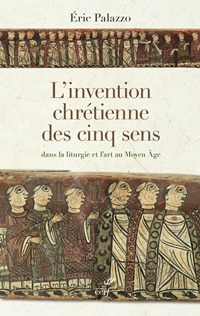
Publication – Éric Palazzo, « L’invention chrétienne des cinq sens dans la liturgie et l’art au Moyen Age »

Comment rendre visible l’invisible ? Quel rôle peuvent jouer les sens dans la découverte de l’indicible ? La mystique passerait-elle par le sensible ?

Telles sont les questions fondamentales que le Moyen Âge s’est posé avec une liberté et une audace insoupçonnées. S’appuyant sur la tradition biblique et la philosophie antique, en particulier Platon et Aristote, mais aussi la pensée des Pères, dont saint Augustin, l’homme médiéval a choisi d’entrer en dialogue avec Dieu à travers le corps.

La louange mobilise, anime et exalte les cinq sens. Le rite convoque la vue, l’ouïe, le goût, l’odorat, le toucher afin de plonger dans l’invisible. Le rite, ses œuvres et ses objets, les fresques, enluminures ou sculptures qui le représentent, les vêtements, livres ou meubles qui l’ornent, est le lieu de cette élévation et contemplation.

En une étude magistrale qui explore et commente les grands témoignages de cet art chrétien dont nous avons aujourd’hui perdu la signification, Éric Palazzo dresse le récit passionnant d’une aventure majeure de l’esprit, telle qu’elle a été vécue sur plusieurs siècles en Europe.

Ce livre-événement, qui renouvelle l’approche de la liturgie et de l’art au Moyen Âge permet d’apprendre ou de réapprendre la sagesse de l’émerveillement, constitue une contribution essentielle à l’anthropologie chrétienne.

couv10100g_200Éric Palazzo est professeur d’histoire de l’art du Moyen Âge à l’Université de Poitiers et directeur du CESCM (Centre d’Études Supérieures de Civilisation Médiévale) de Poitiers.

Informations pratiques :
Éric Palazzo, L’invention chrétienne des cinq sens dans la liturgie et l’art au Moyen Âge, Paris, Cerf, 2014. 826 grammes, 512 pages. ISBN : 978-2-204-10245-2. Prix : 49,00 €.

Source de l »information : Éditions du Cerf

Publié dans Le réseau | Laisser un commentaire

Offre d’emploi – Nine-month internship in the Ancient, Medieval and Early Modern Manuscripts section

The British Library is pleased to be able to offer a paid internship in the Ancient, Medieval and Early Modern Manuscripts section of the Western Heritage Department for a doctoral or post-doctoral student in History, History of Art or other relevant subject.

The intern will be involved in all aspects of the work of the Ancient, Medieval and Early Modern Manuscripts section, including responding to enquiries, providing talks for students and patrons, selecting and presenting manuscripts for display in our exhibition gallery, and cataloguing, thereby gaining insight into various curatorial duties and aspects of collection care. During the internship at the Library, the intern will enjoy privileged access to printed and manuscript research material, and will work alongside specialists with wide-ranging and varied expertise.

The primary focus of the internship will be to enhance the online Digitised Manuscripts, http://www.bl.uk/manuscripts/, website by creating and supplementing catalogue entries for medieval manuscripts and accompanying images, and assisting with the Library’s Magna Carta exhibition, working under the supervision of the Lead Curator, Illuminated Manuscripts.

The internship is designed to provide an opportunity for the student to develop research skills and expertise in medieval and Renaissance art and history, and in presenting manuscripts to a range of audiences.

Candidates

The programme is only open to students who are engaged actively in research towards, or have recently completed a PhD in a subject area relevant to the study of pre-1600 manuscripts who have a right to work in the UK.

Hours of Work/Contract Duration

  • 36 hours over normal business hours, full time for nine months.
  • The internship will start on 2nd February 2015 or as soon as relevant security checks have been completed.

Applications are available on the British Library’s website, http://www.bl.uk/careers/index.html.

Closing Date: 18th December 1014
Interview Date: 7th January 2015

The selection process may include questions about the date, origin, and decoration of a particular manuscript to be shown at the interview.

Publié dans Offre d'emploi | Laisser un commentaire

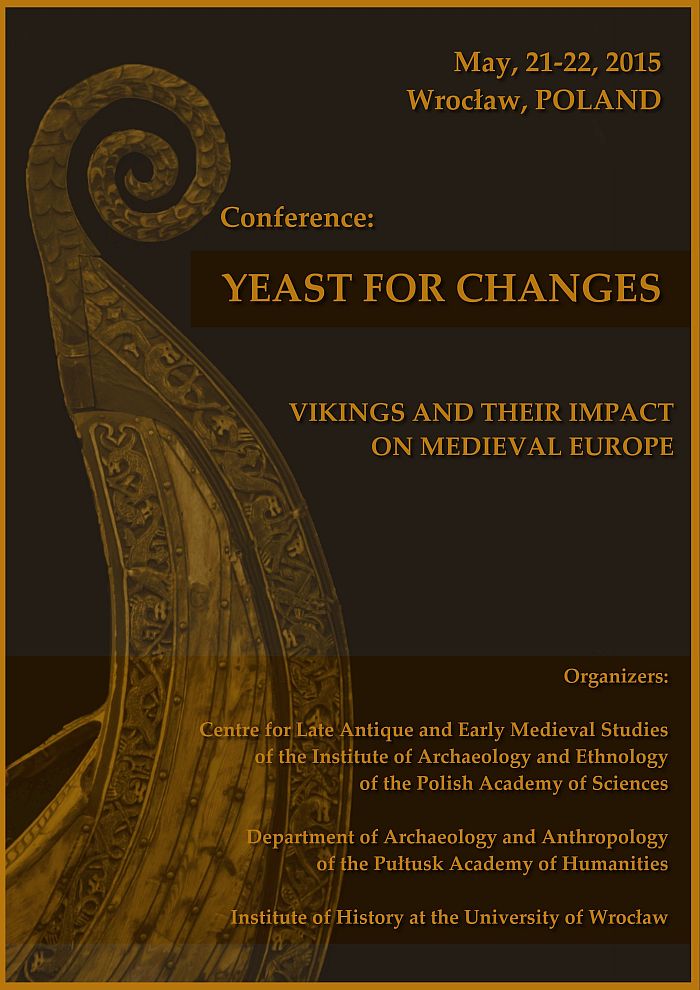
Appel à contribution – Yeast for changes. Vikings and their impact on Medieval Europe

Conference 21-22 May 2015
Wrocław, Poland

In European historiography it is customary to see beginning of the Viking Age in the year 793, when a group of Norwegians came on their drakkar and plundered holy monastery on the island of Lindisfarne. Two years later similar event happened once more, this time on more grandious scale: Norwegian ships attacked several insular monasteries repeating previous success and opening the gate for the future similar activities in whole Europe.

Year 2015 will be 1219 years since these events happened, so even if it is not round number it is a good occasion for gathering on the conference about Scandinavians which were moving around making not only usual Viking stuff – plundering and killing – but, as we can see it now more clearly, introducing changes into societies they were encountering. In the conference we would like to summarise decades of research and try to give an answer to the question:

What kind of impact Vikings and their descendants had on Europe during the long Viking Age?

It is an important question as those hundred years of Scandinavian attacks and colonisation were a time when Europe was in the process of creation. Scandinavians were effective warriors, but also effective tradesmen, creators of states and talented artisans. In these capacities they influenced many societies at which they were appearing and where they left still visible traces.

The planned conference will concentrate on topics like political organizations, economics, crafts, language and art. Looking again at the topic of our conference it can be defined best as « from the Vikings to the Crusaders », but we do not want to repeat the title of the renowned exhibition and publication (1992). Over 22 years have passed since that event came out a lot of new information and studies resulting from archaeological research, especially in Central Europe.

We would like to make this conference to a meeting of scholars working not only with the “Viking Age” but with scholars interested in mentioned topics in their countries.

Deadline for registration of the paper is 1.04.2015
Vikings - WroclawOrganized by:
Centre for Late Antique and Early Medieval Studies of the Institute of Archaeology and Ethnology Polish Academy of Sciences in Wrocław
Department of Archaeology and Anthropology of the Pułtusk Academy of Humanities
Institute of History of the University of Wrocław

Scientific Committee:
Prof. Dr. Andrzej Buko
Prof. Dr. Władysław Duczko
Prof. Dr. Sławomir Moździoch
Prof. Dr. Przemysław Wiszewski
Dr. Błażej Stanisławski

Organizing Committee:
Dr. Błażej Stanisławski
Anna Kubicka
Anna Czerepok
Joanna Orłowska
Olga Węglarz
Oskar Struzik
Tomasz Pełech
Konrad Szymański

Papers:
All speakers are requested to observe a 20 minute limit for presented papers. Presentations will be given as Power Point presentations.

Abstracts and registration:
Abstracts must be written in English and should be approximately 3000 characters in length (Title 200 characters).

Submission of abstracts: From 1 January to 1 April of 2015

The registration fee for speakers is 50 €.

All amounts are payable in Euro (€). All bank charges must be paid by the participants.

Registration fees can be paid on the bank account (PL 55 1240 1040 1111 0010 5540 0829) of the Centre for Late Antique and Early Medieval Studies of the Institute of Archaeology and Ethnology Polish Academy of Sciences

Once payment has been made, no refund will be given.

How to come:
The Organizing Committee cordially invite you to come to Wroclaw – the captivating city in the South-West Poland, the centre of science and culture. More information about the city at http://www.wroclaw.pl.

By car: The highway E 40 (A4)
By train: The connections with Warsaw, Dresden, Berlin, Hamburg, Kiev, Lviv and via Warsaw with Moscow, more international and local connections of Polish railway at http://www.pkp.pl
By plane: Airport Wroclaw (www.airport.wroclaw.pl) – the connections (with cheap airlines: Wizzair and Ryanair, and LOT, Lufthansa and Qatar Airlines) with Warsaw and Germany, England, Greece, Italy, Ireland, Spain, Norway, Sweden, Denmark and charter airlines with Turkey, Greece, Italy and Spain; and many air connections via air ports in Warsaw, Poznan, Katowice and Kraków

Accommodation:
Wroclaw is offering the different kinds of accommodation. More information at http://www.booking.com/city/pl/wroclaw.pl

Contact:
Dr. Błażej Stanisławski,
Institute of Archaeology and Ethnology Polish Academy of Sciences,
Więzienna St. 6, 50-118 Wrocław, Poland
Tel. +48 71 344 16 08, Fax +48 71 344 33 52
e-mail st-wski@wp.pl

Source de l’information : Instytut Archeologii i Etnologii. Polskiej Akademii Nauk

Publié dans Appel à contributions | Laisser un commentaire