Offre d’emploi – A PhD Researcher : Re-evaluating female monasticism’s “ambiguous identity” in the ninth- to eleventh-century West

Re-evaluating female monasticism’s “ambiguous identity” in the ninth- to eleventh-century West

This project focuses on the observance and organization of women religious in the central Middle Ages (9th-11th centuries) to investigate female monasticism as a deliberately « ambiguous » form of social and religious organization. Traditional scholarship subscribed to the notion that, because of a failure to adopt homogeneous standards for observance and organization, women religious never matched the spiritual efficiency, cultural proficiency, and reformist impetus of their male peers. While recent case studies have revealed significant achievements in all of these domains, this heterogeneity is still regarded as revealing women religious’ and patrons’ refusal to subordinate local vested interests to institutional, cultural, and spiritual progress. By means of an analysis of evidence from institutions in Lotharingia and Saxony relating to the self-perception of these women and the expectations of their patrons, the researchers will propose a new paradigm for evaluating female monasticism’s « ambiguity ». Two hypotheses will be tested. The first is that groups of women religious relied on ambiguous identities to construct credible narratives of self, respond effectively to changing societal contexts, and distinguish themselves from competing institutions. The second is that religious and secular elites supported these strategies, and regarded diversity in observance and organization as a means for women religious to respond adequately to society’s diverse needs.

This research project is funded by the Research Foundation-Flanders (FWO).
UGENT- FWoProfessional environment

Medieval studies at Ghent University cover a wide range of subjects and methodological approaches. Intensive exchanges within the Department of History and the Henri Pirenne Institute for Medieval Studies, and with the international academic community, create a stimulating environment for innovative research. Research on the early and central Middle Ages at Ghent University currently focuses on the tenth to early twelfth centuries, with scholars involved in the study of a wide range of subjects including monastic reform, conflict management, commemorative practices, material aspects of communication, and ritual and performance. For more information, see the RESOMA website: http://www.resoma.ugent.be.

Qualifications

The candidate:
– has a Master’s degree in History or a Master’s degree with demonstrable relevance to the study of Medieval History. Students who are currently preparing a master’s thesis and will graduate as a Master in History or a related discipline in 2015 are also welcome to apply;
– has experience with reading and analyzing Latin primary sources of the Middle Ages;
– has active knowledge of English and/or French (one of the latter two is sufficient) and is able to use for the research publications in French, German, and English. He/she is also willing to learn basic Dutch during his/her employment at Ghent University (introductory courses are available);
– is an enthusiastic and inventive team player who is willing to actively contribute to the activities of prof. Steven Vanderputten’s research group.
– is willing to travel abroad for conferences, meetings, etc.;
– is willing to prepare, and finish, a doctoral dissertation as outlined in the project text within four years. The PhD will be supervized by prof. Steven Vanderputten.
– is willing to write and publish at least two high-quality papers prior to submitting the dissertation.

Offer

– A 4-year contract as a full time scientific staff member of the Department of History at Ghent University (scholarship starting from around 1800 euro net./month);
– Extensive opportunties for engaging with national and international research groups;
– A friendly, dynamic environment for research;
– Opportunity to follow an individualized PhD programme at the UGent Doctoral School of Arts, Humanities and Law or the Doctoral School of Social and Behavioral Sciences, including language courses;
– Start of the project: negotiable (earliest starting date: 1 February 2015; last 31 December 2015).

How to apply
If you are interested in joining us, please send a copy of your diploma, your CV and a cover letter describing your interest in the project before 1 January 2015 to Prof. Dr. Steven Vanderputten (Steven.Vanderputten@ugent.be).

More information on the research group and Ghent University:
http://www.resoma.ugent.be
http://ugent.academia.edu/StevenVanderputten
http://www.pirenne.ugent.be/
http://www.ugent.be

Source de l’information : Academia.edu
Publié dans Offre d'emploi | Laisser un commentaire

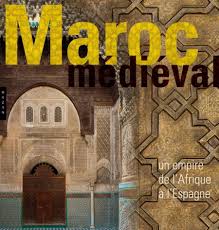
Exposition – Le Maroc médiéval. Un empire de l’Afrique à l’Espagne

Du XIe au XVe siècle, une succession de dynasties – almoravide, almohade et mérinide – ont unifié un espace politique et civilisationnel centré sur le Maroc, et étendu jusqu’à l’Andalousie. Leurs conquêtes les ont menées du sud du désert du Sahara (frange nord de la Mauritanie) au nord de l’Algérie et de la Tunisie. L’influence de ces empires, unissant pour la première fois les confins de l’Occident islamique, a rayonné jusqu’en Orient. L’exposition (près de 300 œuvres) permet d’appréhender cette longue et riche histoire, clef de compréhension du Maroc contemporain et source de sa modernité.

L’exposition incite à relire cette période d’apogée de l’Occident islamique, tant du point de vue historique qu’artistique. Elle présente ses plus belles réalisations dans les domaines du décor architectural, du textile, de l’ivoire ou de la calligraphie et replace cette puissante entité au centre des réseaux diplomatiques et commerciaux qui furent les siens. « Le Maroc médiéval » invite à un voyage dans l’espace marocain et andalou, suivant un fil chronologique. Chacune des périodes historiques est ponctuée d’éclairages sur les lieux de pouvoir et capitales historiques, cités d’or et de lumière.

Maroc mediévalCommissaire(s) :
Yannick Lintz, directrice du département des Arts de l’Islam, musée du Louvre, et Bahija Simou, directrice des Archives royales, Rabat, Maroc.
Commissaires scientifiques : Claire Delery et Bulle Tuil-Leonetti, musée du Louvre.

Informations pratiques :
Du 17 octobre 2014 au 19 janvier 2015

Paris – Louvre
Hall Napoléon, sous la pyramide

Tarifs sur place :
Billet spécifique à l’exposition : 13€.
Billet jumelé (collections permanentes et exposition) : 16€.
Ouvert tous les jours, sauf le mardi, de 9 h à 18 h. Nocturnes les mercredi et vendredi jusqu’à 21h45.

Renseignements : 01 40 20 53 17

Source de l’information : Musée du Louvre

Publié dans Exposition | Laisser un commentaire

Conférence – Vincent Debiais, « Écrire dans l’or. Écriture épigraphique et matériaux (XIe-XIIe s.) »

Le jeudi 27 novembre 2014 à 16h00, Vincent Debiais (Université de Poitiers) présentera une communication intitulée Écrire dans l’or. Écriture épigraphique et matériaux (XIe-XIIe s.) dans le cadre du cycle annuel de séminaires-conférences organisé par le centre de recherche « Pratiques médiévales de l’écrit » (Université de Namur).

affichePRAME2015terraDate : 27 novembre 2014, 16:00 – 18:00
Lieu : Université de Namur, Faculté de Philosophie et Lettres, L34 (Séminaire d’Histoire)
Entrée libre

Organisateur(s) : Département d’Histoire, département de Langues et littératures françaises et romanes, Centre de recherche PraME

Contact : jean-françois.nieus@unamur.be

Source de l’information : Université de Namur

Publié dans Colloque | Laisser un commentaire

Appel à contribution – Manhood in Anglo-Saxon England

Manchester Centre for Anglo-Saxon Studies (MANCASS)
Easter Conference 2015

Hulme Hall, University of Manchester, UK
7-9 April 2015

Proposals for 20 minute papers on this topic are invited. Topics that the conference will include, but are not limited to:

  • Male identities and constructions of masculinity
  • Literary presentations and representations of manhood
  • Laws and Penitentials
  • Male sexualities
  • Manhood and Archaeology
  • Representations of masculinity in art

We are looking for submissions (approx. 300 words) on these and related subjects to reach us by 30th November 2014. Please send submissions, and direct enquiries to the conference director, Dr Charles Insley, Department of History, University of Manchester.

Source de l’information : Manchester Medieval Society

Publié dans Appel à contributions | Laisser un commentaire

Conférence – Colour ConText, un outil informatique pour comprendre et restaurer la couleur

Orateur(s) : Dr Sylvie NEVEN, ULg – Service d’Histoire et Technologie des Arts plastiques
En collaboration avec la Maison des Sciences de l’Homme
Date : Le 27/11/2014 de 12h à 14h
Lieu : Château de Colonster, 4000 Liège
Thématique : Culture ICT Matériaux
Prix : 30 € (lunch inclus)

379Quand des outils IT se mettent au service de l’histoire de l’art… C’est sous cet angle que l’on s’intéressera, le temps d’un lunch LIEGE CREATIVE, à la base de données « Colour ConText », née d’un projet commun entre l’Université de Liège (« Transitions ») et le Max Planck Institute pour l’Histoire des Sciences (Berlin).

Sylvie Neven, Docteur en Histoire de l’art et coordinatrice de ce projet présentera les fonctionnalités et les objectifs de cette base de données dédiée aux livres de recettes artistiques.

Grâce à celle-ci, c’est à des ressources historiques pour la plupart inédites et méconnues que l’on a aujourd’hui accès. Produits depuis l’Antiquité, ces ouvrages associent des connaissances d’ordre culturelles, technologiques, artistiques, botaniques et pharmacologiques. Ils permettent en outre à l’historien d’art de répondre à une série d’interrogations liées à la production des colorants et à l’origine des pigments mais aussi et, plus largement, d’étudier les comportements chimiques de ces substances colorantes (leur vieillissement, par exemple – et comment les préserver).

Cette rencontre permettra d’exposer la flexibilité de cet outil informatique qui se veut utile à un public varié, mais aussi de démontrer la richesse du matériau qui sera désormais librement accessible via la base de données.

Découvrez plus d’info sur Colour Context sur les medias de l’ULg

Source de l’information : Liege Creative

Publié dans Colloque | Laisser un commentaire

Appel à contribution – Turning Points in French History. Society for the Study of French History 29th Annual Conference

We are inviting proposals for papers on any subject in French history or France-related history.

The theme of the plenary sessions will be “Turning Points in French History”. This theme has been chosen because of the number of significant anniversaries that fall in 2015 (1415 Azincourt, 1515 accession of François Ier, 1615 closing of Estates General until 1789, 1715 death of Louis XIV and accession of Louis XV, 1815 end of the Napoleonic era, 1940 fall of France). Alongside this there will be parallel sessions on themes to be decided, depending upon proposals received.

Proposals and submission guidelines

Proposals for panels are as welcome as individual paper proposals. It is expected that papers delivered next June will be between 20 and 30 minutes, depending on panel size.

Please send proposals for panels or individual papers for the parallel sessions
by 30th November 2014

to the Centre for French History and Culture at the following email address:
ssfh2015@st-andrews.ac.uk

Proposals for papers should come in Word documents, and include :

  • A brief curriculum vitae of up to one side of A4 ;
  • A synopsis of nomore than 250 words

Proposals for an entire panel (max. 3 speakers plus chair) can be collated in a single document.

Further details about registration and costs of the conference will be announced in the first quarter of 2015. At this stage we can say that costs will be roughly in line with normal attendance and accommodation costs for the Society’s annual conferences.

Key plenary speakers :
Professor David Bell (Princeton University)
Professor Alice Conklin (Ohio State University)

There will also be a plenary round-table session as the closing event of the conference, with participants to be announced in spring 2015.

Conference committee :
Dr Sarah Easterby-Smith
Dr Guy Rowlands
Dr Stephen Tyre

Please correspond with them for conference business only through the email address:
ssfh2015@st-andrews.ac.uk

Acceptance decisions will be communicated by early January 2015 at the latest.

Source de l’information : Calenda

Publié dans Appel à contributions | Laisser un commentaire

Appel à contribution – Les figurations visuelles de la parole, du son musical et du bruit, de l’Antiquité à la Renaissance

Appel à communication – Colloque Musiconi
11,12 et 13 juin 2015 à Chartres
Les figurations visuelles de la parole, du son musical et du bruit, de l’Antiquité à la Renaissance

Le colloque Musiconis propose la prise en compte de tous les types de signes visuels qui sont susceptibles de rendre compte de la nature des sons auxquels ils se réfèrent, qu’ils soient figuratifs, mathématiques, graphiques, calligraphiques, épigraphiques, chromatiques, ornementaux, compositionnels, substantiels, etc. Avec la même liberté, les communications présentées pourront concerner tous les types de supports visuels, de l’art monumental aux objets d’art et peintures de manuscrits.

Les chercheurs intéressés par l’appel à communication ci-joint pourront adresser leur projet de communication (3000 caractères maximum) à Frédéric Billiet et à Isabelle Marchesin avant le 31 janvier 2015.

Call for papers, Musiconis Conference, 11, 12, and 13 June 2015 in Chartres
The visual representation of speech, sound, and noise from Antiquity to the Renaissance
The Musiconis conference will take into account the conveyance of sound through all types of visual representation, whether figurative, mathematical, graphic, calligraphic, epigraphic, coloristic, ornamental, compositional, substantive or other means. The conference presentations may address all visual media, from monumental art to objects and manuscript illumination.

To propose a paper, send an abstract of no more than 3000 characters to Frédéric Billiet and Isabelle Marchesin by January 31, 2015.

Comité scientifique/Program committee
Dorothea Baumann (Université de Zürich)
Frédéric Billiet (IReMus-Université Paris-Sorbonne)
Susan Boynton (Columbia University)
Florence Gétreau (IReMus-CNRS)
Nicoletta Guidobaldi (Alma Mater Studiorum-Università di Bologna)
Isabelle Marchesin (INHA-Université de Poitiers)
Claude Montacié (STIH-Université Paris-Sorbonne)
Christophe Vendries (Université Rennes 2-LAHM)

Comité d’organisation/Conference organizers
Sébastien Biay (CESCM-Université de Poitiers)
Frédéric Billiet
Isabelle Marchesin
Xavier Fresquet

Source de l’information : Musiconis

Publié dans Appel à contributions | Laisser un commentaire

Base de données – Actes originaux produits entre 1121 et 1220 actuellement conservés en Lorraine

Dans la continuité du projet « chartes originales antérieures à 1121 conservées en France », qui a abouti à la mise en ligne d’une base de données accessible via le portail TELMA de l’IRHT, l’équipe de l’Axe Diplomatique du Centre de Médiévistique Jean-Schneider (ERL 7229 Université de Lorraine-CNRS), héritier de l’Atelier de recherche sur les textes médiévaux (ARTeM) a souhaité mettre à disposition des chercheurs les actes originaux produits entre 1121 et 1220 actuellement conservés en Lorraine.

La base de données permet déjà d’accéder au textes de près de 800 documents. Parmi ceux-ci on trouve notamment la totalité des actes émanant des évêques de Metz, Toul et Verdun. Les recherches peuvent utiliser toute une série de critères, il est aussi possible d’interroger des noms de lieux (dans le champs regeste). Les photos des documents sont publiées pour la Meuse, les autres départements suivront.

Informations complémentaires et accès à la base de données : ici

Source de l’information : CNRS

Publié dans Banque de données | Laisser un commentaire

Séminaire – Les hiérarchies juridictionnelles au sein de l’Église médiévale

Université Paris 1 Panthéon-Sorbonne, LAMOP-CNRS UMR 8589 ; Université de Reims Champagne-Ardenne, CERHIC, EA 2616

Organisation :
Véronique Beaulande-Barraud, Université de Reims Champagne Ardenne, CERHiC-EA 2616
Elisabeth Lusset, Fondation Thiers, Université Paris I, LAMOP

Programme :

Mardi 2 décembre 2014 – 17h-19h – Université Paris 1, salle Perroy
Elisabeth Lusset (Fondation Thiers, Université Paris I, LAMOP)
« Omnes casus episcopales pertinent ad abbatem – La question des cas réservés dans les communautés religieuses médiévales (XIIe-XVe siècle) »

Mardi 27 janvier 2015 – 17h-19h – Université Paris 1, salle Perroy
Vincent Tabbagh (Université de Bourgogne)
Archevêques, archidiacres, archiprêtres : un effacement des « premiers » ?

Mardi 24 mars 2015 – 17h-19h – Université Paris 1, salle Perroy
Présentation et discussions autour l’ouvrage collectif dirigé par V. Beaulande-Barraud et M. Charageat, Les officialités dans l’Europe médiévale et moderne. Des tribunaux pour une société chrétienne, Turnhout, Brepols, 2014.

Discutant : Claude Gauvard (Université Paris I, LAMOP)

Mardi 23 juin 2015 – 9h30-17h, Université de Reims Champagne-Ardenne, Maison de la Recherche
Arnaud Fossier (Université de Bourgogne/Artéhis)
« Forum ou l’histoire des espaces institutionnels du jugement ecclésiastique (XIIe-XIIIe siècles) »

Emilie Rosenblieh (Université de Franche-Comté/Laboratoire des sciences historiques)
« Le jugement conciliaire du pape Eugène IV (1431-1439). Débats judiciaires et polémiques ecclésiologiques sur la primauté juridictionnelle dans l’Église latine »

Cecilia Cristellon (Goethe-Universität Frankfurt am Main)
« Mixed marriages and the Roman congregations (the Roman Inquisition, the Congregation of the Propagation of the Faith, the Congregation of the Council) in Early Modern Europe »

Publié dans Colloque, Séminaire | Laisser un commentaire

Colloque – Early Medieval Monasticism in the North Sea Zone : New Research and Fresh Perspectives

Friday 24th-Sunday 26th April 2015
University of Kent – Canterbury

2015 marks the conclusion of a major AHRC-funded campaign of excavation at Lyminge, the first archaeological investigation to provide a detailed account of the origins and development of a royal monastery in the kingdom of Kent. The results shed light on many themes central to the interpretation of early medieval monastic foundations in their contemporary contexts.

The aim of the conference is to contextualise the results of this research by bringing together an international body of scholars to examine the theme of early medieval monasticism in the North Sea Zone from a variety of archaeological, historical and cross-disciplinary perspectives.

Sessions include: ‘Power and Place: the Politics of Monastic Foundation’, ‘What did Monasteries Look Like? Architecture and Layout’, and ‘Production, Consumption and Surplus: Monasteries as Economic Central Places’. The conference will conclude with a round table discussion to identify priorities for future research and opportunities for new scholarly collaboration. There is an optional excursion to Lyminge and other local sites on Friday afternoon followed by a keynote address by Professor John Blair and a wine reception.

Among confirmed speakers are:
Justine Bayley (London), John Blair (Oxford), Rosemary Cramp (Durham), Rosamond Faith (Oxford), Zoe Knapp (Reading) Elizabeth Lorans (Tours), Mark McKerracher (Oxford), Tomás Ó Carragáin (Cork), David Petts (Durham), Thomas Pickles (Chester), Gabor Thomas (Reading), Dries Tys (Brussels), Ian Wood (Leeds), Barbara Yorke (Winchester).

Conference registration fee is £42 which includes lunch and refreshments. The optional field trip to Lyminge is £10 per person. Please go to www.lymingearchaeology.org for details and registration. Please contact a.knox@reading.ac.uk with inquiries.

This conference is sponsored by the Arts and Humanities Research Council and project partners Kent Archaeological Society.

Dr Gabor Thomas
Associate Professor in Early Medieval Archaeology
University of Reading
Whiteknights
Reading RG6 6AB
+44 (0) 118 378 5449

Follow us on Facebook! http://www.facebook.com/ArchaeologyReading
Director of AHRC-funded Lyminge Excavations

http://www.lymingearchaeology.org

http://blogs.reading.ac.uk/lyminge/

Publié dans Colloque | Laisser un commentaire


