Appel à contribution – Renewal in the Cults of Saints, 1050-1300

Renewal in the Cults of Saints, 1050-1300
International Medieval Congress, Leeds, 6-9 July 2015
Deadline: 25 August 2014

We are seeking proposals for papers on the topic of renewal, reinvention and reinterpretation in the cults of saints in the period 1050-1300. Possible topics might include, but are not limited to:

  • The reinvention of saints across cultural, national, or linguistic borders
  • The impact of church reform on the cults of saints
  • Reinterpretation of a saint’s cult within cult practice, hagiography, liturgy and art
  • How a saint’s cult might be renewed or revitalised for a new audience

Papers dealing with renewal in the cults of Anglo-Saxon or British saints in this period will be particularly welcomed.

Proposals for papers of 15-20 minutes should be sent to steffenabhope@gmail.com or eleanor.parker@ell.ox.ac.uk by 25 August.

Source de l’information : Medieval Art Research

Publié dans Appel à contributions | Laisser un commentaire

Bourse – Stipendia Academiae Belgicae

L’Academia Belgica de Rome met à concours chaque année un certain nombre de Stipendia Academiae Belgicae, dont la durée peut aller de un à neuf mois. Les bourses s’adressent à des chercheurs ayant obtenu leur diplôme de 2e ou de 3e cycle – baccalauréat, licence, maîtrise, DEA, doctorat – dans les trois dernières années au sein d’une université belge, se sont distingués par l’excellence des grades obtenus et peuvent présenter un projet de recherche justifiant un séjour à Rome de la durée proposée.

Le stipendium comprend une indemnité de voyage et de séjour par mois, payables à Rome et le logement à l’Academia durant la période considérée.

Les dossiers de candidature doivent comprendre le formulaire de candidature téléchargeable sur le site de l’Academia Belgica ; un résumé de max. 3 pages du travail de fin d’études ou du doctorat ainsi que les deux rapports des professeurs informant le jury sur le projet proposé et sur la candidature.

Les candidatures sont attendues au plus tard le 30 septembre 2014 à l’adresse électronique suivante: interprog@fwo.be. Les candidats retenus seront avertis vers le 20 novembre 2014.

Pour plus d’informations: direttore@academiabelgica.itou segreteria@academiabelgica.it

Source de l’information : Academia Belgica

Publié dans Bourse | Laisser un commentaire

Offre d’emploi – Lecturer in Art History Renaissance & Early Modern Art (University of Melbourne)

Lecturer in Art History Renaissance & Early Modern Art 
University of Melbourne, Parkville, School of Culture & Communication, Faculty of Arts
Deadline:  7 September 2014

The School of Culture & Communications are seeking an energetic and committed individual who is able to take on responsibility for the Art History Program’s teaching in, first, Renaissance art and, in addition, either Baroque art or in Medieval art.

In this position, you will assume academic responsibilities including undergraduate teaching, postgraduate and honours student supervision, administration, subject coordination and maintenance of our existing curricula in Early Modern subjects as appropriate. You will have either an established record of research or show clear potential for future research accomplishment. You will be expected to show evidence of a productive research plans and demonstrate your capacity to contribute to administration within the School.

The School is definitely seeking an appointee with broad interests and an ability to relate her/his specialisation to the broader teaching and research interests of the Art History program of the University of Melbourne, and therefore the ability and desire to make contributions to the generalist first year art history subjects.

Close date:   7 September 2014

Position Description & Selection Criteria

0032695.pdf

Advertised:04 Aug 2014 12:00 AM Aus. Eastern Standard Time
Applications close: 07 Sep 2014 11:55 PM Aus. Eastern Standard Time

Source de l’information : University of Melbourne

Publié dans Offre d'emploi | Laisser un commentaire

Offre d’emploi – John Rylands Research Institute Visiting Fellowship (University of Manchester)

The John Rylands Research Institute is a partnership between The University of Manchester Library and The University of Manchester to reveal and explore hidden ideas and knowledge contained within our world-leading Special Collections. We are creating an international community of scholars across many disciplines to support outstanding research and to bring this information to the wider public in exciting and innovative ways.

The Library’s Special Collections count among the foremost repositories of primary sources in the UK, with research potential across an exceptionally broad array of disciplines. Candidates, whether in established academic posts or not, should at least hold a doctorate at the time of application.

Successful applicants will be reimbursed expenses up to £1,500 per month for up to 3 months, to cover travel, accommodation and living expenses during the Fellowship. All applications must be based strongly on the Special Collections of the University of Manchester Library.

Applications in the areas of Revolutions in Print, Religions and Science and Medicine are especially welcome, as are those that have the potential to result in high-profile publications.

Fellowships can be taken up at a mutually agreed time between 1 January and 31st July 2015. Consideration will be given to exceptional candidates undertaking their fellowship at a future time.

The allocation of a grant will take place after the assessment of an application form by the Steering Group of the John Rylands Research Institute, which is advised by curators and experts from the relevant academic schools.

The deadline for applications will be 30 September 2014.
Conditions of a Visiting Fellowship

Applications for a Visiting Fellowship should include:

  • A research proposal, which includes vision and methodology.
  • An outline of the sources to be researched and consulted during the project.
  • A curriculum vitae
  • A list of relevant publications
  • 2 academic references, who will be contacted should your application be shortlisted.

Successful candidates will be expected to provide an active line within the Institute.

What does John Rylands Research Institute Visiting Fellowship offer?

  • Curatorial support for research fellows
  • Access to a hot desk including IT equipment
  • Photocopying and the opportunity to access digital imaging
  • Access to staff room

Application process

Please complete an application form (PDF) and return to: jrri@manchester.ac.uk by 30 September 2014.

We will get back to you with a decision by 20 December 2014.

Visiting Fellows Application Form (MS Word)

Source de l’information : University of Manchester

Publié dans Offre d'emploi | Laisser un commentaire

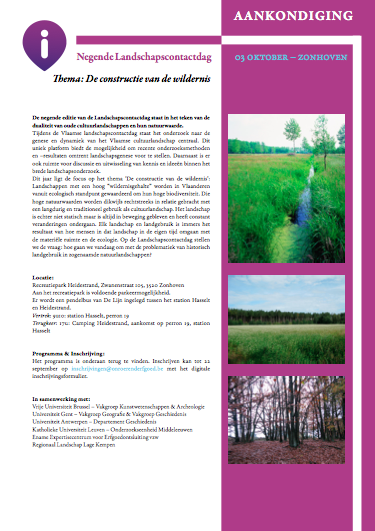
Journée d’étude – De constructie van de wildernis. Negende Landschapscontactdag

De negende editie van de Landschapscontactdag staat in het teken van de dualiteit van oude cultuurlandschappen en hun natuurwaarde.

Tijdens de Vlaamse landschapscontactdag staat het onderzoek naar de genese en dynamiek van het Vlaamse cultuurlandschap centraal. Dit uniek platform biedt de mogelijkheid om recente onderzoeksmethoden en –resultaten omtrent landschapsgenese voor te stellen. Daarnaast is er ook ruimte voor discussie en uitwisseling van kennis en ideeën binnen het brede landschapsonderzoek.

Dit jaar ligt de focus op het thema ‘De constructie van de wildernis’: Landschappen met een hoog “wildernisgehalte” worden in Vlaanderen vanuit ecologisch standpunt gewaardeerd om hun hoge biodiversiteit. Die hoge natuurwaarden worden dikwijls rechtstreeks in relatie gebracht met een langdurig en traditioneel gebruik als cultuurlandschap. Het landschap is echter niet statisch maar is altijd in beweging gebleven en heeft constant veranderingen ondergaan. Elk landschap en landgebruik is immers het resultaat van hoe mensen in dat landschap in de eigen tijd omgaan met de materiële ruimte en de ecologie. Op de Landschapscontactdag stellen we de vraag: hoe gaan we vandaag om met de problematiek van historisch landgebruik in zogenaamde natuurlandschappen?

9de LandshchapProgramme :

9u : Ontvangst en registratie
9u30 : Verwelkoming

9u45 : Kris Vandekerkhove (INBO) – Nieuwe wildernis in Vlaanderen
10u15 : Wim De Clercq (UGent) – Het Maldegemveld van wildernis tot cultuurlandschap tot wildernis
10u45 : Koffiepauze

11u05 : Marjan Vroom – Natuurherstel in het eeuwenoude cultuurlandschap van de grootste kwelder van West-Europa
11u35 : Arnout Zwaenepoel (WVI) – De wilgen van de Biesbosch
12u05 : Hans Leinfelder (KUL-LUCA) – Heide in Vlaanderen: ‘wildernis of kalmernis’?
12u35 : Broodjeslunch

13u35 : Dries Tys (VYB) & Ilse Ideler (RLLK) m.m.v. Ruben Jarych, Eric Cosyns, Joël Burny, Arnout Zwaenepoel – Historische ecologie in Limburg

14u15 : Excursie
Dries Tys, Ilse Ideler & Ruben Jarych – De Wijers: relicten van voormalig landschapsgebruik
Tijdens de excursie zijn goede stapschoenen aangeraden

16u30-18u : Afsluitende receptie
Op de studiedag worden ook een aantal posters over het thema tentoongesteld.

Informations pratiques :

Locatie :
Recreatiepark Heidestrand, Zwanenstraat 105, 3520 Zonhoven
Aan het recreatiepark is voldoende parkeermogelijkheid.
Er wordt een pendelbus van De Lijn ingelegd tussen het station Hasselt en Heidestrand.
Vertrek: 9u10: station Hasselt, perron 19
Terugkeer: 17u: Camping Heidestrand, aankomst op perron 19, station Hasselt

Inschrijving :
Inschrijven kan tot 22 september op inschrijvingen@onroerenderfgoed.be met het digitale inschrijvingsformulier.

Betalen :
Uw inschrijving is pas geldig na betaling van 30 euro op onderstaand rekeningnummer.
Studenten kunnen inschrijven aan een verminderd tarief van 20 euro, Betalingsgegevens:
UA Faculteit Letteren.
BE42 7350 0886 2754
Met referentie SC201113 Landschapscontactdag + naam en voornaam

In samenwerking met:
Vrije Universiteit Brussel – Vakgroep Kunstwetenschappen & Archeologie Universiteit Gent – Vakgroep Geografie & Vakgroep Geschiedenis Universiteit Antwerpen – Departement Geschiedenis
Katholieke Universiteit Leuven – Onderzoekseenheid Middeleeuwen Ename Expertisecentrum voor Erfgoedontsluiting vzw
Regionaal Landschap Lage Kempen

Publié dans Colloque | Laisser un commentaire

Colloque – La Lotharingie et la papauté. Interactions dans l’espace entre Germania et Gallia

L’importance de la Lotharingie, cet espace entre la Gallia et la Germania, fait depuis longtemps objet des discussions historiographiques en relation avec la « naissance » de la France et de l’Allemagne. Mais cette vision a quelque peu caché son caractère de noyau de l’empire carolingien, alors que les territoires entre Moselle et Ardennes ont vraiment constitué un bouillon de culture dans les siècles qui suivaient, surtout si l’on considère l’histoire de l’Église. Cet espace d’une richesse en églises et cloîtres rarement égalée a vu de nombreux événements (par exemple la réforme de Gorze) prendre leur essor. Le colloque s’appuie sur ces constats et souhaite réunir, en aiguisant son regard sur la papauté, deux visions : la Lotharingie comme « espace entre deux empires » et comme « Innovationslandschaft » de l’église du Moyen Âge ?

Ce sont d’abord les personnes reliant par leur biographie la Lotharingie et Rome qui nous permettent une approche du problème. De la Haute-Lotharingie nous viennent des protagonistes de la réforme tels que Léon IX, Humbert de Moyenmoutier, ou Étienne IX. Cependant il faut y ajouter les outils de l’interaction entre Rome et les régions : des lettres, des légats et représentants pontificaux, les privilèges et exemptions spécifiques à certaines institutions ecclésiastiques lorraines. Il faut également considérer les spécificités régionales : évêchés et cloîtres, liberté de manœuvre comme privilège d’un espace frontalière, mais surtout la structure de la transmission des textes. Aux écrits pontificaux et collections canoniques vient en effet s’ajouter une importante production historiographique.

Cette approche géographique et dynamique doit également permettre de promouvoir plus encore les regestes de Metz, Toul et Verdun, suffragants de Trèves ainsi que de Liège, suffragant de Cologne. En effet un rattachement à la Gallia pontificia ou Germania pontificia satisfait mal leurs rôles historiques prépondérants.

Le colloque est précédé d’une école d’été du 15 au 17 septembre dont les participants vont en général assister au colloque.

Programme :

Mittwoch, 17. September 2014

Einführung
18.00-19.00 Uhr :  Michel Margue – Lotharingien als Reformraum (10.-12. Jahrhundert)
19.00 Uhr, Empfang

Donnerstag, 18. September 2014

Personen und Institutionen,
Sektionsleitung: Thomas Deswarte

8.45-9.00 Uhr : Klaus Herbers/Harald Müller – Zur Einführung
9.00-10.00 Uhr : Max Kerner – Aachen – Rom. Von Karl dem Großen zu Lothar II.
10.00-11.00 Uhr : Karl Augustin Frech – Lothringer in Rom in der Zeit der « deutschen Päpste »
11.00-11.30 Uhr : Kaffeepause

11.30-12.30 Uhr : Alain Dierkens – Les centres religieux de la Basse Lotharingie
12.30-14.00 Uhr : Mittagspause

14.00-15.00 Uhr : Gordon Blennemann – Interactions locales : papauté, monastères et églises paroissiales dans le diocèse de Metz au XIe et XIIe siècle
15.00-16.00 Uhr : Benoît Michel Tock – La papauté et les abbayes cisterciennes du Nord-Est de la France au XIIe siècle

16.00-18.00 Uhr : Besichtigung der Ausstellungen zum 1200. Todestag Karls des Großen I
18.00-20.00 Uhr : Abendessen
20.00 Uhr, Abendvortrag : Rudolf Schieffer – Der Papst unterwegs in Lotharingien

Freitag, 19. September 2014

Mittel der Interaktion mit Rom
Sektionsleitung: Rudolf Hiestand

9.00-10.00 Uhr : Stefan Weiß – Legaten und Boten
10.00-11.00 Uhr : Daniel Berger – Die Diözese Lüttich als Empfängerlandschaft von Papsturkunden. Bestandsaufnahme und erste Auswertung der von W. Peters nachgelassenen Materialien
11.00-11.30 Uhr : Kaffeepause

Überlieferung
Sektionsleitung: Harald Müller

11.30-12.30 Uhr : Matthias Witzleb – Briefsammlungen im nordostfranzösischen Raum
12.30-14.00 Uhr : Mittagspause

14.00-15.00 Uhr : Lotte Kéry – Kanonessammlungen aus dem lotharingischen Raum
15.00-16.00 Uhr : Jean-Baptiste Renault – Recherches sur la diplomatique en Lorraine : l’exemple de l’acte épiscopal

16.00-16.30 Uhr : Kaffeepause
16.30-19.00 Uhr : Besichtigung der Ausstellungen zum 1200. Todestag Karls des Großen II
19.00 Uhr, Abendessen

Samstag, 20. September 2014

9.00-10.00 Uhr : Klaus Herbers – Vorarbeiten und Materialien der Piusstiftung
10.00-11.00 Uhr : Joachim Dahlhaus – Lorraine – Paris. Wege der Überlieferung mittelalterlicher Urkunden in der Neuzeit
11.00-11.30 Uhr : Kaffeepause

11.30-12.30 Uhr : Paul Bertrand – Conclusions: perspectives d’une Lotharingia pontificia
12.30 Uhr : Mittagsimbiss
14.00 Uhr : Abreise

Informations pratiques :
Veranstalter : Prof. Dr. Klaus Herbers, Lehrstuhl für Mittelalterliche Geschichte und Historische Hilfswissenschaften, Friedrich-Alexander-Universität Erlangen-Nürnberg; Prof. Dr. Harald Müller, Lehrstuhl für Mittelalterliche Geschichte, RWTH Aachen

Datum, Ort: 17.09.2014-20.09.2014, Aachen, Historisches Institut der RWTH Aachen, Theaterplatz 14, 52062 Aachen
Deadline: 10.09.2014

Kontakt:
Ingrid Getz
Lehrstuhl für Mittelalterliche Geschichte, RWTH Aachen, Theaterplatz 14, 52056 Aachen
0241/8026031
getz@histinst.rwth-aachen.de

Source de l’information : H-Soz-u-Kult

Publié dans Colloque | Laisser un commentaire

Appel à contribution – Pitfalls, Problems and Promises: Using Prosopography in Medieval Monastic Studies

Using prosopography in monastic studies can be useful but also very challenging. This session will focus on the methodology, using prosopography in research and the the problems or pitfalls researchers face with source material and subject matter. It will also address the promises and outcomes of using this approach in monastic studies. It draws on the experience of new researchers using this methodology and their experience as well as seasoned researchers offering advice.

We are looking for participants for this session to focus on the methodology, source material concerns, practical advice and experience rather than case studies. However, case studies would be welcome if it pertains to the above remit.

Please contact us on: pimms.net@gmail.com

Deadline : 30 August 2014

Source de l’information : Prosopography in Medieval Monastic Studies – PIMMS

Publié dans Appel à contributions | Laisser un commentaire

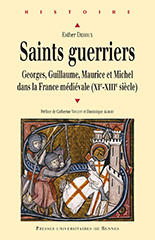
Publication – Esther Dehoux, « Saints guerriers. Georges, Guillaume, Maurice et Michel dans la France médiévale (XIe-XIIIe siècle) »

Voilà bien un vrai défi que de s’intéresser aux saints guerriers ! L’expression est en soi un paradoxe : comment prétendre à la sainteté en portant les armes ? Serait-ce alors une concession au cliché « moyenâgeux » du bon chevalier défenseur de la veuve et de l’orphelin, se préparant à l’adoubement par une nuit d’oraison, avant d’affronter les ennemis de la chrétienté ?

1401175424L’ouvrage d’Esther Dehoux montre que ce n’est rien de tout cela. Cet objet d’étude, si étonnant puisse‑t‑il paraître de prime abord, se révèle un observatoire du plus haut intérêt pour saisir les évolutions, tensions et aspirations qui ont travaillé la société médiévale en un moment crucial de son histoire. Les représentations, au sens large, de quatre figures importantes, Georges, Guillaume, Maurice et Michel, retenus parmi ces saints guerriers dont on a pu dénombrer quantité d’émules, témoignent de la reconnaissance de la singularité du combattant et de la volonté des hommes d’Église d’offrir à celui-ci une voie de salut spécifique. Le message est aussi parénétique que social. Il est également politique car la figure du saint guerrier peut autant servir la cause royale qu’encourager la réforme de l’Église et la mise en ordre(s) de la société que cette dernière implique.

Avec ce livre, « les jongleurs de mots, les faiseurs d’images », mais aussi les spécialistes des pratiques religieuses et les historiens du politique trouveront de nouvelles pistes à explorer, de nouveaux regards sur des sources qu’ils pensaient connaître.

Table des matières : ici

Docteur en histoire et chercheur rattaché au Centre d’histoire sociale et culturelle de l’Occident (Chisco‑ea 1587) de l’université Paris‑Ouest‑Nanterre‑La Défense, Esther Dehoux enseigne l’histoire­‑géographie au collège Édouard­‑Herriot et au lycée professionnel Rosa‑Parks de Rostrenen.

Informations pratiques :
Esther Dehoux, Saints guerriers. Georges, Guillaume, Maurice et Michel dans la France médiévale (XIe-XIIIe siècle), Rennes, Presses Universitaires de Rennes, 2014 (Histoire). 15,5 x 24 cm, 328 p. ISBN : 978-2-7535-3334-9. Prix : 21,00 €.

Source de l’information : Presses Universitaires de Rennes

Publié dans Publications | Laisser un commentaire

Bourse – Bourses de mobilité de l’Institut Historique allemand (Paris)

Das Deutsche Historische Institut Paris vergibt bis zum Jahresende 2014

Forschungskurzstipendien

zur Erarbeitung eines neuen Forschungsvorhabens

Die Stipendien richten sich an Bewerberinnen und Bewerber, deren Forschungsthemen im Rahmen des Arbeitsprogramms und der Aufgabenstellung des Instituts liegen und für deren Bearbeitung eine Arbeitsphase in Pariser Bibliotheken und / oder Archiven notwendig ist. Die Ausschreibung richtet sich somit ausdrücklich auch an zukünftige Doktorandinnen und Doktoranden sowie PostDocs.

Die Anträge müssen genaue Angaben enthalten

  • über das Thema
  • den Stand der Vorarbeiten
  • das Arbeitsprogramm, für das eine Unterstützung beantragt wird
  • die Quellenlage, die den Aufenthalt im Ausland begründet
  • Institutionen oder Personen in Frankreich, zu denen Kontakt besteht oder aufgenommen werden soll
  • das Antrittsdatum und die voraussichtliche Zeitdauer
  • die eventuell bereits gewährten Stipendien von anderen Institutionen für das Dissertations-bzw. PostDoc-Forschungsvorhaben

Den Anträgen sind beizufügen

  • ein Lebenslauf, aus dem die persönlichen Verhältnisse der Bewerberin / des Bewerbers, der Studiengang und die Studienzeit (Semester) ersichtlich werden
  • eine Erklärung, dass für den beantragten Stipendienzeitraum kein weiteres Stipendium angenommen und kein bezahltes Arbeitsverhältnis eingegangen wird
  • Bescheinigungen über Studienleistungen bzw. Kopie von Abschlusszeugnissen
  • ein Gutachten des akademischen Lehrers bzw. Betreuers

Die Höhe der Stipendien beträgt monatlich 1500 € für Doktorandinnen / Doktoranden und 2000 € für PostDocs.

Weitere Informationen entnehmen Sie bitte unserer Stipendienordnung.

Für Auskünfte steht Ihnen Herr Dr. Stefan Martens (smartens@dhi-paris.fr) zur Verfügung.

Richten Sie Ihre Bewerbung an:
Herrn Prof. Dr. Thomas Maissen
Deutsches Historisches Institut Paris
E-Mailadresse: kfoertsch@dhi-paris.fr

Source de l’information ; IHA-DHIP

Publié dans Bourse | Laisser un commentaire

Appel à contribution – Conference on Anglo-Norman History Books

Conference on Anglo-Norman History Books
Trinity College Dublin, 22-23 May 2015
Deadline: 12 September 2014

trinity

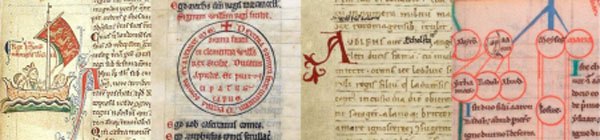
Amongst the key sources for medieval history are the manuscripts in which medieval writers recorded their views of the past. These documents provide historians with more information than simply their textual content. The layout, decoration, script and annotations often provide insights into why a work was copied and how it was used. The twelfth century saw a boom in historical writing dealing with the recent past and stretching back to the biblical narrative. New chronicles and annals were produced, together with accounts of the histories of particular peoples, nations and places. This two-day conference will bring together scholars working on Anglo-Norman history books from a range of disciplinary perspectives to discuss the many ways in which these books can be read. The focus will be on works produced in areas controlled by the king of England between c.1066 and c.1300.

Topics covered might include, but are not limited to:

  • The creation, circulation and reception of manuscripts containing material about history
  • The organisation, layout and combination of texts within manuscripts dealing with history
  • The use of decoration in historical manuscripts
  • The contexts in which historical manuscripts were used and preserved
  • The role of manuscripts in determining historical records and shaping attitudes to the past

Abstracts of no more that 300 words for papers of 20 minutes should be sent to Laura Cleaver at cleaverl@tcd.ie by the 12th September 2014.

This conference is organised as part of the ‘History Books in the Anglo-Norman World’ research project, which is funded by a Marie Curie Actions Grant (2011-15).

Source de l’information : Medieval Art Research

Publié dans Appel à contributions | Laisser un commentaire