Offre d’emploi – Illuminierte Urkunden als Gesamtkunstwerk

Ausschreibung eines Arbeitsvertrags im kunsthistorischen Arbeitsmodul

Anforderungsprofil

  • Erfahrungen im Umgang mit schriftlichen Quellen des Mittelalters und deren Dekor (inkl. Grundkenntnisse in den Sprachen und in der Paläographie um die Objekte zuordnen zu können).
  • Bereitschaft zur Zusammenarbeit mit KollegInnEn der anderen Arbeitsmodule, also dem Bereich hilfswissenschaftliche Inhaltserschließung und EDV.

Aufgaben

  • Datenerfassung
  • Kontakt mit den Sammlungen (Recherche, Photobestellungen, etc.)
  • Objektbeschreibungen (kunsthistorische Einordnung)
  • Selbständiges Erarbeiten von Teilbereichen; Publikation der Ergebnisse

Möglichkeiten

  • Die Mitarbeit an dem Projekt bietet eine innovative und interdisziplinäre Arbeitsumgebung.
  • Kontakt zu einer internationalen Gruppe von MitarbeiterInneN
  • Das Beschäftigungsausmass (15–30 Wochenstunden) wird einvernehmlich festgesetzt; Entlohnung gemäß den Vorgaben des FWF: http://www.fwf.ac.at/de/projects/personalkostensaetze.html: DoktorandIn: € 1.996,90; Postdoc: € 2612,60 [jeweils 30 Std., brutto pro Monat].
  • Bewerbungsschluß: 15. August 2014
  • Dienstantritt nach Vereinbarung; vorteilhaft 1. September oder 1. Oktober 2014.
  • Dienstort ist die Abteilung für Schrift- und Buchwesen des Instituts für Mittelalterforschung der Österreichischen Akademie der Wissenschaften, 1040 Wien, Wohllebengasse 12–14.

Zur Kontaktaufnahme: martin.roland(at)oeaw.ac.at

Source de l’information : KFU Graz

Publié dans Offre d'emploi | Laisser un commentaire

Colloque – Battle Conference of Anglo-Norman Studies

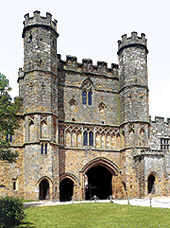
Booking has now opened for the Battle conference at Winchester in July 2014. This will be handled via the University of Winchester; please visit their website, to register. The final date for booking is 7 July 2014. More information here

The Battle Conference on Anglo-Norman Studies is an annual conference devoted to English and Norman medieval history and culture. It focuses primarily, but not exclusively, on the eleventh and twelfth centuries. Its purpose, as formulated by its founder R. Allen Brown in 1978, is ‘to discuss and forward knowledge on all aspects of Anglo-Norman history, with particular reference to the Anglo-Norman realm, but also to be concerned with the Old English and Scandinavian contribution to the Anglo-Norman achievement in Italy, Sicily, Spain and the Crusades’.

The Proceedings of the Conference, now entitled Anglo-Norman Studies, have been published annually since 1978. All papers delivered to the Conference are given at the invitation of the Conference director and editor of Anglo-Norman Studies, at present David Bates.

With the conference’s traditional venue at Pyke House (on the field of the Battle of Hastings) no longer available, the conference has become peripatetic. Having been held in Norwich in 2010, York in 2011, and Bayeux in 2012, this year it will be held in Cambridge at Lucy Cavendish College from Friday 26 July to Tuesday 30 July. As in previous years, we have received generous help from our hosts, Lucy Cavendish College and the Faculty of History of the University of Cambridge. As ever, the Conference seeks to encourage participation by younger scholars and for this reason five bursaries for postgraduates will be available this year. By having no more than four c.50 minute papers a day, the Conference ensures that there is plenty of time for discussion, both fairly formal and very informal.

Formal registration for the Conference will be done through Lucy Cavendish College. For details of these arrangements see the programme and registration forms accessible through this web-site. The closing date for non-residential registration has been extended to 28 June 2013. All queries about the conference should be addressed to the Director David Bates

In 1987 (the Conference’s tenth year and the 900th anniversary of the death of William the Bastard/Conqueror) the Conference met in Caen, and it has now established a tradition of travelling in every fifth year – in 1992 to Palermo, in 1997 to Dublin, in 2002 to Glasgow, and in 2007 to Gregynog, Montgomeryshire’. The 2012 Conference continued this tradition by being held in Bayeux.

This year’s Allen Brown Memorial Lecture will be given by Professor Elisabeth van Houts and will be followed by a Reception hosted by the Faculty of History of the University of Cambridge. The conference will finish at lunch-time on the Tuesday. As always, there will be visits to places of interest, including an exhibition of manuscripts in the Wren Library of Trinity College, an excursion to Isleham, the Fens, and Ely, and a walking tour of early medieval Cambridge.

Details of the programme are now available. To be put on the mailing list or for further information about the conference please contact the director, David Bates. Please note that there is no ‘call for papers’ for the Battle Conference and that all papers are read at the director’s invitation. Suggestions for suitable speakers are, however, welcome at any time. For further information about any other aspect of the conference please contact David Bates.

The R Allen Brown Trust has some limited funds and likes to use them to assist postgraduates to meet costs of attending the conference. Details of how to apply for bursaries will be posted soon.
entranceProgramme :

Thursday 24 July

1:30pm-4:00pm : Arrival at Winchester
Registration at University of Winchester ‘West Downs’
Tea and coffee will be provided.

5:00pm : Allen Brown Memorial Lecture: Edmund King (University of Sheffield) – Henry of Winchester: the Bishop, the City, and the Wider World
6:30pm-7:30pm : Reception, hosted by the Deputy Vice-Chancellor, Professor Elizabeth Stuart, University of Winchester
8:00pm : Dinner

Friday 25 July

9:30am : Peter Fergusson (Wellesley College) – Canterbury Cathedral Priory as painted early in Henry II’s reign: object or subject?
10:45am : Tea/Coffee
11:15am : Katherine Weikert (University of Winchester) – The story of a place: Faccombe Netherton, Hampshire c. 900-1200
12:30pm : Buffet Lunch

1:30pm : John Crook – introduction to Walkelin’s Winchester Cathedral
3:00pm : Winchester Cathedral visit with Dr John Crook
7:30pm : Dinner

Saturday 26 July

9:30am : Richard Allen (St John’s College, Oxford) – Episcopal acta in Normandy 911-1204: the charters of the bishops of Avranches, Coutances and Sées
10:45am : Tea/Coffee

11:15am : Jennifer Farrell (University College Dublin) – History, prophecy and the Arthur of the Normans: the question of audience and motivation behind Geoffrey of Monmouth’s Historia regum Britanniae
12:30pm : Buffet Lunch

1:30pm : Johanna Dale (University of Cambridge) – Royal inauguration and the liturgical calendar in England, France and the empire c. 1050-c. 1200
3.00–3.15pm : Tea/Coffee

3.30pm : Opportunity to visit Winchester sites, including Saint Cross
7.30pm : Conference dinner
8:45pm : Chris Lewis (King’s College, London) – The Book of Winchester

Sunday 27 July

9:30am : Nicholas Karn (University of Southampton) – Quadripartitus, Leges Henrici Primi and the scholarship of English law in the early twelfth century
10:45am : Tea/Coffee

11:15am : Lauren Mancia (Brooklyn College, City University of New York) – John of Fécamp and affective reform in eleventh-century Normandy
12:30pm : Buffet Lunch

1:30pm : Eljas Oksanen (Independent scholar, London) – Patterns of trade and travel in England during the long twelfth century
2:30pm : Tea/Coffee

3:15pm : [to be delivered by the winner of the Marjorie Chibnall Prize]
4:30pm : Short break

4:45pm : Gesine Oppitz-Trotman (University of East Anglia) – Royal appropriation of saints’ cults with special reference to Henry II and Frederick Barbarossa
7:30pm : Dinner

Monday 28 July

9:30am : Benjamin Pohl (University of Cambridge) – The illustrated archetype of the Historia Normannorum: did Dudo of St-Quentin write a “chronicon pictum”?
10:45am : Tea/Coffee
11:15am : Pierre Bauduin (University of Caen) – Richard II : figure princière et transfers culturels à la charnière des Xe-XIe siècles

Source de l’information : The Battle Conference

Publié dans Colloque | Laisser un commentaire

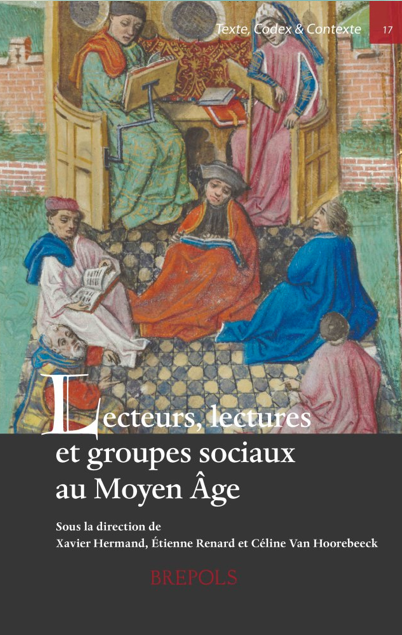
Publication – Xavier Hermand, Etienne Renard et Céline Van Hoorebeeck (dir.), « Lecteurs, lectures et groupes sociaux au Moyen Âge »

Depuis quelques années, la réflexion sur la place et les usages du livre dans la société médiévale s’est considérablement renouvelée, dans ses méthodes comme dans ses objectifs. L’étude des pratiques de lecture au sein de lectorats socialement déterminés s’impose désormais comme l’un des courants les plus dynamiques dans l’historiographie relative aux livres et aux bibliothèques médiévales. Les dix contributions rassemblées dans ce volume s’inscrivent dans ce champ de la recherche. Historiens et philologues y abordent cette thématique de manière plurielle mais complémentaire. Sont tantôt privilégiés les rapports au livre et à la lecture, que ce soit dans le monde monastique, au sein des circuits humanistes ou en milieu curial ; tantôt l’identification du lectorat et des usages de tel ou tel texte ou ensemble de textes : chansons de geste, bibles portatives, recueils d’exempla…

Xavier Hermand est professeur d’histoire médiévale à l’Université de Namur.
Étienne Renard est chargé de cours en histoire médiévale à l’Université de Namur.
Céline Van Hoorebeeck est conservatrice à la Bibliothèque universitaire Moretus Plantin de l’Université de Namur.

Texte, codex, contexte 17Table des matières :

Chiara Ruzzier – Qui lisait les bibles portatives fabriquées au xiiie siècle ?
Nicolas Louis – Essaimage et usages du Bonum universale de apibus de Thomas de Cantimpré
Xavier Hermand – Lecture personnelle et copie individuelle dans le monde monastique à la fin du Moyen Âge
Élisabeth Terlinden – Réformes, scriptoria et bibliothèques au bas Moyen Âge : le cas de Saint-Laurent de Liège
Céline Van Hoorebeeck – Du livre au lire. Lectures et lecteurs à l’épreuve des catégorisations sociales
Michiel Verweij – De Brugse scholaster Johannes Fevynus (1490-1555), lezer van Erasmus
Maria Careri et Giovanni Palumbo – Pratiques de « lecture » des chansons de geste : le cas de la Chanson d’Aspremont
Paolo Di Luca – Lettura e rilettura di un testimone della Chanson d’Aspremont : il caso del ms. Ch (Cologny, Fondation Bodmer, Cod. Bodmer 11)
Tania Van Hemelryck – Du livre lu au livre écrit. La lecture et la construction de l’identité auctoriale à la fin du Moyen Âge

Donatella Nebbiai – Lecteurs, bibliothèques et société. Observations pour un premier bilan

Informations pratiques :
Xavier Hermand, Etienne Renard et Céline Van Hoorebeeck (dir.), Lecteurs, lectures et groupes sociaux au Moyen Âge. Actes de la journée d’étude organisée par le Centre de recherche “Pratiques médiévales de l’écrit” (PraME) de l’Université de Namur et le Département des Manuscrits de la Bibliothèque royale de Belgique, Bruxelles, 18 mars 2010, Turnhout, Brepols, 2014 (Texte, codex et contexte, 17). 198 p., 156 x 234 mm. ISBN: 978-2-503-55043-5. Prix : 59,00 euros.

Source de l’information : Brepols

Publié dans Publications | Laisser un commentaire

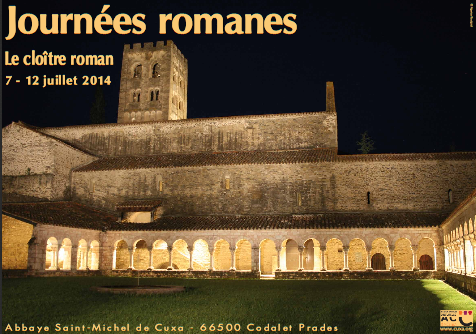
Colloque – Le cloître roman. Journées romanes de Cuxa

Les Journées romanes sont une session d’une semaine, en juillet, généralement autour du milieu du mois. Le programme alterne des journées de conférences, à l’abbaye Saint-Michel de Cuxa, données par des spécialistes, universitaires ou chercheurs, et des visites des principaux monuments romans, en Roussillon et dans les régions voisines : Catalogne, Languedoc. Les Journées sont organisées autour d’un thème particulier, illustrant les rapports entre les arts et la société aux Xème, XIème ou XIIème siècles. Le programme est établi sous la responsabilité d’un Comité scientifique animé par Aymat Catafau, et qui comprend des chercheurs français et espagnols.

Journées romanes - CuxaLes thèmes des dernières années ont été:

  • Vers et à travers l’art roman : la transmission des modèles artistiques » (2005) ;
  • Monde roman et chrétientés d’Orient » (2006) ;
  • Actualité de l’art antique dans l’art roman » (2007) ;
  • Monde d’Oliba : arts et culture en Catalogne et en Europe, 1008-1046 » (2008, année du millénaire de l’abbatiat d’Oliba à Cuxa) ;
  • Les Trésors des églises romanes » (2009).

Les journées romanes 2010 auront pour thème : « Mémoires, tombeaux et sépultures à l’époque romane ».

organisation matérielle
On peut suivre les Journées Romanes de plusieurs façons :

  • soit comme stagiaire logé, en acquittant un prix forfaitaire qui comprend l’hébergement, les repas, les conférences, les transports en car, les visites (prix spécial pour les étudiants de moins de trente ans);
  • soit comme stagiaire non logé, en acquittant un prix forfaitaire qui comprend, les repas, les conférences, les transports en car, les visites ;
  • soit comme auditeur libre, en payant l’accès aux conférences ou aux visites, à la séance, dans la mesure des places disponibles ; il est également possible d’acquérir des tickets-repas à l’unité.

L’hébergement des stagiaires est assuré à la Cité Universitaire de Prades ;
Les repas ont lieu à l’abbaye (buffet froid à midi, repas chaud le soir);
En raison de divers paramètres économiques, les repas pris à l’abbaye (buffet à midi et repas chaud le soir) le seront au prix de 12 euros pour les auditeurs libres et toutes personnes qui le souhaitent. Il est nécessaire de s’inscrire à l’avance.

Une navette de cars assure les liaisons avec l’abbaye. Durant les excursions, les repas sont organisés dans des restaurants.

Vous pouvez, si tel sujet particulier vous intéresse, suggérer des thèmes pour les futures Journées Romanes, ou des buts d’excursion, en nous écrivant : courrier [arobase] cuxa.org
Vos suggestions seront transmises au Comité scientifique.

Programme : ici

Source de l’information : Journées romanes de Cuxa

Publié dans Colloque, Le réseau | Laisser un commentaire

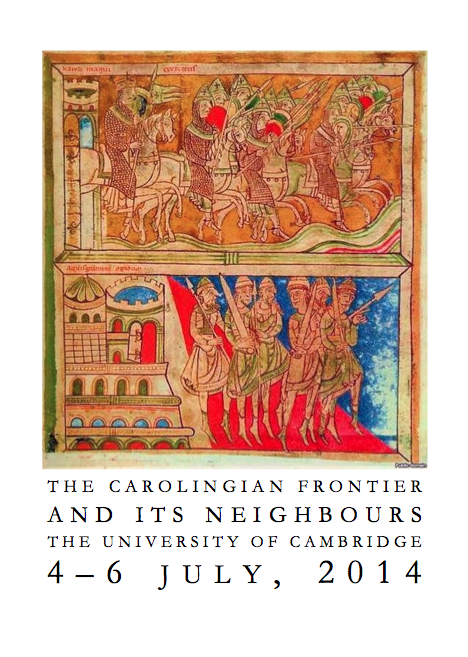
Colloque – The Carolingian frontier and its neighbours

While recent scholarship has done much to illuminate early medieval frontiers, the relationship between the Carolingian frontier and its neighbouring societies has yet to be the focus of sustained, comparative discussion. This conference aims to initiate a dialogue between scholars of the Carolingian frontier and those of the societies it bordered, and in so doing to reach a better understanding of the nature and extent of contacts in frontier regions and the various manners in which these contacts – not to mention frontier regions themselves – were conceptualized. Moreover, it will explore the interplay between various types of contact – whether military, political, economic, social, or religious – and the various ways in which these contacts could underpin, or undermine, existing relationships, both between the local societies themselves and between political centres.

By bringing together an international group of established and postgraduate scholars whose work lies both inside and outside the Carolingian empire, this conference seeks not only to open up comparative perspectives, but also to place the Carolingian empire within its global historical context. Alongside seven invited papers, proposals are welcomed from postgraduate and postdoctoral students whose work focuses on the Carolingian frontier, and particularly from scholars of the societies which the Carolingians bordered.

The Carolingian frontier and itsProgramme :

Friday 4th July
Room 6, Cambridge History Faculty, the Sidgwick site (off West Road)

12.30 – 1.00 : Registration
1.00 – 1.10 : Welcome – Ingrid Rembold, Fraser McNair, Sam Ottewill-Soulsby

1.10 – 2.40
Chair: Michael Humphreys (Cambridge)

Lorenzo Bondioli (Oxford) – A Carolingian frontier? Louis II, Basil I and the Muslims of Bari
José Miguel Rossello Esteve and Isabel Busquets Porcel (Granada) – The Balearic Islands and the Carolingian Empire: an unknown relationship
2.40 – 3.00 : Tea

3.00 – 4.30
Chair: Fraser McNair (Cambridge)

Eduardo Manzano Moreno (Madrid) – The Carolingians and al-Andalus: An Overview
Sam Ottewill-Soulsby (Cambridge) – “The Path of Loyalty”: Charlemagne and his Muslim Allies in Spain

Saturday 5th July
JCR TV room, Sidney Sussex College, Sidney Street

9.00 – 10.30
Chair: Helena Carr (East Anglia)

Jonathan Jarrett (Birmingham) – “Completely detached from the kingdom of the Franks”? Political identity in Catalonia in the very late Carolingian era
Arthur Westwell (Cambridge) – Sundering the West: The Byzantine conception of western borders and its impact on the mission to Moravia
10.30 – 11.00 : Tea

11.00 – 12.30
Chair: Corinna Matlis (Cornell)

Caroline Brett (Cambridge) – The Breton March: contested frontier or power vacuum?
Fraser McNair (Cambridge) – Bretons, Normans, and the question of ethnicity on the tenth-century Breton frontier
12.30 – 1.30. Lunch

1.30 – 3.00.
Chair: Rosamond McKitterick

Grégory Girard (Lyon) – Burgundy and the Carolingians: reconquer, reorganise, integrate and conserve
Wojciech Falkowski (Warsaw) – Neustria: competing influences, persistent traditions, and ongoing rivalries
3.00 – 3.30 : Tea

3.30 – 5.00.
Chair: Bernhard Zeller (Vienna)

Ingrid Rembold (Cambridge) – The Saxon wars and the Obodrites
Ivo Štefan (Prague) – Charlemagne and « Wild » East. Transformation of Slavic World in Carolingian Period
6.30 : Conference Dinner

Sunday 6th July
JCR TV room, Sidney Sussex College, Sidney Street

9.00 – 10.30
Chair: Nora Berend (Cambridge)

Robert Smith (Cambridge) – Hedeby after Ansgar: the continued contacts with Carolingian Christianity in the border emporia of Hedeby
Jens Christian Moesgaard (Copenhagen) – Carolingian coins in Denmark: commerce and prestige
10.30 – 11.00 : Tea

11.00 – 12.30
Chair: Helmut Reimitz (Princeton)

Joachim Henning (Frankfurt) – title to be announced.
Daniel Melleno (Berkeley) – Between borders: the place of the Slavs in the Northern politics of the Danes and Franks in the ninth century

Informations pratiques :
The Carolingian frontier and its neighbours
Friday, July 4 2014 – Sunday, July 6 2014

Faculty of History, Cambridge University
Faculty of History
Cambridge
United Kingdom

Organisers:
Ingrid Rembold (Cambridge University)
Fraser McNair (Cambridge University)
Samuel Ottewill-Soulsby (Cambridge University)

Registration for the conference is now open! If you would like to register, please fill out the form in the PDF below and send it to the address given. If you have any questions, please e-mail thecarolingianfrontier@gmail.com.

Source de l’information : Cambridge University

Publié dans Colloque | Laisser un commentaire

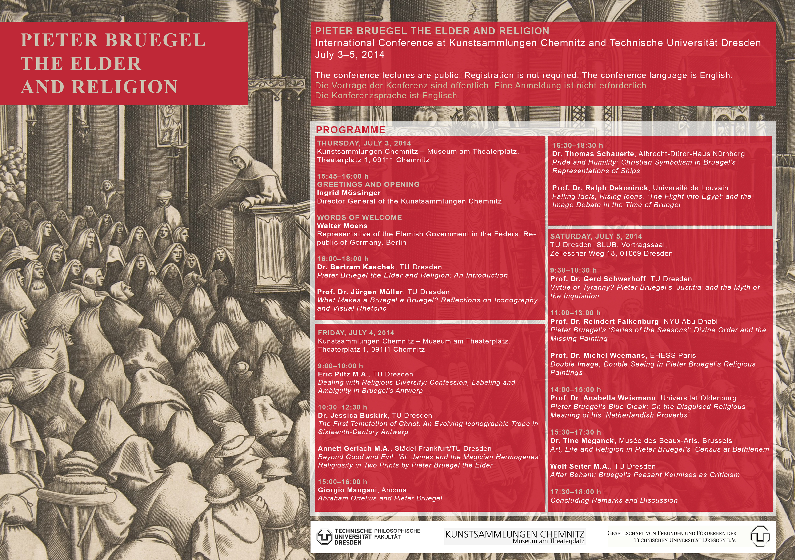
Colloque – Pieter Bruegel the Elder and Religion

Chemnitz/Dresden
July 3 – 05, 2014
International Conference at Kunstsammlungen Chemnitz and Technische Unversität Dresden

Location in Chemnitz (July 3–4): Kunstsammlungen Chemnitz, Museum am Theaterplatz, Theaterplatz 1, 09111 Chemnitz
Location in Dresden (July 5): TU Dresden, Sächsische Landesbibliothek – Staats- und Universitätsbibliothek (SLUB), Vortragssaal (1. OG), Zellescher Weg 18, 01069 Dresden

All lectures are public. Registration isn’t required. The conference language is English.

Concept and organization: Prof. Dr. Jürgen Müller, Dr. Bertram Kaschek

Pieter Bruegel and ReligionThe role of religion in the work of Pieter Bruegel the Elder has been hotly debated for almost a century. Karl Tolnai (1925) and Carl Gustaf Stridbeck (1956) have argued that the works of Bruegel expressed a worldview that stood at the edge of Christian Orthodoxy (whether Catholic, Lutheran, or Calvinistic). Despite the skepticism with which the theories of Tolnai and Stridbeck have been met by many art historians, a number of their intuitions and insights have proven to be fruitful starting points for research in the last twenty years. The artist once thought of as “Peasant Bruegel” is now credited with a certain humanistic-theological sophistication, and his works are generally considered as both intelligent and innovative pictorial inventions.

However, current research on Bruegel remains divided on the question of the religious identity of the artist and his work. Whereas some researchers categorically rule out the possibility of identifying his religious position, others have attempted to reach new insights through detailed analysis of his images. In this controversy, the interest in the religious dimension of Bruegel’s work is occasionally denigrated as an old-fashioned methodological paradigm, which has been superseded by new media-reflexive and epistemologically concerned inquiries.

The conference strives to relativize this seeming dichotomy as a fiction and as barrier to further research. As the individual contributions will demonstrate, the integration of religious and theological perspectives facilitates not only an iconographical analysis of Bruegel’s work but also an analysis of the media-specific strategies that he employs in his images. Against the backdrop of iconoclasm and the revolt against Spanish rule, it is especially important to emphasize how interested the members of the cultural elite of the southern Netherlands were in questions of spiritual orientation, and that they apparently wanted to see these interests reflected in the visual arts.

Programme :

Thursday, July 3, 2014 (Kunstsammlungen Chemnitz, Museum am Theaterplatz)

15:00–15:45 : Welcome Coffee

15:45–16:00 : Ingrid Mössinger (Generaldirektorin der Kunstsammlungen Chemnitz): Greeting and Opening
Walter Moens (Flämische Repräsentanz, Berlin): Words of Welcome

16:00–18:00 : Dr. Bertram Kaschek (TU Dresden): “Pieter Bruegel the Elder and Religion: An Introduction”
Prof. Dr. Jürgen Müller (TU Dresden): “What Makes a Bruegel a Bruegel? Reflections on Iconography and Visual Rhetoric”

18:00 : Joint Visit of the Exhibition “Pieter Bruegel und das Theater der Welt”

Friday, July 4, 2014
(Kunstsammlungen Chemnitz, Museum am Theaterplatz)

9:00–10:00 : Eric Piltz, M.A. (TU Dresden): “Dealing with Religious Diversity: Confession, Labeling and Ambiguity in Bruegel’s Antwerp”
10:00–10:30 : Coffee Break

10:30–12:30 : Dr. Jessica Buskirk (TU Dresden): “The First Temptation of Christ: An Evolving Iconographic Trope in Sixteenth-Century Antwerp”
Annett Gerlach, M.A. (Städel Frankfurt/TU Dresden): “Beyond Good and Evil: St. James and the Magician Hermogenes. Religiosity in Two Prints by Pieter Bruegel the Elder”
12:30–15:00 : Lunch Break

15:00–16:00 : Giorgio Mangani (Ancona): “Abraham Ortelius and Pieter Bruegel”
16:00–16:30 : Coffee Break

16:30–18:30 : Dr. Thomas Schauerte (Albrecht-Dürer-Haus, Nürnberg): “Pride and Humility: Christian Symbolism in Bruegel’s Representations of Ships”
Prof. Dr. Ralph Dekoninck (Université de Louvain): “Falling Idols, Rising Icons. The Flight into Egypt and the Image Debate in the Time of Bruegel”

Saturday, July 5, 2014
(TU Dresden, SLUB, Zellescher Weg 18, Vortragssaal)

9:30–10:30 : Prof. Dr. Gerd Schwerhoff (TU Dresden): “Justice or Tyranny? Pieter Bruegel and the Myth of the Inquisition”
11:00–13:00 : Prof. Dr. Reindert Falkenburg (NYU Abu Dhabi): “Pieter Bruegel’s Series of the Seasons: Divine Order and the Missing Painting”
Prof. Dr. Michel Weemans (EHESS Paris): “Double Image, Double Seeing in Pieter Bruegel’s Religious Paintings”
13:00–14:00 : Lunch Break

14:00–15:00 : Prof. Dr. Anabella Weismann (Universität Oldenburg): “Pieter Bruegel’s Blue Cloak: On the Disguised Religious Meaning of his Netherlandish Proverbs”
15:00–15:30 : Coffee Break

15:30–17:30 : Dr. Tine Meganck (Musée des Beaux-Arts, Brüssel): “Art, Life and Religion in Pieter Bruegel’s Census at Bethlehem”
Wolf Seiter, M.A. (TU Dresden): “After Beham: Bruegel’s Peasant Kermises as Criticism”

17:30–18:00 : Concluding Remarks and Discussion

The conference is supported by “Gesellschaft von Freunden und Förderern der Technischen Universität Dresden e.V.”.

Source de l’information : TU Dresden

Publié dans Colloque | Laisser un commentaire

Audio – Baudouin Van den Abeele, « Fauconnerie, vénerie : la chasse avant les armes à feu »

Comment chassait-on avant les armes à feu ? L’émission « Un jour dans l’histoire » (RTBF, La Première), animée par Laurent Dehossay, était consacrée ce mardi 24 juin à la chasse à courre, ou vénerie, et à la chasse au vol, ou fauconnerie.

L’invité de l’émission était Baudoin Van den Abeele, chercheur qualifié du FNRS, UCL. Une exposition au château de Lavaux-Sainte-Anne accueille une salle permanente consacrée à la fauconnerie, classée au patrimoine immatériel de l’UNESCO, depuis 2010.

Accès au podcast de l’émission : ici

Accès au site Internet du château de Lavaux-Sainte-Anne : ici

Source de l’information : La Première

Publié dans Audio | Laisser un commentaire

Séminaire – Solidarity and Togetherness. Premodern Masterclass for Research Masters and PhD students

1 (afternoon)-2 July, 2014, University of Groningen National Research School for Medieval Studies
National Research School in Classical Studies : OIKOS

Project Description:
“Solidarity and Togetherness. Forms, ideals, rituals, rhetoric and institutions of community ethos” is part of a three-year collaborative project in the field of premodern studies, initiated by scholars at the Faculty of Art of the University of Groningen. It seeks to explore the concept of “Sustainable Citizenship: Origin, Shape and Practices of Civil Society and Civic Experiences in Premodern European Traditions”. It is the aim of this programme to investigate how the western history of civic experience can be employed to promote knowledge of and reflection on the role of the citizen in past and present societies. This Masterclass for Research Masters and Ph.D. students addresses broad research questions. We would like to challenge the participants to cross their disciplinary boundaries and chronological specialization. Together we want to explore historical experiments and organisations, but also rituals and ideals of togetherness, which forged bonds and thus solidarity at local, regional, national and transnational levels in past societies.

Aim:
We, premodern historians and literary scholars, are convinced that strategies developed in difficult times to adapt to and to learn from transformations, and to find sustainable alternatives to ensure a functioning community are no recent phenomenon. Studying the past – and in particular studying premodern societies – offers valuable insights and alternative solutions for the tackling of today’s problems. It provides us with an inventory of past experience in the coming into being of community spirit and an ethos of responsibility for the Common Good of society

Assignment:
Participants read four short articles, (two theoretical, two case studies). Before the Masterclass they sent a written essay to the organizers, (max. 4 pages) in which they express their view on the possibility of studying S & T with a relevance for present day problems. These essays end with four points of discussion (one for each speaker) which address the aims of our project.

We cordially invite participants from art history, law, literature, philosophy, religious studies and other relevant disciplines

Credit points: 1 ECTS

Information and registration: Cora Zwart M.A., c.w.zwart@rug.nl
Costs: € 30 (for coffee, lunch, dinner and excursion). We can help you to find accommodation.

Contributors:
Federico Botana (Queen Mary, University of London), “Works of Mercy in Late Medieval Italy”
Sabrina Corbellini (University of Groningen)
“Solidarity, Morality and Europe according to Jurgen Habermas”
Catrien Santing (University of Groningen)
“Larry Siedentop’s individual and the coming into being of Western Liberalism. Togetherness and the ideal of (moral) equality”
Michael Sommer (University of Oldenburg), “Social and political cohesion in the Roman Empire, vertical and horizontal“.

Source de l’information : Vlaamse Werkgroep Medievistiëk

Publié dans Colloque, Séminaire | Laisser un commentaire

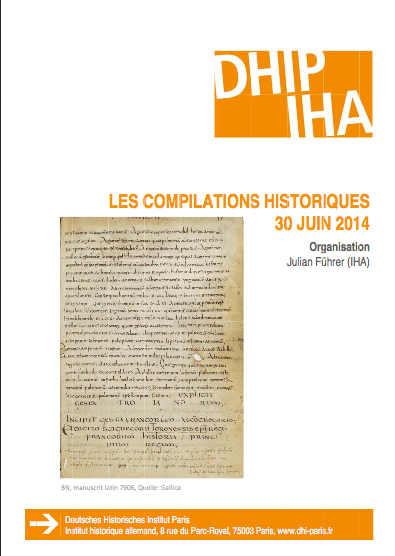
Journée d’étude – Les compilations historiques

Les compilations historiques
30 juin 2014
Organisation : Julian Führer (IHA)

Deutsches Historisches Institut Paris – Institut historique allemand
Hôtel Duret-de-Chevry 8 rue du Parc-Royal 75003 Paris
Tel +33 (0)1 44 54 23 80 Fax +33 (0)1 42 71 56 43
info@dhi-paris.fr http://www.dhi-paris.fr

Entrée libre sur inscription préalable : event@dhi-paris.fr

Führer - Compilations historiquesProgramme :

09h00 : Accueil et introduction

09h15–10h00 : Elisabeth van Houts (Cambridge) – Further reflections on the transmission of the Gesta Normannorum Ducum in twelfth-century France
10h00-10h45 : Elizabeth A.R. Brown (New York) – Remarks on the problems and puzzles of BN lat. 12710
10h45-11h15 : Pause café

11h15-12h00 : Julian Führer (Paris) – La place des œuvres d’Hugues de Fleury et de Suger dans les compilations historiques françaises
12h00-12h45 : Peter Stotz (Zürich) – Legendo vel audiendo talia certamina: Weltgeschichte, aufbereitet für langobardischen Laienadel
12h45-13h30 : Pause déjeuner

13h30-14h15 : Thomas Waldman (Philadelphia) – Bibliothèque Mazarine, manuscrit 2013 – quelques réflexions sur Suger et la construction de la nouvelle église
14h15-15h00 : Promenade vers la Bibliothèque Mazarine 23 Quai de Conti 75006 Paris
15h00-17h00 : Visite à la Bibliothèque Mazarine avec autopsie du ms. 2013 (nombre de places limité)

Source de l’information : Deutsches Historisches Institut Paris

Publié dans Colloque | Laisser un commentaire

Appel à contribution – Memorializing the Middle Classes

CFP: Memorializing the Middle Classes (Edited volume)
Deadline: 30 June 2014

Building on the session “Memorials for Merchants: The Funerary Culture of Late Medieval Europe’s New Elite” (College Art Association Annual Meeting, 2014), this edited volume offers papers that investigate the habits and strategies of patrons of commemorative art ca. 1300-1700, while considering what relationship, if any, existed between patronal strategies and choices and location in societal hierarchy. The rising fortunes of merchants, lawyers, and other professionals allowed middle-class patrons to commission private tombs in numbers not seen since Roman times.

While historians and anthropologists have looked broadly at European commemorative practices of the later Middles Ages and Renaissance, art historians have tended to focus on individual patrons, monuments, artists, or institutions. Memorializing the Middle Classes begins with an overview of Roman, Early Christian, and Byzantine precedent, offering a long view of continental commemorative culture. Essays by an international group of scholars follow to provide comparative analysis of the socio-cultural significance of memorialization both within particular cities and regions and across Europe. Papers that explore issues of social networks, the privatization of communal spaces, individual and corporate identities, personal and public memories, the relationships between the living and the dead, and other questions regarding commemoration, the use of space, and the patronage and reception of tombs and other memorials.

To submit a proposal, please send the following to
annecleader@gmail.com no later than 30 June 2014:

  • author’s name/affiliation
  • chapter title (15 words max.)
  • abstract (300 words max.)
  • selected bibliography
  • estimated number of illustrations and type (photo, chart/graph, map)
  • or a working list of illustrations
  • scholars (including contact information) who could serve as a peer reviewer for the book proposal
  • list of books that complement/compete with proposed volume and the target audience for your essay
  • cv
  • short biography in prose (100 words max.)

Please direct all questions to the editor, Anne Leader, at annecleader@gmail.com

Source de l’information : Medieval Art Research

Publié dans Appel à contributions | Laisser un commentaire