Journée d’étude – Ritual, State and Lordship in Medieval England c.900-1300

In 1970, Richard Southern wrote that in England it was during the central Middle Ages that ‘government by ritual came to an end, and government by administration began’. Yet the last decade of research has shown that rituals and administrative government did not stand apart, but continued to co-exist under both the strong Anglo-Saxon state and its central medieval successor. The purpose of this conference is to explore the relationship between ritualised communication, the lordship of kings and magnates, and government in the context of the comparatively powerful structure of the English state. Key topics for discussion will be both how inspiration from early medieval and continental studies of rituals can advance studies of the English Middle Ages, and how study of the rituals of medieval England, with its rich source materials and particular social and political conditions, can contribute to the wider debate about ritualised communication in the medieval period.
The conference will take place on 16 July 2013 between 09h00 and 18h30. The conference is hosted by the New College of the Humanities but will be held in room LG6 of the London School of Hygiene and Tropical Medicine on Keppel Street, right next to Senate House. Registration cost: £5 for students/£10 for salaried attendees, to be paid on the day. In order to register please email the organisers at RitualsConference@hotmail.co.uk no later than 7 July.
Organisers: Lars Kjær (NCH), Levi Roach (Exeter), Sophie Ambler (KCL) 
Programme :
Bjorn Weiler (Aberystwyth) – Introductory Remarks

Charles Insley (Manchester) – Ottonians with Pipe Rolls? Kingship and Symbolic Action in the Kingdom of the English
Levi Roach (Exeter) – Full of Sound and Theory Signifying Nothing? Social Anthropology and the “Late Anglo-Saxon State »
Benjamin Wild (Sherborne) – King Henry III and the Power of Aesthetics: Art & Ceremony in Thirteenth-Century England
Sophie Ambler (KCL) – Making and Re-Making the King: the Ritual power of the Archbishop of Canterbury in Thirteenth-Century England
Christopher Tilley (KCL) – « Communities of the Mind »: Ritual and Perception of Collective Political Identity in Thirteenth-Century England
Kenneth Duggan (KCL) – The Ritualistic Importance of Gallows in England in the High Middle Ages
Lars Kjær (NCH) – Hunting, Sociability and the Experience of Royal Favour 
Nicholas Vincent (UEA) – Concluding Remarks
Informations pratiques :
Tuesday, July 16 2013

NCH
LG6
London School of Hygiene and Tropical Medicine
Keppel Street WC1E 7HT
United Kingdom

Registration deadline: Sunday, July 7 2013, 9:00am
How to register: RitualsConferencehotmail.co.uk

Source de l’information : Institute of Historical Research
Publié dans Colloque | Laisser un commentaire

Appel à contribution – „Umbriferi prefazi“. Die Wiederentdeckung des Schattens in Mittelalter und Renaissance

Veranstalter: Prof. Dr. Franziska Meier (Göttingen); Dr. Björn Reich (HU Berlin); Christoph Schanze (Gießen)
Datum, Ort: 03.07.2014-05.07.2014, Göttingen, Lichtenberg-Kolleg
Deadline: 15.07.2013
„Das Licht bekundet und erweist sich erst in dem Schatten, den es wirft.“ (Ernst Cassirer) – „Im rechten Licht betrachtet, erweist sich der Schatten als großartiges Werkzeug der Erkenntnis.“ (Roberto Casati)
Anders als in der bisherigen kulturwissenschaftlich ausgerichteten Forschung zum Phänomen des Schattens, deren Interesse vor allem auf die Epochen der Antike und der Romantik konzentriert ist, steht bei dem geplanten interdisziplinären Kolloquium der Zeitraum vom 12. bis zum 16. Jahrhundert und damit der Übergang vom Mittelalter zur Renaissance bzw. zur Frühen Neuzeit im Mittelpunkt. Ausgangspunkt ist die Hypothese, dass es in Mittelalter und Renaissance einen eigenen, zeitspezifischen Umgang mit dem Schatten sowohl als Phänomen als auch als Motiv, Symbol oder Metapher gibt, bei dem die aus der Antike ererbten Vorgaben und Deutungslinien jeweils charakteristisch ausgestaltet oder auch anders akzentuiert werden. Wir vermuten, dass sich dieser Umgang in etwa gleichzeitig in den Künsten und Wissenschaften ausgebildet hat – besonders pointiert z. B. im Italien des 14. Jahrhunderts, wo die Schatten parallel in Dantes Göttlicher Komödie und in Giottos Malerei Einzug in die Vorstellungswelt halten. Die Wiederentdeckung des Schattens lässt sich aber ebenso gut an weniger epochemachenden Beispielen verfolgen, wo Schatten eine – auf den ersten Blick? – nur marginale Rolle spielen, etwa in den höfischen Romanen des Hochmittelalters (Tristan, arthurischer Roman), oder zu anderen Phänomenen der Sichtbarkeit in Beziehung gesetzt werden, z. B. zu Farben oder Spiegelungen (Lai de l’ombre, Heinrichs von Morungen ‚Narziß-Lied‘).
Die Formen und Funktionen des kulturellen Umgangs mit dem Schatten sollen an literarischen und wissenschaftlichen Texten sowie an Werken der bildenden Kunst analysiert werden. Dabei soll auch die Verankerung des Schattens in Vorstellungen des Volksglaubens mitbeachtet werden. Ein Ziel ist, das Wortfeld ‚Schatten‘ und seine ‚Instrumentalisierung‘ zu literarischen, poetologischen und wissenschaftlichen Zwecken in den verschiedenen westlichen Sprachen auszuloten. Darüber hinaus soll die Thematik des Schattens als Beispiel dienen, generell über den Umgang mit Visualität in Sprache und Bild nachzudenken.
Die ganze Breite der Umgangs- und Erscheinungsformen des Schattens soll ausgeschöpft werden: 
  • Wie wird mit der physikalischen Gestalt des Schattens, den Menschen und Gegenstände werfen, umgegangen? 
  • Wie wird von diesem physikalischen Schatten erzählt? Wie wird er abgebildet? 
  • Welche Formen des metaphorischen Gebrauchs können beobachtet werden? 
  • Wie hängen Licht, Schatten und Dunkelheit zusammen? Welche Rolle spielt der Schatten in Bezug auf Farben? 
  • Wie wird mit dem antiken ‚Erbe‘ (Seelenschatten, Platons Höhlengleichnis, …) umgegangen?
Wir wollen Wissenschaftler_Innen verschiedener geistes- und kulturwissenschaftlicher Disziplinen (Kunstgeschichte, Sprach- und Literaturwissenschaft, Wissenschafts-, Ideen- und Philosophiegeschichte, …) einladen, gemeinsam in den Räumen des Göttinger Lichtenberg-Kollegs über den spezifischen Umgang mit dem Thema Schatten sowie über dessen Entwicklung vom Mittelalter bis in die frühe Neuzeit nachzudenken.
Vorschläge für 20-30-minütige Referate, gerne auch von Nachwuchswissenschaftler_Innen, werden bis zum 15. Juli 2013 zusammen mit einem kurzen Abstract (max. 1. Seite) und einer Kurzbiographie per E-Mail an Schattentagung@gmx.de erbeten. 
Kontakt: 
Christoph Schanze
Otto-Behaghel-Str. 10B 35394 Gießen
Schattentagung@gmx.de
Source de l’information : H-Soz-u-Kult
Publié dans Appel à contributions | Laisser un commentaire

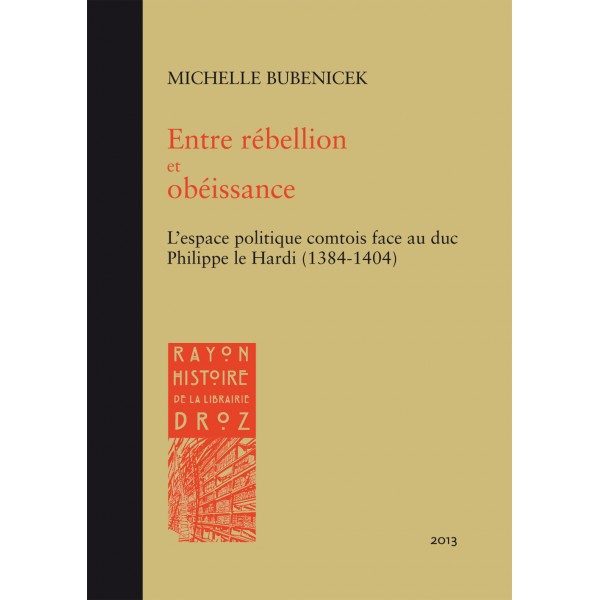
Publication – M. Bubenicek, Entre rébellion et obéissance. L’espace politique comtois face au duc Philippe le Hardi (1384-1404)

Construire son pouvoir à la marge : tel est l’enjeu pour le duc de Bourgogne Philippe le Hardi, devenu en 1384 maître du comté de Bourgogne, terre d’Empire. Dans une perspective d’histoire politique renouvelée, Michelle Bubenicek propose de cerner la nature précise du pouvoir du duc, en posant tout autant la question de l’expression de ce pouvoir que celle de sa réception par les sujets du prince. Une analyse conçue comme une contribution originale à la réflexion en cours sur la genèse de « l’État bourguignon », mais peut-être plus encore à la sociologie du pouvoir princier dans son rapport à ceux qui le subissent, les sujets, en particulier les sujets nobles. L’étude précise d’un petit nombre d’affaires emblématiques – dont un procès pour « lèse-majesté ducale » – permet ainsi d’éclairer d’une manière nouvelle la construction de la sujétion, au sein de cet espace politique si particulier qui est celui de l’État bourguignon en gestation. Confronté à la rébellion et à des pôles de résistance multiples, le prince parvient-il, en définitive, à élaborer une véritable souveraineté susceptible d’établir et d’imposer à ses sujets comtois les conditions d’une vraie « obéissance » ? 

Michelle Bubenicek, Entre rébellion et obéissance. L’espace politique comtois face au duc Philippe le Hardi (1384-1404), 2 vol. (776 pages)
Publié chez Droz, Rayon Histoire, en 2013.
Table des matières
INTRODUCTION

CHAPITRE PRÉLIMINAIRE – LES SUJETS COMTOIS : DES REBELLES EN PUISSANCE ?
Le « contenu du paquet de 1384 » : une marche française en terre d’Empire
Eudes IV de Bourgogne et Marguerite de France : des précurseurs de l’action de Philippe ?
Philippe le Hardi et la Franche-Comté : une obsession ancienne ?

PREMIÈRE PARTIE : 

L’AFFAIRE GUILLEMIN FAGUIER : UNE LÈSE-MAJESTÉ DUCALE
CHAPITRE PREMIER – UNE LÈSE-MAJESTÉ DUCALE (1391-1393)
Aux origines de l’affaire : un meurtre politique
Dire le meurtre de Guillemin Faguier
Une « lèse-majesté ducale »
« ledit de Chalon perseveroit en ladite desobeissance» : Un crime en abîme

CHAPITRE 2 – COMPRENDRE LE CRIME : DEUX VERSIONS CONTRADICTOIRES
Pour le duc : un crime emblématique
Pour Jean de Chalon : une « légitime défense » ?

CHAPITRE 3 – COMPRENDRE LA « SANCTION » : LA RÉMISSION DE JANVIER 1393
Jean de Chalon, tête pensante du meurtre de 1391 : une culpabilité facile à établir ?
Une attitude : du défi à la soumission
Le processus de la grâce ducale
Pourquoi la rémission ?

DEUXIÈME PARTIE : LA SUJÉTION EN QUESTION

CHAPITRE 4 – SE CRÉER SES SUJETS : AUTOUR DE L’ALLEU ET DE L’AVEU
Guillemin Faguier : un individu au statut incertain ?
Deux conceptions de l’autorité ?

CHAPITRE 5 – GARDES, SAUVEGARDES ET COMMENDISES : LE DUC ET LES HABITANTS DU VAL DE MORTEAU
De la « commendise » aux « garde » et « bourgeoisie » : une mutation ?
Vocabulaire et chronologie : le cas Morteau
L’enjeu de l’affaire du Val de Morteau : encore la sujétion
L’ordonnance de 1393, solution définitive au problème de la protection ?
Une suite ? Les lettres de 1395 à l’archevêque de Besançon
Epilogue : l’affaire de Labergement-Sainte-Marie en 1404-1406

CHAPITRE 6 – FAIRE DE SES NOBLES DES SUJETS : LA JUSTICE, ENJEU MAJEUR
Essai de géographie judiciaire comtoise : enjeux et rapports de force
Le parlement de Dole : l’outil idéal pour imposer la souveraineté ?
Résistances
Une éducation à l’obéissance ?

CHAPITRE 7 – ÊTRE COMTOIS ET SUJET DU DUC. QUELQUES CONSIDÉRATIONS SUR L’OPINION COMTOISE
Repérer l’« opinion » comtoise
Sondage d’opinion à l’intérieur d’une zone-frontière
Du silence à la résistance : émergence d’une opinion publique hostile
L’« opinion commune » des terres du sire d’Arlay : une opinion en guerre ?
Une opinion instrumentalisée ?

CONCLUSION INTERMÉDIAIRE – AU SEIN DE L’ESPACE JURASSIEN, UNE CULTURE DE RÉSISTANCE ?
TROISIÈME PARTIE : FREINS, LIMITES, OBSTACLES À L’IMPOSITION DE LA SOUVERAINETÉ ?
CHAPITRE 8 – LE DUC, L’« ESPACE » COMTOIS ET L’IMPOSSIBLE SOUVERAINETÉ ?
Un nouveau conflit : l’affaire dite « des péages »
Pour une mise en contexte de l’affaire des péages
Derrière le conflit : redéfinition et contrôle de l’espace comtois

CHAPITRE 9 – RÉDUIRE LES ENCLAVES
Besançon : îlot de résistance à la souveraineté
Faire écran au pouvoir de l’empereur
Une « simple » garde ? Nature de la protection accordée en 1386
Maldonne sur le contenu du traité
D’autres enclaves à réduire ?

CHAPITRE 10 – LA NOBLESSE COMTOISE CONTRE LE DUC ?
Un « système » de l’hommage : le duc, la noblesse et le « droit féodal »
Les nobles comtois : une caste encore « privilégiée » ?
La noblesse comtoise : état des lieux et exceptions

CHAPITRE 11 – DISFONCTIONNEMENTS, FAIBLESSES, MANQUE DE MOYENS : LES « LIMITES INTERNES » D’UN SYSTÈME ?
Un prince absent
L’écart entre objectifs affichés et réalité des moyens
Disfonctionnements et incohérences de la méthode ducale ?

CONCLUSION
ANNEXES

Publié dans Publications | Laisser un commentaire

Appel à contribution – Variantes narratives, sources et fonctions des Mille et une nuits dans l’espace médiéval

Colloque international
Bibliothèque Apostolique du Vatican
Institut National des Langues et Civilisations Orientales
Projet ANR MSFIMA (2011 BSH3 003 01)
Rome
12-13 Décembre 2013
Organisateurs : 
Ibrahim Akel (INALCO, Paris)
Delio V. Proverbio (BAV, Rome)
Argument :
Lorsqu’on se penche sur les sources des Mille et une nuits antérieurement aux éditions arabes de Calcutta (1814-18 et 1839-42) et de Bûlâq (1835), on s’aperçoit que la matière narrative liée aux Nuits ou du même genre que les Nuits, qui était en circulation à l’époque médiévale, est d’une richesse qui dépasse tout ce qui a été étudié jusqu’à présent (voir répertoires à paraître des mss arabes, par I. Akel, et des mss turcs, par D. Proverbio). De fait, l’ouvrage des Mille et une nuits s’intègre à un grand ensemble de plusieurs centaines de textes inédits qui relèvent d’un mouvement spécifique de la création littéraire médiévale. Cet ensemble n’appartient ni à la catégorie populaire ni aux élaborations savantes. Il forme une littérature identifiée par Aboubakr Chraïbi (1993, 1998, 2008, …) comme une littérature médiane. Celle-ci a grandement circulé à l’époque médiévale à l’intérieur même du domaine arabe, comme le montrent les manuscrits maghrébins, égyptiens, syriens, …, créant une foule de versions et de variantes, mais elle a circulé aussi de l’arabe vers d’autres langues, vers le turc notamment, avec plus de 20 manuscrits turcs des Nuits attestés, et puis encore vers de nombreuses cultures de l’Europe, laissant sa marque chez des auteurs comme Pierre Alphonse (1062- vers 1140) ou Boccace (1313–1375). Longtemps avant la traduction française de Galland, par exemple, des motifs caractéristiques du récit-cadre des Nuits, et plus exactement des Cent et une nuits, sont passés en Italie, dans La Novella d’Astolfo de Giovanni Sercambi (1347-1424) et dans le Roland furieux de l’Arioste (1474-1533). En somme, trois axes de recherche larges qui concernent une littérature antérieure au XVIIIe siècle et qui débordent naturellement les domaines arabes ou turcs :
  • La matière narrative et sa circulation (partie stable, partie variable, motivations et conséquences des transformations)
  • Les sources textuelles narratives et leur reconstitution (quel ensemble, sur quels critères ?)
  • Les fonctions de corpus narratifs médiévaux (qui produit, qui lit, qui conserve, pourquoi ?)
Modalités de participation :
Les personnes désireuses de participer sont priées d’envoyer le titre de leur communication, accompagné d’un bref résumé à Ibrahim Akel (ibrahimya23@hotmail.com) et à Delio V. Proverbio (proverbio@vatlib.it) avant le 15 juillet 2013.
Les interventions se dérouleront sur 20 minutes suivies de 10 minutes réservées au débat. Les frais de voyage et de séjour sont à la charge des participants.
Source de l’information : Fabula.org
Publié dans Colloque | Laisser un commentaire

École d’été – Formes de la communication au Moyen Âge

Université d’été organisée par l’institut historique allemand (J. Führer, R. Große) en coopération avec l’université libre de Berlin (R. Lützelschwab) et l’université de Bourgogne (M. Clouzot).

Programme : 
Lundi 8 juillet 2013

9.00 : Ralf Lützelschwab (Berlin) – Einleitung/Introduction

9.15–13.00 Der »Andere«/Lʼ« Autre »

Katharina Tugend (Duisburg-Essen) – Die kommunikative Konstruktion des Ehepaares. Der Briefwechsel Margheritas und Francesco di Marco Datinis (1384–1410)
Kommentar/commentaire: Victoria Trenkle (Erlangen) und/et Matthias Thumser(Berlin)

Stephanie Caspari (Bochum) – Merowingische Königstöchter: verschwundene Prinzessinnen?
Kommentar/commentaire: Anastasia Brakhman (Bochum) und/et Josiane Barbier(Paris)

Vasilina Sidorova (Moscow) – Intercultural Communication and Perception of the »Other« According to the French Historical Writings of the 10th–12th Centuries
Kommentar/commentaire: Giuseppe Cusa (Frankfurt a.M.) und/et Stephan Freund(Magdeburg)

Andreas Kistner (Düsseldorf) – Das Legatenwesen unter Innocenz VI.
Kommentar/commentaire: Brigitte Hotz (Aachen) und/et Claudia Märtl (München)

14.00–18.00 Theologische Dimensionen/Dimensions théologiques

Marta Bigus (Ghent) – Middle Dutch Exegesis of the Decalogue (1300–1550)
Kommentar/commentaire: Ursula Gießmann (Köln) und/et Nicole Bériou (Paris)

Hugo Perina (Dijon) – L’orgue alla moderna. Diffusion d’un modèle florentin dans l’Italie renaissante (1437–1550)
Kommentar/commentaire: Émilie Maraszak (Dijon) und/et Martine Clouzot (Dijon)

Irina Redkova (Moskau) – Disciplina silentii und Kommunikationsformen in der monastischen Tradition des 12. Jahrhunderts zwischen Norm und Realität
Kommentar/commentaire: Armando Torres Favaz (Dijon) und/et Didier Lett (Paris)

Michael Gordian (London) – Sprachen der Armut – Sprache der Armen. Symbolische Kommunikation von sozialen Randgruppen im Spätmittelalter
Kommentar/commentaire: Christina Waldvogel (Leipzig) und/et Marco Mostert(Utrecht)


Mardi 9 juillet 2013

9.00–13.00 Kunst und materielle Kultur/Arts et culture matérielle

Émilie Maraszak (Dijon) – La communication par l’image dans les États latins d’Orient: les miniatures de l’histoire ancienne jusqu’à César, Saint-Jean-d’Acre, 1260–1291
Kommentar/commentaire: Hugo Perina (Dijon) und/et Didier Lett (Paris)

Brigitte Hotz (Aachen) – Gebaute Memoria in Schismazeiten (1378–1455)
Kommentar/commentaire: Andreas Kistner (Düsseldorf) und/et Julien Théry(Montpellier)

Marina Kevkhishvili (Berlin/Florenz) – Medien der Heiligenverehrung im mittelalterlichen Svanetien. Text, Bild, Ritual
Kommentar/commentaire: Florian Dirks (Erfurt) und/et Laurent Morelle (Paris)

Ursula Gießmann (Köln) – Textilität – Die Stofflichkeit Kölns im Spätmittelalter
Kommentar/commentaire: Marta Bigus (Ghent) und/et Claudia Märtl (München)

14.00–16.00 Kommunikation und der Beitrag der Historiographie/Communication et lʼapport de lʼhistoriographie

Anastasia Brakhman (Bochum) – Außenseiter und »Insider« in der frühmittelalterlichen Historiographie. Literarische Kommunikation am ottonischen Herrscherhof
Kommentar/commentaire: Stephanie Caspari (Bochum) und/et Josiane Barbier(Paris)

Giuseppe Cusa (Frankfurt a. M.) – Kommunikation in der Chronik des Paduaners Rolandinus
Kommentar/commentaire: Vasilina Sidorova (Moscow) et Stephan Freund(Magdeburg)


Mercredi 10 juillet 2013

9.00–13.00 : Kommunikation und Konfliktlösung/Communication et résolution de conflits

Jean-Dominique Delle Luche (Paris) – »vmb vnsern willen euwer schieß gesellen her zu vns senden«: la communication entre les villes du Saint-Empire à lʼoccasion des concours de tir (XVe siècle)
Kommentar/commentaire: Sebastian Zanke (München) und/et Jean-Marie Moeglin(Paris)

Florian Dirks (Erfurt) – Sühnen, tagen, Frieden schließen. Die Beilegung von Konflikten zwischen Weser und Elbe auf Tagfahrten 1380–1480
Kommentar/commentaire: Marina Kevkhishvili (Berlin/Florenz) und/et Marco Mostert (Utrecht)

Armando Torres Favaz (Dijon) – L’enquête judiciaire au Moyen Âge. Techniques d’information et formes de communication (Bourgogne XIIe–XIIIe siècle)
Kommentar/commentaire: Irina Redkova (Moskau) und/et Laurent Morelle (Paris)

Christina Waldvogel (Leipzig) – Drei spätmittelalterliche Gerichtsbücher aus Bautzen
Kommentar/commentaire: Michael Gordian (London) und/et Jean-Marie Moeglin (Paris)

14.00–16.00 : Päpste und Kardinäle/Papes et cardinaux

Sebastian T. Zanke (München) – Politik und Kommunikation im Konflikt. Das avignonesische Papsttum und die Herausforderung(en) des spätmittelalterlichen Europa
Kommentar/commentaire: Jean-Dominique Delle Luche (Paris) und/et Matthias Thumser (Berlin)

Victoria Trenkle (Erlangen): Expertise und Ehre. Kardinäle im hohen Mittelalter
Kommentar/commentaire: Katharina Tugend (Duisburg-Essen) und/et Julien Théry(Montpellier)

16.00–17.00 Abschlussdiskussion/Discussion de clôture
Source de l’information : Calenda
Publié dans École d'été, Colloque | Laisser un commentaire

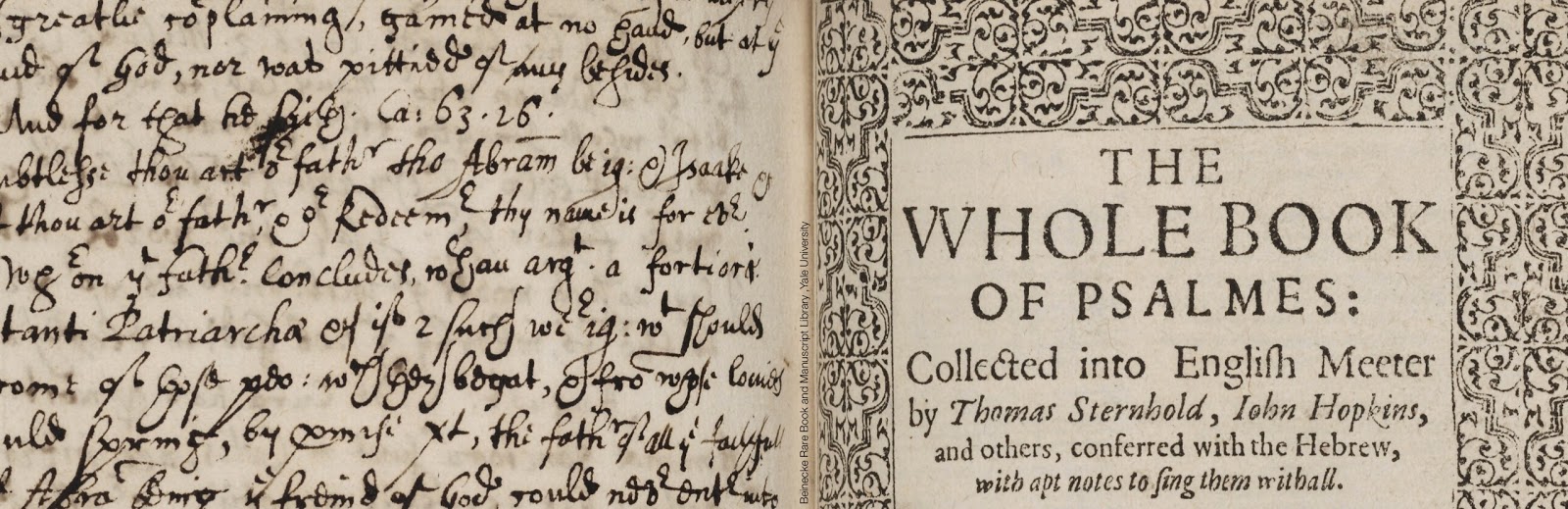
Colloque – Psalm culture & the politics of translation

Charterhouse Square, QMUL, London, 15-17 July 2013

The Psalms have been at the centre of English religious life, language and identity since the seventh century. This conference aims to bring together scholars working in different periods and disciplines to open up new avenues of discussion and debate. Psalm Culture and the Politics of Translation will feature keynote addresses and plenary panels featuring Daniel Anlezark (Sydney), Roger Bowers (Cambridge), Vincent Gillespie (Oxford), Hannibal Hamlin (Ohio State), Clare King’oo (University of Connecticut), Michael Kuczynski (Tulane), David Lawton (Washington University in St Louis), James Simpson (Harvard), Elizabeth Solopova (Oxford), Lynn Staley (Colgate University), Eric Stanley (Oxford), Annie Sutherland (Oxford) and Elaine Treharne (Stanford) as well as over forty further papers from leading and emerging scholars within this field. Planned session cover a range of different subjects from the Paris Psalter to the Sidney Psalter, responses to the Psalms in Anglo-Saxon England to Anglo-Scottish Psalters in the Civil War period, visual culture and literary form. The structure of the conference – each day of which will open with a plenary panel and close with a double-feature keynote address – will challenge participants to reappraise and redefine a field that has, until now, remained fragmented.

In addition to keynote, plenary and panel sessions on the Psalms from Anglo-Saxon England until the English Civil War, the conference will feature a presentation led by Beth Quitsland (Ohio) and Nicholas Temperley (Illinois) that will encourage audience members to experience the Psalms as they might have been sung in early Elizabethan England and a roundtable discussion led by the acclaimed composer Cheryl Frances-Hoad that will form the starting point for a commission for a new setting of one or more Psalms. Scholars of all levels working on any aspect of religious culture in the medieval and early modern periods are invited to attend and take part in this event.
This conference is generously supported by the School of English and Drama, and the Faculty of Humanities and Social Sciences at Queen Mary, University of London, by the Society for Renaissance Studies and St Peter’s College, Oxford.
Registration is now open. Any questions can be directed to the conference organizers, Dr Ruth Ahnert (QMUL), Dr Tamara Atkin (QMUL), and Dr Francis Leneghan (Oxford) at the conference email address (psalmculture@gmail.com).
Programme and further informartion : here
Publié dans Colloque | Laisser un commentaire

Appel à contribution – Civic Artists and Court Artists (1300-1600). Case Studies and Conceptual Ideas about the Status, Tasks and the Working Conditions of Artists and Artisans

This conference aims at investigating the role of the Early Modern artist/ artisan in different social environments, especially the court and the city, the princely household and the guild system. Many artists/ artisans attracted commissions from both camps such as Jean Fouquet, Rogier van der Weyden, Albrecht Dürer, Hans Plock, Jacques Jordaens and Bernard van Orley, to name only a few. Some artists held an honorary title and were thus only loosely attached to the court.
The proposed conference will equally address historiographical questions such as to the changing perception and evaluation of the artistic milieu under discussion. At this point in time, it seems pertinent to take a critical look at the central hypothesis in Martin Warnke’s 1985/1996 monograph Hofkünstler. Zur Vorgeschichte desmodernen Künstlers / The Court Artist. On the Ancestry of the Modern Artist [1993]. This study argues that early modern artists could only develop fresh ideas and new modes of expression in the context of the court due to the privileges they enjoyed from the 13th/14th centuries onwards. The corporate guild system is understood as a body exerting restrictive measures that stifled artistic creativity and artistic freedom. In the light of research undertaken over the last 30 years, the question arises whether it is still appropriate to divide the world of artistic production into two distinct parts: the court environment and the civic environment.

The following points are relevant for discussion, further suggestions are welcome :
  • By which parameters do we define the role of the court artists ? Which media were represented by court artists and which terminology was developed in order to describe their professional profile (e.g. : jeweler, painter, illuminator, (« tapissier », embroiderer, sculptor, architect, « gardejoyaux », « varlet de chamber », etc.) ?
  • How did artists/ artisans negotiate their position within the courtly household ? What mattered to them most (e.g. : annual/daily pay, freedom from guild regulations, free choice of residence) ?
  • Why did some cities such as Brussels, Leuven or Nuremberg temporarily appoint an official painter or architect and what was their primary role and/or function ?
  • Does the status of the artist have an impact onto the individual works of art? Is it possible to distinguish art works that were made for the court from those that were produced within the guild system? Is the notion of « court art » linked to the status of the artist or is it an independent construct based on ideas of patronage?
  • Did court artists have more artistic freedom than guild members? Did court artists have more room to experiment and introduce new topics and styles?
  • How was the interrelationship between social status and creative output interpreted in art historical discourse (Warnke, Antal, etc.) and in how far do these hypotheses stand up to archival research?
  • What do we know about the itinerant artist, moving from one city to another or from one court to another? Which mechanisms were in place to guarantee new employment far away from home (e.g.: letters of recommendation, trial piece, etc.)?

The time frame covered by this project is the late Medieval and Early Modern period ranging from c. 1300 to 1600. The conference concentrates on the former Holy Roman Empire, France and the Netherlands, but may also extend to other geographical areas.
Informations pratiques :
Deadline for submissions : 15 July, 2013
Conference location : Paris, Centre André Chastel, INHA
Conference date : 19 – 21 June 2014
Conference languages : English, French, German.
Conference organizers: Prof. Dr. Philippe Lorentz, Paris-Sorbonne & EPHE / Prof. Dr. Dagmar Eichberger, Universität Trier, FB III Kunstgeschichte & ERC TAK/ SHARK.

Proposal for papers will be accepted until 15 July 2013. Please send your proposal to both organizers:

Submissions should consist of a concise proposal suitable for a 30-minutes presentation (max. 1-2 pages), and a short CV with the applicant’s affiliation as well as list of up to five publications. The organizers will apply for funding to cover travel costs and accommodation. The organizers envisage publishing the best contributions in an edited volume. This conference forms part of the Trier research initiative TAK-SHARC, a research project under the leadership of Prof. Dr. Dr. Andreas Tacke.

Prof. Dr. Dagmar Eichberger: eichber1@uni-trier.de
Prof. Dr. Philippe Lorentz: philippe.lorentz@paris-sorbonne.fr

Source de l’information : blog de l’ApAhAu
Publié dans Appel à contributions | Laisser un commentaire

Journée d’étude – Culture et enseignement dans la Bretagne du haut Moyen Âge. Hommage à la mémoire de Louis Lemoine

Disparu l’an dernier, Louis Lemoine fut l’un des membres fondateurs du CIRDoMoC (Centre d’information et de documentation sur le monachisme celtique). La journée annuelle de rencontres de cette association du 6 juillet 2013 sera consacrée à sa vie de chercheur et d’universitaire : la culture et l’enseignement au haut Moyen Âge en Bretagne et dans les terres celtiques. Si la terre bretonne se veut donc au cœur du propos, au travers du scriptorium de Landévennec, il s’agira également de saisir les aspects textuels ou codicologiques de manuscrits existants, entre autres par diverses approches des gloses. Cela dans un contexte géographique élargi, nécessaire à la bonne compréhension des liens importants ayant existé entre les mondes celtiques et l’Europe franque : ainsi seront précisées, par exemple, les dimensions culturelles de l’hagiographie en Irlande ou les relations érudites sensibles entre le monde carolingien et la Bretagne.
Programme :
9h15 : Comptes-rendus d’activité pour l’année 2012 et Assemblée générale
10h00 : Dominique Barbet-Massin – Le manuscrit 477 de la Bibliothèque Municipale d’Angers. Étude codicologique et textuelle.
10h45 : Pierre-Yves Lambert – De nouveaux outils pour l’étude des gloses vernaculaires.
11h30 : Franck Cinato – Les gloses à Priscien et leurs relations avec le Liber Glossarum.
12h15 : Déjeuner
14h15 : Yves Morice – Le scriptorium de Landévennec.
15h00 : Alain Dubreucq – La grammaire de Smaragde et la culture bretonne à l’époque carolingienne.
15h45 : Jean-Michel Picard – Hagiographie mérovingienne et hagiographie irlandaise : typologie des miracles et spécificité culturelle.
17h00 : Réunion du Conseil d’administration
Informations pratiques :
Landévennec, France (29)
Samedi 06 juillet 2013
Contact : Bertrand Yeurc’h
Courriel : secretaire@cirdomoc.org
Source de l’information : Calenda
Publié dans Colloque | Laisser un commentaire

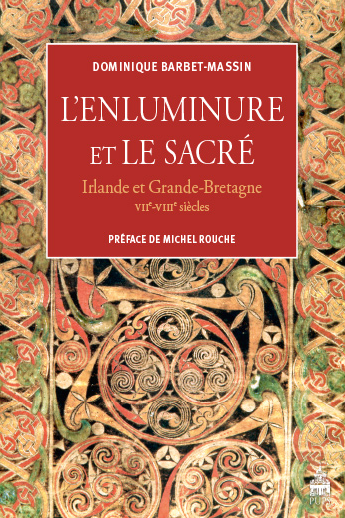
Publication – Dominique Barbet-Massin, "L’enluminure et le sacré. Irlande, Grande-Bretagne, VIIe-VIIIe siècles"

À partir de l’analyse des enluminures de six manuscrits, tous des évangiles dits « de luxe », ce travail étudie les conceptions du monde de la civilisation insulaire préchrétienne et leurs évolutions dues à la christianisation. Il entend aussi replacer l’enluminure dans le contexte du livre qu’elle illustre, l’Évangile. Il s’appuie pour cela sur l’analyse des textes, chrétiens ou non, et la comparaison entre les civilisations européennes (mythes, traditions et techniques), ainsi que sur l’exégèse et la liturgie chrétiennes.

C’est ainsi que les anciennes conceptions celtes de l’espace clos sacré, régi par le roi qui l’ordonne face au chaos, rencontrent dans le programme d’enluminures des pages-tapis l’enseignement exégétique remontant au IVe siècle, qui met l’accent sur la royauté du Christ et sur les quatre évangélistes établissant l’Église universelle dans le monde. L’espace est défini par ses frontières, tissées en entrelacs, et délimitées selon une conception binaire et quaternaire du temps sacré. Le passage de l’une à l’autre conception est particulièrement marqué dans l’utilisation qui est faite du fidchell, le jeu de damier celtique christianisé dans le jeu de l’Alea Evangelii.
L’analyse liturgique des pages d’initiales les met en relation avec les symboles des évangélistes, traduisant la cérémonie baptismale de l’apertio aurium, qui remonte à l’exégèse du IVe siècle. Le va-et-vient ancien des influences entre l’Irlande, la Bretagne et le continent est illustré par un texte sur l’origine des liturgies qui permet de replacer l’enluminure insulaire dans son contexte historique et liturgique.


Table des matières :
I. Les manuscrits

II. L’espace clos, espace sacré
III. Les limites de l’espace et du temps
IV. Représentations symboliques de l’espace
V. Écriture et liturgie
Conclusion


Informations pratiques :
Dominique Barbet-Massin, L’enluminure et le sacré. Irlande, Grande-Bretagne, VIIe-VIIIe siècles, Paris, Presses Universitaires Paris-Sorbonne (Cultures et civilisations médiévales). 21 x 28 cm, 580 p. Ouvrage en quadri, très illustré, reliure cartonné. ISBN : 978-2-84050-860-1. Prix : 30,00 euros.

Source de l’information : PUPS
Publié dans Publications | Laisser un commentaire

Offre d’emploi – Lectureship in Medieval History, University of East Anglia

Closing date 8th July 2013
Lectureship in Medieval History,
School of History,
University of East Anglia.

Ref: ATR1140
£30,434 to £36,298 per annum (Lecturer A)
£38,522 to £44,607 per annum (Lecturer B)

University of East Anglia are seeking to appoint a Lecturer in Medieval History. The post is open to those working in any field of medieval history, European or British, from 1200 to 1450AD. Evidence of a strong research record and commitment to teaching are essential qualifications.

This full-time twelve month post is available from 1 September 2013. You will be expected to play an active role in the development, delivery and administration of teaching and research activity within the School and the Faculty of Humanities.

Closing date: 12 noon on 8 July 2013.

Further particulars and an application form are available on their website: www.uea.ac.uk/hr/jobs/ or tel. 01603 593493.
Source de l’information : FMRSI
Publié dans Offre d'emploi | Laisser un commentaire