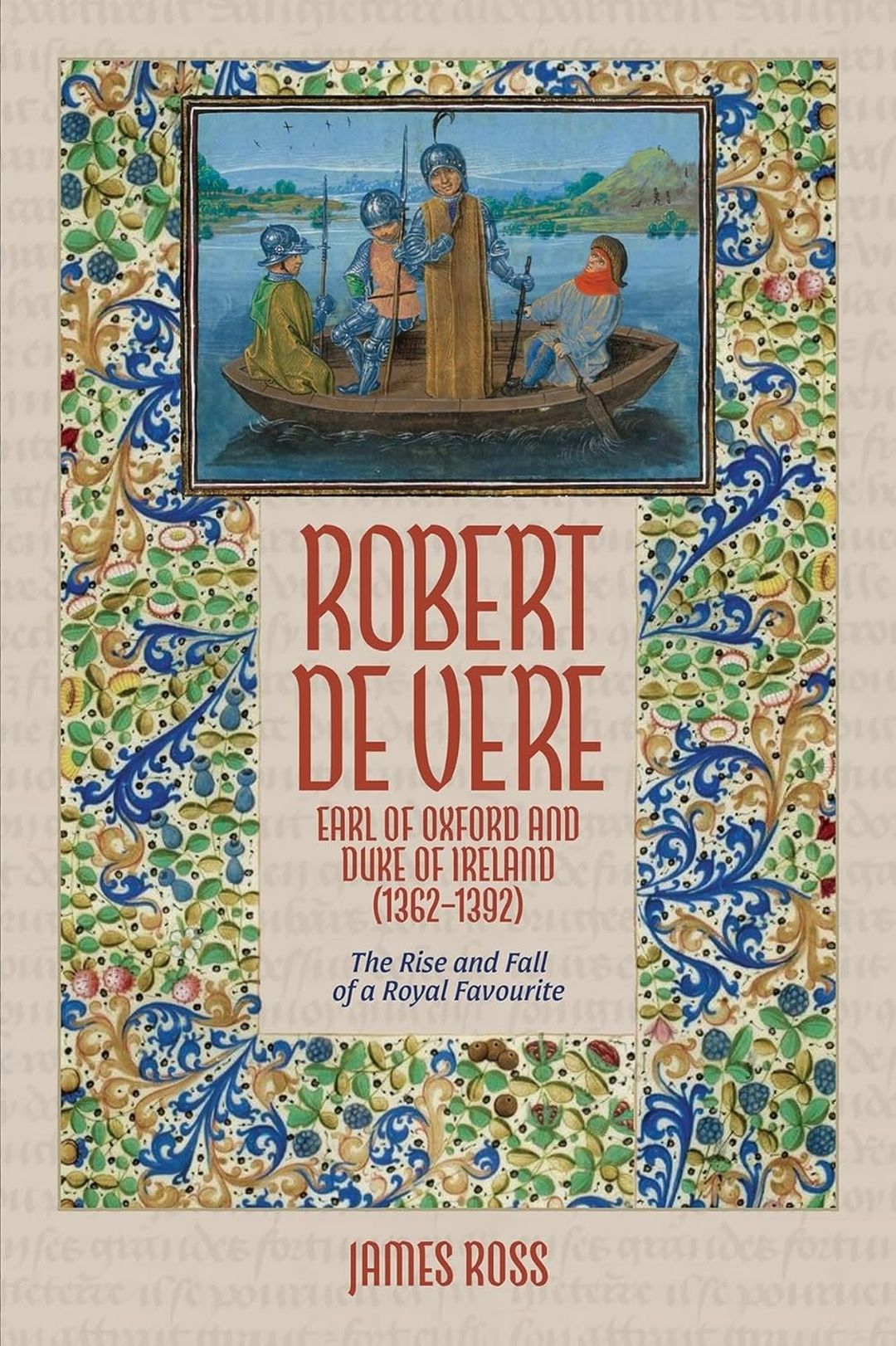
Publication – Jamess Ross, « Robert de Vere, Earl of Oxford and Duke of Ireland (1362-1392). The Rise and Fall of a Royal Favourite »

Robert de Vere was a close friend of the young King Richard II. He was accused of a wide range of political crimes and private vices by his opponents, the Lords Appellant. Defeated by them at the battle of Radcot Bridge in 1387, he died abroad in exile aged only 30. He was, in the eyes of many contemporaries – most notably the hostile chroniclers Walsingham and Froissart – and modern historians, a typical royal favourite: unmartial, immoral, self-seeking, and promoted and enriched far beyond what he deserved.

But what was a royal favourite, and what were the accusations made against them? This book investigates these questions across late medieval England, and assesses de Vere against contemporary criteria. Based on extensive archival research, this book shows there was more to de Vere than a grasping courtier. He had been Earl of Oxford since the age of nine, heir to a large landed estate, and had twice served in foreign wars. He also made a serious attempt to govern the English lordship in Ireland given to him by Richard. The findings here show him to be a far more rounded and complex figure than previously assumed.

JAMES ROSS is Reader in Late Medieval History at the University of Winchester, UK. He has published extensively on the late medieval nobility, kingship and political society.
List of Illustrations
Acknowledgements
List of Abbreviations

Introduction
1. Royal Favourites and their Opponents in the Later Middle Ages
2. Family Background and Early Career
– Minority
– Landed Inheritance
– Aubrey de Vere
3. Politics, Court and Patronage, 1381-5
– Robert and Richard
– Patronage
– Politics
– Royal Court and Household
4. Ireland, 1385-7
– The Grant of Ireland
– Resources
– The Duchy of Ireland: Military Forces and Administration
5. Downfall, Exile and Death, 1386-92
– The ‘Wonderful’ Parliament of 1386 to Summer 1387
– The Divorce
– Chester and the autumn of 1387
– The Battle of Radcot Bridge
– Exile
– Death and Funeral
6. Affinity, Regional Influence and Lifestyle
– Local Influence in East Anglia, Officials and Associates
– Lifestyle
Conclusion

Appendix: Known locations of Robert de Vere, 1385-7
Bibliography

Informations pratiques :

Source : Boydell and Brewer

Publié dans Publications | Laisser un commentaire

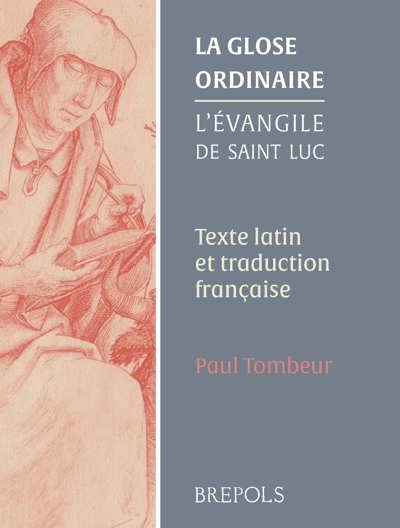
Publication – « La glose ordinaire. L’Évangile de saint Luc. Texte latin et traduction française », trad. Paul Tombeur

La Glose ordinaire est le grand commentaire biblique médiéval, de la Genèse à l’Apocalypse. L’œuvre présentement retenue est l’Évangile selon saint Luc. Le présent ouvrage concerne cet évangile qui a marqué d’une manière incroyable le vécu de nos traditions occidentales, et ce jusqu’à nos jours. Ce trésor d’interprétations et de commentaires est le manuel de base pour tout l’Occident, du XIIe siècle jusqu’à bien au-delà de la Renaissance.

Dès l’apparition de l’imprimerie on a repris ce très vaste ensemble et ce fut l’œuvre d’Adolf Rusch de Strasbourg en 1480-1481, lequel reproduisait scrupuleusement son manuscrit de base. Le texte s’y présente comme les allées d’un parc à la française : le texte biblique même de Luc est au centre, avec des grands caractères, les variantes lexicales et remarques grammaticales figurant entre les lignes, les commentaires marginaux se trouvant tout autour, et on y circule d’allée en allée.

Toutes ces caractéristiques fondamentales sont respectées dans la présente édition, le latin dans la page de gauche, le français dans la page de droite qui fait face. La présentation retenue est ainsi une nouveauté qui rend lisible et connaissable, tant en latin courant qu’en français, toute la documentation biblique : le Luc et les commentaires. Tout cela provoque incontestablement bien des étonnements…

L’auteur de cette édition remarquable est Paul Tombeur, professeur émérite de l’Université Catholique de Louvain. Il est philologue et fondateur à Louvain au siècle dernier du Cetedoc qui a entrepris dès la fin des années soixante, l’informatisation de l’ensemble des textes antiques, patristiques et médiévaux latins, allant même jusqu’aux textes du XXe siècle. Il est le fondateur du CTLO à Turnhout qui poursuit tout ce travail d’automatisation dans le cadre des éditions Brepols. On connait ainsi la ‘Library of Latin Texts’ et la ‘Database of Latin Dictionaries’.

Table des matières :

Préface de Gilbert Dahan
Introduction
Texte latin et traduction

Informations pratiques :

La glose ordinaire. L’Évangile de saint Luc. Texte latin et traduction française, trad. Paul Tombeur, Turnhout, Brepols, 2024 ; 1 vol., 420 p. ISBN : 978-2-503-61003-0. Prix : € 71,09.

Source : Brepols

Publié dans Publications | Laisser un commentaire

Bourse – Donald Bullough Fellowship 2025-2026

The Department of Medieval History at the University of St Andrews invites applications for the Donald Bullough Fellowship to be taken up during either semester of the academic year 2025-2026.

The Bullough Fellowship is open to any academic in a permanent post in a university or a research institute/centre to come to St Andrews and conduct research in any medieval history topic. Applicants are normally enjoying research leave from their own institution.

The Fellowship provides a subsidy (up to £4,000) towards the cost of travel to St Andrews and accommodation during the stay. It carries with it no teaching duties, although the Fellow is expected to take part in the normal seminar life of the medieval historians during their stay in St Andrews. Weekly seminars, held on a Monday evening, run from September to December and from January to April. The Fellow will also be invited to lead a workshop on a research theme of their choice during their stay.

The Fellow will be provided with computing facilities and an office alongside the medieval historians. The Department of Medieval History is a vibrant, welcoming community with colleagues working on an impressive variety of topics, regions and periods. The university library has an excellent collection for medieval historians.

Interested candidates should send a letter of application by the advertised closing date, together with a scheme of research for the project on which they will be engaged during their time in St Andrews. They should also enclose a CV, together with the names of two academic referees, who should be asked to write by the closing date. All correspondence should be addressed to medhist@st-andrews.ac.uk.

The closing date for applications is Monday 2nd December 2024. Previous applicants should not be deterred from applying.

Further enquiries may be directed to the Chair of the Department of Medieval History, Dr Ana del Campo (adcg@st-andrews.ac.uk).

Previous Fellows have included Dr Christina Pössel, Professor Cynthia Neville, Dr Ross Balzaretti, Dr Marlene Hennessy, Professor Warren Brown, Dr Edward Coleman, Professor Richard Kaeuper, Dr Natasha Hodgson, Professor Jacqueline Murray, Professor Ruth Mazo Karras, Professor Cullen Chandler, Professor Dan Smail, Professor Sarah Hamilton, Dr Charles Insley. The current Fellow is Professor Alison More.

Source : St Andrews Institute for Medieval Studies

Publié dans Bourse | Laisser un commentaire

Séminaire – Pouvoirs, culture et pratiques politiques à la fin du Moyen Âge (2024-2025)

Mardi, 15 h 00-17 h 00, centre Sorbonne, salle Perroy, 1 rue Victor Cousin

Première séance le mardi 19 novembre 2024
Dernière séance le mardi 13 mai 2025

Argumentaire. Le séminaire de cette présente année continue de réfléchir aux enjeux et aux pratiques du pouvoir à la fin du Moyen Âge. Y alterneront deux types de présentation. Il y aura d’abord les travaux propres de l’animateur du séminaire autour d’articles et de communications en préparation, dont les thématiques s’articulent autour des images, du pouvoir et de la sacralité. Il y aura ensuite la présentation par leurs auteurs de travaux récents qui ouvrent sur des relectures de règnes, de parcours princiers ou d’œuvres, ou alors par des présentations qui renouvellent l’appréhension des constructions princières tardo-médiévales, toujours au cœur de la réflexion du séminaire depuis plusieurs années.

1. Images, pouvoir et sacralité dans la maison de Bourbon

Mardi 19 novembre 2024. Olivier MATTEONI. Dire le pouvoir du prince par l’image. Les ducs de Bourbon et les peintres (XIVe-XVIe siècle)

Mardi 3 décembre 2024. Olivier MATTEONI. Charles III de Bourbon et sainte Anne : L’Officium misse ad honorem sacratissime generationis beatissime Anne, matris virginis Marie (1517)

Mardi 17 décembre 2024. Olivier MATTEONI. Histoire et politique. Les ducs et duchesses de Bourbon et l’histoire (XIVe-XVIe siècle)

2. Relectures et regards renouvelés en histoire politique

Mardi 28 janvier 2025. Relire le règne de Saint Louis à partir de ses actes. Avec JEAN-FRANÇOIS MOUFFLET, docteur en histoire, conservateur aux Archives nationales, auteur de : Le gouvernement de Saint Louis au quotidien. Le pouvoir au miroir des actes (thèse université Paris 1 Panthéon-Sorbonne, 2024), en présence de Gaël CHENARD, conservateur du patrimoine, directeur des archives départementales de la Creuse

Mardi 11 février 2025. Relire les Grandes Chroniques de France, avec ANTOINE BRIX, docteur en histoire, post-doctorant à l’université de Namur, auteur de : Devenir l’histoire de France. La fortune des Grandes Chroniques de France au Moyen Âge (Paris, Éditions du CTHS, 2024)

Mardi 4 mars 2025. Regards renouvelés sur les constructions princières tardo-médiévales, avec Anne LEMONDE, maîtresse de conférences habilitée à l’université de Grenoble-Alpes, auteure de : De la plainte à la doléance. Naissance d’une opinion publique en Dauphiné (1313-1349) (Mémoire d’habilitation à diriger des recherches université Paris 1 Panthéon-Sorbonne, 2024)

Mardi 18 mars 2025. Regards renouvelés sur les constructions princières tardo-médiévales. Léonard DAUPHANT, maître de conférences habilité à l’université de Lorraine, auteur de : René d’Anjou, prince en Lorraine. Espace, pouvoir et coutume entre France et Empire au XVe siècle (Paris, Classiques Garnier, 2024)

Mardi 1er avril 2025. Relire le retable de l’Annonciation d’Aix. Avec Christian HECK, professeur émérite d’histoire de l’art à l’université de Lille, auteur de : Le retable de l’Annonciation d’Aix. Récit, prophétie et accomplissement dans l’art de la fin du Moyen Âge (Dijon, Faton, 2024). Titre de l’intervention : L’iconographie du Retable de l’Annonciation d’Aix : narration et symbole dans l’art de la fin du Moyen Âge, en présence de Philippe PLAGNIEUX, professeur d’histoire de l’art à l’École d’histoire de l’art de la Sorbonne, université Paris 1 Panthéon-Sorbonne

Mardi 8 avril 2025. Regards renouvelés sur les constructions princières tardo-médiévales. Vanina MARCHI VAN CAUWELAERT, professeure d’histoire du Moyen Âge à l’université de Corse Pascal-Paoli, auteure de : Un royaume dans la mer. L’archipel corso-sarde du XIIIe au XVe siècle (Paris, Classiques Garnier, 2024)

Mardi 22 avril 2025. Relire le principat de Charles le Téméraire. Avec Jean-Baptiste SANTAMARIA, maître de conférences habilité à l’université de Lille, auteur de : La mort de Charles le Téméraire (Paris, Gallimard, 2023)

Mardi 6 mai 2025. Regards renouvelés sur les constructions princières tardo-médiévales. Bernard ANDENMATTEN, professeur honoraire à l’université de Lausanne, auteur de : Écrire, prier et dominer (Lausanne, Cahiers lausannois d’histoire médiévale, 2024). Titre de l’intervention : Féodalité et pouvoir princier. Le cas de la principauté savoyarde, XIIIe-XVe siècle

Mardi 13 mai 2025. Relire l’exposition sur les Primitifs français de 1904. Olivier MATTEONI. Les enjeux artistiques et idéologiques d’une controverse : l’exposition des Primitifs français de 1904

Source : LAMOP

Publié dans Séminaire | Laisser un commentaire

Appel à contribution –  Aftermaths of Conflict and Violence, from the Ancient to the Contemporary Period

The Histories and Cultures of Conflict (HaCC) research group at Manchester Metropolitan University, UK, invites proposals for a conference on aftermaths of conflict and violence, from the ancient to the contemporary period.  2025 will see the 80th anniversary of the end of the Second World War.  This occasion invites reflection on how individuals and societies have navigated the end of conflicts, and the aftermath of violence, across history, from international wars and genocide to individual acts of terror and assassination.  When hostilities cease, combatants confront the challenge of returning home and demobilising for peacetime, while civilian survivors and victims endure the effects of violence inflicted upon them. States, whether victorious or defeated, must begin the processes of reconstruction and recovery.  When terrorists strike, societies must navigate the shock of the attack while governments consider their response and communities rebuild.  Examination of the aftermaths of conflict thus sheds light on how people, nations, and states survive and address the consequences of violence.  

We invite proposals for 20-minute papers on: 

  • Combatants’ experiences of coming home after conflict;
  • Political, social, and cultural responses to returning combatants, in the contexts of both victory and defeat;
  • The impact of physical and mental injuries suffered during conflict;
  • Depictions and representations of post-conflict homecoming in popular culture;
  • Aftermaths of international and civil wars;
  • New crises arsing from aftermath of war and violence;
  • The consequences of political violence and terrorism;
  • Family experiences and memories of homecoming;
  • Children and young people in the aftermath of conflict, as perpetrators and/or victims of violence;
  • Emotional approaches to the post-conflict situations and environments;
  • Gender perspectives on aftermaths of violence;
  • Aftermaths of conflict and law;
  • Reconstruction and recovery;
  • Planning for, and imagining, the end of hostilities;
  • Memories and the memorialisation of post-conflict societies;
  • Aftermaths of conflict in democratic, authoritarian, and colonial societies;
  • Navigating the return of refugees, civilian victims, and survivors of genocide after violence.
  • Responses to, and the consequences of, political assassinations

Proposals for papers on other topics will also be considered.  Complete panel submissions consisting of three thematically linked papers are especially welcome.  Proposals for 20-minute papers should include a title, a 300-word abstract, and a one-page CV with current contact details.  Proposals for panels should include the same information plus a title for the panel, compiled into one document.  

The deadline for proposals is 1 March 2025.  Please send proposals to Dr Chris Millington, c.millington@mmu.ac.uk

Publié dans Appel à contributions | Laisser un commentaire

Journée d’étude – La Copie – techniques, usages, valeurs (II)

Paris
20 novembre 2024

Cette journée d’étude de l’équipe HISTARA prolonge la précédente qui a exploré, le 29 novembre 2023, la copie sous différents angles d’approche : les techniques de la copie (estampage, moulage, reproduction par la plume et le pinceau, jusqu’à l’impression 3D), les usages de la copie (dans le fonctionnement des administrations, la pratique, l’étude et la formation artistiques), le statut et la valeur de la copie (simple doublon ou véritable substitut lorsque l’original a disparu ou est inaccessible) et la place des copies – cachées ou exhibées – dans les séries et les collections.

La journée du 20 novembre 2024 s’attachera à l’envers de la copie, à ce qu’elle révèle au-delà de la duplication, sous différents aspects : l’adaptation à un autre contexte (avec changements voulus ou non), l’hommage, les stratégies d’assimilation et de transformation à l’œuvre, et les renaissances et restaurations du passé, sous un angle institutionnel aussi bien que formel.

9h  Accueil.9h10  François Queyrel et Isabelle Saint-Martin (EPHE-PSL, Histara)   Introduction.

9h30  Elouann Person (EPHE-PSL, Histara), «  Copie romaine d’un original grec » ou construire une histoire de l’art grec par l’exposition de copies. L’exemple du musée du Louvre.
10 h  Guillaume Biard (Aix-Marseille Université et IUF),  Pratique et usage de la copie en Grèce du Nord à l’époque impériale. 
10h30  Pause.

10h45  Émilie Poiré (EPHE-PSL, Histara), Entre Antiquité, Byzance et la Renaissance : la copie du cycle illustré des Cynégétiques   d’Oppien.
11h15  Ioanna Rapti (EPHE-PSL, Histara), Renouveler et perpétuer l’appropriation d’un livre des évangiles arménien du XVIIe siècle et son modèle du XIIIe.
11h45  Martin Szewczyk (conservateur au département des AGER du musée du Louvre), La restauration des copies romaines d’originaux grecs à l’époque moderne. 
12h15  Discussion générale.
12h45  Pause déjeuner.

14h  Célia Lemoine (École du Louvre), La réception moderne des Grands Galates. 
14h30  Philippe Carré (EPHE-PSL, Histara), Palladio et sa réception en France. 
15h  Philomène Renard (EPHE-PSL, Saprat),  Répétition et réinvention : la copie dans l’atelier de Giovanni Bellini.
15h30Victoria Arzhaeva (EPHE-PSL, Histara), Raphaël, le Pérugin et Fra Angelico dans les copies russes. Débats académiques et débats religieux.
16h  Pause.

16h15  Clara Lespesailles (EPHE-PSL, Histara et École du Louvre), « Copier tout bonnement, tout bêtement, copier servilement la Nature ». La copie dans l’esthétique ingresque.
16h45   Perla Vincent (EPHE-PSL, Histara),  Carnets de croquis, cartons, mosaïques et vitraux : esquisse de l’usage de la copie dans l’œuvre de Louis Mazetier (1888-1952). 

17h15  Discussion générale puis Conclusions par Sabine Frommel (EPHE-PSL, Histara).

Publié dans Le réseau | Laisser un commentaire

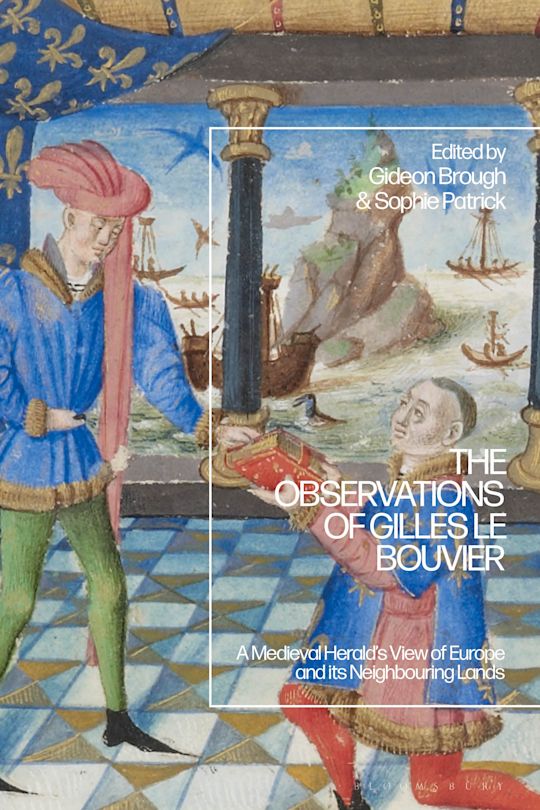
Publication – « The Observations of Gilles le Bouvier. A Medieval Herald’s View of Europe and its Neighbouring Lands », éd. Gideon Brough, Sophie Patrick

Translated from the medieval French, this book is a landmark English-language version of the work of Gilles le Bouvier. As the senior herald to King Charles VII, the monarch on the French throne as they advanced to victory in the Hundred Years’ War between England, France and their allies, Gilles le Bouvier was close to the king during a decisive, formative period in France’s history, as well as being a well-known figure from the period. The Observations of Gilles le Bouvier thus delivers a rare glimpse of a singular medieval worldview, offered through the constrained voice of a skilled diplomat carefully and occasionally sharing his opinions to audiences composed of his social superiors.

During his lifelong career as a messenger and a diplomat in Charles’s service, Gilles le Bouvier, known as The Berry Herald, travelled far and wide on his master’s behalf. This translated work is a compilation of his observations as he moved around Western Europe, the Mediterranean states and the Black Sea region. Throughout the text, Gilles le Bouvier:

* assessed or commented on the lands encompassed by his extensive travels
* discussed the peoples he claimed to have encountered, from the honourable Turks to the ‘bad Catholics’ of southern Italy
* surveyed the military capabilities of France’s neighbours, allies, enemies and neutral states

Expertly introduced and contextualised by Gideon Brough and Sophie Patrick, this book provides a compelling and unique historical source for understanding life in late-medieval Europe through the eyes of someone who lived it.

Editors’ Introduction
Author’s introduction

  1. France
  2. The Empire (Part 1)
  3. Italian States (Part 1)
  4. Mediterranean Islands, Egypt and the Middle East
  5. Italian Cities (Part 2)
  6. Black Sea states, Turkey and the Balkans
  7. Hungary and Scandinavia
  8. The Low Countries and the German Empire (Part 2)
  9. Bohemia and Prussia
  10. The British Isles and Ireland
  11. The Spanish Kingdoms

Translators’ Notes
Appendices
Selected Bibliography
Index

The Observations of Gilles le Bouvier. A Medieval Herald’s View of Europe and its Neighbouring Lands, éd. Gideon Brough, Sophie Patrick, Londres, Bloomsbury, 2024 ; 1 vol., 248 p. ISBN : 978-1-35041-895-0. Prix : 76,50.

Source : Bloomsbury

Publié dans Publications | Laisser un commentaire

Colloque – Interregionale Mobilität in Mitteleuropa: Personen, Ideen und Gegenstände (14.‑15. Jh.)

Die Jahrestagung des Collegium Carolinum 2024 widmet sich der interregionalen Mobilität von Personen, Ideen und Gegenständen in Mitteleuropa im 14. und 15. Jahrhundert. Damit knüpft sie an jüngere Debatten rund um das Thema Mobilität an. Die Tagung ist primär der horizontalen Mobilität gewidmet, es sollen ihre sozialen Konsequenzen nicht außer Acht gelassen werden. Es geht uns um geographische, grenzüberschreitende Bewegung von Personen, Gegenständen und Ideen und ihre Auswirkungen auf den jeweiligen Aufnahme- oder auch Herkunftsort. Eine sozial, kulturell oder politisch wirkungsvolle Mobilität setzte nicht zwingend eine Übersiedlung oder die Bildung von Diasporen voraus, sondern intensive, üblicherweise wiederholte, hin und her gerichtete Begegnungen, die dauernde Beziehungen stiften konnten.

Donnerstag, 7. November 2024

18:00-19:00 Uhr

Eröffnung in das Thema – Julia Burkhardt (München) / Pavel Soukup (Prag) / Václav Žůrek (Prag)

Eröffnungsvortrag – Martin Kintzinger (Münster): Mobilität und/oder Migration? Transferprozesse im spätmittelalterlichen Europa

19:15 Uhr Abendessen / Dinner

Freitag, 8. November 2024

Sektion 1: Personennetzwerke und soziale Mobilität
9:00-11:00 Uhr

– Caterina Cappuccio (Rom): Zwischen Städten und Reich: kaiserliche Netzwerke im Reichsitalien (14. Jahrhundert)
– Ondřej Schmidt (Brno): Strategies of Social Ascent in Central Europe and Beyond: Conrad II of Craig as Courtier, Diplomat, and Mercenary
Kaffeepause / Coffee Break

11:30-13:00 Uhr

– Giovanni Contel (Neapel): Interregional Mobility between the Imperial Court and Reichsitalien (Late XIV-Early XVI century). Social and Cultural Aspects of a Renaissance Political Elite
– Jörg Schwarz (Innsbruck): Mobilität als Karrieresprungbrett? Die rastlosen Reisen der Räte Kaiser Maximilians I. (1486-1519)
Mittagspause / Lunch Break

15:00-16:30 Uhr
Sektion 2: Wissensnetzwerke und Mobilität von Ideen

– Eva Schlotheuber (Düsseldorf): Netzwerke des Wissens – Das Ringen um Lösung des Papst-Kaiser-Konflikts im Vorfeld der Goldenen Bulle
– Věra Soukupová (Prag): Mascarons Reisen durch Europa. Kontakte, Akteure und Transfers in der Rezeption des Processus Sathanae
Kaffeepause / Coffee Break

17:00-18:30 Uhr

– Christian Hesse (Bern): Mobilität von Gelehrten und Ideen zwischen dem eidgenössischen Raum und den Universitäten von Prag, Krakau und Wien
– Robert Novotný (Prag): Prager „Alumni“ und interregionaler Transfer von Personen, Ideen und Gegenständen
Abendessen / Dinner

Samstag, 9. November 2024

09:00-11:00 Uhr
Sektion 3: Die Mobilität von Objekten

– Cynthia Stöckle (München): Juwelen auf Reisen: Die Reichskleinodien des Heiligen Römischen Reiches und ihr Weg von Stams nach Prag
– Maria Theißen (Wien): Diener zweier Herren? Prager Illuminatoren und ihre Schicksale zur Zeit der Hussitenkriege
– Klara Hübner (Brno): Immer Ärger mit Wenzel. Mit dem toten Körper des Königs im spätmittelalterlichen Zentraleuropa unterwegs
Kaffeepause / Coffee Break

11:30-13:00 Uhr
Sektion 4: Reisen an und um Höfe: Mobilität und Dynastien

– Christina Antenhofer (Salzburg): People, objects and knowledge on the move: late medieval transregional princely marriages as occasions for interregional mobility
– Sophie Charron (Oxford): Being foreign, becoming Bohemian: the brides of Charles IV
– Uwe Tresp (München): « Ein weg zu Ungern ». Die Reisen der Herzöge von Bayern an den Hof König Sigismunds: Gründe, Hintergründe und Quellen
– Patrik Pastrnak (Olmütz): Narrativity and creation of emotional, gendered, and sacred landscapes in selected fifteenth-century travel writings related to princely bridal journeys
Mittagspause / Lunch Break

15:00-16:30 Uhr
Sektion 5: Mobilität und Grenzen: Identitätsbildung und grenzübergreifende Netzwerke

– Kajetán Holeček (Prag): Community on the Border: Cheb (Eger) and Jewish Migration in the Middle Ages.
– Thomas Krzenck (Leipzig): Emigration und/oder freiwillige Mobilität im Zeitalter der hussitischen Revolution am sächsisch-böhmischen Beispiel
Kaffeepause / Coffee Break
17:00-18:30 Uhr

– Petr Elbel (Brno): Söldner, Hauptleute, Pfandherren: Der österreichische Adel in Böhmen und Mähren unter Albrecht V. (II.)

Abendessen / Dinner

Sonntag, 10. November 2024

Frühstück & Abreisetag / Breakfast & Check-Out

Informations pratiques :

Jahrestagung 2024: « Interregionale Mobilität in Mitteleuropa: Personen, Ideen und Gegenstände (14.-15. Jh.) »

Jahrestagung des Collegium Carolinum 2024 in Kooperation mit der Abteilung für Mittelalterliche Geschichte der LMU und dem Centre for Medieval Studies Prag.

7.–10. November 2024 in Fischbachau (Oberbayern)

Source : Collegium Carolinum

Publié dans Colloque | Laisser un commentaire

Colloque – Les nouvelles vies des divinités grecques en Europe du XIVe au XXe siècle

14 & 15 novembre 2024
École française d’Athènes

Organisation : Catherine Gaullier-Bougassas

Les 14 et 15 novembre 2024, l’ERC AGRELITA aura le plaisir de vous retrouver à l’École française d’Athènes à l’occasion du colloque “Les nouvelles vies des divinités grecques en Europe du XIVe au XXe siècle”.

Jeudi 14 novembre · 13h30-18h

13h30 : Accueil des participants

  • 13h45 : Gilles de RAPPER (Directeur des études modernes et contemporaines de l’École française d’Athènes) et Catherine GAULLIER-BOUGASSAS (Craham, ERC Agrelita), mot d’accueil et introduction
  • 14h15 : Charis MESSIS (Université nationale et capodistrienne d’Athènes), « La perception des dieux de l’antiquité gréco-romaine dans la littérature byzantine des derniers siècles (XIVe-XVe siècle) : continuités ou innovation ? »
  • 14h45 : Juan Bautista JUAN LÓPEZ (Central European University), “The Soul’s Pantheon: Ethical Allegory of Homeric Gods in the Late Byzantine Period”
  • 15h15 : Angèle TENCE (Craham, ERC Agrelita), « Un “deluge de feu” en mots et en images : l’interprétation du mythe de Phaéton dans trois exemplaires de La Cité de Dieu traduite par Raoul de Presles (XVe siècle) »

15h45 : Discussion et pause

  • 16h30 : Émilie SÉRIS (Sorbonne Université, UR Rome et ses renaissances), « La reconfiguration du panthéon dans les Hymni naturales de Michel Marulle (1497) »
  • 17h : Petros FOKIANOS (EHESS, Université de Patras), « Les Hymni naturales de Michel Marulle : entre les dieux créateurs hellénocentriques et le genus grec dépourvu de territoire de la fin du Quattrocento »

17h30 : Discussion

  • 9h : Laury-Nuria ANDRÉ (Université de Lyon 2, HiSoMa) et François de CALLATAŸ (Bibliothèque royale de Belgique, Université libre de Bruxelles), « Jean Second, littérateur-médailleur, et la place du paysage à l’antique sur les médailles du XVIe siècle »
  • 9h30 : Vassiliki KOUTSOBINA (National and Kapodistrian University of Athens), “Textual and Musical Metamorphoses of Tyche/Fortuna in Early Sixteenth-century Polyphony”

10h : Discussion et pause

  • 10h45 : Irini APOSTOLOU (Université nationale et capodistrienne d’Athènes), « Les voyageurs à la recherche des dieux antiques (XVIIe-XVIIIe siècle) »
  • 11h15 : Michael KONARIS (Centre for Greek and Latin Literature of the Academy of Athens), “Constructing a Theology of Greek Religion: Eckart Peterich’s Die Theologie der Hellenen (1938)”

11h45 : Discussion, puis déjeuner pour les conférenciers

  • 14h : Elena STAIKOU (National and Kapodistrian University of Athens), “Greek Female Divinities in the Art of late 19th and 20th Centuries: The case of Paul Delvaux (1897-1994)”
  • 14h30 : Gilles de RAPPER (École française d’Athènes), « Les Pélasges sont-ils les inventeurs des divinités grecques ? Un point de vue albanais »

15h : Discussion

  • 15h30 : Stamatis ZOCHIOS (CRFH, Académie d’Athènes, EPHE-PSL) et Jiří DYNDA (Académie des sciences de la République tchèque, Hellenic Folklore Research Centre), “From Olympus to the Steppes: Mapping the Greco-Roman Influence on the Creation of Slavic Mythology”
  • 16h : Néphélie SKARLATOS (EPHE-PSL, École française d’Athènes), « La nouvelle vie des divinités de l’Antiquité : une étude anthropologique du mouvement polythéiste grec contemporain »

16h30 : Discussion

Source : AGRELITA

Publié dans Colloque | Laisser un commentaire

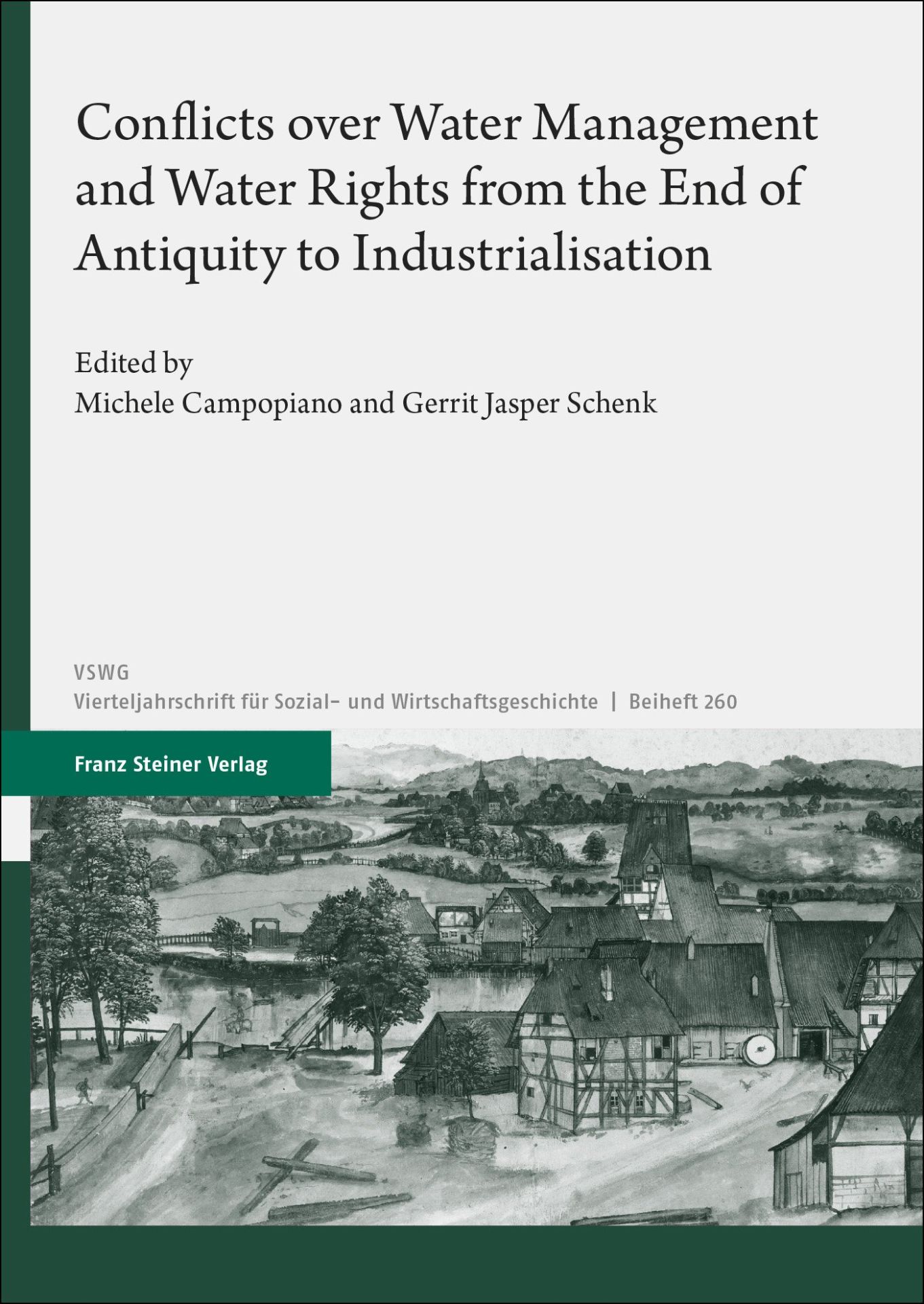
Publication – « Conflicts over Water Management and Water Rights from the End of Antiquity to Industrialisation », éd. Michele Campopiano, Gerrit Jasper Schenk

Few natural resources can be more important than water. And this is precisely why few resources can be the subject of greater conflict than water itself.

This volume, edited by two internationally renowned specialists on the topic of water management research, brings together eleven experts from all over the world to propose as many innovative studies as possible that fully understand the scope of this issue for historical research but also for environmental science. The contributors break with a tradition of Eurocentric research on these times by bringing together research that covers not only Western, Central and Southern Europe but also India, China and Sri Lanka. The thematic coherence together with the geographical but also chronological range (5th–18th centuries) make it an essential starting point for all future studies on the subject.

Table des matières : ici

Informations pratiques :

Conflicts over Water Management and Water Rights from the End of Antiquity to Industrialisation, éd. Michele Campopiano, Gerrit Jasper Schenk, Stuttgart, Franz Steiner Verlag, 2024 ; 1 vol., 276 p. (Vierteljahrschrift für Sozial- und Wirtschaftsgeschichte – Beihefte, 260). ISBN : 978-3-515-13724-9. Prix : € 60,00.

Source : Franz Steiner Verlag

Publié dans Publications | Laisser un commentaire