Cet ouvrage réunit trente études qui abordent la question des examens, grades et diplômes universitaires dans la très longue durée, du XIIe au XXIe siècle, et replacent la validation des compétences par les universités dans ses différents contextes politiques, sociaux et culturels. Les plus grands spécialistes de l’histoire des universités européennes y analysent la certification universitaire dans toutes ses dimensions et révèlent les dynamiques complexes qu’elle entretient avec l’Église, l’État et les élites sociales. L’ouvrage soulève ainsi des questions aussi importantes qu’actuelles, comme la place des universités dans le système d’enseignement occidental, la validité des processus de sélection mis en œuvre à l’occasion des examens ou l’adéquation des compétences universitaires aux attentes de la société. Il constitue en somme un instrument indispensable pour mieux comprendre les problèmes liés au fonctionnement de la certification universitaire et au rôle social des universités, dans toute leur profondeur historique.
Contributions de : Sari Aalto, Robert Anderson, Claire Angotti, Bruno Belhoste, Marion Bernard-Schweitzer, Luís Miguel Carolino, Christophe Charle, Jean-François Condette, Hilde De Ridder-Symoens, Leen Dorsman, Willem Frijhoff, Massimo Galtarossa, Kaspar Gubler, Maria Teresa Guerrini, Damigela Hoxha, Lotte Kosthorst, Thierry Kouamé, Regina Lupi, Ilaria Maggiulli, Manuel Martínez Neira, Simona Negruzzo, Boris Noguès, Armando Norte, Emmanuelle Picard, Berardo Pio, Leonidas Rados, Rafael Ramis Barceló, Cornelia M. Ridderikhoff, Giovanni Rossi, Francisco Javier Rubio Muñoz, Aleksandr V. Rusanov, Rainer Christoph Schwinges, Pauline Spychala, Thomas Sullivan, Jacques Verger, Pierre Verschueren, Stefania Zucchini.
Examens, grades et diplômes. La validation des compétences par les universités (XIIe-XXIe siècle), éd. Bruno Belhoste, Thierry Kouamé, Boris Noguès, Emmanuelle Picard, Paris, Éditions de la Sorbonne, 2023 ; 1 vol., 448 p. (Homme et société). ISBN : 979-10-351-0897-7. Prix : € 28,00.
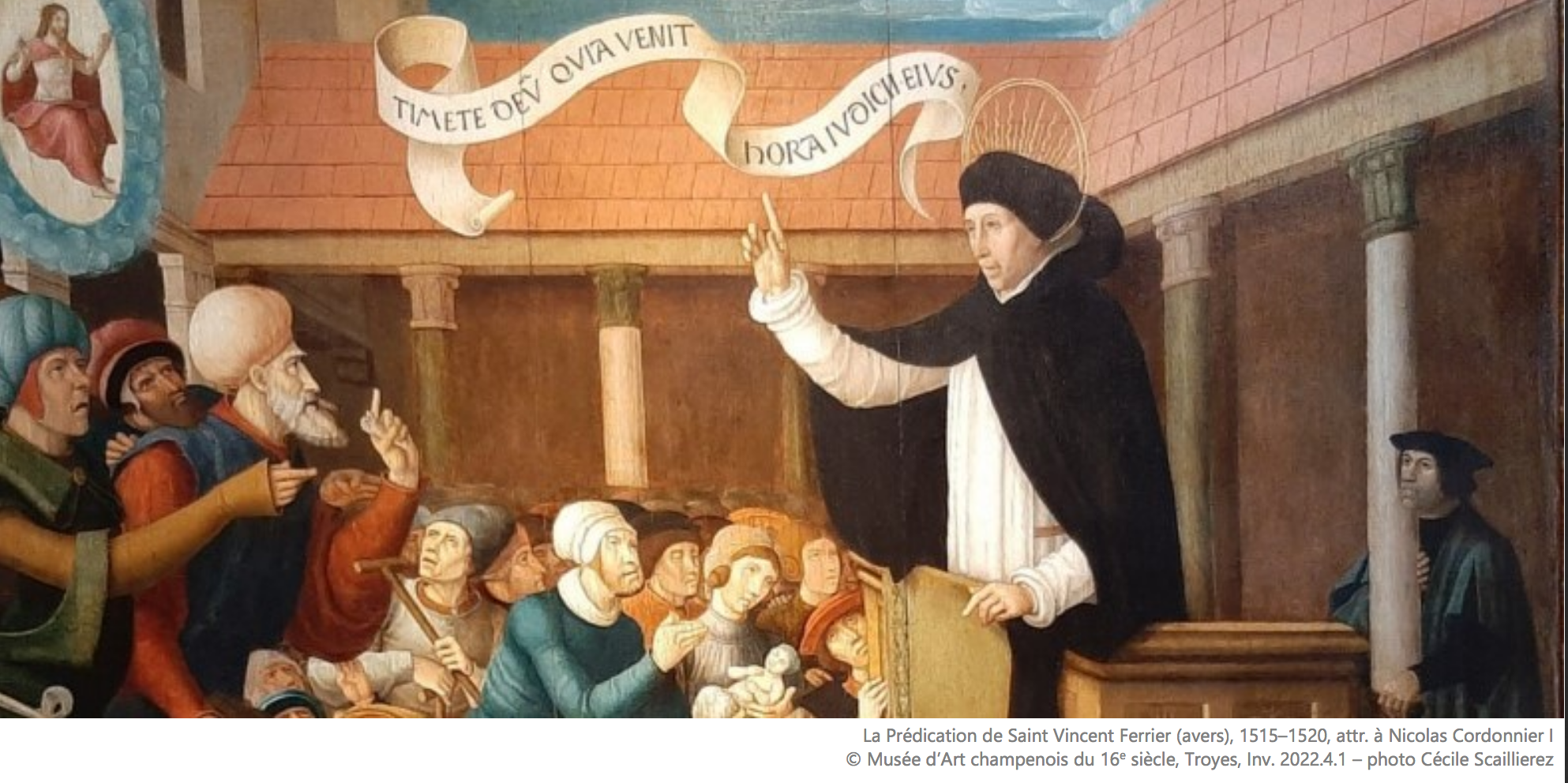
24th International Medieval Sermon Studies Symposium Prague, 12–16 July 2024 Hosted by the Czech Academy of Sciences & Charles University. Planning Committee: Pietro Delcorno, Lucie Doležalová, Kimberly Rivers, Pavel Soukup
The International Medieval Sermon Studies Society invites early career researchers and established scholars to submit proposals for 20-minute papers on the subject of “Preaching and Conflict”. We welcome papers from all areas and religious traditions for the period of ca. 500–1500 CE. We also encourage proposals for the poster session.
Preaching and Conflict: 24th International Medieval Sermon Studies Symposium
The International Medieval Sermon Studies Society invites early career researchers and established scholars to submit proposals for 20-minute papers on the subject of “Preaching and Conflict”. We welcome papers from all areas and religious traditions for the period of ca. 500–1500 CE. We also encourage proposals for the poster session.
Topics may include but are not limited to:
a) preaching about conflicts – reflection of controversy in sermons – preaching as a discursive weapon – preaching and reconciliation – use of antithesis in religious rhetoric
b) conflicts about preaching – quarrels about the authority to preach – controversial content of sermons – preachers accused, investigated, and sentenced – turmoils aroused by preaching
Proposals should include paper or poster title, your name, institutional affiliation (if applicable), and e-mail address. Proposals for papers should additionally include an abstract of max. 350 words and an indication whether you plan to come in person or present virtually. Although attendance in person is preferred, the committee is willing to consider a limited number of virtual presentations.
Please send proposals before 1 November 2023 to Pavel Soukup (soukup@flu.cas.cz).
Colloque organisé par l’équipe Saprat (EPHE-PSL), à Paris et Versailles, les 25, 26 et 27 septembre 2024
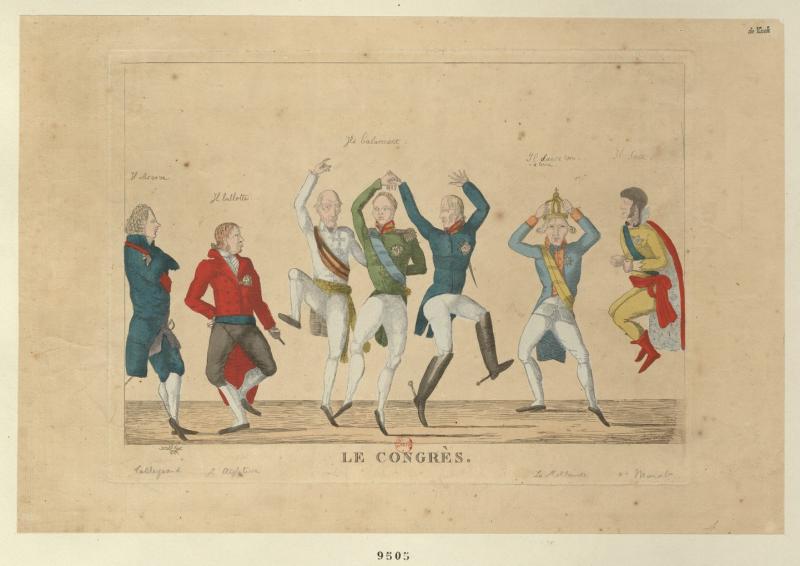
De la « Guerre de Cent ans » à la fin de la Première Guerre mondiale, d’Arras, en 1435, à Paris et Versailles, en 1919, les rencontres diplomatiques organisées en vue de la paix sont, à l’aune des guerres, fort nombreuses en Europe. Les sources médiévales mentionnent seulement le terme générique de « conférences » pour évoquer des réunions où des émissaires traitent de voies de paix. Le mot de « congrès » diplomatique, la forme même qui lui est associée, n’apparaissent véritablement qu’à partir du milieu du XVIIe siècle. Au XIXe siècle, conférences et congrès sont ensuite marqués, entre autres, par la montée en puissance des États-nations, l’émergence de la diplomatie de concert et le rôle croissant de l’anglais. Les lieux, les acteurs, l’organisation, les modes de sociabilité et la durée de ces rencontres varient donc considérablement du XVe siècle au début du XXe siècle. Elles se caractérisent néanmoins par le souci commun, sinon réel du moins proclamé, d’éviter ou de clore des conflits. Les rencontres les plus importantes, rassemblées à titre indicatif dans la liste ci-dessous, affrontent des enjeux cruciaux, visent une stabilisation ou une inflexion décisive dans les relations entre puissances et ont laissé une empreinte durable dans la mémoire collective.
Congrès et conférences de paix sont aussi des événements extraordinaires aux multiples facettes. À l’instar des rencontres princières à l’époque moderne, pour lesquelles Jean-Marie le Gall a discerné une vaste gamme de divertissements (mystères, entrées, joutes, tournois, carrousels, ballets équestres, bals, ballets, représentations théâtrales, concerts, opéras et autres formes lyriques, jeux et courses d’animaux, feux d’artifices et illuminations), les congrès et conférences de paix sont ainsi l’occasion de spectacles nombreux et variés. Le présent colloque entend les étudier dans une perspective comparatiste, typologique et diachronique, tout en mettant en valeur le caractère unique des différentes performances spectaculaires.
Le sujet a déjà suscité l’intérêt des historiens de la diplomatie. Plusieurs études importantes consacrées aux rencontres entre princes, à l’époque médiévale et à l’époque moderne, ainsi qu’aux congrès, ont mis en évidence le nombre, la diversité et l’importance des fêtes publiques, des célébrations et des rituels religieux à ces occasions. On se réfère ici aux travaux fondateurs de Lucien Bély sur les congrès, en particulier celui d’Utrecht (Espions et ambassadeurs au temps de Louis XIV, 1990), à un colloque récent explorant de façon systématique les interactions entre les congrès et les villes d’accueil (Christian Windler [éd.], Kongressorte der frühen Neuzeit im europäischen Vergleich : der Frieden von Baden (1714), 2016), ou encore aux analyses de la dimension sonore, notamment musicale, de la diplomatie (voir par exemple Damien Mahiet, Rebekah Ahrendt et Frédéric Ramel (éd.), Diplomacy, audible and resonant, dossier de Diplomatica, vol. 3/2, 2021). De manière générale, l’histoire de la diplomatie, en intégrant dans ses terrains d’enquête des acteurs beaucoup plus nombreux, prend désormais plus en considération les artistes, jongleurs, danseurs, acteurs, peintres et musiciens intervenant dans les conférences et les congrès. L’organisation de certains spectacles, concerts et pièces de théâtre notamment, a été analysée en profondeur. Néanmoins, les spécialistes de la diplomatie ont généralement envisagé ces pratiques comme une forme d’à-côté, sous l’angle du divertissement, éventuellement avec une portée symbolique. Une approche d’ensemble de la typologie, des rôles et de l’évolution des pratiques spectaculaires en contexte diplomatique fait encore défaut.
Du côté de l’histoire des spectacles, qui s’est, dans le même temps, également constituée en véritable discipline, les congrès et les conférences de paix n’ont pas fait l’objet de travaux spécifiques. Ce sont principalement des musicologues qui s’y sont intéressés, dans le cadre plus large de l’étude des rapports entre musique et politique, ce qu’illustre par exemple le colloque « Musique et sorties de guerres (XIXe-XXIe siècles) » tenu à Montréal en 2018.
En se situant au croisement des études sur les spectacles, la diplomatie, l’histoire de la musique, du théâtre, des arts picturaux et de la danse, ce colloque entend par conséquent favoriser le dialogue entre plusieurs historiographies qui ont, depuis plusieurs décennies maintenant, été très vivement renouvelées. Plusieurs axes complémentaires seront privilégiés pour envisager l’ensemble des pratiques spectaculaires dans les conférences et congrès.
Il s’agira tout d’abord de déterminer qui sont les acteurs de ces spectacles. Si la séparation entre professionnels et amateurs est délicate et n’a pas forcément de sens à toutes les époques, la prise en considération des individus impliqués est fondamentale. Participants et publics – ces deux catégories pouvant se mêler – seront appréhendés de concert.
Tout aussi importante est la question des lieux où se déroulent les spectacles. Les lieux de la négociation diplomatique sont-ils transformés pour accueillir des spectacles ou bien les envoyés diplomatiques sont-ils amenés à se transporter ailleurs, dans des lieux de spectacle ? Des sites tant naturels qu’urbains sont-ils utilisés ?
Cette réflexion sur les acteurs et les lieux conduit à s’interroger sur les négociations préalables à la tenue des spectacles. Qui décide ? Selon quel calendrier ? Qui paie ? Une approche économique des spectacles est indispensable. L’étude de ces divers points conduit à explorer comment culture « spectaculaire » et culture diplomatique s’interpénètrent, comment les pratiques liées à ces deux types d’activités coexistent et s’influencent.
L’étude du répertoire (mot à prendre ici au sens large) est à ce titre essentielle. Si on parle ou on chante, quelle langue est-elle choisie ? Cherche-t-on à innover, à proposer des créations ou a-t-on recours à des formes de spectacles plus traditionnelles ?
La réflexion portera également sur la portée symbolique des spectacles. Quels discours véhiculent-t-ils ? Comment s’harmonisent-ils avec ceux qui forment la matière même du travail diplomatique? La manière dont celui-ci se poursuit lors des spectacles est du reste une question centrale pour le colloque. La soulever conduit à évaluer le bénéfice politique attendu et apporté par les spectacles – une question liée à celle de la réception (ou à l’oubli) de ces spectacles, tant chez les contemporains qu’à plus long terme.
Des sources aussi nombreuses que variées pourront être mobilisées pour traiter ce sujet : livres de cérémonies, correspondances diplomatiques, journaux d’ambassades, documents comptables, iconographie, journaux intimes, presse, sources matérielles (costumes, éléments de décors, lieux où ont eu lieu les spectacles), etc.
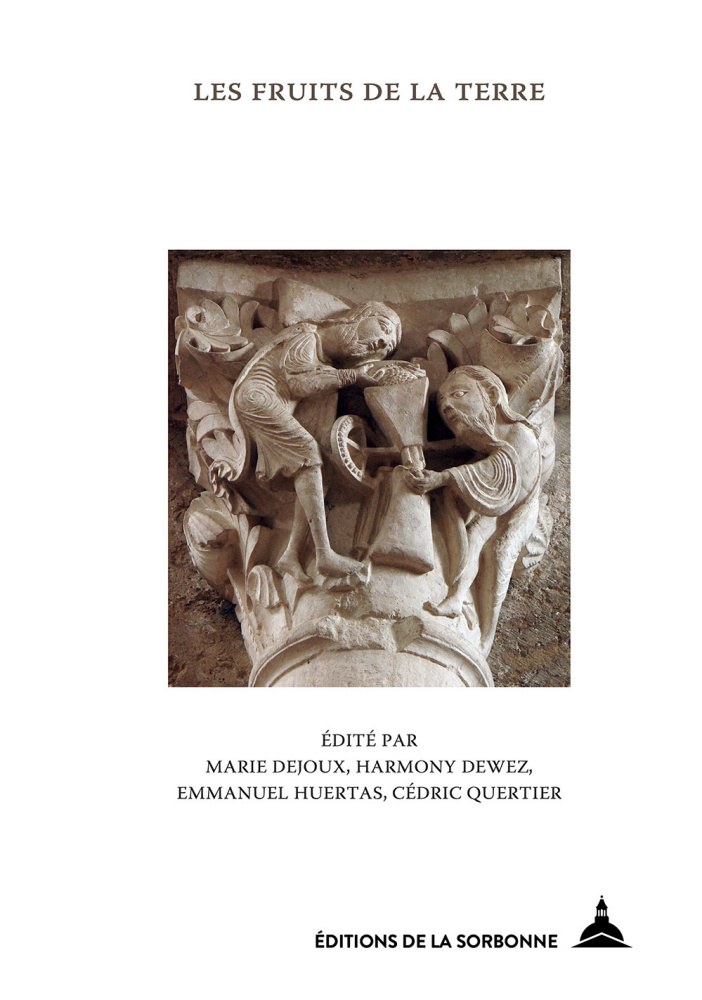
Retracer la longue et riche carrière de Laurent Feller, professeur d’histoire médiévale à l’université Paris1 Panthéon Sorbonne, peut sembler une gageure tant ses productions scienti ques sont nombreuses et tant il a contribué à renouveler en profondeur l’approche de l’économie médiévale, en nourrissant constamment ses recherches des apports les plus neufs des sciences sociales. C’est pourquoi le présent volume commence par lui donner la parole dans un entretien liminaire limpide, avant de réunir une cinquantaine de contributeurs qui tentent, chacun à leur manière, de reprendre ses thématiques de prédilection : l’histoire de l’Italie et des campagnes, les rationalités pratiques, économiques et scripturaires, la culture matérielle et la valeur des choses ainsi que la domination des hommes et la distinction économique et sociale dans les sociétés médiévales.
Couvrant un large arc chronologique, du haut Moyen Âge à l’époque moderne (voire contemporaine), dans un espace européen souvent méditerranéen, cet ouvrage collectif, qui réunit plusieurs générations de chercheurs, permet également de mesurer la diversité et l’ampleur des réseaux scientifiques internationaux tissés par Laurent Feller tout au long de son parcours d’historien. Partant, il se veut un instantané de la recherche en histoire économique et sociale actuelle.
Les fruits de la terre. Études d’histoire médiévale offertes à Laurent Feller, éd. Marie Dejoux, Harmony Dewez, Emmanuel Huertas, Cédric Quertier, Paris, Éditions de la Sorbonne, 2023 ; 1 vol. Prix : € 28,00.
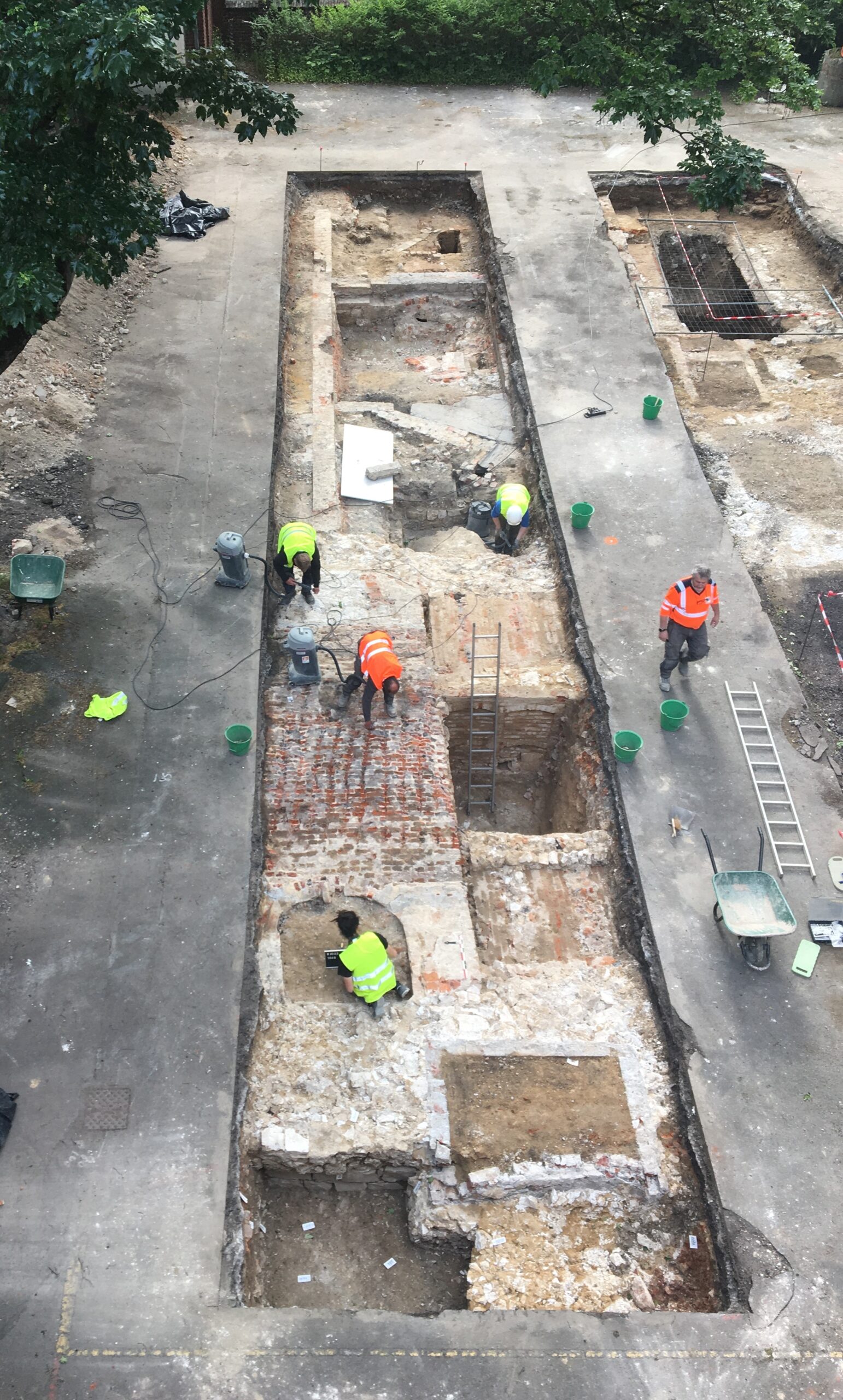
La DRAC Hauts-de-France / Service régional de l’archéologie a le plaisir de vous informer que les Journées régionales de l’archéologie des Hauts-de-France qu’elle organise cette année en partenariat avec la ville d’Arras, se tiendront les vendredi 17 et samedi 18 novembre 2023 dans l’atria de l’hôtel Mercure à Arras.
Programme :
VENDREDI 17 NOVEMBRE, HÔTEL MERCURE, ATRIA, ARRAS
9h00 – Accueil des participants autour d’un café, d’un thé ou d’un jus de fruit 9h30 – Ouverture des Journées par Monsieur Frédéric Leturque, maire de la ville d’Arras et par Monsieur Hilaire Multon, Directeur régional des affaires culturelles des Hauts-de-France 10h00 – Actualités archéologiques nationales et régionales, par Jean-Luc Collart, conservateur régional de l’archéologie 10h10 – Arras (Pas-de-Calais) – Synthèse chronologique des dernières opérations archéologiques, Mathieu Béghin, Thibault Legrand et Victoria Bray, SAM Arras 10h40 – Sainte-Catherine-les-Arras (Pas-de-Calais) – Dessus les 3 Fontaines Pas-de-Calais : une occupation augustéenne sur les hauteurs de Nemetacum, Bruno Vanwalscappel, Inrap 11h00 – Anzin-Saint-Aubin (Pas-de-Calais) – Le cimetière de crise du bas Moyen Âge d’Anzin-Saint-Aubin, Laetitia Dalmau, DA 62 11h20 – Pause 11h30 – Choisy-au-Bac (Oise) – Une nécropole mérovingienne des Ve-VIe siècles, Audrey Jezuita, Eveha 11h50 – Avrigny (Oise) – Du Néolithique à la période moderne, présentation de l’opération, Grégoire Ratel, Eveha 12h10 – Lille (Nord) – Valoriser les collections archéologiques régionales dans un musée de Beaux-Arts. L’exemple du département Moyen Âge et Renaissance du Palais des Beaux-Arts de Lille, Sophie Dutheillet de Lamothe, Palais des Beaux-Arts de Lille 12h30 – Déjeuner libre 14h00 – Chamant (Oise) – Une exceptionnelle carrière d’extraction et de fabrication de meules gauloises, François Malrain et Stéphanie Lepareux-Couturier, Inrap 14h20 – Croixrault (Somme) – ZAC de la Mine d’Or 2023 : premier bilan, Laurent Duvette et Louis Florin, Inrap 14h40 – Thérouanne (Pas-de-Calais) – Aménagements périphériques sur la berge nord de la « Lys » romaine, David Labarre, Inrap 15h00 – Haynecourt (Nord) – Base Aérienne 103, secteur 11 : premiers aperçus des occupations entre la Protohistoire et le haut Moyen Âge, Laurent Gubellini, Archéopole 15h20 – Bouillancourt-en-Séry (Somme) – Premiers résultats du diagnostic du château, Eva Bisson, Inrap 15h40 – Pause 16h00 – Le Canal Seine-Nord Europe – Actualité d’un linéaire hors-norme dans les Hauts-de-France, Émilie Goval et Vincent Garénaux, SRA – Drac Hauts-de-France 16h20 – Forêt de Compiègne (Oise) – Occupation du sol et dynamiques de boisement depuis l’Antiquité, Jérôme Buridant, UPJV 16h40 – Bavay (Nord) – La trompette droite (tuba) de Bavay : résultats de l’étude préalable en laboratoire et compte-rendu des travaux de conservation-restauration réalisés en 2022, Benoît Mille, Manuel Leroux, C2RMF et Patrice Herbin, service archéologique du département du Nord, en collaboration avec Clémence Chalvidal, Hélène Huysseune, Julie Schröter, C2RMF 17h00 – Clôture de la première journée
SAMEDI 18 NOVEMBRE 2023, HÔTEL MERCURE, ATRIA, ARRAS
9h00 – Accueil des participants autour d’un café, d’un thé ou d’un jus de fruit. 9h30 – Lille (Nord) – Quand l’archéologie accompagne les réaménagements urbains : aperçu des dernières opérations archéologiques sur Lille, Sandrine Vistel, Inrap 9h50 – Bernot, Neuvillette et Noyales (Aisne) – Les fouilles sur la liaison RTE, Estelle Pinard et Lucile Bruneaux, Inrap 10h10 – Beauvais (Oise) – Le Quadrilatère (ex-Galerie Nationale de la Tapisserie), bilan et perspectives, François Haaz, SAM Beauvais 10h30 – Harnes (Pas-de-Calais) – Un cimetière rural carolingien, résultats préliminaires, Cécile Durin, en collaboration avec Noémie Gryspeirt, Inrap 10h50 – Pause 11h10 – Soissons (Aisne) – Une domus du Haut-Empire et un cimetière « d’urgence » du XVIIe siècle, Anthony Lefebvre, CD 02 11h30 – Bucy-le-Long (Aisne) – « Le moulin des Roches » : occupations du Premier âge du Fer et moulin moderne et contemporain sur les bords de l’Aisne, Sophie Desenne, Inrap, et Gilles Desplanque, CD 02 11h50 – Hauts-de-France – Les chantiers de collections archéologiques dans les Hauts-de-France, Laetitia Maggio et Emmanuelle Allart, SRA – Drac Hauts-de-France 12h10 – Déjeuner libre 13h45 – Noeux-les-Mines (Pas-de-Calais) – Premières caractérisations des occupations du site de Noeux-les-Mines – Loisinord II, Sylvain Boueilh, Archéopole 14h05 – Maubeuge (Nord) – La Clouterie : plongée au cœur du secteur des berges médiévales et modernes de la Sambre, Alain Henton, Inrap 14h25 – Compiègne (Oise) – L’Ancienne Surintendance des Bâtiments du Roi, aux origines de la ville impériale, Alexandre Wimlot, Eveha 14h45 – Le PCR Escalles (Pas-de-Calais) – Étude d’un dépôt de haches anglaises de l’âge du Bronze ancien et de son contexte, Emmanuelle Leroy-Langelin, DA 62 15h05- Conclusion et fin des Journées
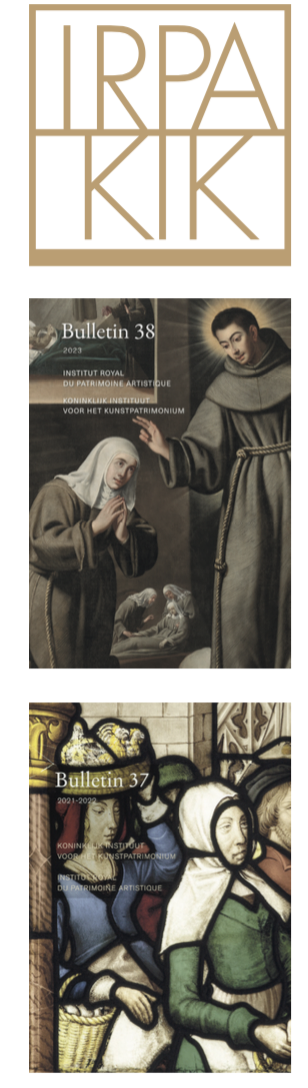
La revue publie des contributions originales consacrées à l’histoire des arts dans l’actuel territoire de la Belgique et dans celui des anciens Pays-Bas du sud et de la principauté de Liège – du Moyen-Âge au xixe siècle – et à leur rayonnement européen et international.
Elle privilégie une approche monographique classique, «object-oriented» et des contributions présentant des problématiques innovantes dans le domaine du connoisseurship, pour autant qu’il fasse l’objet d’une mise en contexte sociologique, politique et/ou culturelle.
Dans le domaine du patrimoine, la revue publie des contributions originales sur la conservation-restauration et les sciences appliquées au patrimoine, en privilégiant les textes capables d’offrir de nouvelles perspectives à la recherche et aux techniques de restauration, notamment par des approches méthodologiques innovantes. Une approche interdisciplinaire est particulièrement appréciée.
Les articles et les recensions de livre pour le Bulletin 39 doivent être remis au plus tard pour le 1 décembre 2023. La revue accepte les articles en français, néerlandais ou anglais.
Le comité de rédaction évaluera la recevabilité de votre article puis, s’il est accepté, le soumettra au peer review. Vous serez ensuite averti des commentaires des referees et pourrez, le cas échéant, retravailler votre article.
Le Bulletin 39 paraîtra fin 2024.
Ce numéro marquera le tournant vers une revue exclusivement en ligne, hébergée sur la plateforme OpenEdition.
The journal publishes original contributions on the history of art in present-day Belgium, in the former southern Low Countries and the Principality of Liege, as well as its influence in Europe and throughout the world. It focuses on the period from the Middle Ages to the 19th century. The journal focuses on an object-oriented monographic approach with contributions that address innovative matters in the field, provided that they are framed in a sociological, political or cultural context.In the heritage field, the journal publishes original contributions on conservation-restoration and the sciences applied to heritage, emphasising texts capable of offering new perspectives on research and restoration techniques, notably through innovative methodological approaches. An interdisciplinary approach is particularly appreciated.
Articles and publication reviews for Bulletin 39 must be submitted by 1 December 2023 at the latest. The journal accepts articles in English, French or Dutch.
The scientific editorial committee assesses the article and, upon acceptance, organises a peer review. The author is then informed of the referees’ remarks and, if necessary, given time to rework the article.Bulletin 39 will be published in late 2024.
This issue marks the transition ton an online journal, hosted on the OpenEdition platform.More information? Contact Elisabeth Van Eyck (bulletin@kikirpa.be).
Les uffici legali : des bureaux au service des fonctions judiciaires des consuls d’Italie aux États-Unis (années 1900 – années 1910) Thibault Bechini (École française de Rome)
Discussion
Session poster Paul-Emmanuel Babin (Université de Lille), Paul Duvivier (Université Champagne-Ardennes), Marvin Gonzalez (Université Côte d’Azur) et Jean-Charles Pelao (Aix-Marseille Université)
Des fonctions judiciaires des consuls aux tribunaux consulaires (XIIe – XXe siècle)
Colloque international Hambourg, Warburg-Haus, 2 – 4 novembre 2023
Accueil des participants
Introduction
Dîner
Vendredi, 3 novembre 2023
Session 3a : Dans l’Empire Ottoman et en Afrique du Nord Présidence de séance : Jessica Marglin (University of Southern California)
Les juridictions consulaires des nations latines dans les ports musulmans (XIIIe–XVe siècle) : droit musulman, traités bilatéraux et forum shopping Dominique Valerian (Université Paris I – Panthéon Sorbonne)
10h10 Charles Mériaux (Université de Lille), Le Martyrologe Hiéronymien et les nouveaux modèles de sainteté dans le monde franc au VIIIe siècle.
10h35 Guillaume Wymmersch (Université de Liège), L’influence des Irlandais dans la christianisation du bassin mosan (VIIe-VIIIe siècles): entre réalité historique et fantasmes historiographiques.
11h00 François De Vriendt (Société des Bollandistes), Vincent Madelgaire, Waudru, Véron et les autres…: perspectives d’histoire religieuse et littéraire à travers une relecture des textes hagiographiques sur le Hainaut (VIIe-XIe s.).
11h25 : Discussion
11h35 : Pause
2e séance – « Vestiges et reliques » – Présidence – E. Renard
11h45 Anne-Marie Helvetius (Université Paris 8 – Vincennes – Saint-Denis) : La dévotion aux lits des saints : le cas de sainte Gertrude de Nivelles dans son contexte
12h10 Alain Dierkens (Université Libre de Bruxelles), Le culte du roi mérovingien Dagobert II († 679). À propos d’une analyse anthropologique récente
12h35 Discussion
12h45 Pause-repas
***
3e séance « vestiges archéologiques » – Présidence L. Van Wersch
14h30 Denis Defente (Conservateur honoraire du patrimoine du département de l’Aisne), Saint-Médard de Soissons : vestiges archéologiques de la grande église abbatiale. État de la recherche
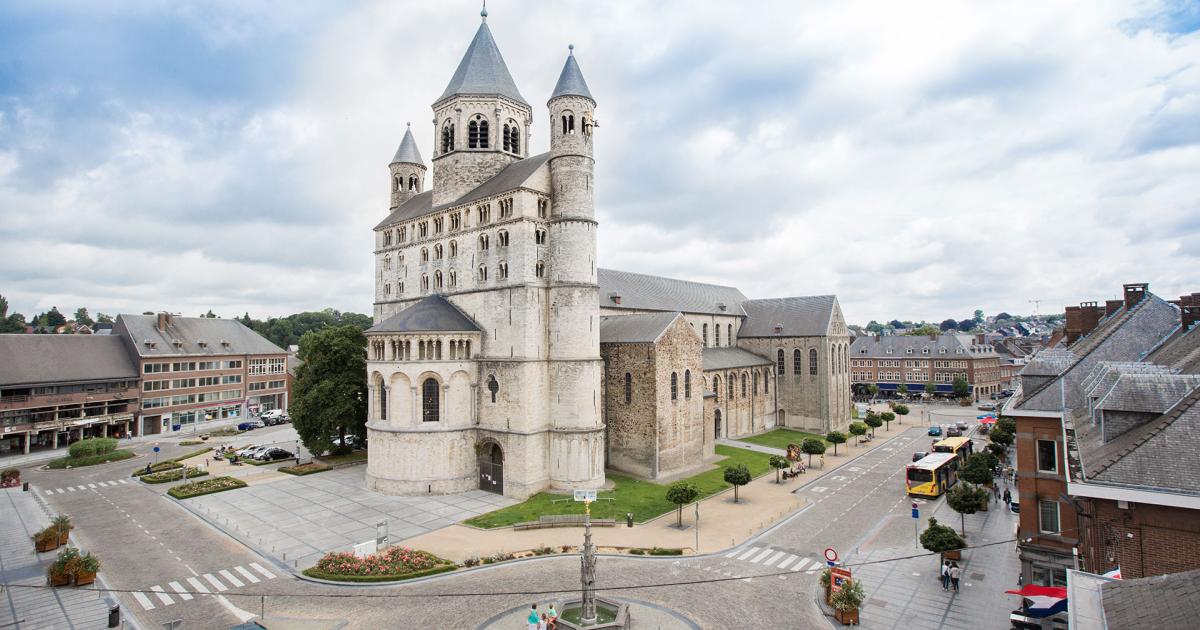
14h55 Frédéric Chantinne et Philippe Mignot (AWaP), Nivelles : de l’avant-corps de la collégiale à la tombe de sainte Gertrude
15h20 Discussion
15h30 Visite en 2 groupes (crypte archéologique et collégiale)
The Royal Institute for Cultural Heritage (KIK-IRPA) & the Université catholique de Louvain (UCLouvain)
recruit 1 FTE researcher with a PhD in Art History
shared between the two institutions 50% Postdoctoral research assistant (UCLouvain) 50% SW2 Work Leader (KIK-IRPA)
in the framework of the FED-tWIN research profile Prf-2022-0012-IOHANNES
About the Royal Institute for Cultural Heritage (KIK-IRPA)
The Royal Institute for Cultural Heritage (KIK-IRPA) is based in Brussels. It is a federal scientific institution that takes care of Belgium’s artistic heritage. Since its foundation in 1948 the Institute’s approach is interdisciplinary, bringing together art historians, photographers, chemists, physicists, conservators-restorers, experts in image creation, engineers, geologists, etc. With the Center for the Study of the Flemish Primitives, KIK-IRPA boasts an internationally renowned research unit for the study and inventorying of 15th-century paintings from the Southern Low Countries. Three scholarly series on Flemish Primitives present the results of the various research projects of the Study Center: the Corpus, the Repertory and the Contributions.
About the Université catholique de Louvain (UCLouvain)
The UCLouvain has a long tradition in the study of 15th-century Flemish painting. This field is today at the heart of the research carried out essentially within the framework of the Center for Cultural Analysis of Early Modernity (GEMCA). Since its creation 2008, the GEMCA has developed a strong and recognized expertise in the wide-ranging field of cultural analysis. Its members carried out and are currently leading several funded projects (FRFC-FNRS, Brain-Belspo, ARC, etc.) that have
1
made it possible to investigate many facets of the relationship between the arts and religion in a resolutely interdisciplinary perspective and with the aim of renewing the methodologies for analyzing religious images and objects. The center is currently co-directed by five full-time permanent staff members (Ralph Dekoninck, Ingrid Falque, Agnès Guiderdoni, Caroline Heering and Aline Smeesters). The team currently comprises twenty-three PhD students, five postdocs, five scientific collaborators, as well as a dozen associate members from other universities. They are historians, historians of art and of literature, and philosophers focusing their research on the late medieval and early modern visual and cultural studies.
The candidate has to be a postdoctoral researcher with a PhD in art history (or an equivalent degree indicating a specialization in the field of art historical research). He/she will be responsible for developing art historical research on Netherlandish paintings in their context of production and reception. The main mission of the FED-tWIN researcher is to launch an innovative interdisciplinary project about the collection of paintings of the Saint John’s Hospital in Bruges, of which all Memling paintings are currently undergoing a new scientific imagery campaign for Musea Brugge.
Within this project the goal is to bridge the gap between two different approaches in studies on 15th-century Netherlandish painting. The first one deals with technical art history, a specialisation of KIK-IRPA, studying the construction of the painting, the creative process, the underdrawing, the painting technique in order to find answers in terms of authenticity, attribution and dating. The focus of the second approach is not the question of ‘how’ a painting is made but ‘why’, an approach in which the UCLouvain and the GEMCA are specialized. This research deals with the intentions of the patron, the functions of the painting, its meanings and the way it was used in its original context. It involves devotional and ritual practices, and text/images relationships through an interdisciplinary approach between art history, literature and history of religions.
The final goal of the project is the publication of the overall research results in a monographic volume the series of the Corpus of Flemish Primitives, dedicated to the collection of the Saint John’s Hospital.
About the joint FED-tWIN profile “IOHANNES”
The Center for the Study of the Flemish Primitives of the KIK-IRPA and the GEMCA at the Institute INCAL (Institut des civilisations, arts et lettres) of the UCLouvain collaborate in the framework of the program FED-tWIN, funded by the belgian Federal Science Policy (BELSPO).
The research profile, called IOHANNES, will focus on early Netherlandish paintings in their original settings and on the ways of creating, viewing and using images in 15th-century southern Low Countries. The FED-tWIN program of BELSPO aims to promote sustainable cooperation between the ten Federal Scientific Institutions and the eleven Belgian universities through the funding of joint research profiles. The research profile Prf-2022-0012_IOHANNES is a joint initiative of the KIK-IRPA and
2
UCLouvain. Dr. Bart Fransen (KIK-IRPA) and Prof. Dr. Ingrid Falque (UCLouvain) are the promoters. The position to be filled consists of the combination of a half-time position at the Royal Institute for Cultural Heritage (50% SW2 work leader) and a half-time position at UCLouvain (50% postdoctoral researcher). The candidate must be willing to hold the part-time positions at both institutions and must also apply for both.
The researcher will perform the following tasks:
● The launch and coordination of an interdisciplinary research project about the collection of 15th-century Netherlandish paintings of the Saint John’s Hospital in Bruges.
● The collaboration in research and exchange of expertise with colleagues of the KIK-IRPA, the UCLouvain, Musea Brugge and other partner institutions.
● The writing of catalogue entries and essays for the publication of the results of the research on the collection of 15th-century Netherlandish paintings of the Saint John’s Hospital in Bruges.
● The editorial coordination of the publication in the series of the Corpus ofFlemish Primitives.
● The writing of articles in scientific journals, exhibition catalogues, collective publications or in conference proceedings.
● The organisation and participation in scholarly events (congresses, symposiums) at the Belgian and international levels, in the specific field of research of early Netherlandish painting.
● The dissemination and valorization of the research results to the general public.
● Active participation in the scientific activities of the Center for the Study of the Flemish Primitives and the GEMCA.
● To stimulate research at doctoral and post-doctoral level by initiating new projects, promoting existing projects, and applying for national and international funding.
● To encourage scientific cooperation at the national level with other centers or research groups working in the same field. Conditions for admission
● The intended candidate must hold a EU degree of Doctor in Art History (or an equivalent degree indicating a specialization in the field of art historical research). When assessing a non-EU diploma, an equivalence certificate has to be requested from ENIC-NARIC; we recommend that you – if necessary – start the recognition procedure at ENIC-NARIC as soon as possible. You must have this recognition no later than the date of appointment. The PhD degree is obtained at the earliest 12 years prior to the submission of the job application with derogations. The 12-year period is extended by one year for each maternity, parental or adoption leave of the candidate and for each long-term sick leave of the candidate or his/her immediate family.
● The intended candidate can be assigned to the French or to the Dutch language role, according to the rules set by the federal laws on the use of
3
languages in the Belgian public administration. A good knowledge (written and spoken) of English, French and/or Dutch is required.
● The candidate must be willing to hold the two part-time positions at both institutions (KIK-IRPA, Brussels and UCLouvain, Louvain-la-Neuve) and must also apply for both through a single application, according to the procedure outlined here. Only applying for some and not all of the part-time positions is not possible.
Requested profile
● Experience in conducting scientific research on early Netherlandish paintings at top level.
● Excellent writing and communication skills both to a specialized audience (national and international scholarly community) and to a wider audience (local events, radio broadcasts, etc.).
● Experience in the field of scientific animation: organization of symposiums, setting up of a national and international network, setting up of exhibitions, etc.
● Considered as a plus: the candidate has relevant experience within a cultural heritage institution, in object-based research in interdisciplinary collaboration.
● It is recommended to have experience in international mobility, including through participation in research programs at research institutions not affiliated with the university where the highest degree was obtained.
● Research experience in the most recent trends in the study of early Netherlandish painting, especially in iconography, meaning and function of art objects.
● Good knowledge of the art production of the 15th century in an international context.
● Interest in technical research on art objects (scientific imagery, technical and material analyses). We offer
● A FTE contract of indefinite duration, half-time at the UCLouvain as Postdoctoral Researcher and half-time at the KIK-IRPA as Work Leader (SW2) starting in Fall 2023.
● A monthly gross salary of at least € 2.656,50 at the Royal Institute for Cultural Heritage, and of at least € 2.132 at UCLouvain, to which are added the holiday allowance and the end-of-year bonus.
● Variable working hours during the week of 38 hours (19 hours at IRPA and 19 hours at UCLouvain).
● Place of work: KIK-IRPA in Brussels ; UCLouvain in Louvain-la-Neuve.
● Free public transport to and from work and possibility of obtaining a bicycle allowance (KIK-IRPA and UCLouvain).
● Group hospitalization insurance and other benefits (KIK-IRPA and UCLouvain).
4
How to apply?
The selection procedure will be carried out in the first instance on the basis of an assessment of the application file and in the second instance on an interview that will take place in Brussels at KIK-IRPA on 23 January 2023.
Candidates must send their application by Sunday 31 December 2023 at the latest, by e-mail to Ingrid Falque (ingrid.falque@uclouvain.be), quoting the reference « Application for the profile IOHANNES« .
This application must include the following documents in pdf:
copies of maximum three of your publications related to early Netherlandish painting
names, positions and e-mail addresses of two referees (no letters of reference)
Late or incomplete applications will not be considered. KIK-IRPA and UCLouvain pursue an equal opportunities and diversity policy and therefore encourage everyone to apply.
Contact
Prof. Dr. Ingrid Falque Research associate of the FNRS and professor of medieval art history ingrid.falque@uclouvain.be
Dr. Bart Fransen Head of the Center for the Study of the Flemish Primitives, KIK-IRPA, Brussels bart.fransen@kikirpa.be
Avec le soutien du FNRS, du CRHiDI (UCLouvain – Saint-Louis, Bruxelles), d'INCAL (UCLouvain), de PraME (UNamur), de sociAMM (ULB) et de Transitions (ULiège)







 L'Agenda des Médiévistes
Vous devez être connecté pour poster un commentaire.