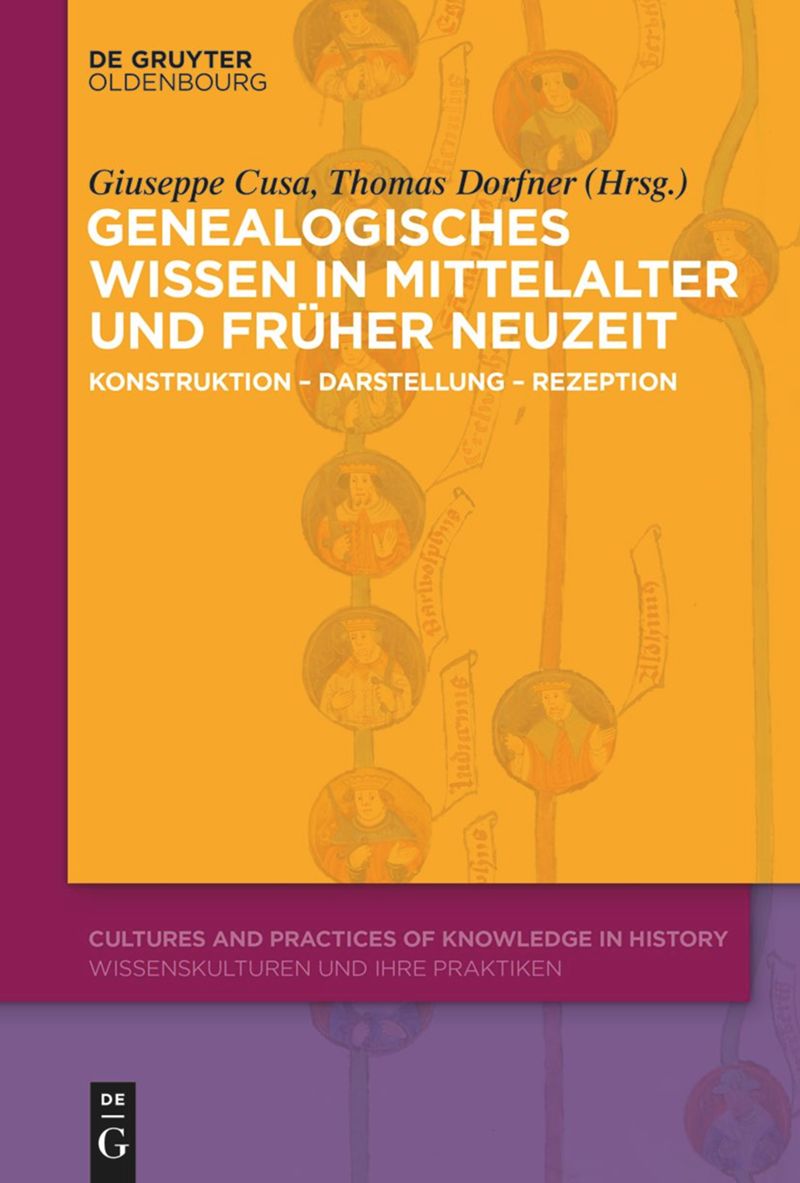
Publication – « Genealogisches Wissen in Mittelalter und Früher Neuzeit. Konstruktion – Darstellung – Rezeption », éd. Giuseppe Cusa et Thomas Dorfner

In premodernity, genealogy was of high societal importance, which is why genealogical knowledge was a central resource in struggles for rank and office. Numerous actors thus attempted to gain this knowledge and to present or reject it. This volume examines how contemporaries approached genealogical knowledge, and inquires into its construction, presentation, and reception.

Giuseppe Cusa; Thomas Dorfner, RWTH Aachen University, Germany.

Table des matières : ici

Informations pratiques :

Genealogisches Wissen in Mittelalter und Früher Neuzeit. Konstruktion – Darstellung – Rezeption, éd. Giuseppe Cusa, Thomas Dorfner, Oldenbourg, De Gruyter, 2023 ; 1 vol., IX–389 p. (Cultures and Practices of Knowledge in History). ISBN : 978-3-11079-304-8. Prix : € 79,95. Version e-book en open access.

Source : De Gruyter

Publié dans Publications | Laisser un commentaire

Publication – Jason Fossella, « The dromos and Byzantine Communications, Diplomacy, and Bureaucracy, 518–1204 »

The postal system of the Byzantine Empire, the cursus publicus or dromos, was a pony express-style system of routes and relays, capable of moving messages at up to 100 miles (160 km) per day. In this fascinating book, Jason Fossella describes the infrastructure, operations, and administration of the dromos.

Drawing on sources as varied as papyri, seals, inscriptions, and ancient histories, the author examines how the dromos was integrated into Byzantine society and influenced the development of Byzantine diplomacy, ceremony, and religion, demonstrating that it played a key role in the development of Byzantine imperial power.

Jason Fossella, Ph.D. (2014), Saint Louis University, is instructor of Latin and Greek at that university. This is his first book.

Table des matières : ici

Informations pratiques :

Jason Fossella, The dromos and Byzantine Communications, Diplomacy, and Bureaucracy, 518–1204, Boston–Leyde, Brill, 2023 ; 1 vol., 208 p. (The Medieval Mediterranean, 137). ISBN : 978-90-04-68127-9. Prix : € 112,00.

Source : Brill

Publié dans Publications | Laisser un commentaire

Web – Ouverture du site de la revue « Bien Dire et Bien Aprandre »

Nous sommes très heureux de vous annoncer l’ouverture officielle du site de la revue lilloise Bien Dire et Bien Aprandre, revue de médiévistique et de dialectologie picarde.

Fondée en 1978 et publiée par le Centre d’Études médiévales et dialectales de l’Université de Lille et l’ULR ALITHILA (https://alithila.univ-lille.fr/), la revue Bien Dire et Bien Aprandre devient une revue mixte, diffusée en version imprimée et en version numérique, en accès libre différé (après un délai de restriction d’un an).

La revue est hébergée sur la pépinière de revues « Péren », une plateforme qui permet la diffusion en accès ouvert intégral des revues universitaires et scientifiques de la région Hauts-de-France.

Elle est disponible à l’adresse suivante : https://www.peren-revues.fr/bien-dire-et-bien-aprandre/.

Vous retrouverez sur le site de la revue l’intégralité des numéros publiés depuis 1978, sous format d’archives en fac-similé (pour les numéros 1-23), et sous un format double, numérique et imprimé (pour les numéros 24-37). Un index des auteurs et des mots-clés permet par ailleurs d’effectuer des recherches sur les articles publiés.

Nous vous souhaitons une excellente navigation !

Marie-Madeleine Castellani et Matthieu Marchal

marie-madeleine.castellani@univ-lille.fr

matthieu.marchal@univ-lille.fr

Publié dans Web | Laisser un commentaire

Publication – Cécile Lagane, « Meubles et ameublements médiévaux en Europe occidentale, VIe-XIIIe siècle »

Par une analyse croisée des sources archéologiques, iconographiques et textuelles, il s’agit ici de comprendre les aspects techniques de fabrication des meubles ainsi que les spécificités de leur emploi et leur place dans les sociétés médiévales, à travers l’Europe occidentale du VIe au XIIIe siècle. Il convient d’une part, de déterminer les modalités de choix des essences de bois et de leur provenance ainsi que les assemblages des éléments utilisés dans la construction des meubles et leur évolution au fil des siècles. D’autre part, l’enquête détaille les emplois de ces objets – tant les usages quotidiens que les usages plus remarquables, notamment en contexte funéraire –, et la symbolique qu’ils peuvent représenter. Les particularismes régionaux et les évolutions chronologiques sont abordés et détaillés.
Au-delà des considérations typochronologiques habituelles, cet ouvrage s’attache à inscrire le mobilier meublant dans son contexte matériel, sociologique et symbolique. L’étude de la culture matérielle ne se limite en effet pas à la simple étude longtemps pratiquée de l’objet pour l’objet, mais intègre l’objet matériel dans les pratiques, les gestes et les considérations d’une époque.

Avec le soutien du ministère de la Culture, de la MRSH et du laboratoire CRAHAM de l’université de Caen Normandie.

Cécile Lagane est docteure en archéologie, histoire et histoire de l’art du Moyen Âge, spécialisée dans l’étude pluridisciplinaire de la culture matérielle du Moyen Âge en Europe occidentale. Elle fait partie du Centre Michel de Boüard – CRAHAM / UMR 6273 de l’université de Caen Normandie.

Table des matières :

Historiographie du meuble médiéval
Définitions, critique des sources et méthodologie
Analyse lexicologique et définition du vocabulaire technique
Poursuivre l’enquête iconographique
Typologie technique et morphologique des meubles à travers les sources archéologiques, iconographiques et textuelles
Synthèse technique
La vie du meuble au Moyen Âge

Informations pratiques :

Cécile Lagane, Meubles et ameublements médiévaux en Europe occidentale, VIe-XIIIe siècle, Rennes, Presses universitaires de Rennes, 2023 ; 1 vol., 228 p. (Archéologie et Culture). ISBN : 978-2-75359-374-9. Prix : € 34,00.

Source : Presses universitaires de Rennes

Publié dans Publications | Laisser un commentaire

Colloque – The Image of the Book: Representing the Codex from Antiquity to the Present

A great deal of recent research has focused on the objecthood of the pre-modern book and its associated materiality. But only sporadic attempts have been made to understand the role of visual representations of the book in conveying ideas about knowledge. How can our understanding be transformed when the dictum that “a picture is worth a thousand words” is put into practice, when the how of depiction is accorded as much importance as the what of textual content? This symposium will examine the means by which the book, and in particular the manuscript, is described across a wide variety of media, from painting and sculpture to digital media and film. Topics to be addressed include the book as a symbol of authority, wisdom, or piety; the visual archeology of otherwise vanished bookbinding styles, reading practices, and study spaces; and the re-imagining of the physicality of the codex through digital means.

The event will also mark the public launch at Penn Libraries of the Books as Symbols in Renaissance Art (BASIRA) project, an innovative, public-access web database of thousands of depictions of books in artwork produced between about 1300 and 1600 CE. The database, like the symposium itself, aims to engage historians of religion, literacy, art, music, language, and private life, as well as book artists, conservators, and interested members of the public. The symposium is organized in partnership with the Rare Book Department of the Free Library of Philadelphia.

The program will begin Thursday evening, November 16, 5:00 pm, at the Free Library of Philadelphia in the Rare Book Department, with a reception and keynote address by Jeffrey Hamburger, Kuno Francke Professor of German Art & Culture, Harvard University. The symposium will continue November 17-18 at the Kislak Center for Special Collections, Rare Books and Manuscripts.

Programme :

Thursday, November 16, 2023, 5pm-7pm

Rare Book Department, Free Library of Philadelphia, Parkway Central Library, third floor
All registrants are invited to a reception before the lecture. The lecture will begin at 6:00 pm.

Keynote Address: ‘Avatars of Authorship’, Jeffrey Hamburger, Harvard University

With opening remarks by Janine Pollock, Free Library of Philadelphia; Sean Quimby, Kislak Center for Special Collections, Rare Books and Manuscripts, Penn Libraries; and Nicholas Herman, Schoenberg Institute for Manuscript Studies, Penn Libraries


Friday, November 17, 2023, 9.30am-7pm

University of Pennsylvania, Kislak Center for Special Collections, Rare Books and Manuscripts, Class of 1978 Orrery Pavilion, Van Pelt-Dietrich Library Center, sixth floor

9:30 – 10:00 am: Coffee

10:00 – 10:15 am: ‘Welcome and Introduction’
Nicholas Herman, Schoenberg Institute for Manuscript Studies, Penn Libraries

10:15 – 11:30 am: Meaning

  • ‘Book History’s Genesis in Exodus: Revisiting the Round Topped Tablets’, Sonja Drimmer, University of Massachusetts Amherst
  • ‘Under Construction: Making and Metaphor in Medieval Images of Book Production’, Beatrice Kitzinger, Princeton University

11:30 – 11:45 am: Coffee

11:45 am – 1:00 pm: Making

  • ‘Representations of Wax Tablets: Codices in Greco-Roman Art and their Importance for Understanding their Making and Use’, Georgios Boudalis, Museum of Byzantine Culture, Thessaloniki
  • ‘Visual Metaphors: Exploring Bookbinding Structures through Visual Representations’, Alberto Campagnolo, University of Udine

1:00 – 2:30 pm: Lunch (with display of real and replica items in Lea Library)

2:30 – 4:00 pm: Format

  • ‘Artisanal Books: Ceramic and Lacquer Imitations from the Qing Court’, Devin Fitzgerald, Yale University
  • ‘A Sampling of Blooks: A Foray into the Fascinating World of Book-form Objects’, Mindell Dubansky, The Metropolitan Museum of Art

(this session will conclude with a showcase of book-form objects)

4:00 – 4:15 pm: Coffee

4:15 – 5:00 pm: Official Launch of BASIRA: The Books as Symbols in Renaissance Art Database
Barbara Williams Ellertson, Independent Scholar and SIMS
Nicholas Herman, SIMS

5:30 – 7:00 pm: Schoenberg Institute for Manuscript Studies 10-year Celebration Event


Saturday, November 18, 2023, 9.30am-7pm

University of Pennsylvania, Kislak Center for Special Collections, Rare Books and Manuscripts, Class of 1978 Orrery Pavilion, Van Pelt-Dietrich Library Center, sixth floor

9:30 – 10:00 am: Coffee

10–11:15 am: Identities

  • ‘The Image of the Book at the Ottoman Court’, Emine Fetvacı, Boston College
  • ‘Imagining Religious Identity and Difference Through Book Formats: Scrolls and Codices in Judaism and Christianity’, Thomas Rainer, University of Zurich

11:15 – 11:30 am: Coffee

11:30 am – 12:45 pm: Avatars

  • ‘Scrolling through Scrolls and Books in Books of Hours’, Dominique Stutzmann, Institut de Recherche et d’Histoire des Textes
  • ‘Virtual Manuscripts in Virtual Spaces’, Sabina Zonno, University of Southern California

12:45 – 2:15 pm: Lunch (with demo of Manuscripts in VR)

2:15 – 3:45 pm: Icons

  • ‘The Medieval Book as Gateway: Contemplation, Meditation, and Image Making in the Lives of the Desert Fathers’, Denva Gallant, Rice University
  • ‘Iconic Books in Renaissance Art’, James Watts, Syracuse University

3:30 – 3:45 pm: Coffee

3:45 – 5:00pm: Transformations

  • ‘Manuscript Images of the Destruction and Salvage of Books’, Lucy Freeman Sandler, New York University
  • ‘Pop Bibliography: Finding Book History in Popular Media’, Allie Alvis, Winterthur Library

5:00 – 6:00 pm: Closing Reception

Source : Medieval Art Research

Publié dans Colloque | Laisser un commentaire

Journée d’étude – Actualité de la recherche sur la sculpture en Belgique

24 novembre 2023 09:00 – 17:00
IRPA, Bruxelles

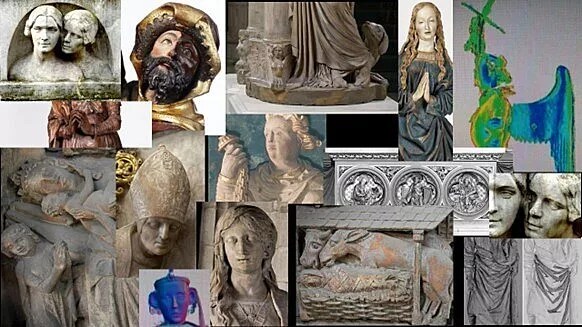
Le Séminaire d’Histoire de l’Art de l’IRPA 22 se tiendra le 24 novembre 2023 à l’IRPA à Bruxelles. Cette journée sera dédiée à l’actualité de la recherche sur la sculpture en Belgique, mettant en lumière divers sujets passionnants de ce domaine artistique. Rejoignez-nous pour explorer les multiples facettes de la sculpture belge et échanger sur les dernières avancées de la recherche dans ce domaine.

Programme :

9.00 Accueil

9.30 Dominique Vanwijnsberghe (Responsable de la Cellule de recherches en histoire de l’art et inventaire, IRPA) : mot de bienvenue

9.35 Géraldine Patigny (Attachée scientifique, Cellule de recherches en histoire de l’art et inventaire, IRPA) : L’IRPA et la sculpture, une relation plurielle

Séance de la matinée sous la présidence de Camille De Clercq (Responsable du Département Conservation-Restauration, IRPA)

9.45 Marjan Sterckx (Professeure, Vakgroep Kunst-, Muziek- en Theaterwetenschappen, UGent) : Yvonne Serruys. Beeldhouwer van de nieuwe vrouw

10.00 Noémie Petit (Doctorante, ULB/Fondation Périer-D’Ieteren) : Conception et réalisation des retables néogothiques en Belgique : pratiques d’atelier

10.15 Alain Jacobs (Chercheur associé, Association du Patrimoine Artistique) : Étude critique des manuscrits de Philippe Baert de la Bibliothèque Royale (fin XVIIIe siècle)

10.30 Échanges

10.45 Pause café

11.00 Davy Depelchin (Conservator 19de-eeuwse schilder- en beeldhouwkunst, KMKSB) et Ulrike Müller (KMSKB – UAntwerpen) : Tussen toegepast en fundamenteel onderzoek: de KMSKB, een museum en zijn onderzoeknetwerk

11.15 Michel Lefftz (Professeur, Département histoire de l’art et archéologie, UNamur) : Actualité de l’analyse morphologique (technique et style) pour l’étude de la sculpture ancienne

11.30 Henry-Louis Guillaume (Chercheur-doctorant, Crea-Patrimoine, Usine, ULB) et Arnaud Schenkel (Ingénieur, Panorama, ULB) : Numérisation et exploitation virtuelle des données de statues en bronze

11.45 Echanges

12.00 Pause de midi libre

Séance de l’après-midi sous la présidence d’Emmanuelle Mercier (Responsable de l’Atelier des sculptures en bois polychromé, IRPA)

14.00 Marjan Debaene (Hoofdconservator Oude Kunst, MLeuven) : De Leuvense Connectie – Een nieuwe blik op het sociale ambachtelijk netwerk van laatgotische Leuvense beeldhouwers (ca. 1475-1525)

14.15 Emile Van Binnebeke (Conservator Beeldhouwkunst en meubilair, Museum Kunst en Geschiedenis) : De Mechelse aartsbisschoppen d´Alsace-Boussut en van Franckenberg, hun beleid en de consequenties voor de beeldhouwkunst in de 18de eeuw

14.30 Benoît van den Bossche (Professeur, Histoire de l’art et archéologie du Moyen-Âge, ULiège) : La mise en œuvre du Bethléem de Huy. Premières pistes

14.45 Elisabeth Van Eyck (Attachée scientifique, Cellule d’imagerie scientifique et Cellule des publications, IRPA) et Mary Zaffaroni (Bologne, UNamur) : L’analyse technico-stylistique en guise d’outil pour l’étude de la sculpture. L’exemple d’ateliers de l’Entre-Sambre-et-Meuse de la seconde moitié du XVIe siècle

15.00 Échanges

15.15 Pause café

15.30 Elise Philippe (Doctorante, UCLouvain) : Les monuments funéraires au cœur de réseaux de mémoire : enjeux et méthode (Pays-Bas méridionaux et Principauté de Liège, 1620-1750)

15.45 Amandine van Nuffel d’Heynsbroeck (Mémorante, ULiège) : Les vestiges du jubé de Saint-Jacques à Liège

16.00 Échanges

16.20 Visite de l’Atelier des sculptures en pierre et de l’Atelier des sculptures en bois polychromé (sur inscription)

Source : IRPA

Publié dans Colloque | Laisser un commentaire

Publication – Thomas M. Izbicki, « Ministry to the Sick and Dying in the Late Medieval Church »

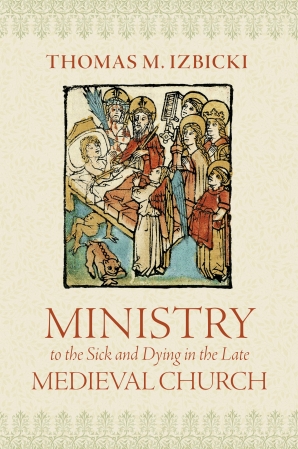
The focus of this volume is on ministry to the sick and dying in the later Middle Ages, especially providing them with the sacraments. Medieval writers linked illness to sin and its forgiveness. The priest, as physician of souls, was expected to heal the soul, preparing it for the hereafter. His ministry might also effect healing of bodies, when that healing did not endanger the soul. This book treats how a priest prepared to visit sick persons and went to them in procession with the Eucharist and oil of the sick. The priest was to comfort the patient and, if death was imminent, prepare the soul for the hereafter. Canon law, theology, and ritual sources are employed. Three sacraments, penance, viaticum, (final communion) and extreme unction (anointing of the sick) are treated in detail. Sickbed confession was designed to forgive the ailing person’s mortal sins. A priest could absolve a dying person of all sins, even those reserved to a bishop or the pope. Viaticum was to strengthen a suffering Christian for life’s last conflict, that between angels and demons for the soul of the dying person. The deathbed thus was a spiritual battlefield. Extreme unction was reserved for those in danger of death, relieving the soul of venial sins or « the remains of sin, » even after confession and absolution. The commendatio animae (commendation of the soul) used with the dying was to usher the soul into the afterlife. Many works have been written about attitudes toward death, dying, and the afterlife in the Middle Ages. Likewise, there is a good deal of literature about individual sacraments. This study aims at bridging between these literatures, with a focus on the priest and parishioner in both theory and practice at the sickbed.

Thomas Izbicki is Librarian emeritus at Rutgers University.

Informations pratiques :

Thomas M. Izbicki, Ministry to the Sick and Dying in the Late Medieval Church, Washington, D.C., The Catholic University Press, 2023 ; 1 vol. ISBN : 978-0-81323-735-0. Prix : USD 75,00.

Source : Catholic University Press

Publié dans Publications | Laisser un commentaire

Publication – « Out of Bounds Exploring the Limits of Medieval Art », éd. Pamela A. Patton et Maria Alessia Rossi

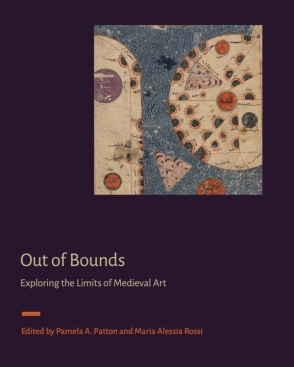
Where are the limits of medieval art as a field of study? What happens when conventionally trained art historians disregard the chronological, geographical, or cultural parameters that both direct and protect their scholarship? Beginning with Thelma K. Thomas and Alicia Walker’s acute assessment of the need for a “medieval art history for now,” the essays in Out of Bounds ask what happens when the study of medieval art disregards boundaries that it once obeyed. The volume focuses on questions surrounding the production of knowledge and on how scholarly investigation beyond the conventional thematic boundaries of medieval art history is changing, demonstrating how the field can address the ethics of scholarship today by positing a global turn in response to growing demands for socially responsible medieval studies. Collectively, the contributors demonstrate how “going out of bounds” can transform modern understanding of the people, traditions, and relationships that gave rise to medieval works. As such, this book argues for the necessity of reshaping scholarly discourse about the nature and significance of medieval art and generates fresh scholarly interpretations and important new critical tools for teaching and researching the Middle Ages.

The contributors to this volume are Suzanne Conklin Akbari, Michele Bacci, Jill Caskey, Eva Frojmovic, Sarah M. Guérin, Christina Maranci, Alice Isabella Sullivan, Thelma K. Thomas, Michele Tomasi, and Alicia Walker.

Pamela A. Patton is Director of the Index of Medieval Art at Princeton University. She is the author of Art of Estrangement: Redefining Jews in Reconquest Spain and coeditor of The Lives and Afterlives of Medieval Iconography, both published by Penn State University Press.

Maria Alessia Rossi is Art History Specialist at the Index of Medieval Art at Princeton University. She is the coeditor of Byzantium in Eastern European Visual Culture in the Late Middle Ages and Late Byzantium Reconsidered: The Arts of the Palaiologan Era in the Mediterranean.

Informations pratiques :

Out of Bounds Exploring the Limits of Medieval Art, éd. Pamela A. Patton et Maria Alessia Rossi, University Park, Penn State University Press, 2023 ; 1 vol., 264 p. ISBN : 978-0-271-09497-7. Prix : USD 99,95.

Source : Penn State University Press

Publié dans Publications | Laisser un commentaire

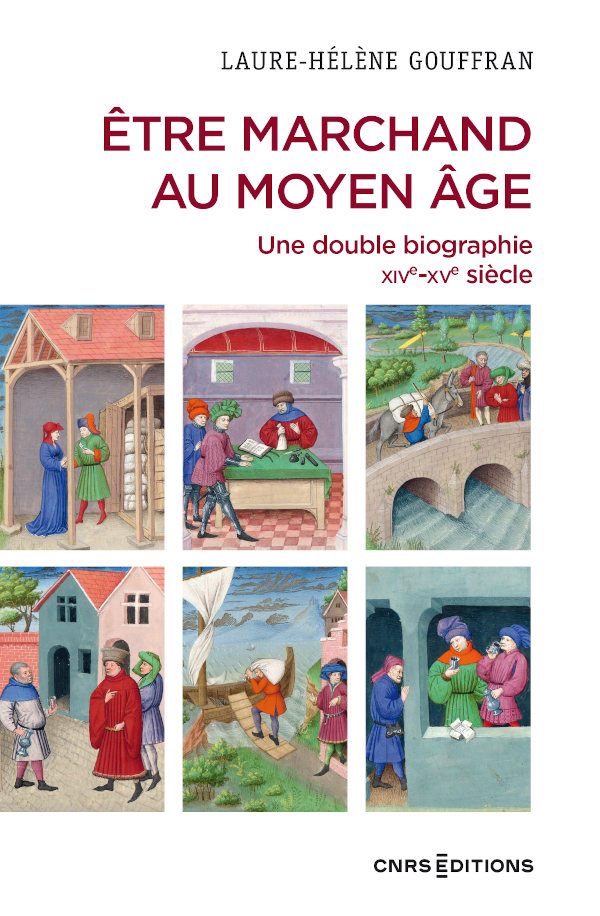
Publication – Laure-Hélène Gouffran, « Être marchand au Moyen Âge. Une double biographie XIVe-XVe siècle »

À l’origine de ce livre, l’ambition d’écrire la biographie de Bertrand Rocafort, marchand provençal au tournant des XIVe et XVe siècles, la volonté de retracer une vie ordinaire éclairée par un corpus documentaire extraordinaire.

Alors que l’enquête commence, les interrogations se multiplient. Le nom est parfois précédé d’une particule, parfois non ; il apparaît tantôt comme un fils de charpentier, tantôt comme un coseigneur. Cet homme en cacherait-il un autre ? Les doutes persistent… jusqu’à la découverte d’un deuxième testament : il existe bel et bien deux Rocafort prénommés Bertrand, exerçant dans une même zone d’activité, et partiellement insérés dans les mêmes réseaux. Un dédoublement imprévu qui ouvre des possibilités de croisements féconds pour interroger la construction des identités urbaines à la fin du Moyen Âge.

Ce livre questionne les origines, les relations, les activités et l’environnement intellectuel de ces deux marchands qui développent, chacun à sa manière, une carrière enviable. Laure-Hélène Gouffran met l’accent sur les expériences vécues, sur la pluralité des interactions sociales, et sur des pratiques tout à la fois commerçantes, religieuses et politiques, guidées par une volonté de s’investir dans la cité. À travers cette double biographie, cet ouvrage dépasse l’étude « du » marchand pour dresser, par petites touches, les contours d’une élite urbaine protéiforme et éclairer un temps singulier de la ville de Marseille à la fin du Moyen Âge.

Docteure en histoire médiévale, Laure-Hélène Gouffran est chercheure associée au laboratoire TELEMMe (Aix-Marseille Université/Cnrs). Ses recherches s’articulent autour de l’histoire des sociétés littorales, de la piraterie et de la course en Méditerranée médiévale.

Informations pratiques :

Laure-Hélène Gouffran, Être marchand au Moyen Âge. Une double biographie XIVe-XVe siècle, Paris, CNRS Éditions, 2023 ; 1 vol., 344 p. ISBN : 978-2-27114-616-8. Prix : € 25,00.

Source : CNRS Éditions

Publié dans Publications | Laisser un commentaire

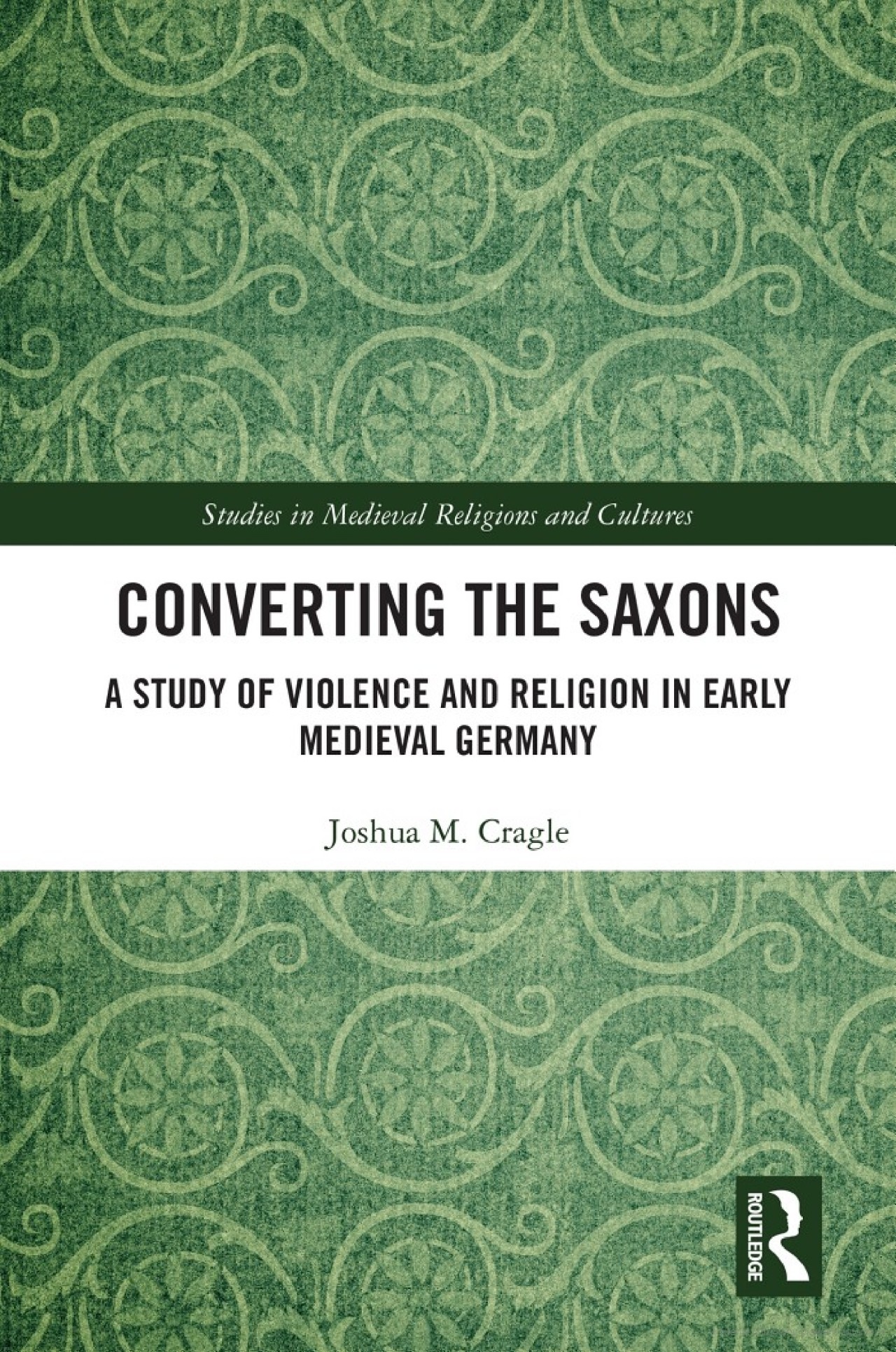
Publication – Joshua M. Cragle, « Converting the Saxons. A Study of Violence and Religion in Early Medieval Germany »

Utilizing a “crusading ethos,” from 772 to 804 AD, Charlemagne, King of the Franks, waged war against the continental Saxons to integrate them within the growing Frankish Empire and facilitate their conversion to Christianity. While substantial research has been produced concerning various components of Carolingian history, this work offers a unique examination of Charlemagne’s Saxon Wars as a case study for understanding methods of conversion used in the Christianization of Europe, as well as their significance for subsequent conversion strategies employed around the globe.

Converting the Saxons builds on prior scholarly research, is grounded in primary sources, and is contextualized with a robust historical introduction. Throughout the text, particular emphasis is given to Christian encounters with paganism and the way paganism was interpreted, confronted, and transformed. Within those encounters, we observe myriad forces of coercion and incentivization used in societal religious conversion, demonstrating the need for a serious reconsideration of the standard narratives surrounding Christian missions.

This book provides a scholarly and accessible resource for students and researchers interested in transhistorical methods of conversion, the history of Christianity, Early Medieval paganism, Colonial religious encounters, and the nature of religious conversion.

Joshua M. Cragle has an MSc in Social and Cultural Anthropology from the University of Amsterdam, where he conducted research on historical and contemporary Germanic/Norse paganism. He formerly worked as a Social Science Field Researcher for the University of Michigan as well as taught history in China. His previous publications primarily concern philosophy, Early Medieval religion, and paganism and can be found in The Pomegranate and Journal of Thought. He currently works at the University of Colorado-Boulder.

Table des matières :

Introduction

Part I: Origins

  1. The Kingdom of the Franks
  2. The Early Saxons
  3. Early Franco-Saxon Conflict
  4. Old Saxon Paganism
  5. Confronting Paganism and the Foundations of the Early German Church
  6. The Makings of a Crusade, 772–777
  7. The Rise and Fall of Widukind, 777–785
  8. The Northern Campaigns, 786–804
  9. Turbulent Frontiers
  10. Saxons in the Age of Louis the Pious
  11. Christianization in Saxony under the Late Carolingians
  12. Stellinga and Beyond

Conclusion

Bibliography

Informations pratiques :

Joshua M. Cragle, Converting the Saxons A Study of Violence and Religion in Early Medieval Germany, Londres, Routledge, 2023 ; 1 vol., 296 p. ISBN : 978-1-03245-896-0. Prix : GBP 104,00.

Source : Routledge

Publié dans Publications | Laisser un commentaire