Offer d’emploi – Associate Professorship in the History of Medieval Art (University of Oxford)

We are looking to appoint an Associate Professor with particular research and teaching expertise in Medieval European Art before 1500. The appointee will be able to bring together students and scholars working in this period across the Humanities Division and in Oxford’s libraries and collections through a consideration of visual and material cultures, including in Oxford’s own collections and beyond–and ideally encompassing research and teaching that expands the field’s traditional geographic and methodological boundaries. The appointee will have the opportunity to co-convene the Medieval Visual Culture research seminar, contribute to other pre-1500 research seminars and projects across the Division, and build on the numerous research collaborations established locally, nationally and internationally by Professor Gervase Rosser over the past 30 years.

The appointee will be able to critique constructively the geographic and methodological boundaries of the field, which would complement similar work being undertaken across the Humanities. This has been generating new and creative work both at and beyond the margins of Europe before the Reformation and beyond traditional canons, e.g. in Medieval Islamic art, in Byzantine artistic connections with Western Christendom, and in the diverse media deployed by artists and requested by their patrons in the period before 1500.

This position provides exciting opportunities for the postholder, who will conduct advanced research; build research networks within and beyond Oxford; give lectures, classes, and tutorials; supervise, support and examine students at the undergraduate and graduate levels; play an important part in the academic life of St Catherine’s College; and take on leadership and administrative roles in the Department of History of Art and, as required, in the History Faculty and College.

We welcome applications from candidates at all post-doctoral career stages, including at professorial level. We are committed to creating a diverse academic workforce and positively encourage applications from under-represented communities. We particularly encourage applications from women (approximately 40% of History Faculty posts are held by female academics), people with disabilities and Black, Asian, and minority ethnic candidates.

The appointee will be a member of the Department of History of Art, the Faculty of History, and a tutorial fellow and member of the Governing Body of St Catherine’s College.

The post is tenable from 1 October 2024 or as soon as possible thereafter.

The deadline for applications is 12 noon (UK time) on Monday 18th March.  Interviews are expected to take place on mid to late April in Oxford. 

The University of Oxford uses the grade of associate professor for most of its senior academic appointments. Associate professors are eligible for consideration through regular recognition of distinction exercises for award of the title of full professor.  In exceptional cases, the title of full Professor may be awarded on appointment. 

Queries about the post should be addressed to Professor JP Park (email: jp.park@hoa.ox.ac.uk), who is a member of the Department of History of Art (but who is not on the selection committee), or the Senior Tutor at St Catherine’s College, Professor Marc Mulholland (email: marc.mulholland@stcatz.ox.ac.uk).

All enquiries will be treated in strict confidence; they will not form part of the selection decision.

Source : Jobs.ac.uk

Publié dans Offre d'emploi | Laisser un commentaire

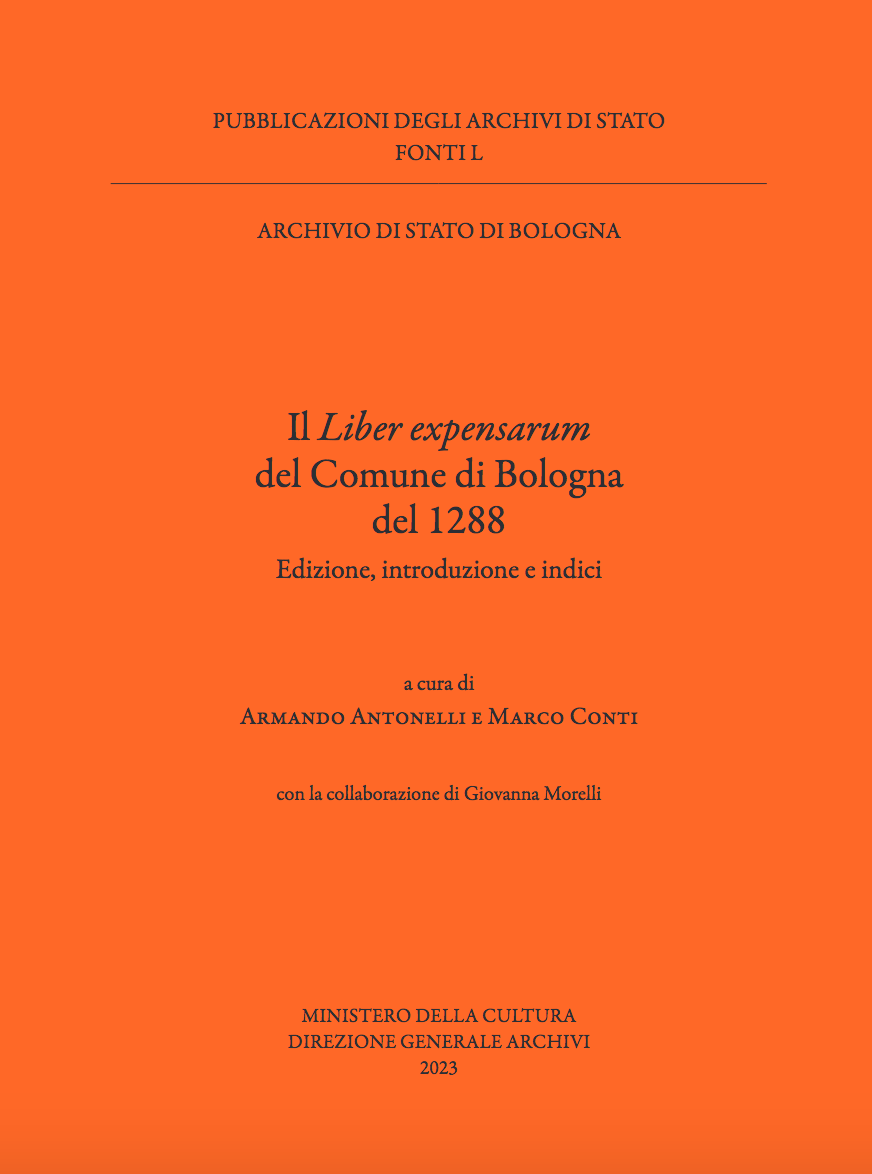
Publication – « Il Liber expensarum del Comune di Bologna del 1288 tra procedimento amministrativo e sistema documentario. Introduzione, studio ed edizione », éd. A. Antonelli, M. Conti

Étude et de l’édition du registre des dépenses de la ville de Bologne de 1288. Le livre publié par le Ministère Italien de la Culture est disponible gratuitement à l’adresse suivante : https://archivi.cultura.gov.it/pubblicazioni/collane/fonti

Il Liber expensarum del Comune di Bologna del 1288 tra procedimento amministrativo e sistema documentario. Introduzione, studio ed edizione, éd. A. Antonelli et M. Conti (con la collaborazione di G. Morelli), Rome, Ministero della Cultura, Direzione Generale per gli Archivi, 2023 ; 1 vol., 508 p. (Fonti). ISBN : 978887125-355-8. Accès en ligne.

Publié dans Publications | Laisser un commentaire

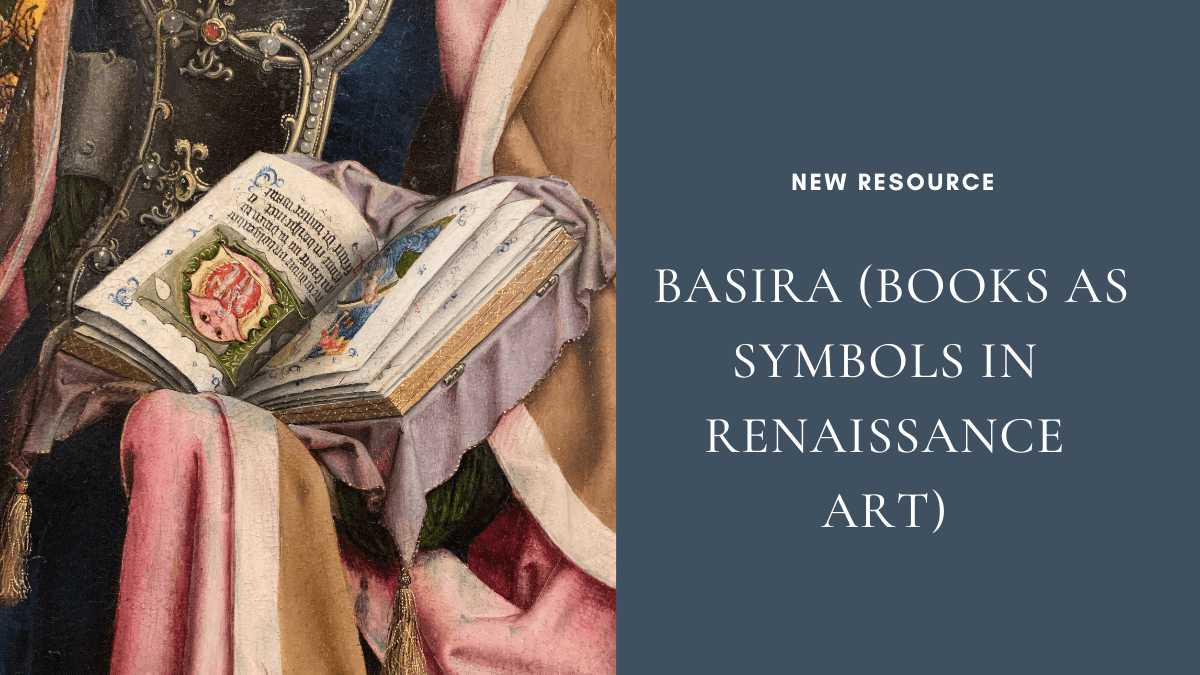
Base de données – BASIRA: Books as Symbols in Renaissance Art

Announcing BASIRA (Books as Symbols in Renaissance Art), a new digital resource for book history

Following its official launch at the 16th annual Lawrence J. Schoenberg Symposium on Manuscript Studies in the Digital Age, the Schoenberg Institute for Manuscript Studies is pleased to introduce the scholarly community to BASIRA (Books as Symbols in Renaissance Art), a new, open-access online database of representations of books and other textual documents in the figurative arts between approximately 1300 and 1600 CE, the period encompassing the advent of print culture in Europe and its neighboring regions. Users anywhere can browse and query thousands of images of books from a constantly expanding dataset. Dozens of aspects of a book’s depiction can be searched, including details of its binding, bookmarks, contents, and position. In addition, users may search for the particulars of who or what is interacting with the book, and how that action is taking place.

Over time, we plan to expand the chronological and geographic reach of this resource, making it a central hub for historic depictions of the book. As a project, BASIRA aims to foster connections between scholars, curators, conservators, and all other persons interested in book history and the visual arts. We encourage you to explore the data base for research and teaching, propose new artworks for inclusion through our online portal, and contact us with any questions or remarks.

Nicholas Herman and Barbara Williams Ellertson, co-directors, BASIRA Project

Enter the database: https://basira.library.upenn.edu

Contact us: info@basiraproject.org

Source : Medieval Art Research

Publié dans Banque de données | Laisser un commentaire

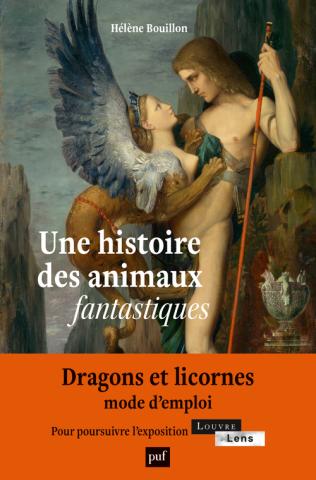
Publication – Hélène Bouillon, « Une histoire des animaux fantastiques »

Les animaux fantastiques sont omniprésents dans nos sociétés contemporaines. Dragons, licornes, sphinx et phénix peuplent les œuvres de fiction et notre imaginaire, peut-être même notre quotidien.

Ce sont, pour la plupart, des créatures mythiques apparues à la fin de la préhistoire. Leur rôle et leurs fonctions ont évolué au cours des millénaires. Il existe cependant des constantes dans leur représentations, comme leur rapport étroit au sacré et à la mort, leur appartenance au monde des marges. C’est sans doute ce qui explique que les animaux fantastiques continuent de nous fasciner : ils nous attirent et nous terrorisent ; ils interrogent notre rapport au monde, à la nature et à notre propre animalité.

Cet essai retrace, à travers six mille ans d’histoire, l’apparition, l’évolution et l’actualité des plus emblématiques d’entre eux. Certains animaux fantastiques sont en effet omniprésents dans la culture populaire alors qu’ils sont apparus à la fin du Néolithique. Quelles fonctions remplissent-ils ? Pourquoi avons-nous aujourd’hui encore besoin d’eux ? D’où vient cette longévité dans la fascination qu’ils exercent ?

Hélène Bouillon, Une histoire des animaux fantastiques, Paris, PUF, 2023 : 1 vol., 264 p. ISBN : 978-2-13084-457-0. Prix : € 16,00.

Source : PUF

Publié dans Publications | Laisser un commentaire

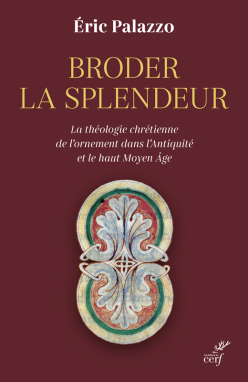
Publication – Éric Palazzo, « Broder la splendeur. La théologie chrétienne de l’ornement dans l’Antiquité et le haut Moyen Âge »

Comment le christianisme s’est-il approprié le thème de l’ornement issu de la culture romaine ? Comment a-t-il fait de cette notion l’un des piliers de sa théologie ? Comment la liturgie et l’art ont-ils été pensés comme les deux vecteurs essentiels de la beauté de Dieu et de son oeuvre de création ?
C’est en expert du Moyen Âge qu’Éric Palazzo explore à nouveaux frais le thème de l’ornement dans le christianisme antique et médiéval ainsi que ses déclinaisons dans les domaines artistique et liturgique. À travers, entre autres, les grandes figures que furent Cassiodore dans l’Antiquité et Théodulf à l’époque carolingienne, et l’analyse de nombreux décors peints, mosaïques ou enluminures, Éric Palazzo nous offre une initiation essentielle et inédite à la théologie de la beauté.

Une magnifique exégèse de l’ornement.

Professeur d’histoire de l’art du Moyen Âge à l’université de Poitiers, membre du Centre d’études supérieures de civilisation médiévale et de l’Institut universitaire de France, professeur invité dans de nombreuses universités à l’étranger et membre de prestigieuses institutions internationales de recherche, Éric Palazzo est l’auteur d’une oeuvre majeure, dont L’invention chrétienne des cinq sens dans la liturgie et l’art au Moyen Âge et Le Souffle de Dieu, parus au Cerf.

Informations pratiques :

Éric Palazzo, Broder la splendeur. La théologie chrétienne de l’ornement dans l’Antiquité et le haut Moyen Âge, Paris, Éditions du Cerf, 2024 ; 1 vol., 280 p. ISBN : 978-2-20415-508-3. prix : € 26,00.

Source : Éditions du Cerf

Publié dans Publications | Laisser un commentaire

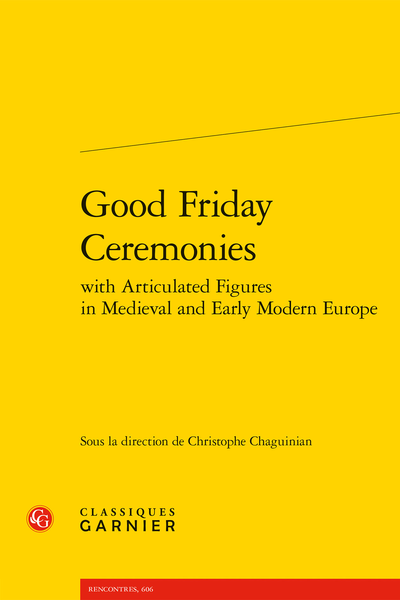
Publication – « Good Friday Ceremonies with Articulated Figures in Medieval and Early Modern Europe », éd. Christophe Chaguignan

Ce volume étudie les cérémonies de mise au tombeau du Christ du Vendredi Saint avec figures, célébrées par le clergé et les confréries au Moyen âge et au début des Temps Modernes. Les six essais concernent la Bohême, l’Italie, la péninsule ibérique, la Scandinavie et les pays de langue allemande.

Table des matières : ici

Informations pratiques :

Good Friday Ceremonies with Articulated Figures in Medieval and Early Modern Europe, éd. Christophe Chaguignan, Paris, Classiques Garnier, 2023 ; 1 vol. 432 p. (Rencontres, 606 ; Civilisation médiévale, 57). ISBN : 978-2-406-15761-8. Prix :€ 42,00.

Source : Classiques Garnier

Publié dans Publications | Laisser un commentaire

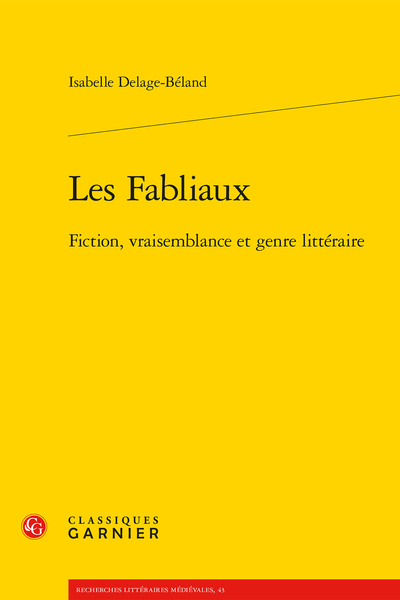
Publication – « Les Fabliaux. fiction, vraisemblance et genre littéraire », éd. Isabelle Delage-Béland

Cette étude propose de faire dialoguer les pensées médiévale et moderne pour relire les fabliaux et les faire participer aux réflexions contemporaines sur la poétique du genre littéraire et la reconsidération des pouvoirs de la fiction.

Table des matières : ici

Les Fabliaux. fiction, vraisemblance et genre littéraire, éd. Isabelle Delage-Béland, Paris, Classiques Garnier, 2024 ; 1 vol., 460 p. (Recherches littéraires médiévales, 43). ISBN : 978-2-406-15845-5. Prix : € 49,00.

Source : Classiques Garnier

Publié dans Publications | Laisser un commentaire

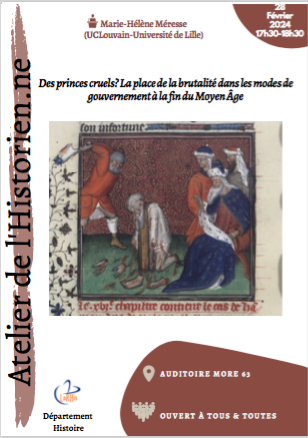
Conférence – Marie-Hélène Méresse, « Des princes cruels ? La place de la brutalité dans les modes de gouvernement à la fin du Moyen Âge »

28 février 2024, 17h30-18h30
UCLouvain, Auditoire More 63

Marie-Hélène Méresse (UCLouvain-Université de Lille)

Publié dans Colloque | Laisser un commentaire

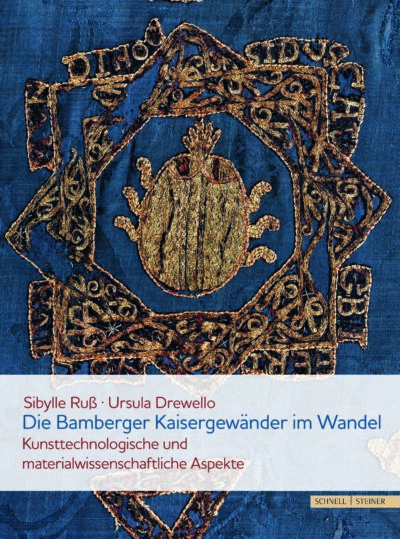
Publication – Sibylle Ruß, Ursula Drewello, « Die Bamberger Kaisergewänder im Wandel. Kunsttechnologische und materialwissenschaftliche Aspekte »

Ein Schwerpunkt liegt auf den verwendeten Materialien, wie den Goldfäden des 11. Jahrhunderts, deren Herstellung und anspruchsvolle Verarbeitung mittels materialwissenschaftlicher Methoden präzisiert werden konnte. Überraschende Ergebnisse zeigen die Analysen der Vorzeichnungen und Farbstoffe, die ergänzend zu den textiltechnologischen Untersuchungen neue Aspekte zu Herkunft und Zuordnung der Goldstickereien ermöglicht haben. Die Befunde veranschaulichen die enorme handwerkliche Qualität der hochmittelalterlichen Textilien am konkreten Beispiel der sechs zeitnah entstandenen Gewänder aus dem Umfeld Kaiser Heinrichs II.

Table des matières : ici

Informations pratiques :

Sibylle Ruß, Ursula Drewello, Die Bamberger Kaisergewänder im Wandel. Kunsttechnologische und materialwissenschaftliche Aspekte, Ratisbonne, Schnell und Steiner, 2023 ; 1 vol., 320 p. ISBN : 978-3-7954-3585-1. Prix : € 45,00.

Source : Schnell und Steiner

Publié dans Publications | Laisser un commentaire

Appel à contribution – Byzance en ses marges : centres, périphéries, contours / Byzantium within its margins: Centres, Peripheries and Outlines

La montagne, la croix, les bourreaux : tout, dans la célèbre miniature du Psautier Khludov, nous transporte “au-dehors”. Aux portes de la ville, à la lisière de la société, la Crucifixion évoque encore, au souvenir des iconoclastes, les contours mouvants du dogme chrétien. De cette remarquable mise en abyme où l’image, depuis les marges auxquelles elle semble reléguée, surplombe le texte pour en mieux tempérer l’ascendant, émane pourtant une vague confusion : lequel, de l’écrit ou de l’enluminure, se tient au centre de la page – s’il en est un ?

Des marges du psautier à celles de Byzance, il n’y a qu’un pas. Microcosme par excellence, le livre illustré nous invite à étendre, à l’échelle d’un monde, cette notion ambivalente.  À l’image du tracé mouvant des frontières, la tension qui se noue entre le texte et la miniature affleure, sous de multiples aspects, à travers la carte : entre la capitale et les provinces, l’empire et ses vassaux, le prince chrétien et ses voisins.

Telles régions limitrophes s’affirment, avec le temps, comme des centres incontestables du pouvoir – la Serbie et la Bulgarie, l’Épire et Trébizonde : et voici Byzance devenue marge. Telles autres, plus éloignées de Constantinople – culturellement, spirituellement –, maintiennent avec elle des liens ténus pour mieux se définir : ainsi de l’Arménie, de la Sicile, de la Rus’ de Kiev et même de l’Éthiopie, autant d’autres Byzance(s) en-dehors de Byzance.

En réduisant à l’espace urbain les enjeux territoriaux de l’empire, en les transposant aussi à l’espace ecclésial, le même paradigme nous incite à en déceler les axes et les seuils. Les murs de la ville et ses édifices, l’architecture et le décor des églises, les lieux de pèlerinage et les nécropoles élaborent et refondent, constamment, la notion de liminalité.

Le Christ supplicié, de même que l’iconoclaste sacrilège, esquisse la norme sociale : l’hérésie, comme le calvaire, retranche, exclut, marginalise. Mais les franges de la société byzantine, qui dépassent de loin les
projections modernes, façonnent une mosaïque nuancée dont bien des composantes, souvent négligées – femmes, criminels, ascètes –, nous engagent à repenser la cohérence.

Moines et monastères revendiquent leur marginalité autant qu’ils l’idéalisent : tant leur implantation, aux abords ou en plein cœur de la ville, que la reconnaissance sociale dont ils jouissent, semblent contredire la réclusion à laquelle ils prétendent. L’exil lui-même, souvent amer, maintient plus que jamais son objet au centre des égards : éloigné, on le surveille ; il écrit, revient parfois.

Penser Byzance, enfin, exige la distance et le décentrement du regard étranger. Chroniqueurs arméniens, latins et syriaques, émissaires arabes et mongols ont porté sur l’empire, sa culture et ses rites, un œil attentif, parfois acéré, que les historiens ne sauraient mésestimer. Notre discipline elle-même n’y échappe en rien : ultime soubresaut du monde gréco-romain, interminable Bas-Empire ou prélude à la Turquie ottomane, l’histoire byzantine fut, elle aussi, longtemps perçue comme marginale – l’une de ces inévitables transitions indispensables à la chronologie.

Les centres, les normes, les limites : tout restait alors à définir à qui voulait que la culture byzantine devînt enfin l’objet d’une étude autonome. Aujourd’hui, la délicate tension entre le centre du monde et les marges de l’empire témoigne des avancées de la recherche comme des écueils auxquels elle est confrontée. Telle est l’ambition des XVe Rencontres internationales des étudiants du monde byzantin : aborder Byzance en ses marges, depuis ses marges, en tant que marge.

Les communications pourront s’inscrire dans les thématiques suivantes :
– marges territoriales, frontières et espaces de transition
– peuplement des marges et déplacements de populations
– place des femmes, des enfants, des esclaves, des individus en dehors des normes de genre
– maladies, infirmités, handicaps, mort
– controverses religieuses, hérésies, excommunications et anathèmes
– institutions monastiques
– manifestations de la marginalité : costume, pratiques alimentaires
– Byzance vue de l’extérieur

Les interventions, d’une durée de vingt minutes, pourront être données en français ou en anglais. Les propositions de communications (250 à 300 mots), ainsi qu’une brève biographie incluant l’institution de rattachement, le niveau d’études actuel (master, doctorat, post-doctorat) et le sujet de recherche, devront être envoyées à l’adresse aemb.paris@gmail.com, au plus tard
le 31 mars 2024. Les Rencontres se tiendront en présentiel,
à Paris, les 4 et 5 octobre 2024. La prise en charge des frais de transports par l’AEMB est envisageable pour les candidates et candidats ne pouvant obtenir de financement de la part de leur institution d’origine. Les candidates et candidats retenu.es devront adhérer à l’AEMB.

A mountain, a cross, an executioner: everything in the well-known miniature of the Chludov Psalter carries us “outside”. At the gates of the city and on the margins of society, the Crucifixion also recalls, through the memory of Iconoclasm, the shifting outlines of Christian dogma. From the margin where it is seemingly relegated, the image overlooks the text to better mitigate its authority. Yet, in this remarkable mise en abyme, a sense of confusion remains: which of the written word or the image holds centre stage – if there is any?

There is but one step from the margins of the psalter to those of Byzantium. As a quintessential microcosm, the illuminated manuscript invites us to extend this ambivalent notion to the scale of a world. Like the shifting lines of a border, the tension emerging between the text and the miniature likewise surfaces in varied ways across the map: between the capital and its provinces, the Empire and its vassals, the Christian prince and his neighbours.

Thus, some borderlands emerge over time as centres of power in their own right – Serbia and Bulgaria, Epirus and Trebizond – occasionally turning Byzantium itself into a margin. Others, further removed from Constantinople geographically, culturally or spiritually – nevertheless maintain subtle ties with it to better define their own identity, such as Armenia, Sicily, Rus’ and even Ethiopia – all in a way Byzantium(s) beyond Byzantium.

By scaling down the territorial questions of the Empire to urban space, or transposing them onto the space of the church, the same paradigm invites us to retrace their axes and thresholds. City walls and structures, church architecture and decoration, pilgrimage sites and necropoleis constantly reshape and redefine the notion of liminality.

Both the Torture of Christ and the sacrilege of iconoclasm suggest a social norm: heresy, like Calvary, excludes, cuts off and marginalises. Yet the fringes of Byzantine society, which go far beyond contemporary projections, compose a nuanced mosaic whose many elements, often overshadowed – women, criminals, ascetics –, call upon us to rethink the cohesion of the whole.

Monks and monasteries proclaim their marginal status as much as they idealise it: both their location, on the fringes if not within the heart of the city, as well as the social recognition they receive seemingly contradict the reclusion they claim to seek. Exile itself, though bitter, keeps its object surely within the line of sight: the exile is watched when far away, writes back and sometimes returns.

To consider Byzantium, lastly, requires the distant and decentred gaze of foreign eyes. Armenian, Latin and Syriac chroniclers, Arab and Mongol emissaries turned a careful, sometimes cruel eye on the Empire, its culture and rites, which historians would be wrong to ignore. The discipline of Byzantine history itself has long been relegated to the margins of the field, as a necessary but uninteresting transition, with Byzantium variously held as the last jolt of the Greco Roman world, the exhaustingly long final breath of the Late Roman Empire or the prelude to Ottoman Turkey.

Centres, norms, limits: everything remained to be done for the partisans of an autonomous study of Byzantine culture. Today, the delicate tension between the centre of the world and the margins of the Empire reflects both the advances and the pitfalls faced by academic inquiry. Such are the aims of the XVth Rencontres : to consider Byzantium within its margins, from its margins and as a margin.

Papers may concern the following themes:
• Territorial margins, borders and spaces of transition
• Settlement of margins and population transfers
• The situation of women, children and slaves
• Definitions and transgressions of gender norms
• Disease, disability, infirmity and death
• Religious controversies, heresy, excommunication and anathema
• Monastic communities
• Visible forms of marginality such as dress and foodways
• Byzantium as a margin

Papers, with an expected duration of 20 minutes, may be presented in French or English. Proposals for presentations (250-300 words), as well as a brief biography including the candidate’s affiliation, their current level of study (master, doctoral, post-doctoral) and their area of study should be sent tà
aemb.paris@gmail.com by March 31, 2024, at the latest.

The conference will be held in-person in Paris on October 4-5, 2024. Participants’ travel costs may be covered by the association if they are unable to receive funding from their institutions. Selected candidates will be asked to register as members of the association

Source : Association des étudiants du monde byzantin

Publié dans Appel à contributions | Laisser un commentaire