École d’été – Bridging Archaeogenetics and Medieval Studies: Using aDNA as a source for migration, demographics, kinship and pathology

The Interdisciplinary Summer School 2024 “Bridging Archaeogenetics and Medieval Studies » will bring together M.A. students and junior Ph.D. students from History, Biology, Archaeology and other relevant disciplines in order to introduce them to the use of a(ncient)DNA as a source for migration, demographics, kinship and pathology in the Middle Ages and for interdisciplinary exchange.

Bridging Archaeogenetics and Medieval Studies: Using aDNA as a source for migration, demographics, kinship and pathology

In the age of the « ancientDNA-revolution », archaeogenetic research institutes are nowadays routinely analysing samples from all periods of the human past, not the least from medieval times. Sometimes the scientific objective of the analysis resides primarily in the realm of History/Archaeology; sometimes the questions asked are of a biological nature; in other instances there is a mix of both. A rapidly growing and highly promising field of more or less intertwined genetic, historical, and archaeological knowledge production is developing, and the Middle Ages have become relevant to Genetics, as well as vice versa. Yet, true interdisciplinary cooperation remains rare, and there is much mutual distrust, misunderstanding and lack of knowledge. The Interdisciplinary Summer School « Bridging Archaeogenetics and Medieval Studies » will bring together students from History, Biology, Archaeology and other relevant disciplines in order to familiarize them with the use of a(ncient)DNA as a source for migration, demographics, kinship and pathology in the Middle Ages. The Summer School will provide a general introduction to the scientific methods, both in theory and practice. In addition, participants will be given the opportunity to learn about a particular ongoing research project, „Migration and Urban Demographics in the Berlin-Brandenburg Area during the High Middle Ages“, in which many among the teaching staff are involved. Participants will be able to learn how the methods are applied to a concrete case study, to discuss with scientists cooperating in an ongoing research project, and to participate in interdisciplinary exchanges around specific problems. This interaction will help to develop critical engagement with the sometimes fundamentally different general approaches of scientists and scholars in the humanities.

Target group: M.A. students and junior PhD/doctoral students from History, Biology, Archaeology and other Natural Sciences and Humanities

Fees: There is no fee for participation. However, participants must cover their own accommodation and travel expenses for travelling to and from Berlin, as well as for the day trip to Leipzig. A number of inexpensive accommodations are available at the guesthouse of Humboldt University. They can be booked through the organizers.

Application details: Your application should include the following:
1. Letter of motivation (one page, outlining why you are interested in participating in the Summer School and what you are expecting from it)
2. Curriculum Vitae (one page)
3. Scan of B.A. or M.A. diploma (or equivalent)
All three elements must be merged into a single PDF document.
Please let us know in your application if you are interested in residing at the guesthouse of Humboldt University during the Summer School (single bedrooms with shared bathroom facilities, cost: about 300 EUR for six nights from 22 to 27 September)
Please send your application to: medieval.summerschool@bbaw.de
The application deadline is 30 April 2024.

Preliminary Program

Among the topics to be taught at the Summer School are:
Introduction to population genetics
Detecting migration and kinship through aDNA
Introduction to the questions and methods of medieval history and to the challenges of interdisciplinary research on the Middle Ages
Introduction to the archaeology of migration, kinship and gender
Field trip to excavation site in Berlin
Detecting pathogens through aDNA

The Summer School will begin on 23 September, 9.30 a.m. and end on 27 September, 3 p.m.

Kontakt

medieval.summerschool@bbaw.de

Source : BBAW
Publié dans École d'été | Laisser un commentaire

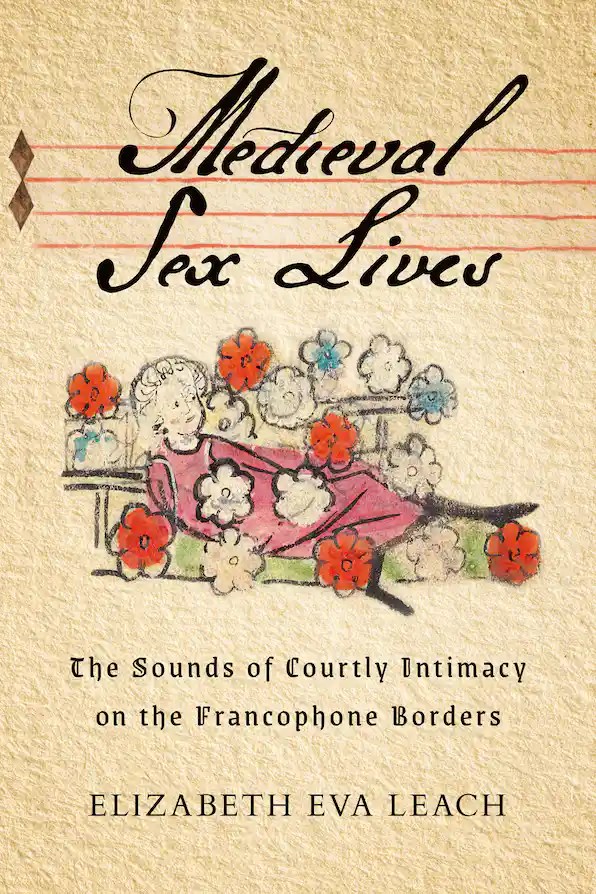
Publication – Elizabeth Eva Leach, « Medieval Sex Lives. The Sounds of Courtly Intimacy on the Francophone Borders »

Medieval Sex Lives examines courtly song as a complex cultural product and social force in the early fourteenth century, exploring how it illuminates the relationship between artistic production and the everyday lives of the elites for whom this music and poetry was composed and performed. In a focused analysis of the Oxford Bodelian Library’s Douce 308 manuscript—a fourteenth-century compilation that includes over five hundred Old French lyrics composed over two centuries alongside a narrative account of elaborate courtly festivities centered on a week-long tournament—Elizabeth Eva Leach explores two distinct but related lines of inquiry: first, why the lyric tradition of « courtly love » had such a long and successful history in Western European culture; and, second, why the songs in the Bodleian manuscript would have been so important to the book’s compilers, owners, and readers.

The manuscript’s lack of musical notation and authorial attributions make it unusual among Old French songbooks; its arrangement of the lyrics by genre invites inquiry into the relationship between this long musical tradition and the emotional and sexual lives of its readers. Combining an original account of the manuscript’s contents and their likely social milieu with in-depth musical and poetic analyses, Leach proposes that lyrics, whether read or heard aloud, provided a fertile means of propagating and enabling various sexual scripts in the Middle Ages. Drawing on musicology, literary history, and the sociology and psychology of sexuality, Medieval Sex Lives presents a provocative hypothesis about the power of courtly songs to model, inspire, and support sexual behaviors and fantasies.

Elizabeth Eva Leach is Professor of Music at the University of Oxford. She is the author of Sung Birds and Guillaume de Machaut.

Informations pratiques :

Elizabeth Eva Leach, Medieval Sex Lives. The Sounds of Courtly Intimacy on the Francophone Borders, Ithaca, Cornell University Press, 2023 ; 1 vol., 324 p. ISBN : 978-1-50177-187-3. Prix : € 46,95.

Source : Cornell University Press

Publié dans Publications | Laisser un commentaire

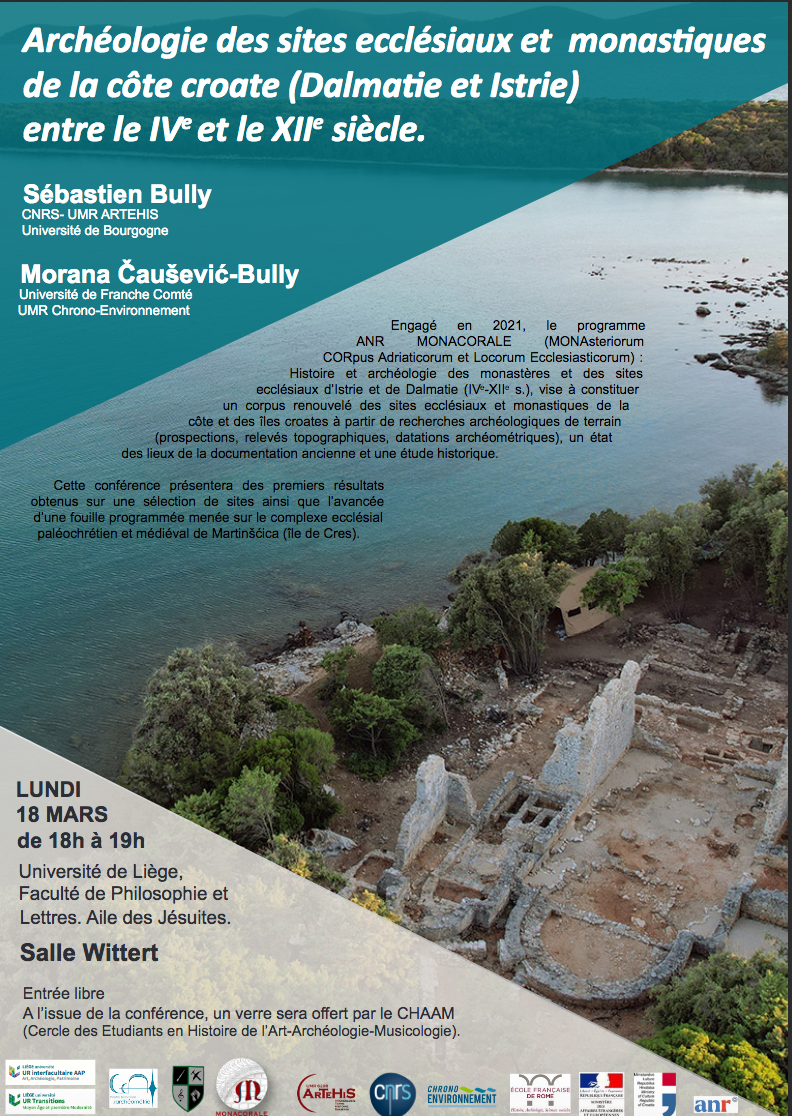
Conférence – Sébastien Bully et Morana Čaušević-Bully, « Archéologie des sites ecclésiaux et monastiques de la côte croate (Dalmatie et Istrie) entre le IVe et le XIIe siècle »

Engagé en 2021, le programme ANR MONACORALE (MONAsteriorum CORpus Adriaticorum et Locorum Ecclesiasticorum) : Histoire et archéologie des monastères et des sites ecclésiaux d’Istrie et de Dalmatie (IVe-XIIe s.), vise à constituer un corpus renouvelé des sites ecclésiaux et monastiques de la côte et des îles croates à partir de recherches archéologiques de terrain (prospections, relevés topographiques, datations archéométriques), un état des lieux de la documentation ancienne et une étude historique.

Cette conférence présentera des premiers résultats obtenus sur une sélection de sites ainsi que l’avancée d’une fouille programmée menée sur le complexe ecclésial paléochrétien et médiéval de Martinšćica(île de Cres).

LUNDI 18 MARS de 18h à 19h
Université de Liège, Faculté de Philosophie et Lettres. Aile des Jésuites.

Salle WittertEntrée libreA l’issue de la conférence, un verre sera offert par le CHAAM (Cercle des Etudiants en Histoire de l’Art-Archéologie-Musicologie).

Publié dans Le réseau | Laisser un commentaire

Conférence – Enrico Veneziani, « The Pope’s Men. Papal Legates, Judges Delegate, and Representatives in the Iberian Peninsula »

26.03.2024
Institut historique allemand

Enrico Veneziani (univ. Porto), The Pope’s Men. Papal Legates, Judges Delegate, and Representatives in the Iberian Peninsula (11th–13th Centuries)

Commentaire: Lucas Burkart (univ. Bâle)

Pour participer à la conférence, merci de vous inscrire ici: Zoom

Événement dans le cadre du cycle de séminaires »Euro-Mediterranean Entanglements in Medieval History«, organisé par les Instituts historiques allemands de Paris et de Rome.

Source : Institut historique allemand

Publié dans Colloque | Laisser un commentaire

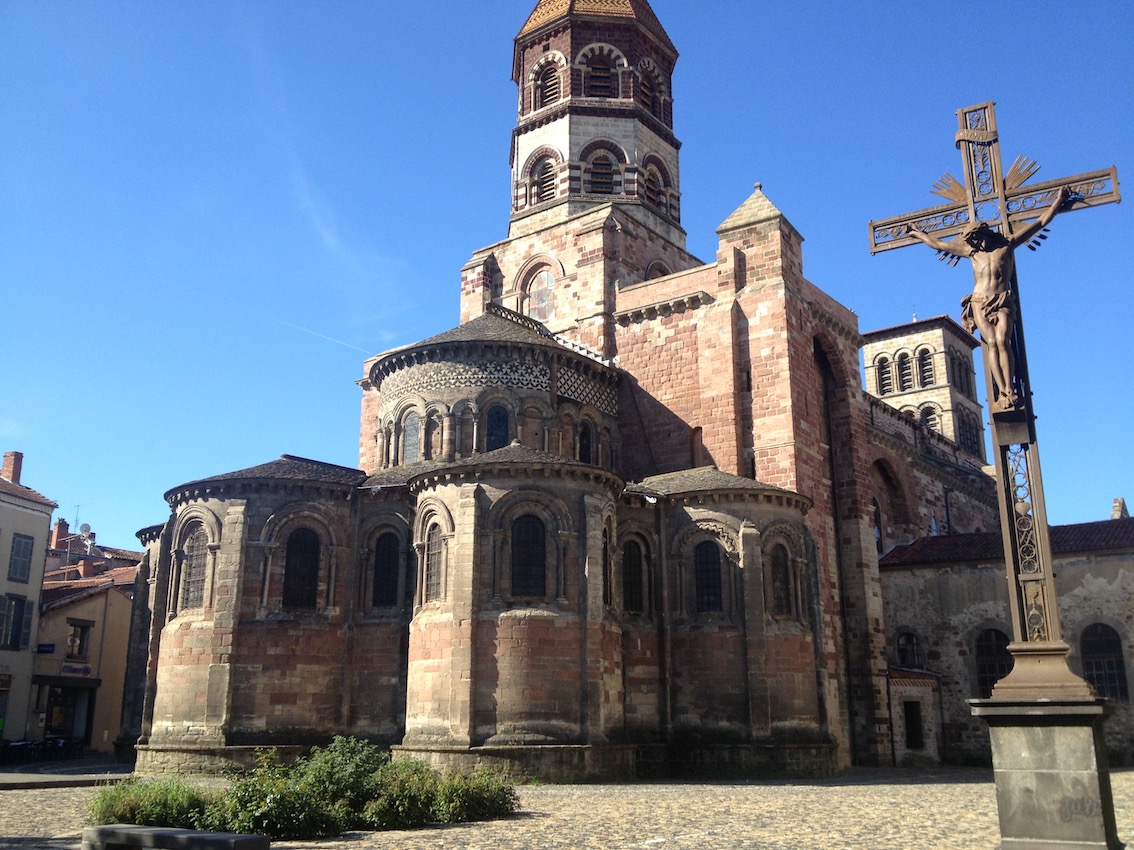
Appel à contribution – Identités et marges brivadoises de l’Antiquité au XXIe siècle

Colloque Brioude (Haute-Loire)
26-27 juin 2025

Centre d’Histoire « Espaces et Cultures » (CHEC UPR 1001) Université Clermont Auvergne
Almanach de Brioude

En 2004, 2007 et 2011, trois colloques ont envisagé l’histoire de Brioude depuis « ses origines » jusqu’aux « temps féodaux »1. Dans le prolongement de ces manifestations, nous souhaitons aborder de nouvelles thématiques en considérant, d’une part l’histoire de l’ensemble du territoire brivadois, et non plus de la seule ville de Brioude, d’autre part élargir l’étude aux périodes moderne et contemporaine, sans négliger pour autant les siècles précédents. Les ressources documentaires disponibles permettent d’envisager une telle rétrospective, qu’il s’agisse des collections publiques (archives départementales, bibliothèques patrimoniales…) ou privées (Almanach de Brioude…). Notre rencontre entend ainsi encourager la valorisation de fonds méconnus, tel que celui de l’érudit brivadois Paul Le Blanc (1828-1918), conservé à la Bibliothèque du patrimoine de Clermont Auvergne Métropole.

Il conviendra de s’interroger sur les représentations du « Brivadois » dont l’emprise territoriale a pu varier au cours du temps, ainsi que ses limites selon la nature de son administration civile ou religieuse par exemple. De même, les champs d’analyse devront englober les thématiques les plus larges possibles, ces questionnements étant susceptibles d’intéresser également des géographes sur l’organisation du territoire, ainsi que des juristes ou des sociologues.

Ce colloque entend explorer plusieurs thématiques de recherche, en lien avec l’historiographie la plus récente :

–  Conduire une réflexion sur la « fabrique » de l’espace, à propos d’une histoire de la construction, déconstruction et reconstruction de ce territoire, en lien avec les acteurs, leurs représentations et leurs actions.

–  Etudier les recompositions et les mutations territoriales aux regards de phénomènes sociaux, économiques, géographiques ou politiques afin de cerner des mobilisations d’identités liées aux éléments du contexte.

–  Analyser les modalités d’appropriation de l’espace, concernant notamment les réseaux à l’œuvre, les processus de territorialisation ou son fonctionnement comme interface entre entités régionales, nationales et internationales.

–  Questionner les notions de « centre », de « périphérie » et de « marge » concernant la place d’un territoire « brivadois » aux contours évolutifs, dans la structuration de l’espace à une échelle qui le dépasse, et comprendre de quelles façons son existence ou sa reconnaissance s’articulent avec celles des entités territoriales voisines. Le choix d’une large temporalité, de l’Antiquité aux temps contemporains, permettra de caractériser les continuités et les ruptures, tout en développant des visées comparatistes entre différentes aires géographiques à l’échelle nationale et internationale. Nous vous invitons à proposer une présentation de vos travaux en envoyant une courte biobibliographie, un titre de communication accompagné d’un résumé d’une dizaine de lignes exposant votre projet, et indiquant le thème dans lequel celui-ci s’inscrit.

Date limite d’envoi des propositions, le 15 janvier 2025 à : Stéphane Gomis, professeur d’histoire moderne, Université Clermont Auvergne stephane.gomis@uca.fr

Publié dans Appel à contributions | Laisser un commentaire

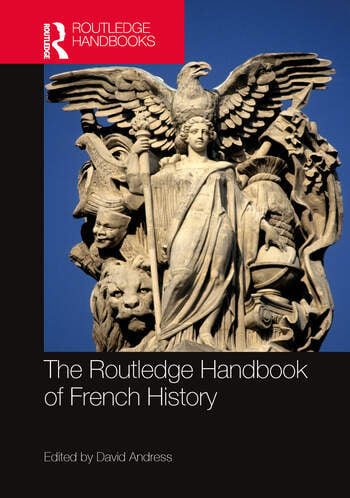
Publication – « The Routledge Handbook of French History », éd. David Andress

Aimed firmly at the student reader, this handbook offers an overview of the full range of the history of France, from the origins of the concept of post-Roman « Francia, » through the emergence of a consolidated French monarchy and the development of both nation-state and global empire into the modern era, forward to the current complexities of a modern republic integrated into the European Union and struggling with the global legacies of its past.

Short, incisive contributions by a wide range of expert scholars offer both a spine of chronological overviews and a diverse spectrum of up-to-date insights into areas of key interest to historians today. From the ravages of the Vikings to the role of gastronomy in the definition of French culture, from Caribbean slavery to the place of Algerians in present-day France, from the role of French queens in medieval diplomacy to the youth-culture explosion of the 1960s and the explosions of France’s nuclear weapons program, this handbook provides accessible summaries and selected further reading to explore any and all of these issues further, in the classroom and beyond.

David Andress is Professor of Modern History at the University of Portsmouth, UK. His published research on the era of the French Revolution includes The Terror (2004), Beating Napoleon (2012), and The French Revolution: A Peasants’ Revolt (2019).

1. Overview: From Regnum Francorum to Regnum Franciae: Early Medieval France from the Fifth to the Twelfth centuries
Clément de Vasselot de Régné

2. Gaul, Francia, and the Wider Early Medieval World
James Palmer

3. The Vikings and Francia 799–936
Matthew Firth

4. Regional Magnates and the Last Carolingians
Fraser McNair

5. The World of the Early Capetian Court 987–1180
Talia Zajac

6. The Queens’ Reflection: French Consorts as a Mirror of French History
Derek R. Whaley

7. History and the Shaping of French Identity in the Middle Ages
Chris Jones

8. Nationhood and Nationalism in French History Writing: Franks, Gallo-Romans, and the Shaping of the Roman National

Camille Creyghton and Matthew D’Auria

9. Overview: Valois France,  1328–1498
Tracy Adams

10. France and the Crusades in the Later Middle Ages
Tania M. Colwell

11. Prince and Principality in the Breton War of Succession
Erika Graham-Goering

12. Performing Discontent: Politics and Society in the French Satirical Theater of the Fourteenth and Fifteenth Centuries
Francesca Canadé Sautman

13. Overview: France in the Sixteenth Century: Monarchy, Renaissance and Reformation, 1494–1610
Elizabeth C. Tingle

14. Conduit of the Divine: Theocratic Themes in Political Theory in Renaissance and Reformation France
Aglaia Maretta Venters

15. Royal Women and the Habsburg-Valois Wars (1494–1559)
Susan Broomhall

16. Festival Cultures in Early Modern France: Elite and Popular Celebrations, c. 1560–c. 1640
Bram van Leuveren

17. Overview: Absolutist France to 1715
Darryl Dee

18. Bureaucracy and Royal Administration in the Seventeenth Century – French Absolutism and the State
Robert J. Fulton Jr.

19. A Century of Saints? The Catholic Reformation in Seventeenth-Century France
Alison Forrestal

20. The Royal Manufactories of Absolutist France: Luxury Production and the Politics and Culture of Mercantilism
Florian Knothe

21. Making History in Old Regime France
Robert Wellington

22. Overview: France, 1715 to 1815: A Century of Dubious Greatness
David Andress

23. The French Caribbean in the Era of Slavery
Erica Johnson Edwards

24. The Development of the French Dimension of the Atlantic Slavery System
Sylvie Kandé

25. French India in the Eighteenth Century
Gregory Mole

26. Exploration and Enlightenment in Eighteenth-Century France
Eric F. Johnson

27. Enlightenment and the Supernatural: Popular Religious Practice in the Eighteenth Century
Angela C. Haas

28. The « Masterpiece of the National Assembly »: Criminal Justice and the Revolution
Julie P. Johnson

29. Performance in Paris, 1789–1815: Setting the Stage for Regime Change and Cultural Revision
Dane Stalcup

30. Fugitives from France: Huguenot Refugees, Revolutionary Émigrés, and the Origins of Modern Exile
Kelly Summers

31. The French Campaign in Egypt (1798–1801)
Evgeniya Prusskaya

32. Monarchy, Memory, and the Chapelle Expiatoire
Gemma Betros

33. Overview: 1815–1905: An Era of Tumult and Change
Venita Datta

34. Memory of Lost Empire
Annette Chapman-Adisho

35. France and Algeria, 1830–1870
Gavin Murray-Miller

36. Environment and Technology in Global France, 1763–1914
Andrew Denning

37. The French Periodical Press, 1815–1905
Ross F. Collins

38. From Dictator to Democrat? The ‘Black Legend’ of Louis-Napoleon and Subsequent Historical Revisionism
W. Jack Rhoden

39. Socialism Up to the First World War
Eric Brandom

40. French Empire in the Asia-Pacific Region, c. 1800–1914
Véronique Dorbe-Larcade

41. Imperial Variation: Administration and Citizenship in France’s Colonies
Megan Brown

42. Overview: Two Frances at War and Peace: The Stories of a Nation and Its People, 1905–1958
Jessica Wardhaugh

43. Overview: Between Gaullism and Globalization: Opening Up the Fifth Republic, 1958–2020
Andrew WM Smith

44. History and Historiography of French Imperialism from 1914
Sibylle Duhautois

45. French Feminisms: Patriarchy, Populationism, and Progress, 1870–1950
Nimisha Barton

46. Queering France Since the Belle Époque: Between Emancipation and Repression
Tamara Chaplin

47. Reconstructing French Relations in the South Pacific after World War I
Alistair Watts and Kirsty Carpenter 

48. The Popular Front and France’s Twentieth Century
Mattie Fitch

49. The Brazzaville Conference and the Future of French Colonialism in Africa
Danielle Porter Sanchez

50. The Atomic Republic: Nuclear France Since 1958
Roxanne Panchasi

51. Young People and Youth Culture, 1958-1968
Susan B. Whitney

52. Sustaining the Nation: A Gastronomic Reading of Contemporary France
Jennifer L. Holm

53. The Year of the Events: 1968
Ben Mercer

54. The Algerian Diaspora in France
Álvaro Luna-Dubois

55. French Museums in the Fifth Republic
Déborah Dubald

56. Erasing Race in France: Social Consequences of Political Idealism
Daniel N. Maroun

57. The Memory Politics of the First World War at Its Centenary
Elizabeth Benjamin

58. French Historical Writing in the Wake of Decolonization
Timothy Scott Johnson

Informations pratiques :

The Routledge Handbook of French History, éd. David Andress, Londres, Routledge, 2024 ; 1 vol., 672 p. (Routledge Handbooks). ISBN : 978-0-36740-682-0. Prix : GBP 205,00

Source : Routledge

Publié dans Publications | Laisser un commentaire

Conférence – Nicolas Bilot, « Éléonore de Vermandois, comtesse de Valois »

La Société d’histoire et d’archéologie de Senlis propose le samedi 16 mars 2024, à 15h, une conférence de Nicolas Bilot, archéologue, administrateur de la Société d’histoire et d’archéologie de Senlis, sur Éléonore de Vermandois comtesse de Valois.

À la charnière des XIIe et XIIIe siècles, Éléonore de Vermandois est la dernière comtesse de Valois avant que la principauté rejoigne le giron royal. Elle profite d’une double ascendance remarquable mais se confronte aussi à un entourage encombrant. Elle se révèle néanmoins être une femme déterminée et une administratrice remarquable, dont le leg a façonné les paysages entre les rivières Oise, Aisne et Ourcq. À travers elle, les sources permettent de porter un regard différent sur la place des dames au Moyen Âge Central.

Screenshot

Conférence : Éléonore de Vermandois comtesse de Valois
Date : Samedi 16 mars 2024, à 15h
Lieu :
Centre de Rencontre de l’Obélisque
Salle polyvalente
4ter, route de Creil
60300 Senlis

Source : Nordoc’ Archeo

Publié dans Colloque | Laisser un commentaire

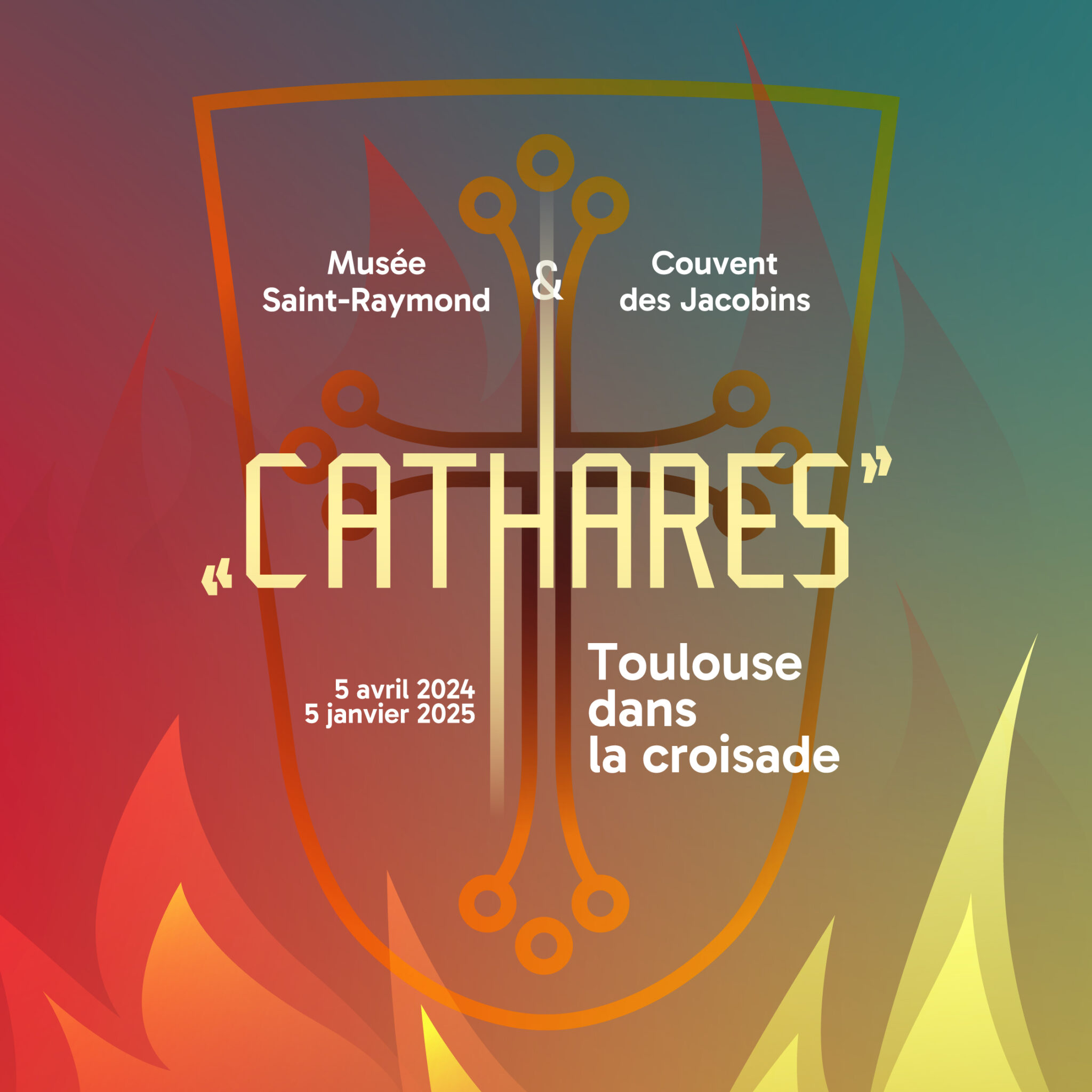
Exposition – « Cathares ». Toulouse dans la croisade

Cathares, croisade, châteaux, inquisition, bûchers… autant de termes et d’images qui sont associés à la croisade contre les Albigeois (1209-1229).

Cette exposition inédite, conçue par le Musée Saint-Raymond, présente les événements et rebondissements qui ont émaillé la croisade contre les Albigeois mais aussi la question de l’hérésie dite « cathare », autour des débats qui animent actuellement la communauté des historiens.

Près de 300 objets sont exposés dans les deux sites qui accueillent l’exposition, le Musée Saint-Raymond et le Couvent des Jacobins : documents d’archives exceptionnels prêtés par des institutions prestigieuses telles que la Bibliothèque nationale de France ou les Archives nationales, objets archéologiques inédits, œuvres sculptées ou peintes, matériel de reconstitution historique de qualité scientifique (costumes, armement)…

Des dispositifs sonores, numériques et interactifs enrichiront votre expérience de visite. Le dispositif ludique tout public Trobador vous invitera à composer votre propre chronique de la croisade contre les Albigeois.

Ne manquez pas ce rendez-vous avec l’histoire de Toulouse et de l’Occitanie !

Les textes de l’exposition sont traduits en occitan, anglais et espagnol.

Exposition présentée du 5 avril 2024 au 5 janvier 2025, à Toulouse, au Musée Saint-Raymond et au Couvent des Jacobins.
Ouverte du mardi au dimanche, de 10h à 18h. Fermée les 1er mai, 25 décembre et 1er janvier.

Billet d’entrée unique permettant d’accéder une fois aux deux sites pendant toute la durée de l’exposition. La visite peut commencer indifféremment par l’un ou l’autre site.
Avec ce même billet vous pouvez aussi visiter le parcours permanent du Musée Saint-Raymond .

Tarifs :

  • Plein tarif : 12 €
  • Tarif réduit : 8 € (enfants âgés de 6 à 17 ans, étudiants, personnes âgées de plus de 65 ans, détenteurs de la carte Toulouse Culture, pour tous le 1er dimanche de chaque mois)
  • Gratuité : enfants de moins de 6 ans, détenteurs du Pass Tourisme, détenteurs d’un Pass Annuel du Musée Saint-Raymond ou du Couvent des Jacobins.

Source : Musée Saint-Raymond

Publié dans Exposition | Laisser un commentaire

Prix – Prix Léopold Devillers 2024. Prix du Cercle archéologique de Mons

En hommage à son fondateur et premier président, Léopold Devillers, l’Organe d’Administration du Cercle archéologique de Mons institue le prix dont le règlement suit :

  1. Le prix dénommé « Prix Léopold Devillers » est destiné à récompenser l’auteur d’un travail substantiel, publié ou non, relatif à l’histoire, l’histoire de l’art ou l’archéologie du Hainaut (dans ses frontières actuelles ou anciennes). Les éditions électroniques devront être présentées sous forme d’édition papier. Ne seront recevables que les travaux écrits en français.
  1. Le prix sera décerné tous les trois ans. Il couronnera un travail portant sur l’histoire, l’histoire de l’art ou l’archéologie du Hainaut des origines à l’époque contemporaine. Si le travail a été publié, sa date de publication ne devra pas excéder cinq ans au moment de l’appel à candidatures. Le cas échéant, le prix, à l’initiative de l’Organe d’Administration du Cercle archéologique de Mons lui-même, pourra récompenser « l’œuvre » d’un auteur.
  1. Le prix d’un montant de 1.500,00 euros (mille cinq cents euros) sera attribué pour la première fois en juin 2018.
  1. Les candidatures seront à introduire avant le 15 avril 2024. Le candidat fera parvenir à cette fin au Cercle archéologique de Mons (c/o Benoît Van Caenegem, secrétaire, rue des 4 Fils Aymon, 6, 7000 Mons), trois exemplaires de sa contribution ainsi qu’un CV d’une page in-4° maximum et une présentation en 15 à 20 lignes du travail déposé.
  1. Les membres de l’Organe d’Administration du Cercle archéologique de Mons ne seront pas admis à concourir. Les lauréats du Prix Léopold Devillers ne seront pas autorisés à présenter ultérieurement derechef leur candidature à ce prix.
  1. Chaque travail sera soumis à l’examen de trois commissaires, membres de l’Organe d’Administration du Cercle archéologique de Mons ou, en cas de nécessité, désignés par celui-ci. Ils feront un rapport sur les travaux dont la lecture leur aura été confiée. Ces rapports demeureront confidentiels. L’Organe d’Administration du Cercle archéologique de Mons décidera de l’attribution du prix après avoir pris connaissance de l’ensemble des rapports. Si aucun des travaux ne satisfait aux exigences, il pourra être décidé de ne pas décerner le prix. Dans ce cas, le montant du prix ne sera pas reporté.
  1. Dans le cas où l’œuvre couronnée serait inédite, l’Organe d’Administration du Cercle archéologique de Mons pourra en envisager la publication. L’auteur devra alors tenir compte dans l’édition de son travail des remarques éventuelles des rapporteurs.
  1. Les décisions de l’Organe d’Administration du Cercle archéologique de Mons seront sans appel. Il se réserve l’interprétation du présent règlement.
Publié dans Prix | Laisser un commentaire

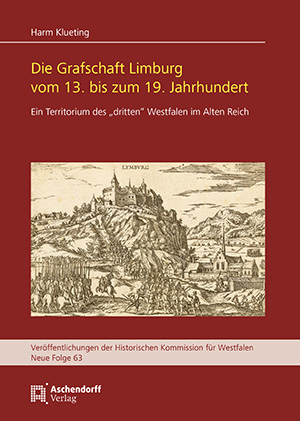
Publication – Harm Klueting, « Die Grafschaft Limburg vom 13. bis zum 19. Jahrhundert. Ein Territorium des « dritten » Westfalen im Alten Reich »

Auf aktuellen Landkarten ist die 1808 aufgelöste Grafschaft Limburg nicht mehr zu erkennen, ihr Gebiet ist aufgegangen in den heutigen Städten Hagen, Iserlohn und Schwerte. Ihre Ursprünge gehen zurück bis in das 13. Jahrhundert, sie führen tief in die dynastische Geschichte des südwestfälischen Raumes. Verschiedene Erbteilungen in den Grafschaften Mark und Berg sowie die Auseinandersetzungen nach dem Tod des Kölner Erzbischofs 1225 schufen die Voraussetzungen für die Etablierung der kleinen Herrschaft, die bis 1669 lehnsabhängig vom Herzogtum Berg war, danach reichsunmittelbar. Dargestellt wird die Regierung Limburgs durch die Grafen von Isenberg und ihre Nachfolger, die Fürsten von Bent-heim-Tecklenburg. Der Burg Hohenlimburg ist ein eigenes Kapitel gewidmet, ebenso den Landständen, der Reformation, der Auflösung der Herrschaft und deren Nachfolge im 19. Jahrhundert. Deutlich wird damit die Stellung der Grafschaft als Teil des „dritten“ Westfalen – also als eine jener kleinen Herrschaften, die im 18. Jahrhundert neben den geistlichen und den brandenburgisch-preußischen Gebieten bestanden. Ein Quellenanhang und zahlreiche Abbildungen ergänzen die prägnante Darstellung.

Prof. Dr. Dr. Harm Klueting, Historisches Institut der Universität zu Köln, ordentliches Mitglied der Historischen Kommission für Westfalen seit 1984.

Informations pratiques :

Harm Klueting, Die Grafschaft Limburg vom 13. bis zum 19. Jahrhundert. Ein Territorium des « dritten » Westfalen im Alten Reich, Münster, Aschendorff Verlag, 2023 ; 1 vol., 184 p. (Veröffentlichungen der Historischen Kommission für Westfalen, 63). ISBN : 978-3-402-15146-4. Prix : € 63,00.

Source : Aschendorff Verlag

Publié dans Publications | Laisser un commentaire