Publication – Nicola Di Cosmo et Lorenzo Pubblici, « Venezia e i Mongoli. Commercio e diplomazia sulle vie della seta nel medioevo (secoli XIII-XV) »

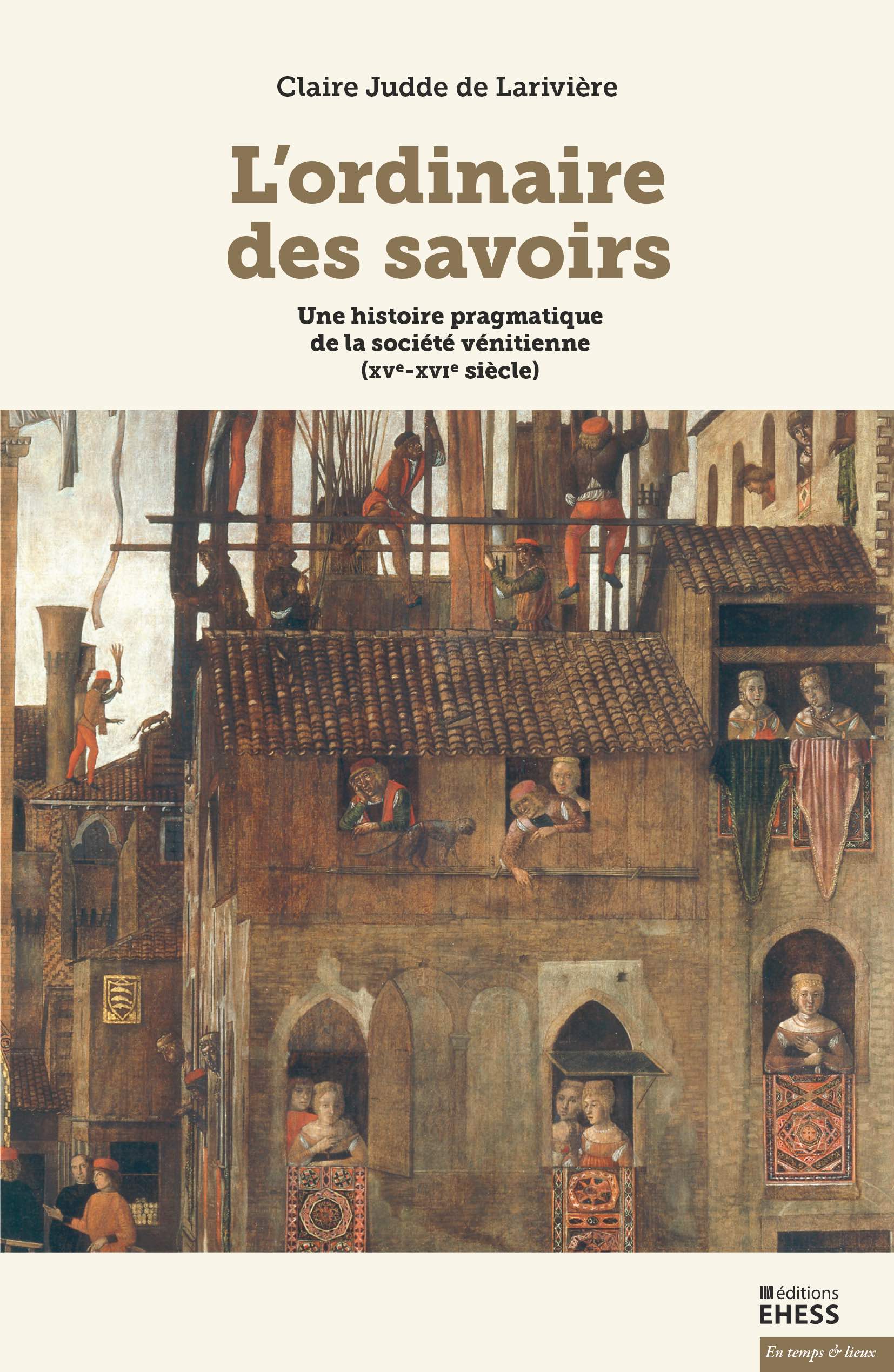
Nel XIII secolo Venezia era la potenza marittima dominante del Mediterraneo e i Mongoli i padroni di un impero immenso che comprendeva Cina, Persia, Russia e Asia Centrale. La conquista mongola integrò politiche ed economie regionali in uno spazio continentale in cui fiorirono scambi commerciali e relazioni diplomatiche. Dall’unione tra i circuiti continentali controllati dai Mongoli e le rotte marittime che portavano all’Europa, gestite da Genova e Venezia, scaturirono enormi possibilità.

Il punto d’incontro e collegamento fu il Mar Nero, dove fiorirono insediamenti italiani, crocevia di genti, culture, e merci. Se la presenza più cospicua fu genovese, Venezia fu attiva protagonista, con le sue specifiche sfide e realtà. I rapporti tra Mongoli e Veneziani sono oggetto per la prima volta di una ricostruzione che chiarisce gli intrecci, i rapporti, le difficoltà e le ambizioni di entrambe le parti in una prospettiva di storia globale.

Table des matières : ici

Informations pratiques :

Nicola Di Cosmo, Lorenzo Pubblici, Venezia e i Mongoli. Commercio e diplomazia sulle vie della seta nel medioevo (secoli XIII-XV), Rome, Viella, 2022 ; 1 vol., 316 p. (La storia. Temi, 103). ISBN : 979-1-25469-005-5. Prix : € 32,00.

Source : Viella

Publié dans Le réseau | Laisser un commentaire

Web – Les Chartes du Forez, publiées par la fondation Guichard, en ligne

La publication des Chartes du Forez antérieures au XIVe siècle est un travail scientifique considérable. Un groupe d’érudits et d’universitaires a eu l’ambition de publier tous les documents concernant le Forez antérieurs à l’an 1300. Cette œuvre, commencée en 1930, s’est achevée, après 50 années de travail, en 1980, avec la publication du 24e tome. Les auteurs principaux des 12 premiers volumes sont Georges Guichard (1868-1955), frère du célèbre Geoffroy Guichard fondateur de Casino, le comte de Neufbourg (1888-1986), J.-E. Dufour (1880-1951) et Edouard Perroy (1901-1974) professeur d’histoire médiévale à la Sorbonne. L’équipe initiale a été renforcée par Marguerite Gonon (1914-1996) chercheur au CNRS, puis Etienne Fournial (1910-2000), élève d’Edouard Perroy, professeur d’histoire médiévale à Saint-Etienne.

Ce travail a été salué et reconnu par les scientifiques comme Jean Richard, historien du Moyen-Âge, ou Jacqueline de Romilly, helléniste, membre de l’Académie française, qui affirme que « le Forez a été pourvu d’une collection de ses sources médiévales telle que bien peu d’autres régions ont bénéficié ». Il a été récompensé par plusieurs médailles au concours des Antiquités de la France (3e médaille en 1933 et 1ère en 1941).

La fondation Georges Guichard a publié 1686 chartes antérieures à 1300 ainsi que quelques chartes postérieures à 1300, une étude sur les dîmes perçues en Forez et une étude sur l’unité de mesure appelée neume.

Tous les volumes des Chartes du Forez ont été numérisés et océrisés. Une recherche libre permet une interrogation par mot.

Si la plupart des chartes sont en latin, chaque document bénéficie d’un résumé en français et de notes qui rendent accessibles ces sources sur l’histoire et les familles du Forez au Moyen-Age.

Des tables de noms et de lieux complètent la recherche libre.

La publication des Chartes du Forez est en ligne sur le site des Archives départementales de la Loire avec l’autorisation de l’Université catholique de Lyon, ayant droit de la fondation Guichard.

 Consulter les Chartes du Forez, dans : Faire des recherches / Archives numérisées en ligne / Histoire des territoires / Chartes du Forez

Source : Loire Archives

Publié dans Web | Laisser un commentaire

Séminaire – Medieval Seminar Series Lunch Lectures (Ghent University)

(25-11-2022) Launch of the 2022-2023 cycle of interdisciplinary lunch lectures by pre- and postdoc researchers

The HPIMS relaunches its interdisciplinary pre- and postdoc lunch lectures with four sessions in the academic year 2022-2023. We provide accessible opportunities for pre- and postdoc colleagues to present their work and collect constructive feedback. Sessions typically take place at lunch time (though after 12.30 for those who like to eat beforehand), take max. 1,5 hours and feature one or two researchers. Papers can be in Dutch, French or English. For questions and debates the language is adapted to both speaker and audience. Debates need to be constructive and will be guided by a regular moderator.

Programme :

THURSDAY 8 DECEMBER 2022 (12.30 – 13.30) – Campus Rommelaere (Aud 1, Building A/E/D) 
Dr. John Latham-Sprinkle (History), ‘Re-Integrating the Caucasus. The Northwest Caucasus, the Golden Horde, and the Transformation of the Mediterranean Slave Trade, 1360 1400’

FRIDAY 17 FEBRUARY 2023 (12.3O – max. 14.00)Blandijn Building (Lecture Room ‘Camelot’)
Giorgia Nicosia (History & Literary Studies), ‘Excerpting and Edifying An Overview of Syriac Historiographical Miaphysite Florilegia’
Lennert Lapeere (Archaeology), ‘Houtskeletbouw in de laatmiddeleeuwse Lage Landen’

FRIDAY 21 APRIL 2023 (12.3O – max. 14.00)Blandijn Building (Lecture Room ‘Camelot’)
Anke Lenssens (Comparative Languages Cultures Slavic Studies), ‘Freising en de Slaven onder bisschop Abraham Een op tekst gebaseerde benadering van christelijke missie en pastorale zorg onder de Karantanen in de tiende eeuw’
Catherine Rosbrook (History) ‘Sordium exteriorum attactum. Attempts to Distinguish Monastic Space in Tenth Century Lotharingia’

FRIDAY 26 MAY 2023 (12.3O – max. 14.00) – Blandijn Building (Lecture Room ‘Camelot’)
Nina Vanhoutte (Literary Studies: Greek Literature), ‘The Didactic Poems on Grammar of Niketas of Herakleia A Philological Socio-Literary Study’
Giacomo Bucci (Linguistics: Ancient Germanic Languages), ‘Hic sunt teutones. The Germanic Linguistic Traces in the Pre Historic Baltic Area’

Source : UGent

Publié dans Le réseau | Laisser un commentaire

Publication – « Vom Hymnus zum Gebet. Gattungs- und Gebrauchswechsel liturgischer Lieder in Mittelalter und Früher Neuzeit », éd. Pavlina Kulagina et Franziska Lallinger

This volume brings together studies on the diverse ways that the genres and usage of hymns and sequences transformed in the middle ages and early modern period, taking them from being Latin liturgies to becoming vernacular meditations.

Pavlina Kulagina, HU Berlin, Germany; Franziska Lallinger, Univ. of Jena, Germany.

Table des matières : ici

Informations pratiques :

Vom Hymnus zum Gebet. Gattungs- und Gebrauchswechsel liturgischer Lieder in Mittelalter und Früher Neuzeit, éd. Pavlina Kulagina, Franziska Lallinger, Boston–Vienne, De Gruyter, 2022 ; 1 vol., X–310 p. (Liturgie und Volkssprache, 6). ISBN : 978-3-11074-819-2. Prix : € 92,95.

Source :

Publié dans Publications | Laisser un commentaire

Colloque – 100 ans de droit de l’archéologie

Les 5 et 6 janvier 2023, un colloque interdisciplinaire – « 100 ans de droit de l’archéologie » – engagera une réflexion scientifique sur la genèse et les évolutions du droit de l’archéologie à l’occasion des 80 ans de la loi 27 septembre 1941 portant réglementation des fouilles archéologiques et des 20 ans de la loi du 17 janvier 2001 sur l’archéologie préventive.

Un panel d’experts, de chercheurs et d’universitaires, relevant des communautés scientifiques liées à l’archéologie et au droit du patrimoine mettront en discussion la réception des pratiques archéologiques dans le droit et les singularités normatives du droit de l’archéologie. Ce colloque proposera également une réflexion prospective sur les dynamiques et les mutations de ce droit, en miroir des valeurs du patrimoine archéologique pour la société.

Programme : ici

Informations pratiques :

Dates, horaires et lieu : Jeudi 5 janvier 2023 > 14h00-18h00 / Vendredi 6 janvier 2023 > 9h30-17h30 / Auditorium Jacqueline Lichtenstein , Galerie Colbert, 2 rue Vivienne, Paris 

Partenaires : Institut des Sciences sociales du Politique (UMR 7220 : CNRS/ENS Paris-Saclay/Université Paris Nanterre) ; Institut National du Patrimoine ; Ministère de la culture (DGPA – Sous-direction de l’archéologie) ; Institut des Etudes et de la Recherche sur le Droit et la Justice ; Ecole Nationale des Chartes 

Source : Institut des sciences sociales du politique

Publié dans Colloque | Laisser un commentaire

Conférence (en ligne) – Renaissance Lives: Piero della Francesca and the Invention of the Artist

Piero della Francesca and the Invention of the Artist – Machtelt Brüggen Israëls will be in conversation with Paul Taylor (Warburg Institute) and François Quiviger (Warburg Institute), at a free online lecture hosted by The Warburg Institute on 19 January 2023, between 5.30 and 7pm GMT.

As one of the most innovative and enlightened painters of the early Italian Renaissance, Piero della Francesca brought space, luminosity and unparalleled subtlety to painting. In addition, Piero invented the role of the modern artist by becoming a traveller, a courtier, a geometrician, a patron and much else besides.

In this nuanced account of his life and art, Machtelt Brüggen Israëls reconstructs how Piero came of age. Successfully demystifying the persistent notion of Piero’s art as enigmatic, she reveals the simple and stunning intentions behind his work.


Renaissance Lives is a series of biographies published by Reaktion Books(Opens in new window) as well as a series of conversations discussing the ways in which individuals transmitted or changed the lives of traditions, ideas and images. 

FREE VIA ZOOM. PLEASE BOOK IN ADVANCE HERE.

Source : Medieval Art Research

Publié dans Colloque | Laisser un commentaire

Appel à contribution – Rituals of Gender Staging and Performance in the Middle Ages

The Network for Medieval Arts & Rituals (NetMAR), an international, interdisciplinary network investigating the intersections between medieval arts and rituals, invites proposals for 20-minute papers that address the role of rituals in the staging and performance of medieval gender roles. The conference, which will include scholars of different career stages, will be held at the premises of the University of Bamberg between the 3rd and 4th of May 2023.

The Middle Ages are generally regarded as an era in which symbolic communication played an important and extensive role in almost all areas of life. Medieval rituals are, as Gerhard Althoff has defined them, “longer sequences of actions whose processes are committed to patterns and create a performative impact; they cause what they show” (Rules and Rituals in Medieval Power Games, 2020: 9). Rituals serve the medieval need for producing religious, legal, power-consolidating, and magical acts in symbolic ways. They can be understood, according to Hannah Vollrath, as forms of multi-sensory communication that addresses the senses and feelings of participants. In short, rituals become perceptible through the senses that render them meaningful and powerful.

Medieval ritual research has so far focused on the role of rituals in the contexts of religion and power relations. It is obvious, however, that in the patriarchally organised and male dominated societies of the Middle Ages, rituals also played a significant role in the staging and performance of gender roles. Sharon T. Strocchia comes to the same conclusion when she observes “that ritual and gender offer valuable new ways to study power and systems of social relations,” while at the same time noting that the interactions of gender and ritual have so far remained “largely unexplored” (Funerals and the Politics of Gender, 1991: 155). Taking this into account, a closer examination of ritual as a possible form of solidification and confirmation of gender roles seems worthwhile.

Speakers of all medievalist disciplines are invited to use various textual and/or visual sources to explore the complicated intersections of sex, body and gender through the lens of medieval ritual. Of interest are topics such as the following:

  • gender-specific initiation rituals
  • ritualistic consolidations of male and female family roles
  • rituals of male- and female-dominated professions
  • male and female power relations
  • gender-specific burial practices
  • the role of women in religious and magical rituals
  • female agency and ritual art
  • ritual and gender transgression in iconography and beyond
  • rituals and pregnancy.

The language of the conference is English. Please send an abstract (max. 300 words) and a brief biographical note to michaela.poelzl@uni-bamberg.de by no later than 15 January 2023. Notifications of acceptance will be sent by February 2023.

NetMAR is funded by the European Union’s Horizon 2020 research and innovation programme under grant agreement No. 951875. Learn more about the network at https://netmar.cy.

Source : Medieval Art Research

Publié dans Appel à contributions | Laisser un commentaire

Appel à contribution – Vivre, prier et mourir dans un espace insulaire et côtier entre le IVe et le XIIe s.

Atelier du 17 au 21 avril 2023 à Zadar, Croatie – envoi des candidatures avant le 31/01/2023

Le programme ANR MONACORALE, en collaboration avec l’École française de Rome, l’Université de Zadar et les UMR Chrono-Environnement, ARTEHIS, HISOMA, Orient et Méditerranée, organise un atelier doctoral à l’université de Zadar (Croatie), du 17 au 21 avril 2023. Cet atelier a pour objectif de rassembler doctorants ou post-doctorants (ayant soutenu leur thèse depuis moins de 5 ans) et chercheurs autour de questions historiques et archéologiques portant sur des thématiques religieuses et funéraires, économiques, environnementales, sur l’occupation du sol et le peuplement, sur la culture matérielle, etc. Ces approches seront spécifiques aux espaces insulaires et côtiers, de la fin de l’Antiquité au Moyen Âge central.

Résolument interdisciplinaire, cette rencontre devra permettre la confrontation et la mise en perspective de données issues de disciplines aussi distinctes que l’étude archivistique, l’archéologie, la géoarchéologie, l’archéologie du paysage, l’histoire de l’art, l’anthropologie funéraire, l’épigraphie, etc. Les sujets abordés pourront accorder une part aux questions historiographiques, mais s’appuieront pour l’essentiel sur des programmes de recherches récents et des recherches doctorales ou post-doctorales en cours. Les interventions des chercheurs porteront avant tout sur l’espace adriatique, mais dans une perspective d’ordre méthodologique et comparative avec d’autres espaces côtiers et insulaires, méditerranéens ou septentrionaux, traités dans le cadre de travaux doctoraux.

L’atelier doctoral se déroulera en deux temps :
1. Six demi-journées seront consacrées à la formation théorique ; elles comprendront des interventions à caractère général présentées par des chercheurs (60 minutes) et la présentation des travaux des doctorants (pendant 20 minutes),
2. Trois demi-journées seront réservées à la visite de monuments et de sites archéologiques religieux de l’Antiquité tardive et du Moyen Âge de Zadar et de sa région.

L’École française propose 12 bourses pour de jeunes chercheurs (doctorants et post-doctorants de la Communauté européenne et d’autres pays) ayant effectué ou effectuant un travail de recherche concernant l’espace adriatique.
Ces bourses couvrent uniquement les frais de séjour en Croatie du lundi 17 avril au samedi 22 avril 2023. Le transport est à la charge des étudiants.

Les candidat-e-s devront envoyer par e-mail, avant le 31 janvier 2023, à l’adresse dirma(at)efrome.it
un dossier constitué de :
– une lettre de motivation
– un bref curriculum vitae précisant les compétences linguistiques et, le cas échéant, une liste de publications
– un résumé du projet (2 pages au max., env. 6000 signes)
– une lettre de recommandation
Les candidat-e-s seront choisi-e-s en considération de leur projet par le comité scientifique. Ils seront prévenus de l’obtention de la bourse avant le 11 mars 2023.

Les candidats retenus pour l’atelier seront tenus d’assister à l’ensemble des séances.

Comité scientifique
Josipa Baraka Perica, Sébastien Bully, Morana Čaušević-Bully, Pascale Chevalier, Stéphane Gioanni, Etleva Nallbani, Vivien Prigent

Contacts
École française de Rome
Vivien Prigent, Directeur des études médiévales
Piazza Farnese, 67 – I – 00186 Roma – Tel. (+39) 06 68 60 15 16 – dirma(at)efrome.it

Source : École française de Rome

Publié dans Appel à contributions | Laisser un commentaire

Publication – Claudia Daniotti, « Reinventing Alexander. Myth, Legend, History in Renaissance Italian Art »

In this book Claudia Daniotti provides the first comprehensive study of the representation of Alexander the Great in Renaissance Italian art, exploring a fundamental turning point in the tradition: the transition from the medieval imagery of Alexander as a legendary, fairy-tale hero to the new historically grounded portrait of him as an example of moral virtue and military prowess.

During the Middle Ages, Alexander was turned into a fabled creature and fearless explorer, whose Flight to Heaven and other marvellous adventures were tirelessly recounted and illustrated, enjoying huge popularity. With the humanist recovery of the ancient historical texts and the changing taste and expectations of the wider, wealthier and more diverse public of the courts and cities of the Italian peninsula, the fabulous aura that had surrounded Alexander for centuries evaporated. He was recast as the moral exemplum and valorous military commander spoken of by the newly available ancient historians, and became the protagonist of an unprecedently vast iconographic repertoire established in the course of the sixteenth century.

By discussing a body of artworks from 1160s to 1560s spanning several media (from illuminated manuscripts and frescoes to sculptural reliefs, wedding chests and tapestries) and researching this material in constant dialogue with the literary tradition, this book offers a reassessment of the whole visual tradition of Alexander in Renaissance Italy, making sense of a figurative repertoire often perceived as fragmentary and disparate, and casting new light on an overall still neglected chapter in the tradition of the myth of Alexander.

Claudia Daniotti is an art historian specialising in Italian Renaissance art, with an emphasis on iconography, the classical tradition, and the transmission of visual motifs from antiquity to the present times. She holds a PhD from the Warburg Institute, London, and is currently a Leverhulme Early Career Fellow in the Centre for the Study of the Renaissance at the University of Warwick.

Table des matières :

Acknowledgments
Introduction

Chapter 1. The Legendary Tradition of Alexander in Medieval Art and Literature  
The Medieval Tradition in Italy: An Overview

Episodes from the Legend: The Begetting and Birth of Alexander; The Taming of Bucephalus; The Flight with Griffins; The Submarine Voyage; The Visit to the Trees of the Sun and the Moon

Chapter 2. The Persistence of the Legendary Tradition in Fifteenth-Century Italian Art  
Marvellous Adventures in the East in the Doria Tapestries

The Flight with Griffins in a Curtius Rufus Manuscript

Alexander as King of Swords in the Sola-Busca Tarocchi

A Fifteenth-Century Drawing Depicting the Submarine Voyage

Alexander among the Nine Worthies: the Sala Baronale in the Castle della Manta; the Triads of Castel Roncolo; the Castelnuovo Cycle; the ‘Cavalcavia’ with the Worthies of Palazzo Trinci

Chapter 3. The Humanist Recovery of Ancient Historical Sources and Its Impact on the Reception of Alexander      
The Recovery of the Ancient Greek Sources: Plutarch’s Life of Alexander; Arrian’s Anabasis; Diodorus Siculus’s Bibliotheca Historica

The Revived Interest in the Ancient Latin Sources: Curtius Rufus’s Historiae Alexandri Magni; Justin’s Epitoma Historiarum Philippicarum
Humanist Use of Ancient Sources: Petrarch; Giovanni Boccaccio; Angelo Decembrio’s De politia litteraria; Pier Paolo Vergerio

Chapter 4. The Emergence of a New Renaissance Iconography in the Fifteenth Century  
Alexander on Cassone Panels: The Battle of Issus and the Meeting with the Family of Darius; Two Sienese Panels Based on Plutarch

Alexander and the Cycles of Uomini famosi: An Introduction to the Uomini famosi in Italian Art; Representations of Alexander in Uomini famosi Cycles; Medieval Cycles (The Castel Nuovo Cycle, Naples); Transitional Cycles (The Cycle in the Aula Minor, Palazzo Vecchio, Florence; The Cycle in the Orsini Palace of Monte Giordano, Rome); Humanist Cycles (Alexander in the Sala dei Giganti, Padua; The Cycle in the Corte Ducale, Palazzo dell’Arengo, Milan; The ‘Piccolomini Cycle’ of Famous Men and Women)

Images of Alexander in Fifteenth-Century Manuscripts: Images of Alexander Based on Ancient Numismatic Prototypes (Alexander Wearing the Lion-Skin of Hercules; the Helmeted Alexander; Alexander with the Horns of Zeus Ammon); A Curtius Rufus Manuscript “Illustrated like a Romance Text”
         
Chapter 5. The Development and Consolidation of Renaissance
Iconography in the Sixteenth Century                  
Selected Episodes from the Life of Alexander: The Meeting with the Women of Darius; The Marriage of Alexander and Roxane; Alexander, Apelles and Campaspe; The Taming of Bucephalus; The Birth (and Begetting) of Alexander
Conclusion

Conclusion                      
Appendices
Bibliography
Index of names
List of Illustrations
Table of contents

Informations pratiques :

Claudia Daniotti, Reinventing Alexander. Myth, Legend, History in Renaissance Italian Art, Turnhout, Brepls, 2022 ; 1 vol., 348 p. (Alexander redivivus, 15). ISBN : 978-2-503-59743-0. Prix ;: € 100,00.

Source : Brepols

Publié dans Publications | Laisser un commentaire

Publication – « Rutas de mercado, rutas de arte: Materiales, procedimientos y artistas en la configuración pictórica en el Mediterráneo del siglo XV », éd. Joan Aliaga Morell et Nuria Ramón Marqués

L’activité des peintres et sculpteurs qui ont travaillé au cours des siècles gothiques et de la Renaissance continue de susciter un grand intérêt parmi les spécialistes de l’art occidental. L’une des approches les plus suggestives pour comprendre la gestation et la diffusion de la production artistique est d’aborder le phénomène comme un fait multiforme et complexe du point de vue historico-artistique. La connaissance des matériaux et des procédés techniques utilisés est également enrichissante, ainsi que les liens entre les œuvres et les ateliers, auxquels on accède en suivant le parcours des marchands qui transportaient les pigments, les laques et les teintures et en recherchant la trace de l’itinérant. des artistes qui diffusent leur savoir dans les ports de destination.


Sept auteurs, issus de différentes universités et centres de recherche d’Europe et des États-Unis, spécialistes de l’histoire de l’art médiéval et moderne, présentent dans cet ouvrage leurs dernières contributions, exposées lors de la conférence « Rutas de mercado, rutas de arte: 1.as Jornadas Internacionales. Materiales, procedimientos y artistas en la configuración pictórica en el Mediterráneo del siglo XV», qui a eu lieu à l’Universitat Politècnica de València et au Musée des Beaux-Arts de Valence les 17 et 18 novembre 2021.

Informations pratiques :

Rutas de mercado, rutas de arte: Materiales, procedimientos y artistas en la configuración pictórica en el Mediterráneo del siglo XV, éd. Joan Aliaga Morell et Nuria Ramón Marqués, Valence, Tirant Editorial, 2022 ; 1 vol., 172 p. (Plural). ISBN : 978-8-41937-610-7. Prix : € 16,90.

Source : Tirant Editorial

Publié dans Publications | Laisser un commentaire