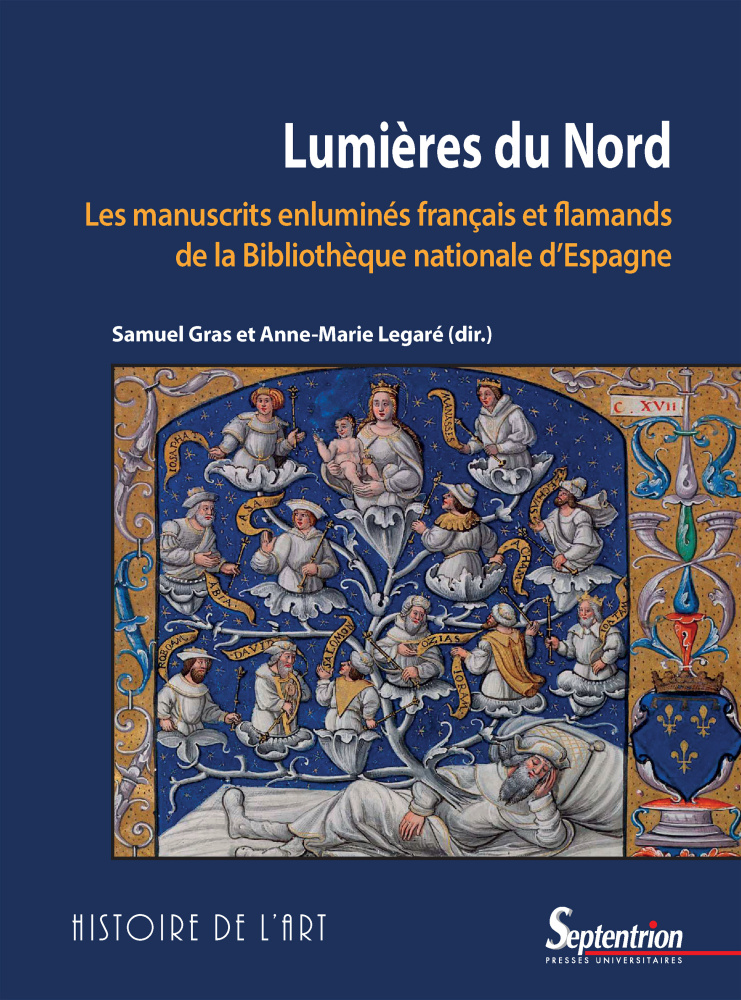
Publication – « Lumières du Nord. Les manuscrits enluminés français et flamands de la Bibliothèque nationale d’Espagne », éd. Samuel Gras et Anne-Marie Legaré

Lumières du Nord est l’aboutissement d’un projet de recherche international mené sur les manuscrits enluminés français et flamands de la Biblioteca Nacional de España (BNE). L’ouvrage regroupe douze contributions signées par des spécialistes européens et américains de l’art de l’enluminure qui fournissent une analyse approfondie de manuscrits inédits ou méconnus du fonds madrilène. Ces études sont pour la plupart issues de conférences données lors de deux journées d’étude organisées à Lille et Madrid en 2018. La Biblioteca Nacional de España conserve la plus grande collection de manuscrits du pays mais ce fonds unique n’avait pas encore bénéficié de toute l’attention qu’il méritait. La collaboration entre le laboratoire IRHiS et le département des Manuscrits de la BNE a permis de mettre en lumière quelques-uns de ces trésors. Les articles renouvellent les informations portant sur la datation, l’attribution et les conditions de création de ces manuscrits, et contribuent à une meilleure connaissance du prestigieux fonds de la BNE.

Sommaire : ici

Informations pratiques :

Lumières du Nord. Les manuscrits enluminés français et flamands de la Bibliothèque nationale d’Espagne, éd. Samuel Gras et Anne-Marie Legaré, Villeneuve d’Ascq, 2022. 392 p. ISBN : 978-2-7574-3508-3. Prix : 35 euros.

Source : Presses universitaires du Septentrion

Publié dans Publications | Laisser un commentaire

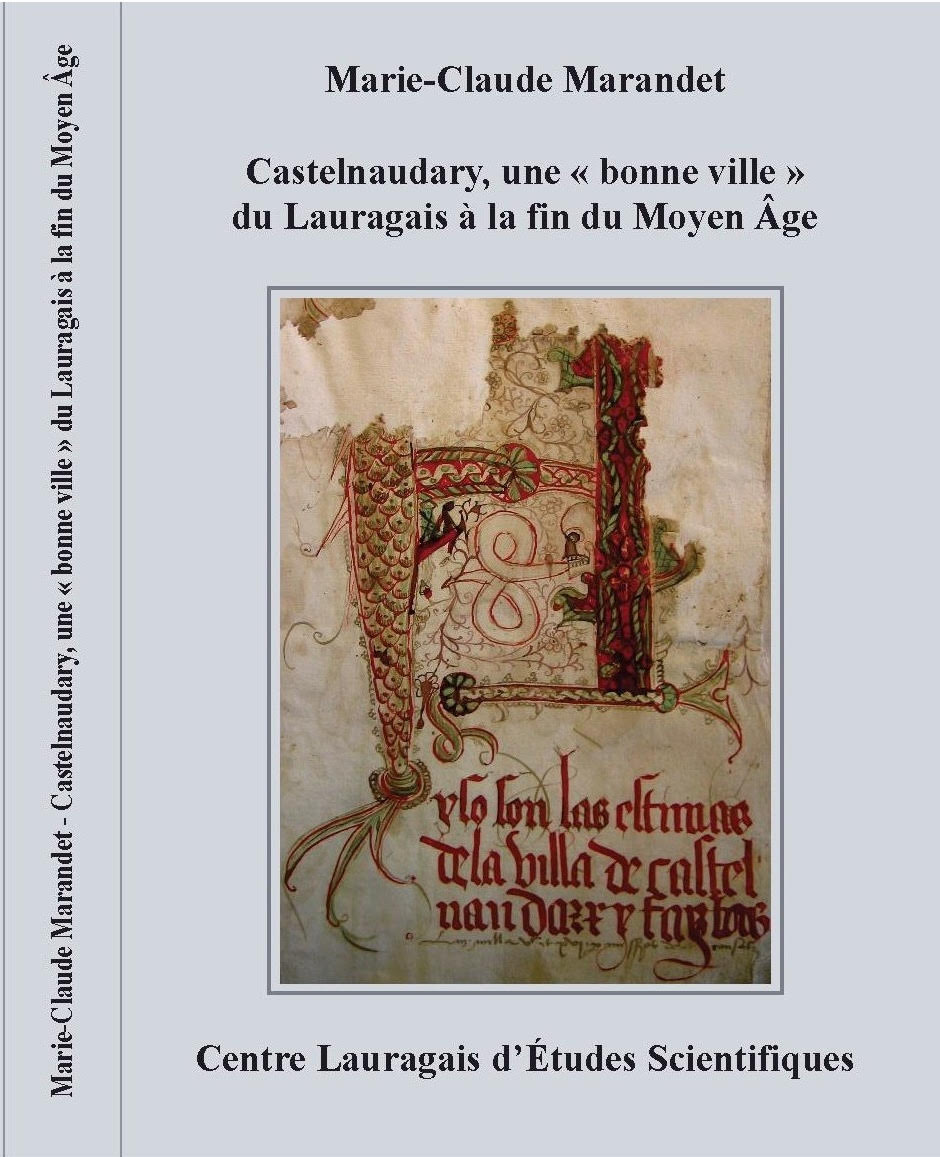
Publication – Marie-Claude Marandet, « Castelnaudary une ‘bonne ville’ du Lauragais à la fin du Moyen Âge »

 À partir d’archives nombreuses (registres notariaux, livres d’estimes, sources judiciaires), Marie-Claude Marandet nous plonge dans la vie d’une petite capitale régionale.

 Sont abordés de multiples thèmes : administration de la ville, levée des impositions, cadre de vie, économie basée sur une polyculture (céréales, pastel, élevage ovin) permettant la vente de produits particulièrement rentables (agranat, laine).

Diverses catégories d’habitants sont évoquées, une place particulière est faite aux femmes. Sont aussi traitées les attitudes devant la mort et la violence privée et sa répression.

Marie-Claude Marandet, professeur d’histoire médiévale de l’université de Perpignan Via Domitia ; U M R 5136, FRAMESPA, université Toulouse-Jean Jaurès.

Informations pratiques :

Marie-Claude Marandet, Castelnaudary une ‘bonne ville’ du Lauragais à la fin du Moyen Âge, Castelnaudary, Centre Lauragais d’Études Scientifiques, 2022. 420 p., 21 x 29.7 cm. Prix : 25 €.

Publié dans Publications | Laisser un commentaire

Publication – Mattia Zangari, « Santità femminile e disturbi mentali fra Medioevo ed età moderna »

L’analisi del complesso rapporto fra santità femminile, isteria e altri disturbi mentali fra Medioevo ed età moderna: questo l’importante e affascinante oggetto di cui tratta questo libro. Si indaga se le estatiche, le visionarie e più in generale le mistiche – sante, beate o venerabili –, lungi dall’essere in preda a estasi e visioni, fossero in realtà affette da disturbi della personalità e del comportamento. Attraverso una rigorosa analisi delle fonti, l’autore osserva da vicino il comportamento delle donne mistiche con la lente del moderno codice medico e arriva a concludere che la loro condotta può essere spesso ricollegata a standard e profili patologici più o meno documentabili. Un complesso e articolato lavoro di ‘intersezione’ di fonti agio-biografiche (cronache monastiche, diari, relazioni inedite, resoconti nosografici dei medici coevi alle mistiche censite) e iconografiche (statuette e oggetti devozionali), documenti poco noti ma attendibili e assai convincenti.

Table des matières : ici

Informations pratiques :

Mattia Zangari, Santità femminile e disturbi mentali fra Medioevo ed età moderna, Laterza, 2022. 256 p. ISBN : 9788858148440. Prix : 23 euros.

Source : Laterza

Publié dans Publications | Laisser un commentaire

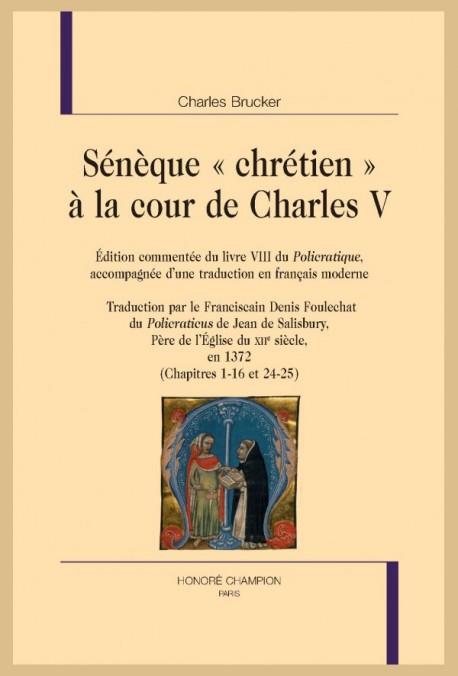
Publication – « Sénèque « chrétien » à la cour de Charles V. Édition du livre VIII du Policratique, accompagnée d’une traduction en français en français moderne. Traduction par le Franciscain D. Foulechat du « Policratus » de Jean de Salisbury, en 1372 (Chap. 1-16 et 24-25) », éd. Charles Brucker

Cette édition présente et commente une partie non encore publiée du Policratique de Jean de Salisbury. La traduction française, commandée par Charles V, est l’œuvre du Franciscain Denis Foulechat qui, dans l’ensemble, a bien rendu la pensée en somme réformatrice de Jean de Salisbury ; ce dernier, à l’appui d’anecdotes et d’allégorismes, vise à la fois le gouvernement d’Henri II Plantagenêt et l’administration de Thomas Becket, chancelier d’Henri II et ami de Jean. Tout au long du Policraticus, Jean passe de l’encouragement amical à la réprimande qui s’adresse à la société tout entière. Ce ton atteint son paroxysme lorsque, dans le chapitre VI du livre VIII, Jean entame son réquisitoire à l’encontre de la luxure, qui englobe toutes les formes de la démesure, et à l’encontre des Épicuriens. C’est là qu’apparaît Sénèque, « ami » de saint Paul, avec une forme de stoïcisme que ne pouvaient entièrement désavouer les Pères de l’Église tels que Jean, imprégné de culture gréco-latine.

Charles Brucker est professeur émérite à l’Université de Lorraine (Lettres, Nancy). Sa spécialité porte sur l’histoire du vocabulaire français et sur l’édition de textes inédits du moyen français, notamment de traductions du latin classique et médiéval. Il a enseigné l’histoire de la langue française, la linguistique comparée des langues romanes ainsi que la langue et la littérature françaises du Moyen Âge.

Table des matières : ici

Informations pratiques :

Sénèque « chrétien » à la cour de Charles V. Édition du livre VIII du Policratique, accompagnée d’une traduction en français en français moderne. Traduction par le Franciscain D. Foulechat du « Policratus » de Jean de Salisbury, en 1372 (Chap. 1-16 et 24-25), éd. Charles Brucker, Paris, Honoré Champion, 2022 (Linguistique, traduction et terminologie, 7). 452 p. ISBN : 9782745357878. Prix : 65 euros.

Source : Honoré Champion

Publié dans Publications | Laisser un commentaire

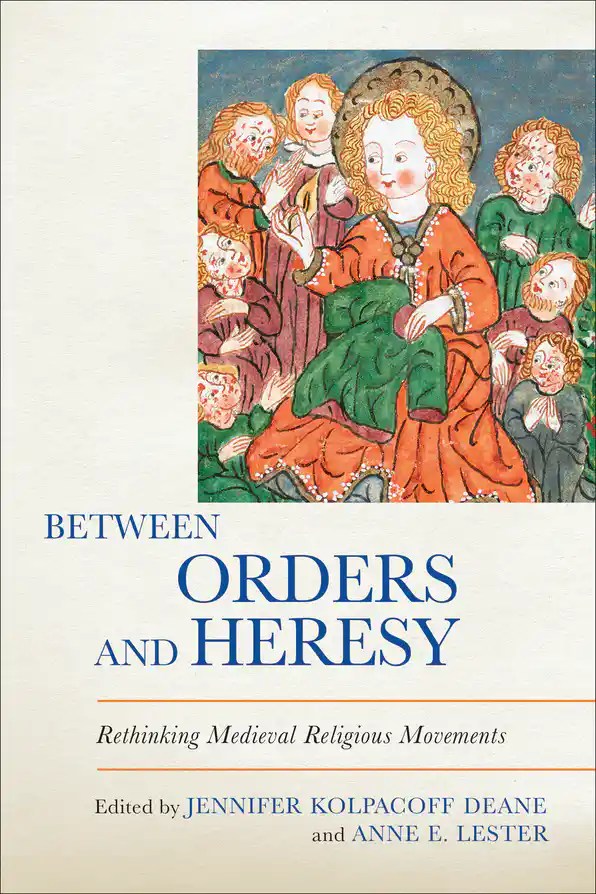
Publication – « Between Orders and Heresy: Rethinking Medieval Religious Movements », éd. Jennifer Kolpacoff Deane et Anne E. Lester

Between Orders and Heresy foregrounds the dynamic, creative, and diverse late medieval religious landscapes that flourished within the spaces of social and ecclesiastical structures.

This collection reconsiders the arguments put forward in Herbert Grundmann’s monumental book, Religious Movements in the Middle Ages, and challenges his traditional interpretive binary, recognized as the shared origins of many medieval religious movements. The contributors explore the social relationships fostered between secular clergy members, including parish priests, local canons, and aristocratic confessors, and examine the ways in which laypeople inspired and engaged in devotion beyond religious orders.

Each essay in the volume considers a major theme in medieval religious history, such as the implementation of apostolic ideals, pastoral relationships, crusade connections, vernacular traditions, and reform. Organized to historicize and challenge the deeply embedded historiographical tendencies that have long distorted the complex dynamics of the late medieval world, Between Orders and Heresy is a major assessment of medieval religious belief and activity beyond and betweenthe binary of orders and heresies.

Jennifer Kolpacoff Deane is a professor of History and chair of the Social Sciences Division at University of Minnesota Morris.

Anne E. Lester is the John W. Baldwin and Jenny Jochens Associate Chair in Medieval History at Johns Hopkins University.

Programme :

List of Illustrations

Preface
John Van Engen

1. Introduction: Religion and Religious Worlds in Between
Jennifer Kolpacoff Deane, University of Minnesota Morris, and Anne E. Lester, Johns Hopkins University

2. Herbert Grundmann: Confession and the “Religious Movements”
Letha Böhringer, Universität zu Köln

3. Francis of Assisi, the Vita Apostolica, and the Roman Church: Rethinking the Paradigms
Amanda Power, University of Oxford

4. Hypocrites! Critiques of Religious Movements and Criticism of the Church, 1050–1300
Sita Steckel, University of Münster

5. Crusading as a Religious Movement: Families, Community, and Lordship in a Vernacular Frame
Anne E. Lester, Johns Hopkins University

6. Coming Together as an Apostolic Act: Confraternalism as an Umbrella for Medieval Religious Movements
Neslihan Şenocak, Columbia University

7. Reassessing the Links between “The Women’s Religious Movement” and “The Origins of a Religious Literature in the Vernacular” in France
Sean L. Field, University of Vermont

8. “More Useful in the Salvation of Others”: Beguines, Religio, and the Cura Mulierum at the Early Sorbonne
Tanya Stabler Miller, Loyola University, Chicago

9. Between Charity and Controversy: The Grey Sisters, Liminality, and the Religious Life
Alison More, College of New Rochelle

10. Women, Power, and Religious Dissent: Why Women Never became Heresiarchs
Janine Larmon Peterson, Maurist University

11. Navigating Saintly Circles: Margherita Colonna and the Women’s Religious Movement in Rome
Lezlie Knox, Marquette University

12. The “Clever Girls” of Prague: Beguines, Preachers, and Late Medieval Bohemian Religion
Jana Grollová

Bibliography
Index

Informations pratiques :

Between Orders and Heresy: Rethinking Medieval Religious Movements, éd. Jennifer Kolpacoff Deane et Anne E. Lester, Toronto, University of Toronto Press, 2022. 435 p. ISBN : 9781487502416. Prix : USD 95,00.

Source : University of Toronto Press

Publié dans Publications | Laisser un commentaire

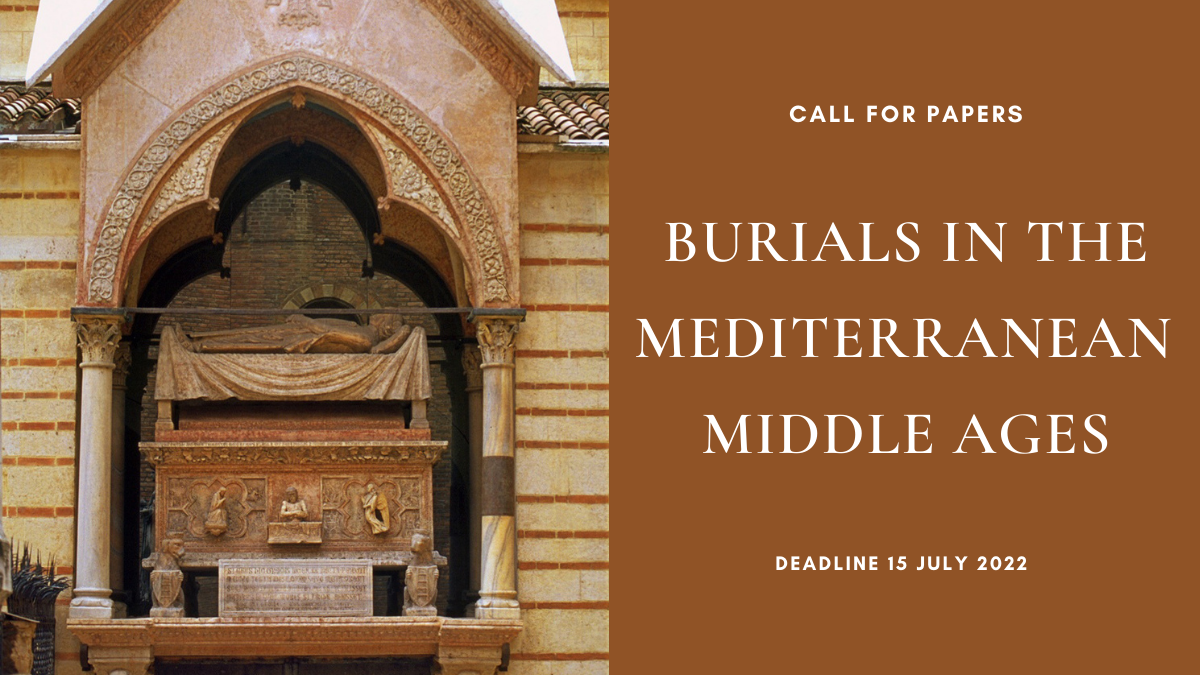
Appel à contribution – Burials in the Mediterranean Middle Ages (Minima Medievalia)

The act of preparing the final resting place for the mortal remains of members of medieval communities is one of the practices that found many forms of material expression and countless artistic forms in the Mediterranean world. The most salient aspects of a person’s life could be recalled in evocative apparatuses, even very complex ones, in strict adherence to the burial practices of the society in which the deceased lived. But more often it is a more restrained, even anonymous, dimension that conveys the sense of pity towards the dear departed.

The next issue of Minima Medievalia will address the implications of funerary art in the Latin, Byzantine and Islamic Middle Ages. The focus will be on burial monuments, both in their concrete and immaterial dimensions. The aim is not only to census and deepen the knowledge of monumental tombs, but also to give space to those minor, violated, destroyed, fragmentary and even devoid of material consistency contexts that make up the most widespread mosaic of this phenomenon.

The volume therefore intends to address issues of various kinds related to the world of burials: the addressee (sepulchers of saints, of religious, of laymen); the types of messages conveyed by the funerary practice and the cultural values of reference; the methods of display; the forms and typologies used around the Mediterranean; the linguistic and material expressions translated through various artistic (sculpture, architecture, monumental art, painting, epigraphy) and documentary media (sources, liturgy, worship, devotion); the areas of destination and conditions of use; the role of patrons, artists, communities; and much more. 

The general features of the volume can be summarised as follows: 

– the topic is tombs and funerary monuments built between the 4th and 15th centuries;

– the cultural areas of reference are the Latin West, Byzantium and the Islamic world;

– the fields of investigation are architecture, sculpture, painting, epigraphy, sources, liturgy, etc;

– five main European languages are accepted (Italian, English, French, German and Spanish); any other options must be agreed with the scientific committee;

– the text must be between 5 and 25/30 pages of 2000 characters long (notes included, bibliography excluded);

– each author may include between 2 and 15 figures.

Slight deviations in length and number of figures are possible, but only if previously agreed with the editor and the scientific committee.


Submission of abstracts

In order to contribute to the volume it is necessary to send an abstract to the scientific committee, which will evaluate its content and congruence with the topic of the current issue:

– the proposal must be 300-700 words;

– the case study and the author’s thesis must be clearly described and the logical structure of the topic to be addressed must be provided;

– a minimum bibliographical reference must be included;

– photographs for reference and comparison may be provided.

Each text will be peer-reviewed.

Proposal deadline: 15 July 2022.

Please send the material to: fabio.coden[at]univr.it.


Volume features

Selected proposals will be included in a collective volume, edited under the patronage of the University of Verona and published by Silvana editoriale, which guarantees international distribution. For past issues of Minima Medievalia series, please visit these links: 

www.minimamedievalia.it   

– Minima medievalia (academia.edu)

https://www.silvanaeditoriale.it/libro/9788836649211


The deadline for submission of the final version is due June 2023. The volume is expected to be published at the end of the same year.

Source : Medieval Art Research

Publié dans Appel à contributions | Laisser un commentaire

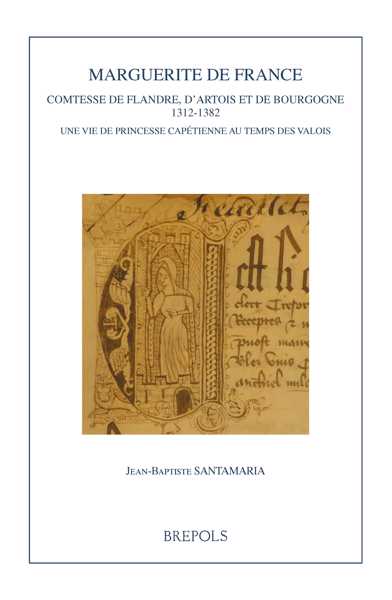
Publication – Jean-Baptiste Santamaria, « Marguerite de France, comtesse de Flandre, d’Artois et de Bourgogne (1312-1382). Une vie de princesse capétienne au temps des Valois »

Fille du roi Philippe V et de Jeanne de Bourgogne, Marguerite de France (1312-1382) est une figure majeure et pourtant méconnue du XIVe siècle. Après une éducation soignée marquée par l’influence de Mahaut ainsi que par les raffinements et les crises qui caractérisent la cour des derniers Capétiens, elle est mariée au futur comte de Flandre Louis de Nevers en 1320. Investie de la délicate mission de réconcilier les lions et les lys, elle affronte des débuts calamiteux sur le plan personnel et politique avant que son installation en Flandre et la naissance de l’héritier Louis de Male ne lui confèrent une certaine influence. Si les révoltes flamandes puis le veuvage la conduisent à un retrait apparent, elle maintient la Flandre dans l’alliance française en imposant à son fils une série de mariages. Héritant en 1361 des comtés d’Artois et de Bourgogne, elle devient une figure essentielle du jeu politique, redressant une situation d’abord périlleuse et rassemblant autour d’elle un nouveau parti bourguignon. Cette vie de princesse est marquée par une intense circulation s’appuyant sur un vaste réseau de résidences, et s’accompagne des raffinements d’un mode de vie princier qui éclaire sur une culture matérielle mêlant usages français, septentrionaux et bourguignons. Du mécénat aux pratiques dévotionnelles s’élabore l’identité complexe d’une fille de roi de France marquée par Mahaut d’Artois, jouant des images traditionnelles d’un pouvoir féminin pacificateur tout en recourant à la force. À ce titre, elle peut être considérée comme une marraine de l’État bourguignon.

Jean-Baptiste Santamaria est maître de conférences HDR à l’université de Lille. Spécialiste des pouvoirs princiers de la fin du Moyen Âge, il a publié La Chambre des comptes de Lille de 1386 à 1419. Essor, organisation et fonctionnement d’une institution princière, Turnhout, Brepols, 2012 ; et Le secret du prince. Gouverner par le secret (France-Bourgogne, XIIIe-XVe siècles), Ceyzérieu, Champ Vallon, 2018 (prix du livre du Sénat 2018, prix de la Dame à la Licorne 2018).

Table des matières :

Introduction

Première partie : Fille, épouse, veuve, princesse : une vie de femme de pouvoir au XIVe siècle

Introduction de la première partie

Chapitre 1. Une enfance royale aux derniers temps des Capétiens (1312 ?- 1320)
Chapitre 2. Les difficiles débuts de « madame de Flandres » (1320-1327).
Chapitre 3. Lys et lions réconciliés. L’avènement en Flandre de la comtesse
Chapitre 4. Le retour de la guerre et l’exil 1337-1346
Chapitre 5. Le veuvage : temps de liberté, temps d’épreuves (1346-1361)
Chapitre 6. Marguerite de France au temps du roi Jean le Bon : face à la tourmente
Chapitre 7. Une succession contrariée (1361-1364) : face au roi Jean le Bon
Chapitre 8. Charles V, la paix, l’alliance française et la reconstitution d’un parti bourguignon (1364-1369)
Chapitre 9. Pertes et profits de l’alliance Valoise. Le temps de la remise en ordre (1369-1378)
Chapitre 10. Entre guerre et révoltes : protéger la succession 1377-1382

Conclusion de la première partie

Deuxième partie : L’art d’être princesse : mode de vie et identité d’une fille de roi de France au XIVe siècle

Introduction de la deuxième partie

Chapitre 11. Une vie d’itinérance : géographie de Marguerite de France
Chapitre 12.  Vie de châteaux, vie urbaine : manières d’occuper l’espace
Chapitre 13. Tenir sa cour : distraction, consommation et habillement entre quotidien et temps de fête
Chapitre 14. Marguerite de France et les arts : un mécénat oublié
Chapitre 15. « Pourveoir et subvenir en son vivant au remede et salut de s’amme ». Piété, dévotion et identité princière
Chapitre 16. Conscience de soi, communication et mémoire : la construction d’une identité

Conclusion de la deuxième partie

Conclusion générale
Sources et bibliographie
Sources imprimées (sélection)
Ouvrages et travaux
Index

Informations pratiques :

Jean-Baptiste Santamaria, Marguerite de France, comtesse de Flandre, d’Artois et de Bourgogne (1312-1382). Une vie de princesse capétienne au temps des Valois, Turnhout, Brepols, 2022 (Burgundica , 34). 540 p., 23,5 x 15,5 cm. ISBN : 978-2-503-59514-6. Prix : 109,00 euros.

Source : Brepols

Publié dans Publications | Laisser un commentaire

Offre d’emploi – European History in the Early Middle Ages (Universität Wien)

Open to new ideas. Since 1365. As a research university with high international visibility and a wide range of degree programmes, the University of Vienna is committed to basic research open to application and research-led teaching, as well as to career development of young researchers and to the dialogue with economy and society. That way, the University of Vienna contributes to the education of future generations and to the society’s ability to innovate.

The appointment of particularly qualified researchers to university professors is an important strategy of the University of Vienna. Become part of this vibrant and future-oriented organisation.

At the Faculty of Historical and Cultural Studies of the University of Vienna the position of a

University Professor
of
European History in the Early Middle Ages

(full time, permanent position) is to be filled.

The professorship focuses on early medieval European history. We invite applications from historians with the relevant methodological and theoretical expertise who work comprehensively, preferably in an intercultural perspective, on political and societal change, religious diversity, migration and integration, identity and diversity in Europe. The willingness to take over the direction of the Department of Austrian Historical Research in the future is expected. Successful candidates are expected to teach courses at all levels, BA, MA, and PhD, including active participation in a Research Cluster within the Doctoral School of Historical and Cultural Studies (https://dshcs.univie.ac.at) and to contribute to the key research areas (FSP, Forschungsschwerpunkte) of the Faculty of Historical and Cultural Studies, above all “Historical and Cultural European Studies” and “Community, Conflict, and Integration”.

Successful candidates should have the following qualifications:

·         Doctoral degree/PhD and post-doctoral experience at a university or other research institution

·         Habilitation (venia docendi) in a subject field relevant to this position or an internationally accepted equivalent qualification is
          desirable

·         Outstanding achievements in research, excellent publication record, international reputation

·         Experience in designing, procuring and managing large research projects, as well as the willingness and ability to lead research
          groups

·         Enthusiasm for excellent teaching, teaching experience at universities as well as the ability and willingness to teach students in
          all phases of their studies (bachelor’s, master’s, or doctoral level), to supervise academic theses and to promoting young
          academic colleagues

The University of Vienna expects the successful candidate to acquire, within three years, proficiency in German sufficient for teaching in bachelor’s programmes and for participation in university committees. In addition, the University of Vienna expects the successful candidate to be prepared to take over responsibility on the organisational level of the Faculty and the University, if necessary.

We offer:

·         a negotiable and attractive salary (classification according to the Collective Bargaining Agreement for University Staff, allocation
          to job group A1; section 98 of the Universities Act 2002); the salary will be individually negotiated under consideration of the
          previous career development and the current income situation

·         in addition to the statutory social insurance, the University of Vienna offers a pension fund to its employees

·         a “start-up package”, in particular for the initiation of research projects

·         a dynamic research location with well-established research funding provisions

·         attractive working conditions in a city with a high quality of life

·         comprehensive advice and support in relation to finding an accommodation, change of schools and dual career

·         a wide range of support services offered by central service institutions

The University of Vienna pursues a non-discriminatory employment policy and values equal opportunities, as well as diversity (http://diversity.univie.ac.at). The University puts special emphasis on increasing the number of women in senior and in academic positions. Given equal qualifications, preference will be given to female applicants.

Application documents:

·         Application letter, including a brief description of:

·        current research interests and research plans for the immediate future

·        current and planned foci in academic teaching and the supervision of young researchers

·         Academic curriculum vitae,
          including information about “esteem factors” (e.g. experience as a publisher, functions in research societies or programme
          committees)

·         List of publications, including:

·        specification of five key publications which the applicant considers particularly relevant to the advertised professorship

·        provision of an Internet link for download or electronic submission of PDF versions of these five publications

·        information about citations and impact factors, depending on the common practice in the relevant research area

·         List of talks given,
          including information about invited keynote lectures at international conferences

·         Third-party funds
          list of acquired third-party funds (subject, duration, origin, volume) as well as, if applicable, of inventions/patents

·         Overview of previous academic teaching and supervised theses, especially doctoral theses

·         Teaching evaluations (if available)

·         Copies of documents and certificates

Applications in German or English should be submitted by e-mail to the Dean of the Faculty of Historical and Cultural Studies of the University of Vienna, Prof. Dr. Sebastian Schütze, Universitätsring 1, 1010 Vienna (dekanat.hkw@univie.ac.at).

Reference no.: 14/26-2021/22

The application deadline is 15 September 2022.

Source : Universität Wien

Publié dans Offre d'emploi | Laisser un commentaire

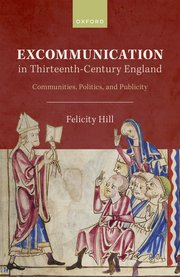
Publication – Felicity Hill, « Excommunication in Thirteenth-Century England. Communities, Politics, and Publicity »

Excommunication was the medieval churchs most severe sanction, used against people at all levels of society. It was a spiritual, social, and legal penalty. Excommunication in Thirteenth-Century England offers a fresh perspective on medieval excommunication by taking a multi-dimensional approach to discussion of the sanction. Using England as a case study, Felicity Hill analyzes the intentions behind excommunication; how it was perceived and received, at both national and local level; the effects it had upon individuals and society. The study is structured thematically to argue that our understanding of excommunication should be shaped by how it was received within the community as well as the intentions of canon law and clerics. Challenging past assumptions about the inefficacy of excommunication, Hill argues that the sanction remained a useful weapon for the clerical elite: bringing into dialogue a wide range of source material allows effectiveness to be judged within a broader context. The complexity of political communication and action are revealed through public, conflicting, accepted and rejected excommunications. Excommunication could be manipulated to great effect in political conflicts and was an important means by which political events were communicated down the social strata of medieval society. Through its exploration of excommunication, the book reveals much about medieval cursing, pastoral care, fears about the afterlife, social ostracism, shame and reputation, and mass communication.

FELICITY HILL is a lecturer in medieval history at the University of St Andrews. She was previously a research fellow at Corpus Christi College, Cambridge, and a Scouloudi fellow at the Institute of Historical Research. She holds degrees from the University of Manchester (BA), University College London (MA), and the University of East Anglia (PhD).

Table des matières :

Introduction
PART I: INDIVIDUALS
1:The Spiritual Effects of Excommunication: Instilling Fear
2:Belief, Fear, and Conscience
PART II: COMMUNITIES
3:Exclusion from the Community of the Faithful
4:Apathy, Rejection, and Divided Loyalties
PART III: PUBLICITY
5:Publicity, Reputation, and Scandal
6:Violence, Excommunication, and Dispute Settlement: Thame, 1292-1294
7:Ecclesiastical Broadcasting in the Thirteenth Century: The Origins of the Great
Conclusion
APPENDIX I: IPSO FACTO SENTENCES TO BE REGULARLY PRONOUNCED IN THIRTEENTH-CENTURY ENGLAND
APPENDIX II: WILLIAM OF PAGULA’S LIST OF IPSO FACTO SENTENCES (OCULIS SACERDOTIS, C. 1320)

Informations pratiques :

Felicity Hill, Excommunication in Thirteenth-Century England. Communities, Politics, and Publicity, Oxford, Oxford University Press, 2022. 368 Pages. ISBN: 9780198840367. Prix : GBP 75,00.

Source : Oxford University Press

Publié dans Publications | Laisser un commentaire

Journée d’étude – Les ressources de la Musicologie médiévale – La bibliographie

Une journée d’étude est organisée en format hybride vendredi 22 juillet 2022 (9h30-13h) au campus Condorcet par Laura Albiero autour des ressources de la musicologie médiévale.

Programme :

  • 9h30 – Laura ALBIERO (IRHT-CNRS) : Introduction
  • 9h45 – Maria Sofia LANNUTTI (Università di Firenze) : Une idée de Moyen Âge : du projet MEM au projet ArsNova
  • 10h15 – Stefania VITALE (Fondazione Ezio Franceschini) : La monodie liturgique, problèmes de catalogage dans la base de données MEM
  • 10h45 – Antonio CALVIA (Università di Pavia) : Les bases de données MEM et ArsNova dans la plate-forme MIRABILE

11h15 Pause-café

  • 11h30 – Marie WINKELMÜLLER-URECHIA (Eberhard Karls Universität Tübingen) & Raquel ROJO CARRILLO (University of Cambridge) : Liturgical Chant Bibliography : finding and promoting the most recent works in the plainchant field
  • 12h15 – Discussion

L’évènement sera en format hybride (présentiel et à distance)

Inscription gratuite et obligatoire – laura.albiero@irht.cnrs.fr

Source : IRHT

Publié dans Colloque | Laisser un commentaire