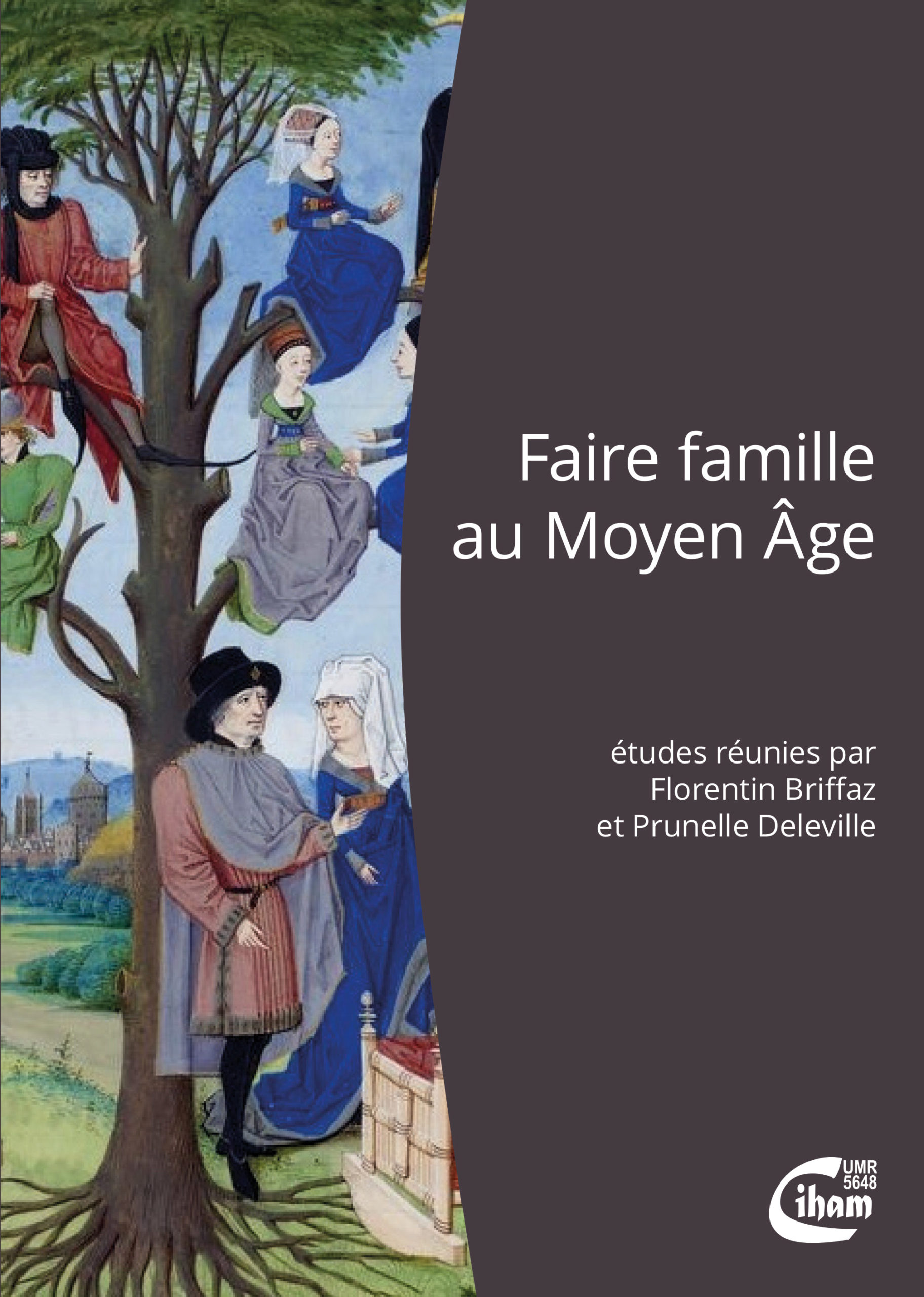
En 1222, Mariam de Sebastia, princesse arménienne est en peine : le deuil de ses filles, mortes en bas âge, lui est impossible. Deux cents ans plus tard, bien loin de là, un petit noble savoyard, Antoine d’Arloz, décide, dans son testament, de se faire enterrer dans le chœur de l’église de Leyment, « du côté du vent, au lieu où est situé le banc de son épouse ». Ces témoignages d’affection pour l’autre moitié ou pour les enfants sont saisissants et renvoient à différentes conceptions sensibles de la famille au Moyen Âge. La famille est un corps vivant qui se définit et se remodèle sans cesse, à la faveur de l’irruption de nouveaux membres mais surtout en fonction de normes qu’elle suit ou, en l’occurrence, qu’elle participe à façonner par ses transgressions et/ou ses interprétations. De la péninsule ibérique au Caucase, le volume confronte des aires géographiques, des acteurs sociaux variés et des sources diverses couvrant un long Moyen Âge du VIe au XVe siècle.
Informations pratiques :
Faire famille au Moyen Âge, éd. Florentin Briffaz et Prunelle Deleville, Lyon, Ciham-Éditions, 2022 ; 1 vol., 190 p. (Mondes médiévaux). ISBN : 978-2-95684-266-8. Prix : € 25,00.
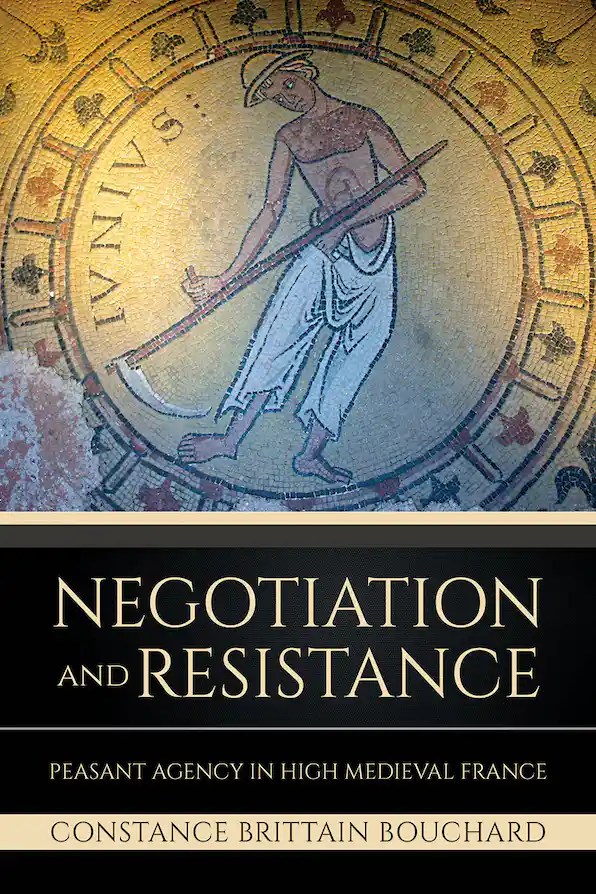
In Negotiation and Resistance, Constance Brittain Bouchard challenges familiar depictions of the peasantry as an undifferentiated mass of impoverished and powerless workers. Peasants in eleventh- and twelfth-century France had far more scope for action, self-determination, and resistance to oppressive treatment—that is, for agency—than they are usually credited with having. Through innovative readings of documents collected in medieval cartularies, Bouchard finds that while peasants lived hard, impoverished lives, they were able to negotiate, individually or collectively, to better their position, present cases in court, and make their own decisions about such fundamental issues as inheritance or choice of marriage partner. Negotiation and Resistance upends the received view of this period in French history as one in which lords dealt harshly and without opposition toward subservient peasants, offering numerous examples of peasants standing up for themselves.
Constance Brittain Bouchard is Distinguished Professor Emerita of History at the University of Akron and the author or editor of numerous books including Sword, Miter, and Cloister, Holy Entrepreneurs, and Strong of Body, Brave and Noble.
Informations pratiques :
Constance Brittain Bouchard, Negotiation and Resistance. Peasant Agency in High Medieval France, Ithaca (NY), Cornell Unievrsity Press, 2022 ; 1 vol., 186 p. ISBN : 978-1-50176-658-9. Prix : USD 125,00.
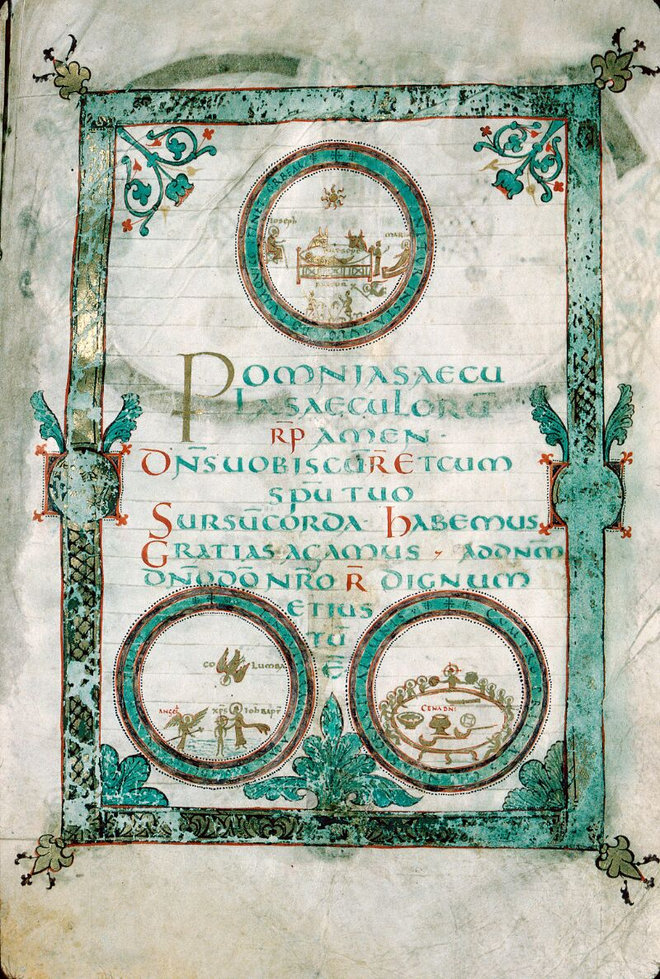
This conference aims to bring together experts to study Latin liturgical tradition and organization of knowledge in early and high medieval manuscripts. In particular, we welcome expressions of interest from scholars who would like to present a study on the “mixed sacramentaries” from around 850 to 1200, including continental and Anglo-Saxon manuscripts. Local studies of a single center, comparative treatments, or studies of single manuscripts as examples, are ideal suggestions.
Harald Buchinger, Paweł Figurski, Arthur Westwell
Universität Regensburg Institutum Liturgicum Ratisbonense PSALM Network
Regensburg, September 6-8, 2023
From the Early Middle Ages onwards, surviving books which record texts for the Mass show often surprising creativity and energy on the part of their scribes and compilers. The Mass Book tradition was an extraordinarily complex and dynamic one. Ancient and traditional texts were preserved for generations in the sacramentaries and missals, but we can also track the continual addition of new compositions, often meeting urgent needs of the day. The tradition of the Mass Book was, thus, continually updated and reworked over the centuries, and the differences between two manuscripts, even those produced at around the same time and belonging to the same “type”, are often striking. Most surviving manuscripts are identified today as descendants of the Roman, Gregorian Sacramentary, but the vast majority have never been comprehensively analyzed. Nor have Mass Books been widely permitted to contribute to our understanding of the medieval organization of books. Many such books present us a testimony of a widespread dynamism of the scribes and compilers working with liturgical material, and a challenge to scholars to examine the sacramentary tradition in new ways.
The potential is particularly acute for the “mixed sacramentaries » that represent the majority of manuscripts produced between 850 and 1200. Immense scholarly effort has established underlying, Roman sources. Nevertheless, we still lack coherent categorization of the manuscripts, and any account of how and why these traditions were remade outside Rome over the centuries after the reception of the Gregorian in the Carolingian period, and its initial supplementation. The remaking of the texts of the Mass Book was undertaken at many scriptoria simultaneously, across the Latin West, resulting in the vast range of manuscripts. This conference aims to bring together experts to study them. We hope to establish new methods and practices to get to grips with these complex and largely unstudied books, reflecting on them as a whole, within their context. We can use these sophisticated manuscripts as a means of tracing mutual interrelationships, creating possible networks of manuscript influences, as well as establishing the working processes and motivations of individual compilers and patrons who organized them, and uncovering the traces of later users. We hope to reflect on the medieval organization of knowledge more broadly, of which Mass Books of this kind are a particularly compelling and evocative testament. Numerous international experts have agreed to participate in what is certain to be a stimulating exchange that will continue the increasingly exciting new developments in the study of liturgical manuscripts. Professor Éric Palazzo has agreed to give a keynote lecture.
We welcome expressions of interest from scholars who would like to present a study on the “mixed sacramentaries” from around 850 to 1200, including continental and Anglo-Saxon manuscripts. Local studies of a single center, comparative treatments, or studies of single manuscripts as examples, are ideal suggestions, as would be the incorporation or development of a single rite or text tradition. We request a suggested title and abstract of c.250 words with a brief CV.
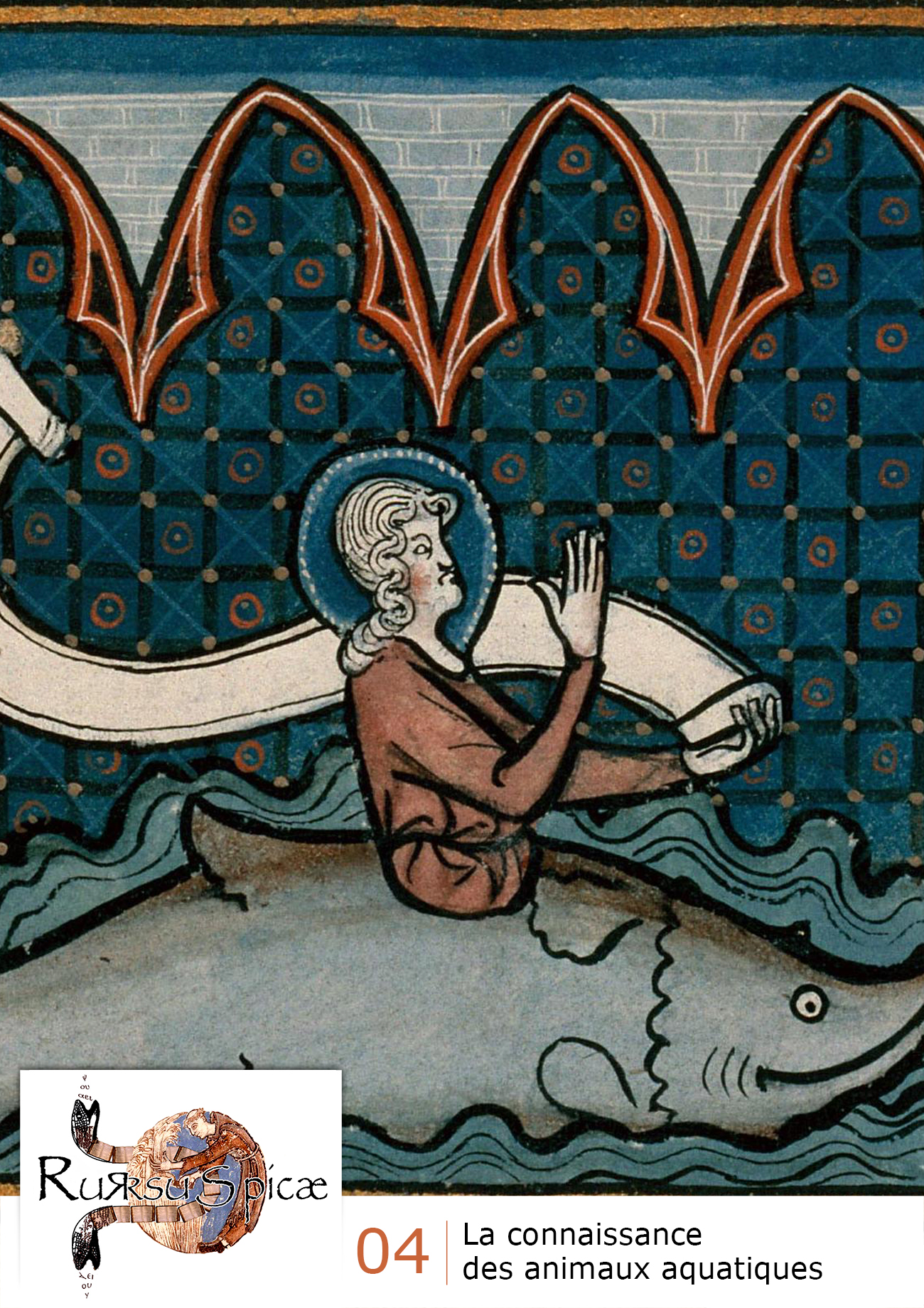
Le milieu élémentaire, ou ce que nous appelons le biotope, constitue dans la perception des animaux durant l’Antiquité comme au Moyen Âge un critère essentiel. C’est pourquoi les dauphins ou les crabes ont plus à voir avec les poissons qu’avec les mammifères terrestres ou les arachnides. Il semble que cette priorité donnée au milieu dans la construction des catégories soit culturellement très répandue et probablement encore vivace y compris dans notre regard moderne. La terminologie latine donnait aux animaux aquatiques le nom général de pisces ou aquatilia. Ce numéro s’attache précisément aux savoirs portant sur ces animaux « qui vivent dans l’eau ». Dans un sens étendu, l’ichtyologie ancienne ne concerne donc pas uniquement les poissons, mais tous les animaux aquatiques (cétacés, crustacés, mollusques, etc.), y compris certaines espèces amphibies comme le crocodile ou l’hippopotame, sans oublier les monstres et autres animaux plus ou moins imaginaires. Il existe une longue tradition de transmission des savoirs sur les animaux aquatiques, depuis Aristote et la tradition péripatéticienne. Elle passe par un canal étroit dans le monde latin, en particulier par les grands relais savants que sont Pline, Solin et Isidore de Séville, des hommes curieux et cultivés qui sont les pédagogues du monde latin en matière d’histoire naturelle. Cette tradition latine conduit aussi, sans que ce soit un aboutissement, aux bestiaires et aux encyclopédies médiévales, après avoir convoyé avec elle d’autres bagages culturels.
La connaissance des animaux aquatiques : Antiquité, Moyen Âge, Temps Modernes, dir. Isabelle Draelants, Arnaud Zucker et Thierry Buquet, RursuSpiacae, t. 4, 2022, mis en ligne le 12 décembre 2022. DOI : https://doi.org/10.4000/rursuspicae.2059
Hugo van der Goes (c. 1440–1482/83) was the most important Netherlandish artist of the second half of the 15th century. His works impress with their monumentality and intense colours as well as with their astonishing closeness to life and emotional expressivity. In March 2023, 540 years after the artist’s death, Berlin’s Gemälde-galerie will celebrate a premiere: for the first time, almost all of the artist’s surviving paintings and drawings will be presented in one exhibition.
Although Hugo van der Goes must be mentioned in the same breath as pioneering masters such as Jan van Eyck and Rogier van der Weyden, no monographic exhibition has ever been dedicated to his oeuvre. This is likely due to both the rarity of his works and their often large format. Two of his monumental paintings, the Monforte Altarpiece (c. 1470/75) and Nativity (c. 1480), are in the Gemäldegalerie in Berlin. For this reason, the collection lends itself to a special exhibition like no other. Both Berlin panels have been painstakingly restored in the past twelve years and show themselves in a freshness previously unimagined. Van der Goes’ late masterpiece, the Death of the Virgin from the Groeningemuseum in Bruges, which has never left Flanders before, has also been extensively restored recently and will form a highlight of the Berlin show.
Hugo van der Goes’ biography fascinates today to the same degree as his paintings. The artist, who worked as an independent master in Ghent from 1467 onwards, abandoned his successful worldly career in the mid-1470s for unknown reasons and entered a monastery near Brussels as a lay brother. It was there that most of his preserved works were created. After a few years in the monastery, however, Hugo was suddenly struck by a mysterious mental illness, which a fellow brother later reported: the painter believed himself to be damned and tried to take his own life. In the late 19th century, van der Goes was therefore regarded as the prototype of the “mad genius”, with whom even Vincent van Gogh identified.
With around 60 outstanding exhibits, including loans from 38 international collections, the Berlin exhibition will bring the art of Hugo van der Goes to life in a way that has never been seen before. The focus will be on twelve of the fourteen paintings now attributed to van der Goes as well as the two drawings considered to be by his own hand. In addition, compositions by the master that were once well known but lost in the original will be presented through contemporary painted and drawn copies. Lastly, the exhibition will also focus on the painter’s immediate followers with a selection of outstanding works clearly influenced by Hugo van der Goes’ style, such as the spectacular Triptych of Saint Hippolytus from the Museum of Fine Arts, Boston and the famous Nativity by French painter Jean Hey from the Musée Rolin in Autun.
In the Gemäldegalerie, the oeuvre of one of the most important European artists at the turn of the early modern period is brought together almost in its entirety for the first time. Van der Goes knew how to portray the emotions of his figures with the greatest empathy – both heavenly bliss and earthly pain. These contradictory states were apparently also closely intertwined in his own life. Thus the late-medieval painter still appears surprisingly modern today.
Hugo van der Goes. Between Pain and Bliss is curated by Stephan Kemperdick, curator of Early Netherlandish and Early German Painting at the Gemäldegalerie, and Erik Eising, assistant curator at the Gemäldegalerie.
The exhibition will be accompanied by a catalogue, published by Hirmer Publishers, Munich: 304 pages, 250 reproductions, ISBN (German edition): 978-3-7774-3847-4, ISBN (English edition): 978-3-7774-3848-1. Price: 55 € (retail), 39 € (museum bookshop).
The exhibition is supported by the Federal Government Commissioner for Culture and the Media.
For more information and high resolution images please visit the press section of the website of Staatliche Museen zu Berlin: www.smb.museum/en/press.
Informations pratiques :
Kulturforum, Gemäldegalerie Matthäikirchplatz, 10785 Berlin Opening hours: Tue – Fri 10 am – 6 pm, Thu 10 am – 8 pm, Sat + Sun 10 am – 6 pm
Hugo van der Goes. Between Pain and Bliss 31 March – 16 July 2023 A special exhibition of the Gemäldegalerie – Staatliche Museen zu Berlin Press conference: Thursday, 30 March 2023, 11 am
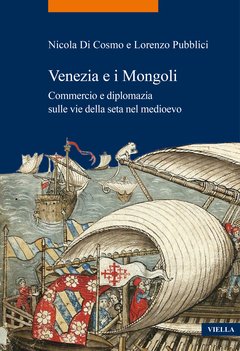
Nel XIII secolo Venezia era la potenza marittima dominante del Mediterraneo e i Mongoli i padroni di un impero immenso che comprendeva Cina, Persia, Russia e Asia Centrale. La conquista mongola integrò politiche ed economie regionali in uno spazio continentale in cui fiorirono scambi commerciali e relazioni diplomatiche. Dall’unione tra i circuiti continentali controllati dai Mongoli e le rotte marittime che portavano all’Europa, gestite da Genova e Venezia, scaturirono enormi possibilità.
Il punto d’incontro e collegamento fu il Mar Nero, dove fiorirono insediamenti italiani, crocevia di genti, culture, e merci. Se la presenza più cospicua fu genovese, Venezia fu attiva protagonista, con le sue specifiche sfide e realtà. I rapporti tra Mongoli e Veneziani sono oggetto per la prima volta di una ricostruzione che chiarisce gli intrecci, i rapporti, le difficoltà e le ambizioni di entrambe le parti in una prospettiva di storia globale.
Nicola Di Cosmo, Lorenzo Pubblici, Venezia e i Mongoli. Commercio e diplomazia sulle vie della seta nel medioevo (secoli XIII-XV), Rome, Viella, 2022 ; 1 vol., 316 p. (La storia. Temi, 103). ISBN : 979-1-25469-005-5. Prix : € 32,00.
La publication des Chartes du Forez antérieures au XIVe siècle est un travail scientifique considérable. Un groupe d’érudits et d’universitaires a eu l’ambition de publier tous les documents concernant le Forez antérieurs à l’an 1300. Cette œuvre, commencée en 1930, s’est achevée, après 50 années de travail, en 1980, avec la publication du 24e tome. Les auteurs principaux des 12 premiers volumes sont Georges Guichard (1868-1955), frère du célèbre Geoffroy Guichard fondateur de Casino, le comte de Neufbourg (1888-1986), J.-E. Dufour (1880-1951) et Edouard Perroy (1901-1974) professeur d’histoire médiévale à la Sorbonne. L’équipe initiale a été renforcée par Marguerite Gonon (1914-1996) chercheur au CNRS, puis Etienne Fournial (1910-2000), élève d’Edouard Perroy, professeur d’histoire médiévale à Saint-Etienne.
Ce travail a été salué et reconnu par les scientifiques comme Jean Richard, historien du Moyen-Âge, ou Jacqueline de Romilly, helléniste, membre de l’Académie française, qui affirme que « le Forez a été pourvu d’une collection de ses sources médiévales telle que bien peu d’autres régions ont bénéficié ». Il a été récompensé par plusieurs médailles au concours des Antiquités de la France (3e médaille en 1933 et 1ère en 1941).
La fondation Georges Guichard a publié 1686 chartes antérieures à 1300 ainsi que quelques chartes postérieures à 1300, une étude sur les dîmes perçues en Forez et une étude sur l’unité de mesure appelée neume.
Tous les volumes des Chartes du Forez ont été numérisés et océrisés. Une recherche libre permet une interrogation par mot.
Si la plupart des chartes sont en latin, chaque document bénéficie d’un résumé en français et de notes qui rendent accessibles ces sources sur l’histoire et les familles du Forez au Moyen-Age.
Des tables de noms et de lieux complètent la recherche libre.
La publication des Chartes du Forez est en ligne sur le site des Archives départementales de la Loire avec l’autorisation de l’Université catholique de Lyon, ayant droit de la fondation Guichard.
(25-11-2022) Launch of the 2022-2023 cycle of interdisciplinary lunch lectures by pre- and postdoc researchers
The HPIMS relaunches its interdisciplinary pre- and postdoc lunch lectures with four sessions in the academic year 2022-2023. We provide accessible opportunities for pre- and postdoc colleagues to present their work and collect constructive feedback. Sessions typically take place at lunch time (though after 12.30 for those who like to eat beforehand), take max. 1,5 hours and feature one or two researchers. Papers can be in Dutch, French or English. For questions and debates the language is adapted to both speaker and audience. Debates need to be constructive and will be guided by a regular moderator.
Programme :
THURSDAY 8 DECEMBER 2022 (12.30 – 13.30) – Campus Rommelaere (Aud 1, Building A/E/D) Dr. John Latham-Sprinkle (History), ‘Re-Integrating the Caucasus. The Northwest Caucasus, the Golden Horde, and the Transformation of the Mediterranean Slave Trade, 1360 1400’
FRIDAY 17 FEBRUARY 2023(12.3O – max. 14.00) – Blandijn Building (Lecture Room ‘Camelot’) Giorgia Nicosia (History & Literary Studies), ‘Excerpting and Edifying An Overview of Syriac Historiographical Miaphysite Florilegia’ Lennert Lapeere (Archaeology), ‘Houtskeletbouw in de laatmiddeleeuwse Lage Landen’
FRIDAY 21 APRIL 2023(12.3O – max. 14.00) – Blandijn Building (Lecture Room ‘Camelot’) Anke Lenssens (Comparative Languages Cultures Slavic Studies), ‘Freising en de Slaven onder bisschop Abraham Een op tekst gebaseerde benadering van christelijke missie en pastorale zorg onder de Karantanen in de tiende eeuw’ Catherine Rosbrook (History) ‘Sordium exteriorum attactum. Attempts to Distinguish Monastic Space in Tenth Century Lotharingia’
FRIDAY 26 MAY 2023 (12.3O – max. 14.00) – Blandijn Building (Lecture Room ‘Camelot’) Nina Vanhoutte (Literary Studies: Greek Literature), ‘The Didactic Poems on Grammar of Niketas of Herakleia A Philological Socio-Literary Study’ Giacomo Bucci (Linguistics: Ancient Germanic Languages), ‘Hic sunt teutones. The Germanic Linguistic Traces in the Pre Historic Baltic Area’
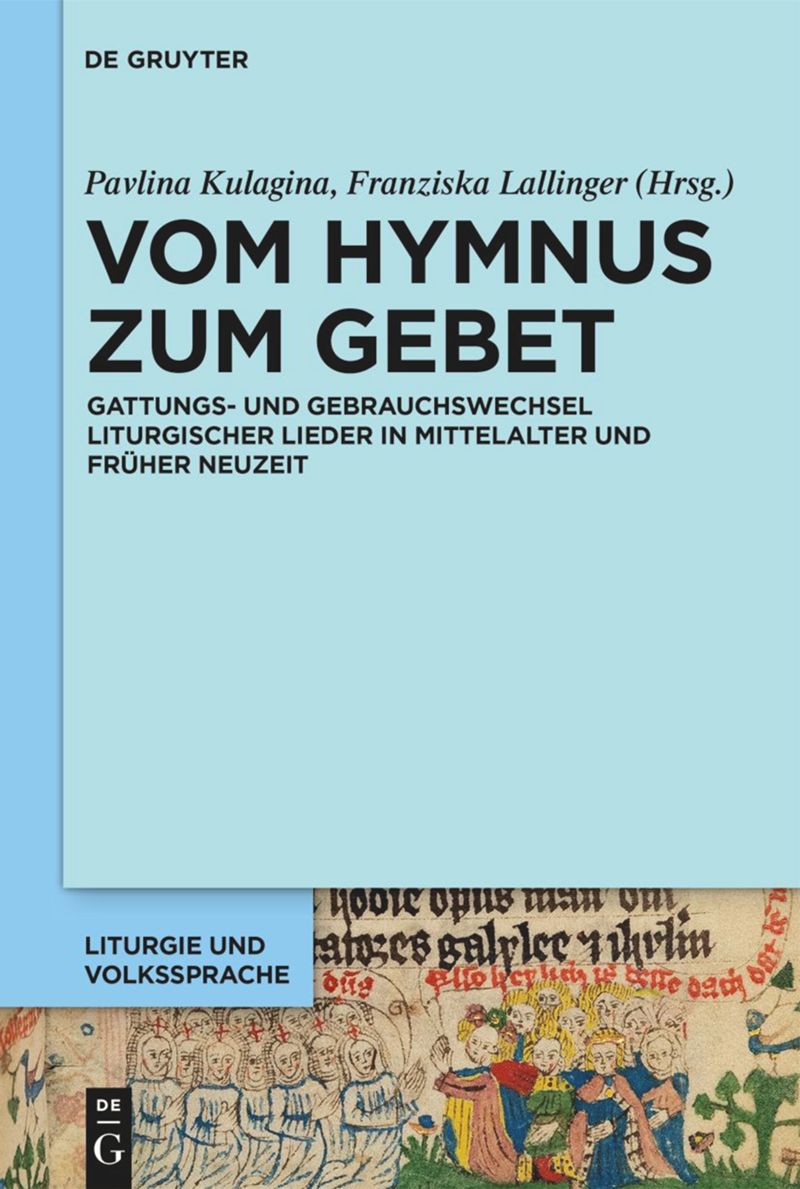
This volume brings together studies on the diverse ways that the genres and usage of hymns and sequences transformed in the middle ages and early modern period, taking them from being Latin liturgies to becoming vernacular meditations.
Pavlina Kulagina, HU Berlin, Germany; Franziska Lallinger, Univ. of Jena, Germany.
Vom Hymnus zum Gebet. Gattungs- und Gebrauchswechsel liturgischer Lieder in Mittelalter und Früher Neuzeit, éd. Pavlina Kulagina, Franziska Lallinger, Boston–Vienne, De Gruyter, 2022 ; 1 vol., X–310 p. (Liturgie und Volkssprache, 6). ISBN : 978-3-11074-819-2. Prix : € 92,95.
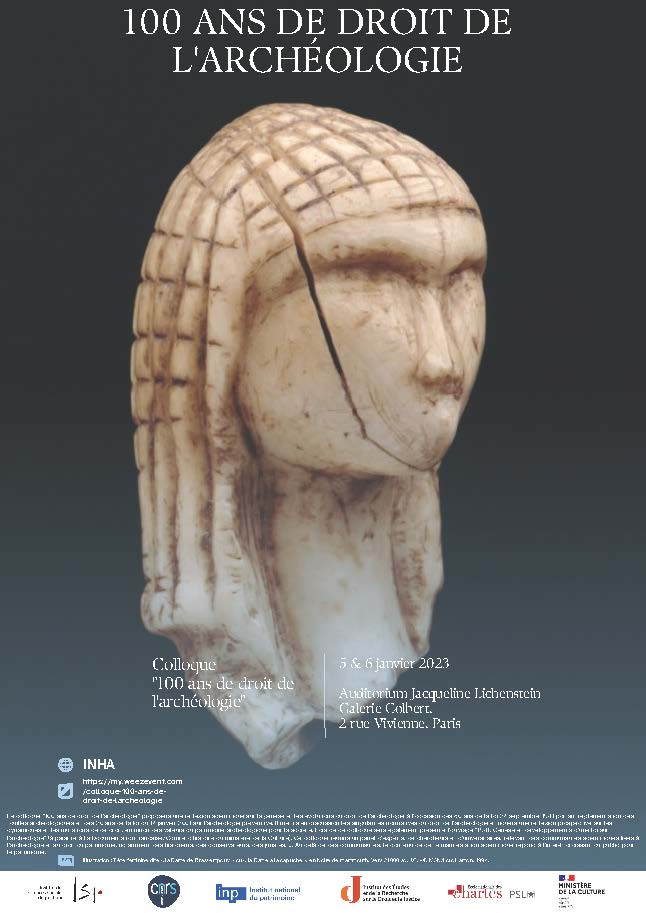
Les 5 et 6 janvier 2023, un colloque interdisciplinaire – « 100 ans de droit de l’archéologie » – engagera une réflexion scientifique sur la genèse et les évolutions du droit de l’archéologie à l’occasion des 80 ans de la loi 27 septembre 1941 portant réglementation des fouilles archéologiques et des 20 ans de la loi du 17 janvier 2001 sur l’archéologie préventive.
Un panel d’experts, de chercheurs et d’universitaires, relevant des communautés scientifiques liées à l’archéologie et au droit du patrimoine mettront en discussion la réception des pratiques archéologiques dans le droit et les singularités normatives du droit de l’archéologie. Ce colloque proposera également une réflexion prospective sur les dynamiques et les mutations de ce droit, en miroir des valeurs du patrimoine archéologique pour la société.
Dates, horaires et lieu : Jeudi 5 janvier 2023 > 14h00-18h00 / Vendredi 6 janvier 2023 > 9h30-17h30 / Auditorium Jacqueline Lichtenstein , Galerie Colbert, 2 rue Vivienne, Paris
Partenaires : Institut des Sciences sociales du Politique (UMR 7220 : CNRS/ENS Paris-Saclay/Université Paris Nanterre) ; Institut National du Patrimoine ; Ministère de la culture (DGPA – Sous-direction de l’archéologie) ; Institut des Etudes et de la Recherche sur le Droit et la Justice ; Ecole Nationale des Chartes
Avec le soutien du FNRS, du CRHiDI (UCLouvain – Saint-Louis, Bruxelles), d'INCAL (UCLouvain), de PraME (UNamur), de sociAMM (ULB) et de Transitions (ULiège)







Vous devez être connecté pour poster un commentaire.