Offre d’emploi – 2022-2023 Schoenberg Institute for Manuscript Studies Visiting Research Fellowships, University of Pennsylvania

The University of Pennsylvania Libraries is accepting applications for the 2022-2023 Schoenberg Institute for Manuscript Studies (SIMS) Visiting Research Fellowship program. Guided by the vision of its founders, Lawrence J. Schoenberg and Barbara Brizdle Schoenberg, SIMS aims to bring manuscript culture, modern technology, and people together to provide access to and understanding of our shared intellectual heritage. Part of the Penn Libraries, SIMS oversees an extensive collection of premodern manuscripts from around the world, with a special focus on the history of philosophy and science, and creates open-access digital content to support the study of its collections. SIMS also hosts the Schoenberg Database of Manuscripts and the annual Schoenberg Symposium on Manuscript Studies in the Digital Age.

The SIMS Visiting Research Fellowships have been established to encourage research relating to the premodern manuscript collections at the University of Pennsylvania Libraries, including the Schoenberg Collection. Affiliated with the University of Pennsylvania, located near other manuscript-rich research collections (the University of Pennsylvania Museum of Archaeology and Anthropology, the Free Library of Philadelphia, the Science History Institute, and the Rosenbach Museum and Library, among many others), and linked to the local and international scholarly communities, SIMS offers fellows a network of resources and opportunities for collaboration. Fellows will be encouraged to interact with SIMS staff, Penn faculty, and other medieval and early modern scholars in the Philadelphia area. Fellows will also be expected to present their research at Penn Libraries either during the term of the fellowship or on a selected date following the completion of the term.

Applicants can apply to spend 1 month (minimum of 4 work weeks) at SIMS between July 1, 2022, and June 30, 2023. Project proposals should demonstrate that the Libraries’ premodern manuscript resources are integral to proposed research topics. Up to 3 fellowships will be awarded this year.

Recipients will be expected to conduct their research at SIMS, with the exception of short research trips in support of the proposed project to nearby institutions. Proposals with a digital component are encouraged though not required.

Fellowships are open to all scholars living outside of the greater Philadelphia area. Applicants must have completed a Ph.D. or an equivalent professional degree by the time the fellowship begins. Independent scholars with a substantial record of achievement are encouraged to apply. Applicants who have not completed a Ph.D. at the time of application must have a letter from their dissertation advisor(s) stating that the degree will be completed prior to the applicant’s proposed dates of the fellowship.

Application Process
To be considered, applicants must submit the following by May 15, 2022:

  • A 2-3 page summary of the project that clearly states a) the relationship of Penn Libraries’ manuscript collections to the project, b) the project’s significance to manuscript studies, and c) a workplan for the duration of the fellowship. The proposal should include name of applicant(s), title of project, preferred dates of the fellowship.
  • A cv.
  • Two letters of support from scholars who can speak to the merits of the project. Letters should address the project’s potential for contributing to the advancement of the understanding of the material and its impact on its related field(s) of study. Letters may be included in the application or sent separately by the referee if preferred.

Applications should be sent by email to lransom@upenn.edu, preferably as a single pdf, or by post to:

Lynn Ransom
Curator, SIMS Programs
Schoenberg Institute for Manuscript Studies
University of Pennsylvania Libraries
3420 Walnut St.
Philadelphia, PA 19104

Source : Medieval Art Research

Publié dans Offre d'emploi | Laisser un commentaire

Appel à contribution – Encounters and Exchanges in a Global Past

The Oxford Transnational and Global History Seminar is inviting submissions for a postgraduate conference, Saturday 25 June, 2022. The conference will be held in person by the Oxford History Faculty.

We welcome submissions on the theme ‘Encounters and Exchanges in a Global Past.’ We will explore the ways in which encounters and exchanges were experienced in the near and distant past. Despite the recent proliferation of frameworks for understanding contact and the exchange of goods, ideas and biota that accompanied it, contact is rarely considered from a truly global perspective that spans millennia, continents and disciplines.

We welcome interdisciplinary submissions relating to exchanges across time and space. We are particularly interested in submissions on the infrastructure that underlay encounters and exchanges, such as technology and ideology; multi-scalar interaction; the role of translation in contact; the environmental history of encounters and exchanges.

Sessions will consist of 20-minute papers with time for questions and discussion. Interested postgraduates should send a 400-word abstract and brief biography to oxfordtghs@gmail.com. The deadline to submit is 1st May 2022.

Source : Medieval Art Research

Publié dans Le réseau | Laisser un commentaire

Publication – Keith Busby, « Codex et Contexte. Lire la littérature médiévale française dans les manuscrits »

Une solide compréhension de la littérature française des XIIe et XIIIe siècles doit passer par la connaissance de sa matérialité. Cette traduction mise à jour par l’auteur de son livre fondamental publié en 2002 s’adresse tant aux chercheurs qu’aux étudiants à la recherche d’un ouvrage de référence riche et précis.

Table des matières : ici

Informations pratiques :

Keith Busby, Codex et Contexte. Lire la littérature médiévale française dans les manuscrits, Paris, Classiques Garnier, 2022 (Recherches littéraires médiévales, n° 33). 904 p. ISBN : 978-2-406-12210-4. Prix : 49 euros.

Source : Classiques Garnier

Publié dans Le réseau | Laisser un commentaire

Offre d’emploi – Fragmentarium Research Associate (Part Time, Fixed Term)

Cambridge University Library (CUL) holds one of the largest collections of fragments of medieval manuscripts in the UK, comprising approximately 1,750 items arranged into over 80 separate sub-collections. Many of the fragments originate from the rebinding or repair of medieval handwritten or early printed books at CUL and are therefore integral to gaining the fullest understanding of the material histories of many items in the historic collections of one of the country’s leading research libraries. The fragments comprise texts in Latin and a wide range of European vernacular languages, and the remnants of illuminated and decorated manuscripts, liturgical and musical books, and other texts. They range in date from the 9th to the 15th centuries. Mostly gathered during the 19th and early 20th centuries, these collections illustrate the development at its earliest stages of the modern collection, preservation and study of this category of manuscripts. However, only a small proportion of the collection has been the subject of published research and very little information is publicly available about its contents.

Cambridge University Library is looking to recruit a Fragmentarium Research Associate, who will have the opportunity to shed new light on this collection. This post is funded by a grant from Fragmentarium, the ‘Laboratory of Medieval Manuscript Fragments’ based at the University of Fribourg, which is supported by the Zeno Karl Schindler Foundation. CUL has also secured supplementary funding for this post from the Aurelius Charitable Trust.

The Fragmentarium Research Associate will be responsible for producing detailed catalogue descriptions of the fragments in TEI format using the XML editor Oxygen and following in-house guidelines drawn up in collaboration with the Bodleian Library (https://msdesc.github.io/consolidated-tei-schema/msdesc.html), and preparing them for publication on the Cambridge Digital Library alongside high-resolution digital images (https://cudl.lib.cam.ac.uk/). You will also be responsible for disseminating the results of your work via CUL’s Special Collections blog (https://specialcollections-blog.lib.cam.ac.uk/), social media channels and other outreach initiatives. You will also be supported in attending a relevant conference (for which funding is available) as well as pursuing initiatives to introduce medieval manuscript fragments into special collections-based teaching at CUL. As part of the appointment, you must submit a written report to Fragmentarium, for publication in their in-house online journal, Fragmentology (https://fragmentology.ms/).

Applicants should hold a post-graduate qualification in a relevant field, preferably a doctorate, and have a proven ability to read and catalogue manuscripts in Latin and medieval vernacular languages. Knowledge of palaeography and codicology, and manuscript and bibliographical research skills, are essential. Applicants must also have experience of cataloguing or describing medieval manuscripts.

Applicants must possess excellent written and verbal communication skills and IT skills, and be able to manage their workload independently, work under pressure and meet tight deadlines. Experience in using TEI to create catalogue records would be an advantage, though training in TEI and XML will be provided. Experience of designing and delivering special collections-based teaching is desirable.

Fixed-term: The funds for this post are available for 1 years in the first instance.

Applications are welcome from internal candidates who would like to apply for the role on the basis of a secondment from their current role in the University.

We welcome applications from individuals who wish to be considered for part-time working or other flexible working arrangements.

We particularly welcome applications from candidates from a BME background for this vacancy as they are currently under-represented at this level in our institution.

Click the ‘Apply’ button below to register an account with our recruitment system (if you have not already) and apply online.

If you have any questions about this vacancy or the application process, please email Dr Suzanne Paul, Keeper of Rare Books and Early Manuscripts, 01223 333149, e-mail: sp510@cam.ac.uk.

The closing date for applications is Sunday 8 May 2022.

Interviews are planned to held on Friday 27 May 2022.

Please quote reference VE30760 on your application and in any correspondence about this vacancy.

The University actively supports equality, diversity and inclusion and encourages applications from all sections of society.

The University has a responsibility to ensure that all employees are eligible to live and work in the UK.

Source : University of Cambridge

Publié dans Le réseau | Laisser un commentaire

Publication – « Medioevo a Pistoia Crocevia di artisti fra Romanico e Gotico », dir. Angelo Tartuferi, Enrica Neri Lusanna  e Ada Labriola

Album della mostra. Pistoia, Antico Palazzo dei Vescovi/Museo Civico, 27 novembre 2021-8 maggio 2022, a cura di Angelo Tartuferi, Enrica Neri Lusanna  e Ada Labriola

Protagonista della mostra “Medioevo a Pistoia. Crocevia di artisti fra Romanico e Gotico” è la ricchezza artistica di una città che ha avuto un ruolo di primo piano della cultura figurativa del tardo Medioevo.

L’album raccoglie una selezione delle opere che il visitatore avrà modo di vedere dal vivo, capolavori realizzati da grandi personalità della storia dell’arte, universalmente conosciute, come Nicola e Giovanni Pisano, Pacino di Bonaguida, Pietro Lorenzetti, Taddeo Gaddi, Mariotto di Nardo e Lorenzo Ghiberti.

Informations pratiques :

Medioevo a Pistoia Crocevia di artisti fra Romanico e Gotico, dir. Angelo Tartuferi, Enrica Neri Lusanna  e Ada Labriola, Mandragora, 2022. 48 p. ISBN : 978-88-7461-576-6. Prix : 10 euros.

Source : Mandragora

Publié dans Le réseau | Laisser un commentaire

Publication – « La Mappa mundi d’Albi. Culture géographique et représentation du monde au haut Moyen Âge », éd. Emmanuelle Vagnon et Sandrine Victor

La Mappa mundi d’Albi constitue l’un des exemplaires les plus anciens de représentation du monde en Occident. La cartographie antique n’est en effet connue que par des descriptions textuelles et des copies plus tardives. Ce document cartographique exceptionnel (inscrit en 2015 au registre Mémoire du monde de l’Unesco) ne se présente pas seul : il est conservé dans un manuscrit de parchemin, constituant un recueil de vingt-deux textes, copiés et reliés ensemble vers la fin du VIIIe siècle et conservé depuis dans le fonds de la bibliothèque du chapitre de la cathédrale d’Albi.

Bien que connus des spécialistes et souvent cités, la Mappa mundi d’Albi et le manuscrit dans lequel elle se trouve n’ont jamais fait l’objet d’une recherche approfondie. Les articles du présent volume proposent d’aborder l’étude du manuscrit dans son environnement médiéval, ouvrant des pistes pour des recherches futures et soulignant des points de méthode. Il s’agit tout d’abord d’une interrogation sur le contexte historique et intellectuel du manuscrit et les preuves avancées pour sa datation. Il est question de la persistance des modèles cartographiques antiques, des possibilités matérielles de leur transmission et de leur réception à Albi, et du lien entre la mappemonde et les textes qui l’accompagnent. La comparaison avec d’autres mappemondes et d’autres ouvrages géographiques du haut Moyen Âge permet de mieux comprendre les usages de cette image du monde dans le contexte monastique du chapitre d’Albi et plus largement, de l’essor intellectuel de l’Occident médiéval à l’aube de la Renaissance carolingienne.

Table des matières :

Remerciements

Préface. La Mappa mundi d’Albi, un objet d’étude exceptionnel

Geneviève Bührer-Thierry

Planches

Introduction. La Mappa mundi d’Albi. Un état de la question

Emmanuelle Vagnon, Sandrine Victor

Première partie — Le document et son histoire

Albi, des Mérovingiens aux Carolingiens

Jean-Louis Biget

Histoire du manuscrit de la Mappa mundi d’Albi

Jocelyne Deschaux

Analyse matérielle du manuscrit de la Mappa mundi d’Albi

Laurianne Robinet, Sylvie Heu-Thao, Aurélie Tournié

Le ms. 29 d’Albi : une encyclopédie du VIIIe siècle ?

Nadège Corbière

Deuxième partie — Le contexte culturel

En marge du monde : les barbares

Magali Coumert

Autour du corpus géographique d’Albi : culture lettrée et savoir géographique du haut Moyen Âge

Claire Tignolet

Isidore de Séville et la géographie

Jacques Elfassi

Troisième partie — La carte, marque de transmissions et de transferts

La Mappa mundi d’Albi au regard de la Mappa mundi du Vatican comme illustration de la nécessaire comparaison des mappae mundi du haut Moyen Âge

Jean-Baptiste Amat

The Cotton mappa mundi as analogue to the Albi world map

Alfred Hiatt

Concevoir l’espace à l’échelle du monde dans les manuscrits saint-gallois des Étymologies

Julie Richard Dalsace

La mappemonde d’Albi et la cartographie arabe

Jean-Charles Ducène

Bibliographie

Index des manuscrits

Index des noms de personnes

Liste des auteurs

Liste des planches et des figures

Informations pratiques :

La Mappa mundi d’Albi. Culture géographique et représentation du monde au haut Moyen Âge, éd. Emmanuelle Vagnon et Sandrine Victor, Paris, Éditions de la Sorbonne, 2022 (Histoire ancienne et médiévale). 280 p., 24 x 16 cm. ISBN : 979-10-351-0786-4. Prix : 30 euros.

Source : Éditions de la Sorbonne

Publié dans Publications | Laisser un commentaire

Publication – Isabel Barros Felix, « Le mécénat de la duchesse de Bourgogne Isabelle de Portugal (1397-1471) : démarche heuristique, corpus et premières découvertes »

5 mai 2022, 14h00-16h00
UCLouvain (Louvain-la-Neuve), FIAL, local c.228.

Séminaire du GEMCA
Isabel Barros Felix (UCLouvain)

Le mécénat de la duchesse de Bourgogne Isabelle de Portugal (1397-1471) : démarche heuristique, corpus et premières découvertes

Publié dans Publications | Laisser un commentaire

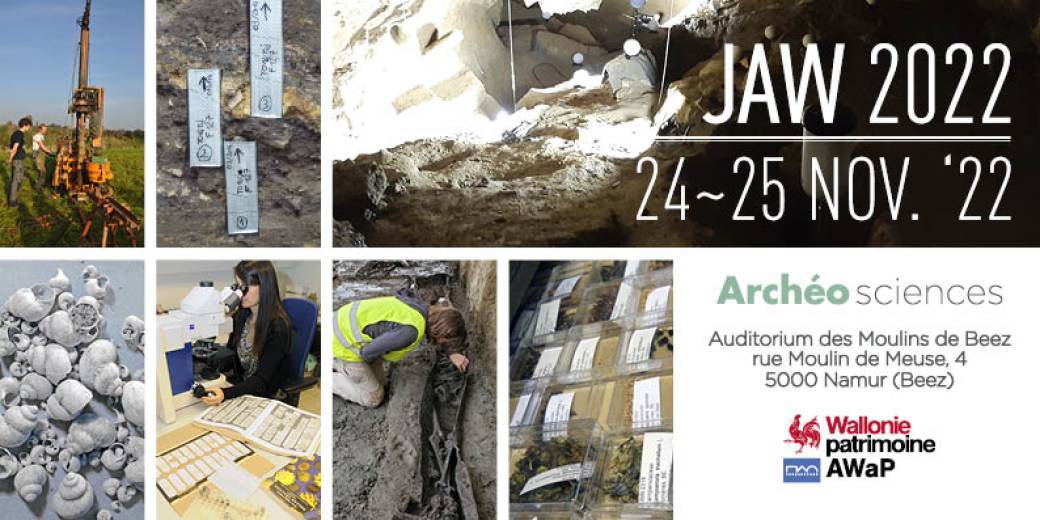
Appel à contribution – Exploring Craft Spaces: A New Insight into the Archaeology of Pottery Production

The issue aims to explore new approaches to pottery manufacturing spaces, from prehistory to the contemporary period, using cutting-edge scientific techniques. The expected papers will focus on the informational value of these spaces and related structures to address technological and socio-economic issues.

From the 8th millennium BC onwards, pottery manufacture developed in Southwest Asia and became a significant trait of Neolithic societies. Widely adopted, ceramic material represents a revolution on several scales and quickly constituted an important part of production activities.

Since the pioneering work of General Pitt Rivers in the 19th century, major studies have focused on ceramic products to approach processes of consumption and production and the underlying social mechanisms. However, many workshops and production systems have not been archaeologically investigated. The organizational patterns of these spaces are widely unknown and therefore difficult to link with technological practices and ethnological models of production.

How is the production spatially structured? What technologies are used? How are the production systems constructed and how do they evolve in time? These loci constitute the nodes of the relations between the producers and the society. Hence, workshop location, infrastructures layout and tools are the missing links to apprehend the integration of the craft industries in the ancient societies.

Thus, our Special Issue focuses on different aspects of craft areas, the scientific methods to study them regardless of any chrono-cultural context and their potential to reveal the organization of the potters’ work.

Main themes

The issue is conceived around 2 main themes:

  • Tools, structures, and materials employed in the processes of pottery manufacture.
  • The relations and integration of the production areas to their natural or built environments, the architecture of spaces, the dynamics of occupation and reoccupation.

To summarise, this Special Issue intends to corroborate the significance of pottery production in the economy of the ancient societies, to outline original approaches to fieldwork research and especially the use of new methods, and to revise interpretative trends such as the outdated opposition between “domestic” and “industrial” modes of production.

How to submit

Article proposals must be submitted on the platform

before 15 April 2023.

It will be possible to submit manuscripts from the 9th of December 2022 to the 15th of April 2023 on the Journal of Archaeological Science: Reports website. Each proposition will be double peer reviewed by the journal reviewers. Please refer to the journal guidelines for further information on how to prepare your article. The special issue will be announce on the journal website from end of november.

This call for papers is related to a workshop that will be held in Paris (Inha) on the 9th of December 2022 and accessible online (programme forthcoming).

Selection

The guest editors of this special issue will pre-select the submissions which will then be reviewed anonymously by two reviewers from the journal’s network. The journal will dedicate a page to the special issue on its website from November 2022.

Guest Editors

  • Claire Padovani, Paris 1 University – UMR 7041 Arscan Vepmo (Padovani@etu.univ-paris1.fr)
  • Julie Flahaut, Paris Nanterre University – Inrap – UMR 7041 Arscan Gama (flahaut@inrap.fr)
  • Sonja Willems, Catholic University of Louvain – Museums for Art & History of Brussels – UMR7041 Arscan Gama (willems@uclouvain.be)

Editors

  • Ellery Frahm, Yale University, United States of America
  • Chris Hunt, Liverpool John Moores University, United Kingdom

Associate Editors

  • Ruth Blasco, Catalan Institute of Human Paleo-Ecology and Social Evolution, Spain
  • Kristine Bovy, University of Rhode Island, United States of America
  • Miguel Ángel Fano, University of La Rioja, Spain
  • Danielle A. Macdonald, The University of Tulsa, United States of America
  • Mike Morley, Flinders University College of Humanities Arts and Social Sciences, Australia
  • Frederik Rademakers, British Museum Department of Scientific Research, United Kingdom
  • Manuel Will, University of Tübingen, Germany
Publié dans Appel à contributions | Laisser un commentaire

Publication – « L’Âtre périlleux. Roman arthurien du XIIIe siècle », édition bilingue établie, traduite et présentée par Laurence Mathey-Maille et Damien de Carné

Dans L’Âtre périlleux, roman arthurien en vers du milieu du XIIIe siècle, le héros, Gauvain, est victime d’une méprise : l’annonce de sa mort violente le contraint à partir à la recherche de ses présumés assassins et à faire taire la fausse rumeur de sa disparition pour tenter de reconquérir son identité. Ce faisant, il est confronté à un foisonnement d’aventures au fil desquelles l’auteur, en réinventant et reconstruisant le célèbre personnage, ne cesse de bousculer le confort de son lecteur, de le tromper, de l’égarer dans un véritable labyrinthe narratif dont le périlleux cimetière constitue une mystérieuse entrée.

Table des matières : ici

Informations pratiques :

L’Âtre périlleux. Roman arthurien du XIIIe siècle, édition bilingue établie, traduite et présentée par Laurence Mathey-Maille et Damien de Carné, Paris, Honoré Champion, 2022 (Champion Classiques du Moyen Âge, 55). 560 p., 19 x 12,5 cm. ISBN : 9782380960327. Prix : 24 euros.

Source : Honoré Champion

Publié dans Publications | Laisser un commentaire

Conférence (en ligne) – Adinel C. Dincă, « History – Historical Perception – Historiography. On the Origin and Ethnicity of the first Western Colonists of Mediaeval Transylvania »

Date : Jeudi 28 avril 2022, 15h00
Lieu : UCLouvain, Salle des Thèses (Faculté des Arts et Lettres)
Possibilité de suivre la présentation en ligne : https://us02web.zoom.us/j/83655194038

Intervenant :
Adinel C. Dincă, PhD Habil.
Associate Professor
Faculty of History and Philosophy, Babeș-Bolyai University, Cluj-Napoca, România
“Trans.Script. The Centre for Diplomatic and Medieval Documentary Palaeography”

Titre de la conférence :
History – Historical Perception – Historiography. On the Origin and Ethnicity of the first Western Colonists of Mediaeval Transylvania

Présentation organisée dans le cadre du projet « Migration inversée ». Les colons wallons en Transylvanie médiévale et leur identité culturelle (XIIe – XIVe siècle). PN-III-CEI-BIM-PBE-2020-0024. – Coord. Adinel C. Dincă (Babeș-Bolyai University, Cluj-Napoca), Paul Bertrand (UCLouvain), Nicolas Ruffini-Ronzani (UNamur / Archives de l’État).

Présentation du projet :

Il y a 900 ans, le sens de migration de la main d’œuvre était l’inverse de celui qu’il est d’aujourd’hui. À l’époque, le besoin d’expertise en vue de contribuer au développement urbain le long de nouvelles voies commerciales a généré des transferts de population de l’Ouest vers les périphéries orientales peu peuplées de la Latinitas chrétienne. Ces colons bénéficièrent d’un vaste ensemble d’exemptions fiscales et ecclésiastiques ainsi que de nombreux privilèges accordés par les gouvernants locaux, lesquels s’efforçaient d’offrir des conditions attractives à leur installation dans ces nouveaux territoires. La Transylvanie était l’un de ces espaces en phase de remodelage. Cette région constituait alors une adjonction récente au royaume de Hongrie. Les « hôtes royaux » de la première vague – environ 2600 colons allemands, flamands et wallons originaires des espaces belge, luxembourgeois et néerlandais actuels – s’installèrent dans les environs de Sibiu peu après 1150. Si la présence de pionniers allemands et flamands est bien attestée par les sources historiques contemporaines, l’existence d’un contingent wallon est seulement révélée par des indications plausibles, mais indirectes, relatives à leur identité culturelle. Au cours du siècle dernier peu de travaux scientifiques se sont attachés à remettre en question ou à envisager sur de nouvelles bases les hypothèses du passé. L’objectif de ce projet est d’apporter des éclairages neufs sur la présence wallonne en Transylvanie médiévale, et ce à travers une nouvelle quête des sources et la mise en place d’un dialogue entre chercheurs belges et roumains. Le champ d’investigation sera volontairement vaste, allant de la culture matérielle aux éléments linguistiques, en passant par l’étude des fondations ecclésiastiques et celle des structures sociales.

Source : Migration 1.0

Publié dans Le réseau | Laisser un commentaire