Jeudi 29 septembre 2022 Université de Picardie Jules Verne
Campus citadelle Tour Signal Salle D101 80000 Amiens
Programme :
9h30 : accueil
10h00 : Danielle Arribet-Deroin MCF HDR Université Paris 1 Panthéon- Sorbonne, LaMOP et Benoit Rouzeau MCF Université de Picardie Trame, « Introduction »
Session 1 : l’eau la pierre et le fer
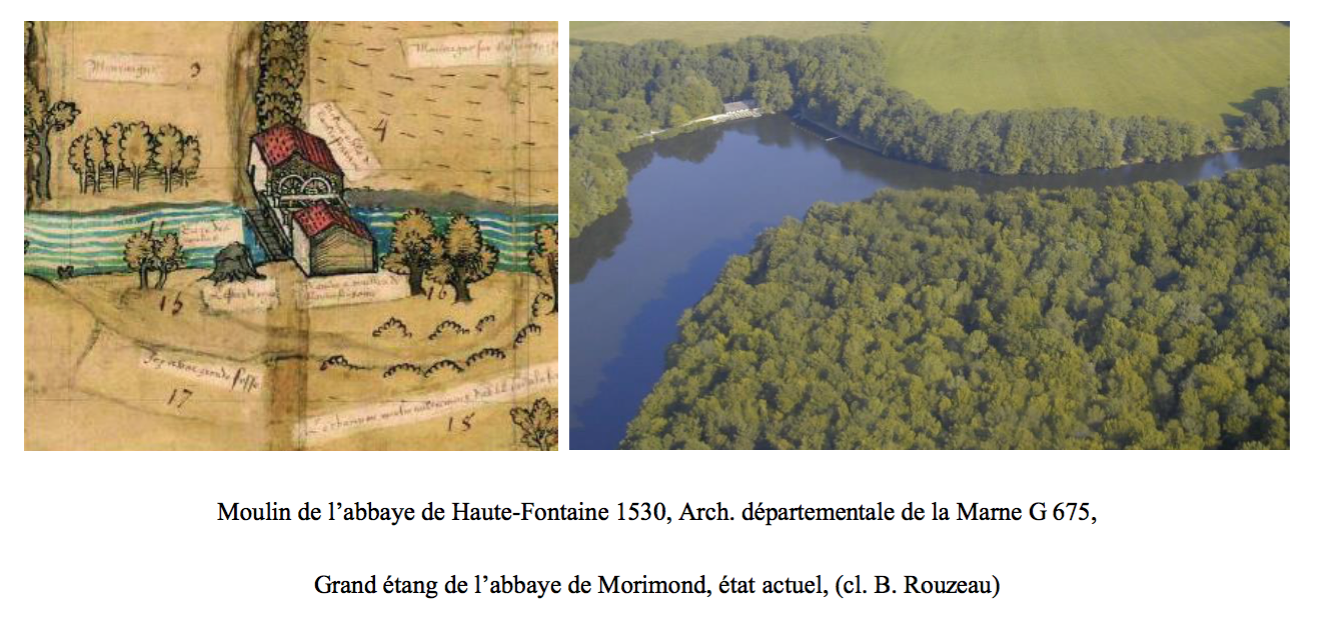
10h15-10h45 : Louise Gentil, doctorante en histoire médiévale, Université Paris 1 Panthéon-Sorbonne, LaMOP ; Università degli studi di Milano (Dipartimento di studi storici) « Du fossé au moulin : l’eau dans la documentation de l’abbaye de Chiaravalle XIIe-XIVe siècle »
11h00-11h30 : Benjamin Jagou, INRAP Hauts-de-France, « Le travail du fer dans l’abbaye cistercienne de Loos (Nord) »
11h45h-12h15 : Ludovic Notte, INRAP Hauts-de-France (RO) « La reconstruction de l’abbatiale de Loos (Nord) au début du XVIIIe siècle : entre ressources propres et concurrentes »
12h30-14h30 : pause méridienne
Session 2 : Aux confins de la Lorraine et de la Champagne
14h30-15h : Lois Robin (master 2) et Maxime L’Héritier (MCF Université Paris 8 ArScAn), « Les abbayes cisterciennes de la Marne et le développement du procédé indirect de réduction du fer, du XVe au XVIe siècle : chronologie, production et exploitation »
15h15-15h45 : Élise Bidon, doctorante en histoire médiévale, Université de Lorraine, CRULH, « L’abbaye de Sturzelbronn (Moselle) : ses ressources et leurs utilisations »
16h-16h30 : Denis Eve, doctorant Université de Paris, « La gestion du patrimoine sidérurgique cistercien en Champagne méridionale »
Getty believes diversity, equity, accessibility and inclusion are essential to our excellence and to the execution of our mission. The Getty community values differences in the pursuit of inquiry and knowledge, mutual understanding, respect, trust, transparency, and cooperation. We are committed to creating a diverse and welcoming workplace that reflects the diversity of the communities we serve and includes individuals with diverse backgrounds and experiences. Individuals of color, women, LGBTQIA+, veterans and persons with disabilities are encouraged to apply.
Job Summary
Our Mission
The J. Paul Getty Museum seeks to inspire curiosity about, and enjoyment and understanding of, the visual arts by collecting, conserving, exhibiting, and interpreting works of art of outstanding quality and historical importance and is one of four programs of the J. Paul Getty Trust. The Museum operates two sites, the Getty Villa in Malibu, which exhibits its collection of Greek and Roman antiquities, and the Getty Center in Brentwood, which displays its collections of European art: Medieval and Renaissance illuminated manuscripts, paintings, sculpture, decorative arts, drawings to 1900, and photography to the present day (including non-European works). The Museum mounts approximately 25 temporary exhibitions a year across its two sites; maintains an annual permanent gallery improvement program and offers wide-ranging and ambitious programming for its visitors.
The Opportunity
The J. Paul Getty Museum seeks an Assistant Curator of Manuscripts to become a vital member of a team working with one of the foremost collections of medieval and Renaissance (ca. 800-1550) illuminated manuscripts in the United States. The Assistant Curator will play an instrumental role in supporting the collection and its many publics through acquisitions, exhibitions, original research, and innovative interpretation. The department is currently engaged in developing programming that is engaging and meaningful to diverse, contemporary audiences. The successful candidate will bring creative ideas and fresh perspectives, key attributes for our ongoing work to increase diversity, equity, inclusion, and access, both through our internal work and our public-facing programs. Many of the duties of the Assistant Curator will revolve around the Manuscripts Department’s schedule of 3-4 exhibitions per year, the primary means by which the collection is presented to the public. The Assistant Curator will have the opportunity to conceive and develop these exhibitions and to work with other curators on larger exhibition projects that seek to advance the field through new research, engaging interpretation, and international collaboration.
The Assistant Curator will contribute to the ongoing work of cataloguing the collection for the museum website, including updating information and writing descriptions of individual objects. The Assistant Curator will support the department’s administrative functions, including processing loans, overseeing the study room, and supervising photography of the collection. The ideal candidate will be a highly motivated individual with exceptional organizational skills and experience managing projects in an iterative, fast-paced environment. A natural consensus-builder, the candidate understands how to collaborate successfully in a team with other curators in the department, as well as with colleagues across the campus, including Conservation, Design, Exhibition, Education, Interpretive Content, Imaging Services, Preparators, and Registrars.
Major Job Responsibilities
Applies advanced knowledge of art history and art education to curatorial assignments of moderate complexity
Performs scholarly research
Conceives and executes smaller exhibitions
Verifies value and authenticity of potential acquisitions and participates in the preparation of acquisition proposals
Travels and networks domestically and internationally to develop/maintain relationships with other colleagues and institutions
Publishes and lectures in area of specialization
Administers incoming and outgoing loans
Updates information in collection management system and writes collection entries for the website
Participates in photography of the collection
Monitors the reading room
Contributes to the on-line presence of the manuscripts collection
Supports scholarly visits and requests
Qualifications
Master’s degree in art history, art or art education OR 2-4 yrs of curatorial experience OR Ph.D.
Fluency in at least one foreign language (modern or ancient) required
Competent to work in most curatorial functions
Requirement
All employees must be fully-vaccinated against the COVID-19 virus as a condition of employment. Exemptions from this requirement as a reasonable accommodation due to medical contraindication, disability or sincerely held religious belief or practice will be considered.
Knowledge, Skills and Abilities
Excellent communication and interpersonal skills
Demonstrated ability to build relationships and collaborate with teams across disciplines
Excellent writing and proofing skills
Excellent organizational skills with attention to detail
Working knowledge of collection management databases, preferably The Museum System(TMS)
Demonstrated experience with art historical research and writing
Proven experience dealing with confidential information
Specialty in Italian art (ca. 1300-1500) preferred
Equal Opportunity Employer
We are proud to be an equal opportunity employer. All qualified applicants will receive consideration for employment without regard to age, ancestry, citizenship or immigration status, color, disability, ethnicity, familial status, gender identity and/or expression, genetic information, marital status, national origin, race, religion, sex, sexual orientation, veteran status, or any other protected status.
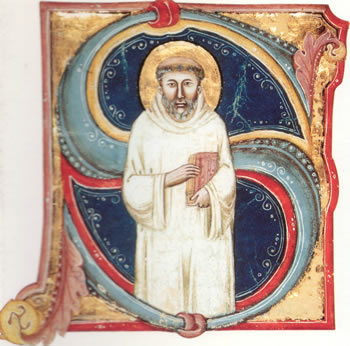
La Première Vie de Bernard, abbé de Clairvaux (Vita prima), qui paraîtra à l’automne 2022 dans la collection des Sources chrétiennes, est sans aucun doute la plus importante, la plus élaborée et la plus belle biographie ancienne de saint Bernard. Elle a été rédigée, en partie de son vivant, par trois proches du saint – Guillaume de Saint-Thierry, Arnaud de Bonneval et Geoffroy d’Auxerre –, en vue de son procès en canonisation. Outre ses richesses pastorales et spirituelles, elle a aussi une grande valeur historique, puisqu’elle a été, et demeure toujours, la source fondamentale pour connaître la biographie de Bernard, depuis l’ouvrage classique d’Elphège Vacandard[1] jusqu’à nos jours, et constitue une référence incontournable pour tous les historiens et les chercheurs qui se sont penchés sur la personnalité et sur l’œuvre du saint. En effet, ses trois auteurs faisaient partie du proche entourage de Bernard, et ont été témoins oculaires de bien des événements qu’ils rapportent. Leur approche, différente et complémentaire, de la figure de l’abbé de Clairvaux, permet une lecture riche et nuancée de sa complexe personnalité. Chacun des trois en effet a sa propre perspective historiographique qui le porte à privilégier certains aspects de l’homme et à en laisser d’autres dans l’ombre.
Or, depuis les travaux du grand savant néerlandais A. H. Bredero[2], à l’exception de la thèse de M. Pfeifer sur la Lettre d’Or de Guillaume de Saint-Thierry qui aborde la question de l’idéal monastique cistercien primitif à préserver[3] ou des travaux de F. Gastaldelli[4], peu d’études traitant de la Vita prima ont vu le jour[5], alors même que de multiples questions se posent encore autour de ce texte, qui a eu une histoire tourmentée et fort complexe. Ainsi, comment les Fragmenta de Geoffroy d’Auxerre ont-ils été utilisés ? Quel impact a eu la personnalité de Geoffroy sur la conception de l’ensemble de la Vita ? La Vita témoigne notamment des évolutions de l’idéal monastique à Clairvaux, depuis la Vie de saint Malachie : qu’apprend-on à travers elle des luttes d’influence entre le modèle claravallien et celui de Morimond ? Quelle place fait cet idéal à la vie contemplative ? Comment les trois biographes de Bernard gèrent-ils leur embarras devant la personnalité d’un homme hors du commun, qui ne se laisse pas enfermer dans le cadre étroit du portrait hagiographique traditionnel d’un saint moine ?
Plus largement, cette parution est l’occasion de se demander, à travers l’exemple de Bernard de Clairvaux, ce que signifie, au milieu du XIIe siècle, être saint : élu, destiné à la gloire céleste. Quels grands axes sont retenus pour valoriser une personnalité exceptionnelle ? Comment crée-t-on un dossier en vue de la proclamation de la sainteté ? Et, corrélativement, comment écrit-on la vie d’un saint au xiie siècle[6] ? A partir de quelles sources ? Avec quels procédés littéraires ? Pourquoi ? Pour qui ? Outre la vie de saint Bernard, on pourra s’appuyer sur les exemples de Malachie[7], d’Étienne d’Obazine dont l’abbaye est intégrée à l’ordre cistercien en 1147[8], de Pierre de Tarentaise[9]. On se demandera également quels rapports les genres hagiographique et épistolaire entretiennent dans leur présentation des faits historiques, la correspondance de Bernard offrant une mine d’informations.
On s’interrogera également sur la réception de ce genre biographique où la vie de saint se tisse entre réel et imaginaire. Quelle valeur théologique, philosophique, a ce témoignage de l’expérience ? Quel impact l’état de sainteté a-t-il sur la diffusion des œuvres du saint, de son vivant et après sa mort ? À quelles adaptations liturgiques donne lieu la canonisation selon les Statuta de l’Ordre de Cîteaux, les Ordinaires cisterciens et non-cisterciens[10] ? Quels rapports entretiennent hagiographie et institution ? Retrait du monde et engagement [11] ?
Dans le cas de Bernard, il est impossible de dissocier le saint et sa manière de mobiliser des ressources théologiques, philosophiques, spirituelles de manière existentielle. Aussi la réflexion sur l’hagiographie s’ouvrira-t-elle tout naturellement sur une approche plus large de sa pensée théologique, spirituelle et philosophique.
Ces questions, qui touchent notamment à la représentation littéraire dans les textes historiques, ont déjà été abordées par de nombreuses études sur différentes périodes[12], mais jamais à partir de ce texte majeur du xiie siècle qu’est la Vita prima, disponible seulement depuis peu dans l’édition critique de P. Verdeyen, et jusqu’à ce jour non traduite en langue moderne.
Ce colloque, qui réunit des spécialistes de saint Bernard et de son époque, s’adresse tout autant au grand public désireux de découvrir ce grand saint qu’aux chercheurs souhaitant un état des lieux des recherches bernardines, trente ans environ après les grandes manifestations du 900e anniversaire de sa naissance. Il est coorganisé par le Centre Jean Leclercq, de l’Université Saint Anselme, à l’occasion du 70e anniversaire de la fondation de l’Institut Monastique, et par l’Institut des Sources Chrétiennes, à l’occasion du 80e anniversaire de la collection.
[1] É. Vacandard, Vie de saint Bernard, abbé de Clairvaux, 2 tomes, Paris 1895.
[2] En particulier, A. H. Bredero, Études sur la Vita prima de saint Bernard, Rome 1960 ; Bernard de Clairvaux. Culte et histoire, Turnhout 1998.
[3] M. Pfeifer, « Wilhelms von Saint-Thierry goldener Brief und seine Bedeutung für die Zisterzienser », ACist 50 (1994), p. 3-250 ; 51 (1995), p. 3-109.
[4] F. Gastaldelli, « I primi vent’anni di San Bernardo. Problemi et interpretazioni », ACist 43/1 (1987), p. 111-148 ; « Le più antiche testimonianze biografiche su san Bernardo. Studio storico-critico sui Fragmenta Gaufridi », ACist 45 (1989), p. 3-80.
[5] Citons cependant G. Lobrichon, « Représentations de Clairvaux dans la Vita prima sancti Bernardi », dans Histoire de Clairvaux, Actes du colloque de Bar-sur-Aube – Clairvaux, 22 et 23 juin 1990, Bar-sur-Aube 1991, p. 245-255 ; M. Casey, « Toward a Methodology for the Vita prima: Translating the first life into Biography », dans Bernardus magister, Papers presented at the Nonacentenary Celebration of the Birth of Saint Bernard, Cîteaux 42, 1992, p. 55-70 ; A.-M. Piazzoni, « Le premier biographe de saint Bernard : Guillaume de Saint-Thierry. La première partie de la Vitaprima comme œuvre théologique et spirituelle », dans P. Arabeyre, J. Berlioz etP. Poirrier (éd.), Vies et légendes de Saint Bernard de Clairvaux. Création, diffusion, réception (xiie-xxe siècles), Actes des rencontresde Dijon (7-8 juin 1991), Cîteaux 1993, p. 3-18 ; A. Picard, P. Boglioni, « Miracle et thaumaturgiedans la vie de saint Bernard », ibid., p. 36-59 ; D. Cazes, « Portraits de moines : Guillaume et Bernard au miroir de la Vita prima », Studia monastica 44 (2002), p. 293-312.
[6] Cf. M. Goullet, L’hagiographie est un genre introuvable : Études d’hagiographie latine (VIe-XIe s.) réunies par F. Peloux, avec la collaboration de M. Gaillard, Éditions de la Sorbonne, Paris 2022.
[7] Bernard de Clairvaux, Vie de saint Malachie, éd. P.-Y. Emery, SC 367, Paris 1990.
[8]Vie de saint Étienne d’Obazine, éd. et trad. M. Aubrun, Publications de l’Institut d’études du Massif Central VI, Clermont-Ferrand 1970.
[10] C. Waddell, Twelfth-Century Statutes from the Cistercian General Chapter. Latin Text with English Notes and Commentary, Cîteaux – Commentarii cistercienses, Studia et Documenta XII, 2002. On trouvera un exemple d’Ordinaire dans T. F. Kelly (éd.), The Liber ordinarius of the abbay of Saint Gertrude at Nivelles, Münster 2020, n° 678-679, p. 293-294.
[11] Cf. C. Caby, « De l’abbaye à l’ordre. Écriture des origines et institutionnalisation des expériences monastiques, XIe-XIIe siècle », MEFRM 115, 2003/1, p. 235-267.
Session 1 : la Vita prima, histoire et littérature
9h Autour du premier rédacteur de la Vita Prima : Guillaume de Saint-Thierry, abbé bénédictin, moine cistercien et la vie monastique dans la province de Reims (1121-1148) (Patrick Demouy, Université de Reims Champagne-Ardenne, Reims)
9h40 Ernaud de Bonneval (Alexis Grélois)
10h20 La vision des relations entre Bernard et Abélard par Geoffroy d’Auxerre dans la Vita Prima (Jérôme Rival, Collège Léonard de Vinci, Saint-Romain le Puy)
11h PAUSE
11h30 Approche comparée des stratégies scripturaires mises en œuvre par les trois auteurs de la Vita prima (Laurence Mellerin, CNRS, Sources Chrétiennes, Lyon)
12h10 La figura di san Benedetto in san Bernardo di Chiaravalle e in Goffredo di Auxerre (Paolo Gionta, Pontificio Ateneo Sant’Anselmo, Rome)
Mardi 6 Décembre, 14h30-19h
Session 2 : Le genre hagiographique aux XIIe-XIIIe siècles
14h30 Essere santo dopo Bernardo. Osservazioni sull’agiografia cistercense (fine XII-metà XIII secolo) (Cécile Caby, Sorbonne Université)
15h10 The Making of a Saint: Literary Representations of Bernard´s Holiness in the Vita Prima (Carmen Cvetkovic, Universität Göttingen)
15h50 Les habitudes hagiographiques à l’époque de la Vita Prima, à partir des exemples de la Vie de saint Malachie et de la Vie de Pierre de Tarentaise (Marie-Céline Isaia, Université Lyon 3)
16h30 PAUSE
17h30 Conférence : Esperienza del mondo e teologia del creato nella Vita prima e nell’opera bernardina(Laure Solignac, Institut Catholique, Paris)
Mercredi 7 Décembre, 9h-12h30
9h Si sanctus es, comprehendisti et nosti ; si non, esto (Csi V, 30, l.6-7). L’engendrement de la sainteté chez Bernard de Clairvaux et ses contemporains (v. 1090-1160). (Guy Lobrichon, Université d’Avignon et Pays du Vaucluse, Avignon)
9h40 L’étonnante douceur de saint Bernard (Marielle Lamy, Sorbonne Université, Paris)
Session 3 : la théologie spirituelle de Bernard10h20 Petite enquête sur le saint loisir chez Bernard de Clairvaux (Christian Trottmann, CNRS, Centre d’Etudes Supérieures de la Renaissance, Université de Tours)
11h PAUSE
11h30 La notion de ruminatio chez saint Bernard (Maria Manuela Brito Martins, Universidade Católica Portuguesa, Porto)
12h10 Imitazione di Cristo e sacramenti in Bernardo, secondo Jean Leclercq (Fernando Rivas, Pontificio Ateneo Sant’Anselmo, Rome)
Mercredi 7 Décembre, 14h30-18h30
14h30 Bernardo di Chiaravalle tra ‘antiqui’ e ‘novatores’ (Francesco De Feo, Pontificio Ateneo Sant’Anselmo, Rome)
Session 4 : une philosophie de l’expérience
15h10 L’utilisation de l’argument d’Anselme dans le De Consideratione, le rapport de Bernard à la dialectique (Pascaline Turpin, Université Catholique de Lille)
15h50 La question des facultés de l’âme : phantasia, imaginatio,… (Bernard Sawicki, Pontificio Ateneo Sant’Anselmo, Rome)
16h30 PAUSE
17h Bernardo di Clairvaux: conoscenza e amore (Antonio Montanari, Facoltà Teologica dell’Italia Settentrionale, Milano)
17h40 La bisbetica domata. Volontà e conversione (Philippe Nouzille, Pontificio Ateneo Sant’Anselmo, Rome)
Jeudi 8 Décembre, 9h-12h15
Session 5 : la réception de la figure et des œuvres de Bernard à la fin du XIIe – au XIIIe siècle
9h La conoscenza delle opere di Bernardo nella seconda metà del XII secolo (Gioacchino di Fiore,…) (Lorenzo Braca, Università Cattolica del Sacro Cuore, Milan)
9h40 Saint Bernard en Avalterre : sur des traductions anciennes (fin XIIe-début XIIIe s.) des textes de Bernard (Marie-Pascale Halary, Université Lyon 2)
10h20 PAUSE
10h50 The beginning of contemplation : the vision of Christ being born on Christmas (VP I, 4) and its reappearences by Hadewijch and Ruusbroec (Rob Faesen, KU Leuven)
11h30 The reception of Bernard’s concept of “love without a why” in De diligendo Deo (John Arblaster, Universiteit Antwerpen)
Informations pratiques :
Lundi 05 décembre – Jeudi 08 décembre 2022 Pontifico Ateneo Sant’Anselmo, Rome Contact : Laurence Mellerin
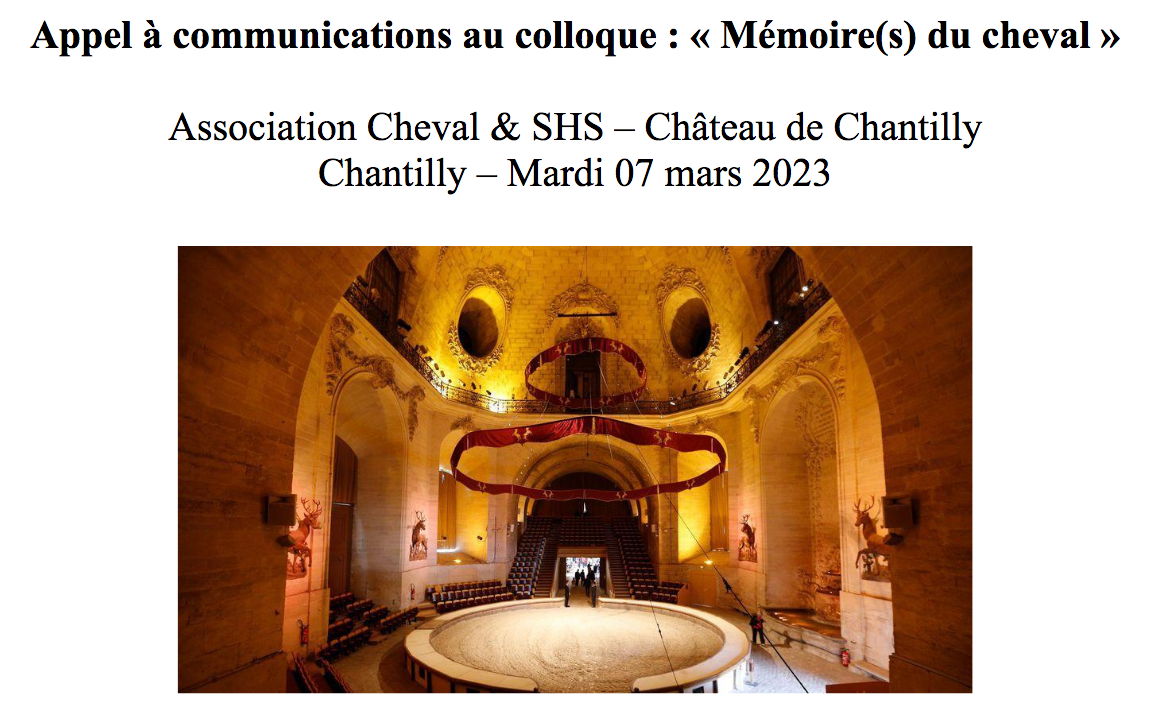
Association Cheval & SHS – Château de Chantilly Chantilly – Mardi 07 mars 2023
L’Association Cheval et SHS, créée en 2018 et réunissant une soixantaine de chercheurs et spécialistes organise, en partenariat avec le Musée du Cheval – Château de Chantilly, une journée d’étude intitulée « Mémoire(s) du cheval ». Née de la volonté d’ouvrir un espace d’échanges et de découvertes autour du cheval, cette journée a pour objectif de rassembler doctorants et chercheurs autour de leurs réflexions théoriques et méthodologiques sur cet animal. L’événement fera alterner conférences et tables rondes sous l’emblématique dôme des grandes écuries du château de Chantilly, joignant la dimension culturelle, littéraire et historique à la dimension spatiale pour permettre à chacun d’alimenter sa réflexion grâce à des apports interdisciplinaires dans une perspective transversale.
La place du cheval au sein de la société sera questionnée par le prisme de son retour concomitant en ville et à la campagne, « à l’occasion d’une revitalisation de pratiques ancestrales (garde montée ou pratiques agricoles) » (Botton, Eldelbloude, 2020). Par ailleurs, l’équitation de tradition française est inscrite sur la liste représentative du patrimoine culturel immatériel de l’humanité de l’UNESCO depuis 2011. Cette démarche a répondu à la triple nécessité d’identification, de conservation, mais aussi de transmission d’une pratique socio-culturelle, relevant néanmoins d’une tradition sans cesse réinventée (Pickel-Chevalier, 2017). À cette occasion, le ministère de la Culture avait institué de 2011 à 2014 un programme pluridisciplinaire dévolu au « Cheval et ses patrimoines » doté d’une équipe de recherche homonyme.
La relation entre le cheval et la mémoire permet d’interroger le lien de nos sociétés à cet animal. Cette notion mémorielle a pris une importance croissante depuis la fin des années 1970, au carrefour de plusieurs disciplines. Polysémique et plurielle, individuelle et collective, la notion de mémoire engage tant les mécanismes de conservation et de rappel que de recouvrement du souvenir. Elle permet d’aborder aussi des réalités passées, réelles ou métaphoriques : lieux de mémoire, monuments et mémoriaux, musées, souvenir et contre-souvenir, arts de la mémoire, tourismes de la mémoire… Cette mémoire véhicule différentes problématiques comme celle de la « représentation » d’un événement passé dans le temps présent, du lien entre la preuve documentaire et le souvenir, mais aussi du risque de l’oubli (Ricoeur, 2000). Elle est également à l’origine de « traditions inventées » (Hobsbawm et Roger, 1983, 2012 ; Hobsbawm, 1995) et/ou réinventées qui cherche à établir une continuité avec le passé pour promouvoir de nouvelles valeurs. Ces phénomènes mémoriels interrogent ainsi la relation profonde entre passé et présent, soit en envisageant la mémoire comme un reflet du passé, soit, au contraire, en faisant de la mémoire un produit du présent dont le but est de construire une nouvelle vision du passé (Baussant, 2007).
Nous souhaitons donc interroger les relations entre le cheval et la (les) mémoire(s) dans des contextes chronologiques et géographiques variés. Muséification, patrimonialisation, souvenir voire oubli du cheval seront au cœur des réflexions scientifiques de la journée.
Les contributions attendues pourraient porter sur les thèmes suivants :
Se souvenir du cheval L’empreinte de la culture équestre dans les sociétés passées et actuelles Le cheval comme passerelle entre passé et présent
Pratiques équestres oubliées, ressuscitées, traditionnelles Le retour à des pratiques équestres passées Valorisation et mythification des pratiques ancestrales
L’invention et la réinvention des traditions équestres
Patrimoines matériels et immatériels Entre sauvegarde et oubli Patrimonialisation et muséification du cheval
Comité scientifique
Jean-Pierre Digard (CNRS) Sylvine Pickel-Chevalier (CNRS / ESTHUA – Université d’Angers) Armelle Fémelat (CNRS / CESR – Université de Tours) Margaux Spruyt (Institut Catholique de Paris) Vanina Deneux (IFCE/INRAE) Honorine Tellier (IFCE) Clothilde Noé (CNRS / CITERES – Université de Tours) Diane de Camproger (LASLAR – Université de Caen)
Modalités de participation
Merci d’envoyer vos propositions de communications, dans la limite de 500 caractères (espaces compris), assorties d’une courte biographie, à l’adresse mail suivante : cheval.shs@gmail.com, avant le 30 septembre 2022, avec l’objet “Colloque Chantilly 2023”.
Les propositions retenues seront notifiées par email au plus tard le 30 novembre.
L’association Cheval et SHS étant une association reposant sur le travail bénévole de ses membres, il sera demandé une participation financière de 50€ aux chercheurs non membres de l’association, de 35€ pour ceux à jour de leur cotisation, et de 25€ pour les étudiants. Cette participation peut se faire par virement bancaire ou par chèque à l’ordre de l’association. Pour
toute demande de justificatif ou de prise en charge (transport/hébergement), merci de prendre contact avec l’association par mail à l’adresse précitée: cheval.shs@gmail.com
Cette participation inclut : – la cotisation à l’association (pour les non-membres) – le kit conférencier (sac, éco-cup et programme) – les pauses « café » – le déjeuner sur place (buffet) – une visite privative gratuite du Musée du cheval de Chantilly, prévue après le déjeuner (prix grand public 17€).
Des navettes gratuites seront disponibles au départ de la gare de Chantilly (25 min. de Paris-gare du Nord) pour rejoindre le lieu du colloque.
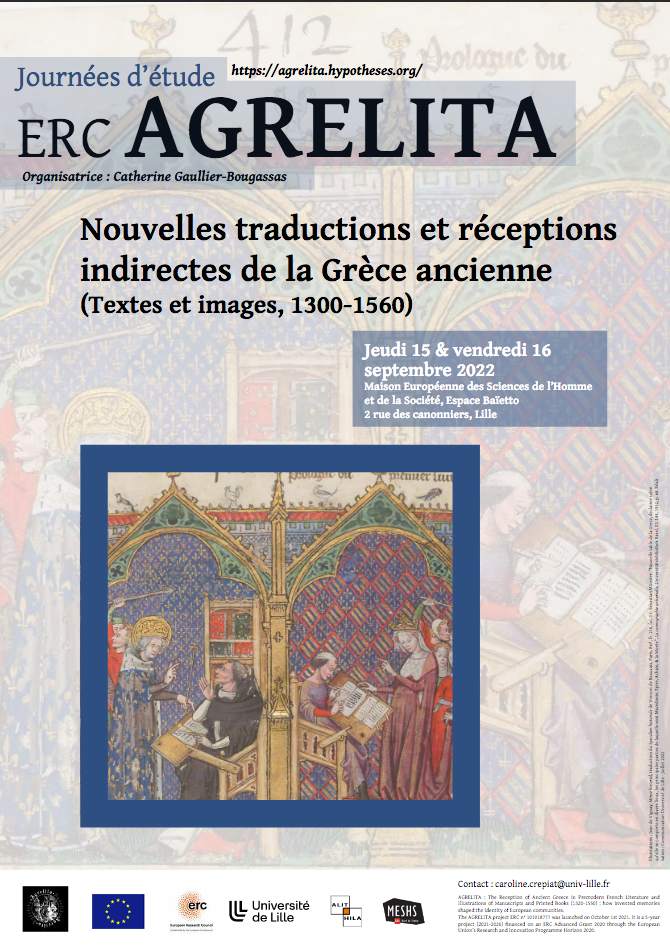
Université de Lille Journées d’études des jeudi 15 septembre et vendredi 16 septembre 2022
Maison Européenne des Sciences de l’Homme et de la Société Espace Baïetto
Nouvelles traductions et réceptions indirectes de la Grèce ancienne (Textes et images, 1300-1560)
Organisation : Catherine Gaullier-Bougassas
Programme :
Jeudi 15 septembre
-9h45 Accueil
-10h Introduction, Catherine Gaullier-Bougassas (Université de Lille, ERC AGRELITA)
Session 1 : Histoires grecques et troyennes (XIVe-XVe siècles)
-10h15-10h45 Keith Busby (Université du Wisconsin), « La guerre de Troie vue par un moine irlandais : Jofroi de Waterford »
-10h45-11h15 Rosa Rodriguez Porto (Université de Saint-Jacques-de-Compostelle), « The representation of the Greek past in the Levant beyond the illustrated copies of the Histoire ancienne jusqu’à César »
-11h15-11h30 discussion
-11h30-11h45 pause
-11h45-12h15 Anne D. Hedeman (Université du Kansas), « La traduction visuelle de la Grèce antique pour Jean, duc de Berry »
12h15-12h30 Discussion
Session 2 : Philosophie et traduction
-15h-15h30 Konan Carle (Université de Nantes), « La représentation des systèmes politiques grecs dans la traduction des œuvres d’Aristote par Nicole Oresme »
-15h30-16h Michèle Goyens (Université KU Leuven), « La réception d’Aristote à Paris : le cas des “Problemata” pseudo-aristotéliciens traduits par Evrart de Conty (ca. 1380) »
-16h-16h20 Discussion
-16h20-16h30 Pause
-16h30-17h Clara Pascual-Argente (Université Toulouse-Jean Jaurès), « Les Sumas de historia troyana, un modèle structurel pour le Recueil des histoires de Troyes de Raoul Lefèvre ? »
-17h-17h30 Discussion
Vendredi 16 septembre
Session 3 : Humanismes (xve–xviesiècles)
-9h-9h30 Marianne Pade (Université d’Aarhus, Danemark), « The Athens of Claude de Seyssel »
-9h30-10h Han Lamers (Université d’Oslo), « The Indirect Receptions of Herodotus: The Case of Queen Tomyris’ Revenge on Cyrus the Great (Hist. 1.214) »
-10h-10h30 Discussion
-10h30-10h45 Pause
-10h45-11h15 Cecilia Sideri (Université de Vérone), « Xenophon’s Cyropaedia translated by Jacopo Bracciolini : the Context of Production, the Dedicatee(s), the Manuscript and Printed Tradition »
-11h15-11h45 Paul-Victor Desarbres (Université Paris-Sorbonne), « La Cyropédie de François Demoulins de Rochefort »
-14h15-14h45 Ilaria Andreoli (INHA), « Fabulae artificialiter pictae. Les éditions illustrées des Métamorphoses dans la culture européenne de la première modernité »
-14h45-15h15 Sandra Provini (Université de Rouen-Normandie), « Réception et métamorphoses des héroïnes grecques dans les Contrepistres d’Ovide de Michel d’Amboise (1541) »
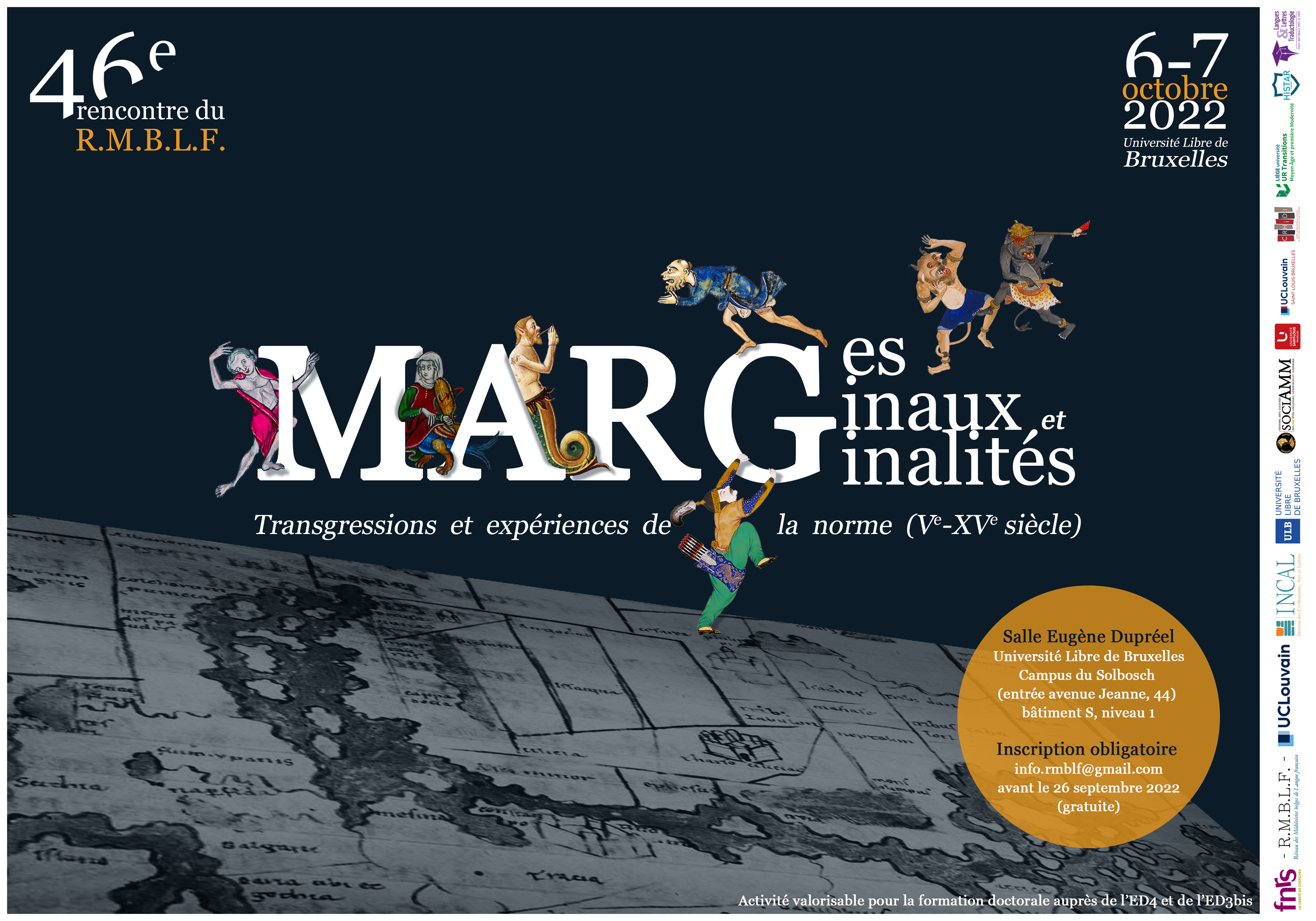
Bruxelles (Belgique) Université Libre de Bruxelles Campus du Solbosch (entrée avenue Jeanne, 44) Bâtiment S, niveau 1
6-7 octobre 2022
Inscription obligatoire (gratuite) à l’adresse info.rmblf@gmail.com, avant le 26 septembre 2022
Programme :
Jeudi 6 octobre 2022
9h00 : Accueil
9h20 : Introduction –Valentine Jedwab (Université Libre de Bruxelles), Nissaf Sghaïer (Université Saint-Louis Bruxelles) et Alizé Van Brussel (UCLouvain) 9h30 : Introduction – Emmanuel Bain (Aix-Marseille Université) – Mettre les marges au centre
Axe 1 – La marge et ses normes : les renversements de perspective
Modératrice : Annick Englebert (Université Libre de Bruxelles)
10h00 : Elena Lichmanova (University of Oxford) – Marginalisation of the margin in the manuscript studies 10h20 : Matthias Rozein (Université de Liège) – Les marges d’un catalogue. Les notices historiques dans les listes épiscopales romaines (fin du IXe et début du Xe siècle) 10h40 : Discussions 11h00 : Pause
11h30 : Mathilde Daumas et Caroline Polet (Université Libre de Bruxelles / Institut royal des Sciences naturelles de Belgique) – Le nain et l’estropié de naissance, deux individus « hors normes » inhumés dans le cimetière médiéval de l’abbaye des Dunes de Coxyde 11h50 : Laure-Hélène Gouffran (Aix-Marseille Université) – Les « corsopirates » méditerranéens (XIVe-XVe siècles) : des individus marginaux ? 12h10 : Discussions 12h30 : Déjeuner
14h00 : Julien Sohier (Université Libre de Bruxelles) – Les chiens dans les villes du nord-ouest de l’Europe (XIVe-XVIe siècles) : une vie de marginal ? 14h20 : Hortense Naas (Institut National d’Études Démographiques) – L’ermite du XVe siècle : marginal ou modèle ? 14h40 : Discussions 15h00 : Pause
Axe 2 – La figure du « marginal » dans la construction de la norme (I) Modérateur : Christophe Masson (F.R.S.-FNRS / Université de Liège)
15h20 : Cédric Molino-Machetto (Université Toulouse – Jean-Jaurès) – Marges tribales et imaginaire de la destruction chez Ibn Khaldûn 15h40 : Jean-François Morvan (Université Bretagne Sud / Université Rennes 2) – Observer la norme par ses marges. Exposer, amender, interpréter les textes normatifs des observances franciscaines à la fin du Moyen Âge (Europe du Centre-Est, XVe-déb. XVIe siècles) 16h00 : Anna Arato (École normale supérieure – Paris) – Nomen est omen. Richeut, Mehaus et Hersens, personnages-types médiévaux de la femme entremetteuse 16h30 : Discussions
Vendredi 7 octobre 2022
9h00 : Accueil
Axe 2 – La figure du « marginal » dans la construction de la norme (II)
Modérateur : Christophe Masson (F.R.S.-FNRS / Université de Liège)
9h30 : David Krausz (Université Libre de Bruxelles) – Raison et déraison dans le droit talmudique : sur l’usage du concept de fou (shoté) dans l’approche de la raison (da‘at) et de ses limites 10h00 : Sara Cusset (Université Lumière Lyon 2 / UCLouvain) – Circé, « la merveilleuse enchanterresse » (Ovide moralisé, XIV) 10h20 : Mehdi Mouslim (Université Libre de Bruxelles / UCLouvain / Université Saint-Louis Bruxelles) – La figure du mendiant à Damas au xive siècle à travers le regard d’un juge de l’époque 10h40 : Discussions 11h00 : Pause
Axe 3 – La marge comme espace d’expression
Modératrice : Ingrid Falque (F.R.S.-FNRS / UCLouvain)
11h30 : Chloé Pluchon-Riera (Université Grenoble Alpes) – L’enfance à la marge dans les décors italiens du XVe siècle 11h50 : Alina Heiremans (KU Leuven) – Margins as a peek into medieval popular culture : folk festivities and the figure of the fool in Flemish marginal imagery of the 13th-15th centuries 12h10 : Discussions 12h30 : Déjeuner
14h00 : Anna Gili (Università di Padova)En marge à Galien. Le commentaire au Kitāb al-ʾusṭuqsāt (« Livre sur les éléments ») de Galien composé par Abū al-Faraǧ b. al-Ṭayyib (Paris, BNF, Ar. 2848, ff. 1-33) 14h20 : Véronique Winand (Université de Liège) – Copistes des villes et copistes des champs. Transcrire la vie et les prophéties de Merlin entre espaces marginaux et espaces centraux 14h40 : Discussions 15h00 : Pause
15h20 : Marielle Lavenus (Université de Lille) – Obscénité et courtoisie selon le Maître de Wavrin : quand la marge devient centre et la marginalité culture de cour 15h40 : Lucie Blouin (Université Rennes 2) – Les Continuations d’Artus de Bretagne : explorer les marges pour explorer de nouvelles voies romanesques à la fin du Moyen-Âge 16h00 : Discussions
16h30 : Conclusions –Nicolas Schroeder (Université Libre de Bruxelles)
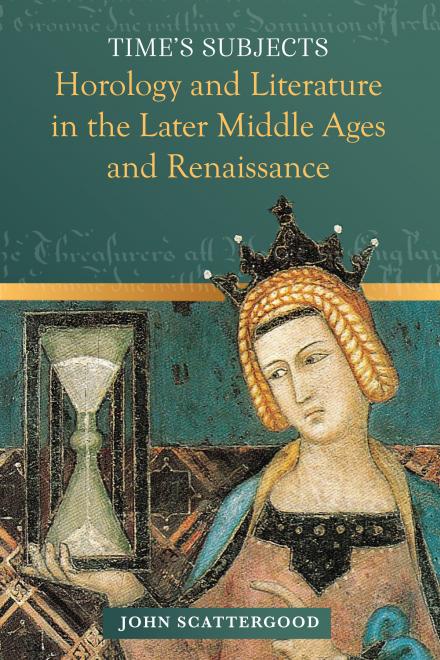
There is ample evidence, from the earliest periods onwards, that mankind has sought to measure and organize temporal movement by means of intellectual theories about historical sequences and the contours of peoples’ lives, as well as by practical literary instruments such as calendars, almanacs, and a variety of physical timekeeping devices such as sundials, astrolabes, flame-clocks, hour-glasses and water-clocks. But in the late thirteenth century and early fourteenth century, because of developments in physics and mechanics, it became possible to develop mechanical clocks, timekeeping machines independent of natural phenomena like the sun, moon and stars, daylight and darkness.
The making of mechanical clocks was a skill that spread rapidly throughout Europe. Originally made by metalworkers, such as blacksmiths and locksmiths, early clocks, monastic or civic, were large, elaborate and showy, but inaccurate and not particularly reliable, designed principally for outdoor public spaces. But, as clock-making became the province of specialists, more accurate smaller domestic clocks, watches and personalized timekeepers were developed. This book seeks to describe the impact of these instruments on the theological, philosophical, political, social, moral and personal thinking of the period from the thirteenth to the seventeenth centuries, and the way that this thinking was expressed, mainly in English texts, but in other linguistic cultures too.
John Scattergood is emeritus professor of medieval and Renaissance English literature in TCD. He is the author of many books, most recently Trinity College Library Dublin: a descriptive catalogue of manuscripts containing Middle English and Some Old English (Dublin, 2021), compiled with the assistance of Niamh Pattwell and Emma Williams. He is a life member of the Royal Irish Academy.
Informations pratiques :
John Scattergood, Time’s Subjects. Horology and Literature in the Later Middle Ages and Renaissance, Dublin, Four Courts Press, 2022 ; 1 vol., 224 p. ISBN : 978-1-80151-020-2. Prix : € 49,50.
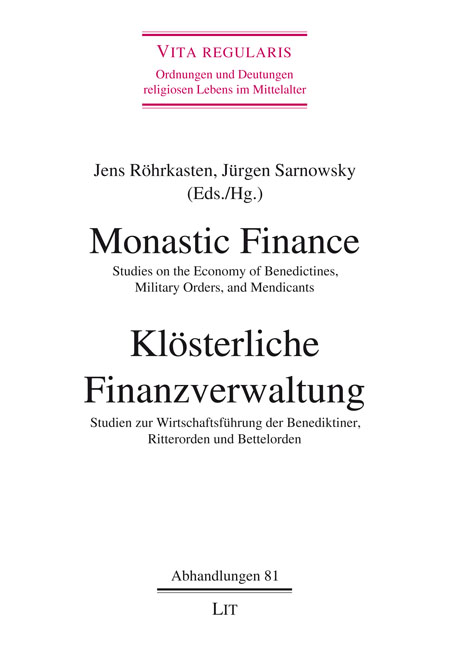
The articles in this volume explore the ways in which different types of religious community organised their economy and controlled their finances. These topics were acknowledged already by Cassian and they are mentioned in the rule of St. Benedict. Attitudes to religious poverty and to wealth were largely determined by two parameters. The first was the impressive variety of forms of religious life with its development of different attitudes to poverty and wealth and to a multitude of forms of economic activity. The second parameter was set by other factors, the economic, political and geological environment which determined the requirements of each religious community. These parameters caused a strain between the religious ideals on the one hand and outside pressures which could affect individual communities or religious orders. This is explored in nine articles dealing with the traditional Benedictines, the military orders as well as the mendicants in different parts of Europe.
Informations pratiques :
Monastic Finance. Klösterliche Finanzverwaltung Studies on the Economy of Benedictines, Military Orders, and Mendicants. Studien zur Wirtschaftsführung der Benediktiner, Ritterorden und Bettelorden, dir. Jens Röhrkasten, Jürgen Sarnowsky, Münster, LIT Verlag, 2022 ; 1 vol., 272 p. (Vita regularis – Ordnungen und Deutungen religiosen Lebens im Mittelalter. Abhandlungen, 81). ISBN : 978-3-643-15149-0. Prix : € 44,90.
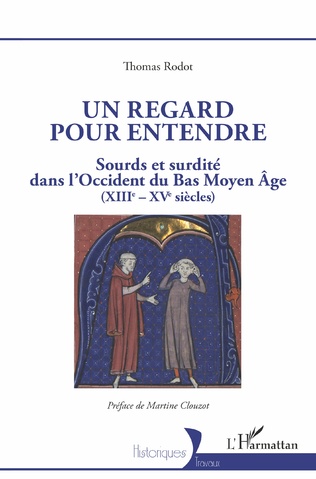
La surdité au Moyen Âge est marquée par l’absence d’une étude d’ampleur, ce qui facilite la diffusion de stéréotypes dépeignant des sourds stigmatisés et des sociétés intolérantes. L’objectif de cet ouvrage est de répondre à cette carence, de déconstruire les visions fantasmées et de nourrir les réflexions sur un sujet encore méconnu. Quels sont les causes et les remèdes attribués à la surdité ? Comment les sourds sont-ils perçus et quels comportements sont entretenus à leur égard ? De quels droits bénéficient-ils et à quels interdits doivent-ils faire face ? Par l’étude des discours médicaux, religieux et juridiques, l’ouvrage explore les représentations et les réalités des sourds afin d’évaluer leur intégration dans les sociétés occidentales de la fin du Moyen Âge.
Préface de Martine Clouzot
Étudiant à l’université de Bourgogne et professeur d’histoire-géographie, Thomas Rodot est diplômé d’un master recherche en histoire médiévale.
Informations pratiques :
Thomas Rodot, Un regard pour entendre. Sourds et surdité dans l’Occident du bas Moyen Âge (XIIIe-XVe siècles), Paris, L’Harmattan, 2022 ; 1 vol., 242 p. (Historiques. Travaux). ISBN : 978-2-14-028450-2. Prix : € 27,50.
Call for papers for the special issue: « Historical documents and automatic text recognition ».
Editors : Ariane Pinche and Peter Stokes
Journal of Data Mining and Digital Humanities
With this special issue of the Journal of Data Mining and Digital Humanities (JDMDH), we wish to bring together in one single volume several experiments, projects and reflections related to automatic text recognition on historical documents.
To address these issues, we propose the following three axes:
– Axis 1: Sources, constitution and sharing of training data.
– Axis 2: Machine learning
– Axis 3: Feedback and data exploitation
This special issue aims to provide an overview of the use of HTR or OCR on historical documents, as its uses multiply and more and more research projects and cultural heritage institutions become interested in it. Through the Journal of Data Mining and Digital Humanities, we are delighted to offer an opportunity to all those who wish to make their own contribution to the field or to share their experience by exposing their successes, their questions and their difficulties, or even failure. By publishing this special issue, we hope to present a state of the art of the uses of automatic handwriting recognition today.
Avec le soutien du FNRS, du CRHiDI (UCLouvain – Saint-Louis, Bruxelles), d'INCAL (UCLouvain), de PraME (UNamur), de sociAMM (ULB) et de Transitions (ULiège)







Vous devez être connecté pour poster un commentaire.