Appel à contribution – The Thirteenth Century Conference

The 2023 Thirteenth Century Conference is to be hosted from 14th to 15th September 2023 by the University of Heidelberg. After a previous and highly successful visit to Paris, our hope for this session is that we can address a variety of Anglo-German themes, looking in particular at ‘England and Germany. Economic, Social and Personal Connections’. From the Emperors Otto IV and Frederick II, via Richard of Cornwall, to the foreign alliances of Edward I, the political and diplomatic relations between England and Germany have been explored, at least in outline. Far less has been written of the comparisons to be drawn between these two parts of Europe, in terms of monetisation, law, or the legal status of women, Jews, and peasants. The trading connections that helped establish the merchants of Cologne or Lübeck as significant players in the politics of thirteenth-century London have to some extent been revealed. But what of the wider personal connections between England and the Rhineland, or between such confederations as the Cinque Ports and the Baltic Hanse? What of literary, artistic or architectural connections? As the home to the Count Palatine, who during the early years of King John of England’s reign was the closest male heir to the English throne, Heidelberg provides an ideal setting in which such connections and comparisons can be identified and explored.

As with previous Thirteenth Century conferences, our hope is to bring together established key-note speakers with those still in early career, including postgraduate researchers. We invite proposals on any topic falling within our wider theme, to be sent in approximately 500 words via email to a.jobson@uea.ac.uk. Priority will be given to proposals that directly address the theme of the conference. If your proposal is accepted, the Conference will pay your travel to and from the venue, with subsistence and accommodation in Heidelberg, for three nights, ie 13-16 September. Others who wish to attend may do so, without paying any conference fee, but finding their own travel and accommodation costs. The deadline for proposals is the 20th of October 2022.

Publié dans Appel à contributions | Laisser un commentaire

Appel à communication – Emplois et remplois du livre manuscrit au Moyen Âge méridional

Rome-Cassino, 23-24 mars 2023
École française de Rome
Scuola Superiore Meridionale
Università di Cassino e del Lazio Meridionale

L’histoire d’un codex commence à la fin de sa fabrication, après la copie du texte. Mais les livres manuscrits n’ont pas qu’une seule vie : ils peuvent être lus et relus, annotés, intégrés, divisés, ou encore déplacés, à plusieurs reprises, de leur lieu de conservation. Bien que non prévues dans le projet initial, les annotations marginales des lecteurs, les corrections du texte, les ajouts au décor sont des opérations qui témoignent de la réutilisation du manuscrit, et donc de son véritable usage au fil du temps. Ces traces laissées par les lecteurs permettent de reconstituer l’influence des livres dans l’activité intellectuelle, personnelle et collective dans un lieu ou une période donnée. Se concentrer sur cette activité d’annotation signifie donc remettre le texte en contexte, en se demandant quel a été l’objectif des ajouts, quelle a été la méthode, quel a été, éventuellement, le public de destination.

Les aspects « marginaux » de l’histoire du livre, comme les notes, les signes, l’apparat paratextuel et, en général, les traces d’utilisation, n’ont pas bénéficié pendant longtemps de l’attention qui leur a été plus récemment accordée. De nombreux projets et évènements scientifiques ont en effet mis en évidence les grandes potentialités de recherche de ce domaine. Cet intérêt est aussi, et surtout, le fruit de la politique de numérisation des manuscrits médiévaux mise en place par les institutions de conservation. L’accessibilité et la possibilité de comparer plusieurs objets permettent non seulement de renouveler l’approche à l’objet-livre, de l’observer dans sa matérialité, y compris dans l’écriture et dans la décoration, mais aussi de changer de perspective, en passant du texte aux lecteurs et utilisateurs de ce texte.

Le colloque international Emplois et remplois du livre manuscrit au Moyen Âge méridional s’insère dans cette dimension de renouvellement des études, avec un focus sur la circulation du livre en Italie méridionale, en particulier dans le domaine latin. Par le biais d’une approche interdisciplinaire, qui allie la codicologie, la paléographie, la philologie, l’histoire de l’art et des bibliothèques, les communications porteront sur les paratextes des livres médiévaux, cherchant ainsi à déchiffrer l’histoire des annotateurs. L’espace méridional, à considérer comme lieu de production, passage et circulation ultérieure des livres manuscrits, est un laboratoire prometteur pour étudier les contacts qui touchèrent des centres intellectuels importants, au cours du Moyen Âge.

Le colloque voyagera symboliquement sur les routes de la circulation des livres latins, à partir de l’École française de Rome et l’Università di Cassino e del Lazio Meridionale. Les communications pourront porter, de façon non exclusive, sur les sujets suivants, en mobilisant des méthodes variées, exploratoires et numériques :

  • Pratiques de lecture et écriture : annotations, gloses, signes de lecture et travail intellectuel
  • Rapport entre texte et paratexte (dans la synchronie ou dans la diachronie)
  • Réutilisations du texte : copies, extraits, florilèges, citations
  • Notation musicale, tables de matières, diagrammes, calendriers
  • Relectures et formes de réception des textes transmis
  • Réutilisation des livres dans domaines différents (liturgie, école, vie privée etc.)
  • Histoire du manuscrit et déplacements dans lieux et bibliothèques différentes
  • Transformations matérielles, volontaires ou accidentelles : ajouts, soustractions, permutations

L’appel à communications est ouvert aux doctorants, docteurs, jeunes chercheurs et chercheurs confirmés. Les propositions de communications, comprenant titre, argumentaire (max 500 mots) et un bref curriculum vitae, sont à envoyer avant le 21 novembre 2022 à l’adresse suivante : usieriusidelmanoscritto@gmail.com. L’acceptation sera communiquée avant le 10 décembre 2022 et comprendra la prise en charge des frais de transport et d’hébergement. Les textes des contributions (en italien, français ou anglais) seront à envoyer avant le 10 mars 2023, accompagnés d’un résumé substantiel en langue anglaise, afin d’être distribués à l’avance parmi les participants et favoriser d’amples discussions. Les contributions qui auront été retenues seront publiés dans un volume, en format papier et en accès ouvert.

Comité d’organisation : Angela Cossu (EPHE-SAPRAT), Elvira Zambardi (SSM/EPHE)

Publié dans Appel à contributions | Laisser un commentaire

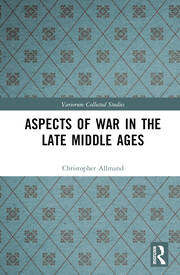
Publication – Christopher Allmand, « Aspects of War in the Late Middle Ages »

This Variorum collection of articles is intended to illustrate that conflict in the late Middle Ages was not only about soldiers and fighting (about the makers and the making of war), important as these were. Just as it remains in our own day, war was a subject which attracted writers (commentators, moralists and social critics among them), some of whom glorified war, while others did not. For the historian the written word is important evidence of how war, and those taking part in it, might be regarded by the wider society. One question was supremely important: what was the standing among their contemporaries of those who fought society’s wars? How was war seen on the moral scale of the time? The last two sections deal with a particular war, the ‘occupation’ of northern France by the English between 1420 and 1450. The men who conquered the duchy, and then served to keep it under English control for those years, had to be rewarded with lands, titles, administrative and military responsibilities, even (for the clergy) ecclesiastical benefices. For these, war spelt ‘opportunity’, whose advantages they would be reluctant to surrender. The final irony lies in the fact that Frenchmen, returning to claim their ancestral rights once the English had been driven out, frequently found it difficult to unravel both the legal and the practical consequences of a war which had caused a considerable upheaval in Norman society over a period of a single generation.

Christopher Allmand is Emeritus Professor of Medieval History, University of Liverpool, UK. His previous publications include Henry V (1968), Lancastrian Normandy 1415-1450, The History of a Medieval Occupation (1983), The Hundred Years War: England and France at War, c.1300-c.1450 (2001), War, Government and Power in Late Medieval France (2000), and The De Re Militari of Vegetius: The Reception, Transmission and Legacy of a Roman Text in the Middle Ages (2011).

Table des matières :

Part I

Chapter 1: A Roman text on War. The Strategemata of Frontinus in the Middle Ages.

Originally published as ‘A Roman Text on War. The Strategemata of Frontinus in the Middle Ages’, Soldiers, Nobles and Gentlemen, Essays in Honour of Maurice Keen, ed. P. Coss and C. Tyerman (Boydell Press, 2009), 153-68.

Chapter 2: The De Re Militari of Vegetius: How did the Middle Ages treat a Late Roman Text on War?

Originally published as ‘The De Re Militari of Vegetius. How did the Middle Ages treat a late Roman text on war?’ Revista de Historia des Ideias, vol. 30 (University of Coimbra Press, 2009), 101-17.

Chapter 3: The Fifteenth – Century English Prose Version of Vegetius’ De Re Militari.

Originally published as ‘Fifteenth-Century Versions of Vegetius’ De Re Militari, Armies, Chivalry and Warfare in Medieval France and Britain, Harlaxton Mediaeval Studies, Volume VII, ed. M. Strickland (Shaun Tyas publishing, 1998), 30-45.

Chapter 4: Did the De Re Militari of Vegetius influence the Military Ordinances of Charles the Bold?

Originally published in Publication du Centre Européen d’Etudes Bourguignonnes (XIVe-XVIe s.), xli (2001), 135-43.

Part II

Chapter 5: Changing Perceptions of the Soldier in Late Medieval France.

Taken from ‘Guerre et Société en France, en Angleterre et en Bourgogne XIVe-XVe siecle’, éd. P.Contamine, C. Giry-Deloison and M. Keen, published by Le Centre d’Histoire de la Région du Nord et de l’Europe du Nord-Ouest (1991), 171-88.

Chapter 6: Some Intellectual Influences on the Origins of the Royal Army in Medieval France.

Originally published as ‘Des origines intellectuelles de l’armée française au Moyen Âge’, in Un Moyen Âge pour aujourd’hui. Mélanges offerts à Claude Gauvard, ed. J. Claustre, O.Mattéoni et N. Offenstadt (Paris, PUF, 2010), 47-56.

Chapter 7: ‘Personal Honour or Common Good? The Witness of Le Jouvencel in the Fifteenth Century.’

Originally published as ‘Entre honneur et bien commun: le témoignage du Jouvencel au XVe siecle’, Revue Historique, 301/3 (Paris, PUF,1992), 463-81.

Chapter 8: The Problem of Desertion in France, England and Burgundy in the Late Middle Ages.

Originally published as ‘Le problème de la désertion en France, en Angleterre et en Bourgogne à la fin du Moyen Âge’, Guerre, pouvoir et noblesse au Moyen Age. Mélanges en l’honneur de Philippe Contamin. Ed. J. Paviot and J. Verger (Paris, Presses de l’ Université de Paris-Sorbonne, 2000), 31-41.

Part III

Chapter 9: Normandy in English Opinion at the End of the Hundred Years War.

Originally published as ‘La Normandie devant l’opinion anglaise à la fin de la guerre de Cent Ans’, Bibliothèque de l’École des Chartes, vol. 128 (1970), 345-68.

Chapter 10: Diplomacy: The Anglo- French Negotiations, 1439.

Originally published as ‘The Anglo-French Negotiations, 1439’, Bulletin of the Institute of Historical Research, 40 (1967), 1-33.

Chapter 11: Local Reaction to the French Reconquest of Normandy (1449-50): The Example of Rouen.

Originally published as ‘Local Reaction to the French Reconquest of Normandy: The Case of Rouen’, The Crown and Local Communities in England and France in the Fifteenth Century, ed. J. R. L. Highfield & R. Jeffs, (Alan Sutton Publishing, 1981), 146-61.

Chapter 12: National Reconcilliation in France at the End of the Hundred Years War.

Originally published as ‘National Reconciliation in France at the End of the Hundred Years War’, vol.vi, Journal of Medieval Military History, ed. C.J.Rogers, (Boydell Press, 2008), 149-64.

Part IV

Chapter 13: Spies and Spying in the Fourteenth Century.

Originally published as ‘Spies and Spying in the Fourteenth Century’, War, Literature and Politics in the Late Middle Ages, written by J.R. Alban and C.T. Allmand

(Liverpool: University Press, 1976), 73 – 101.

Chapter 14: War and the Non-Combatant during the Hundred Years War.

Originally published as ‘War and the Non-combatant’, The Hundred Years War, ed. K.A. Fowler, (London, Macmillan: St Martin’s Press, 1971}.

Informations pratiques :

Christopher Allmand, Aspects of War in the Late Middle Ages, Londres, Routledge, 2022 ; 1 vol., 246 p. (Variorum Collected Studies). ISBN : 978-0-36733-067-5. Prix : GBP 120,00.

Source : Routledge

Publié dans Publications | Laisser un commentaire

Appel à contribution – Medieval accountability: normativity, numeracy, and rhetoric from the institutional to the domestic sphere

University of Bucharest, 2-3 June 2023

The last two decades of research into medieval ideas and practices of accountability emphasised the multifaceted nature of this subject, from financial accountancy to norms of conduct in office to broader notions of social responsibility. As individual studies tended to focus on one or a couple of specific aspects, it becomes important at the present historiographical juncture to direct our attention to the points of articulation between the different practices of accountability, circa 1200–1500. This two-day conference invites contributions that examine accountability from multiple angles and test new approaches. We particularly encourage comparisons between the institutional and the private sphere, for instance as regards the mutual influences and shared culture of accountability/responsibility. Equally, we welcome contributions that discuss the relation between, on the one hand, numeracy and accounting, and on the other hand, memoranda and instructions about conduct in office or more broadly in society. As a way of expanding the traditional emphasis on accounting records, papers can also explore other sources that evince relevant aspects of social and institutional conduct and one’s responsibility for it, such as administrative reports and inquests.

The conference papers will be collected in an edited volume published with an international academic press and should reflect original, unpublished research. The organisers will provide three nights hotel accommodation and help defray travel expenses. For inquiries, contact Ionuț Epurescu-Pascovici at ionut.epurescu-pascovici@icub.unibuc.ro

Proposals of circa 300 words outlining the source material, methodology, and anticipated findings should be emailed to ionut.epurescu-pascovici@icub.unibuc.ro by 15 December 2022.  

Publié dans Appel à contributions | Laisser un commentaire

Publication – « Histoire des institutions diachroniques », dir. Geoffrey Grandjean, Martin Lempereur et Julien Maquet

Nombreuses sont les institutions qui ont exercé un pouvoir politique sur le territoire de l’actuelle Wallonie. Dans cet ouvrage, les institutions sont entendues au sens large comme des institutions matérielles, symboliques ou encore fonctionnelles qui ont évolué au fil du temps. C’est le cas notamment du palais de justice de Liège, des assemblées représentatives, de certaines fortifications, des communautés villageoises, du symbole du coq wallon, de la frontière linguistique, de la création de la Région wallonne, de l’organisation de la justice, des procédures juridictionnelles et de la police, de la paix de Fexhe, de l’organisation de l’enseignement supérieur ou encore de la mise en place de musées. Ces multiples institutions ont laissé des traces dans le paysage wallon. L’institutionnalisation de l’exercice du pouvoir politique en Wallonie est spécifiquement analysée dans cet ouvrage afin d’en cerner les portées diachroniques.

Geoffrey GRANDJEAN est Professeur de science politique à la Faculté de Droit, de Science politique et de Criminologie de l’Université de Liège. Martin LEMPEREUR est Attaché à l’Agence wallonne du Patrimoine et Collaborateur scientifique à la Faculté de Droit, de Science politique et de Criminologie de l’Université de Liège. Julien MAQUET est Conservateur du Trésor de la cathédrale de Liège et Maître de conférences à l’Université de Liège.

Informations pratiques :

Histoire des institutions diachroniques, dir. Geoffrey Grandjean, Martin Lempereur, Julien Maquet, Liège, Presses universitaires de Liège, 2022 ; 1 vol., 456 p. ISBN : 978-2-87562-314-0. Prix : € 35,00.

Source : Presses universitaires de Liège

Publié dans Publications | Laisser un commentaire

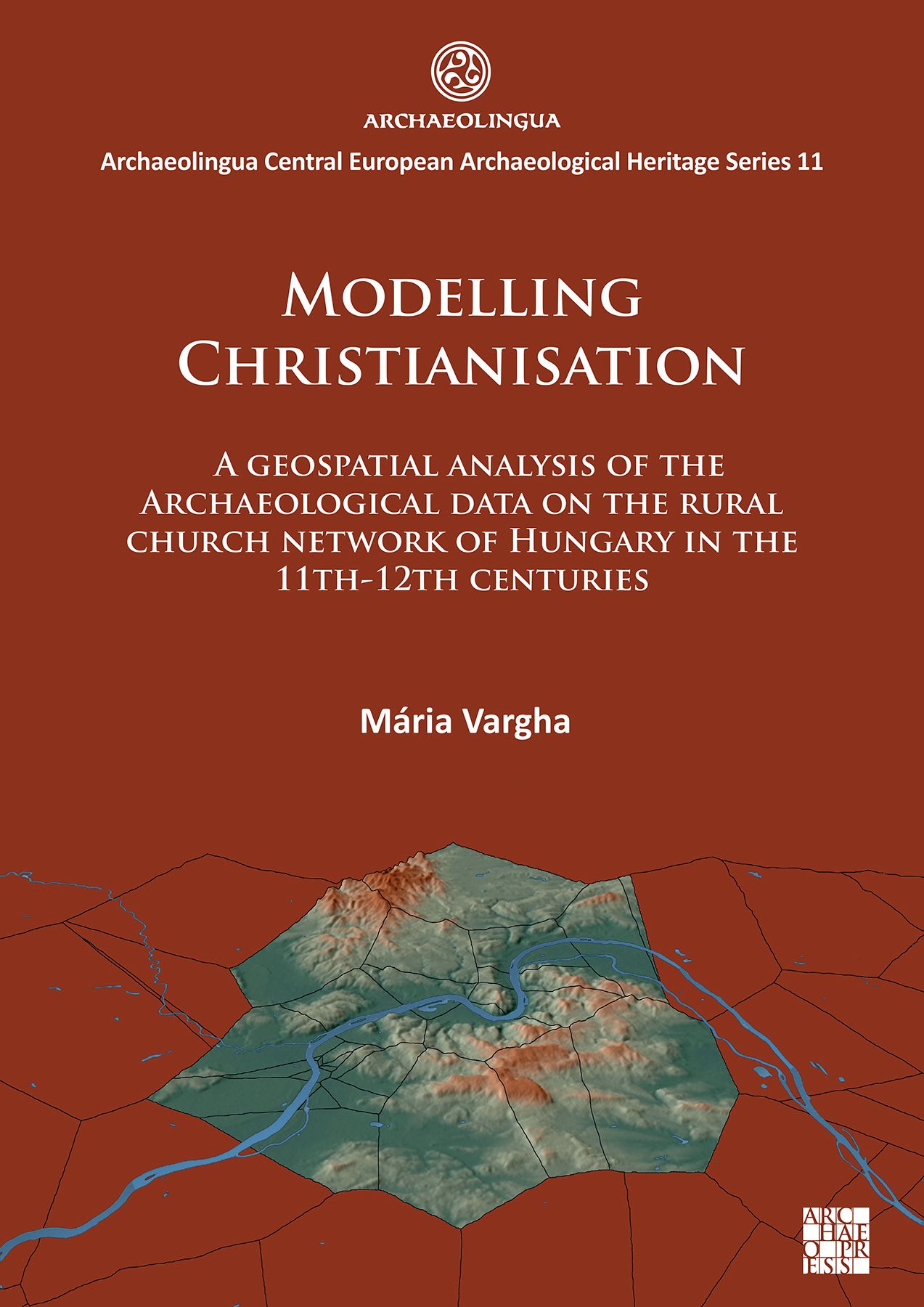
Publication – Mária Vargha, « Modelling Christianisation: A Geospatial Analysis of the Archaeological Data on the Rural Church Network of Hungary in the 11th-12th Centuries »

Modelling Christianisation breaks new ground by studying the underutilised archaeological material for the Christianisation of the medieval Kingdom of Hungary. Around the first Millennium, in present-day Central Europe, the political and religious landscape changed dramatically. With the Christianisation of the pagan societies on its borders, the Ottonian/Holy Roman Empire significantly expanded according to the principles of the Imperium Christianum. This process – Christianisation – frequently tied to ‘the making of Europe’, has long generated broad interest in scholarship. Although recent attempts have shown archaeology’s potential to shed light on the subject, interpretations of Christianisation and state formation are still primarily dominated by historical narratives.

Instead of concentrating on the upper echelons of society, the volume draws on the archaeological record relating to the Christianisation of the commoners – rural churches and field cemeteries – and more precisely (digital) archaeological archival data. This was subjected to geospatial analysis to uncover potential networks and clusters and to provide a different narrative about the course of Christianisation. Written evidence deals typically only with the topmost layer of institutions, such as the foundation of bishoprics, archbishoprics and some monasteries. Local churches, the smallest but most numerous elements of the church system, seldom appear in written sources; thus, theories about the development of the Church as an institution have often lacked direct evidence about the local church network. The approach taken here integrates this abundant data which provides information about the largest part of the population, otherwise absent in the written sources. It allows the reconstruction of a cultural landscape and lets us see the process of (institutionalised) Christianisation as a process of adaptation. Thus, it also offers a new interpretation for modelling Christianisation in newly emergent kingdoms.

Table des matières :

Contents

I. INTRODUCTION ;
Problems to be Considered in the Discourse ;
Contextualisation of the Historical Events in the Christianisation of Hungary ;
Contextualisation of the Notion of Christianisation, and Issues with Baptism ;

II. RESEARCH TRENDS IN THE HISTORICAL AND ARCHAEOLOGICAL STUDIES ON THE CHRISTIANISATION OF HUNGARY ;
Archaeology in the Interpretation of the Christianisation of Medieval Hungary ;
Results and Problems in the Archaeological Research of Christianisation ;
Elements of Secular and Ecclesiastical Power – The Castle System and Church Organisation ;

III. SOURCES, METHODS AND APPROACHES ;
Spatial Approaches to Christianisation and State Formation ;
Written Evidence Connected to Christianisation ;
Types of Archaeological Data Considered and their Issues ;

IV. SPATIAL ANALYSIS OF THE ARCHAEOLOGICAL MATERIAL – MODELLING CHRISTIANISATION ;
Primary Questions and Methods ;
The Eleventh Century ;
Central Power and Christianisation in the Eleventh Century ;
Ecclesiastical Centres as Places of Central Power in the Eleventh Century ;
Rural Sites and Christianisation in the Eleventh Century ;
The Twelfth Century ;

V. HISTORICAL THEORIES AND THE ARCHAEOLOGICAL MATERIAL OF CHRISTIANISATION COMPARED TO THE DEVELOPMENT OF THE PAROCHIAL NETWORK ;
Precedents and Influences on the Ecclesiastical System ;
The Role of Royal Churches ;

VI. CONCLUSIONS ;

APPENDIX ;
Field Cemeteries (Fig. 33.) ;
Churches of the 11th Century (Fig. 34.) ;
Transitional Cemeteries of the 11th Century (Fig. 35) ;
Monasteries of the 11th Century (Fig. 36.) ;
Bishoprics of the 11th Century (Fig. 37.) ;
Castles of the 11th Century (Fig. 38.) ;
Churches of the 12th Century (Fig. 39.) ;
Transitional Cemeteries of the 12th Century (Fig. 40.) ;
Monasteries of the 12th Century457 (Fig. 41.) ;
Bishoprics in the 12th Century458 (Fig. 42.) ;
Castles in the 12th Century459 (Fig. 43.) ;

BIBLIOGRAPHY

Informations pratiques :

Mária Vargha, Modelling Christianisation: A Geospatial Analysis of the Archaeological Data on the Rural Church Network of Hungary in the 11th-12th Centuries, Oxford, Archaeopress Publishing, 2022 ; 1 vol., 160 p. (Archaeolingua Central European Archaeological Heritage Series, 11). ISBN : 978-1-80327-279-5. Prix : GBP 35,00.

. Prix : GBP Source : Archaeopress

Publié dans Publications | Laisser un commentaire

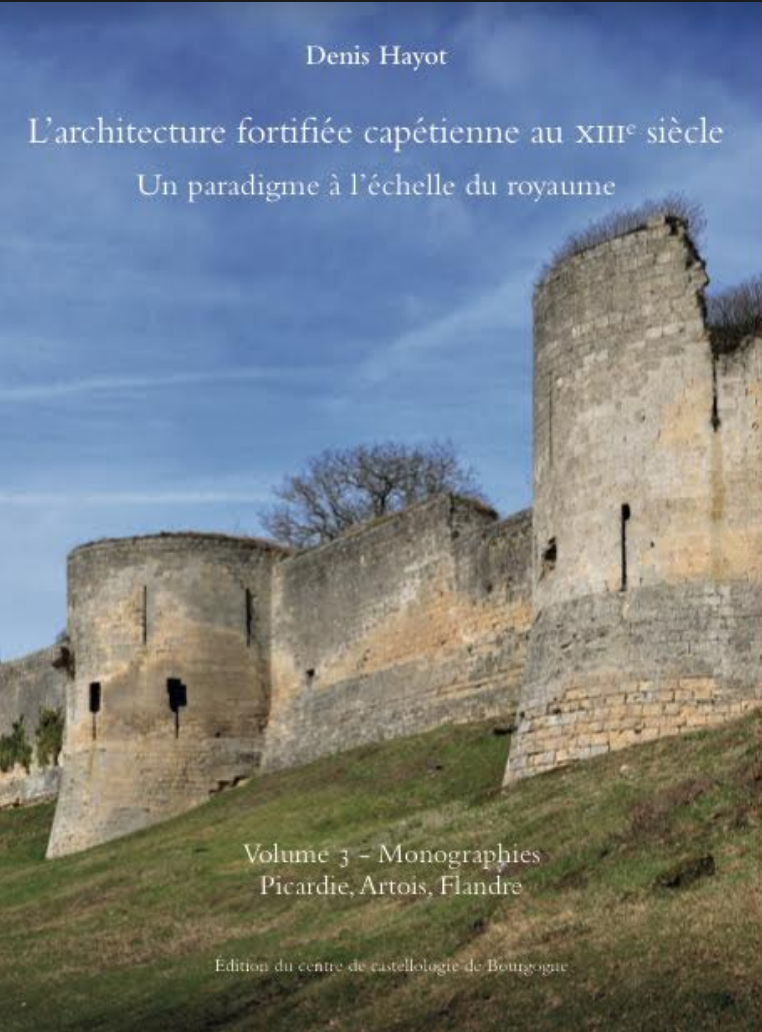
Publication – Denis Hayot, « L’architecture fortifiée capétienne au XIIIe siècle. Un paradigme à l’échelle du royaume », t. 3, « Monographies : Picardie, Artois, Flandre »

Fondée sur l’usage des tours cylindriques à archères, la forteresse idéale du XIIIe siècle ressemble à un « château-fort » de dessin d’enfant : un château carré, crénelé et cantonné de tours rondes. Mais derrière cette apparence si familière se cache un phénomène architectural majeur : apparue à la charnière de l’an 1200, et pratiquée aussi bien par le roi que par les grands princes ou les seigneurs plus modestes, l’architecture fortifiée « capétienne » remporte un immense succès dans l’ensemble du royaume tout au long du XIIIe siècle, au point d’avoir façonné le territoire et notre propre vision du Moyen Âge.

Pour comprendre cette oraison architecturale et dépasser les longs débats de l’historiographie, Denis Hayot a pris le parti d’une recherche globale, embrassant dans une même étude les forteresses royales, princières et seigneuriales à l’échelle du royaume. Cette réflexion le conduit à interroger l’idée reçue d’un hypothétique « modèle royal », à laquelle il faut préférer le constat de l’émergence d’un modèle commun, dans un royaume alors en phase d’uni cation culturelle.

Informations pratiques :

Denis Hayot, L’architecture fortifiée capétienne au XIIIe siècle. Un paradigme à l’échelle du royaume, t. 3, Monographies : Picardie, Artois, Flandre, Dijon, CeCaB, 2022 Prix : € 28,00.

Bon de commande : ici

Publié dans Publications | Laisser un commentaire

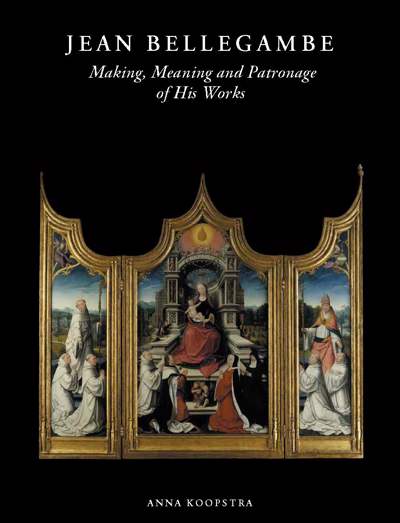
Publication – Anna Koopstra, « Jean Bellegambe (c. 1470-1535/36). Making, Meaning and Patronage of his Works »

Jean Bellegambe (c. 1470- 1535/36), whose career as far as we know spanned the first three decades of the sixteenth century, was a successful painter. His patrons included some of the most high-ranking clerics in the Habsburg-Burgundian Netherlands as well as members of the ruling class of Douai, the town where he lived and worked all his life.

This is the first study to appear since Dehaisnes’ 1890 monograph that is exclusively devoted to the artist. By reassessing primary evidence – archival documents and material evidence from the works of art themselves – it aims to highlight Bellegambe’s artistic achievements. Close scrutiny of his paintings and investigation of the artist’s working methods will show that Bellegambe visualised the concerns of his patrons by closely linking the physical characteristics of his works to their original imagery, function and use.

This volume presents a series of five case studies of his works that were made for a monastic community, two individual clerics, a town hall and a bourgeois layman, thus providing rich evidence of patronage and audiences. The objective here is to examine how Bellegambe met the challenges posed by these commissions, and to gain further insight into the practice of a skilled artist who – rooted in a long line of craftsmanship and artistic tradition and in close collaboration with his colleagues and patrons – produced a body of highly original works.

Anna Koopstra (1980) studied art history at the University of Groningen (MA, 2004) and obtained her doctorate from the Courtauld Institute of Art (PhD, 2016). She has held curatorial positions and research fellowships at the Suermondt-Ludwig Museum (2005-08), The Metropolitan Museum of Art (Slifka interdisciplinary Fellow, 2008-10), The National Gallery (2015-17), and the Courtauld (Associate Caroline Villers Research Fellow, 2016/17). Her research focuses on the technical investigation of paintings, and in particular on the making and meaning of early Netherlandish paintings.

Informations pratiques :

Anna Koopstra, Jean Bellegambe (c. 1470-1535/36). Making, Meaning and Patronage of his Works, Turnhout, Brepols, 2022 ; 1 vol., 160 p. (Me Fecit, 11). ISBN : 978-2-503-57437-0. Prix : € 100,00.

Source : Brepols

Publié dans Publications | Laisser un commentaire

Appel à contribution – The Cusanus Society of UK & Ireland

The Cusanus Society of UK & Ireland will be holding its first annual conference 20-21 June 2023 in St Andrews in conjunction that week with the annual meeting of the European Academy of Religion. We welcome papers and sessions on any aspects of the work and writings of Cusanus, including influences on his writings, his own thought and that of his contemporaries, and his subsequent influence and potential role in constructive theological and philosophical thought today. Proposals for individual papers and sessions are welcome. While we hope to primarily hold in-person sessions, selected virtual sessions may be possible.

Paper proposals (20 minutes) should include:

  • Paper title and 100-word abstract
  • Speaker’s academic affiliation and contact information Session proposals should include:
  • Session title, organizer and 150-word abstract

Information as above for 3 (20 minute) papers. Proposals and inquiries should be sent to: Simon J. G. Burton Simon.Burton@ed.ac.uk or William P. Hyland wph3@st-andrews.ac.uk.

The deadline for proposals is Monday October 31st.

We are delighted that our two plenary speakers will be: Professor John Millbank. Emeritus Professor & Director of the Centre of Theology and Philosophy, University of Nottingham, and Dr Richard Oosterhoff. Senior Lecturer in History, University of Edinburgh.

Publié dans Appel à contributions | Laisser un commentaire

Appel à candidature – Atelier d’initiation à la recherche (Master) – Rome, la péninsule italienne, le monde : enjeux et défis d’une ambition de centralité (XVe-XVIIIe siècles)

Atelier du 23 au 27 janvier 2023 à l’EFR

Envoi des candidatures jusqu’au 17/10/2022 à 12 h

Pour la sixième année consécutive, les membres de l’École française de Rome proposent un atelier d’initiation à la recherche. Il sera consacré à l’ambition romaine de centralité, à la fois politique, religieuse et culturelle, du retour des papes dans l’Urbs en 1420 à la création de l’éphémère République romaine en 1798. Cette thématique sera abordée à travers des conférences, des ateliers pratiques et des visites thématiques. La formation est ouverte aux étudiantes et étudiants de master 1 et master 2 en histoire et en histoire de l’art, qui mènent des recherches en lien avec le sujet de l’atelier.

La Caput mundi met en mouvement des forces qui sont peut-être avant tout centripètes – elle attire à elle des personnes, des biens, des informations (pèlerins, artistes, nouvelles, etc.) – mais aussi centrifuges – elle est un centre duquel partent des flux variés (légats du pape, missions, normes religieuses, etc.). Alors que la métaphore de Rome comme théâtre du monde est un lieu commun, les mécanismes concrets de cette construction ont fait l’objet d’études récentes qui ont contribué à en éclairer d’un jour nouveau les multiples ressorts et qui ouvrent de nouvelles perspectives de recherche. L’atelier abordera, d’une part, la centralité romaine liée à la vocation universelle de la papauté, tout comme à l’action des dirigeants des États pontificaux pour s’imposer face à d’autres puissances de la péninsule italienne et au-delà, qu’il s’agisse de négociations diplomatiques ou du rayonnement artistique. D’autre part, seront évoqués les obstacles (politiques, économiques, religieux) à la volonté centraliste de Rome et les résistances qu’elle suscite à l’échelle locale et globale. L’exception romaine sera ainsi abordée avant tout à travers ses constantes interactions avec d’autres espaces et d’autres modèles (confessionnels, culturels, etc.). Pour explorer ces dimensions, l’atelier cherchera à faire découvrir la diversité et la richesse parfois vertigineuses des archives romaines, mais aussi la matérialisation topographique de la volonté d’être (et/ou d’apparaître comme) un centre du monde.

Cette formation visera les objectifs suivants :

  • Découverte de fonds d’archives, de bibliothèques et de lieux emblématiques de la Rome renaissante et moderne pour appréhender à la fois leur richesse et la nécessité d’adopter des stratégies de recherche pour ne pas se trouver submergé par leur nombre et leur diversité ;
  • Familiarisation avec de récents développements historiographiques et des champs en renouveau, principalement en histoire diplomatique et en histoire de l’Église romaine, en histoire de l’information, en histoire culturelle et en histoire des savoirs ;
  • Réflexion méthodologique autour du choix du sujet de thèse et de la problématisation du projet de recherche.

Admission

Les dossiers de candidature doivent comporter : un CV, un relevé des notes obtenues au cours de l’année universitaire précédente, une lettre de motivation évoquant les projets futurs de l’étudiant et les raisons de son intérêt pour la formation. Les dossiers, sous forme d’un seul document PDF, doivent parvenir avant le 17 octobre 2022 à midi à l’adresse suivante : atelier.master(at)efrome.it. En cas d’absence d’accusé de réception, il est nécessaire de contacter les organisateurs. La sélection effectuée par le comité de coordination de l’EFR sera communiquée au plus tard le 31 octobre 2022. La commission d’évaluation n’attend pas de profil académique particulier ; les dossiers seront évalués avant tout en fonction du bénéfice que les candidats pourront retirer de la formation.

Informations pratiques

Les étudiants seront logés à l’École française de Rome, place Navone, et leurs déjeuners seront pris en charge. En revanche, le déplacement vers Rome et les dîners seront à la charge des participants ou de leur université. En cas d’impossibilité d’assurer ce financement, il sera possible exceptionnellement de demander à l’EFR une aide pour le déplacement, sur présentation d’une attestation de non-prise en charge par l’établissement d’origine.

Un rapport (cinq-six pages) devra être remis aux formatrices et aux formateurs comprenant une réflexion sur une catégorie de sources présentée durant l’atelier, au choix, assortie de quelques exemples de thèmes de recherche en lien avec ces sources. Ce rapport pourra faire l’objet d’une validation en fonction des modalités prévues par les universités de rattachement, par exemple, compter comme un stage.

Contacts

Pour toute question, contacter : Lana Martysheva et Pierre-Bénigne Dufouleur (atelier.master(at)efrome.it).

Source : École française de Rome

Publié dans Appel à contributions | Laisser un commentaire