Publication – « Écrire les sciences sociales, écrire en sciences sociales », dir. Christina Le Bart et Florian Mazel

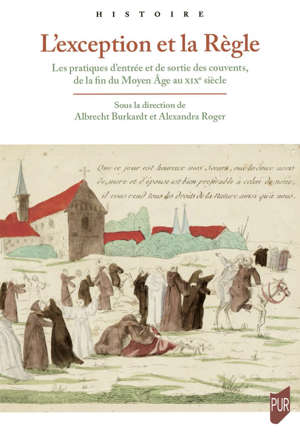
Thèses, articles, livres… tous les chercheurs en sciences humaines et sociales consacrent une partie de leur temps à écrire. Ce dénominateur commun masque à l’évidence une grande diversité quant aux pratiques d’écriture. En invitant les chercheurs à dire leur rapport à l’écriture, et même à raconter leurs expériences (heureuses ou douloureuses), ce second volet de la collection « Métier de chercheur·e » entend interroger frontalement une pratique trop peu souvent mise en discussion dans l’espace académique.

Christian Le Bart est professeur de science politique à l’université de Rennes. Ses travaux portent sur la vie politique et la communication politique.

Florian Mazel est professeur d’histoire médiévale à l’université de Rennes. Ses travaux portent sur l’histoire sociale de l’institution ecclésiale, les élites aristocratiques et les questions spatiales et territoriales.

Table des matières : ici

Informations pratiques :

Écrire les sciences sociales, écrire en sciences sociales, dir. Christina Le Bart et Florian Mazel, Rennes, Presses universitaires de Rennes, 2021 (Métier de chercheur·e). 21 x 13 cm, 328 p. ISBN : 9782753583276. Prix : 20 euros.

Source : Presses universitaires de Rennes

Publié dans Le réseau | Laisser un commentaire

Conférence – Christian Sapin, « L’architecture carolingienne en France et en Europe, une nouvelle lecture entre archéologie et histoire de l’art »

19 janvier 2022, 18h00-20h00
Campus de Paris (ICP)

La Faculté des Lettres et l’Institut Supérieur de Théologie des Arts (ISTA) organisent une conférence autour de l’architecture carolingienne en France et en Europe.

Portée par la Faculté des Lettres et l’ISTA (Institut Supérieur de Théologie des Arts) de l’ICP,  cette conférence présentera une nouvelle lecture de l’architecture carolingienne en France et en Europe à travers le prisme de l’archéologie et de l’Histoire de l’art.

Elle sera animée par Christian Sapin, archéologue et historien de l’art, directeur de recherches émérite au CNRS.

Intervenant : Christian Sapin

Christian Sapin est spécialiste de l’archéologie et de l’Histoire de l’art du haut Moyen-Âge ses recherches portent notamment sur :

  • Archéologie des sites religieux du haut Moyen Âge


  • Construction et liturgie des cryptes médiévales

 matériaux du bâti
  • Peintures et décors sculptés du haut Moyen Âge

Organisateurs :

Cet événement est organisé conjointement par la Doyenne de la Faculté des Lettres, Cécile Coulangeon, Docteure en Histoire de l’art et archéologie des mondes anciens et médiévaux et le Père Arnaud Montoux, professeur extraordinaire au Theologicum, Faculté de Théologie et de Sciences Religieuses de l’ICP.

Accès :

Événement  accessible en présentiel et en visioconférence

Adresse : Institut Catholique de Paris –  74 rue Vaugirard, 75006 Paris
Salle : Amphithéâtre René Rémond – W22

Source : Institut catholique de Paris

Publié dans Colloque | Laisser un commentaire

Publication – « Imperial Splendor: The Art of the Book in the Holy Roman Empire, 800-1500 », dir. Jeffrey F. Hamburger et Joshua O’Driscoll

Focusing on production and patronage, this new volume features over 150 images of magnificently illustrated books and precious bindings, drawn largely from North American collections. The book’s three sections are arranged chronologically, yet in each case with a different thematic focus. Opening with a look at the precedents set by the Carolingian forerunners of the Empire, the first section considers deluxe imperial manuscripts associated with the Ottonian emperors. The second section examines the role of imperial monasteries in the production of manuscripts, considering in particular the patronage of aristocratic elites. The final section offers a tour of imperial cities in the fourteenth and fifteenth centuries, from Vienna and Prague to Augsburg and Nuremberg. This final stop considers the impact of Albrecht Dürer and humanism on the arts of the book. The volume features a glossary, indexes, and maps showing the shifting borders of the Empire over 700 years.

Informations pratiques :

Imperial Splendor: The Art of the Book in the Holy Roman Empire, 800-1500, dir. Jeffrey F. Hamburger et Joshua O’Driscoll, New York, D Giles Ltd, 2021. 216 p. ISBN : 9781911282860. Prix : USD 45.

Source : The Morgan Library and Museum

Publié dans Publications | Laisser un commentaire

Publication – Agostino Paravcini Bagliani, « La papessa Giovanna. I testi della leggenda (1250-1500) »

L’opera raccoglie per la prima volta l’intera tradizione letteraria che riguarda la leggenda della Papessa Giovanna e quella della verifica della mascolinità, alla quale avrebbe dovuto sottostare ogni pontefice dopo la sua elezione, dalla più antica notizia sulla Papessa, del domenicano Giovanni di Mailly (1250-1254), fino al 1500. Si tratta di centonove testimonianze letterarie, centouno delle quali dipendono, direttamente o indirettamente, dalla notizia sulla Papessa tràdita dal Chronicon pontificum et imperatorum del domenicano Martino Polono: tra queste anche la biografia che Giovanni Boccaccio ha dedicato alla Papessa nel suo celebre De mulieribus claris. I testi sono qui presentati in originale (latino, greco, lingue vernacolari medievali [catalano, francese, italiano, medio-tedesco, medio-neerlandese]) e in traduzione italiana e sono accompagnati da un ampio commento codicologico-letterario. L’antologia è preceduta dai due testi (Anonimo Salernitano, lettera Pax in terra di Leone IX) che trattano della leggenda del patriarca donna di Costantinopoli, e termina con la discussione delle notizie apocrife sulla Papessa che troviamo inserite in edizioni cinquecentesche di opere cronachistiche dei secoli XI-XII (Sigeberto di Gembloux, Ottone di Frisinga, Goffredo da Viterbo, Gervasio di Tilbury ecc.). Un ampio studio introduttivo riassume i risultati ottenuti nei singoli commenti e suggerisce nuove interpretazioni sull’origine e l’evoluzione di ambedue queste celebri leggende, i cui dati sono presentati sinteticamente in (23) tabelle testuali e numeriche. Il ricco corredo di 124 illustrazioni a colori permette di osservare come la storia di questo straordinario «nuovo» pontificato è stata scritta nei codici, come la Papessa è stata rappresentata visivamente, con un suo ritratto o mentre partorisce, e con quali modalità la sua biografia è stata oggetto di interventi censorî da parte di lettori di incunaboli o di antiche edizioni a stampa.

Table des matières : ici

h

Informations pratiques :

Agostino Paravcini Bagliani, La papessa Giovanna. I testi della leggenda (1250-1500), Florence, SISME–Ed. del Galluzzo, 2021 (Millennio Medievale, 120 ; Testi, 32). XIV–694 p. ISBN : 978-88-9290-130-8. Prix : 140 euros.

Source : SISMEL

Publié dans Publications | Laisser un commentaire

Appel à contribution – L’émergence de nouveaux marchés / The emergence of new markets

English version below

Congrès AFHE 2023, 30-31 mars

Dans le cadre plus général de recherches sur la notion de marchés et le fonctionnement concret de ceux-ci, l’histoire économique s’est déjà penchée sur l’ouverture de nouveaux marchés, en explorant l’apparition de nouveaux produits, les innovations techniques, en se penchant sur l’évolution de la consommation, des transports, des modes de distribution – autant de facteurs qui ont permis l’éclosion et la conquête de nouveaux marchés.

La rencontre proposée pour le prochain congrès de l’AFHE, prévu les 30 et 31 mars 2023, veut focaliser l’attention sur ce moment même de l’émergence, ses causes, ses manifestations et ses conséquences, sur le temps long, depuis l’antiquité jusqu’à nos jours.

Dans le sillage des réflexions déjà menées par les historiens sur les définitions de « marché et marchés », nous proposons d’étudier ce moment d’apparition au prisme de toutes les réalités que recouvre ce mot de marché : un lieu, concret et abstrait, d’échanges entre offre et demande d’un bien, d’un service, qui peut être organisé, officiel, libre, voire « noir », ou « zones grises » ; un jeu d’acteurs entre les producteurs, les consommateurs et le régulateur qui encadre l’activité d’échange, donne les autorisations, fabrique les normes ; un débouché concernant des zones géographiques d’échelles variées ; une institution support de transactions…

Cette rencontre veut tirer le bilan, dans la longue durée, des nouveautés apportées par les recherches récentes dans ce domaine. Les questions auxquelles elle cherchera à répondre sont nombreuses. À partir de quels critères peut-on parler de « nouveau marché » ? Qu’entend-on par « ouverture » de nouveaux marchés ? Cela peut concerner la dimension géographique – des espaces nouvellement parcourus, le passage du local au global -, l’apparition d’un nouveau produit qui conquiert une nouvelle clientèle (comme la soie, le thé, les indiennes, l’automobile…), le changement de routes commerciales, … concernant des marchés de nature variée (financier, du travail, agricole, industriel, artistique…). Quels sont les facteurs qui concourent ou non à cette ouverture ? La naissance d’un nouveau marché peut ainsi s’expliquer par une innovation technique, commerciale, financière, qui favorise la mise sur le marché d’un nouveau produit ; par l’ouverture de nouvelles routes d’échange et de circulation ou grâce aux révolutions des transports ; par de nouvelles modalités de distribution (marchés ouverts ou couverts, boutiques, supermarchés, colportage, vente par correspondance) ; par l’évolution de la démographie, des niveaux de vie et des habitudes de consommation (goûts, modes, cultures). Elle peut aussi être le « fait du prince » : privatisation de biens publics, délivrance d’autorisations de mise sur le marché, réglementation douanière… Ou bien encore elle peut être liée au développement d’une philosophie économique qui favorise ou encadre en arrière-plan la dynamique (mercantilisme, libéralisme, protectionnisme…) ou à une stratégie de conquête géopolitique.

Autant de questions qui pourront être envisagées de manière générale, par l’analyse d’un moment particulier de rupture, tout comme en partant des acteurs des nouveaux marchés (producteurs, consommateurs, marchands, régulateurs) et des modalités de leur action, de l’étude des changements dans les circulations, dans les infrastructures et les techniques, du rôle des innovations… en portant une attention particulière aux interactions de ces différents facteurs dans la chaîne de causalités qui président à l’émergence d’un nouveau marché ou qui font obstacle à ce processus. Vouloir étudier cette émergence comporte un paradoxe qu’il s’agit de dépasser : l’innovation implique souvent une situation de monopole, avec des profits que ses détenteurs cherchent d’abord à préserver avant que l’exclusivité ne leur soit contestée et que se mette en place un processus de construction tendant vers le marché, ce qui renvoie à la question de la fixation des prix et des normes. C’est bien ce moment de basculement, qui voit apparaître un nouveau marché, que l’on entend analyser. Le parti pris de la longue durée devrait permettre de croiser les points de vue, de dégager des continuités ou au contraire de souligner des spécificités dans ces phénomènes de rupture, au fil des âges. Dans un même souci comparatif, le champ géographique couvert par l’enquête ne se limitera pas à l’histoire européenne, les contributions pourront porter sur d’autres aires culturelles.

Conditions de soumission
Les propositions (3 000 signes maximum en fichier word ou pdf) doivent comporter un titre, une problématique explicite et une courte bibliographie. Il est possible de joindre une brève notice biographique (1 000 signes maximum). Les propositions feront l’objet d’un processus d’expertise par les membres du comité directeur de l’AFHE.
Les propositions sont à envoyer à l’adresse suivante : AFHE.congres2023@gmail.com (en indiquant dans l’objet du message ‘soumission congrès AFHE 2023’) avant le 28 février 2022.
Les communications, d’une durée de 20 minutes, pourront être présentées en français ou en anglais.
Nous attirons votre attention sur le fait que les frais de transport et d’hébergement (hors déjeuners et dîners prévus au programme) restent à la charge des communicants qui auront été sélectionnés, mais que des subventions partielles peuvent être envisagées.

Prix de la meilleure communication jeune chercheur
Le comité directeur récompensera la meilleure communication d’un ou d’une jeune chercheur(e) (i.e. en master ou en doctorat avec une soutenance prévue après le 31 mars 2022 au moment de la soumission) d’une valeur de 500 €.

Les jeunes chercheurs sont invités à postuler au présent appel, ou à un appel plus large dans leur direction qui sera diffusé au premier semestre 2022.

Comité d’organisation :

Marguerite Martin, Laure Quennouëlle-Corre, François Rivière, Catherine Virlouvet, Stéphane Bourdin et Guillaume Garner

The emergence of new markets

AFHE 2023 Congress, Lyon, March 30-31, 2023

Economic history has already examined the opening of new markets in the perspective of more general research on the notion of markets and their concrete functioning. The exploration of the appearance of new products, technical innovations, and the evolution of consumption, transportation, and distribution modes contributed to our understanding of how new markets are created, conquered and maintained over time.

The next AFHE Congress aims to focus attention on this very moment of emergence, its causes, manifestations, and consequences, from antiquity to the present day.

In the wake of the reflections already carried out by historians on the definitions of « market and markets », we propose to study this moment of emergence through the prism of all the realities covered by the word “market”: a place, concrete and abstract, of exchange between supply and demand of a good or a service, which can be organized, official, free, or even « black », or in the « gray area »; a game between producers, consumers and the regulator who frames the activity of exchange, gives the authorizations, makes the standards; a commercial outlet concerning geographical areas of various scales; an institution supporting transactions…

This meeting aims to take stock, in the long term, of the novelties brought by recent research in this field. The questions it will try to answer are numerous. What are the criteria for defining a « new market »? What do we mean by « opening » new markets? This may concern the geographical dimension – newly traversed spaces, a change of scale such as the passage from the local to the global -, the appearance of a new product that conquers a new clientele (such as silk, tea, indienne, the automobile…), the change of trade routes, etc. concerning markets of various kinds (financial, labor, agricultural, industrial, artistic…). What are the factors that contribute or not to this opening? The birth of a new market can thus be explained by a technical, commercial, or financial innovation, which favours the marketing of a new product; by the opening of new trade and circulation routes or thanks to the transport revolutions; by new distribution methods (open or covered markets, stores, supermarkets, peddling, mail order); by the evolution of demographics, standards of living and consumption habits (tastes, fashions, cultures). It can also be the « fait du prince »: privatization of public goods, delivery of marketing authorizations, customs regulations… Or it can be linked to the development of an economic philosophy that favors or frames the dynamics in the background (mercantilism, liberalism, protectionism…) or to a strategy of geopolitical conquest.

All these questions can be considered in different ways. The papers can focus on the various factors involved in the chain of causalities that preside over the emergence of a new market, or that impede this process. It can be a particular moment of rupture, or the actors of the new markets (producers, consumers, merchants, regulators) and the modalities of their action, or the study of changes in circulation, in infrastructures and techniques, or the role of innovations… To study the emergence of new markets involves a paradox that must be overcome. Initially, innovation often implies a situation of monopoly, with profits that its holders first seek to preserve, which brings us back to the question of price setting and standards. It is only in a second phase that exclusivity is challenged and a process of construction tending towards the market is put in place. It is this moment of change, which sees the emergence of a new market, that we intend to question. The long-term approach should make it possible to cross the points of view, to identify continuities or, on the contrary, to underline specificities in these phenomena of rupture, over the ages. With the same concern for comparison, the geographical scope of the survey will not be limited to European history, and contributions may cover other cultural areas.

Conditions of submission

Proposals (must include a title, an explicit problematic, a short bibliography and a brief biographical note (word or pdf format, 4,000 characters maximum, including 1,000 characters maximum for the biographical note). The proposals will be subject to an expertise process by the members of the AFHE steering committee.

Proposals should be sent to the following address AFHE.congres2023@gmail.com (with ‘submission to AFHE 2023’ as subject of the message) before February 28, 2022.

The papers should last approximately 20 minutes and can be presented in French or in English.

Finally, we would like to draw your attention to the fact that transportation and accommodation costs (excluding lunches and dinners provided for in the program) are the responsibility of the selected communicants, but can be partly subsidized depending on the case.

Prize for the best young researcher paper

The steering committee of the French Association of Economic History will reward the best paper of a young researcher (i.e. in master or doctorate with a defense planned after March 31, 2022 at the time of submission) with a value of 500 €.

Organizing committee:

Stéphane Bourdin, Natacha Coquery, Guillaume Garner, Jean-Louis Gaulin, Hervé Joly, Marguerite Martin, Manuela Martini, Laure Quenouëlle-Corre, François Rivière, Catherine Virlouvet

Publié dans Appel à contributions | Laisser un commentaire

Publication – Matthew Gabriele et David Perry, « The Bright Ages. A New History of Medieval Europe »

A lively and magisterial popular history that refutes common misperceptions of the European Middle Ages, showing the beauty and communion that flourished alongside the dark brutality—a brilliant reflection of humanity itself.


The word “medieval” conjures images of the “Dark Ages”—centuries of ignorance, superstition, stasis, savagery, and poor hygiene. But the myth of darkness obscures the truth; this was a remarkable period in human history. The Bright Ages recasts the European Middle Ages for what it was, capturing this 1,000-year era in all its complexity and fundamental humanity, bringing to light both its beauty and its horrors. 

The Bright Ages takes us through ten centuries and crisscrosses Europe and the Mediterranean, Asia and Africa, revisiting familiar people and events with new light cast upon them. We look with fresh eyes on the Fall of Rome, Charlemagne, the Vikings, the Crusades, and the Black Death, but also to the multi-religious experience of Iberia, the rise of Byzantium, and the genius of Hildegard and the power of queens. We begin under a blanket of golden stars constructed by an empress with Germanic, Roman, Spanish, Byzantine, and Christian bloodlines and end nearly 1,000 years later with the poet Dante—inspired by that same twinkling celestial canopy—writing an epic saga of heaven and hell that endures as a masterpiece of literature today.  

The Bright Ages reminds us just how permeable our manmade borders have always been and of what possible worlds the past has always made available to us. The Middle Ages may have been a world “lit only by fire” but it was one whose torches illuminated the magnificent rose windows of cathedrals, even as they stoked the pyres of accused heretics.  

The Bright Ages is illustrated throughout with high-resolution images. 

Informations pratiques :

Matthew Gabriele et David Perry, The Bright Ages. A New History of Medieval Europe, New York, Harper Collins, 2021. 320 P. ISBN : 9780062980892. Prix : USD 29,99.

Source : Harper Collins

Publié dans Publications | Laisser un commentaire

Publication – « Trois obituaires bordelais. L’abbaye Sainte-Croix, Les Clarisses de Bordeaux, Saint-Martin de Saint-Macaire », éd. Ézéchiel Jean-Courret, Françoise Lainé et Jean-Loup Lemaitre

Trois obituaires bordelais. L’abbaye Sainte-Croix, Les Clarisses de Bordeaux, Saint-Martin de Saint-Macaire, éd. Ézéchiel Jean-Courret, Françoise Lainé et Jean-Loup Lemaitre, Paris, AIBL / Peeters, 2021 (Recueil des Historiens de la France: Obituaires. Nouvelle Série, 26). XIV-480 p. ISBN : 9782877546744. Prix : 60 euros.

Source : Peeters

Publié dans Publications | Laisser un commentaire

Publication – Sarah Rigaudeau, « Le testament en droit canonique du XIIe au XVe siècle »

Pour les juristes français, les formes du testament sont le résultat d’une combinaison produite par l’influence du droit romain, des coutumes de l’ancienne France et de la législation révolutionnaire. L’apport du droit canonique à la formation du droit moderne et contemporain du testament, bien que majeur, est le plus souvent totalement passé sous silence. La réintroduction du testament au XIIe siècle est incontestablement due à la redécouverte du Corpus Juris Civilis. Cet ensemble fournit du procédé une définition particulièrement claire, l’entendant comme un acte de dernière volonté révocable. L’influence du droit romain, d’abord importante dans le Midi, a donc conditionné la diffusion de l’institution dans la pratique. Très tôt, cependant, s’est opéré un mouvement de simplification des formes exigées. La plupart des règles romaines sont écartées. L’Église n’exige en réalité aucune formalité, mais seulement des preuves de l’acte. Cette attitude très souple permet au plus grand nombre de tester, le plus souvent simplement par oral. Ouvrir à chacun une telle possibilité a bien sûr d’abord pour but de permettre à tous les chrétiens d’effectuer des legs pieux susceptibles, au-delà du rachat de leurs fautes, de venir enrichir le patrimoine ecclésiastique. Cette politique n’en débouche pas moins sur une promotion sans précédent de l’acte à cause de mort et de la liberté de disposer.

Docteur en histoire du droit et qualifiée aux fonctions de maître de conférences, Sarah Rigaudeau est actuellement chargée d’études documentaires aux Archives de Paris.

Informations pratiques :

Sarah Rigaudeau, Le testament en droit canonique du XIIe au XVe siècle, Paris, Institut Francophone pour la Justice et la Démocratie, 2021 (Thèses, 208). 576 pages, ISBN : 978-2-37032-328-6. Prix: 45 euros.

Source : LGDJ

Publié dans Le réseau | Laisser un commentaire

Publication – Yvette Vanden Bemden et Isabelle Lecocq, « The Stained Glass of Herkenrode Abbey »

The sixteenth-century glazing from Herkenrode Abbey in Belgium constitutes the most significant body of Flemish stained glass in the world. In the early nineteenth century, an English aristocrat took advantage of the secularization of the monasteries on the Continent to purchase the abbey church’s glazing; glass from the abbess’s private chapel was acquired by another English aristocrat.

This account of the glazing, the result of a unique and fruitful collaboration between the Corpus Vitrearum in Great Britain and Belgium, has sections on the three locations in England where the glass is now located – Lichfield, Shrewsbury, and Ashtead – prefaced by a historical introduction on Herkenrode Abbey. It benefits from extensive research into artistic practice in the Low Countries (for art-historical context), draws on the rich documentation in the Lichfield Cathedral archives (for the glass’s reception in England), and presents the insights gained during recent conservation of the glass at Lichfield Cathedral (for the glazing’s execution and condition).

Yvette Vanden Bemden, University of Namur, and Isabelle Lecocq, Royal Institute of Cultural Heritage, Brussels

Yvette Vanden Bemden is a researcher for the study of stained glass in Belgium for the publication of volumes of the Corpus Vitrearum. She is member and former president of the Belgian committee of the Corpus Vitrearum Belgique-België and a member of the Royal Academy of Sciences, Letters and Arts of Belgium.

Isabelle Lecocq is the chef de travaux at the Institut royal du Patrimoine artistique, Brussels, initially in the department for conservation/restoration, now in the Documentation Department – Art History Research and Inventory Unit. She is the Secretary of the Corpus Vitrearum Belgique-België; Secretary of The Royal Academy of Archaeology of Belgium; and a scientific collaborator to the University of Liège (Faculty of Philosophy and Letters, Department of Historical Sciences. Art History and Archaeology of Modern Times).

Table des matières :

National Committee of the Corpus Vitrearum (Great Britain)
National Committee of the Corpus Vitrearum (Belgium)
Foreword
List of Illustrations
Acknowledgements
Ground Plan of Lichfield Cathedral
Window Plan
Glossary
Note to the Reader
Abbreviations
Key to the Restoration Diagrams
Bibliography

GENERAL INTRODUCTION

The Former Abbey of Herkenrode and its Stained Glass
The Former Abbey of Herkenrode
The AbBey Church and Its Decoration
The Herkenrode Glazing: Material History and the Original Scheme
The Glazing of the Abbess’s Private Chapel
Glazing at Other Locations in the Abbey
Glazing from the Abbey Conserved in Belgium

I. LICHFIELD (STAFFORDSHIRE): LICHFIELD CATHEDRAL

History of Lichfield Cathedral from its Origins until the Civil War
The Anglo-Saxon Cathedral
The Romanesque Cathedral
The Gothic Cathedral
The Civil War

The Herkenrode Glass at Lichfield: Context, Acquisition, Installation, and Restoration
Introduction
The ‘Lady Choir’
Francis Eginton’s East Window
The Herkenrode Offer
Principal Figures Involved in the Planning
Evolution of the Plan
The Crucifixion Panels
The Herkenrode Glazing and the Lady Chapel
The Herkenrode Glazing Outside the Lady Chapel
The Burlison & Grylls Restoration in the Lady Chapel
The Camm and Winfield Restoration in the Lady Chapel
Restoration of Herkenrode Glass Outside the Lady Chapel
Other Late Nineteenth-Century Work
Camm’s Wartime Restoration

The Herkenrode Glass at Lichfield: Conserving the Lady Chapel Glazing
The Herkenrode Glazing
The Need for Conservation and Protection
Conserving the Glazing

The Herkenrode Glass at Lichfield: Historical and Art-Historical Analysis
Scholarly Interest in the Herkenrode Windows at Lichfield Cathedral in the Nineteenth Century
Locations of the Herkenrode Glazing at Lichfield
Condition and Authenticity
Marks, Glaziers’ Marks, and Inscriptions
Iconography
Technique
Dating
Style
Attribution

CATALOGUE

Windows in the Lady Chapel
Window I
Window nII
Window nIII
Window nIV
Window sII
Window sIII
Window Siv

Windows Outside the Lady Chapel
Window nVI
Window sVI
Window sXII
Window sXIII
Window sXV
Garland Panel

II. SHREWSBURY (SHROPSHIRE): CHURCH OF ST MARY

Architectural and Glazing Overview of the Church
The Herkenrode Glass at Shrewsbury
Catalogue: Part of St John from the Crucifixion Window at Herkenrode Abbey Church

III. ASHTEAD (SURREY): CHURCH OF ST GILES

Architectural and Glazing Overview of the Church
The Herkenrode Glass at Ashtead
Catalogue: The Crucifixion with St George, St Anne with the Virgin as a Child, and St Bernard

APPENDICES

Appendix 1. Description of the Medieval Glass in Lichfield Cathedral by Thomas Harwood
Appendix 2. Documents in the Aartsbisschoppelijk Archief (Mechelen, Belgium) Relating to Lambert Spulberch at Herkenrode
Appendix 3. Documents in the Rijksarchief (Maastricht, The Netherlands) Relating to Pierre Libotton’s Removal of the Herkenrode Abbey Church Glazing
Appendix 4. Documents in the Lichfield Cathedral Archive Relating to the Herkenrode Glazing and Its Context
Appendix 5. Genealogy of those Members of the de Lexhy Family Represented in the Herkenrode Glazing
Appendix 6. Locations at Lichfield Cathedral of Donors’ Arms
Appendix 7. Cold-Painting Applied by Barley Studio to the Herkenrode Glazing in the Lady Chapel at Lichfield Cathedral
Appendix 8. Glass Erroneously Attributed to Herkenrode

INDEX

Informations pratiques :

Yvette Vanden Bemden et Isabelle Lecocq, The Stained Glass of Herkenrode Abbey, Oxford, Oxford University Press, 2021 (Corpus Vitraearum Medii Aevi: Great Britain). 624 Pages | Approx. 650 colour illustrations. 30 x 21 cm. ISBN : 9780197267189. Prix : GBP 160.

Source : Oxford University Press

Publié dans Publications | Laisser un commentaire

Web – La fabrique de la couleur. Artefacts, matière et cognition

Accès : ici

Ce carnet de recherche accompagne la réalisation des deux projets de recherche « La couleur : artefacts, matière et cognition » et « Fabrique matérielle du visuel » respectivement portés par la BnF et l’INHA. Il a pour objectif de relayer les travaux en cours dans le domaine des matériaux de la couleur (analyses physico-chimiques, outils de traitement des données d’analyses, ressources), en favorisant des croisements interdisciplinaires avec les sciences humaines et sociales (histoire de l’art, histoire, archéologie, linguistique, anthropologie).

Source : Couleur

Publié dans Web | Laisser un commentaire