Congrès – XIX World Economic History Congress

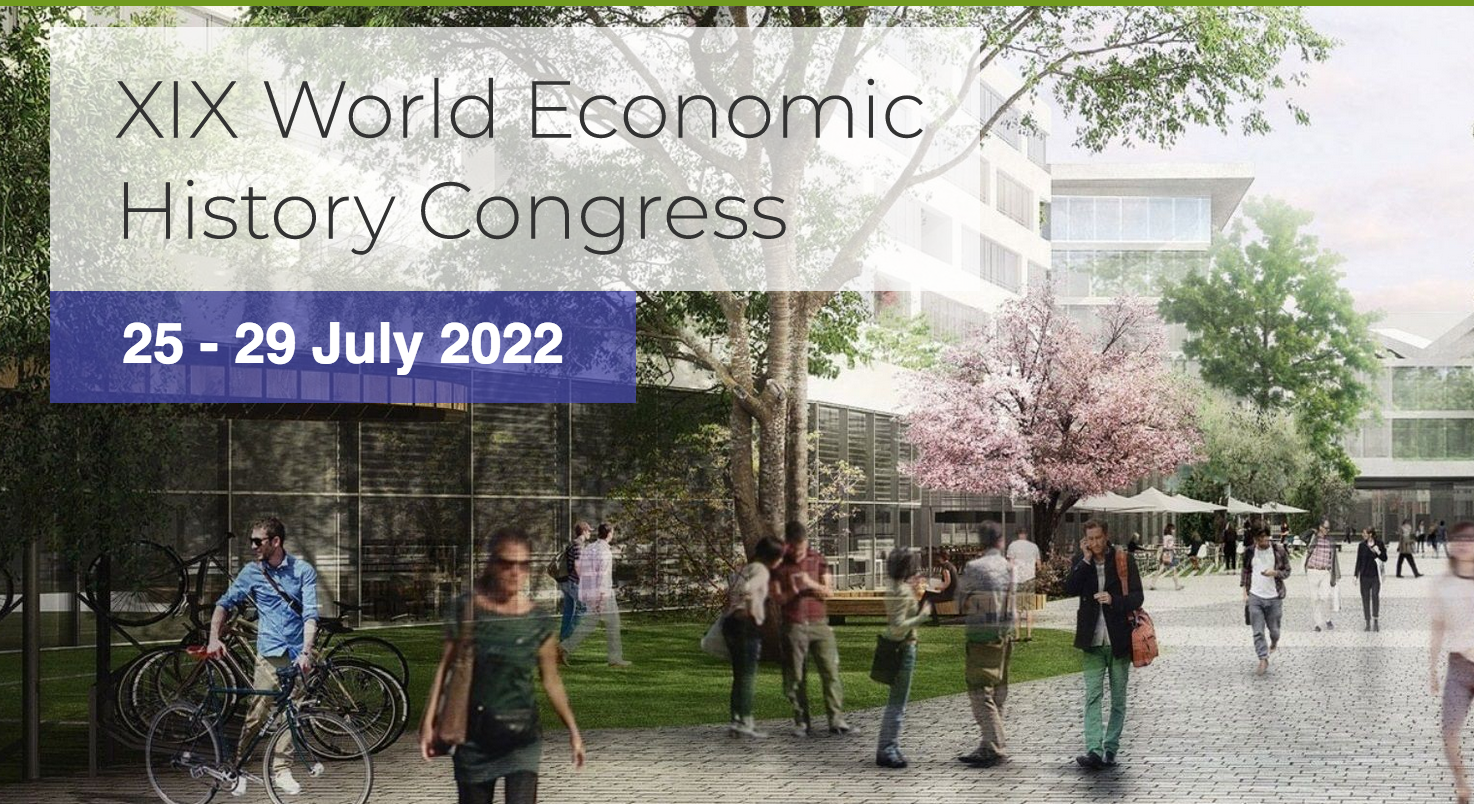
The organizing committee welcomes a large set of approaches in economic history including social history, urban and rural history, history or economics of finance, sciences and technologies, gender history, cultural history, etc. – and crossovers with other disciplinary fields, including management studies, demography, geography, environment, anthropology, sociology, socio-psychology etc. It also invites panels about methods in economic history, history of economic thought or economic theory, as well as innovative discussion of new sets of data and archives, or public communication of new (or renewed) results in economic history.

Programme : ici

Informations pratiques :

25-29 juillet

Paris, Campus Condorcet

Source : World Economic History Congress

Publié dans Colloque | Laisser un commentaire

Appel à contribution – Construire une nouvelle histoire du handicap et de la surdité au travers des siècles

Présentation de l’ouvrage

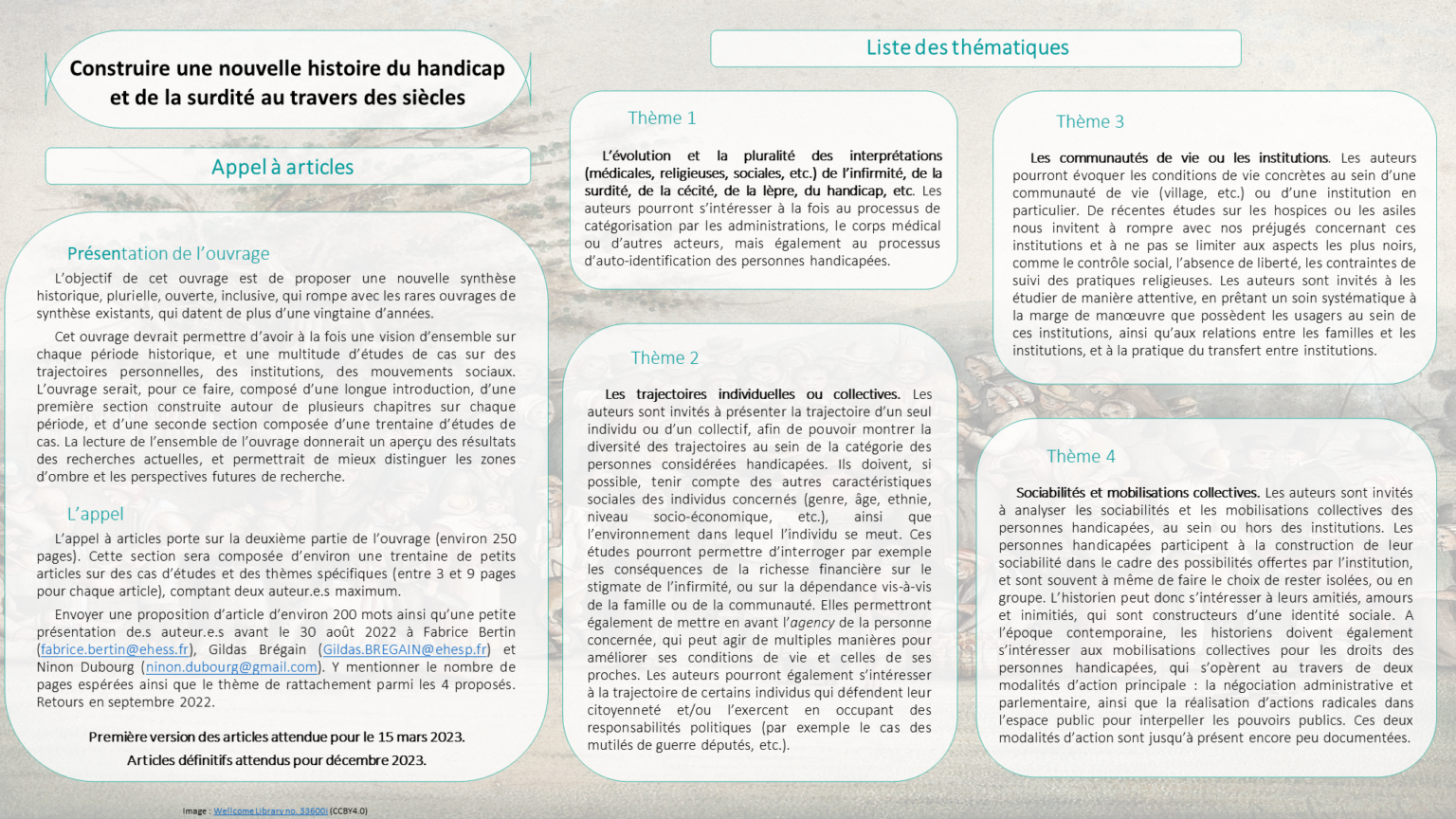
     L’objectif de cet ouvrage est de proposer une nouvelle synthèse historique, plurielle, ouverte, inclusive, qui rompe avec les rares ouvrages de synthèse existants, qui datent de plus d’une vingtaine d’années.

     Cet ouvrage devrait permettre d’avoir à la fois une vision d’ensemble sur chaque période historique, et une multitude d’études de cas sur des trajectoires personnelles, des institutions, des mouvements sociaux. L’ouvrage serait, pour ce faire, composé d’une longue introduction, d’une première section construite autour de plusieurs chapitres sur chaque période, et d’une seconde section composée d’une trentaine d’études de cas. La lecture de l’ensemble de l’ouvrage donnerait un aperçu des résultats des recherches actuelles, et permettrait de mieux distinguer les zones d’ombre et les perspectives futures de recherche.

          L’appel

     L’appel à articles porte sur la deuxième partie de l’ouvrage (environ 250 pages). Cette section sera composée d’une trentaine de petits articles sur des cas d’études et des thèmes spécifiques (entre 3 et 9 pages pour chaque article), comptant deux auteur.e.s maximum.

     Envoyer une proposition d’article d’environ 200 mots ainsi qu’une petite présentation de.s auteur.e.s avant le 30 août 2022 à Fabrice Bertin (fabrice.bertin@ehess.fr), Gildas Brégain (Gildas.BREGAIN@ehesp.fr) et Ninon Dubourg (ninon.dubourg@gmail.com). Y mentionner le nombre de pages espérées ainsi que le thème de rattachement parmi les 4 proposés. Retours en septembre 2022.

Première version des articles attendue pour le 15 mars 2023.

Articles définitifs attendus pour décembre 2023.

Liste des thématiques

          Thème 1

     L’évolution et la pluralité des interprétations (médicales, religieuses, sociales, etc.) de l’infirmité, de la surdité, de la cécité, de la lèpre, du handicap, etc. Les auteurs pourront s’intéresser à la fois au processus de catégorisation par les administrations, le corps médical ou d’autres acteurs, mais également au processus d’auto-identification des personnes handicapées.

          Thème 2

     Les trajectoires individuelles ou collectives. Les auteurs sont invités à présenter la trajectoire d’un seul individu ou d’un collectif, afin de pouvoir montrer la diversité des trajectoires au sein de la catégorie des personnes considérées handicapées. Ils doivent, si possible, tenir compte des autres caractéristiques sociales des individus concernés (genre, âge, ethnie, niveau socio-économique, etc.), ainsi que l’environnement dans lequel l’individu se meut. Ces études pourront permettre d’interroger par exemple les conséquences de la richesse financière sur le stigmate de l’infirmité, ou sur la dépendance vis-à-vis de la famille ou de la communauté. Elles permettront également de mettre en avant l’agency de la personne concernée, qui peut agir de multiples manières pour améliorer ses conditions de vie et celles de ses proches. Les auteurs pourront également s’intéresser à la trajectoire de certains individus qui défendent leur citoyenneté et/ou l’exercent en occupant des responsabilités politiques (par exemple le cas des mutilés de guerre députés, etc.).

          Thème 3

     Les communautés de vie ou les institutions. Les auteurs pourront évoquer les conditions de vie concrètes au sein d’une communauté de vie (village, etc.) ou d’une institution en particulier. De récentes études sur les hospices ou les asilesnous invitent à rompre avec nos préjugés concernant ces institutions et à ne pas se limiter aux aspects les plus noirs, comme le contrôle social, l’absence de liberté, les contraintes de suivi des pratiques religieuses. Les auteurs sont invités à les étudier de manière attentive, en prêtant un soin systématique à la marge de manœuvre que possèdent les usagers au sein de ces institutions, ainsi qu’aux relations entre les familles et les institutions, et à la pratique du transfert entre institutions.

           Thème 4

     Sociabilités et mobilisations collectives. Les auteurs sont invités à analyser les sociabilités et les mobilisations collectives des personnes handicapées, au sein ou hors des institutions. Les personnes handicapées participent à la construction de leur sociabilité dans le cadre des possibilités offertes par l’institution, et sont souvent à même de faire le choix de rester isolées, ou en groupe. L’historien peut donc s’intéresser à leurs amitiés, amours et inimitiés, qui sont constructeurs d’une identité sociale. A l’époque contemporaine, les historiens doivent également s’intéresser aux mobilisations collectives pour les droits des personnes handicapées, qui s’opèrent au travers de deux modalités d’action principale : la négociation administrative et parlementaire, ainsi que la réalisation d’actions radicales dans l’espace public pour interpeller les pouvoirs publics. Ces deux modalités d’action sont jusqu’à présent encore peu documentées.

Source : DisHist

Publié dans Appel à contributions | Laisser un commentaire

Publication – « La vie de sainte Agnès en quatrains de décasyllabes (BnF, fr. 1553) », éd. Gabriele Giannini

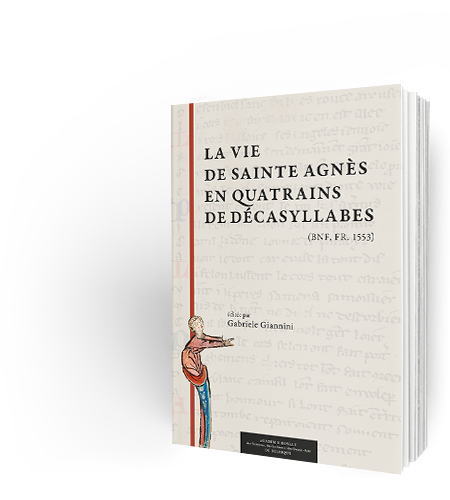
La nouvelle édition de la vie française de sainte Agnès tirée du superbe recueil fr. 1553 de la Bibliothèque nationale de France (vers 1285) permet de rendre justice à un hagiographe à l’esprit vif, originaire de Flandre ou des contrées avoisinantes.

Mais elle donne aussi l’occasion de plonger dans cet imposant manuscritbibliothèque et d’en questionner l’ancrage spatio-temporel, l’agencement des composants et les lignes de force culturelles, qui semblent en dernière instance émaner des milieux canoniaux séculiers des anciens diocèses de Thérouanne et de Cambrai.

Informations pratiques :

La vie de sainte Agnès en quatrains de décasyllabes (BnF, fr. 1553), éd. Gabriele Giannini, Bruxelles, Éditions de l’Académie, 2022 ; 1 vol. ISBN : 978-2-8031-0851-0. Prix : € 20,00.

Source : Éditions de l’Académie

Publié dans Publications | Laisser un commentaire

Publication – « Alexander of Aphrodisias in the Middle Ages and the Renaissance », dir. Pietro B Rossi, Matteo Di Giovanni, Andrea Aldo Robiglio

The greatest ancient interpreter of Aristotle, Alexander of Aphrodisias (fl. 200 AD) exerted a profound and enduring influence upon philosophy from Boethius until the modern era. Alexander’s interpretations laid the foundation for multiple philosophical views which were promoted as quintessentially Aristotelian by both Islamic and Latin thinkers throughout the Middle Ages. In the Renaissance, the University of Padua, a leading center of philosophical education and thought, established a scholarly tradition named “Alexandrinism” after him.

Paolo Accattino (1950-2015), a distinguished scholar of Alexander, made many noteworthy advancements to the field. With the aim of honoring Accattino’s memory, lifelong colleagues and associates P. Donini and L. Bertelli discuss his contributions. They are joined by a cohort of scholars (A. Bertolacci, M. Di Giovanni, J. Biard, A. Corbini, E. Rubino, L. Silvano, B. Bartocci, P.D. Omodeo, F. Iurlaro) who explore various key elements of Alexander’s legacy from Ibn Sīnā to Hugo de Groot. The volume presents new understandings concerning the reception of Alexander, offers new lines of inquiry, and opens potential avenues of research regarding his medieval and Renaissance afterlife.

Table des matières :

Lucio Bertelli, Paolo Accattino lettore della Politica di Aristotele

Pierluigi Donini, Paolo Accattino interprete del De intellectu di Alessandro di Afrodisia

Amos Bertolacci, « The Excellent among the Earlier Scholars »: Alexander of Aphrodisias in Avicenna’s Metaphysics

Matteo DI Giovanni, New Wine in Old Vessels: Alexander of Aphrodisias as a Source for Averroes’ Metaphysics

Joël Biard, L’alexandrisme comme rationalité philosophique

Amos Corbini, “Alexander of Aphrodisias” in the Medieval Latin Tradition of the Posterior Analytics: Some Remarks

Elisa Rubino, Alberto il Grande e il commento ai Meteorologica di Alessandro di Afrodisia

Luigi Silvano, (Pseudo-)Alexander of Aphrodisias between the Middle Ages and the Renaissance: Notes on the Afterlife of the Medical Puzzles and Physical Problems 

Barbara Bartocci, Topics and Syllogistic: Agostino Nifo Reading Alexander of Aphrodisias

Pietro Daniel Omodeo, Presence/Absence of Alexander of Aphrodisias in Renaissance Cosmo-Psychology

Francesca Iurlaro, Hugo Grotius’ Translation of Alexander of Aphrodisias’ De fato in His Philosophorum sententiae de Fato (1648)

Index

Informations pratiques :

Alexander of Aphrodisias in the Middle Ages and the Renaissance, dir. Pietro B Rossi, Matteo Di Giovanni, Andrea Aldo Robiglio, Turnhout, Brepols, 2022 (Studia Artistarum, 45). 223 p. ISBN: 978-2-503-58827-8. Prix : 78 euros.

Source : Brepols

Publié dans Publications | Laisser un commentaire

Publication – Aubrée David-Chapy, « Anne de France. Gouverner au féminin à la Renaissance »

e 14 novembre 1522 s’éteignait dans le silence du château de Chantelle, loin des fastes et de l’animation de la cour, Anne de France, dame de Beaujeu, duchesse de Bourbonnais et d’Auvergne, fille de Louis XI et sœur de Charles VIII. Tour à tour, elle avait guidé un royaume et un duché avec finesse et autorité. Considérée par ses contemporains comme l’une des femmes les plus puissantes de son temps, cette « fille des fleurs de lys » déploya son pouvoir sous des formes politiques, symboliques et littéraires qui firent d’elle l’une des princesses les plus remarquables de l’Europe des années 1500.

En même temps qu’il explore un monde en pleine effervescence politique et qu’il invite à une immersion dans le passé de la monarchie française, cet ouvrage a pour ambition de dévoiler les multiples facettes d’Anne de France. À la lumière de sources inédites, Aubrée David-Chapy offre un nouveau regard sur cette figure hors du commun, à la fois dernière grande princesse médiévale et première femme de pouvoir de la Renaissance.

Informations pratiques :

Aubrée David-Chapy, Anne de France. Gouverner au féminin à la Renaissance, Paris, Passés/Composés, 2022 ; 1 vol., 288 p. ISBN : 978-2-3793-3276-0. Prix : € 22,00.

Source : Passés/Composés

Publié dans Publications | Laisser un commentaire

Publication – Antonella Sannino, « Reading William of Auvergne »

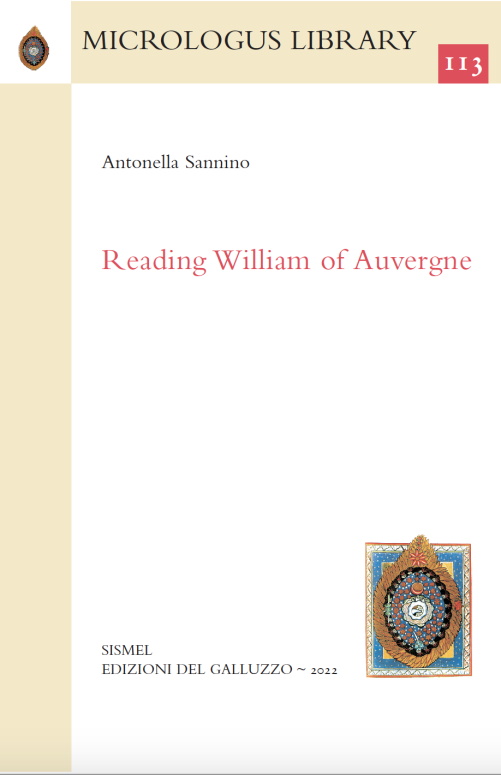
This book aims to provide an interpretation of several aspects of the philosophical system that William of Auvergne (1180-1249) – bishop of the city of Paris and councilor of Louis IX – developed in a cultural context wherein the Latin world had a special interest in Greek, Arabic, and Hebrew sources. The author focuses on issues relative to the causality of God and astrological causality, fate and providence, miracles and mirabilia, the conception of man as a nexus and as a divine image, the doctrine of beauty and of music.

All these themes combine in outlining the profile of a thinker who stands as a milestone in the history of the critical tradition of Aristotelianism until the eve of modernity.

Informations pratiques :

Antonella Sannino, Reading William of Auvergne, Florence, SISMEL–Edizioni del Galluzzo, 2022 ; 1 vol., VI–193 p. (Micrologus Library, 113). ISBN : 978-88-9290-166-7. Prix : € 36,00.

Source : SISMEL

Publié dans Publications | Laisser un commentaire

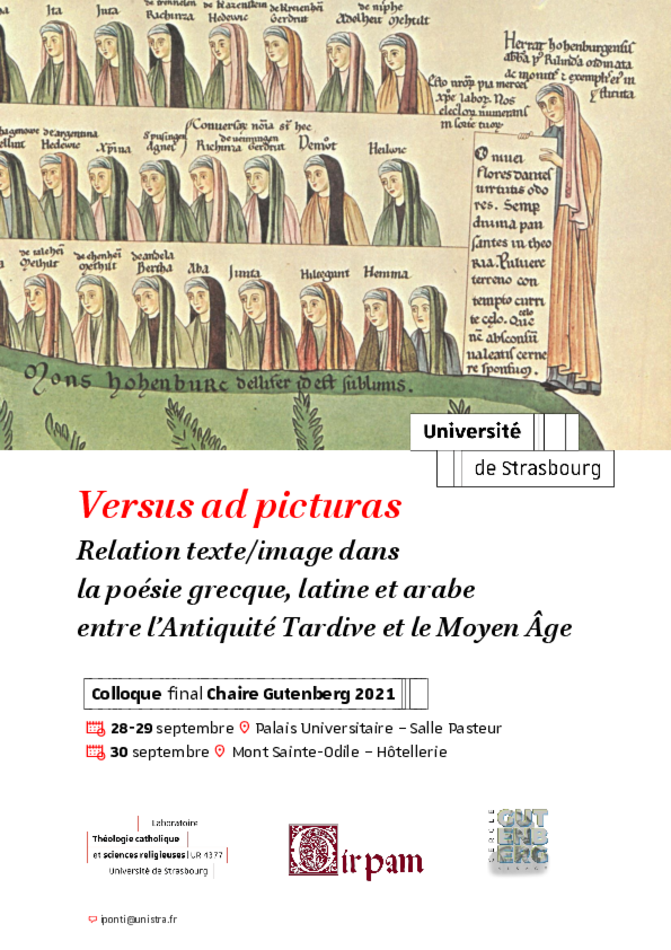
Colloque – Versus ad Picturas. Relation texte/image dans la poésie grecque latine et arabe entre l’Antiquité Tardive et le Moyen Âge

Colloque final Chaire Gutenberg2021 – Université de Strasbourg-GIRPAM

Programme : ici

Informations pratiques :

Le 28- 29 septembre 2022 -Palais Universitaire Salle Pasteur

Le 30 septembre 2022 Mont Sainte Odile Hôtellerie

Source : Université de Strasbourg

Publié dans Colloque | Laisser un commentaire

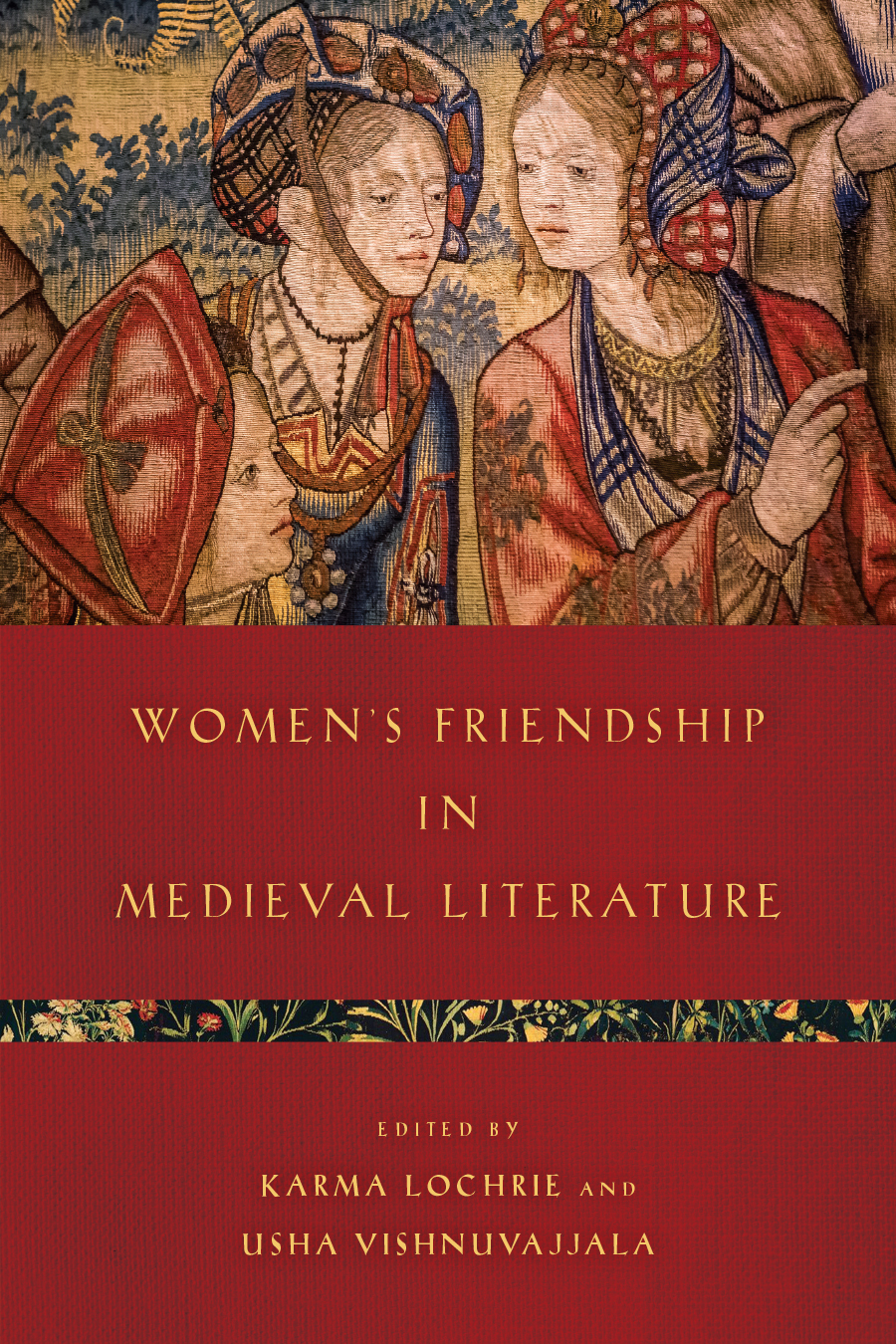
Publication – « Women’s Friendship in Medieval Literature », éd. Karma Lochrie et Usha Vishnuvajjala

“The significance of Women’s Friendship in Medieval Literature cannot be overstated: it gathers some of the freshest voices in medieval literary studies to present some of the most transformative and inspiring work on women and gender to date.” —Holly A. Crocker, author of The Matter of Virtue: Women’s Ethical Action from Chaucer to Shakespeare

“Lochrie and Vishnuvajjala have put together an exciting collection of essays about female friendship. Readers looking for feminist interventions in medieval studies will find Women’s Friendship engaging and thought provoking.” —Rebecca Krug, author of Margery Kempe and the Lonely Reader

In Women’s Friendship in Medieval Literature, Karma Lochrie and Usha Vishnuvajjala bring together established scholars and new voices to illuminate a previously understudied but consequential element of life in the Middle Ages. Contributors focus on representations of women’s friendships in medieval European literature and their afterlives both to historicize them and draw out the finer nuances of the multitude of forms, affects, values, and ethics that emerge within those friendships. This volume examines works by Chaucer, Gower, Malory, Marie de France, female saints, and late-Middle Scots poets alongside lesser-known late medieval lyrics and Middle English romances to chart women’s friendships and their many and sometimes conflicting affinities with the cultural categories of gender, religion, politics, and sexuality. In addition to exploring the parameters of female friendship across a range of texts and historical contexts, contributors evaluate the political, religious, and civic structures negotiated in public and private and engage with the long history of theory and philosophy on friendship. The result is a theoretical and historical rubric for the future study of women’s friendships in medieval texts and beyond.

Karma Lochrie is Provost Professor of English at Indiana University. She is also the author Heterosyncrasies: Female Sexuality When Normal Wasn’t and Nowhere in the Middle Ages, among others.

Usha Vishnuvajjala is Lecturer at Cardiff University. She is also the author of Feminist Medievalisms.

Table des matières :

Acknowledgments
Introduction
Karma Lochrie and Usha Vishnuvajjala

Part 1 Varieties of Spiritual Friendship

Chapter 1 Female Friendships and Visionary Women
Jennifer N. Brown

Chapter 2 On Love and Letters: Spiritual Friendship in Marie de France
Stella Wang

Chapter 3 Friendship and Resistance in the Vitae of Italian Holy Women
Andrea Boffa

Chapter 4 Sisters and Friends: The Medieval Nuns of Syon Abbey
Alexandra Verini

Part 2 Feminine Space, Feminine Voices

Chapter 5 “Amonge maydenes moo”: Gender-Based Community, Racial Thinking, and Aristocratic Women’s Work in Emaré
Lydia Yaitsky Kertz

Chapter 6 Women’s Communities and the Possibility of Friendship in the Stanzaic Morte Arthur
Usha Vishnuvajjala

Chapter 7 Female Friendship in Late Medieval English Literature: Cultural Translation in Chaucer, Gower, and Malory
Melissa Ridley Elmes

Part 3 New Modes of Female Friendship

Chapter 8 Cultivating Cummarship: Female Friendship, Alcohol, and Pedagogical Community in the Alewife Poem
Carissa M. Harris

Chapter 9 “All These Relationships between Women”: Chaucer and the Bechdel Test for Female Friendship
Karma Lochrie

Chapter 10 The Politics of Virtual Friendship in Christine de Pizan’s Book of the City of Ladies
Christine Chism

Chapter 11 Prosthetic Friendship and the Theater of Fraternity
Laurie Finke

Chapter 12 Conversations among Friends: Ælfflæd, Iurminburg, and the Arts of Storytelling
Clare A. Lees and Gillian R. Overing

Afterword Friendship at a Distance
Penelope Anderson

List of Contributors

Works Cited

Index

Informations pratiques :

Women’s Friendship in Medieval Literature, éd. Karma Lochrie et Usha Vishnuvajjala, Columbus, The Ohio State University Press, 2022 ; 1 vol., 304 p. (Interventions: New Studies in Medieval Culture). ISBN: 978-0-8142-1515-9. Prix : USD 99,95.

Source : The Ohio State University Press

Publié dans Publications | Laisser un commentaire

Colloque – XVe congrès international de philosophie médiévale

Le XVe Congrès international de la Société internationale de philosophie médiévale (SIEPM) se tiendra au campus Condorcet du lundi 22 au vendredi 26 août 2022 sous le thèmeLa pensée radicale au Moyen Âge. Ce congrès est organisé avec le soutien du CNRS et ses laboratoires : l’Institut de recherche et d’histoire des textes), le Laboratoire d’études sur les monothéismes et SPHERE (Sciences, Philosophie, Histoire) ainsi que l’EPHE et les universités de Paris I Panthéon-Sorbonne et Paris IV Sorbonne Université. Ce sera une excellente occasion de promouvoir l’étude de la philosophie médiévale en France et d’encourager un dialogue continu avec des spécialistes du monde entier.

Le thème principal proposé pour le congrès est « La pensée radicale » en philosophie médiévale, dans l’idée d’encourager des débats et des études sur l’innovation, la différence, les changements de paradigme, ou bien l’enracinement des traditions différentes époques et divers contextes linguistiques (latin, arabe, hébreu, grec ou langues vernaculaires).

Le congrès accueillera des communications et des sessions spéciales sur tous les sujets du curriculum médiéval de la philosophie : la théologie, la science, l’astrologie, la grammaire et la logique, l’éthique, les mathématiques, etc. Les étudiants, les jeunes docteurs, les spécialistes confirmés et les chercheurs seniors sont encouragés à partager leurs perspectives dans des communications individuelles ou à soumettre des propositions pour des sessions spéciales.

Une session compte 90 minutes réparties en trois communications (20 minutes de présentation et 10 de discussion). Les participants qui proposent des sessions spéciales les présideront et seront libres d’inviter leurs propres orateurs.

Programme à paraître ici

Informations pratiques :

Paris, Campus Condorcet
22-26 août 2022

Source : IRHT

Publié dans Colloque | Laisser un commentaire

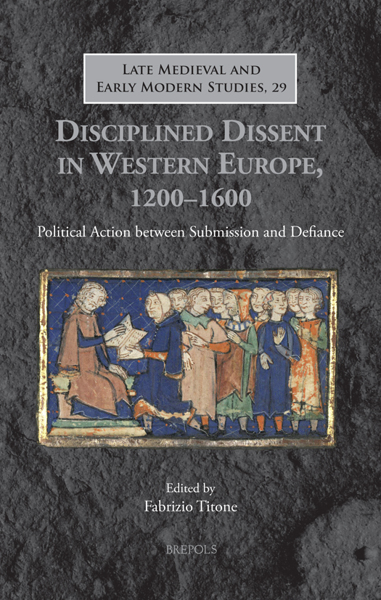
Publication – « Disciplined Dissent in Western Europe, 1200–1600. Political Action between Submission and Defiance », éd. Fabrizio Titone

This innovative collection explores the causes and effects of ‘disciplined dissent’ – forms of protest or political action positioned between the poles of submission and defiance. To identify the political influence of commoners, the emphasis is neither ‘top down’ nor ‘bottom up’ but on mutual influence and the interplay between rulers and ruled. Contributions concerning quite diverse polities show a careful opposition of non-elite people through an effort to respect the legislative system and to find common ground with the authorities. The aim was to emphasize aspects of the norms and institutions in favour of the benefit of the community, or to ensure adjustments of some aspects if found to be beneficial for the few and detrimental for many. The examination of non-violent pressure can help us to have a more exhaustive understanding of the protagonists, causes, and effects of socio-political changes in contexts of governmental development. The analysis includes cases of violent action that managed to secure royal approval. The premise of the book is that inequality, far from being accepted as normal and inevitable, was frequently questioned by less powerful people. When targeted by more or less evident forms of political marginalization, they laid claim to principles of justice and on this basis developed a critical comprehension of government, pursued a selective rejection of injustice, and gained recognition through negotiation.

Fabrizio Titone is Senior Lecturer in Medieval History at the Universidad of País Vasco and P. I. of the project Beyond the Exercise of a Public Office: Political Recognition According to Disciplined Dissent in Later Medieval Europe. His research focuses on the institutions and society of Sicily, within its Mediterranean context and beyond, from the fourteenth to the sixteenth century.

Table des matières :

Gaining Political Recognition in Western Europe, 1200–1600 — FABRIZIO TITONE

Before the ‘Primo Popolo’: Politics and the Popular Movement at San Gimignano in the First Half of the Thirteenth Century— ENRICO FAINI

Putting Pressure on the Lord: the Fiscal Reforms of Pietro Gambacorta, Signore of Pisa (1370-1392) — ALMA POLONI

Flemish Textile Workers’ Struggle for Emancipation in the Thirteenth Century — WIM BLOCKMANS

Rulers and Ruled: Freedom, Submission, and Dissent in the Florentine Correspondences (15th Century) — ISABELLA LAZZARINI

Putting Pressure on Rulers: Petitions, Disciplined Dissent and the Commons in Fourteenth Century England — PETER COSS

Disciplined Dissent and Nostalgia in Late Medieval England — HANNAH SKODA

Civic Ritual and Disciplined Dissent in Late Medieval England — ELIZA HARTRICH

In the Name of the Commonweal : How did French Peasants Manage to Obtain a Legal Recognition of Their Rights to Self-Defence During the Hundred Years War? — VINCENT CHALLET

Knowledge and Agency in Catania in the Later Middle Ages — FABRIZIO TITONE

Pushing Back Male Violence in Marriage: England, 1400–1600 — MARTIN INGRAM

Conclusion— CHRIS WICKHAM

Index

Informations pratiques :

Disciplined Dissent in Western Europe, 1200–1600. Political Action between Submission and Defiance, éd. Fabrizio Titone, Turnhout, Brepols, 2022 ; 1 vol., 356 p. (Late Medieval and Early Modern Studies, 29). ISBN: 978-2-503-59828-4. Prix : € 95,00.

Source : Brepols

Publié dans Publications | Laisser un commentaire